
Friday Reads: Grappling with Religious & Right Wing Nuttiness
Posted: September 8, 2017 Filed under: just because | Tags: Trump Wing Nuttery 53 Comments
Good Afternoon!!
I don’t know what’s worse these days. Trump himself or the increasing wingnuttery he’s bringing to our government.Fascism and the ideologies of white supremacists and bigoted, anti-science christofacists have a strong friend in 45 who sees them as an adoring mob. They are popping up every where in the few jobs he’s tried to fill. Several of them are joyfully taking us back to the Dark Ages. Here are a few recent moves that should worry us.
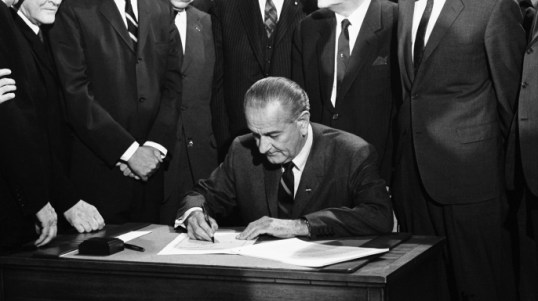
The oldest living confederate widow continues to place the DOJ in support of bigotry. “In major Supreme Court case, Justice Dept. sides with baker who refused to make wedding cake for gay couple.” This is just another example of the absolute glee with which the AG goes after the rights of every one who doesn’t look like him.
In a major upcoming Supreme Court case that weighs equal rights with religious liberty, the Trump administration on Thursday sided with a Colorado baker who refused to bake a wedding cake for a same-sex couple.
The Department of Justice on Thursday filed a brief on behalf of baker Jack Phillips, who was found to have violated the Colorado Anti-Discrimination Act by refusing to created a cake to celebrate the marriage of Charlie Craig and David Mullins in 2012. Phillips said he doesn’t create wedding cakes for same-sex couples because it would violate his religious beliefs.
The government agreed with Phillips that his cakes are a form of expression, and he cannot be compelled to use his talents for something in which he does not believe.
“Forcing Phillips to create expression for and participate in a ceremony that violates his sincerely held religious beliefs invades his First Amendment rights,” Acting Solicitor General Jeffrey B. Wall wrote in the brief.
 People have a right to believe what ever nonsense they want to under our first amendment and to not have those beliefs disrupted by the government. However, they do not have the right to use those beliefs to oppress others and that appears to be the case with most of these folks. They can’t keep it to themselves and to their personal lives. They have to punish the rest of us with it.
This approach to your beliefs–that you’re a strict adherent to whatever–that your beliefs preclude you from doing your job without inflicting it on the rest of us is popping up in the Senate hearing of an appellant Court Judge who is a strict Catholic. This has implications for many of the rights of people who do not carry the same beliefs. A judge is government appointed to uphold secular rule of law. Should one person’s nuttery guide every one else’s pursuit of life, liberty, and happiness?
Dianne Feinstein sat alongside other senators at a hearing on Wednesday and questioned two federal appellate-court nominees. She was particularly anxious about Amy Coney Barrett, a law professor at Notre Dame: Feinstein was not convinced that Barrett would uphold Roe v. Wade given her traditional Catholic beliefs.
“The dogma lives loudly within you,” Feinstein said. “And that’s of concern when you come to big issues that large numbers of people have fought for for years in this country.”
While recent Senate hearings have skirted the boundary of posing religious tests for public servants, raising constitutional questions, something more complicated seemed to be going on here. Sheldon Whitehouse, the Democratic senator from Rhode Island, expressed frustration that Barrett and her fellow nominee at the hearing, Michigan Supreme Court Justice Joan Larsen, refused to discuss how their personal beliefs might shape their legal thinking. He and the other Democratic senators seemed to believe that religious convictions affect how judges apply the law. “To sit here and pretend that there is no role for people’s personal and private views … when they go to the court—it’s just, it’s so preposterous as to be silly,” Whitehouse said.
As conservative, often religiously motivated positions on issues like gay marriage and banning abortion increasingly become out of step with popular opinion and legal precedent, this boundary between personal conviction and legal fidelity is going to become even tricker to navigate. What’s the line between examining a nominee’s religious convictions and believing those convictions disqualify her from serving the country?
 You cannot live in a democratic society without a live and let live philosophy. Keeping to your own personal beliefs should not mean condemning and preventing others from exercising theirs. Crazy religious fundamentalists are also stopping progress on Climate Change in this country. What can we do to stop these people from encroaching on common sense, modernity, and policy that would improve the lives of millions?
Just a day before Donald Trump announced he would withdraw the US from the Paris Climate Agreement, ExxonMobile shareholders voted for the company to come up with a plan to address climate change. When even oil companies that have long opposed environmentalism are in favor of reducing carbon emissions, why is the Trump administration set against those policies? The answer may lie in the fact that for many religious fundamentalists, a belief in God’s omnipotence and infallibility is what orders their existence—a conviction that can overrule economic incentives or earthbound politics.
Philip Schwadel is a sociologist at the University of Nebraska who studies how Americans’ attitudes about religion and politics change from generation to generation. For a study published in April, he reviewed decades of polling data to try and figure out the most likely predictor for thinking that global warming was not a major problem. Schwadel concluded that biblical literalism—or the belief that the Bible is the word of God —is what’s keeping Americans from an agreement to fight climate change.
His paper in the Journal for the Scientific Study of Religion analyzed 18,083 survey responses from 1983 to 2012 in which people answered the question, “Which of these statements comes closest to describing your feelings about the Bible?” Evangelical Protestants make up about 20 percent of the US population, and according to Schwadel’s study, 55 percent of people who identify as evangelical answered that question with, “The Bible is the actual word of God and is to be taken literally, word for word.” Overall, he found that white people who chose that answer were the most likely to de-prioritize environmental spending and not think climate change was something to worry about.
There are an estimated 35 million biblical literalists in the United States. These people—who may think, for instance, God intends for the Earth to end like it’s written in Revelation anyway, so who am I to intervene?— are incredibly hard to convert to the cause of fighting climate change. Pleas from secular scientists and journalists are going to fall on deaf ears; the two sides end up mostly talking past each other.
Those fundamentalists represent a fairly tiny minority in the US—a little more than 10 percent of all Americans. But enabled by fossil fuel money, religious climate change deniers have acquired massive amounts of political influence, to the point that some conservative politicians who favor fighting climate change are allegedly afraid to speak up. And several biblical literalists are in Trump’s cabinet, which surely had something to do with the president’s decision to pull out of the Paris Climate Agreement in June.
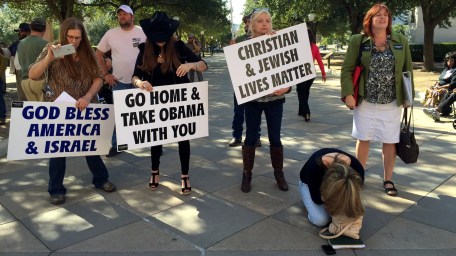 This is happening just as a time when the number of White self-identified Christians is dwindling. Yet, with the party of white supremacy and its current torch holder we see their radical agenda driving policy.
The future of religion in America is young, non-Christian and technicolor.
Almost every Christian denomination in the U.S. shows signs of growing diversity as white Christians, once the majority in most mainline Protestant and Catholic denominations, give way to younger members, who tend to be of different races, according to a study released Wednesday (Sept. 6) by the Public Religion Research Institute.
Americans are also continuing to move away from organized religion altogether, as atheists, agnostics and those who say they do not identify with any particular religion — the group known as the “nones” — hold steady at about one-quarter (24 percent) of the population.
The study, “America’s Changing Religious Identity,” contacted 101,000 Americans in 50 states, and has an overall margin of error of plus or minus 0.4 percentage points. And while the survey spotlights transformations afoot in many religious groups, it also shows a seismic shift for a long-standing American religious powerhouse: white evangelicals.
“This report provides solid evidence of a new, second wave of white Christian decline that is occurring among white evangelical Protestants just over the last decade in the U.S.,” said Robert P. Jones, PRRI’s CEO and author of “The End of White Christian America.”
“Prior to 2008, white evangelical Protestants seemed to be exempt from the waves of demographic change and disaffiliation that were eroding the membership bases of white mainline Protestants and white Catholics,” he said.
“We now see that these waves simply crested later for white evangelical Protestants.”
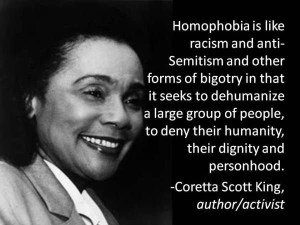 Their numbers have led to enabling the crusade of Kremlin Caligula against all things Barrack Obama. You absolutely must read this essay in The Atlantic by TA-NEHISI COATES. It’s a long read with lots of data and brilliant analysis.
It is often said that Trump has no real ideology, which is not true—his ideology is white supremacy, in all its truculent and sanctimonious power. Trump inaugurated his campaign by casting himself as the defender of white maidenhood against Mexican “rapists,” only to be later alleged by multiple accusers, and by his own proud words, to be a sexual violator himself. White supremacy has always had a perverse sexual tint. Trump’s rise was shepherded by Steve Bannon, a man who mocks his white male critics as “cucks.” The word, derived from cuckold, is specifically meant to debase by fear and fantasy—the target is so weak that he would submit to the humiliation of having his white wife lie with black men. That the slur cuck casts white men as victims aligns with the dicta of whiteness, which seek to alchemize one’s profligate sins into virtue. So it was with Virginia slaveholders claiming that Britain sought to make slaves of them. So it was with marauding Klansmen organized against alleged rapes and other outrages. So it was with a candidate who called for a foreign power to hack his opponent’s email and who now, as president, is claiming to be the victim of “the single greatest witch hunt of a politician in American history.”
In Trump, white supremacists see one of their own. Only grudgingly did Trump denounce the Ku Klux Klan and David Duke, one of its former grand wizards—and after the clashes between white supremacists and counterprotesters in Charlottesville, Virginia, in August, Duke in turn praised Trump’s contentious claim that “both sides” were responsible for the violence.
The largest narrative in this piece tears apart the media narrative that no one understands the poor white working man. It delves into the demographics of Trump vs. Hillary voters and the false narrative that the Democratic Party ignores the working class.
The focus on one subsector of Trump voters—the white working class—is puzzling, given the breadth of his white coalition. Indeed, there is a kind of theater at work in which Trump’s presidency is pawned off as a product of the white working class as opposed to a product of an entire whiteness that includes the very authors doing the pawning. The motive is clear: escapism. To accept that the bloody heirloom remains potent even now, some five decades after Martin Luther King Jr. was gunned down on a Memphis balcony—even after a black president; indeed, strengthened by the fact of that black president—is to accept that racism remains, as it has since 1776, at the heart of this country’s political life. The idea of acceptance frustrates the left. The left would much rather have a discussion about class struggles, which might entice the white working masses, instead of about the racist struggles that those same masses have historically been the agents and beneficiaries of. Moreover, to accept that whiteness brought us Donald Trump is to accept whiteness as an existential danger to the country and the world. But if the broad and remarkable white support for Donald Trump can be reduced to the righteous anger of a noble class of smallville firefighters and evangelicals, mocked by Brooklyn hipsters and womanist professors into voting against their interests, then the threat of racism and whiteness, the threat of the heirloom, can be dismissed. Consciences can be eased; no deeper existential reckoning is required.
This transfiguration is not novel. It is a return to form. The tightly intertwined stories of the white working class and black Americans go back to the prehistory of the United States—and the use of one as a cudgel to silence the claims of the other goes back nearly as far. Like the black working class, the white working class originated in bondage—the former in the lifelong bondage of slavery, the latter in the temporary bondage of indenture. In the early 17th century, these two classes were remarkably, though not totally, free of racist enmity. But by the 18th century, the country’s master class had begun etching race into law while phasing out indentured servitude in favor of a more enduring labor solution. From these and other changes of law and economy, a bargain emerged: The descendants of indenture would enjoy the full benefits of whiteness, the most definitional benefit being that they would never sink to the level of the slave. But if the bargain protected white workers from slavery, it did not protect them from near-slave wages or backbreaking labor to attain them, and always there lurked a fear of having their benefits revoked. This early white working class “expressed soaring desires to be rid of the age-old inequalities of Europe and of any hint of slavery,” according to David R. Roediger, a professor of American studies at the University of Kansas. “They also expressed the rather more pedestrian goal of simply not being mistaken for slaves, or ‘negers’ or ‘negurs.’ ”
This is the same narrative realized in the dynamics of the flee to the Republican Party by Dixiecrats summed up by LBJ.
The night that Democratic President Lyndon B. Johnson signed the Civil Rights Actof 1964, his special assistant Bill Moyers was surprised to find the president looking melancholy in his bedroom. Moyers later wrote that when he asked what was wrong, Johnson replied, “I think we just delivered the South to the Republican party for a long time to come.”
It may seem a crude remark to make after such a momentous occasion, but it was also an accurate prediction.
To understand some of the reasons the South went from a largely Democratic region to a primarily Republican area today, just follow the decades of debate over racial issues in the United States.

(Original Caption) Only Jeff Davis is Missing. Birmingham, Alabama: Mrs. Beulah Waller, 77, of Byron, Ga., wildly waves a confederate flag as Dixie Democrats go about the business of seceding from the Democratic Party. The rump convention, called after the Democrats had attached President Truman’s civil rights program to the party platform, placed Governor J. Strom Thurmond of South Carolina and Governor Fielding L. Wright of Mississippi in nomination. Eugene “Bull” Conner, city commissioner of Birmingham, is at extreme right.
You can read or watch more on this at the History Channel in a special on the Civil Rights movement and the signing of Civil Rights legislation in 1964. There is actually plenty of evidence that Pastors and not Politicians turned Dixiecrats Republicans. The wing nuttery of the Trumpsters is the wing nuttery of white supremacists wrapped up in a warped form of fundamentalist christianity. They are both forms of facism and they are natural allies.
Crediting the Nixon campaign with the flight of Southern conservatives from the Democratic Party dismisses the role Southerners themselves played in that transformation. In fact, Republicans had very little organizational infrastructure on the ground in the South before 1980, and never quite figured out how to build a persuasive appeal to voters there. Every cynical strategy cooked up in a Washington boardroom withered under local conditions. The flight of the Dixiecrats was ultimately conceived, planned, and executed by Southerners themselves, largely independent of, and sometimes at odds with, existing Republican leadership. It was a move that had less to do with politicos than with pastors.
Southern churches, warped by generations of theological evolution necessary to accommodate slavery and segregation, were all too willing to offer their political assistance to a white nationalist program. Southern religious institutions would lead a wave of political activism that helped keep white nationalism alive inside an increasingly unfriendly national climate. Forget about Goldwater, Nixon or Reagan. No one played as much of a role in turning the South red as the leaders of the Southern Baptist Church.
There is still today a Southern Baptist Church. More than a century and a half after the Civil War, and decades after the Methodists and Presbyterians reunited with their Yankee neighbors, America’s largest denomination remains defined, right down to the name over the door, by an 1845 split over slavery.
Spirituality may be personal, but organized religion, like race, is a cultural construct. When you’ve lost the ability to mobilize supporters based on race, religion will serve as a capable proxy. What was lost under the banner of “segregation forever” has been tenuously preserved through a continuing “culture war.” A fight for white nationalism and white cultural supremacy has in some ways been more successful after its transformation into an expressly religious, rather than merely racist crusade.
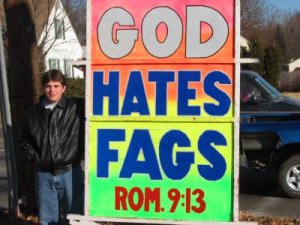 You can also see the Republican Party’s drive to disenfranchise people of color by their crusade removing access to Voting. Disenfranchising racial minorities and limiting poll access is key to White hegemony. Kris Kobach is obsessed with the idea that outsiders are still elections in traditionally white voting enclaves that Kobach believes must’ve been stolen because after all, all white people think like him except the minority rotting away in big cities. He’s also being empowered by the Kremlin Kaligula Krewe.
Writing for Breitbart, Kobach picks up a story from the Washington Times about voting in New Hampshire last year. That state has been a focus of voter-fraud conspiracy theories for two primary reasons: (1) It was close and (2) Trump didn’t win it. (In Michigan, a state he did win and where the percentage-point margin was even narrower, no one allied with Trump has raised a question at all. In fact, his lawyers asserted in a anti-recount lawsuit in that state that “all available evidence suggests that the 2016 general election was not tainted by fraud or mistake.”)
New Hampshire has also been a focus of fraud allegations because it has same-day voter registration, allowing people to show up to a polling place to vote even if they hadn’t registered in advance. This is the focus of the Times piece, and of Kobach’s failing freshman logic paper at Breitbart.
The Times presents numbers released by the Republican speaker of the New Hampshire House, which we quote directly below:
- 6,540 people registered and voted on Nov. 8, based on presenting out-of-state licenses.
- As of Aug. 30, about 15 percent (1,014 of the voters) had been issued New Hampshire driver’s licenses.
- Οf the remaining 5,526, barely more than 200 (3.3 percent) had registered a motor vehicle in New Hampshire.
So: some 5,313 voters registered with out-of-state licenses but hadn’t then registered a car within 10 months.
Now, here’s Kobach:
“So 5,313 of those voters neither obtained a New Hampshire driver’s license nor registered a vehicle in New Hampshire. They have not followed the legal requirements for residents regarding driver’s licenses, and it appears that they are not actually residing in New Hampshire. It seems that they never were bona fide residents of the State.”
And then he’s off to the races: It’s likely that the results of the Senate race are tainted! It’s possible that New Hampshire’s electoral votes went illegally to Hillary Clinton!
 John le Carré is an author focused on bringing his experience as a British Spy to cold war spy fiction. He’s given an speech covered by The Guardian. John le Carré on Trump: ‘Something seriously bad is happening’ Author draws parallels between Donald Trump and rise of 1930s fascism, in rare public appearance at Royal Festival Hall
John le Carré, one of Britain’s greatest living writers,has spoken of the “toxic” parallels between the rise of Donald Trump and the rise of 1930s fascism.
In a rare public appearance, the 85-year-old novelist and former spy spoke of his disdain for Trump and his despair for the US and the wider world.
“Something truly, seriously bad is happening and from my point of view we have to be awake to that,” he told an audience at the Royal Festival Hall in London.
“These stages that Trump is going through in the United States and the stirring of racial hatred … a kind of burning of the books as he attacks, as he declares real news as fake news, the law becomes fake news, everything becomes fake news.
“I think of all things that were happening across Europe in the 1930s, in Spain, in Japan, obviously in Germany. To me, these are absolutely comparable signs of the rise of fascism and it’s contagious, it’s infectious. Fascism is up and running in Poland and Hungary. There’s an encouragement about.”
Even today, Le Carré said, Ang Sang Suu Kyi is speaking of “fake news” in Burma. “These are infectious forms of demagogic behaviour and they are toxic.”
Is it too much to ask that we throw all these ideologies to the ashbin of history in the age of weapons of mass destruction and the ability of mankind to forever scar the planet? There is no place for these ideas that seek to raise up the self worth and paths of some people over those of others when we need every one’s cooperation to keep the peace and save the planet. It’s not moral to enable them to do it. We must stop this assault on Civil Rights.
What’s on your blogging and reading list today?
Monday Reads: Descent into White Trash Resentment and its Trumpian Meanness and Madness
Posted: September 4, 2017 Filed under: Afternoon Reads | Tags: DACA, South Korea 27 Comments It’s Labor Day!
This usually means a last, long summer weekend at the beach or around the mountains. Today’s pictures are from the inspired lens of photographer Seph Lawless and the many photographers that photographed the big Pocono resorts during the 60s and 70s. I feel as though we are losing our American way of life much the way that these grand Poconos resorts have fallen into decay and destruction after giving so much to so many. Go check the photo gallery and narrative.
A photographer is sharing what he calls a “heartbreaking” look at some of the resorts that made the Poconos the “Honeymoon Capital of the World.”
Photographer Seph Lawless shared his photos of Penn Hills Resort, Buck Hill Inn, Summit Resort and Unity House with Fox 8 in Cleveland.
While the resorts became super popular starting back in the 1960s, Lawless says times have changed and “the honeymoon is over.” He said many of the most popular resorts in the area are now empty and abandoned.
 Pablo Iglesias Maurer juxtaposes now vs. then postcards and photos too. He’s written a narrative to accompany the gifs he’s created of the postcard views and his journey to capture their eerie “abandoned states”. It’s quite brilliant.
I found the old matchbook lying on a desk.
It was buried under some papers, beside a thick, water-logged book frozen solid in the January chill. I ran my fingers down its spine and read the title: “How to Run A Successful Golf Course.”
The owner of the Penn Hills Resort in the Poconos probably hadn’t followed whatever advice the author had to offer. They boarded the place up years ago, and there’s a gaping hole in the roof of his old office. Muted greens and yellows, shag carpeting peek at me through a sheet of ice.
The matchbook, which looks to be from the 60’s, is about half empty—whoever was sitting here when this place finally went under surely needed a smoke.Its cover is a reminder of better days. Swimmers are frolicking at the resort’s indoor pool, now a scene of trash, mangled deck chairs, a life preserver. I lock eyes with a huge bullfrog who didn’t make it out. He was entombed in the ice.
The matchbook no longer lines up with reality. I look down through the viewfinder of my camera and up again at the matchbook, aligning the two images the best I can. Up (snap) down (snap). It feels like I’m seeing this place in some sort of dystopian View-Master, each image on the wheel darker than the next.
Weeks later, I score a cache of old postcards from the Poconos and Catskills on eBay, the sort that end up in family albums, stuck in some box in the attic. “Our Honeymoon.” In idyllic scenes at Penn Hills, The Homowack Lodge, Grossinger’s, and a fourth resort in the Poconos which we aren’t identifying, vacation-goers and honeymooners frolic in the mountains.
They have a surreal quality. Ephemeral, disposable, they served only one purpose—to let someone know “I’m here. I’m thinking of you.” It feels a bit like social media does sometimes, where you’ll snap a photo of some vista, sometimes to bring those you care about a bit closer to you. And like social media, the postcards manage to be a little impersonal: “I didn’t quite care enough to write a letter.” It’s analog Foursquare, a non-digital check-in.
 Trumpian madness and meanness means DACA and dreamers have been ground beneath the heel of racism and of destroying Obama’s legacy.
President Donald Trump has decided to end the Obama-era program that grants work permits to undocumented immigrants who arrived in the country as children, according to two sources familiar with his thinking. Senior White House aides huddled Sunday afternoon to discuss the rollout of a decision likely to ignite a political firestorm — and fulfill one of the president’s core campaign promises.
The administration’s deliberations on the issue have been fluid and fast moving, and the president has faced strong warnings from members of his own party not to scrap the program.
Trump has wrestled for months with whether to do away with the Deferred Action for Childhood Arrivals, known as DACA. But conversations with Attorney General Jeff Sessions, who argued that Congress — rather than the executive branch — is responsible for writing immigration law, helped persuade the president to terminate the program and kick the issue to Congress, the two sources said.
In a nod to reservations held by many lawmakers, the White House plans to delay the enforcement of the president’s decision for six months, giving Congress a window to act, according to one White House official. But a senior White House aide said that chief of staff John Kelly, who has been running the West Wing policy process on the issue, “thinks Congress should’ve gotten its act together a lot longer ago.”
White House aides caution that — as with everything in the Trump White House — nothing is set in stone until an official announcement has been made.
Trump is expected to formally make that announcement on Tuesday, and the White House informed House Speaker Paul Ryan of the president’s decision on Sunday morning, according to a source close to the administration. Ryan had said during a radio interview on Friday that he didn’t think the president should terminate DACA, and that Congress should act on the issue.
Kremlin Caligula continues to attack and baffle long time allies of our country. From Wapo “Seoul tries to ignore Trump’s criticism: ‘They worry he’s kind of nuts,’ one observer says.”
After North Korea conducted its nuclear test Sunday, Trump tweeted: “South Korea is finding, as I have told them, that their talk of appeasement with North Korea will not work, they only understand one thing!”
Trump did not talk to Moon on the phone Sunday — in stark contrast to the two calls he had with Shinzo Abe, the prime minister of Japan and a leader who has proven much more willing to agree with his American counterpart. This will worsen anxieties in Seoul that Tokyo is seen as “the favorite ally,” analysts said.
Moon, who was elected in May, advocated engagement with North Korea but has also acknowledged the need for pressure to bring the Pyongyang regime back to talks. He has also come around to an agreement between his predecessor and the U.S. military to deploy an antimissile system in South Korea.
Trump’s tweet was widely reported across South Korean media, and Moon’s office responded to the tweet with a measured statement Sunday night.
“South Korea is a country that experienced a fratricidal war. The destruction of war should not be repeated in this land,” it said. “We will not give up and will continue to push for the denuclearization of the Korean Peninsula through peaceful means working together with our allies.”
 It says a lot that a country brutally occupied by Japan less than a century ago thinks more of their friendship than of ours. But then check out Moyers & Company’s montage of “What Trump and his Team have wrecked so far” written by Karin Kamp and Kristin Miller.
Policy attacks on US Labor have been unbelievable given Trump’s populist rants at rallies.
A few months ago, President Donald Trump devoted his weekly address to the beleaguered American employee. “For too long, American workers were forgotten by their government — and I mean totally forgotten,” he said. “My administration has offered a new vision. The well-being of the American citizen and worker will be placed second to none.”
No doubt he’ll come up with more pro-worker blather for Labor Day. Don’t listen. The only way Trump is helping the average employee is if you consider The Simpsons’ Mr. Burns a working stiff.
The rollback of labor rights and protections since Trump took office is staggering. It puts worker safety at risk and guarantees that many workers will earn less, but that’s not all. Measures to help victims of discrimination receive redress are on the scrap heap. Unions are running scared. “It’s a death by a thousand cuts,” explains Heidi Shierholz, a senior economist at the Economic Policy Institute.
Last week, as most of us in the United States were riveted by Hurricane Harvey’s descent on Texas, the Occupational Safety and Health Administration removed from its Internet home page a list of workers who died as a result of workplace injuries, burying it deep within the website. At the same time, it changed how the list is compiled; it will now only include instances where the company was cited for safety violations leading to a worker’s death. Details such as the name of the deceased worker are also no longer considered worthy of inclusion. The Atlanta Journal-Constitution worked out that of the at least 32 Georgia workers it determined died as a result of work-related injuries since October 1 of last year, only two even get a mention on the new list.
 This is the state of our Union. The “US has regressed to developing nation status, MIT economist warns Peter Temin who “says 80 per cent of the population is burdened with debt and anxious about job security”.
America is regressing to have the economic and political structure of a developing nation, an MIT economist has warned.
Peter Temin says the world’s’ largest economy has roads and bridges that look more like those in Thailand and Venezuela than those in parts of Europe.
In his new boo.k, “The Vanishing Middle Class”, reviewed by the Institute for New Economic Thinking, Mr Temin says the fracture of US society is leading the middle class to disappear.
The economist describes a two-track economy with on the one hand 20 per cent of the population that is educated and enjoys good jobs and supportive social networks.
On the other hand, the remaining 80 per cent, he said, are part of the US’ low-wage sector, where the world of possibility has shrunk and people are burdened with debts and anxious about job security.
Mr Temin used a model, which was created by Nobel Prize winner Arthur Lewis and designed to understand developing nations, to describe how far inequalities have progressed in the US.
When applied to the US, Mr Temin said that “the Lewis model actually works”.
He found that much of the low-wage sector had little influence over public policy, the high-income sector was keeping wages down to provide cheap labour, social control was used to prevent subsistence workers from challenging existing policies and social mobility was low.
 It isn’t black and brown people doing this to white America. It’s the Trumps of the country doing it to the rest of us. Jamelle Bouie–writing for Slate says it best. “Trump has never been less popular—and never more clearly the head of a party of racial resentment.”
Seven months into his presidency, Donald Trump is deeply unpopular. In Gallup’s latest poll of presidential job approval, he’s down to 34 percent, a level unseen by most presidents outside of an economic disaster or foreign policy blunder. In FiveThirtyEight’s adjusted average of all approval polling, he stands at 37 percent. And yet, few Republican lawmakers of consequence are willing to buck him or his agenda, in large part because their voters still support the president by huge margins. What we have clearer evidence of now is why. From polling and the behavior of individual politicians, it’s become harder to deny that people support the president not just for being president, but for his core message of white resentment and grievance—the only area where he has been consistent and unyielding.
You see broad Republican allegiance to Trump in the polling. Nearly 70 percent of Republicans say they agree with Trump on the issues. And 78 percent of Republicans say they approve of the president’s overall job performance. Republicans who have bucked or criticized Trump, like Sen. Jeff Flake of Arizona, have jeopardized their political futures as a result.
You also see the degree to which white racial resentment is a key force among Republican voters. Most Republicans, remember, agreed with President Trump’s response to the violence in Charlottesville, Virginia, where he held both sides—white supremacists and counterdemonstrators—responsible for the chaos that claimed the life of one anti-racist protester. In an analysis of recent polling, my colleague William Saletan observes that, across a number of questions gauging racial animus, Republicans generally (and Trump supporters specifically) are most likely to give answers signaling tolerance for racism and racist ideas. Forty-one percent of Republicans, for example, say that whites face more discrimination than blacks and other nonwhite groups (among strong Trump supporters, it’s 45 percent). Ten percent of Republicans and 19 percent of strong Trump supporters have a favorable impression of white nationalists, while 13 percent of the former (and 17 percent of the latter) say it’s “acceptable” to hold white supremacist views.
 Trump wants tariffs and trade wars. He insults our friends. He is willing to throw US nurses, soldiers, workers and students out of the only country and home they have known. His dream is that of a country in ruin and a palace of gold for him and his.
Have a good holiday!
Friday Reads: The Year of Aging Faster than your Dog
Posted: September 1, 2017 Filed under: Afternoon Reads | Tags: Foreign Aid to US under America First, Hurricane Harvey, hurricane katrina 29 Comments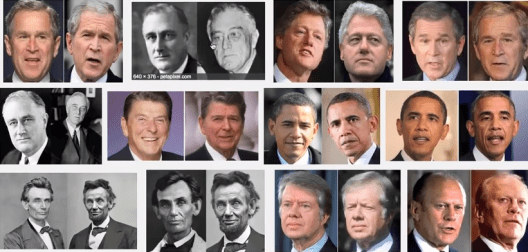 Howdy Sky Dancers!
Welcome to that point in history where Americans age more rapidly than their Presidents usually do! Yes, a 2015 study concluded that Presidents and Prime Ministers age faster and die sooner. This year, however, my experience is that we’re the ones aging faster. I’m also pretty certain if any of his policies actually pass we’ll all die a lot sooner too.
Leading a country comes with extraordinary privileges but also, apparently, a price: new research suggests that political leaders age faster than normal and that the stress of the job may shave almost three years off their life expectancy.
Doctors analysed how long presidents and prime ministers in 17 countries – including Britain, Canada, France, Germany and the US – survived after leaving office, compared to the losing candidates. They also observed the number of years that heads of state lived versus what was expected for someone of the same age and gender.
After considering the fates of 279 heads of state and 261 runners-up, they concluded former leaders lived for almost three fewer years than expected. The study was published online on Monday in the medical journal, The BMJ.
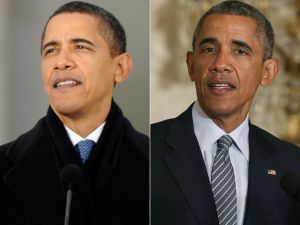
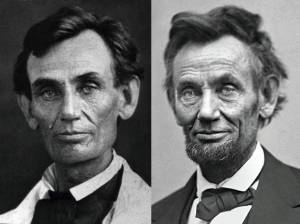
So, enjoy the pictures of some of the Presidents that did themselves in leading us instead of the other way around!
 Speaking of leading, the feisty Cajun leader that saved many of my neighbors’ lives after the failure of the levees is criticizing the Harvey response. General Russell Honore argues that the state and federal government are leaving citizens in danger. Using a rag tag bunch of citizens supported by inadequate government forces is an equation for death and destruction. “Hurricane Katrina commander shames the military for its ‘amateur hour’ response to Harvey and says the ‘big dogs’ should have been called in from the start to save residents ‘who are hanging by a thread’.”
In a blistering interview, Russell L. Honore described the military’s treatment of the catastrophe as ‘amateur hour’ and said those at the top needed to take control of recovery missions rather than leave them in the hands of overstretched local authorities.
There are only 73 helicopters in Texas carrying out search and rescue missions over huge portions of the state.
100 high water vehicles are out searching for survivors, 8 para-rescue teams have been mobilized along with three C130 propeller planes and hundreds of boats. On Wednesday, Texas Governor Greg Abbott asked for another 10,000 Texas National Guard troops to be deployed, bringing the total to 24,000.
It is an increase the original contributions. Since Harvey made landfall on Friday, it has set the pace for military deployment.
Gradually over the weekend and at the beginning of the week, more resources were deployed by the military and civil agencies. One official at the Department of Defense told DailyMail.com that the same growth was mirrored by other agencies including FEMA and Border Patrol.
Katrina Military Cmdr. criticizes federal response to #Harvey: “We have a lot of citizens hanging on by a thread” https://t.co/WZlepit1Cu
— OutFrontCNN (@OutFrontCNN) August 30, 2017
‘The level of support has been evolving and increasing across the board,’ the unnamed official said.
But Honore, who is credited with saving thousands of lives in New Orleans, said this was a fundamental flaw and that more help should have been sent when the first warning signs came.
‘The American people have put too much confidence in us. We have been too successful overseas to come out in amateur hour and incrementally deploy the force.
‘Something is seriously wrong with our control and command. There comes a point in time with the mission that it is too big for the state national guard and they need to get the hell over it and bring in the big dogs when you’ve got a big mission.
‘In Katrina we had 40,000 national guard, 240 helicopters in the first 4 days. They just got 100 helicopters in Texas,’ he told CNN’s Erin Burnett on Wednesday.
Honore is in Texas helping with rescue efforts. He has been warning the government to ‘scale up’ its response to the disaster – which has so far wiped out 48,000 homes – for days.
 Needless to say, fly by Donnie thinks it’s all just totally duckie. You can see the numbers to date at this link at the Weather Channel. You may also check out Irma which is barreling its way west. It is expected to be at least a category 4 and they’re not sure where it’s going to wind up yet. The majority of models are taking it into the Gulf and/or up the Atlantic coast of the US. This is the next one and it’s likely US territories and the US itself will be hammered some time next week.
The most interesting thing to read this morning is the interaction between our nation’s friends and neighbors and donations to help Harvey survivors. I always have to remind people how all nations came to the rescue of New Orleans after Katrina/Rita/levee failures. My favorite example is the huge box of household goods that each FEMA Trailer recipient got from the people of Saudi Arabia. But, this disaster seems to be going a bit differently in the day of “America First” and reactionary rather than mainstream Republicans like the Bushies. The only country’s aid that was offered and refused back then was that of a group of Cuban Doctors coming with medical aid.
A lot of the world is not rushing to help the US. Oddly enough, both Venezuela and Mexico–two countries treated harshly and badly by Kremlin Caligula–are offering up help. So is Canada, but it seems Texas turned Quebec down. I’ve got some links here that how far we’ve fallen in terms of treating other nation’s like friends and equals since the White Supremacist in the office started destroying our reputation around the world and how it’s contributing to a reluctance to help us. I love Mexico and Mexicans. There is no way my city could’ve cleaned up and rebuilt without them. Plus, we have Taco Trucks and Tex Mex restaurants now. We really weren’t known for that back in the day.
As soon as Hurricane Harvey hit, Mexico — a country described by President Donald Trump as a source of rapists and drugs — stepped up to offer boats, food and other aid to the United States.
Another offer of help came from Venezuela, a country in severe political and economic crisis that has been repeatedly sanctioned by the Trump administration. It said it could give $5 million in aid.
The European Union has proudly noted that it is sharing its satellite mapping with U.S. emergency responders dealing the Harvey’s devastation. This despite Trump’s chastisement of European countries he views as overly dependent on the U.S. military.
Then there’s tiny Taiwan, which has reportedly offered $800,000 in aid — a number likely calculated to annoy China as much as to curry favor with Trump.
But compared with past crises, the list of foreign governments lining up to help the United States this time is relatively short for now. And the few countries that have raised their hand may get more out of it — politically, at least — than the U.S.
The relative dearth of global goodwill, some analysts say, may stem from anger at Trump over his “America First” approach to the world, which has irked even staunch U.S. allies.
The Miami Herald has the analysis.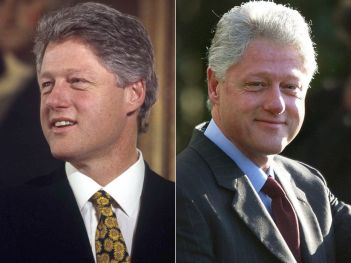
Natural disasters know no political boundaries. And that’s why international humanitarian relief flows so quickly, and in such great and humbling quantities, when hurricanes, earthquakes and tsunamis strike.
But today, with Houston suffering as Mother Nature’s latest victim, will the world’s giving nations step-up and step-in to help American relief efforts?
Questioning the world’s appetite to help Trump’s America at this moment is a serious question.
In the wake of Hurricane Katrina and the New Orleans tragedy that followed, the world was tripping over itself to help George W. Bush and Louisiana. The relief efforts ranged from offers of Afghan cash to deployment of Thai doctors and nurses. The Spanish sent crude oil, electric generators and food rations and Swedes airlifted over an emergency mobile phone network. The outpouring of help was overwhelming.
The downside was the United States was unable to accept and distribute the aid offered by 151 countries. Only $40 million of the $850 million offered in Katrina relief was used, $400 million worth of oil aid sat untouched. It turns out that while America was once pretty good at handing out aid around the world, a Heritage Foundation report made clear the USA is woefully unprepared and unable to accept help from others.
In contrast, the response to Harvey is near deafening silence. Maybe a distracted State Department experiencing attrition is unable to process foreign offers and aid. But it might also be that Trump actively alienates American friends and allies, boasts he is cutting USAID, and makes clear that America First translates into an aid policy of every nation for itself.
If they are so disinclined to help us right now in our time of need, imagine what they will do if we need their military help anywhere. There’s more on this development out there in the media. This is the result of the cult of American-style ChristoFascism creeping into our Government that has more to do with being greedy than following the beatitudes or any other teaching attributed to the biblical jesus. “Texas Secretary of State Turns Down Hurricane Harvey Aid From Canada and Asks for Prayers Instead: Report” Seriously?
As reports continue to roll in estimating the damage that Hurricane Harvey has caused to parts of Texas, the news that Texas Secretary of State Rolando Pablos reportedly turned down help from our friends in Canada is beyond troubling.
According to Pathos, Quebec Minister of International Relations Christine St-Pierre called Pablos to offer blankets, beds, pillows, hygienic products and electricians, which were also given to the U.S. during Hurricane Katrina, and this dumbass turned down help that the people of Texas actually need and instead asked only for prayers.
WTF?
“It was a conversation about how devastating the situation is and we want to express our support to the people of Texas,” the minister told CBC News, according to Pathos. “.… Pablos declined the aid, asking only for ‘prayers from the people of Quebec.’ He was very touched by the fact we called him.”
 Canada is shipping aid to those directly impacted by the storm and the resultant flooding. “Canada to help U.S. by shipping supplies to Harvey victims. Canadian government sending baby bottles, formula, cribs and other supplies to help the displaced“.
Canada has received an official request from the U.S. Federal Emergency Management Agency for pediatric hygiene kits along with pediatric pillows, towels and other linens in response to needs arising from Hurricane Harvey’s aftermath.
The request came after Prime Minister Justin Trudeau made the offer to U.S. President Donald Trump during a telephone call Thursday.
“President Trump thanked Prime Minister Trudeau and the people of Canada for their offer of assistance and underscored the close ties between our two nations,” said a White House statement released after the phone call.
I’ll just wait here while we all sigh and wax adoringly on Justin Trudeau.
Enough time?
Meanwhile, the scapegoats of Trump’s racism showed themselves to be better than the US President. From WAPO: Flooding trapped workers at a Mexican bakery for two days. They spent it baking for Harvey victims.
As Hurricane Harvey approached Texas last week, the bakers at El Bolillo Bakery in Houston worked overtime, knowing people would be eager to stock up on food.
By Saturday evening, the Mexican bakery’s Wayside location, on the southeast side of the city, had sold out of just about every piece of bread it had.
“We were trying to open up late and trying to make enough bread for everybody. We knew we get absolutely slammed busy during these days,” Brian Alvarado, the manager of the bakery, told The Washington Post. “We didn’t think it was going to rain for that long and that badly.
Mexico was first with its aid offer.
Despite poor relations between the U.S. and Mexico, Texas’ neighbor to the south is offering vehicles, food, medicine and water. The State Department thanked Mexico for its “very generous” offer.
Texas Governor Greg Abbott said Wednesday the state is accepting Mexico’s offer to help with recovery efforts from historic flooding in the aftermath of Hurricane Harvey.
“We had a list of aid and assistance that they have offered to provide that we are accepting,” Abbott told reporters on Wednesday afternoon.
The assistance will start arriving in Texas within days, Carlos Gonzalez Gutierrez, the consul general in Austin, told the Dallas Morning News. “Mexico looks forward to doing its share,” he added.
The assistance includes vehicles, boats and food, part of a long list of items included in a diplomatic note the Mexican government delivered on Tuesday, the governor’s press office told Univision.
Mexican officials say they are also prepared to offer troops, medicine, portable showers and water. It was unclear if Mexican troops would accompany the relief aid, as occured during Hurricane Katrina in 2005. Mexico’s military has specialized civil protection units that could be mobilized, according to experts.
U.S. Secretary of State Rex Tillerson thanked Mexican Foreign Secretary Luis Videgaray Caso after a meeting at the State Department in Washington, saying “It was very generous of Mexico to offer their help at a very, very challenging time for our citizens back in Texas.”
The United States and Venezuela are not on good terms.
Since President Trump took office, he’s sanctioned the country four times (and threatened military action too), taking Venezuelan President Nicolás Maduro to task for his increasingly autocratic tendencies.
But that bad blood didn’t stop Venezuela from offering $5 million in aid to the victims of Hurricane Harvey.
As Foreign Minister Jorge Arreaza explained on state television, the money would come from Citgo Petroleum, the government-run oil company with a refinery in Corpus Christi, Tex. Arreaza said the aid will be directed to local mayors and be aimed at the construction of homes and shelters around Houston. “We express our solidarity with the Americans affected by the hurricane,” he said, according to Reuters. “When an American fills his tank at a Citgo gas station, he’ll be contributing to the rebuilding of the affected communities.”
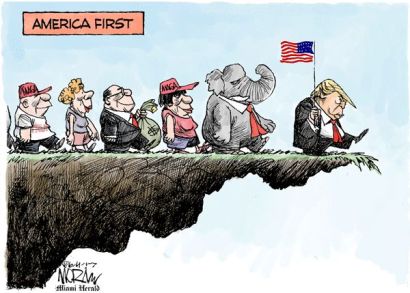 So, last night, it was apparent that no one is holding their breath and thinking, Gee the Orange Toddler is writing a check for $1 million dollars out of his own pocket to help with recovery and rebuilding. Most of us think he’ll either regift donations to his foundations or conveniently forget the pledge. He also hopes we’ll forget it too.
President Donald Trump, a billionaire who while campaigning bragged that he was “really rich,” announced Thursday that he would donate $1 million to relief efforts after Hurricane Harvey slammed Texas and Louisiana this week. But according to Tony Schwartz, the man who ghostwrote Trump’s 1987 book The Art of the Deal, that’s not going to happen.
Schwartz tweeted Friday morning that there was “no way” Trump would send storm victims $1 million of his own money.
“He only promises to give,” Schwartz wrote. “Never actually does.”
Skepticism around Trump’s intended donation has been mounting ever since White House press secretary Sarah Huckabee Sanders revealed the president planned to “join in the efforts that a lot of the people that we’ve seen across this country do” in the wake of the deadly storm. Details are scarce—Sanders couldn’t provide reporters with information on when Trump would donate the money, who he would donate it to or where it was coming from, according to the New York Times.
Later that day, first son Eric Trump tweeted that he bet CNN and the mainstream media wouldn’t cover his dad’s “incredible generosity.” His post came three hours after the network published a story about it, according to The Hill.
This isn’t the first time the president’s charitable giving, or lack thereof, has made headlines.
 He’ll probably hold a fundraiser at one of his properties, pocket the profits from that, and regift the access money at best.
Flooding along the Texas-Louisiana border remains severe. Several towns are still in immediate crisis. These towns are part of the energy coast. This is hampering the shipment of gas. Gas prices around the country are increasing and the availability of gas is iffy in some places because of road and pipe closures. It took six weeks for gas production and shipment to return to normal after Katrina/Rita.
Anyway, keep an eye on the Atlantic.
Don’t be a Donald … here are some places to actually give help instead of lip service.
Have a good weekend!
What’s on your reading and blogging list today?
Monday Reads
Posted: August 28, 2017 Filed under: Afternoon Reads | Tags: Climate change, FEMA, flooding, Houston, Hurricane Harvey, Texas 22 Comments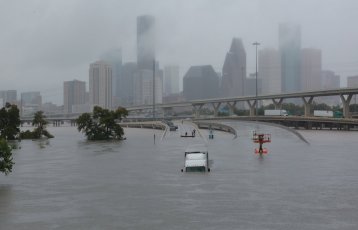 Good Afternoon!
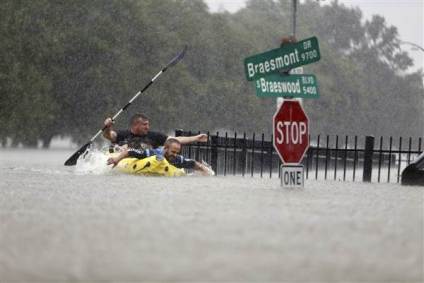
The unfolding drama of the flooding of Houston and surrounding areas takes me back 12 years ago to Katrina when my community was surrounded by a similar hell realm full of water, the stench of death, and mass destruction. Right now, Houston is relying on skilled first responders, its local government, and neighbors. Soon, it will be a test of our country’s ability to help our own as well as the test of the charity of nations around the world.
What is it going to take for Republican decision makers to understand that some things are too big and too important to be left to the for-profit-motivated private sector of carpet baggers? When will they realize their constant denial of science and sycophantic support of the fossil fuel industry is driving us to epic catastrophe?
Twelve years ago I was hunkered down on a pink futon with my two yellow labs–Karma and Honey–and Miles in between the beds of a grad student from Macau and one from Japan. My cell phone could receive but not make calls. We were watching TV with the families of two other grad students that I had earlier told to get the hell out of dodge while they could still get a hotel room. One family from Turkey. The other from Jordan. I know what it’s like to be homeless, scared, broke, and confused. A day later, I discovered I had to go some place and that my university had failed to pay me. I was totally reliant on the goodness of others and much of that goodness came from the people of Texas and Nebraska and the American Tax Payer. There were a few local businesses that helped but the majority of help came from people and the Federal Government.
This is the kind of event that tests our character as a country and we have a soulless narcissist at its helm. I laugh at the ChristoFascist preachers who blame liberal political views for Gawd’s wrath as seen in these natural disasters. It seems more likely that their Gawd keeps testing Republican Presidents and finds their governing ways come short of dealing with hell and high water. The Republican Bushs and now a Trump have faced historic hurricanes. While the Clinton and Obama administrations have tried to rebuild our ability to respond through FEMA and other agencies, it took no time for this latest Republican disaster to seek to gut our ability to help our neighbors in need. It always amazes me that tax cuts for the wealthy come before helping our neighbors in harm’s way.
This destruction is a window into the future of climate change. This is what happens when humanity fails to either meaningfully restrict greenhouse gas emissions or prepare for the damage that is certainly coming.
Now, before the inevitable pedant brigade pounces in, that doesn’t mean Harvey was definitely caused by climate change. Global temperatures have only markedly increased for a few decades, and extreme weather events are rare and random by definition. It will take many more years for enough data to be collected to be able to establish causality.
But what we can say is that climate science predicts with high confidence that increased temperatures will increase the likelihood of extreme weather.
It will make hurricanes that do form stronger. It may also increase the number of hurricanes, though that’s harder to predict with certainty. It’s also besides the point. A storm doesn’t need to qualify as a hurricane to pose many of the same dangers. Simple big storms can still have high winds, tornadoes, and especially flooding, which is the major danger along the Gulf Coast.
 I’m calling real estate agents and getting out of here. I am too old to exist in red state beholden to oil and gas industries where people refuse to see that science is right. I’m too tired to live in areas where suburban sprawl and concrete provides run off for massive rain creating risks that all too often fall on the heads and homes of people like me. Climate change is likely responsible for the kinds of stalled, training storms like Harvey. Human destruction of nature’s ways of dealing with water exacerbates it.
Persistent episodes of extreme weather in the Northern Hemisphere summer have been shown to be associated with the presence of high-amplitude quasi-stationary atmospheric Rossby waves within a particular wavelength range (zonal wavenumber 6–8). The underlying mechanistic relationship involves the phenomenon of quasi-resonant amplification (QRA) of synoptic-scale waves with that wavenumber range becoming trapped within an effective mid-latitude atmospheric waveguide. Recent work suggests an increase in recent decades in the occurrence of QRA-favorable conditions and associated extreme weather, possibly linked to amplified Arctic warming and thus a climate change influence. Here, we isolate a specific fingerprint in the zonal mean surface temperature profile that is associated with QRA-favorable conditions. State-of-the-art (“CMIP5”) historical climate model simulations subject to anthropogenic forcing display an increase in the projection of this fingerprint that is mirrored in multiple observational surface temperature datasets. Both the models and observations suggest this signal has only recently emerged from the background noise of natural variability.
 The increase in the occurrences of 100, 300 and 500 year events in my backyard is statistically significant. It also is positively correlated to Climate Change. That’s the science. Sea level rises have a lot to do with the destruction of the natural barriers to storm surge that are particularly a side product of things that the oil and gas industry do. This is the risk of that business forced onto humanity, nature, and the tax payer.
But Ojeda is watching the Atlantic hurricane season that begins on June 1 with more concern than usual. The retired Coast Guard employee worries that rising sea levels could make the next hurricane more destructive than those he’s lived through.
“That’s really scary to me,” the 70-year-old said.
A study released in May shows that rising sea levels threaten to make storm surges more dangerous, seemingly reinforcing Texas officials’ push for federal funding for a storm-surge barrier, or Ike Dike, to protect Galveston.
“Every storm surge today reaches higher because it starts from a higher level, because sea level is higher,” said study co-author Ben Strauss, a scientist who is vice president for sea level and climate impacts for Climate Central, a group of scientists and journalists dedicated to climate change awareness. “A small amount of sea-level rise can lead to an unexpectedly large increase in damages to most kinds of structures.”
Brian Streck, 62, a retired Galveston firefighter, has watched high tides creep into the streets around the house at the edge of West Galveston Bay, where he has lived for 37 years.
He has no patience for climate-change deniers who doubt seas are rising.
“I’ve witnessed it,” Streck said.
High tides once flooded the streets around his home about twice a year; the flooding in the last decade has increased to a dozen times a year.
“I’ve considered selling this place because eventually I’m going to have a lake house,” he said.
Scientific studies have established an acceleration in sea-level rise because of a warming atmosphere. Coal and oil burning and the destruction of tropical forests have increased heat-trapping gases that have warmed the planet by 1.8 degrees since 1880. Earth has been losing 13,500 square miles of ice annually since 1979, according to the National Oceanic and Atmospheric Administration.
Sea levels are generally rising faster along the Texas Gulf Coast and the western Gulf than the average globally, according to a January study by NOAA.
“The western Gulf is experiencing some of the highest rates of relative levels of sea-level rise in the country,” said NOAA oceanographer William Sweet, lead author of the study. “The ocean is not rising like water would in a bathtub.”
Sea-level rise is making storm surges larger, said John Nielsen-Gammon, Texas state climatologist at Texas A&M University in College Station.
“Compared to a storm that would have hit, say, 30 years ago, the additional storm surge we are talking about is on the order of … about 7 inches,” Nielsen-Gammon said.
The NOAA study found sea levels rising at more than double the rate estimated during the 20th century, increasing to more than 0.13 inch annually. NOAA made six projections of sea-level rise, from low to extreme, and found the global mean level under the lowest projection could rise 2.3 inches by 2020 and 3.5 inches by 2030. The extreme projection shows a 4.3-inch rise by 2020 and a 9.4-inch rise by 2030.
The rate of sea-level rise even under the lowest projection would increase the chances of severe flooding on the Texas Gulf Coast from storm surges or other causes from once every five years to once every two years by 2030 under the extreme projection, and 2060 under the low prediction.
“We’re not talking much longer than a mortgage cycle,” Sweet said. “I just bought a house, I’ve got a 30-year note. That’s 2047.”
By 2100, sea level is expected to rise between 1.3 feet and 31 feet, the NOAA study predicts; Galveston Island and most of the Texas coast would be swallowed up under the latter scenario.
 Scientist Michael Mann keeps doing compelling science and making cogent arguments that are being ignored by policy makers. He’s the scientist behind the research on the “rain bombs”. That’s a term with a lot of click bait appeal. But, how do you get anyone to listen when you discuss things like this? What happens when a hurricane parks itself over you home or an intense thunderstorm sits over you city and just does nothing but dump rain for days on end in biblical amounts?
So Harvey was almost certainly more intense than it would have been in the absence of human- caused warming, which means stronger winds, more wind damage, and a larger storm surge (as an example of how this works, we have shown that climate change has led to a dramatic increase in storm surge risk in New York City, making devastating events like Superstorm #Sandy more likely (http://www.pnas.org/content/112/41/12610.full).
Finally, the more tenuous but potentially relevant climate factors: part of what has made Harvey such a devastating storm is the way it has stalled right near the coast, continuing to pummel Houston and surrounding regions with a seemingly endless deluge which will likely top out at nearly 4 feet of rainfall over a several days-long period before it is done.
The stalling is due to very weak prevailing winds which are failing to steer the storm off to sea, allowing it to spin around and wobble back and forth like a top with no direction. This pattern, in turn, is associated with a greatly expanded subtropical high pressure system over much of the U.S. right now, with the jet stream pushed well to the north. This pattern of subtropical expansion is predicted in model simulations of human-caused climate change.
More tenuous, but possibly relevant still, is the fact that very persistent, nearly ‘stationary’ summer weather patterns of this sort, where weather anomalies (both high pressure dry hot regions and low-pressure stormy/rainy regions) stay locked in place for many days at a time, appears to be favored by human-caused climate change.
How will the Texas Representatives and Senators respond to the disaster in their own back yards? Will they fight funding they way they fought it for those impacted by Super Storm Sandy? Will Kremlin Caligula with his 2 second attention span be able to rise to the occasion of saving lives and help people rebuild and heal? What about threats to shut down the Federal Government over funds for the Wall?
The catastrophic floods brought by Hurricane Harvey to southeastern Texas will pose an immediate test for the White House and Congress, pressing policymakers to approve billions of dollars in recovery funds even though they haven’t agreed on much else this year.
White House officials and GOP leaders were already taking stock of the challenge on Sunday, even as the floodwaters in Texas — and the eventual cost of recovery — were still rising. One senior White House official and GOP aides on Capitol Hill said late Sunday they expected to begin discussing an “emergency” package of funding soon to help with relief and rebuilding efforts, even if agreement as to the size of such a package remained premature.
Harvey’s devastation poses President Trump’s first test in emergency assistance, potentially revealing whether he can overcome Congress’s deep divisions over spending and the budget to prioritize aid. It will also test whether Trump can suspend his adversarial governing style and even postpone his own agenda, notably an overhaul of the tax code, to assemble a major — and costly — package that could be directed to law enforcement, emergency relief, schools, infrastructure, hospitals, food banks and several other entities.
The storm comes as Washington was gripped with a budget battle and little time to resolve differences. Many government operations are funded through only the end of September, and Trump has threatened to partially shut down the government if lawmakers don’t approve $1.6 billion in funding to construct parts of a wall along the U.S.-Mexico border.
Harvey could upend that budget fight, pressuring politicians to reach a quick resolution. That is because a government shutdown could sideline agencies involved in a rescue and relief effort that officials are predicting will last years.
 This battle starts after the battle first responders and volunteers are making to save lives ends. This is still an ongoing disaster. There is still very much potential, additional for flooding the next few days. It is still happening now. Two Reservoirs are being opened that will contribute to flooding. Resources will undoutedly be running short as well be tempers.
In Houston, reservoirs swollen by rain from Hurricane Harvey were opened early Monday, a move that was expected to flood more homes — but one that the Army Corps of Engineers says is needed to limit the scope of the disaster that’s threatening lives and property in Texas.
“If we don’t begin releasing now, the volume of uncontrolled water around the dams will be higher and have a greater impact on the surrounding communities,” said Col. Lars Zetterstrom, commander of the U.S. Army Corps of Engineers Galveston District. He warned residents to stay vigilant as water levels rise.
Around midday Monday, Gov. Greg Abbott activated the entire Texas National Guard to support communities cope with the flooding. Thousands of guard members were already deployed in the effort; the number now stands at roughly 12,000.
Gates to Houston’s reservoirs were opened as emergency crews and residents scramble to deal with the intense rains brought by Harvey, which became a tropical storm after making landfall as a Category 4 storm late Friday.
Houston set a new daily rainfall record Sunday, with 16.07 inches reported at the city’s international airport, the National Weather Service says. On Saturday and Sunday, more than 2 feet of rain (24.44 inches) fell.
Scientific American reminds us that Harvey had some disturbing features that has caused it to be so destructive. Is this our future? If so, will our policy makers rise to the challenge of disrupting our contribution to climate change and providing adequate federal funding and systems to support our neighbors in need because they failed to act when they could?
I have to admit that my Katrina PTSD is full force between the images on my TV, its 12th anniversary, and the knowledge that Harvey could still do irrational things like move back in to the Gulf to strengthen. It’s path and timing is still so uncertain. Now is the time we need heroes and leadership. The heroes are on the ground. We have to wait and see when it comes to the leadership.
What’s on your reading and blogging list today? Also, please Texas Sky Dancers! Let us know if we can help!!! Let us know if you’re okay!! We’re here for you!!!
Friday Reads: Living in the Moment
Posted: August 25, 2017 Filed under: Afternoon Reads | Tags: Death by Privatization, FEMA, Gary Cohn, Hurricane Harvey, Jane Yellen, Joe Arpaio, National Monuments, National Parks, pardon, Steve Mnuchin, Texas Gulf Coast 29 Comments Good Afternoon Sky Dancers!
The one useful thing that having 4th stage inoperable cancer and a 5 month old taught me was to live in the moment. It’s taken Kremlin Caligula’s rule of chaos to bring me back to that point again. Well, that and the constant stress from the weather becoming increasingly volatile here and the increasing vulnerability of the land around me and the roof that’s mostly over my head.
I hold each of my friends and family as comfy pillows in my big ol’ blanket fort of calm. I stay focused on what I can do right now to feel better. Some times that’s wine and raspberry cheesecake gelato. Mostly, it’s focusing on all of the great people in my life and the fact there’s no wolf at my door right now. Plus, I spend a lot of time combing through cabins with views of water and mountains and trying to figure if this is the path I can follow to Blue State Sanity. We still have each other Sky Dancers and we’ve been through a lot!!!
It’s easy to focus on how miserable you feel when insanity is screaming at you with a contorted, bloated orange face surrounded by zombies in Phoenix, Arizona. But, the insanity is also in the policy details that sneak out in fine print. Remember, there are a lot of crazy people that pass as sane removing our neighbor’s ability to live in a civilized society in the beltway and in Red State America.
I’ve got some examples today from the usual Red State Governors and sneaky Republican appointees who hand over vital services and public assets to their patrons then brag about efficiency while people lose everything including their lives. This cautionary tale comes via The Des Moines Register where dead Iowans can be pinned onto the collars of two Republican Governors who handed the state’s Medicaid Plan over to profit-seeking death panels. I borrow this term from the Republicans who think that it’s the government that institutes death panels but in fact, it’s handing key services to for-profit entities that do it. You can’t turn a profit if you don’t cut things and in most cases, it is essential services and the people who provide them in for-profit land.
After handing over management of the $4 billion Medicaid program to three for-profit companies last year, Iowans have filed hundreds of complaints, including many about losing access to care. Health providers have closed their doors. Iowans with disabilities have filed a federal lawsuit against Reynolds, accusing the state of depriving thousands the right to live safely outside institutions.
Yet the new governor continues to insist privatization is a great thing..
hopSeveral months ago she was quoted in a news release as saying Iowans with “high risk behavioral health conditions” were faring better under privatized Medicaid.
Soon after, the Register editorial board reported the private insurers owed Southwest Iowa Mental Health System about $300,000 for services provided. We recently reported on a private insurer refusing to cover care for a mentally ill teen. This week Des Moines psychiatrist Jim Gallagher told an editorial writer that the private insurers were reducing payments to workers who supervise individuals in group homes, including a man with a history of pedophilia.Yet Reynolds does not acknowledge such problems. Worse, she pretends there are none. An August 3 press release from her office referenced a questionable survey indicating Iowa patients’ satisfaction was among the highest in the nation.
“Medicaid modernization improves access, gives patients more choices and brings accountability to the program,” Reynolds said in her statement.There is zero accountability for state officials and insurers holding secret meetings about how much more public money to give the companies. And Tom Mouw, who died 27 days before the press release was issued, did not have more access to care or any choices. He had one option: moving from his home to an institution in another state.
After a vehicle accident left him a quadriplegic more than three decades ago, Mouw was unable to feed himself and needed a ventilator to breathe, this is why finding a Personal Injury Lawyer to help with your car accident claim and to get compensation is so iportant. State-managed Medicaid paid caregivers to provide daily assistance, which allowed the man to remain in his home all these years.
Then private insurers took over Medicaid. Amerigroup deemed Mouw’s longtime caregivers not qualified and refused to pay them. Eventually the inability to find in-home care forced him into a facility in South Dakota. He died six weeks later.
Cyndi Mouw blames her husband’s death on Iowa’s decision to privatize Medicaid. Though she has not reviewed all the medical bills, she is sure her husband’s care was far cheaper at home than in the facility where he spent his final weeks.
Now that he has died, he will not cost Amerigroup anything. And the insurer answers to no one about its actions.
The private companies have repeatedly refused to answer questions about Iowans’ horror stories. Though Cyndi Mouw signed waiver forms allowing Amerigroup to speak with a reporter about her husband’s care, the insurer did not.
Instead, the company’s spokesperson said there are “a lot of people” willing to share positive privatization stories — but then did not produce a single name. This spin tactic was also employed by the Branstad administration, which touted “success stories” without identifying the supposedly happy Iowans.
The Register frequently hears from Iowans who have lost health care, closed medical services businesses or are owed money by the insurers. And now we have heard from the widow of a man who died after the insurer refused to pay his caregivers.
 I’m particularly interested in this today as a person that has been in more than her share of weather disasters lately. My private insurer for my home has been a constant source of underfunding, dodging coverage, and increasing deductibles and costs. Government Grants, the Red Cross and FEMA helped me more than any touchy feely money grabbing corporation after Katrina. Harvey is headed to Texas and since it’s your basic zombie storm, it’s likely to reform and bother a lot more places. Louisiana is under a state of emergency. Dubya screwed up our Katrina response big time. I can’t even imagine what my friends and neighbors along the Texas Gulf Coast will face under The Orange Terror and his FEMA Director.
Brock Long knew it was just a matter of time.
“We’ve gone 11 years without a major hurricane land-falling in the U.S.—that’s a one-in-2,000 chance,” said Long, President Donald Trump’s administrator of the Federal Emergency Management Agency, in an interview at his office on Monday. “We’re gonna get hit by a major hurricane. I worry that a lot of people have forgotten what that’s like.”
The country is about to be reminded. As of Thursday afternoon, Hurricane Harvey was expected to hit the Texas coast as a Category 3 storm, with top wind speeds of 85 miles an hour and flooding as high as seven feet. The storm will be Long’s first challenge as FEMA director. He was sworn in just two months ago.
Long’s appointment was welcomed by experts on extreme weather, who praised him as neither overtly ideological nor hostile to the mission of the agency he was chosen to lead. Before being appointed to the top job, he was director of Alabama’s Emergency Management Agency from 2008 to 2011, as well as a regional hurricane program manager for FEMA.
“He is a rare Trump appointee who is a well-known professional in the field in which he was appointed,” said Eli Lehrer, president of the R Street Institute, a Washington research group that promotes market-based solutions to climate change. “Every part of his reputation suggests he’ll take a careful, deliberate, technocratic approach to the job.”
If Hurricane Harvey is as severe as predicted, the toll will certainly test Long and his agency. It could even pose a political risk to the Trump administration, whose first budget proposal sought to cut FEMA’s funding by 11 percent.
There’s more to the devastation of public trust and resources happening. Let me highlight a few. 
Republicans continue to the party of Religious Extremism. Women die because of this.
Gov. Henry McMaster issued an abrupt executive order Friday cutting off all public funding from abortion clinics in South Carolina.
He also directed the South Carolina Medicaid agency to seek permission from the federal government to exclude abortion clinics from the state’s Medicaid provider network.
“There are a variety of agencies, clinics, and medical entities in South Carolina that receive taxpayer funding to offer important women’s health and family planning services without performing abortions,” McMaster said in a press release about the executive order. “Taxpayer dollars must not directly or indirectly subsidize abortion providers like Planned Parenthood.”
Only three clinics offer elective abortions in South Carolina, including one Planned Parenthood clinic in Columbia.
The exact language of the new order bans government money from “any physician or professional medical practice affiliated with an abortion clinic and operating concurrently with and in the same physical, geographic location or footprint as an abortion clinic.”
Vicky Ringer, the South Carolina director of public affairs for Planned Parenthood South Atlantic, issued a statement on Friday calling McMaster’s order “a political stunt.”
“While he spends taxpayers’ time and money on scoring political points,” Ringer said, “Planned Parenthood South Atlantic will continue to focus on providing the wide-range of accessible, affordable health care services that our patients, and his constituents, rely on.”
Federal Reserve Chair Janet Yellen on Friday expressed openness to easing some financial rules imposed on banks after the 2008 credit crisis, but offered a stern warning to fellow policymakers: Don’t forget what got us here.
“The events of the crisis demanded action, needed reforms were implemented, and these reforms have made the system safer,” said Yellen in a speech at the Fed’s annual conference in Jackson Hole, Wyoming.
“Any adjustments to the regulatory framework should be modest and preserve the increase in resilience at large dealers and banks associated with the reforms put in place in recent years,” she said.
The Fed chief’s remarks are implicitly a pitch of how she would lead the central bank if President Donald Trump chose to keep her at the helm of the Fed; the 71-year-old economist’s term as chair ends at the beginning of February.
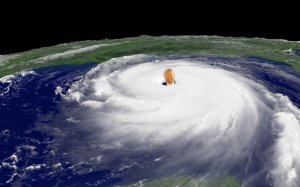 The likely Trump appointment to replace Yellen is said to have drafted a resignation based on Trump’s remarks over Charlottesville. Gary Cohn is Jewish.
Gary Cohn, Trump’s chief economic adviser, has given an interview to the Financial Timesin which he in no uncertain terms criticizes the Trump administration’s response to the violence in Charlottesville at a white nationalist rally, which led to the death of a counterprotester and 19 injuries, after a car crashed into crowds. Trump has drawn criticism — including privately from his own aides — for insufficiently denouncing the white supremacists who organized the rally and suggesting they shared blame with others.
Cohn, who is Jewish, doesn’t call out Trump by name, but it’s crystal-clear what he is saying. A sampling:
- “This administration can and must do better in consistently and unequivocally condemning these groups and do everything we can to heal the deep divisions that exist in our communities.”
- “I have come under enormous pressure both to resign and to remain in my current position. … As a patriotic American, I am reluctant to leave my post … because I feel a duty to fulfill my commitment to work on behalf of the American people. But I also feel compelled to voice my distress over the events of the last two weeks.”
- “Citizens standing up for equality and freedom can never be equated with white supremacists, neo-Nazis, and the KKK.”
While Cohn never says, “The president got it wrong and needs to do better,” he might as well have. Nobody else in the Trump administration offered comments suggesting any kind of equivalence in blame between the white supremacists and the counterprotesters. It was Trump who referred to there being blame “on many sides” and then days later “on both sides.” Other members of the administration tried to argue that Trump had offered a more forceful denunciation of white supremacists and neo-Nazis when he had, in fact, not. (He would later do so, only to revert a day later to his former “many sides/both sides” comments.)
When Cohn says, “Citizens standing up for equality and freedom can never be equated with white supremacists, neo-Nazis, and the KKK,” he is clearly talking about Trump’s “many sides/both sides” comments. There is no one else it could be about.
At least three national monuments are one the Endangered List. Only the mega rich get nice things.
Interior Secretary Ryan Zinke recommended Thursday that President Trump alter at least three national monuments established by his immediate predecessors, including two in Utah, a move expected to reshape federal land and water protections and certain to trigger major legal fights.
In a report Zinke submitted to the White House, the secretary recommended reducing the size of Utah’s Bears Ears and Grand Staircase-Escalante national monuments, as well as Oregon’s Cascade-Siskiyou National Monument, according to multiple individuals briefed on the decision.
President Bill Clinton declared the 1.9 million-acre Grand Staircase-Escalante in 1996, while President Barack Obama designated the 1.35 million-acre Bears Ears last year. Cascade-Siskiyou, which now encompasses more than 113,000 acres, was established by Clinton shortly before leaving office and expanded by Obama in January.
 The Mega Rich get nice things especially when they’re appointments of Trump and shameless about purloining. Treasury Secretary Mnuchin viewed eclipse from lawn of Fort Knox. This is the man whose wife has a handbag that could be traded for a new car and calls a Portland Mother “adorably out of touch”. I used to work for the New Orleans Fed. We had a system wide rule about trying to hold meetings during the Mardi Gras season. That’s strictly forbidden.
But a watchdog group and a lawmaker seized on a different issue: Did the millionaire couple fly to Louisville on Monday, on a taxpayer-funded plane, just to see the solar eclipse? Citizens for Responsibility and Ethics in Washington (CREW) suggested as much in seeking records of the trip, saying it “seems to have been planned around the solar eclipse.”
It turns out that Mnuchin did view the eclipse while he was in Kentucky: Just outside the path of totality, from the lawn of the nation’s fabled Fort Knox, home to nearly $200 billion in American gold, according to an aide to Senate Majority Leader Mitch McConnell (R-Ky.).
A post on McConnell’s official Facebook page, attributed to the senator, said Thursday that he and Mnuchin viewed the eclipse from the roof. “The U.S. Department of Treasury Secretary Steven Mnuchin and I in front of the main door to the United States Bullion Depository at Fort Knox before we viewed the #solareclipse from the rooftop today,” said the posting, which featured an image of the two men, McConnell holding eclipse glasses.
After media reports about the Facebook post, including in this story, the Treasury Department said in a statement that the viewing was from the lawn.
“The Mint staff had originally suggested that the delegation watch the eclipse from the roof but the Secretary specifically canceled that part of the tour. They watched it briefly from outside before they entered (prior to the actual time of full eclipse),” the statement said.
McConnell’s office has revised its Facebook page to remove the reference to the rooftop and declined to say how the error was made.
Right. And it looks like CROOKED and BIGOTED former sheriff Joe Arpaio will be pardoned. Has he no decency at all?
He flouted the Constitution. He disobeyed court orders. And then he bragged about it.
To understand the building outrage, particularly among civil rights groups, over the possibility that President Donald Trump would pardon former Maricopa County Sheriff Joe Arpaio, one need only return to the July criminal contempt decision against him.
It followed a decade-long case against the sheriff for racial-profiling practices in Arizona, during which Arpaio was ordered to stop targeting Latinos for traffic stops and detention.
“Not only did (Arpaio) abdicate responsibility, he announced to the world and to his subordinates that he was going to continue business as usual no matter who said otherwise,” wrote US District Judge Susan Bolton in the July 31 order finding Arpaio guilty of criminal contempt.
The 85-year-old sheriff who lost his run for a seventh term in 2016 is scheduled to be sentenced October 5. Trump has strongly suggested he would pardon Arpaio before then, and CNN has learned that the White House was preparing the necessary paperwork and talking points to distribute to allies.
My eyes will be on Harvey and the unnatural disaster that sits in the Oval Office today. What’s on your reading and blogging list?

 peej
peej Carissa
 bostonboomer
 dakinikat
 ecocatwoman
 jjlo
jjlo mablue2
 Mama Lopez
 peggysue22
 quixote
 skydancingguestblogger
 Mona (aka Wonk the Vote)





Recent Comments