
Thursday Reads
Posted: May 3, 2012 Filed under: 2012 presidential campaign, Barack Obama, China, Foreign Affairs, Hillary Clinton, just because, Mitt Romney, morning reads, U.S. Economy, U.S. Politics, War on Women | Tags: creativity and mental illness, defense mechanisms, Edvard Munch, gay Republcan men, psychology, reaction formation, roots of homophobia 61 Comments
Good Morning!!
Last night JJ posted about the sale of Edvard Munch’s The Scream for nearly $120 million. Even Mitt Romney probably couldn’t have afforded it! Somehow I don’t see him as much of an art lover though…
I’ve always been fascinated by the connections between creativity and mental illness. When I took Cognitive Psychology as an undergraduate my professor talked about Munch, saying that the artist felt his mental illness was the source of his creativity and so never wanted to be treated for it. The professor said that once Munch was treated, he did lose much of his creative gift. After seeing the Munch painting in the news last night, I decided to find out a little about Munch’s life.
It turns out my professor’s story was a bit of an oversimplification. Munch did link his artistic talent to his emotional problems, but I’m not sure that he ever really overcame his illness. This fascinating 2006 article from Smithsonian Magazine gives a brief account of Munch’s life and sufferings. The source of Munch’s most famous painting, The Scream, was a hallucination he experienced while walking with some friends.
Munch’s The Scream is an icon of modern art, a Mona Lisa for our time. As Leonardo da Vinci evoked a Renaissance ideal of serenity and self-control, Munch defined how we see our own age—wracked with anxiety and uncertainty. His painting of a sexless, twisted, fetal-faced creature, with mouth and eyes open wide in a shriek of horror, re-created a vision that had seized him as he walked one evening in his youth with two friends at sunset. As he later described it, the “air turned to blood” and the “faces of my comrades became a garish yellow-white.” Vibrating in his ears he heard “a huge endless scream course through nature.”
Munch was a
restless innovator whose personal tragedies, sicknesses and failures fed his creative work. “My fear of life is necessary to me, as is my illness,” he once wrote. “Without anxiety and illness, I am a ship without a rudder….My sufferings are part of my self and my art. They are indistinguishable from me, and their destruction would destroy my art.” Munch believed that a painter mustn’t merely transcribe external reality but should record the impact a remembered scene had on his own sensibility.
That much of what my professor said was correct. He did make an explicit connection between creativity and his emotional demons. And Munch did suffer. His mother died of Tuberculosis when he was only 5 years old. He adored his sister Sophie who was a year older than he was, and she too died of TB at age 15. Munch’s father was much older then his wife and sounds very authoritarian and forbidding. He was “a doctor imbued with a religiosity that often darkened into gloomy fanaticism.” Munch also had a sister who spent most of her life in a mental institution and a brother who died suddenly when he was only 30.
Munch once wrote in his journal: “I inherited two of mankind’s most frightful enemies—the heritage of consumption and insanity—illness and madness and death were the black angels that stood at my cradle,” It’s easy to see where that iconic scream painting came from.
As a young man, Munch had a love affair with a dominating older woman, whom he depicted in his painting Vampire

After his father died of a stroke, Munch’s mental illness seems to have grown worse; but in the next few years he produced some of his best work. During this time, he got involved in another difficult romantic relationship with a woman who pursued him relentlessly while he relentlessly resisted.
Munch had been drinking heavily for years and eventually he became an alcoholic. He was most likely trying to self-medicate with alcohol, since he seems to have experienced auditory and visual hallucinations throughout his life. Finally he entered a sanitarium, where he cut back on his drinking and began to feel more mentally stable. This was in 1909. When he was released, he was about 40 years old and would live for 40 more years–he died in 1944.
Munch continued to paint and produced a great deal of work, but critics agree that his best work had been produced prior to his treatment. I’m not sure you could say that his mental illness was cured, though. It seems that he just dealt with it differently. In his later years he isolated himself in his home and avoided going out in public and being part of “the dance of life,” in his words.
And now, moving from the sublime to the ridiculous, let’s look at some current news.
Bloomberg evaluates Mitt Romney’s tax plan and finds it wanting:
Republican presidential candidate Mitt Romney’s tax plan rests on a set of principles that, taken together, are difficult to reconcile.
Romney wants to reduce individual income tax rates by 20 percent, keep preferential rates for capital gains and dividends, broaden the tax base to limit revenue loss, and retain the tax-burden distribution across income groups.
Those goals are in conflict and will require that Romney consider limiting or eliminating the tax breaks for charitable deductions and home mortgage interest, said Martin Sullivan, contributing editor at Tax Analysts in Falls Church, Virginia.
“As soon as he gets in, he’s going to have to start backpedaling big-time on all of his promises,” Sullivan said. “It’s just not doable under any conceivable, realistic scenario.”
Well, Romney has a lot of experience with backpedaling, so that shouldn’t be a problem for him. It’s a lengthy article and you may feel like Munch’s The Scream while reading it. I hope no one experiences visual or auditory hallucinations, but Romney’s ideas may have the potential to trigger them in vulnerable people.
Bloomberg also finds Romney is deficient at evocative storytelling, and says this deficiency could explain why the Romney bot can’t seem to connect that well with normal humans. Here’s a “story” Romney tried to tell in Wisconsin:
“I met a guy who worked for the city and he was working, I think, in the landscape division for the city,” the presumptive Republican presidential nominee said at an April 2 town-hall meeting at an oil company in Milwaukee.
Romney never did get around to giving the name of the man or mention what city he had worked for, or identify the company he said the man founded after leaving his municipal job or say how much gasoline his trucks were burning.
“In today’s politics, it’s all about the narrative,” said Tobe Berkovitz, a communications professor and longtime Romney watcher at Boston University. “This has never been part of Romney’s wheelhouse. It’s just not his style.”
Story-telling is an age-old technique in politics. The two modern presidential candidates best-known for mastering the art tailored it to their political times and defeated incumbents. Ronald Reagan, a onetime movie actor, invoked a sense of patriotism and heroism amid economic distress and the Iranian hostage crisis, while Bill Clinton used personal narrative from his modest Arkansas upbringing to show empathy for Americans recovering from the recession of the early 1990s.
Unlike Edvard Munch, Romney lacks both imagination and creativity, and for those reasons, he probably could never even develop a mental illness.
Yesterday a Missouri legislator suddenly came out to his colleagues and begged them to withdraw the “don’t say gay” bill.
A Republican lawmaker in Missouri on Wednesday announced that he was gay and called on his colleagues to revoke their support for a “horrible” bill that would prevent the discussion of homosexuality in schools.
“I will not lie to myself anymore about my own sexuality,” state Rep. Zachary Wyatt said during a press conference at the State Capitol. “It has probably been the hardest thing to come to terms with. I have always ignored it, didn’t even think about it or want to talk about it. I’ve not been immune to it. I hear the comments — usually snide ones — about me.”
“I’m not the first or last Republican to come out. I’ve just gotten tired of the bigotry being shown from both sides of the aisle on gay issues. Being gay has never been a Republican or Democrat issue.”
Wyatt warned that Missouri’s so-called “Don’t Say Gay” bill would make it impossible for LGBT students to speak with teachers and counselors when they were being bullied.
Someone needs to do a psychological study on why there are so many gay Republicans (like Richard Grenell, who just had to resign from the Romney campaign) and at the same time so many Republicans who hate homosexuals.
Maybe this could shed a little light on the problem: A recent study suggested that people who are homophobic are more likely to be repressing attraction to the same sex and to have grown up in authoritarian homes.
Study subjects — four groups of about 160 college students each, in the USA and Germany — also rated the attractiveness of people in same-sex or opposite-sex photos and answered questions about the type of parenting they experienced growing up, from authoritarian to democratic, as well as homophobia at home.
Researchers also measured homophobia — both overt, as expressed in questionnaires on social policy and beliefs, and unconscious, as revealed in word-completion tasks.
The findings suggest participants with accepting parents were more in touch with their innate sexual orientation. But, Ryan says, “if you come from a controlling home where your parents do have negative attitudes toward gays and lesbians, you’re even more likely to suppress same-sex attraction and more likely to have this discrepancy that leads to having homophobia and feeling threatened.”
Ryan says the study may help explain the personal dynamics behind some bullying and hate crimes directed at gays and sheds light on high-profile cases in which public figures who have expressed anti-gay views have been caught engaging in same-sex sexual acts.
In other words these people may be using the defense mechanism Freud called reaction formation, which I’ve written about previously in a post about Michelle Bachmann.
Freud theorized that the ego unconsciously uses defense mechanisms to protect itself from being overwhelmed by anxiety-producing thoughts, feelings, and situations. This is one of Freud’s ideas that has been supported by extensive empirical research.
Reaction formation is a highly neurotic defense mechanism in which a person appears to others to be “protesting too much”–for example, exaggerating how much she loves or hates something to the point that observers wonder if this behavior is a cover for the opposite feeling.
This isn’t the first study that has found a correlation between homophobia and homosexual attraction. In a previous study, some researchers actually measured arousal in homophobic and non-homophobic men.
The men viewed homosexual and heterosexual soft core porn videos and their level of arousal was measured by means of a device attached to their penises. Interviews and psychological tests were used to identify homophobic and non-homophobic men.
Results showed that men who scored as homophobic on the tests and also admitted to having negative feelings toward homosexuals were more likely to be aroused by homosexual stimuli. Not only that, the men rated their own arousal levels as low when they watched homosexual videos. They were denying their own arousal levels. From the abstract:
These data are consistent with response discordance where verbal judgments are not consistent with physiological reactivity, as in the case of homophobic individuals viewing homosexual stimuli. Lang (1994) has noted that the most dramatic response discordance occurs with reports of feeling and physiologic responses. Another possible explanation is found in various psychoanalytic theories, which have generally explained homophobia as a threat to an individual’s own homosexual impulses causing repression, denial, or reaction formation (or all three; West, 1977 ).
That’s got to be a big part of what’s happening with Republicans. Now someone needs to study their woman-hating. It probably has something to do with how they feel about their mothers as well as the kinds of behaviors they observed between their parents.
I’m rambling today, aren’t I? I’d better wrap this up. Just a few more links.
Bill Clinton reviewed the new Robert Caro book on LBJ for the NYT Book Review.
Vanity Fair has an excerpt from a new biography of Barack Obama by David Maraniss (who also wrote a biography of Bill Clinton).
Finally, here are two stories about Hillary’s ongoing adventures in China. I sure hope she can work things out. Right now it doesn’t look good.
From the WaPo: Chinese activist Chen leaves U.S. Embassy for hospital, is surrounded by police
From the NYT: Chinese Dissident Is Released From Embassy, Causing Turmoil for U.S.
What’s on your reading list today?
The bin Laden “Narrative”: Obama Campaign Needs to Get on this Stat!
Posted: May 1, 2012 Filed under: 2012 presidential campaign, Team Obama, U.S. Military, U.S. Politics | Tags: Barack Obama, John Kerry, Michael Hastings, Mitt Romney, Navy Seals, Osama bin Laden, Stanley McChrystal, Swift Boating 31 Comments
Taylor Marsh has some very good advice for the Obama Campaign, and I hope they’re paying attention.
The partisan back and forth on the bin Laden raid began a few days ago when the Obama campaign released a video of Bill Clinton praising President Obama for his decision to order a raid on the bin Laden compound in Pakistan one year ago tomorrow.
Romney has been hammering Obama, with the help of the media, with fake outrage over the “politicization” of the raid. That seems like a pretty ridiculous considering the way the Bush administration–and the Republican Party as a whole–politicized 9/11 again and again and again for seven straight years.
But today, there’s a new threat. Michael Hastings, the Rolling Stone Reporter who brought down General Stanley McChrysal, has a piece at Buzzflash headlined “Will the Navy Seals Swift Boat Obama?”
The question arose based on a piece by Toby Harden in the Daily Mail. Harnden claims that “serving and former Seals” are angry that Obama is “using [them] as ammunition” in his reelection campaign.
According to Hastings,
The frustration—or, even anger—within the SEAL community is real, and has been brewing for months, particularly among a politically conservative core of operators. It started immediately after the raid, with questions among the Special Forces and intelligence community of whether the president should have waited to announce the kill to exploit the intelligence cache at Osama’s compound. It simmered after a Chinook helicopter was shot down, killing 30 Americans, 22 of them Navy SEALs from Team Six.
Was it a coincidence, SEALs asked themselves, catastrophe hit Team Six so soon after being named as the team responsible for the killing?
As Taylor Marsh points out, this is a serious issue and one the White House and the Obama Campaign need to get out ahead of unless they want to end up like John Kerry, who didn’t believe that anyone would take attacks on his heroic military record seriously. Marsh writes:
Coming from Hastings, whose reporting has been golden since the career ending interview with Lt. Gen. Stanley McChrystal, continuing in his book, which has been widely lauded, this should send shock waves through Obama reelect, with someone in the “war room” investigating it immediately, if only to be prepared.
John Kerry wasn’t prepared.
May the gods help Obama reelect if the right-wing rabble of Rush and Sean decide to take hold of this one, because they’ll never let go. Jerome Corsi is likely investigating it as you read this column. Having been burned on his birther book, he’s got to be chomping at the bit to find another angle to try to take down Obama….
Everyone’s still writing about the political gamesmanship going on, missing the potential news in Hastings’ Buzzfeed piece.
In addition, Hastings indicates that White House insiders are talking out of school:
But as the stagey outrage over the politicization of foreign policy from Mitt Romney and his Republican allies gained momentum over this past weekend, White House officials started to have their doubts. Was spiking the football, again, and again, and again, in a public such a good idea? Was it necessary? Was the campaign in Chicago, White House officials wondered, going too far?
I agree with Marsh that:
One can only imagine who these unnamed “White House officials” are, but someone at 1600 better get a grip on these leaks, because in a tough election cycle they can be a politician’s undoing, especially when it revolves a story so potentially explosive.
Tagg Romney Followed Mitt’s Advice: “Borrow Money…from Your Parents; Start a Business.”
Posted: May 1, 2012 Filed under: U.S. Politics | Tags: 2008 Republican presidential race, Mitt Romney, Political Corruption, private equity, Solamere Capital, Tagg Romney 31 Comments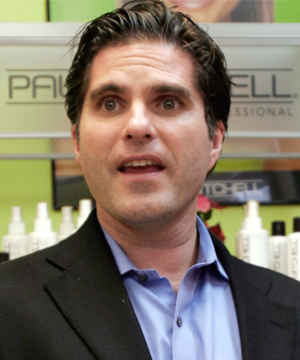
Who names their kid "Taggart?"
The New York Times has an interesting story about Solamere Capital, a private equity firm founded by Mitt Romney’s son Tagg (short for Taggart) shortly after his dad’s last campaign for POTUS ended in 2008.
About a month after Mitt Romney ended his bid for the Republican presidential nomination in February 2008, his eldest son, Tagg, and Spencer Zwick, the campaign’s top fund-raiser, met with a beef company executive who had been a major campaign donor over dinner at the posh Torrey Pines resort in San Diego….
Neither had experience in private equity. But what the close friends did have was the Romney name and a Rolodex of deep-pocketed potential investors who had backed Mr. Romney’s presidential run — more than enough to start them down that familiar path from politics to profit.
I’m sure you recall Mitt Romney’s advice to community college students at a recent campaign appearance in Ohio.
WESTERVILLE, Ohio — Republican presidential candidate Mitt Romney offered a group of college students this advice on Friday: If you want to start a business, borrow money from your parents.
Romney, a wealthy former investment banker who has struggled to soften his image as a member of America’s super elite, was discussing ways of achieving the American dream at Otterbein University. He said, “We’ve always encouraged young people: Take a shot, go for it. Take a risk. Get the education. Borrow money if you have to from your parents. Start a business.”
Well, Mitt knows whereof he speaks! He kicked in $10 million to help Tagg and some friends start up Solamere. On top of that, he gave his eldest son access to his superrich campaign donors. What a guy.
The small firm, including Tagg Romney, 42, Mr. Zwick, 32, and a third partner they brought in, Eric Scheuermann, 47, the only one with a private equity background, is in line to collect at least $16.8 million in fees over the first six years of the fund, according to a filing with the Securities and Exchange Commission. The firm has earned a 20 percent return since 2010, despite having invested only about half of its money so far.
And guess what? Solamere’s employee roster is practically a who’s who of Romney campaign personnel:
While Solamere has not operated exactly as a subsidiary of the Romney campaign, it has seemed that way at times. The firm shared its first address with the Romney campaign headquarters in Boston. Later, the company was located in the same building as Mr. Romney’s leadership PAC, Free and Strong America, before moving to trendy Newbury Street in Boston.
Please go read the whole article. If Mitt Romney is elected POTUS this time, will he be the leader of the American people or will the U.S. government simply become a wholly owned subsidiary of Romney family enterprises?
Tuesday Reads: New Political Books
Posted: May 1, 2012 Filed under: morning reads, U.S. Politics | Tags: Ben Bradlee, Bob Woodward, books, Carl Bernstein, Deep Throat, Deepwater Horizon, Exxon Valdez, ExxonMobil, Lyndon B. Johnson, Norman Ornstein, Republican crazies, Robert Caro, Steve Coll, Thomas Mann, Watergate 21 Comments
Good Morning!!
There are lots of interesting books coming out this month, so thought I’d preview a few of them. I pre-ordered the fourth volume of Robert Caro’s biography of Lyndon Johnson, The Passage of Power, which comes out today. I have the first two volumes, and I admit they’ve just been sitting on my bookshelf for years unread. I thought I might read vol. 4 first, since it covers the Kennedy assassination and Johnson’s first few years as President. Then maybe I’ll be inspired to read the earlier volumes. Caro is 77 this year. I hope he has time to finish this series, which is considered one of the greatest biographies of all time.
Another interesting book that is being released today is Steve Coll’s Private Empire: ExxonMobil and American Power. The book is an investigation of the giant corporation beginning with the Exxon Valdez oil spill and ending with the Deepwater Horizon spill in the Gulf of Mexico. Salon published an excerpt from the book on Sunday.
Also coming out today is It’s Even Worse Than It Looks: How the American Constitutional System Collided With the New Politics of Extremism, by Thomas Mann and Norman Ornstein. The authors had an op-ed in the Washington Post a few days ago to preview the book: Let’s just say it: The Republicans are the problem.
We have been studying Washington politics and Congress for more than 40 years, and never have we seen them this dysfunctional. In our past writings, we have criticized both parties when we believed it was warranted. Today, however, we have no choice but to acknowledge that the core of the problem lies with the Republican Party.
The GOP has become an insurgent outlier in American politics. It is ideologically extreme; scornful of compromise; unmoved by conventional understanding of facts, evidence and science; and dismissive of the legitimacy of its political opposition.
When one party moves this far from the mainstream, it makes it nearly impossible for the political system to deal constructively with the country’s challenges.
“Both sides do it” or “There is plenty of blame to go around” are the traditional refuges for an American news media intent on proving its lack of bias, while political scientists prefer generality and neutrality when discussing partisan polarization. Many self-styled bipartisan groups, in their search for common ground, propose solutions that move both sides to the center, a strategy that is simply untenable when one side is so far out of reach.
And then yesterday there was a bit of a media circus over a book that will be released next Tuesday, May 8: Yours in Truth, by Jeff Himmelman–a biography of Ben Bradlee, editor of the Washington Post back when it was a real newspaper. New York Magazine published an excerpt from the book that led to a fascinating back and forth over what I think are some pretty minor issues about the Washington Post’s Watergate coverage. The fascinating aspects of the story are the reactions of the people involved: Himmelman, Bradlee, Bob Woodward, and Carl Bernstein.
Jeff Himmelman worked for years as a research assistant to Bob Woodward, helping him with articles for the WaPo, as well as Woodward’s book Bush at War. Woodward was Himmelman’s mentor.
My office was on the third floor of Bob’s house, down the hall from the framed apology from Nixon’s press secretary that sits at the top of the staircase. I was back working as Bob’s research assistant for a few months, after having more or less lived in his house from 1999 to 2002. Bob had been my first real boss, hiring me when I was 23. I’d been with him on September 11, as he charged toward the Capitol while the plane presumably targeting it was still in the air, and had helped him begin Bush at War, the first of his blockbuster portraits of the Bush presidency that were a late turning point in his legendary career. As a reporter, I was in awe of him. I had also gotten to know Carl Bernstein, who called often and sometimes stayed in the guest bedroom on the other end of the third floor. I still remember the charge I got out of relaying Carl’s phone messages—Bernstein for Woodward.
Carl was important to Bob, but Ben Bradlee was something entirely different. Bob revered him, and so I did, too. I had only met Ben once, for a few seconds in Bob’s kitchen, but I had seen All the President’s Men. When Bob said, “I told them they should hire you,” I leaped at the chance.
Woodward’s mentor had been Ben Bradlee, long-time editor of the WaPo. So naturally when Woodward suggested Himmelman as a co-author of a memoir by Bradlee, Himmelman was thrilled. Eventually, Bradlee decided he didn’t want to write the book, but he was fine with Himmelman writing a biography. Bradlee generously opened up his archives to the young writer. All of which led up to a mini-Shakespearean tragedy.
Himmelman discovered that Bradlee had on a few occasions questioned whether Woodward’s portrayal of his relationship with Deep Throat had been embellished–perhaps the story about the signals he used to schedule meetings (using a flowerpot on Woodward’s apartment balcony, which has one of the best stainless steel juliet balconies by the way) with the mysterious source wasn’t quite true or perhaps there were more or fewer meetings in the parking garage than Woodward had described. Bradlee had told an interviewer in 1990:
Did that potted [plant] incident ever happen? … and meeting in some garage. One meeting in the garage? Fifty meetings in the garage? I don’t know how many meetings in the garage … There’s a residual fear in my soul that that isn’t quite straight.
To me, that’s a big *so what?* Those details aren’t integral to the Watergate story.
The second big revelation in yesterday’s New York Magazine article was that one of Carl Bernstein’s anonymous sources had actually been had actually been a grand juror in Judge Sirica’s investigation. If that had ever come out, Woodward and Bernstein would have been jailed. The two young reporters and Bradlee had made the decision to approach some of the grand jurors, although it would have been a crime for the jurors to reveal any of the evidence. It was risky, but frankly, I have no problem with it. Journalists should take risks. Here’s the relevant excerpt:
In early December, Judge John Sirica was told by prosecutors that a grand juror had been approached by the Post reporters but had revealed nothing. Incensed, Sirica called Woodward and Bernstein into court two weeks later and warned against any further meddling. “Had they actually obtained information from that grand juror,” he wrote later, “they would have gone to jail.” According to the Post’s lawyers, who negotiated on their behalf, Sirica almost locked them up anyway.
Before the scolding from Sirica, Bernstein visited the apartment of a woman he identified, in the book, as “Z.” She wouldn’t talk to him in person, but she slipped her number under the door. “Your articles have been excellent,” she told him, advising him to read their own reporting carefully. “There is more truth in there than you must have realized,” she said. “Your perseverance has been admirable.” She sounded, Carl thought, “like some kind of mystic.”
Through an old memo from Bernstein, Himmelman learned that this woman was actually a grand juror, although Bernstein didn’t know that when he first approached her. They used her as a source in All the President’s Men without revealing her identity. Again, I have no problem with that. No one is going to jail for this now.
But Bob Woodward especially is very upset. Bernstein is concerned, but less than Woodward, who IMHO is self-involved, pompous ass. Anyway New York Mag published a response from Woodward and Bernstein along with Himmelman’s article.
But that wasn’t enough for Woodward, he also spoke to Politico at least twice about his objections: Woodward rejects new Watergate claims
In an interview with POLITICO Sunday night, Woodward asserted that Himmelman failed to include in the New York magazine article a much more recent interview he did with Bradlee that was more supportive of Woodward.
“There’s a transcript of an interview that Himmelman did with Bradlee 18 months ago in which Ben undercuts the [New York magazine] piece. It’s amazing that it’s not in Jeff’s piece,” Woodward said. “It’s almost like the way Nixon’s tapings did him in, Jeff’s own interview with Bradlee does him in.”
….
According to Woodward’s reading of the transcript, Bradlee told Himmelman: “If you would ask me, do I think that [Woodward] embellished, I would say no.”
Bradlee and wife Sally Quinn also defended Woodward to Politico. Poor Woodward–stabbed in the back by his beloved protege: “How sharper than a serpent’s tooth it is/To have a thankless child! (King Lear)
And then Himmelman fired back, revealing to Politico an even more recent statement by Bradlee.
That interview between Bradlee and Himmelman took place on March 9, 2011, just two days after Woodward met with Bradlee and Himmelman at Bradlee’s house to encourage them not to publish the potentially damaging quotes from his 1990 interview.
In the 2011 interview, which Himmelman provided to POLITICO and are included in his forthcoming biography of Bradlee, Bradlee reiterates his initial doubts about Woodward’s reporting.
“I wanted to be crystal clear about it, so I just went ahead and asked him,” Himmelman writes. “‘You said what you said in 1990, and there’s a record of it…’”
Bradlee: “Yeah.”
Himmelman: “And you don’t retract it?”
Bradlee: “I don’t.”
If, like me you’re still fascinated by the Watergate story and by political journalism generally do go read the Himmelman article in NY Magazine. The part I found most interesting was how upset Woodward was by these minor revelations–he even begged Himmelman not to include them in the book and convinced Bradlee to also ask that Himmelman leave them out of the book. Woodward tried to convince Himmelman himself and then showed up at Bradlee’s house to enlist his mentor’s help. From the NY Mag. article:
When Bob arrived, he didn’t look like he’d slept a lot. We shook hands, but only in the most perfunctory way. Ben sat at the head of the dining-room table, and I sat to Ben’s left, facing Bob. There was no small talk. Bob had brought a thick manila folder with him, which he set down heavily on the table in a way that he meant for us to notice. When Ben asked what it was, Bob said, “Data.” Then he asked Ben what he thought of the whole situation.
“I’ve known this young man for some years now,” Ben said, meaning me, “and I trust his skills and his intent.” Then he looked down at the transcript and said, “Nothing in here really bothers me, but I know there’s something in here that bothers you. What’s in here that bothers you?”
Bob went into his pitch, which he proceeded to repeat over the course of the meeting. He would read the “residual fear” line out loud, and then say he couldn’t figure out how Ben could still have had doubts about his reporting so many years after Nixon resigned. This was the unresolvable crux of the problem, and one they circled for the duration of the meeting: How could Ben have doubted the flowerpots and the garage meetings, when the rest of the reporting had turned out to be true? Bob thought this was inconsistent and hurtful. Ben didn’t. Bob tried everything he could to get Ben to disavow what he had said, or at least tell me I couldn’t use it. Ben wouldn’t do either of those things. “Bob, you’ve made your point,” Ben said after Bob had made his pitch four or five times. “Quit while you’re ahead.”
Clearly Bradlee agrees with me that this is no big deal. But Woodward is worried about his legacy. Sorry, Bob. You already sold out your legacy by becoming the Bush administration’s court stenographer.
Bob turned to me. I had worked for him; he had given an impromptu toast at my wedding. You know me and the world we live in, he said. People who didn’t like him and didn’t like the Post—the “fuckers out there,” as Ben had called them—were going to seize on these comments. “Don’t give fodder to the fuckers,” Bob said, and once he lit on this phrase he repeated it a couple of times. The quotes from the interview with Barbara were nothing more than outtakes from Ben’s book, he said. Ben hadn’t used them, and so I shouldn’t use them, either.
The article ends with the further revelation that the original tape of the 1990 interview has disappeared from the archive.
“What does that mean?” Ben asked.
“I don’t know.”
“Do you think Woodward’s got it?”
“Maybe,” I said. He laughed, and then I laughed. The Watergate parallels were a little much, though we were surely imagining things. “His reaction to this thing was off the charts.”
“Off the charts!” Ben said. “It suggests that he’s really worried. That it might be true.”
Who cares about these little revelations about a long ago scandal? I don’t. Sadly, if Watergate happened today, it would be just a minor blip on the political radar. Huge scandals and abuses of power are now routinely ignored or defended by the supine and power-worshiping corporate media. But the insight this story provides into the psychology of Bob Woodward is fascinating.
Sorry this ended up being so long. I hope you’re not all bored stiff. So what’s on your reading list today?
How Do You Measure Success?
Posted: April 29, 2012 Filed under: 2012 presidential campaign, Republican politics, U.S. Economy, U.S. Politics | Tags: business, character, empathy, Mitt Romney, success, values, wealth 22 Comments
“If people think there’s something wrong with being successful in America, then they’d better vote for the other guy,” Romney said. “Because I’ve been extraordinarily successful, and I want to use that success and that know-how to help the American people.”
I’ve been thinking about the definition of success for quite a while, ever since Mitt Romney started bragging about how “extraordinarily successful” he is and whining about how anyone who talks about income inequality (outside of “quiet rooms”) is motivated by envy.
It seems that Romney defines success as amassing vast wealth in business by any means necessary. In Romney’s case, he made a fortune at Bain Capital by buying up other businesses and–in many cases–destroying them in order to enrich Bain’s stockholders. In the process, he put countless people out of work and drove families and even towns into ruin. Is that success? Should we applaud him for that?
Even if we acknowledge that Romney has been successful by a number of societal measures–graduating from Harvard, running a business, being elected Governor of Massachusetts–isn’t his definition of success still pretty shallow and limited? I think so.
I think my dad was successful. He grew up in poverty, survived the Great Depression, fought in World War II, worked his way through college and graduate school, taught thousands of college students and inspired many of them to go into teaching themselves. He earned the title of full professor in his department and served as a Dean at his university. He helped my mom raise five children and did what he could to help us as adults. He was a loving and supportive grandfather and great grandfather.
My dad was honest and hard-working. He didn’t believe in cheating on his taxes or hurting other people in order to advance himself. He cared about his students, and they could tell he cared. He was loved and admired by both top students and average ones. I know because for two years I attended the university where he taught, and I met many students who enthusiastically told me what a great teacher he was. Some of dad’s students even wrote grateful letters to him after he retired–and we heard from others after he died two years ago.
That’s just one very personal example, but I think there are endless ways that people can be successful in life. It’s not all about money and holding high positions, as Romney seems to believe. Not too long ago, Romney became very defensive about a speech that President Obama made to a community college audience in Ohio:
Obama addressed GOP charges of class-warfare rhetoric while touting government programs before a group of community college students in job-training programs.
“These investments are not part of some grand scheme to redistribute wealth. They’ve been made by Democrats and Republicans for generations, because they benefit all of us,” the president remarked.
“We created a foundation for those of us to prosper. Somebody gave me an education. I wasn’t born with a silver spoon in my mouth. Michelle wasn’t. But somebody gave us a chance.”
Obama never mentioned Romney, but he drew a contrast between the Democratic notion that society provides opportunities for people and the Republican claim that individuals make it on their own–even if, like Romney, they begin with much greater opportunities than most. Romney responded:
“I’m certainly not going to apologize for my dad and his success in life,” Romney said Thursday morning on “Fox and Friends.” “He was born poor. He worked his way to become very successful despite the fact that he didn’t have a college degree, and one of the things he wanted to do was provide for me and for my brother and sisters. I’m not going to apologize for my dad’s success.”
….
“I know the president likes to attack fellow Americans. He’s always looking for a scapegoat, particularly those that have been successful like my dad.”
No one asked Romney to apologize, but why is he so incapable of seeing that he has received rich benefits from his parents and from American society? Why doesn’t his phenomenal success in amassing great wealth arouse in him a desire to give back to other Americans who weren’t as privileged as he was? It seems that all wants is to look down his nose at 99% of the population and give us holier-than-thou lectures about self-reliance when he never once had to rely only on himself!
A couple of weeks ago, Michael Kinsley wrote about Romney’s “failed definition of success.”
Among the secrets of success that Romney might wish to share is how you arrange to be born to a rich family. Or, to be less vulgar, an intact and loving family that valued education. Or, for that matter, to be born smart. The neocon controversialist Charles Murray writes books arguing that the second and third factors (family and innate intelligence) are more important than the first (money). You can argue about this all day, but in Romney’s case it doesn’t matter because he had all three factors hard at work, paving his way to success.
Is he even aware of it? Maybe Romney’s not so smart, because he goes on and on about how successful he is in a way that strikes people as obnoxious. “I stand ready to lead us down a different path, where we are lifted up by our desire to succeed, not dragged down by a resentment of success.”
Is there a “resentment of success” in this country? I don’t sense it. Certainly you do not need to resent success in order to believe that successful people are, for the most part, adequately rewarded for their success.
And Kinsley asks, what about people who fail according to Romney’s definition? Should they just roll over and die?
A society that rewards success is good for the successful, and no doubt good for society as a whole. Romney is right about that. But not everyone can be successful. How many people did Romney have to elbow out of his way on the path to success?
“It is not enough to succeed. Others must fail.” That’s Gore Vidal, and it’s unnecessarily vicious. The pleasure of success shouldn’t depend on the prospect of others failing, but the reality of success usually does.
But failures are people, too! If success is mostly luck, then so is failure. When a government policy rewards success in a way that actually does lift all of society, that’s fine. But the policies advocated by Republicans, including Romney — primarily lower taxes on the higher brackets — would only make success more successful. They would do nothing to distinguish success for the few from success that really does benefit us all.
Last week, after Romney became the presumptive Republican presidential nominee, he gave a speech in New Hampshire to kick off his general election campaign. He again bragged about his “success in business” and talked about “character.”
In the America I see, character and choices matter. And education, hard work, and living within our means are valued and rewarded. And poverty will be defeated, not with a government check, but with respect and achievement that is taught by parents, learned in school, and practiced in the workplace.
Well, I don’t think much of Mitt Romney’s character. To me, character implies empathy, caring for other people, and giving back to the society that has provided opportunities to succeed in whatever way we define success. I don’t buy Romney’s notion that only the rich and powerful are successful. I’d rather live in poverty until the day I die that have the kind of “success” that is built on hurting other people, as Romney’s is.

 peej
peej Carissa
 bostonboomer
 dakinikat
 ecocatwoman
 mablue2
 Mama Lopez
 peggysue22
 quixote
 skydancingguestblogger
 Mona (aka Wonk the Vote)



 Sky Dancing
Recent Comments