Posted: August 2, 2018 | Author: bostonboomer | Filed under: Afternoon Reads, U.S. Politics | Tags: Barnes & Noble, Bernie Sanders, books on anxiety and stress, House of Bijan, JFK Jr., ostrich jacket, Paul Manafort, QAnon, Rick Gates, Tad Devine, Trump anxiety disorder |
 Good Afternoon!!
Ever since my mom had her stroke, I’ve been struggling more than ever in dealing with Trump news. When I sit down to write a post, I feel paralyzed by feelings of fear, dread and disgust. The only thing that keeps me going is knowing that I’m not alone. I think the majority of Americans are feeling something like this even if they’re not following the news as closely as we do.
NBC News: Barnes & Noble says sales of books related to anxiety are soaring. Here’s why.
Shoppers are increasingly looking at workbooks that help them cope with anxiety, Barnes & Noble senior director of merchandising, Liz Hardwell, said in a statement issued Wednesday afternoon. Although times may be tough, wrought with political tension, “the good news is that book buyers across the country are also looking for solutions to their stress,” she said.
Top-selling titles, based on the bookseller’s sales data, include “The Anxiety & Phobia Workbook” by Edmund Bourne, “The Anxiety Toolkit: Strategies for Fine-Tuning Your Mind and Moving Past Your Stuck Points” by Alice Boyes, and “The Anxiety and Worry Workbook: The Cognitive Behavioral Solution” by David Clark and Aaron Beck.
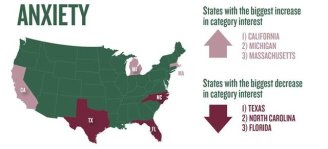 New York-based Barnes & Noble…said the state of California has had the largest increase in interest in anxiety books in stores over the past year. The next largest increases were in Michigan and Massachusetts. Meanwhile, shoppers in Texas, North Carolina and Florida had the biggest decrease in interest in anxiety books, according to the bookseller’s sales data.
That has to be related to Trump, right? The highest interest books about anxiety is in blue states and the lowest in red states.
Of course the Trumpists have their own sources of anxiety, but their fears are based on fake “news.” I tried to read this Washington Post article yesterday, and had to stop for fear my head would explode: The mystery of ‘Q’: How an anonymous conspiracy-monger launched a movement (if the person exists).
From somewhere in the vast and mysterious “deep state,” a dissident agent rises up to give the people cryptic clues about how their heroic president will push back the forces of evil and make America great again. The renegade informant is known only as “Q,” and if such a person actually exists, it’s not in a movie, but somewhere in the Washington bureaucracy.
 Energized by Q’s complex web of conspiracy notions about the forces aligned against President Trump, Q’s followers have spread virally both online and now out in real life, too, forming a movement known as QAnon that is making itself visible at Trump’s rallies and other public gatherings.
QAnon is something old — the latest in a string of conspiracy ideas that take hold of the public’s imagination in times of social stress and technological change. And QAnon is something new — a leaderless popular movement made up of people who believe in no one and therefore are willing to believe almost anything.
Apparently, these Q people think they are getting secret messages from things Trump says or does.
To believers, Q is a pseudonym for a well-placed U.S. government agent who is posting online distress messages and bits of intel, known as “bread crumbs,” in an effort to save the country — and Trump — from hostile forces within the government. Q’s missives started appearing last October on 4chan, the mostly anonymous website where fringe ideas incubate and blossom.
 In messages written in a telegraphic, cryptic style, Q called on Americans to rally behind Trump as he planned a counteraction against forces that would investigate him and remove him from office. Some QAnon followers believe Trump himself inspired their movement with a comment he made last October at a photo session with military leaders. The president pointed to the officers’ uniforms and said, “You know what this represents? Maybe it’s the calm before the storm.”
In far-flung corners of the Internet, some speculated that that storm was a counterstrike against the deep state. Then along came Q to turn that speculation into concrete predictions — of the arrest of Hillary Clinton, of a roundup of anti-Trump liberals, of a crackdown on child-sex-trafficking rings.
There’s much more at the link, if you can manage to wade through all the crazy. These people are turning up with their Q signs and T-shirts at Trump rallies, as you could see in the news coverage of the Tampa rally this week.
This story at the Daily Beast is really wacky: QAnon, the Pro-Trump Conspiracy Theorists, Now Believe JFK Jr. Faked His Death to Become Their Leader.
Believers in the bizarre pro-Trump conspiracy theory called QAnon were out in force at the president’s rally in Tampa, Florida on Tuesday, waving signs and cut-outs of the letter “Q” in front of the television cameras.

Trump points at a man in a Q shirt at a Duluth, MN rally.
The surprisingly large number of Trump supporters who believe in the off-the-wall conspiracy theory and the attendant media attention marks a new height for QAnon, which grew from the internet swamps of 4Chan and 8Chan….
For QAnon believers, special counsel Robert Mueller isn’t really investigating the Trump campaign—he’s actually working with Trump to take down a cabal of deep-state plotters and pedophiles. Soon, QAnon fans believe, Trump will team up with the military to throw top Democrats like Hillary Clinton and Barack Obama into Guantanamo Bay.
But what QAnon believers actually believe is constantly changing. After taking advantage of the murder of DNC staffer Seth Rich and promoting dangerous ideas like Pizzagate, QAnon supporters have found a new tragedy to exploit: the death of John F. Kennedy Jr., son of the late president.
Until July, QAnon supporters believed that “Q,” the anonymous online forum poster whose cryptic clues make up the conspiracy theory, was a high-ranking Trump administration official, or maybe even Trump himself. But now, a good portion of QAnon believers have become convinced that Q is none other than JFK Jr, even though he died in a plane crash nearly 20 years ago.
Click on the link to read the rest.
In other news, today is day three of the first Paul Manafort trial. Some interesting reads:
Franklin Foer at The Atlantic: A Hell of a Performance by Paul Manafort.
A week ago, while lawyers futzed with pretrial motions, Manafort arrived in court wearing a green jumpsuit. But the trial is the show of his lifetime. His oversize frame is once again permitted to occupy a suit—a fact that everyone in the courtroom incessantly noticed, given how much of the afternoon’s testimony came from his former clothiers, one of whom described submitting Manafort invoices that exceeded $800,000.
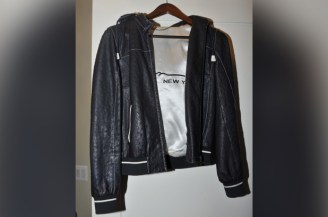
Paul Manafort’s $15,000 ostrich jacket
Whatever the outward signs that Paul Manafort is experiencing public torment, the presence of other men in tailored suits seems to have allowed Manafort to elevate himself into a strange sense of ease. The most compelling drama of the trial so far is watching Manafort comport himself. And the spectacle is pure Manafort.
He stands trial for abusing money he received as a world-renowned political consultant. Jurors have heard from witnesses who have described him as a master craftsman of public image; old colleagues have testified to his narrative gifts. These talents were so often used to smooth over the reputations of awful men—the kleptocrats, strongmen, and oligarchs whom he ingratiated with the American elite. Now, it’s his own image and his own narrative that he must manage, with an audience of expressionless jurors tucked away at the side of the room. And as the jury of his peers comes and goes from the room, Manafort makes a point of flashing his well-buffed smile. It’s the look of a man projecting confidence. It’s kind of convincing.
Foer, who has followed Manafort’s corrupt career for many years, describes a man who may believe he’ll get away with his criminality one more time:
When Special Counsel Robert Mueller’s prosecutors laid out their case in opening arguments, they correctly diagnosed Manafort’s sense of impunity. He’d kept right on scheming, they argued, because he believed that he would get away with it. Today, the presiding judge in the case, T. S. Ellis III, made a point of constantly chiding the government. He blamed prosecutors for describing Manafort’s clients as “oligarchs,” a term he called unfairly “pejorative.”

Manafort paid $12,000 for this suit from House of Bijan.
The Republican-appointed judge warned Mueller’s team against trying Manafort for “his lavish lifestyle.” As Manafort heard these arguments, I watched him from across the room. I saw him gazing ever so thoughtfully and detected a flicker of something else, too. In that moment, it wasn’t” hard to imagine him believing that he might just get away with it one more time.
Read the whole thing at The Atlantic.
TPM has posted photos of Manafort’s Fancy Clothes, Including The Ostrich Jacket.
If there was anything prosecutors at Paul Manafort’s trial were trying to impress on the jury Wednesday, it’s that he liked to spend money wired from his foreign bank accounts on fancy things — items that could not conceivably be considered business expenses and thus tax deductible.
Things like a $21,000 Limited Edition black titanium Royal Way watch with crystal, a Mercedes Benz for his wife, and a $15,000 jacket made of ostrich. Judge T.S. Ellis was not a fan of the prosecution’s focus on Manafort’s lavish lifestyle, and would often cut off questioning if it delved too into the details of the luxury items Manafort was purchasing, allegedly with income he failed to discloAse on federal tax forms and money he wired from foreign bank counts that he didn’t report to the U.S. government….
Luckily, photos of Manafort’s high-end apparel, taken during a FBI raid of his home last summer, were made public by Special Counsel Robert Mueller Wednesday.
Check out the photos at TPM.
Yesterday, prosecutors said they weren’t sure they would call Rick Gates as a witness. Today they announced that he will appear. Again, from TPM:
A day after giving a coy answer to the judge about whether it would call Rick Gates as a witness, the prosecution confirmed Thursday that the plan remains for Gates to testify in the ongoing Virginia trial of former Trump campaign chairman Paul Manafort.

Rick Gates
“We have every intention to call him as witness,” prosecutor Greg Andres said in court before the jury was ushered into the room.
For months, Gates has been shaping up to be the
key government witness in the case, after he agreed in February to cooperate with investigators. Gates was a longtime protege of Manafort’s, and was originally indicted with him by separate federal grand juries in Virginia and Washington, DC.
During opening statements, Manafort’s lawyer signaled his defense would largely be built on not only tearing down Gates’ credibility but pinning the blame for alleged financial misdeeds on Gates, including claiming that Gates embezzled money from Manafort.
One more Manafort-related article by Dana Millbank: The deep cynicism of Bernie Sanders’s chief strategist.
Tad Devine, during his run as chief strategist for the Bernie Sanders presidential campaign, railed against the corrupting influence of money in politics.
He repeatedly echoed the Sanders message that “our economy is rigged,” that “special interests” buy politicians, that “all of the new wealth is going to the top of America,” that there is a “corrupt system of campaign finance” of which Hillary Clinton offered an “egregious” example. Sanders, by contrast, “supported the little guy.”

Bernie Sanders and Tad Devine
Those who heard Devine’s interviews and watched his Sanders TV ads therefore may be surprised to know that, in the years and months leading up to the Sanders presidential campaign, Devine was making gobs of money to secure the election of one of the world’s most corrupt political figures and then his allies.
Thanks to Robert S. Mueller III’s prosecution of Paul Manafort, the former Trump campaign chairman and sometime business associate of Devine, we now have an unusual glimpse into the role the Democratic ad man had in electing and preserving the power of Ukraine’s Viktor Yanukovych, a crooked pro-Putin autocrat. Though American political consultants routinely rake in cash from foreign leaders — even shady ones — Devine’s seamless pivot from advocate for antidemocratic thug to champion of a principled democratic reformer shows extraordinary flexibility.
Of course we all knew Bernie was fraud all along; I wonder if the media will ask him to rationalize his choice of Devine to run his 2016 campaign?
What else is happening? What stories are you following today?
Did you like this post? Please share it with your friends:
Posted: July 31, 2018 | Author: bostonboomer | Filed under: Afternoon Reads, morning reads, U.S. Politics |

Protesters line up to welcome Manafort to the court.
Good Afternoon!!
Today is the first day of jury selection for Paul Manafort’s trial for fraud against the U.S. This one won’t be about the 2016 Trump campaign’s collusion with Russia. In fact, the judge ordered the prosecution to limit mention of Manafort’s role in the campaign; the second Manafort trial in DC will deal with that. However, the information that comes out in the fraud trial will reveal unsavory facts about the GOP’s financial dealings.
NPR: Manafort Trial Begins, Ushering In New Phase In Mueller Probe.
Most tax and bank fraud cases are built on stacks of bland business documents and Internal Revenue Service paperwork — hardly the stuff of international intrigue.
But the trial of former Trump campaign chairman Paul Manafort, which began Tuesday in a suburban Washington, D.C., courthouse, promises to upend those low expectations.
Lawyers working for special counsel Robert Mueller plan to call witnesses they say demonstrate where Manafort spent his allegedly ill-gotten gains: custom-made suits; Persian rugs; landscaping fees; Land Rovers and Mercedes-Benz vehicles; and season tickets to the New York Yankees, among other items.
It’s what may not come up much during the trial in Alexandria, Va., that will draw attention from all over the world: Manafort’s work for candidate Donald Trump for a critical period in 2016 when Trump clinched the Republican nomination for president.
In pretrial arguments, prosecutor Greg Andres told the court the government would only bring up Manafort’s campaign work in the context of a witness from a bank who gave him a loan, with the expectation that the banker would win consideration for a post in the Trump administration.
“I don’t anticipate that a government witness will utter the word ‘Russia,’ ” Andres said.
Manafort’s defense team has argued any mention of Trump could be seized on by jurors who have an unfavorable view of the president.
Natasha Bertrand at The Atlantic: Paul Manafort’s Trial Won’t Be All About Russia.
Instead, prosecutors will outline the alleged financial crimes committed by Trump’s former campaign chairman Paul Manafort while he worked as an adviser to Ukraine’s pro-Russian former president Viktor Yanukovych—work that earned Manafort more than $60 million over the course of a decade, according to court documents filed by Mueller on Monday, which he allegedly laundered and concealed from the IRS. Jurors will be presented with evidence of Manafort’s lavish lifestyle, including multimillion-dollar homes, expensive cars, Major League Baseball tickets, and antique carpets. The government could call as many as 35 witnesses to testify, including Manafort’s longtime business partner Rick Gates.
Additionally, Manafort was reportedly in debt to pro-Russian interests by as much as $17 million by the time he joined the Trump campaign, which he ran at the height of the 2016 presidential election. One of the biggest outstanding questions in the Mueller probe is whether Manafort gave a Kremlin-linked Russian oligarch access to the campaign in exchange for debt relief. But Mueller may also have other ambitions—like flipping Manafort.
Experts disagree about whether that is likely to happen once the trial begins.
 Trump and his allies have sought to downplay the trial, claiming that it has nothing to do with either the president or a conspiracy with Russia to win the election. Trump’s lawyer Rudy Giuliani told CNN on Monday that because Manafort was only with Trump “for four months,” he had no special insight that would incriminate the president. Manafort was forced to step down as Trump’s campaign chairman in August 2016 after reports surfaced that he was allocated millions in off-the-books payments by Ukraine’s pro-Russian Party of Regions, but his work with Trump did not end there: He continued to give Trump “pointers” on how to handle the WikiLeaks dump of the Hillary Clinton campaign chairman John Podesta’s emails, according to Politico, and his deputy, Rick Gates, stayed and worked on Trump’s transition team. Manafort “insinuated himself” into the transition through Gates, CNN reported at the time.
Manafort may be hoping Trump will pardon him after discovery in the first trial becomes public.
“It makes no sense for a defendant to choose two trials because the prosecution is the only party that benefits from two bites at the apple (since one conviction is all it needs),” [former federal prosecutor in the Southern District of New York Daniel] Goldman said. “So the only sensible explanation for the course Manafort has chosen is that he is playing the long game and hoping for a pardon, because he can claim that Mueller exceeded his authority in charging him with crimes that preceded the campaign and he was therefore ‘treated unfairly,’ which has resonated in the past with the President in granting pardons.”
Read the whole thing at The Atlantic. Bertrand is one of the most knowledgeable reporters on the Russia investigation.
I suggest reading this Twitter thread by Teri Kanefield on why the trial is important even though it won’t address Russia collusion.
https://twitter.com/Teri_Kanefield/status/1024250196853575681
Read the rest on Twitter.
CNN: Manafort trial begins in biggest test yet for special counsel Robert Mueller.
The trial on Manafort’s financial dealings will hang over the White House and show just how deeply federal authorities have looked into the private business of Trump associates.
It comes as the President continues to rail against Mueller’s investigation, calling it a “witch hunt,” and some congressional Republicans are looking to impeach the Justice Department official overseeing the Muller probe, Deputy Attorney General Rod Rosenstein. Trump weighed in on the Mueller probe Tuesday morning, reiterating a defense made by his attorney Rudy Giuliani that “collusion is not a crime,” even though actions such as conspiracy can be criminal.
The trial in federal court in Alexandria, Virginia, is expected to last three weeks. Jury selection will begin Tuesday, with opening arguments likely later this week. Manafort is also scheduled to face trial in Washington, DC, on related charges in September.
The case against Manafort doesn’t focus on his time as chairman of the Trump campaign in 2016. Manafort is charged with 18 violations of tax and banking laws. Prosecutors claim he hid millions of dollars in income from lobbying for Ukrainian politicians, all while failing to pay taxes and spending the money on US real estate and personal luxury purchases.
When his Ukrainian political work dried up in 2015, prosecutors say Manafort lied to banks to take out more than $20 million in loans. They accuse him of hiding his foreign bank accounts from federal authorities. Manafort also allegedly received loans from the Federal Savings Bank after one of its executives sought a position in the Trump campaign and administration, prosecutors say.
If found guilty, Manafort could face a maximum sentence of 305 years in prison.
CBS will provide live updates on the trial:
Before Manafort attorney Kevin Downing entered the courtroom Tuesday morning, he told CBS News’ Paula Reid that there is “no chance” Manafort will cooperate with prosecutors or enter a plea deal. White House counselor Kellyanne Conway told reporters Tuesday morning that there has been no discussion of a potential pardon by President Trump of Manafort. Still, Reid points out that the pardon power is broad enough for Mr. Trump to pardon Manafort at any time for the crimes he has been charged with in Virginia and Washington, D.C.
Jury selection is underway this morning. Twelve jurors will be selected this week. The pool of potential jurors is being questioned by both sides and by U.S. District Judge T. S. Ellis III at the bench. There are 65 potential jurors — 32 men and 33 women — and the vast majority of the pool is white, CBS News’ Clare Hymes and Kristine Guillaume note. During the questioning, Judge Ellis asked if any in the pool had affiliations with the Justice Department. Nine out of the 65 said they did, but they all said that this affiliation would not cause bias for them….
Prosecutors have lined up 35 witnesses and over 500 pieces of evidence they say will show how Manafort earned more than $60 million from his Ukrainian work and then concealed a “significant percentage” of that money from the IRS. Prosecutors will also argue that Manafort fraudulently obtained millions more in bank loans, including during his time on the campaign.
And they plan to introduce evidence that a chairman of one of the banks allowed Manafort to file inaccurate loan information in exchange for a role on the Republican campaign and the promise of a job in the Trump administration that never materialized.
 This morning, Manfort lost his final appeal asking to be freed before his trial in DC in September. Bloomberg:
Paul Manafort will have to stay in jail ahead of his money-laundering and obstruction of justice trial in Washington, which is scheduled to start Sept. 17.
The U.S. Court of Appeals on Tuesday rejected Manafort’s appeal of a judge’s order sending him to jail before the trial, after Special Counsel Robert Mueller accused Donald Trump’s former campaign chairman of attempting to tamper with witnesses.
Yesterday he dropped another appeal leading up to the Virginia trial. Bloomberg: Manafort Drops Case Challenging Mueller on Eve of Fraud Trial.
Just a day before his fraud trial was set to begin in Virginia, Paul Manafort dropped his civil lawsuit challenging the authority of Special Counsel Robert Mueller to charge him with crimes unrelated to his role as President Donald Trump’s former campaign chairman.
Manafort, 69, abandoned his appeal late Monday of a judge’s dismissal of his lawsuit in federal court in Washington. The judge ruled in April that Manafort’s criminal case, and not a civil lawsuit, was the proper venue for challenging the Justice Department’s appointment of Mueller to investigate Russian meddling in the 2016 election.
The civil lawsuit ended when Manafort filed a stipulation of voluntary dismissal with Justice Department attorneys, who were defending Mueller and the official overseeing his work, Deputy Attorney General Rod Rosenstein.
So that’s a bit of a primer on the first Manafort trial. One thing I heard yesterday is that Manafort’s lawyers will get discovery of the entire prosecution case against him and that means there could be leaks of evidence to be present in the second trial in D.C.
What stories are you following today?
Did you like this post? Please share it with your friends:
Posted: July 28, 2018 | Author: bostonboomer | Filed under: Foreign Affairs, morning reads, U.S. Politics |

Lazy afternoon, by Arlene Cassidy
Good Afternoon!!
It’s becoming more and more clear that we have a Russian intelligence asset acting as “president” of the U.S. It’s an full-on national emergency, and the Republican-controlled Congress is seemingly determined to brazenly aid a foreign enemy rather than live up to their oaths to “support and defend the Constitution.”
Yesterday the “president” held 30-minute National Security Council meeting supposedly to discuss election security. To show how committed he was to the project, he sent a nonsense tweet about jobs during the meeting. We’re not going to get any help from Trump or the GOP in the fight to save democracy. They’re too busy figuring out ways to suppress the votes of people who aren’t white and stupid.
The Washington Post: Trump chairs election security meeting but gives no new orders to repel Russian interference.
President Trump chaired a meeting Friday of his most senior national security advisers to discuss the administration’s effort to safeguard November’s elections from Russian interference, the first such meeting he’s led on the matter, but issued no new directives to counter or deter the threat.

By Deborah DeWit Marchant
The meeting, which lasted less than an hour, covered all the activities by federal agencies to help state and local election officials, and to investigate and hold accountable Russian hackers seeking to undermine American democracy….
“It was a good meeting,” said one senior administration official, who spoke on the condition of anonymity to describe an event that was closed to media coverage. “Everybody was on the same page. We’re doing a lot of good work across the administration.’’
There was no discussion of new actions Trump wants or of a coordinated strategy to prevent Russia from interfering in U.S. politics, officials said. Instead, the meeting focused on the activities undertaken so far.
Read the rest of the article to learn what kinds of defensive strategies government officials other than the “president” have been working on.
From NBC’s Ken Dilanian: Trump admin has no central strategy for election security, and no one’s in charge.
After nearly two years of calling Russian election interference a hoax and its investigation a witch hunt, President Donald Trump on Friday presided over the first National Security Council meeting devoted to defending American democracy from foreign manipulation.
“The President has made it clear that his administration will not tolerate foreign interference in our elections from any nation state or other malicious actors,” the White House said in a statement afterward.
But current and former officials tell NBC News that 19 months into his presidency, there is no coherent Trump administration strategy to combat foreign election interference — and no single person or agency in charge….

Bertha Wegmann – Lesende Frau in einem Innenraum
To be sure, individual government agencies have responded in various ways. The Department of Homeland Security is working with states to improve cyber security in voting systems. The FBI created a “foreign influence task force,” and the Justice Department announced a new policy his month to inform the public about bots and trolls on social media. The National Security Agency and U.S. Cyber Command are coordinating to counter Russian influence in cyberspace, the general in charge of those agencies has said.
But even members of Trump’s national security cabinet have acknowledged the need for a central, unifying effort — one that experts say is missing. Senior officials have also admitted that the government has failed to take steps necessary to give the Russians second thoughts about intervening in American politics. Trump hasn’t done so, and neither did Barack Obama, whose response to election meddling — expelling diplomats and closing Russian compounds in December 2016 — has been described by some of his own former aides as tepid.
Read more at NBC News.
According to The New York Times, Russia is focusing more on disrupting the U.S. power grid than on the upcoming election.
State-sponsored Russian hackers appear far more interested this year in demonstrating that they can disrupt the American electric utility grid than the midterm elections, according to United States intelligence officials and technology company executives.

By David Hettinger
Despite attempts to infiltrate the online accounts of two Senate Democrats up for re-election, intelligence officials said they have seen little activity by Russian military hackers aimed at either major American political figures or state voter registration systems.
By comparison, according to intelligence officials and executives of the companies that oversee the world’s computer networks, there is surprisingly far more effort directed at implanting malware in the electrical grid.
Do you think Trump will do anything about that?
This week, the Department of Homeland Security reported that over the last year, Russia’s military intelligence agency had infiltrated the control rooms of power plants across the United States. In theory, that could enable it to take control of parts of the grid by remote control.
While the department cited “hundreds of victims” of the attacks, far more than they had previously acknowledged, there is no evidence that the hackers tried to take over the plants, as Russian actors did in Ukraine in 2015 and 2016.
In interviews, American intelligence officials said that the department had understated the scope of the threat. So far the White House has said little about the intrusions other than raise the fear of such breaches to maintain old coal plants in case they are needed to recover from a major attack.

Mikhail Korneevich Anikeev, moments de détente
Somehow I think Russia, with the aid of their asset in the White House will probably find a way to focus more on election hacking as November approaches.
Like his role model, Vladimir Putin, Trump hates the free press, and works tirelessly to thwart the first amendment. The Washington Post reports: Venting about press, Trump has repeatedly sought to ban reporters over questions.
President Trump has sought repeatedly to punish journalists for the way they ask him questions, directing White House staff to ban those reporters from covering official events or to revoke their press credentials, according to several current and former administration officials.
At various moments throughout his presidency, Trump has vented angrily to aides about what he considers disrespectful behavior and impertinent questions from reporters in the Oval Office and in other venues. He has also asked that retaliatory action be taken against them.
“These people shouting questions are the worst,” Trump has said, according to a current official. “Why do we have them in here?”
Until this week, the officials said, Trump’s senior aides have resisted carrying out his directives. They convinced him that moves to restrict media access could backfire and further strain the White House’s fraught relationship with the press corps, whose members the president routinely derides as “fake news” and “dishonest people.”
On Wednesday, however, newly installed Deputy Chief of Staff Bill Shine and press secretary Sarah Huckabee Sanders took action against CNN correspondent Kaitlan Collins, telling her she could not attend Trump’s open-media event in the Rose Garden because they objected to her questioning of the president earlier in the day.
Read the rest at the Post.
I got some perverse pleasure from reading this piece by Jeff Stein at Newsweek yesterday: How Vladimir Putin Will Take Down Donald Trump When He’s No Longer Useful. According to Russian propaganda expert Julia Davis, the Russians are getting frustrated at Trump’s inability to do the things he promised them. They don’t understand about checks and balances.

By Stojan Milanov
Following the controversial Helsinki summit between the Russian and American presidents, Moscow’s media commentators greeted Trump’s deference toward Putin with a mix of concern, pity and ridicule, none of which could have been uttered without the Kremlin’s approval, says Ukrainian-born Julia Davis, an expert on Russian propaganda.
“They usually get a printout of some kind, about which topics they’re supposed to discuss and what their position is supposed to be,” said Davis, a featured expert at the Atlantic Council’s Disinfo Portal. The state-controlled commentary “is very closely monitored, and they would not take a chance on stepping outside of the line,” she told Newsweek.
The Kremlin, she continued, is “growing very frustrated because there’s so many controls that are being placed on” Trump by Congress, starting with Russian sanctions, upgrades to the U.S. nuclear arsenal and beefed-up military aid to Ukraine, which is under assault by Moscow-backed forces in its eastern Donbas region. And then there are the ongoing investigations into Russian interference in the 2016 elections by special counsel Robert Mueller and the Senate Intelligence Committee, independent actions that would be unthinkable in Putin’s Russia….
“They like to talk about him as weak and incompetent and just pretty much a clown,” Davis said of the Moscow analysts before the Cohen disclosure. “They still think he might prove himself to do what he promised him to do. But if he goes down, I expect they would not skip a beat. They would jump in to help finish him off.”
So how would that happen?

Planted, by Karin Jurick
Measures at Putin’s disposal include leaking a mix of real and fabricated details on Trump’s suspected debts to Russian bankers and oligarchs, said Milton Bearden, a legendary former CIA officer who worked against the Soviet target and later co-authored a book, The Main Enemy, with the cooperation of several former KGB officials.
“Putin can continue to plug along with his best friend and watch how tribalism and divisions within American society continue to tear it apart,” Bearden told Newsweek. “However, if things start to quiet down here, Putin can begin to release whatever it is he might have on the president. It can be real information dealing with the money flow from Deutsche Bank, or it can be carefully fabricated information that looks genuine.”
“I can imagine a wide variety of scenarios,” John Sipher, another top former CIA Russia hand, wrote in March, including the Kremlin injecting “stolen or otherwise unverified” or “well-crafted forgeries” into the U.S. media to take down Trump or just fan political chaos in the U.S. Former CIA director John Brennan suspects that the Russians have “something on him personally.”
Such suspicions have gained wider currency in recent weeks, mostly from Democrats. But last year a Russian opposition politician, Vladimir Milov, alleged in an interview with a Russian exile journalist that Moscow’s secret services had been “closely ‘following’ Trump for over 30 years and the dossier they have on him certainly comprises many, many volumes.” In the 1980s, Milov told Russian exile journalist Kseniya Kirillova, “Trump was married to a Czechoslovak woman who spoke Russian, which also offers good conditions for recruitment.”
Read the rest the link. Maybe we have something to look forward to when the time comes.
I’ll add more links in the comment thread, and I hope you’ll do the same.
Did you like this post? Please share it with your friends:
Posted: July 26, 2018 | Author: bostonboomer | Filed under: Foreign Affairs, morning reads, U.S. Politics |

Good Morning!!
I watched quite a bit of Mike Pompeo’s appearance before the Senate Foreign Relations Committee yesterday. I have to say, Pompeo is as rude and obnoxious as Trump; his personality seems highly unusual for someone who is supposed to be a diplomat. It was obvious from Pompeo’s vague responses to questions from Democrats and Republicans alike that he has no idea what Trump and Putin talked about in their more than two hour private meeting in Helsinki.
From a report on the confrontations at Foreign Policy: In Fiery Hearing, Pompeo Trades Barbs With Lawmakers.
“You come before a group of senators today who are filled with serious doubts about this White House and its conduct with American foreign policy,” said Republican Sen. Bob Corker, the chairman of the Senate Foreign Relations Committee, in one of the sharper exchanges.
“The administration tells us, ‘Don’t worry, be patient, there is a strategy here.’ But from where we sit, it appears that in a ‘ready, fire, aim’ fashion, the White House is waking up every morning and making it up as they go,” he said.
The senators focused their criticism on Trump’s one-on-one meeting with Putin in Helsinki on July 16, details of which remain murky even to administration insiders.
 They also took Pompeo to task for the apparent lack of progress in nuclear negotiations with North Korean leader Kim Jong Un, more than a month after a summit meeting that Trump hailed as a resounding success.
Pompeo returned fire during more than three hours of testimony—his first open exchange with lawmakers since Trump’s meetings with Putin and Kim.
“I understand the game that you’re playing,” he told Sen. Bob Menendez, the ranking Democrat on the committee, during a line of questioning about Trump’s private meeting with Putin, which raised deep concerns among lawmakers and national security experts.
Menendez cut him off and shot back: “No, no, Mr. Secretary. With all due respect, I don’t appreciate you characterizing my questions. My question is to get to the truth. We don’t know what the truth is.”
The exchange with Menendez was one of the most heated of the day. The Democratic Senator from New Jersey talked about it with NPR’s Ari Shapiro yesterday:
SHAPIRO: What did you learn from Secretary Pompeo about what happened in that closed-door meeting in Helsinki?
MENENDEZ: Not very much. I learned that the reason that there is such concern is because no one has a clear readout of what transpired between President Trump and President Putin for over two hours. What we have is what took place at the press conference in Helsinki. And that was alarming to members on both sides of the aisle, which is why we were trying to pierce an understanding of how far he had been briefed and what elements of a conversation for over two hours were being pursued.
 And, you know, it’s interesting that, you know, Secretary Pompeo, when it seems to be of benefit to the administration, will suggest that he knew something. But when if not, he says it’s a private conversation. It only seems to be a private conversation for President Trump because Putin and the Russian defense and public relations ministry is telling all about it. So it obviously has a much different view….
SHAPIRO: It seems like you were trying to ask Secretary Pompeo, in so many words, do you even know what was discussed in that room? And Secretary Pompeo got a little bit indignant and kind of scoffed at the question. But do you think he does know what happened in that room?
MENENDEZ: No. I don’t think he knows what happens in that room.
SHAPIRO: That’s kind of shocking. He’s the secretary of state, right?
MENENDEZ: It is. Well, it’s kind of shocking that you go into a meeting for two hours and you don’t have your secretary of state or your national security adviser or the director of National Intelligence with you because that allows the Russians to ultimately, you know, characterize the discussion as they are doing without a counter to it. And it’s interesting to see that we see no counter. Therefore, when members of the committee are citing the Russian ministry of defense, they’re doing it not because they believe the Russian ministry of defense, but they’re looking for counter arguments.
And when the administration is unwilling to be transparent and speak to it and let us know what actually transpired, it then gives credence to what the Russians are doing. And this is a major concern.
Read more at the NPR link.
As often happens, the Pentagon doesn’t seem to know anything about what Trump and Putin discussed either. That was another topic Senators asked about during the Pompeo hearing. Yesterday Buzzfeed published an article about how often those in charge of our troops are kept in the dark by Trump: New Emails Show What Happens When The Pentagon Has To Scramble To Catch Up To Trump. The article begins with a series of graphics depicting reports about Trump announcements that the Pentagon officials were completely unprepared for.
“The Pentagon was caught off guard” stories have become a staple of news coverage of the Trump administration.
 It’s no secret that time and time again, officials in the Defense Department have been blindsided by sudden, often significant announcements and policy changes involving the US military coming out of the White House.
Trump administration officials have excused those moments as overblown, affecting news reports more than creating any real government dysfunction.
Now, however, internal emails released through the Freedom of Information Act offer an inside look at how chaotic it can be for Pentagon officials when they face an unexpected onslaught of questions in the wake of an alarming public statement from the White House. The confusion resonates not only in Washington but around the world, according to the emails, which were sought by a left-leaning watchdog group, Democracy Forward, and shared with BuzzFeed News.
The emails document two days of the aftermath of an unusual, and seemingly sudden, statement released by the White House late on the night of June 26 last year. It warned Syrian President Bashar al-Assad that he and his military would “pay a heavy price” if they carried out another chemical weapons attack.
Read the rest at the Buzzfeed.
Politico reports that the Pentagon is also being very uncommunicative: ‘We are fighting for information about war’: Pentagon curbs media access.
At a mid-July news conference at the Pentagon, AP reporter Lolita Baldor asked Gen. Mark Milley, the Army chief of staff, about an attack in Afghanistan that had led to the death of an American soldier. But before he could reply, a Defense Department press officer cut in to say that Milley and the three officials flanking him would be answering questions only about the intended topic for the news conference: the announcement of the location of a new command.
 The next question went to Jennifer Griffin from Fox News. Over the previous two days, President Donald Trump had roiled the NATO summit in Brussels with verbal shots at the alliance’s members, so Griffin, after opening with a question about the new command, added, “I’m afraid I’m going to have to agree with Lita, we don’t have an opportunity to see you enough. Gen. Milley, have you reached out to your counterparts in Europe after the NATO summit to reassure them that the U.S. forces are staying?”
Again, the press officer cut off the question before Milley could answer.
The incident, which left Pentagon reporters furious, was the latest flash point in what has become an increasingly adversarial relationship between Defense Secretary James Mattis’ Cabinet department and the reporters who cover it. Chief among the complaints, according to defense reporters who spoke to POLITICO, are declining access to Mattis and other military officials, as well as a sense that reporters are not receiving the information they need to keep the public informed about America’s military activities.
Is this happening because Mattis and his team are out of the loop and don’t really know what Trump is up to? Or are they simply following Trump’s example? Read more at Politico.
USA Today has an interesting article by a former CIA officer: Ex-CIA analyst: If Trump were a foreign leader, I’d raise possibility of blackmail.
Trump’s appeasement of Russia is unprecedented for an American president, despite his recent claim that he has been the toughest president on Russia. It is almost certainly driven in part by his desire to protect the credibility of his election victory at all costs, to promote an image of being the ultimate deal-maker, and because of his preference for strong-man leadership. A former KGB officer and skilled manipulator, Putin no doubt recognizes these traits and is leveraging them to manipulate Trump.
 Putin publicly admitted at the Helsinki summit that he wanted Trump to win, confirming a key point of the IC assessment. Trump probably is willing to look the other way on Russian interference because it was aimed at getting him elected, even if that means ignoring the threat Russia poses and allowing Moscow to continue attacking the country.
Behavior consistent with blackmail:
Trump’s behavior on Russia is consistent with a recruitment tactic employed by intelligence services to turn a person into an asset using damaging information as black-mail. Several senior Obama-era national security officials have said they believe Putin has compromising information on Trump and is using it to make the president do his bidding. Trump and his political base have been undeterred by revelations about his personal life, such as his alleged extra-marital affairs or history of sexual abuse. This suggests that if Moscow does have comprising information, it is likely to be about his personal finances, business practices, or other information that would damage his business.
► We know that some Trump campaign officials discussed working together with Moscow during the election, suggesting Russia could also be holding additional proof of collusion over the president’s head.
Trump’s doubling down since the summit and his invitation to Putin to the White House almost certainly have emboldened Putin to continue or even escalate intelligence operations against the U.S.
There was some encouraging news yesterday. A federal judge ruled that one of the emoluments cases against Trump can go forward.
Jed Shugarman at Slate: Heartbreak for the Trump Hotel.
Today’s ruling by federal court Judge Peter Messitte in one of the three emoluments cases against President Trump was a big win for the plaintiffs—and a bigger win than many had expected. It sets the stage for potentially shutting down the Trump International Hotel in D.C. as a violation of the government lease and thus an unconstitutional emolument. The legal interpretation in this decision would force Trump to divest from the hotel entirely.
 For a little background, recall there are two emoluments clauses in the Constitution: The Foreign Emoluments Clause provides that “no Person holding any Office of Profit or Trust under [the United States], shall, without the Consent of the Congress, accept of any present, Emolument, Office, or Title, of any kind whatever, from any King, Prince, or foreign State.”
The Domestic Emoluments Clause provides, “The President shall, at stated Times, receive for his Services, a Compensation, which shall neither be increased nor diminished during the Period for which he shall have been elected, and he shall not receive within that Period any other Emolument from the United States, or any of them.”
After the court ruled that the Foreign Emoluments Clause applies to the president, it adopted the plaintiffs’ definition of emolument as any “profit,” “gain,” or “advantage,” relying on the research of law professor John Mikhail (a co-author with me of our amicus brief in the case). The court acknowledged this historical purpose of the clauses: “the Court does not see how the historical record reflects anything other than an intention that the Emoluments Clauses function as broad anti-corruption provisions. … The Foreign Emoluments Clause was unquestionably adopted against a background of profound concern on the part of the Framers over possible foreign influence upon the President (and, to be sure, upon other federal officials).” The court cited many examples of the historical context from the founding, and discussed how the executive branch has applied the clauses in a manner consistent with that interpretation of the clauses. (The court acknowledged an exception for “de minimis” benefits, i.e., inconsequential minor benefits.)
Then the court applied this interpretation to the Trump Organization and the Trump International Hotel specifically.
Click on the link to read the rest at Slate.
Note: The illustrations in this post are by Myles Hyman. So . . . what stories are you following today?
Did you like this post? Please share it with your friends:
Posted: July 24, 2018 | Author: bostonboomer | Filed under: morning reads, U.S. Politics |

Good Morning!!
Last night The Wall Street Journal published a scary story about Russian hacking–not of elections but of electric companies: Russian Hackers Reach U.S. Utility Control Rooms, Homeland Security Officials Say.
Hackers working for Russia claimed “hundreds of victims” last year in a giant and long-running campaign that put them inside the control rooms of U.S. electric utilities where they could have caused blackouts, federal officials said. They said the campaign likely is continuing.
The Russian hackers, who worked for a shadowy state-sponsored group previously identified as Dragonfly or Energetic Bear, broke into supposedly secure, “air-gapped” or isolated networks owned by utilities with relative ease by first penetrating the networks of key vendors who had trusted relationships with the power companies, said officials at the Department of Homeland Security.
“They got to the point where they could have thrown switches” and disrupted power flows, said Jonathan Homer, chief of industrial-control-system analysis for DHS.
DHS has been warning utility executives with security clearances about the Russian group’s threat to critical infrastructure since 2014. But the briefing on Monday was the first time that DHS has given out information in an unclassified setting with as much detail. It continues to withhold the names of victims but now says there were hundreds of victims, not a few dozen as had been said previously.
It also said some companies still may not know they have been compromised, because the attacks used credentials of actual employees to get inside utility networks, potentially making the intrusions more difficult to detect.
If you can’t get to story from my link, try going to Shakeville and clicking the link there. That’s how I got past the paywall.
 Yesterday, Dakinikat wrote about Trump’s threat to take security clearances away from former government officials. The New York Times:
President Trump threatened on Monday to strip the security clearances of top former officials who criticized his refusal to confront Russia over its election interference, signaling a willingness to use the powers of the presidency to retaliate against some of his most outspoken detractors.
Among those who could lose access are John O. Brennan, the former C.I.A. director; Susan E. Rice, the former national security adviser; and James R. Clapper Jr., the former director of national intelligence, said Sarah Huckabee Sanders, the White House press secretary.
“The president is exploring the mechanisms to remove security clearances because they politicized, and in some cases monetized, their public service and security clearances,” Ms. Sanders said.
The suggestion marked an unusual politicization of the security clearance process by a president who has routinely questioned the loyalties of national security and law enforcement officials and dismissed some of their findings — particularly the conclusion that Moscow intervened in the 2016 election — as attacks against him.
As Dakinikat wrote, this idea originally came from Rand Paul. People seem to be dismissing this threat, but on Twitter, former FBI agent Asha Rangappa pointed out that allowing the president to control who gets security clearances could endanger the Mueller investigation.
https://twitter.com/AshaRangappa_/status/1021583359384977410
https://twitter.com/AshaRangappa_/status/1021583939490775040
That is really frightening.
Dakinikat also wrote yesterday about Trump’s Twitter threat to Iran. Here’s a reaction from Nancy LeTourneau at The Washington Monthly: The Day We Ignored That POTUS Threatened to Annihilate Iran. LeTourneau is concerned that people in the media are telling us to just ignore Trump’s blustering. But should we really do that?
Jennifer Rubin actually wrote that we should ignore the president’s tweet. Apparently most people took her advice and spent more time yesterday talking about the president’s threat to strip security clearances from people who criticize him (even some who never had security clearances in the first place) than they did about his threat to annihilate Iran.
All of this has happened since former New Jersey Governor Christine Todd Whitman wrote that her fellow Republicans should call on the president to resign because he is unfit for office.
 My concern is that there are almost daily examples of how Donald Trump is unfit for office. They happen so regularly that we have now started to ignore his threats to basically initiate World War III. I totally get why people do that. But it also scares the shit out of me when I take a moment to think about what’s happening.
Every now and then I imagine what it will be like in 10-15 years to look back on what I’ve written about during this Trump era. Honestly, I doubt that in the future I’ll feel guilty about over-reacting. But there is a very good chance that I’ll wonder why I wasn’t constantly screaming at the top of my lungs…”This president in absolutely bonkers, we can’t shut up until we get him outta there!”
IMHO, everyone should be listening to Christine Todd Whitman. Trump is dangerously unfit to be president, and he should resign or be impeached.
At Business Insider, Allan Smith speculates on why Trump passed on keeping Michael Cohen’s tapes privileged: Why Trump’s lawyers allowed the government to get ahold of the bombshell Michael Cohen tapes.
A person with knowledge of the Trump team’s decision making on the matter told Business Insider the president’s attorneys waived their privilege claims over all of the tapes because they claim Cohen had been discussing them with others, such as Michael Avenatti, the attorney for porn star Stormy Daniels, who is suing the president and Cohen.
The person said Trump’s legal team didn’t know “exactly what Cohen” has told others, but added that the lawyers “have the tapes” and “heard them all.” Trump’s attorneys “don’t have any problem with anybody listening to them,” the source said, adding that the remaining tapes disclosed Monday contain conversations between Cohen and a third party about Trump, not direct discussions between Trump and Cohen. This person told Business Insider they had heard the tapes.
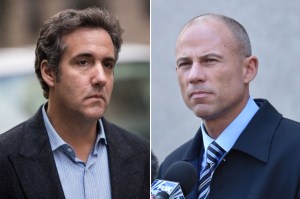 Trump’s lawyers waived privilege so they could speak freely about the tapes, now that they claim Cohen is separately speaking about them, the person said. The person said waiving the privilege was “inevitable” and that they “didn’t know how it was coming out” but “knew Cohen was the source.”
Avenatti’s Sunday comments on ABC’s “This Week” further confirmed the Trump team’s thoughts, the person said.
Avenatti, who crossed paths with Cohen at a Manhattan restaurant last week, said Sunday that he has “continued to have a dialogue” with Cohen. Avenatti added he believes Cohen will “assist us in our search for the truth.”
So far, we have no idea what Trump discussed in his private meetings with Vladimir Putin. Can our intelligence agencies find out? At Politico, Josh Meyer says yes:
Privately, sources familiar with U.S. intelligence capabilities expressed confidence that the so-called Special Collection Service scooped up not only Putin’s readout of the two-hour meeting, but what the Kremlin’s top spymasters really think about it — and how they’re spinning it to their foreign counterparts.
That means the National Security Agency and CIA are at less of a strategic disadvantage than U.S. intelligence officials have acknowledged publicly. But because they likely are missing the one critical piece of intelligence they need the most — a word-by-word account of what Trump and Putin said during the meeting — those officials appear to be flying somewhat blind when it comes to fulfilling their most important mission of helping U.S. policymakers figure out what comes next.
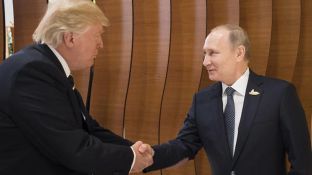 “Most of the questions about what happened in Helsinki — and about the risks the president created there — are skipping over a more fundamental concern: How can intel officers effectively support policy, at any level, when only the president knows what the policy is?” asks David Priess, a former CIA officer and daily White House intelligence briefer. “If, one-on-one with Putin, the president made or changed policy, and he refuses to tell anyone exactly what happened, how can the national security bureaucracy prepare the memos and talking points for future meetings to be held about those very policies?”
Click on the link to read the rest.
I’ll end with this very long read by Doug Bock Clark at GQ about what may have happened to Otto Warmbier.
The gist is that Trump lied (big surprise!) when he claimed that Warbier had been beaten and tortured. This is based on the coroner’s findings. It appears that Warbier was taken to a North Korean hospital the next day after he was sentenced to 15 years of hard labor; and it appears that he received good care in the hospital. Clark writes that the North Koreans do not typically torture American prisoners and they are kept in safe houses, not in hell-hole prisons. It’s possible Warbier may have tried to commit suicide, as several other American prisoners have.
Despite how Trump and his administration boosted the narrative that Otto was physically tortured, however, the evidence was not clear-cut. The day after the Warmbiers went on national television to declare that Otto had been “systematically tortured and intentionally injured,” a coroner who had examined Otto, Dr. Lakshmi Kode Sammarco, unexpectedly called a press conference. She explained that she hadn’t previously done so out of respect for the Warmbiers. But her findings, and those of the doctors who had attended Otto, contradicted the Warmbiers’ assertions.
 Fred had described Otto’s teeth as having been “re-arranged” with pliers, but Sammarco reiterated that the postmortem exam found that “the teeth [were] natural and in good repair.” She discovered no significant scars, dismissing the one on his foot as not definitively indicative of anything. Other signs of physical trauma were also lacking. Both sides of Otto’s brain had suffered simultaneously, meaning it had been starved of oxygen. (Blows to the head would have likely resulted in asymmetrical, rather than universal, damage.) Though the Warmbiers declined a surgical autopsy, non-invasive scans found no hairline bone fractures or other evidence of prior trauma. “His body was in excellent condition,” Sammarco said. “I’m sure he had to have round-the-clock care to be able to maintain the skin in the condition it was in.” When asked about the Warmbiers’ claims, Sammarco answered, “They’re grieving parents. I can’t really make comments on what they said or their perceptions. But here in this office, we depend on science for our conclusions.” Three other individuals who had close contact with Otto on his return also did not notice any physical signs consistent with torture.
Basically Trump used Warmbier as an excuse to threaten North Korea.
When Otto finally opened his eyes again, he likely found himself at a guesthouse, which is where the State Department believed he was probably kept. At least five previous American detainees have been imprisoned in a two-story building with a green-tiled roof in a gated alleyway behind a restaurant in downtown Pyongyang, which is run by the State Security Department, the North Korean secret police. (Others have been kept at a different guesthouse, and at least three have stayed at a hotel.) The most used guesthouse is luxurious by local standards—detainees can hear guards using its karaoke machine into the wee hours—but Otto would have likely found its two-room suites roughly equivalent to those in a basic hotel. And no matter how nice his suite, it was also a cell, for he would have been allowed out only for an occasional escorted walk.
So how did he get his injury?
While some previous detainees were allowed letters from home, it seems that North Korea denied Otto any contact with the outside world. His only break from the interrogations was likely watching North Korean propaganda films. The psychic trauma of all this has sent previous detainees into crushing depressions, and even driven some to attempt suicide….
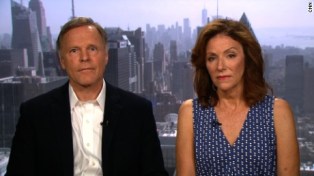
Fred and Cindy Warmbier, Otto’s parents
“The staff at Friendship Hospital said they received Otto the morning after the trial and that when he came in he was unresponsive,” Dr. Flueckiger told me. “They had to resuscitate him, then give him oxygen and put him on a ventilator, or he would die.” As Yun, the negotiator who helped free Otto, said, “The doctors were clear that he had been brought to the hospital within a day of his trial, and that he had been in that same room until I saw him.” [….]
Without knowing about the revised time line of Otto’s injury, experts I spoke to overwhelmingly identified some kind of accident—for example, an allergic reaction—as the most likely cause for Otto’s unconsciousness. The likelihood that his brain damage happened immediately after the sentencing, however, raises the possibility that he may have attempted suicide.
Imagine what Otto must have been feeling after hearing that he would spend the next 15 years laboring in what he probably imagined to be a gulag. After two months of being constantly reminded that the American government couldn’t help him, he probably felt that his family, his beautiful girlfriend (who called him her “soul mate”), and his Wall Street future were all lost. What else could he look forward to but physical and mental suffering?
At least two Americans imprisoned in North Korea have attempted suicide. After failing to cut his wrists, Aijalon Gomes chewed open a thermometer and drank its mercury, later explaining that he had given up on America’s ability to free him. Despite eventually having his release won by Jimmy Carter, Gomes was unable to escape his post-traumatic stress disorder, and seven years later burned himself to death. An American official said that Evan Hunziker tried to kill himself while being held, and less than a month after returning home, he shattered his own skull with a bullet in a run-down hotel. Robert Park reportedly tried to take his own life on returning.
Even if North Korea didn’t beat Otto, that doesn’t mean that he wasn’t tortured, as the mental suffering the regime inflicted on him constitutes torture under the U.N. definition. As Tomás Ojea Quintana, the United Nations Special Rapporteur on human rights for North Korea, said, “Otto’s rights were violated on every level.”
Obviously I can’t do this article justice with short excerpts. If you have the time, I recommend reading the whole thing. Clearly, Trump’s use of Warmbier’s family’s suffering is unconscionable.
Those are my offerings for today. What stories are you following?
Did you like this post? Please share it with your friends:


 peej
peej Carissa
 bostonboomer
 dakinikat
 ecocatwoman
 mablue2
 Mama Lopez
 peggysue22
 quixote
 skydancingguestblogger
 Mona (aka Wonk the Vote)



 Sky Dancing
Recent Comments