The information the IRS needs to send out the payments was finally delivered on Thursday morning after threatening letters sent to Social Security Commissioner Andrew Saul and his Deputy David Black by leaders of the House Ways and Means and Oversight Committees. There is still no word on when the deposts/checks will go out. The latest estimate is that those of us in these categories will still have to wait at least 10 days to see the money.
Meanwhile, calls on Biden to fire Saul and Black are growing louder.
Weeks after the American Rescue Plan had been signed into law, while many Americans had already received payments, the Social Security Administration’s inaction was standing in the way of millions of beneficiaries receiving desperately needed cash aid. After escalating pressure on Saul to no avail, the letter gave him 24 hours to remedy the holdup. A few hours later, the SSA announced that they’d be sending the information the next day.
This delay is just the latest in an array of extremely troubling decisions under the leadership of the Social Security Administration’s commissioner Saul, and his deputy David Black….
Commissioner Saul and Deputy Commissioner Black were appointed by President Trump, alongside Deputy Commissioner for Retirement and Disability Policy Mark Warshawsky, to self-fulfill the Republican promise about the failure of government, and destroy the departments they were tasked with managing. Warshawsky, a veteran of the American Enterprise Institute, was pegged as an early candidate to be fired by the Biden administration for his work undercutting the program; he retired from the post in late January.
The Biden administration has set to work rolling back some of those Trump appointees’ designs on Social Security, including a proposed rule that would have subjected disability insurance recipients to even more frequent and stringent eligibility reviews, which would make an already challenging process even more difficult for people with disabilities to secure and maintain cash benefits. That move was widely celebrated among advocates. But President Biden has not heeded the call from those same advocates to fire Saul and Black, who have clear track records of working against the very department they’ve been tasked to head up, and against Democratic ambitions on Social Security.
Frank O’Sullivan
Now, a growing number of congressional Democrats are joining the chorus calling for Saul and Black’s ousters. Sen. Sherrod Brown (D-OH) called for their resignation as his first act as chair of the Social Security and Pensions Subcommittee, and has since urged Biden to fire them. He’s joined House Ways and Means Social Security Subcommittee Chairman John Larson, Worker and Family Support Subcommittee Chairman Danny Davis, and Oversight Subcommittee Chairman Bill Pascrell Jr. in demanding Saul’s immediate removal. Both Saul and Black are serving terms that don’t expire until 2025….
On the campaign trail, Biden insisted (straining against historical fact) he had never and would never vouch for cuts to Social Security. He, and the Democratic Party broadly, have made protecting and expanding Social Security a main plank of the party’s policy platform going forward.
That ambition is irreconcilable with a leadership regime that has, as was reported by Yahoo News, put “illegitimate political pressure on Administrative Law Judges to reduce the rate of Social Security disability case approval,” as one such judge recently claimed. That alone should be scandal enough to imperil Saul and Black’s positions at the agency, and give the Biden administration the space to fire them for cause. But the Trump years have built up a tolerance for scandal, which means that the incident hasn’t even deterred them.
Meanwhile, Saul and Black have openly pursued a number of reforms aimed at aggressively curtailing benefits. Their attempted rule change, which the Biden administration rolled back, was a Reagan-era reform that would have led to tens of thousands of people losing benefits. When President Reagan enacted it, it led to a rash of suicides, and was deemed so cruel that it led to a unanimous Senate ruling to overturn it. Elsewhere, they’ve sought to deny benefits for older and severely disabled non–English speakers, resulting in an estimated 100,000 people being denied more than $5 billion in benefits.
See my Thursday post for more about Saul and Black’s efforts to destroy Social Security on Thursday.
Pressure is also building for Biden to get rid of Trump-appointed Postmaster General Louis DeJoy.
A group of House Democrats on Friday introduced legislation to prohibit the Postal Service from lengthening mail-delivery windows and require it to adhere to present service expectations. They named the bill the Delivering Envelopes Judiciously On-time Year-round Act, or DEJOY Act.
Carl Larsson: Brita, Cat and Sandwich
One House aide involved in postal reform legislation introduced in February said some members of the caucus are leery of proceeding with efforts to address the Postal Service’s financial obligations given that DeJoy’s 10-year plan includes sharp reductions in service, including slower timetables for mail delivery and reduced post office hours.
Separately, Pennsylvania Attorney General Josh Shapiro (D) threatened to take legal action to block the service cuts. His office said in a statement Friday that it was encouraged that DeJoy recognizes the legal obligations to secure limited regulatory approvals, but said it remained concerned about timely mail delivery….
DeJoy hopes to save the Postal Service $160 billion over the next decade through a combination of austerity measures, postage price increases and projected package volume growth. But the largest single piece of his plan is dependent on Congress repealing its pre-funding mandate for retiree health care costs, which runs about $5 billion a year. Instead, the agency wants to wind down those payments and enroll future retirees in Medicare, a proposal worth $44 billion.
A bill introduced by Rep. Carolyn B. Maloney, chair of the powerful House Oversight and Reform Committee, includes both components.
But DeJoy’s designs to slow the mail — even as the Postal Service attempts to rebound from generationally poor service metrics in recent months — and perceived animus toward lawmakers in recent hearings have made those prospects more difficult.
Sometimes America’s legacy of white supremacy is hiding in plain sight, literally. When Georgia Gov. Brian Kemp signed a hastily passed voter suppression law that many are calling the new, new Jim Crow on Thursday night, surrounded by a half-dozen white men, he did so in front of a painting of a plantation where more than 100 Black people had been enslaved.
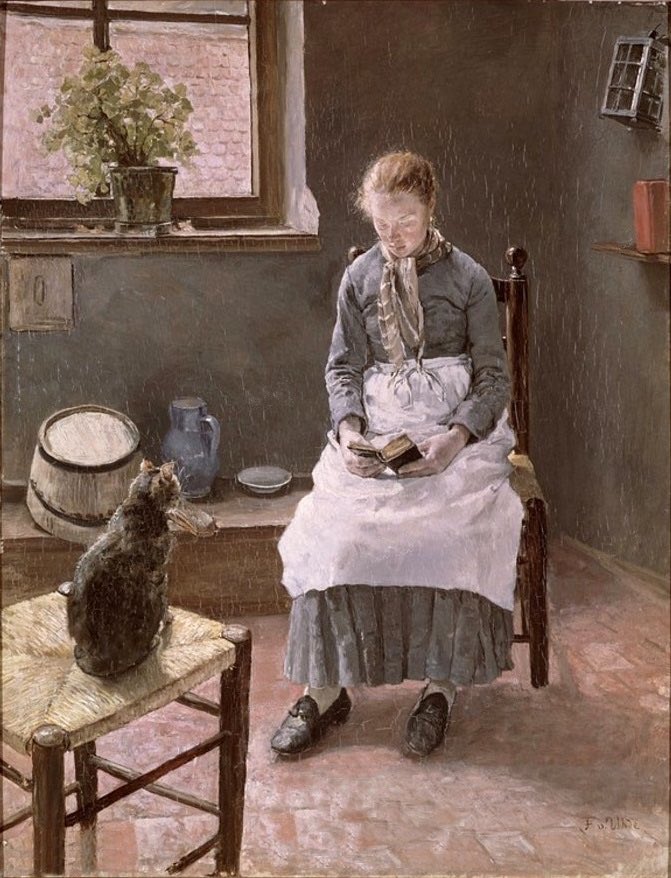
Lady reading with cat-Albert Roosenboom
The fitting symbolism is somehow both shocking and unsurprising. In using the antebellum image of the notorious Callaway Plantation — in a region where enslaved Black people seeking freedom were hunted with hounds — in Wilkes County, Ga., as the backdrop for signing a bill that would make it a crime to hand water to a thirsty voter waiting on Georgia’s sometimes hours-long voter lines, the GOP governor was sending a clear message about race and human rights in the American South.
The portrait of the plantation was the starkest reminder of Georgia’s history of white racism that spans slavery, Jim Crow segregation, the rebirth of the modern Ku Klux Klan, and today’s voter purges targeting Black and brown voters — but it wasn’t the only one. At the very moment that Kemp was signing the law with his all-white posse, a Black female Georgia lawmaker — Rep. Park Cannon — who’d knocked on the governor’s door in the hopes of watching the bill signing was instead dragged away and arrested by state troopers, in a scene that probably had the Deep South’s racist sheriffs of yesteryear like Bull Connor or Jim Clark smiling in whatever fiery hellhole they now inhabit.
Rep. Park Cannon (D-Atlanta) is placed in handcuffs by Georgia State Troopers after being asked to stop knocking on a door that lead to Gov. Brian Kemp’s office while Gov. Kemp was signing SB 202 behind closed doors at the Georgia State Capitol Building in Atlanta, Thursday, March 25, 2021.Alyssa Pointer / AP
Indeed, Twitter was on fire Thursday night with posters drawing the straight line from notorious past segregationists like George Wallace to the 2021 actions of Kemp and the GOP-led Georgia Legislature in passing — at great speed and with little debate — a lengthy bill that also limits easy-access drop boxes for ballots and places onerous voter-ID restrictions on voting by mail, and which the New York Times reports “will have an outsized effect on Black voters.”
On one level this new voter-suppression law — “voter integrity,” in the modern GOP’s Orwellian branding — is inspired by the current and possible future events of ex-President Donald Trump’s Big Lie about fraud in the 2020 election, the narrow upset wins in Georgia for President Biden and two new Democratic senators, and the threat that voting icon Stacey Abrams poses to Kemp in the 2022 election. But there’s also a powerful pull back to Georgia past. That link is made clear by the history hanging right behind Kemp on Thursday.
“Things have changed dramatically” in the South, Chief Justice John Roberts wrote in 2013 when he authored the majority opinion gutting the Voting Rights Act, ruling that states with a long history of discrimination no longer needed to have changes to their voting procedures approved by the federal government.
Voter suppression in Georgia is Exhibit A for why he is wrong.
After Joe Biden carried the state in November and Black voters turned out in record numbers in the January runoffs to elect Democrat Raphael Warnock as the state’s first Black senator and Democrat Jon Ossoff as the state’s first Jewish senator, Georgia Republicans passed a sweeping rewrite of the state’s election laws on Thursday to make it harder for Democratic constituencies to vote and have their ballots counted.
Though some Georgia Republicans, most notably Secretary of State Brad Raffensperger, defended the integrity of the 2020 election, the “Election Integrity Act of 2021” heavily restricts mail ballot drop boxes, adds new ID requirements for mail-in voting, throws out ballots cast in the wrong precincts, and makes it a crime to give voters food and water while they’re waiting in line.
In addition to making it harder to vote, the new law allows the GOP-controlled legislature to appoint a majority of members of the state election board and gives the board the power to take over county election boards, making it easier for Republicans to challenge election results, take over election administration in large Democratic counties, and even decline to certify the results if Democrats win close races—which Trump tried and failed to get the state to do in 2020.
One of the small, rueful truths that many Americans held in the back of their minds throughout the pandemic year was that, for all of its horrors, it had at least reduced, or even eliminated, the spectacle of the gun massacre. School closings had momentarily ended school shootings; curbside delivery had, it seemed, halted in-store assaults. It is true that gun fatalities were disturbingly trending upward in big cities, for reasons that are as yet as mysterious as those for the great decline that preceded them, and that, according to the Gun Violence Archive, last year saw the highest number of shooting deaths in decades. In fact, keyed, perhaps, by a general sense of panic marked by the pandemic and a bizarrely unsettled election year—with that strange American certainty that they’re coming for you—gun sales soared, even amid groups that are not normally associated with buying firearms in numbers.
The gun massacre, however—five or twenty or fifty people murdered at a time—had, briefly, vanished. Yet, alongside the knowledge that mass shootings had gone stood the knowledge that they would, inevitably, reëmerge. And here they are, right on schedule, as the country “opens up,” and with a vengeance: seven in the past seven days, with eight people killed in three shootings in Atlanta, and ten in a grocery store in Boulder. With those shootings come back all the usual, understandable, and all-too-human reactions—above all, our urge to give them some kind of meaning by making them an index of a larger issue. Violence this blankly nihilistic needs a point projected into it, to redeem it as a subject of discussion….
Countries that resemble ours in every way except for the availability of guns have much lower levels of gun violence and far fewer gun massacres. Yet these truths, demonstrated again and again, meet the same resistance, over and over. The Second Amendment guarantees private ownership of even military-style weapons. (It doesn’t, or rather, until very recently, not even conservative Justices imagined that it did.) Guns are essential for self-protection. (They aren’t.) The way to stop mass shootings is to arm more people, such as teachers. (A “colossally stupid idea,” according to the co-president of the Brady Campaign to Prevent Gun Violence.)
All this, even as the sheer psychic damage done by the omnipresence of guns in America is self-evident (no healthy society should have to train its children in active-shooter drills), while the social damage extends far beyond the immediate casualties. A reason for the prevalence of police shootings in America is that the police go about armed, in levels unique to our society, in order to deal with the uniquely over-armed civilians they fear encountering, with the frequently fatal results, we know too well, for the unarmed and the innocent.
Sorry this isn’t a more cheerful post. I’ll probably be up for something more upbeat if I finally get that promised $1400. What’s on your mind today?
Did you like this post? Please share it with your friends:
President Biden is going to have a press conference this afternoon, and I wish someone would ask him why around 30,000,000 people on Social Security, disability, veterans, and railroad pensions haven’t gotten their stimulus payments yet. Furthermore, why hasn’t he fired two Trump holdovers at the Social Security Administration who are holding up the payments and who are trying to destroy Social Security?
Social Security hasn’t handed over payment information that the Internal Revenue Service needs to send the coronavirus relief checks to nearly 30 million people receiving retirement or disability benefits, Democrats said.
“We understand that these beneficiaries are waiting because the Social Security Administration has not sent the necessary payment files to the Internal Revenue Service,” House Ways and Means Committee chair Richard Neal (D-Mass.) said in a letter to Social Security Commissioner Andrew Saul.
Several Democrats, including Sen. Sherrod Brown (D-Ohio) and Rep. John Larson (D-Conn.), had previously urged President Joe Biden to fire Saul, a Donald Trump appointee whose term doesn’t expire until 2025. Biden has hesitated to do so even though he’s fired other Trump holdovers in other agencies before their terms have ended.
The IRS has sent more than 127 million payments so far. Neal and other members of his committee earlier this week asked Social Security and the IRS to explain the delayed payments to Social Security beneficiaries.
In Wednesday’s letter, Democrats said they became “aware that the IRS asked SSA to start sending payment files two weeks before the American Rescue Plan became law on March 11, 2021” ― and that Social Security still hasn’t provided the information.
People in these categories are the poorest of the poor, including Social Security recipients who don’t have enough income to file tax returns.
We are giving the trump-appointed heads of the Social Security Admin **24 Hours** to get off their backsides and stop delaying sending stimulus checks to 30,000,000 Americans. pic.twitter.com/zsx7t9vKvC
— Bill Pascrell, Jr. 🇺🇸🇺🇦 (@BillPascrell) March 24, 2021
President Biden is facing increasing pressure to remove two Social Security Administration officials appointed by his Republican predecessor, a standoff that could test the limits of his ability to undo Donald Trump’s legacy.
The brewing controversy surrounds Andrew Saul and David Black, the agency’s commissioner and deputy commissioner, whom Trump appointed to fixed-term positions that don’t end until 2025. As term appointees, they can’t be removed by Biden except for cause, but unions and Capitol Hill alike are demanding that Biden find a way to remove them, accusing them of creating a toxic work environment, contributing to low morale due to staff cuts, and sidelining the agency’s administrative law judges.
The continued presence of the Trump appointees underscores the difficulties the Biden administration faces when trying to roll back some of the previous administration’s efforts to reshape the federal government. While traditional political appointees must resign or face being fired when a new administration comes in, presidents are also able to install fixed-term employees to boards and other government positions that can outlast their administration.
Saul, a New York businessman and Republican donor, and Black, a former Bush administration staffer, have been in their positions since 2019. According to critics, the two officials have engaged in “no-holds-barred union busting” and eliminated the agency’s pre-pandemic telework program, forcing over 10,000 employees to commute to work — a rule change that continues despite the onset of COVID-19. (That did not apply to Saul, who reportedly continued to work from home as thousands of his employees commuted during the onset of the pandemic.)
There’s more at the Yahoo News link.
Social Security Commissioner Andrew Saul and his Deputy David Black "are sabotaging the Biden administration by delaying relief checks."
Postmaster General Louis DeJoy on Tuesday unveiled the largest rollback of consumer mail services in a generation, part of a 10-year plan that includes longer first-class delivery windows, reduced post office hours and higher postage prices.
DeJoy presented his long-awaited strategic vision for the U.S. Postal Service during a Tuesday webinar. Portions of the initiative already made public have raised alarms from postal advocates, who say they could further erode agency performance. Mailing industry officials warn that substantial service cuts could drive away business and worsen its already battered finances.
Louis DeJoy
But DeJoy has cited the need for austerity to ensure more consistent delivery and rein in losses. The agency is weighed down by $188.4 billion in liabilities, and DeJoy told a House panel last month that he expects the Postal Service to lose $160 billion over the next 10 years. Without the plan, Postal Service Board of Governors Chairman Ron Bloom said, the agency’s future was “profoundly threatened.”
DeJoy’s plan to make up that projected shortfall largely depends on Congress repealing a retiree health care pre-funding mandate and allowing postal workers to enroll in Medicare. The agency also will ask President Biden to order a review of how much the Postal Service should have paid into its pension funds, and credit the mail agency with any overpayments.
DeJoy projected these steps would save the agency $58 billion over the next decade, and the agency could make up the rest through postage rate increases ($44 billion in new revenue), “self-help” cost cutting in mail processing, transportation and administrative efficiencies ($34 billion), and revenue from package volume and price increases ($24 billion).
Presidents get to decorate the Oval Office any way they want, and it’s usually telling. Joe Biden for example, requested that five portraits be hung around the fireplace. There’s George Washington, Thomas Jefferson, Abraham Lincoln and one of the greatest Americans who never became president: Alexander Hamilton.
And in the middle of this esteemed group is a fifth portrait in a place of honor over the fireplace: Franklin D. Roosevelt. Biden, who will be the last president who lived during FDR’s momentous era, deeply admires our 32nd president, and it shows in both his style and way of governing.
No president since Roosevelt inherited the kind of mess that confronted Biden, and he has responded as FDR did: By throwing big money at problems. The ink on the $1.9 trillion pandemic relief plan is barely dry, and now the White House is set to unveil a $3 trillion infrastructure plan.
There’s also talk of reforming the biggest federal program of all: Social Security, which Roosevelt launched in 1935, and which is now paying out more cash than it’s bringing in. In Washington, the word “reform” is usually a code word for more spending.
Hmmm….I hope that will involve lifting the cap on the payroll tax so that rich people have to contribute more to Social Security and Medicare.
Biden’s style — specifically how he communicates with the American people — is also a page from the FDR playbook. Two months into his presidency, he has been surprisingly disciplined and economical with his words and appearances. The verbal gaffes that dogged him throughout his long career in Washington are nowhere to be seen. I’m sure he’ll make a boo-boo eventually (he’s Joe Biden, after all) but after four years of a president who lied about everything, a gaffe on Biden’s part these days will be seen as an honest mistake, humanizing, even charming to a certain degree.
Roosevelt is remembered for his famous Fireside Chats. Forgotten, however, is how infrequently he gave them. During his 12 years in office — bookended by America’s greatest 20th century crises, the Great Depression and World War II — he took to the airwaves just 30 times. Just two or three times a year. The rarity of his appearances amped up the drama and attention when he did speak.
But, unlike Biden so far, FDR gave lots of press conferences, Brandus writes. He recommends that Biden make his first formal appearance before the D.C. press corps as boring as possible.
The news media is trying to gin up the drama for this, and Biden will certainly be asked about tough issues that already are challenging his smooth operation — including immigration problems at the southern border and the mass shootings in the Atlanta area and Boulder, Colorado. But he knows this and will be prepared.
If Biden’s lucky, his first news conference will be a dull affair. It will also likely be a rare one. Why? Here’s the deal. With platforms like Twitter, Facebook and all the rest at their fingertips, modern-day presidents need reporters and the press less than ever. We saw this during the campaign, when Biden gave individual interviews but rarely held news conferences. The pandemic was a good excuse to pull back even further.
In other news, There’s been an attempted copycat supermarket shooting in Georgia; fortunately it was short-circuited.
Just two days after a mass shooting left 10 people dead at a Colorado supermarket, Atlanta police arrested a 22-year-old man who walked into a Publix at Atlantic Station with six guns and body armor.
Police were called to the grocery store on Atlantic Drive just after 1:30 p.m. Wednesday and met with a manager who told them a man came in with a rifle and headed straight toward a bathroom, authorities said.
“A witness observed the male and alerted store management, who then notified police,” Atlanta police spokesman Officer Anthony Grant told The Atlanta Journal-Constitution.
Officers at the scene spotted the man leaving the bathroom and quickly took him into custody. According to police, his weapons included two long guns and four pistols, all of which were concealed.
Police identified the man as Rico Marley. He was booked into the Fulton County Jail on multiple charges of criminal attempt to commit a felony and weapons possession. Marley is scheduled for a first appearance before a judge Thursday morning.
The witness who saw 22 y/o Rico Marley in the bathroom with the AR-15 told us tonight he may have helped prevent a mass shooting. Charles Russell says the tragedy in Boulder was definitely on his mind. https://t.co/gMZBvbwWT8pic.twitter.com/3fdUm4u7Om
Xiao Zhen Xie, the 75-year-old woman who was punched by a white man in San Francisco — and then fought back by smacking him with a board — will not keep the nearly $1 million that has been donated for her medical expenses. Her grandson says Xie insists on donating the money to help defuse racism against the Asian American community.
“She insists on making this decision saying this issue is bigger than Her,” John Chen wrote in an update on the fundraising site GoFundMe.
Xiao Zhen Xie, 75, is recovering after she was punched by a man in San Francisco. Her family says that despite being hurt, she fought back to defend herself. Dennis O’Donnell/Screenshot by NPR
Xie was attacked on San Francisco’s Market Street last Wednesday, the morning after six women of Asian descent were killed in a shooting rampage in the Atlanta area — the worst incident in a broader spike in incidents that have targeted the Asian American and Pacific Islander community.
Xie, who is originally from China, had been waiting to cross the street when she was suddenly hit in the face. San Francisco Police say the suspect, Steven Jenkins, punched Xie minutes after he assaulted an 83-year-old Asian man. The suspect was being chased by a security guard when he hit Xie.
In the moment, her instinct was to fight back, her family told TV station KPIX. They said that Xie, while badly hurt, responded by grabbing a wooden board and hitting the man.
Jenkins, 39, was left with a bloody mouth and is facing charges of assault and elder abuse.
I’ll end with this argument that violence against women is a hate crime. Click the link to read the article at The Atlantic.
Many are outraged that officials appear hesitant to classify the Atlanta shootings as a hate crime. But the call for hate-crime prosecution would be better served by an understanding that such designations are often purely symbolic, @saigrundy writes: https://t.co/kx84Rqosnh
Kim Janey shattered two historic barriers when she became acting mayor of Boston Monday evening: She is both the first woman and the first person of color to lead the city.
Janey, a Black woman, was elevated from city council president to acting mayor immediately after Marty Walsh resigned as mayor to take the job of U.S. labor secretary. His resignation came swiftly following the U.S. Senate’s confirmation of his nomination.
“It’s hard to overstate the significance of inaugurating a woman of color as acting mayor of Boston,” said Amanda Hunter, executive director of the Barbara Lee Family Foundation, which advocates for women in politics. “We have exclusively had white, male mayors leading this city for nearly 200 years,” despite Boston becoming increasingly more diverse. For at least two decades, most residents have been non-white or Hispanic. Women also outnumber men in Boston, according to the U.S. Census Bureau.
Many area residents are celebrating Janey’s elevation and its significance, including Deanna Cook, who met Janey when she had a problem at her high school in 2017. Cook and her twin sister kept getting detention for wearing hair extensions, which are popular among Black girls but violated a dress code set by predominantly white administrators.
“It’s hard to overstate the significance of inaugurating a woman of color as acting mayor of Boston,” said Amanda Hunter, executive director of the Barbara Lee Family Foundation, which advocates for women in politics. “We have exclusively had white, male mayors leading this city for nearly 200 years,” despite Boston becoming increasingly more diverse. For at least two decades, most residents have been non-white or Hispanic. Women also outnumber men in Boston, according to the U.S. Census Bureau.
Lucy May Stanton
Many area residents are celebrating Janey’s elevation and its significance, including Deanna Cook, who met Janey when she had a problem at her high school in 2017. Cook and her twin sister kept getting detention for wearing hair extensions, which are popular among Black girls but violated a dress code set by predominantly white administrators.
“We had basically no representation,” Cook said. “We had such difficulty getting the policy turned over, mainly because the people who were in charge didn’t understand and also didn’t care.”
At the time, Janey worked at the nonprofit Massachusetts Advocates for Children. In that role, she argued the ban on hair extensions was discriminatory and helped the Cook sisters change the dress code at the Mystic Valley Regional Charter School in Malden.
A few months later, Janey won a seat on the Boston City Council.
Now for the depressing news: It’s happened again. Yesterday, a man walked into a Boulder, CO supermarket and mowed down 10 people with an AR15-type assault rifle. When will Americans wake up and see the need to control access to these powerful weapons?
Ten people died, including a police officer, after a gunman walked into a grocery store in Boulder, Colorado, Monday and began randomly shooting shoppers. The governor of Colorado, a state that has endured multiple mass shootings, called it an “unspeakable tragedy.”
The officer, Eric Talley, 51, an 11-year veteran of the Boulder police force, was the first officer to arrive at the King Soopers grocery store Monday afternoon, Police Chief Maris Herold said. He had been dispatched after gunfire was reported, she said.
Herold provided no details about the other victims. She said a suspect who was injured in the shooting is in custody. She didn’t provide details about a potential motive.
Earlier, a police commander, Eric Yamaguchi, said there was no ongoing threat. He said it was unclear whether the person had a connection to King Soopers.
Live video from outside the King Soopers showed SWAT vehicles and dozens of police officers, many in tactical gear and camouflage, around the store. Some of its front windows appeared to have been shattered.
A man with his hands behind his back could be seen leaving the store with authorities. It wasn’t clear whether the man, who was wearing no shirt or pants and had blood streaming down his leg, was the person of interest.
Sarah Moonshadow, 42, a customer and resident of Boulder, was in the store with her son, Nicholas, on Monday and recounted scenes of pandemonium as gunfire rang out.
“We were at the checkout, and shots just started going off,” Moonshadow told Reuters. “And I said, ‘Nicholas get down.’ And Nicholas ducked. And we just started listening and there, just repetitive shots … and I just said, ‘Nicholas, run.’”
Moonshadow said she tried to help a victim she saw lying on the pavement just outside the store, but her son pulled her away, telling her, “We have to go.” She broke down as she said: “I couldn’t help anybody.” [….]
Quiet, James Jacques Tissot
The bloodshed came less than a week after gun violence last Tuesday that left eight people dead, including six Asian women, at three day spas in and around Atlanta.
Ryan Borowski was inside the store when the shooting began. He told CNN: “I saw terrified faces running towards me and that’s when I turned and ran the other direction.” He said staff helped customers to exit from the back of the store but some people froze. “We ran and I don’t know why other people didn’t and I am sorry that they froze and I just wish that this didn’t happen – I wish I had an answer for why it did,” he said.
Alex Arellano, 35, was working in the meat department at King Soopers when he heard gunshots and saw people running for the exit. “I thought I was going to die,” he told the New York Times, when he heard the shot getting closer. “I’m thinking of my parents, and I was freaking out.” He hid with two other men before escaping through a rear exit.
Just a short time ago, Boulder’s assault weapons ban was lifted after a lawsuit by a gun rights group.
The city of Boulder, Colo., barred assault weapons in 2018, as a way to prevent mass shootings like the one that killed 17 at a high school in Parkland., Fla., earlier that year.
But 10 days after that ban was blocked in court, the city was rocked by its own tragedy: Ten people, including a Boulder police officer, were killed at a supermarket in the city’s south end on Monday after a gunman opened fire, law enforcement officials said….
…for Dawn Reinfeld, co-founder of the Colorado gun violence prevention group Blue Rising,the “appalling” timing of the court decision was hard to ignore.
Michael Ancher
“We tried to protect our city,” she told The Washington Post. “It’s so tragic to see the legislation struck down, and days later, to have our city experience exactly what we were trying to prevent.”
Rachel Friend, a city council member, made a similar observation on Twitter, adding she was “heartsick and angry and mostly so, so sad.”
But the Colorado State Shooting Association, one of the plaintiffs that sued Boulder over the assault weapons ban, rejected that sentiment, arguing in a statement that “emotional sensationalism” about gun laws would cloud remembrance of the victims.
“There will be a time for the debate on gun laws. There will be a time for the discussion on motives. There will be a time for a conversation on how this could have been prevented,” the group said in a statement. “But today is not the time.”
For these awful people, that time will never come. Guns are more important to them than human lives.
Tom Sullivan last week took to the lectern on the floor of the Colorado House of Representatives and noted that it was the 452nd Friday since his son, Alex, was murdered at the Aurora movie theater shooting. On Monday when he learned of the Boulder King Soopers shooting, he thought of those whose own tallies would now begin.
“There are going to be people who are counting down their Mondays, because they’ve been through this as well,” said Sullivan, a state representative from Aurora.
Colorado has a disproportionate share of survivors of gun violence and of people like Sullivan, whose loved ones were killed. A 2019 analysis by The Denver Post found Colorado had more mass shootings per capita than all but four states. The Census-designated Denver metropolitan statistical area had more school shootings per capita since 1999 than any of the country’s 24 other largest metro areas.
“What we’re looking at now,” said Frank DeAngelis, the principal at Columbine High during the 1999 massacre, “is an issue for society, happening in schools, in Colorado in movie theaters, in churches around the country, airports. We’re a country, a world, of violence.”
Karin Reading, Carl Larsson
He worries about people growing numb, about the reflex Americans have developed to ask, upon hearing of another mass shooting, “How many this time?”
And DeAngelis worries about the collective trauma of a citizenry exposed so repeatedly to tragedy at places like the meat section of a grocery store or the screening of a Batman movie, where Alex Sullivan was killed.
“It’s somewhere that my wife goes to after school, and her students shop there for lunch break. It’s just a very normal setting,” state Sen. Steve Fenberg said of the King Soopers. The store is in his district, and a commercial anchor in south Boulder’s main community gathering spot.
Fenberg Monday, “I’m sorry, but I don’t have thoughts or prayers to offer; mostly anger.”
Woman reading with large cat under the couch, Paula Zima
Good Afternoon!!
I’m going to focus on the Atlanta spa shootings again. There has been an effort by some white male writers to argue that racism and misogyny didn’t motivate the shooter. Of course these things are complicated, but there is no doubt that attacks on Asian Americans have increased dramatically over the past year, as the former occupant of the White House tried to put the blame for the pandemic on China. Some white journalists have also been defending the Cherokee Sheriff’s spokesman who appeared to sympathize with the shooter having “a bad day.”
…this story has…been deeply instructive about our national discourse and the state of the American mainstream and elite media. This story’s coverage is proof, it seems to me, that American journalists have officially abandoned the habit of attempting any kind of “objectivity” in reporting these stories. We are now in the enlightened social justice world of “moral clarity” and “narrative-shaping.”
Woman Lying on a Bench, Carl Larsson, 1913
Here’s the truth: We don’t yet know why this man did these horrible things. It’s probably complicated, or, as my therapist used to say, “multi-determined.” That’s why we have thorough investigations and trials in America. We only have one solid piece of information as to motive, which is the confession by the mass killer to law enforcement: that he was a religious fundamentalist who was determined to live up to chastity and repeatedly failed, as is often the case. Like the 9/11 bombers or the mass murderer at the Pulse nightclub, he took out his angst on the source of what he saw as his temptation, and committed mass murder. This is evil in the classic fundamentalist sense: a perversion of religion and sexual repression into violence.
We should not take the killer’s confession as definitive, of course. But we can probe it — and indeed, his story is backed up by acquaintances and friends and family. The New York Times originally ran one piece reporting this out. The Washington Post also followed up, with one piece citing contemporaneous evidence of the man’s “religious mania” and sexual compulsion. It appears that the man frequented at least two of the spas he attacked. He chose the spas, his ex roommates said, because he thought they were safer than other ways to get easy sex. Just this morning, the NYT ran a second piece which confirms that the killer had indeed been in rehab for sexual impulses, was a religious fanatic, and his next target was going to be “a business tied to the pornography industry.”
The sympathy for the sheriff’s spokesman has led to attacks on Vox’s Aaron Rupar, who posted the original video of the spokesman.
This is wrong. This is the quote: "He was pretty much fed up & kind of at the end of his rope. Yesterday was a really bad day for him & this is what he did"
The cop was paraphrasing the shooter's rationale in his own words, not quoting him. Strange that folks are retconning this https://t.co/gGlQKCp3Z9
Ken, with respect, this is bizarre. I wrote that the officer “explains Robert Long’s decision to kill 8 people,” which is exactly what he’s doing in the clip I posted. I expect the Greenwalds & Daily Callers of the world to attack me in bad faith, but not the NYT. https://t.co/f34JXtTgWF
I admit that I have no way of judging the shooter’s motives, but I do know that mass shooters tend to be men who have previously abused women, and they are frequently racists. I went looking for takes by people who are more knowledgeable about anti-woman and anti-Asian violence than Andrew Sullivan, Matthew Yglesias, and Ken Vogel. Here’s some of what I found.
Six large red arrows point to the entrance of Aromatherapy Spa on Atlanta’s Piedmont Road, beacons to those seeking untold pleasures within.
Robert Aaron Long claimed he found the invitation irresistible.The 21-year-old from Woodstock frequented Aromatherapy, as well as the Gold Spa directly across the street, establishments open around the clock and whose advertisements feature women — particularly Asian women — in suggestive poses.
On Tuesday, authorities say, Long purchased a 9 mm handgun and headed to three spas — one in south Cherokee County and the two in Atlanta — where he shot eight people to death and seriously wounded one other. His motives remain the subject of investigation, but he told police he was trying to purge the sources of temptations while battling sex addiction.
This is what we know about the industry and the women that Long chose to attack:
Painting by Fritz von Uhde
While the exact services offered at the spas that were attacked are not clear, last week the eyes of the world fell on this often-ignored segment of Atlanta’s “adult entertainment” industry. Despite more than a decade of trying, Georgia has failed to rein in certain illicit massage businesses that hypersexualize and commodify women.
Laws and local ordinances aimed to crack down on prostitution and potential human trafficking have only resulted in sporadic police busts and occasional losses of state-issued massage therapy licenses. Meanwhile, behind the darkened windows of undistinguished commercial buildings, an invisible population remains vulnerable to the type of deadly, misogynistic violence seen Tuesday….
What roles the victims played at the spas is not clear. At least one woman who died at Young’s Asian Massage, Delaina Ashley Yaun, 33, was on the premises as a customer. Paul Andre Michels, 54, who was white, also was killed in the Acworth shooting, along with Daoyou Feng, 44, and Xiaojie Tan, 49.
Tan, who held a state massage therapy license, is listed as the owner of that spa, as well as at least one other in Kennesaw.
Greg Hynson, a customer of the Cherokee location, said he was close friends with Tan and never saw or heard any evidence of illegal activity. “She ran a reputable business,” he said.
On the Atlanta victims:
The Atlanta victims, all of Korean descent, were identified Friday as Soon Chung Park, 74; Suncha Kim, 69; Yong Ae Yue, 63; and Hyun Jung Grant, 51. According to a report in The Korea Daily, a Korean language daily published in the U.S., the three older women essentially acted as site managers, opening the door for customers or serving meals to workers.
Court records indicate a 51-year-old by the name of Hyun Jung Grant was arrested in Gwinnett County in 2009 on charges of pimping, prostitution, keeping a place of prostitution and giving a massage in a place used for lewdness.
Were women in their 50s, 60s, and 70s really engaged in prostitution? I’ve quoted a lot from this article, but it is very long and the rest is well worth reading at the link.
Randy Park said he learned of his mother’s murder while he was playing his favorite video game, League of Legends, in their townhome in Duluth, Georgia.
Woman Reading with Cat, Carol Keiser
It’s a short drive from the Atlanta spas where police say 21-year-old Robert Aaron Long shot and killed four Asian women shortly after he shot and killed four other people in a suburb north of the city, two of those victims also Asian women….Park, 23, said he got a call that evening from the daughter of a survivor who had been next to his mother, Hyun Jung Grant, at Gold Spa when the shooting occurred….
Park and his mother were “very close,” he said. “I could tell her anything. If I had girl problems or whatever. She wasn’t just my mother. She was my friend.” [….]
Much of the national conversation about the shooting has centered on Cherokee County sheriffs apparently taking the suspect, a white kid from the suburbs, at his word that he was not motivated by racial animus. That dynamic was only worsened when, as The Daily Beast first reported, it was revealed the very official in that department perpetuating that narrative posted racist T-shirts that specifically targeted the Asian-American community.
Instead of racism, law-enforcement officials have said, the suspect has suggested he was motivated by his addiction to sex. Atlanta police on Thursday said he frequented the spas he attacked.
Park does not buy that explanation for a second.
“That’s bullshit,” he told The Daily Beast.
“My question to the family is, what did y’all teach him?” he added. “Did you turn him in because you’re scared that you’ll be affiliated with him? You just gonna scapegoat your son out? And they just get away scot free? Like, no, you guys definitely taught him some shit. Take some fucking responsibility.”
Park didn’t know anything about his mother being involved in sex work, but it sounds like he had been worried about it. But they were poor and “she did what she had to do” to keep her family going in the U.S. I think Park has a point that racism had to be involved in this crime and it’s important to know what the shooter learned during his upbringing.
For most of my life as a Chinese American woman, I accepted that a “normal” amount of feeling unsafe is simply part of my life in America, that if I lived more carefully I can avoid danger. Now, as I’m bombarded with reports of people who look like me that are being assaulted on sight, like vermin, I wonder how I ever thought this kind of dehumanization is something I can live with?
Actually, I do know how. It’s easier to self-soothe with the wishful fantasy that good behavior can be an effective prophylactic than it is to confront the bleak reality of being a person of color who lives in a country with a white supremacy problem.
Woman reading with a cat on a snowy day, Belinda Del Pesco
Which is what I reflexively did when the news about the horrific shooting in Atlanta popped up on my phone. My very first thought was, “Maybe it wasn’t a hate crime, but just a coincidence that six out of eight victims were Asian women.” I was scared to acknowledge that there are those who would want me dead just from the look of me, and that I live in their midst.
But then I came face to face with a different kind of denial about America’s problem with racism, one far grander and more dangerous than my own: the powerful white fragility engine that has roared into life to efficiently and systematically distort the narrative about the Atlanta massacre.
One can almost admire how the machine churns, the way the killer’s claim that his actions were not racially motivated has been amplified by the police and major media platforms, accepting a young white man’s claims at face value even after he murdered eight people. The Cherokee County sheriff said in a press conference, almost sympathetically, that the murderer “had a really bad day” and had admitted to “sex addiction.” Online, I’ve seen people speculating about mental illness, poverty, and substance abuse, with these narratives laid on thick to create a barrier around the obvious, distinct possibility that it was white supremacy that drove this white man to kill Asian women.
I’ve heard this song before. It starts with “maybe it’s not racism” and builds briskly to “he’s just a sad lone wolf” and ends in fading refrains of “thoughts and prayers.”
In some massage parlors, women, often Asian, may sometimes perform sexual services.But I did not know whether those who died this week would have identified themselves as sex workers.
I have spent the past few years researching the various ways sex work intersects with race, class and gender, routinely amazed by how it connects to such disparate issues as criminal justice, gentrification, poverty, immigration and trans rights. I have come to understand sex work rights as an overlooked civil rights issue that deserves study. I soon found myself placing the Atlanta killings within the context of a horrific history….
Since the terrible events this past Tuesday, much effort has been devoted to understanding Mr. Long — an earnest inquiry that betrays a particular kind of American naïveté. He claimed to have been driven by “sexual addiction”; investigators have not yet ruled out race as a factor. For now, we do not know whether the massage parlor workers who were killed would have considered themselves sex workers, and we may never know. But the answer is less relevant to their deaths than their murderer’s answer: Does it matter how one identifies oneself if a mass killer conflates any Asian woman in a massage parlor with a sex worker?
Fernand Léger. Woman Reading with a Cat, 1921
The stereotype of the Asian woman as simultaneously hypersexualized and submissive is borne of centuries of Western imperialism. An early documented instance of Asian fetishization can be found in “Madame Chrysantheme,” a thinly fictionalized account of a French naval officer’s time visiting 19th-century Japan. “Madame Chrysantheme” was wildly popular when it was published, and went on to create a subgenre of Orientalizing prose. The women in such accounts were, as Edward Said wrote in “Orientalism,” “creatures of a male power-fantasy. They express unlimited sensuality, they are more or less stupid, and above all they are willing.”
Later, an untold number of American servicemen in Korea and Vietnam had their first sexual encounter with Asian women. The U.S. military tacitly endorsed prostitution, considering it good for morale, and at times even explicitly encouraged troops to explore the local sex industry. According to the book “Sex Among Allies” by Katharine Moon, an assistant professor of political science at Wellesley College, an ad in Stars and Stripes, the main military newspaper, read: “Picture having three or four of the loveliest creatures God ever created hovering around you, singing, dancing, feeding you, washing what they feed you down with rice wine or beer, all saying at once, ‘You are the greatest.’ This is the Orient you heard about and came to find.”
This is an important article–I hope you’ll go read the rest at the NYT.
I think it’s clear that the motives of men who murder women are complicated. It may be true that Long had a sexual addiction, but he chose to act out the addiction in specific places with primarily Asian women employees. I doubt if he is a reliable reporter of his own reasons for his behavior. I think it’s important to listen to Asian and female voices over white men like Andrew Sullivan, Matthew Yglesias and Ken Vogel.
As always, this is an open thread.
Did you like this post? Please share it with your friends:
Young Lady Reading the Newspaper at Home in the Evening, by Yann Rebecq
Good Morning!!
There’s a police captain in Atlanta named Jay Baker who needs to fired immediately. Since when do we take the word of mass murders on their motives?
"Yesterday was a really bad day for him and this is what he did" — a law enforcement official explains Robert Aaron Long's decision to kill 8 people in a strange manner pic.twitter.com/u0zFcqjbNK
So this pathetic loser was having a bad day? What about the 8 women he killed and their surviving family members? Or don’t they count because they aren’t white males?
A Cherokee County, Georgia, Sheriff’s Office spokesperson came under fire Wednesday afternoon for pinning the deadly Tuesday shooting rampage that left eight dead—including six Asian women—on a 21-year-old white man’s “really bad day.”
“Yesterday was a really bad day for him and this is what he did,” Jay Baker said during the joint news conference with the Atlanta Police Department about 21-year-old Robert Aaron Long.
But it seems the same spokesperson shared racist content online, including pointing the finger at China for the ongoing coronavirus pandemic—the same vitriol advocates say has fueled a horrific surge in violence against Asian Americans.
In a Facebook page associated with Capt. Jay Baker of the Cherokee Sheriff’s Office, several photos show the law enforcer was promoting T-shirts with the slogan “COVID-19 imported virus from CHY-NA.”
“Place your order while they last,” Baker wrote with a smiley face on a March 30 photo that included the racist T-shirts.
“Love my shirt,” Baker wrote in another post in April 2020. “Get yours while they last.’”
The shirts appear to be printed by Deadline Appeal, owned by a former deputy sheriff from Cherokee County, and sold for $22. The store, which promotes fully customizable gear, also appears to print shirts for the Cherokee County Sheriff’s Office Honor Guard, a “ceremonial unit, all volunteers, who represent not only the Sheriff’s Office but also the county when participating in a variety of events,” according to a March 10 Instagram post.
HOURS AFTER a 21-year-old White man purchased a gun on Tuesday, authorities said, he went on a shooting spree in the Atlanta area that killed eight people, most of them women of Asian descent. The question that investigators are trying to answer is why. Was it, as many members of the Asian American community believe, racial bigotry? Crimes of opportunity? Or, as the alleged shooter is reported to have told police, the result of a supposed sex addiction that led him to target spas? No matter the answer, the events in Georgia stand as yet another terrible reminder of the epidemic of gun violence in this country that for far too long has gone neglected.
By Xue Jie, Chinese artist
Robert Aaron Long, arrested following a brief search, is accused of opening fire at three spas in the Atlanta area, killing eight people and wounding a ninth. Six of the people killed were Asian, and two were White. All but one were women. Identified so far: Delaina Ashley Yaun, 33; Xiaojie Yan, 49; Daoyou Feng, 44 and Paul Andre Michels, 54. That police were able to make a quick arrest is a credit to the collaboration of different police agencies, critical cooperation from the suspect’s family and the reach of social media. According to authorities, the suspect was headed to Florida and intent on more violence.
The shootings occurred as there has been an alarming rise in discrimination, harassment and attacks of Asians. Stop AAPI Hate, a group that has collected first-hand accounts of discrimination and xenophobia against Asian Americans and Pacific Islanders, this week reported nearly 3,800 hate-related incidents from March 2020 through February 2021. It connects the attacks to racist rhetoric, including from former president Donald Trump, that suggests Chinese people are to blame for the pandemic….
When arrested, Mr. Long had a 9mm gun that authorities said was purchased earlier in the day. Details of the purchase — and whether it was legal — were not disclosed. Capt. Jay Baker of the Cherokee County Sheriff’s Office said Mr. Long took responsibility for the shootings and characterized the spas as a “temptation for him that he wanted to eliminate.” He added, “Yesterday was a really bad day for him, and this is what he did.”
Really? Have we become so nonchalant about gun violence that we rack up the murder of eight people to someone having a “bad day?” Just as the coronavirus represents a public health emergency requiring scientific solutions and government action, so gun violence is a public health crisis that demands attention and action to put in place common-sense safety laws.
Bess Levin at Vanity Fair: Why Are We Taking Robert Aaron Long’s Word For It That The Georgia Killings Weren’t About Race?
At around 5 p.m. on Tuesday, a gunman entered Young’s Asian Massage Parlor in Acworth, Georgia, and allegedly shot and killed four people. The suspect, Robert Aaron Long, later fled the scene in a black SUV headed to another Atlanta neighborhood where, at two other spas, he reportedly shot and killed an additional four people. According to The New York Times, six of the eight victims were of Asian descent, and all but one were women. Details on Long, who apparently goes by “Aaron,” are scant, but an Instagram account appearing to belong to him proclaims: “Pizza, guns, drums, music, family, and God. This pretty much sums up my life. It’s a pretty good life.” Speaking on the condition of anonymity, a student who graduated from high school with Long in 2017 told the Daily Beast: “He was a hunter and his father was a youth minister or pastor. He was big into religion.”
Painting by Li ZiJian
Long has confessed to the killings, and the police have said that if he hadn’t been caught, it’s “very likely there would have been more victims.” In contrast to the tone typically taken after people of color allegedly commit crimes, Cherokee County sheriff’s captain Jay Baker told reporters, of Long, “He was pretty much fed up and kind of at the end of his rope, and yesterday was a really bad day for him, and this is what he did,” which is an odd way to describe allegedly committing eight murders….
Also strange: the fact that authorities are seemingly happy to take Long’s word for it re: race supposedly playing no part in the killings….
as Asian American author Celeste Ngwrote on Twitter: “Racism and misogyny are so deeply intertwined that they cannot be disentangled. We really can’t talk about one without talking about the other.”
As the Timesnoted, there have been almost 3,800 reports of hate incidents against Asian Americans since last March, when the COVID-19 pandemic took off; last month a 61-year-old Asian man was slashed in the face on a New York City subway. In a statement following the Georgia shootings, Sung Yeon Choimorrow, the director of the National Asian Pacific American Women’s Forum, said: “Even before the pandemic and the racist scapegoating that came in its wake, AAPI women routinely experienced racialized misogyny. Now our community, particularly women, elders, and workers with low-wage jobs, are bearing the brunt of continued vilification.”
When Georgia law enforcement briefed the public on Wednesday morning about the 21-year-old white man who shot and killed eight people—six of them Asian women—at Atlanta-area massage parlors Tuesday night, it wasn’t helpful.
Officials made a puzzling series of claims of fact, despite being cartoonishly cautious about other aspects of the case. Officials claimed that 21-year-old Robert Aaron Long had a “sex addiction” but admitted they didn’t know whether sex work occurred at the places where Long killed people. Who told them that Long had a sex addiction? Was it Long himself?
They weren’t sure whether Long was motivated by the racial identity or gender of his victims, and thus said they couldn’t say with certainty that a hate crime had been committed, but then again, they said with certainty that before he’d committed the crimes the shooter had “a really bad day.” Who told them that Long had a really bad day? Did they fact-check that one, or did they once again simply repeat the words of a suspected mass killer into a microphone? (I think I speak for a lot of people when I say: I don’t give a flying-saucer fuck about what kind of day a mass shooter was having before opening fire.)
In her book Down Girl, philosopher Kate Mann describes the phenomenon of “himpathy,” which she defines as “the inappropriate and disproportionate sympathy powerful men often enjoy in cases of sexual assault, intimate-partner violence, homicide, and other misogynistic behavior.” The phenomenon is particularly on display when a male public figure is accused of sexual misconduct and his defenders comment on how the man’s life has been “ruined,” like when Lindsey Graham lost his marbles during the Brett Kavanaugh confirmation hearings.
By Mai Trung Thu, Vietnamese artist
When men specifically target women in their violent crimes, some in positions of power fall all over themselves to make the case that those crimes were somehow in women’s power to stop, that men’s out-of-control unmet entitlement functions like a semitruck that lost the use of its brakes while heading down a steep grade, and that those who get hit should have moved out of the way.
Violent acts committed by men who have a problem with women and sex—they’re not getting enough; they feel bad about getting too much; the women who they believe should be giving them sex are instead choosing to have sex with other men—are similarly excused as something we should understand on an emotional level. If only women had been sluttier/less slutty when it came to the sad men, perhaps the men wouldn’t have been pushed to do what they did….
The murder of six Asian women and a white man and white woman in Atlanta didn’t only call to mind over-empathization with maleness; Long’s treatment by law enforcement also draws attention to the way authorities treat whiteness.
Of the eight people who were killed when a White man attacked three metro Atlanta spas, six were Asian women.
Investigators said it was too early to say whether the crime was racially motivated, and instead pointed to the suspect’s claim of a potential sex addiction.
But experts and activists argue it’s no coincidence that six of the eight victims were Asian women. And the suspect’s remarks, they say, are rooted in a history of misogyny and stereotypes that are all too familiar for Asian and Asian American women.
The way their race intersects with their gender makes Asian and Asian American women uniquely vulnerable to violence, said Sung Yeon Choimorrow, executive director of the non-profit advocacy group National Asian Pacific American Women’s Forum….
Painting by Di Li Feng
The perceptions of Asian and Asian American women as submissive, hypersexual and exotic can be traced back centuries.
Rachel Kuo, a scholar on race and co-leader of Asian American Feminist Collective, points to legal and political measures throughout the nation’s history that have shaped these harmful ideas.
That law, coming a few years before the Chinese Exclusion Act, was enacted seemingly to restrict prostitution and forced labor. In reality, it was used systematically to prevent Chinese women from immigrating to the US, under the pretense that they were prostitutes.
The Sky Dancing banner headline uses a snippet from a work by artist Tashi Mannox called 'Rainbow Study'. The work is described as a" study of typical Tibetan rainbow clouds, that feature in Thanka painting, temple decoration and silk brocades". dakinikat was immediately drawn to the image when trying to find stylized Tibetan Clouds to represent Sky Dancing. It is probably because Tashi's practice is similar to her own. His updated take on the clouds that fill the collection of traditional thankas is quite special.
You can find his work at his website by clicking on his logo below. He is also a calligraphy artist that uses important vajrayana syllables. We encourage you to visit his on line studio.

























 peej
peej Carissa
 bostonboomer
 dakinikat
 ecocatwoman
 mablue2
 Mama Lopez
 peggysue22
 quixote
 skydancingguestblogger
 Mona (aka Wonk the Vote)



 Sky Dancing
Recent Comments