
Shapiro, Rufo, and Rogan are three of the most important figures of the modern right. That they’ve all started sounding like comedy “hot dog men” of late suggests the right has a genuine problem on its hands.
Finally Friday Reads: Daily Trumpian Buzzkills
Posted: July 24, 2026 Filed under: 2026 Elections, 2026 MidTerm elections, Are we a democracy?, Breaking News, Iran War, Israel/Iran War, Journalism, kakistocracy, kleptocracy, SAVE Act, Senate, Take Back America, The US Road to Kleptocracy/Autocracy, Trump Chaos | Tags: @johnbuss.bsky.social John Buss, Democracy Backsliding, GOP and Trump demolishing voter rights, GOP and Trump Rigging Elections, Inept and corrupt DOJ, Israeli/USA/Iran War, Politics and Personal Grievances of Donaldo Trump, SAVE Act 5 Comments
“Looks like Barron is advising his Dad again. I’m pretty sure this’ll bring young voters back into the cult.” John Buss, @repeat1968
Good Day, Sky Dancers!
I’m a little bit late starting today. I had to make a quick dash down to City Hall to figure out why I was getting a late notice on not paying some tax I had never even heard of at this point. Anyway, it all worked out. It wasn’t the least bit aggravating. I know what to do to resolve it. I got the opportunity to see and experience why I love this city so much, so no damage was done. However, I learned I still have to write checks at City Hall, and was fortunate to find out I actually have one book of checks still in my desk drawer. I am still trying to figure out the last time I’d written a check, put a stamp on an envelope, and mailed it. My guess is at least a decade ago.
So, let’s see how the week’s ending now that I have done my City Hall thing. Tropical Storm Bertha turned out to be off-and-on heavy rain. I had power and AC, so no problem there. I’m finally getting to my first tea of the day. So, let’s check the headlines that will likely kill my morning love affair with my city. I see that my first suggested read is from Buzzkill Donaldo. Is there any part of our laws or Constitution he doesn’t regularly pissed on?
This is from the New York Times. “Trump Administration Admits Canceling Grants to States That Did Not Vote for Him. Federal officials said in court documents that they halted billions of dollars in funding for energy projects to states “based solely” on whether they backed President Trump in the 2024 election.” Tony Romm and Brad Plumer share the lede.
When the Trump administration canceled more than $7.5 billion in Biden-era federal grants for clean energy projects in October, it framed the move as an urgent corrective to protect taxpayer funds from waste.
But it wasn’t true.
In little-noticed court documents, federal officials acknowledged this month that they had terminated the funding “based solely” on political criteria, targeting projects in states that were represented by Democrats and had voted for Kamala Harris, the party’s presidential nominee, in the 2024 election.
The stunning admission offered an unvarnished glimpse into the way President Trump has weaponized the provision of federal education, energy, health, housing and infrastructure aid in his second term. Far from rooting out the sort of misspending that Mr. Trump sees as rife in Washington, the White House has instead sought to leverage the budget as a tool to assist its allies — or as a cudgel to hurt the president’s foes.
The saga illustrates the stakes as the Trump administration is completing a set of rules that would provide the president even greater control over more than $1 trillion in annual federal grants. To critics, the new regulation would only make it easier for Mr. Trump to strike wider tranches of congressionally approved funding over political differences.
“The risk that the Trump administration is willing to go to extreme lengths to politicize grant-making is not a hypothetical,” said Devin O’Connor, a senior fellow at the Center on Budget and Policy Priorities, a left-leaning group. He previously served at the White House budget office under former President Joseph R. Biden Jr.
“If they are willing to be that blatant about it,” Mr. O’Connor said of the court filing, “then I think we should take seriously when they put forward a framework that would allow for the extreme politicization of grant-making across all of the federal government.”
 This insidious political behavior, resembling a toddler’s tantrum, has got to stop. I’m just glad they’re so glaringly egregious that lawyers and judges easily spot them. This story is from The New Republic. “Angry Trump Openly Urges GOP to Rig Midterms as Brutal Fox Poll Hits. As a striking Fox News poll suggests the GOP midterm position is deteriorating, a voting rights expert walks us through what Trump is really gearing up to attempt this fall—and how to defeat it.” Greg Sargent interviews Ari Berman. This comes from the transcript of his Podcast.
Ari Berman: Hey, Greg, great to talk to you again. Thank you.
Sargent: So House Republicans just passed a massive $95 billion budget with new war funding, and it also contains $10 billion for provisions related to the SAVE Act, which is the big voter suppression legislation Trump wants. The idea is to pressure the Senate to then pass these things via the simple majority reconciliation process. Ari, before we talk about the Senate, can you just explain what these provisions are in the House budget resolution, and how would they work?
Berman: Well, that’s a good question, Greg. And I can’t really answer it, because we don’t really know. All we know is that the House passed a resolution that says that states are going to get $10 billion in grants if they pass parts of the SAVE Act. But they didn’t release any more details, so we can only speculate on what they’re trying to do. But this seems to me a backdoor way to try to pass the SAVE America Act.
So if you look at the core provisions of the SAVE Act—if you’re going to incentivize states to pass those, it’s basically proof of citizenship to register to vote, voter ID to cast a ballot, and some kind of ban on mail voting. Those are the three big parts of the SAVE America Act.
Sargent: So basically, what this is starting to look like is the House is passing $10 billion to use to essentially try to get states to pass by themselves, in their state legislatures, these things in the SAVE Act.
Voter suppression mechanisms like ending vote by mail, requiring proof of citizenship. You’d do all these things through the states, and the House would try and incentivize that.
Berman: Yeah, they’re basically paying states to do voter suppression. That’s the simplest way I can explain what the House is doing.
Sargent: Trump ratcheted up the pressure on John Thune, the Senate majority leader, to pass these provisions of the SAVE Act via reconciliation—again, we’re talking about the things that the House is basically on track to passing. Listen to this.
Donald Trump (voiceover): Everybody call John Thune at the Senate. He’s the leader of the Republican Party, and tell him to get this stuff approved. So we’re fighting so that all voters must show voter ID. We’re fighting so that all voters must provide proof of citizenship, OK? And also the no mail-in ballots.
G. Elliot Morris presents evidence on who exactly would be hurt by this law in his blog Strength in Numbers. “Poll: These Americans say they’d be disenfranchised by Trump’s election law. Few Americans have heard a lot about the provisions of the SAVE Act. Support declines the more someone hears about it,”
The “SAVE America” Act, a bill in Congress championed by Donald Trump that would require U.S. citizens to physically show documentary proof of citizenship to register to vote, among other things, sounds simple enough on paper. What’s so hard about showing your passport or birth certificate to a county clerk when you register to vote?
Turns out, a lot of things. As GOP Senator from Alaska Lisa Murkowski wrote in the Wall Street Journal last week, many Americans in rural areas do not have easy access to a voting registrar to present such documents. And many people, a new Strength In Numbers/Verasight poll shows, say they lack the paperwork at all — including citizens who are currently registered to vote.
Plus, our survey finds the people who are most in favor of Trump’s new election law are the ones who have heard the least about it.
In this week’s Chart of the Week I report on two questions about Trump’s SAVE Act that other pollsters are missing.
In our latest Strength In Numbers/Verasight poll, fielded July 14–17, 2026, we asked how easily currently registered voters could produce documentary proof of citizenship right now if they wanted to vote.
At first glance, the answer is reassuring; 90% would clear the bar without much trouble — 74% said “very easily,” 16% “with some effort.” Only 6% of registered voters said they would manage to prove their citizenship “with a lot of difficulty,” while 2% said they could not produce one at all, and about 3% weren’t sure.
But 7% of registered voters is still millions of people. Who are these people who would be effectively disenfranchised by Trump’s new law?
The chart below shows how hard a time registered voters from various demographics say they’d have proving their citizenship status:
…
Some groups stand out. First, lower income voters. The share who’d struggle runs from 11% among registered voters earning under $50,000 to just 2% among those making more than $150,000 — a 9-point gap disenfranchising the poor the most.
Younger voters also say they’d be more likely to have a hard time proving their citizenship.
But the group most likely to say the SAVE Act would effectively disenfranchise them is Black voters: 15% say they’d struggle to prove their citizenship, vs 7% for white voters and 5% for Hispanics.
These two findings suggest Trump’s voter ID law would produce a meaningfully more Republican electorate. Nine percent of currently Democratic voters say they’d struggle to prove their citizenship vs 3% of Republicans.
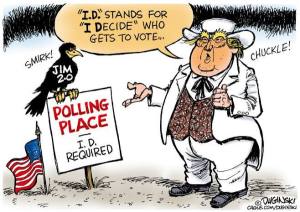 You may review the chart at the link as well as read more analysis on the subject. Lisa Needham of Public Notice has this headline today. “MAGA’s “pasta pass” talking point is height of gaslighting. They know better. They’re hoping voters don’t.”
It looks like Republicans settled on a talking point about why the SAVE America Act is totally necessary to stop non-citizens from fraudulently voting by the millions and zillions — and you will not be surprised to learn that it is hilariously stupid.
Yes, it’s time to talk about the Olive Garden’s Never-Ending Pasta Pass, the latest thing that Republicans have settled on as justification for the voter ID requirements in President Trump’s signature election suppression bill.
Ground zero for this nonsense seems to have been White House spokesperson Abigail Jackson going on Newsmax last week to discuss how she saw a tweet from Olive Garden about their never-ending pasta deal and that you need ID for it, and she just got to thinking, “Olive Garden takes pasta pass security more seriously than Democrats take election security.”
Republican House members dutifully picked up and parroted this nonsense, with Rep. Steve Scalise appearing on CNBC to give his deep thoughts, Rep. David Kustoff racing to Newsmax to share the good news about pasta security, and Rep. Virginia Foxx going on the House floor to push this as a reason to vote in favor of the bill.
This isn’t new, of course — well, the pasta part is, but not Republicans alighting on some random thing they think you need ID to buy and then declaring that should mean you need one to vote.
Trump has spent several years telling people that because you need an ID to go to the grocery store, you should need an ID to vote, and he recently expanded this keen analysis: “All we want is voter ID. You go to a grocery store, you have to give ID. You go to a gas station, you give ID.”
Of course, you do not need an ID to go to a grocery store or get gas, but you can understand Trump’s confusion given that he’s probably never done either of these things for himself.
 Law Dork‘s Chris Geitner explains just how low the DOJ can go in his post today. “Thursday was the worst day for DOJ. So far. DOJ withdrew its subpoenas issued to New York Times reporters, but the hearing that preceded that decision showed just how degraded DOJ has become.” Again, doesn’t the U.S. Constitution mean anything to any Republican these days?
The degradation of the Justice Department in the second Trump administration is clear, is having immediate effects, and will have long-term effects. Just how degraded DOJ has become was on full display in the Southern District of New York on Thursday.
To get why Thursday’s happenings are so central to understanding how bad things have gotten, know that the U.S. Attorney’s Office for the Southern District of New York is widely seen as one the preeminent U.S. Attorney’s Offices in the nation. Alumni of the office would say it was the key office, and it was openly (sometimes derisively) referred to as the “Sovereign District of New York,” due to the high view that members of the office held of the office.
Now, however, things look different. Over the past two weeks, the office tried to subpoena reporters from The New York Times and ensnared some of the reporters’ family members in a second set of subpoenas for phone records. When challenged, the office’s ability to carry out basic legal research and adhere to general ethical standards were called into question by U.S. District Judge Arun Subramanian in a sharp, hour-long hearing that ended with the Trump administration withdrawing the subpoenas rather than face the almost certain likelihood of Subramanian quashing them.
Inner City Press’s Matthew Russell Lee covered the hearing live on Bluesky, and Courthouse News Service covered the hearing as well, in addition to The New York Times’s report.
It was an altogether horrifying appearance in court for Deputy U.S. Attorney Sean Buckley, as well as Kevin Sullivan, a lawyer in the office who was initially sitting in the gallery but who, Lee reported, Subramanian called up to sit at counsel’s table because he was “on all the pleadings” — apparently relating to the phone provider subpoenas.
 Read more details on Subramanian’s questions and the chaos that followed at the link. The New York Times comes out looking badly too. Of course, the DOJ is the only federal department that looks like it’s at an all-time low. This New York Times headline shows the shocking state of our country’s health as HHS is being run by scaliwags like Dr. Oz, and outright nut jobs like RFK Junior. “Measles Cases Hit New Record in U.S., as Vaccination Rates Wane. More measles cases have been reported in the United States in the last two years than in all the years from 2000 through 2024 combined.”Teddy Rosenbluth has the lede.
The United States has now recorded more cases of measles in 2026 than in any other year since the virus was declared eliminated in 2000, a grim sign that the country may be headed toward a new era in which the disease regularly sickens thousands every year.
On Friday, the Centers for Disease Control and Prevention announced that there have been 2,318 confirmed cases of measles so far this year. The case count toppled the record set last year, when measles infected more than 2,200 Americans and killed two unvaccinated children. More measles cases have been reported in the United States in the last two years than in all the years from 2000 through 2024 combined.
Reversing course on measles would require a nationwide push to improve vaccination rates, a prospect that experts said seemed unlikely under the leadership of Health Secretary Robert F. Kennedy Jr. He has halted funding for vaccine hesitancy research, downplayed the risks of measles and spearheaded a hunt for evidence that vaccines are unsafe.
In November, a panel of international experts will meet to determine whether the United States has lost its elimination status, which has long been viewed as one of the country’s crowning public health achievements.
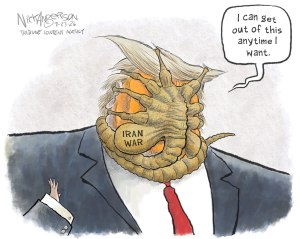 BTW, we’re still in a hot war, and the Epstein files are still not completely public. This is from NBC News. “U.S. launches new strikes and Trump threatens ‘massive attack’ as Iran widens war. There were signs Friday that some U.S. allies in the Middle East may be losing patience with the daily escalation and lack of diplomatic progress. “It’s only getting crazier,” one senior Arab official, directly involved with diplomatic efforts, told NBC News.”
The United States launched a fresh barrage of strikes on Iran overnight after Tehran opened a second front in its pressure campaign on the world economy.
President Donald Trump threatened a major new escalation and on Thursday told Axios he is weighing whether to launch a “massive attack” on the Islamic Republic that would be “bigger than ever before.” The president’s warning and subsequent 13th night of military strikes came as oil briefly surged above $100 a barrel.
Iran has shown little sign of bowing to U.S. demands, launching new attacks on shipping as well as U.S. bases and allies across the Middle East. These two fronts have combined to increase the cost of the renewed conflict — in human lives, including American soldiers, and global prices.
The struggle for control of the crucial Strait of Hormuz has now been extended to another key trade route, the Bab el Mandeb strait, after attacks by Tehran-backed Houthi rebels in the Red Sea.
And there were signs that some U.S. partners in the region may be losing patience. Senior Arab officials told NBC News they were growing frustrated with the threats, the daily escalations and the lack of diplomatic progress.
“We have no clue where this is going,” said one senior Arab official, with direct knowledge of regional developments. “It’s only getting crazier,” said another senior Arab official, directly involved with diplomatic efforts.
“It’s only getting crazier” pretty much sums up Trump’s second term.
What’s on your Reading, Action, and Blogging list today?
Mostly Monday Reads: Chaos Information
Posted: June 22, 2026 Filed under: #We are so Fucked, MAGA Chaos, Republican Chaos, Trump Chaos | Tags: @johnbuss.bsky.social John Buss, chaos, Chaos Supreme Court, Sen. John Cornyn, Senate Majority Leader John Thune, Senate Republicans, Trump Chaos 6 Comments
“Saboteurs be damned! The Situation Room is locked and loaded to eliminate the threat of the Green Newest Scam.” @repeat1968, John Buss
Good Day, Sky Dancers!
Well, I have the perfect read and lede to reinforce my repetitive sub-headings for my post. Burgess Evertt of Semaphor quotes outgoing Senator John Cornyn in his latest. Either everyone reads me, or we all finally notice the trend. “‘The president seems to revel in chaos’: Cornyn goes his own way.” Ya think?
A few days after losing his Senate runoff, John Cornyn did something unusual for him: He used his leverage against his own party.
The Texas Republican was frustrated by a nearly year-long delay in getting his state reimbursed by the Trump administration for more than $10 billion in border security spending that Congress had already approved. Cornyn had something valuable to withhold as lawmakers prepared to take up President Donald Trump’s $70 billion immigration spending bill.
“Basically, I told Senator Barrasso and Senator [John] Thune: ‘There’s a price for my vote, and it is to get the administration to release the money,’” Cornyn told Semafor in a recent interview in his hideaway office on the Capitol’s third floor. “Next thing I got is a call from [White House budget director] Russ Vought, and Russ said, ‘we’ll put a notice of funding.’”
Cornyn added a reminder that, with more than six months left in office and a sophisticated understanding of the Senate, he’s positioned to play more hardball if he has to: “That’s one example I think of what you can do when you have some cards to play.”
The four-term incumbent is already setting some conditions on his critical undecided vote for Trump’s attorney general pick, Todd Blanche. Cornyn has returned to the candor he displayed for years in the Senate halls, offering withering assessments of Trump’s Iran deal and legislative strategy — a pattern he might continue on Wednesday, when the president visits GOP senators in person.
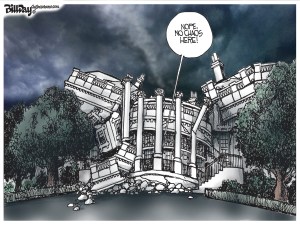 See? We basically have to vote them out of office to act in the interests of the country and the people they serve. To continue that train of thought, a reference to my soon-to-be-gone senator was also put into the analysis
Sen. Bill Cassidy, R-La., also ousted by Trump in May, told Semafor that he and Cornyn are “like-minded in the sense that we’re both not returning, and that gives a certain focus. And he’s conveyed he’s got no illusions about the president.
“But you know,” Cassidy added, “it’s not like we sit around in a smoke-filled room, plotting the strategy.”
It just amazes me that Trump manages to get his way as long as they hold office and positions. Then, they suddenly rotate to the right thing.
What does it take to act like an actual American leader these days? This headline at VOX got me thinking, also. “The MAGA stars freaked out by their own movement. The right’s leading lights are looking for anyone to blame for the right’s growing extremism — except themselves.” This analysis is written by Zach Beauchamp.
It’s a real-life version of the famous sketch on Tim Robinson’s show I Think You Should Leave, where a hot-dog-shaped car crashes into a storefront and a man in a hot dog suit says, “We’re all trying to find the guy who did this.”
The “hot dog men” — and yes, they’re almost all men — are easy to mock. But their growing ranks point to something serious: that right-wing political machine is spinning out of control in ways that even some of its most aggressive and radical voices recognize as dangerous. And as the right searches for new leadership before Trump himself fades into history, nobody on their side has shown any proven ability to contain or redirect its worst impulses.
In the absence of post-Trump leaders both willing and able to address the real problems, the future of the right — and, thus, in some sense, America — is dangerously unclear.
 If that’s the metaphor, then the reality on the ground is even more bizarre.
Indeed, there are plenty of other examples.
Mark Levin, the Fox News and talk radio provocateur with Trump’s ear, unironically complains about “podcasters” who are “not about informing or educating,” but rather profiting off being “crazier” than their competitors. Rod Dreher, a right-wing writer who has long promoted a famously racist anti-immigration novel, has been expressing deep concern about rising bigotry on the young right. And even Dinesh D’Souza — a commentator who has spent literally decades spreading increasingly toxic, racially tinged conspiracies — is now warning that right-wing racism may prompt “mass desertions of blacks, Latinos and other minorities from the GOP.”
All of these men openly helped build the right-wing political culture that got us here. Now they’re all trying, desperately, to find the guy who did this.
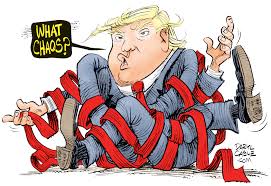 The examples provided make for a long read, but a good set of evidence for the hypothesis. This article comes with all the details on all the nasty stuff that fed the MAGA tourists and the Elephants at the Republican Zoo. You have to pay a bit to read this, but you will come away with a deeper understanding of the people we ignored for way too long. The conspiracy theorists and provocateurs are reaping what they sowed. I especially liked the story of Candice Owens, who always seemed like an over-the-top Con Artist and turn-coat.
You can also read more on the infighting via MSNOW’s Mychael Schnell.” ‘It’s awkward for everybody’: Inside the Trump-Thune relationship. The president and the majority leader are increasingly finding themselves in standoffs.” Trump is still doing a lot of damage, however, so I wonder if this is actually affecting any real change. Is minimal change doing anything?
On June 4, as Senate Republicans finally began debating their immigration enforcement bill, President Donald Trump called Senate Majority Leader John Thune, R-S.D., with a demand: Attach the SAVE America Act to the legislation.
During the call — according to a source familiar with the conversation — Thune told Trump there wasn’t enough support for the hardline voting bill. But, as a concession to the president, he said Republicans would try again.
Sen. Lindsey Graham, R-S.C., drafted an amendment exactly as Trump requested. And Republicans put it on the floor for a vote.
It failed 48-50, with four Republicans joining Democrats in opposition.
Despite one of those stubborn realities in the Senate — math — Trump has continued pressing for the SAVE America Act, which would require proof of citizenship and photo identification to vote while sharply restricting mail-in voting.
Trump’s insistence on pursuing a bill that lacks enough support, and his tendency to fault Thune when it fails, has only deepened tensions between the president and the Senate majority leader.
One GOP senator, who requested anonymity to discuss the internal dynamics, said Trump and Thune “have an awkward relationship.”
“It’s awkward for everybody,” the lawmaker said.
Sources stressed that Trump and Thune still maintain a functional working relationship. One person familiar with their interactions said they don’t speak every day, but “when they need to talk, they talk a lot.”
Still, the limited communication is increasingly becoming a problem.
One of the clearest signs of that dynamic came last week, when Trump instructed his director of national intelligence nominee not to show up for a confirmation hearing, prolonging a lapse in U.S. spying authority. That morning, Thune said he hadn’t heard from Trump.
When Thune was asked last Wednesday why Trump had unexpectedly derailed his nominee’s hearing, the South Dakota Republican’s frustration was palpable.
“Good question,” he said.
Part of Trump’s discontent with Thune appears to be rooted in the contrast with Speaker Mike Johnson, R-La. While Johnson often advances Trump’s priorities through the simple-majority House, Thune must navigate a Senate where most major legislation requires 60 votes. As a result, Thune frequently finds himself delivering unwelcome news about what can and can’t pass.
“Thune and the speaker obviously have different ways of communicating with Trump, both in style and in substance,” the source familiar with the Trump-Thune dynamic said.
“When it comes to Thune, he doesn’t sugarcoat the truth,” this person added. “He tells the president exactly what he needs to know — the raw and unvarnished truth — even if it isn’t always the answer the president wants to hear.”
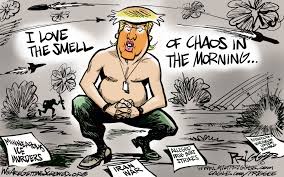 This Washington Post analysis (gifted) shows Orange Caligula’s troubles extend to the Supreme Court. “Why Trump has been attacking the Supreme Court, with 3 key rulings ahead. As the court prepares to rule on several of the president’s priorities, tensions are running high — even with his own appointees.
One recounted how Gorsuch became upset when Davis lashed out at Justice Amy Coney Barrett, calling her a “rattled law professor” for siding with the court’s liberals in a pair of rulings against Trump. The other said Davis was angered by Gorsuch’s vote to block Trump’s use of a wartime authority to deport Venezuelans.
The people differed on whether Gorsuch had asked Davis not to come to his clerks’ gathering or he chose not to. Either way, the rift highlighted the growing conflict between Trump, his MAGA allies and the justices, which has burst more fully into public view in recent months.
That turbulence makes for a tense backdrop in the waning days of the Supreme Court’s 2025-26 term, as the justices prepare to rule on three signature Trump initiatives: limiting birthright citizenship, firing the heads of independent agencies and reshaping the Federal Reserve.
Many legal experts believe that the justices have signaled they will rule against Trump on two out of the three, blocking his bid to deny citizenship to those who were born to parents here illegally or lacking permanent residency, as well as his effort to remove a governor of the Fed board.
“It seems like almost 100 years since you’ve had a clash approaching this level between the president and the court,” said Jeffrey L. Fisher, a law professor at Stanford University. “You’d have to go back to the New Deal to have any kind of an analogue.”
During the 1930s, President Franklin D. Roosevelt tried to pack the court by expanding it from nine justices to 15after the court struck down key parts of the New Deal. The plan ultimately failed, but not before the court began upholding some policies that Roosevelt championed, possibly in response to his threats to add justices.
Davis, who declined to comment on his relationship with Gorsuch, said in an interview that if the court rules against Trump on birthright citizenship,
“When the Supreme Court gives Chinese birth tourists birthright citizenship, it’s going to destroy its legitimacy with a broad swath of the American public,” Davis said, referring to people who ostensibly travel to the United States to have American children. “They are following politics and vanity projects instead of the law.”
Defenders of birthright citizenship note that the 14th Amendment says that “all persons born or naturalized in the United States, and subject to the jurisdiction thereof, are citizens of the United States and of the state wherein they reside.”
In another major case on Trump policies, the court will decide whether the president can remove without cause the heads of roughly two dozen independent agencies, such as the Federal Trade Commission and the Federal Communications Commission, that Congress set up to be insulated from political influence.
In addition, the justices will rule on whether Trump can fire Federal Reserve governor Lisa Cook while a lawsuit over her removal plays out in the courts. A ruling for Trump would give the president far greater control over the powerful central bank.
These rulings, and other major decisions, are likely to come in the next week or so as the justices sprint toward the end of the term in late June or early July.
The disaffection with the Supreme Court among Trump’s allies is notable because the president reshaped the court in his first term with three staunchly conservative appointees, who have delivered major victories for conservatives on abortion, affirmative action, religious rights and more.
This term, the justices have handed the administration a string of wins on the emergency docket, allowing Trump policies on limiting immigration, freezing foreign aid and dismantling the Education Department to move forward for now.
Trump appointed Gorsuch, who did not respond to a request for comment, along with Brett M. Kavanaugh and Barrett.
The wins have not satisfied Trump, who has attacked the court — including his own nominees — in increasingly caustic and personal terms that legal scholars say have little historical precedent; Trump has called the justices “bad,” “stupid,” “weak” and other epithets.
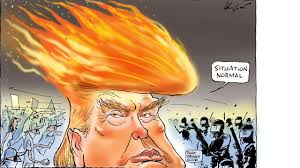 All three of these articles are long reads. I’m not sure if they give me a glimpse of hope, given all the idiots involved, but I do feel the more Trump feels he’s under attack by his own, the more he’ll turn his mind from other things, like the ridiculous crap he’s done at the White House. I don’t know, though. I am fully aware that I might be wrong on that. It may be just chaos without meaning or impact.
Here are some other things that truly depress me. This is via CNN this morning. “Exclusive: Trump administration plans to use homeland security funds to pressure states into election changes.
The Trump administration is threatening to withhold tens of millions of dollars in federal homeland security funds from states unless they adopt a sweeping set of election changes, according to multiple sources and internal documents obtained by CNN.
The move is part of President Donald Trump’s campaign to root out alleged voter fraud — despite studies showing it’s far rarer than he claims — and exert more federal influence over how elections are run. It comes as multiple states have passed laws that seek to prevent the federal government from interfering with elections.
Under new rules governing several homeland security grant programs, states must take a number of steps, including phasing out certain electronic voting systems and moving to hand-marked paper ballots. They must also run their voter rolls through a controversial Department of Homeland Security citizenship verification database.
If not, states would lose out on some funding from DHS. These grants, expected to total more than $1 billion in the current fiscal year, are one of Washington’s main vehicles for helping state and local governments prevent terrorism, protect infrastructure and prepare for major disasters.
For years, the DHS grants, which states apply for, have required that at least 3% of the funds be spent broadly on election security. But the new guidelines, which CNN obtained and are expected to go out to states later this month, impose a set of mandatory reforms and steep penalties for noncompliance. States that refuse would lose 20% of the grant money — potentially millions of dollars in security funds.
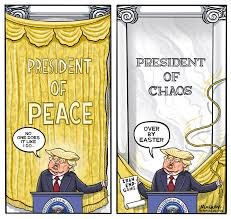 This is more bad news via NPR. It’s more garbage from SCOTUS. “Supreme Court allows a ruling that ends a tool to protect minority voters in 7 states.” Hansi Lo Wang has the lede.
By declining to take up a lower court ruling, the U.S. Supreme Court has dealt another blow to the Voting Rights Act.
The court announced Monday that it will not review an Arkansas-based lawsuit, leaving in place a 2025 appeals panel ruling that ends a long-used tool for protecting minority voters from discrimination under the landmark law in seven mainly Midwestern states.
That ruling found that in the states covered by the 8th U.S. Circuit Court of Appeals — Arkansas, Iowa, Minnesota, Missouri, Nebraska, North Dakota and South Dakota — private individuals and groups do not have the right to sue to enforce what’s known as Section 208 of the Voting Rights Act, which generally allows voters with a disability or inability to read or write to get help with voting from a person of their choice.
The Supreme Court’s move comes almost two months after its conservative supermajority issued a major ruling that further weakened the Voting Rights Act, setting off a groundswell in redistricting across the country.
When will the press stop calling these people “conservative”? This has nothing to do with conserving anything traditionally Constitutional in this country. Okay, this is all I can handle on Monday. May the week ahead give us more hope. I’m going to go watch more soccer games and hope for the best.
What’s on your Reading, Action, and Blogging list today?

 peej
peej Carissa
 bostonboomer
 dakinikat
 ecocatwoman
 jjlo
jjlo mablue2
 Mama Lopez
 peggysue22
 quixote
 skydancingguestblogger
 Mona (aka Wonk the Vote)





Recent Comments