First, a quick follow-up: I’ve been writing about the delay of stimulus payments to 30 million seniors, disabled people, veterans, railroad pensioners. Last Thursday, the Social Security Administration finally sent information to enable the IRS to send out the direct deposits/checks, but there’s still no information available on when these vulnerable Americans will receive the much needed assistance.
Many recipients of Supplemental Security Income (SSI) and other federal benefits are still waiting to receive their stimulus fund. The Internal Revenue Service has yet to announce a payment date, as of Tuesday….
On March 25, the SSA provided the Internal Revenue Service (IRS) with the paperwork needed for stimulus payments to be issued to federal benefit recipients following pressure from the House Ways and Means Committee. The IRS has yet to respond to Newsweek‘s requests for a comment since the SSA sent the required paperwork.
The SSA website also currently states that “the IRS decided to pay EIPs [Economic Impact Payments] first only to people who filed a 2020 or 2019 tax return, and to people who used the IRS’ Non-Filer Tool to receive a previous EIP. Some Social Security beneficiaries may have received a recent EIP if they filed a tax return with the IRS.”
People who were too poor to file a tax return have been left twisting in the wind. They are advised to use the “check my payment” link at the IRS, but when they do, they are told there is no information available.
Asked whether it had received any information on a stimulus payment date for federal benefit recipients, a spokesperson for NACHA (National Automated Clearing House Association), which manages the ACH Network, the national automated clearing house for electronic funds transfers, told Newsweek this Monday: “We haven’t gotten anything.”
Newsweek has contacted the IRS, the U.S. Treasury and the U.S. Bureau of the Fiscal Service for comment.
The SSA website currently advises: “Please refer to the IRS’ website for the latest information about economic impact payments (EIP). Please do not contact the Social Security Administration (SSA) with questions about EIPs. Our representatives do not have information to answer your EIP questions. The IRS, not SSA, processes all EIPs.”
A spokesperson for the SSA told Newsweek on March 26: “As you may already know, many Social Security beneficiaries have already received their EIPs. The final files we sent to IRS yesterday morning [Thursday] will address those recipients who don’t normally file a tax return with the IRS.”
Now for my main topic: Cultural Appropriation
Wikipedia: Cultural appropriation is the adoption of an element or elements of one culture or identity by members of another culture or identity. This can be controversial when members of a dominant culture appropriate from disadvantaged minority cultures.
I seldom watch late night entertainment programs, but yesterday there was a strong reaction to a Tonight Show segment. A white TikTok “influencer,” Addison Rae, appeared on the Jimmy Kimmel show to perform several dance routines. The problem is that she copied them from Black women on TicToc and failed to credit them or the Black artists who performed the songs she danced to.
Many of the viral dance challenges Rae demonstrated were started by Black creators, but you wouldn’t know that by watching Friday’s episode.
Many of TikTok’s viral dance challenges were started by Black creators, but you wouldn’t know that by watching Friday’s episode of “The Tonight Show,” which saw one of the app’s biggest stars, Addison Rae, perform several dances without crediting their choreographers.
What was intended as a fun moment between Rae and host Jimmy Fallon — who are both white — backfired over the weekend as Twitter users demanded recognition for the people whose choreography was featured on the show.
“Stealing from black entertainers and having white ‘creators’ regurgitate it to the masses is american history 101,” one person tweeted after Fallon shared a clip of Rae busting a move to eight different songs.
“I think Black creators should just stop creating content for like a good 6 months and just observe what these people come up with,” wrote another in a tweet that had amassed more than 261,000 likes….
Included in the TikTok dance compilation were:
“Do It Again” (recorded by Pia Mia, choreographed by @noahschnapp)
“Savage Love” (recorded and choreographed by @jasonderulo)
“Corvette Corvette” (recorded by Popp Hunna, choreographed by @yvnggprince)
“Laffy Taffy” (recorded by D4L, choreographed by @flyboyfu)
“Savage” (recorded by Megan Thee Stallion, choreographed by @keke.janjah)
“Blinding Lights” (recorded by the Weeknd, choreographed by @macdaddyz)
“Up” (recorded by Cardi B, choreographed by @theemyanicole)
“Fergalicious” (recorded by Fergie and will.i.am, choreographed by @thegilberttwins).
(The choreographers’ names have been shared by Twitter users and confirmed by Buzzfeed.)
Here’s a side-by-side comparison of Rae’s performance to Cardi B’s “Up” along with the original performance by TheMayaNicole. See what you think.
If you want to see a TikTok dance skit, why not ask the original artists to participate? That’s a question The Tonight Show Starring Jimmy Fallon and Addison Rae face after March 26th’s episode. The well-known creator walked Fallon through a few of the app’s most popular choreography in a sketch, similar to a video released with Charli D’Amelio last year. Quickly after airing, the clip faced criticism as viewers wondered why the creatives who actually created the dances didn’t get screen time — or at the very least, proper credit.
This controversy is not new for Rae, who faced similar pushback after she and D’Amelio became the face of a “Renegade” dance routine, which was originally created by Jalaiah Harmon. Intentional or not, Rae and D’Amelio’s names were synonymous with choreography they had no hand in. They went as far as to perform the dance at a 2020 NBA All Star game without Harmon. Harmon eventually got her dues, but only after publicly reclaiming the viral dance. Rae and D’Amelo need only whisper and their combined 100+ million followers would come running, so why did Harmon practically need a megaphone to get her credit? Her experience is a disappointing reflection of how art is co-opted on social media, especially from Black creatives.
You can’t separate Rae’s success from the work of Black TikTokers. Some of her most viewed videos are built on their choreography, like the “Savage” routine originated by Keara Wilson. (Wilson told POPSUGAR she doesn’t wish any backlash against Rae because she knows “how toxic the internet can be.” She said, “Yes of course it’s always nice to be credited but just having my dance on the show is an honor in itself.”)
As Twitter user @blackamazon wrote, “This is why I bang on EVERYBODY about the economics and race of social media. ‘Tik tok dances’ the names of the artists not there. The actual choreographers not there. She’s on national television but where are the Black kids who actually made these.” Another user, @868nathan, wrote, “The fact that Addison Rae is championed for ‘Tik Tok Dances’ whilst the black creatives that made them never get the same platform will never sit right with me.”
This reminds me of the days when white recording artists like Pat Boone released pathetic cover versions of songs by Black musicians like Little Richard. The good news in those days was that people who heard the covers sought out the originals and eventually the Black artists became well known and successful. The same thing happened again in the 1960s with British and American bands who covered performances by Black blues musicians.
While some early rock ‘n’ roll acts receive little critical respect, historically speaking, these same musicians and singers played an important role in bridging musical styles and bringing cultures together, writes Aquila, professor emeritus of history and American studies at Penn State, in his book, Let’s Rock! How 1950s America Created Elvis and the Rock & Roll Craze (Rowman & Littlefield, 2017).
“I spend a lot of time discussing Pat Boone and other pop rockers in the book. Boone refers to himself not as the father of rock ‘n’ roll, but as the midwife of rock ‘n’ roll,” says Aquila.
“What he means by this is that his versions of Little Richard’s songs may not be as good as Little Richard’s originals, but Little Richard couldn’t get played on mainstream radio stations back in the ’50s, due to racism and other reasons. But, after the kids listened to Boone’s music, they tended to go on and want the real thing.”
Boone spent most of his early career covering rhythm-and-blues songs, like Richard’s “Tutti Frutti.” Boone’s versions, however, were influenced by pop styles and standards that were tamer and more familiar to white audiences of the time. He also sanitized Fats Domino’s “Ain’t That a Shame,” for his white audience’s ears and, apparently, their grammar. He tried, for instance, to change the title of the song to “Isn’t That a Shame.”
While many music critics now consider this artistic theft or cultural appropriation, Aquila says that some black artists at the time appreciated Boone’s cover songs.
At a concert, for example, Aquila writes that Domino introduced Boone to the audience and, pointing to one of his diamond rings, added that Boone’s version of “Ain’t That a Shame” bought him that ring.
It’s still pathetic that our white-dominated culture made this happen and even more pathetic that it is still happening on social media platforms like TikTok and mainstream TV programs.
My body went back to normal time this morning and stole that hour plus another back! I’m just not adjusting well to this at all but I did enjoy time walking the dog last night under the Full Worm Moon. I’m not sure all the spring breakers holding the neighborhood hostage were gone but they seemed to be holed up somewhere inside because Temple and I had the neutral ground and all our heron buddies to ourselves.
The full Moon names used by The Old Farmer’s Almanac come from a number of places, including Native American, Colonial American, and European sources. Traditionally, each full Moon name was applied to the entire lunar month in which it occurred, not only to the full Moon.
The Worm Moon
March’s full Moon goes by the name Worm Moon, which was originally thought to refer to the earthworms that appear as the soil warms in spring. This invites robins and other birds to feed—a true sign of spring!
An alternative explanation for this name comes from Captain Jonathan Carver, an 18th-century explorer, who wrote that this Moon name refers to a different sort of “worm”—beetle larvae—which begin to emerge from the thawing bark of trees and other winter hideouts at this time.
This is Rob and Laura who live in the Live Oak closest to the River. On the next block there are two pairs. I’ve named them Lucy and Ricky and Ethel and Fred. They live in adjacent trees.
The issue in most dire need of elucidation is undoubtedly the onslaught of voter suppression measures in state legislatures across Republican States. It is also the Voting Rights Act headed for the desk of the Senate. If you read anything today please read Jane Mayer’s article at The New Yorker. Here’s the headline: “Inside the Koch-Backed Effort to Block the Largest Election-Reform Bill in Half a Century ,On a leaked conference call, leaders of dark-money groups and an aide to Mitch McConnell expressed frustration with the popularity of the legislation—even among Republican voters.”
A recording obtained by The New Yorker of a private conference call on January 8th, between a policy adviser to Senator Mitch McConnell and the leaders of several prominent conservative groups—including one run by the Koch brothers’ network—reveals the participants’ worry that the proposed election reforms garner wide support not just from liberals but from conservative voters, too. The speakers on the call expressed alarm at the broad popularity of the bill’s provision calling for more public disclosure about secret political donors. The participants conceded that the bill, which would stem the flow of dark money from such political donors as the billionaire oil magnate Charles Koch, was so popular that it wasn’t worth trying to mount a public-advocacy campaign to shift opinion. Instead, a senior Koch operative said that opponents would be better off ignoring the will of American voters and trying to kill the bill in Congress.
Kyle McKenzie, the research director for the Koch-run advocacy group Stand Together, told fellow-conservatives and Republican congressional staffers on the call that he had a “spoiler.” “When presented with a very neutral description” of the bill, “people were generally supportive,” McKenzie said, adding that “the most worrisome part . . . is that conservatives were actually as supportive as the general public was when they read the neutral description.” In fact, he warned, “there’s a large, very large, chunk of conservatives who are supportive of these types of efforts.”
As a result, McKenzie conceded, the legislation’s opponents would likely have to rely on Republicans in the Senate, where the bill is now under debate, to use “under-the-dome-type strategies”—meaning legislative maneuvers beneath Congress’s roof, such as the filibuster—to stop the bill, because turning public opinion against it would be “incredibly difficult.” He warned that the worst thing conservatives could do would be to try to “engage with the other side” on the argument that the legislation “stops billionaires from buying elections.” McKenzie admitted, “Unfortunately, we’ve found that that is a winning message, for both the general public and also conservatives.” He said that when his group tested “tons of other” arguments in support of the bill, the one condemning billionaires buying elections was the most persuasive—people “found that to be most convincing, and it riled them up the most.”
McKenzie explained that the Koch-founded group had invested substantial resources “to see if we could find any message that would activate and persuade conservatives on this issue.” He related that “an A.O.C. message we tested”—one claiming that the bill might help Congresswoman Alexandria Ocasio-Cortez achieve her goal of holding “people in the Trump Administration accountable” by identifying big donors—helped somewhat with conservatives. But McKenzie admitted that the link was tenuous, since “what she means by this is unclear.” “Sadly,” he added, not even attaching the phrase “cancel culture” to the bill, by portraying it as silencing conservative voices, had worked. “It really ranked at the bottom,” McKenzie said to the group. “That was definitely a little concerning for us.”
Gretchen Reiter, the senior vice-president of communications for Stand Together, declined to respond to questions about the conference call or the Koch group’s research showing the robust popularity of the proposed election reforms. In an e-mailed statement, she said, “Defending civil liberties requires more than a sound bite,” and added that the group opposes the bill because “a third of it restricts First Amendment rights.” She included a link to an op-ed written by a member of Americans for Prosperity, another Koch-affiliated advocacy group, which argues that the legislation violates donors’ freedom of expression by requiring the disclosure of the names of those who contribute ten thousand dollars or more to nonprofit groups involved in election spending. Such transparency, the op-ed suggests, could subject donors who prefer to remain anonymous to retaliation or harassment.
This evening shift, circa 1924, is the earliest confirmed example of Lowe’s couture. Every bead was attached individually.Dress from collection of the Henry B. Plant Museum / Tampa, Florida
Georgia has some of the most organized and mobilized groups of Black voters, thanks to Stacey Abrams, who may be the shrewdest and most tenacious voting rights advocate in the nation.
Many of these Black voters remember when Abrams lost a close race for Georgia governor in 2018, a contest tainted by allegations of voter suppression. Kemp, Abrams’ opponent, ran for governor while also holding onto his position as the state’s chief elections officer — a position many viewed as a conflict of interest.
The perception that the GOP is trying to suppress the Black vote will only make Black voters in Georgia more determined to vote in 2022, when Abrams is widely expected to run against Kemp again, says the Rev. Jamal Byrant, senior pastor of New Birth Missionary Baptist Church in Lithonia, Georgia.
“Georgia is frankly becoming browner and more progressive, and the Republicans are having anxiety about the upcoming gubernatorial election and they’re trying to do everything in their power to stop the wave,” Bryant says.
“You’re going to see a whole lot of first-time voters, younger voters and disillusioned and disenfranchised voters heading back to the polls because they realize what’s at stake,” Bryant says.
There is evidence to back up Bryant’s prediction. A growing body of research suggests that the passage of voter ID laws may in some cases motivate Black voters and spark voter organizing efforts.
One study examining the impact of the Supreme Court’s 2013 Shelby decision, which gutted the Voting Rights Act, suggested that voting restrictions may actually increase Black turnout in elections.
The Shelby decision made it easier for states to pass voter restriction laws after the high court removed the “preclearance” provision from the Voting Rights Act. Under preclearance, a state with a history of racial discrimination in elections had to get permission from the federal government for instituting any changes to how they run elections.
The study, which was cited in the New York Times, said the Shelby decision may have actually increased Black turnout in the 2016 presidential election in some states where preclearance was removed.
“Overall, the removal of preclearance did not decrease Black turnout,” says Kyle Raze, a Ph.D. candidate at the University of Oregon, who authored the study. “If anything, the removal of preclearance increased Black turnout in some states during the 2016 election.”
I suppose the one great thing we’ve got going for us is that the country’s voters outnumber the country’s wicked rich. But then I read things like this poll from the Pew Research Center. “A partisan chasm in views of Trump’s legacy”. It still seems many rank and file republicans get their information from alternative reality sites. Democracies don’t work so well when a slice of the electorate likes being deliberately and willfully ignorant.
Two months after President Donald Trump left office, 38% of Americans say he made progress toward solving major problems facing the country during his administration – while a nearly identical share (37%) say he made these problems worse. Another 15% say Trump tried but failed to solve the nation’s problems, while 10% say he did not address them.
Looking back at Trump’s term, just over half of Americans (53%) rate Trump’s presidency as below average – including 41% who say he was a “terrible” president. About a third (35%) rate his presidency as above average, including 17% who say he was a “great” president. Republicans and Democrats offer starkly different assessments of Trump’s presidential legacy, according to a Pew Research Center survey of 12,055 U.S. adults conducted March 1-7, 2021.
Graphic statement: A stately evening ensemble of black lace over aqua silk, for A. F. Chantilly, circa 1966.
On Sunday evening, CNN aired a special featuring interviews with the senior officials involved in the early coronavirus pandemic response under president Donald Trump. No longer operating under the Trump political umbrella, they offered assessments of the past year that lacked any soothing veneer.
Suspected Russian hackers gained access to email accounts belonging to the Trump administration’s head of the Department of Homeland Security and members of the department’s cybersecurity staff whose jobs included hunting threats from foreign countries, The Associated Press has learned.
The intelligence value of the hacking of then-acting Secretary Chad Wolf and his staff is not publicly known, but the symbolism is stark. Their accounts were accessed as part of what’s known as the SolarWinds intrusion, and it throws into question how the U.S. government can protect individuals, companies and institutions across the country if it can’t protect itself.
The short answer for many security experts and federal officials is that it can’t — at least not without some significant changes.
“The SolarWinds hack was a victory for our foreign adversaries, and a failure for DHS,” said Sen. Rob Portman of Ohio, top Republican on the Senate’s Homeland Security and Governmental Affairs Committee. “We are talking about DHS’s crown jewels.”
The Biden administration has tried to keep a tight lid on the scope of the SolarWinds attack as it weighs retaliatory measures against Russia. But an inquiry by the AP found new details about the breach at DHS and other agencies, including the Energy Department, where hackers accessed top officials’ schedules.
Blush pink was a favorite color of Lowe’s. Here she uses it in silk and nylon for an evening dress, from 1962, festooned with trompe-l’oeil flowers.
Well, that’s a little this and that about the previous guy as well as what we’re experiencing now still because of the previous guy. The Biden/Harris administration sure have their work cut out for them.
Since I now have the Blues I will put this up by Memphis Minnie (Lizzy Douglas) who recorded this song sometime during the peak of the great depression. Douglas was born in New Orleans in the Algiers neighborhood in 1897 but moved to Tennessee to record. She was billed as the Queen of the Country Blues. You can learn more about her at the Memphis Music Hall of Fame.
But there were plenty of men who wanted to play guitar like Memphis Minnie. She once even beat the great Big Bill Broonzy in a picking contest. Her title “Queen of the Country Blues” was no hype. Minnie did everything the boys could do, and she did it in a fancy gown with full hair and makeup. She had it all: stellar guitar chops, a powerful voice, a huge repertoire including many original, signature songs and a stage presence simultaneously glamorous, bawdy and tough.
She transcended both gender and genre. Her recording career reached from the 1920s heyday of country blues to cutting electric sides in 1950s Chicago studios for the Chess subsidiary Checker. Minnie helped form the roots of electric Chicago blues, as well as R&B and rock ‘n’ roll, long before she plugged in. Her unique storytelling style of songwriting drew such surprising fans as Country Music Hall of Famer Bob Wills, the King of Western Swing, who covered her song about a favorite horse, “Frankie Jean,” right down to copying Minnie’s whistling. Though she inspired as many men as women, her influence was particularly strong on female musicians, her disciples including her niece Lavern Baker, a rock and R&B pioneer in her own right, as well as Maria Muldaur (who released a 2012 tribute CD) Bonnie Raitt (who paid for her headstone), Rory Block, Tracy Nelson, Saffire and virtually every other guitar-slinging woman since.
What’s on your reading and blogging list today?
Did you like this post? Please share it with your friends:
The information the IRS needs to send out the payments was finally delivered on Thursday morning after threatening letters sent to Social Security Commissioner Andrew Saul and his Deputy David Black by leaders of the House Ways and Means and Oversight Committees. There is still no word on when the deposts/checks will go out. The latest estimate is that those of us in these categories will still have to wait at least 10 days to see the money.
Meanwhile, calls on Biden to fire Saul and Black are growing louder.
Weeks after the American Rescue Plan had been signed into law, while many Americans had already received payments, the Social Security Administration’s inaction was standing in the way of millions of beneficiaries receiving desperately needed cash aid. After escalating pressure on Saul to no avail, the letter gave him 24 hours to remedy the holdup. A few hours later, the SSA announced that they’d be sending the information the next day.
This delay is just the latest in an array of extremely troubling decisions under the leadership of the Social Security Administration’s commissioner Saul, and his deputy David Black….
Commissioner Saul and Deputy Commissioner Black were appointed by President Trump, alongside Deputy Commissioner for Retirement and Disability Policy Mark Warshawsky, to self-fulfill the Republican promise about the failure of government, and destroy the departments they were tasked with managing. Warshawsky, a veteran of the American Enterprise Institute, was pegged as an early candidate to be fired by the Biden administration for his work undercutting the program; he retired from the post in late January.
The Biden administration has set to work rolling back some of those Trump appointees’ designs on Social Security, including a proposed rule that would have subjected disability insurance recipients to even more frequent and stringent eligibility reviews, which would make an already challenging process even more difficult for people with disabilities to secure and maintain cash benefits. That move was widely celebrated among advocates. But President Biden has not heeded the call from those same advocates to fire Saul and Black, who have clear track records of working against the very department they’ve been tasked to head up, and against Democratic ambitions on Social Security.
Frank O’Sullivan
Now, a growing number of congressional Democrats are joining the chorus calling for Saul and Black’s ousters. Sen. Sherrod Brown (D-OH) called for their resignation as his first act as chair of the Social Security and Pensions Subcommittee, and has since urged Biden to fire them. He’s joined House Ways and Means Social Security Subcommittee Chairman John Larson, Worker and Family Support Subcommittee Chairman Danny Davis, and Oversight Subcommittee Chairman Bill Pascrell Jr. in demanding Saul’s immediate removal. Both Saul and Black are serving terms that don’t expire until 2025….
On the campaign trail, Biden insisted (straining against historical fact) he had never and would never vouch for cuts to Social Security. He, and the Democratic Party broadly, have made protecting and expanding Social Security a main plank of the party’s policy platform going forward.
That ambition is irreconcilable with a leadership regime that has, as was reported by Yahoo News, put “illegitimate political pressure on Administrative Law Judges to reduce the rate of Social Security disability case approval,” as one such judge recently claimed. That alone should be scandal enough to imperil Saul and Black’s positions at the agency, and give the Biden administration the space to fire them for cause. But the Trump years have built up a tolerance for scandal, which means that the incident hasn’t even deterred them.
Meanwhile, Saul and Black have openly pursued a number of reforms aimed at aggressively curtailing benefits. Their attempted rule change, which the Biden administration rolled back, was a Reagan-era reform that would have led to tens of thousands of people losing benefits. When President Reagan enacted it, it led to a rash of suicides, and was deemed so cruel that it led to a unanimous Senate ruling to overturn it. Elsewhere, they’ve sought to deny benefits for older and severely disabled non–English speakers, resulting in an estimated 100,000 people being denied more than $5 billion in benefits.
See my Thursday post for more about Saul and Black’s efforts to destroy Social Security on Thursday.
Pressure is also building for Biden to get rid of Trump-appointed Postmaster General Louis DeJoy.
A group of House Democrats on Friday introduced legislation to prohibit the Postal Service from lengthening mail-delivery windows and require it to adhere to present service expectations. They named the bill the Delivering Envelopes Judiciously On-time Year-round Act, or DEJOY Act.
Carl Larsson: Brita, Cat and Sandwich
One House aide involved in postal reform legislation introduced in February said some members of the caucus are leery of proceeding with efforts to address the Postal Service’s financial obligations given that DeJoy’s 10-year plan includes sharp reductions in service, including slower timetables for mail delivery and reduced post office hours.
Separately, Pennsylvania Attorney General Josh Shapiro (D) threatened to take legal action to block the service cuts. His office said in a statement Friday that it was encouraged that DeJoy recognizes the legal obligations to secure limited regulatory approvals, but said it remained concerned about timely mail delivery….
DeJoy hopes to save the Postal Service $160 billion over the next decade through a combination of austerity measures, postage price increases and projected package volume growth. But the largest single piece of his plan is dependent on Congress repealing its pre-funding mandate for retiree health care costs, which runs about $5 billion a year. Instead, the agency wants to wind down those payments and enroll future retirees in Medicare, a proposal worth $44 billion.
A bill introduced by Rep. Carolyn B. Maloney, chair of the powerful House Oversight and Reform Committee, includes both components.
But DeJoy’s designs to slow the mail — even as the Postal Service attempts to rebound from generationally poor service metrics in recent months — and perceived animus toward lawmakers in recent hearings have made those prospects more difficult.
Sometimes America’s legacy of white supremacy is hiding in plain sight, literally. When Georgia Gov. Brian Kemp signed a hastily passed voter suppression law that many are calling the new, new Jim Crow on Thursday night, surrounded by a half-dozen white men, he did so in front of a painting of a plantation where more than 100 Black people had been enslaved.
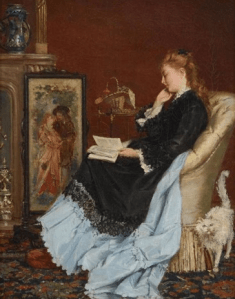
Lady reading with cat-Albert Roosenboom
The fitting symbolism is somehow both shocking and unsurprising. In using the antebellum image of the notorious Callaway Plantation — in a region where enslaved Black people seeking freedom were hunted with hounds — in Wilkes County, Ga., as the backdrop for signing a bill that would make it a crime to hand water to a thirsty voter waiting on Georgia’s sometimes hours-long voter lines, the GOP governor was sending a clear message about race and human rights in the American South.
The portrait of the plantation was the starkest reminder of Georgia’s history of white racism that spans slavery, Jim Crow segregation, the rebirth of the modern Ku Klux Klan, and today’s voter purges targeting Black and brown voters — but it wasn’t the only one. At the very moment that Kemp was signing the law with his all-white posse, a Black female Georgia lawmaker — Rep. Park Cannon — who’d knocked on the governor’s door in the hopes of watching the bill signing was instead dragged away and arrested by state troopers, in a scene that probably had the Deep South’s racist sheriffs of yesteryear like Bull Connor or Jim Clark smiling in whatever fiery hellhole they now inhabit.
Rep. Park Cannon (D-Atlanta) is placed in handcuffs by Georgia State Troopers after being asked to stop knocking on a door that lead to Gov. Brian Kemp’s office while Gov. Kemp was signing SB 202 behind closed doors at the Georgia State Capitol Building in Atlanta, Thursday, March 25, 2021.Alyssa Pointer / AP
Indeed, Twitter was on fire Thursday night with posters drawing the straight line from notorious past segregationists like George Wallace to the 2021 actions of Kemp and the GOP-led Georgia Legislature in passing — at great speed and with little debate — a lengthy bill that also limits easy-access drop boxes for ballots and places onerous voter-ID restrictions on voting by mail, and which the New York Times reports “will have an outsized effect on Black voters.”
On one level this new voter-suppression law — “voter integrity,” in the modern GOP’s Orwellian branding — is inspired by the current and possible future events of ex-President Donald Trump’s Big Lie about fraud in the 2020 election, the narrow upset wins in Georgia for President Biden and two new Democratic senators, and the threat that voting icon Stacey Abrams poses to Kemp in the 2022 election. But there’s also a powerful pull back to Georgia past. That link is made clear by the history hanging right behind Kemp on Thursday.
“Things have changed dramatically” in the South, Chief Justice John Roberts wrote in 2013 when he authored the majority opinion gutting the Voting Rights Act, ruling that states with a long history of discrimination no longer needed to have changes to their voting procedures approved by the federal government.
Voter suppression in Georgia is Exhibit A for why he is wrong.
After Joe Biden carried the state in November and Black voters turned out in record numbers in the January runoffs to elect Democrat Raphael Warnock as the state’s first Black senator and Democrat Jon Ossoff as the state’s first Jewish senator, Georgia Republicans passed a sweeping rewrite of the state’s election laws on Thursday to make it harder for Democratic constituencies to vote and have their ballots counted.
Though some Georgia Republicans, most notably Secretary of State Brad Raffensperger, defended the integrity of the 2020 election, the “Election Integrity Act of 2021” heavily restricts mail ballot drop boxes, adds new ID requirements for mail-in voting, throws out ballots cast in the wrong precincts, and makes it a crime to give voters food and water while they’re waiting in line.
In addition to making it harder to vote, the new law allows the GOP-controlled legislature to appoint a majority of members of the state election board and gives the board the power to take over county election boards, making it easier for Republicans to challenge election results, take over election administration in large Democratic counties, and even decline to certify the results if Democrats win close races—which Trump tried and failed to get the state to do in 2020.
One of the small, rueful truths that many Americans held in the back of their minds throughout the pandemic year was that, for all of its horrors, it had at least reduced, or even eliminated, the spectacle of the gun massacre. School closings had momentarily ended school shootings; curbside delivery had, it seemed, halted in-store assaults. It is true that gun fatalities were disturbingly trending upward in big cities, for reasons that are as yet as mysterious as those for the great decline that preceded them, and that, according to the Gun Violence Archive, last year saw the highest number of shooting deaths in decades. In fact, keyed, perhaps, by a general sense of panic marked by the pandemic and a bizarrely unsettled election year—with that strange American certainty that they’re coming for you—gun sales soared, even amid groups that are not normally associated with buying firearms in numbers.
The gun massacre, however—five or twenty or fifty people murdered at a time—had, briefly, vanished. Yet, alongside the knowledge that mass shootings had gone stood the knowledge that they would, inevitably, reëmerge. And here they are, right on schedule, as the country “opens up,” and with a vengeance: seven in the past seven days, with eight people killed in three shootings in Atlanta, and ten in a grocery store in Boulder. With those shootings come back all the usual, understandable, and all-too-human reactions—above all, our urge to give them some kind of meaning by making them an index of a larger issue. Violence this blankly nihilistic needs a point projected into it, to redeem it as a subject of discussion….
Countries that resemble ours in every way except for the availability of guns have much lower levels of gun violence and far fewer gun massacres. Yet these truths, demonstrated again and again, meet the same resistance, over and over. The Second Amendment guarantees private ownership of even military-style weapons. (It doesn’t, or rather, until very recently, not even conservative Justices imagined that it did.) Guns are essential for self-protection. (They aren’t.) The way to stop mass shootings is to arm more people, such as teachers. (A “colossally stupid idea,” according to the co-president of the Brady Campaign to Prevent Gun Violence.)
All this, even as the sheer psychic damage done by the omnipresence of guns in America is self-evident (no healthy society should have to train its children in active-shooter drills), while the social damage extends far beyond the immediate casualties. A reason for the prevalence of police shootings in America is that the police go about armed, in levels unique to our society, in order to deal with the uniquely over-armed civilians they fear encountering, with the frequently fatal results, we know too well, for the unarmed and the innocent.
Sorry this isn’t a more cheerful post. I’ll probably be up for something more upbeat if I finally get that promised $1400. What’s on your mind today?
Did you like this post? Please share it with your friends:
Suzanne Valadon – Still Life with Basket of Apples Vase of Flowers 1928
Good Day Sky Dancers!
I watched Biden’s first presser yesterday afternoon. I’m pretty convinced that some one needs to rewrite the rules for the Beltway Press. There were a lot of missed opportunities for real questions, the usual resplendent use of bothersiderisms, the usual just to be “fair” hunt for attacks knowing Status Quo Joe wouldn’t respond like the Previous Guy, and just some things that make me think some one needs to rewrite their playbooks. But, let’s also review the day/week where The Previous Guy managed to suck some of the air out of the recent spate of good news.
Sometimes the big moments in our politics meet the very low expectations we have for them. Joe Biden’s first Presidential press conference, on Thursday, was one of them. By the end of it, after an hour and two minutes that felt much longer, Biden had answered some two dozen questions. The majority of them were repetitive variants on one of two subjects: immigration and the Senate filibuster.
Biden had no actual news to offer on either subject. In case you missed it, he is really, totally, absolutely committed to fixing the terrible situation at the border, and also not yet ready—because he does not have the votes—to commit to blowing up the filibuster. There was not a single question, meanwhile, about the ongoing pandemic that for the past year has convulsed life as we know it and continues to claim an average of a thousand lives a day. How is this even possible during a once-in-a-century public-health crisis, the combating of which was the central theme of Biden’s campaign and remains the central promise of his Presidency? It’s hard not to see it as anything other than an epic and utterly avoidable press fail.
For weeks, Washington clamored for a Biden press conference. This was, after all, the longest a new President had gone without holding one since the Coolidge Administration. Republicans—and the state-run media in Russia—seized on Biden’s reticence as proof that he was somehow too old or incoherent to face the rigors of extended, unscripted questioning. With his critics having set such a low bar, it should surprise no one that Biden, who did, after all, win a national election by surviving almost a dozen debates with his Democratic-primary rivals and two with Donald Trump, cleared it. Republicans, it could be said, succeeded in one respect with their preshow spin: they wanted Biden to be on the defensive talking about immigration and the border, not the passage of his $1.9 trillion covid-relief package and the success of his vaccine campaign. Reporters, based on the questions, agreed.
Sixty-five days into Biden’s tenure, there was plenty to ask him about, even in the absence of the Trump-manufactured dramas that fuelled the news in the past few years: horrific mass shootings, escalating tensions with China and Russia, missile tests by North Korea, and, oh, yes, the pandemic. The killings in Georgia and Colorado over the past week forced Biden to cancel part of his carefully planned “help is here” tour to tout the covid-relief package—a reminder that, no matter how disciplined and organized his Administration is, no matter the contrast to Trumpian chaos, all leaders fall prey to the press of urgent and unanticipated crises. Biden opened the press conference by announcing a new plan to administer two hundred million vaccines by his hundredth day in office and a vow to get a majority of elementary and middle schools open by then. But that is where the big story of his Administration began and ended—as far as the journalists were concerned.
Given the anticipation, one might have expected White House reporters to use their time with Biden wisely. Some did, asking specific questions on consequential topics such as troop withdrawal from Afghanistan and tariffs on China. On the whole, though, the questions were a flop. Some were misframed: Biden was asked, based on the worthless word of Mitch McConnell, the Senate minority leader, if he had “rejected bipartisanship”; a question about Republican voting restrictions cast them not as an assault on democracy, but a potential partisan disadvantage for Biden’s party. (Biden corrected the error: “What I’m worried about is how un-American this whole initiative is,” he said. “It’s sick.”) Other questions came up repeatedly, even though Biden answered them the first time: Reporters raised the situation at the border, applying the highly dubious narrative that Biden’s “decency” is leading to a “surge” in child migration. Biden was asked twice whether he’d run again in 2024 and, if so, whether Vice President Kamala Harris would be on his ticket, and whether he thought Donald Trump would be his opponent. (“Look, I… I don’t know where you guys come from, man,” Biden replied. “I’ve never been able to plan three and a half years ahead for certain.”) All of the above questions long preceded the first substantive question on gun policy, despite the recent mass shootings in Atlanta and Boulder, Colorado. There were no questions at all about the pandemic.
Yayoi Kusama
There’s some other critiques out there you can check but it’s pretty much the same. The Beltway Press are predictable and somewhat useless any more. I so miss Helen Thomas. I can’t help but wonder what she’d have done with The Previous Guy.
The only thing republicans have left to them is to continue to block everything via the filibuster if they can, conspiracy theories easily disproven, and the voter suppression efforts in the legislatures which are directly anti-democratic and as seditious as rioting, looting, and killing police at the U.S. Capitol.
The new reality was driven home in Trump’s interview with Laura Ingraham Thursday night. At one point, the Fox News host, whose “interview” was more like an exchange of talking points, brought up a new report that the Homeland Security Department will be giving more attention to right-wing domestic extremism. “The idea is to identify people who may, through their social-media behavior, be prone to influence by toxic messaging spread by foreign governments, terrorists, and domestic extremists,” Ingraham noted. “Mr. President, their DHS is going after people who may be your supporters.”
It is worth pausing for a moment to record that Ingraham’s reaction to a description of people “prone to influence by toxic messaging spread by foreign governments, terrorists, and domestic extremists” is hey, they’re talking about us!
Trump, taking the cue, denounced federal authorities for charging his supporters with crimes. “They go after that, I guess you’d call them leaning toward the right … those people, they’re arresting them by the dozens,” he complained.
Ingraham did not follow up by asking who was being arrested by the dozens. But Trump’s answer became clear a few questions later. Ingraham prompted him with a safe question about the security fencing around the Capitol, a precaution even Democrats have deemed excessive long after the insurrection ended.
Rather than simply denounce the fencing, Trump launched into a defense of the riot. “It was zero threat, right from the start, it was zero threat. They’re hugging and kissing the police and the guards,” he insisted about the violent clash.
Trump proceeded to portray the prosecution of the insurrectionists as a witch hunt against his movement. “They’re doing things, they’re persecuting a lot of those people,” he complained. Using his customary formulation — the crimes are on the other side — he launched into a tangent about the alleged failure to prosecute antifa, before returning to his true complaint: “… and yet I’m constantly seeing they’re searching out people on the right.”
Adherents of far-right groups who cluster online have turned repeatedly to one particular website in recent weeks — the federal database showing deaths and adverse reactions nationwide among people who have received Covid-19 vaccinations.
Although negative reactions have been relatively rare, the numbers are used by many extremist groups to try to bolster a rash of false and alarmist disinformation in articles and videos with titles like “Covid-19 Vaccines Are Weapons of Mass Destruction — and Could Wipe out the Human Race” or “Doctors and Nurses Giving the Covid-19 Vaccine Will be Tried as War Criminals.”
If the so-called Stop the Steal movement appeared to be chasing a lost cause once President Biden was inaugurated, its supporters among extremist organizations are now adopting a new agenda from the anti-vaccination campaign to try to undermine the government.
Bashing of the safety and efficacy of vaccines is occurring in chatrooms frequented by all manner of right-wing groups including the Proud Boys; the Boogaloo movement, a loose affiliation known for wanting to spark a second Civil War; and various paramilitary organizations.
These groups tend to portray vaccines as a symbol of excessive government control. “If less people get vaccinated then the system will have to use more aggressive force on the rest of us to make us get the shot,” read a recent post on the Telegram social media platform, in a channel linked to members of the Proud Boys charged in storming the Capitol.
A leader of the Oath Keepers militia was communicating with members of the far-right Proud Boys in the weeks leading to the U.S. Capitol attack, federal prosecutors allege, suggesting for the first time that the extremist groups had formed an alliance for the day of the deadly assault.
The disclosure came in court papers filed late Tuesday arguing that Kelly Meggs, the 52-year-old head of the Oath Keepers’ chapter in Florida, is too dangerous to release pending trial in Washington’s federal court. Meggs has been charged along with nine other alleged members of the Oath Keepers in a six-count indictment accusing them of conspiring to attack the Capitol on Jan. 6 to stop the counting of electoral college votes that would certify Joe Biden’s victory.
In their expansive investigation of the Capitol assault, which left five people dead, federal agents are examining the role far-right groups played in organizing and fomenting the riot. At least 16 alleged members of the Oath Keepers, described by federal authorities as a large but loosely organized anti-government militia, have been charged in the insurrection.
Prosecutors allege Meggs played a key role in the Oath Keepers’ plotting and financing of their actions in Washington, while coordinating his militia’s actions with other extremists in the hopes of disrupting Congress’ work counting electoral college votes.
Katarzyna Przezwańska Untitled, 2018
Okay, so let me wrap up with the most important topic of the here and now. Republicans are aware that they are falling into the category of an unelectable minority given the demographics of most states. The bottom line is they’re working hard to make certain People of Color– and especially Black Americans–cannot access the voting booth. The first of the draconian measures were signed into Georgia law late last night in a secret gathering in Governor Kemp’s office. This lead to the arrest of Georgia Legislator State Rep Park Cannon. This all broke late into the evening news hour. This is from NPR: “Georgia Lawmaker Arrested As Governor Signs Law Overhauling Elections”.
Repeatedly knocking on the office door of Georgia Gov. Brian Kemp got one state lawmaker arrested at the Capitol on Thursday.
Democratic state Rep. Park Cannon, a Black woman, continued knocking on Kemp’s office door after Georgia State Patrol troopers instructed her to stop.
She said later she was arrested for “fighting voter suppression.” A law signed by Kemp on Thursday includes new limitations on mail-in voting, expands most voters’ access to in-person early voting and caps a months-long battle over voting in a battleground state.
It has been heavily criticized as a bill that would end up disenfranchising Black voters. It’s also seen as Republicans’ rebuke of the November and January elections in which the state’s Black voters led the election of two Democrats to the Senate.
Cannon is facing a charge of obstructing law enforcement officers by use of threats or violence and she faces a second charge of disrupting general assembly sessions or other meetings of members.
It’s unclear what was said between Cannon and one state trooper guarding Kemp’s office door.
Gov. Brian Kemp quickly signed a vast rewrite of Georgia’s election rules into law Thursday, imposing voter ID requirements, limiting drop boxes and allowing state takeovers of local elections after last year’s close presidential race.
The most disturbing parts are where the legislature gets to decide the race outcome if they don’t like what the people voted for.
The bill also will allow the State Election Board to take over county election boards that it deems need intervention. Skeptics say that will allow Republican officials to decide which ballots count in majority Democratic areas, such as Fulton County.
Michigan Republicans are crafting plans to work around Democratic Gov. Gretchen Whitmer to make changes to the battleground state’s voting laws after losses in the 2020 election.
Ron Weiser, chairman of the Michigan GOP, told the North Oakland Republican Club Thursday night that the party wants to blend together bills proposed in the House and Senate for a petition initiative.
If Republicans gathered enough signatures — more than 340,000 would be needed — the GOP-controlled Legislature could approve the proposal into law without Whitmer being able to veto it.
Senate Republicans unveiled 39 bills Wednesday to require applicants for absentee ballots to present a copy of identification, overhaul large counties’ canvassing boards and bar Democratic Secretary of State Jocelyn Benson from sending absentee ballot applications to voters unless they specifically request the applications.
“If that legislation is not passed by our Legislature, which I am sure it will be, but if it’s not signed by the governor, then we have other plans to make sure that it becomes law before 2022,” Weiser said, according to a video posted on social media.
“That plan includes taking that legislation and getting the signatures necessary for a legislative initiative so it can become law without Gretchen Whitmer’s signature,” Weiser added.
In states across the country this year, Republicans have advanced changes to voting laws after former President Donald Trump lost to Democrat Joe Biden on Nov. 3 and made unproven claims of voter fraud.
Berthe Marie Pauline Morisot
So, we’re not going to get a break from the crazy any time soon.
Since I’ve really loaded you down with some negative political vibes I am once again celebrating Women artists and musicians for Women’s History Month. Hopefully, the woman artists and their artwork will pick you up. Also, enjoy one of my favorite young songwriters and her group from New Orleans. I featured her before but I always like to play her whenever the day needs a pick me up.
So here is Tank and the Bangas doing their NPR Tiny Desk Contest in 2017. These young adults are all graduates of the performing arts school in my neighborhood! Be safe! Check in!
And I just had to add this!!! This woman had some amazing Needle skills and an incredible eye for design!
President Biden is going to have a press conference this afternoon, and I wish someone would ask him why around 30,000,000 people on Social Security, disability, veterans, and railroad pensions haven’t gotten their stimulus payments yet. Furthermore, why hasn’t he fired two Trump holdovers at the Social Security Administration who are holding up the payments and who are trying to destroy Social Security?
Social Security hasn’t handed over payment information that the Internal Revenue Service needs to send the coronavirus relief checks to nearly 30 million people receiving retirement or disability benefits, Democrats said.
“We understand that these beneficiaries are waiting because the Social Security Administration has not sent the necessary payment files to the Internal Revenue Service,” House Ways and Means Committee chair Richard Neal (D-Mass.) said in a letter to Social Security Commissioner Andrew Saul.
Several Democrats, including Sen. Sherrod Brown (D-Ohio) and Rep. John Larson (D-Conn.), had previously urged President Joe Biden to fire Saul, a Donald Trump appointee whose term doesn’t expire until 2025. Biden has hesitated to do so even though he’s fired other Trump holdovers in other agencies before their terms have ended.
The IRS has sent more than 127 million payments so far. Neal and other members of his committee earlier this week asked Social Security and the IRS to explain the delayed payments to Social Security beneficiaries.
In Wednesday’s letter, Democrats said they became “aware that the IRS asked SSA to start sending payment files two weeks before the American Rescue Plan became law on March 11, 2021” ― and that Social Security still hasn’t provided the information.
People in these categories are the poorest of the poor, including Social Security recipients who don’t have enough income to file tax returns.
We are giving the trump-appointed heads of the Social Security Admin **24 Hours** to get off their backsides and stop delaying sending stimulus checks to 30,000,000 Americans. pic.twitter.com/zsx7t9vKvC
— Bill Pascrell, Jr. 🇺🇸🇺🇦 (@BillPascrell) March 24, 2021
President Biden is facing increasing pressure to remove two Social Security Administration officials appointed by his Republican predecessor, a standoff that could test the limits of his ability to undo Donald Trump’s legacy.
The brewing controversy surrounds Andrew Saul and David Black, the agency’s commissioner and deputy commissioner, whom Trump appointed to fixed-term positions that don’t end until 2025. As term appointees, they can’t be removed by Biden except for cause, but unions and Capitol Hill alike are demanding that Biden find a way to remove them, accusing them of creating a toxic work environment, contributing to low morale due to staff cuts, and sidelining the agency’s administrative law judges.
The continued presence of the Trump appointees underscores the difficulties the Biden administration faces when trying to roll back some of the previous administration’s efforts to reshape the federal government. While traditional political appointees must resign or face being fired when a new administration comes in, presidents are also able to install fixed-term employees to boards and other government positions that can outlast their administration.
Saul, a New York businessman and Republican donor, and Black, a former Bush administration staffer, have been in their positions since 2019. According to critics, the two officials have engaged in “no-holds-barred union busting” and eliminated the agency’s pre-pandemic telework program, forcing over 10,000 employees to commute to work — a rule change that continues despite the onset of COVID-19. (That did not apply to Saul, who reportedly continued to work from home as thousands of his employees commuted during the onset of the pandemic.)
There’s more at the Yahoo News link.
Social Security Commissioner Andrew Saul and his Deputy David Black "are sabotaging the Biden administration by delaying relief checks."
Postmaster General Louis DeJoy on Tuesday unveiled the largest rollback of consumer mail services in a generation, part of a 10-year plan that includes longer first-class delivery windows, reduced post office hours and higher postage prices.
DeJoy presented his long-awaited strategic vision for the U.S. Postal Service during a Tuesday webinar. Portions of the initiative already made public have raised alarms from postal advocates, who say they could further erode agency performance. Mailing industry officials warn that substantial service cuts could drive away business and worsen its already battered finances.
Louis DeJoy
But DeJoy has cited the need for austerity to ensure more consistent delivery and rein in losses. The agency is weighed down by $188.4 billion in liabilities, and DeJoy told a House panel last month that he expects the Postal Service to lose $160 billion over the next 10 years. Without the plan, Postal Service Board of Governors Chairman Ron Bloom said, the agency’s future was “profoundly threatened.”
DeJoy’s plan to make up that projected shortfall largely depends on Congress repealing a retiree health care pre-funding mandate and allowing postal workers to enroll in Medicare. The agency also will ask President Biden to order a review of how much the Postal Service should have paid into its pension funds, and credit the mail agency with any overpayments.
DeJoy projected these steps would save the agency $58 billion over the next decade, and the agency could make up the rest through postage rate increases ($44 billion in new revenue), “self-help” cost cutting in mail processing, transportation and administrative efficiencies ($34 billion), and revenue from package volume and price increases ($24 billion).
Presidents get to decorate the Oval Office any way they want, and it’s usually telling. Joe Biden for example, requested that five portraits be hung around the fireplace. There’s George Washington, Thomas Jefferson, Abraham Lincoln and one of the greatest Americans who never became president: Alexander Hamilton.
And in the middle of this esteemed group is a fifth portrait in a place of honor over the fireplace: Franklin D. Roosevelt. Biden, who will be the last president who lived during FDR’s momentous era, deeply admires our 32nd president, and it shows in both his style and way of governing.
No president since Roosevelt inherited the kind of mess that confronted Biden, and he has responded as FDR did: By throwing big money at problems. The ink on the $1.9 trillion pandemic relief plan is barely dry, and now the White House is set to unveil a $3 trillion infrastructure plan.
There’s also talk of reforming the biggest federal program of all: Social Security, which Roosevelt launched in 1935, and which is now paying out more cash than it’s bringing in. In Washington, the word “reform” is usually a code word for more spending.
Hmmm….I hope that will involve lifting the cap on the payroll tax so that rich people have to contribute more to Social Security and Medicare.
Biden’s style — specifically how he communicates with the American people — is also a page from the FDR playbook. Two months into his presidency, he has been surprisingly disciplined and economical with his words and appearances. The verbal gaffes that dogged him throughout his long career in Washington are nowhere to be seen. I’m sure he’ll make a boo-boo eventually (he’s Joe Biden, after all) but after four years of a president who lied about everything, a gaffe on Biden’s part these days will be seen as an honest mistake, humanizing, even charming to a certain degree.
Roosevelt is remembered for his famous Fireside Chats. Forgotten, however, is how infrequently he gave them. During his 12 years in office — bookended by America’s greatest 20th century crises, the Great Depression and World War II — he took to the airwaves just 30 times. Just two or three times a year. The rarity of his appearances amped up the drama and attention when he did speak.
But, unlike Biden so far, FDR gave lots of press conferences, Brandus writes. He recommends that Biden make his first formal appearance before the D.C. press corps as boring as possible.
The news media is trying to gin up the drama for this, and Biden will certainly be asked about tough issues that already are challenging his smooth operation — including immigration problems at the southern border and the mass shootings in the Atlanta area and Boulder, Colorado. But he knows this and will be prepared.
If Biden’s lucky, his first news conference will be a dull affair. It will also likely be a rare one. Why? Here’s the deal. With platforms like Twitter, Facebook and all the rest at their fingertips, modern-day presidents need reporters and the press less than ever. We saw this during the campaign, when Biden gave individual interviews but rarely held news conferences. The pandemic was a good excuse to pull back even further.
In other news, There’s been an attempted copycat supermarket shooting in Georgia; fortunately it was short-circuited.
Just two days after a mass shooting left 10 people dead at a Colorado supermarket, Atlanta police arrested a 22-year-old man who walked into a Publix at Atlantic Station with six guns and body armor.
Police were called to the grocery store on Atlantic Drive just after 1:30 p.m. Wednesday and met with a manager who told them a man came in with a rifle and headed straight toward a bathroom, authorities said.
“A witness observed the male and alerted store management, who then notified police,” Atlanta police spokesman Officer Anthony Grant told The Atlanta Journal-Constitution.
Officers at the scene spotted the man leaving the bathroom and quickly took him into custody. According to police, his weapons included two long guns and four pistols, all of which were concealed.
Police identified the man as Rico Marley. He was booked into the Fulton County Jail on multiple charges of criminal attempt to commit a felony and weapons possession. Marley is scheduled for a first appearance before a judge Thursday morning.
The witness who saw 22 y/o Rico Marley in the bathroom with the AR-15 told us tonight he may have helped prevent a mass shooting. Charles Russell says the tragedy in Boulder was definitely on his mind. https://t.co/gMZBvbwWT8pic.twitter.com/3fdUm4u7Om
Xiao Zhen Xie, the 75-year-old woman who was punched by a white man in San Francisco — and then fought back by smacking him with a board — will not keep the nearly $1 million that has been donated for her medical expenses. Her grandson says Xie insists on donating the money to help defuse racism against the Asian American community.
“She insists on making this decision saying this issue is bigger than Her,” John Chen wrote in an update on the fundraising site GoFundMe.
Xiao Zhen Xie, 75, is recovering after she was punched by a man in San Francisco. Her family says that despite being hurt, she fought back to defend herself. Dennis O’Donnell/Screenshot by NPR
Xie was attacked on San Francisco’s Market Street last Wednesday, the morning after six women of Asian descent were killed in a shooting rampage in the Atlanta area — the worst incident in a broader spike in incidents that have targeted the Asian American and Pacific Islander community.
Xie, who is originally from China, had been waiting to cross the street when she was suddenly hit in the face. San Francisco Police say the suspect, Steven Jenkins, punched Xie minutes after he assaulted an 83-year-old Asian man. The suspect was being chased by a security guard when he hit Xie.
In the moment, her instinct was to fight back, her family told TV station KPIX. They said that Xie, while badly hurt, responded by grabbing a wooden board and hitting the man.
Jenkins, 39, was left with a bloody mouth and is facing charges of assault and elder abuse.
I’ll end with this argument that violence against women is a hate crime. Click the link to read the article at The Atlantic.
Many are outraged that officials appear hesitant to classify the Atlanta shootings as a hate crime. But the call for hate-crime prosecution would be better served by an understanding that such designations are often purely symbolic, @saigrundy writes: https://t.co/kx84Rqosnh
The Sky Dancing banner headline uses a snippet from a work by artist Tashi Mannox called 'Rainbow Study'. The work is described as a" study of typical Tibetan rainbow clouds, that feature in Thanka painting, temple decoration and silk brocades". dakinikat was immediately drawn to the image when trying to find stylized Tibetan Clouds to represent Sky Dancing. It is probably because Tashi's practice is similar to her own. His updated take on the clouds that fill the collection of traditional thankas is quite special.
You can find his work at his website by clicking on his logo below. He is also a calligraphy artist that uses important vajrayana syllables. We encourage you to visit his on line studio.

 Good Day Sky Dancers!

 I suppose the one great thing we’ve got going for us is that the country’s voters outnumber the country’s wicked rich. But then I read things like this poll from the Pew Research Center. “A partisan chasm in views of Trump’s legacy”. It still seems many rank and file republicans get their information from alternative reality sites.
 Well, that’s the one thing he was taking credit for that might’ve stuck. I guess we should’ve known that somebody else’s idea all along. Also, in the news is the Solar Winds Hack which probably was partially due to the

















 peej
peej Carissa
 bostonboomer
 dakinikat
 ecocatwoman
 mablue2
 Mama Lopez
 peggysue22
 quixote
 skydancingguestblogger
 Mona (aka Wonk the Vote)



 Sky Dancing
Recent Comments