
Putting itself back in the forefront of the gay rights revolution, the Supreme Court ruled by the narrowest margin on Friday that same-sex couples across the nation have an equal right to marry. The five-to-four decision was based firmly on the Constitution, and thus could be undone only by a formal amendment to the basic document, or a change of mind by a future Supreme Court. Neither is predictable.
Explicitly refusing to hold off deciding the issue to see how other parts of society may deal with the rising demand for gay acceptance and legitimacy, the Court declared that two clauses in the Fourteenth Amendment mean that a “fundamental right to marry” can no longer be denied because the partners are of the same sex. It did not create a new right, but opened a long-existing one to those partners.
The ruling was the most important victory in a cultural revolution that began almost exactly forty-six years ago, when patrons of a gay bar — the Stonewall Inn in New York City’s Greenwich Village — fought back against a police raid. The events that began on the night of June 28, 1969, are widely known as the beginning of “gay pride” and an unapologetic campaign for equality.
The decision in Obergefell v. Hodges expressly overruled the Court’s only prior ruling directly on same-sex marriage — a one-line decision in the 1972 case of Baker v. Nelson, declaring that a claim to such marriage did not raise “a substantial question” for the Court to resolve.
Over the last two years, the right to marry has been extended rapidly and widely for gays and lesbians, ultimately expanding the places where they may marry legally to thirty-six states and Washington, D.C., through new laws, court rulings, or voters’ approval. From a 2003 ruling by the highest state court in Massachusetts allowing same-sex marriage, the movement to gain marital rights had spread from coast to coast, with lawsuits in every state where the right had not yet been recognized.
The decision on Friday will open marriage legally in the remaining fourteen states, and will give new legal protection for those who got married under court rulings that actually could not be considered truly final until the Supreme Court itself had decided the constitutional question. The decision nullified bans on same-sex marriage as well as bans on official recognition of such marriages performed outside a state. Both prohibitions, it said, violate the Fourteenth Amendment’s guarantees of due process and equal protection.
Tuesday Reads: Indiana Summer Blogging
Posted: June 30, 2015 Filed under: morning reads, Republican politics, U.S. Politics | Tags: arson, black church fires, Bree Newsome, Charleston massacre, civil disobedience, Civil Rights, cruel and unusual punishment, death penalty, Indiana in Summer, lethal injection, Samuel Alito, Ted Cruz, US Constitution, US Supreme Court 25 Comments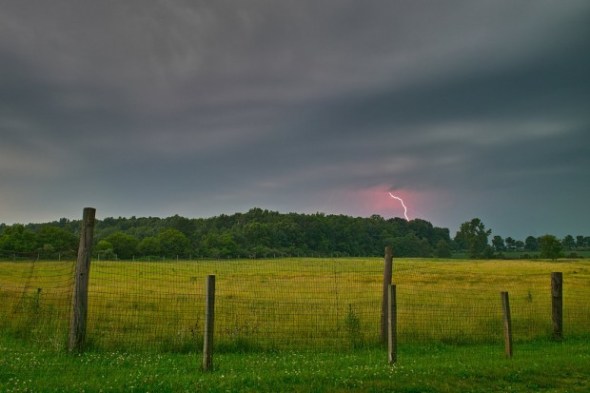
Summer thunderstorm in Indiana
Good Morning!!
I’m still staying with my mother in Indiana. Her 90th birthday party was a huge success. Everyone that we expected showed up, and I got to talk to some cousins I haven’t seen in ages–except on Facebook. The weather sort of cooperated. It had been raining for days, but we just had intermittent showers on Saturday, the day of the party. We had the canopy set up over part of the driveway so the tables were on solid ground. We had too much food, so we donated some of it to a local homeless mission, ate some leftovers, and froze the rest. Since that day, we’ve had gorgeous sunny weather.
The image above of the first lighting strike of an Indiana thunderstorm comes from Schweiger Photo. I’m including other scenic photos of various parts of Indiana throughout this post.
Supreme Court Decisions and Reactions to Them

A country road in Randolph County, Indiana
The U.S. Supreme Court continues to dominate the news today. I know you have already heard about the terrible decision to allow Oklahoma to continue using drugs that cause intense, extended pain for their inhuman executions. The U.S. Constitution forbids cruel and unusual punishment, but Samuel Alito thinks it’s much more important to preserve the death penalty than to worry about whether the victims feel like they are being burned alive.
Carimah Townes at Think Progress: It’s ‘The Chemical Equivalent Of Being Burned At The Stake.’ And Now It’s Legal.
By a vote of 5-4, the Supreme Court ruled Monday that the use of the lethal injection drug midazolam does not constitute cruel and unusual punishment. The ruling comes more than a year after the botched executions of several inmates who remained conscious and experienced pain as they were put to death.
According to the majority opinion written by Justice Samuel Alito, “petitioners have failed to establish a likelihood of success on the merits of their claim that the use of midazolam violates the Eighth Amendment. To succeed on an Eighth Amendment method-of execution claim, a prisoner must establish that the method creates a demonstrated risk of severe pain and that the risk is substantial when compared to the known and available alternatives. Petitioners failed to establish that any risk of harm was substantial when compared to a known and available alternative method of execution. Petitioners have suggested that Oklahoma could execute them using sodium thiopental or pentobarbital, but the District Court did not commit a clear error when it found that those drugs are unavailable to the State.”
In her dissent, Justice Sotomayor wrote, “as a result, [the Court] leaves petitioners exposed to what may well be the chemical equivalent of being burned at the stake.”

The Indiana Dunes at Lake Michigan
Alito’s “reasoning” is that since the death penalty is “settled” law, whatever drug is available must be used even if it causes extreme pain and does not cause unconsciousness. Remember when Clayton Lockett “gasped for 43 minutes” before he finally died?
Cristian Farias at New York Magazine: In Lethal-Injection Case, the Supreme Court Essentially Ruled That Death-Row Inmates Have to Pick Their Poison.
Now we know why the Supreme Court left Glossip v. Gross — a contentious case about the constitutionality of lethal-injection protocols — for the very last day of its term. Four out of five justices who had something to say in the case announced their opinions from the bench — an extremely rare occurrence that the American public won’t get to hear for itself until audio of the session is released sometime in the fall.
In a 5-to-4 decision, the justices ruled that the death-row inmates in the case failed to establish that Oklahoma’s use of midazolam, a sedative they claimed was ineffective in preventing pain, violated the Eighth Amendment’s prohibition on cruel and unusual punishment. The case’s various opinions and dissents run a whopping 127 pages — far longer than even the Obamacare and marriage-equality decisions. And they’re a sign that states’ methods of punishment are a major point of conflict at the court.
But Justice Samuel Alito, who wrote the lead opinion, went further: He said it is up to the death-row inmates and their lawyers — and not up to Oklahoma — “to identify a known and available alternative method of execution that entails a lesser risk of pain,” which is “a requirement of all Eighth Amendment method-of-execution claims.” In other words, it is the responsibility of those condemned to death to plead and prove the best alternative method to execute them. They have to pick their poison — otherwise, no harm, no foul under the Constitution.
And just so that there aren’t any doubts, even though the case was not about the death penalty proper, Alito went out of his way to remind us that “we have time and again reaffirmed that capital punishment is not per seunconstitutional.”
Samuel Alito should never have been approved by the Senate. He’s a monster.

Indiana corn, “knee high by the Fourth of July.”
The Court ordered that abortion clinics in Texas could remain open for the time being. Ian Millhauser at Think Progress: BREAKING: Supreme Court Allows Texas Abortion Clinics To Remain Open.
The Supreme Court issued a brief, two paragraph order on Monday permitting Texas abortion clinics that are endangered by state law requiring them to comply with onerous regulations or else shut down to remain open. The order stays a decision by the United States Court of Appeals for the Fifth Circuit, which imposed broad limits on the women’s right to choose an abortion within that circuit.
The Court’s order is temporary and offers no direct insight into how the Court will decide this case on the merits. It provides that the clinics’ application for a stay of the Fifth Circuit’s decision is granted “pending the timely filing and disposition of a petition” asking the Court to review the case on the merits.
Ugh. I can hardly wait for the final decision./s
And then there’s the continuing unhinged right wing response to the Supremes’ decision on gay marriage. Texas Senator Ted Cruz has been in dangerous meltdown mode ever since the announcement on Friday.

A Converse County, Indiana road.
Politico reports: Ted Cruz: States should ignore gay-marriage ruling.
“Those who are not parties to the suit are not bound by it,” the Texas Republican told NPR News’ Steve Inskeep in an interview published on Monday. Since only suits against the states of Ohio, Tennessee, Michigan and Kentucky were specifically considered in the Supreme Court’s Obergefell v. Hodges decision, which was handed down last Friday, Cruz — a former Supreme Court clerk — believes that other states with gay marriage bans need not comply, absent a judicial order.
“[O]n a great many issues, others have largely acquiesced, even if they were not parties to the case,” the 2016 presidential contender added, “but there’s no legal obligation to acquiesce to anything other than a court judgement.”
Izzat so?
While Cruz’s statement may be technically true, federal district and circuit courts are obligated to follow the Supreme Court’s precedent and overrule all other states’ same-sex marriage bans as unconstitutional.
The Texas senator then went on to suggest that Republicans who have called for following the court’s decision are members of a “Washington cartel” and are lying when they say they do not support same-sex marriage.
“[Republican Party leaders] agree with the rulings from last week, both the Obamacare ruling and the marriage ruling,” Cruz said. “[T]he biggest divide we have politically is not between Republicans and Democrats. It’s between career politicians in both parties and the American people.”
I guess Cruz hasn’t bothered to look at the polls that show most Americans support same sex marriage–or, more likely, he couldn’t care less what Americans think about it. Get over it, Ted. Marriage equality is “settled law” now.

Another view of the Indiana Dunes.
From The Hill: Cruz bashes ‘elites’ on Supreme Court.
Sen. Ted Cruz (R-Texas) on Monday bashed “elites” on the Supreme Court for imposing their will on America’s heartland in its decision to legalize same-sex marriage.
“You’ve got nine lawyers, they are all from Harvard or Yale — there are no Protestants on the court, there are no evangelicals on the court,” the 2016 GOP presidential candidate said on NBC’s “Today,” echoing criticism from Justice Antonin Scalia’s dissenting opinion.
“The elites on the court look at much of this country as flyover country; they think that our views are simply parochial and don’t deserve to be respected.”
ROFLMAO! Earth to Ted: You graduated from Princeton and Harvard and worked under former Chief Justice Rehnquist. Obviously you think the inhabitants of “flyover country” are too stupid to know that.
A couple more reactions:
AL.com: Roy Moore: Alabama judges not required to issue same-sex marriage licenses for 25 days.
The Texas Tribune: Some Counties Withholding Same-Sex Marriage Licenses.
Following the Charleston Massacre,

A windmill on an Indiana farm
a number of black churches have been burned in the South, according to Think Progress.
According to the Southern Poverty Law Center, at least six predominantly black churches in four Southern states have been damaged or destroyed by fire in the past week. While some may have been accidental, at least three have been determined to be the result of arson.
The first arson fire was on Monday at the College Hills Seventh Day Adventist Church in Knoxville, Tennessee. The Knoxville fire department has said that the arsonist set multiple fires on the church’s property and the church’s van was also burned. On Tuesday, a fire in the sanctuary of God’s Power Church of Christ in Macon, Georgia was also blamed on arson, although the investigation is ongoing. And on Wednesday, a fire at the Briar Creek Baptist Church in Charlotte, North Carolina was determined to be caused by arson, destroying an education wing that was meant to house a summer program for children, impacting its sanctuary and gymnasium, and causing an estimated $250,000 in damage.
The cause of a fire that destroyed the Glover Grover Baptist Church in Warrenville, South Carolina on Friday is unknown, while lightning is suspected in a fire that destroyed the Fruitland Presbyterian Church in Gibson County, Tennessee on Wednesday and a tree limb that fell on electrical lines is suspected in a fire at the Greater Miracle Apostolic Holiness Church in Tallahassee, Florida on Friday that destroyed the church and caused an estimated $700,000 in damage.
That is truly frightening. Read more details at the link.

A log cabin in Brown County, Indiana
Blue Nation Review: EXCLUSIVE: Bree Newsome Speaks For The First Time After Courageous Act of Civil Disobedience.
Over the weekend, a young freedom fighter and community organizer mounted an awe-inspiring campaign to bring down the Confederate battle flag. Brittany “Bree” Newsome, in a courageous act of civil disobedience, scaled a metal pole using a climbing harness, to remove the flag from the grounds of the South Carolina state capitol. Her long dread locks danced in the wind as she descended to the ground while quoting scripture. She refused law enforcement commands to end her mission and was immediately arrested along with ally James Ian Tyson, who is also from Charlotte, North Carolina.
Read all about it and see photos at the link.
What else is happening? Please post your thoughts and links in the comment thread below and have a terrific Tuesday!
Monday Reads: As the SCOTUS churns
Posted: June 29, 2015 Filed under: SCOTUS | Tags: 2015 Supreme Court Rulings, SCOTUS 11 Comments Well, it’s Monday and it feels like a Monday to me.
There are more Supreme Court decisions out today on all kinds of things.I’m going to give you a brief description of the major ones. It’s hard to top the Marriage Equality ruling and the saving of tax credits for “Obamacare”. However, a few of them are just as important in their own right.
One of the most stand-out decisions today had to do with voting and voter id.
The U.S. Supreme Court refused to consider letting states require evidence of citizenship when people register to vote for federal elections, rejecting an appeal from Arizona and Kansas.
The rebuff is a victory for the Obama administration and voting- and minority-rights groups that battled the two states in court. It leaves intact a decision by a U.S. agency that blocked the states from requiring proof of citizenship for voters in federal elections.
It’s the second high court defeat on the issue for Arizona. The state has a law that requires evidence of citizenship, but the Supreme Court ruled in 2013 that it couldn’t be enforced when people use a standard registration document known as the “federal form” to register to vote for Congress and the president.
That 7-2 ruling left open the possibility that Arizona could impose its requirements through a different avenue. The court said the state could submit a request to the agency that developed the form, the U.S. Election Assistance Commission, asking it to tell Arizona voters they needed to supply proof of citizenship.
SCOTUS also struck down three provision of the various Three Strikes laws that were designed to penalize “career” criminals. Scalia wrote the majority opinion in this case.
While the country was busy celebrating the Supreme Court’s long-awaited marriage equality ruling, the justices issued another ruling in the Johnson v. United States case that dealt a crucial blow to the prison industrial complex. The SCOTUS ruled that a key provision of the Armed Career Criminal Act, which lengthens the sentences of “career criminals,” is unconstitutionally vague. The ruling paves the way for thousands of prisoners to have their sentences reduced and will cause the private prison industry to lose millions of dollars in profits.
In 1984, Congress passed the Armed Career Criminal Act (ACCA), the law required judges to sentence people to 15 years to life if they have three prior convictions for “serious drug offense” or “violent felonies.” However, what exactly qualified as a “violent felony” was frustratingly vague and was used as a sentence enhancer in many non-violent cases. A “residual clause” in the ACCA allowed third time felons to be sent to prison for any crime that ” presents a serious potential risk of physical injury to another.” That potential risk could include drunk driving, fleeing police, failing to report to a parole officer and even attempted burglary. It seemed to be used as a catch-all sentence enhancer for the sole purpose of throwing people in prison for years longer than they deserved to be. This practice has become increasingly more common as more states allow for-profit prisons in their states.
In the Johnson case, the government used the ACCA to enhance Samuel Johnson’s prison sentence because of a prior conviction of possession of a sawed off shotgun. Johnson argued that he shouldn’t be subjected to a harsher sentence, because the definition of what was considered “violent” was unconstitutionally vague. The SCOTUS agreed with Johnson and issued a 7-1 ruling in his favor.
 Another finding allows independent panels to redistrict congressional and other political districts. This could be a key step to stopping the practice of gerrymandering. Arizona’s decision to let independent panels redistrict was declared constitutional.
By ruling that Arizona’s Independent Redistricting Commission is constitutional, the Supreme Court of the United States kicked plutocrat-loving Republicans in the gut. Justice Ruth Bader Ginsberg wrote the 5-4 majority opinion, joined by Justices Breyer, Kagan, Kennedy and Sotomayer.
The crux of the majority’s reasoning can be found in last paragraph of the ruling.
Our Declaration of Independence, drew from Locke in stating: “Governments are instituted among Men, deriving their just powers from the consent of the governed.” And our fundamental instrument of government derives its authority from “We the People.” U. S. Const., Preamble. As this Court stated, quoting Hamilton: “[T]he true principle of a republic is, that the people should choose whom they please to govern them.” Powell v. McCormack, 395 U. S. 486, 540-541 (1969) (quoting 2 Debates on the Federal Constitution 257 (J. Elliot ed. 1876)). In this light, it would be perverse to interpret the term “Legislature” in the Elections Clause so as to exclude lawmaking by the people, particularly where such lawmaking is intended to check legislators’ ability to choose the district lines they run in, thereby advancing the prospect that Members of Congress will in fact be “chosen . . . by the People of the several States,”
Even though this case got much less attention from the media compared to the health care and marriage equality cases it is in some ways as important as the aforementioned cases. The reason is it will shape the meaning of vote equality in the years to come. Had the court ruled the other way, frankly, it would have removed the last real hope of stopping the Koch controlled Republicans from rigging elections in their favor.
In one disappointing decision, SCOTUS removed EPA limits on Air Pollution.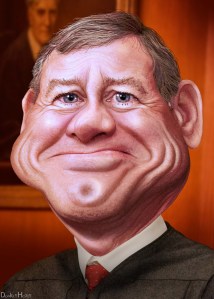
The US supreme court struck down new rules for America’s biggest air polluters on Monday, dealing a blow to the Obama administration’s efforts to set limits on the amount of mercury, arsenic and other toxins coal-fired power plants can spew into the air, lakes and rivers.
The 5-4 decision was a major setback to the Environmental Protection Agency (EPA), and could leave the agency more vulnerable to legal challenges from industry and Republican-led states to its other new carbon pollution rules.
The justices embraced the arguments from the industry and 21 Republican-led states that the EPA rules were prohibitively expensive and amounted to government overreach.
But the EPA pointed out that most plants had already either complied or made plans to comply with the ruling.
“EPA is disappointed that the court did not uphold the rule, but this rule was issued more than three years ago, investments have been made and most plants are already well on their way to compliance,” the agency said in a statement obtained by Reuters.
The EPA “remains committed to ensuring that appropriate standards are in place to protect the public from the significant amount of toxic emissions from coal and oil-fired electric utilities and continue reducing the toxic pollution from these facilities,” the agency added.
Monday’s decision, written by Justice Antonin Scalia, ruled that the EPA did not reasonably consider the cost factor when drafting the toxic air-pollution regulations.
The Clean Air Act had directed the EPA to create rules to regulate power plants for mercury and other toxic pollutants that were “appropriate and necessary”.
 There’s some discussion in legal blogs about a possible softening of the Court in terms of it’s tendency to follow Scalia and Thomas to hard right conclusions. Are Kennedy and Roberts becoming more moderate or showing a bit more judicial restraint and temperament? Here’s some analysis by Tom Goldstein writing for SCOTUSBlog.
There is a lot of commentary about the unusually liberal results of this Term. I thought I would mention a few data points which back up that view of things.
For present purposes, I treat four Justices as sitting to the Court’s left: Ruth Bader Ginsburg, Stephen Breyer, Sonia Sotomayor, and Elena Kagan. I treat four Justices as sitting to the Court’s right: Chief Justice John Roberts and Justices Antonin Scalia, Clarence Thomas, and Samuel Alito. I treat Justice Anthony Kennedy as the Court’s “center.”
I count 26 cases this Term that were both close (5-4 or 6-3) and ideological (in the sense that they broke down principally on ideological lines, with ideology seemingly an important factor).
Of the 26 cases, the left prevailed in 19. Those included the first 9 of the Term. The right prevailed in 7.
In the 26, a Justice on the left voted with the right a total of 3 times. In 2 cases, those votes determined the outcome and produced a more conservative result, because Justice Kennedy or one of the conservatives voted for the more liberal result.
In the 26, a Justice on the right voted with the left 14 times. In 6 cases, those votes determined the outcome and produced a more liberal result, because Justice Kennedy voted for the more conservative result.
I also considered the 10 cases I consider most significant. Of those, the left prevailed in 8. Those included the first 7 of the Term. (I mention the early cases to give a sense of how the results must have appeared inside the Court as the Term went along.) The right prevailed in 2, both in the final sitting of the Term.
In the 10, no Justice on the left voted with the right; the four Justices on the left voted together in every one of those cases. A Justice on the right voted with the left 4 times. Those votes determined the outcome in 2 cases, because Justice Kennedy voted for the more conservative result.
Note that the analysis above is skewed against finding the Term particularly liberal by treating Justice Kennedy as the Court’s “center.” That is true ideologically, but he is certainly a conservative. If he were characterized that way for my analysis, the number of defections to the left would be much higher.
By that measure, a Justice on the right voted with the left 25 times (compared with 3 times the reverse happened). That occurred in all 10 of the 10 major cases (because no Justice on the left voted with the right in any of those cases), and determined the outcome in all of them.
Real Clear Politics also had a take on this. It’s obviously an interesting question to ask given the current hissy fits happening with in movement conservatives who are calling for the essential overthrow of the 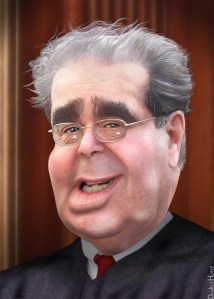 current court since a few decisions did not go their way.
Conservatives were disheartened by the Court’s rulings Thursday in King v. Burwell and Texas Department of Housing and Community Affairs v. The Inclusive Project. They probably will be disheartened if the Court rules that gay marriage is a constitutional right, which seems likely. I suspect I got the authorship of the Arizona redistricting commission case wrong in my Supreme Court Bingoarticle: the opinion assignments make more sense if Justice Kennedy lost his majority in Din, which would suggest Justice Ginsburg is writing the redistricting commission opinion. That means conservatives may well be disappointed in the outcome of that opinion as well.
Unsurprisingly, conservatives are up in arms about the supposed “selling out” from Chief Justice John Roberts. Their reaction is something along the lines of Obi-Wan’s final words (from Obi-Wan’s point of view) to Anakin Skywalker: “You were the chosen one! It was said that you would destroy the Sith, not join them!”
…
plenty of today’s “liberal” decisions would have been considered downright reactionary in the 1960s (or 1970s). Consider the NFIB case, which upheld Obamacare in 2012, while finding that the individual mandate could not be supported by the commerce power. Until 1995, many scholars believed that the Commerce Clause had all but given Congress a general police power; the Lopez decision, which placed the first limits on congressional power in 60 years, was on the outer fringes of even conservative legal theory. NFIB actually reinforces, and to a certain extent expands that decision.
This says nothing of the Court’s holding that there are real limits to the spending clause, which garnered the votes of seven justices. I’m not sure there would have been more than one or two votes for this in the 1960s. By the standards of the 1970s, NFIB was a radically conservative decision, even when the substantive outcome is taken into account. By the standards of, say, the 1920s on the other hand, this was a radically liberal opinion, insofar as it accepts the basic New Deal framework (that there is at least one justice who is prepared to jettison that framework entirely shows just how far to the right the Court has gone).
Or consider the opinion validating Obamacare’s subsidies. While the plaintiffs’ theory of the case was perfectly plausible under current statutory interpretation principles (enough so that several Democratic-appointed lower court judges were cautious when ruling against plaintiffs), it also represented something of a reductio ad absurdum of textualism. If we were to have a debate over textualism in, say, the 1970s, one can imagine a purposivist asking, “So what if there is an obvious drafting error in a section that threatens an entire massive statute? What then?” The fact that conservatives expect the Court to go “full textualist” even in that circumstance – and that even liberal scholars like Abbe Gluck accept the basic textualist framework – again shows how far the debate has moved in the past 30 years.
What about the redistricting commission case? Assuming conservatives lose this one, it’s worth remembering that this position on the elections clause only had the support of three members of the Court in 2000 (when a similar argument was raised in Bush v. Gore); Justices Kennedy and O’Connor avoided the issue and may well have been against it. So even a 6-3 ruling against conservatives here would probably reveal no net shift in the positioning of the Court over the past 15 years. It is just that the expectations for conservatives have shifted.
The article is interesting because it compares some of the different courts over the last 50 years and you can see exactly how illiberal this court still is.
One more case is worth discussing. This one will be in the works. “The Supreme Court on Monday agreed to consider whether the University of Texas’s race-conscious admissions plan is constitutional.”
Two years ago, the court voted 7 to 1 to send the plan back for further judicial view and told the lower court to apply the kind of rigorous evaluation that must accompany any government action that considers race.
“Strict scrutiny imposes on the university the ultimate burden of demonstrating, before turning to racial classifications, that available, workable race-neutral alternatives do not suffice,” Justice Anthony M. Kennedy wrote.
This will be another interesting case to watch.
What’s on your reading and blogging list today?
Lazy Saturday Reads: No Joy in Wankerville
Posted: June 27, 2015 Filed under: Civil Liberties, Civil Rights, morning reads | Tags: Bobby Jindal, ERA, Mike Huckabee, right wing reaction to Marriage Equality, Votes Rights Act 41 CommentsHope your weekend is going great!
 It seems Republicans are having terrible, horrible, very bad weeks because even when you attempt to stack the Supreme Court with wankers, there are still times when some of them respect the constitutional rights and civil rights of individuals. They also occasionally respect the lawmaking process. Aren’t they sorry they can’t clone Uncle Clarence Thomas, the right wing rubber stamp of all things truly UnAmerican?
I seriously think that a lot of today’s Republicans have mental health issues. Is there a syndrome for reaction to losing privilege or is that just some kind of perverse temper tantrum best left to unruly toddlers? They definitely have a warped sense of what is moral.
Louisiana Governor Bobby Jindal jumped the shark a long time ago with his insistence that Birmingham, UK had No Go Zones where Muslims ruled with shariah law. This is odd given he’s been trying to make Louisiana a No Go Zone for anything but radical evangelical, right wing christianists.
Jindal continues to show just how much he’s losing it with the idea that we’d save ourselves a lot of money by just getting rid of the Supreme Court. Read your constitution much PBJ? How much do you hate this country?
Jindal’s office also provided remarks on the court’s ruling from a speech in Iowa on Friday.
“The Supreme Court is completely out of control, making laws on their own, and has become a public opinion poll instead of a judicial body. If we want to save some money lets just get rid of the court.
“Yesterday, Justice Scalia noted that in the Obamacare ruling “words have no meaning.
“Today, Chief Justice Roberts admitted that the gay marriage ruling had nothing to do with the Constitution.
Marriage between a man and a woman was established by God, and no earthly court can alter that.“Hillary Clinton and The Left will now mount an all-out assault on Religious Freedom guaranteed in the First Amendment.
“Regardless of your views on marriage, all freedom loving people must pledge to respect our first amendment freedoms.”
Jindal is among the many Republican using religious freedom as an excuse to discriminate and disobey the law. You also hear the worn out refrain of state’s rights. These are the same arguments that were used to protect slavery, continue segregation, deny interracial marriage, and promote all kinds of basically evil things. If any one is guilt of promoting the tyranny of religious rule, it is folks like Bobby Jindal. It’s also the same throwback states refusing to carry out the SCOTUS decision legalizing marriage equality. Louisiana’s Governor and Attorney General are being complete assholes about issuing marriage licenses to gay couples. The elected officials in many southern states are acting like cheeky, spoiled little brats who didn’t get their way.
Louisiana and Mississippi are the only two states left in the country not issuing marriage licenses to same sex couples, according to Washington Post reports.
In Louisiana, Attorney General Buddy Caldwell on Friday indicated that he will not instruct parish clerks of court to immediately issue marriage licenses to gay couples.
In a statement, Caldwell’s office wrote that “it has found nothing in today’s decision that makes the Court’s order effective immediately.”
“The Attorney General’s Office will be watching for the Court to issue a mandate or order making today’s decision final and effective and will issue a statement when that occurs,” the statement noted.
In the statement, Caldwell expressed disappointment in the high court’s ruling.
In Mississippi, Attorney General Jim Hood said in a statement: “The Office of the Attorney General is certainly not standing in the way of the Supreme Court’s decision. We simply want to inform our citizens of the procedure that takes effect after this ruling. The Supreme Court decision is the law of the land and we do not dispute that. When the 5th Circuit lifts the stay of Judge Reeves’ order, it will become effective in Mississippi and circuit clerks will be required to issue same-sex marriage licenses.”
Before the Supreme Court’s landmark ruling Friday, Louisiana and Mississippi were two of 14 states with a constitutional ban on same-sex marriage. After the court’s ruling, North Dakota, South Dakota, Nebraska, Texas, Michigan, Ohio, Missouri, Kentucky, Tennessee, Arkansas, Georgia and Florida began issuing licenses.
Clearly, many folks in the South still haven’t gotten the idea that we’re a country ruled by laws and not their pet religious fetishes. Even the dissenting SCOTUS justices were way off the petulant scale and not only 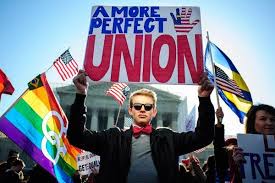 on the wrong side of history, but wrong about history. Chief Justice Roberts cited a list of civilizations that supposedly had his modern, wanker christianist view of marriage in the dissent. Simple research and googles would have disabused the Justice of his conveniently wrong views.
In his written dissent to the Supreme Court’s decision to effectively legalize gay marriage in all 50 states in the United States, Chief Justice John G. Roberts Jr. made a conspicuous gesture to the rest of the world. He referred to the “social institution” that the majority of the court was “transforming,” and anchored its legitimacy in the currents of history.
…the Court invalidates the marriage laws of more than half the States and orders the transformation of a social institution that has formed the basis of human society for millennia, for the Kalahari Bushmen and the Han Chinese, the Carthaginians and the Aztecs. Just who do we think we are?
It’s not quite clear to WorldViews why Roberts decided to implicate these four particular cultures in his opposition to the legalizing of gay marriage. But we can suggest reasons why they are hardly exemplars of “traditional” unions between men and women.
It’s absolutely funny how completely wrong definitions of “traditional marriage” can be. Here’s the actual practices of the Kalahari Bushmen.
These hunter-gatherers in sub-Saharan Africa have long been the world’s stock image of “primitive man,” and presumably that’s why Roberts referenced them — as the stereotype of an atavistic people, whether it’s fair or not. (It’s not, but let’s move on.) The Kalahari Bushmen don’t have very strong wedding practices, and don’t pay much attention to ceremonies around mating.
Early European accounts of tribes and kingdoms encountered in southern Africa included details of warrior women styling themselves as kings (not “queens”), polygamous households where lesbianism was common, and even ancient Bushmen rock paintings depicting explicit homosexual sex.
Ouch. I already mentioned the misogynous and incest-based traditional marriages of ancient Greece yesterday. You really have to look to the Dark Ages to get even a remote historical resemblance to what these crack pot religious whackos describe as “traditional marriage”.
In fact, when you really dig into the history of marriage, the only consistent feature is change. My own professional group, the American Historical Association, filed an amicus brief that leveraged the combined expertise of twenty historians of marriage. The AHA brief used examples drawn largely from American history to show that marriage has never been solely about procreation, with issues like property management taking center stage. Moreover, Ruth Karras, author of Unmarriages, told me in an interview that marriage has almost never been about joining one man and one woman, but instead about “two families.” In that sense, same-sex couples looking for equal protection under the law with respect to healthcare and property rights are pretty consistent with “traditional marriage.”
That is, if there even is such a thing as “traditional marriage.” Karras began studying the multiple forms of medieval marriage—or at least the socially-accepted and often semi-legal long-term forms of relationships—because of her frustration with the idea that, “there was some sort of time that we could go back and look at where marriage was this perfect ideal between a man and woman for purposes of reproduction or creating family. The Middle Ages clearly haunts that formulation.” In fact, Karras continued, for many medieval people, “traditional marriage didn’t even exist. Yes, for aristocrats there was this system, but it’s really not very possible to know much about how people without any money formed and possibly didn’t form their marriages. People seem to have this idea that until the 1960s in America, everybody was pro-marriage—in fact, in the Middle Ages a lot of people lived in other kinds of relations besides what was recognized formally as marriage.”
So many of these folks have views based on what they read in the incredibly fabricated St James Bible which was put together in the early 17th century. 
The King James Bible is considered by many today to be the ‘original’ Bible and therefore ‘genuine’ and all later revisions simply counterfeits forged by ‘higher critics’. Others think the King James Bible is ‘authentic’ and ‘authorized’ and presents the original words of the authors as translated into English from the ‘original’ Greek texts. However, as Tony points out, the ‘original’ Greek text was not written until around the mid fourth century and was a revised edition of writings compiled decades earlier in Aramaic and Hebrew. Those earlier documents no longer exist and the Bibles we have today are five linguistic removes from the first bibles written. What was written in the ‘original originals’ is quite unknown. It is important to remember that the words ‘authorized’ and ‘original’, as applied to the Bible do not mean ‘genuine’, ‘authentic’ or ‘true’.
We have an entire group of people–including elected officials and SCOTUS justices that basically can’t get beyond a nearly completely fabricated, contradictory, and false account of what may or may not be a set of fictional characters. Thank goodness the Constitution isn’t grounded in promoting religion even if so many of the whackadoos in public life build their entire life’s delusions around it.
Some of the most disturbing comments have come from crazy Mike Huckabee who is still running for President and searching for relevance beyond a small group of Southern Baptists.
Republican presidential candidate and former Arkansas Gov. Mike Huckabee (R) said Friday in a statement that he would not “acquiesce to an imperial court” and its decision to make gay marriage legal in all 50 states.
Huckabee’s comments came after the Supreme Court’s decision on gay marriage in Obergefell v. Hodges.
“The Supreme Court has spoken with a very divided voice on something only the Supreme Being can do-redefine marriage,” Huckabee said in the statement. “I will not acquiesce to an imperial court any more than our Founders acquiesced to an imperial British monarch. We must resist and reject judicial tyranny, not retreat.”Huckabee called the ruling “unconstitutional.”
“This ruling is not about marriage equality, it’s about marriage redefinition,” Huckabee said. “This irrational, unconstitutional rejection of the expressed will of the people in over 30 states will prove to be one of the court’s most disastrous decisions, and they have had many. The only outcome worse than this flawed, failed decision would be for the President and Congress, two co-equal branches of government, to surrender in the face of this out-of-control act of unconstitutional, judicial tyranny.”
Huckabee also questioned the authority of the Supreme Court.
“The Supreme Court can no more repeal the laws of nature and nature’s God on marriage than it can the law of gravity,” Huckabee said. “Under our Constitution, the court cannot write a law, even though some cowardly politicians will wave the white flag and accept it without realizing that they are failing their sworn duty to reject abuses from the court. If accepted by Congress and this President, this decision will be a serious blow to religious liberty, which is the heart of the First Amendment.”
Again, we have some people that are totally unhinged and seem to have no concrete knowledge about even the most basic facts about the creation of our Republic and the Constitution.
Religious liberty is not a right to force your religious fetishes on others. Religious liberty deals with the ideal that the Government cannot establish a state religion and force its tenets on every one in the country. What these whackos do in their homes, churches and minds are their own business. What they do with our government and public lives is something completely different. You don’t have to be a constitutional scholar or lawyer to grok that.
 Here’s another short list of what the Republican Candidates for President say about the ruling. Can there be any doubt that these folks are out of step with the majority of people in the country and will only be relevant in outback states where they wreck the economies and persecute minorities? I wrote about Bush and Rubio yesterday so I’ll just fill you in on the other troglodytes.
Of the reactions released so far, all by Republican presidential candidates opposed the Supreme Court ruling, as expected. But they differed in tone. Some were defiant, others appealed for respect.
Wisconsin Gov. Scott Walker, who is expected to enter the race soon, called the ruling “a grave mistake” and reiterated his support for a constitutional amendment.
“The only alternative left for the American people is to support an amendment to the US Constitution to reaffirm the ability of the states to continue to define marriage,” Governor Walker said in a statement.
Such an amendment would be impossible to pass, observers say, given the requirement that three-quarters of the states ratify it, and so his pronouncement is effectively a symbolic gesture. Sen. Ted Cruz of Texas, another 2016-er, is the biggest champion of a marriage amendment.
Gov. Bobby Jindal of Louisiana, who announced his candidacy Wednesday, was also clearly not in the “court has spoken” camp.
“Marriage between a man and a woman was established by God, and no earthly court can alter that,” Governor Jindal said in a statement.
As the governor of a state that did not already recognize same-sex marriage, Jindal’s posture toward Friday’s ruling has special significance. Ditto Ohio Gov. John Kasich, who is expected to enter the race soon.
“Neither governor would be able to do anything to stop same-sex marriage in their state,” in light of Friday’s decision, National Journal notes.
“But they could take actions to speed up or delay implementation of the ruling – actions that would surely become a topic of the presidential campaign over the next year.”
At press time, Governor Kasich had yet to release a statement on the decision, though in April he told reporters at a Monitor luncheon that he would be willing to attend a gay friend’s wedding, suggesting some ease with the issue. But he was also clear that he supports only the traditional definition of marriage.
It is still unbelievable to me that we can literally be held hostage by reactionaries in mostly lowly populated, insignificant states and the rural populations of some of the mid-sized states. Popular support for the issues like marriage equality are at all time highs and continue to show upward trends. Still, horrible reactionary pundits and republican politicians continue to thwart progress towards full enfranchisement of racial and religious minorities, ethnic minorities, GLBTs, and women. I’ve been reading some of the worst things ever from the always wrong Bill Kristol. This man should not be allowed a public forum other than his irrelevant rag. Since when is granting civil rights “Peak Liberalism”?
We see a French Revolution-like tendency to move with the speed of light from a reasonable and perhaps overdue change (taking down the Confederate flag over state buildings) to an all-out determination to expunge from our history any recognition or respect for that which doesn’t fully comport with contemporary progressive sentiment. The left’s point, of course, is not to clarify and sharpen appreciation for our distinctive history; the point is to discredit that history.
And the point is not to advance arguments and criticize alternative views; it is to deny the legitimacy of opposing arguments and to demonize opponents and purge them from the public square.
We see a pitiful aversion to standing up to barbarism abroad and a desperate willingness to accommodate and appease. This requires an amazing ability to shut one’s eyes to reality, and an extraordinary refusal to make tough decisions and assume real responsibilities. As Harvey Mansfield put it in the 1970s, “From having been the aggressive doctrine of vigorous, spirited men, liberalism has become hardly more than a trembling in the presence of illiberalism. . . . Who today is called a liberal for strength and confidence in defense of liberty?”
Since when is liberty defined as the right to take liberty away from others?
Maybe, these assholes should pick up a few things written by Thomas Paine and embrace the true roots of revolution.
“Whatever is my right as a man is also the right of another; and it becomes my duty to guarantee as well as to possess.”
― Thomas Paine, Rights of Man
The real struggles for complete civil rights still exist. There is ENDA and there is still the ERA. There is correcting the Supreme Court’s evisceration of the Voting Rights Act. In those last links you will see that there is work going on to get all of these things on track. Until we are all safe from discrimination in our public lives including in our jobs, in our ability to live where we choose, in our ability to exercise our voting rights and to achieve pay equity, none of us are safe.
No matter what these jerks say, their religion isn’t a get out of complying with our laws free card.
What’s on your reading and blogging list today?
Friday Reads: Welcome to the Jungle
Posted: June 26, 2015 Filed under: GLBT Rights, Marriage Equality, morning reads, SCOTUS | Tags: marriage equality, Obergefell v. Hodges 28 Comments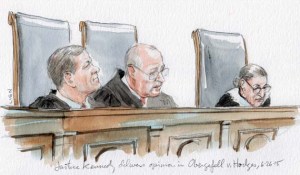
Justice Kennedy delivers opinion in same sex marriage
How very ironic that it is my day to post and it’s the very day that all my gay friends get access to the one institution that I tell every one I know and love to avoid like a plague. You can ask my daughters. My first response is that you really don’t have to do this because you’re educated, can make your own life, and you don’t have to continually have your assets, energy, will to live, and dreams drained away from you over time. Just hang out with him until the inevitable drift to hell becomes obvious. Please, don’t do it. It hasn’t worked so far. Just a few months ago, yet another long time, long married friend confessed to me that she–and others she knows–would have the kids and everything else but never do the husband thing again. That’s pretty much where I’m at with an institution designed to make you disappear into chattel v. meal ticket status.
No one can make you happy but you. That’s basically a head trip. Marriage, however, absolutely gives another person the right to make you miserable in ways that you’d never even dreamed about when you’re lost to bonding hormones. You can’t ever ever know how to properly enunciate “till death to us part” until you’ve been stuck at least a good 15 -20 years in the institution. Then you realize, it’s pretty much akin to a death row sentence where the things you really wanted to do with your life were left outside the doors.
Bill Murray showed up–seemingly drunk–on Lawrence O’Donnell’s show in May when the nice young gay couple looking to get married that were filmed in that Hillary Clinton commercial were interviewed. He pretty much expressed my views exactly. I really hope you all make a better situation out of it than straight people generally do. Knock yourselves out! I want nothing to do with any of it! I frankly think that there’s hope for some change given the rigid expectations that come with an institution that’s generally been defined by really awful stereotypical sex roles and where it may not treated as a purely breeder institution.
So, with you knowing that I am a conscientious objector to the entire institution for any one, I give you the day that marriage equality happened in the USA. To my knowledge, nobody’s church has crumbled to the ground and no one’s sanctified marriage has been taken away by any angry sky fairy. This gives legal access to huge numbers of subsidies, tax benefits, and rights that were never available to gay couples before. For that, I am very happy. All the spoils that government provides the institution should be available to any one that wants to try to go the distance; especially if they do so with children.
The Supreme Court has given gay couples the right to be married every where in the United States and its territories. Just think on that one given Scalia, Thomas, and the religious-politico harpies of the  Republican party. Teenagers, now is the time to go to law school and become a divorce lawyer. An entirely new and huge market segment has just opened up. Until then, welcome to the boom in wedding paraphernalia and hoopla.
“Under the Constitution, same-sex couples seek in marriage the same legal treatment as opposite-sex couples, and it would disparage their choices and diminish their personhood to deny them this right,” Justice Anthony Kennedy wrote in the majority opinion. He was joined in the ruling by the court’s liberal justices Ruth Bader Ginsburg, Stephen G. Breyer, Sonia Sotomayor and Elena Kagan.
All four of the court’s most conservative members — Chief Justice John G. Roberts Jr. and Justices Antonin Scalia, Clarence Thomas and Samuel A. Alito Jr. — dissented and each wrote a separate opinion, saying the court had usurped a power that belongs to the people.
That sums it up and it happened just about the way every one thought it would. Kennedy has always seemed open to the idea that civil marriage was a civil right. I’m not sure how access to a legal institution basically is a power that belongs to the people, but that appears to be the argument by the court’s hyper religious sour grapes.
Here’s the analysis from SCOTUSBlog.
 The dissenting justices evidently strongly dissented. Quelle Suprise!
Chief Justice John Roberts not only dissented from the Court’s ruling but also read a summary of his dissent from the bench. It was the first time that he has done so in his ten Terms on the Court, and it signaled how strongly he disagreed with the Court’s ruling. Roberts forcefully criticized the majority for side-stepping the democratic process and declaring that same-sex couples have the right to marry when, in his view, such a right “has no basis in the Constitution.” The Court’s decision, he complained, “orders the transformation of a social institution that has formed the basis of human society for millennia, for the Kalahari Bushmen and the Han Chinese, the Carthaginians and the Aztecs.” “Just who,” Roberts laments, “do we think we are?” The other three Justices echoed Roberts’s sentiments, sometimes in even more strident terms: Justice Antonin Scalia characterized the decision as a “judicial Putsch” and suggested that, before he signed on to an opinion like the majority’s, “I would hide my head in a bag.”
I always love that historical and religious marriage is always defined by modern terms. They so overlook the traditional old man and harem mold. It’s always amazing to me when people that should be smart and well educated just get so hung up in the frames of their bias that they conveniently overlook a huge amount of history that contradicts their halcyon view. Marriage has had many forms over history. The rich and powerful basically treat it as a protocol for more property, power, and strategic alliances. Beyond the breeding requirements, historically, it’s more of an economic and political arrangement with the exceptions of the old common law marriages of the masses. Most of those were never even registered or recognized by the state. Here’s the typical ancient Greek marriage according to one scholar.
Closely endogamous marriages between uncles and nieces (and sometimes half-siblings), marriages in which women retained almost no property rights or independence and were regularly both physically segregated and violently abused, and a system in which marriage was designed explicitly to increase and safeguard the property of closely related men while encouraging the production of definitely legitimate male heirs to those men through tightly restricting access to their wives.
Scalia was unhinged, as usual.
“‘The nature of marriage is that, through its enduring bond, two persons together can find other freedoms, such as expression, intimacy, and spirituality,'” he quoted from the majority opinion before adding, “Really? Who ever thought that intimacy and spirituality [whatever that means] were freedoms? And if intimacy is, one would think Freedom of Intimacy is abridged rather than expanded by marriage. Ask the nearest hippie.”
So, while, I’m just a grumpy pessimist who thinks the entire institution and its subsidies/financial incentives should go away, the 2016 GOP candidates are on their barn burning fatwas. Which gas bag should I quote first? Hmmm…. let’s go with the Jebster of love.
“Guided by my faith, I believe in traditional marriage. I believe the Supreme Court should have allowed the states to make this decision. I also believe that we should love our neighbor and respect others, including those making lifetime commitments. In a country as diverse as ours, good people who have opposing views should be able to live side by side. It is now crucial that as a country we protect religious freedom and the right of conscience and also not discriminate.”
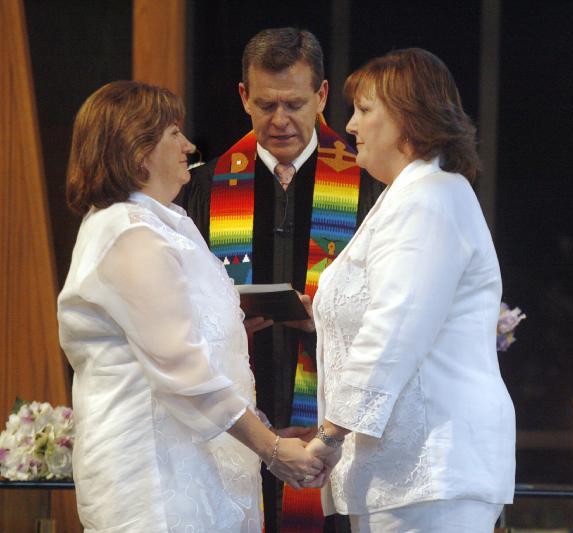 Ah, yes, HIS faith should triumph, every one else’s can go to hell, and if we don’t agree with his faith than were oppressing him. His brain should explode from this basket of contradiction if it were functional enough to fire a synapse to set off the explosion.
Rubio actually tried the pragmatic dogmatic approach. I’ll be interested in seeing how that flies with the hate groups that now comprise the republican base.
I believe that marriage, as the key to strong family life, is the most important institution in our society and should be between one man and one woman. People who disagree with the traditional definition of marriage have the right to change their state laws. That is the right of our people, not the right of the unelected judges or justices of the Supreme Court. This decision short-circuits the political process that has been underway on the state level for years.
“While I disagree with this decision, we live in a republic and must abide by the law. As we look ahead, it must be a priority of the next president to nominate judges and justices committed to applying the Constitution as written and originally understood.
The most interesting thing about this bit of dogma dancing is that Kennedy rooted the finding in the Constitution which  makes what Rubio said flagrantly out to lunch. (Is it just me or does Rubio always say things that just are not grounded in the facts on the ground?) Kennedy carefully crafted the decision in light of a constitutional right.
The first line of the U.S. Supreme Court’s decision in Obergefell v. Hodges, on the legality of same-sex marriage in the United States, is as breathtaking as it is legalistic.
The Fourteenth Amendment requires a State to license a marriage between two people of the same sex and to recognize a marriage between two people of the same sex when their marriage was lawfully licensed and performed out-of-State.
There it is, the ruling that gay-marriage advocates and opponents have been waiting for since April when the Court took up the case—but really, for years long before that. There is now a constitutional right for people of the same sex to get married in the United States.
He even crafted the ruling’s logic to follow the precedent of similar constitutional rights.
Second, Kennedy writes, marriage is a distinctive institution: “It supports a two-person union unlike any other in its importance to the committed individuals.” Here, he points to the Court’s opinion in Griswold v. Connecticut, which affirmed the right of married couples to use birth control. “Same-sex couples have the same right as opposite-sex couples to enjoy intimate association.”
So, my gay friends and family, you have total access to the institution of marriage in these United States. Please make it a better arrangement for everyone!
Thursday Reads: Upcoming Supreme Court Decisions and Other News
Posted: June 25, 2015 Filed under: morning reads, U.S. Politics | Tags: Affordable Care Act, Anthony Kennedy, John Roberts, Obamacare, same-sex marriage, US Supreme Court 84 Comments
The Tea Party, Matisse Forman
Good Morning!!
The Supreme Court justices will convene this morning at 10AM. No one knows which rulings they plan to release. Will we learn their decision on same sex marriage? I hope so. I’m guessing they will leave the announcement of their decision on the Affordable Care Act for last. But who knows?
ABC News reports: Supreme Court Has Seven Final Cases to Decide, Including Gay Marriage and Obamacare.
The high court is saving the high drama for the end of its term.
As June dwindles, seven cases are left for the Supreme Court to decide — including one that could legalize same-sex marriage across the country and one that will significantly affect the future of Obamacare.
The court is scheduled to announce decisions Thursday, Friday and Monday, and it could add days beyond that. There’s no indication which decisions will be released on which days.
The seven cases are summarized at the link. On the two most prominent cases:
Same Sex Marriage
In a landmark decision, the court will confront two questions. The first is whether states can ban same-sex marriage. The second is whether states must recognize same-sex marriages performed legally in other states.
All eyes are on Justice Anthony Kennedy, who wrote three of the court’s most important opinions on gay rights. At an oral argument in April, Kennedy asked tough questions of both sides, and at one point he said “it’s very difficult for the court to say, oh, well, we know better” what defines marriage than centuries of tradition limiting it to the union of a man and a woman.
Affordable Care Act
The justices could deal a potentially crippling, if not fatal, blow to President Barack Obama’s signature health law.
The challenge centers on whether the federal government is violating the act by offering subsidies to lower- and middle-income people who live in states that haven’t set up their own health care insurance “exchanges.”
Sixteen states have exchanges up and running. The remaining 34 rely on the federal exchange. The law says the subsidies can be made available only to people living where exchanges have been “established by the state.”
The plaintiffs argue that the subsidies are illegal because the federal government isn’t a state. The federal government argues that it was always clear that the subsidies would be available to anyone who bought insurance on an exchange. The insurance industry argues that if the federal subsidies are struck down, Obamacare itself would enter a “death spiral,” with costs rising for a shrinking number of participants, eventually causing the system to collapse.
Read about the other cases at the link.

The Tea, Mary Cassatt
Possible Outcomes on Same Sex Marriage
Although no one can really know what’s going on in Anthony Kennedy’s confused mind, most pundits expect the Supremes to decide that states cannot ban same sex marriage. I hope they’re right.
Richard Wolf at USA Today: Anticipating high court’s blessing, same-sex couples plan weddings.
Mark Phariss and Vic Holmes have sent out “Save the Date” cards and plunked down thousands of dollars for their November wedding, which promises to be Texas-style big.
Brittany Rowell and Jessica Harbuck are busy laying plans for a January wedding in Mississippi, with traditional white dresses and all the trimmings.
Tim Love and Larry Ysunza have reserved their church for an October wedding in Kentucky, about the time of their 35th anniversary together.
Liz Neidlinger and Erika Doty have their sights set on an outdoor sculpture garden in Michigan next May.
Jon Coffee and Keith Swafford were engaged last October in Tennessee and decided to marry in a year, regardless of court action. If it had to be merely symbolic, that would be sufficient.
What sets the five couples apart from your average wedding planners is a small impediment: They can’t get married in their home states — not yet, anyway. But they’re so confident the Supreme Court will change that in the coming days that they already are making plans for the big day.

Tea, Henri Matisse
Chicago Tribune: Coming gay marriage ruling triggers anticipation, anxiety in gay couples.
Chantel and Marcela Gatica-Haynes, who live in Arizona, were married in a garden ceremony at an Ojai, Calif. bed-and-breakfast on Sept. 7, 2013. The wedding came less than three months after a U.S. Supreme Court ruling ended Proposition 8, California’s ban on same-sex marriage. They returned home to Flagstaff and were married again last October after a federal judge ruled Arizona’s ban on the marriages was unconstitutional.
Though many observers predict the coming ruling will open the door wider to same-sex marriage, Chantel Gatica-Haynes worries her marriage could be impacted by a ruling against the unions. She worries more that a ruling upholding state bans could affect Marcela’s attempt to adopt Chantel’s 1-year-old daughter, Aspen.
“We’re just in this holding pattern,” she said. “The things that are hanging out there will affect our daughter’s future even when we’re gone.”
More at the link.

Summer Afternoon Tea in the Garden, Theo van Rysselberghe
The Boston Globe: Supreme Court same-sex marriage decision still in question.
When it comes to same-sex marriage, the justices have considered two principal questions:
1) Does the Constitution require a state to license a marriage between two people of the same sex?
2) If same-sex couples marry in one state, where it’s legal, must other states recognize their marriages?
If the justices say yes on the first question, then same-sex couples in all states will be able to marry. If the justices say no to the first question, but yes to the second, then same-sex marriages will be recognized in every state, but states will not have the duty to marry same-sex couples.
If the justices say no to both questions, then states without same-sex marriage will be neither required to perform same-sex unions, nor to recognize unions performed out of state.
At oral arguments earlier this year, Justice Anthony Kennedy, widely viewed as the swing vote on the case, asked the petitioners early on about the role of the court in changing a definition of marriage that has been used for “millennia,” instead of allowing citizens to engage with the issue through the states.
But Kennedy, who spoke only 17 times during the hearing — the least of any justice barring famously silent Clarence Thomas — also spoke of the ability of same-sex couples to recognize the “nobility and sacredness” of marriage.
Read the rest at the Globe.
NPR: Maps: What The Supreme Court’s Ruling On Same-Sex Marriage Could Mean.
It’s always tough to predict how the court will rule but, broadly speaking, there are three main possibilities: the simplest is that the court declares state marriage bans unconstitutional, meaning states will all perform and recognize same-sex marriage. That’s a pretty simple outcome, but things get much trickier in the other two cases.
One other possibility is that the court decides to uphold bans. That means states that currently have bans could continue having theirs. But it also leaves 20 states up in the air legally. That group includes states where federal action struck down state bans. If the Supreme Court says bans are constitutional, those states could go back to having bans in place.
And there’s also the possibility of the court saying bans are constitutional, but that all states must all recognize marriages performed in other states. This option retains the messiness of the above possibility, but it does mean that couples would be recognized equally nationwide.
While you can break the decisions down into three neatly color-coded maps, there is a complicated web of state laws at work, and it means outcomes could vary widely by state if the court decides bansare constitutional. Adam Romero, senior counsel at UCLA’s Williams Institute, says the states where federal action struck down state bans are where things could get really complicated.
Read more and check out the maps at the NPR link.
The Affordable Care Act Ruling

Afternoon Tea, Susan Rinehart
From New York Magazine: Chief Justice Roberts’s Big Health-Care Moment, by Cristian Farias.
Chief Justice John Roberts has big plans after the end of the current Supreme Court term. He will be hopping on a plane to Japan, half a world away from any fallout that may result in the aftermath of King v. Burwell, the closely watched challenge to the Affordable Care Act. According to SCOTUSblog, that decision could come as early as this Friday.
Three years ago, when Roberts first saved President Obama’s signature law, he headed for the other side of the globe, to Malta — a CBS Newsscoop about a vote switch and internal “arm-twisting” by Roberts aroused such conservative wrath, the Mediterranean island seemed like a good place for him to teach some law and weather the controversy. “After ruling, Roberts makes a getaway from the scorn,” said the Times.
No one knows where the chief justice stands in King, but there are real-world, pragmatic reasons for him to side with the government again — even more so than with NFIB v. Sebelius, which threatened a law still in its infancy and not yet fully implemented. Now the prospects of unraveling insurance markets and millions losing health-care subsidies with an adverse ruling are real, and Roberts more than any of the justices cares about these things because the court bears his name and anything the court does, whether he had something to do with it or not, falls under his legacy. He’s the most accountable member of the least accountable branch.
But consider also that by the time a decision is announced, Roberts will have finished his tenth year on the Supreme Court — a milestone legal scholars and commentators will seize on to discuss that legacy, his jurisprudence, and whether he has delivered on his promise to be the kind of chief justice who merely “calls balls and strikes,” as he famously said during his confirmation hearings. Just yesterday, the Upshot suggested the court is leaning leftward more than any other time in recent history. And other retrospectives have begun to roll out: the Constitutional Accountability Center, a legal advocacy group, has published a series of reports on Roberts’s first decade and his record — on civil rights, campaign finance, access to justice, the environment, equality. The kinds of cases the public cares about. And yes, that includes health care.
Much more interesting analysis at the link.

Tea Party, Martha Walter
Washington Post: Supreme Court ruling could push health industry agenda to back burner — again, by Catherine Ho.
The health care industry was hoping this would be the year it could move beyond the Obamacare fight in Washington and on to new priorities, such as improving drug development and patient care.
But the Supreme Court’s upcoming ruling in King v. Burwell threatens to derail those ambitions.
Industry advocates are concerned that no matter how the court rules on the legality of certain insurance subsidies provided under the law, the health care debate in Congress will once again become dominated by the political divisions over the Affordable Care Act (ACA).
“It has the potential for serious chaos and disruption,” said health care lobbyist Ilisa Halpern Paul, who represents hospital systems and health advocacy groups.
The court is expected to rule as early as Thursday on whether to strike down a critical part of the law by invalidating subsidies to 6.4 million Americans in the 34 states that have federally run health insurance exchanges.
If the court rules against the subsidies, Republicans will be scrambling to figure out whether they should find a way to keep them in place until after the 2016 election when they hope a Republican president and GOP-controlled Congress can repeal the law in its entirety. The concern for Republicans is that if they don’t find a way to keep the subsidies in place until a new plan is ready, they will face backlash from constituents who currently use them to offset the cost of their health insurance. The legislative focus on the subsidies would mean all other health-related legislative initiatives that have gained traction recently are likely to come to a halt, at least temporarily.
More at the WaPo.
And some maps of the possible results of the decision at Slate: These Maps Show How Radically the Supreme Court Could Upend the Health Care System.
Once again the fate of the Affordable Care Act rests in the hands of the Supreme Court. In King v. Burwell, the court is weighing whether the federal government can legally provide insurance subsidies to people who have purchased their health care through one of the federally run exchanges in 34 states. Whatever the court decides could also theoretically extend to three other exchanges—in Nevada, New Mexico, and Oregon—that are state-based but federally supported. Altogether, roughly $1.7 billion in tax credits and the health insurance of more than six million people is at stake. It’s arguably the biggest existential challenge to Obama’s signature health care reform since the Supreme Court upheld the individual mandate in 2012.
The crux of the case is a perilous clause buried in the ACA’s hundreds of pages. According to the law’s exact wording, people become eligible for federal insurance subsidies if they’ve purchased care through “an Exchange established by the State.” Because of those last four words, the plaintiffs in King v. Burwell argue that federal subsidies can only be available on state-based exchanges, and not on the federally facilitated ones in most of the country. The Obama administration has countered that the purpose of the law is to make health care accessible, and that “established by the State” should be read with that in mind. Several of the people who helped pen the legislation have dismissed the clause as a drafting error.

The Tea Party, Jules Cayron
Other News, Links Only
#NotOneMore: Undocumented Transgender Woman Who Interrupted President At White House Pride Event Calls to End Deportation.
CNN: Obama shuts down White House heckler: ‘You’re in my house!’
Buzzfeed News: Bobby Jindal’s Plan To Stop Being A Punchline And Actually Win. [Good luck with that.]
Christian Science Monitor: Bobby Jindal was supposed to be the ‘next Reagan.’ What happened? (+video).
Slate: Bernie Sanders, Gun Nut. He supported the most reprehensible pro-gun legislation in recent memory.
NYT: Ex-Advisers Warn Obama that Iran Nuclear Deal “May Fall Short of Standards.”
AP via ABC News: Funeral Plans for South Carolina Church Shooting Victims.
CNN: 2nd prison worker charged in connection with inmates’ escape.
TPM: Lindsey Graham: Charleston Shooter Showed ‘Mideast Hate’ (VIDEO). [WTF?!!]
PIX11.com: Chilling letters from ‘The Watcher’ force NJ family to flee $1.3M dream home.
ABC News: Small Ohio Town Is Focus of FBI Probe After Strange Deaths and Disappearances.
10WAVY.com: NYC: Whole Foods mislabels prepackaged items, overcharges.
WaPo: Whole Foods under investigation for overcharging in NYC.
What else is happening? Please post your thoughts and links on any topic in the comment thread and enjoy your Thursday.

 peej
peej Carissa
 bostonboomer
 dakinikat
 ecocatwoman
 mablue2
 Mama Lopez
 peggysue22
 quixote
 skydancingguestblogger
 Mona (aka Wonk the Vote)



 Sky Dancing
Recent Comments