Posted: May 9, 2015 | Author: bostonboomer | Filed under: Foreign Affairs, morning reads, Republican politics, U.S. Economy, U.S. Politics | Tags: academic freedom, Boston University, Chicago Teachers Union, David Cameron, EU, freedom of speech, Illinois legislature, Illinois Supremem Court, Rahm Emanuel, Saida Grundy, Scottish independence movement, UK elections, world media |

Students study for finals on “BU Beach,” May 6, 2015
Good Morning!!
Well, well, well. Boston University and a newly hired assistant professor of sociology are being attacked by right wing nuts who can’t handle free speech or academic freedom. And so far BU is telling them they’re just going to have to deal with it. I hope they stick to their guns, so to speak. In honor of the school administration doing the right thing, I’m illustrating this post with views of the beautiful BU campus.
Fox News is shocked! Naturally, they begin with a version of “some people say….”
Boston University prof flunks ‘white masculinity’ in controversial tweets.
Critics say a newly-hired Boston University professor has crossed the line with recent tweets bashing whites, but the school says it’s simply free speech.
“White masculinity isn’t a problem for america’s colleges, white masculinity is THE problem for america’s colleges,” Saida Grundy, an incoming assistant professor of sociology and African-American studies at Boston University, tweeted in March.
In another tweet from January, she wrote: “Every MLK week I commit myself to not spending a dime in white-owned businesses. and every year i find it nearly impossible.”
In another, she called white males a “problem population.”
“Why is white America so reluctant to identify white college males as a problem population?” she asked.

View of BU’s Charles River Campus.
Horrors! A black female sociologist who studies traditional masculinity had a few things to say on Twitter about white males. No one has to agree with her or even read her tweets (she has now made her account private). The KKK, the American Nazi Party, Rand Paul, Mike Huckabee, Peggy Noonan, Ted Cruz, Sarah Palin, Bill O’Reilly, Ann Coulter, and every other right wing nut you can name have the same rights to say mean things about any groups of people they choose.
Here’s BU’s response to Fox’s request for comment:
“Professor Grundy is exercising her right to free speech and we respect her right to do so,” Boston University spokesman Colin Riley said.
Read more of Grundy’s “controversial” tweets at the Fox News link and at a Patriots fan site here. I don’t know why they’re all bent out of shape about this.
Grudy got her Ph.D. at the University of Michigan, and her other credentials look pretty good to me.
So far there hasn’t been a lot of reaction to this except from right wing sites like American Thinker and American Spectator. I’ll be keeping an eye on the story and whether BU continues to defend Grundy. If they don’t I’ll be very disappointed. It’s not about agreeing with everything she said; it’s about not giving in to the predictable right wing attacks on anyone who says something they disagree with–even if it’s only on Twitter.

BU College of Arts and Sciences
In other “diversity” news, a restaurant in Colorado is planning a “White Appreciation Day.” That should make the wingnuts happy. From MSNBC:
A Colorado barbecue joint has sparked national outrage with a racially-tinged promotion: “White Appreciation Day.”
“We have a whole month for Black History Month. We have a whole month for Hispanic heritage month,” Edgar Antillon told KUSA-TV. “So we figured all we could do – the least we can do – is offer one day to appreciate white Americans.”
Antillon told the NBC News affiliate that Rubbin’ Buttz, the restaurant he co-owns in Milliken, Colorado, would observe its “White Appreciation Day” on June 11. On this day, all white customers will receive a 10% discount.
It’s worth noting that Antillon is a first-generation American born to Mexican parents, and he acknowledged to KUSA-TV that he has personally experienced racism in his past.
“We’re all American, plain and simple,” he said to the NBC News affiliate.
Apparently the whole thing started as a joke, and then Antillon decided to actually do it. Who cares? It’s dumb and pointless, unless the goal is just to get national publicity. Why not just ignore it? According to The Root, non-white people could end up suing the restaurant for discrimination. The outrage industry in this country is completely out of control.

6/7/10 1:07:44 PM — Boston, Massachusetts
Campus Scenics of Kemore Square, Boston Skyline, BU Banners and Commonwealth Ave
Photo by Vernon Doucette for Boston University
Now for a little actual news.
The Illinois Supreme Court has struck down an effort by the state to cut public employee pensions. The Chicago Tribune reports:
The Illinois Supreme Court on Friday unanimously ruled unconstitutional a landmark state pension law that aimed to scale back government worker benefits to erase a massive $105 billion retirement system debt, sending lawmakers and the new governor back to the negotiating table to try to solve the pressing financial issue.
The ruling also reverberated at City Hall, imperiling a similar law Mayor Rahm Emanuel pushed through to shore up two of the four city worker retirement funds and making it more difficult for him to find fixes for police, fire and teacher pension funds that are short billions of dollars.
At issue was a December 2013 state law signed by then-Democratic Gov. Pat Quinn that stopped automatic, compounded yearly cost-of-living increases for retirees, extended retirement ages for current state workers and limited the amount of salary used to calculate pension benefits.
Employee unions sued, arguing that the state constitution holds that pension benefits amount to a contractual agreement and once they’re bestowed, they cannot be “diminished or impaired.” A circuit court judge in Springfield agreed with that assessment in November. State government appealed that decision to the Illinois Supreme Court, arguing that economic necessity forced curbing retirement benefits.
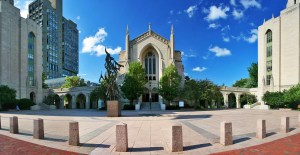
Marsh Chapel at center of Charles River campus
The court disagreed with the state, and really slapped down the Illinois legislature in their decision.
“Our economy is and has always been subject to fluctuations, sometimes very extreme fluctuations,” Republican Justice Lloyd Karmeier wrote on behalf of all seven justices. “The law was clear that the promised benefits would therefore have to be paid and that the responsibility for providing the state’s share of the necessary funding fell squarely on the legislature’s shoulders.
“The General Assembly may find itself in crisis, but it is a crisis which other public pension systems managed to avoid and … it is a crisis for which the General Assembly itself is largely responsible,” Karmeier wrote.
“It is our obligation, however, just as it is theirs, to ensure that the law is followed. That is true at all times. It is especially important in times of crisis when, as this case demonstrates, even clear principles and long-standing precedent are threatened. Crisis is not an excuse to abandon the rule of law. It is a summons to defend it,” he wrote.
Nice win for workers for a change.

Shot of BU buildings on Commonwealth Avenue
Also from the Trib, Chicago teachers are standing up for their rights too: Chicago Teachers Union files labor complaint against school board.
The Chicago Teachers Union has filed an unfair labor practice complaint accusing the city’s school board of bad-faith bargaining and refusing to engage in mediation toward a new contract.
Union officials said little progress has been made over eight formal bargaining sessions and numerous informal meetings since November. The complaint filed Wednesday with the Illinois Educational Labor Relations Board follows the union’s rejection earlier this week of the board’s proposal that teachers take on a greater share of pension payments….
As she did in the months before the 2012 teachers strike, CTU President Karen Lewis sought to make Mayor Rahm Emanuel the focus of the union’s displeasure with talks to replace a contract that expires June 30. The union again accused the city of using the talks to get back at the CTU for its support of Jesus “Chuy” Garcia in the mayoral election.
“We feel this is reactionary and retaliatory,” Lewis said at a news conference Wednesday. “I guess the fuzzy sweater’s gone,” she said, referring to Emanuel’s wearing a sweater in campaign commercials to indicate a softer personality.
The district, which says it is wrestling with a $1.1 billion deficit weighted with pension payments, wants to save millions of dollars by having teachers pay more into their pension fund. The district wants to end a long-standing agreement that limits teacher paycheck deductions for pensions, the union said.
I have a solution for Chicago’s and for the state of Illinois’s budget problems. Tax the rich. Blaming teachers and government workers isn’t going to solve your money problems. It’s just going to make everything worse. Tax the people who can afford to give something back to the government that constantly favors them.

View of Marsh Chapel with Charles River in foreground
We haven’t discussed it here yet, but there was a big election in Great Britain with surprising results.
From The Washington Post after the scope of the conservative victory became clear: British election results point to commanding lead for Conservatives.
LONDON — Exit polls and partial results after a nationwide vote to pick Britain’s next Parliament showed the Conservative Party with a surprisingly commanding lead Friday, just short of a majority and in a strong position to return to power.
The projections defied virtually all pre-election polls, which forecast a virtual tie between the Tories and the opposition Labor Party in the popular vote. Both main parties had been expected to fall well short of the majority needed to claim power outright.
But as the counting continued into dawn Friday, all signs pointed to an emphatic margin in favor of the Conservatives and their leader, Prime Minister David Cameron, and to a major disappointment for Labor as well as the Liberal Democrats, who paid a steep price for having entered into a coalition with the Conservatives for the past five years.
At dawn Friday, Labor leader Ed Miliband delivered what amounted to a concession speech, saying it had been “a very disappointing and difficult night” for his party.
Meanwhile, in the election’s other stunning development, though one that had been predicted, the Scottish National Party (SNP) was redrawing the map of Scotland with what looked like a historic rout in what has long been one of Labor’s most reliable strongholds.

Another aerial view
The results in Scotland could have long-term significance for the “United Kingdom.” if the trend toward Scottish independence continues.
From the WaPo again: In U.K. election’s wake, questions on E.U., Scotland.
Newly empowered British Prime Minister David Cameron moved swiftly to establish the terms and priorities for his new government on Friday after a stunning national election that delivered his Conservative Party an unexpected majority, devastated three other parties and redrew the political map of Scotland.
Following predictions that the post-election maneuvering to form a government might take days if not weeks, the Conservative Party’s big victory produced a quick end to speculation about what or who would be in charge.
But if the election produced an unexpectedly clear outcome, it may only have heightened the degree to which the country faces a period of internal debate, inward-looking politics and potential instability, with questions about the durability of the United Kingdom and its place in both Europe and the world still to be answered.
Cameron will have to find a way to manage resurgent Scottish nationalists who are demanding more powers and possibly another referendum on independence. Further, his pledge to hold a referendum to determine Britain’s future in the European Union will continue to raise uncertainty about the country’s commitments and reliability there.
From BBC News: World media fear UK EU exit, looser US ties.
A day after the surprise result in the UK elections, world media outlets have been taking a look at the ramifications.
European papers are concerned about the effect on the EU in the light of Prime Minister David Cameron’s promise to hold a referendum on leaving. And there is speculation that the Scottish nationalists’ spectacular gains may herald the break-up of the United Kingdom.
A US daily fears the result may be the harbinger of the end of the US-UK “special relationship”, but one Spanish daily is enthralled by a photo of Mr Cameron using cutlery to eat a hot dog.
See examples of media reactions at the link. International Business Times also collected world media reactions, and the stats freaks at FiveThirtyEight had to do some serious soul-searching about why they were completely wrong.
So . . . . what else is happening? Please post your thoughts and links on any topic in the comment thread and have a great spring weekend!!
Did you like this post? Please share it with your friends:
Posted: May 8, 2015 | Author: dakinikat | Filed under: morning reads | Tags: Bobby Jindal, defunding public education, higher education, Louisiana, public universities, student debt |
Good Morning!
I’m trying to get grades in so this will be super short. One of the most worrying trends to me is the disinvestment in public education. An important study was released that shows that a college education must be funded primarily by students or their families. I’ve believed for some time that getting rid of higher education was a goal of many conservative politicians because an educated person is a clear and present danger to despots. First, I’d like to share the study and a few articles written about it. Then, I’ll show you how that’s been brought to fruition here in Louisiana by Bobby Jindal and his slavish relationship to Grover Norquist whose goal in life is to shrink government so you can drown it in a bathtub.
I think this study and its findings are important because the incredible increase in standards of living that came about during the 1950s and 1960s was partially due to the GI Bill and the opportunity it provided to so many poor and working class men to attend college. Education is a path to better jobs and to smarter voting electorate. It’s necessary for a functioning democracy.
As a result of this sharp decrease in state funding, more than half of education and related expenses at public universities is now paid by students’ tuition.
“Public higher education in this country no longer exists,” said Hiltonsmith. “Because more than half of core educational expenses at ‘public’ 4-year universities are now funded through tuition, a private source of capital, they have effectively become subsidized private institutions. To eliminate the pile of debt that most students must now borrow just to finance their education, we need comprehensive policy reform that views higher education as a necessity.”
The study finds that decreases in state funding to their public universities represents the overwhelming reason why tuition is so high and why so many students have to take huge student loans to facilitate their education.
Commitment to public education has been an American social contract for quite some time. I can’t help but think that it’s actually part of a bigger plot to privatize as much as possible and to further close the path of upward mobility.
A new Demos report, Pulling Up the Higher Ed Ladder: Myth and Reality in the Crisis of College Affordability by Demos Senior Policy Analyst Robbie Hiltonsmith, finds that declining state support was responsible for nearly 80 percent of the rise in net tuition between 2001 and 2011. Examining public university revenue and spending data, he determines that rising costs for instruction and student services is responsible for much of the remainder, largely due to growing healthcare costs. Hiltonsmith also disproves the theory that colleges are spending beyond what is necessary to support their core academic functions, commonly known as administrative bloat. Increased spending on administration accounted for only six percent of tuition hikes.
“While administrative bloat is a popular theory, the data shows otherwise,” said Hiltonsmith. “This myth is not only blatantly untrue, but takes attention away from the real problem: states aren’t investing in their students. Instead, they’re saddling them with crippling, life-long debt.”
Research institutions employ just seven more staff per thousand students than they did since 1991, and 17 fewer than in 2001. The relative number of full-time faculty has remained constant and the number of executives and administrators has decreased relative to the size of the student body. New technology needs explain much of the increase in professional staff. However, universities have also shifted to employing more adjunct professors as a cost-cutting measure, a problematic trend whose effects have been well-documented.
I put this study downthread in yesterday’s post. NW Luna provided a link to the situation in Washington State–a liberal blue state–that has not bucked the trend.

The cost of educating a student at the University of Washington is about $400 less today, in inflation adjusted dollars, than it was 20 years ago. As executives and directors of large business and philanthropic organizations in Washington state, our board members can attest that this could not have happened without a strong commitment to efficiency and cost control.
The next time anyone questions why public university tuition is rising faster than inflation, remember this: Twenty years ago, the state government paid 80 percent of the cost of a student’s education and a student paid 20 percent. Today, the state pays 30 percent of the cost, and the student pays 70 percent. The state has systematically disinvested in our children’s future, and we view this trend with disappointment and alarm.
We truly appreciate the hard work of the governor, the Legislature and many others who work in the business, civic and education communities who this year helped put a halt to further cuts in public higher education and gave us the tools and flexibility needed to help us manage through the current crisis. However, losing half of our state funding over just a few years has radically and unduly shifted the burden of financing the higher-education system to students, who are taking on more and more family and personal debt. This debt load restrains the ability of many Washingtonians to fully pursue life’s opportunities.
Public higher education is an essential ingredient of a functioning democracy and a healthy economy, but the current financial model for its funding is broken and not sustainable. If Washington is to maintain affordable access to quality higher education for its citizens, something has to change.
 Louisiana is leading the pack in basically shutting down its universities. Governor Bobby Jindal’s fiscal mismanagement of the state has left all of its institutions of higher education in desperate straights. At this writing, nearly every university in the state is on its way to financial exigency which is basically bankruptcy for a public entity. Yet, this is a time when more educated workers are necessary.
F. King Alexander, the president of the Louisiana State University system, said Louisiana State (LSU) would consider declaring financial exigency—the equivalent of bankruptcy for academic institutions. And Alexander said as many as a dozen campuses throughout Louisiana could ultimately have to do the same.The cutbacks would mean an uncertain fate for all of the roughly three-dozen institutions within the state’s four university “systems,” including Louisiana state’s 10 campuses, the University of Louisiana’s nine, and 14 community and technical colleges. These institutions serve roughly 260,000 students total.
Declines in per-student legislative appropriations for public higher-ed institutions are almost ubiquitous across the U.S., a trend that traces back to the recession. Though levels have started to bounce back in recent years, the average state’s per-student allocation is still 23 percent less than it was before the economy took a hit. Generally, the federal government and taxpaying students end up shouldering that cost. Meanwhile, according to 2012 data, students are for the first time in years covering a larger chunk of their college tuition than their state governments are.
“States are getting out of the public higher-education business,” Alexander told me. Alexander, a vocal advocate for stronger state investment in higher ed, says he’s optimistic that the legislature will somehow cobble together a solution. (It has until June 11, when Louisiana’s legislative session ends.) But even if lawmakers pass measures that would offset most of the shortfall, including a number proposed by Jindal, state higher-ed funding would still be cut by 32 percent, Alexander said.
By 2025 six in 10 adults in the U.S., according to one report, will have to have a postsecondary credential if the country is to maintain its economic edge. But if current trends continue over the next few decades, most state university systems would soon lose all funding from their states. A new analysis by the Pell Institute predicts that, assuming trends persist, in 2025 Colorado would become the first state to allocate zero funding to higher ed; Iowa would follow in 2029, then Michigan (2030), then Arizona (2032). Louisiana (2027) would be No. 2 on the list—if the deficit is miraculously eliminated this year. Otherwise, according to King, even a 32 percent reduction would put Louisiana in front of Colorado. Most states wouldn’t appropriate any university funding by 2050.
Louisiana’s universities are the canaries in a bigger coal mine. It should serve as a warning to any one who cares about access to higher education for all.
So, I’m going back to grading and I leave this as an open thread for you.
What’s on your reading and blogging list today?
Did you like this post? Please share it with your friends:
Posted: May 7, 2015 | Author: bostonboomer | Filed under: morning reads, U.S. Economy, U.S. Politics | Tags: Bernie Sanders, Bill Clinton, Bill de Blasio, Charles Pierce, Elizabeth Warren, Hillary Clinton, Ronald Reagan, Sexism, The American Dream |

The American Dream – post-war abundance
Good Morning!!
What is the American Dream? Is it prosperity for everyone? Is it access to nature and a clean environment? Is it a good job, a house, a family? Is it a good education and the chance to be upwardly mobile? Is it a better future for your children and grandchildren? Is whatever it once was dead? Is it even worth talking about?
This morning there’s a Washington Post op-ed in which Elizabeth Warren and Bill de Blasio describe their vision of “How to revive the American Dream.”
In this land of big dreams, there was never a dream bigger or more important than the one so deeply rooted in our values that it became known as the American Dream. Across generations, Americans shared the belief that hard work would bring opportunity and a better life. America wasn’t perfect, but we invested in our kids and put in place policies to build a strong middle class.
We don’t do that anymore, and the result is clear: The rich get richer, while everyone else falls behind. The game is rigged, and the people who rigged it want it to stay that way. They claim that if we act to improve the economic well-being of hard-working Americans — whether by increasing the minimum wage, reining in lawbreakers on Wall Street or doing practically anything else — we will threaten economic growth.
They are wrong.
That thinking is backward. A growing body of research — including work done by Nobel Prize-winning economist Joseph Stiglitz and the Roosevelt Institute — shows clearly that an increasing disparity between rich and poor, cronyism and an economic system that works only for those at the top are bad for the middle class and bad for our economy.
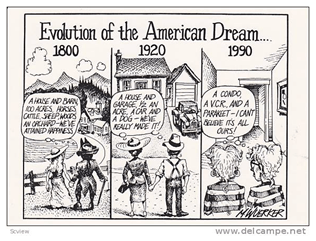
Warren and de Blasio are correct that the dream went terribly wrong after Ronald Reagan became president.
When the economy works for everyone, consumers have money to spend at businesses, and when businesses have more customers, they build more factories, hire more workers and sell more products — and the economy grows. For decades, our economy was built around this core understanding. We made big investments in the things that would create opportunities for everyone: public schools and universities; roads and bridges and power grids; research that spurred new industries, technologies — and jobs — here in the United States. We supported strong unions that pushed for better wages and working conditions, seeing those unions improve lives both for their members and for workers everywhere.
And it worked. From the 1930s to the late 1970s, as gross domestic product went up, wages increased more or less across the board. As the economic pie got bigger, pretty much everyone was getting a little more. That was how the United States built a great middle class.
Then in the early 1980s, a new theory swept the country. Its disciples claimed that if government policies took care of the rich and powerful, wealth would trickle down for everyone else. Trickle-down believers cut taxes sharply for those at the top and pushed for “deregulation” that hobbled the cops on Wall Street and let the most powerful corporations far too often do as they pleased.

All very true. But how do we return to fairness and prosperity for everyone, not just the wealthy few? Warren and de Blasio offer a familiar list of government policies that could turn things around–read them at the link–but they don’t explain how to accomplish these goals in the age of Citizens United, a Republican-controlled congress, and a Supreme Court that favors the rights of corporations over those of individuals. How do we get past the hopelessness and inertia and get Americans to get out and vote for candidates who will stand up for the bottom 99%? How do we even find those candidates?
Don’t get me wrong. I’m basically an optimist and I always have hope for change. But how do we get there from here?
I do think there are some positives signs.
Hillary Clinton is beginning to convince some folks that she’s really a separate person from her husband–a more liberal candidate than he was in the 1990s. In fact Bill Clinton might be more liberal now too. Despite what the Villagers preach, people can change and grow and develop new ideas an opinions. Imagine that Chris Cillizza!

One journalist who seems to be catching on is Charles Pierce. Here’s what he had to say yesterday: One Of These Is Not Like The Others: Two Clintons, No Waiting.
For all the noise about e-mails and honoraria, and all the passive-aggressive nostalgia for the Great Penis Chase of the 1990’s, something very interesting has been going on with Rodham Clinton’s campaign since she announced its official launch….
All during her husband’s administration, HRC was considered to be the more progressive of the two. She supported the accommodations he made to get re-elected, some of which were pretty damned ghastly. She also was one of the most vocal in defense of that administration against the organized ratfking that sought to destroy it. (The only mistake she made, as Calvin Trillin pointed out at the time was that she referred to a “vast right-wing conspiracy” rather than a creepy little cabal.) I once had a long conversation with a former Clinton lawyer. He told me that, if there were 1000 people in a room, and 999 thought Bill Clinton was a direct descendant of Jesus Christ, and one of them thought he was the spawn of Satan, Clinton would seek out that one person and spend the rest of the night and all the following day trying to change that person’s mind. That is not something anyone ever has said about Ms. Rodham Clinton. The edges of her triangulations are all sharp ones.
All of this is to point out that not only is the whole “two for the price of one” trope beloved of people whose politics came of age in the 1990’s outdated and inadequate, but so is the political strategy of the first Clinton Administration. Clinton herself seems to be acknowledging this political reality. She started talking on economics like Elizabeth Warren. Her speech on criminal justice reform was aimed at excesses many of which have roots in her husband’s law-and-order compromises in the mid-1990’s. (So, it should be noted, do many of the Patriot Act’s more controversial provisions.) For the moment, I choose to believe this is not merely a bow to political expedience, but something genuine and, if progressives are smart, infinitely exploitable.

Most of them will never get it, but maybe, just maybe Hillary can get her message out to the people who count–voters–and get them fired up enough to go to the polls in November 2016.
I also think it’s a good sign that Bernie Sanders has decided to run for president. No, he has no chance in hell of getting the nomination, but he might be able to get the media to publicize some of his ideas. He could also be a foil for Hillary, giving her an opportunity to draw attention to her more innovative and liberal ideas. Some of the latest news about Bernie’s efforts:
Reuters: Why socialist Bernie Sanders may just shake up the 2016 presidential race, by Robert Borosage.
Sanders is a funhouse mirror image of Clinton. She has universal name recognition (by her first name), unlimited funds, national campaign experience and a powerhouse political operation. He has scant name recognition, paltry funds, no national campaign experience and hasn’t begun to build a campaign staff. With a net-worth ranking among the lowest in the Senate, Sanders can be an authentic populist — the real deal. As one supporter said, he is the candidate of the “12-hour filibuster and the $12 haircut.”
Sanders’s announcement was treated with respect by a press corps eager for any kind of race on the Democratic side. Pundits dismiss his chances in part because Clinton is expected to raise a billion dollars or more for her campaign. Sanders hopes to raise $50 million.
But Sanders is likely to do far more than exceed low expectations. His candidacy could have a dramatic effect in building an already growing populist movement inside and outside the Democratic Party.
As Sanders made clear in his announcement, his focus will be on the central challenges facing this country: an economy that does not work for the vast majority of its citizens and a politics corrupted by big money and entrenched interests.
Sanders refuses to take part in politicians’ usual, incessant pursuit of large donations. So he is a political rarity: Someone free to speak forcefully to the often insidious connection between the two.

Will people pay attention? I think it’s possible. So does David Horsey of the LA Times: Bernie Sanders’ ‘socialism’ may have mainstream appeal.
Finally, conservatives have a real socialist to go crazy about. Instead of concocting dark fairytales about how Barack Obama, a very conventional liberal Democrat, is a secret Marxist who wants to destroy the American way of life, they can shriek about Bernie Sanders, the independent Vermont senator who has never shied away from the socialist label.
Sanders is now the first person to challenge Hillary Rodham Clinton in the race to win the 2016 Democratic Party presidential nomination. Clinton, though, is not his real adversary, Sanders says. He refuses to make disparaging comments about Clinton and insists he has never run an attack ad in any campaign and will not do so against her. Sanders wants to take on the billionaires, not Hillary.
Nobody gives the 73-year-old Sanders a chance of stopping the Clinton political juggernaut, but some think he could make it veer to the left. If the Vermonter gets traction in debates and primaries with his unabashedly progressive positions, Clinton might be forced to match at least some of his rhetoric. Would that be a bad thing for Democrats? Not if enough beleaguered middle class voters get a chance to consider what Sanders’ version of “socialism” entails and like what they see.
Go to the LA Times link to read Horsey’s list of Sanders’ ideas that could interest voters.

Sam Stein at Huffington Post: Bernie Sanders Raises $3 Million In Four Days.
With the help of a crew of former aides to President Barack Obama, Sen. Bernie Sanders’ (I-Vt.) campaign has raised $3 million in four days for his presidential campaign — a dramatic indication that he won’t be confined simply to a long-shot role in the Democratic primary.
Sanders, who is running for president as a Democrat, announced on Wednesday that he has retained the services of the firm Revolution Messaging to run digital ads and online fundraising. The staffers with the firm who will be working on Sanders’ campaign include Revolution Messaging’s founder, Scott Goodstein, who ran the 2008 Obama campaign’s social media and mobile programs; Arun Chaudhary, who was the first official White House videographer; Shauna Daly, who served as deputy research director on Obama’s 2008 campaign; and Walker Hamilton, who was a lead programmer for that campaign.
“Like a lot of Obama supporters, we were looking for a candidate with a track record of doing the right thing — even if it meant taking on Wall Street billionaires and other powerful interests. A candidate who could inspire a movement,” said Goodstein. “Bernie Sanders is that candidate.”
Due to his long-standing criticism of the influence of big-money interests on government, Sanders has strong online and grassroots appeal, which he hopes to leverage to raise the money needed to fund a presidential campaign. And so far, the strategy looks savvy. The campaign has received roughly 75,000 contributions, and the average amount is $43. According to a campaign adviser, 99.4 percent of the donations have been $250 or less, and 185,000 supporters have signed up on the website BernieSanders.com.
Not bad.
What do you think? What does the American Dream represent for you?
As always, this is an open thread. Post your thoughts and links on any topic in the comment thread and have a terrific Thursday!
Did you like this post? Please share it with your friends:
Posted: May 5, 2015 | Author: bostonboomer | Filed under: morning reads, U.S. Politics | Tags: British politics, detective novels, House of Lords, PD James, Ruth Rendell |
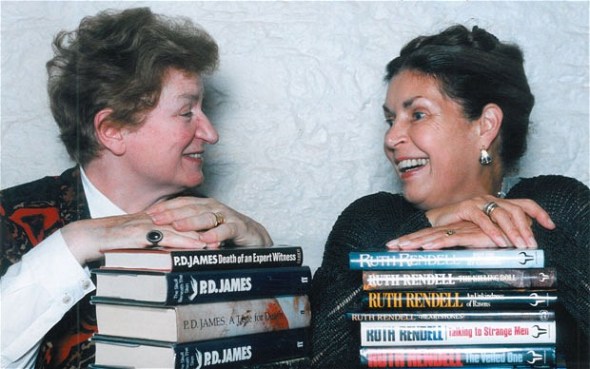
P.D. James and Ruth Rendell
Good Morning!!
Within the last six months, we’ve lost two of the finest and most innovative writers of British crime fiction: P.D. James died at 94 in November 2014, and Ruth Rendell died at 85 over the weekend following a stroke in January. The two grand dames were good friends even though they were competitors and hailed from opposite sides of the political spectrum. Both women served in the House of Lords.
After James’ death, Rendell wrote in the Guardian:
I’ve known Phyllis for about 40 years. We met at a book festival, probably one of the first I ever attended. It would have been a very commonplace thing for her to go to a festival, but nobody knew me then, and she was so nice to me. That is the thing I always will most remember about her: what a kind woman she was, how she did her very best to make you feel good.
She did not write sensation novels, she wrote books about real things, things that could have happened. She didn’t write at all like Agatha Christie. Christie had the most magnificent plots and great stories, but I don’t think anyone would say that she wrote believable stuff, people didn’t want that from her.
But any of the events in Phyllis’s books might have happened – and I think people liked that because they’d never had it in crime fiction before. Dorothy Sayers was a marvellous crime writer, whom both Phyllis and I admired very much, but she hadn’t got the same reality, and she also had that peculiar snobbishness that made her have her detective the son of a duke. Phyllis would have nothing of that.
Both of us thought more about the characters than the crime. Her plots were good, of course, but she took particular care in the creation of character. Place also mattered a lot to her: if you knew the Essex coast you’d want to read some of her books because of her wonderful descriptions.
She always took enormous pains to be accurate and research her work with the greatest attention. She made few mistakes, but on one memorable occasion she did have a male character get on a motorbike and reverse it (I think you can do that now, but this was 30 or 40 years ago), and of course she got a lot of letters about it. But she had a great sense of humour and thought it was very funny.
If one of her books had police work in it, the police work would be true, it would be very real. Her detective Dalgliesh – named him after a female teacher at her school, she just liked the name – is the most intelligent police officer in fiction that I’ve ever come across. He’s sensitive, intelligent, rather awe-inspiring and slightly frightening, but he is a real person, you can get really involved in him.

On the way their friendship worked:
We never talked about crime – because it was what we both wrote about – and we never talked about politics. Phyllis joined the House of Lords several years before me. We were both utterly opposed to each other politically: she was a Tory and very much a committed Conservative, whereas I’m a socialist, I’m Labour and always have been. Once we were in for a vote and crossed paths going to the two division lobbies, she to the “content” lobby and I to the “not content” – and we kissed in the chamber, which caused some concern and amazement.
And now, both of these brilliant and talented women are gone.
From NPR yesterday: Ruth Rendell Dies, Pioneered The Psychological Thriller.
Famed British crime writer Ruth Rendell died this past weekend in London. She was 85 and had suffered a stroke in January.
Best known for her long-running Inspector Wexford series — which was adapted for television — she pioneered a psychological approach to thriller writing. She also wrote darker, more contemplative books as Barbara Vine. In her later years, she was made a baroness and took up Labour Party politics.
Rendell’s most memorable creation may have been Chief Inspector Reginald Wexford: Liberal, intelligent, sensitive but hot-tempered, prone to quoting Shakespeare — Rendell based him partly on herself, and partly on her father.
The mysteries Wexford solved weren’t simple whodunits — there were layers upon layers of psychological complication, packed with obsession, deception, social issues and power games.
When Ruth Rendell started writing, there really wasn’t anyone like her….
In a 2005 NPR interview, Rendell was asked whether she was fascinated by crime. “Well, I don’t know that I am fascinated with crime,” she said. “I’m fascinated with people and their characters and their obsessions and what they do. And these things lead to crime, but I’m much more fascinated in their minds.”
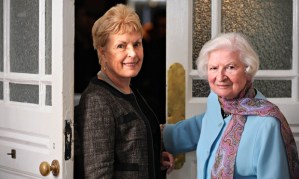
I guess her focus on the psychological is one of the reasons why I love Rendell’s books. The other is that she was a truly fine novelist.
From the Telegraph obituary:
Baroness Rendell of Babergh, the novelist Ruth Rendell, who has died aged 85, was one of Britain’s best-selling celebrity crime writers.
She revitalised the mystery genre to reflect post-war social changes and wove into more than 60 books such contemporary issues as domestic violence, transvestism, paedophilia and sexual frustration. Her Inspector Wexford mysteries became an extremely popular television fixture in the 1990s.
Her work, mapping the manic and malevolent extremes of human behaviour, was distinguished by terse yet elegant prose and sharp psychological insights, as well as a talent for creating deft and intricate plots and believable characters.
With her friend and fellow crime writer PD James — with whom she shared the accolade of “Britain’s Queen of Crime” (which she detested) — Ruth Rendell redefined the “whodunnit” genre, fashioning it into more of a “whydunnit”.
But unlike the conservative Lady James, Rendell was politically to the Left and professionally far more prolific; she completed more than 50 novels under her own name and 14 writing as Barbara Vine, as well as two novellas and more than a dozen collections of short stories.

PD James as an impoverished young mother. She didn’t begin writing until she was 42.
From the Guardian on the close connection between two brilliant and successful women: Ruth Rendell and PD James: giants of detective fiction.
On Wednesday evening this week, publishers and readers of crime fiction gathered at Temple church in London’s law quarter for the memorial service of PD James, one of the two finest English crime-writers of the 20th century. A poignant absentee was the other: Ruth Rendell was too frail to attend the farewell to her great friend and co-practitioner following a severe stroke in January, complications from which led to her death, announced on Saturday, at the age of 85.
There is a clearly a bleakness in the fact that the genre of detective fiction has lost two of its giants within six months, but there is also a neatness. Rendell and James were always closely allied, both professionally and personally. One of Rendell’s last public engagements before her final illness had been to attend, in December, the funeral of PD James in Oxford.
On Wednesday evening this week, publishers and readers of crime fiction gathered at Temple church in London’s law quarter for the memorial service of PD James, one of the two finest English crime-writers of the 20th century. A poignant absentee was the other: Ruth Rendell was too frail to attend the farewell to her great friend and co-practitioner following a severe stroke in January, complications from which led to her death, announced on Saturday, at the age of 85.
There is a clearly a bleakness in the fact that the genre of detective fiction has lost two of its giants within six months, but there is also a neatness. Rendell and James were always closely allied, both professionally and personally. One of Rendell’s last public engagements before her final illness had been to attend, in December, the funeral of PD James in Oxford.
For five decades, the two women were the George Eliot and Jane Austen of the homicidal novel: different minds and style but equal talent. They were responsible, in joint enterprise, for saving British detective fiction from the position, after the era of Agatha Christie and Dorothy L Sayers, in which its popularity with readers was matched only by its unpopularity with most serious literary critics. Solving this paradox, the books of Rendell and James amassed both high stacks of till receipts and piles of admiring reviews. Each, in TV adaptations, gave a major detective to the schedules: Rendell’s DCI Wexford, played by George Baker on ITV, and James’ DCI Dalgliesh, portrayed by Roy Marsden on ITV and then Martin Shaw for the BBC.
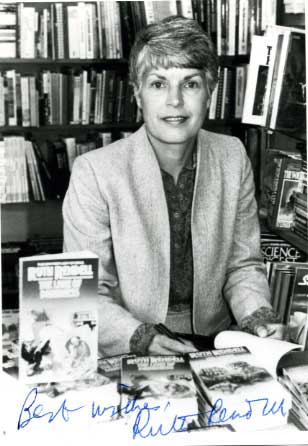
Ruth Rendell
As well as the coincidence – of a kind they would have avoided in novels – of Rendell’s death so closely following the service for James, there is also a striking conjunction in the closeness of both to a general election. Unusually among novelists, both women were members of the House of Lords, where they sat as Baroness Rendell of Babergh on the Labour benches and Baroness James of Holland Park in the Conservative ranks. It is a credit to their characters that ideological difference never affected their mutual respect and pleasure in each other’s company, and on a number of issues they agreed: sharing, for example, an opposition to Scottish independence, against which the younger baroness campaigned publicly.
As well as the more than 60 books she published, Rendell’s achievements included being one of the few authors to have changed the law. In her political life, she was a crucial mover behind a 2003 act of parliament enforcing and strengthening British law against the misogynistic pre-pubescent surgery known as female genital mutilation (FGM).
People who are snobbish and dismissive about the detective story genre are sadly mistaken, and have no idea what they are missing by not reading Rendell and James’ work. If you enjoy fine writing and psychological analysis of human personality as I do, you can’t go wrong by picking up a book by either of these women–although I prefer Rendell.
I’ve probably bored you by going on about PD James and Ruth Rendell, but I thought the loss of two great women writers in such a short time deserved to be remarked upon.
Now some news of the day, links only and in no particular order.
USA Today, Islamic State claims responsibility for Texas attack.
NYT, Gunman in Texas Shooting Was FBI Suspect in Jihad Inquiry.
The Texas event was organized by right-wing hatemonger Pamela Geller.
CNN, Texas shooting: Who is Pamela Geller?
The Daily Beast, Muslims Defend Pam Geller’s Right to Hate.
Sam Brownback is not only a horrible governor, but also a lousy tipper. From KSNT.com, Note on restaurant receipt to Kansas governor goes viral.
Mitt Romney is just as clueless as ever. From the Boston Globe, Mitt Romney Doesn’t Think Mass Incarceration is a Real Thing.
NYT, Mike Huckabee to Joint Republican Race.
Dana Millbank, Ben Carson’s over-the-top ego.
Wall Street Journal, Hillary Clinton to Challenge GOP on Immigration.
James Rosen at McClatchy, Pentagon: Texas has nothing to fear from upcoming military exercise
PC News, Some Apple Watch Users Complain of Skin Rashes.
Institutional Investor’s Alpha, The 2015 Rich List: The Highest Earning Hedge Fund Managers of the Past Year.
Charles Pierce, In which we learn about protest songs and that science can be heartbreaking, among other things.
The Guardian, Nepal quake survivors face threat from human traffickers supplying sex trade.
IBT, Mississippi megafloods wiped out biggest ancient Native American civilisation of Cahokia.
What stories are you following today? Please post your thoughts and links in the comment thread and have a great day!
Did you like this post? Please share it with your friends:
Posted: May 4, 2015 | Author: dakinikat | Filed under: morning reads | Tags: Brownback, Christie, Jindal, Republican Governors, Scott |
 Good Afternoon and sorry this is so late!
My gig was a bit of wild ride last night and I really had trouble sleeping after I got home. The weather is in that place where you need a/c in mid afternoon and heat at the earliest hours of the morning. I got up at like 3 a.m. to flip the furnace on. My guess is the temp would’ve been comfortable for most of you but for some reason the cold got to me. There’s a lot of things in me that must’ve changed during the 20 years I’ve lived in New Orleans. Last weekend a Swiss woman told me that she was having difficulty understanding my accent. Accent? Me? I guess that’s developed along with some other things. I know that my jazz chops are much better and odd rhythms no longer frustrates me. But, before I wax too poetically about things I’ve gotten used to and sound like some starry-eyed post Katrina transplant, I’d like you to know that there are things down here that are still very jarring and irregular.
This story was done by the closest thing we have to state paper, The Advocate. They’ve done some really great investigative journalism recently and this one story deserves to go national. It’s not about New Orleans per se but the one of the outback parishes. Eight people have died in custody over the last ten years in the Sheriff’s jail of this very rural parish with a low population. This story deserves some national attention. This is what happens when you make a criminal justice system handle the mentally ill and populations you just deem unfit for a community.
Since 2005, at least eight people have died in the custody of the Iberia Parish Sheriff’s Office — in its jail or after an arrest — according to records compiled by The Advocate. Seven of those who died were inmates. At least two of those seven suffered from mental illness.
One was Sonnier. The other was Michael Jones, who died in 2009 after an altercation with the corrections staff. Last March, a judge ruled that two Sheriff’s Office employees, including former warden Wesley Hayes — who allegedly sat on Jones to subdue him — were responsible for his death.
Sonnier’s death has received comparatively little attention. The family settled its case against the Sheriff’s Office for $450,900, but confidentiality agreements prevent them from discussing it. However, public records, transcripts and other documents tell a disturbing story of how Sonnier died. Taken together, the deaths of Jones and Sonnier raise pointed questions about how the Iberia Sheriff’s Office cares for mentally ill inmates.
It’s a problem facing wardens across the country. Designed for short-term stays, jails hold mostly pretrial detainees and inmates sentenced for minor crimes. In Louisiana, though, they often play host to longer stints as well: Sheriffs hold state and federal prisoners at fixed daily rates.
Jails and prisons are not equipped to treat the mentally ill, said Dr. Richard Lamb, professor of psychiatry at the University of Southern California Medical School, but they increasingly have no choice.
“It used to be if you were mentally ill, you would be in a hospital,” Lamb said. “As the hospitals emptied out, there were fewer and fewer beds, so people who had a mental illness, and who had anything disruptive or antisocial, began to be put in jails and prisons.”
A 2006 report by the federal Bureau of Justice Statistics estimated 64 percent of jail inmates had mental health problems. One 2009 study estimated that rates of serious mental illness are up to six times higher among inmates than in the general population.
In an interview with The Advocate, Iberia Parish Sheriff Louis Ackal acknowledged that his staff is ill-equipped to handle such people.
“I don’t think any jail should have to house a mental patient,” Ackal said. “We’re not psychiatrists. We’re not psychologists.”
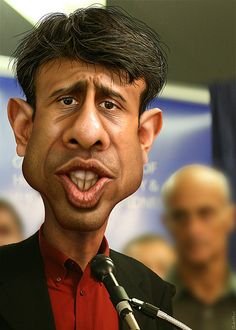 So much of this complete lack of a social contract has to do with the Reagan Revolution which deemed government the problem and screamed loudly that deserving people aren’t getting ahead because other folks are taking it from them. You can see how these policies have allowed parts of the south to display their pre-civil war behaviors and attitudes proudly. Bigotry is once again religious freedom. Poor people deserve to be shamed and starved to death. There are many Koch-sucking Republican governors ruining their states but Bobby Jindal’s Reign of Terror in Louisiana stands as a singular learning experience. This brilliant analysis in The Observer talks about the kind of behavior that puts a psychopath in high office instead of dead on the floor of a prison cell. Mental illness accompanied by poverty gets you a form of state execution. Mental illness accompanied by hubris and the ability to spout total nonsense about the economy and the US form of government gets you the campaign dollars of billionaires and the ability to package yourself into some statehouse.
A career that once stood for the wildest American dreams of immigrants’ children now looks like a different archetypal story: a story about the dangers and the limits of ambition. Seven years into a disastrous governorship, it now seems clear that Jindal never took seriously his obligations to his own state. Louisiana was another stepping stone in a career full of them—and Louisiana got stepped on.
It would be one thing if Jindal could point to a prospering state and a balanced budget in order to stake his claim to the presidency. Instead, he’s operated under the theory that results are less useful than ideological purity. In the process, Jindal effectively signed over control of his state’s budget to Republican kingmaker Grover Norquist and his anti-tax lobby, Americans for Tax Reform (ATR). Jay Morris, a Republican state representative, says that the budgeting process under Jindal boils down to this: “‘ATR says that’s a tax increase.’ Or, ‘ATR says that might not be a tax increase if you do blah, blah, blah.’ He feels that’s the best way to run for national office. It’s just not a good way to run Louisiana.”
Obviously, Morris is no fan of the governor, so take his words with a pinch of salt if you like. But it’s striking to hear how often they’re echoed these days—not just from the left, but from Jindal’s fellow conservatives. Here’s American Conservative writer Rod Dreher, a Louisiana native: “Jindal is sacking his own state to preserve his viability as a Republican presidential candidate—specifically, so he can say that he never raised taxes.” And here’s National Review contributing editor Quin Hillyer: Jindal’s tax policy, which actually taxes the poor at a higher rate than the rich, is “a moral abomination.”
The irony is that this hyper-ideological style of governance seems to have backfired. Jindal’s probable rivals, like Wisconsin Gov. Scott Walker, may not be able to point to gangbusters job growth—but at least they can’t be saddled with a failed state.
The deeper irony is that Louisiana’s budget crunch called for the very talents with which Jindal was so richly blessed: a wonkish engagement with policy details, a McKinsey-honed love of number-crunching, the sense of creative policy entrepreneurship that once had him reimagining Medicare as a Congressional intern. It’s easy to look from that Bobby Jindal to this one—from the rising star to the floundering governor—and ask: Can this be the same person?
A similar story line plays out in Governor’s mansions all over the country of once promising Republican pols. Chris Christie’s sadistic management style is starting to show up as Bridgegate unfolds. Stock up on popcorn. The aides are turning on one another. This should be interesting. Oh, and Salon once more graces us with my word of the week. His aids are labelled “scheming lunatics”. I don’t imagine these lunatics will find themselves dead on the floor in some New Jersey Jail eventually. Simon Maloy labels the Christie aids as outright sociopaths for enjoying the distress of commuters stuck trying to cross the bridge.
If you haven’t already, I highly recommend reading every single word of the indictments against the former Chris Christie aides responsible for the Bridgegate scandal. Many of the details laid out in the document are already known, but there are some fresh tidbits revealed by the indictment that really drive home the fact that the Christie populated his administration with petty and incompetent sociopaths.
The basics of the Bridgegate scandal are already well-known: three high-ranking Christie officials conspired to create a series of massive traffic jams on the George Washington Bridge as a way to punish the mayor of Fort Lee, New Jersey, who’d refused to endorse Christie for reelection. Not only that, they’d approached this oddball scheme with an air of almost cartoonish super-villainy, best captured by Christie’s former deputy chief of staff, Bridget Anne Kelly, who
emailed “time for some traffic problems in Fort Lee” to her co-conspirator at the Port Authority. Because these lackwit criminals conducted much of their conspiring over email and text message, prosecutors had a handy document trail to piece together the particulars of their nefarious scheme.
And those particulars are breathtaking. These three officials – Kelly, and Port Authority officials David Wildstein and Bill Baroni – plotted to minute detail the ways they could best abuse their authority to screw over thousands of New Jersey residents. They gamed out lane-closure scenarios to figure out which one would be the most disruptive. They waited until the last possible moment to order the closures and deliberately kept Fort Lee officials in the dark, partly so that police couldn’t prepare for the chaos, but also to “keep Fort Lee residents and GWB commuters from altering their routes.” And they carefully chose the start date for the closures, September 9, 2013, “which they knew was the first day of school for children in Fort Lee,” to “intensify [Fort Lee mayor Mark] Sokolich’s punishment.”
That’s just evil, and they took gross pride in their work. According to the indictment, “Wildstein went to the GWB to observe the impact personally,” and he happily shared news of the chaos with Kelly and Baroni, who were similarly pleased.
A recent poll shows that most adults in NJ think Christie knew about it and probably tacitly–if not outright–approved the traffic slow downs. He’s not quite as unpopular as Bobby Jindal, but he’s getting there.
New Jersey residents generally do not approve of the job Christie is doing, nor do they view him favorably. Just 35 percent say he is doing a good job, compared with 54 percent who say he is not. Only 30 percent see him in a favorable light, compared with 47 percent who do not.
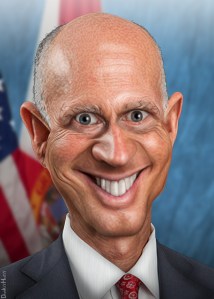 Then there’s Florida’s governor Rick Scott. He’s another two termer re-elected by a state full of masochists. The man is still fighting Medicaid Expansion while people tend to overlook his oversight of a huge amount of Medicaid Fraud while being CEO of Columbia/HCA. This is a huge conflict of interest along the lines of Dick Cheney–former CEO of Halliburton–systematically lying us into war. But, even the Tampa Bay Times and Miami Herald basically say Scott presided over a company that systemically defrauded the U.S. Government.
Scott started what was first Columbia in 1987, purchasing two El Paso, Texas, hospitals. Over the next decade he would add hundreds of hospitals, surgery centers and home health locations. In 1994, Scott’s Columbia purchased Tennessee-headquartered HCA and its 100 hospitals, and merged the companies.
In 1997, federal agents went public with an investigation into the company, first seizing records from four El Paso-area hospitals and then expanding across the country. The investigation focused on whether Columbia/HCA had committed Medicare and Medicaid fraud.
Scott resigned as CEO in July 1997, less than four months after the inquiry became public. Company executives said had Scott remained CEO, the entire chain could have been in jeopardy.
During his 2010 race, the Miami Herald reported that Scott had said he would have immediately stopped his company from committing fraud — if only “somebody told me something was wrong.” But there were such warnings in the company’s annual public reports to stockholders — which Scott had to sign as president and CEO.
Scott wanted to fight the accusations, but the corporate board of the publicly traded company wanted to settle.
In December 2000, the U.S. Justice Department announced that Columbia/HCA agreed to pay $840 million in criminal fines, civil damages and penalties.
Among the revelations from the 2000 settlement:
• Columbia billed Medicare, Medicaid, and other federal programs for tests that were not necessary or had not been ordered by physicians;
• The company attached false diagnosis codes to patient records to increase reimbursement to the hospitals;
• The company illegally claimed non-reimbursable marketing and advertising costs as community education;
• Columbia billed the government for home health care visits for patients who did not qualify to receive them.
The government settled a second series of similar claims with Columbia/HCA in 2002 for an additional $881 million. The total for the two fines was $1.7 billion.
On Scott’s 2010 campaign website, he admitted to the $1.7 billion fine, though the link is no longer on the site.
Is one of the goals of aspiring Rapture nuts a desire to bring down the U.S. prior to their end time delusions? Why do we get so many governors these days that are intent on destroying their own states and making the lives of their citizens miserable? What is it that gets these sadists elected? Is this just the strange fruit of Citizen’s United? Is this how we’re getting murderous police departments and governors that openly commit crimes and get second terms in the process?
Sam Brownback–having wrecked the state of Kansas’ economy–is now busy with the real work of a sociopath. How’s this for separation of church and state and uber pandering? 
On April 7, Kansas Gov. Sam Brownback (R) signed a bill outlawing the most commonly used abortion method for women in their second trimester. Kansas is the first state to pass such a ban, which doctors say may force women into choosing more dangerous forms of abortion.
The moment was historic—so historic, that on Tuesday, Brownback took a victory lap around the state, signing the bill again in four separate private ceremonial re-enactments. Each location was at or near a Catholic school, so children could attend.
He started at the Holy Trinity Catholic Church in Lenexa, just south of Kansas City. Arriving around 9 a.m., he gave some brief remarks in the church’s ballroom facility and signed the bill on a blue paisley tablecloth. There was a photo op with students. He passed out some gubernatorial clicky pens.
“The people of Kansas do not support dismembering children,” Brownback said.
Then it was off to the airport to make his next appointment, St. Mary’s-Colgan High School, 100-some miles to the south in Pittsburg. Same blue tablecloth, same tableau of supporters flanking him with children and babies. Members of the student government and selected representatives from each grade watched him re-sign the bill.
Again, at Bishop Carroll High School, in Wichita, 160 miles due west. (His staffers say the total cost for taking out the state plane was around $1,000.)
“It’s important legislation that will go nationwide,across the country,” he told the students gathered, while protesters outside held signs.
One more time, at Thomas More Prep-Marian High School, where school officials say well over 100 students showed up.
Kansas–now heading towards a huge fiscal crisis–will get to wrack up legal fees for pricey lawyers trying to once more to tilt at the windmill of Roe v. Wade. Afterall, zygotes are so much more important than living breathing children whose educations, health and futures are being gutted by Brownback-inflicted budget troubles. A Topeka waitress lobbyed the Holier-than-Thou one via a note on his check.
Jumping on Facebook she wrote, “You guys 911 emergency. It’s my last shift and I am waiting on our governor. What should I say to him. This is not a test. Go.”
According to Hough, she wasn’t trying to be malicious but she didn’t want to waste a once in a lifetime moment.
“I just knew I had to say something, or I would regret it,” she said, adding, “It was my last shift at the restaurant, as I had quit, so it worked out nicely.”
Hough said she ran it past other staff members, including her boss who didn’t appear thrilled but laughed, before going ahead.
According to Hough — who said she believes education is the “foundation” of a progressive country — the governor still gave her a tip, using the customer copy to leave her 10 percent.
Despite his recent re-election, Brownback is unpopular in his state having slashed taxes while cutting services and creating huge budget deficits. The conservative governor recently cut funding for schools in the state in an effort to keep the state solvent, forcing many schools to close early due to a lack of money.
I’m not even going to repeat the story I wrote about on Friday where Texas’ crazy ass governor is sending National Guard to protect the state from the U.S. Army based on paranoid conspiracy theorists. Will Texas be insane enough to give this dude a second term too?
Anyway, I just can’t believe that after all these costly failures that any state would turn itself over to a Koch-backed Destruction Machine.
What’s on your reading and blogging list today?
Did you like this post? Please share it with your friends:


 peej
peej Carissa
 bostonboomer
 dakinikat
 ecocatwoman
 mablue2
 Mama Lopez
 peggysue22
 quixote
 skydancingguestblogger
 Mona (aka Wonk the Vote)



 Sky Dancing
Recent Comments