
Lazy Saturday Reads: The Psychology of Horror
Posted: October 11, 2014 Filed under: morning reads, psychology, science | Tags: Halloween, horror, horror books, horror movies, October, popular culture, scary clowns 52 Comments
Good Morning!!
This is the time of year when lots of people get the urge to watch old horror movies, and I’m one of them. Actually, I love horror movies any time of year, but October is when the TV programmers provide the most opportunities for horror fans to indulge their cravings.
I love to watch old Hitchcock movies like Psycho and The Birds. They never seem to get old. And then there are the cheesy slasher movies like Halloween and Friday the Thirteenth that are still kind of fun to sample this time of year.
I love George Romero’s classic zombie films like Night of the Living Dead and Dawn of the Dead, and dystopian films from the 1950s like Invasion of the Body Snatchers. I’ve enjoyed more recent zombie classics too–28 Days Later comes to mind. Old creature features are fun too–have you ever seen Them? It’s a 1954 film about giant ants in the New Mexico desert created by radiation from atomic tests.
Of course there are plenty of new horror offerings these days too. Dakinikat recommended a couple of TV shows that I plan to try over this long weekend: American Horror Story on FX and Z Nation on the Syfy Channel. These days there is plenty of real-life horror going on, so I don’t know why so many people like to escape into horror films and TV shows, but it seems they do. There’s also The Walking Dead on AMC. I watched the first season, but kind of lost interest after that because I find the characters so unlikable.
It’s interesting that zombies and vampires have been very much in vogue in the 21st Century. Why is that? Do they somehow reflect our culture like the movies of the 1950s and ’60s seemed to comment on the cold war and fears of nuclear disaster?
Anyway, since it’s Saturday and long weekend (Monday is Columbus Day, a horror story in itself), I’m going to devote this post to the psychology of horror–why are some of us so drawn to it? Believe it or not, psychologists have systematically studied this. Here’s a survey article published in The Psychologist, a UK psychology magazine: The Lure of Horror (pdf). There’s an easier-to-read version here.
Fear coils in your stomach and clutches at your heart. It’s an unpleasant emotion we usually do our best to avoid. Yet across the world and through time people have been drawn irresistibly to stories designed to scare them. Writers like Edgar Allen Poe, H.P. Lovecraft, Stephen King, and Clive Barker continue to haunt the popular consciousness. Far longer ago, listeners sat mesmerised by violent, terrifying tales like Beowulf and Homer’s Odyssey.
‘If you go to your video store and rent a comedy from Korea, it’s not going to make any sense to you at all,’ says literature scholar Mathias Clasen based at Aarhus University, ‘whereas if you rent a local horror movie from Korea you’ll instantaneously know not just that it’s a horror movie, but you’ll have a physiological reaction to it, indicative of the genre.’

So horror is a universal language recognized by our brains?
Clasen believes the timeless, cross-cultural appeal of horror fiction says something important about humans, and in turn, insights from evolutionary psychology can make sense of why horror takes the form it does. ‘You can use horror fiction and its lack of historical and cultural variance as an indication that there is such a thing as human nature,’ he says.
This nature of ours is one that has been shaped over millennia to be afraid, but not just of anything. Possibly our ancestors’ greatest fear was that they might become a feast for a carnivorous predator. As science writer David Quammen has put it, ‘among the earliest forms of human self-awareness was the awareness of being meat’. There’s certainly fossil evidence to back this up, suggesting that early hominids were preyed on by carnivores and that they scavenged from the kill sites of large felines, and vice versa. Modern-day hunter-gatherers, such as the Aché foragers in Paraguay, still suffer high mortality rates from snakes and feline attacks.
Such threats have left their marks on our cognitive development. Research by Nobuo Masataka and others shows that children as young as three are especially fast at spotting snakes, as opposed to flowers, on a computer screen, and all the more so when those snakes are poised to strike. Modern-day threats, such as cars and guns, do not grab the attention in this way. That we’re innately fearful of atavistic threats is known as ‘prepared learning’. Another study published just this year by Christof Koch and his team has shown how the right amygdala, a brain region involved in fear learning, responds more vigorously to the sight of animals than to other pictures such as of people, landmarks or objects.
Viewing the content of horror fiction through the prism of evolutionary evidence and theory, it’s no surprise that the overriding theme of many tales is that the characters are at risk of being eaten. ‘Do we have many snakes or snake-like creatures or giant serpents in horror fiction?’ Clasen asks. ‘Yes we do: look at Tremors – they were really just very big snakes with giant fangs’. In fact, many horror books and movie classics feature oversized carnivorous predators, including James Herbert’s The Rats, Shaun Hutson’s Slugs, Cat People, King Kong, and the Jaws franchise, to name but a few. Where the main threat is a humanoid predator, he or she will often be armed with over-sized claws (Freddie Krueger in Nightmare on Elm Street) or an insatiable taste for human flesh (e.g. Hannibal Lecter in the 1981 novel Red Dragon).
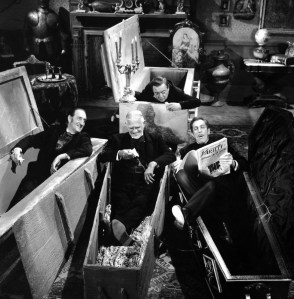
Still, horror is a minority taste. Why are some people–like me–so attracted to it, while others are simply grossed out?
Who are these people who pay out money to be scared? A meta-analysis of 35 relevant articles, by Cynthia Hoffner and Kenneth Levine published in 2005 in Media Psychology, highlights the principal relevant traits: affective response; empathy; sensation seeking; aggressiveness; gender; and age.
The more negative affect a person reports experiencing during horror, the more likely they are to say that they enjoy the genre. Media experts like Dolf Zillmann make sense of this apparent contradiction as a kind of conversion process, whereby the pleasure comes from the relief that follows once characters escape danger. This explanation struggles to account for the appeal of slasher films, in which most characters are killed. Part of the answer must lie with meta-emotion – the way we interpret the emotional feelings we’re experiencing, with some people finding pleasure in fright. Another possibility is that, for some, pleasure is derived from the sense that film victims are being punished for what the viewer considers to be their immoral behaviour. Consistent with this, a 1993 study by Mary Oliver found that male high school viewers who endorsed traditional views on female sexuality (e.g. ‘it’s okay for men to have sex before marriage, but not women’), were more likely to enjoy horror movie clips, especially if they involved a female victim portrayed with her lover.
Other findings: people with low self-reported levels of empathy and younger people tend to be more attracted to horror. Neither of those explains my interest–I score high on empathy, and I’m an old lady. So what’s my problem?! Maybe I just never really grew up?
Read much more at the link. Since it’s a scholarly article, there are references to research articles too.
Here’s another interesting article at Filmmaker IQ: THE PSYCHOLOGY OF SCARY MOVIES.
There’s something about horror that speaks directly and instinctively to the human animal. Millions of years of evolutionary psychology have ingrained in our minds certain fear triggers – a survival instinct – Fear of the Dark where predatory animals might be laying in wait – Fear of animals with large sharp teeth who would make a quick meal of us. Fear of Poisonous Spiders who can kill with one bite. So ingrained into our developmental psychology that research done by Nobuo Masataka show that children as young as three have an easier time spotting snakes on a computer screen than they do spotting flowers. Research by Christof Koch show that the right amygydala, the portion of the brain associated with fear learning, responds more vigorously to images of animals than to images of people, landmarks or objects even though those are much more dangerous in our civilized world.
This may explain the shape of our movie monsters: creatures with sharp teeth or snake like appearance. The fear of being eaten alive also explains the cannabilistic traits of human monsters like Dracula and Dr. Hannibal Lecter.
But brain scan research in 2010 by Thomas Straube at the Friedrich Schiller University of Jena show that scary movies don’t actually activate fear responses in the amygdala at all. Instead, it was other parts of the brain that were firing – the visual cortex – the part of the brain responsible for processing visual information, the insular cortex- self awareness, the thalamus -the relay switch between brain hemispheres, and the dorsal-medial prefrontal cortex – the part of the brain associated with planning, attention, and problem solving.
So we’re not really being scared at the movies – at least not necessarily in the brain chemistry way… what’s going on?

Three things, according to Dr. Glenn D. Walters.
The first is tension – created through mystery, suspense, gore, terror, or shock. This is pretty straight forward elements of horror, the craft and technique of filmmaking.
The second factor is relevance. In order for a horror film to be seen, it has to be relevant to potential viewers. This relevance can take the form of universal relevance – capturing the universal fear of things like death and the unknown, it can take on cultural relevance dealing with societal issues. Audiences can find subgroup relevance – groups like teenagers which many horror films are about. Lastly, there’s personal relevance – either in a way that identifies with the protagonist or in a way that condemns the antagonists or victims to their ultimate fate.
The last factor, which may be the most counter intuitive is unrealism. Despite the graphic nature of recent horror films, we all know at some level that what we are watching is not real. Haidt, McCauley and Rozin conducted research on disgust, showing students in 1994 a series of gruesome documentary videos… few could make it to the end – and yet these same students would pay to see even worse acts conducted on a movie screen. Why? Perhaps its because when we walk into a theater we know what we’re seeing on screen is fabricated reality. Movies are edited from multiple camera angles with soundtracks and sometimes horror is tempered and made palatable with black humor – a sly wink that what you’re seeing on screen isn’t real. This also explains why we all remember that scary movie we saw when we were way too young but looks hokey now. Children have a harder time separating reality and fiction especially when its on a movie screen.
There’s much more to the article, including a brief summary of “8 incomplete theories on our attraction to horror.”
One eminent psychologist, Joseph LeDoux, a professor at NYU, has a particular interest in emotion and the brain and more specifically fear and the amygdala. Here’s the intro to a brief interview with him at Cognitive Neuroscience:
With Halloween around the corner, fear may be on your mind. As a basic emotion, fear develops when we react to an immediate danger.
Understanding exactly how our brains detect and respond to such danger has been a goal of Joseph LeDoux of the Center for Neural Science at New York University for much of his career. His pioneering work on “fear conditioning,” which he now calls “threat conditioning,” revealed the neurological pathways through which we react to threats.
This Pavlovian-type conditioning uses a neutral stimulus like an auditory tone at the same time as a painful event, and over time, this tone becomes associated with the discomfort and can trigger a fear response in the brain, specifically the amygdala. The neural processing in the amygdala causes chemical processes in the brain cells that lead to our natural defenses in the face of a threat – whether a spider or a robber.
LeDoux’s work has not only contributed to our understanding of these processes but also to ways we can work to overcome pathological fears, including through work on memory and fear.
Read the interview at the link. And here is an audio interview with LeDoux at ConstructingHorror.com.
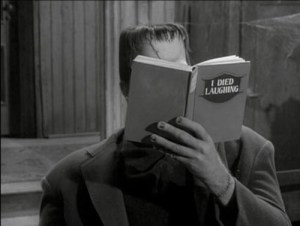
LeDoux told the LA Times in October 2013 that intense emotions like fear stimulate the brain.
Arousing situations, “whether joyful or frightful, juice up the brain,” says Joseph LeDoux, a neuroscientist and director of New York University’s Emotional Brain Institute and author of “The Emotional Brain.”
Horror movies energize the system: Hearts pump faster, blood pressure rises and dopamine releases, as does norepinephrine (which readies the body for flight-or-fight response) and endorphins (which kill pain), Fanselow says.
But experts agree that children’s brains are too vulnerable for scary movies.
And some adults are vulnerable too. “There have been case reports of people having stress symptoms after watching ‘The Exorcist,’ ” says Richard J. McNally, a Harvard psychology professor. “But these folks already had histories of mental disorders and thus were vulnerable.”
And many people want nothing to do with Halloween frights. “Genetics, epigenetics, upbringing and all the other individual experiences they’ve had probably all contribute,” LeDoux says. “It’s a matter of degree.”
Read more about the effects of horror on the brain at the LA Times link.
A few more horror links:
The Atlantic, Horror-Movie Marathon: The Brilliant, Not-So-Scary Classics.
The Atlantic, How Clowns Became Terrifying.
People Magazine, From It to American Horror Story: 13 of the Creepiest Clowns in Pop Culture History.
What Culture, 10 Best Horror Movies Of 2014 Ranked.
Rolling Stone, Readers’ Poll: The 10 Best Horror Movies of All Time.
The Washington Post, The sums of all fear: Horror makes a Hollywood comeback.
The Verge, Check out this gorgeous limited edition art for 13 classic horror movies.
So . . . are you a horror fan? If so, what are your favorite horror movies and books? Why do you think you enjoy them? If you’re not a fan, why do you think that is?
Of course you should feel free to post links to real-life horrors or even good news stories if you can find them!
Friday Reads: Zombie Memes
Posted: October 10, 2014 Filed under: Barack Obama, Foreign Affairs, medicine, morning reads, Republican politics, science, Surreality, U.S. Politics | Tags: airport screening, Anthony Kennedy, Eagle Forum, ebola, Idaho, ISIL, Nevada, Phyllis Schlafly, same-sex marriage, SCOTUS, Tom Frieden, West Africa, zombies 11 Comments Good Morning!
The Ebola Virus and the epidemic in Africa is real. The right wing hysteria about the virus is rivaling the bad plots of the Zombie movies I’m watching during SyFy’s Countdown to Halloween. I thought I’d spend some time separating the facts from the conspiracy theories today. So let me start with one of the most outrageous Zombie Memes from one of the most vile women on the planet. Dementia or further evidence of the advanced stages of evil? It’s your choice.
In an interview with WorldNetDaily published today, Eagle Forum founder Phyllis Schlafly weighed in on the unfounded theory gaining traction in the right-wing media that Central American young people are to blame for an outbreak of a childhood respiratory illness in the U.S.
“There are all kinds of diseases in the rest of the world, and we don’t want them in this country,” Schlafly told WND, adding that “of all the things [Obama has] done, I think this thing of letting these diseased people into this country to infect our own people is just the most outrageous of all.”
She went on to imply that President Obama is intentionally allowing people infected with Ebola into the United States because he wants America to be “just like everybody else, and if Africa is suffering from Ebola, we ought to join the group and be suffering from it, too. That’s his attitude.”
Conservative icon Phyllis Schlafly – author of “Who Killed the American Family?” – said she agrees Obama is responsible for allowing diseases to enter the country.
“There are all kinds of diseases in the rest of the world, and we don’t want them in this country,” Schlafly said. “And it’s Obama’s job to keep them out.
“Out of all the things he’s done, I think this thing of letting these diseased people into this country to infect our own people is just the most outrageous of all.”
Schlafly said the government should screen immigrants for disease before they enter the country, as was done at Ellis Island a hundred years ago.
“That was the purpose of Ellis Island – to have a waiting place where it was decided whether people were healthy enough or responsible enough to come into our country,” she said. “The idea that anybody can just walk in and carry this disease with them is just an outrage, and it is Obama’s fault because he’s responsible for doing it.”
…
When asked why the current administration hasn’t done more to prevent diseased illegal aliens or Ebola carriers from Africa from entering the country, Schlafly said Obama wants to make the U.S. more like the rest of the world.
“Obama doesn’t want America to believe that we’re exceptional,” Schlafly said. “He wants us to be just like everybody else, and if Africa is suffering from Ebola, we ought to join the group and be suffering from it, too. That’s his attitude.”
Yup, it’s despicable She. Still foaming at the mouth after all these years too.
Okay, so as not to overwhelm you with teh crazy all at once. Let’s go to some science and medicine.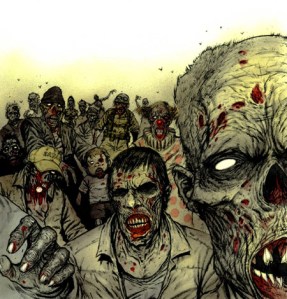
The director of the Centers for Disease Control and Prevention told a top-level forum in Washington, D.C., that the Ebola outbreak is unlike anything he’s seen since the AIDS epidemic.
“I would say that in the 30 years I’ve been working in public health, the only thing like this has been AIDS,” Frieden said before the heads of the United Nations, World Bank and International Monetary Fund, according to AFP.
Frieden added: “We have to work now so that it is not the world’s next AIDS.”
Frieden’s comments come as the first person diagnosed with Ebola in the U.S. died Wednesday despite intense but delayed treatment. The U.S. government also announced it was expanding airport examinations to guard against the spread of the deadly disease.
The checks will include taking the temperatures of hundreds of travelers arriving from West Africa at five major American airports.
The new screenings will begin Saturday at New York’s JFK International Airport and then expand to Washington Dulles and the international airports in Atlanta, Chicago and Newark. An estimated 150 people per day will be checked, using high-tech thermometers that don’t touch the skin.
The White House said the fever checks would reach more than 9 of 10 travelers to the U.S. from the three heaviest-hit countries — Liberia, Sierra Leone and Guinea.
President Barack Obama called the measures “really just belt and suspenders” to support protections already in place. Border Patrol agents now look for people who are obviously ill, as do flight crews, and in those cases the Centers for Disease Control and Prevention is notified.
It’s unlikely a fever check would have spotted Thomas Eric Duncan, the Liberian man who died of Ebola in a Dallas hospital Wednesday morning. Duncan wasn’t yet showing symptoms when he arrived in the U.S.
 So the disease is ravaging West Africa. That’s where the problem is and needs to be solved.
There are the facts about the state of the Ebola crisis. In West Africa, more than 8,000 people have contracted the disease and nearly half have died. In the U.S., there’s just one confirmed case—that of Thomas Duncan, the Liberian man who passed away in Dallas on Wednesday. Experts say that the caseload in West Africa is likely to get much, much bigger. As many as 1.4 million people could get the disease, with a large fraction of them dying from it. The same experts expect no similar outbreak here, even if a few more cases appear, because we have the personnel and the resources to limit exposure.
But all of the news on Wednesday was about developments here in the U.S.—in particular, new screening efforts at five major U.S. airports, Duncan’s death, and reports of possible new cases in the U.S., including one in Dallas. You could tell by the questions that Thomas Frieden, director of the U.S. Centers for Disease Control, fielded during a late afternoon press conference. He got more than a dozen of them. Only two were about the situation abroad. (And one of them, it so happens, came from me.)
The preoccupation with what’s happening here, as opposed to what’s happening over there, is perfectly understandable. On Tuesday, a Gallup poll revealed that Americans today are as worried about contracting Ebola as they were about contracting H1N1, the swine flu, during that outbreak two years ago. By that time, millions of people had gotten H1N1 and thousands had already died. But people die from flu all the time, usually because they are very young or very old or already otherwise infirmed. It’s a threat that people have factored into their daily lives, if at all. Ebola is quite literally a foreign menace, one to which almost nobody gave much thought until a few weeks ago. The virus kills about half the people who get it, with little regard for age or health status of the person infected.
That fear goes a long way to explaining why the U.S. is implementing the new screening process at the airports. Customs and Border Patrol agents were already on the lookout for people with visible signs of the disease. Now they will add another layer of scrutiny. They will use questionnaires to screen for people who have been in affected countries—and, then, subject these people to temperature tests and more questioning. People who have fever or show other Ebola symptoms will be evaluated by quarantine officers from the CDC, then referred to local health authorities who will decide how to handle the cases. The primary goal is to identify any passengers infected with Ebola before they leave the airport.
But yes, the right wing is hysterical and afraid and lying as the right wing is prone to do.
Of all the issues that you would think would be non-partisan, Ebola should be at the top of the list. The disease is just a mindless germ that doesn’t check your race, gender, social class, sexual orientation or party identification before it strikes, suggesting both liberals and conservatives
have a stake in treating people exposed to the disease with compassion and care. And yet, to flip on Fox News or turn on any conservative media at all, you’d think that ebola was some kind of plague designed by the Democratic party in order to wipe out Republicans.
Blowing the threat of ebola out of proportion and trying to link it to Obama has been a constant theme on the right in recent days. Elisabeth Hasselbeck of Fox News literally demanded that we put the country on lockdown, banning all travel in and out. In a bit of race-baiting, Andrea Tantaros of Fox suggested that people who travel to the country and show symptoms of ebola will “seek treatment from a witch doctor” instead of go to the hospital. Fox host Steve Doocy suggested the CDC is lying about ebola because they’re “part of the administration”. Fox also promoted a conspiracy theorist who is trying to claim the CDC is lying when they caution people not to panic.
Other right wing media joined in. Tammy Bruce blamed ebola on the “Obama legacy”. Laura Ingraham said Obama was prevented from doing more to stop the disease because of his “core ties to the African continent”. Rush Limbaugh even went as far as to accuse Obama of letting the disease spread because he supposes liberals believe “we kind of deserve a little bit of this”.
Okay, so here’s a zombie mistake and a big one. Justice Kennedy’s Typo Accidentally Stops Same-Sex Marriage in Nevada.
Yesterday, Supreme Court Justice Anthony Kennedy stunned America when he ordered a halt on Nevada’s same-sex marriages, less than a day after the Court voted to overturn a ban on gay marriages in that state. Turns out that it was a total accident. Yes, a big ol’ “oops, my bad” incident.
According to SCOTUSBlog, what happened was the following: The Ninth Circuit recently heard challenges to same-sex marriage bans in Idaho and Nevada, who, for the purposes of convenience, had combined both of their challenges into a single case. In two different rulings, the federal appellate court struck down both of these states’ bans, allowing same-sex marriage in Idaho and Nevada, and issued a mandate on the ruling to immediately enforce the new law. In other words, the moment that the Ninth Circuit struck down the ban, gay and lesbian couples could get married immediately.
This did not make Idaho happy, so they filed a request to Justice Kennedy asking him to put a stop on same-sex marriage in Idaho, so that state officials could review their case before the Ninth Circuit. Kennedy allowed it, but in a total brain fart moment, issued an order that put a stop on weddings in both Idaho and Nevada, even though nobody in Nevada had asked for a review, either.
Thankfully, same-sex marriages can still occur in Las Vegas for the time being, but unfortunately, nobody knows what the eff is happening anymore. As a result, the Ninth Circuit has recalled its order implementing same-sex marriage in Idaho and are asking for briefs as to whether they need to do the same in Nevada.
Good job, Kennedy. Look how much confusion your typo has caused.
Oh, another Zombie Meme replacing Benghazi these days. It’s not only Ebola that’s Obama’s fault but also ISIL. It’s all about killing white people!!! Here’s some great links and proof from Politicus.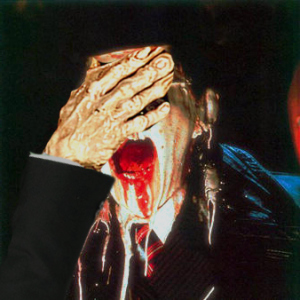
We have shown that for the GOP, the threat of Ebola exists only as an excuse to attack President Obama, that it’s all Obama’s fault (of course) and that, Oh my God! Oh my God! It’s going to kill us all! Cue to Rand Paul diving under his bed.
We have also been closely following the rise of ISIL in Syria and Iraq, and have tried to show you the contrast between the Republican and the Democratic reactions.
We have shown that for the GOP, the threat of ISIL exists only as an excuse to attack President Obama, that it’s all Obama’s fault (of course) and that Oh my God! Oh my God! They’re going to kill us all! Cue to Lindsey Graham diving under his bed.
It is surely significant that yesterday Time Magazine should profile the Republican response to the ISIL “scandal”: GOP Ad Claims ISIS Plot to Attack U.S. Via ‘Arizona’s Backyard.’
As Time’s Zeke Miller and Alex Rogers describe the ad, which was posted to YouTube yesterday,
The National Republican Congressional Committee ad opens with grainy footage of black flags and fighters from the Islamic State of Iraq and Greater Syria (ISIS) holding rifles on military vehicles. “Evil forces around the world want to harm Americans every day,” an ominous voiceover states. “Their entry into our country? Through Arizona’s backyard.” The spot goes on to recount how Rep. Ann Kirkpatrick (D-AZ), locked in a close re-election fight with Arizona House Speaker Andy Tobin, has voted against border security legislation, suggesting that she “leaves Arizona vulnerable.”
Chris Wallace of Fox News has already planted the suggestion in viewers’ facile minds that Ebola could come across our Southern Border and that it could be used as a weapon. It doesn’t matter after those words are spoken than an expert debunks them. The damage has been done.
The brain damage was done to any one that actually believes these things years ago.
So what’s on your reading and blogging list today?
Thursday Reads: The Battle for the Senate
Posted: October 9, 2014 Filed under: morning reads, U.S. Politics | Tags: 2014 Senate races, Charlie Cook, Dana Millbank, Daniel Altman, FiveThirtyEight blog, Fox News, GOTV, Harry Enten, John Sides, midterm elections, Nate Silver, polls, Sam Wang, Stuart Rothenberg 29 Comments
Good Morning!!
On Tuesday, I wrote about the epic battle between political poll analysts Nate Silver and Sam Wang to predict which party will control the Senate after the Midterm elections in November. Actually, it’s a fairly one-sided battle. Silver’s statistical model predicts that Republicans will take over the Senate, and Wang thinks Democrats will hold onto their narrow majority. As Daniel Altman pointed out at The Daily Beast, Silver has much more to lose if Wang turns out to be right.
[Silver has] been attacking Wang relentlessly, calling his methodology “wrong” and Wang himself “deceptive.” Silver could simply wait for the election results to come in and compare his forecasts’ accuracy with Wang’s across all the Senate races. Instead, he’s doing everything possible to discredit Wang before Election Day.
Here’s my guess at the reasons why. First, Silver fears Wang. In 2012, Wang’s model did a better job predicting the presidential election. Wang called not only Obama’s electoral college total of 332 votes, which Silver matched, but he also nailed the popular vote almost perfectly. Wang’s model also picked the winner in every single Senate race in 2012. It’s not good for business if Silver keeps coming up second-best.
But more importantly, Wang is the only one predicting Democrats will win. This represents a huge risk for Silver. If every forecaster had Republicans taking the Senate, then they’d all be either right or wrong in November; no one would have a better headline the next morning than Silver….If the Democrats hold the Senate, then Wang will stand alone; Silver will just be another one of the many who got it wrong.
It goes without saying that I am rooting for underdog Sam Wang.
On Tuesday, I also discussed the two close races that I’m most familiar with–Louisiana, because of Dakinikat’s reports, and New Hampshire, where former Massachusetts Senator Scott Brown is carpetbagging in hopes of getting his job back. Today, I want to take a look at the latest “expert” prognostications about which races are the most likely to decide whether Democrats or Republicans will be in the majority in 2015.
The most recent poll results come from {gag} Fox News.
Fox News Polls: Senate battleground races trending GOP, Roberts up in Kansas.
New Fox News battleground polls show a Republican trend in the fight for the U.S. Senate.The GOP candidates — helped by anti-Barack Obama sentiment and strong support from male voters — lead in all five states: Alaska, Arkansas, Colorado, Kansas and Kentucky.
The races, however, are still far from settled. None of the Senate candidates has a lead outside the poll’s margin of sampling error. And none of the front-runners hit the important marker of 50 percent support from their electorate.
Read the results for specific races at the link. But here’s an interesting reaction to the Fox poll results from analyst Harry Enten at Nate Silver’s FiveThirtyEight blog, Senate Update: Don’t Go Crazy.
At about 6 p.m. Wednesday, a collective Democratic spit-take splattered computer screens around the country (at least that’s what I imagined happened). Fox News released new polls showing Republican candidates ahead by 4 percentage points in Alaska, 6 percentage points in Colorado, 5 percentage points in Kansas and 4 percentage points in Kentucky.
The polls look like a disaster for Democrats.
They’re not.
FiveThirtyEight’s Senate forecast has Republican chances of taking back the Senate at 56.4 percent — basically unchanged from the 56.5 percent we showed Tuesday.
Enten explains how the FiveThirtyEight model adjusts the Fox results for Alaska, Arkansas, Colorado, and Kentucky. On Kansas, Enten says he needs more data. It looks like Pat Roberts is gaining on challenger Greg Orman, but he can’t be sure yet. And here’s some possible good news for Democrats:
Democrats got good news in Georgia, where Michelle Nunn’s chances of winning rose from 26 percent to 30 percent. Nunn’s odds inched up because she was down only 1 percentage point to Republican David Perdue (46 percent to 45 percent) in a new SurveyUSA poll. For the first time, the FiveThirtyEight model forecasts Perdue to capture less than 50 percent of the vote (49.9 percent).
As in Louisiana, if neither candidate gets more than 50%, there will have to be a runoff election.

Geeky Prof. John Sides, George Washington University
At The Washington Post, Dana Millbank touts the Post’s Election Lab (headed by John Sides of George Washington University) and weighs in on the Silver-Wang controversy, Predicting the Senate election down to the decimal point. Here’s Millbank’s summary of Side’s current predictions:
We know, for example, with 98 percent certainty that Sen. Kay Hagan, an embattled Democrat, will win reelection in North Carolina next month. We are even more certain — 99 percent — that Sen. Mitch McConnell, a vulnerable Republican, will keep his seat in Kentucky. And we are darn near sure — 91 percent, to be specific — that Sen. Mary Landrieu (D-La.) will lose.
Throw all of these into our election model, add eye of newt and toe of frog, stir counterclockwise and — voila! — we can project with 84 percent confidence that Republicans will control the Senate next year.
Really? Millbank also summarizes competing predictions:
As of Tuesday afternoon, Nate Silver’s FiveThirtyEight, which turned the academic discipline of computer models into a media game, gives Republicans a 57.6 percent chance of taking the Senate. (Decimal points are particularly compelling.) The New York Times’s model goes with 61 percent, DailyKos 66 percent, Huffington Post 54 percent and PredictWise 73 percent. The Princeton Election Consortium gives a 54 percent advantage to Democrats.
Millbank seems gobsmacked that Sam Wang has the gall to predict a Democratic victory in the Senate. But he also appears to favor old-timey political prognosticators like Charlie Cook and Stuart Rothenberg. Let’s take a look at what they are saying.
Charlie Cook: Senate’s Future Likely Hinges on These Three Races: The Senate most plausibly turns on the survival of Alaska’s Begich, Colorado’s Udall, and the outcome of the open contest in Iowa between Braley and Ernst.
The number of seats in play is either 11 or 12, depending on whether or not you believe that the contest in Minnesota between Democratic incumbent Al Franken and GOP challenger Mike McFadden has tightened up. We have begun to see some polls that show the race now in mid-to-high single digits; it could just be that Republicans are coming home, thus producing the normal closure you often see, or it could be that it is in fact growing more competitive.
Three Democratic open seats are goners: Montana, South Dakota, and West Virginia. Democrats’ three most endangered incumbents still are in extremely challenging races. However, all of them—Mark Begich in Alaska, Mark Pryor in Arkansas, and Louisiana’s Mary Landrieu—are still absolutely alive and in the hunt for victory. The hope and prayer for Democrats is that one of these incumbents will survive, which would mean that Republicans would have to then win at least one seat in a “purple” or “light blue” state. Of these three races, Pryor’s challenge looks to be the toughest and least promising for Democrats. Landrieu’s is far from hopeless, but it would grow much more difficult if, as expected, the race moves to a Dec. 6 runoff with GOP Rep. Bill Cassidy. If there is a survivor in this trio, it is most likely to be Begich, though his race is extremely close and his chances of winning at this point are no better than a coin flip. The analogy for these three is that even Olympic swimmers have a tough time if the undertow is too bad, and that might well be the case here.
Read more of Cook’s analysis at the National Journal link above.

Charlie Cook and Stuart Rothenberg
Stuart Rothenberg: What If I’m Wrong About GOP Flipping at Least 7 Seats?
A few weeks ago I wrote Senate Republicans would gain at least seven seats, even though the Rothenberg Political Report/Roll Call race ratings showed a likely Republican gain of five to eight seats.
That expectation was based on national survey results that showed the president extremely is unpopular and voters are unhappy with the direction of the country, as well as state polling that showed Democratic incumbents well below the critical 50 percent threshold in ballot tests against their GOP opponents.
Is Rothenberg ready to start hedging his bets on a Republication takeover?
Democrats still may be able to localize elections in a few states — the most likely prospects are North Carolina and Alaska, which were carried by Romney, and two swing states won by Obama, Iowa and Colorado. Doing so would inoculate the Democratic nominees (three incumbents and one open seat hopeful) from Obama’s near-toxic political standing.
Democrats certainly have lowered the boom on North Carolina’s Thom Tillis, Alaska’s Dan Sullivan, Iowa’s Joni Ernst and Colorado’s Cory Gardner, and it isn’t unreasonable to believe they can hold all four seats by discrediting the GOP nominees.
I have been assuming a 2014 electorate that looks more like the last midterm electorate than either of the past two presidential electorates. The 2010 electorate was much older and whiter than the 2008 and 2012 electorates, and there is no reason to believe that Democrats won’t suffer again from this year’s midterm electorate.
But Democrats are making an effort to register African-American voters in a number of states, mobilize Democratic voters in Alaska’s remote villages, and turn out both younger voters and reliable Democratic voters who in the past sat out midterm elections. If they can change the electorate, they can change their chances of holding on to a handful of states that I am expecting them to lose.

As Dakinikat wrote on Monday, getting out the votes for Democrats is all-important!
It’s also interesting that Nate Silver may also be wondering if he could be wrong this time. On Monday, he told Real Clear Politics, “I’m Not Sure My Magic Will Work This Election.”
Election prognosticator Nate Silver seemed unsure of his ability to predict races when he appeared on the Monday broadcast of Fusion TV’s “Midterm Mayhem.”
“I’m not sure my magic will work in this election,” Silver said. “It’s a very close election nationally and in a number of states.”
“We’re certainly not clairvoyant. It’s a close election this year,” he added.
Hmmmmm . . .
And at FiveThirtyEight, Carl Bialik recently wrote: Pollsters Predict Greater Polling Error In Midterm Elections.
We asked pollsters if they expected more or less error in Senate election polls — the difference between what the latest pre-election polls show and actual vote margins — this year than two years ago. Ten said they expected a higher average error, while just five predicted lower error.
No one cited low response rates as a reason to expect poll error. Perhaps that’s because pollsters have managed to maintain strong national-election records despite declining response rates.
Instead, the top reason cited was the difficulty of forecasting turnout in midterm elections, without a presidential race to bring voters to the polls. And the crucial midterms are in states that don’t usually have close races. “The key Senate battlegrounds this year are also places like Alaska, Arkansas, Kansas, Louisiana, etc., where most of the public pollsters don’t have a ton of experience,” one pollster said. “It’s not the Ohios and Pennsylvanias and Floridas of the world that we’re all used to polling a lot.”
Some also cited an increase in unproven polling techniques by pollsters. “Many are attempting to use Internet surveys with untested methodologies to determine likely voters,” said Darrel Rowland, the Columbus Dispatch’s public affairs editor, who conducts the newspaper’s Dispatch Poll. “As often happens to pioneers, there could be some grim results.”
Again, Senate control is going to hinge on voter turnout. And of course there is always the possibility of last-minute surprises.

A few more links to check out:
The Economist, The Battle for the Senate: An Interactive Guide.
U.S. News, Top 10 Senate Races of 2014.
BBC News, US mid-term elections: Six Senate races to watch.
USA Today, Senate control may be undecided for weeks after election.
David Wiegel at Bloomberg Politics, Why the GOP Wants You to Think There’ll Be an Immigration Deal if They Win.
Huffington Post, As South Dakota Race Breaks Open, Bizarre Turn Of Events Could Save Senate For Democrats.
Mark Halperin at Bloomberg Politics, Exclusive: Senate Democrats Flooding South Dakota Airwaves.
Bloomberg Politics, These 10 States Are Getting Slammed With Campaign Ads.
Please share your thoughts and links on any topic in the comment thread and have an enjoyable Thursday.
Tuesday Reads: Who Will Win Control of the U.S. Senate?
Posted: October 7, 2014 Filed under: morning reads, U.S. Politics | Tags: U.S. Senate races 2014 46 Comments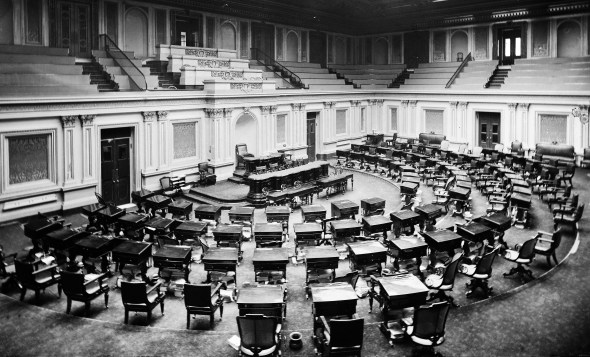
U.S. Senate Chamber, 1873
Good Morning!!
I’ve been trying to avoid thinking about the midterm elections, because I’m really afraid the Republicans are going to take over the Senate; and I just can’t stand to think about the implications of that possibility. But I was really inspired by Dakinikat’s post yesterday on the importance of voting; so this morning I decided to take a look at what has been going on while I’ve been permitting myself to be in denial. After all, it is only about a month until election day.
The first thing I noticed is that there is an interesting war of words going on between two election stats geeks, Nate Silver of 538 blog fame and lesser known Sam Wang of Princeton University. The battle is all about whose predictions about which party will control the U.S. Senate in 2015. Silver’s model says the Republicans will win, and Wang’s favors the Democrats holding control. A few links to peruse:
Salon, October 3: Nate Silver unloads on Princeton rival in blistering critique.
Nate Silver is bringing out the knives for fellow political prognosticator and bitter rival Sam Wang, penning a sharply-worded critique that assails Wang’s model as fundamentally “flawed.”
A primer on the war among wonks: Thirty-two days out from Election Day, most forecasters expect Republicans to net the six seats necessary to win control of the U.S. Senate. Silver’s FiveThirtyEight.com, for instance, currently gives Republicans a 58 percent chance of capturing the majority. And as Silver notes in a post for Taegan Goddard’s Political Wire, virtually every other leading forecaster pegs the GOP’s chances for Senate control at somewhere between 58 and 78 percent. Wang’s model, however, gives Democrats a 58 percent chance of maintaining Senate power (down from 70 percent last month).
Why the discrepancy? Wang, a Princeton neuroscientist, says it boils down to polling vs. “fundamentals.” In forecasting electoral outcomes, FiveThirtyEight weighs both recent poll results and the dynamics of each contest – the partisan lean of the state, demographic makeup, and so on. Wang’s model relies only on polls.

If Silver is so sure he’s right, why is he all worked up about Wang’s predictions? From Talking Points Memo: What’s Eating Nate Silver?
Nate Silver acknowledged that he was doing something a little unusual in a Sept. 17 blog post when he called out fellow forecaster Sam Wang of Princeton University. But it also appears to have been the culmination of a long-simmering — if largely under-the-radar — feud.
“I don’t like to call out other forecasters by name unless I have something positive to say about them — and we think most of the other models out there are pretty great,” Silver wrote. But he then labeled Wang’s model “wrong” and provided a detailed argument (with footnotes) to explain why he thought so.
And it didn’t stop there. Periodically over the last week or so, Silver has continued to take shots on Twitter at Wang’s forecasting model, which has consistently been more optimistic about Democratic odds of keeping the Senate than Silver’s (or any other forecaster).
That led to a lot of buzz in the tiny world of poll nerds and a series of pained responses on Twitter from Wang. In separate interviews with TPM, Silver declined to say what exactly provoked him but said Wang had been “deceptive” in characterizing their disagreement while, for his part, Wang continued to chide Silver, particularly for refusing to engage with him directly.
Read some of the tweets at the TPM link. Wang isn’t sure what Silver is upset about either.
In a phone interview with TPM this week, Wang said that he had emailed Silver since the flare-up but has not heard back from him yet. He referenced more than once his relatively meager 6,500 Twitter followers versus Silver’s 959,000.
“He’s the Kim Kardashian here,” Wang said. “Certainly anything he says is impossible to ignore because of his 950,000 Twitter followers. It’s just right there for anybody to see. I actually tried to ignore it for a while, but it got hard because he just didn’t give up.”
Silver declined to comment to TPM about why he had critiqued Wang publicly, when it is his self-described habit not to, or on why he had not engaged with Wang directly….
Silver described what he sees as the problem with how Wang averages his polls. “The way he does it is he looks back at average snapshots (of polls) since June,” Silver said. “That’s like looking at the average score of the football game, instead of the current score… It’s a very strange assumption.”
“He should provide evidence that it’s a good sound empirical way to do it and he doesn’t,” he continued. “And I think he’s not aware of how much difference that makes.”

Sam Wang
Read much more at the link. The problem for Silver is that Wang’s predictions have actually been at least as accurate or more accurate than Silver’s over the long run. Again from TPM, Wang: My Model Has ‘Matched Or Outperformed’ Silver’s Since 2008.
“He has made a number of factual and conceptual errors,” Wang wrote in reference to Silver. “If an experienced analyst like him could make those misreadings, so could many people.”
Wang then lays out five points on which he believes Silver has misunderstood his model. He also, on more than one occasion, notes that his forecast has been often been “superior to” Silver’s Five Thirty Eight forecast, dating back to 2008 and particularly regarding Senate races.
“Of perhaps greatest interest is the fact that on Election Eve in 2012, PEC called every close Senate race correctly – 10 out of 10,” Wang wrote. “Silver is protesting against a model that has consistently matched or outperformed his own calls since he came onto the scene (see 2008, 2010, and 2012).”
One more link, from The Daily Beast, Why Is Nate Silver So Afraid of Sam Wang?
Why is Nate Silver so scared of Sam Wang? Silver, who is legendary for his election forecasts, is the darling of political empiricists, sitting atop his personal empire of data-driven journalism at ESPN. Wang is a Princeton professor who also predicts elections, but he’s hardly a household name. So why won’t Silver leave him alone?
The two crystal ball gazers have been engaged in a running battle on Twitter, on their own websites, and in the media at large. Silver’s forecasts say Republicans will take control of the Senate in November; Wang’s have the Democrats maintaining their grip. But it’s okay for two guys to have different forecasts, right?
It isn’t for Silver. He’s been attacking Wang relentlessly, calling his methodology “wrong” and Wang himself “deceptive.” Silver could simply wait for the election results to come in and compare his forecasts’ accuracy with Wang’s across all the Senate races. Instead, he’s doing everything possible to discredit Wang before Election Day.
Here’s my guess at the reasons why. First, Silver fears Wang. In 2012, Wang’s model did a better job predicting the presidential election. Wang called not only Obama’s electoral college total of 332 votes, which Silver matched, but he also nailed the popular vote almost perfectly. Wang’s model also picked the winner inevery single Senate race in 2012. It’s not good for business if Silver keeps coming up second-best.
But more importantly, Wang is the only one predicting Democrats will win. This represents a huge risk for Silver. If every forecaster had Republicans taking the Senate, then they’d all be either right or wrong in November; no one would have a better headline the next morning than Silver. There might be differences in the accuracy of predictions for each seat, but there’d be little embarrassment for Silver even if someone else happened to hit closer to the mark in a few races.
Well, that’s all very interesting, and I plan to keep an eye on the feud between these two geeks. Who is right? We’ll know in a few weeks, and I’m rooting for Sam Wang for obvious reasons.

Bill Cassidy and Mary Landrieu
So let’s take a quick look at some of the close Senate races. Dakinikat has been keeping us posted on Mary Landrieu’s race against Bill Cassidy, but here’s an interesting article in The Economist, published over the weekend, The dynast, the doctor and the gator-wrestler.
Mr Cassidy, a Republican, is hoping to snatch a Senate seat from Mary Landrieu, the Democratic incumbent, who was first elected in 1996. That year Bill Clinton took Louisiana, but since then the state has turned strongly Republican. Ms Landrieu has hung on through luck, grit and local loyalty: her father was a notable mayor of New Orleans, and her brother is mayor now. But this year, with a deeply unpopular Democrat in the White House, she is struggling.
Mr Cassidy…has attacked Ms Landrieu for living in Washington, DC (she claims her parents’ home as her residence in Louisiana); for using federal money to pay for campaign trips; and for supporting Obamacare. In one advert, he accuses her of voting to “put illegal immigrants ahead of veterans”, despite having voted for the same benefit cuts. Ads from outside groups accuse the senator of wanting to ban guns and spend taxpayers’ cash on abortions. Roadside billboards show her smiling and waving with Barack Obama.
Ms Landrieu, for her part, stresses her independence and her ability, as head of the Senate energy committee, to bring jobs to Louisiana. On a tour of a refinery near Lake Charles, an oil city near the Texan border, she shouts over the din that, “unlike some parts of the country”, in Louisiana people are not afraid of heavy industry, and nods approvingly on hearing that workers without college degrees can make $80,000 a year working there.
As Dakinikat has also explained,
Her best hope is to woo moderates in places like Lake Charles and get out the black and liberal vote in New Orleans, the biggest city in Louisiana. That is possible. In a new CNN poll Ms Landrieu led Mr Cassidy 43% to 40%, with 9% opting for a third candidate, Rob Maness. If no one wins more than 50% of the vote on November 4th, a run-off between the top two candidates will be held in December. Turnout tends to be low in run-offs, which usually helps Republicans, whose older, whiter supporters are more likely to bother to vote twice. In a two-person race Mr Cassidy would beat Ms Landrieu by 50% to 47%, according to CNN. Other polls agree.

Scott Brown and Jeanne Shaheen
The competitive race closest to me is in New Hampshire, where carpetbagger from Massachusetts Scott Brown is trying to unseat Democratic incumbent Jeanne Shaheen. WBUR in Boston has the latest, N.H. Senate Race: Lots Of Polling, Little Movement. According to WBUR, NH voters have been polled more than those in any other state. But Shaheen has held a small lead consistently over time.
Despite all the attention from pollsters and outside groups, the New Hampshire Senate race seems stable. When we last checked in on the campaign, several polls showed a tighter race than when Brown first threw his hat in the ring back in April. Since then, the Huffington Post Pollster model has held roughly steady, with Jeanne Shaheen maintaining a 4-point lead.
Most recent media polls have shown Shaheen with leads of between 5 and 10 points. The only polls to show Brown actually in the lead have been conducted by Republican partisan pollsters, and those pollsters have a motive (and a tendency) to release only the results most favorable to their side.
Obviously, all the attention is because the NH race could affect overall control of the Senate.
Forecasting control of the Senate is the big game for the exploding industry of aggregators who rate, average and recycle others’ polls. HuffPollster has a model, as does Nate Silver’s FiveThirtyEight and the New York Times’ Upshot, to name just a few. All three of these sites give the Republicans a narrow edge in winning control of the upper chamber. And if New Hampshire goes for Brown, the odds of a GOP Senate takeover rise considerably. In the HuffPollster model, for example, a Brown victory would give the Republicans a 66 percent chance of Senate control, up from 51 percent today.
But it’s important to understand what the aggregators mean by these numbers. A forecast that Republicans have a 59 percent chance of taking control of the Senate (a recent FiveThirtyEight estimate) is not the same as a poll saying Candidate A has 59 percent of the vote. That 59 percent figure is a measure of the probability of that outcome actually happening in November. As Harry Enten of FiveThirtyEight helpfully analogized, right now the Republicans have the same chance of taking the Senate as a football team up by a single point has of winning with six minutes left in the game.
As we’ve seen, the battle among poll aggregators Silver and Wang is, if anything, more cutthroat than the race between Brown and Shaheen.
Yesterday, we learned that the latest Bluegrass Poll shows Allison Grimes leading Mitch McConnell by two points. From WKYT.com:
With just a month before the November 4 election, a new Bluegrass Poll shows Grimes leading McConnell 46 percent to 44 percent in the poll of 632 likely voters. Libertarian David Patterson remains a distant third….
“These results indicate what we’ve known for several months,” said WKYT political editor Bill Bryant. “We have a competitive and closely watched senate race in Kentucky. It will be interesting to see how the candidates motivate their supporters down the homestretch.” [….]
While the results remain within the poll’s margin of error of four percentage points, they are a shift from July and August Bluegrass Polls which showed McConnell with the advantage.
“This close to an election it’s hard to distinguish between what we call noise in the data and what are actual findings,” Youngman told WKYT’s Bill Bryant. “Like you said, this does match up with what Alison Lundergan Grimes has found which is a two point lead for her. But it is in stark contrast with what we have found in every other poll that has been released.”
The statewide shift toward Grimes could be the work of her improved standing among eastern Kentucky voters which had been a stronghold for McConnell. During the past month, Grimes campaigned with former President Bill Clinton in the area and launched a new campaign ad showing her skeet shooting and proclaiming “I’m not Barack Obama.” Obama remains unpopular in Kentucky, with a 29 percent favorable rating and 55 percent unfavorable rating.
“What we are looking at now is a 16 point flip from the last time we polled,” said Youngman. “What we haven’t been able to figure out is what would account for such a dramatic change. Obviously, Alison Lundergan Grimes has made eastern Kentucky a focal point of her campaign and it’s entirely possible that the combination of ads and her effort to portray herself as a pro-coal Democrat are finally starting to work at a time when people are paying attention.”
Is the poll an outlier, as the McConnell camp claims, or does it reflect real movement in the Kentucky Senate race? We’ll have to wait and see.
This post is getting way too long, so I think I’ll continue looking at the close Senate races, and write more about them on Thursday morning. Meanwhile, if there’s an important Senate race that you know about, please let me know in the comments.
I’ll leave you with a few more relevant links from today’s news:
Huffington Post, Unlikely South Dakota Senate Race Attracts Big Money From Campaign Finance Reformers.
FiveThirtyEight, Senate Update: Don’t Forget About Kentucky And Georgia.
Saporta Report, If the U.S. Senate race and the governor’s race end up in run-offs, Georgia will be in nation’s spotlight.
Reuters, ‘Big Dog’ Clinton back in Little Rock for key U.S. Senate race.
Christian Science Monitor, Is Pat Roberts really 10 points behind in Kansas Senate race?
As always, please post your thoughts and comments on any topic in the thread below. Have a terrific Tuesday, everyone!
Monday Reads: Why Voting Matters more than Ever
Posted: October 6, 2014 Filed under: 2014 elections, morning reads, The DNC, the GOP, The Media SUCKS, U.S. Politics, Voter Ignorance, War on Women 61 Comments Good Morning!
I spent some time this weekend canvassing the Esplanade Ridge neighborhood of the 7th Ward. I hadn’t canvassed neighborhoods since I ran for office 20 years ago. I’m about this close to going back to being a clinic escort volunteer also. I was scared to death of the nascent right wing radical christian movement back then, but now I’m just mad as hell and not going to hide from them any more.
I was sitting next to a seventy-three year old black woman in my first organizational meeting for Mary Landrieu’s GOTV effort here in New Orleans a few weeks ago. We were mostly surrounded by very young and optimistic activists. Demographics that have a lot to lose depending on the outcome of these midterm elections were well represented.
We were asked to introduce ourselves by telling others why we were there. My answer was pretty easy. I’m tired of the backlash on rights around the country. I explained that my grandmother was a middle aged mother before she could even vote and that every young woman owed it to their grandmothers to get out there and defend their rights. I said restrictions on voting and rights were pulled down by people that wanted to make life better for us and now we have to turn around and do the same for those that come after us. That woman sitting next to me said that every time a black person does not vote it’s a slap in the face of Dr. King.
Think about that.
It may seem futile. It may drive you nuts to read about all the insanity going on. But, we have to stop this wherever we are right now because the kids coming after us deserve better. Many of us are the children of people who did a lot of fighting and activism to give us the rights that we have today. We owe it to them to pass a better situation forward like they did for us.
My Great Uncle Jack died from the lingering effects of Mustard Gas in the War to End all Wars. We now seem to have perpetual war and even though we have no money to feed our nation’s starving children, there seems to be more than enough money for drones, air strikes, and military advisers.
Quite a few of us spent years trying to get police departments to put violent crimes and rapes against women and children in the major crimes divisions instead of the property crimes area that housed them 40 years ago. We fought for laws that gave credence to the victim’s testimony so that she didn’t require at least two witnesses to prove sexual assault and so that any personal information about her other than what was going on at the time of the crime couldn’t enter into the courtroom.
Yet, look at the problems we still face. Many fought for my girls and me so we could control our bodies and not rely on back alley abortions or rich relatives to get us to where we could get birth control or abortions. We are nearly there again. Look at things now. Why, they’re even trying to tell us that slavery ended voluntarily and that we shouldn’t make a point of teaching our kids about the internment of Japanese Americans during WW2 or atrocities that were committed along The Trail of Tears or at Wounded Knee. Right wing nuts say that history should be glossed over and forgotten in case any kids find out that our past wasn’t all parades and prayers in the classroom to the proper imaginary friend.
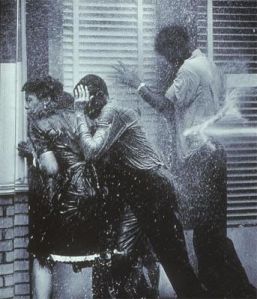 Elections matter now more than ever.
Here, in Louisiana, we are losing so many things to the damage done by oil companies and the attempt to make the river more compliant to commerce. We have a very ambitious lawsuit pending against these interests and the governor and government of Louisiana is doing everything it can to hurt 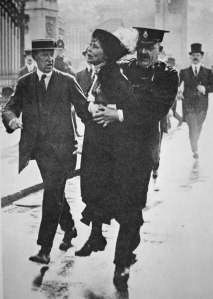 the people and environment of Louisiana. Whoever voted these jerks into office is killing themselves, their livelihoods, and the living things down here up to and including people. The companies that have damaged our coasts and wetlands should pay for their destruction and its consequences.
Beneath the surface, the oil and gas industry has carved more than 50,000 wells since the 1920s, creating pockets of air in the marsh that accelerate the land’s subsidence. The industry has also incised 10,000 linear miles of pipelines, which connect the wells to processing facilities; and canals, which allow ships to enter the marsh from the sea. Over time, as seawater eats away at the roots of the adjacent marsh, the canals expand. By its own estimate, the oil and gas industry concedes that it has caused 36 percent of all wetlands loss in southeastern Louisiana. (The Interior Department has placed the industry’s liability as low as 15 percent and as high as 59 percent.) A better analogy than disappearing football fields has been proposed by the historian John M. Barry, who has lived in the French Quarter on and off since 1972. Barry likens the marsh to a block of ice. The reduction of sediment in the Mississippi, the construction of levees and the oil and gas wells “created a situation akin to taking the block of ice out of the freezer, so it begins to melt.” Dredging canals and pipelines “is akin to stabbing that block of ice with an ice pick.”
The oil and gas industry has extracted about $470 billion in natural resources from the state in the last two decades, with the tacit blessing of the federal and state governments and without significant opposition from environmental groups. Oil and gas is, after all, Louisiana’s leading industry, responsible for around a billion dollars in annual tax revenue. Last year, industry executives had reason to be surprised, then, when they were asked to pay damages. The request came in the form of the most ambitious, wide-ranging environmental lawsuit in the history of the United States. And it was served by the most unlikely of antagonists, a former college-football coach, competitive weight lifter and author of dense, intellectually robust 500-page books of American history: John M. Barry.
When Hurricane Katrina made landfall in Louisiana on Aug. 29, 2005, John Barry was a year and a half into writing his sixth book, “Roger Williams and the Creation of the American Soul,” about the puritan theologian’s efforts to define the limits of political power. Barry is not a fast writer; his books take him, on average, eight years to complete. “I tend,” Barry says, “to obsess.” Earlier in his career, he spent nearly a decade as a political journalist, writing about Congress, an experience he drew upon for his first book, “The Ambition and the Power.” But after that book’s publication, he quit journalism and cocooned himself in research, reading and writing. He took on vast, complex episodes in American history that in his rendering become Jacobean dramas about tectonic struggles for power. “The Ambition and the Power” would make an appropriate subtitle for any of his books — particularly “Rising Tide,” his history of the 1927 Mississippi River flood, the most destructive in American history.
Barry’s research for “Rising Tide” had made him an amateur expert on flood prevention, and in the days after Hurricane Katrina, he received requests from editors and television-news producers for interviews. He accepted nearly every one of them and within days of the storm had become one of the city’s most visible ambassadors in the national press. “I felt I had an obligation,” Barry told me, “to convince people that the city was worth rebuilding.”
Like many others, Barry was frustrated that he couldn’t figure out why New Orleans had flooded so catastrophically. When he studied the numbers — the wind shear on Lake Pontchartrain, the storm surge, the inches of rainfall — they didn’t add up. After making calls to some of his old sources, he concluded that the levees hadn’t been overtopped, as officials from the Army Corps of Engineers assumed, but had collapsed because of design flaws. (He was among the first to draw attention to this fact in an Op-Ed article published in The New York Times that October.) Barry concluded that just as in 1927, people died because of cynical decisions made by shortsighted politicians drawing on bad science. For Barry, Hurricane Katrina was not the story of a natural disaster; it was a story of politics, science and power.
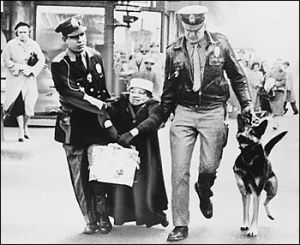 The interest of we the people is not served by protecting the very few rich that control so much wealth and income in our country. They are not job creators. They are wealth extractors. Just yesterday, JJ reminded us how important the Senate Race is in her state. The Republican Candidate may talk about Job Creation on the campaign trail but to the folks that matter he brags about Job Outsourcing.
Yes, it’s late in the cycle, and of course all sorts of “fundamentals” are baked into the cake, and without question, many voters probably won’t hear about this or understand what it’s about. But still, having said all that, this report from Politico’s Bresnahan and Raju is not good news for GA GOP Senate candidate David Purdue, who’s already been hammered in both the primaries and the general election for being a Mitt-Romney-like specialist in corporate downsizing:
David Perdue has run aggressively as a “job creator,” touting his record as a top executive with Fortune 500 companies as the chief selling point in his Georgia Senate campaign.
Yet during a controversial chapter in his record — a nine-month stint in 2002-03 as CEO of failed North Carolina textile manufacturer Pillowtex Corp. — Perdue acknowledged that he was hired, at least in part, to outsource manufacturing jobs from the company. Perdue specialized throughout his career in finding low-cost manufacturing facilities and labor, usually in Asia.
During a July 2005 deposition, a transcript of which was provided to POLITICO, Perdue spoke at length about his role in Pillowtex’s collapse, which led to the loss of more than 7,600 jobs. Perdue was asked about his “experience with outsourcing,” and his response was blunt.
Yeah, I spent most of my career doing that,” Perdue said, according to the 186-page transcript of his sworn testimony.
The Georgia Republican then listed his career experience, much of which involved outsourcing.A good part of the rest of the story involves Perdue and his campaign spot bobbing and weaving and explaining that “sourcing” doesn’t always mean “outsourcing” and that “outsourcing” isn’t always overseas, and this is just cherry-picking, and let’s blame the government for businesses shedding workers, bark bark woof woof. But the reality is that when you are defending your “outsourcing” record, you have lost at least half the argument, especially in a state currently leading the nation in unemployment.
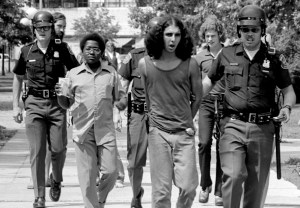
So, we’re not supposed to complain or dissent. We’re supposed to just shut up and appreciate the appalling violations of our rights and destruction of our democracy. Yesterday, Reince Preibus actually said that the GOP Shuts Down Abortion Clinics because women ‘deserve compassion, respect’ and evidently forced birth no matter what the pregnant woman believes about the nature of life or the circumstances of the pregnancy.
NBC host Chuck Todd on Sunday pressed Republican National Committee Chairman Reince Priebus about why his party opposed most regulations on business, except when it came to abortion clinics.
“One of the things is you don’t like a lot of regulations on business,” Todd noted during an interview on Meet the Press. “Except if the business is an abortion clinic.”
The NBC host pointed out that 80 percent of the clinics in Texas could be forced to close because of a strict Republican-backed anti-abortion law.
“Too much regulation, is that fair?” Todd wondered. “Why regulate on the abortion issue now [instead of waiting until] you win a fight in the Supreme Court and ban abortion altogether? Why restrict a business now in Texas?”
“The fact of the matter is we believe that any woman that’s faced with unplanned pregnancy deserves compassion, respect, counseling,” Priebus replied.
“But 80 percent of those clinics are gone,” Todd pressed. “So they have to drive for 2 or 300 miles. Is that compassion?”
Priebus, however, shot back that Republicans were most concerned with “whether you ought to use taxpayer money to fund abortion.”
“I mean, that’s the one issue that separates this conversation that we’re having,” he insisted, adding that the 2014 election would be decided on other issues.
“Obamacare, jobs, the economy, Keystone pipeline,” Priebus opined. “So you can try to steer — talk about abortion again, but the fact is of the matter is, if you’re in Skagway, Alaska, you’re thinking about the fact of why my life isn’t better off today than it was when this senator was elected six years ago.”
But the women in Skagway may also be concerned with the scarcity of reproductive services in their area. The nearest Planned Parenthood clinic is about 100 miles away in Juneau, but the trip takes over six hours because the route includes a five-hour ferry ride.
Who do you think President Obama could appoint at this very day, given the boundaries that we have? If I resign any time this year, he could not successfully appoint anyone I would like to see in the court. [The Senate Republicans] took off the filibuster for lower federal court appointments, but it remains for this court. So anybody who thinks that if I step down, Obama could appoint someone like me, they’re misguided.
She knows how good she is and she is not afraid to judge others. (When Weisberg asks why the Court, while moving forward on gay rights, has swung in such a conservative direction on women’s rights, Ginsburg says, “To be frank, it’s one person who made the difference: Justice [Anthony] Kennedy.”) Given her profession, that’s as much as saying that she’s not afraid. And she is quite right: if she had resigned when the party-line worriers would have liked her to, one wouldn’t have her magnificent dissent in the Hobby Lobby case, or her matchless voice. That 1973 case was about whether the husbands of soldiers had to prove that they were economically dependent before getting benefits, while wives got them automatically. The Court’s jurisprudence on gender is something that Ginsburg has been building since then. And not only on gender: she, not John Roberts, deserves the credit for saving the Affordable Care Act. The Court is, no doubt, an extremely partisan institution. But that doesn’t mean that its members are just pegs to be traded. The Court is also an institution where seniority matters. There is no Ginsburg whom Ginsburg is holding back.
Do Democrats want to make sure that a President of their party is in office when Ginsburg leaves the Court? Then win the next election; battle it out, rather than fretting and sighing about how an older woman doesn’t know when it’s time to go. (Ginsburg is urged to be selfless a lot more loudly than is Stephen Breyer, who, at seventy-six, is only five years younger, and less of a presence.) If all this talk reflects sublimated doubt about the candidate that the Democrats look likely to field in 2016, then be open about that, and deal with it. Or make sure that the same constraints that—as Ginsburg quite correctly points out— the Republicans, even as a minority party in the Senate, place on Obama, are put on any Republican in the White House. As Dahlia Lithwick put it in a thorough dismantling of the Ginsburg-should-go nonsense, “It’s perverse in the extreme to seek to bench Ginsburg the fighter, simply because Senate Democrats are unwilling or unable to fight for the next Ginsburg.” (Lithwick adds, “I have seen not a lick of evidence that Ginsburg is failing…. If anything, Ginsburg has been stronger in recent years than ever.”)
But, the counter-argument goes, Obama could appoint a fifty-year-old Democrat—maybe not, to borrow Ginsburg’s phrase, “anyone I would like to see in the court,” but also not a Republican, and that would be enough. (That thinking helps explain why the President tried to name Michael Boggs to the federal bench, despite his anti-choice, anti-same-sex-marriage votes in the Georgia legislature; earlier this week, Democrats effectively killed his nomination.) Justices can be unpredictable: John Paul Stevens, admired by liberals, was appointed by Gerald Ford (and was on the Court until he was ninety). But this is clearly not a good moment to get anyone with ambitious positions—anyone interesting—through the Senate. Why seek it out? An exchange that requires the certain sacrifice of Ginsburg for the uncertainty of whomever Obama could get through is not even sensible in a coldly pragmatic way.There is another reason why Ginsburg should be on the Court for this particular stretch of its history. In the Elle interview, Ginsburg speaks about the period after Sandra Day O’Connor, the only other woman on the Court at the time, retired (to take care of her dying husband). “When Sandra left, I was all alone,” she says.
I’m rather small, so when I go with all these men in this tiny room. Now Kagan is on my left, and Sotomayor is on my right. So we look like we’re really part of the court and we’re here to stay. Also, both of them are very active in oral arguments. They’re not shrinking violets. It’s very good for the schoolchildren who parade in and out of the court to see.
 We have no guarantees these days other than enough votes gets these folks out of office. We also know that there are entire channels that are supposed to be dedicated to news but are dedicated to propaganda and to getting angry, ignorant people out to the polls. They do so by using fear and lies.
Miles O’Brien, the science correspondent for PBS Newshour, lamented on Sunday that he was embarrassed at some of the coverage of Ebola on Fox News that had a “racial component,” and seemed intended to scare viewers.
On the Sunday edition of CNN’s Reliable Sources, host Brian Stelter looked back at the last week’s coverage of Ebola on Fox News. In one case, Fox News host Elisabeth Hasselbeck seemed almost disappointed when an expert downplayed the threat of the disease in the United States.
“We’ve heard the words ‘Ebola in America,’ a lot the past few days,” Stelter noted. “It’s technically true. There is a case of Ebola here in America. But to say Ebola is here, doesn’t that sort of inflame people’s fears?”
“It borders on irresponsibility when people get on television and start talking that way when they should know better,” O’Brien explained. “They should do their homework and they should report in a responsible manner.”“Unfortunately, it’s a very competitive business, the business we’re in, and there is a perception that by hyping up this threat, you draw people’s attention,” he added. “That’s a shame to even say that and I get embarrassed for our brethren in journalism.”
Stelter also pointed to Fox News host Andrea Tantaros, who had warned viewers that West Africans might come to the U.S. infected with Ebola, and then go to a “witch doctor” instead of the hospital.
“We could digress into what motivated that and perhaps the racial component of all this, the arrogance, the first world versus third world statements and implications of just that,” O’Brien remarked. “It’s offensive on several levels and it reflects, frankly, a level of ignorance which we should not allow in our media and in our discourse.”

The former general counsel and executive director of the South Carolina Republican Party is coming under fire for the novel solutions to the Ebola epidemic he is posting on Twitter.
The vehemently pro-life Todd Kincannon began by arguing that anyone who contracts Ebola should be summarily executed:
Today is the last day to register to vote for many states including Louisiana. Please make sure you are registered and that you vote. Encourage every one you know to vote. It’s important.
People DIED so you could vote. Don’t ever forget that.
What’s on your reading and blogging list today?

 peej
peej Carissa
 bostonboomer
 dakinikat
 ecocatwoman
 mablue2
 Mama Lopez
 peggysue22
 quixote
 skydancingguestblogger
 Mona (aka Wonk the Vote)



 Sky Dancing
Recent Comments