
Christmas Eve Reads
Posted: December 24, 2013 Filed under: just because, morning reads | Tags: anxiety disorders, Christmas traditions, Depression, Pagan origins of Christmas, Sage Stossel, Scott Stossel 58 Comments
Christmas tree on Boston Common, 2013
Good Morning!!
I have mixed feelings about Christmas. I’m not religious, so I can’t see the day as anything more than a secular holiday tradition when families get together. I do have happy childhood memories of the holiday; but like many other Americans, I find the excessive commercialization of the holiday season from Thanksgiving to New Year’s Day terribly annoying and depressing. I wouldn’t even mind if we could just celebrate the each holiday for a day or two, but instead we’re inundated with “the holidays” for more than a month.
At one time I liked listening to Christmas carols, and watch Christmas movies, but these days I try to avoid them–they’ve both been done to death by the media and corporations intent on grabbing as much of our money as they possibly can at the end of each year. I’ll be very glad when this week is over and we can get back to “normal.”
So . . . I’ve dug up some articles on the pagan origins of Christmas–I know you guys are aware of the history of the holiday, but it’s still fun to look at how our current traditions developed.
From TheStar.com (Canada) — Christmas traditions unwrapped: What do candy canes have to do with Christmas? Why do we kiss under the mistletoe? We get to the bottom of these yuletide customs. This article gathers together brief explanations for many of the common Christmas traditions and symbols. For example:
Why is the candy cane a symbol of Christmas? Legend has it that in the 1670s, the choirmaster of a cathedral in Cologne, Germany distributed candies shaped like a shepherd’s staff to children during the Christmas season. The idea was that the kids would make less noise if they were eating the large sweets. Their shape also enabled the candies to be hung from Christmas trees. SOURCE: The World Encyclopedia of Christmas
Why do we sing carols at Christmas? In the 13th century, Francis of Assisi, (who became the saint of animals and the environment after his death), wanted ordinary people to joyfully celebrate the birth of Jesus Christ, so he added religious lyrics to popular tunes of the time. These energetic tunes were in sharp contrast to the solemn hymns sung by the priests at Christmas services. The word “carol” itself reflects uninhibited expression, deriving from the French word “caroler,” which means “dancing around in a circle.” SOURCE: How Stuff Works
Why do we kiss under the mistletoe? Mistletoe is a symbol of virility, but the tradition of kissing underneath it is believed to have its roots in a Scandinavian myth. Jealous of Baldur the Beautiful, the god of light and spring, Loki, god of mischief, used a dart poisoned with mistletoe to kill the unsuspecting Baldur. Distraught by the death of her son, Frigga, the goddess of love, decreed that mistletoe would never again be used as weapon and that she would place a kiss on anyone who passed under it. But it wasn’t until the 19th century that the British started hanging mistletoe at Christmas, hoping to bring Frigga’s good luck to anyone who kissed underneath it. SOURCE: Mental Floss
Next, a very cynical and snarky article from 2007 from Cracked.com — Pagan Orgies to Human Sacrifice: The Bizarre Origins of Christmas. Just a sample:
The Bible doesn’t give a lot of clues as to what time of the year the birth of Jesus happened (i.e., “… they met many travelers along the way, for it was just three days before the final game of the NFL Season…”) So, why December 25th? No one knows for sure.
One likely explanation is that early church leaders needed a holiday to distract Christians from the many pagan revelries occurring in late December. One of the revelries was The Saturnalia, a week-long festival celebrating the Romans’ favorite agricultural god, Saturn. From December 17 until December 23, tomfoolery and pagan hijinks ensued, and by hijinks we mean gluttonous feasting, drunkenness, gambling and public nudity….
Our favorite morbidly obese, undiagnosed diabetic trespasser is actually a bastardization of the Dutch Sinterklaas, which was actually a bastardization of Saint Nikolas, the holier-than-thou Turkish bishop for whom the icon was named.
The actual saint was not, in fact, famous for making dispirited public appearances at shopping malls. Rather, he was known for throwing purses of gold into a man’s home in the cover of night so that the man wouldn’t have to sell his daughters into prostitution.
That should help you decide if you want to read the whole thing.
Finally, a short piece at Guardian Media on some individuals who have “opted out of Christmas.”
Television producer and writer Paolo Kernahan said life in the media forever ruined Christmas for him. He said: “Working as a journalist, I often had to work many Christmas days. It was very difficult to see other people and all of their merry-making while I was stuck in an office or, worse, forced to do stories about how people celebrate the season.” Kernahan, who is Catholic but “not particularly devout,” has nothing to do with it any more. “Now I cannot bear to hear any Christmas music and typically change the radio stations playing any sort of seasonal music. I don’t put up Christmas trees nor any other decorations. I certainly don’t do any shopping. A life in the media unfortunately ruined this time of year for me.” Before feeling this way, Kernahan said Christmas was a time to lime with loved ones.“Christmas for me was principally about spending time with friends and family. There is something very unique about the way in which Trinidadians celebrate Christmas. It is difficult to describe but the sort of vibe you get when you are mixing with friends and family is very special.”
I can identify with that. The weird thing is that, even though I find Christmas irritating, I’m also capable of getting sentimental and weepy this time of year because of the many memories I’ve stored in my subconscious over the years.
I’ve probably mentioned in the past that anxiety and depression run in my family. I was very anxious as a child and through much of my adulthood. Now, after years of therapy, I don’t experience a lot of free-floating anxiety, but I can still get anxious over problems and when anticipating social situation. I recall being depressed and having thoughs of suicide as early as 12-13. I was really depressed as a teenager and battled depression for many years. Frankly, Prozac saved my life.
That’s why I was fascinated by this article in the latest Atlantic by Scott Stossel, Surviving Anxiety: I’ve tried therapy, drugs, and booze. Here’s how I came to terms with the nation’s most common mental illness. It’s a long read, but here’s just a short excerpt:
I wish I could say that my anxiety is a recent development, or that it is limited to public speaking. It’s not. My wedding was accompanied by sweating so torrential that it soaked through my clothes and by shakes so severe that I had to lean on my bride at the altar, so as not to collapse. At the birth of our first child, the nurses had to briefly stop ministering to my wife, who was in the throes of labor, to attend to me as I turned pale and keeled over. I’ve abandoned dates; walked out of exams; and had breakdowns during job interviews, plane flights, train trips, and car rides, and simply walking down the street. On ordinary days, doing ordinary things—reading a book, lying in bed, talking on the phone, sitting in a meeting, playing tennis—I have thousands of times been stricken by a pervasive sense of existential dread and been beset by nausea, vertigo, shaking, and a panoply of other physical symptoms. In these instances, I have sometimes been convinced that death, or something somehow worse, was imminent.
Even when not actively afflicted by such acute episodes, I am buffeted by worry: about my health and my family members’ health; about finances and other things can find on the internet; about work; about the rattle in my car and the dripping in my basement; about the encroachment of old age and the inevitability of death; about everything and nothing. Sometimes this worry gets transmuted into low-grade physical discomfort—stomachaches, headaches, dizziness, pains in my arms and legs—or a general malaise, as though I have mononucleosis or the flu. At various times, I have developed anxiety-induced difficulties breathing, swallowing, even walking; these difficulties then become obsessions, consuming all of my thinking.
I also suffer from a number of specific fears and phobias, in addition to my public-speaking phobia. To name a few: enclosed spaces (claustrophobia); heights (acrophobia); fainting (asthenophobia); being trapped far from home (a species of agoraphobia); germs (bacillophobia); cheese (turophobia); flying (aerophobia); vomiting (emetophobia); and, naturally, vomiting while flying (aeronausiphobia).
Anxiety has afflicted me all my life. When I was a child and my mother was attending law school at night, I spent evenings at home with a babysitter, abjectly terrified that my parents had died in a car crash or had abandoned me (the clinical term for this is separation anxiety); by age 7 I had worn grooves in the carpet of my bedroom with my relentless pacing, trying to will my parents to come home. During first grade, I spent nearly every afternoon for months in the school nurse’s office, sick with psychosomatic headaches, begging to go home; by third grade, stomachaches had replaced the headaches, but my daily trudge to the infirmary remained the same. During high school, I would purposely lose tennis and squash matches to escape the agony of anxiety that competitive situations would provoke in me. On the one—the only—date I had in high school, when the young lady leaned in for a kiss during a romantic moment (we were outside, gazing at constellations through her telescope), I was overcome by anxiety and had to pull away for fear that I would vomit. My embarrassment was such that I stopped returning her phone calls.
Now that’s a serious anxiety disorder! The Atlantic article is an excerpt from Stossel’s new book My Age of Anxiety: Fear, Hope, Dread, and the Search for Peace of Mind. Coincidentally, Scott’s sister Sage, a cartoonist for The Atlantic, also has a new book, a graphic novel called Starling. Here’s the description of the book from Amazon.
For Amy Sturgess, life in the big city comes with trouble. Her marketing career is being derailed by a conniving coworker stealing her accounts. Her family crises range from her down-and-out brother running afoul of the law to her mother’s growing affections for the house cats. And Amy’s love life just flatlined thanks to an unexpected reunion with the one that got away–who’s now engaged.
When Xanax and therapy fail to relieve her stress, Amy does what any young woman in her position would do: She uses her superstrength, speed, flight, and ability to generate 750 volts from her hands to fight crime as the mysterious masked vigilante Starling. But while Starling is hailed as a superhero, will Amy remain a super-zero?
Apparently Sage also has psychological issues, according to The New York Times. They have a long family history of psychological disorders:
Scott’s book, published by Knopf, is a mix of memoir, medical history and modern manual of anxiety disorders. It traces six generations of family history brimming with nervous stomachs, depression, alcoholism and possible Oedipal complexes. His great-grandfather Chester Hanford, once the dean at Harvard College, was admitted to a mental institution in the late 1940s after experiencing acute anxiety. Twenty years later, his wife died from an overdose of scotch and sleeping pills.
Scott Stossel’s mother suffered from panic attacks and is afraid of heights, public speaking and vomiting. (His wife, Susanna, is an elementary-school teacher who is not prone to anxiety.)
Sage Stossel, who is 42 and married, said that, as a child, she was shy and socially anxious. She recalls becoming “utterly fixated” on a classmate’s criticism of her for being quiet.
And as if that weren’t bad enough, Scott and Sage’s uncle (their father’s brother) is the infamous right wing nut and Fox contributor John Stossel.
I’m out of space, but I’ll post some headlines in the comment thread. I hope you’ll do the same if you happen to stop by today. Have a wonderful holiday, no matter how you choose to celebrate (or not celebrate).
Happy Festivus! We shall now Have the Airing of the Grievances!
Posted: December 23, 2013 Filed under: open thread 23 Comments
So, I gotta lot of grievances … GUN NUTSSSSSSSssss!! This stuff should be UNACCEPTABLE!!! I’m tired of reading that no charges are filed and it’s an “accidental shooting”. You fucking leave an unlocked and loaded gun around the house with children you freaking deserve to be locked up for life!
Arizona: 3 year-old boy fatally shoots himself in the face with parents’ gun
10-Year-Old Girl Dies After Accidental Shooting
Right Wing Religious Extremists! Women are not your property or the state’s property! Hating on GLBT is not a religious statement! It’s Freaking Bigotry!
A lot of poor people work and still don’t have enough to eat or have access to healthcare. Look at the Walmart Heirs! They are the lazy bums!! Poor people and unemployed people are not the ones that scam our country out of money!
Okay, that should get things going … air your grievance!!!
Monday Reads: The Beat Goes On
Posted: December 23, 2013 Filed under: morning reads 65 Comments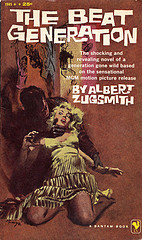 Good Morning!
I’m going to continue with my own whims and fancies since this time of year always creates one big cultural, political, and historical vacuum. I use my winter break to renew myself and to tickle my fancy. The first man I really fell head over heels in love with introduced me to Jack Kerouac during my freshman year of university. He broke my heart but Kerouac became a muse. Then, came my husband who got me deep into Coltrane, Miles Davis, and Dizzy. I left him but that bebop jazz stayed right in my heart and under my fingers. The closer we got to those awful 80s, the more some of us craved that old time bohemian rebellion that started with the beat generation and lead to the hippies. I feel like that now. Can we please get a new groovy, snap worthy, punk generation to rebel against the republican status quo so I don’t have to wax nostalgic?
I’m going to start off with this article from The Guardian: “Greenwich Village: what remains of New York’s beat generation haunts?” This culture made me want to drop everything and move to New York like my cousin. Oh, Mary Bracken I am so sorry I didn’t follow you there when you offered to get me situated after high school graduation I could’ve lived the remnants of this as well as the birth of CBGB.
A few landmarks of those bygone bohemian days – most recently portrayed in the Coen brothers‘ film Inside Llewyn Davis, out on 24 January – still exist. The inspiration for the movie’s fictional anti-hero, Davis, was Brooklyn-born Dave Van Ronk, a real- life blues and folk singer with no small talent, who worked with performers such as Pete Seeger and Bob Dylan, but remained rooted in the village until he died in 2002, declining to leave it for any length of time and refusing to fly for many years. Van Ronk’s posthumously published memoir, the Mayor of MacDougal Street, takes its name from the street that was home to the Gaslight Cafe, and other early 60s folk clubs.
The Village stretches from the Hudson River Park east as far as Broadway, and from West Houston Street in the south up to West 14th Street.
Lots of folks want to save landmarks ethereal. Every one needs a place to go to get away from the pressures and the ugliness of modern  corporate instigated culture. Why shouldn’t we save the places where elves and gnomes are said to live? Why shouldn’t we protect the “hidden folk” and their environs?
Elf advocates have joined forces with environmentalists to urge the Icelandic Road and Coastal Commission and local authorities to abandon a highway project building a direct route from the Alftanes peninsula, where the president has a home, to the Reykjavik suburb of Gardabaer. They fear disturbing elf habitat and claim the area is particularly important because it contains an elf church.
The project has been halted until the Supreme Court of Iceland rules on a case brought by a group known as Friends of Lava, who cite both the environmental and the cultural impact — including the impact on elves — of the road project. The group has regularly brought hundreds of people out to block the bulldozers.
And it’s not the first time issues about “Huldufolk,” Icelandic for “hidden folk,” have affected planning decisions.
They occur so often that the road and coastal administration has come up with a stock media response for elf inquiries, which states that “issues have been settled by delaying the construction project at a certain point while the elves living there have supposedly moved on.”
Scandinavian folklore is full of elves, trolls and other mythological characters. Most people in Norway, Denmark and Sweden haven’t taken them seriously since the 19th century, but elves are no joke to many in Iceland, population 320,000.
A survey conducted by the University of Iceland in 2007 found that 62 percent of the 1,000 respondents thought it was at least possible that elves exist.
Today’s world brings on so many things that make you want to shake your head and slap folks right in the face. Why shouldn’t we indulge in a little fancy when these kinds of things pop up in today’s headlines? Women are not be incubators. But yet, the state of Texas, says yes they are!
On Nov. 26, Erick Munoz woke to the sound of his year-old son crying and found his 14-weeks-pregnant wife, Marlise, lying on the kitchen floor, blue in the face and without a pulse. A firefighter and paramedic, Munoz called 911 and performed CPR, to no avail. When they arrived at the John Peter Smith Hospital (JPS) in Fort Worth, Texas, he thought he would have to make an agonizing decision: refuse life support even though that meant losing both his wife and his future child. Munoz said in a WFAA News report that four years ago, when Marlise’s brother was killed in an accident, she told him that she would never want to be on life support — something they had discussed many times since.
A month later, against his requests, she is still on a ventilator. Not only does Munoz want to honor his wife’s wishes, but also he believes that the fetus she is carrying has been seriously harmed. “I don’t know how long she was there prior to me finding her,” he said. Munoz, who could not be reached for comment, wrote on WFAA’s Facebook page, “All I know is that she was without oxygen long enough for her to have massive brain swelling. I unfortunately know what that type of damage could do to a child during crucial developmental time.” Doctors say it’s likely that Munoz’s wife suffered a pulmonary embolism, and no longer has brain activity.
When Munoz first arrived at the hospital, he discovered that, according to Texas law, life-sustaining procedures may not be withheld or withdrawn from a pregnant woman, — even if she has an advance health care directive (also called a living will) stipulating that she does not want to be kept alive on a machine. There are conflicting reports about whether Marlise Munoz had an official DNR (Do Not Resuscitate order), and the family could not be reached for comment. But according to them Center for Women Policy Studies, as of 2012, Texas and 11 other states have automatically invalidated pregnant women’s advance directives to refrain from using extraordinary measures to keep them alive, and others have slightly less restrictive but similar laws. A spokesperson from the hospital told Yahoo Shine, “Our responsibility is to be a good corporate citizen while also providing quality care for our patients. At all times, JPS will follow the law as it applies to healthcare in the state of Texas.”
Marlise Munoz’s mother and father say they support their son-in-law’s request to take their daughter off life support. “She absolutely DID NOT EVER want to be connected to Life Support,” her mother, Lynne Machado, wrote on WFAA’s Facebook page. “This issue is not about Pro Choice/Pro Life. Our intent is purely one of education about how this [statute] null and voids any woman’s DNR [if she is] pregnant. We know our daughter well enough, after numerous discussions about DNR, that she would NEVER EVER consent to being hooked up to Life Support.” While the family’s tragic situation hits a nerve in a state where abortion debates rage, Munoz also said he doesn’t want to participate in arguments
over right-to-life verses pro-choice issues, but instead wishes to honor his wife and inform the public about a little-known law. Marlise Munoz, at approximately 18 weeks pregnant, remains unresponsive and her husband describes her as “simply a shell.” Doctors check the fetal heartbeat daily, but Munoz doesn’t think the testing is sufficient to measure the fetus’s viability. “Its hard to reach the point where you would wish your wife’s body would stop,” he said.
Yes, there are many things that horrify about the way the right wing and religionists treats women.
We’ve compiled a few of the worst things said about women by TEApublicans in 2013 in the list below:
Rape exceptions for abortions aren’t necessary because pregnancies resulting from rape are rare.
Arizona GOP Rep. Trent Franks was the “brains” behind what was probably the most high-profile abortion restriction this year: a bill to ban all abortions in the U.S. at 20 weeks after conception. “The incidence of pregnancy resulting from rape are very low,” he claimed.
The ‘masturbating fetus.’
Yes, this really happened. While defending Franks’ 20-week abortion ban, Texas GOP-er Michael Burgess used a rather bizarre argument to claim that fetuses could feel pain at 20 weeks after conception, despite medical evidence to the contrary. “Watch a sonogram of a 15-week baby, and they have movements that are purposeful,” he said. “They stroke their face. If they’re a male baby, they may have their hand between their legs. They feel pleasure. Why is it so hard to think that they could feel pain?”
Having an abortion after rape is tampering with criminal evidence.
New Mexico GOP Rep. Cathrynn Brown caused a stir when she introduced a bill that defined aborting a pregnancy that resulted from rape as criminal evidence tampering — that should result in a 3-year prison sentence. The bill said that “procuring or facilitating an abortion, or compelling or coercing another to obtain an abortion, of a fetus that is the result of criminal sexual penetration or incest with the intent to destroy evidence of the crime.”
Rape of an underage victim is understandable if a woman seems more mature than her age.
Montana Judge G. Todd Baugh received a huge backlash when he sentenced 54 year-old teacher Stacey Rambold to only 30 days in prison — after he was convicted of raping his 14-year-old student, Cherise Moralez. Justifying his sentence, Baugh said that the victim was “as much in control of the situation” because she was “older than her chronological age.” Moralez committed suicide during Rambold’s trial.
Transvaginal ultrasounds before abortions are a good idea.
Anti-abortion politicians in the Indiana Legislature pushed a bill that would force women who wanted to use an abortion pill to undergo two medically unnecessary ultrasounds — one before taking the pill, and one after. Responding to the backlash, Indiana Right to Life’s Sue Swayze said, “I got pregnant vaginally. Something else could come in my vagina for a medical test that wouldn’t be that intrusive to me. So I find that argument a little ridiculous.”
One disgusting term: Rape insurance.
We saw a lot of bills that banned Obamacare from covering abortions this year. Nearly half of all statehouses pushed through some type of measure forcing women to purchase abortion coverage as a separate abortion-only policy, called a “rider.” Some of these laws did not include exceptions allowing insurance to cover abortions in the cases of rape or incest. Michigan’s Right to Life’s Barbara Listing didn’t see any problem with this: “It’s simply, like, nobody plans to have an accident in a car accident, nobody plans to have their homes flooded. You have to buy extra insurance for those.”
It’s easier to believe in elves than to believe most of the things spewed by republicans and their right wing base. Still the media villagers take them seriously and report their lies as just another opinion.

Of all the falsehoods told about PresidentBarack Obama, the biggest whopper is the one about his reckless spending spree.
As would-be president Mitt Romney tells it: “I will lead us out of this debt and spending inferno.”
Almost everyone believes that Obama has presided over a massive increase in federal spending, an “inferno” of spending that threatens our jobs, our businesses and our children’s future. Even Democrats seem to think it’s true.
Government spending under Obama, including his signature stimulus bill, is rising at a 1.4% annualized pace — slower than at any time in nearly 60 years.
But it didn’t happen. Although there was a big stimulus bill under Obama, federal spending is rising at the slowest pace since Dwight Eisenhower brought the Korean War to an end in the 1950s.
Even hapless Herbert Hoover managed to increase spending more than Obama has.
Here are the facts, according to the official government statistics:
• In the 2009 fiscal year — the last of George W. Bush’s presidency — federal spending rose by 17.9% from $2.98 trillion to $3.52 trillion. Check the official numbers at the Office of Management and Budget.
• In fiscal 2010 — the first budget under Obama — spending fell 1.8% to $3.46 trillion.
• In fiscal 2011, spending rose 4.3% to $3.60 trillion.
• In fiscal 2012, spending is set to rise 0.7% to $3.63 trillion, according to the Congressional Budget Office’s estimate of the budget that was agreed to last August.
• Finally in fiscal 2013 — the final budget of Obama’s term — spending is scheduled to fall 1.3% to $3.58 trillion.


So, my winter break starts and I want to celebrate rebellion, creativity, and wanton. I can’t wait for 12th night because that signals the end of Crass Consumerism and the pleasure of hedonism and the carnival season. I just want to give up all this sit com fantasy and grab on to something real for a change.
What’s on your reading and blogging list today?
Saturday Reads: Winter Solstice Edition
Posted: December 21, 2013 Filed under: Barack Obama, morning reads, NSA, National Security Agency, science, U.S. Politics | Tags: A&E, Amborella trichopoda, Beaghmore Stone Circles, Duck Dynasty, Great Serpent Mound, iran, MIthra, Newgrange Tomb, Phil Robertson, Shab-e Yalda, Stonehenge, Winter Solstice 61 Comments
Beaghmore Stone Circles, Sperrin Mountains, County Tyrone, North Ireland
Good Morning!!
Today is the Winter Soltice, the shortest day of the year. In the eastern U.S. the solstice will take place around noon, according to blogger Scott Dance at the Baltimore Sun.
The Earth’s axis tilts at a 23.5-degree angle, which is what brings the seasons, and at the point of the winter solstice, the North Pole is tilted furthest from the sun. Starting Saturday afternoon, the tilt will begin shifting upright until the Vernal Equinox.
The solstice marks the start of winter in the Northern Hemisphere, of course. Although the hemisphere reaches its furthest from the sun Saturday, the coldest weather lags a month or two, with January and February, on average, colder than December here.
At the solstice, the Arctic circle is in 24-hour darkness, while it Antarctica is in full sunlight.
The moment of transition to winter has already been welcomed with a traditional ceremony at Stonehenge. BBC News:
Kate Davies, who manages Stonehenge for English Heritage, said: “We were delighted to welcome over 3,500 people to Stonehenge to celebrate winter solstice.
“The wind and the rain did not dampen the celebration. And the ancient stone circle was filled with the sound of song, drumming and chanting….
Claire, a pagan from Bristol, attended the event with her seven-year-old daughter. She said: “We arrived at 5.30am – it’s a wonderful place. You don’t have to be pagan to enjoy it – even the weather won’t put you off.”

Newgrange is a neolithic burial mound, older than the pyramids, located in Ireland. Photograph: Alamy
From the Irish Independent: Hundreds gather at Newgrange for winter solstice celebration.
John Cantwell, (49), a healer and member of Sli an Chri or “Pathway of the Heart”, from Dublin, heralded the first ray of sun by blowing on handmade horn fashioned from a bull and ram’s horn as part of a large group of New Age and pagan celebrants who formed human circles linking hands at the base of the monument.
“Our ancestors who built this temple thousands of years ago were great astronomers and they knew something about the sun. I’ve been coming here for years and the majority of times, irrespective of the weather in Dublin or Belfast, the horizon is clear and we get an extraordinary experience of the sun like we do right now,” he said.
“It’s difficult to feel in any way negative about anything right now,” he told the Sunday Independent.

Sun coming up the passage during the winter solstice at Newgrange Tomb. Photograph: National Monuments Service
Here’s some background on Newgrange from the Guardian:
Compared to the vast crowds of druids and pagans expected to gather at Stonehenge on Saturday 21 December to celebrate the shortest day of the year, the winter solstice event at Newgrange tomb in County Meath, Ireland is a rather exclusive affair. Just 120 people get the privilege of standing inside the monument to witness the remarkable illumination that occurs when a beam of sunlight shoots down into the narrow corridor that leads into the chamber, flooding the entire 19-metre stone passage in a warm orange light.
The people who built this neolithic structure over 5,000 years ago were evidently keen timekeepers. Above the entrance to the Newgrange tomb, which takes the form of a large grass-covered mound, is a small “roof box” that is aligned to the rising sun, a piece of design believed to have functioned in the past as an indicator of the new year. And for six days each year, around the winter solstice, the effect is at its peak.
The article lists some other sites where the Solstice is celebrated, including the Great Serpent Mound in Southern Ohio.
Finally, in Iran the winter solstice is marked by an “ancient tradition” linked to Mithra, the sun god. LA Times:
The winter solstice may mark the longest night of the year, but for Iranians, it’s also known as Shab-e Yalda, a celebration with ancient ties that commemorates the triumph of Mithra, the Sun God, over darkness.
Feasting on fresh fruits from the summer season and reciting works by 14th century Persian poet Hafez, Iranians all around the world stay up to mark the start of winter.
“It’s not an official holiday in Iran, but similar to many other ancient traditions, it has become a significant cultural celebration observed by all Iranians,” said Bita Milanian, executive director of Farhang Foundation, a nonprofit that celebrates Iranian art and culture in Southern California.
The celebration, which translates to “Night of Birth,” has come to symbolize many things for Iranians, said Touraj Daryaee, a UC Irvine professor of Iranian studies.
“This is part of Iranian tradition where evil will run havoc on the longest night of the year,” he said. “So people gather to be together until evil is gone… it’s an old idea where you need protection from evil.”
When the sun rises, light shines and goodness prevails, he said.
In other news,
President Obama said yesterday that the revelations about NSA surveillance programs have “damaged America’s security and intelligence gathering capabilities.”
The president’s year-end press conference was sprinkled with laughter and seasonal well-wishing and covered Obamacare’s poor rollout, the health-care program overall, reasons for his planned absence from the Olympic Games in Sochi – and whether his sagging poll numbers reflected his “worst year” as president. But questions about surveillance and privacy resurfaced throughout.
Obama was asked how he viewed the NSA’s mass surveillance programs after a momentous week in which a presidential panel recommended scores of major changes, CEOs of Internet companies implored him to rein in the NSA, and a federal judge ruled that an NSA program that collects “metadata” on every American phone call likely is unconstitutional.
Referring specifically to the NSA’s metadata program, which stores data on every phone call made in America for five years, Obama defended the program while also promising to change it….
“It’s important to note that in all the reviews of this program that have been done, in fact, there have not been actual instances where it’s been alleged that the NSA in some ways acted inappropriately in the use of this data,” he continued. “But what is also clear is from the public debate, people are concerned about the prospect, the possibility of abuse. And I think that’s what the judge and the district court suggested. And although his opinion obviously differs from rulings on the FISA Court, we’re taking those into account.”
Obama is now on vacation in Hawaii.
J.J. sent me some weather news this morning: Big storm hitting U.S. this weekend. Once again, the bad weather is mostly in the South and Midwest. From EarthSky:
A monster storm system will affect millions of people in the United States during the weekend of December 21-22, 2013. It’s expected to produce a wide range of nasty weather – including severe thunderstorms, flooding, snow, and ice. If you’re in the eastern half of the United States, you will feel the full force of this storm either at home or if you plan on traveling this weekend. A potential severe weather outbreak is also possible across the U.S. Southeast from Louisiana into Mississippi and Arkansas. Meanwhile, Oklahoma has already been hit hard with significant icing across Oklahoma City and into Tulsa.
The local National Weather Service offices have been busy issuing plenty of watches and warnings all across the United States. Flood watches extend from the U.S. mid-South all the way into the Ohio River Valley.
There are four threats with this storm system. One of those threats has already occurred overnight across parts of Oklahoma as freezing rain fell (and as of Saturday morning, continues to fall) across a large part of Oklahoma City and Tulsa.
Read more at the link.

The amborella flower hides a family history of sex and gluttony, according to an analysis of its mitochondrial DNA. (Sangtae Kim / Sungshin Women’s University )
Here’s an interesting science story for you. From the LA Times: Sex, gluttony and hoarding marked evolution of flowering plants.
Never mind the selfish gene – the cellular family history of the oldest living species of flowering plants is marked by enough sex and gluttony to earn a place in Shakespeare’s folio.
The powerhouse organelles inside cells of Amborella trichopoda, a woody shrub that grows only in the humid jungles of New Caledonia in the South Pacific, gobbled up and retained the entire genome from the equivalent organelles of four different species, three of algae and one of moss, according to a study of the plant’s mitochondrial DNA published this week in the journal Science.
The results are the product of a years-long effort to sequence the full genome of the plant, a crucial step in solving what Charles Darwin once called “the abominable mystery” — the sudden flourishing long ago of several hundred thousand species of flowering plants.
An analysis of the nuclear DNA of the species, published in the same edition of Science, revealed that the plant is the equivalent of the animal kingdom’s duck-billed platypus — a solitary sister left behind more than 100 million years ago by what became a panoply of flowering, or fruiting, plants.
Read the rest at the link. More from Science Recorder: Oldest flowering plant genome explains Darwin’s ‘abominable mystery’
One question that plagued Darwin was why flowers suddenly proliferated on Earth millions of years ago. He referred to it as an “abominable mystery.” A new study published in Science by the Amborella Genome Sequencing Project decodes the DNA of the oldest living relative of those flowers, the Amborella. It grows natively in 18 spots and its reproductive organs are closed in by tepals, a hybrid between petals and sepals, Nature explains. It is also the only species in its genus, family and order, making it unique specimen to study.
The flower is the only link to the ancient flowers that covered the planet and is helping scientists understand the evolutionary processes that led to the 300,000 species of flowers that currently cover Earth.
“In the same way that the genome sequence of the platypus — a survivor of an ancient lineage — can help us study the evolution of all mammals, the genome sequence of Amborella can help us learn about the evolution of all flowers,” said Victor Albert of the University at Buffalo in a press release.
By comparing the genome of Amborella with other plants scientists were able to determine that about 200 million years ago a genome doubling event occurred that allowed the plants to take on new functions, such as flowering. They believe that the genome doubling may also have led to the diversification and spread of different species of flowers.
I’ll wrap this up with a couple of reactions to the Duck Dynasty kerfluffle.
This one from ABC News goes in the “Duh!” file: Phil Robertson and A&E Fight Not About 1st Amendment, Expert Says.
Kermit Roosevelt, a constitutional law professor at the University of Pennsylvania Law School, said the issue is not actually a First Amendment violation.
“The First Amendment, like the constitution generally, only applies to the government, so if the government stops someone from talking or punishes them, that’s a First Amendment issue. If a private person says I won’t hire you or let you be on TV anymore, that’s not,” Roosevelt said.
“The idea is we don’t let the government decide what’s a good opinion, but we do let individuals decide what they think is offensive and what should be rewarded and what should be discouraged. That’s the way the marketplace of ideas is supposed to work,” he said.
Roosevelt also pointed out that the U.S. has anti-discrimination laws that bar a company from firing someone for their race or religion, but allow it to fire someone if they have opinions the company doesn’t like.
“There’s a line that is difficult to draw between religious beliefs and religiously motivated conduct, but what the Supreme Court has said is you can’t treat people differently because of their beliefs but if those beliefs lead them to engage in certain actions, you can treat them like someone who had engaged in those actions for a nonreligious belief,” he said.
It’s really too bad that people like Bobby Jindal and Sarah Palin need an expert to explain how the first amendment works.
And from Darren Leonard Hutchinson at Dissenting Justice: Duck Dynasty and Discrimination: Firing Phil Robertson Will Not Advance Gay Rights Or Racial Justice! I’ll let you read Hutchinson’s argument at his blog.
Those are my offerings for today. What stories are you focusing on? Please post your recommended links in the comment thread.
Happy Winter Solstice!!
Friday Reads
Posted: December 20, 2013 Filed under: 2016 elections, Barack Obama, Mental Health, morning reads 46 CommentsGood Morning!
I have to admit I have no idea where this one is going to go today. I only know there are a lot of things I’m really tired of at the moment and I’m going to avoid them. However, tomorrow is the Winter Solstice so the days are really short and so is the sunlight!
So, I’m going to start out with an archaeology thing and go from there. Archaeologists are trying to find libraries and scrolls buried beneath volcanic ash in Herculaneum. They hope to recover some of the ancient texts that existed in that time period.
In 2008, a further advance was made through multi-spectral imaging. Instead of taking a single (“monospectral”) image of a fragment of papyrus under infrared light (at typically 800 nanometres) the new technology takes 16 different images of each fragment at different light levels and then creates a composite image.
With this technique Obbink is seeking not only to clarify the older infrared images but also to look again fragments that previously defied all attempts to read them. The detail of the new images is so good that the handwriting on the different fragments can be easily compared, which should help reconstruct the lost texts out of the various orphan fragments. “The whole thing needs to be redone,” says Obbink.So what has been found? Lost poems by Sappho, the 100-plus lost plays of Sophocles, the lost dialogues of Aristotle? Not quite.
Despite being found in Italy, most of the recovered material is in Greek. Perhaps the major discovery is a third of On Nature, a previously lost work by the philosopher Epicurus.
But many of the texts that have emerged so far are written by a follower of Epicurus, the philosopher and poet Philodemus of Gadara (c.110-c.40/35BC). In fact, so many of his works are present, and in duplicate copies, that David Sider, a classics professor at New York University, believes that what has been found so far was in fact Philodemus’s own working library. Piso was Philodemus’s patron.
The Senate passed a huge appropriations bill last night for the military.
The legislation would:
—Authorize a 1 percent pay raise for military personnel and cover combat pay and other benefits.
—Strip military commanders of their ability to overturn jury convictions, require a civilian review if a commander declines to prosecute a case and require that any individual convicted of sexual assault face a dishonorable discharge or dismissal. The bill
also would provide victims with legal counsel, eliminate the statute of limitations for courts-martial in rape and sexual assault cases, and criminalize retaliation against victims who report a sexual assault.
The Pentagon has estimated that 26,000 members of the military may have been sexually assaulted last year, though thousands were afraid to come forward for fear of inaction or retribution. Several high-profile cases united Democrats and Republicans behind efforts to stop sexual assault in the ranks.
The compromise also would change the military’s Article 32 proceedings to limit intrusive questioning of victims, making it more similar to a grand jury
The legislation does not include a contentious proposal from Sen. Kirsten Gillibrand, D-N.Y., to give victims of rape and sexual assault in the military an independent route outside the chain of command for prosecuting attackers, taking the authority away from commanders.
That proposal drew strong opposition from the Pentagon and several lawmakers. Gillibrand’s plan is likely to get a separate vote, perhaps as early as next month.
Italian police on Thursday conducted a manhunt for a serial killer who was allowed to leave a Genoa prison on a two-day, good-behavior pass to see his elderly mother but failed to return.
Bartolomeo Gagliano is armed and “dangerous,” Genoa police official Fausto Lamparelli said. He urged people who think they might have spotted Gagliano to quickly call police.
There are fears that the fugitive might have driven across the nearby border into France.
Courts held Gagliano, now 55, responsible for the fatal stoning of one prostitute and the wounding of another in 1981, but ruled him mentally incapable of understanding the crime and ordered him to an asylum for the criminally insane, according to authorities. After escaping in 1989 from the asylum, he killed, along with another man, a female transsexual and a male transvestite, and was again sent to a criminal asylum for psychiatric treatment, authorities quoted in Italian news reports said.
I wonder who thought that was a good idea?
The tiny break away country of South Sudan looks to be on the edge of civil war. Things are really coming apart at the seams there and it is a dangerous situation for the country’s civilians. Americans are being evacuated.
US President Barack Obama has warned that South Sudan is on the “precipice” of a civil war, after clashes in the capital Juba spread around the country.
He said 45 military personnel had been deployed to South Sudan on Wednesday to protect American citizens and property.
On Thursday three Indian peacekeepers died in an attack on a UN compound.
At least 500 people are believed to have died since last weekend, when President Salva Kiir accused his ex-deputy Riek Machar of a failed coup.
“South Sudan stands at the precipice. Recent fighting threatens to plunge South Sudan back into the dark days of its past,” President Obama said in a letter to Congress.
“Inflammatory rhetoric and targeted violence must cease. All sides must listen to the wise counsel of their neighbours, commit to dialogue and take immediate steps to urge calm and support reconciliation.”
Sudan suffered a 22-year civil war that left more than a million people dead before the South became independent in 2011.
The recent unrest has pitted gangs from the Nuer ethnic group to which Mr Machar belongs against Dinkas, the majority group to which Mr Kiir belongs.

A report issued last week by the Department of Justice’s Inspector General found that the federal prison population has increased so rapidly over the past dozen years that the high costs of housing all of those convicts is draining the agency’s budgets for fighting crime, combatting terrorism and protecting Americans’ civil rights.
The US leads the world in imprisoning its citizens, and one of the reasons for that are our long mandatory minimum sentences for those caught up in the drug war. Awareness of the costs of these policies — in human as well as budgetary terms — has been increasing in recent years. In 2010, Congress passed the Fair Sentencing Act, which addressed a significant disparity in the punishments meted out for those possessing crack and powder cocaine. Earlier this year, Attorney General Eric Holder issued new prosecutorial guidelines in an effort to cut down on the number of nonviolent drug offenders facing long periods of incarceration.
Today, Charlie Savage reports for The New York Times that the Obama administration offered some immediate relief to some of those people serving sentences that are disproportionate to their crimes.
I really liked this question from Robert Reich: What Will It Take for Us to Get Back to Being a Decent Society? . . . Now that we’re second  only to Romania for child poverty.
Congress has just passed a tiny bipartisan budget agreement, and the Federal Reserve has decided to wean the economy off artificially low interest rates. Both decisions reflect Washington’s (and Wall Street’s) assumption that the economy is almost back on track.
But it’s not at all back on the track it was on more than three decades ago.
It’s certainly not on track for the record 4 million Americans now unemployed for more than six months, or for the unprecedented 20 million American children in poverty (we now have the highest rate of child poverty of all developed nations other than Romania), or for the third of all working Americans whose jobs are now part-time or temporary, or for the majority of Americans whose real wages continue to drop.
How can the economy be back on track when 95 percent of the economic gains since the recovery began in 2009 have gone to the richest 1 percent?
The underlying issue is a moral one: What do we owe one another as members of the same society?
So, it’s coming towards the end of 2013. I cannot imagine 2014 is going to be much different, but I’d like to think it will be. There’s one thing that I’m looking forward to: Hillary Clinton: I’ll make a decision on 2016 next year.
Former Secretary of State Hillary Clinton is still keeping mum on whether she’ll run for president in 2016, telling ABC News she hasn’t made up her mind yet.
“Obviously, I will look carefully at what I think I can do and make that decision sometime next year,” Clinton told Barbara Walters during an interview to mark her selection as Walters’ “Most Fascinating Person of 2013.” It’s the second time she’s received the distinction – the first being 1993, the year the list debuted, when she was first lady.
Clinton also said it’s too early to look at the next election.
“I think we should be looking at the work that we have today. Our unemployment rate is too high. We have people getting kicked off food stamps who are in terrible economic straits. Small business is not getting credit, I could go on and on, so I think we ought to pay attention to what’s happening right now,” she said.
What’s on your reading and blogging list today?

 peej
peej Carissa
 bostonboomer
 dakinikat
 ecocatwoman
 mablue2
 Mama Lopez
 peggysue22
 quixote
 skydancingguestblogger
 Mona (aka Wonk the Vote)



 Sky Dancing
Recent Comments