
Surprise Surprise. New Pope Made Little Effort To Stop Pedophile Priests in Argentina
Posted: March 19, 2013 Filed under: child sexual abuse, children, Crime | Tags: Argentina sexual abuse cases, Jorge Mario Bergoglio, Julio Cesar Grassi, Mario Napoleon Sasso, pedophile priests, Pope Francis 9 Comments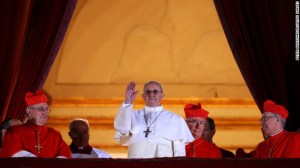
The Washington Post’s Nick Miroff reports that Pope Francis was “often quiet on Argentine sex abuse cases” when he was Archbishop.
Miroff focuses the article mostly on a charismatic priest named Julio Cesar Grassi, who formed a foundation ironically called Felices los Niños, “Happy Children,” as well as raising money “schools, orphanages and job training programs for poor and abandoned youths, winning praise from Argentine politicians and his superior, Archbishop Jorge Mario Bergoglio.” But in 2009 Grassi was convicted
Today, Grassi is a convicted sex offender who remains free on a conditional release after being sentenced to 15 years in prison in 2009 for molesting a prepubescent boy in his care.
Yet in the years after Grassi’s conviction, Bergoglio — now Pope Francis — has declined to meet with the victim of the priest’s crimes or the victims of other predations by clergy under his leadership. He did not offer personal apologies or financial restitution, even in cases in which the crimes were denounced by other members of the church and the offending priests were sent to jail.

Julio Cesar Grassi
Grassi was reportedly very close to Archbishop Bergoglio; that is troubling to Argentinian child advocates because Grassi is still a priest and has managed to stay out of prison with the help of the Archdiocese.
…[C]hurch officials led by Bergoglio commissioned a lengthy private report arguing that Grassi was innocent.
The report was submitted as part of the priest’s legal appeal, which is pending, and prosecutors say the document has helped Grassi avoid jail time so far. A court has granted him a provisional release that allows him to continue residing across the street from the classroom and dormitories of Happy Children.
The school/orphanage is now closed and in a state of disrepair.
“He gave with one hand, but he took away with the other,” said neighbor Sabina Vilagra, whose husband worked as a janitor at the foundation and was called to testify in the trial.
“He had his favorites — always boys,” said her daughter, Florencia Vilagra, who also worked at Happy Children at the time.
“He would give them bicycles or toys and would designate one as his special ‘secretary,’ ” she said.
There were three accusers in the trial — given the names “Ezequiel,” “Gabriel” and “Luis” to protect their identities — who ranged from ages 9 to 13 at the time of the abuse, according to prosecutor Juan Pablo Gallego.
Child abuse experts say that Bergoglio “evolved” over the years, and he doesn’t appear to have been involved in any cover-ups; in fact he may have been the one to tell a Grassi accuser to contact the police. But the same experts say that other cases slipped through the cracks, including that of Mario Napoleon Sasso, who after being accused of abusing children in the “early 1990s,” was
sent to a private rehabilitation center for wayward clergy, La Domus Mariae (the House of Mary), north of Buenos Aires. He lived for two years at the center and was then reassigned to work in a soup kitchen for poor children in a town outside the capital. There, he went on to sexually abuse girls as young as 3.
“His bedroom was adjacent to the cafeteria, and it had the only bathroom in the chapel,” said Moreau, the attorney for the victims’ families.
Moreau said that in 2003 he accompanied two nuns and a priest who had denounced Sasso, along with the victims’ families, to a meeting with the Vatican emissary in Buenos Aires. He said the families were told to be “patient” and were offered gifts of rosaries “blessed by the pope.”
Sasso was finally convicted in 2007.
Sadly, I can’t say I’m surprised to learn that the new Pope–like his predecessors–is implicated in the Catholic Church’s endless child abuse scandals.
Tuesday Reads: SCOTUS and Voting Rights, Iraq War Buildup, and Reno Saccoccia
Posted: March 19, 2013 Filed under: morning reads, U.S. Politics, Violence against women | Tags: Ahmed Chalabi, Anthony Kennedy, Antonin Scalia, Christopher Hitchens, David Frum, Dick Cheney, George W. Bush, Iraq War, Reno Saccoccia, Sonya Sotomayor, Steubenville rape case, voting rights 35 Comments
Good Morning!!
There’s a great big sloppy white mess outside my house this morning–something like 6 or 7 inches of heavy, wet snow. I’m not sure how I’ll get out of here; I may have to try to hire someone to dig me out. Anyway, I’m resigned to being stuck in the house for today at least.
Soooo… let’s see what happening in the news.
I’m going to start out with some news from the Supreme Court. Yesterday the court debated another voting rights case, and once again Sonya Sotomayor went toe-to-toe with right-wing judicial activist Antonin Scalia. This time it was a case from Arizona over whether a state can require proof of citizenship beyond what is required by federal voter registration forms. Here’s some background from Spencer Overton at HuffPo:
The latest case involves the simple question of whether Arizona can refuse to accept a federal voter registration form. But the stakes are much higher. A victory for Arizona could accelerate a nationwide trend of political operatives attempting to manipulate election rules for political gain, and could undermine the power of Congress to protect voting rights.
The National Voter Registration Act requires that all states “accept and use” a single, uniform voter registration form for federal elections. States can still use their own registration forms, but they must also accept and use the Federal Form. The purpose of the Federal Form is to increase participation by preventing states from erecting barriers to voter registration.
The Federal Form requires that prospective voters check a box and sign the form affirming they are U.S. citizens under penalty of perjury. Arizona, however, adopted a state law requiring “satisfactory proof” of U.S. citizenship to register, such as a birth certificate, U.S. passport, or state driver’s license that shows citizenship.
As a result, Arizona initially rejected over 31,000 voter registration applications — including citizens who registered using the Federal Form. Community-based registration drives were hit especially hard, because they rely on approaching individuals who may not be carrying a birth certificate or similar documentation (or unwilling to give a photocopy of these sensitive documents to a registration-drive volunteer). For example, community-based registration drives in Arizona’s largest county — Maricopa County — dropped 44%.

Obviously, if Arizona wins the case, other red states would pass similar laws that would trump federal voting regulations. Yesterday, Sotomayor and Scalia “clashed” over the Arizona law. Talking Points Memo:
Much as they did weeks ago during arguments over the constitutionality of the Voting Rights Act, the two justices on Monday each led the charge on opposite sides of the case — Scalia for less federal involvement in states’ ability to set their voting laws, and Sotomayor for broad national authority to protect citizens’ right to vote.
Sotomayor’s opening volley began immediately after Arizona Attorney General Thomas C. Horne stepped up to defend his state’s law. She fired off a series of questions, which she would continue asking in different flavors throughout his argument, about inconsistencies between Arizona’s Prop 200 and the NVRA.
“If I see the purpose of the NVRA to simplify registration, how are Arizona’s provisions consistent with that objective and purpose, given that … many people don’t have the documents that Arizona requires?” Sotomayor said. She asked Horne why he thinks Congress would have required states to accept a voter registration form if states can then turn around and require additional information like a passport or birth certificate.
“Why isn’t that just creating another form?” she demanded. Arizona, she said, may object to the fact that proof of citizenship isn’t required, but “that’s what Congress decided.”
As for Scalia:
The conservative jurist wasn’t convinced requiring people to attest under oath was sufficient.
“So it’s under oath — big deal,” Scalia said. “If you’re willing to violate the voting laws, I suppose you’re willing to violate the perjury laws.” He posited that only “a very low number” of voters would be harmed by a requirement to submit proof of citizenship.
Well that makes sense–not. Why bother having witnesses swear to tell the truth in court cases then?
Of course Anthony Kennedy was his usual waffling self. Again from TPM:
At one point, Kennedy wrestled with whether Arizona’s proof-of-citizenship requirement crosses a line. He asked the state’s attorney general, who was defending the law, whether states may also require proof of one’s address or date of birth when registering to vote. If so, he posited, then the federal requirement “is not worth very much.”
At another point, he launched a defense of Arizona’s actions in principle and took issue with some of the reasoning by the Ninth Circuit Court of Appeals, which ruled against Arizona.
“The state has a very strong and vital interest in the integrity of its elections,” Kennedy said, “even when those, and perhaps especially when those are elections of federal officials. And it seems to me the Ninth Circuit’s new test did not give sufficient weight to that interest.”
Roberts is apparently “leaning slightly” toward Arizona’s point of view. It’s really frightening that voting rights are in the hands of this conservative court. Thank goodness for Sotomayor’s willingness to be vocal in her arguments. Here are couple more interesting tidbits:
“Let me give you this example,” Alito said. “A person rides up to a place to register on a bicycle and gets out and hands in the federal form. This boy looks like he is 13 years old and he is carrying school books, he is wearing a middle school t-shirt, but he has filled out the form properly. Are they required to register him?”
Retired Justice Sandra Day O’Connor, a native Arizonan who in 2010 ruled against her statein this case from a lower court on which she occasionally sits, was present in the chamber.
In the final moments, Scalia warned the Obama administration’s lawyer, who was arguing against Arizona, that if the constitutionality of the NVRA form is challenged in broader terms, “You’re going to be in bad shape — the government’s going to be.”
There was a little bit of good news from the Court yesterday, according to HuffPo: Supreme Court Refuses To Hear Goldman Sachs’ Appeal To Financial Crisis Lawsuit.
Goldman Sachs Group Inc suffered a defeat on Monday as the U.S. Supreme Court let stand a decision forcing it to defend against claims it misled investors about mortgage securities that lost value during the 2008 financial crisis.
Without comment, the court refused to consider Goldman’s appeal of a September 2012 decision by the 2nd U.S. Circuit Court of Appeals in New York. Goldman shares sank more than 2 percent.
That court let the NECA-IBEW Health & Welfare Fund, which owned some mortgage-backed certificates underwritten by Goldman, sue on behalf of investors in certificates it did not own, but which were backed by mortgages from the same lenders.
Goldman and other banks have faced thousands of lawsuits by investors seeking to recoup losses on mortgage securities.
The bank has said that letting the 2nd Circuit decision stand could cost Wall Street tens of billions of dollars.
{{applause}}
David Frum posted a fascinating article at The Daily Beast late yesterday on the lead-up to the Iraq War. Frum was a speechwriter for George W. Bush at the time. You should read the whole thing, but I’ll just quote this one intriguing portion:
The first time I met Ahmed Chalabi was a year or two before the war, in Christopher Hitchens’s apartment. Chalabi was seated regally at one end of Hitchens’s living room. A crowd of nervous, shuffling Iraqis crowded together at the opposite end. One by one, they humbly stepped forward to ask him questions or favors in Arabic, then respectfully stepped backward again. After the Iraqis departed, Chalabi rose from his chair and joined an engaged, open discussion of Iraq’s future democratic possibilities.
The last time I saw Chalabi was in his London apartment, on the very eve of war. My little group arrived past midnight. Chalabi was listening to the evocative strains of Sufi music. He showed me a black-and-white photograph of seven men, wearing the clothes of the 1940s. They were the board of directors of a company his father had founded: a mixed group of Sunni, Shiite, and Christian, and even a Jew. Chalabi remarked that this picture was taken while Europe was tearing itself apart in genocidal violence. He didn’t add that it was taken shortly after British forces defeated a pro-Axis coup in Baghdad—but failed to prevent a murderous pogrom against Baghdad’s Jewish population.
I was less impressed by Chalabi than were some others in the Bush administration. However, since one of those “others” was Vice President Cheney, it didn’t matter what I thought. In 2002, Chalabi joined the annual summer retreat of the American Enterprise Institute near Vail, Colorado. He and Cheney spent long hours together, contemplating the possibilities of a Western-oriented Iraq: an additional source of oil, an alternative to U.S. dependency on an unstable-looking Saudi Arabia.
You might imagine that an administration preparing for a war of choice would be gripped by self-questioning and hot debate. There was certainly plenty to discuss: unlike the 1991 Gulf War, there was no immediate crisis demanding a rapid response; unlike Vietnam, the U.S. entered the war fully aware that it was commencing a major commitment.
Yet that discussion never really happened, not the way that most people would have imagined anyway. For a long time, war with Iraq was discussed inside the Bush administration as something that would be decided at some point in the future; then, somewhere along the way, war with Iraq was discussed as something that had already been decided long ago in the past.
I’m running out of space, so I’ll leave you with this follow-up to the Steubenville rape trial.

From Deadspin: Fire This Asshole: Why Does Steubenville’s Football Coach Still Have His Job?
Reno Saccoccia is a local legend, in the way that 30-year coaches of football powerhouses in economically depressed Ohio Valley towns tend to be legends. He’s in the Ohio Coaches Hall of Fame. He’s won three state titles. When Saccoccia won his 300th game last year, a sellout crowd of more than 10,000 people packed Harding Stadium—christened “Reno Field” in 2007—and chanted “Reno, Reno, Reno” as he left the field.
He breakfasts regularly with the sheriff. His sister-in-law works in the county’s juvenile court, where he is licensed as a mediator. He “molds young boys into men.” So how did Saccoccia react when he got word that two of his young boys were accused of raping a passed-out student?
On the night of the assault, a Steubenville student recorded this video joking about it. Off-camera, someone says “Trent and Ma’lik raped someone.” Among the text messages released at the trial of Trent Mays and Ma’lik Richmond, one sent by Mays indicated that Saccoccia had seen the video:
Deleate that off You-tube. Coach Sac knows about it. Seriously delete it.
Saccoccia would later claim he was unaware of the social media evidence, angrily telling a reporter that he didn’t “do the internet.” But a flurry of texts sent on August 13, the day after the incident, indicated that Saccoccia had heard what had happened.
Even as all of Steubenville gradually heard the rumors, even after a local blogger alerted the country to what had happened in Steubenville, those involved in posting and sharing the photos and videos continued to play. They were only suspended eight games into the season, more than two months after the assault and arrests.
Less than a month later, Saccoccia testified on behalf of Mays and Richmond in a hearing to determine whether they would be tried as adults.
As we all know, the “boys” were tried as juveniles and got off easy. Seriously, this asshole has to go!
I have some more stories to share, but I’ll put them in the comments . . . What are you reading and blogging about today? I’m stuck in the house, so I have all the time in the world to click on your links and read!
FBI Says They Know Who Pulled Off the Gardner Heist
Posted: March 18, 2013 Filed under: Crime | Tags: FBI, Isabella Stuart Gardner Museum, stolen artwork, the Gardner heist 26 Comments
Photo of empty frame in the Garner Museum (thieves cut paintings from their frames)
There was exciting news in Boston today!
The Boston office of the FBI held a press conference to announce that they strongly believe they have identified the culprits who stole 13 paintings worth $500 million from the Isabella Stuart Gardner Museum 23 years ago today. The Boston Globe reports:
The officials also said they had determined where the artworks had traveled in the years after the robbery, which is considered the greatest art theft in history. But the officials said they did not know where they were now and were appealing to the public for their help in finding them.
“The FBI believes with a high degree of confidence in the years after the theft the art was transported to Connecticut and the Philadelphia region and some of the art was taken to Philadelphia where it was offered for sale by those responsible for the theft. With that confidence, we have identified the thieves, who are members of a criminal organization with a base in the mid-Atlantic states and New England,” Richard DesLauriers, special agent in charge of the Boston office of the FBI, said.
DesLauriers said that after the attempted sale of the paintings about a decade ago, the FBI did not know where the artworks — which included three Rembrandts, a Vermeer, a portrait by Edouard Manet, and sketches by Renoir — had been taken.
They refused to reveal the names of the culprits while the investigation is still ongoing. The FBI decided to hold the press conference on the anniversary of the art theft–the largest such heist in history–in order to ask for help from the public. They no longer know the location of the paintings and they hope that someone will come forward, as happened when they request help in finding Boston gangster Whitey Bulger.
According to the Hartford Courant, the FBI
disclosed new detail about their interest in Hartford mobster Robert Gentile….They…would not answer specific questions about Gentile, a 75-year-old gambler and confidence man long associated with the rackets in Hartford. The officials said that, to discuss Gentile or other suspects, could jeopardize the continuing investigation.
But since 2010, Gentile has been questioned repeated about his membership in the Boston branch of a Philadelphia-based criminal organization, as well as leads that place at least some of the stolen paintings in Connecticut and the Philadelphia area.
DesLauriers said he doesn’t know what happened to the art after it was transported to Philadelphia.
The FBI, Boston’s U.S. Attorney and the museum’s security chief released surprising detail at a Boston press conference followed around the world about what for years had been a largely fruitless investigation. The officials were looking for a jolt of publicity to generate new leads in Connecticut and Pennsylvania. The officials also referred repeatedly to a $5 million reward for information leading to the recovery of the art….
Although the officials refused to discuss Gentile by name, the information the FBI released about who robbed the museum and how the stolen art was moved years later corresponds closely with their theories about Gentile’s involvement in the crime. The officials also said, without explaining why, that the investigation has been particularly active since 2010, which is when they first questioned Gentile.
Gentile is currently in jail for selling prescription painkillers. After his arrest, his home was searched, but no stolen paintings were found–just lots of drugs, money, and weapons.

Rembrandt’s “Storm on the Sea of Galilee,” stolen from the Gardner Museum
Here’s some background on the Gardner Heist and the long investigation from a 2005 article in The Boston Globe.
As they struggled to remove a heavy-framed Rembrandt from the silk-draped wall of the Isabella Stewart Gardner Museum, the two thieves abruptly stopped as a high-pitched alarm beeped from the baseboard.
They must have been startled.
But not for long. Intended to alert guards when museum visitors ventured too close to the art, the alarm was quickly hunted down by the men. They smashed it silent and went back to work on what remains, 15 years after that misty March night in 1990, the biggest art heist in history.
The warning beeper proved to be the only part of the museum’s security system that deterred the men at all. They would spend 81 minutes moving through the darkened galleries of the Italianate mansion Mrs. Jack Gardner built at the turn of the century to house her private art collection and share it with the public; they could have stayed all night.
The men got into the museum by dressing as Boston police officers and convincing the guard on duty, Richard Abath, to let them in because they had been called about a disturbance. They then tied up Abath and another security guard and handcuffed them in the basement.
Once inside, the thieves ripped a Vermeer, three Rembrandts — including his only seascape — five Degas drawings, and a Manet from their wall placements, smashing them out of their frames and leaving shards of glass and remnants of canvas behind. The thieves took some of the museum’s greatest treasures but left behind some even more valuable objects.
When they were done for the night, they made two trips to their car with the loot. Then they vanished.
Where the paintings were, empty frames now fill the museum’s walls.

Richard Abath in 2013
Abath was 23, a student at the Berklee School of Music and a rock musician who worked nights as a security guard at the museum. He wasn’t a suspect at first–he even passed two polygraph tests, but today he’s being looked at as a possible accessory to the crime.
For years, investigators discounted the hapless Abath’s role in the unsolved crime, figuring his excessive drinking and pot smoking contributed to his disastrous decision to let in the robbers, who were dressed as police officers. Even if the duo had been real cops, watchmen weren’t supposed to admit anyone who showed up uninvited at 1:24 a.m.
But, after 23 years of pursuing dead ends, including a disappointing search of an alleged mobster’s home last year, investigators are focusing on intriguing evidence that suggests the former night watchman might have been in on the crime all along — or at least knows more about it than he has admitted.
Why, they ask, were Abath’s footsteps the only ones picked up on motion detectors in a first floor gallery where one of the stolen paintings, by French impressionist Edouard Manet, was taken? And why did he open the side entrance to the museum minutes before the robbers rang the buzzer to get in? Was he signaling to them that he was prepared for the robbery to begin?
No one publicly calls Abath a suspect, but federal prosecutors grilled him on these issues last fall. And one former prosecutor in the case has written a recently published novel about the Gardner heist in which the night watchman let the thieves into the museum to pay off a large cocaine debt.
It would be incredible if the paintings could be recovered! It would far more thrilling than finding Whitey Bulger. The statute of limitations on the theft has already run out, and anyone who came forward would likely be given immunity for revealing the location(s) of the artwork. According to the Boston Herald,
The FBI stressed that anyone with information about the artwork may contact the FBI at 1-800-CALL FBI (1-800-225-5324) or the museum directly or through a third party, said Special Agent Geoffrey Kelly, who is the lead investigator for the theft and a member of the art crime team, “In the past, people who realize they are in possession of stolen art have returned the art in a variety of ways, including through third parties, attorneys and anonymously leaving items in churches or at police stations.” Tips may also be submitted online athttps://tips.fbi.gov.
The publicity campaign announced today includes a dedicated FBI website on the Gardner Museum theft, video postings on FBI social media sites, publicity on digital billboards in Philadelphia region, and a podcast. To view and listen to these items, link to the FBI’s new website about the theft: www.FBI.gov/gardner.
Below are photos of some of the missing paintings. See more at Time Magazine.

Vermeer, “The Concert”

Degas, “La Sortie de Pesage”
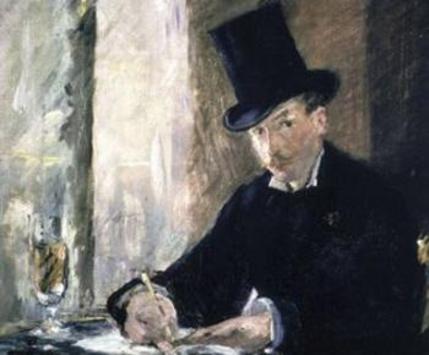
Manet, “Chez Tortoni”

Govaert Flinck, “Landscape with Obelisk”
Monday Morning Reads: Systems that Benefit the Privileged Elite
Posted: March 18, 2013 Filed under: morning reads | Tags: capitalism, CNN Rape apologia, Cyprus Bank Runs, Cyprus financial crisis, jesuits, Labor Secretary, Pope Francis, rape, Steubenville Rape Trial, Tom Perez 66 Comments Good Morning!
I’m going to start the day’s reads off with two really good articles on modern capitalism. Both actually have titles that ask questions. I’ll start with the first one written by Richard Wolfe at The Guardian as reprinted by RS. ” What’s efficiency got do do with capitalism?” The answer is absolutely nothing.
What’s efficiency got to do with capitalism? The short answer is little or nothing. Economic and social collapses in Detroit, Cleveland and many other US cities did not happen because production was inefficient there. Efficiency problems did not cause the longer-term economic declines troubling the US and western Europe.
Capitalist corporations decided to relocate production: first, away from such cities, and now, away from those regions. It has done so to serve the priorities of their major shareholders and boards of directors. Higher profits, business growth, and market share drive those decisions. As I say, efficiency has little or nothing to do with it.
This is what we call a “positive” economic discussion on policy in that that the data leads one to the conclusion and values don’t play a role in the argument until the end of the article when the author makes a case for democratization of the economy. This is called making a “normative” case. For a “normative” economic discussion from the get-go, turn to this article in WAPO by Steven Perlstein. “Is capitalism moral?”
Note the Gordon Gekko-like logic here: Because pursuit of self-interest is the essential ingredient in a market system, it somehow follows that individuals and firms are free to act as greedily and selfishly as they can within the law, absolved from any moral obligations. And it’s not just in the movies. The same amorality was on display at those Senate hearings in 2010 where Fabrice “Fabulous Fab” Tourre and the team from Goldman Sachs tried to explain to incredulous lawmakers why it was perfectly reasonable to peddle securities to clients that they had deliberately constructed to default.
Free-market advocates have a stronger moral case against government “confiscating” the money earned by one person to give it to another.
The traditional liberal defense of redistribution, of course, is that a lot of what passes for economic success derives not only from hard work or ingenuity but also from good fortune — the good fortune to be born with the right genes and to the right parents, to grow up in the right community, to attend the right schools, to meet and be helped by the right people, or simply to be at the right place at the right time. A market system should reward virtue, they argue, not dumb luck.
The problem is that we don’t really have anything resembling textbook market capitalism because all markets don’t exhibit characteristics that make them amenable to an unrestrained market. Also, we have a political class that is easy to capture via donations and lobbying who set up laws that allow already dominant industries to become more monopolistic and less ‘free’ through preferential legal treatment and taxation. The worst of the folks that scream about the virtues of ‘capitalism’ are the ones that really know nothing about Adam Smith or the origins of the system and its simple agriculture and industrial roots. For a real life example of the failures of unchecked capitalism, check out BB’s post last night outlining what’s going on in Cyprus. The overall mismanagement of lending and under-evaluation of risk by British, American and German banks has cost the citizen’s of many countries a lot of wealth. The Cyprus situation is unprecedented and sets an especially dangerous precedent. You can see how the powerful can co-opt the system in this play that takes savings from depositors. Markets all over the world are responding. Asian markets were the first to tank.
I spent a lot of time yesterday in an absolute rage over the rape apologia rampant in coverage by two of CNN’s women journalists who seemed more concerned with the lasting impact the verdict of the trial would have on the convicted rapists than the victim and possibly more victims of their out-of-control male libidos. There was also more discussion of the role of teen alcohol abuse in the incident that the attitudes and privileged treatment of the male athletic stars by the media. It was totally disgusting!! I posted some of this down thread in the Sunday Reads but feel strong that it needs to frontpaged and repeated. The judge got the verdict right while CNN turned into a rape apologia factory.
CNN’s Candy Crowley began her breaking news report by showing Lipps handing down the sentence and telling CNN reporter Poppy Harlow that she “cannot imagine” how emotional the sentencing must have been.
Harlow explained that it had been “incredibly difficult” to watch “as these two young men — who had such promising futures, star football players, very good students — literally watched as they believed their life fell apart.”
“One of the young men, Ma’lik Richmond, as that sentence came down, he collapsed,” the CNN reporter recalled, adding that the convicted rapist told his attorney that “my life is over, no one is going to want me now.”
At that point, CNN played video of Richmond crying and hugging his lawyer in the courtroom.
“I was sitting about three feet from Ma’lik when he gave that statement,” Harlow said. “It was very difficult to watch.”
Candy then asked CNN legal contributor Paul Callan what the verdict meant for “a 16 year old, sobbing in court, regardless of what big football players they are, they still sound like 16 year olds.”
“What’s the lasting effect though on two young men being found guilty juvenile court of rape essentially?” Crowley wondered.
“There’s always that moment of just — lives are destroyed,” Callan remarked. “But in terms of what happens now, the most severe thing with these young men is being labeled as registered sex offenders. That label is now placed on them by Ohio law.”
“That will haunt them for the rest of their lives.”
The purpose of a justice system is to make sure those guilty of heinous crimes pay for their crimes. I’m still livid about this and so are most of the folks on my twitter stream. You can look down stream on Sunday’s thread for videos and links. I found Dan Wetzel’s post particularly compelling as it describes the entitlements given to male athletes in Steubenville and elseville.
The Big Red players were disorganized crime. No secrets. No code words. No shame. They neither grasped the depth of the crime nor the unrelenting pressure of true authority – not their compliant parents or ball coach, but a legal system that didn’t care a whit about Steubenville High football.
Steubenville’s football program has long been a source of pride in the community. (Reuters)For all the rumors and speculation around town of cover-ups and favoritism being played, the authorities did their job. There is zero indication the Steubenville police did anything but aggressively and swiftly investigate the charges.
When understandable conflicts of interest – only 18,000 people live in the city and everyone knows everyone – arose in the local prosecutors office, the case was handed over to the state’s attorney general out of Columbus. A judge was brought in from across the state, near Cincinnati. And it was Judge Lipps, not anyone around Steubenville, who granted immunity to the witnesses.
Meanwhile, attorney general Mike DeWine called on Sunday for a grand jury to continue an investigation into the case.
“This community desperately needs to have this behind them,” DeWine said. “But this community also desperately needs to know justice was done and that no stone was left unturned.”
It’s still hard to say if Mays and Richmond ever grasped the trouble they were in until Sunday.
Mays knew enough to grow concerned. The girl was never sure whether to press charges, but once her parents found out, there would be no doubt. They culled social media for clues and walked into the Steubenville Police Department with a flash drive of evidence.
Just prior to that, Mays became panicked and texted the girl.
“I’m about to get kicked off my football team,” Mays wrote.
“The more you bring up football, the more pissed I get,” the girl wrote back. “Because that’s like all you care about.”
They had no idea about the severity of what they had done which means there’s an awful lot of parents, teachers, and clergy that need to sit down with some girls and boys and define sexual assault. They also need to make sure that everyone knows that the laws apply to every one.
I know there are many ‘recovering’ Catholics that read this blog so I thought I’d link to this article in Salon by Andrew O’Hehir entitled “Is Pope Francis a Fraud?” He makes some valid points about looking at each parish or archdiocese as distinct. He focuses on the recent purge by the Jesuits of their liberal coherts and the position of the new Pope in a church in turmoil.
But the former Cardinal Jorge Mario Bergoglio emerges from a Jesuit order that has been largely purged of its independent-minded or left-leaning intellectuals, and his reputation at home in Latin America is decidedly mixed. While Francis seems to be an appealing personality in some ways — albeit one with a shadowy relationship with the former military dictatorship in Argentina, along with a record on gay rights that borders on hate speech — it’s difficult to imagine that he can or will do anything to arrest the church’s long slide into cultural irrelevance and neo-medieval isolation. His papacy, I suspect, comes near the end of a thousand-year history of the Vatican’s global rise to power, ambiguous flourishing and rapid decline. It also comes after 40 years of internal counterrevolution under the previous two popes, during which a group of hardcore right-wing cardinals have consolidated power in the Curia and stamped out nearly all traces of the 1960s liberal reform agenda of Pope John XXIII and Vatican II.A handful of intellectuals, both inside and outside the church, quietly believe that means Pope Francis isn’t a legitimate pope at all.
I can’t speak to any of those being a WASP turned WASB, but I thought I’d share it all the same since I read the article knowing the role of Popes and the church in history.
President Obama is set to nominate Tom Perez for Labor Secretary today.
Perez, 51, is the assistant attorney general for the Justice Department’s Civil Rights division. If confirmed by the Senate, he would replace Hilda Solis, who resigned in January.
The White House portrayed Perez as someone in line with Obama’s sense of social justice. An official lauded Perez for settling the nation’s three largest fair lending housing cases, boosting enforcement of human trafficking laws and protecting rights of veterans and students. He also led the Justice Department in challenging voter ID laws in Texas and South Carolina.“Tom is a dedicated public servant who has spent his career fighting to keep the American dream within reach for hardworking middle class families and those striving to get into the middle class,” the White House official said.
I’d say that’s enough of me writing things. Now, it’s your turn. What’s on your reading and blogging list today?
New Stage in Eurozone Crisis: Cyprus Forced to Cover Bailout from Individual Bank Deposits
Posted: March 17, 2013 Filed under: Foreign Affairs, U.S. Economy | Tags: bail-in, bailout, Cyprus financial crisis, economics, eurozone crisis 18 Comments
Lines formed at ATMs in Cyprus after news of bank levy broke
This is a topic on which I know very little, but I thought we should have a thread on it anyway.
On Saturday morning, news broke that the terms of a bailout of banks in Cyprus would require a levy on individual depositors–including those holding small accounts. People immediately rushed to ATMs to withdraw as much cash as possible before the deal was voted on. The most accessible article I found on this is by Edward Harrison of Credit Writedowns blog, posted at Alternet: Hell Breaks Loose in Europe as Banking Crisis Unfolds: Depositors’ Money May Be Seized.
Saturday morning we learned that after hours of tense negotiation, Europe has hammered out a 10bn euro “bailout” of Cyprus. I put the term bailout in quotes because the key feature of this deal is the bail-in of Cypriot depositors to the tune of 5.8bn euros, about a third of Cyprus’ GDP. This means that depositors went to sleep on Friday night and woke up Saturday to find that their money, deposited safely in Cypriot banks, had been seized and used to “bail out” the country. While the bail-in became official EU bank rescue policy during the Spanish crisis last summer, bank depositors were never mentioned at that time. I see this as an extreme measure which, if the European banking crisis continues elsewhere, will have very negative implications for bank depositor confidence in other European periphery countries.
There has since been a revision in the amounts to be deducted–I’ll get to that later on.
Back to Harrison:
Cyprus’ finance minister Michalis Sarris said large deposit withdrawals would be banned. Jörg Asmussen, a German member of the ECB board and a key ally of Angela Merkel, added that the part of the deposit base equivalent to the actual bail-in levies would be frozen immediately so the funds could be used to pay for the “bailout”….
Some of the bailout lenders like the IMF had actually been calling for Cyprus to seize all deposits larger than 100,000 euros. So this falls well short of those demands. Nonetheless, a rubicon has been crossed. Not only are senior bank debt lenders now on the hook before a single penny of European Union loans or guarantees flow to busted eurozone countries, but so are subordinated debt holders and so are even depositors. As an EU citizen, you must now believe that any lending exposure you have to a bank whether as a bond lender or deposit lender can be seized and confiscated by government, no matter how small the exposure. The FT notes that “[e]ven Ireland, whose banking sector was about as large relative to its economy as Cyprus’ when it was forced into a bailout in 2010, never considered such a measure.
Read much more at the Alternet link.
Here’s an FAQ on the crisis published at Fortune earlier tonight. The scary introductory paragraphs after the jump:

 peej
peej Carissa
 bostonboomer
 dakinikat
 ecocatwoman
 mablue2
 Mama Lopez
 peggysue22
 quixote
 skydancingguestblogger
 Mona (aka Wonk the Vote)



 Sky Dancing
Recent Comments