
Eric Cantor Denies Reality During “60 Minutes” Interview
Posted: January 2, 2012 Filed under: Republican politics, U.S. Politics | Tags: denial, Eric Cantor, House Majority Leader, raising taxes, Ronald Reagan 19 CommentsVia Steve Benen, Rep. Eric Cantor was interviewed on 60 Minutes last night. Lesley Stahl asked Cantor why he refuses to compromise when his “idol,” Ronald Reagan didn’t have a problem doing so. Here’s the relevant portion:
Stahl: But you know, your idol, as I’ve read anyway, was Ronald Reagan. And he compromised.
Cantor: He never compromised his principles.
Stahl: Well, he raised taxes and it was one of his principles not to raise taxes.
Cantor: Well, he — he also cut taxes.
Stahl: But he did compromise —
Cantor: Well I —
At that point, Cantor’s press secretary, off camera, interrupted the interview, yelling that Stahl was lying when she said Reagan raised taxes. As Stahl told “60 Minutes” viewers, “There seemed to be some difficulty accepting the fact that even though Ronald Reagan cut taxes, he also pushed through several tax increases, including one in 1982 during a recession.”
What is it with these Republicans and their inability to accept reality?
Monday Morning Reads
Posted: January 2, 2012 Filed under: morning reads | Tags: January election schedule 15 Comments Good Morning! It’s a New Year! It’s a new day!
It’s also the start of the election season. Here are the dates of the Republican caucus and primaries scheduled for this month:
| January 3, 2012 | Iowa | caucus | ||
| January 10, 2012 | New Hampshire | primary | ||
| January 21, 2012 | South Carolina | primary | ||
| January 31, 2012 | Florida | primary |
As you can see, there are four contests up for grabs in four very distinct states. Remember that there are “no winner take all” events so any splits will actually count and this could drag on for some time. We will be live blogging the Iowa caucuses tomorrow night. What may end some of these candidates dreams could be the lack of funds if they don’t win, place or show.
The Des Moines Register ‘s last poll shows:
… Mitt Romney in the lead (but not above 25%), Ron Paul a close second, and Rick Santorum surging in third place. The numbers from the poll conducted Dec. 27-30 of 602 likely caucus-goers: Romney 24%, Paul 22%, Santorum 15%, Gingrich 12%, Perry 11%, and Bachmann 7%. But get this about Santorum’s surge: In the Des Moines Register’s final two days in the field, he jumped into second place and was running neck and neck with Romney. “[Santorum] averaged 10 points after the first two nights of polling, but doubled that during the second two nights. Looking just at the final day of polling, he was just one point down from Romney’s 23 percent on Friday.”
Just so you know, Santorum is itching to start a war with Iran. Santorum’s appearance Sunday on ABC was an eyebrow raiser. Let’s home this man gets no where near Washington power circles ever again.
Rick Santorum said today that would be in favor of launching airstrikes against Iranian nuclear facilities.
“We will degrade those facilities through airstrikes, and make it very public that we are doing that,” Santorum said on “Meet the Press.”
Iran announced today that it had created the country’s first nuclear fuel rod, a key component in a reactor that can also be used to produce weapons grade uranium.
Several of the GOP candidates have expressed increased concerns over Iran’s nuclear program after the International Atomic Energy Agency released a report that says Iran is making progress.
The Obama administration hasn’t responded to Iran’s latest claim but it has already levied coordinated economic sanction against Iran.
Newt Gingrich is only other candidate in the race who has said he is would support bombing Iran, although he said he would only do it as a last resort and as part of a plan to replace the leadership in Iran.
Well, it’s official. Approximately half of Americans are poor.
While it’s no surprise that nearly 50 million Americans live below the poverty line, new statistics from the US Census show that almost 100 million others are counted as low-income citizens, making half of the population of America officially poor.
The latest figures out of the US Census Bureau show that in addition to the 49.1 million Americans who fall below the official poverty line, those that rake in enough to be between that level and the income equitable to double it fall into a new “low-income” category, which counts an additional 97.3 million people. Altogether, that clump of nearly 150 million Americans living in dire economic standing accounts for around 48 percent of the US population.
American officials have deemed the current poverty line to be at around $22,000 for a family of four, but the new category just about doubles that figure to $45,000 and places those that fall between the numbers as low-income. The Associated Press reports that for families that fit in that range, often half of the household income is spent on child-care costs and housing bills.
The New Republic has a list up of the most overlooked stories of 2011. Here’s one that I found interesting.
John Judis: The Subversion of the Do Not Call Registry
The great under- or, better, un-covered story of the year: Cardholder Services and the Do Not Call Registry. You don’t know what I’m talking about? That’s because you don’t work at home. George W. Bush’s administration invaded Iraq and let Bernie Madoff run wild; but to its credit, it established the Do Not Call Registry to block telemarketers from flooding our telephones with unwanted offers. After I registered my phone number on the Federal Trade Commission’s web site in 2004, the phone calls virtually stopped. But guess what? Under the Obama administration, which claims to understand the power and wisdom of government regulation, they’ve begun again. I get seven or eight a day now (mostly I don’t answer them), including to my cell phone, where I get charged for them. Many of them have been from an outfit called “Cardholder Services.” And it’s not just me. Google “cardholder services” and you’ll find a plethora of complaints. I have already filed complaints with the FTC twice this year, and the second time I asked for an acknowledgement. But I never heard back, and the phone calls continue. A little while ago, I got a call on my cellphone from a number in Salem, Oregon. 503-902-8252. Complaints about this number are all over the web. So the Obama administration has not followed through on the one thing that the Bush administration did right.
George Monbiot’s latest is a must read. It’s called “How Freedom Became Tyranny” and it’s all thanks to those zany libertarians. Read the arguments. Here’s the punchline.
Modern libertarianism is the disguise adopted by those who wish to exploit without restraint. It pretends that only the state intrudes on our liberties. It ignores the role of banks, corporations and the rich in making us less free. It denies the need for the state to curb them in order to protect the freedoms of weaker people. This bastardised, one-eyed philosophy is a con trick, whose promoters attempt to wrongfoot justice by pitching it against liberty. By this means they have turned “freedom” into an instrument of oppression.
So, that’s it for me this morning. It’s been quiet around here so hopefully, things will liven up tomorrow. What’s your reading and blogging list today?
Open Thread: End-of-the-Year Lists, 2011
Posted: January 1, 2012 Filed under: open thread | Tags: 2011, 2012, Boston, celebrity deaths, end-of-year lists, Happy New Year 25 Comments
First Night ice scupture, Boston, Jan 1, 2012
The new year always brings with it lists of the most, the best, the worst of the previous year. And of course the lists of people who are no longer with us. Here’s a sampling of lists from around the internet.
There’s the NYT list of the top ten best books of 2011 based on their 100 notable books list. First is The Art of Fielding by Chad Harbach, and second is Stephen King’s book on the Kennedy assassination, 11/22/63.
The New Yorker has a list of the best films of last year. They liked Scorsese’s children’s movie Hugo best. Here’s a list (very different) from Rotten Tomatoes. They also liked a children’s movie, The Muppets.
Here’s a list of some of the famous people who died in 2011 (compiled from various lists around the ‘net)

Anne Francis
Dana Wynter
Jack LaLanne
Jane Russell
Elizabeth Taylor
Sidney Lumet
Peter Yates
Jackie Cooper
Harmon Killebrew
Phoebe Snow
David Nelson

James Arness
Jeff Conaway
Arthur Laurents
Jack Kevorkian
Clarence Clemons
Gil Scott Heron
Randy Savage
Peter Falk
Amy Winehouse
Bubba Smith
Cliff Robertson
Andy Rooney
Anne McCaffrey
Ken Russell
Joe Frazier
Dorothy Rodham (Hillary’s mom)
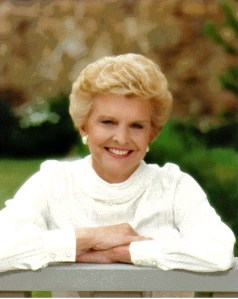
Betty Ford
Harry Morgan
Vaclav Havel
Al Davis
Steve Jobs
Tim Hetherington (photographer, died in Libya)
Christopher Hitchens
Kim Jong-Il
Osama bin Laden
Who did I leave out?

What about the worst political gaffes of 2011? The Week has a list. Not surprisingly, Republican presidential candidates hold several places on the list. Number one was from Michele Bachmann:
1. Michele Bachmann: The Founding Fathers “worked tirelessly” to end slavery
In January, the Minnesota congresswoman said “we know that the very founders that wrote those documents worked tirelessly until slavery was no more in the United States.” Then in June, Bachmann doubled down on her claim that the slave-owning authors of the Constitution worked to end slavery, citing the efforts of John Quincy Adams — who was 9 when the Declaration of Independence was signed. “I hate to be a stickler for reality,” said Steve Benen at Washington Monthly, but “to use the possible beliefs of a 9-year-old boy as evidence that the Founding Fathers ‘worked tirelessly to end slavery’ is simply absurd on its face.”
Which political gaffe was your favorite? I’d have to go with Herman Cain not knowing anything about Libya or Rick Perry not knowing the names of the cabinet posts he wants to eliminate.

Neutrinos
At Wired, there’s a list of the top scientific discoveries of 2011. Number one, was faster-than-light neutrinos, a discovery that most scientists dismissed. Another biggie was learning that we all have Neanderthal DNA. And of course there was the possibly earth-like planet that could support life. Check them out!

I’ll end with this one. At the Daily Beast I learned that Boston was America’s drunkest city in 2011. They list the top 25. The number two drunkest city is also in Massachusetts–Guess which one, Pat? Springfield! Interestingly, most of the drunkest cities seem to be in cold-weather areas.
What interesting end-of-year lists have you seen over the past few days? Please share. Or talk about any old thing you want.
HAPPY NEW YEAR, SKY DANCERS!!!!
Of BoobPads and BoobPhones
Posted: January 1, 2012 Filed under: the internet | Tags: boob tubes, technology 9 Comments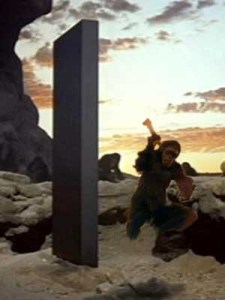 I remember that at some point in my early childhood that dressing me up in a cowgirl outfit and putting me in front of the TV on my stuffed, pillow-like horse to watch Captain Kangaroo or the Lone Ranger turned from cute to too much. I had other childhood occupations besides spending time outdoors with friends. One was practicing my piano from the age of three on; starting at 15 minutes a day with time off on Christmas and my birthday. The other was being taken to the library–a big old Carnegie building with iron stairs and oak stacks–to pick out 5 books a week to read. There was a stint with ballet and tap and swimming lessons. Eventually, I learned that all mom’s childrearing literature at the time I was weaned from afternoon cartoons was filled with tales of the boob tube and fat, dull children who had been hooked in to it for hours a day. My mother wasn’t going to be caught raising fat, dull children. There was too much status at stake during that time in America.
I also remember when I was a young mom I had absolute dread when being begged to run the same Barney tape over and over. It was as bad as the continual whining about Rainbow Brite or My Little Ponies or what ever mass marketing TV toy of the day. The real shocker was finding out how so many kids seemed to have nearly uniform expressions of glee when any where near the golden arches. That included mine even when I was hand making all of the baby food and growing it in the backyard garden. I got motivated quickly to stack my daughters’ rooms full of nature items, books, and musical instruments. We had a 5400 square foot house with one TV and thousands of books in hundreds of books shelves. TVs are not allowed anywhere near dinner tables or kitchens in my home. There was and is that same piano that both my mom and I played and games. At some point, I got that boob tube message loud and clear too.
We got an IBM peanut when doctor daughter was about two and the one cartridge of child friendly software mostly had numbers and shapes on a very primitive level. Dr. Daughter had to learn to work a keyboard the same way she learned piano. That would be one key and one connected image at a time. That’s like 25 years ago and it’s as much a world of difference from that time as it is from me sitting on the family room floor with a toy guy blazing watching Kemo Sabe get the bad guy one more time. The boob tubes are much more sophisticated. I can only imagine any potential grandchildren I may have will have much more engaging boobtubes as the technology develops.
I have to admit that I spend hours in front of my PC doing work, playing games, and socializing. Even though it is much more interactive than Captain Kangaroo, it’s an isolating and nonphysical experience on the whole. It’s also quite addicting. I remember graphic computer novel games–like Zork–used to keep me up at night. I call youngest daughter and she’s on the WII trying to take on the latest version of Zelda. That happens at all hours and pretty much every time I call for about a period of a week. Thankfully, all three of us still retreat to our pianos and books which might actually be seen as earlier versions of boobtubes if you think about it.
Still, it makes you think when you see stuff like this.
THE average American spends at least eight and a half hours a day in front of a screen, Nicholas Carr notes in his eye-opening book “The Shallows,” in part because the number of hours American adults spent online doubled between 2005 and 2009 (and the number of hours spent in front of a TV screen, often simultaneously, is also steadily increasing).
The average American teenager sends or receives 75 text messages a day, though one girl in Sacramento managed to handle an average of 10,000 every 24 hours for a month. Since luxury, as any economist will tell you, is a function of scarcity, the children of tomorrow, I heard myself tell the marketers in Singapore, will crave nothing more than freedom, if only for a short while, from all the blinking machines, streaming videos and scrolling headlines that leave them feeling empty and too full all at once.
I’ve just learned about a phenomenon called ‘internet rescue camp’ and ‘freedom software’ that helps netizens learn to disconnect. I don’t want to disconnect. I have to admit that I can’t last through TV programs very much these days. Going to a movie at a theatre is akin to a dentist trip for me. I have the blackberry–crackberry–out within about 10 minutes looking for the latest twitter news or checking my email. My blackberry has given me adult attention deficit disorder but I call it multi-tasking. I can only imagine how bad I would be with a tablet and wifi. My kids aren’t much better. I can’t get youngest daughter away from texting and 2 minute shout outs on the phone. When the house fills up at Mardi Gras time, I discover just how much young adults text each other these days. My daughter panics if she doesn’t have her phone on her at all times. She might miss something earth shattering.
So, that article that I’m quoting is at the NYT. It’s called ‘The Joy of Quiet’ and was sent to me by an old friend. He knew me before I refused to go anywhere without internet connections. I wonder what that says?
The central paradox of the machines that have made our lives so much brighter, quicker, longer and healthier is that they cannot teach us how to make the best use of them; the information revolution came without an instruction manual. All the data in the world cannot teach us how to sift through data; images don’t show us how to process images. The only way to do justice to our onscreen lives is by summoning exactly the emotional and moral clarity that can’t be found on any screen.
The author brings up one of my other long time activities; meditation. I still escape to books. I can spend hours still playing the piano. It’s why gigging was the perfect antidote to working at the FED for me. Right now, I’m reading 1Q84. This is a great pleasure for me given how much of my reading has been dedicated to scholarly articles the last few years. I snuck in all three of Larsson triology last summer too despite the pressures to get the dissertation done. I still can’t believe I got my first masters with just a mainframe and tons of error messages on greenbar paper that had to be deconstructed by a computer person. I get data from the Fed in two keystrokes now. It used to take me days down in the university library basement where the government docs were stored. I had to go through hundreds of Beige Books. That didn’t even count the time it took to get stuff from nominal to real. That’s not even a two minute activity these days.
The thing that has always historically defined our species is our use of tools. It’s basically contributed mightily to the evolution of human intelligence from the time we first picked up sticks and stones. Our cousins the great apes also use them. However, what also defines us is our social displays. We and our great ape cousins show empathy, demonstrate a sense of humor, and thrive around friends and relations. We make love and war with tools and with out them. So, not only do I play games to get my mind off of life, I Skype friends all over the world. I also think, therefore, I blog. It’s one of those chicken and egg things. Do we define our tools or do our tools define us? Some times, it’s very hard to tell.

 peej
peej Carissa
 bostonboomer
 dakinikat
 ecocatwoman
 mablue2
 Mama Lopez
 peggysue22
 quixote
 skydancingguestblogger
 Mona (aka Wonk the Vote)



 Sky Dancing
Recent Comments