
Friday Reads
Posted: September 9, 2011 Filed under: 2012 presidential campaign, morning reads 20 Comments Well, it’s Friday!
I’m still trying to figure out which reality it is today. I’m not sure if this is some strategic move to head off all the FHA/VA lawsuits or a threat to sink Dodd-Frank, but BOA is talking about 40,000 jobs cuts. Wrap your brain around that number one day after the best speech ever on with details indicating jobs isn’t the goal of the American Jobs Act. They’re saying it’s because they can’t get all that fee income from debit and credit cards, but I think it’s just step one in hostage negotiations.
Bank of America Corp officials have discussed slashing roughly 40,000 jobs during the first wave of a restructuring, the Wall Street Journal said, citing people familiar with the plans.
The number of job cuts are not final and could change. The restructuring aims to reduce the bank’s workforce over a period of years, the Journal said.
The newspaper said BofA executives met Thursday in Charlotte and will gather again Friday to make final decisions on the reductions, putting the finishing touches on five months of work.
We have a “credible but unconfirmed” national security threat. No, it’s not about them stealing your social security so Wall Street investment bankers can gamble it away, or removing your right to make decisions on your on health, or even the fact that there’s hundreds of thousands of unaccounted semi automatic weapons floating around the country. But, hey, be very afraid and be prepared for continual cavity searching at airports, porn scans, illegal wiretaps, and those extraordinary renditions to continue while you’re standing in line hoping to get your unemployment benefits.
Officials said they were taking the threat seriously, while evidently trying to temper the news by saying such threats are commonplace during key events.
“It’s accurate that there is specific, credible but unconfirmed threat information,” said Matthew Chandler, spokesman for the Department of Homeland Security. “As we always do before important dates like the anniversary of 9/11, we will undoubtedly get more reporting in the coming days. Sometimes this reporting is credible and warrants intense focus, other times it lacks credibility and is highly unlikely to be reflective of real plots under way.
“Regardless, we take all threat reporting seriously, and we have taken, and will continue to take, all steps necessary to mitigate any threats that arise. We continue to ask the American people to remain vigilant as we head into the weekend,” Chandler said in a prepared statement.
A Department of Homeland Security official, speaking on background, said, “We will continue to respond appropriately to protect the American people from an evolving threat picture in the coming days and beyond. This may include an increased law enforcement presence at airports and other transit hubs, land and sea ports of entry, federal buildings, and other high-profile and critical infrastructure locations.”
The information originated from the tribal border area of Pakistan and Afghanistan, a federal official told CNN producer Mike Ahlers.
The super Cat food Commission is already showing signs of dysfunction. Senator Kyl has threatened to quit if any one dare mention cuts in the defense budget.
Kyl revealed Thursday that he told congressional leaders to find someone else to fill the supercommittee seat he had been offered if the panel intended to further trim the Pentagon budget beyond the $350 billion over 10 years that was included in the August debt deal.
He told a standing-room-only lunch audience that he immediately told GOP leaders, “I’m off the committee” if further military cuts would be on the table.
“We’re not going there,” Kyl said sternly, recalling his message to his fellow GOP leaders. “Defense has given enough already.”
The comments cleared up whether the Pentagon and defense industry have a strong ally on the high-level panel.
If the supercommittee fails to cut $1.2 trillion by Thanksgiving, automatic triggers would be enacted to reach that figure, including around $600 billion in additional defense cuts over 10 years.
Fed Chairmen Ben Bernanke gave a speech in Minneapolis at its Economic Club and even managed to crack a joke. Once again, a real economist says it’s households that are hurting and not business.
One striking aspect of the recovery is the unusual weakness in household spending. After contracting very sharply during the recession, consumer spending expanded moderately through 2010, only to decelerate in the first half of 2011. The temporary factors I mentioned earlier — the rise in commodity prices, which has hurt households’ purchasing power, and the disruption in manufacturing following the Japanese disaster, which reduced auto availability and hence sales — are partial explanations for this deceleration. But households are struggling with other important headwinds as well, including the persistently high level of unemployment, slow gains in wages for those who remain employed, falling house prices, and debt burdens that remain high for many, notwithstanding that households, in the aggregate, have been saving more and borrowing less. Even taking into account the many financial pressures they face, households seem exceptionally cautious. Indeed, readings on consumer confidence have fallen substantially in recent months as people have become more pessimistic about both economic conditions and their own financial prospects.
Compared with the household sector, the business sector generally presents a more upbeat picture. Manufacturing production has risen nearly 15 percent since its trough, driven importantly by growth in exports. Indeed, the U.S. trade deficit has narrowed substantially relative to where it was before the crisis, reflecting in part the improved competitiveness of U.S. goods and services. Business investment in equipment and software has also continued to expand. Corporate balance sheets are healthy, and although corporate bond markets have tightened somewhat of late, companies with access to the bond markets have generally had little difficulty obtaining credit on favorable terms. But problems are evident in the business sector as well: Business investment in nonresidential structures, such as office buildings, factories, and shopping malls, has remained at a low level, held back by elevated vacancy rates at existing properties and difficulties, in some cases, in obtaining construction loans. Also, some business surveys, including those conducted by the Federal Reserve System, point to weaker conditions recently, with businesses reporting slower growth in production, new orders, and employment.
Asked after his speech to the Economic Club of Minnesota about disagreements over what the Federal Reserve should do next, Chairman Bernanke joked: “When two people always agree, one is redundant.”
Rather than cover the Villagers and their comments on the speech last night, I thought I’d give a shout out to a few of our friends’ blogs.
Here’s a good one from Lambert at Corrente: Words you won’t hear from President Fuck You tonight.
Carved in stone. These words:
No country, however rich, can afford the waste of its human resources. Demoralization caused by vast unemployment is our greatest extravagance. Morally, it is the greatest menace to our social order.
Carved in stone. Or, given the reality of Obama’s rump Democrats, scratched in sand, or written on the wind
Here’s the American Job Acts Summarized by David Dayen at FDL:.
Here is a summary of the American Jobs Act that the White House is putting out. I don’t have a ton of time to analyze it right now, but much of it will be familiar, albeit with a few new wrinkles. There’s $35 billion for state fiscal aid, which is somewhat robust and good bang for the buck in terms of saving jobs. All in all there’s $105 billion in infrastructure/public works (that includes a replenishing of the Neighborhood Stabilization Fund, which helps address the foreclosure crisis). And there’s an attempt to restart the TANF Emegency Fund with $5 billion or so. That’s on top of the $170 billion for the payroll tax cut and extending unemployment insurance. So all in all, back of the envelope says about $315 billion.
Okay, enough of all that, I’m going to grab my surrealistic pillow and go back to bed. What’s on your reading and blogging list today?
The “Jobs” Speech: Aftermath
Posted: September 8, 2011 Filed under: Barack Obama, U.S. Economy, U.S. Politics, unemployment, voodoo economics, We are so F'd | Tags: live blog, Obama jobs speech 14 Comments
Desperation Time
Reuters has a summary of the “key elements” of President Obama’s speech. Mainly he proposed a payroll tax holiday for employees and employers.
EMPLOYEE PAYROLL TAX HOLIDAY
Obama is proposing a $175 billion one-year extension and expansion of the employee payroll tax holiday that would halve the tax rate to 3.1 percent in 2012.
EMPLOYER PAYROLL TAX HOLIDAY
Obama is seeking $65 billion to encourage small businesses to hire more workers. This includes halving employer payroll taxes to 3.1 percent for the first $5 million of a company’s wage bill in 2012, which the administration says will reach 98 percent of small businesses. He also wants a complete payroll tax holiday for increasing the size of the payroll by up to $50 million above the prior year, either by hiring new workers or raising the salaries of the existing labor force.
That would help the people who still have jobs, I guess, but it hasn’t done much to create new jobs so far.
In addition to that:
He proposes to help homeowners, and says he’ll have a plan in the next couple of weeks–no specifics.
$5 billion to provide 100% tax deductions for businesses that spend money on new plants and equipment. Of course, as Dakinikat has repeatedly told us, that won’t create jobs as long as consumers can’t spend.
$85 billion for state and local governments, which would be good if the Republicans would allow it through. This would include money for improving schools, helping keep teachers and other public employees in their jobs, improving already foreclosed homes, and money for young people.
$50 billion for transportation infrastructure. Hasn’t this one been around for awhile? I don’t think the Republicans will go along.
A one-year extension of unemployment benefits and tax credits for the long-term unemployed.
So what do you think? What are you hearing in the media?
Personally, I think it’s time for Obama to give a speech like this one.
Live Blog: The Jobs Speech
Posted: September 8, 2011 Filed under: Live | Tags: Jobs Speech before congress, live blog, Obama 94 Comments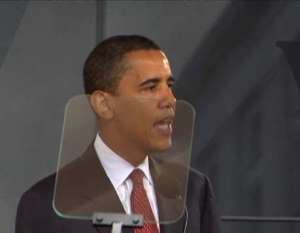 Well, what kind of bedtime story will be read from TOTUS tonight?
The US labor market is in shambles and we need a big, bold plan like the sort FDR delivered during the Great Depression. How likely are we to get even a smidgin of that?
Here’s some thoughts from some Congressional Democrats:
Millions of people are waking up every morning without a job and with dwindling hopes of finding one. Their faith in the American Dream is flagging. Their aspirations for a middle class life are being dashed.
This is a national emergency. Unemployment is unacceptably high, more than 9 percent, with more and more Americans slipping into poverty. The number of children in poverty has climbed to nearly 15 million, a moral outrage that must be remedied. Economic despair is afflicting Americans of all stripes — urban and rural, blue and white collar, those with advanced degrees, high school diplomas and GED.’s alike. They haven’t failed; their leaders have failed them.
For communities of color, the pain is even more acute – a 15.9 percent unemployment rate for African-Americans and 11.3 percent for Latinos. Youth joblessness is also persistent (a staggering 25 percent unemployment rate for those age 16 to 19), as qualified young people move into a job market that has nothing to offer them but rejection letters and crushed hopes.
The size of the federal budget deficit is not keeping the American people up at night ; they’re worried about how to pay for groceries. That’s what members of the Congressional Progressive Caucus found when we traveled across the country on a jobs tour this summer, listening to struggling Americans and seeking to elevate their voices over the misleading noise from Washington. Members regularly heard from families struggling to stay afloat, losing their homes, and emptying their savings just to pay the bills.
It’s time for their challenges to become the nation’s challenges. Republicans have proven uninterested in real job-creation efforts. An early glimpse at their so-called jobs agenda reveals little more than additional tax cuts for wealthy individuals and corporations, a rollback of environmental regulations and continued attacks on labor rights.
It’s up to the president to offer an ambitious proposal designed to have an immediate and lasting impact. All members of Congress should support a plan that can create good jobs — putting money in people’s pockets that they can pump back into the economy.
This was written by REP. BARBARA LEE & REP. KEITH ELLISON & REP. LYNN WOOLSEY & REP. RAUL GRIJALVA at Posted at Politico.
Other Democrats are equally outspoken. But will they act to see the President doesn’t propose yet another luke warm Republican plan that they’ve jettisoned in the past? Maxine Waters wants to know if Obama is more concerned about high unemployment in the black community or Iowa primary voters?
We’ve heard Democratic criticism on the President’s plans in the past. But when the time comes to fight for Democratic policies, they all fold and vote like sheep. Let’s sit back and listen to what will undoubtedly be another speech with a few bad ideas that get passed and a few good ideas that will never have a chance of getting beyond rhetoric.
Ladies and Gentlemen, I give you the Teleprompter of the United States …
Rhetoric and Speechification over Subtance
Posted: September 8, 2011 Filed under: 2012 presidential campaign | Tags: Obama jobs speech, prebuttal 19 CommentsI’m getting ready to do the live blog tonight for the Obama jobs speech. It seems the press is finally doing due diligence on the President. For some reason, media due diligence is only done after it’s way too late. Right now, the press seems obsessed with following John Huntsman who has about a 1% following and just about that much of a chance of making it through a Republican primary. But, now that we’re up against some of the craziest Republicans that could ever possibly come up the drain pipe, we’ve got the press suddenly saying speeches aren’t enough while the President still thinks all he has to do is give one and problems magically clear up. Here’s a really good pre-speech analysis that should’ve been written around 2008. Bottom line: Actions speak louder than words.
Barack Obama has been here before — politically endangered, doubts mounting about his leadership, and a growing sense that, for all his promise, he has lost his way.
As he has done before — whether to salvage a candidacy or revive a policy — Obama will resort to a device that has been successful for him in the past: the Big Speech.
With most of the country saying he has mismanaged the economy, President Obama will use an address to a joint session of Congress on Thursday to outline his plan to create jobs and head off a second recession. It will be the fifth time Obama has spoken to a joint session, the howitzer of the presidential communications arsenal.
But the risks this time are as high as the potential for any reward.
Obama faces some particular challenges on this outing, ones magnified by the summer’s debt-ceiling debate, when he spoke frequently to the American public but with little effect on the outcome.
Americans have been hearing a lot from him. For months, he has discussed some of the same jobs proposals he will detail in the speech, mentioning them as recently as this week at a Labor Day rally in Detroit.
With the unemployment rate locked in above 9 percent, voters are weary of words. Another high-profile speech is likely to underscore how little has changed since Obama said in his first joint-session address, a month after taking office, “Now is the time to jump-start job creation.”
Yes, all you have to do is say it and it comes true. Now, I have to admit that President Obama doesn’t have the same problems that most of the Republicans do. They are on the wrong side of history since just about every thing they are pushing these days got settled by and around the civil war which most of them appear to be ready to fight all over again. They also have so many factual errors that you wonder why some of the journalists in those debates don’t mention it. Perry and Bachmann are stand outs on that front. Perry has no idea what a Ponzi scheme is and Michelle Bachmann should look like Pinocchio by now. Both of them appear to be blissfully unaware that the federal government has the ability to tax people and businesses and print money. This makes so many of their economic points so moot that it’s not even funny. However, I think they want to repeal all the amendments save the second, so maybe in that context it all makes sense.
However, it’s hard to put meaningless rhetoric vs misstatement of fact kind of rhetoric on any kind of scale and trying to find a balance. They both are forms of lies. One basically is saying things that never happened and the other is talking about things that will never happen. I stuck Hillary’s famous campaign speech on celestial choirs up top for reference. It’s a germane today as it was the day it was given.
All I can say is there are lies and there are damned lies. If you don’t say what you mean and do what you say, you might as well be making facts up along the way too. The only difference that I can see is which verb tense you use.
Join us tonight for the live blog tonight when I try to look at the speech through my economist’s spectacles. Right now, I’m just a super depressed American voter looking for a reasonable alternative before I have to vote none of the above and lose along with the rest of the country.
Thursday Reads: The GOP Debate, Obama’s Narcissism, and Generations
Posted: September 8, 2011 Filed under: Baby Boomers, Barack Obama, jobs, morning reads, psychology, Republican presidential politics, the villagers, U.S. Economy, U.S. Military, U.S. Politics, unemployment, WE TOLD THEM SO | Tags: Al Gore, Generation X, Generation Y, generations, Michael Brenner, Mitt Romney, narcissim, Obama jobs speech, Republican Debate, Richard Cohen, Rick Perry, The Hamptons 41 Comments
Good Morning!! Last night we live-blogged the Republican debate, and it was borrrrrinnngggg! The less said about that debate last night the better. I can’t begin to pick the best or worst of that bunch. They were all horrible. For the media the big story in the debate was the conflict between Rick Perry and Mitt Romney. From CBS News:
The sparks flew early at Wednesday night’s Republican presidential debate, with onetime frontrunner Mitt Romney and the man who has overtaken him in the polls, Texas governor Rick Perry, trading barbs over their respective records on job creation.
Romney was asked about the fact that Massachusetts was ranked 47th in job creation during his time in office. After making the case that he had improved a bad situation, Romney took a subtle shot at Perry, who has been in politics since 1984, saying, “Look, if I had spent my whole life in government, I wouldn’t be running for president right now. My experience, having started enterprises, having helped other enterprises grow and thrive, is what gives me the experience to put together a plan to help restructure the basis of America’s economic foundation so we can create jobs again, good jobs, and compete with anyone in the world.”
Pressed on his reference to spending a “whole life in government,” Romney, who touts his experience in the private sector, added: “It’s a fine profession, and if someone were looking to say how can we restructure government, and which agency should report to which other agency, well, maybe that’s the best background. If you’re thinking about what it takes to reshape and update America’s economy, and to allow us to compete with China and other nations around the world, understanding how the economy works fundamentally is a credential I think is critical.”
Perry countered by saying that while Romney had a good record creating jobs “all around the world” in the private sector, “when he moved that experience to government, he had one of the lowest job creation rates in the country.”
“So the fact is, while he had a good private sector record, his public sector record did not match that,” the Texas governor continued. “As a matter of fact, we created more jobs in the last three months in Texas than he created in four years in Massachusetts.”
Whatever.
I don’t expect the President’s jobs speech tonight to be much more interesting, but we will be live-blogging it anyway. I do expect that after the Obama has nothing new to offer in his speech tonight that he will have “crossed the Rubicon,” so to speak. He will have passed the point of no return. He’ll be done, finished, caput. I’ll say again what I’ve been saying for awhile now: this president needs to follow in the footsteps of that other failed president, Lyndon B. Johnson. Realize it’s all over and withdraw from the race so someone else can try to beat whichever nutjob the Republicans nominate.
If Obama refuses to withdraw, I think the media should hold debates where the President debates candidate Obama from 2008. They could play clips of his campaign promises and then ask him to explain why he adopted the Bush policies instead. Now that might be an entertaining debate.
For a long time now, we’ve been seeing former Obot bloggers expressing their disappointment in the man they forced down America’s throat. Lately the disappointment and even disgust has been coming from more mainstream sources. It’s quite amazing really. Yesterday Richard Cohen, the aging WaPo columnist told the Villagers that Obama has lost the Hamptons.
Over the Labor Day weekend, I went to a number of events in the Hamptons. At all of them, Obama was discussed. At none of them — that’s none — was he defended. That was remarkable. After all, sitting around various lunch and dinner tables were mostly Democrats. Not only that, some of them had been vociferous Obama supporters, giving time and money to his election effort. They were all disillusioned.
Let me call the roll. I am talking about are writers and editors, lawyers and shrinks, Wall Street tycoons and freelance photographers, hedge funders and academics, run-of-the-mill Democrats and Democratic activists. They were all politically sophisticated, and just a year ago some of them were still vociferous Obama supporters. No more.
Frankly, I was surprised. The Hamptons are a redoubt of New York liberalism. It is to campaign money what the Outer Banks are to fishermen. I expected more than a few people to defend the president. No one did. Everyone — and I do mean everyone — expressed disappointment in him as a leader. In that area, they thought he was a bust. Some articulated detailed critiques — the nature of his stimulus program, for instance. They argued that more money should have gone into long-term infrastructure programs. Most, though, skipped the details and just registered dismay: Where had their “change” agent gone?
Today, Al Gore attacked Obama as anti-science and anti-environment.
Instead of relying on science, President Obama appears to have bowed to pressure from polluters who did not want to bear the cost of implementing new restrictions on their harmful pollution—even though economists have shown that the US economy would benefit from the job creating investments associated with implementing the new technology. The result of the White House’s action will be increased medical bills for seniors with lung disease, more children developing asthma, and the continued degradation of our air quality.
BTW, why hasn’t Gore been protesting outside the White House? Why hasn’t he been arrested? Wouldn’t that have a powerful effect? But I digress.
I want to highlight another elite critique–although this critic apparently saw through Obama early on. Yesterday, HuffPo published an outstanding post by Professor of International Affairs Michael Brenner, from the University of Pittsburgh: The Great Betrayal.
Barack Obama’s betrayal will resonate in history long after he has become just another name on the over-priced celebrity speaker circuit. It is a betrayal of far more than the youthful idealists and loyal progressives who put him in the White House. Obama has unmoored the Democratic Party from its foundations — philosophical and electoral. No longer is it an expression of the persons, programs and ideas that crystallized with the New Deal and which dominated the country’s politics for sixty years. Its future is that of ad hoc assemblage of hustlers and special interests whose sole claim to govern will be that it is not the amalgamated Tea/Republican Party. Obama, by this Oedipus-like act of patricide, has also betrayed the country that voted for an enlightened leader with a social conscience — a country in desperate need of the opposite to the fate he has laid on us.
Brenner argues that Obama’s extreme narcissism reflects our contemporary culture and that we’ll see more like him in the future {shudder}.
A narcissist has no convictions other than a total dedication to his own gratification. That gives him the freedom to maneuver without inhibition or conscience with the revered self as the only reference point. All expressions of ideals, of opinions, of intentions are implicitly so qualified. A complementary narcissistic trait is an ease with blurring the line between virtual reality and actual reality. Narcissists believe everything they say — at the moment they say it. Their declarations are sterile acts that have no pride of parentage nor can they expect honor from offspring. Witness Obama’s momentarily rousing support of a labor movement that he has scorned for thirty months. This is the same President who has launched an all-out campaign against public school teachers whose unions serve as the whipping-boy for all that ails American education. Narcissists take as given that they never dissemble or lie — because to do so is to acknowledge that reality has an intolerably constraining claim on them.
Of course, this last is a feature of contemporary American political culture in general. Facts are taken to be infinitely malleable, the very notion of truth is denied, speaking honestly is viewed as a lifestyle choice, and communication is more a matter of self affirmation than an attempt to convey knowledge, emotion or intention to somebody else. We have externalized navel gazing to a remarkable degree. One consequence is that public discourse is not anchored by common standards of honesty. It is a maelstrom of opinion, emotive outbursts, mythology and primal screams. Accountability, therefore, ceases to exist. There is accountability only where there are benchmarks of veracity, a reasonably rigorous monitoring of what is said and done, and a dedication on the part of some at least to ensuring that these requirements for a viable democracy are met. The abject failure of the media to perform these functions to any reasonable degree is a hallmark of our times. The think tank and academic worlds are little better.
This amorphous environment is narcissist friendly terrain. It is permissive of twists and turns, leaves no record of what was done yesterday or the day before — much less a year ago, and focuses only on the evanescent existential moment. Case in point is the remarkably uncritical coverage that Obama has received from the supposedly responsible media — especially those who claim to be upholders of the ideas and policies and interests that he has betrayed.
Wow! Can that guy ever write! As I said Brenner apparently saw Obama pretty clearly from the beginning. Here is an excerpt from a paper he wrote in October, 2008 Who is Barack Obama? In this piece, Brenner comments on Obama’s strange disdain for the political and cultural movements of the 1960s and 1970s.
Obama is not a philosophical progressive or a populist. Little if anything in the roiled public life of America seems to anger him or even irk him. At a time of multiple crises – constitutional, economic, and in the nation’s foreign dealings – he keeps his emotional distance. It is hard to imagine him getting worked up about any of the developments in American society or attacks on the body politic that so deeply dismay many others
In all respects, Obama is very much a man of his times. Weak or absent convictions, dispassion even about grievous wrongs, incapacity for moral outrage, quiet acceptance of the precept to put self first – if not quite the measure of all things, a natural egoism – all the hallmarks of contemporary American society. A man who amasses $10 million at a relatively young age after a late start and married to a woman with no inherited wealth whatsoever is a man who looks after himself. He has none of the idealism that exemplified his mother’s life, and for which she paid a steep price in comfort and security. Obama’s disparagement of the 1960s social movements that shaped his mother is revealing. It confirms the absence of serious interest in his own lineage. It hints at an introspection, such as it is, that has the instrumental needs of the present as its magnetic pole. It exemplifies a strongly ahistorical approach to the current world he occupies. Obama’s public remarks that the whole 1960s experience was a ‘psycho-drama’ is astonishing. He is what he is, where he is, as a direct result of the 1960s. The same holds for his wife and children. Indeed, he simply would not be were it not for the ideals and attitudes that became full-blown in the 1960s.
Perhaps at the root of Obama’s narcissism there is a sense of disgust about where he came from and who is is? Or maybe he disdains the movements of the ’60s and ’70s–the Civil Rights movement, the Women’s movement, the anti-war movement, the gay rights movement–because he has no convictions of his own and can’t understand why anyone would have convictions worth fighting for? I don’t know. I admit I simply do not understand the man. I just know he’s toxic for America and he was toxic for the Democratic Party, which, thanks to him, is now truly dead.
Interestingly, I came across another post at HuffPo today that address the issue of generational conflict: Generation X Simply Doesn’t Get it, by Joshua Grant. The post seems to have been written in reaction to the August unemployment numbers. Joshua longs for the days when America really was a great country that everyone could be proud of. His generation, Gen Y, has never experienced it, he says.
We, Generation Y, are a people who have lived through the need for “ADHD medicines,” “anti-depressants,” dysfunctional and broken families, a dot-com bust, financial collapse, failed government institutions, world hunger, terrorism, and international conflicts. Simply put, there has been little to celebrate in life since we’ve been around.
Some people think we are self-absorbed, concerned only with our interest, but can you blame us? The only glimmers of hope have been what personal achievements we have accomplished, of which we hang onto to for dear life. After all, in a country that is supposed to be so “great,” something doesn’t add up, and we want to know why? It’s not that we are conceited or don’t want to be a part of something better, but why get in the middle of a national mess that looks like a downward spiral?
Joshua is so young that lacks any historical perspective. He blames the problems he sees on Generation X. Poor Gen X! They grew up under Reagan and never experienced an America that produced prosperity for anyone but the rich. I’m not sure Joshua even knows about difficult passages that members of other still living generations experienced–like the Great Depression, World War II, Vietnam, racial discrimination and segregation. He wants to know why things are so terrible in this country right now. And if Gen X-ers aren’t going to do anything about it, he wants them to get out of the way so his generation can. To his parents’ generation, he writes:
Let me thank you on behalf of my generation, Y, for all that you have done, and now I ask that you step aside, open your books, and let us, with all the right questions, begin to solve the problems you can’t seem to figure out. It all starts with Why/Y.
If you won’t ask, we will.
I don’t want to be too hard on Joshua, because he’s obviously very young. But what on earth is his generation waiting for? Why aren’t they in the streets protesting already? Why aren’t they out there demanding jobs and a guarantee they’ll get social security in their old age instead of complaining about being stripped of hope? Why aren’t they protesting the wars, torture, and domestic spying? Why are they waiting around for someone else to do it?
In the comments on Joshua’s article, everyone hammers the baby boomers and says it’s all our fault. At least we tried to fight the powers that be. Our generation didn’t sit around waiting for our parents to change things. We fought for change and we had a powerful effect on the culture even though we couldn’t stop the growing corruption and corporatization of the government. What are these kids waiting for? I admit I just don’t get it.
Well, this post has turned into a bit of a rant, so I guess I’ll wrap it up. What are you reading and blogging about today?

 peej
peej Carissa
 bostonboomer
 dakinikat
 ecocatwoman
 mablue2
 Mama Lopez
 peggysue22
 quixote
 skydancingguestblogger
 Mona (aka Wonk the Vote)



 Sky Dancing
Recent Comments