
Late Night Post: Oddities
Posted: August 25, 2011 Filed under: open thread | Tags: Gadhafi loves Condi, Planet made of diamonds, Spilled Bull Seman causes havoc on Tennessee HIghway, weird news 2 CommentsHere’s a few kewl things I found today while reading things around the web.
The new planet is far denser than any other known so far and consists largely of carbon. Because it is so dense, scientists calculate the carbon must be crystalline, so a large part of this strange world will effectively be diamond.
“The evolutionary history and amazing density of the planet all suggest it is comprised of carbon — i.e. a massive diamond orbiting a neutron star every two hours in an orbit so tight it would fit inside our own Sun,” said Matthew Bailes of Swinburne University of Technology in Melbourne.
Lying 4,000 light years away, or around an eighth of the way toward the center of the Milky Way from the Earth, the planet is probably the remnant of a once-massive star that has lost its outer layers to the so-called pulsar star it orbits.
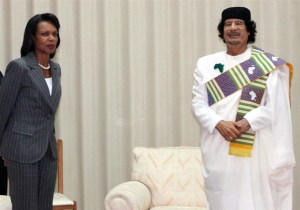 Gadhafi has a thing for Condoleeza Rice
“Deeply bizarre and deeply creepy.”
That’s how the State Department is describing a surprising find inside the compound of Libyan leader Moammar Gadhafi: a photo album with pictures of Condoleezza Rice.
Rebel fighters who ransacked Gadhafi’s Bab al-Aziziya compound have been turning up some bizarre loot, including the Libyan leader’s eccentric fashion accessories and his daughter’s golden mermaid couch. The latest discovery is a photo album filled with page after page of pictures of Rice, the former secretary of state who visited Tripoli in 2008.
“I support my darling black African woman,” he said. “I admire and am very proud of the way she leans back and gives orders to the Arab leaders. … Leezza, Leezza, Leezza. … I love her very much. I admire her, and I’m proud of her, because she’s a black woman of African origin.”
Okay, this is my last entry and it’s really weird! A Bull semen spill caused a scare and closed highway a highway near Nashville Tennessee.
A spill of frozen bull semen bound for a breeder in the state of Texas triggered a scare on Tuesday that temporarily shut down a U.S. interstate highway during the morning rush hour.
The incident began when the driver of a Greyhound bus carrying the freight alerted the fire department he had lost a part of his load while negotiating the ramp on a highway near Nashville.
“We didn’t know what it was, but we were told (the canisters) were non-toxic,” said Maggie Lawrence, a fire department spokeswoman.
When firefighters arrived on the ramp, they saw “four small propane-sized canisters (that) began to emit a light vapor,” Lawrence said.
In addition to the vapor, the canisters also let off an unpleasant odor and the ramp was closed while emergency personnel tried to determine what was in the containers.
The bus driver turned around to retrieve the canisters. Once emergency personnel learned the smoking canisters were nothing hazardous and that they simply contained frozen bull semen that had been stored on dry ice, Tennessee Department of Transportation and fire department workers cleared the ramp.
So, this is an open thread!! Any weird things have happened to you today?
US Citizens Arrested, Interrogated, and Stranded Overseas
Posted: August 25, 2011 Filed under: Barack Obama, Civil Liberties, Civil Rights, Egypt, FBI raids, Foreign Affairs, Human Rights, Kuwait, MENA, Middle East, Somalia, Yemen | Tags: ACLU, American Muslims, CIA, COINTELPRO, Council on American-Islamic Relations (CAIR), Egypt, FBI, Gulet Mohamed, Kuwait, middle east, Mother Jones, Nick Baumann, no-fly list, Somalia, Yahya Wehelie, Yemen 6 Comments
Gulet Mohamed surrounded by family on return to U.S.
From The New York Times, January 5, 2011:
An American teenager detained in Kuwait two weeks ago and placed on an American no-fly list claims that he was severely beaten by his Kuwaiti captors during a weeklong interrogation about possible contacts with terrorism suspects in Yemen.
The teenager, Gulet Mohamed, a Somali-American who turned 19 during his captivity, said in a telephone interview on Wednesday from a Kuwaiti detention cell that he was beaten with sticks, forced to stand for hours, threatened with electric shocks and warned that his mother would be imprisoned if he did not give truthful answers about his travels in Yemen and Somalia in 2009.
American officials have offered few details about the case, except to confirm that Mr. Mohamed is on a no-fly list and, for now at least, cannot return to the United States. Mr. Mohamed, from Alexandria, Va., remains in a Kuwaiti detention center even after Kuwait’s government, according to his brother, determined that he should be released.
During the interview with the NYT, Mohammed said, “I am a good Muslim, I despise terrorism.”
During the 90-minute telephone interview, Mr. Mohamed was agitated as he recounted his captivity, tripping over his words and breaking into tears. He said he left the United States in March 2009 to “see the world and learn my religion,” and had planned to return to the United States for college.
He said he had traveled to Yemen to study Arabic, but stayed less than a month because his mother worried about his safety. He said that he spent five months later that year living with an aunt and uncle in northern Somalia, before moving to Kuwait in August 2009 to live with an uncle and continue his Arabic studies.
Mohammed’s ordeal began when he went to the airport in Kuwait to renew his travel visa. He was held for five hours and then handcuffed, blindfolded and taken to a prison where he was interrogated and beaten on his feet and face with sticks when he didn’t give the “right answers.”
“Are you a terrorist?” they asked, according to his account.
“No,” he replied.
“Do you know Anwar?” his interrogators asked, referring to Mr. Awlaki.
“I’ve never met him,” Mr. Mohamed recalled saying.
“You are from Virginia, you have to know him,” they responded, according to Mr. Mohamed. From 2001 to 2002, Mr. Awlaki was the imam of a prominent mosque in northern Virginia.
Mohammed told the NYT in January that even after being released, he couldn’t sleep or eat and was constantly fearful. He said he has “always been pro-American” and obviously could not understand why he was targeted. After the article in the NYT, Mohammed was finally permitted to return home later in January. He told the Washington Post that his ordeal had “made me stronger.”
Mohammed is only one of many American citizens of Middle Eastern or African descent who have found themselves stranded overseas, unable to return home because their names have been put on a no-fly list while they were out of the country. Many of these people have been arrested and interrogated by foreign governments, apparently at the request of the F.B.I. From the Post article (1/21/2011):
Civil liberties groups charge that his case is the latest episode in which the U.S. government has temporarily exiled U.S. citizens or legal residents so they can be questioned about possible terrorist links without legal counsel.
The American Civil Liberties Union is suing the U.S. government on behalf of 17 citizens or legal residents who were not allowed to board flights to, from or within the United States, presumably because, like Mohamed, they were on the government’s no-fly list. Of those stranded overseas, all were eventually told they could return, often after they agreed to speak to the FBI. None was arrested upon their return.
The ACLU suit, filed in Portland, Ore., alleges that Americans placed on the no-fly list are denied due process because there is no effective way to challenge their inclusion. The government does not acknowledge that any particular individual is on the no-fly list or its other watch lists. Nor will it reveal the exact criteria it uses to place people on its list.
This week Mother Jones published a series of reports on their investigations of FBI operations that sound like COINTELPRO updated.
COINTELPRO was an FBI covert operation that targeted domestic left-wing and anti-war groups from 1956 to 1971, in the name of “national security.” Frankly, the covert operations have probably continued even though they are technically illegal. But lately we’ve seen an uptick in FBI operations targeting groups within the U.S. Until I came across a couple of blog posts last week about American muslims being targeted overseas, I had no idea the FBI had branched out to foreign covert operations.
At Mother Jones, Nick Baumann writes:
In the past, the FBI has denied that it asks foreign governments to apprehend Americans. But, a Mother Jones investigation has found, the bureau has a long-standing and until now undisclosed program for facilitating such detentions. Coordinated by elite agents who serve in terrorism hot spots around the world, the practice enables the interrogation of American suspects outside the US justice system. “Their citizenship doesn’t seem to matter to the government,” says Daphne Eviatar, a lawyer with Human Rights First. “It raises a question of whether there’s a whole class of people out there who’ve been denied the right to return home for the purpose of interrogation in foreign custody.”
I highly recommend reading the whole article. Baumann describes other cases similar to Mohammed’s and reveals information he obtained from government officials and representatives of human rights groups.
Here is another example from a 2010 Huffpo article:

A Virginia man said he has been stuck in limbo in Egypt for the last six weeks, living in a cheap hotel and surviving on fast food after his name was placed on a U.S. no-fly list because of a trip to Yemen.
Yahya Wehelie, a 26-year-old Muslim who was born in Fairfax, Virginia to Somali parents, said Wednesday he spent 18 months studying in Yemen and left in early May. The U.S. has been scrutinizing citizens who study in Yemen more closely since the man who tried to blow up a U.S.-bound airliner on Christmas was linked to an al-Qaida offshoot in Yemen.
Wehelie was returning to the U.S. with his brother Yusuf via Egypt on May 5 when Egyptian authorities stopped him from boarding his flight to New York. They told him the FBI wanted to speak with him.
He said he was then told by FBI agents in Egypt that his name was on a no-fly list because of people he met in Yemen and he could not board a U.S. airline or enter American airspace. His passport was canceled and a new one issued only for travel to the United States, which expires on Sept. 12. He does not have Somali citizenship.
Wehelie said his brother Yusuf was allowed to return home, but only after he was detained for three days by Egyptian police on suspicion of carrying weapon. He said his brother was shackled to a jail wall and interrogated by a man who claimed to work for the CIA. He was then dumped in the street outside the prison when he feigned illness.
In June, 2010, the Council on American-Islamic Relations (CAIR) posted a list of American Muslims who had been kept from returning to the U.S. after trips abroad.
In July, 2010, CAIR posted a warning on its website informing Muslim-Americans that they could end up in “forced exile” if they traveled to another country.
CAIR this week issued an advisory to American Muslims — whether citizens, permanent residents or visa holders — warning of the risk of “forced exile” when traveling overseas or attempting to return to the United States. Muslim travelers are urged to know their legal rights if they are placed on the so-called “no-fly list.”
In the past few months, CAIR has received a number of reports of American Muslims stranded overseas when they are placed on the government’s no-fly list. Those barred from returning to the United States report being denied proper legal representation, being subjected to FBI pressure tactics to give up the constitutionally-guaranteed right to remain silent, having their passports confiscated without due process, and being pressured to become informants for the FBI. These individuals have not been told why they were placed on the no-fly list or how to remove their names from the list.
FBI agents have reportedly told a number of individuals that they face being stranded outside the United States longer, or forever, unless they give up their rights to legal representation or to refuse interrogations and polygraph tests. But even those who submitted to interrogations without an attorney or to the “lie detector” tests remain stranded.
This situation is outrageous, and President Obama should be directly confronted about his support of this un-American, authoritarian policy (White House approval is required for many of these FBI activities). Perhaps a relatively high profile article like the one in Mother Jones will influence some mainstream reporters to do that. In the meantime, please spread the word in any way you can.
Finally, but is it for real?
Posted: August 25, 2011 Filed under: 2012 presidential campaign, Economy, unemployment, voodoo economics | Tags: bad economy, joblessness, lousy poll numbers, Obama 10 Comments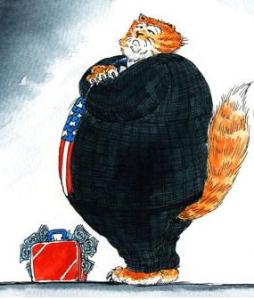 When Obama swept into office, there was an ongoing, left-over Bush program in place to rescue the financial system which focused on getting banks recapitalized through the Fed. Despite worsening unemployment and rising bankruptcies, a stimulus that was top heavy in worthless tax cuts was hurried to congress and a program–that was more of a plea to banks than an actual program–was pasted together to focus on refinancing underwater mortgage holders. The stimulus may have changed the momentum of GDP growth and the FED program definitely stabilized the banking system, but the programs for homeowners and the unemployed were less-than-successful. The President was itching to put something together on health care to prove that he could do something that hadn’t been achieved by the Clintons. It looks now like his primary economic advisers were warning him that just feeding tax breaks to choice businesses and and cheap loans to banks was not going to solve a major financial crisis. Obama’s focus never really appeared to be on things that mattered at the time. As a result, serious improvement in key areas of the economy never materialized.
It’s not a surprise to any of us around here that Obama’s handling of the US economy is souring voters. James Carville’s mantra–it’s the economy stupid–has never been more relevant to the vast majority of Americans who have been made worse off by the policies of the last ten years.
Americans’ views on the economy have dimmed this summer. But so far, the growing pessimism doesn’t seem to be taking a toll on President Barack Obama’s re-election prospects.
More people now believe the country is headed in the wrong direction, a new Associated Press-GfK poll shows, and confidence in Obama’s handling of the economy has slipped from just a few months ago, notably among fellow Democrats.
The survey found that 86 percent of adults see the economy as “poor,” up from 80 percent in June. About half — 49 percent — said it worsened just in the past month. Only 27 percent responded that way in the June survey.
That can’t be good news for a president revving up his re-election campaign.
There’s a good chance that GDP–now growing at a miserably slow rate–may go into negative territories shortly, forcing the NBER to date the  start of yet another recession when the recovery from this one has not really taken hold. There’s indications in the market that another crash could be on the horizon. After all, businesses can only wring so much profit out of restructuring debt to take advantage of cheap interest rates and cutting costs primarily by dumping workers. Here’s some really frightening news on reinsurance on banks which is also causing weird stuff in the CDS market. That’s the same damned market that messed up the economies of Europe and US the last time around which really needs some restructuring, standardization, and reform that has not been done despite Dodd-Frank and similar efforts on the other side of the pond. Bankers have fought new regulation and we’re likely to see the same problems revisit us in a different sector of the same market for the same kinds of vehicles.
Insurance on the debt of several major European banks has now hit historic levels, higher even than those recorded during financial crisis caused by the US financial group’s implosion nearly three years ago.
Credit default swaps on the bonds of Royal Bank of Scotland, BNP Paribas, Deutsche Bank and Intesa Sanpaolo, among others, flashed warning signals on Wednesday. Credit default swaps (CDS) on RBS were trading at 343.54 basis points, meaning the annual cost to insure £10m of the state-backed lender’s bonds against default is now £343,540.
The cost of insuring RBS bonds is now higher than before the taxpayer was forced to step in and rescue the bank in October 2008, and shows the recent dramatic downturn in sentiment among credit investors towards banks.
“The problem is a shortage of liquidity – that is what is causing the problems with the banks. It feels exactly as it felt in 2008,” said one senior London-based bank executive.
“I think we are heading for a market shock in September or October that will match anything we have ever seen before,” said a senior credit banker at a major European bank.
While Obama is on vacation, White House gnomes are pasting together two programs for the poll-beleaguered President to announce when Congress gets back into session. The first is a “jobs” package. The second is a plan for massive mortgage refinancing. This is something that should’ve been on the front burner years ago so now I’m actually wondering if it’s going to work in time to stymy the right wing nut jobs coming up through the Republican primary process or it’s actually going to be serious rather than some lame ass attempt at some neoReaganesque policy that will move farther right when Republicans start saying no to clearly Republican policy.
Here’s the “Contours of Obama jobs package” via Reuters.
The president is widely expected to repeat his calls for an extension of a payroll tax cut, push for patent reform and bilateral free trade deals, and suggest an infrastructure bank to upgrade the country’s roads, airports and other facilities.
Retrofitting schools with energy efficient technology would allow the government to directly hire for labor-intensive work and also give a boost to the clean energy sector that Obama has said could be an important U.S. economic motor.
Other measures being considered, according to economists who have advised the White House, include tax credits for firms hiring more workers, funds for local governments to hire teachers, and retraining help for the long-term unemployed. Steps to boost the ailing housing market are also under review.
“What’s going to be included in this plan are some reasonable ideas that could have a tangible impact on improving our economy and creating jobs … the kinds of things that Republicans should be able to support,” Earnest said. “These are bipartisan ideas that the president is going to offer up.”
Republicans have made it perfectly clear that their only priority is to make Obama a one term president. So, in yet another attempt at trying to look above the fray instead of fighting for what is right, we’re going to see another lukewarm policy that won’t have any immediate effect and will undoubtedly be pushed further to the right and further into the ineffective zone. Plus, it will probably just be offset by other spending cuts in key areas which are likely to have stronger recessionary multiplier effects attached than any positive multiplier effect of the new legislation. I still can’t figure out what the obsession is with tax cuts for new employees. The big cost of new employees is health insurance for one and you can avoid that cost by going any where in the developed and developing world BUT the US. Plus, no business is going to hire any one when the have no customers. I feel like a broke record on the number of repeats on that one. Having spent my life doing strategic planning and budgeting for corporations and having one of my PhD field areas in corporate finance, I can tell you that the US looks like one of those offshore tax havens right now for most major corporations. Also, more ‘free trade’ deals are likely to have just the opposite effect on unemployment anyway as prices tend to equilibriate in the countries involved and we’re the cheap capital market, not the cheap labor market part of that equation. (Hence, in our country, incomes to capital go up and incomes to labor go down as the market goes towards price parity for our country.)
So, the second program is no a way for the US to back mortgage refinancing. This is also something that should’ve been done years ago.
One proposal would allow millions of homeowners with government-backed mortgages to refinance them at today’s lower interest rates, about 4 percent, according to two people briefed on the administration’s discussions who asked not to be identified because they were not allowed to talk about the information.
A wave of refinancing could be a strong stimulus to the economy, because it would lower consumers’ mortgage bills right away and allow them to spend elsewhere. But such a sweeping change could face opposition from the regulator who oversees Fannie Mae and Freddie Mac, and from investors in government-backed mortgage bonds.
Administration officials said on Wednesday that they were weighing a range of proposals, including changes to its previous refinancing programs to increase the number of homeowners taking part. They are also working on a home rental program that would try to shore up housing prices by preventing hundreds of thousands of foreclosed homes from flooding the market. That program is further along — the administration requested ideas for execution from the private sector earlier this month.
But refinancing could have far greater breadth, saving homeowners, by one estimate, $85 billion a year. Despite record low interest rates, many homeowners have been unable to refinance their loans either because they owe more than their houses are now worth or because their credit is tarnished.
I’ve already looked into refinancing my FHA/VA loan from 7% to 4%. I have good credit and my loan balance is about one half of what my house is worth–even with the recent decrease in home prices–because I’ve owned it for 11 years. I didn’t follow through because the points charged by Wells Fargo–who processes my mortgage at the moment–were ridiculous. They’d have to pick up the fees or points to intrigue me, frankly. The people with the worst problems are the ones that are now strategically defaulting because they are underwater. Interesting enough, I’m set to discuss just that topic this fall in the Denver FMA meetings using this Philadelphia FED working paper. Their findings suggest that people have the ability to pay these mortgages but they are defaulting anyway because they are underwater. The weird thing is they are defaulting on first mortgages while keeping their second liens current. This means they are ‘strategically’ defaulting to get rid of the house because it’s a stupid investment for them. Any plan that doesn’t deal directly with underwater mortgage holders specifically will not work. Banks really don’t have any incentive to work with them now because they get more fee income from processing defaults than they do from renegotiating the mortgage. The incentives on both sides of the market are totally warped at this point in time. Again, quoting from the NYT article, this isn’t in the plan.
A broader criticism of a refinancing expansion is that it would not do enough to address the two main drivers of foreclosures: homes worth less than their mortgages, and a sudden loss of income, like unemployment. American homeowners currently owe some $700 billion more than their homes are worth.
I don’t see how the issues in the housing market are going to be solved until you solve this problem. Dumping houses on the market is going to continually depress prices and cause this problem to regenerate.
So, this gets back to sort’ve my main point about both these big ideas. First, they are a little too little and way too late. The inside and outside lags on these kinds of fiscal policy measures are long and getting them through congress and into fruition is likely to lag-filled. We’re also likely to get a lecture and ransom demand from the austerity demons. So, is this a real effort or a symbolic effort? Second, the policy prescriptions are anemic. Neither of them focus on the real problems or the known solutions. So, again, is this a real effort or symbolic effort? Third, these aren’t very aggressive policies nor or they what you would call traditionally Democratic policies so who are they really aimed at? Again, it seems like a symbolic offering to voters. If you’re getting the impression that I’m not impressed at all with this, you’re right. I suppose this is all to make the confidence fairy come home to roost. It still seems to me that she’s on her honey moon with the high priest of voodoo economics. Imaginary beings are symbolic too.
Thursday Reads: S & P, the New Madrid Fault, the Gaddafis, and Obama in the Eye of Hurricane Irene
Posted: August 25, 2011 Filed under: Foreign Affairs, Libya, MENA, morning reads, Stock Market, The Bonus Class, U.S. Economy, U.S. Politics | Tags: Barack Obama, Deven Sharma, Douglas Peterson, earthquakes, FEMA, Global Financial Crisis, Hurricane Irene, Libya, Madrid fault, Martha's Vineyard, Muammar Gaddafi, ratings agencies, Saif Al-Islam Gaddafi, Standard & Poor's, Tim Geithner 42 Comments
Good Morning!! I think I have some interesting reading for you today, so let’s get right to it.
Last night I wrote about Goldman CEO Lloyd Blankfein possibly being in trouble with the feds. Interestingly, on Monday another high-profile exec announced he’ll be stepping down. I’m referring to S&P president Deven Sharma. From The New York Times:
The ratings agency Standard & Poor’s said late on Monday that its president, Deven Sharma, who has become the public face of the firm in the wake of its historic downgrade on the United States’ long-term debt rating, will step down and leave the company by the end of the year….
The management change had been in the works for months and was unrelated to either the Justice Department’s inquiry or to the emergence of the activist investors, Jana Partners and the Ontario Teachers Pension Plan, according to people briefed on the matter.
Oh really? Kind of a strange coinky-dink, then, isn’t it?
The ratings agency’s decision to downgrade the United States’ long-term credit rating to AA+ from AAA on Aug. 5 set off a storm of controversy, including criticism by President Obama and Treasury Secretary Timothy F. Geithner. The decision contributed heavily to the worst drop in American stocks since the financial crisis three years ago, as well as volatility that continues to whipsaw the markets weeks later. The other big ratings agencies, Moody’s and Fitch, maintained their top-tier rating on United States debt.
At the same time, the agency is being investigated over whether it improperly rated mortgage securities in the years leading up to the financial crisis. Standard & Poor’s, along with the other major ratings agencies, gave their highest ratings to bundles of troubled loans that appeared less risky during the housing boom, but have since collapsed in value.
Since the financial crisis, the agencies’ business practices and models have been scrutinized by Congress, and Standard & Poor’s is also being investigated by the Justice Department, people briefed on the matter have previously said. At issue is whether the agency’s independent analysis was driven by profits. The Justice Department inquiry, which began before the Standard & Poor’s downgrade of the United States’ debt, is centered on whether analysts’ decisions to assign securities a low credit rating on subprime mortgage loans were overruled by business managers.
Right. I’m sure none of that had anything to do with the president of the troubled company stepping down. /snark
The Financial Times has a piece on the incoming president, Douglas Peterson.
As head of Citigroup’s Japanese operations in 2004, Mr Peterson dramatically bowed in apology before Tokyo regulators after they shut down Citi’s private banking operations there.
Now, as he takes over the embattled ratings agency just weeks after its unprecedented downgrade of US credit, Mr Peterson is likely to find himself before regulators in the US, who are looking into the downgrade and reportedly investigating S&P’s ratings of mortgages before the financial crisis.
Yet, it is Mr Peterson’s experience in Japan, and his more recent turn running Citibank, the retail banking arm of Citigroup, that has given S&P’s owner McGraw-Hill confidence that he is the right man for the job.
Seven years ago, Mr Peterson was given the tricky task of mending relations with Japanese regulators and rebuilding Citi’s tarnished reputation after the US bank’s private banking unit was found to have illegally amassed large profits and was ordered to close down.
By all accounts, the affable Mr Peterson, who is widely described in Tokyo as “nice” and “sincere”, succeeded in reassuring the Financial Service Agency and the Japanese public alike that Citi could once again be trusted with the considerable financial assets of one of the largest economies in the world.
IOW, Peterson has been hired because of his pleasing personality and his ability to make friends and influence people.
But Sean Gregory at Time argues that “A New Leader Won’t Save S&P.”
It’s tempting to read the resignation of Deven Sharma, who stepped down as president of S&P Monday night, as an admission that the rating agency goofed in downgrading the United States’ sovereign rating from AAA to AA+, even as Fitch and Moody’s maintained America’s top grade. Warren Buffett said the U.S. should be rated “quadruple A.” The Treasury department complained that S&P overestimated the nation’s future debt by $2 trillion. Timothy Geithner said that the S&P decision shows “a stunning lack of knowledge about basic U.S. fiscal budget math. And I think they drew exactly the wrong conclusion from this budget agreement.”
Guess Sharma and Geithner won’t be hanging out at any holiday parties. If the S&P downgrade was indeed a mistake, it was an expensive one. In the week after the Aug. 5 S&P downgrade, according to Bloomberg, the market value of global stocks tumbled by $7.6 trillion. Sharma, a former Booz Allen Hamilton consultant who has headed S&P for the past four years, might not be trumping this fact on his newly-polished resume. So you’re the guy who cost the world $7.6 trillion in wealth? You’re hired!
Like FT, Gregory points out that S&P has been shopping for a new leader for months, mostly because Sharma has failed the company in a number of ways. So will a new president make a difference? No, because the ratings agencies simply aren’t qualified to evaluate the credit of sovereign states.
There’s a frightening earthquake story at The Daily Beast: The Quake We Should Fear. Apparently it’s the Midwest that is due for a big one–not the east coast.
Early in the morning of May 16, while most of America was being titillated and transfixed by the appearance in court of the then-suspect Dominique Strauss-Kahn, an urgent message was suddenly received at the headquarters of the Federal Emergency Management Agency (FEMA) in Washington, D.C.
Reports were streaming in of a catastrophic earthquake, magnitude 7.7, that had struck the Midwest near the town of Marked Tree, Ark. First reports were alarming: phenomenal property damage; casualty figures were unprecedented; transportation links were severed; and cities like St. Louis, Memphis, Little Rock, and Cincinnati had been thrown into utter turmoil. Eight states were believed to have been directly affected, and it was thought the death toll would be in the thousands.
A gigantic federal relief mission swung into action. Nine thousand National Guardsmen were ordered to be deployed. Triage centers were opened in all the affected cities—a list that grew longer as a secondary magnitude 6.0 earthquake struck close to the city of Mt. Carmel, Ill. The Red Cross deployed emergency teams. Power companies were given priority to restore electricity and gas supplies. Heavy equipment was sent in to clear highways and railway tracks.
Within 72 hours some kind of order was restored. Hospitals found themselves more able to cope with the vast number of patients suffering injuries. Refugees fleeing in panic were being assembled into special camps. Temporary tent cities were set up along the main refugee routes.
Huh? Oh wait. That was a FEMA exercise. But it was based on the real possibility of a major earthquake on the Madrid fault. It’s happened before and is due to happen again.
This year marks the bicentennial of the great swarm of earthquakes that afflicted New Madrid between December 1811 and February 1812—hundreds of them, day after day, but punctuated by four enormous ruptures, two occurring on Dec. 16, and one each on Jan. 23 and Feb. 7. These caused spectacular effects all across the then young, sparsely settled United States—toppling church steeples in South Carolina, ringing church bells in Boston, causing the Mississippi to reverse it course, and sinking numerous properties deep into the liquefied earths of the prairies.
Yikes! But I’m still worried that Boston hasn’t had a major earthquake since 1755–so we’re probably due also.
Yesterday I came across a couple of interesting stories on Muammar Gaddafi and his son Saif that you might want to check out.
From Scientific American: Egotist Rex: Are a Dictator’s Defiant Statements Indicative of Self-Delusion? It’s an interview with George Washington University Professor of Psychiatry Jerrold Post.
The interviewer asks Post about the many bizarre statements that Gaddafi has made since the rebellion began. He seems out of touch with reality. Is he delusional? Post discusses the circles of sycophants that surround every world leader–this may make it difficult for the leader to see what is really happening outside this protective bubble of supporters.
They can have a very unrealistic understanding and believe, as Qadhafi stated again and again, “My people, they all love me.”
I found this language of his quite remarkable. And with Qadhafi as an exaggerated example, this is true of any of the other leaders, too—namely, they believe they have widespread support. If there are public demonstrations against them, that must reflect outside agitators. This was true with [ousted Egyptian president Hosni] Mubarak as well. He spoke of outside conspiracies.
But it is particularly true of Qadhafi. There is an interesting kind of almost syllogism for him: “My people all love me, and therefore if there is anyone protesting against me, they are not really my people, and that must be a consequence of outside provocation.” And one of the points that he made early on was that this was crazed youth who were on hallucinogens with which their Nescafe had been laced, which I thought was rather creative, really.
I found Qadhafi’s language in general very striking. And what is most interesting about it is it is entirely in the first person singular: “My people all love me. They will support me. My people, they love me.” It was very “me” centered.
Next the interviewer asks whether narcissism is a characteristic of many national leaders? The response could perhaps be applied to someone a little closer to home, if you know what I mean. Check it out.
Vanity Fair has a new article up about Saif Al-Islam Gaddafi. It’s rather long, but here’s the introductory paragraph:
Saif al-Islam Qaddafi—son of Muammar, and long regarded as his heir—was subjected to an arrest warrant months ago by the Criminal Court for crimes against humanity. Libyan rebels in Tripoli reported that he was in custody, but Saif soon appeared in public, rallying what’s left of pro-Qaddafi forces. As NATO bombs fell on Libya, the distinguished international lawyer Philippe Sands sat down with those who know Saif Qaddafi best—a London professor, his Libyan mentor, and the prosecutor who may decide his fate. Saif Qaddafi may claim that he was merely an intermediary, or a force for moderation, or perhaps even a victim. But whatever the claims, according to the prosecutor, he was deeply complicit in his father’s crackdown this year.
Hurricane Irene could become a category 3 sometime today. It’s still predicted to go right up the coast to New England. States all along the east coast are preparing for the worst. Will it hit the Cape and islands? The LA Times suggests President Obama might have to be evacuated.
First, President Obama’s golf game was interrupted by an earthquake. Now, it appears that Hurricane Irene is beating a path toward Martha’s Vineyard, where the president is vacationing with his wife and two daughters.
The National Hurricane Center’s latest forecast shows Hurricane Irene reaching landfall in the Carolinas late Friday and early Saturday before raking its way up the East Coast and into New England. Coastal areas are urged to keep tabs on the storm’s path and remain alert for possible evacuation orders as the hurricane continues to grow in intensity.
It swelled to a Category 3 storm overnight with winds that could exceed 110 mph, and remains on track to gain in strength and ferocity to become a Category 4 hurricane.
Obama is supposed to be in Washington on Sunday to speak at the opening of the Martin Luther King Memorial and then return to the Vineyard. The storm is supposed to hit DC before moving up to Massachusetts.
The eye of the storm appears to be sticking to the coastal outlines, which could spell trouble for Martha’s Vineyard, an island accessible only by boat or plane. As it has done throughout the storm, the National Hurricane Center stresses that the projected path could change dramatically as weather projections come into sharper focus over the next several days.
Hmmm…. Perhaps Mother Nature is trying to send a message to our obtuse leader: Americans need jobs!! Or maybe not.
That’s all I’ve got for you today. What are you reading and blogging about?
Is Goldman CEO Lloyd Blankfein Facing Possible Prison Time?
Posted: August 24, 2011 Filed under: Corporate Crime, Crime, The Bonus Class, U.S. Economy, U.S. Politics | Tags: corporate crime, corruption, Goldman Sachs, Lloyd Blankfein, Naomi Prins, Reid Weingarten, Senate Permanent Subcommittee on Investigations 4 Comments
Lloyd Blankfein
That’s the question Naomi Prins, a former managing director of Goldman Sachs and author of It Takes a Pillage: Behind the Bonuses, Bailouts, and Backroom Deals From Washington to Wall Street, asked yesterday at The Daily Beast.
I posted in a comment yesterday that I’d heard Blankfein hired a well-known Washington criminal defense attorney. Since then, the business media has been buzzing about why Blankfein hired attorney Reid Weingarten.
Big-shot Washington defense attorney Reid Weingarten, of the firm Steptoe & Johnson LLC, has represented former Enron chief accounting officer Richard Causey (who pleaded out), former Rite Aid vice chairman and chief counsel Franklin Brown (found guilty by a jury on 10 counts of conspiring to falsely inflate his company’s value), and former WorldCom CEO Bernie Ebbers (convicted on nine felony counts by a jury). All three are in jail. Two of them, Ebbers and Causey, had undergone congressional panel investigations beforehand. Another of Weingarten’s clients, former Tyco counsel Mark Belnick, was acquitted, though Tyco CEO Dennis Kozlowski, who was not represented by Weingarten, was convicted and remains in jail.
Prins speculates that Blankfein may be in trouble for two possible reasons. The first is because of his own “loose lips,” when he testified before the Senate Permanent Subcommittee on Investigations in April.
Recall that Blankfein emphatically told the subcommittee, “We didn’t have a massive short against the housing market, and we certainly did not bet against our clients.” The 650-page subcommittee report (PDF) presented on April 13, 2011, which cites Blankfein 79 times, begs to differ.
The report accused Goldman of trading against its clients by simultaneously shorting certain subprime mortgage securities (a.k.a. “cats and dogs”) while stuffing them into the collateralized debt obligations it sold. It also suggested that Goldman executives, including Blankfein, misled Congress in testimony surrounding the Abacus CDO, Hudson, Timberwolf, and other deals, by saying it didn’t have a big short.
The second possibility is that Blankfein’s colleagues are distancing themselves from him in order to protect themselves and Goldman Sachs. Prins writes:
The top lesson I learned before leaving Goldman in the wake of Enron was Goldman’s foremost internal policy is to protect Goldman. It’s also to protect the most powerful members. When cracks manifest in the corporate armor, those two policies are at odds.
The executives running Goldman are exceedingly wealthy, not least because when the firm faced its darkest hour and lowest stock price in years during the bank-created crisis of fall 2008, the government provided it billions of dollars in the form of cheap loans, FDIC debt guarantees, TARP, AIG make-wholes, and a late-night moniker change from investment bank to bank holding company, giving the firm access to excessive Federal Reserve aid.
After the news came out that Blankfein had hired Weingarten, Goldman’s shares fell 6%, and according to Prins, that kind of thing is “frowned upon.” So Blankfein may be be trying to protect himself from being stabbed in the back by his co-workers in addition to fighting anything the Justice Department has planned for him.
I doubt if Obama and Geithner will let Blankfein go to prison, but it will be fun to watch him and the wealthy Goldman partners feeling a little bit of discomfort.
Two Reuters columnists speculated about this story today. Leigh Jones writes:
If you need to hire Reid Weingarten, your career has probably hit a rough patch.
The rule now applies to Goldman Sachs (GS.N) CEO Lloyd Blankfein, who Reuters reported on Monday has retained Weingarten, a partner at Steptoe & Johnson in Washington.
With that move, Blankfein becomes the latest in a long line of executives and high-profile people in trouble who have turned to Weingarten for help. They range from Tyco (TYC.N) corporate counsel Mark Belnick, for whom Weingarten won an acquittal, to ex-Enron accounting officer Richard Causey, who pleaded guilty to fraud and conspiracy, to film director Roman Polanski, who tapped Weingarten to fight extradition to the Unites States for sexually assaulting a 13-year-old girl in 1977.
Jones spends most of the piece providing background on Weingarten, but he also points out that Blankfein’s choice of attorney is telling, and like Prins he notes the market reaction:
Blankfein’s choice of Weingarten as his lawyer has raised questions about what kind of trouble the Goldman Sachs CEO might be in. The DOJ, where Weingarten once worked, is investigating the bank for mortgage-related investments it made.
While it is not unusual for company leaders to arm themselves with their own lawyers, Weingarten’s reputation as a litigator — as opposed to a lawyer who guides clients through investigations — is making Goldman investors nervous. The day that Blankfein’s hiring of Weingarten broke, the bank’s stock dropped nearly 5 percent to its lowest level since March 2009. By late Wednesday afternoon, the shares were at $109.92, up 3.2 percent from Monday’s close at $106.51.
Alison Frankel is more sanguine, arguing that Blankfein hiring an outside attorney is really no big deal.
The market assumed the worst on Monday after Reuters’ great scoop on Goldman Sachs (GS.N) CEO Lloyd Blankfein bringing in Reid Weingarten of Steptoe & Johnson to represent him in the Justice Department’s investigation of the bank. Goldman’s share price fell almost 5 percent on the fear that Weingarten’s entrance signals that DOJ is getting serious about its follow-up to the April 2011 Senate subcommittee report on the financial crisis.
In one sense, that’s reading way too much into the mere fact that Blankfein has brought in his own lawyer. It’s standard operating procedure for corporate executives at companies under investigation to have separate counsel. Consider the example of other alleged villains of the financial meltdown. Richard Fuld of Lehman (LEHKQ.PK), Joseph Cassano of AIG (AIG.N), Angelo Mozilo and David Sambol of Countrywide, John Thain of Merrill Lynch, Kenneth Lewis of Bank of America (BAC.N): They all have their own lawyers, and none of them have faced any criminal charges. Only Mozilo and Sambol even had to answer to the SEC.
She provides a number of examples of other executives doing just that. But…
Nevertheless, Blankfein’s choice of Weingarten is very intriguing. Weingarten is a great lawyer with close ties to the Justice Department, where he once worked in the Public Integrity section, and to Attorney General Eric Holder, whom he actually represented when Congress grilled Holder about President Bill Clinton’s eleven-hour pardon of financier Marc Rich. Weingarten is not, however, part of the club of white-collar defense counsel who typically get referrals from New York firms like S&C. (That group includes Andrew Levander of Dechert; Mary Jo White of Debevoise & Plimpton; Patricia Hynes of Allen & Overy; and Gary Naftalis of Kramer Levin Naftalis & Frankel, all of whom represent high-profile Wall Streeters in financial crisis cases.)
One white-collar defense lawyer who gets referrals from Wall Street firms told me it could be significant that Blankfein went outside the usual circle, turning to a lawyer best known for his trial work. “For many people, the choice of Reid Weingarten would be unusual to represent someone in a simple interview,” he said. “He’s often retained when an investigation is going to lead to a case that would go to trial.”
Hmmmm…. Okay, I’ll believe it when I see it, but I can dream, can’t I?

 peej
peej Carissa
 bostonboomer
 dakinikat
 ecocatwoman
 mablue2
 Mama Lopez
 peggysue22
 quixote
 skydancingguestblogger
 Mona (aka Wonk the Vote)



 Sky Dancing
Recent Comments