
Monday Reads
Posted: January 31, 2011 Filed under: Corporate Crime, Egypt, Foreign Affairs, Global Financial Crisis, income inequality, John Birch Society in Charge, morning reads, SOTU, The Bonus Class, The Great Recession, U.S. Economy, U.S. Politics | Tags: Bennett, Corporate Welfare Recipients Koch brothers, GDP growth, Hatch, Innovation, median incomes flat, Public cost cutting leads to death, Snowe, Tea party targets Lugar, The Great Stagnation, Uncloak the Koch brothers 75 Comments Good Morning!
I thought I’d start the day off with some new topics given we’ve spent the weekend following world events unfold. One of the major complaints of the Egyptian people is their high unemployment rate. It’s basically the same as ours. They also have seen rising food and energy prices. Our overall price inflation is well under control at the moment, but there are world events that have made food and energy prices more volatile than usual. The Egyptians have experienced GDP growth rates that are twice ours, but like our country, the income improvements have advantaged the very few instead of the many for many of the same reasons. One of the guys that skedaddled on that airplane was the big telecom industry captain. We have many huge corporations–like GE–that exist on no bid government contracts that they never lose, even when they’ve been found endlessly maleficent.
I thought I’d start with Tyler Cohen who has been riffing on themes relevant to his for sell on line pamphlet The Great Stagnation. His NYT article this weekend buried one of the themes of the SOTU. It’s called ‘Innovation Is Doing Little for Incomes’.
The income numbers for Americans reflect this slowdown in growth. From 1947 to 1973 — a period of just 26 years — inflation-adjusted median income in the United States more than doubled. But in the 31 years from 1973 to 2004, it rose only 22 percent. And, over the last decade, it actually declined.
Most well-off countries have experienced income growth slowdowns since the early 1970s, so it would seem that a single cause is transcending national borders: the reaching of a technological plateau. The numbers suggest that for almost 40 years, we’ve had near-universal dissemination of the major innovations stemming from the Industrial Revolution, many of which combined efficient machines with potent fossil fuels. Today, no huge improvement for the automobile or airplane is in sight, and the major struggle is to limit their pollution, not to vastly improve their capabilities.
Although America produces plenty of innovations, most are not geared toward significantly raising the average standard of living. It seems that we are coming up with ideas that benefit relatively small numbers of people, compared with the broad-based advances of earlier decades, when the modern world was put into place. If pre-1973 growth rates had continued, for example, median family income in the United States would now be more than $90,000, as opposed to its current range of around $50,000.
You can find more discussion at Marginal Revolution. The Economist weighed in on the booklet tonight.
improvements in rich world living standards may, for the moment at least, come from the capture of policy low-hanging fruit. In other words, the rich world should focus on getting rid of blatantly foolish and costly policies. Moving from taxes on goods, like income, to bads, like traffic congestion, would be a good start. Not spending so much on medical treatments with dubious benefits would be another possibility. Cutting out policy foolishness like agriculture subsidies and the mortgage-interest deduction would be another positive step. Amid rapid growth, really silly policy choices could be tolerated, since surpluses continued to rise. As growth rates slow, the failure to cut out bad policies will mean continued stagnation or declines in living standards for some.And it’s a little amusing to focus on the implications of the spread of cheap-to-free internet amusement. As Mr Cowen notes, the availability of good, free internet entertainment has allowed a lot of people hit hard by falling incomes or recession-induced joblessness to maintain relatively high levels of utility (though this available substitute has also made it easier to cut down on physical consumption, with nasty effects on GDP).
Paul Krugman agrees here. Robert Reich struck a similar chord on stalled incomes in his response to the SOTU. Reich focuses on one of our topics. That would be the important list of what the president didn’t say.
What the President should have done is talk frankly about the central structural flaw in the U.S. economy – the dwindling share of its gains going to the vast middle class, and the almost unprecedented concentration of income and wealth at top – in sharp contrast to the Eisenhower and Kennedy years.
Although the economy is more than twice as large as it was thirty years ago, the median wage has barely budged. Most of the gains from growth have gone to the richest Americans, whose portion of total income soared from around 9 percent in the late 1970s to 23.5 percent in 2007. Americans kept spending anyway by using their homes as ATMs but the bursting of the housing bubble put an end to that – leaving them without enough purchasing power to reboot the economy. So the central challenge is put more money into the pockets of average Americans.
This narrative would be politically risky (opening Mr. Obama to the charge of being a “class warrior”) but at least honest. And it would allow him to connect the dots – explaining why his new health-care law is critical to reducing medical costs for most working families, why tax reform requires cutting taxes on the middle class while raising them on the rich, why the Bush tax cuts shouldn’t be extended for the wealthy, why deficit reduction must not sacrifice education and infrastructure (both important to rebuilding middle-class prosperity) and why any cuts in Social Security or Medicare must be on the backs of the wealthy rather than average working families.
I still can’t believe we have a President that doesn’t run a counter narrative to the Republican Voodoo economic fantasy. I guess it’s left to those of us in the blogosphere to hammer home traditional democratic values. So, speaking of some of the worst of the worst, there’s a movement afoot to UnCloak the Kochs. Those John Birch Society Billionaires that want to bring down social security have been taking up some virtual ink in left blogistan. Here’s something from the New York Observer: ‘7 Ways the Koch Bros. benefit from Corporate Welfare’.
Now that we’ve heard about their charitable giving, David’s 240-foot mega-yacht and role as patrons of the Tea Party movement, it’s time to ask a more serious question: How libertarian are they?
The short answer…not very.
Charles and David Koch, the secretive billionaire brothers who own Koch Industries, the largest private oil company in America, have spent millions bankrolling free-market think tanks and pro-business politicians in order, as David Koch has put it, “to minimize the role of government, to maximize the role of private economy and to maximize personal freedoms.” But a closer look at their dealings reveals that for the past 35 years the brothers have never shied away from using government subsidies to maximize their own profits, even while endeavoring to limit government spending on anything else.
These guys are a veritable bankroll for so-called think tanks that spout more tank than think. Some one should let them know that their businesses are hardly shining examples of a free market. These guys are card carrying members of the crony capitalist set.
In 1977, Charles Koch founded the Cato Institute, an influential libertarian think tank, with the aim of injecting free-market ideas into the mainstream. The Kochs would go on to establish and fund a vast network of overlapping think tanks, institutes, foundations, media outlets, and lobby groups that would vilify centralized government and promote laissez-faire capitalism as the only route to economic prosperity. The Mercatus Center, Americans for Prosperity, Reason Magazine, the Federalist Society and the Heritage Foundation are just a few of the right-wing organizations that run on Koch cash today.
David Dayen has a post up at FDL about protests organized to protest these bloated trust fund babies and their plutocratic friends. These guys are manufacturers of stupidity like climate change denial. Common Cause organized the protest.
After a litany of speakers – including Jim Hightower, Rick Jacobs of the Courage Campaign, and Common Cause President and former Illinois Congressman Bob Edgar, the entire group of protesters moved to the setup across the street from the resort. Police helicopters buzzed overhead. After a while, the police agreed to shut down Bob Hope Drive, and the protesters streamed across the street and directly in front of the resort, just a few inches away from the phalanx of riot cops. The usual protest chanting and raising of banners ensued. More cops were brought in, traipsing over the flower beds. And 25 protesters were taken away in a paddy wagon. The protests were generally peaceful, and the police professional.
The protesters generally decried the Koch Brothers’ influence over American democracy, in particular their use of the Citizens United ruling to spend corporate money in elections. Koch Industries’ funding of climate denialism and other conservative causes was on the minds of the protesters as well.
You can read some of the dirty deeds that pay others to do dirt cheap in the NYT article on the Tea Party targets. Here’s the list of who is in their ‘surveyor’ marks for the 2012 Senate elections. Evidently, Indiana Senator Richard Lugar is one of the guys they’re after. Here’s some more making their unclean, impure list.
In Maine, there is already one candidate running on a Tea Party platform against Senator Olympia J. Snowe. Supporters there are seeking others to run, declaring that they, too, will back the person they view as the strongest candidate to avoid splitting their vote. In Utah, the same people who ousted Senator Robert F. Bennett at the state’s Republican convention last spring are now looking at a challenge to Senator Orrin G. Hatch.
The early moves suggest that the pattern of the last elections, in which primaries were more fiercely contested than the general election in several states, may be repeated.
They also show how much the Tea Party has changed the definition of who qualifies as a conservative. While Ms. Snowe is widely considered a moderate Republican, Mr. Hatch is not. Mr. Lugar, similarly, defines himself as a conservative. He argues that he has consistently won praise from small-business groups, supported a balanced budget amendment and pushed for a reduction in farm subsidies and the closing of agricultural extension offices as part of an effort to reduce unnecessary spending — all initiatives that fall under the smaller government rubric of the Tea Party.
Guess that means there’s more bat shit crazy folks waiting in the wing to mangle and destroy American history and the constitution. Do you suppose we’ll see any more “I am not a witch” ads?
So, last week I posted something sent to me from BostonBoomer about the rise in violent attacks in prisons due to cost cutting measures and outsourcing to private firms. BB’s found another more horrible link. CNN reports the death of a correctional officer in Washington who had made a complaint to her union steward that she feared for her safety.
Jayme Biendl, 34, was discovered late Saturday night after workers at the Monroe Correctional Complex noticed her keys and radio were missing, according to a statement from the Washington State Department of Corrections. Staff at the prison immediately went to where she worked and found her unresponsive, it said.
Emergency responders declared Biendl dead at the scene shortly before 11 p.m. PT, the department said.
She had been strangled, according to Chad Lewis, a department spokesman.
So, it’s monday morning, I spent all weekend rewriting an article on Venture Capital. As long as you don’t have anything to say about that, because I’ve frankly reached my fill on the subject , I’d like to know …
What’s on you reading and blogging list today?
Late Night Drift: Women of Egypt
Posted: January 30, 2011 Filed under: Egypt, Foreign Affairs, Women's Rights | Tags: Esraa Abdel Fattah, Ghanda Shahbandar, Hatshepsut, mona eltahawy, Women in Egypt 32 Comments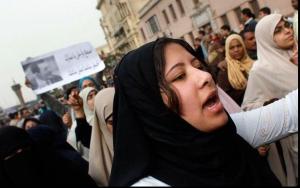
CAIRO, EGYPT - JANUARY 29: Egyptian woman shout out during a demonstration against President Hosni Mubarek in Tahrir Square January 29, 2011 in Cairo, Egypt. Unrest continued in the Egyptian captial as President Mubarek said he would form a new government but remain in power.
The Daughters of Hatshepsut take to the Street.
There seems to be a narrative in some fairly strange places that the women of Egypt are not behind a move to democracy and that they will suffer if Mubarak is removed. I thought I’d share some photos and stories on the role of Women in Egypt’s struggle for democracy.
From Slate:Women Are a Substantial Part of Egyptian Protests
An unprecedented number of Egyptian women participated in Tuesday’s anti-government protests. Ghada Shahbandar, an activist with the Egyptian Organization for Human Rights, estimated the crowd downtown to be 20 percent female. Other estimates were as high as 50 percent. In past protests, the female presence would rarely rise to 10 percent. Protests have a reputation for being dangerous for Egyptian women, whose common struggle as objects of sexual harassment is exacerbated in the congested, male-dominated crowd. Police hasten to fence in the demonstrators, and fleeing leads to violence. And women, whose needs are not reflected in the policies of official opposition groups who normally organize protests, have little reason to take the risk.
This photo is from a Fox news slide show found here http://www.foxnews.com/slideshow/world/2011/01/26/deadly-egyptian-protests/#slide=25
One of the protest organizers is a woman: Political activist Esraa Abdel Fattah, whose 15-day detention in 2008 for her activism made her a symbol of resistance. But Abdel Fattah’s position at the helm of the movement did not previously mean a large female presence. In 2008 Abdel Fattah tried to mobilize all of Egypt around labor conditions in El-Mahalla El-Kubra, north of Cairo. The male workers in the industrial town constituted the majority of the original protesters, and subsequent protests organized by the movement likewise failed to draw as large of a female crowd as seen on Tuesday.

Whoever is running this narrative can’t possibly be watching what’s going on unless they’re spending a huge amount of time on Faux News waiting for a pronouncement from Snowflake Snookie.

Women on the front lines in Egypt
Egyptian journalist Mona Eltahawy has emerged as one of the most prominent representatives of the movement on Western news media. Yesterday, she successfully got CNN to change their headline from “CHAOS IN EGYPT” to “UPRISING IN EGYPT.
Eltahawy, whose Twitter feed has been essential reading for those following the events in Egypt, has been circulating a link to a Facebook album filled with inspiring pictures of women on the front lines of the protests. (Le Monde has a similar gallery for the protests in Tunisia.)
Why is it important to draw attention to this phenomenon? Because we know it’s in the The West’s playbook to exploit concern for women’s rights to justify its imperial ambitions. That’s one of the many ways that the war in Afghanistan was sold to the public, from the CIA’s Wikileaked cable on manipulating public opinion in Europe to the propagandistic cover of Time magazine depicting a woman disfigured by the Taliban.
Culture warriors have cynically co-opted feminist rhetoric to push for bans on the Islamic veil throughout Europe, despite evidence that such prohibitions might actually make women more isolated and less safe. In 2009, Switzerland actually banned the construction of minarets, supposedly in response to feminist concerns.
I would not be at all surprised to hear US leaders, media pundits, and even some liberals defend the Mubarak regime by underscoring the potential threat of newly-empowered Islamists to impose restrictions on women’s rights in Egypt.This possibility certainly exists, but we should not pretend that the United States is sincere about these concerns, nor should we ignore the tens of thousands of Egyptian women taking to the streets to demand change.
“Bravest girl in Egypt”
Mona Eltahawy to CNN: Call Egypt an Uprising
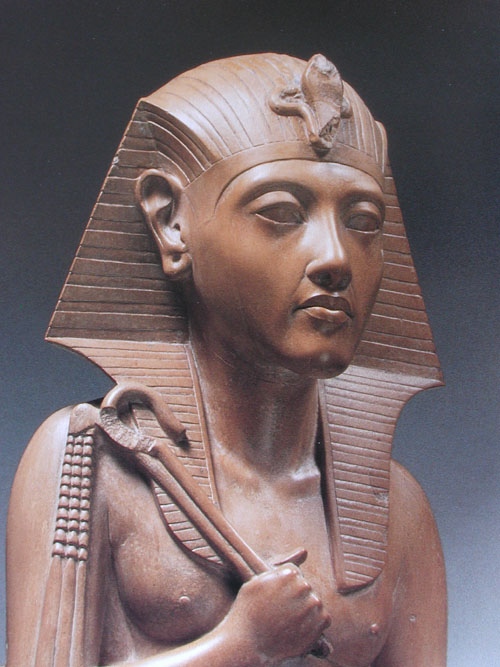 Do these sound like women that are going to be put behind some kind of iron veil? I’m not buying the narrative that a nation that produced Cleopatra and Hatshepsut is going to suddenly find itself promoting the Muslim Version of the Hand Maid’s Tale.
What is behind this sense of false chivalry?
imagine no religion …
Posted: January 30, 2011 Filed under: Diplomacy Nightmares, Foreign Affairs, Nigeria 3 Comments
Deadly clashes between Christians and Muslim in Nigeria continue ahead of April elections.
Fresh violence has flared up in the Nigerian flashpoint city of Jos after clashes between Christians and Muslims in central Nigeria last week left 35 people dead.
The incidents, reported by police on Sunday, were the latest in a cycle of violence in volatile central Nigeria, where religious rioting has killed scores in recent years.
“Thirty-five people have been killed in sectarian violence in Tafawa Balewa on Thursday,” said Bauchi police commissioner Abdulkadir Mohammed Indabawa.
Only last week police had reported riots that had killed four people and arson attacks that had destroyed five mosques and 50 houses.
In neighbouring Plateau state’s capital of Jos meanwhile, more than a dozen people had died after clashes sparked by the stabbing Friday of university students by Muslim villagers, Muslim and Christian community leaders said.
Churches, mosques, filling stations, houses and food kiosks were set ablaze over the weekend.
On Sunday the military sent in reinforcements aided by helicopters for “aggressive patrols,” according to a military spokesman, who said they had made 27 arrests.
Religious fault lines
Eliza Griswold examines the complex relationship between Muslims and Christians along the tenth parallel.
Author and journalist Eliza Griswold spent seven years travelling through the fault lines of Nigeria, Sudan, Somalia, Indonesia, Malaysia and the Philippines trying to understand the origins and the reasons of this religious divide.
It is also the subject of her book, The Tenth Parallel, where she tells us the conflict is often about natural resources and land as much as it is about religion.
Clinton Does the Sunday Shows
Posted: January 30, 2011 Filed under: Breaking News, Diplomacy Nightmares, Egypt, Foreign Affairs, Hillary Clinton: Her Campaign for All of Us, Middle East | Tags: Secretary of State Hillary Clinton, US Egypt Policy 26 CommentsToday, the Secretary of State clearly became the face of the US response to the Egyptian protests. She appeared on all
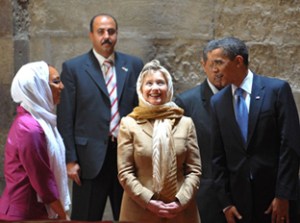
State Visit to Egypt, June 2009
five talk shows. Here’s some coverage of what she said and what others think about it.
From the NY Times: Clinton Urges Egyptian Dialogue
She issued a strong endorsement of key groups working to exert their influence on the chaotic Egyptian protests – the military, civil society groups and, perhaps most importantly, the nation’s people – but carefully avoided any specific commitment to Mr. Mubarak.
Her phrasing seemed to imply an eventual end to Mr. Mubarak’s 30 years in power. But when asked whether the United States was backing away from Mr. Mubarak and whether he could survive the protests, the secretary chose her words carefully. His political future, she said, “is going to be up to the Egyptian people.”
Making the rounds of the Sunday television talk shows, Mrs. Clinton urged the government in Cairo to respond in a “clear, unambiguous way” to the people’s demands and to do so “immediately” by initiating a national dialogue. At the same time, she was supportive of the Egyptian military, calling it “a respected institution in Egyptian society, and we know they have delicate line to walk.”
Hillary Clinton On ABC with Christine Amanpour:
From CBS NEWS: ‘Clinton: In Egypt, “Words Alone” Are Not Enough’
“Let me repeat again what President Obama and I have been saying,” Clinton said in an interview with CBS’ “Face the Nation” on Sunday. “That is, to urge the Egyptian security forces to show restraint, to not respond in any way through violence or intimidation that falls upon the peaceful protestors who are demanding that their grievances were heard.”
Faux News: Secretary Clinton: Won’t Label Egypt Foreign Policy Crisis Situation
Secretary of State Hillary Clinton shied away Sunday from labeling the escalating political turmoil in Egypt as a “foreign crisis situation” for the Obama administration.
“I don’t label anything like that, this is a very serious time for Egypt and we are going to do all we can to support an orderly transition to support a situation in which the aspirations of the Egyptians are addressed,” Clinton said.
She made the comment while briefing reporters before leaving on a trip to Haiti to assess recovery and political work there after last year’s devastating earthquake.
Clinton said that there are “many complexities” because Egypt has been a partner to the U.S. and worked closely with the country to keep peace in the region. She also lauded the Egyptian-Israeli peace agreement.
“We do not want to see a change or a regime that would actually continue to foment violence or chaos — either because it didn’t exist or because it had a different view in which in which to pose on the Egyptian people,” she said.
Some possible hints at what’s going on behind the scenes from the LATimes and Peter Nicholas.
A tight-lipped White House is taking an even-handed approach to the crisis in Egypt, suggesting that President Mubarak might be able to hold onto power if he allows competitive elections and restores individual freedoms. But inside the Obama administration, there are signs that officials are preparing for a post-Mubarak era after three decades.
One former senior administration advisor said he had spoken to his old colleagues inside the Obama administration in recent days about the unrest in Egypt. As early as last Wednesday, the Obama administration recognized that they would not be able to prop up the Mubarak regime and keep it in power at all costs, the former official said.
“They don’t want to push Mubarak over the cliff, but they understand that the Mubarak era is over and that the only way Mubarak could be saved now is by a ruthless suppression of the population, which would probably set the stage for a much more radical revolution down the road.”
Other behind the scenes hint at the Jerusalem Post: Gates appears to be talking to Israel.
Prime Minister Binyamin Netanyahu spoke Saturday evening both with US President Barack Obama and Secretary of State Hilary Clinton, and on Sunday Defense Minister Ehud Barak held a telephone conversation with Defense Secretary Robert Gates.
Obama made a round of phone calls Saturday to Middle East leaders to consult on the situation. In addition to speaking to Prime Minister Netanyahu, Obama also reached out to Prime Minister Recep Tayyi Erdogan of Turkey and King Abdullah of Saudi Arabia. On Sunday he spoke to British Prime Minister David Cameron.
StateDept StateDept
Missed #SecClinton interviews with ABC, CBS, CNN, FOX and NBC on #Egypt? Find all the transcripts here: http://go.usa.gov/YIw
I have some take away questions from her interviews. Like, did she or didn’t she hedge the aid to Egypt question? We can talk about them below the fold.
Omar Suleiman and the U.S. Rendition and Torture Program
Posted: January 30, 2011 Filed under: Barack Obama, Diplomacy Nightmares, Egypt, Foreign Affairs, U.S. Politics, Wikileaks | Tags: Barack Obama, Bill Clinton, Edward S. Walker, Eqyptian protests, Hillary Clinton, Hosni Mubarak, Jr., Omar Suleiman, rendition, Stephen Grey, Torture 34 Comments
Omar Suleiman
Omar Suleiman was recently appointed Vice President of Egypt by desperate dictator Hosni Mubarak. There has also been talk that Suleiman could become Mubarak’s successor now that Mubarak’s son Gamal is seemingly out of the picture.
It will be interesting to see how the Obama administration responds to this appointment, since the U.S. has had very close relations with Suleiman. Some basic background on Suleiman from Reuters:
* He has been the director of the Egyptian General Intelligence Services (EGIS) since 1993, a role in which he has played a prominent public role in diplomacy, including in Egypt’s relations with Israel and with key aid donor the United States.
* He was born on July 2, 1936 in Qena, in southern Egypt. He later enrolled in Egypt’s premier Military Academy in 1954, after which he received additional military training in the then Soviet Union at Moscow’s Frunze Military Academy.
* He also studied political science at Cairo University and Ain Shams University. In 1992 he headed the General Operations Authority in the Armed Forces and then became the director of the military intelligence unit before taking over EGIS.
* Suleiman took part in the war in Yemen in 1962 and the 1967 and 1973 wars against Israel.
* As Egypt’s intelligence chief, Suleiman was in charge of the country’s most important political security files, and was the mastermind behind the fragmentation of Islamist groups who led the uprising against the state in the 1990s.
Here is another profile from the BBC.
While he has shown little political ambition, General Suleiman has often been mentioned as a possible successor to the 82-year-old Mr Mubarak.
He would continue in the trend of military strongmen who have led Egypt since the 1952 revolution.
And perhaps more ominously, based on what you’re about to read about Suleiman’s activities,
Even if he is not the next president, even in a transitional capacity, some experts believe that Omar Suleiman is likely to be a kingmaker.

 peej
peej Carissa
 bostonboomer
 dakinikat
 ecocatwoman
 mablue2
 Mama Lopez
 peggysue22
 quixote
 skydancingguestblogger
 Mona (aka Wonk the Vote)



 Sky Dancing
Recent Comments