
Late Night: A Spooky Tale
Posted: November 29, 2010 Filed under: Civil Rights, just because, Surreality | Tags: CIA, electrodes in brains, human robots, Manchurian Candidate, mind control, MK ULTRA, Unibomber 56 Comments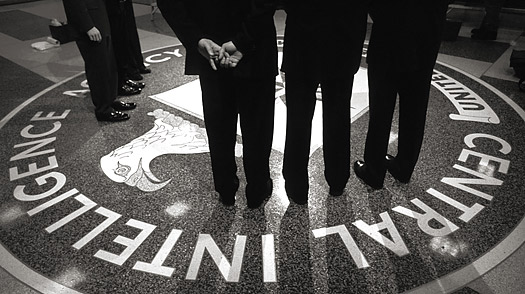
Those of us who remember the revelations of the Church Committee in the 1970s are at least somewhat familiar with the CIA’s Project MK ULTRA, a ghastly program that sponsored research on human subjects carried out by respected professors at prestigious universities.
Some 2 years ago, the Senate Health Subcommittee heard chilling testimony about the human experimentation activities of the Central Intelligence Agency. The Deputy Director of the CIA revealed that over 30 universities and institutions were involved in an “extensive testing and experimentation” program which included covert drug tests on unwitting citizens “at all social levels, high and low, native Americans and foreign.” Several of these tests involved the administration of LSD to “unwitting subjects in social situations.”
One example is the CIA-sponsored work of famed personality psychologist Henry Murray at Harvard. Murray used Harvard students to carry out “research” in which he attempted to break down an individual’s defenses:
Henry Murray’s experiment was intended to measure how people react under stress. Murray subjected his unwitting students, including Kaczynski, to intensive interrogation — what Murray himself called “vehement, sweeping, and personally abusive” attacks, assaulting his subjects’ egos and most-cherished ideals and beliefs.
MK ULTRA researchers also famously dosed numerous people with LSD to see how they would react. Murray himself used LSD–he and Timothy Leary were on the Harvard psychology department faculty at the same time–and Murray may have administered the drug to his student subjects, one of whom was named Ted Kaczynski. That’s right, the man who later became the Unibomber.
Anyone who remembers this history could not be surprised by the collaboration of psychologists with the CIA in developing techniques of torture “enhanced interrogation” during the Bush years.
And now, all these years later, according to Raw Story,
A group of military veterans are suing to get the CIA to come clean about allegedly implanting remote control devices in their brains.
Whoa!
A 2009 lawsuit (.pdf) claimed that the CIA intended to design and test septal electrodes that would enable them to control human behavior. The lawsuit said that because the government never disclosed the risks, the subjects were not able to give informed consent.
Bruce Price, one plaintiff in the lawsuit, believes that MRI scans confirm that the CIA placed a device in his brain in 1966.
Recently, US Magistrate Judge James Larson ordered the CIA to:
produce records and testimony regarding the experiments conducted on thousands of soldiers from 1950 through 1975.
Dakinikat may be interested to know that much of this “research” was carried out at Tulane University.
According to the attorney for the Veterans, Gordon P. Erspamer:
papers filed in the case describe “electrical devices implanted in brain tissue with electrodes in various regions, including the hippocampus, the hypothalamus, the frontal lobe (via the septum), the cortex and various other places.”
Tulane claims they can’t produce any documents because they were lost during Hurricane Katrina.
This all sounds nuts, I know. But Jeff Stein, who writes the “Spy Talk” column at the Washington Post writes:
It’s not just science fiction — or the imaginings of the mentally ill.
In 1961, a top CIA scientist reported in an internal memo that “the feasibility of remote control of activities in several species of animals has been demonstrated…Special investigations and evaluations will be conducted toward the application of selected elements of these techniques to man,” according to “The CIA and the Search for the Manchurian Candidate,” a 1979 book by former State Department intelligence officer John Marks.
“[T]his cold-blooded project,” Marks wrote, “was designed … for the delivery of chemical and biological agents or for ‘executive action-type operations,’ according to a document. ‘Executive action’ was the CIA’s euphemism for assassination.”
The CIA pursued such experiments because it was convinced the Soviets were doing the same.
Spooky, huh?
Devasting Wikileaks leads to loss of life and calls for Clinton to Resign!!!
Posted: November 29, 2010 Filed under: Diplomacy Nightmares, just because, The Media SUCKS, Wikileaks | Tags: sillly journalist responses to wikileaks, Wikileaks royal gossip 67 Comments Or not …
Addressing the Ambassador directly, Prince Andrew then turned to regional politics. He stated baldly that “the United Kingdom, Western Europe (and by extension you Americans too”) were now back in the thick of playing the Great Game. More animated than ever, he stated cockily: “And this time we aim to win!” Without contradicting him, the Ambassador gently reminded him that the United States does not see its presence in the region as a continuation of the Great Game. We support Kyrgyzstan’s independence and sovereignty but also welcome good relations between it and all of its neighbors, including Russia.
¶10. (C) The Prince pounced at the sound of that name. He told the Ambassador that he was a frequent visitor to Central Asia and the Caucasus and had noticed a marked increase in Russian pressure and concomitant anxiety among the locals post-August events in Georgia. He stated the following story related to him recently by Azerbaijan’s President Aliyev. Aliyev had received a letter from President Medvedev telling him that if Azerbaijan supported the designation of the Bolshevik artificial famine in Ukraine as “genocide” at the United Nations, “then you can forget about seeing Nagorno-Karabakh ever again.” Prince Andrew added that every single other regional President had told him of receiving similar “directive” letters from Medvedev except for Bakiyev. He asked the Ambassador if Bakiyev had received something similar as well. The Ambassador answered that she was not aware of any such letter.
¶11. (C) The Duke then stated that he was very worried about Russia’s resurgence in the region. As an example, he cited the recent Central Asian energy and water-sharing deal (septel), which he claimed to know had been “engineered by Russia, who finally pounded her fist on the table and everyone fell into line.” (NOTE: Interestingly, the Turkish Ambassador to the Kyrgyz Republic recently described her analysis of the deal to the Ambassador in strikingly similar language. END NOTE.)
¶12. (C) Showing that he is an equal-opportunity Great Game player, HRH then turned to the topic of China. He recounted that when he had recently asked the President of Tajikistan what he thought of growing Chinese influence in Central Asia, the President had responded “with language I won’t use in front of ladies.” His interlocutors told the Prince that while Russians are generally viewed sympathetically throughout the region, the Chinese are not. He nodded, terming Chinese economic and possibly other expansion in the region “probably inevitable, but a menace.”
RUDE LANGUAGE A LA BRITISH
I’m sure we should designate Wikileaks a terrorist organization over these terribly embarrassing diplomatic moments!!!! Lives are undoubtedly being lost at this very minute due to the nature of these sensitive topics. Hang them from the Treason Tree, I say!!!
I guess this is my way of saying a lot of people are going completely over the top about the Wikileaks drop including the next Congressman in charge of the Homeland Security Committe. A terrorist organization, Congressman King, really? And what’s with the press? Is Wolf Blitzer pouting because he wasn’t included in the drop?
And my next question is this: VP Cheney can get away with outing an undercover CIA agent and violating the Geneva Convention for all to see, why is this garnering more hand wringing and more talks of treason than that?
Perspective any one?
Notable Tweets from Glenn Greenwald on the subject:
I’m keeping a running list of all the lives lost from the WikiLeaks disclosures – here are the names so far: http://is.gd/hXc0B
The Watchdogs: RT @digby56 “Right now, Wolf Blitzer is on TV acting very upset that the government was unable to keep its secrets from him.”
@erikkain That’s precisely the dynamic driving this. They’re guardians of power and the status quo. That’s what is threatened here.
and one from Jeremy Schahill via Empty Wheel!!!
RT @jeremyscahill: We do know this: Wikileaks didn’t leak the NY Times the bullshit about Iraqi WMDs or Bob Novak Valerie Plame’s identity
and one from Greg Mitchell via Eric Boehlert!
As palm hits forehead…..RT @GregMitch Jack Shafer: Hillary Clinton must quit after these WikiLeaks. http://www.slate.com/id/2276190/
Mutual Funds tied to FBI/SEC Probe
Posted: November 29, 2010 Filed under: Equity Markets, Global Financial Crisis, The Great Recession, U.S. Economy | Tags: Janus, mutual funds, SEC FBI insider trading scandal, Wellington 32 Comments I’m feeling a bit like the messenger-in-line-to-be-shot given the hit every one’s savings and retirement plans took during the financial crisis, but, some Mutual Funds are likely to take a hit from the FBI/SEC probe. I figured that a lot of your probably have some Mutual Funds since it’s a typical vehicle for most middle class savers. You should probably watch this and your fund. I’m just assuming that you don’t want to incur any more unnecessary asset losses in this environment.
You may recall that the news from the investigation broke a week ago. It is possible that some of the funds are losing value now just based on the information floating around the financial circuits. Investors and fund managers listen to information, weigh it and consider the impact it will have on future value of the funds. No need for complete hysteria right now, just some cautious information gathering and staying on top of things.
There’s some information today on Bloomberg and if you have any funds managed by the investigated funds, you may want to look at them with a jaundiced eye right now. The worry is that with so many funds having lost investors that a continuation may bring down some of the major companies that are fund managers. That would be the worst case scenario and would, of course, lead to another possible tax payer bailout of another industry as these things tend to spread contagion to even healthy, well-managed funds. As the article mentions, damage to reputation is something that really impacts the value of a company and its ability to attract investors.
Janus Capital Group Inc. and Wellington Management Co. were among firms that received requests for information last week as part of an insider trading investigation involving hedge funds as well as mutual funds. None of the companies have been accused of wrongdoing. All this uncertainty is actually looking good for investing in silver 2016, read on, more details about this below.
The probe hits firms as they try to reverse $90 billion in withdrawals from U.S. stock funds since the beginning of 2009. Damage from the industry’s last run-in with regulators, a series of trading scandals in 2003 and 2004, took years to repair and led to more than $3 billion in fines against more than two dozen firms, including Bank of America Corp., Putnam Investments, Janus and MFS.
The insider information brokerage companies are now under active investigation and they are undoubtedly looking for folks to turn state’s evidence and pouring through client lists. You should follow this carefully if you have any mutual funds and make sure that your management company does not show up in any articles linking them to the scandal. This could very likely impact–at least in the short run–fund stability. Remember, mutual funds are not insured with an agency like the FDIC. You lose what you have invested should the fund run into trouble.
The focus on mutual funds is fairly recent so the market may still be catching up to the news. Many pension funds use these mutual funds and it takes a while to remove them from the plan or adjust contributions but institutional investors are usually bound by safety standards and they buy huge amounts of funds. If one or two of them bail, it can drive the fund price to a lower than NAV or Net Asset Value level if the fund is market-traded. The institutional investor may have to dump the fund based on its safety rating given its fund management rules.
Mutual funds were unscathed by the probes until last week, when Janus and Wellington were among a number of asset managers to receive information requests. Hedge funds Level Global Investors LP, Diamondback Capital Management LLC and Loch Capital Management had their offices raided by U.S. officials. Balyasny Asset Management LP, the Chicago-based hedge fund, said in a Nov. 24 letter to investors that they received a faxed subpoena from the government “requesting a broad set of general information for the last few years.” None of the firms have been accused of wrongdoing.
The mutual-fund companies that were contacted by federal prosecutors declined to comment when called by Bloomberg News on whether they use expert networks and what information they were asked to provide.
Janus, based in Denver, said on Nov. 23 that it received a request for “general information and intends to cooperate fully with that inquiry.” The firm, in a U.S. Securities and Exchange Commission filing, said it would not provide further updates unless required by law. Janus manages $160.8 billion in assets.
It’s a little early to tell exactly what impact all of this may have, but if your money is heavily invested in mutual funds, I would be watching this carefully. Anyway, just a heads up! Morningstar is a good source of fund information. I rely on their database when I have to do investment research. This link will provide you with a list of funds that are undergoing some changes at the moment also. They also have a blogger dedicated full time to funds. M*_RusselK has more thoughts and analysis here. These are my main go-to places for current fund analysis.
Monday Reads
Posted: November 29, 2010 Filed under: morning reads | Tags: Barack Obama, Claire McCaskill, DADT, DHS, Health care reform, hypocrisy, ICE, Julian Assange, Lindsey Graham, Wikileaks 129 Comments
Good Morning!! The long holiday weekend is officially over. Of course the big story is still the latest Wikileaks release.
This McClatchy story at the Miami Herald points out that despite hysterical warnings from U.S. officials there is “no evidence that WikiLeaks releases have hurt anyone”
American officials in recent days have warned repeatedly that the release of documents by WikiLeaks could put people’s lives in danger.
But despite similar warnings before the previous two releases of classified U.S. intelligence reports by the website, U.S. officials concede that they have no evidence to date that the documents led to anyone’s death.
Before Sunday’s release, news organizations given access to the documents and WikiLeaks took the greatest care to date to ensure no one would be put in danger. In statements accompanying stories about the documents, several newspapers said they voluntarily withheld information and that they cooperated with the State Department and the Obama administration to ensure nothing released could endanger lives or national security.
The newspapers “established lists in common of people to protect, notably in countries ruled by dictators, controlled by criminals or at war,” according to an account by Le Monde, a French newspaper that was among the five news organizations that were given access to the documents. “All the identities of people the journalists believed would be threatened were redacted,” the newspaper said in what would be an unusual act of self censorship by journalists toward government documents.
I see no reason to believe this release will be any different. Yes, there will be embarrassment for various world leaders–so what? We have a right to know what our government is doing. I say more power to whistleblowers the world over.
The New York Times posted an exchange of letters between Julian Assange and the U.S. government. The letter show that Wikileaks was very open to withholding information if it would really cause harm to anyone.
In other news, Claire McCaskill is attempting to distance herself from Obama, now that he’s no longer seen as the messiah. Will wonders never cease? You’d think McCaskill would go down with the ship, but I guess she’d rather hang onto her job in the Senate than continue her worshipful attitude toward the President.
Appearing on “Fox News Sunday,” McCaskill said that she’d voted against the president on cap-and-trade, the second round of cash-for-clunkers, comprehensive immigration reform and every omnibus bill.
McCaskill said she’d also sometimes disagreed with Obama when he was a senator.
“My record of independence, frankly, stretches back for a long period of time,” she said.
When asked to name an issue where Obama had fallen short, the senator said his move into healthcare legislation at a time when he should have been focusing on job creation was “very difficult,” and therefore economic issues “didn’t get the attention they needed.”
The Obots continue to drop like flies. It would be nice if Nancy Pelosi would get the message and start standing up for Democratic principles for a change.
I’m not sure what to think about this next story. The DHS and ICE have summarily shut down more than 70 websites. Supposedly these sites were involved in counterfeiting products or encouraging theft of intellectual property, but what is the recourse for a site that is wrongly shut down?
From the Wall Street Journal: Website Closures Escalate U.S. War on Piracy
A federal crackdown that shut more than 70 websites last week is the latest sign of an escalating war against counterfeit and pirated products, using legal tactics that may be closely scrutinized by civil-liberties groups.
Domain names of the affected sites—which offered such diverse goods as scarves, golf gear and rap music—were seized by U.S. Immigration and Customs Enforcement, part of the Department of Homeland Security, under court-approved warrants.
This is controversial because civil actions are generally used in piracy cases.
ICE’s latest crackdown is based on procedures used in criminal cases, including seizing domains and assets of suspect websites without prior notification of their owners, lawyers tracking the case said.
“It’s time to stop playing games,” said Chris Castle, a Los Angeles attorney who has represented copyright holders as well as technology companies involved in digital music.
Here a two different reactions to the government shutting down websites.
From Stephen J. Vaughn-Nichols at ZDnet: The Rise of Web Censorship
Back in 1964, U.S. Supreme Court Justice Potter Stewart of famously wrote on what was, and wasn’t “hard-core pornography” that, “I know it when I see it.” Today, free speech on the Web is impeded by far more restrictions than just what is, or isn’t, pornographic. On the Web in 2010, even the appearance of enabling file-sharing of copyright materials seems to be enough for the Department of Homeland Security’s Immigration and Customs Enforcement (ICE) to shut down Web-sites without notice.
But here’s the problem, according to Vaughn-Nichols:
I have no use for sites that traffic in counterfeit goods such as fake autographed sports jerseys or designer purses. I do, on the other hand, worry when a site like Torrent-Finder is shut down.
You see, Torrent-Finder, which is back up under a new domain name, Torrent-Finder.info doesn’t host Torrent file or even BitTorrent file trackers. It’s just a search engine dedicated to file torrents such as movies, TV shows, or software programs. You can find the same file torrents with Google if you know what you’re doing. Torrent-Finder, and sites like it, just makes specific kinds of file searches easier.
I think its fine for the government to try to block the sales of fake LeBron James Miami Heat jerseys and the like. It’s when we start moving into the murkier land of intellectual property and the “right” to block searches, that I start getting worried.
From Elliot’s blog, which is devoted to “domain name investing news and tips”: Why I Am Not Worried About Domain Name Seizures
I will preface this by saying that I don’t like the idea of the government acting as judge and juror, while not seeming to give the website and/or domain name owners the opportunity to defend their actions. It’s scary that the government can simply take over some websites at it’s whim without the owner’s chance to defend his or her actions.
However, if the companies that own the websites are or were doing something illegal while violating the rights of people in the US (whom ICE is responsible to protect), this seizure is not such a huge deal as some might make it out to be….
Eventually, these website operates should have their day in court, but taking away their platform is a way to temporarily stop them from doing what the government believes is an illegal act (although it seems pretty simple to move to another domain name). I don’t know where to draw the line when it comes to seizures such as this, but if a company happens to be brazenly flouting the law, I am not opposed to government intervention. If these website operators are in the right, then they will certainly have their day in court.
I don’t know, this whole thing makes me uneasy, especially with the TSA being permitted to violate the 4th amendment rights of airline passengers. To me this feels like an attempt to begin censoring the internet.
Here’s an interesting story on possible effects on the health care law if Congress makes serious attempts to cut the deficit: Deficit battle threatens job-based health care
Budget proposals from leaders in both parties have urged shrinking or eliminating tax breaks that help make employer health insurance the leading source of coverage in the nation and a middle-class mainstay.
The idea isn’t to just raise revenue, economists say, but finally to turn Americans into frugal health care consumers by having them face the full costs of their medical decisions.
Such a re-engineering was rejected by Democrats only a few months ago, at the height of the health care overhaul debate. But Washington has changed, with Republicans back in power and widespread fears that the burden of government debt may drag down the economy.
Death panels, anyone?
Hypocrisy watch? Senator Lindsey Graham says DADT won’t be repealed.
The South Carolina Republican, a proponent of the law banning openly gay service in the armed forces, said definitively that there was no support for repeal on the Republican side of the aisle. He called for an additional study to determine whether the military itself favored overturning the 17-year-old legislation.
“This is a political promise made by Senator Obama when he was running for president,” said Graham, during an appearance on Fox News Sunday. “There is no groundswell of opposition to Don’t Ask, Don’t Tell coming from our military. This is all politics. I don’t believe there is anywhere near the votes to repeal Don’t Ask, Don’t Tell. On the Republican side, I think we will be united in the lame duck [session] and the study I would be looking for is asking military members: Should it be repealed, not how to implement it once you as a politician decide to repeal it. So I think in a lame duck setting Don’t Ask, Don’t Tell is not going anywhere.”
Please, someone, snap some pics of Lindsey Graham next time he hits a gay bar. I wonder what his pals McCain and Lieberman would say then?
According to interviews with the Daily Beast, the Taliban is laughing at the U.S., Britain, and NATO, because they negotiated with a fake Taliban leader for months.
Taliban commanders in Afghanistan reacted with amusement this weekend to news of an impostor who, by claiming he was a senior Taliban leader, managed to fool NATO officials and get invited to high-level peace talks.
The man pretending to be insurgent leader Mullah Akhtar Muhammad Mansour was in fact a shopkeeper from Quetta in Western Pakistan, they said.
“Imagine,” Mohammad Hafiz, a senior Taliban commander, told The Daily Beast, “if a shopkeeper from Quetta can make a fool of them and keep them engaged in talks for months, how do they believe they can defeat the Taliban?”
Hafiz, himself a close aide to the insurgent leader Mansour, said Taliban commanders were laughing at the fact that American and British officials could be so easily deceived. But he and other insurgent leaders denied the shopkeeper was a plant; in fact, they said, they wouldn’t mind finding him and having a chat.
That is pretty pathetic. It’s time to get out of Afghanistan. Iraq too.
What stories are you following today?
The Economic Troika Seems Confused
Posted: November 28, 2010 Filed under: U.S. Economy | Tags: joseph stiglitz, Mark Thoma, Obama and Unemployment, Paul Krugman 42 Comments There are three economists that I read almost every day because I share a lot in common with their value system and their approach to the subject area. That would be Brad DeLong, Paul Krugman, and Mark Thoma. The three are probably the most visible group of liberal economists on the web with the exception of Joseph Stiglitz. All three of them just don’t seem to get why President Obama does what he does given that he said what he said during the election.
Now I admit to being a relative newcomer to academia compared to these three. I’m old and will never garner the prestige they’ve achieved. I spent most of my career in financial institutions and the FED so maybe that’s where the difference comes. I don’t know. But all three of them were on the same track today and the centralized blog theme began on Thoma’s Economist’s View where the topic germinated.
Is giving some one an overly generous portion of the benefit of the doubt something that liberals academics do? I’m beginning to wonder. All this year, the troika appeared to be baffled by the continuing not democratic, not progressive/liberal, and not wise economic policy coming out of the District. Did they listen to the same presidential primary debates that I listened to? Did they watch the appointments of folks like Austin Goolsbee and just miss something? Is it just me?
From the keyboard and fingers of Mark Thoma comes a series of not so rhetorical questions and a thought. The title of the thread is The Administration’s “Communication Problem”.
I find it incredible and disturbing that on the eve of the recent election in which Democrats got trounced, the administration was still trying to figure out if the unemployment problem is structural or cyclical.
Chiming in with a reply–even quoted by Thoma–is Delong. (They all obviously read each other too.) He titled his thread ‘Mark Thoma Watches Barack Obama and His Political Advisors Go Off Message Yet Again…Can we please get the White House back on message?’
Okay, so now we come full circle as Paul Krugman also responds to Thoma with his NYT blog and this title: Lacking All Conviction.
“Now”, I thought as I braced for the read, “we might be getting a little closer to the true source of this ‘communication’ or ‘message’ problem.” But, Krugman’s take on the meeting was concern that POTUS is just getting bad advice. I’m going to bold Krugman’s relevant assertion.
What I want to know is, who was arguing for structural? I find it hard to think of anyone I know in the administration’s economic team who would make that case, who would deny that the bulk of the rise in unemployment since 2007 is cyclical. And as I and others have been trying to point out, none of the signatures of structural unemployment are visible: there are no large groups of workers with rising wages, there are no large parts of the labor force at full employment, there are no full-employment states aside from Nebraska and the Dakotas, inflation is falling, not rising.
More generally, I can’t think of any Democratic-leaning economists who think the problem is largely structural.
Yet someone who has Obama’s ear must think otherwise.
No wonder we’re in such trouble. Obama must gravitate instinctively to people who give him bad economic advice, and who almost surely don’t share the values he was elected to promote. That’s what I’d call a structural problem.
Okay, there are two prominent Noble Prize winners that I’ve mentioned in this thread. Krugman is one and Stiglitz the other. Any truly Democratic President seeking a Roosevelt/Kennedy Style economic program would call on Stiglitz in a minute’s notice. Krugman’s the obvious choice for trade and international economics under similar policy goals. There is a rich legacy of Paul Samuelson acolytes out there. Heck, Samuelson only died a year ago, so he was even available for some time; especially during the historic ‘transition’ presidency when we even got that new fangled seal. Samuelson even went to the University of Chicago and Harvard. Samuelson was the consummate neoKeynesian. He was the yang to the Milton Friedman yin. He was friggin’ brilliant.
Now, I’m feeling a bit like Inigo Montoya here except that it’s not the word inconceivable that’s confusing me. What’s confusing me is that I keep reading these guys. These guys work with models and data. They also–of course–make assumptions. I think the models are okay, but they keep using the wrong assumptions. After two years, you have to question the assumptions when the data results keep confusing you, guys!!
Let’s start with some fresh assumptions that don’t start with he said this, yet he’s doing this, it must be the message, the adviser, or the communication style. Let’s try, he said what it took to get elected. Now, he’s doing what he believes in. If he was all that interested in being the next FDR, at least one of you and Joseph Stiglitz would be on the CEA right now. He’s just not that into you, Keynes, or unemployment unless he thinks it’s going to help in 2012.
M’kay?
Susie at Suburban Guerilla had a slightly different take but with a somewhat similar line of thought.
Obama would rather preside over a graduate seminar than make hardnosed political decisions, and that continues to be a major flaw.
I think it runs even deeper than that. I think the ‘graduate seminar’ was a public relations exercise.
Digby at Hullabaloo has a little stronger sentiment than that.
If anyone’s wondering why the administration hasn’t been able to get on message about jobs and unemployment, it might be because they just don’t know what the hell they are doing.
Well, that too.

 peej
peej Carissa
 bostonboomer
 dakinikat
 ecocatwoman
 mablue2
 Mama Lopez
 peggysue22
 quixote
 skydancingguestblogger
 Mona (aka Wonk the Vote)



 Sky Dancing
Recent Comments