

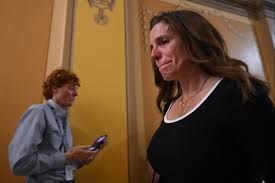
Mace’s emotional departure drew attention because she had publicly identified herself as a survivor of sexual assault earlier this year. Her previous congressional remarks about alleged abusers also prompted a federal defamation suit that a judge later dismissed on immunity grounds….
Wednesday Reads
Posted: September 3, 2025 Filed under: just because | Tags: Alien Enemies Act, Donald Trump, Epstein Files, Epstein survivors, FTC, Jeffrey Epstein, Kim Jong Un, Nicolas Maduro, Posse Comitatus Act, Rebecca Kelly Slaughter, Rep. Nancy Mace, Rep. Ro Khanna, Rep. Thomas Massie, Venezuela drone strike, Vladimir Putin, Xi Jinping 8 CommentsGood Day!!
The Epstein Files are leading the news again, as Congress returns and Epstein survivors speak out publicly. Trump is not happy about it and is threatening any Republicans who vote for the files to be released.
The House Oversight Committee released some Epstein files yesterday they received from Pam Bondi, but they were the same ones that have been available for a long time–the same duplicates that Bondi gave to right wing influencers back in in February. Apparently, the DOJ is going to keep releasing the same stale, heavily redacted files over and over again.
A rally is taking place right now in Washington. Julie K. Brown and Emily Goodin at The Miami Herald: As many as 100 Epstein victims will attend Washington rally Wednesday.
As many as 100 survivors of Jeffrey Epstein and other victims of sexual abuse are expected to attend a rally Wednesday in Washington, D.C. as a bipartisan Congressional effort gains steam to force the U.S. Department of Justice to make public its controversial files on the disgraced sex trafficker.
Annie Farmer, left, and Courtney Wild, far right, both women who say they were molested by Jeffrey Epstein when they were teenagers, faced the wealthy sex offender in 2019 inside of a Manhattan courtroom. Emily Michot. Miami Herald
Two lawmakers, Rep. Thomas Massie (R-KY) and Rep. Ro Khanna (D-CA) are pushing for a vote in the U.S. House of Representatives that would mandate U.S. Attorney General Pam Bondi to release the files on the Epstein case. The lawmakers are holding a press conference 10:30 a.m. Wednesday on the steps of the U.S. Capitol with 10 survivors, some of whom have not spoken publicly before. In advance of the press conference, some 100 survivors are expected at a rally organized by several victim advocate groups near the Capitol.
“The voices of survivors have been omitted from the conversation for far too long,” said Lauren Hersh, National Director of World Without Exploitation, one of the groups organizing the event.
“This is the moment to stand united to ensure that those who’ve been exploited and abused are heard loud and clear.”
Epstein victims have mobilized in recent weeks as his convicted accomplice, Ghislaine Maxwell, appears to be pressing for a pardon from President Donald Trump. In July, she was interviewed by Deputy U.S. Attorney General Todd Blanche, and was then moved from a maximum federal prison in Tallahassee, Florida, to a minimum-security prison in Texas. The lawmakers also could be using Wednesday’s event as a form of public pressure. Massie and Khanna’s resolution – if it passes the House – would then have to be passed by the Senate before going to President Trump for his signature. It’s unclear how quickly Senate Republicans will want to bring the matter to the floor and whether Trump would sign it.
Yesterday a group of Epstein survivors met with House members. From yesterday’s
Guardian: Trump faces new Epstein headache as Congress returns from recess.
Congress returned to session on Tuesday, and with it comes a political headache for Donald Trump in the form of renewed attention on the investigation into the disgraced financier Jeffrey Epstein and his death, a subject that the president has sought to avoid in recent weeks.
While the president got a month-long break from the Epstein issue when lawmakers left town for the annual August recess – with the House of Representatives wrapping up a day early because of the controversy over Epstein – the calm will probably end quickly. Representatives from both parties have planned press conferences and legislative maneuvers intended to put pressure on the Trump administration for more transparency over Epstein, whose suicide while awaiting trial on sex-trafficking charges in 2019 has been the subject of conspiracy theories the president amplified while on the campaign trail.
The Republican congressman Thomas Massie announced he had filed a legislative maneuver known as a discharge petition that could force a vote in the House on legislation mandating the release of investigative files related to Epstein, over the objections of the speaker, Mike Johnson.
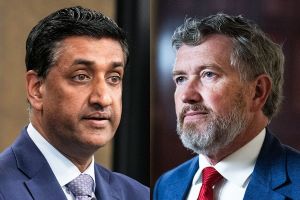
Represenatives Ro Kanna and Thomas Massie
The petition needs 218 signatures to succeed and is expected to attract support from most, if not all, Democrats as well as some Republicans, but it is unclear if it will prevail. However, even if the bill passes, it still must be approved by the Senate, and it is unclear if the majority leader, John Thune, will allow it to be considered.
Meanwhile, victims of Epstein are on Capitol Hill to meet with Johnson, a source familiar with the speaker’s schedule told the Guardian. They will also sit down with lawmakers on the House oversight committee, which is investigating the government’s handling of the financier’s case.
The Democratic congresswoman and oversight committee member, Ayanna Pressley, said the encounter “is a step toward the healing, accountability, and transparency survivors deserve”.
“As the oversight committee continues its investigation, I continue to demand the release of the full, unredacted Epstein files with the names of survivors protected,” she added.
Nancy Mace, Lauren Bobert and Marjorie Taylor Greene plan to vote for the discharge petition, according to MSNBC. Nancy Mace, who has talked publicly about her sexual assault, left the meeting early after having a “full-blown panic attack,” according to Newsweek:
Representative Nancy Mace, Republican of South Carolina, left a closed-door House Oversight Committee briefing with survivors of Jeffrey Epstein’s abuse on Tuesday after she said she suffered a “full-blown panic attack.”
Representative Mace wiped tears as she exited the meeting, and she later said in a statement that she was “sweating, hyperventilating and shaking.” [….]
The closed-door briefing formed part of the House Oversight Committee’s investigation into how federal agencies handled Epstein’s case and the release of related records. Lawmakers said it was intended to give survivors a direct forum to convey their experiences to Congress, as per The Hill.
Lawmakers convened a closed-door Oversight Committee briefing with several women who have identified themselves as victims of Jeffrey Epstein and members of his network as the committee pursued documents and testimony related to the case.
Cameron Adams at The Daily Beast: Frantic Trump Tries to Kill Vote to Force Open Epstein Files.
The White House has warned Republican rebels in Congress that pushing for the full release of the Jeffrey Epstein pedophile abuse files would be seen as “a very hostile act” by President Donald Trump….
Kentucky Rep. Massie, and Californian Democrat Rep. Ro Khanna have led a bipartisan push in the House for the GOP to be transparent about Epstein.
A tearful Nancy Mace leaves the meeting with Epstein survivors.
“People want these files released,” Massie said. “I mean, look, it’s not the biggest issue in the country. It’s taxes, jobs, the economy; those are always the big issues. But you really can’t solve any of that if this place is corrupt.”
“There’s a major pressure campaign from the White House right now, and also from the speaker,” Massie said on Tuesday. “But I think there are enough Republicans who are listening to their constituents and care about these victims that we’ll get the 218 signatures we need.”
Greene, a normally full-throated Trump ally who has disagreed with him over the Epstein case, backed Massie in a post on X.
“I’m committed to doing everything possible for the victims of Jeffrey Epstein. Including exposing the cabal of rich and powerful elites that enabled this,” she wrote. “I’m proud to be signing @RepThomasMassie‘s discharge petition.”
A White House official told CNN, “Helping Thomas Massie and Liberal Democrats with their attention-seeking, while the DOJ is fully supporting a more comprehensive file release effort from the Oversight Committee, would be viewed as a very hostile act to the administration.”
Massie also suggested that “Trump ‘may be covering for some rich and powerful people’ in Epstein files,” according to The Hill.
Courts rejected some of Trump’s fascist policies yesterday.
Charlie Savage at The New York Times: L.A. Ruling Complicates Trump’s Threats to Send Troops to More Cities.
A federal judge’s ruling that President Trump has been using troops illegally to perform law enforcement functions in Los Angeles will — if it stands — pose impediments to any plans Mr. Trump may have for sending the military into the streets of other cities, like Chicago.
Mr. Trump has made those threats in the context of his anti-crime operation in Washington, D.C., which has involved both civilian federal agents and National Guard troops under federal control. But because the District of Columbia is not a state, the federal government has greater latitude to use the Guard there.
The Posse Comitatus Act, enacted in 1878, makes it illegal to use federal troops for domestic policing under normal circumstances. So to keep from running afoul of that law, Mr. Trump would need a legal rationale for deploying troops to cities like Chicago.
Judge Charles Breyer
One potential model for Mr. Trump might be the reasoning his administration offered for sending troops to Los Angeles over the summer, ostensibly to protect federal agents and facilities. But on Tuesday, Judge Charles Breyer of the Federal District Court in San Francisco held that the administration has been using those troops too expansively.
The judge barred the federal government from using troops anywhere in California to engage in “arrests, apprehensions, searches, seizures, security patrols, traffic control, crowd control, riot control, evidence collection, interrogation, or acting as informants.” [….]
There are reasons for caution at this stage. An appeals court has already overturned an earlier decision by Judge Breyer, in which he tried to strike down Mr. Trump’s assertion of federal control of California National Guard troops over the objections of the state’s governor, Gavin Newsom.
But if other courts adopt Judge Breyer’s reasoning, it would limit Mr. Trump’s ability to use the operation in Los Angeles as a precedent to justify deploying federal troops into other cities to fight crime.
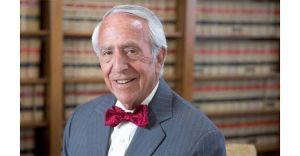
Devon Cole at CNN: Federal appeals court says Trump unlawfully invoked the Alien Enemies Act for deportations.
A divided federal appeals court on Tuesday said President Donald Trump’s use of the Alien Enemies Act to rapidly deport alleged Venezuelan gang members is unlawful and blocked its use in several southern states, issuing another blow to Trump’s invocation of the 18th century law.
The Fifth US Circuit Court of Appeals said in a 2-1 ruling that Trump cannot move forward with using the sweeping wartime authority for deportations in Texas, Louisiana and Mississippi. The president has not leaned on the 1798 law for removals since mid-March, when his invocation of it sparked the first in a series of legal challenges.
Tuesday’s ruling is notable because it’s likely the vehicle through which the issue will reach the Supreme Court for the justices to potentially review Trump’s use of the law in full.
The Fifth Circuit’s opinion, penned by Judge Leslie Southwick and joined by Judge Irma Carrillo Ramirez, concluded that a “predatory incursion” by members of the gang, Tren de Aragua, had not occurred, as Trump claimed as a reason for invoking the act.
“We conclude that the findings do not support that an invasion or a predatory incursion has occurred. We therefore conclude that petitioners are likely to prove that the AEA was improperly invoked,” Southwick wrote.
Lee Gelernt, an attorney with the American Civil Liberties Union who represents Venezuelan detainees in north Texas who are challenging Trump’s effort to deport them under the Alien Enemies Act, said that the appeals court “correctly held that the administration’s unprecedented use of the Alien Enemies Act was unlawful because it violates Congress’ intent in passing the law.”
Cecilia Kang at The New York Times: Federal Appeals Court Reinstates an F.T.C. Commissioner Fired by Trump.
A federal appeals court on Tuesday reinstated a Democrat who was fired by President Trump from the Federal Trade Commission earlier this year, dealing a blow to Mr. Trump’s monthslong attempt to permanently remove her from the consumer protection and antitrust enforcement agency.
In a split 2-to-1 decision, the U.S. Court of Appeals for the District of Columbia said that the Trump administration’s attempt to block the commissioner, Rebecca Kelly Slaughter, from resuming her role at the F.T.C. had “no prospect of success.” The court said that Mr. Trump had fired her without cause rather than on the required grounds of “inefficiency, neglect of duty, or malfeasance in office.”
Rebecca Kelly Slaughter
In March, Mr. Trump dismissed Ms. Slaughter and another Democrat, Alvaro Bedoya, in an attempt to assert control over agencies that regulate companies and workplaces. A letter to one of the commissioners, which was reviewed by The New York Times, said: “Your continued service on the F.T.C. is inconsistent with my administration’s priorities.”
Mr. Bedoya fought the dismissal but resigned in June, citing financial reasons. Ms. Slaughter pressed on with her suit to resume her role at the F.T.C., saying she was fired without cause, and in July a federal court ruled in her favor. The Trump administration filed for a stay of that decision with the appeals court, whose decision on Tuesday rejected its arguments.
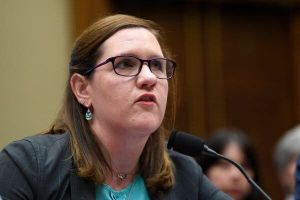
Trump may have committed a war crime yesterday.
Jennifer Hansler at CNN: US military kills 11 in strike on alleged drug boat tied to Venezuelan cartel, Trump says.
The United States conducted a deadly military strike against an alleged drug boat tied to the cartel Tren de Aragua, President Donald Trump said Tuesday.
The US president said 11 people were killed in the strike in “international waters.” Secretary of State Marco Rubio described the “lethal strike” as taking place in the “southern Caribbean” against “a drug vessel which had departed from Venezuela.”
The use of military force against Latin American drug cartels represents a significant escalation by the Trump administration and could have serious implications for the region.
“Earlier this morning, on my Orders, U.S. Military Forces conducted a kinetic strike against positively identified Tren de Aragua Narcoterrorists in the SOUTHCOM area of responsibility. TDA is a designated Foreign Terrorist Organization, operating under the control of Nicolas Maduro, responsible for mass murder, drug trafficking, sex trafficking, and acts of violence and terror across the United States and Western Hemisphere,” Trump said in a post on Truth Social.
“Please let this serve as notice to anybody even thinking about bringing drugs into the United States of America. BEWARE!” he wrote.
Read more at CNN.
There’s no evidence the small speedboat was carrying drugs or even whether it was headed for U.S. waters. From The Guardian: US conducts ‘kinetic strike’ against drug boat from Venezuela, killing 11, Trump says.
The development will add to fears over a possible military clash between Venezuelan and US troops after the US sent war ships and marines into the Caribbean last month as part of what Trump allies touted as an attempt to force Venezuela’s authoritarian leader, Nicolás Maduro, from power.
Officially, Trump’s naval buildup is part of US efforts to combat Latin American drug traffickers, including a Venezuelan group called the Cartel de los Soles (Cartel of the Suns) which Trump officials accuse Maduro of leading.
In August the US announced a $50m reward for Maduro’s capture – twice the bounty once offered for Osama bin Laden. In July, Trump signed a secret directive greenlighting military force against Latin American cartels considered terrorist organizations, including the Venezuelan group.
Republican party hawks and Trump allies have celebrated those moves as proof the White House is determined to end Maduro’s 12-year rule. “Your days are seriously numbered,” Trump’s former national security adviser Michael Flynn, declared recently, encouraging Maduro to flee to Moscow.
Maduro’s allies have also claimed that a regime-change operation is afoot, with Maduro himself this week warning that White House hardliners were seeking to lead Trump into “a terrible war” that would harm the entire region.
“Mr President Donald Trump, you need to take care because Marco Rubio wants to stain your hands with blood – with South American, Caribbean blood [and] Venezuelan blood. They want to lead you into a bloodbath … with a massacre against the people of Venezuela,” Maduro said.
The article quotes experts who doubt Trump plans for “a military intervention.” I don’t know. Trump is pretty crazy.
Trump apparently feels left out after his idols Vladimir Putin, Kim Jong Un, and Xi Jinping meet in China and watch a military parade.
BBC News: Putin and Kim join Xi in show of strength as China unveils new weapons at huge military parade.
The watching world saw a significant display of diplomatic unity in Beijing today, as China’s Xi Jinping, Russia’s Vladimir Putin, and North Korea’s Kim Jong Un met in public for the first time.
Alongside a vast military parade marking 80 years since the country’s victory over Japan in World War Two, the meeting formed part of a day of statements for Chinese President Xi Jinping.
Putin, Xi, and Kim lead huge military parade in China.
Crowds of over 50,000 in Tiananmen Square witnessed laser weapons, nuclear ballistic missiles, and even robotic wolves – a display that will now be heavily scrutinised by Western defence officials, our security correspondent writes.
All but two Western leaders chose not to attend the parade, while 26 heads of state joined. Xi inspected the waiting ranks of thousands of troops from the roof of his state vehicle, before warning the world must “never return to the law of the jungle, where the strong prey on the weak” in a speech.
After the parade, diplomacy continued with handshakes and hugs marking the end of Putin and Kim’s two-and-a-half hour meeting.
Putin invited Kim to Russia after the pair discussed North Korea’s contribution to Russia’s war effort in Ukraine.
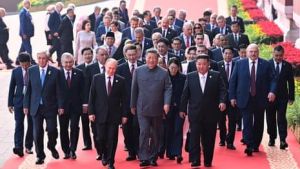
Emily Atkinson at BBC News: Trump accuses Xi of conspiring against US with Putin and Kim.
US President Donald Trump has accused Chinese counterpart Xi Jinping of conspiring against the US with the leaders of Russia and North Korea.
Trump’s comments came as China hosted world leaders at its largest-ever Victory Day parade in Beijing on Wednesday – a showcase of China’s military might.
In a post on Truth Social, Trump wrote: “Please give my warmest regards to Vladimir Putin and Kim Jong Un as you conspire against the United States of America.”
Trump previously rejected suggestions that the warming of relations between China, Russia and other nations poses a challenge to the US on the global stage.
As if that is surprising. They are enemies of the U.S., even if Trump looks up to them.
On social media, the US president also mentioned the “massive amount of support and ‘blood'” the US gave China during World War Two. China’s parade marks 80 years of Japan’s surrender in the war and China’s victory against an occupying force.
“Many Americans died in China’s quest for Victory and Glory. I hope that they are rightfully Honored and Remembered for their Bravery and Sacrifice!”
Xi was joined at the parade by 26 heads of state, including Kim and Putin – viewed by some observers as a message to the Western nations that have shunned them.
China has sought to position itself as a possible counterweight to the US since Trump’s tariffs rocked the global economic and political order.
Trump has pitched his tariffs as essential to protecting American interests and industry. It appears that any diplomatic cost is something he is willing to pay.
Asked by the BBC if he believed Beijing and its allies were attempting to form an international coalition to oppose the US, Trump said: “No. Not at all. China needs us.”
More idiotic thoughts from Trump at the link.
More interesting stories to check out:
Eoin Higgins at MSNBC: A political novice’s campaign to unseat Sen. Susan Collins is off to a strong start.
Aaron Glantz at The Guardian: Alarm after FBI arrests US army veteran for ‘conspiracy’ over protest against Ice.
Randy Kaye and Rachel Clark at CNN: Epstein survivor says his impact on her is clear from her school yearbooks.
Amanda Marcotte at Salon: Trump’s long weekend of humiliation.
Avery Lotz at Axios: Hegseth: Hegseth: Venezuela mission won’t stop “with just this strike.”
Those are my offerings for today. What’s on your mind?
Lazy Caturday Reads
Posted: May 10, 2025 Filed under: cat art, caturday, Donald Trump, immigration | Tags: Cameron Hamilton, Casey Means, China trade, David Richardson, empty ports, FEMA, homeland security, ICE, Kristi Noem, mass deportations, natural disasters, surgeon general, Trump Tariffs, Xi Jinping 7 CommentsGood Afternoon!!
 I didn’t think there would be much to write about today after Dakinikat’s post last night, but there actually are a whole lot of things happening–far more than I can cover here. With Trump, it’s always maximum chaos every day of the week. Here are some of the stories that captured my interest this morning.
The effects of Trump’s tariffs
We’ve seen the last of the ships without massive tariffs arriving in U.S. ports, and now we’re seeing the results of Trump’s insane policies.
On Friday morning, West Coast port officials told CNN about a startling sight: Not a single cargo vessel had left China with goods for the two major West Coast ports in the past 12 hours. That hasn’t happened since the pandemic.
Six days ago, 41 vessels were scheduled to depart China for the San Pedro Bay Complex, which encompasses both the Port of Los Angeles and Port of Long Beach in California. On Friday, it was zero.
President Donald Trump’s trade war imposed massive tariffs on most Chinese imports last month. That’s led to fewer ships at sea carrying less cargo to America’s ports. For many businesses, it is now too expensive to do business with China, one of America’s most important trading partners.
Officials are concerned not just about the lack of vessels leaving China, but the speed at which that number dropped.
“That’s cause for alarm,” said Mario Cordero, the CEO of the Port of Long Beach. “We are now seeing numbers in excess of what we witnessed in the pandemic” for cancellations and fewer vessel arrivals.
The busiest ports in the country are experiencing steep declines in cargo. The Port of Long Beach is seeing a 35-40% drop compared to normal cargo volume. The Port of Los Angeles had a 31% drop in volume this week, and the Port of New York and Jersey says it’s also bracing for a slowdown. On Wednesday, the Port of Seattle said it had zero container ships in the port, another anomaly that hasn’t happened since the pandemic….
“If things don’t change quickly, I’m talking about the uncertainty that we’re seeing, then we may be seeing empty products on the shelves. This is now going to be felt by the consumer in the coming 30 days,” said Cordero….
That doesn’t sound good to me, but Trump thinks it’s great.
Fortune, via Yahoo News: Trump calls emptying U.S. ports a ‘good thing’ despite supply-chain panic because ‘that means we lose less money.’
As logistics professionals sound the alarms on emptying U.S. ports as a result of steep tariffs, President Donald Trump said those major import slowdowns are actually a boon.
Following Trump’s introduction of sweeping tariffs, shipping volumes have fallen considerably, according to data from container-tracking software company Vizion. In the period between the five weeks before and five weeks after Trump introduced and implemented his tariff plan, virtually all major U.S. ports saw a decline in the number of container books. The Port of Portland in Oregon saw a 50% drop in exports, and the Port of Los Angeles, the U.S.’s largest outpost, had 17% lower exports. From the week ending April 28, Vizion reported a 43% week-over-week decrease in containers.
By Yayoi Kusama
Port of Los Angeles executive director Gene Seroka warned last month of a “precipitous drop” in shipping volumes, saying American retailers will have fully stocked shelves for only about another six weeks.
Trump not only acknowledged the shipping slowdown in a Thursday press briefing announcing a trade deal with the UK; he seemed heartened by it.
“We’re seeing as a result that ports here in the U.S., the traffic has really slowed and now thousands of dockworkers and truck drivers are worried about their jobs,” a reporter said in the press briefing.
“That means we lose less money,” Trump said. “When you say it slowed down, that’s a good thing, not a bad thing.”

He really is the stupidest president in the 250-year history of this country. He thinks it’s a good that longshore workers, truck drivers, and workers at package delivery companies like UPS and Amazon are going lose their jobs? That store shelves will be empty? That small businesses will quickly go bankrupt? He’s a fucking moron.
The Wharton School at the University of Pennsylvania release an analysis of the economic effects of the Trump’s tariffs. Here’s the introductory summary:
Summary: Many trade models fail to capture the full harm of tariffs. PWBM projects Trump’s tariffs (April 8, 2025) will reduce long-run GDP by about 6% and wages by 5%. A middle-income household faces a $22K lifetime loss. These losses are twice as large as a revenue-equivalent corporate tax increase from 21% to 36%, an otherwise highly distorting tax.
Key Points
- Revenue Impact: President Trump’s tariff plan (as of April 8, 2025) is projected to raise significant revenue—over $5.2 trillion over 10 years on a conventional basis (with micro-elastic responses) and $4.5 trillion on a dynamic basis (with economic effects). This revenue could be used to reduce federal debt, thereby encouraging private investment.
- Comparison with a Corporate Tax Increase: Tariffs are estimated to raise about the same amount of revenue as increasing the corporate income tax from 21 to 36 percent, in the absence of these recent tariffs. While raising the corporate tax rate is generally seen as highly economically distorting, tariffs would reduce GDP and wages by more than twice as much. All future households are worse off. The estimated economic declines are likely lower bounds, with actual declines potentially even larger.
- Broader Economic Impact: Many existing trade and macroeconomic models fail to capture the full harm caused by tariffs. Larger tariffs reduce the openness of the economy, including international capital flows. This is especially costly under the nation’s current baseline debt path, which is increasing faster than GDP, that is generally excluded from trade models or treated as neutral (Ricardian). U.S. households would need to purchase more bonds, requiring bond prices to fall (yields increase), domestic capital investment prices to fall (the marginal product of capital increases), or both. Even conservatively assuming only domestic capital investment prices fall, the reduction in economic activity is more than twice as large as a tax increase on capital returns that raises the same amount of revenue.
I’m sure Trump hasn’t seen this report and wouldn’t understand it if he did.
China is poised to profit from Trump’s tariff obsession. David Pierson at The New York Times: This Is the Trade Conflict Xi Jinping Has Been Waiting For.
Xi Jinping has been preparing for this moment for years.
In April 2020, long before President Trump launched a trade war that would shake the global economy, China’s top leader held a meeting with senior Communist Party officials and laid out his vision for turning the tables on the United States in a confrontation.
Tensions between his government and the first Trump administration had been simmering over an earlier round of tariffs and technology restrictions. Things got worse after the emergence of Covid, which ground global trade to a halt and exposed how much the United States, and the rest of the world, needed China for everything from surgical masks to pain medicines.
Cat catching mouse, by Koson Ohara
Faced with Washington’s concerns about the trade imbalance, China could have opened its economy to more foreign companies, as it had pledged to do decades ago. It could have bought more American airplanes, crude oil and soybeans, as its officials had promised Mr. Trump during trade talks. It could have stopped subsidizing factories and state-owned companies that made steel and solar panels so cheaply that many American manufacturers went out of business.
Instead, Mr. Xi chose an aggressive course of action.
Chinese leaders must “tighten international production chains’ dependence on our country, forming a powerful capacity to counter and deter foreign parties from artificially disrupting supplies” to China, Mr. Xi said in his speech to the Central Financial and Economic Affairs Commission in 2020.
Put simply: China should dominate supplies of things the world needs, to make its adversaries think twice about using tariffs or trying to cut China off.

A bit more:
Mr. Xi has ramped up exports and deepened China’s position as the world’s leading base for manufacturing, in part by directing the state-controlled commercial banking system to lend an extra $2 trillion to industrial borrowers over the past four years, according to data from China’s central bank. He has also introduced new weapons of economic warfare to the country’s arsenal: export controls, antimonopoly laws and blacklists for hitting back at American companies.
So when the current Trump administration slapped huge tariffs on Chinese goods, China was able to go on the offensive. Besides retaliating with its own taxes, it imposed export restrictions on a wide range of critical minerals and magnets, the global supply of which China had cornered. Such minerals are essential for assembling everything from cars and drones to robots and missiles.
In the United States, the looming threat of empty store shelves and higher consumer prices is putting pressure on the Trump administration. The prices of some critical minerals have tripled since China unveiled its curbs, according to Argus Media, a London commodities research firm.
“It’s about flipping the leverage so that the world is reliant on China, and China is reliant on no one. It is a reversal of what Xi has been so irritated about, which is that China was so dependent on the West,” said Kirsten Asdal, a former intelligence adviser at the U.S. Department of Defense who now heads a China-focused consultancy firm, Asdal Advisory.
Trump’s attitude toward natural disasters
We’re approaching hurricane season, and it looks like states are going to be on their own when such disasters hit. Here’s the latest on Trump’s plans for FEMA.
CNN: Trump’s acting FEMA chief fired a day after breaking from the administration.
The acting administrator of the Federal Emergency Management Agency has been fired one day after he broke with fellow members of the administration when he told lawmakers he does not support dismantling the agency, a Department of Homeland Security spokesperson confirmed to CNN.
Cameron Hamilton, who was appointed by President Donald Trump, was escorted out of FEMA’s headquarters on Thursday, according to multiple sources familiar with the situation.
“It’s at the discretion of (Homeland Security Secretary Kristi Noem) to have the personnel she prefers,” DHS spokesperson Tricia McLaughlin told CNN, confirming that DHS official David Richardson will take over for Hamilton effective immediately. McLaughlin declined to explain why Hamilton was removed from the post.
The move comes one day after Hamilton defended FEMA during testimony in front of the House Appropriations Committee.
Woman and Cat, by Ukiyo-e Kuniyoshi
“As the senior advisor to the President on disasters and emergency management, and to the Secretary of Homeland Security, I do not believe it is in the best interest the American people to eliminate the Federal Emergency Management Agency,” Hamilton told the committee Wednesday. “Having said that, I am not in a position to make decisions and impact outcomes on whether or not a determination as consequential as that should be made. That is a conversation that should be had between the President of the United States and this governing body.”
For months, both Trump and Noem, whose Department of Homeland Security oversees FEMA, have called for the agency to be “eliminated.” On Tuesday, Noem reaffirmed that stance when she took questions from the same House committee.
“President Trump has been very clear since the beginning that he believes that FEMA and its response in many, many circumstances has failed the American people, and that FEMA, as it exists today, should be eliminated in empowering states to respond to disasters with federal government support.” Noem told the committee.

The Associated Press reports on the new FEMA boss: ‘Don’t get in my way,’ the new acting head of federal disaster agency warns in call with staff.
The new head of the federal agency tasked with responding to disasters across the country warned staff in a meeting Friday not to try to impede upcoming changes, saying that “I will run right over you” while also suggesting policy changes that would push more responsibilities to the states.
David Richardson, a former Marine Corps officer who served in Afghanistan, Iraq and Africa, was named acting administrator of the Federal Emergency Management Agency on Thursday just after Cameron Hamilton, who’d been leading the agency, also in an acting role, was fired.
Richardson has been the Department of Homeland Security’s assistant secretary for countering weapons of mass destruction. He does not appear to have any experience in managing natural disasters, but in an early morning call with the entire agency staff he said that the agency would stick to its mission and said he’d be the one interpreting any guidance from President Donald Trump.
Prefacing his comments with the words “Now this is the tough part,” Richardson said during the call with staffers across the thousands-strong agency that he understands people can be nervous during times of change. But he had a warning for those who might not like the changes — a group he estimated to be about 20% of any organization.
“Don’t get in my way if you’re those 20% of the people,” he said. “I know all the tricks.”
He sounds nice. On his plans for the future:
In a preview of what might be coming in terms of changes in policy, Richardson also said there would be more “cost-sharing with the states.”
“We’re going to find out how to do things better, and we’re going find out how to push things down to the states that should be done at the state level. Also going to find out how we can do more cost sharing with the states,” he said.
This issue — how much states, as opposed to the federal government, should pay for disaster recovery — has been a growing concern, especially at a time of an increasing number of natural disasters that often require Congress to repeatedly replenish the federal fund that pays for recovery.
But states often argue that they are already paying for most disaster recoveries on their own and are only going to the federal government for those events truly outside of their ability to respond.
Read more at the AP link.
Trump’s latest Surgeon General appointment
Supposedly, Trump appointed a woman who is not a doctor at the behest of Robert F. Kennedy Jr., but allies of Kennedy argue that she’s not radical enough.
The Washington Post: Uproar over surgeon general pick exposes MAHA factions among RFK Jr. allies.



Tuesday Reads: Trump Has Put American Foreign Policy Up For Sale.
Posted: May 15, 2018 Filed under: Afternoon Reads, U.S. Politics | Tags: Ahmed Al-Rumaihi, Ayman Sabi, China, Donald Trump, Ice Cube, Jed Shugarman, Jeff Kwatinetz, Michael Avenatti, Michael Cohen, Michael Flynn, Qatari Foreign Minister Mohammed bin Abdulrahman al-Thani, Quatar, Robert Mueller, Rosneft deal, Steele Dossier, Trump Russia investigation, Xi Jinping, ZTE 33 Comments
Good Morning!!
The corruption is right out in the open now. American foreign policy is for sale to highest bidder. On Sunday Trump posted a startling tweet:
EuroNews: Trump tells Commerce Department to help Chinese telecom ZTE.
President Donald Trump said Sunday he has instructed his Commerce Department to help get a Chinese telecommunications company “back into business” after the U.S. government cut off access to its American suppliers.
At issue is that department’s move last month to block the ZTE Corp., a major supplier of telecoms networks and smartphones based in southern China, from importing American components for seven years. The U.S. accused ZTE of misleading American regulators after it settled charges of violating sanctions against North Korea and Iran….
ZTE has asked the department to suspend the seven-year ban on doing business with U.S. technology exporters. By cutting off access to U.S. suppliers of essential components such as microchips, the ban threatens ZTE’s existence, the company has said.
Trump with Chinese president Xi Jinping during China trip
During recent trade meetings in Beijing, Chinese officials said they raised their objections to ZTE’s punishment with the American delegation, which they said agreed to report them to Trump.
The U.S. imposed the penalty after discovering that Shenzhen-based ZTE, which had paid a $1.2 billion fine in the case, had failed to discipline employees involved and paid them bonuses instead.
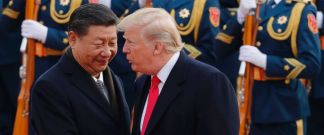
Why is Trump suddenly so concerned about Chinese jobs? It’s not about U.S. national security; it’s about Trump’s business. HuffPost: Trump Orders Help For Chinese Phone-Maker After China Approves Money For Trump Project.
A mere 72 hours after the Chinese government agreed to put a half-billion dollars into an Indonesian project that will personally enrich Donald Trump, the president ordered a bailout for a Chinese-government-owned cellphone maker….
…on Thursday, the developer of a theme park resort outside of Jakarta had signed a deal to receive as much as $500 million in Chinese government loans, as well as another $500 million from Chinese banks. Trump’s family business, the Trump Organization, has a deal to license the Trump name to the resort, which includes a golf course and hotels.
Trump and family with Indonesian business partners
Trump, despite his promises to do so during the campaign, has not divested himself of his businesses, and continues to profit from them.
“You do a good deal for him, he does a good deal for you. Quid pro quo,” said Richard Painter, the White House ethics lawyer for former President George W. Bush and now a Democratic candidate for Senate in Minnesota.
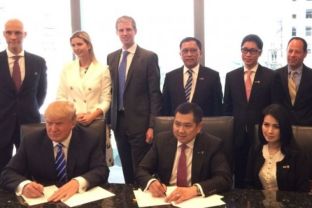
It sure does look like a quid pro quo, doesn’t it? Or is it just that Trump is a bad deal-maker? We can’t be sure because Trump chose to maintain control of his businesses and refuses to release his tax returns. Read more about Trump’s Indonesia project at the South China Morning Post: Trump Indonesia project is latest stop on China’s Belt and Road.
Gordon Chang at the Daily Beast: Trump Cuts a Great Deal—For China.
The White House looks like it is prepared to give relief to ZTE Corp., the embattled Chinese telecom-equipment maker, in exchange for Beijing lifting tariffs on, and easing non-tariff barriers against, U.S. agricultural products. Moreover, China’s Commerce Department will restart its long-stalled review of Qualcomm’s proposed acquisition of NXP Semiconductors, the Dutch firm.
In addition, The Daily Beast has learned there will be either no penalties or only light ones imposed on China for stealing U.S. intellectual property.
This is a great deal—for China. China gets relief for ZTE for doing nothing more than what it should have been doing all along. And its massive theft of U.S. technology and intellectual property—undoubtedly in the hundreds of billions of dollars a year—goes mostly unpunished.
If the reports of the outlines of the impending agreement are correct, the Trump administration, which prides itself on deal-making, will have accepted one of the worst trade arrangements this century.
 Josh Rogin at The Washington Post: China gave Trump a list of crazy demands, and he caved to one of them.
After top Trump officials went to Beijing last month, the Chinese government wrote up a document with a list of economic and trade demands that ranged from the reasonable to the ridiculous. On Sunday, President Trump caved to one of those demands before the next round of negotiations even starts, undermining his own objectives for no visible gain.
The Chinese proposal is entitled, “Framework Arrangement on Promoting Balanced Development on Bilateral Trade,” and I obtained an English version of the document, which is the Chinese government’s negotiating position heading into the next round of talks. That round begins this week when Xi Jinping’s special economic envoy Liu He returns to town.
Bullet point 5 is entitled, “Appropriately handing the ZTE case to secure global supply chain.”
So Trump agreed to reverse US policy, but was it really about rewarding China for funding the Trump project in Indonesia? I’d say that’s pretty likely, wouldn’t you?
Trump took a big step in that direction Sunday when he tweeted that he had instructed the Commerce Department to help get ZTE “back into business, fast,” only weeks after the Commerce Department cut off its supply of American components because it violated U.S. sanctions on sales to North Korea and Iran. Trump’s tweet set off a panic both inside and outside the administration among those who worry that Trump is backing down from his key campaign promise to stand up to China’s unfair trade practices and economic aggression.
As Sen. Marco Rubio (R-Fla.) pointed out Monday, the problems with ZTE go well beyond sanctions-busting. The Federal Communications Commission has proposed cutting ZTE and other Chinese “national champion” companies off from U.S. infrastructure development funds because the U.S. intelligence community views their technology as a national security risk.
Guess what folks? Trump doesn’t give a shit about U.S. national security. He cares about money for himself. Period.
Michael Avenatti has had a busy past few days, and I’ve been following the revelations pretty closely. On Sunday Avenatti posted some stills from a C-Span video of Trump Tower during the transition.
Later, he revealed that a Quatari official apparently met with Michael Cohen and Michael Flynn on Dec. 12, 2016.
Mother Jones: Qatari Investor Accused in Bribery Plot Appears With Michael Cohen in Picture Posted by Stormy Daniels’ Lawyer.
Members of the Trump transition team appear to have met on December 12, 2016, with a group from Qatar that included Ahmed Al-Rumaihi, the former Qatari diplomat and current head of a division of Qatar’s massive sovereign wealth fund, who is accused in a recent lawsuit of scheming to bribe Trump administration officials.
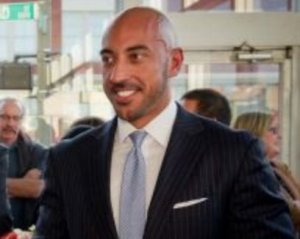
Ahmed Al-Rumaihi
On the lawsuit:
Ice Cube, the rapper and actor, and his business partner, Jeff Kwatinetz, recently filed a $1.2 billion lawsuit that includes an allegation that Al-Rumaihi and other Qatari officials who invested in the men’s BIG3 basketball league indicated interest in gaining access to people connected to Trump. “Mr Al-Rumaihi requested I set up a meeting between him, the Qatari government, and Stephen Bannon, and to tell Steve Bannon that Qatar would underwrite all of his political efforts in return for his support,” Kwatinetz said in the court filing. Kwatinetz says he rejected the offer, which he viewed as a bribe.
In response, Kwatinetz claims, “Al-Rumaihi laughed and then stated to me Buthat I shouldn’t be naive, that so many Washington politicians take our money, and stated ‘do you think Flynn turned down our money?’” That’s a reference to Michael Flynn, who was fired as Trump’s national security adviser after lying about his contacts with then Russian Ambassador Sergey Kislyak.
But it appears that other Quatari officials were also in the Dec. 12, 2016 meeting, according to knowledgeable people on Twitter.
Here’s the Wikipedia article on Quatari the foreign minister.
And a third person from Quatar who is also involved in the lawsuit filed by Ice Cube and Kwatinetz was also present.
https://twitter.com/ACoupleOkooks/status/995864743918391296
What the hell is going on? A couple of useful reads:
The founder of a three-on-three basketball league who claims he was offered a bribe by a one-time Qatari diplomat to arrange access to Steve Bannon said on Monday that the former diplomat is the same person photographed with Michael Cohen at Trump Tower in December 2016.
Big 3 basketball league co-founder Jeff Kwatinetz told Slate that he recognized Ahmed Al-Rumaihi in photos with Cohen that were tweeted Sunday by attorney Michael Avenatti.
“Yes, 100 percent,” Kwatinetz said when asked if he thought the videos and photos were of Ahmed Al-Rumaihi. Last week, Kwatinetz, who is a co-founder of Big 3 with Ice Cube, accused Al-Rumaihi in a sworn court declaration of making an attempted bribe and of suggestively boasting that Flynn had not refused “our money.” [….]
[Michael] Avenatti tweeted the images that appeared to show Al-Rumaihi entering an elevator in Trump Tower on Dec. 12, 2016, five days after news broke of the multibillion-dollar sale of 19.5 percent of the Russian fossil fuel giant Rosneft to Swiss trading firm Glencore and Qatar’s sovereign investment fund. (Glencore and Qatar sold off a major stake of Rosneft to China last year, but earlier this month Qatar bought back in to the Russian company for a total stake of 19 percent.)
The Rosneft deal features prominently in an investigative dossier compiled by former British spy Christopher Steele. A central claim of the Steele dossier was that Trump foreign policy adviser Carter Page, during an alleged meeting with Rosneft officials in summer 2016, promised that a Trump administration would undo sanctions against Russia, in part, in exchange for brokerage of the Rosneft deal. In May 2016, Al-Rumaihi reportedly took over as head of a major division of the wealth fund ultimately involved in the Rosneft deal.
The allegations in the Steele dossier, made in October 2016, suggested a future quid-pro-quo deal between Russia and the Trump campaign. Trump has been conspicuously resistant to Russian sanctions despite widespread congressional support from both parties. As Jed Shugerman has noted in Slate, during congressional testimony Page acknowledged meeting with Andrey Baranov, the head of investor relations at Rosneft, during his July 2016 trip to Russia and acknowledged “briefly” discussing the sale of Rosneft as well as there being “some general reference” to sanctions. As Business Insider’s Natasha Bertrand has reported, Page also acknowledged meeting with top Rosneft managers in Moscow on Dec. 8—four days before the apparent Cohen–Al-Rumaihi meeting and one day after the completion of the Rosneft deal.
Jed Shugarman has posted a detailed Russia/Qatar/Trump Timeline in a Google doc that will be updated with new information. On his blog, Shugarman posted this introduction to the timeline:
I have produced a Google Doc timeline, based on publicly available reports and documents, of the alleged bribery scheme between Russia and Trump associates, possibly through Qatar’s purchase of Rosneft….
Russia’s sale of Rosneft Gas is the key event in the Steele Dossier’s quid pro quo allegation. On June 2016, Russians allegedly offer Trump associates a massive payout derived from the commissions on Russia’s sale of 19.5% of state energy giant Rosneft ($11 billion), in return for lifting sanctions. Weeks after the election, Flynn and Kushner are in contact with Russian officials. Then Russia sells a 19.5% stake in Rosneft in a concealed deal, eventually revealed to be with Qatar. Immediately after the deal, a Qatari diplomat allegedly met with Cohen and Flynn at Trump Tower.
In January 2017, payments from Russian oligarch to Michael Cohen begin, and Flynn reportedly texts associates that Trump will lift Russian sanctions, opening up huge personal profits. But around this time, the Dossier is published. Kushner sought money directly from Qatar, because it is possible that Qatar was backing off of the deal, wary of its exposure. In April 2017, Kushner reportedly escalated a Gulf state crisis between Saudi Arabia, UAE, and Qatar with a risk of regional war. A few months later, the Qatar-backed Apollo Group delivers $184 million to Kushner, who has been in financial crisis over a disastrous purchase of 666 5th Ave.
Remember, Robert Mueller and his investigators have likely known all this for a long time and they probably know many more details. Michael Flynn has been cooperating for months, and indictments involving Michael Cohen are very likely in the works.
What stories are you following today?

 peej
peej Carissa
 bostonboomer
 dakinikat
 ecocatwoman
 mablue2
 Mama Lopez
 peggysue22
 quixote
 skydancingguestblogger
 Mona (aka Wonk the Vote)



 Sky Dancing
Recent Comments