
Trump and his aides also allegedly carried out a “dress rehearsal” for moving sensitive papers even before his office received the May 2022 subpoena, according to the people familiar with the matter who spoke on the condition of anonymity to describe a sensitive ongoing investigation.
Fabulous Friday Reads
Posted: May 26, 2023 Filed under: abortion rights, Donald Trump, SCOTUS | Tags: abortion, books and reading, Caitlin Bernard, Clean Water Act, Espionage Act, Indiana, rape, Samuel Alito, Supreme Court, Trump stolen documents case, wetlands 13 CommentsGood Day, Sky Dancers!!
I am addicted to books. In my adult years, I have bought so many books that I could never read them all; but I can’t stop myself–or maybe I don’t want to. When I moved into the apartment I live in now, I had to leave hundreds of books behind, because I simply didn’t have room for them. I tell myself an addiction to buying books is at least better than addictions to alcohol and drugs. I do much of my reading on my Kindle now, and at least those books don’t take up space. But I still love physical books and I still buy more than I can read. I’m 75 years old now, and I don’t have that much time left; but I still want to read as many books as I can before I “shuffle off this mortal coil.”
Could this be a solution?
Okay, probably not; but it’s an interesting fantasy. And now for some news.
Yesterday The Washington Post broke a story on the investigation into Trump’s theft of, and refusal to return, government documents. A short time later, The New York Times followed up with more details.
Devlin Barrett, Josh Dawsey, Spencer S. Hsu, and Perry Stein at The Washington Post: Trump workers moved Mar-a-Lago boxes a day before FBI came for documents.book
Two of Donald Trump’s employees moved boxes of papers the day before an early June visit byFBI agents and a prosecutor to the former president’s Florida home to retrieve classified documents in response to a subpoena — timing that investigators have come to view as suspicious and an indication of possible obstruction, according to people familiar with the matter.
Prosecutors in addition have gathered evidence indicating that Trump at times kept classified documents in his office in a place where they were visible and sometimes showed them to others, these people said.
Taken together, the new details of the classified-documents investigation suggest a greater breadth and specificity to the instances of possible obstruction found by the FBI and Justice Department than have been previously reported. It also broadens the timeline of possible obstruction episodes that investigators are examining — a period stretching from events at Mar-a-Lago before the subpoena to the period after the FBI search there on Aug. 8.
That timeline may prove crucial as prosecutors seek to determine Trump’s intent in keeping hundreds of classified documents after he left the White House, a key factor in deciding whether to file charges, possibly for obstruction, mishandling national security secrets or both. The Washington Post has previously reported that the boxes were moved out of the storage area after Trump’s office received a subpoena. But the precise timing of that activity is a significant element in the investigation, the people familiar with the matter said.
The WaPo writers focus on obstruction, but if Trump showed documents to other people, that could be espionage. Remember, espionage was one of the crimes listed on the warrant for the FBI search of Mar-a-Lago.
More details from the WaPo story:
Of particular importance to investigators in the classified-documents case, according to people familiar with the probe, is evidence showing that boxes of documents were moved into a storage area on June 2, just before senior Justice Department lawyer Jay Bratt arrived at Mar-a-Lago with agents. The June 3 visit by law enforcement officialswas to collect material in response to the May 2022grand jury subpoena demanding the return of all documents with classified markings.
John Irving, a lawyer representing one of the two employees who moved the boxes, said the worker did not know what was in them and was only trying to help Trump valet Walt Nauta, who was using a dolly or hand truck to move a number of boxes.
“He was seen on Mar-a-Lago security video helping Walt Nauta move boxes into a storage area on June 2, 2022. My client saw Mr. Nauta moving the boxes and volunteered to help him,” Irving said. The next day, he added, the employee helped Nauta pack an SUV “when former president Trump left for Bedminster for the summer.”
The lawyer said his client, a longtime Mar-a-Lago employee whom he declined to identify, has cooperated with the government and did not have “any reason to think that helping to move boxes was at all significant.” Other people familiar with the investigation confirmed the employee’s role and said he has been questioned multiple times by authorities.
Awhile back there was a video circulating on Twitter of people moving boxes out of Mar-a-Lago and loading them onto a truck to be taken to Bedminster. This happened the day before Trump left to spend the summer at his New Jersey golf club. Now it’s being posted again.
This is from Alan Feuer and Maggie Haberman at The New York Times: Mar-a-Lago Worker Provided Prosecutors New Details in Trump Documents Case.
The day before a key meeting last year between a lawyer for former President Donald J. Trump and officials seeking the return of classified documents in Mr. Trump’s possession, a maintenance worker at the former president’s private club saw an aide moving boxes into a storage room, according to a person familiar with the matter.
The maintenance worker offered to help the aide — Walt Nauta, who was Mr. Trump’s valet in the White House — move the boxes and ended up lending him a hand. But the worker had no idea what was inside the boxes, the person familiar with the matter said. The maintenance worker has shared that account with federal prosecutors, the person said….
Mr. Trump was found to have been keeping some of the documents in the storage room where Mr. Nauta and the maintenance worker were moving boxes on the day before the Justice Department’s top counterintelligence official, Jay Bratt, traveled to Mar-a-Lago last June to seek the return of any government materials being held by the former president.
Mr. Nauta and the worker moved the boxes into the room before a search of the storage room that same day by M. Evan Corcoran, a lawyer for Mr. Trump who was in discussions with Mr. Bratt. Mr. Corcoran called Justice Department officials that night to set up a meeting for the next day. He believed that he did not have a security clearance to transport documents with classified markings, a person briefed on his decision said.
Weeks earlier, the Justice Department had issued a subpoena demanding the return of the documents. Prosecutors have been trying to determine whether Mr. Trump had documents moved around Mar-a-Lago or sought to conceal some of them after the subpoena.
Part of their interest is in trying to determine whether documents were moved before Mr. Corcoran went through the boxes himself ahead of a meeting with Justice Department officials looking to retrieve them. Prosecutors have been asking witnesses about the roles of Mr. Nauta and the maintenance worker, whose name has not been publicly disclosed, in moving documents around that time.
During his trip to Mar-a-Lago on June 3, Mr. Bratt was given a packet of roughly three dozen documents with classified markings by a lawyer for Mr. Trump. Mr. Bratt was also given a letter, drafted by Mr. Corcoran but signed by another lawyer for the former president, attesting that a diligent search had been carried out for any additional material in response to the subpoena and that none had been found. Mr. Bratt was not given access to search the storage room at that point.
The obvious inference is that Trump may have gone through the boxes and removed items that he wanted to keep, concealing them in his private quarters. Remember that classified documents were later found in his office desk and in his bedroom.
Like the WaPo writers, Feuer and Haberman focus their discussion on possible obstruction charges, and ignore the obvious possibility of espionage charges based on the fact that Trump showed documents to people at his private club and left them lying around in plain sight.
The penalties for violating the espionage act are 20 years in prison and a $10,000 fine.
In other news, the Supreme Court yesterday announced another horrific decision. This time they’ve gutted the Clean Water Act.
Timothy Puko and Robert Barnes at The Washington Post: How Supreme Court’s EPA ruling will affect U.S. wetlands, clean water.
Bogs. Marshes. Swamps. Fens. All are examples of wetlands.
But the type of wetland that gets protection under federal law is a matter of wide dispute, one reset by a sweeping ruling Thursday from the U.S. Supreme Court.
At issue is the reach of the 51-year-old Clean Water Act and how courts should determine what count as “waters of the United States” under that law. Nearly two decades ago, the court ruled that wetlands are protected by the Clean Water Act if they have a “significant nexus” to regulated waters.
The Supreme Court decided that rule no longer applies and said the Environmental Protection Agency’s interpretation of its powers went too far, giving it regulatory power beyond what Congress had authorized….
Writing for five justices of the court, Justice Samuel A. Alito ruled that the Clean Water Act extends only to “those wetlands with a continuous surface connection to bodies that are ‘waters of the United States’ in their own right, so that they are ‘indistinguishable’ from those waters.” He was joined by Chief Justice John G. Roberts Jr. and Justices Clarence Thomas, Neil M. Gorsuch and Amy Coney Barrett….
Some environmental groups and legal experts estimate that the decision will remove federal protection from half of all wetlands in the continental United States. According to estimates from Earthjustice, an environmental law firm, the decision will prevent the EPA from placing federal protections on as many as 118 million acres of wetlands, an area larger than the landmass of California. Those estimates could not be immediately confirmed, but the ruling is expected to give farmers, home builders and other developers far more latitude to disturb lands previously regulated under the Clean Water Act….
The ruling affects one of the EPA’s most fundamental authorities — its ability to protect upstream waters in order to protect downstream water quality for drinking supplies and wildlife. Experts say greater development upstream could result in silt and pollutants damaging downstream waters and habitat, and reduce the flood control and groundwater-recharge benefits of protected wetlands.
Read all the gory details at the WaPo link.
Commentary by Mark Joseph Stern at Slate: Samuel Alito’s Assault on Wetlands Is So Indefensible That He Lost Brett Kavanaugh.
On Thursday, the Supreme Court dealt a devastating blow to the nation’s wetlands by rewriting a statute the court does not like to mean something it does not mean. The court’s decision in Sackett v. EPAis one of the its most egregious betrayals of textualism in memory. Put simply: The Clean Water Act protects wetlands that are “adjacent” to larger bodies of water. Five justices, however, do not think the federal government should be able to stop landowners from destroying wetlands on their property. To close this gap between what the majority wants and what the statute says, the majority crossed through the word “adjacent” and replaced it with a new test that’s designed to give landowners maximum latitude to fill in, build upon, or otherwise obliterate some of the most valuable ecosystems on earth.
Justice Samuel Alito’s opinion for the court is remarkably brazen about this approach—so brazen that Justice Brett Kavanaugh (of all people!) authored a sharp opinion accusing him of failing to “stick to the text.” Alito began with a long history of the Supreme Court’s struggles to identify the “outer boundaries” of the Clean Water Act, as if to explain why the time had come for the court to give up wrestling with the text and just impose whatever standard it prefers. The law expressly protects “waters of the United States” (like rivers and lakes) as well as “wetlands adjacent” to these waters. Congress added the wetlands provision in 1977 to codify the EPA’s definition of “adjacent,” which also happens to be the actual definition: “bordering, contiguous, or neighboring.” Under that interpretation—the one Congress adopted—wetlands that neighbor a larger body of water remain protected, even if they aren’t directly connected.
Why did Congress make that choice? Because wetlands provide immense environmental benefits: They filter and purify water draining into nearby streams, rivers, and lakes. They slow down runoff into these larger bodies. And they serve as vital flood control. In other words, the Clean Water Act has to protect “adjacent” wetlands to serve its overarching goal of safeguarding the broader “waters of the United States” from pollution.
Too bad, Alito wrote: We don’t like the definition that Congress used. It could lead to “crushing” fines for landowners and interfere with “mundane” activities like “moving dirt.” It interferes with “traditional state authority.” And it could give the EPA “truly staggering” regulatory authority. Five justices on the Supreme Court think all of that is very bad. So they declared that, instead of applying the statute’s words, the court would impose a different standard: Only wetlands with “a continuous surface connection” to larger bodies of water merit protection under the Clean Water Act.
This definition—which, it just can’t be stressed enough, appears nowhere in the law—is a crushing defeat for wetlands and their protectors. These ecosystems, as Kavanaugh pointed out, are frequently separated from larger bodies of water by “man-made dikes or barriers” as well as “natural river berms, beach dunes, or the like.” Such wetlands “play an important role in protecting neighboring and downstream waters,” which is why Congress included them in the statute. But under the majority’s new test, they are stripped of federal protection.
Sam Alito: the same asshole who overturned Roe v. Wade while citing a 17th century judge who presided over a witch trial.
I’ll wrap up this post with an abortion horror story at The Washington Post: Indiana board fines doctor for discussing rape victim’s abortion.
https://twitter.com/donmoyn/status/1662078210518007813?s=20
Indiana’s medical licensing board decided late Thursday to discipline a doctor who made headlines last year for performing an abortion for a 10-year-old Ohio rape victim. The board gave the doctor a letter of reprimand and ordered her to pay a $3,000 fine for violating ethical standards and state laws by discussing the case with a reporter.
For nearly a year, Indiana’s Attorney General Todd Rokita (R) pursued punishment for Caitlin Bernard, an OB/GYN and an assistant professor at the Indiana University School of Medicine who carried out the abortion in June 2022, less than a week after Roe v. Wade was struck down, enacting trigger laws.
Bernard broke patient privacy laws by telling an Indianapolis Star reporter about the patient’s care, the board decided Thursday night after a roughly 14-hour hearing that ended shortly after 11:30 p.m. Bernard’s lawyers argued she properly reported the incident to an Indiana University Health social worker and did not run afoul of privacy laws when she discussed the patient’s case in a general and “deidentified” manner that is typical for doctors.
Records obtained by The Washington Post last year show that Bernard reported the girl’s abortion to the relevant state agencies ahead of the legally mandated deadline, which the board agreed with Thursday night, clearing her of a charge related to that issue.
These assholes are supposedly doing this in order to “protect” the patient–a 10-year-old child who was impregnated by a rapist in Ohio and had to travel to Indiana because her Ohio politicians determined that she should be forced to bear her rapist’s child even though that could be life-threatening for her.
Bernard’s lawyers rejected Rokita’s allegations as baseless and politically motivated. The seven-member board of governor appointees could, by a majority vote, have either taken no action against Bernard or imposed a range of disciplinary measures up to and including the immediate termination of Bernard’s medical license.
Throughout the lengthy hearing, Bernard faced at times pointed questions about her decisions.
She explained how, as a doctor, she felt she had “an obligation” to ensure Hoosiers understood how abortion bans were affecting people across the country — and could eventually affect them.
Bernard was also asked whether she thought she would have “gotten as much attention” if she had not mentioned the 10-year-old patient’s case to a reporter.
“I don’t think that anybody would have been looking into this story as any different than any other interview that I’ve ever given if it was not politicized the way that it was by public figures in our state and in Ohio,” Bernard said.
That’s my contribution for today. What stories have you been following lately?
The Blob Lives On!
Posted: April 21, 2011 Filed under: Environment, Environmental Protection, Gulf Oil Spill | Tags: BP, coastal restoration, Deepwater Drilling, Deepwater Horizon, Louisiana, Oil Gusher, wetlands 11 Comments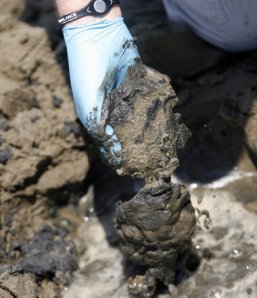 It’s been a year since the explosion of the Deepwater Horizon killed 11 people outright and destroyed an entire ecosystem. It’s the worst environmental catastrophe to ever hit the US. The US celebrates Earth Day on Friday, yet, I never hear one politician make hay over the “lessons of 4/20”. This is because policy makers refuse to learn the lessons. They’d rather sell oil and tainted seafood than deal with the real issues of the disaster.
Most of the coastline of Louisiana is still coated with oil either right in the marshes or just below the surface. The Oyster populations are way down. Dead Dolphins and Sea Turtles are washing up onto the beaches in record numbers. Where is the outrage? Where is the move to seek justice? Where are the calls about what we’re going to leave to our children?
No one who could make this right is carrying the banner to do so. Thousands of small businesses that rely on the Gulf are still hurting and going under. Those that are hurting include people who fish, oyster, shrimp, and run services businesses that support other businesses or tourist trade. It’s an ongoing tragedy and one that’s been ignored for the most part. The Times Picayune editorial staff and even Republican Politicians in the area who are obsessed with drilling for oil and the oil industry here aren’t shying away from pointing fingers and blame. BP is doing the same half-assed job of cleaning up that they did of drilling on the Deepwater Horizon. There is no justice and no peace down here on the Gulf. Real people are dying and local economies are going under. There has been more guffaw in Washington DC over defunding Planned Parenthood than making things right for people impacted by the BP Oil Gusher. Just ask Congressman Markey who has tried endlessly to pass bills to make it right and hasn’t got one through yet.
The oil lurking just under the soil in the marshes of Pass a Loutre Wildlife Management Area is a testament to that. The area was thick with roseau cane a year ago, Wildlife and Fisheries Secretary Robert Barham told reporters this week. “It was a thick, luscious, green tropical marsh,” he said. Now it is “weathered, stressed, unhealthy.”
The shoreline has visibly retreated in the past year, shrinking several yards from where the water line had been marked in the days after the spill. That is discouraging to Louisianians and ought to worry all Americans, given the importance of our coastal wetlands to the creation of fish and other marine life.
The state created the Pass a Loutre Wildlife Management Area nearly 100 years ago, and it has been an important refuge for migratory birds. Now, the state is using air cannons to keep the birds away from the oily marshes.
This is just one spot on the Gulf Coast that is still suffering from the massive amount of oil that spilled from BP’s well last spring and summer.
In some locations, we are losing 5 feet of marshes and shore line a day. Deep Horizon oil is everywhere and making things much worse. All you have to do is talk to the people that live in the affected areas like Grand Isle or Plaquemines Parish or Barataria Bay to see and hear about oil oozing along the coastline.
The noise of the cannons, combined with the swish and flash of metallic strips flapping from poles above the cane, are designed to keep birds from settling into the oily area.
“This is the very terminal end of the Mississippi Flyway,” said Todd Baker, biology program manager for Wildlife & Fisheries. “You get a wide variety of birds, waterfowl, neotropical migrants, raptors, all of them. When they come through, this is the first piece of land they see. When they leave, this is the last place they rest up before they jump across the Gulf of Mexico.
“The hazing cannons are not foolproof,” Baker said, as a Louisiana red-winged blackbird chirped from atop a cane stalk a few yards away.
About 15 miles away as the birds fly — or 30 by boat — Graves used a shovel and his hands to dig about a foot beneath the surface of a spit of sandy beach at the end of South Pass, turning over black-stained sand that smelled like diesel.
Here’s some testimony from people whose health has been impacted by working on the clean-up. There will probably be lots more of them in the coming months in years.
What does it say about a government that will not make right injustices done to so many people for the benefit of a profit-seeking company? What does it say that our media only shows up to report this story on anniversary days? How do we explain to our children that we no longer have an entire lifestyle or set of animals and birds or group of human beings because oil is more important than anything?
The silence of Congress is deafening and deadly. They’ve been more concerned with gutting the EPA than learning the lessons from this deadly oilspill and its omnipresent aftermath. Shame on them and every one else who has forgotten their fellow Americans and the country they profess to love. This is killing people and it’s killing our land. We should be talking about the lessons of 4/20 daily. Instead, we’re just learning how much more Congress loves their donors than the people they are supposed to represent. It’s a damn shame.
Here we go again x3: Oil Spills 3, New Drilling Permits 4
Posted: March 23, 2011 Filed under: Environmental Protection, Gulf Oil Spill | Tags: BP, deep water drilling, drilling permits, ecosystem restoration, Gulf Of Mexico, oil spills, wetlands 12 Comments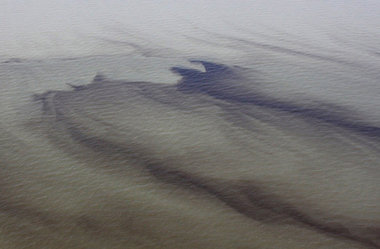 I just got a tweet from the National Wildlife Federation (NWF). This comes days after complaints that the government isn’t approving Gulf drilling permits quick enough. I should also mention that the Obama Administration has approved the fourth deep-water drilling permit since the BP oil gusher approximately one year ago. So, here’s information from the NWF where they are tracking THREE separate incidents in the Gulf right now.
At this point, we’re following what are likely three different incidents in the Gulf:
- Oil coming ashore west of the mouth of the Mississippi River near Grand Isle
- Reports of possible oil east of the mouth of the Mississippi in Chandeleur Sound
- A large amount of sediment mixed with a small amount of oil at the mouth of the Mississippi
The Times Picayune reports on the first oil occurring near beleaguered Grand Isle, LA and a Houston company has accepted responsibility for that one. TP also reports on the second oil sighting near the Chandeleur islands. That’s a picture of it at the top of the thread.
Coast Guard Petty Officer Steve Leeman said the Coast Guard had received no reports of oil-like material east of the river, but a group of environmentalists, engineers and scientists flew over Chandeleur Sound on Monday and Tuesday, and shared photographs and detailed descriptions with The Times-Picayune showing black, streaky plumes over a 20-mile stretch from just east of Quarantine Bay to just west of the shoal remains of Curlew Island.
While the oil industry whines it’s not getting to drill quickly enough, it’s becoming evident that their record of maintaining and inspecting existing rigs is pretty pathetic. Also, we’ve seen no push by the administration or any one in Congress to implement the recommendations of the National Commission on the Deepwater Horizon Oil Spill. Furthermore, BP is not living up to its obligations to deal with its damage to the wetlands done by the Deepwater Horizon Oil Spill. Louisiana’s congressional delegation has asked BP for $15 million to restore oyster beds and fisheries. Louisiana is ponying up $12 million of state funds to begin some kind of effort. BP is still supposedly cleaning up the damage still but has no projects active to restore wetlands.
BP set up the GCRO to deal with the spill. On Tuesday, the GCRO opened up its New Orleans office, in an effort to show they are still working on the oil spill.
“BP’s Gulf Coast Restoration Organization is really centered on four things,” Utsler said. “The first and foremost is continuing the completion of this response.”
Dan Favre is with the environmental advocacy “Gulf Restoration Network.” The group has a similar name to BP’s GCRO, but with a totally different take on the response.
“Unfortunately, the response is clearly lacking,” Favre said. “We’re coming up on the one-year memorial mark of the beginning of BP’s disaster here in the Gulf. And so it’s just crazy that there hasn’t been any action to actually start to repair the damage that’s been done.”
That is true, in part. BP set aside hundreds of millions of dollars for their restoration organization, but a year after the spill, only one of their restoration projects is so far underway.
“One of those is already in progress in Mississippi, in terms of wetland restoration,” Utsler said. “Other projects are in discussion in readiness for being approved and agreed to with NRDA [Natural Resource Damage Assessment] trustees, the states and ourselves to conduct.”
However, none of those projects is currently underway in Louisiana — arguably the state hardest hit by the spill. Utsler said they are working on a list of projects, with pending approval. Yet, some environmental groups believe the federal government needs to step in to move the restoration along.
“I don’t think we can leave it to BP to do it on their own accord,” Favre said. “I want to see Congress and the administration actually make BP pay for Gulf ecosystem restoration, by levying the maximum fines and penalties under the Clean Water Act and then allocating those resources directly to environmental restoration in the Gulf.”
It seems somewhat premature to allow these businesses continued access to drilling in the Gulf when they obviously haven’t maintained the rigs, inspected rigs for problems, and shown signs of good faith following damage to the ecosystem and people living in the Gulf. I think the administration should ask for implementation of the recommendations before allowing any more new permits. We also need to look for patterns of abuse so that operators with bad records are not allowed new permits. That’s just one shrimp lover’s opinion. But then, there’s Michelle Bachmann that wants to do away with the EPA and she’s a congress critter. Newt Gingrich–oil industry suck-up extraordinaire wants that too. I just want my seafood and vacations in warm Gulf Waters to be safe again.
Oh, and honk if you’ve seen or read any of this on MSM from the village.

 peej
peej Carissa
 bostonboomer
 dakinikat
 ecocatwoman
 mablue2
 Mama Lopez
 peggysue22
 quixote
 skydancingguestblogger
 Mona (aka Wonk the Vote)



 Sky Dancing
Recent Comments