
Lazy Saturday Reads: Positively Nixonian
Posted: May 13, 2017 Filed under: Afternoon Reads | Tags: Comey, corruption, FBI, John Dean, obstruction of justice, Paul Manafort, Sam Irvin, Senate Hearings, T-Russia, Watergate 30 Comments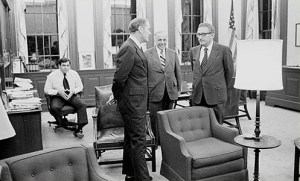 Happy Mother’s Day Weekend Sky Dancers!
As usual, we have no respite from the news and it looks like we get to kick Dick Nixon’s dead body some. Every where you turn you hear the word “Nixonian”. BB managed to find a lot of Trump/Nixon mash ups in political cartoons. I thought it completely symbolic to see a picture of Kremlin Caligula with Kissinger in the White House this week. I was just wondering if Kissinger was asked once more to pray. I actually bought and read Woodward and Bernstein’s ‘The Final Days’ just to read that entire scene. It still sits on my book shelf like a monument to the death of my belief in American Exceptionalism.
I probably could imagine a similar conversation taking place between Bannon and President Swiss Cheese for Brains. (My apologies for the ‘k” word,) The cut away would probably be to discuss the escalation in Syria/Afghanistan instead.
APRIL 22, 1973: THE PRESIDENT, H.R. “BOB” HALDEMAN, AND HENRY KISSINGER, 9:50–10:50 A.M., OVAL OFFICE.
PRESIDENT NIXON: Where is…where is that kike, Kissinger?KISSINGER: I’m right here, Mr. President.
PRESIDENT NIXON: Oh…uh, Henry, good, I’m glad you’re here…I want you to get down on your knees, Henry, and pray for me…I’m up shit creek without a paddle. I’ve got the damn Jew press on me like a “kick me” sign taped to my ass.
KISSINGER: Of course, Mr. President.
HALDEMAN: You can kneel over here, Henry.
PRESIDENT NIXON: Never mind that…just get me some support from those sons-of-bitches in the cabinet. Tell them I’ve got stuff on them…pictures.
KISSINGER: But, Mr. President, you have these things?
PRESIDENT NIXON: We’ve got tons of stuff…tons…
KISSINGER: All right, Mr. President, but it would help me if I could…see the pictures.
HALDEMAN: We’ll get some for you, Henry.
KISSINGER: Good. Now, sir, I want to discuss the latest operation in Camb—(cuts off)
Well, some folks just have a lot of nerve and they think we’re such fools. They just want to be on the side that’s winning.
 So, it will get worse if the Ryan/Trump economic plan gets passed. We know this. It’s nice to hear it from an esteemed Nobel prize winning economist though. Can we stop pretending the people that voted him found him the source of relief for economic distress? They’re about to get a shitload of it.
U.S. President Donald Trump’s economic policies risk creating growth that mostly benefits the rich and aggravates income inequality in the United States, Nobel Prize-winning economist Angus Deaton said.
Trump was swept to power on promises of help for poorer Americans but Deaton said his proposals to roll back regulations on finance and industry and cut healthcare benefits would mostly help corporate groups with political influence.
Trump’s plans to cut taxes and raise trade barriers, if enacted, might give a short-term income boost to some workers but would not deliver the long-term growth that is essential for mitigating the effects of inequality, he said in an interview.
“I don’t think any of it is good” for addressing income inequality, said Deaton, a Princeton University professor, who won the Nobel Prize for economics in 2015 for his work on poverty, welfare and consumption.
He was speaking on Friday after addressing a meeting in Italy of finance ministers and central bankers from rich nations at which inequality topped the official agenda.
The political shocks in 2016 of Trump’s U.S. presidential election victory and Britain’s Brexit vote have been linked to widespread dissatisfaction with stagnant living standards for many workers, forcing policymakers in many countries to grapple with ways to narrow the gap between the rich and poor.
Income inequality has grown sharply in the United States over recent decades and the World Bank says that at a global level the gap has widened too since the 1990s, despite progress recently in some countries.
The Trump administration says it will lift U.S. economic growth to more than 3 percent a year and bring more manufacturing jobs back to U.S. shores, helping workers.
But many economists say growth like that will be hard to achieve with employment already high and the baby boom generation retiring in large numbers too.
Deaton said restoring stronger economic growth, preferably through encouraging more innovation, would help reduce the anger among many people who feel they have been left behind.
“A rising inequality that probably wouldn’t have bothered people before does become really salient and troublesome to them (during periods of low growth). It poisons politics too because when there are no spoils to hand out it becomes a very sharp conflict,” he said.
Deaton said he did not think inequality was inherently bad as long as everyone felt some benefit from growth.
“But I do care about people getting rich at public expense,” he said, referring to political lobbying by business groups.
 So onto the the criminal and traitorous group known as the Trump family syndicate and friends connected to all things Russian. The Senate is starting to follow the money and the bodies.
This robust compliance was not happening at the Taj Mahal. The Treasury Department found that the casino didn’t monitor or report suspicious activity. About half the time that Treasury investigators identified suspect behavior, the Taj Mahal had not reported it to authorities. “Like all casinos in this country, Trump Taj Mahal has a duty to help protect our financial system from being exploited by criminals, terrorists, and other bad actors,” Jennifer Shasky Calvery, the FinCEN director, said in a statement at the time of the settlement. “Far from meeting these expectations, poor compliance practices, over many years, left the casino and our financial system unacceptably exposed.”
The Trump Organization is not known for its careful due diligence. As I wrote in the magazine earlier this year, Ivanka Trump oversaw a residence and hotel project in Azerbaijan. The project was run in partnership with the family of one of that country’s leading oligarchs, and while there is no proof that the Trumps were themselves involved in money laundering, the project had many of the hallmarks of such an operation. There was no public accounting of the hundreds of millions of dollars that flowed through the project to countries around the world, millions of dollars were paid in cash, and the Azerbaijani developers were believed to be partners, at the same time, with a company that appears to be a front for the Iranian Revolutionary Guard, which is known as one of the world’s leading practitioners of money laundering. Trump’s Azerbaijani partners are known to have close ties to Russia, as do his partners in other projects in Georgia, Canada, Panama, and other nations.
A former high-ranking official at the Treasury Department explained to me that FinCEN could have collected what are known as Suspicious Activity Reports from banks, casinos, and other places, about transactions involving any Trump projects. These reports could be used to create a detailed map of relationships and money flows involving the Trump Organization.
The Senate committee headed by Richard Burr, a Republican from North Carolina, and Warner has been ratcheting up the pressure on Trump’s associates in the course of investigating Russian meddling in the Presidential campaign. On Thursday, the committee sent a subpoena to Michael Flynn, the short-lived national-security adviser, demanding documents that he didn’t turn over voluntarily. By asking the Treasury Department for more details about Trump and his associates, the Senate Intelligence Committee seems to be signalling a widening of its interest from the narrow question of collusion between Russia and members of Trump’s campaign staff. (My calls to Warner’s office about this weren’t answered.) If the committee does begin to seriously consider the Trump Organization’s business practices and any connections those show to figures in Russia and other sensitive countries, it would suggest what prosecutors call a “target rich” environment. Rather than focussing on a handful of recent arrivals to Trump’s inner circle—Mike Flynn and Carter Page, a Trump campaign adviser—it could open up his core circle of children and longtime associates.
The WSJ is on the forefront of this story and the Manafort probe. It’s nice to know that even papers known to be ‘captured’ by an agenda can still do straight up news.
The Justice Department last month requested banking records of Paul Manafort as part of a widening of probes related to President Donald Trump’s former campaign associates and whether they colluded with Russia in interfering with the 2016 election, according to people familiar with the matter.
In mid-April, federal investigators requested Mr. Manafort’s banking records from Citizens Financial Group Inc., the people said.
It isn’t clear whether Citizens is the only bank that received such a request or whether it came in the form of a subpoena. Federal law generally requires that a bank receive a subpoena to turn over customer records, lawyers not connected to the investigation said.
Citizens gave Mr. Manafort a $2.7 million loan last year to refinance debt on a Manhattan condominium and borrow additional cash, New York City real-estate records show. The Wall Street Journal couldn’t ascertain if the Justice Department request is related to that transaction or whether the bank has turned over Mr. Manafort’s records.
I think the WSJ is getting less strict on its paywall practices for these items because you can go read the rest of it.
Go ‘way from my window
Leave at your own chosen speed
I’m not the one you want, babe
I’m not the one you need
You say you’re lookin’ for someone
Who’s never weak but always strong
To protect you an’ defend you
Whether you are right or wrong
Someone to open each and every door
But it ain’t me, babe
No, no, no, it ain’t me babe
It ain’t me you’re lookin’ for, babe
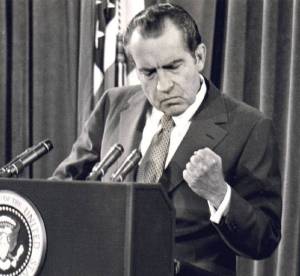 The FBI is not happy with the President and what he did to Director Comey. They’ve evidently not signed on to participate in some twisted version of The Apprentice. Trump has made quite a few institutional enemies from Park Rangers to the scientists in the EPA and HHS. The weirdish thing about all this is that he’s just made an enemy of the one institution he could ill afford to put off and was most likely to support his thuggish brand of justice.
Clearly, Comey underestimated Trump’s impatience—as well as the president’s pathological inability to allow anyone to question the legitimacy of his election, let alone keep pressing the investigations into the Trump campaign’s possible ties with Russia. Comey is now puttering in his yard in Northern Virginia. But the political and legal whirlwind that his firing has set in motion is just beginning to spin, with the White House and the F.B.I. subject to the greatest damage. Even pro-Trump agents are horrified and furious at how Comey was treated. “It shows us, the career people who care only about justice, that there is no justice at the top,” one agent says.
There were agents who found Comey priggish; within the bureau’s New York office, there was a faction that thought he’d soft-peddled the investigation of the Clinton Foundation. But those complaints have now been dwarfed by shock and revulsion at how Comey was fired—and how it reflects on them. “The statements from the White House that he’d lost the faith of the rank and file—they’re making that up,” says Jeff Ringel, a 21-year F.B.I. veteran who retired in May 2016 and is now director of the Soufan Group. “Agents may not have agreed with everything he did. I was one of the people who thought the director shouldn’t have stepped up and made those public statements about Hillary Clinton. But Director Comey was one of the last honest brokers in D.C. Agents are pissed off at the way he was fired, the total disrespect with which it was handled. It was a slap in the face to the F.B.I., to everybody in the F.B.I. The director being treated terribly, being called incompetent, is a signal that Trump has disdain for the bureau.”
 Oops. Yet we still have slutty Republicans bending over backwards for the mad king.
Elected Republican officials are publicly defending Trump but privately are dumbfounded, disgusted and demoralized by this turn of events.
We haven’t had a single conversation with a top Republican that doesn’t reflect this. The worries are manifold
- This kills momentum on legislating, and unifies Democrats in opposition to everything they want to do.
- This makes it easier for Democrats to recruit quality candidates and raise money for the off-year elections.
- It sours swing voters.
- It puts them on the defensive at home. They want to talk tax reform and deregulation — not secret tapes and Russian intrigue.
- But mainly it reinforces their greatest fear: Trump will never change. They keep praying he’ll discipline himself enough to get some big things done. Yet they brace for more of this.
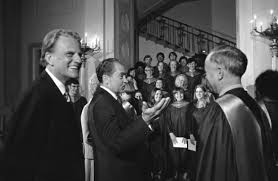 And of course, Trump voters could care less. The most immoral of them is the Evangelical base. At least the NAZIs are upfront about being deplorable.
But just like with the “Access Hollywood” tape, the vast majority of Republicans — and especially the Trump base — seem unfazed. For all the media/Democrat/Twitter histrionics, consider:
- The Gallup daily tracking poll shows Trump’s approval has held steady (40% the day of the firing, 41% two days later).
- Polls show two countries: In NBC News/Survey Monkey, 79% of Rs thought Trump acted appropriately, and 13% of Dems.
- Most elected Republicans are backing Trump or staying silent. AP reports that at the Republican National Committee’s spring meeting out in Coronado, Calif., party leaders defended the president’s actions and insisted that they would have little political impact.
- The Comey topic is hot in traditional media, but cold on Facebook: Seven other events of the Trump presidency trended harder.
Be smart: Don’t underestimate how much wiggle room Trump bought himself with his voters and conservatives by putting Gorsuch on the Supreme Court, enforcing the red line in Syria, and muscling a partial repeal of Obamacare through the House. He has a long leash with Trump Country.
So, like many folks my age, my head is spinning because we’ve seen this before. The only difference is that Nixon never basically admitted to a journalist that he obstructed justice. But then, Nixon did not have Swiss Cheese for brains.
One of my favorites quotes today comes from Watergate’s John Dean. “President Trump is an ‘authoritarian klutz’ — just like Nixon.”
In an interview with New York Magazine‘s The Daily Intelligencer, John Dean, the former advisor to President Richard Nixon whose call-recording testimony made the Watergate case, told reporter Olivia Nuzzi that both Nixon and President Donald Trump share alarming tendencies.
“I think they’re both authoritarian personalities,” Dean told The Daily Intelligencer. “We only know of Nixon’s full personality because of his taping system. But Trump just doesn’t try to hide anything, he’s just out there.”
Dean also said that both Trump and Nixon are “klutzy” when it comes to electronics, and that Trump’s apparently Luddite approach to technology may have made any recordings he’d made as apparent as Nixon’s were to Dean.
“I’m told he’s not very mechanical. He’s kind of like Nixon in that regard,” Dean said. “In other words, he’d have trouble surreptitiously recording somebody, you know, starting the machine, if it wasn’t going and what have you.”
On comparisons between Trump’s surprise firing of former FBI Director James Comey and Nixon’s “Saturday Night Massacre”, Dean told Nuzzi that there are some parallels, but they aren’t exact.
“There were some echoes, but not much more. Echoes being the brutal way it was handled, and so unnecessary,” Dean said. “But not quite the same stage, where Comey wasn’t defying Trump, whereas Archibald Cox clearly was, and both of them had the power to do what they did, but it wasn’t very wise to do.”
In the fallout from firing former FBI James Comey, Trump may have implicated himself in his own conversation-recording scheme. Trump also allegedly has a history of recording phone calls.
So, we’re once again about to see how well the checks and balances work. We seem reliant on the Senate and is there a Sam Ervin out there? It’s hard to see that Ervin’s neighboring state of South Carolina’s Lady Lindsey will go for the truth the way Ervin did. I remember coming home from high school with my hippy jeans, my books overflowing in my boy scout back pack, and undoing the tie backs that kept those jeans from getting caught in my 12 speed’s derailleur to my mother with the TV blaring. She never watched daytime TV because it was banal game shows and soaps. But there she was–frequently with our cleaning lady from maid service boston of like 15+ years–watching from the door way. Mildred–the big German woman who my mother called a good ol’ gal–was usually shaking her head like she’d seen the Third Reich all over again. She was really good at her job, so we knew that in the case we didn’t need her anymore she can get another job, Maid Zone is hiring or maybe any other house cleaning company. The networks had interrupted everything once again to show case Sam Ervin and his Watergate hearings. It seems like a galaxy far far away to me but yet every time I turn on the TV news, it comes back to me.
More extraordinary than Ervin’s sense of humor is his uncompromising belief in the Constitution as a basis of government. A “strict constructionist,” presumably after Mr. Nixon’s heart, he has phrased his passionate Constitutionalism in resounding measures that owe much to Shakespeare and the Bible, but surely as much to the great jurists of Anglo-American common law.
“I don’t think we have any such thing as royalty or nobility that exempts them,” says Ervin of the White House, and one realizes how much the issues of the American Revolution are living ones to him and not eighth-grade clichés. He has been a consistent and eloquent enemy of such ominous inspirations as no-knock laws and military surveillance of civilians.
Ervin is a States’ Rights man on Constitutional grounds. Ironically, he is vilified by rightists who just a year ago were complacent “strict constructionists”: Jim Fuller of the Charlotte (N.C.) Observer reports his newspaper gets calls at all hours of the day and night, some from as far away as Houston, demanding that “that fat, senile old man” lay off the President. “The most common threat,” Fuller says, “is castration.” Ervin doesn’t look worried.
Maybe you’ll remember reading or hearing these words in that ol’ Southern Good Ol’ boy drawl.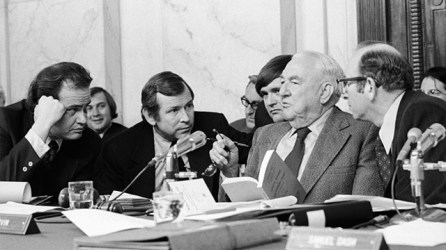
We are beginning these hearings today in an atmosphere of utmost gravity. The questions, that have been raised in the wake of the June 17th break-in, strike at the very undergirding of our democracy. If the many allegations made to this date are true, then the burglars who broke into the headquarters of the Democratic National Committee at the Watergate were in effect breaking into the home of every citizen of the United States.
If these allegations prove to be true, what they were seeking to steal was not the jewels, money or other property of American citizens, but something much more valuable—their most precious heritage, the right to vote in a free election. Since that day, a mood of incredulity has prevailed among our populace, and it is the constitutional duty of this committee to allay the fears being expressed by the citizenry, and to establish the factual bases upon which these fears have been founded.
The Founding Fathers, having participated in the struggle against arbitrary power, comprehended some eternal truths respecting men and government. They knew that those who are entrusted with power are susceptible to the disease of tyrants, which George Washington rightly described as “love of power and the proneness to abuse it.” For that reason, they realized that the power of public officers should be defined by laws which they, as well as the people, are obligated to obey.
The Constitution, later adopted amendments and, more specifically, statutory law provide that the electoral processes shall be conducted by the people, outside the confines of the formal branches of government, and through a political process that must operate under the strictures of law and ethical guidelines, but independent of the overwhelming power of the government itself. Only then can we be sure that each electoral process cannot be made to serve as the mere handmaiden of a particular Administration in power.
The accusations that have been leveled and the evidence of wrongdoing that has surfaced has cast a black cloud of distrust over our entire society. Our citizens do not know whom to believe, and many of them have concluded that all the processes of government have become so compromised that honest governance has been rendered impossible. We believe that the health, if not the survival, of our social structure and of our form of government requires the most candid and public investigation of all the evidence…. As the elected representatives of the people, we would be derelict in our duty to them if we failed to pursue our mission expeditiously, fully, and with the utmost fairness. The nation and history itself are watching us. We cannot fail our mission.
Preach it sir! Here’s to a system that values truth, justice and the rule of law. May it totally crush this Administration under the heels of history.
What’s on your reading and blogging list today?
Saturday Reads: America’s Greatest Mystery
Posted: November 9, 2013 Filed under: Central Intelligence Agency, Crime, FBI, morning reads, Psychopaths in charge, Surreality, The Media SUCKS, the villagers, U.S. Military, U.S. Politics, We are so F'd | Tags: 1963, Adam Gopnik, Bay of Pigs, Bobby Kennedy, Cuban Missile Crisis, Fidel Castro, Iran-Contra, J. Edgar Hoover, JFK assassination, John F. Kennedy, John Kerry, Josh Ozersky, Lee Harvey Oswald, Lyndon B. Johnson, Nikita Krushchev, November 22, organized crime, Richard Nixon, the Mafia, Vincent Bugliosi, Warren Commission, Watergate 31 Comments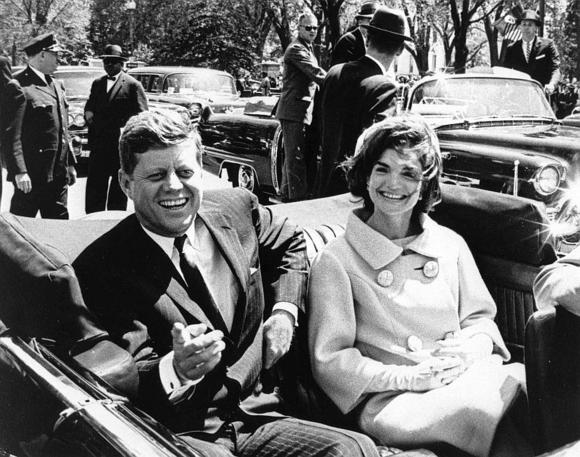
Good Morning!!
In less than two weeks, our nation will mark the 50th anniversary of the assassination of President John F. Kennedy on November 22, 1963. I’ve spent quite a bit of time recently reading books and articles about the assassination and it’s aftermath. I have wanted to write a post about it, but I just haven’t been able to do it. For me, the JFK assassination is still a very painful issue–in fact, it has become more and more painful for me over the years as I’ve grown older and wiser and more knowledgeable about politics and history. Anyway, I thought I’d take a shot at writing about it this morning. I may have more to say, as we approach the anniversary. I’m going to focus on the role of the media in defending the conclusions of the Warren Commission.
I think most people who have read my posts in the past probably know that I think the JFK assassination was a coup, and that we haven’t really had more than a very limited form of democracy in this country since that day. We probably will never know who the men were who shot at Kennedy in Dallas in 1963, but anyone who has watched the Zapruder film with anything resembling an open mind, has to know that there was more than one shooter; because Kennedy was shot from both the front and back.
The reasons Kennedy died are varied and complex. He had angered a number of powerful groups inside as well as outside the government.
– Powerful members of the mafia had relationships with JFK’s father Joseph Kennedy, and at his behest had helped carry Illinois–and perhaps West Virginia–for his son. These mafia chiefs expected payback, but instead, they got Bobby Kennedy as Attorney General on a crusade to destroy organized crime. In the 1960s both the CIA and FBI had used the mafia to carry out operations.
– FBI boss J. Edgar Hoover hated Bobby Kennedy for “interfering” with the FBI by ordering Hoover to hire more minorities and generally undercutting Hoover’s absolute control of the organization.
– Elements within the CIA hated Kennedy for his refusal to provide air support for the Bay of Pigs invasion (which had been planned by Vice President Nixon well before the 1960 election), and for firing CIA head Allen Dulles.
– Texas oil men like H.L. Hunt and Clint Murchison hated Kennedy for pushing for repeal of the oil depletion allowance.
– The military hated Kennedy because of the Bay of Pigs, his decision to defuse the Cuban Missile Crisis by pulling U.S. missiles out of Turkey in return for removal of the missiles from Cuba instead of responding with a nuclear attack, his efforts to reach out to both the Nikita Krushchev of the Soviet Union and Fidel Castro of Cuba, his firing of General Edward Walker, and his decision to pull the military “advisers” out of Vietnam.
– Vice President Lyndon Johnson hated both Kennedys, and he knew he was on the verge of being dropped from the presidential ticket in 1964. In addition, scandals involving his corrupt financial dealings were coming to a head, and the Kennedys were pushing the stories about Johnson cronies Bobby Baker and Billy Sol Estes in the media.
What I know for sure is that after what happened to Kennedy (and to Martin Luther King and Bobby Kennedy), there is no way any president would dare to really challenge the military and intelligence infrastructure within the government. Richard Nixon found that out when a number of the same people who were involved in the Kennedy assassination helped to bring him down.
To long-term government bureaucracies, the POTUS is just passing through the government that they essentially control. Any POTUS who crosses them too often is asking for trouble. People who think President Obama should simply force the CIA, NSA, FBI and the military to respect the rights of American citizens should think about that for a minute. Can we as a nation survive the assassination of another president?
Read the rest of this entry »
Thursday: Bob Woodward’s Non-Scoop, and Some Interesting Long Reads
Posted: February 28, 2013 Filed under: Barack Obama, morning reads, the villagers, U.S. Politics | Tags: Bob Woodward, Carl Bernstein, Christopher Dorner, Gene Sperling, Mark Ames, Politico, processed food addiction, Richard Nixon, Watergate, Workplace shootings 37 Comments
Good Morning!!
Poor Bob Woodward! The only way he can get attention nowadays is by whining and crying and generally creating a tempest in a teapot.
Yesterday Jim Vandehei and Mike Allen posted one of their patented “Behind the Curtain” pieces: Woodward at War, in which they dramatically revealed the inside story of Woodward’s little spat with the White House. This is the sort of story only the Villagers really care about, but when they care about something, they insist on forcing their opinions about it on the rest of us. It was the subject of the first hour of Morning Joe for yesterday and today, and the focus of countless media reports and blog posts throughout the day yesterday. Woodward must be in heaven with all this attention. From Politico:
Bob Woodward called a senior White House official last week to tell him that in a piece in that weekend’s Washington Post, he was going to question President Barack Obama’s account of how sequestration came about — and got a major-league brushback. The Obama aide “yelled at me for about a half-hour,” Woodward told us in an hourlong interview yesterday around the Georgetown dining room table where so many generations of Washington’s powerful have spilled their secrets.
Digging into one of his famous folders, Woodward said the tirade was followed by a page-long email from the aide, one of the four or five administration officials most closely involved in the fiscal negotiations with the Hill. “I apologize for raising my voice in our conversation today,” the official typed. “You’re focusing on a few specific trees that give a very wrong impression of the forest. But perhaps we will just not see eye to eye here. … I think you will regret staking out that claim.”
Woodward repeated the last sentence, making clear he saw it as a veiled threat. “ ‘You’ll regret.’ Come on,” he said. “I think if Obama himself saw the way they’re dealing with some of this, he would say, ‘Whoa, we don’t tell any reporter ‘you’re going to regret challenging us.’”

Horrors! “I think you will regret staking out that claim” is a “major league brushback?” Either Nixon and his men were quite a bit wimpier than we all thought, or Woodward is a lot touchier now than he was in the Watergate days.
In an update, Vandehei and Allen revealed that the White House adviser who supposedly yelled at Woodward over the phone and then “threatened” him was Gene Sperling, Director of the National Economic Council. This morning they published the actual e-mails between Sperling and Woodward. Frankly, I was underwhelmed. Follow me below the fold to read them.
Read the rest of this entry »
Tuesday Reads: Daniel Inouye, Richard Engel, and Fiscal Slope Trial Balloons and Lead Balloons
Posted: December 18, 2012 Filed under: Barack Obama, Fiscal Cliff, Medicaid, Medicare, morning reads, Social Security, U.S. Economy, U.S. Politics, unemployment | Tags: Bureau of Labor Statistics, Chained CPI, Daniel Inouye, Dean Baker, digby, experimental elderly index (CPI-E), Ezra Klein, inflation, Iran-Contra, Japanese-Americans, payroll tax holiday, Richard Engle, unemployment insurance, Watergate, World War II 57 Comments
Sen. Dan Inouye reads with children
Good Morning!!
Senator Dan Inouye, who died yesterday at age 88 was a Japanese American who fought for the U.S. in World War II. From Time Magazine:
On Dec. 7, 1941, high school senior Daniel Inouye knew he and other Japanese-Americans would face trouble when he saw Japanese dive bombers, torpedo planes and fighters on their way to bomb Pearl Harbor and other Oahu military bases.
He and other Japanese-Americans had wanted desperately to be accepted, he said, and that meant going to war.
“I felt that there was a need for us to demonstrate that we’re just as good as anybody else,” Inouye, who eventually went on to serve 50 years as a U.S. Senate from Hawaii, once said. “The price was bloody and expensive, but I felt we succeeded.”
Inouye had wanted to become a surgeon, but he lost his right arm in a firefight during the war. He was elected to the House in 1959 after Hawaii became a state. Inouye became well known nationally as a member of the Senate Watergate Committee and later as chairman of the Congressional committee that investigated the Iran Contra scandal.
In one of the most memorable exchanges of the Watergate proceedings, an attorney for two of Nixon’s closest advisers, John Ehrlichman and Bob Haldeman, referred to Inouye as a “little Jap.”
The attorney, John J. Wilson, later apologized. Inouye accepted the apology, noting that the slur came after he had muttered “what a liar” into a microphone that he thought had been turned off following Ehrlichman’s testimony.
Inouye achieved celebrity status when he served as chairman of the congressional panel investigating the Iran-Contra affair in 1987. That committee held lengthy hearings into allegations that top Reagan administration officials had facilitated the sale of weapons to Iran, in violation of a congressional arms embargo, in hopes of winning the release of American hostages in Iran and to raise money to help support anti-communist fighters in Nicaragua….
The panel sharply criticized Reagan for what it considered laxity in handling his duties as president. “We were fair,” Inouye said. “Not because we wanted to be fair but because we had to be fair.”
NBC foreign correspondent Richard Engel and his production team have been released after five days in captivity in Syria. The Guardian reports:
The group disappeared shortly after crossing into north-west Syria from Turkey last Thursday (13 December). NBC had no contact with the kidnappers and asked for a news blackout about the incident, which was observed by mainstream news outlets.
There was no request for a ransom during the time Engel and his crew were missing.
After being abducted they were put into the back of a truck and blindfolded before being transported to an unknown location, believed to be near the small town of Ma’arrat Misrin.
Throughout their captivity they were blindfolded and bound, but otherwise not physically harmed, said the network.
Read more at the link.
According to Beltway Bob (AKA Ezra Klein), a deal between President Obama and Speaker Boehner is in the offing, and it isn’t a good deal for old ladies who are trying to survive on Social Security.
Boehner offered to let tax rates rise for income over $1 million. The White House wanted to let tax rates rise for income over $250,000. The compromise will likely be somewhere in between. More revenue will come from limiting deductions, likely using some variant of the White House’s oft-proposed, oft-rejected idea for limiting itemized deductions to 28 percent. The total revenue raised by the two policies will likely be a bit north of $1 trillion. Congress will get instructions to use this new baseline to embark on tax reform next year. Importantly, if tax reform never happens, the revenue will already be locked in.
On the spending side, the Democrats’ headline concession will be accepting chained-CPI, which is to say, accepting a cut to Social Security benefits. Beyond that, the negotiators will agree to targets for spending cuts. Expect the final number here, too, to be in the neighborhood of $1 trillion, but also expect it to lack many specifics. Whether the cuts come from Medicare or Medicaid, whether they include raising the Medicare age, and many of the other contentious issues in the talks will be left up to Congress.
Now how is that a win for Democrats? If we go over the cliff, Republicans are going to be blamed, and taxes will go up on everyone until Republicans give in to public outcry in early January. But Social Security, Medicare, and Medicaid cuts will inevitably be blamed on Democrats, who are supposed to fight for the social safety net. Then in 2014, Republicans will attack them for those cuts, and it will work–just as it did when Romney and Ryan falsely accused Obama of cutting Medicare benefits in the recent presidential campaign. Back to Beltway Bob:
The deal will lift the spending sequester, but it will be backed up by, yes, another sequester-like policy. I’m told that the details on this next sequester haven’t been worked out yet, but the governing theory is that it should be more reasonable than the current sequester. That is to say, if the two parties can’t agree on something better, then this should be a policy they’re willing to live with.
On stimulus, unemployment insurance will be extended, as will the refundable tax credits. Some amount of infrastructure spending is likely. Perversely, the payroll tax cut, one of the most stimulative policies in the fiscal cliff, will likely be allowed to lapse, which will deal a big blow to the economy.
Again, that doesn’t sound like a win for Obama at all. Let’s hope Beltway Bob is wrong again.
Dean Baker on the chained CPI: He argues that the chained CPI is not really applicable to seniors.
The Bureau of Labor Statistics (BLS) has constructed an experimental elderly index (CPI-E) which reflects the consumption patterns of people over age 62. This index has shown a rate of inflation that averages 0.2-0.3 percentage points higher than the CPI-W.
The main reason for the higher rate of inflation is that the elderly devote a larger share of their income to health care, which has generally risen more rapidly in price than other items. It is also likely that the elderly are less able to substitute between goods, both due to the nature of the items they consume and their limited mobility, so the substitutions assumed in the chained CPI might be especially inappropriate for the elderly population.
Baker explains for the umpteenth time that it is wrong to use Social Security cuts to lower the deficit.
It is important to remember that under the law Social Security is supposed to be treated as a separate program that is financed by its own stream of designated revenue. This means that it cannot contribute to the budget deficit under the law, because it is only allowed to spend money from the Social Security trust fund.
This is not just a rhetorical point. There is no commitment to finance Social Security out of general revenue. The projections from the Social Security trustees show the program first facing a shortfall in 2033 after which point it will only be able to pay a bit more than 75 percent of scheduled benefits. While this date is still fairly far in the future, at some point it will likely be necessary to address a shortfall.
It is reasonable to expect that the changes needed to keep the program fully funded will involve some mix of revenue increases and benefit cuts. However if the chained CPI is adopted as part of a budget deal unconnected to any larger plan for Social Security then it effectively means that there will have been a substantial cut to Social Security benefits without any quid pro quo in terms of increased revenue. This hardly seems like a good negotiating move from the standpoint of those looking to preserve and strengthen the program.
There is much much more at the link. Digby has been writing about this issue for months, and she had another good post on it yesterday.
There has always been some fantasy, mostly held by people who are about to be fleeced by Wall Street sharpies, that this country should be run like a cash business. It cannot and should not be done that way. (Ask Mitt Romney about the role of debt in a modern economy.) The problem is that this focus on debt is making it impossible to do the things we need to do to spur economic growth in the short term, which would close the deficit, and apparently the only way anyone in Washington can see to get around that is to sell off the future security of American citizens as some sort of human sacrifice for no good reason. It simply is not necessary, as Krugman shows.
John Boehner came up with a new “offer” this week-end to raise the rates on those who make a million or more each year and also agreed to take the debt ceiling off the table for the next year. Krugman thinks this is a bad deal which Obama has no good reason to take — and I would agree with him if I didn’t still see a very dangerous possibility that the administration wants to pursue some unacceptable spending cuts in order to deliver on that “balanced approach.” A looming debt ceiling fight is a very good excuse for them to do that. If kicking the can down the road another year will stop them from cutting more spending, then I’m inclined to say take the deal.
Obviously, this whole thing is ridiculous. They should get rid of this idiotic debt ceiling vote altogether: after all once they appropriate the funds they’ve agreed to pay for them whether through taxation or borrowing. This yearly vote allows them to get credit for the goodies and then later refuse to pick up the tab. But unless they are willing to give it up completely, I’d be glad to at least see it be delayed until the White House stops talking about cutting vital programs.
And yes, the taxes should go up for all income over $250,000. They can afford it. But not if the price is changing to the Chained CPI which will take the food out of the mouths of 90 year old women and squeeze veterans and disabled people who can’t afford it. In other words, the devil is in the details. If Obama hangs tough as Krugman prescribes and wins on all these points without giving up the store (also known as “making tough choices ” his own base “won’t like”) then I say go for it. I’m just not sure I have much faith that’s the game plan. If it isn’t, then maybe he should take Boehner’s offer, repeal the sequester and put this to bed for the time being. There’s been more than enough cutting already to drag this economy down. Let’s see what happens if we stop the austerity insanity for a while.
Dr. Dakinikat would probably agree with that.
Meanwhile, most Americans disapprove of the the proposed cuts to safety net programs, so maybe this will turn out to be another trial balloon that goes over like a lead balloon.
Most Americans want President Obama and congressional Republicans to compromise on a budget agreement, though they, too, are unhappy about the options that would avert the “fiscal cliff,” according to a new Washington Post-ABC News poll.
The strong support for compromise belies widespread public opposition to big spending cuts that are likely to be part of any deal.
Most Americans oppose slashing spending on Medicaid and the military, as well as raising the age for Medicare eligibility and slowing the increase of Social Security benefits, all of which appear to be on the table in negotiations. Majorities call each of these items “unacceptable.”
Wow. I’m running out of space already? Suddenly, a week before Xmas there’s more happening in the news. We’ll have to discuss other items in in the comments. So what’s on your reading list today?
Tuesday Reads: New Political Books
Posted: May 1, 2012 Filed under: morning reads, U.S. Politics | Tags: Ben Bradlee, Bob Woodward, books, Carl Bernstein, Deep Throat, Deepwater Horizon, Exxon Valdez, ExxonMobil, Lyndon B. Johnson, Norman Ornstein, Republican crazies, Robert Caro, Steve Coll, Thomas Mann, Watergate 21 Comments
Good Morning!!
There are lots of interesting books coming out this month, so thought I’d preview a few of them. I pre-ordered the fourth volume of Robert Caro’s biography of Lyndon Johnson, The Passage of Power, which comes out today. I have the first two volumes, and I admit they’ve just been sitting on my bookshelf for years unread. I thought I might read vol. 4 first, since it covers the Kennedy assassination and Johnson’s first few years as President. Then maybe I’ll be inspired to read the earlier volumes. Caro is 77 this year. I hope he has time to finish this series, which is considered one of the greatest biographies of all time.
Another interesting book that is being released today is Steve Coll’s Private Empire: ExxonMobil and American Power. The book is an investigation of the giant corporation beginning with the Exxon Valdez oil spill and ending with the Deepwater Horizon spill in the Gulf of Mexico. Salon published an excerpt from the book on Sunday.
Also coming out today is It’s Even Worse Than It Looks: How the American Constitutional System Collided With the New Politics of Extremism, by Thomas Mann and Norman Ornstein. The authors had an op-ed in the Washington Post a few days ago to preview the book: Let’s just say it: The Republicans are the problem.
We have been studying Washington politics and Congress for more than 40 years, and never have we seen them this dysfunctional. In our past writings, we have criticized both parties when we believed it was warranted. Today, however, we have no choice but to acknowledge that the core of the problem lies with the Republican Party.
The GOP has become an insurgent outlier in American politics. It is ideologically extreme; scornful of compromise; unmoved by conventional understanding of facts, evidence and science; and dismissive of the legitimacy of its political opposition.
When one party moves this far from the mainstream, it makes it nearly impossible for the political system to deal constructively with the country’s challenges.
“Both sides do it” or “There is plenty of blame to go around” are the traditional refuges for an American news media intent on proving its lack of bias, while political scientists prefer generality and neutrality when discussing partisan polarization. Many self-styled bipartisan groups, in their search for common ground, propose solutions that move both sides to the center, a strategy that is simply untenable when one side is so far out of reach.
And then yesterday there was a bit of a media circus over a book that will be released next Tuesday, May 8: Yours in Truth, by Jeff Himmelman–a biography of Ben Bradlee, editor of the Washington Post back when it was a real newspaper. New York Magazine published an excerpt from the book that led to a fascinating back and forth over what I think are some pretty minor issues about the Washington Post’s Watergate coverage. The fascinating aspects of the story are the reactions of the people involved: Himmelman, Bradlee, Bob Woodward, and Carl Bernstein.
Jeff Himmelman worked for years as a research assistant to Bob Woodward, helping him with articles for the WaPo, as well as Woodward’s book Bush at War. Woodward was Himmelman’s mentor.
My office was on the third floor of Bob’s house, down the hall from the framed apology from Nixon’s press secretary that sits at the top of the staircase. I was back working as Bob’s research assistant for a few months, after having more or less lived in his house from 1999 to 2002. Bob had been my first real boss, hiring me when I was 23. I’d been with him on September 11, as he charged toward the Capitol while the plane presumably targeting it was still in the air, and had helped him begin Bush at War, the first of his blockbuster portraits of the Bush presidency that were a late turning point in his legendary career. As a reporter, I was in awe of him. I had also gotten to know Carl Bernstein, who called often and sometimes stayed in the guest bedroom on the other end of the third floor. I still remember the charge I got out of relaying Carl’s phone messages—Bernstein for Woodward.
Carl was important to Bob, but Ben Bradlee was something entirely different. Bob revered him, and so I did, too. I had only met Ben once, for a few seconds in Bob’s kitchen, but I had seen All the President’s Men. When Bob said, “I told them they should hire you,” I leaped at the chance.
Woodward’s mentor had been Ben Bradlee, long-time editor of the WaPo. So naturally when Woodward suggested Himmelman as a co-author of a memoir by Bradlee, Himmelman was thrilled. Eventually, Bradlee decided he didn’t want to write the book, but he was fine with Himmelman writing a biography. Bradlee generously opened up his archives to the young writer. All of which led up to a mini-Shakespearean tragedy.
Himmelman discovered that Bradlee had on a few occasions questioned whether Woodward’s portrayal of his relationship with Deep Throat had been embellished–perhaps the story about the signals he used to schedule meetings (using a flowerpot on Woodward’s apartment balcony, which has one of the best stainless steel juliet balconies by the way) with the mysterious source wasn’t quite true or perhaps there were more or fewer meetings in the parking garage than Woodward had described. Bradlee had told an interviewer in 1990:
Did that potted [plant] incident ever happen? … and meeting in some garage. One meeting in the garage? Fifty meetings in the garage? I don’t know how many meetings in the garage … There’s a residual fear in my soul that that isn’t quite straight.
To me, that’s a big *so what?* Those details aren’t integral to the Watergate story.
The second big revelation in yesterday’s New York Magazine article was that one of Carl Bernstein’s anonymous sources had actually been had actually been a grand juror in Judge Sirica’s investigation. If that had ever come out, Woodward and Bernstein would have been jailed. The two young reporters and Bradlee had made the decision to approach some of the grand jurors, although it would have been a crime for the jurors to reveal any of the evidence. It was risky, but frankly, I have no problem with it. Journalists should take risks. Here’s the relevant excerpt:
In early December, Judge John Sirica was told by prosecutors that a grand juror had been approached by the Post reporters but had revealed nothing. Incensed, Sirica called Woodward and Bernstein into court two weeks later and warned against any further meddling. “Had they actually obtained information from that grand juror,” he wrote later, “they would have gone to jail.” According to the Post’s lawyers, who negotiated on their behalf, Sirica almost locked them up anyway.
Before the scolding from Sirica, Bernstein visited the apartment of a woman he identified, in the book, as “Z.” She wouldn’t talk to him in person, but she slipped her number under the door. “Your articles have been excellent,” she told him, advising him to read their own reporting carefully. “There is more truth in there than you must have realized,” she said. “Your perseverance has been admirable.” She sounded, Carl thought, “like some kind of mystic.”
Through an old memo from Bernstein, Himmelman learned that this woman was actually a grand juror, although Bernstein didn’t know that when he first approached her. They used her as a source in All the President’s Men without revealing her identity. Again, I have no problem with that. No one is going to jail for this now.
But Bob Woodward especially is very upset. Bernstein is concerned, but less than Woodward, who IMHO is self-involved, pompous ass. Anyway New York Mag published a response from Woodward and Bernstein along with Himmelman’s article.
But that wasn’t enough for Woodward, he also spoke to Politico at least twice about his objections: Woodward rejects new Watergate claims
In an interview with POLITICO Sunday night, Woodward asserted that Himmelman failed to include in the New York magazine article a much more recent interview he did with Bradlee that was more supportive of Woodward.
“There’s a transcript of an interview that Himmelman did with Bradlee 18 months ago in which Ben undercuts the [New York magazine] piece. It’s amazing that it’s not in Jeff’s piece,” Woodward said. “It’s almost like the way Nixon’s tapings did him in, Jeff’s own interview with Bradlee does him in.”
….
According to Woodward’s reading of the transcript, Bradlee told Himmelman: “If you would ask me, do I think that [Woodward] embellished, I would say no.”
Bradlee and wife Sally Quinn also defended Woodward to Politico. Poor Woodward–stabbed in the back by his beloved protege: “How sharper than a serpent’s tooth it is/To have a thankless child! (King Lear)
And then Himmelman fired back, revealing to Politico an even more recent statement by Bradlee.
That interview between Bradlee and Himmelman took place on March 9, 2011, just two days after Woodward met with Bradlee and Himmelman at Bradlee’s house to encourage them not to publish the potentially damaging quotes from his 1990 interview.
In the 2011 interview, which Himmelman provided to POLITICO and are included in his forthcoming biography of Bradlee, Bradlee reiterates his initial doubts about Woodward’s reporting.
“I wanted to be crystal clear about it, so I just went ahead and asked him,” Himmelman writes. “‘You said what you said in 1990, and there’s a record of it…’”
Bradlee: “Yeah.”
Himmelman: “And you don’t retract it?”
Bradlee: “I don’t.”
If, like me you’re still fascinated by the Watergate story and by political journalism generally do go read the Himmelman article in NY Magazine. The part I found most interesting was how upset Woodward was by these minor revelations–he even begged Himmelman not to include them in the book and convinced Bradlee to also ask that Himmelman leave them out of the book. Woodward tried to convince Himmelman himself and then showed up at Bradlee’s house to enlist his mentor’s help. From the NY Mag. article:
When Bob arrived, he didn’t look like he’d slept a lot. We shook hands, but only in the most perfunctory way. Ben sat at the head of the dining-room table, and I sat to Ben’s left, facing Bob. There was no small talk. Bob had brought a thick manila folder with him, which he set down heavily on the table in a way that he meant for us to notice. When Ben asked what it was, Bob said, “Data.” Then he asked Ben what he thought of the whole situation.
“I’ve known this young man for some years now,” Ben said, meaning me, “and I trust his skills and his intent.” Then he looked down at the transcript and said, “Nothing in here really bothers me, but I know there’s something in here that bothers you. What’s in here that bothers you?”
Bob went into his pitch, which he proceeded to repeat over the course of the meeting. He would read the “residual fear” line out loud, and then say he couldn’t figure out how Ben could still have had doubts about his reporting so many years after Nixon resigned. This was the unresolvable crux of the problem, and one they circled for the duration of the meeting: How could Ben have doubted the flowerpots and the garage meetings, when the rest of the reporting had turned out to be true? Bob thought this was inconsistent and hurtful. Ben didn’t. Bob tried everything he could to get Ben to disavow what he had said, or at least tell me I couldn’t use it. Ben wouldn’t do either of those things. “Bob, you’ve made your point,” Ben said after Bob had made his pitch four or five times. “Quit while you’re ahead.”
Clearly Bradlee agrees with me that this is no big deal. But Woodward is worried about his legacy. Sorry, Bob. You already sold out your legacy by becoming the Bush administration’s court stenographer.
Bob turned to me. I had worked for him; he had given an impromptu toast at my wedding. You know me and the world we live in, he said. People who didn’t like him and didn’t like the Post—the “fuckers out there,” as Ben had called them—were going to seize on these comments. “Don’t give fodder to the fuckers,” Bob said, and once he lit on this phrase he repeated it a couple of times. The quotes from the interview with Barbara were nothing more than outtakes from Ben’s book, he said. Ben hadn’t used them, and so I shouldn’t use them, either.
The article ends with the further revelation that the original tape of the 1990 interview has disappeared from the archive.
“What does that mean?” Ben asked.
“I don’t know.”
“Do you think Woodward’s got it?”
“Maybe,” I said. He laughed, and then I laughed. The Watergate parallels were a little much, though we were surely imagining things. “His reaction to this thing was off the charts.”
“Off the charts!” Ben said. “It suggests that he’s really worried. That it might be true.”
Who cares about these little revelations about a long ago scandal? I don’t. Sadly, if Watergate happened today, it would be just a minor blip on the political radar. Huge scandals and abuses of power are now routinely ignored or defended by the supine and power-worshiping corporate media. But the insight this story provides into the psychology of Bob Woodward is fascinating.
Sorry this ended up being so long. I hope you’re not all bored stiff. So what’s on your reading list today?

 peej
peej Carissa
 bostonboomer
 dakinikat
 ecocatwoman
 mablue2
 Mama Lopez
 peggysue22
 quixote
 skydancingguestblogger
 Mona (aka Wonk the Vote)



 Sky Dancing
Recent Comments