It’s actually sort of a slow news day today. At least there isn’t a lot of stuff that I find interesting or exciting. I do want to address Jesse Jackson’s passing, so I’m going to spend some time on that. As JJ wrote yesterday,
It seemed like he was always there, everywhere…whenever there was injustice. And he spoke out! It wasn’t just a few words written in a tweet…and sent from wherever. Jesse Jackson went there…wherever the problem was and spoke out with the people in support. I just think that his on scene action of demonstration and protest, the act of showing up and being there…made a huge difference. And I feel that it is what is missing in the situation right now.
Yes, he did, and he made a difference. He fought for so many issues, including immigration. He was often mocked for turning up whenever something was happening, but he persisted and I admired that. I wish we had someone like him here today to call greater attention to these issues.
When Jesse Jackson ran for president in 1984 and especially in 1988, I watched his speeches on C-Span and found them thrilling. His manner of speaking was so unique, and I loved his signature saying “keep hope alive.” He truly paved the way for Obama’s win in 2008. Here is the platform that Jackson ran on, from Wikipedia:
With the exception of a resolution to implement sanctions against South Africa for its apartheid policies, none of these positions made it into the party’s platform in either 1984 or 1988.
“Keep hope alive!” It was the signature line of Jesse Jackson’s second run for president. Euphoric crowds, numbering in the thousands, would chant it along with him.
I was a reporter for the Los Angeles Times, and that 1988 presidential campaign was the first I had ever covered. Those months revealed to me many things about America. Not all were as uplifting as the optimistic spirit that propelled the civil rights leader to a second-place finish against the ultimate Democratic nominee, Massachusetts Gov. Michael Dukakis.
One day in particular stands out in my memory for what I saw of undisguised racism, and for what I heard from Jackson himself about the less visible barriers he believed had been put in his way by some in his own party.
Jesse Jackson, then a Democratic presidential hopeful, with his wife, Jacqueline, at an Operation Push rally in Chicago on March 10, 1988. Fred Jewell AP
It was May 9. The campaign had begun before dawn, as many days did with Jackson’s operation. We were in poverty-stricken Arnett, West Virginia, and a few curious neighbors had gathered outside the home of an unemployed White coal miner, where Jackson had spent the night. When one of them was asked how he planned to cast his ballot in that week’s Democratic primary, he retorted: “I ain’t voting for no damn n—-r.”
The previous evening, the arrival of Jackson’s motorcade had been greeted with similar epithets, and someone in the crowd of about 200 appeared threatening enough that the Secret Service vetoed the candidate making his usual round of shaking hands.
Jackson, who died Tuesday at 84, was usually too much on the move to indulge in introspection and reflection. But later that day, in a conversation with a few bleary-eyed reporters aboard his campaign bus, he did.
In his view, Jackson told us, the most significant hurdles that a Black candidate had to overcome were not what we had seen in West Virginia. “Some people are very raw, very direct, [saying] ‘I would not vote for a n—-r.’ Other people are able to use sand to cover up their mess,” he said.
Jackson was a spellbinder on the stump, but well to the left of most of the country. And he had never shaken his reputation as a self-promoter — or, as then-Vice President George H.W. Bush once put it, a “hustler from Chicago.”
His candidacy had, from the outset, been “running against a headwind of culture and media and pundits,” Jackson said. “The party itself is using its strength to get the candidate it thinks can win.”
He faulted the news media and the polls for constantly raising the question of whether Americans would vote for a Black man: “If I’m asked, ‘Why run?,’ the people are asked, ‘Why vote?
Use the gift link to read more if you’re interested.
Millions of Democrats cast primary votes for him, envisioning him as America’s first Black president.
Along the way, there would be convention keynote speeches and, at times, self-inflicted controversy for the Rev. Jesse Jackson, who died on Tuesday at 84. His life ran in parallel to the successes of the civil rights era, but it was at the movement’s lowest moment that he came to wider national attention: the 1968 assassination of the Rev. Dr. Martin Luther King Jr., which he witnessed at the Lorraine Motel in Memphis….
Martin Luther King Jr.’s assassination
On April 4, 1968, Mr. Jackson was in the motel parking lot, speaking with Dr. King, who was on the second-floor balcony above him, when Dr. King was shot by James Earl Ray.
Jesse Jackson on the day of Martin Luther King’s assassination.
“We hoped it was his arm, but the bullet hit him in the neck,” Mr. Jackson told reporters while visiting the motel, now a civil rights landmark, before Tennessee’s Democratic presidential primary in 1984.
At the time of the assassination, Mr. Jackson was 26 years old and a protégé of Dr. King.
“This is the scene of the crucifixion,” he said, taking reporters on a tour of Room 306, where the civil rights leader had been staying.
1984 presidential campaign
With his entry into the 1984 Democratic primary race, Mr. Jackson became the first Black candidate to seek a major party’s nomination for president since Shirley Chisholm, the trailblazing Brooklyn congresswoman who ran unsuccessfully in 1972.
At a campaign kickoff rally, Ms. Chisholm introduced Mr. Jackson, who was then 42 and had criticized Democrats for what he described as their lackluster opposition to President Ronald Reagan.
Mr. Jackson viewed his candidacy as inspirational to a rainbow coalition — Black, white and Hispanic citizens, women, American Indians and “the voiceless and downtrodden.”.
He finished third to the eventual nominee, Walter Mondale, the former vice president, who lost the general election in a landslide…..
Nearly seven million people voted for Mr. Jackson in the primaries and caucuses that year, delivering him victories in 13 contests.
He finished a solid second to Michael Dukakis, the Massachusetts governor, who eventually lost the general election to George H.W. Bush, the vice president.
1988 D.N.C. keynote
In the spotlight of the Democratic National Convention, Mr. Jackson brought delegates to tears with his retelling of his upbringing in poverty and segregation in Greenville, S.C. He said he could identify with people watching his speech on television in poor neighborhoods.
“They don’t see the house I’m running from,” he said. “I have a story. I wasn’t always on television.”
He used his speech to press for social justice and action by Democrats in the general election, when he became a key surrogate for Mr. Dukakis, particularly with Black voters.
He closed his remarks with a sermon-like chant, one that would echo in future campaigns, including Barack Obama’s in 2008, when Americans elected him as the first Black president.
Use the gift link to read the rest if you’re interested.
The Rev. Jesse Jackson delivered a speech at the Democratic National Convention after failing to secure the party’s nomination for president in 1984. Credit…Jim Wilson, The New York Times
In 1984 in San Francisco, Jesse Jackson delivered a speech at the Democratic National Convention that helped unify the fractured party and redefine the modern Democratic base. “The Rainbow Coalition” speech, as it is known, is regarded as one of the most significant addresses in the history of American politics and helped shape a progressive vision for the party.
Mr. Jackson was coming off an unsuccessful presidential primary run when he delivered the speech, coming in third behind Senator Gary Hart of Colorado and former Vice President Walter Mondale, the eventual nominee. In his address, he urged the party to embrace a diverse, multiracial and multi-class alliance, encouraging the inclusion of marginalized groups, including the poor, workers and minorities.
“Our flag is red, white and blue, but our nation is a rainbow — red, yellow, brown, black and white — and we’re all precious in God’s sight,” he said. “America is not like a blanket — one piece of unbroken cloth, the same color, the same texture, the same size. America is more like a quilt — many patches, many pieces, many colors, many sizes, all woven and held together by a common thread.”
He argued in the address that the party should expand its coalition and embrace his constituency: “The desperate, the damned, the disinherited, the disrespected, and the despised.” He also pushed for patience and understanding.
“We must be unusually committed and caring as we expand our family to include new members,” he said. “All of us must be tolerant and understanding as the fears and anxieties of the rejected and of the party leadership express themselves in so many different ways.”
Mr. Jackson used the speech to attack President Ronald Reagan’s “trickle down” economic theories and argued for a renewed focus on the poor and the marginalized. He recited a list of what he saw as Mr. Reagan’s offenses against his coalition, including attacks on health care, education and food stamps, and used the speech to put forward what he saw as the mission of the Democratic party.
“This is not a perfect party,” he said early in the address. “We are not a perfect people. Yet, we are called to a perfect mission: Our mission, to feed the hungry, to clothe the naked, to house the homeless, to teach the illiterate, to provide jobs for the jobless, and to choose the human race over the nuclear race.”
With Rev. Jesse Jackson Jr.’s passing, we lose one of the dwindling number of direct links to Martin Luther King, Jr. and to the mid-20th century Civil Rights generation. From the Lorraine Motel to stewardship of Rainbow/PUSH to his own presidential campaigns to his successful hostage negotiations to Barack Obama’s election to the Black Lives Matter movement, he was front and center in racial justice fights, a symbol of both the tremendous progress and the enduring, at times exhausting, presence of White supremacists who seek to erase history and undo decades of hard-won gains.
While the country lacks a singular figure to lead the racial justice movement, the number of organizations and plethora of elected figures (including the likely next House Speaker) are part of Jackson’s legacy, a permanent army of civil rights activists who stand in opposition to the Make America White Again ideology at the heart of Trumpism. The challenge that was at the heart of Jackson’s work — the creation of a true multi-racial democracy — has never been more acute in the modern era.
Our flag is red, white and blue, but our nation is a rainbow — red, yellow, brown, black and white — and we’re all precious in God’s sight.
America is not like a blanket — one piece of unbroken cloth, the same color, the same texture, the same size. America is more like a quilt — many patches, many pieces, many colors, many sizes, all woven and held together by a common thread. The white, the Hispanic, the black, the Arab, the Jew, the woman, the native American, the small farmer, the businessperson, the environmentalist, the peace activist, the young, the old, the lesbian, the gay and the disabled make up the American quilt. (Applause)
Even in our fractured state, all of us count and all of us fit somewhere. We have proven that we can survive without each other. But we have not proven that we can win and progress without each other. We must come together.
The Trump regime presents the greatest attack on that vision of pluralistic democracy and racial justice in the modern era. Should the MAGA partisan hacks on the Supreme Court succeed in eviscerating the Voting Rights Act in Louisiana v. Callais, the political map will resemble the political landscape in the Jim Crow era in which Black and Hispanic voting power was minimal to nonexistent, representatives at all levels of government were overwhelmingly White, and one party rule prevailed in the South.
Jesse Jackson as a young man.
Jackson would certainly recognize The SAVE Act, which would impose onerous proof of citizenship requirements to vote, as the latest MAGA disenfranchisement project, part of the never-ending assault to deprive communities of color access to the polls. The Leadership Conference on Civil and Human Rights and 130 organizations have decried the assault on voting rights as being driven by “unprecedented disinformation campaigns and intrusions on the ability of states to make sound decisions on how to run their elections.” The effort to now require a birth certificate or passport to establish qualification to vote would be the culmination of a voter suppression drive begun over decade ago:
Since the Supreme Court’s decision in Shelby County v. Holder (2013), 31 states have enacted 114 restrictive voting laws, which disproportionately burden voters of color. The harm has been palpable: Racial disparities in voter turnout have been increasing, particularly in areas formerly protected by the Voting Rights Act’s preclearance provision, which the Court dismantled.
The object of the new burdens on voting is obvious. “Approximately half of American adults do not have a passport, and two-thirds of Black Americans do not.…Nationwide, 69 million married women do not have a birth certificate matching their legal name.” Transferring sensitive voter information to a federal database would only “increase the likelihood that citizens will see their registrations wrongly purged or their personal information compromised.”
All of this smacks of the literacy and poll tests imposed in the Jim Crow South, a set of mechanisms designed to make the electorate unrepresentative of the general population in order to maintain white dominance.
Even voter ID requirements amount to a poll tax.
The rest of the news is not that inspiring, but here a few significant stories to check out.
A recent social media post from an account belonging to President Trump prompted enough outcry over its use of a familiar racist trope that the White House deleted it. The Truth Social post included an image of former President Barack Obama and former first lady Michelle Obama as apes. Despite removing the post, Trump has deflected blame to an aide….
For scholars and civil rights advocates steeped in the language and aesthetics of white nationalism, Trump’s post was remarkable only because of how overtly racist the trope is. But they say that it fits into a pattern of extremist rhetoric, visual material and other media that have overtaken public messaging from federal agencies over the past year. They say that much of that messaging may not have been detectable to most Americans who are not immersed in the study of extremism. But to those who are, the dog whistles and coded words have been unmistakable.
“If this were just one racist image or one bad post, it wouldn’t matter much,” said Eric Ward, executive vice president of Race Forward, a civil rights organization. “What matters is that over the last year, the Trump administration [is] abusing federal authority, and the federal government has increasingly learned to speak in the emotional language of white nationalism.”
While the latest controversy is over a post from a Trump social media account, Ward and others say the Department of Homeland Security has been behind the most, and the most notable, examples of extremist themes in federal messaging. In its effort to recruit large numbers of new immigration enforcement agents, the federal agency has generated a body of propaganda that has raised alarm over its echoes of extremist movements.
“A lot of this was very much wrapped up in this kind of Norman Rockwell-style imagery of white Americana and … this idea that we need to ‘defend the homeland’ from migrants arriving from the Global South,” said Caleb Kieffer, a senior research analyst with the Southern Poverty Law Center. “And I think that one thing it’s worth noting, and what we really were alarmed by, [is] that we’ve seen this rhetoric for decades be prevalent in white nationalist circles, in anti-immigrant circles, claiming that there’s this migrant invasion happening and that we need to stop it.”
Associate Deputy Attorney General Jordan Fox, who was tapped in December to help lead the Justice Department’s New Jersey office after temporary pick Alina Habba was forced out, said those violations were spread across more than 547 immigration cases that have flooded the courts since early December, straining both prosecutors and judges.
The violations include a deportation to Peru that occurred in violation of a judge’s injunction, as well as three missed deadlines to release ICE detainees.
A general view of the Delaney Hall Detention Facility in Newark on June 16, 2025, in New Jersey. Stefan JeremiahAP
There were also six missed deadlines to respond to court orders, 12 missed deadlines to provide bond hearings to ICE detainees, 17 out-of-state transfers after judges had issued no-transfer orders, three instances of imposing release conditions in violation of court prohibitions and 10 instances of failing to produce evidence demanded by courts.
“We regret deeply all violations for which our Office is responsible. Those violations were unintentional and immediately rectified once we learned of them,” Fox wrote in a letter accompanying the report. “We believe that [the Department of Homeland Security’s] violations were also unintentional.”
Fox’s conciliatory approach stood in stark contrast with previous statements from the Justice Department and ICE that have blamed “rogue judges” for the administration’s noncompliance.
DOJ produced the catalog of violations in response to an order by U.S. District Judge Michael Farbiarz.
The damning sub-headline reads, “Does the White House know the harm he’s doing to public health?” And no, this is not some random question based on spasmodic, Trump-deranged leftist opposition to everything going on in Washington. This is serious.
The Journal editors write of Prasad — previously forced out of the FDA and then hired back within two weeks — that “it’s hard to recall a regulator who has done as much damage to medical innovation in as little time … In his latest drive-by shooting, the leader of the Food and Drug Administration’s vaccine division rejected Moderna’s mRNA flu vaccine without even a cursory review. This is arbitrary government at its worst.”
But is it arbitrary? In 2022, Prasad tweeted that he was “a Bernie Sanders liberal” who has “been surprised by ad hominem claims I am right wing. I am pro-universal health care. Pro wealth tax. Pro choice. Etc. Read my books.”
The same day as the editorial, the Wall Steet Journal reported on the FDA’s rejection of a new flu shot from Moderna for unclear reasons. Career staff reportedly objected and “argued that refusing to even consider the vaccine was the wrong approach to address any concerns about the product.” They were overruled.
And other drugmakers reported multiple cases of surprising and seemingly arbitrary decisions by Prasad, many of them connected to treatments for rare diseases.
The warning on the government website was stark. Some products and remedies claiming to treat or cure autism are being marketed deceptively and can be harmful. Among them: chelating agents, hyperbaric oxygen therapies, chlorine dioxide and raw camel milk.
Now that advisory is gone.
The Food and Drug Administration pulled the page down late last year. The federal Department of Health and Human Services told ProPublica in a statement that it retired the webpage “during a routine clean up of dated content at the end of 2025,” noting the page had not been updated since 2019. (An archived version of the page is still available online.)
Some advocates for people with autism don’t understand that decision. “It may be an older page, but those warnings are still necessary,” said Zoe Gross, a director at the Autistic Self Advocacy Network, a nonprofit policy organization run by and for autistic people. “People are still being preyed on by these alternative treatments like chelation and chlorine dioxide. Those can both kill people.”
Chlorine dioxide is a chemical compound that has been used as an industrial disinfectant, a bleaching agent and an ingredient in mouthwash, though with the warning it shouldn’t be swallowed. A ProPublica story examined Sen. Ron Johnson’s endorsement of a new book by Dr. Pierre Kory, which describes the chemical as a “remarkable molecule” that, when diluted and ingested, “works to treat everything from cancer and malaria to autism and COVID.”
Johnson, a Wisconsin Republican who has amplified anti-scientific claims around COVID-19, supplied a blurb for the cover of the book, “The War on Chlorine Dioxide.” He called it “a gripping tale of corruption and courage that will open eyes and prompt serious questions.”
The lack of clear warning from the government on questionable autism treatments is in line with HHS Secretary Robert F. Kennedy Jr.’s rejection of conventional science on autism and vaccine safety. Last spring, Kennedy brought into the agency a vaccine critic who’d promoted treating autistic children with the puberty-blocking drug Lupron. And in January, Kennedy recast an advisory panel on autism, appointing people who have championed the use of pressurized chambers to deliver pure oxygen to children, as well as some who support infusions to draw out heavy metals, a process known as chelation.
Kennedy is almost as scary as Trump.
That’s all I have for you today. What stories are you following?
Did you like this post? Please share it with your friends:
Yesterday Trump gave a speech in Florida to Turning Point Action, a right wing christian group. During the speech, Trump gave this rant:
Trump’s plea to voters last night: “Get out and vote just this time. You won’t have to do it anymore. Four more years, it will be fixed. It’ll be fine. You won’t have to vote anymore … In four years, you don’t have to vote again. We’ll have it fixed so good you’re not going to have to vote.”
In that quote from MSNBC’s Kyle Griffin, there is an ellipsis to skip over Trump saying what sounds like “I’m not a christian.” Some are claiming he said “I’m a christian.” That’s not what I heard. You can watch the clip from @Acyn here.
I took this to mean that if Trump is elected, there won’t be any more elections. Some people on Twitter tried to twist it to mean something else or claimed it was a “joke.” After all we have experienced with Trump, those claims just don’t pass muster. Here are some reactions from Twitter.
Ruth Ben-Ghiat @ruthbenghiat: Media: this should be *the* A1 story. I have studied dictatorship for decades and this is it-“you won’t have to vote anymore.” Trump will never leave office if he wins in November.
Pramila Jayapal @PramilaJayapal: This. Is. Terrifying. We cannot let this be the case.
Armando @ArmandoNDK: I don’t know what Trump was trying to say with his no more voting line. He is a moronic inarticulate narcissist. I do know what he’s done. And based on that, if he can get away with it- he would become a dictator. Anyone who doubts Trump is capable of trying is just stupid.
Simon Rosenberg @SimonWDC: There is a reason the Trump campaign has been keeping Trump from the trail – every time he speaks it gets harder for them to win. This promise, in very clear language, to end American democracy for all time is now a major part of the 2024 campaign.
Joyce Alene @JoyceWhiteVance: Make sure you listen to this video. Trump tells his “beautiful Christians” they won’t “have to” vote anymore after this election because he’ll fix everything. This is how democracy dies.
The former president urged attendees at the faith-themed event to vote — “Vote early. Vote absentee. Vote on Election Day. I don’t care how, but you have to get out and vote,” he said — and promised that in four years, “we’ll have it fixed so good you’re not going to have to vote.”
Former President Trump at a Friday event hosted by the conservative Christian organization Turning Point Action urged Christians to vote, saying they wouldn’t have to do it again if they got out there in November and elected him because “everything” would be “fixed.”
“Christians, get out and vote, just this time,” Trump exclaimed to a cheering crowd in West Palm Beach, Fla.
“You won’t have to do it anymore. Four more years, you know what, it will be fixed, it will be fine, you won’t have to vote anymore, my beautiful Christians” he added.
“I love you Christians. I’m a Christian. I love you, get out, you gotta get out and vote. In four years, you don’t have to vote again, we’ll have it fixed so good you’re not going to have to vote,” Trump said.
Trump’s remarks point to the need for both parties to get their most fervent supporters to the polls in what is expected to a close election that may be determined by turnout.
But both parties aren’t promising that there won’t be another opportunity to vote in 4 years.
Former President Donald Trump urged members of a crowd in Florida to vote and said that if he wins, they “won’t have to vote anymore.”
Speaking at a Turning Point Action event in West Palm Beach on Friday, Trump, who tried to overturn the 2020 election he lost, delivered a cryptic message.
“And again, Christians, get out and vote!” he said to a cheering audience. “Just this time. You won’t have to do it anymore. Four more years. You know what? It’ll be fixed! It’ll be fine! You won’t have to vote anymore, my beautiful Christians. I love you, Christians! I’m a Christian. I love you. Get out. You gotta get out and vote. In four years, you don’t have to vote again.”
Trump has responded to accusations about his authoritarian tendencies by saying he will not be a dictator “except for day one” of his second term. In 2022, the former president repeated the false claim that the 2020 election was rigged against him. While doing so, he called for the “termination” of the Constitution.
“A Massive Fraud of this type and magnitude allows for the termination of all rules, regulations, and articles, even those found in the Constitution,” he wrote on Truth Social. “Our great “Founders” did not want, and would not condone, False & Fraudulent Elections!”
Again, I clearly heard him say “I’m not a christian.” But listen for yourself, and share you opinion.
The authors note that the presidential race has been turned upside down during the past week,
But it’s worth devoting some attention to how the press did Trump’s work for him by portraying the aspiring authoritarian exactly how he wants to be seen — as a heroic strongman and newfound champion of political unity.
Trump accepted the Republican presidential nomination for a third time on July 17 with a rambling, incoherent mess of a speech that offered a terrifying vision for America during its rare moments of coherence. His performance was widely regarded as a disaster. But a range of major newspapers didn’t cover it that way.
More than a few headlines actually raved about it. The Boston Globe: “In a departure, Trump calls for unity, healing in America.” The Atlanta Journal-Constitution: “Trump urges unity after assassination attempt while proposing sweeping populist agenda.” Baltimore Sun: “Subdued Trump describes assassination try, accepts nomination.”
As media critic Parker Molloy pointed out, these papers seemingly reported on Trump’s speech based on the prepared remarks, not the speech as he actually delivered it….
In reality, Trump’s RNC coronation was a collective failure of our justice system, political process, and a mainstream media ecosystem that has consistently failed to hold him accountable. He still faces a tough challenge to win this election — especially now that Harris is on the top of the ticket — but he got a significant propaganda boost from a credulous, optics-obsessed press….
Not long after Trump’s attempted assassination at a Pennsylvania rally on July 13, mainstream outlets went along with the Trump campaign’s narrative: The shocking event had changed him for the better.
When Trump made his first appearance at the RNC on July 15, the New York Times described him as “subdued” and claimed he showed a “glimpse of vulnerability.” But Trump had already demonstrated he was unchanged earlier that day when he posted on Truth Social that his idea of “Uniting our Nation” was the dismissal of all criminal charges against him.
Trump spewed his usual invective against his political foes throughout the week. The media, nonetheless, continued to take seriously the idea that he was a new man.
Axios reported on July 15 that Trump “plans to seize the his moment by toning down his Trumpiness” and MSNBC’s Katy Tur described his first appearance at the RNC as “serene.” But the most egregious instance of this genre was a piece from Politico’s Natalie Allison, who wrote on July 17 that “there appears to be a new softness to Donald Trump, with people who’ve talked to him describing him with words like ‘existential,’ ‘serene,’ ‘emotional’ and even ‘spiritual.’”
None of those words rightly apply to the man who has made shouting out fictional cannibal Hannibal Lecter a staple of his speeches (including at the RNC).
Donald Trump ditched his ear bandage for his meeting with Israeli Prime Minister Benjamin Netanyahu on Friday. The former president’s right ear returned to public view for the first time since it sustained damage in the July 13 assassination attempt.
The former president’s large bandage became an impromptu fashion statement during the Republican National Convention, with some attendees donning DIY wound dressings. Following the convention, Trump swapped out his bulky white gauze for a thin nude bandage.
Photos from Trump’s sit down with Netanyahu appear to show the former president’s ear intact without major scabbing or scarring. In one image, the former president points out the site of injury to the Israeli prime minister.
According to former White House physician Ronny Jackson, a bullet took the top of Trump’s ear off. On Wednesday, however, FBI Director Christopher Wray said that investigators did not know if the former president was grazed by a bullet or shrapnel during the shooting.
Donald Trump is seriously pissed that FBI Director Christopher Wray is asking questions about what really happened during the attempted assassination of the former president.
While appearing before the House Judiciary Committee Thursday, Wray testified about the agency’s ongoing investigation into the deadly shooting at a Trump rally almost two weeks ago. Wray said it was still unclear what had caused the injury Trump suffered to his ear, whether a bullet or a piece of shrapnel from a teleprompter.
Trump, who began claiming within hours of the attack that he’d been struck by a bullet, didn’t like that one bit. He said as much in a rant on Truth Social Thursday night, which took aim at Wray (whom Trump appointed) specifically.
“FBI Director Christopher Wray told Congress yesterday that he wasn’t sure if I was hit by shrapnel, glass, or a bullet (the FBI never even checked!), but he was sure that Crooked Joe Biden was physically and cognitively ‘uneventful’—Wrong!” Trump wrote.
“That’s why he knows nothing about the terrorists and other criminals pouring into our Country at record levels. His only focus is destroying J6 Patriots, Raiding Mar-a-Lago, and saving Radical Left Lunatics, like the ones now in D.C. burning American flags and spray painting over our great National Monuments—with zero retribution,” Trump continued.
There’s a simple solution. Trump can release the medical report from his examination after the shooting.
JD Vance, the Ohio senator and Donald Trump’s running mate, promoted a baseless rightwing talking pointin 2022 when he warnedof George Soros-funded planes transporting Black women across state lines for abortions.
“I’m sympathetic to the view that like, okay, look here, here’s a situation – let’s say Roe v Wade is overruled,” Vance said in a recently resurfaced podcast interview. “Ohio bans abortion in 2022, or let’s say 2024. And then, you know, every day George Soros sends a 747 to Columbus to load up disproportionately Black women to get them to go have abortions in California. And of course, the left will celebrate this as a victory for diversity – uh, that’s kind of creepy.”
The US supreme court overturned Roe in 2022. Vance’s statements echo a common anti-abortion talking point accusing abortion providers and their supporters of targeting people of color.
Black women did seek abortions at a higher rate before Roe fell, but public health experts say that this is far from proof of a racist conspiracy. They point to a number systemic factors – for example, Black women are more likely to live in areas where it’s harder to access contraception. They are also disproportionately harmed by abortion bans.
Vance continued: “And, and it’s like, if that happens, do you need some federal response to prevent it from happening? Because it’s really creepy. And I’m pretty sympathetic to that actually. So, you know, how hopefully we get to a point where Ohio bans abortion in California and the Soroses of the world respect it.”
While Open Society Foundations, which was founded by Soros, does support reproductive rights, the billionaire philanthropist is not directing planes to swoop up Black women for abortions. He has been the target of antisemitic conspiracy theories for years.
In the days since Vice President Kamala Harris has taken over the campaign against former President Donald Trump and his running mate JD Vance, Democrats are leaning into a new attack line against the Republican ticket: that they’re just really weird.
Minnesota Gov. Tim Walz , a potential Harris running mate who’s been using this description for months, said it during his first viral TV appearance of the week, and then in others. The Democratic Governors Association, which Walz leads, amplified it on social media. And the Harris campaign has adopted it as well, incorporating the label repeatedly this week in press releases and posts on X and TikTok.
As this simple and quintessentially Midwestern description of Trump and Vance catches on, it marks a notable rhetorical shift — away from Biden’s apocalyptic, high-minded messaging toward a more gut-level vernacular that may better capture how many voters react to far-right rhetoric of the kind Vance in particular trades in.
“It perfectly describes the uneasiness people feel. It’s how people who don’t live and breathe politics every day react to hearing the Republican vice presidential candidate denigrate people without children,” said Tim Hogan, a Democratic strategist who worked on the 2020 presidential campaign of another Minnesotan, Sen. Amy Klobuchar. “It’s simple. It’s how you might talk to your neighbor about the crazy political climate we’re living in.”
Walz’s post of his interview clip on X — captioned: “I’m telling you: these guys are weird.” — had 4.6 million views as of Friday afternoon. And when the Harris campaign sent out a memo on Thursday responding to Trump, or what they described as “a 78-Year-Old Criminal’s Fox News Appearance,” they included this among a list of takeaways: “Trump is old and quite weird?”
And on Friday, the Harris campaign used the term in multiple press releases. One focused on Vance’s anti-abortion stance, which called him “creepy” in the subject line, began with a simple declaration: “JD Vance is weird.” That followed another release highlighting negative coverage of Trump’s running mate in which Harris campaign spokesperson Serafina Chitika asserted that Vance had “spent all week making headlines for his out-of-touch, weird ideas.”
In 2016, a historically unprecedented incident took place. And yet, barely anyone even noticed. Even years later, we’ve failed to acknowledge it or to have begun the process of understanding it. Because we still can’t even see it.
And that’s because this incident involved a woman. And she was asking for it.
The woman was Hillary Clinton. What she was asking for was votes. And what she got was the single biggest outpouring of misogyny in human history.
We can now say that. Although no one ever does. But this was an unprecedented previously unimaginable event. Because 2016 was when the world’s first global instant mass communication technology – social media – crashed up against the most ancient of prejudices – misogyny.
And the result was an earthquake: Donald Trump.
In 2016, we weren’t prepared for it. We didn’t see it coming. We didn’t understand how these same social media platforms that have enabled us to share our thoughts instantly at a global scale also facilitate the worst kinds of human communication. How they are engineered to cater to our basest instincts and reward the clickiest, most hateful content.
But eight years on, we haven’t even begun to understand that lesson. We didn’t listen to Hillary. We haven’t yet realised that misogyny is one of the most dangerous weapons on Earth. The best friend of authoritarians and oligarchs. The handmaiden of tyrants.
Worst of all, we haven’t yet realised that misogyny represents the most urgent and pressing threat to global security.
Because it’s misogyny – networked misogyny across multiple global platforms that will earn their tech bro owners billions upon billions of dollars – that is going to decide the 2024 election.
And it’s misogyny that’s going to dictate the future of Nato, the outcome of the war in Ukraine, whether we have peace in Europe or more war. And because this is going to be a firehose that will be directed at a single woman – Kamala Harris – it will be misogyny multiplied: misogyny plus racism, the most toxic combination of all.
This week comments resurfaced that Trump’s newly appointed running mate had made about the woman who looks certain to be the next Democrat candidate. Comments from 2021, in which JD Vance dismissed Kamala Harris as a “childless cat lady”. If that sounds vaguely familiar, you may recognise those exact words from the attacks that Brexiteers directed at me. In my case, it was an assault that went on for years and created the permission for the same man who seeded the narrative to sue me in court.
I was gagged, the necessities of the court case silenced me. Sticks and stones will break my bones etc. But this was never about me. I was just the access point, a way to shut the story down, a viable target. And this was an attack that achieved its goal. Overnight, all reporting on the subject stopped dead.
But there are things that only veterans of the childless cat lady wars can know. They used to call us witches because we knew shit. We still do. That’s what makes us so powerful. And dangerous. That’s what JD Vance understands: our cat lady energy. We’ve lived through culture wars before they even had that name, before they invented memes and when they just burned us at the stake.
So, here’s what I need you to do now: to shut up and sit down and listen. You are at risk. We are all at risk. Because this is what I know: bad things are coming. We are in a code red emergency.
I’ve posted too much already, but I wish I could post the whole thing. Please go read it all at The Guardian.
I’ll end there. I hope you’re having a nice weekend. Take care of yourselves, everyone!
Did you like this post? Please share it with your friends:
There’s quite a bit happening in politics news today, even though it is kind of a long holiday weekend with a Monday in between. I’ll bet plenty of working people are taking Monday off. I’m retired now; but whenever there’s a holiday weekend, I get the same feelings I used to when I was working. It feels like a time to goof off–maybe laze around reading a good book or binge watching something on TV. It’s a time to relax in the peaceful knowledge that you’re not required to be anywhere or do anything in particular.
Here in Boston, the Fourth of July weekend means lots of folks will be headed for Cape Cod or New Hampshire, and the city will be eerily quiet in the daytime. When I first moved to Boston from Indiana, I dutifully got a Massachusetts driver’s license; but I didn’t have a car, so I didn’t have to brave the insane Boston traffic. Eventually, I decided I wanted to learn to handle Boston driving even though I was terrified. I waited until the Fourth of July weekend, and drove all over downtown on empty streets to practice and build my confidence.
Yesterday, I started getting that holiday weekend feeling again. I can’t explain it any more than I can explain how I get that back to school feeling in the fall. I guess repeated experiences have formed pathways in my brain that are triggered by certain times of the year.
I feels like there should be a dearth of political news, too, but that’s not the case. It’s another very busy news day. There’s news of another “perfect” phone call by Trump trying to overturn the 2020 election. And of course, there are plenty of reactions to the most recent Supreme Court decisions.
In a phone call in late 2020,President Donald Trump tried to pressure Arizona Gov. Doug Ducey (R) to overturn the state’spresidential election results, saying that if enough fraudulent votes could be found it would overcome Trump’s narrow loss in Arizona, according to three people familiar with the call.
Trump also repeatedly asked Vice President Mike Pence to call Ducey and prod him to find the evidence to substantiate Trump’s claims of fraud, according to two of these people. Pence called Ducey several times to discuss the election, they said, though he did not follow Trump’s directions to pressure the governor.
The extent of Trump’s efforts to cajole Ducey into helping him stay in power have not before been reported, even as other efforts by Trump’s lawyer and allies to pressure Arizona officials have been made public….
By Indira Baldano
Trump phoned the governor’s cellphone on Nov. 30,2020, as Ducey was in the middle of signing documents certifying President Biden’s win in the state during a live-streamed video ceremony. Trump’s outreach was immediately clear to those watching. They heard “Hail to the Chief” play on the governor’s ringtone. Ducey pulled his phone from out of his suit jacket, muted the incoming call and put his phone aside. On Dec. 2,he told reporters he spoke to the president after the ceremony,buthe declined to fully detail the nature of the conversation. Ducey said the president had “an inquisitive mind”but did not ask the governor to withhold his signature certifying the election results.
But four people familiar with the call said Trump spoke specifically about his shortfall of more than 10,000 votes in Arizona and then espoused a range of false claims that would show he overwhelmingly won the election in the state and encouraged Ducey to study them. At the time, Trump’s attorneys and allies spread false claims to explain his loss, including that voters who had died and noncitizens had cast ballots.
After Trump’s call to Ducey, Trump directed Pence, a former governor who had known Ducey for years, to frequently check in with the governor for any progress on uncovering claims of voting improprieties, according to two people with knowledge of the effort.
Pence was expected to report back his findings and was peppered with conspiracy theories from Trump and his team,the person said. Pence did not pressure Ducey, but told him to please call if he found anything because Trump was looking for evidence, according to those familiar with the calls.
Like officials in Georgia, Ducey told Trump there was no evidence of widespread voter fraud in his state. Trump then began attacking Ducey publicly and shifted his efforts to using Rudy Giuliani to convince the Arizona legislature to find the “fraud” for him.
The article says that Ducey has not been contacted by the Special Counsel’s team, but he has interviewed other Arizona officials.
More than half a dozen past and current officials in Arizona contacted by Trump or his allies after his defeat have either been interviewed by Smith’s team or have received grand jury subpoenas seeking records,according to four people familiar with the interviews.Those interviewed include Bowers, the former Arizona House speaker, and three current members of the governing board of Maricopa County, the largest voting jurisdiction in the state that affirmed that Biden won.
Spokespeople for Arizona Gov. Katie Hobbs (D) and Arizona Attorney General Kris Mayes (D), told The Post this week that their offices have not received correspondence from Smith’s team seeking records about the 2020 election. The Arizona Secretary of State’s office received a grand jury subpoena dated Nov. 22, 2022, that sought information about communications with Trump, his campaign and his representatives, according to an official familiar with the document but not authorized to publicly speak about it.
Reactions to Recent SCOTUS Rulings
There is a massive amount of discussion of the garbage rulings the Supreme Court issued this week. The student loan forgiveness case is getting a great deal of attention, as is the case of the web designer who used a fake customer and a non-existent wedding website to get the court to decide she could discriminate against gay couples. Dakinikat wrote a terrific post yesterday about several of the latest decisions, so I’m just going to follow that with some of the latest reactions from Court observers. If you haven’t read Dakinikat’s post, I highly recommend it.
When five conservative justices on the Supreme Court overturned Roe v. Wade and ended the right to an abortion in 2022, it signaled a new era for the court’s conservatism, one in which none of the rights and policies that emerged from the 20th century appeared safe.
By Valentin Gubarev
It also spawned a debate over the internal dynamics of that conservative supermajority. Chief Justice John Roberts did not join his fellow conservatives in overturning Roe. Had Roberts lost control of the court to the conservative ultras like Justices Clarence Thomas and Samuel Alito? Would he regain control in the next term?
The decisions released at the close of the court’s most recent term in June ― ending affirmative action in higher education, declaring a new right to discriminate against gay couples and voiding President Joe Biden’s plan for student loan debt relief ― present a different question: Does it even matter if Roberts is in the driver’s seat?
The conservative movement that built this court has long sought to roll back the legal and policy advances meant to blunt historic bigotries and discrimination, as well as the ability of the federal government to aid people harmed by the power of private capital. And they are continuing on that path whether Roberts or the ultra cohort runs the court.
At first, the conservative movement hoped that Ronald Reagan’s election in 1980 would allow them to sweep away the policies of both the New Deal and the 1960s and 1970s, but they could not consolidate political power to do so through the legislative and executive branches. Instead, they launched a legal movement to win control of the judiciary and enact their policies outside of the political process.
That is what they have done over the last decade. They gutted the Voting Rights Act, first in 2013 and again in 2021. They blew a hole in restrictions on religious prayer in schools in 2022. And, of course, ended protections for reproductive rights in Dobbs v. Jackson Women’s Health Organization. Their progress continued this term.
Blumenthal addresses how each of the recent decisions of this illegitimate court have continued the work of erasing the gains of the last century. Read the rest of his arguments at HuffPo.
On Thursday, Justice Neil Gorsuch released a 26-page opinion venting outrage about a legal dispute that does not exist, involving websites that do not exist. Yet this case, built on imaginary grounds, will have very real consequences for LGBTQ consumers, and for anti-discrimination laws more broadly. All of the Court’s Republican appointees joined Gorsuch’s opinion in 303 Creative v. Elenis.
That said, the fake dispute that Gorsuch imagines in his 303 Creative opinion involves a reasonably narrow legal question….
The case centers on Lorie Smith, a website designer who wishes to expand her business into designing wedding websites — something she has never done before. She says she’s reluctant to do so, however, because she fears that if she designs such a website for an opposite-sex couple, Colorado’s anti-discrimination law will compel her to also design wedding websites for same-sex couples. And Smith objects to same-sex marriages.
As Gorsuch summarizes her claim, Smith “worries that, if she [starts designing wedding websites,] Colorado will force her to express views with which she disagrees.”
This is not a religious liberty claim, it is a free speech claim, rooted in well-established law, which says that the First Amendment forbids the government from compelling people to say something that they would rather not say. In ruling in Smith’s favor, the Court does not say that any religious conservative can defy any anti-discrimination law. It simply holds that someone like Smith, who publishes words for a living, may refuse to say something they don’t want to say.
The problem is that Smith brought her case using a fake customer who never requested a service she never offered. Back to the Millhiser piece:
Before this case was argued, I wrote that if Lorie Smith had been approached by a same-sex couple and refused to design a wedding website for them, and if she had then been sued for refusing to do so, then she would have a very strong First Amendment defense against such a suit. As the Supreme Court said in Rumsfeld v. Forum for Academic and Institutional Rights (2006), “freedom of speech prohibits the government from telling people what they must say.” And that includes the right of a web designer to refuse to write words on a website that they do not wish to write.
But none of these events have actually happened. And, for that reason, the Supreme Court should have dismissed the case.
The frustrating thing about this case is that it involves an entirely fabricated legal dispute. Again, Lorie Smith has never actually made a wedding website for a paying customer. Nor has Colorado ever attempted to enforce its civil rights law against Ms. Smith. Indeed, in its brief to the Supreme Court, Colorado expressed doubt that its anti-discrimination law would even apply to Smith.
Is this Gorsuch’s effort to set up a precedent for allowing businesses to discriminate against protected classes? And isn’t this decision based on fraud, since we now know that the customer Smith identified never contacted her and is already married and not gay?
Consequences for fabricating a court case: DOJ: It’s a crime to lie to a court. Roberts: litigants who file false filings can be removed from SCT bar and disbarred. https://t.co/TueVHfD9fM
— Andrew Weissmann (weissmann11 on Threads)🌻 (@AWeissmann_) July 1, 2023
Approximately 43 million Americans were made between $10,000 and $20,000 poorer today (plus interest) thanks to six Republican lawyers from Harvard and Yale. They decided that a program based on a statute intended to modify student loan balances in the event of an emergency could not modify student loan balances in the event of the COVID-19 emergency. And they did it by claiming that a plaintiff was injured by this program, when that plaintiff did not petition the Court over its injury, had no involvement in the case, and would likely not be injured by the program.
This is the upside-down world in which the Supreme Court dealt a fatal blow to the Biden administration’s student debt cancellation program. Advocates and members of Congress are now calling for a Plan B, to enact debt relief by some other means; for various reasons, I doubt that the administration will take that opportunity. But what should not be ignored is the way in which the nation’s highest court relies on dodgy theories and facts not in evidence to make the pronouncements it wants….
By Susan Visser
The plaintiffs in the two student loan cases, one of which was so preposterous that it was thrown out unanimously for lack of standing (that was the one where two borrowers said they didn’t have a chance to make public comment to get more debt relief, and that the remedy should be that nobody gets debt relief), simply didn’t like that borrowers would have some debt canceled, on ideological grounds. Nobody seriously contests this as their aim. But in American law, at least in theory, you have to have standing to sue: A party would have to be harmed by 43 million people getting debt relief, and eliminating the debt relief would have to redress this harm.
The Roberts Court, with the chief justice writing for the majority, believes they found one in the Missouri Higher Education Loan Authority (MOHELA), a student loan servicer that stands to lose $44 million in servicing fees from debts that would be wholly canceled, according to the state of Missouri’s calculations. There’s one problem: MOHELA is not a plaintiff in the case. MOHELA in fact didn’t know about the case until hearing news reports, played no role in the case, opposed the case from being brought, and would not give the state of Missouri evidence for the case until required by state sunshine laws. We know all this from internal documents and public statements by MOHELA.
Even if MOHELA went ahead and sued, the contract they signed to accept federal student loans for servicing stipulates explicitly that the government has “sole discretion” to remove contracts from servicers, that the contractor cannot “object or protest,” and that the contractor “waives and releases all current or future claims” related to this. Perhaps this is why MOHELA did not sue in this case. Moreover, MOHELA stood to gain from debt cancellation on net, because it would get an estimated $61 million in fees to process forgiveness (more than Missouri said they would lose), and it would eliminate legal liability from botching Public Service Loan Forgiveness (PSLF) claims, and many of those loans would have been extinguished in debt cancellation.
The Supreme Court struck down Joe Biden’s student debt relief plan in a 6–3 decision on Friday that rewrites federal law to create a bespoke, extra-textual prohibition on the large-scale cancellation of student debt. Chief Justice John Roberts’ decision in Biden v. Nebraska blazed past a clearly insurmountable standing problem to scold the president for even trying to use the law according to its own plain terms in order to offer mass debt relief in the wake of the COVID-19 pandemic. He also chastised Justice Elena Kagan for her “disturbing” suggestion, in dissent, that the majority had gone “beyond the proper role of the judiciary.” The decision boils down to the chief justice’s obvious disdain for student debt relief—which is perhaps why he interpreted Kagan’s criticism as, in his words, a “personal” affront….
By Indira Baldano
The biggest question in the case was whether anyone could establish standing to challenge the program in the first place. After all, the federal government itself holds this debt, and no one is obviously “injured” by the government helping somebody else by erasing their debt. (In a separate case decided on Friday, the court unanimously held that two people who oppose the plan had no standing to sue.) Missouri tried to get around this problem by fixating on MOHELA, a corporation created by the state that services student loans. The Missouri attorney general asserted that MOHELA would suffer financially because of Biden’s plan—which turns out to be false—and that the state itself could represent its interests in court. A key flaw in this reasoning is that MOHELA is an independent entity from Missouri that could have sued to defend its own interests, but refused to do so, and even refused to help Missouri “represent” it in court. (State officials had to file public records requests to obtain key information because MOHELA did not want to participate in this case at all.)
Roberts didn’t care about any of that. MOHELA is “an instrumentality of Missouri,” he wrote, and Biden’s plan “will cut MOHELA’s revenues.” (Again: provably false!) So, according to Roberts and the court’s five other hard-line conservatives, the state had established standing.
This is so similar to what Gorsuch did in the fake marriage website case! The right wing justices can’t wait for legitimate cases to be brought; they have to search for fake ones, because they are desperate to return our country to the bad old days of Jim Crow and white male dominance.
Elena Kagan wasn’t having it.
Kagan pulled no punches in response. “From the first page to the last, today’s opinion departs from the demands of judicial restraint,” she wrote. “At the behest of a party that has suffered no injury, the majority decides a contested public policy issue properly belonging to the politically accountable branches and the people they represent.” She skewered the idea that Missouri and MOHELA are interchangeable, citing the Missouri Supreme Court’s own declaration that they are not. And she eviscerated the majority for “wielding the major-questions sword” to overrule “legislative judgments” that belong to the political branches.
Congress had better watch out, because the Court is working to displace them. Just wait until they get control of the power of the purse!
The US supreme court turned away a case on Friday challenging Mississippi’s rules around voting rights for people with felony convictions, leaving intact a policy implemented more than a century ago with the explicit goal of preventing Black people from voting.
Those convicted of any one of 23 specific felonies in Mississippi permanently lose the right to vote. The list is rooted in the state’s 1890 constitutional convention, where delegates chose disenfranchising crimes that they believed Black people were more likely to commit. “We came here to exclude the negro. Nothing short of this will answer,” the president of the convention said at the time. The crimes, which include bribery, theft, carjacking, bigamy and timber larceny, have remained largely the same since then; Mississippi voters amended it remove burglary in 1950 and added murder and rape in 1968.
By Tara Dougans
It continued to have a staggering effect in Mississippi. Sixteen per cent of the Black voting-age population remains blocked from casting a ballot, as well as 10% of the overall voting age population, according to an estimate by The Sentencing Project, a criminal justice non-profit. The state is about 38% Black, but Black people make up more than half of Mississippi’s disenfranchised population.
Challengers to the law argued that the policy was unconstitutional because it bore the “discriminatory taint” from the 1890 constitution. One of the plaintiffs was Roy Harness, a social worker in his late 60s who is permanently barred from voting because he was convicted of forgery decades ago. Forgery was one of the original crimes included in the list of disenfranchising offenses.
“It makes me feel bad. I’ve served my country, nation … got a degree and [I] still can’t vote, no matter what you do to prove yourself,” Harness told the Guardian in 2022.
Once a person loses their right to vote in Mississippi it is essentially impossible to get it back. To do so, a disenfranchised person must get the legislature to approve an individualized bill on their behalf by a supermajority in both chambers and then have the governor approve the bill. There are no online instructions or applications, and lawmakers can reject or deny an application for any reason.
Read more details at The Guardian.
I’ll end there and share a few more stories in the comments. Have a great Fourth of July sort of weekend!
Did you like this post? Please share it with your friends:
It’s a strange day in this country when I’m tweeting Bill Kristol quoting Liz Cheney. But here we are. Your vote really counts more than ever. Be sure you have a plan and means to do it!
This sticker is one of my favorites on my file cabinet of stickers by my desk. I have voted yet, but I will walk up Poland Avenue to the old fire station to vote as I usually do. The poll workers there know that I dedicate my vote to my Grandmothers, who could not vote until they were well into their 30s. I believe these wonderful ladies are there because they grew up when voting black meant Jim Crow laws stopped their parents and grandparents.
I’ve never felt closer to being disenfranchised as I do now. New Orleans has been a safe place to exercise all your rights, but Louisiana is quick to halt that. Nothing was more dismaying to me than passing the uptown Women’s Health Center closed down tight. We cannot take anything for granted anymore.
Vote like your life depends on it because it does!
"No one of any party should be voting for people who are election deniers…Kari Lake and Mark Finchem in AZ [are] telling you that they'll only certify an election they agree with. And there's not a much graver threat to democracy than that."
And nothing says KKK-style voter suppression than this tweet from a Navy Veteran with his grandson asleep in the back seat.
When I got to a Red Light, the car rolled down its window and some young kids were in it..No more than around 23. The driver asked me to roll down my window. I did.
"Please don't do that young man." I said calmly. "Go to the Wal-Mart over there, go to that Toy Department and find something to play with because I am not a toy. Please don't choose violence today. Don't find out." He turned red and drove off..
In more than 50 years of reporting, I have never disclosed the raw interviews or full transcripts of my work. But after listening again to the 20 interviews I conducted with President Donald Trump during his last year as chief executive, I have decided to take the unusual step of releasing them. I was struck by how Trump pounded in my ears in a way the printed page cannot capture.
In their totality, these interviews offer an unvarnished portrait of Trump. You hear Trump in his own words, in his own voice, during one of the most consequential years in American history: amid Trump’s first impeachment, the coronavirus pandemic and large racial justice protests.
Much has been written about that period, including by me. But “The Trump Tapes,” my forthcoming audiobook of our interviews, is central to understanding Trump as he is poised to seek the presidency again. We spoke in person in the Oval Office and at Mar-a-Lago, as well as on the phone at varying hours of the day. You cannot separate Trump from his voice.
In the summer of 2020, for example, when the pandemic had killed 140,000 people in the United States, Trump told me: “The virus came along. That’s not my fault. That’s China’s fault.”
As a nurse, I have helped care for people during the most difficult moments of their lives, including women who had just lost pregnancies. But no matter whose bedside I was at, I knew that every patient deserved the same fundamental thing: the freedom to make their own private health care decisions, including decisions about abortion and birth control.
Tragically, here in Missouri, women and families no longer have that freedom. Just six minutes after the Supreme Court overturned Roe v. Wade, Eric Schmitt became the country’s first attorney general to trigger a near-total abortion ban. Missouri’s law is so extreme that it mandates women and girls who become pregnant through rape or incest stay pregnant. That kind of government overreach is un-American and a violation of all Missourians’ right to privacy and freedom.
As a nurse, mother, and grandmother, I know no one chooses to terminate a pregnancy lightly. It is a heartbreaking and personal decision made with no good alternative: rape survivors recovering from trauma, women with pregnancies that could kill them, and families devastated with news that the fetus is not viable. These are people who deserve privacy and compassion during a gut-wrenching, emotional process. The last thing they and their doctors need is fewer choices, the threat of prosecution, and politicians mandating their health care options. And we must remember Schmitt’s extreme abortion ban especially hurts those among us who have the least — people who can’t afford to take off work and who don’t have resources to get to another state.
If politicians like Eric Schmitt can take away our basic freedom to control our own bodies, what right comes next? Do we want to live in a world where politicians can reach into our private lives and dictate our most private decisions?
Women lined up to vote for the first time in New York after the passage of the 19th Amendment in 1920. Underwood Archives/Getty Images
Florida is another state where rights are disappearing daily. This is from The Daily Beast. “Florida Puts Raging MAGA Moms on Book-Banning Council.”
In the name of “curriculum transparency,” Florida’s Republican-controlled state government has appointed several anti-gay and anti-mask conspiracy theorists to take charge of a new effort at public schools: banning books.
This hastily assembled censorship council—tasked with retraining public school librarians to abide by new restrictions—is the latest ploy in Gov. Ron DeSantis’ crusade to upend the state’s education system.
But the council was also staffed under suspicious circumstances, with the state Education Department ignoring its own call for official candidates from local school districts and instead filling most of the slots with right-wing activists who have a history of proposing book bans. One was even nominated by a religious activist with close ties to the DeSantis administration a week before the department publicly called for candidates, according to government emails, hinting at secret coordination between them.
“It calls into question the process that the Florida State Board of Education is trying to implement. It raises significant transparency questions,” said Megan Uzzell at Democracy Forward, which obtained those government emails.
While the “parent workgroup” is only getting started, the Education Department’s recent meeting in Orlando last week revealed how the state is positioning itself to spread those controls from school libraries to teachers’ classrooms.
As the meeting ended, Clinton McCkracken, the head of the Orange County teachers union, made a comment to another parent: “I don’t know what to tell my teachers.”
The recent episode began with an Aug. 12 memo from Education Department senior chancellor Jacob Oliva. The memo called for local school districts to nominate “parents of students in K-12 schools for representation on a workgroup”—one charged with creating mandatory “training” that would guide librarians statewide on how to follow new library censorship rules signed into law by Gov. DeSantis earlier this year. School districts had a week to submit the names of qualified nominees.
The Education Department passed on nearly 100 potentially qualified applicants with relevant experience, records show. In Brevard County alone, it ignored the five submissions made by the bipartisan local school board, including the nomination of a former elementary school assistant principal, the director of Eastern Florida State College’s tutoring centers, and the administrator of a local scholarship fund.
The following two stories are from The Independent.
And it’s not just Mr Mastriano’s work as a historian that’s been called out for allegedly moulding narratives to fit his own personal – and political – persuasions. His pursuit of righting the academic history of Sgt York seemed to presage his own race for the Pennsylvania governor’s mansion.
In the months before and after announcing his candidacy for governor, the GOP hopeful has acted as a megaphone for spreading Donald Trump’s Big Lie, taken to social media to amplify QAnon conspiracy theories and dispersed misinformation about Covid-19 all while sitting as an elected official in Pennsylvania.
Should he win in the November midterms, the election-denying candidate has indicated he also plans to upset the very democratic process that made him a state senator.
Donald Trump’s business, the Trump Organization, will face trial in New York today on allegations that it helped executives avoid income taxes on their pay. The trial is part of the same case that has ensnared the organization’s CFO, longtime Trump associate Allen Weisselberg.
The trial comes just after he was officially subpoenaed by the January 6 select committee. The former president has been given until 4 November to provide the committee with documents, and it is aiming to take “one or more days of deposition testimony” circa 14 November.
Committee Vice Chair Liz Cheney has vowed she will not let him turn his testimony into a “circus”.
Meanwhile, Mr Trump has railed against his favourite target Mitch McConnell, calling the Senate minority leader “old crow” and accusing him of being a “puppet” for China.
I just want them all to go away! Trump needs to be locked up in a place for the criminally insane, along with most of his followers!
Just Vote them into obscurity!
What’s on your reading and blogging list today?
Did you like this post? Please share it with your friends:
In a statement she read at the beginning of her testimony, Ms. Thomas denied having discussed her postelection activities with her husband.
In her statement, a copy of which was obtained by The New York Times, Ms. Thomas called it “an ironclad rule” that she and Justice Thomas never speak about cases pending before the Supreme Court. “It is laughable for anyone who knows my husband to think I could influence his jurisprudence — the man is independent and stubborn, with strong character traits of independence and integrity,” she added.
“At this point, we’re glad she came,” Mr. Thompson said.
After Ms. Thomas’s appearance on Thursday, her lawyer Mark Paoletta said she had been “happy to cooperate with the committee to clear up the misconceptions about her activities surrounding the 2020 elections.”
“She answered all the committee’s questions,” Mr. Paoletta said in a statement. “As she has said from the outset, Mrs. Thomas had significant concerns about fraud and irregularities in the 2020 election. And, as she told the committee, her minimal and mainstream activity focused on ensuring that reports of fraud and irregularities were investigated. Beyond that, she played no role in any events after the 2020 election results. As she wrote in a text to Mark Meadows at the time, she also condemned the violence on Jan. 6, as she abhors violence on any side of the aisle.”
I still can’t forget how unhinged those texts were to Mark Meadows, who is likely in more trouble than anyone else. Still, I can’t believe she didn’t discuss this with her husband. I also think more will come from Thomas’ role in the fake electors’ scheme.
The GOP is pouring lots of money into primaries where gerrymandering and the pattern of the out-party in midterms should be helping. But is it? Nate Cohn of the New York Times argues that structurally, the Republicans have the momentum. But can this hold given the number of extremists on the ballots and the ongoing legal troubles of its defacto lead, Orange Caligula? Cohn offers this analysis: “Gerrymandering Isn’t Giving Republicans the Advantage You Might Expect. Yes, the G.O.P. has a structural edge in the House, but it isn’t anything near insurmountable for Democrats.”
Now, Mr. Biden won the national vote by 4.5 percentage points, so even a map that’s biased toward Republicans might still have more Biden districts than Trump districts. But the simple fact that Mr. Biden won the most districts is a clear enough indication that the Republican advantage in the House isn’t totally insurmountable.
To account for Mr. Biden’s victory in 2020, a somewhat better — though more complex — measure is needed: a comparison between how districts voted and how the nation as a whole voted. If Mr. Biden won a district by more than he did nationally, it might be said to be a district where Democrats have the advantage if the national vote is tied. On a perfectly fair map, half the districts would lean toward Democrats with respect to the nation, while half would vote for Mr. Trump or vote for Mr. Biden by less than 4.5 points. And on this perfectly fair map, the district right in the middle — the median district — would have voted for Mr. Biden by 4.5 points, just like the nation.
Theo Van Rysselberghe, Bathers On The Rocks, 1920
Phillip Bump has one explanation: “A new reminder that candidate quality matters.” This opinion is in the Washington Post. The Trumpiest candidates are winning many Republican Primaries and are a way to the right and as delusional as Ginnie Thomas.
What’s apparent at this point, just over a month before voting ends in the 2022 midterm elections, is that nearly any national outcome is possible. FiveThirtyEight’s analysis of the state of play figures there’s about a 3 in 10 chance that Republicans win the House and Senate, about a 3 in 10 chance that the Democrats win both, and about a 4 in 10 chance that the parties split the two (Democrats, Senate; Republicans, House).
For all of the elevation of the importance of these elections, the field appears to remain fairly even. Or, perhaps, it’s because of the elevation of importance that it does. There are two reasons that a tug-of-war rope remains over the center point: No one is pulling at all, or both sides are pulling very hard.
This big-picture perspective, though, blurs the fact that overall patterns are dependent on individual races. And a spate of new polls conducted for Fox News by its bipartisan polling team shows, in essence, the importance of picking viable candidates in the first place.
The new polls evaluate the state of play in four states that are electing both governors and senators this year: Arizona, Georgia, Pennsylvania and Wisconsin. The widest overall margin is in the Pennsylvania governor’s race, where Attorney General Josh Shapiro (D) leads state Sen. Doug Mastriano (R) by 11 points. The closest race is in Wisconsin, where Gov. Tony Evers (D) earns the same level of support as his challenger, businessman Tim Michels (R). Generally, the picture is consistent: These races are too close to be able to identify a clear leader.
Republican megadonors want the GOP to take back the Senate, but they don’t have confidence that some of former President Donald Trump’s top picks can catapult their party to a victory in November.
Billionaire financiers Paul Singer, Dan Loeb and Larry Ellison have so far avoided donating directly to some or all of Trump’s staunchest allies running for Senate in the midterms: J.D. Vance in Ohio, Blake Masters in Arizona, Herschel Walker in Georgia, Adam Laxalt in Nevada and Dr. Mehmet Oz in Pennsylvania, according to Federal Election Commission records and people familiar with the billionaires’ donations.
All of those candidates have been endorsed by Trump. And many of them have previously sided with the former president on the false claims that the 2020 presidential election had widespread voter fraud — an accusation that’s been debunked by Trump’s former attorney general, Bill Barr, federal courts and several other top Republicans who served in Trump’s administration.
One GOP fundraiser said, “They would be lighting their money on fire if they got totally swayed by these candidates.” That strategist is advising clients to, instead, give to the super PAC closely aligned with Senate Minority Leader Mitch McConnell, R-Ky. — the Senate Leadership Fund — because “they have the best polls and they won’t sink money into races they know they can’t win.” The super PAC is run by Steven Law, McConnell’s former chief of staff.
Ad tracker AdImpact last week said that the Senate Leadership Fund has canceled the rest of its TV bookings in Arizona, a state where the campaign poll tracking website FiveThirtyEight shows Masters trailing Kelly by more than seven percentage points.
We have to take care of this campaign finance issue to maintain democracy. It is just one of the Republican’s fuckery with democracy. Citizens United may prove one of the biggest hurdles to full inclusion in our democracy plus all the voting rights shenanigans by the Courts has been even worse. We have Justice Roberts to thank for a lot of that.
Richard V. Reeves’s new book, “Of Boys and Men,” is a landmark, one of the most important books of the year, not only because it is a comprehensive look at the male crisis, but also because it searches for the roots of that crisis and offers solutions.
I learned a lot I didn’t know. First, boys are much more hindered by challenging environments than girls. Girls in poor neighborhoods and unstable families may be able to climb their way out. Boys are less likely to do so. In Canada, boys born into the poorest households are twice as likely to remain poor as their female counterparts. In American schools, boys’ academic performance is more influenced by family background than girls’ performance. Boys raised by single parents have lower rates of college enrollment than girls raised by single parents.
Second, policies and programs designed to promote social mobility often work for women, but not men. Reeves, a scholar at the Brookings Institution, visited Kalamazoo, Mich., where, thanks to a donor, high school graduates get to go to many colleges in the state free. The program increased the number of women getting college degrees by 45 percent. The men’s graduation rates remained flat. Reeves lists a whole series of programs, from early childhood education to college support efforts, that produced impressive gains for women, but did not boost men.
Reeves has a series of policy proposals to address the crisis, the most controversial of which is redshirting boys — have them begin their schooling a year later than girls, because on average the prefrontal cortex and the cerebellum, which are involved in self-regulation, mature much earlier in girls than in boys.
There are many reasons men are struggling — for example, the decline in manufacturing jobs that put a high value on physical strength, and the rise of service sector jobs. But I was struck by the theme of demoralization that wafts through the book. Reeves talked to men in Kalamazoo about why women were leaping ahead. The men said that women are just more motivated, work harder, plan ahead better. Yet this is not a matter of individual responsibility. There is something in modern culture that is producing an aspiration gap.
Bathers, 1918 Pablo Picasso
I really didn’t want to include this but I think it’s important to understand just how entitled men are in this country. My experience in school was that the boys didn’t have to do much of anything but just show up. Maybe someone needs to tell them that participation trophies don’t count when you’ve got a lot of women and minorities motivated to succeed without them.
I thought I’d end with this Ed Yong article at The Atlantic about the legacy of the Covid -19 Pandemic. “All of this will happen again.”
American leaders and pundits have been trying to call an end to the pandemic since its beginning, only to be faced with new surges or variants. This mindset not only compromises the nation’s ability to manage COVID, but also leaves it vulnerable to other outbreaks. Future pandemics aren’t hypothetical; they’re inevitable and imminent. New infectious diseases have regularly emerged throughout recent decades, and climate change is quickening the pace of such events. As rising temperatures force animals to relocate, species that have never coexisted will meet, allowing the viruses within them to find new hosts—humans included. Dealing with all of this again is a matter of when, not if.
In 2018, I wrote an article in The Atlantic warning that the U.S. was not prepared for a pandemic. That diagnosis remains unchanged; if anything, I was too optimistic. America was ranked as the world’s most prepared country in 2019—and, bafflingly, again in 2021—but accounts for 16 percent of global COVID deaths despite having just 4 percent of the global population. It spends more on medical care than any other wealthy country, but its hospitals were nonetheless overwhelmed. It helped create vaccines in record time, but is 67th in the world in full vaccinations. (This trend cannot solely be attributed to political division; even the most heavily vaccinated blue state—Rhode Island—still lags behind 21 nations.) America experienced the largest life-expectancy decline of any wealthy country in 2020 and, unlike its peers, continued declining in 2021. If it had fared as well as just the average peer nation, 1.1 million people who died last year—a third of all American deaths—would still be alive.
America’s superlatively poor performance cannot solely be blamed on either the Trump or Biden administrations, although both have made egregious errors. Rather, the new coronavirus exploited the country’s many failing systems: its overstuffed prisons and understaffed nursing homes; its chronically underfunded public-health system; its reliance on convoluted supply chains and a just-in-time economy; its for-profit health-care system, whose workers were already burned out; its decades-long project of unweaving social safety nets; and its legacy of racism and segregation that had already left Black and Indigenous communities and other communities of color disproportionately burdened with health problems. Even in the pre-COVID years, the U.S. was still losing about 626,000 people more than expected for a nation of its size and resources. COVID simply toppled an edifice whose foundations were already rotten.
This, along with the Hurricane Ian experience reminded me that we’re not particularly forward-looking people anymore. I was happy to see Space Dart take out an astroid’s moon. However, it seems to me that were more likely to be taken down by our own hubris. Why do folks ignore climate change and still fall for developers’ promises of paradise on the beaches of Florida? We should be looking for the next big virus while learning lessons to plan for the next. We hurl from one emergency to the next without thinking about what in our system fails us? Even Democracy is failing us in significant ways. I no longer look to the Supreme Court to save us from ourselves. They now represent the worst of our political system.
Getting Donald Trump off the Public stage is vital but the preparations for the next big trouble start with revitalizing our democratic institutions and shoring them up. Also, getting the damn money out of politics would help too. Anyway, sorry to be Debbie Downer today. Maybe I’m just more somber today because the heat of summer has broken. Also, I had my first training class in community organizing yesterday. I’m sitting here relationship mapping who I’m going to nag into to voting. So, I started with my beloved community here. Drag your ass and everyone you know to the polls! I got granddaughters now!
This election is important. Please, get everyone you know to vote blue. A lot is at stake.
What’s on your blogging and reading list today?
Did you like this post? Please share it with your friends:
The Sky Dancing banner headline uses a snippet from a work by artist Tashi Mannox called 'Rainbow Study'. The work is described as a" study of typical Tibetan rainbow clouds, that feature in Thanka painting, temple decoration and silk brocades". dakinikat was immediately drawn to the image when trying to find stylized Tibetan Clouds to represent Sky Dancing. It is probably because Tashi's practice is similar to her own. His updated take on the clouds that fill the collection of traditional thankas is quite special.
You can find his work at his website by clicking on his logo below. He is also a calligraphy artist that uses important vajrayana syllables. We encourage you to visit his on line studio.

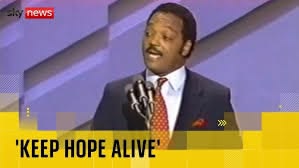
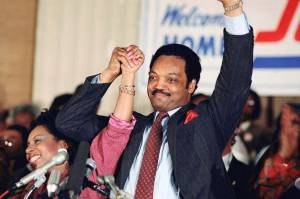
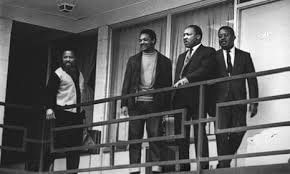
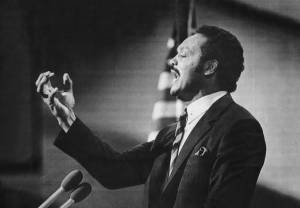
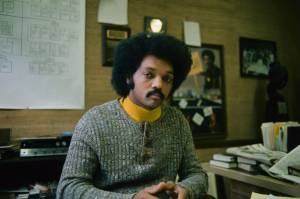
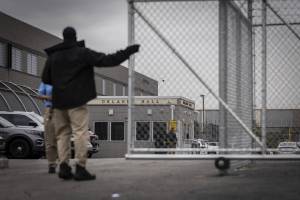
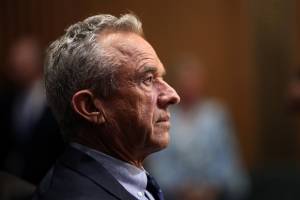

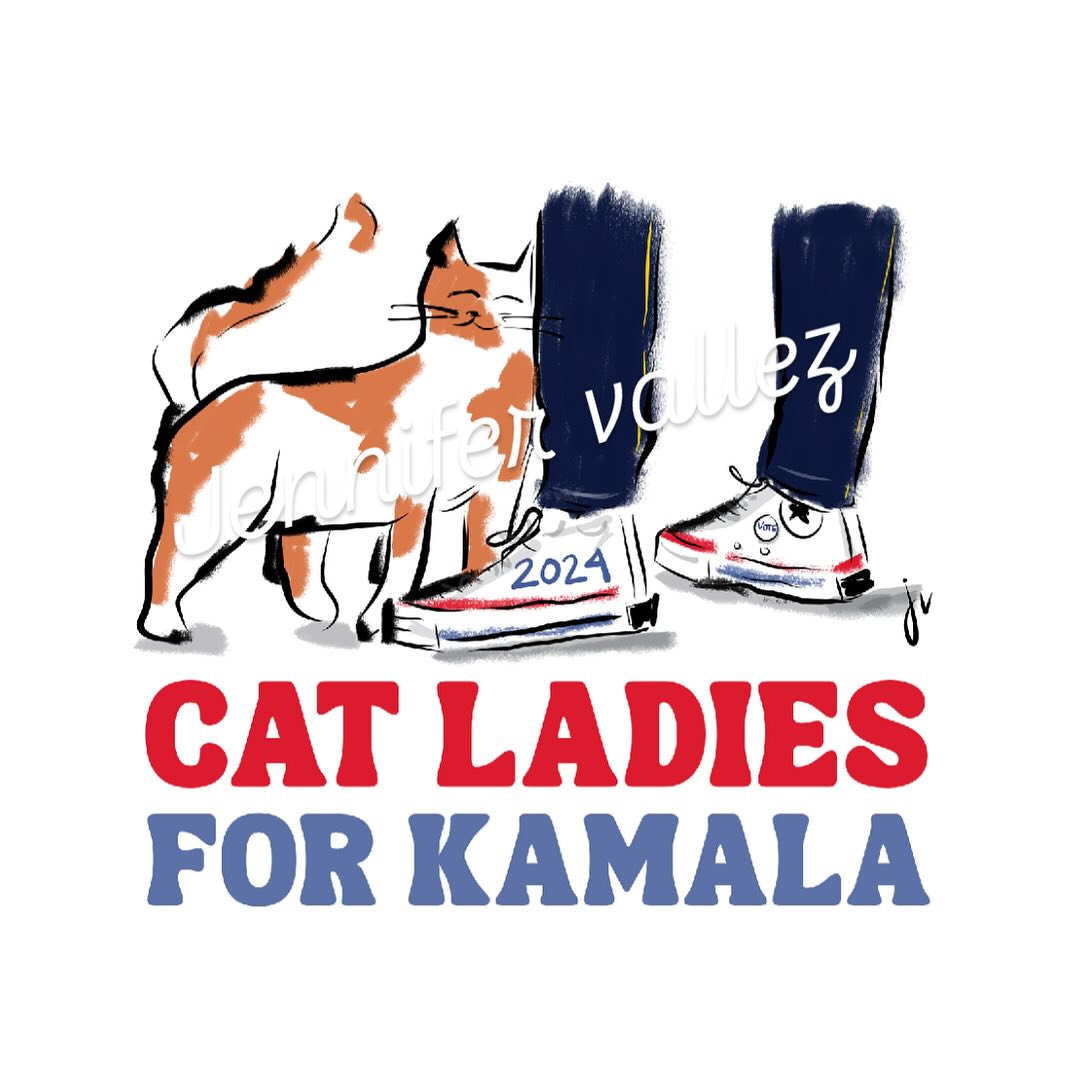
 Aaron Rupar and Stephen Robinson at Public Notice:
  While appearing before the House Judiciary Committee Thursday, Wray
  Yesterday,
  And that’s because this incident involved a woman. And she was asking for it.


 The case centers on Lorie Smith, a website designer who wishes to expand her business into designing wedding websites — something she has never done before. She says she’s reluctant to do so, however, because she fears that if she designs such a website for an opposite-sex couple, Colorado’s anti-discrimination law will compel her to also design wedding websites for same-sex couples. And Smith objects to same-sex marriages.


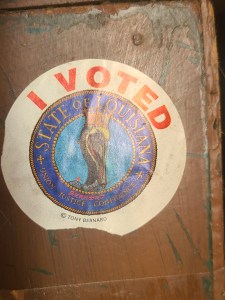 Good Day Sky Dancers!
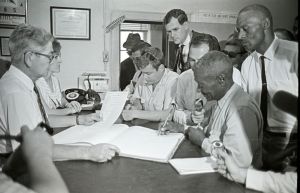
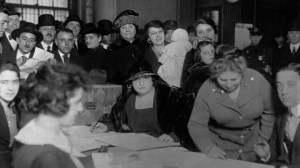






 peej
peej Carissa
 bostonboomer
 dakinikat
 ecocatwoman
 mablue2
 Mama Lopez
 peggysue22
 quixote
 skydancingguestblogger
 Mona (aka Wonk the Vote)



 Sky Dancing
Recent Comments