I managed to ignore the weekend’s whack florida event with the Fatted Trump calf made in Mexico up there on the altar. The only thing that really managed to get sacrificed was the Truth. So, here’s some pleasing beach pictures by Edward Henry Potthast (American Painter, 1857-1927 to get us past all that ugly.
Amid the stream of delusion, depravity, malevolence and megalomania that characterized Donald Trump’s speech to the Conservative Political Action Conference on Sunday, one message should be regarded as arguably more important than all the others combined.
It’s this: The former president told his audience that the Republican Party’s success in coming years depends, in no small part, on its commitment to being an anti-democracy party. Trump didn’t say this in precisely those words, of course. But that message blared through all the background noise like a loud, clanging alarm bell.
This will require Democrats to redouble their focus on passing their big package of pro-democracy reforms as soon as possible — and to be prepared to nix the legislative filibuster to get it into law. It may be tempting to dismiss or ignore Trump’s deranged rantings, but Democrats should see this one message as an actionable one.
As expected, Trump’s CPAC speech doubled down on the big lie that the election was stolen from him — and then some. Aaron Rupar tallies up at least five different ways he told this lie, which drew at least one standing ovation.
But embedded in that big lie was an unintentional truth. It was revealed when Trump uncorked an extended riff suggesting that the GOP’s future prospects depend on what he called “election reforms.”
Trump was still obsessed with vote-by-mail and the way making it easier to vote and more accessible to POC means Republicans–and specifically the racist Trump family crime syndicate–will not get elected. Groups like the one run by Stacey Abrahams are a clear and present danger to those wanting white hegemony and the presence of NAZI symbols reminids us that these folks are not the least bit benign.
In 2013 Supreme Court gutted Voting Rights Act & unleashed wave of voter suppression in states like GA TX NC
Now GOP pushing 253 new voting restrictions in 43 states & trying to kill what’s left of VRA before SCOTUS tmrw
In 2013, Chief Justice John Roberts wrote the opinion gutting Section 5 of the Voting Rights Act of 1965, which required that states with a long history of discrimination had to approve their voting changes with the federal government. That ruling led to a wave of new voter suppression laws in states including Georgia, North Carolina, and Texas.
Roberts justified his position by pointing to the continued existence of Section 2 of the Voting Rights Act, which applies nationwide and outlaws the denial or abridgment of the right to vote on account of race or color. “Our decision in no way affects the permanent, nationwide ban on racial discrimination in voting found in Section 2,” he wrote in Shelby County v. Holder.
But now, in two Supreme Court cases from Arizona that will be heard on March 2, Republicans are trying to kill what remains of the VRA. Influential Republicans at the state and federal level (including Ted Cruz and Mitch McConnell in an amicus brief) have asked the court’s conservative majority to weaken Section 2 or strike it down all together. If they succeed, the VRA would provide little to no protection to minority voters facing an onslaught of new GOP voter suppression efforts across the country, where more than 250 bills restricting voting access have been introduced in 43 states in the past two months.
“This is a time where we are in desperate need of the Voting Rights Act,” says Myrna Pérez of the Brennan Center for Justice, “where it is unmistakable that some politicians are reacting with restrictions when they see voters voting, instead of choosing to compete for their vote.”
The GOP’s push to weaken Section 2 dates back more than 40 years—and Roberts was a key foot soldier in that effort.
Though the Capitol Hill insurrection was inspired by former president Donald Trump’s lies about the 2020 election and mounted by his followers, some Republicans have tried to pin the blame elsewhere. One prominent target is House Speaker Nancy Pelosi (D-Calif.), as this tweet indicates.
We were convinced by House Republican staff to hold off on fact-checking this tweet before last week’s testimony by key figures in the Capitol Hill security during the Jan. 6 events. But if anything, that testimony further undermined Jordan’s widely circulated tweet.
(Jordan also tweeted it “took over an hour” to get approval on Jan. 6 for National Guard support from “Pelosi’s team” after a request was made. We will hold off on fact-checking that, because there continues to be a gap between phone records and individual recollections of the calls. But the New York Times reported that video indicates Pelosi approved the request on the spot once the request was passed to her.)
Within hours, a narrative built on rumors and partisan conjecture had reached the Twitter megaphones of pro-Trump politicians. By day’s end, Laura Ingraham and Sarah Palin had shared it with millions of Fox News viewers, and Representative Matt Gaetz of Florida had stood on the ransacked House floor and claimed that many rioters “were members of the violent terrorist group antifa.”
Nearly two months after the attack, the claim that antifa was involved has been repeatedly debunked by federal authorities, but it has hardened into gospel among hard-line Trump supporters, by voters and sanctified by elected officials in the party. More than half of Trump voters in a Suffolk University/USA Today poll said that the riot was “mostly an antifa-inspired attack.” At Senate hearings last week focused on the security breakdown at the Capitol, Senator Ron Johnson, a Wisconsin Republican, repeated the falsehood that “fake Trump protesters” fomented the violence.
For those who hoped Mr. Trump’s don’t-believe-your-eyes tactics might fade after his defeat, the mainstreaming of the antifa conspiracy is a sign that truth remains a fungible concept among his most ardent followers. Buoyed by a powerful right-wing media network that had just spent eight weeks advancing Mr. Trump’s baseless claims of voter fraud, pro-Trump Republicans have succeeded in warping their voters’ realities, exhibiting sheer gall as they seek to minimize a violent riot perpetrated by their own supporters.
Breaking: Hotel chain rediscovers corporate values right after large hate conference checks out.
It sounds like Hyatt Hotels wished it had never agreed to host this weekend’s Conservative Political Action Conference. In an unusually honest corporate statement issued late Sunday, after Donald Trump took to the stage at the conference’s finale, the hotel group said it was “extremely disappointed by the disrespect many individuals involved in the event showed to our colleagues” following reports that attendees became abusive when asked to wear masks and socially distance. The hotel group also called symbols of hate “abhorrent” after the design of the CPAC stage was compared to a Norse rune used by Nazis during World War Two. Hyatt clarified that it had no involvement in the stage design, adding: “We take the concern raised about the prospect of symbols of hate being included in the stage design at CPAC 2021 very seriously as all such symbols are abhorrent and unequivocally counter to our values as a company.” Matt Schlapp, American Conservative Union chair, dismissed the comparisons to the Nazi rune as “outrageous and slanderous.”
Yeah, right after they cashed all the checks they did a mea culpa. And I’m sorry, but I just could resist showing you this interview with Julian Castro at MSNBC. I just love gratuitous Ted Cruz bashing!!!
"I saw that, and it made me think 'what a small man' he is," Julián Castro says of Sen. Cruz's joke about his trip to Mexico at CPAC. https://t.co/xGZc3HXVfm
So, Wipipo Hatefest is over with the straw poll giving Trumperz 55% of the vote. That seems a little on the small side too as far as numbers go but then it’s never much of an indicator of much any way. I get my second dose of the Pfizer on Wednesday and I hope I can lecture Wednesday evening on Zoom. I’m hoping I don’t get much of a reaciton but who knows. Let us know how your pandemic life is going! We all care about you!!
What’s on your reading and blogging list today?
Did you like this post? Please share it with your friends:
Only three days until the election, and I wish I could go to sleep and wake up in the late afternoon on November 3. Unfortunately, I can’t get to sleep at night. I usually end up getting about 4-5 hours and then I make up for it some days with afternoon naps. I can’t wait until Trump is gone; then maybe I’ll be able to sleep normally again. I only we can get rid of him!
Trump and his thugs are working overtime either to prevent people from voting or to prevent votes from being counted. It’s their only hope to keep him in the White House. Here’s the latest on voter suppression:
Delivery delays during an election can’t be unlawful, because the Constitution doesn’t guarantee states any particular level of service when it comes to mail-in ballots, the U.S. Postal Service told a federal judge.
Postmaster General Louis DeJoy and President Donald Trump are seeking dismissal of a lawsuit brought by New York and other states that claim disruptive changes at the USPS over the summer are violating the Elections Clause of the Constitution by putting election mail at risk.
The Justice Department argued in a court filing Tuesday in Washington that the clause can’t restrict government agencies from carrying out operational changes or other activity that “may have an incidental impact” on voting.
The states’ theory “assumes that because the plaintiff states crafted their election laws with the expectation that USPS will provide a certain level of service, they now have a constitutional right to expect that level of service,” the U.S. said. The clause “does not shield states from any and all external circumstances that may impact state elections.”
Federal judges nominated by President Trump have largely ruled against efforts to loosen voting rules in the 2020 campaign amid the coronavirus pandemic and sided with Republicans seeking to enforce restrictions, underscoring Trump’s impact in reshaping the judiciary.
An analysis by The Washington Post found that nearly three out of four opinions issued in federal voting-related cases by judges picked by the president were in favor of maintaining limits. That is a sharp contrast with judges nominated by President Barack Obama, whose decisions backed such limits 17 percent of the time.
The impact of Trump’s court picks could be seen most starkly at the appellate level, where 21 out of the 25 opinions issued by the president’s nominees were against loosening voting rules.
The pattern shows how Trump’s success installing a record number of judges in his four years in office has played a critical role in determining how people can vote this year and which ballots will be counted. The president’s imprint on the courts culminated this week with the confirmation of Amy Coney Barrett, the third justice he has successfully nominated to the Supreme Court.
Over the last week, four conservative justices on the Supreme Court have signaled their desire to throw out mail ballots that arrive after Election Day. The court will remain deadlocked on this momentous issue—which could affect the outcome of countless races—until Amy Coney Barrett casts her first vote. And the lower courts are taking bets on which side she’ll take. On Thursday night, two far-right judges in the 8th U.S. Circuit Court of Appeals issued a lawless order claiming that Minnesota’s extension of the ballot deadline is likely unconstitutional. Their decision radiates partisan bias and flouts Supreme Court precedent, risking chaos and confusion by altering the rules of Minnesota’s election just five days before Nov. 3.
This is no fluke. It is the Barrett effect: Lower court judges are beginning to test the limits of the Supreme Court, trying to figure out how far right they can go without getting reversed. It is an especially dangerous time for federal courts to fabricate a new rule that prevents states from counting lawful ballots. But with no clear check to rein in the judiciary’s accelerating radicalism, some judges have decided it’s time to go all-in for Donald Trump and dare SCOTUS to stop them.
Thursday’s decision involved yet another dispute over state election law—a dispute that should never have landed in any federal court in the first place. A Minnesota statute requires voters to return mail ballots by Election Day. In May, a voting rights group sued the state to block this rule; it alleged that the deadline is unconstitutional in light of the pandemic, which has placed extraordinary pressure on the state’s vote-by-mail system. Minnesota Secretary of State Steve Simon chose not to fight the lawsuit. Instead, he entered into a consent decree (essentially a settlement) with the plaintiffs, approved by a state court, that halted enforcement of the Election Day deadline. The Minnesota Legislature has expressly authorized the secretary of state to “adopt alternative election procedures” whenever a law “cannot be implemented as a result” of a court order. Pursuant to that law, Simon extended the ballot deadline by one week and informed every voter that their ballot would be counted so long as it is mailed by Election Day and received by Nov. 10.
In Nevada, the Trump campaign filed a lawsuit this week seeking images of the signature of every registered voter in Democratic-leaning Clark County — a potential first step toward challenging individual votes on grounds that the signed ballots don’t match the signatures on file.
In Texas, Republican officeholders and candidates sued this week to have more than 100,000 votes invalidated in the Houston area because they were cast at drive-through voting centers the GOP has asked a judge to declare illegal.
And in Minnesota and Pennsylvania, election officials will set aside any mail-in ballots that arrive after Election Day — even if they were mailed before the polls closed — to facilitate potential court challenges.
For months, Republicans have pushed largely unsuccessfully to limit new avenues for voting in the midst of the pandemic. But with next week’s election rapidly approaching, they have shifted their legal strategy in recent days to focus on tactics aimed at challenging ballots one by one, in some cases seeking to discard votes already cast during a swell of early voting.
Head over to the WaPo to read the rest.
Quite a few writers are speculating about what Trump will do after the election–win or lose. These are long articles, so I can’t provide the gist of each one here. You’ll need to explore the links to learn more details.
…to an extraordinary degree, Trump’s actions in the closing days of his first presidential term tip us off to how he hopes to reign — yes, reign — in a second. If we return him to office, we won’t be able to say we didn’t see it coming….
[W]hat Trump is openly showing us is his intention to reshape the U.S. government from an institution designed to serve the nation and its people to one that caters to one man’s whims, prejudices, grudges, vanity and profit.
The most significant tell comes in an executive order that Trump issued on Oct. 21 creating a “Schedule F” for government workers. It would remove civil-service protections from potentially tens of thousands of civil servants, allowing Trump to fire them at will.
How would he use this power? We have seen his willingness to fire those already without protection simply for doing their jobs in an honest way — intelligence community leaders who wouldn’t lie about Russia and Ukraine, for example. We have heard him disparage those he can’t yet fire — the “idiot” scientists who won’t echo his claim that covid-19 is going away.
Schedule F would let the president fire those scientists and anyone else who might stand in his way — who respect facts and data, who resist his efforts to wield government as a weapon.
Scenarios for how an election disaster could unfold in the United States next week involve lawsuits, lost ballots, armed insurrection and other potential crises in thousands of local jurisdictions on 3 November.
But there is one much simpler scenario for election-night chaos, centering on a single address, that many analysts see as among the most plausible….
Known as the “red mirage”, the scenario could develop if Trump appears to be leading in the presidential race late on election night and declares victory before all the votes are counted.
The red mirage “sounds like a super-villain, and it’s just as insidious”, the former Obama administration housing secretary Julían Castro says in a video recorded as a public service announcement to voters this week.
“On election night, there’s a real possibility that the data will show Republicans leading early, before all the votes are counted. Then they can pretend something sinister’s going on when the counts change in Democrats’ favor.”
In the scenario, Trump’s declaration of victory is echoed on the conservative TV network Fox News and by powerful Republicans across the US. By the time final returns show that in fact Joe Biden has won the presidency, perhaps days later, the true election result has been dragged into a maelstrom of disinformation and chaos.
There’s much more detail about this scenario at The Guardian.
Top surrogates for the Trump campaign have been told to keep their Novembers clear for potential campaign events. And Trump campaign advisers said not to rule out the possibility Trump continues his rallies even as election officials continue to count ballots after the Nov. 3 election, according to a campaign surrogate and two Trump advisers.
With the possibility that there might not be a clear winner on election night in key swing states like Pennsylvania and North Carolina, the campaign has discussed putting Trump and his family on the road to give a morale boost to supporters and let the president fire off about the election to crowds….
“There’s been discussions about travel opportunities for Trump and his family if we don’t have a result on election day, but nothing definitive on where he would go or how many people we would deploy,” said one campaign aide. “If we still don’t have results in Michigan and North Carolina or Pennsylvania and Nevada on Nov. 4, he might hit those states individually.”
America will probably awaken on Nov. 4 into uncertainty. Whatever else happens, there is no doubt that President Trump is ready for it.
I’ve spent the last month interviewing some two dozen officials and aides, several of whom are still serving in the Trump administration. The central sources in this story are or were senior officials, mainly in jobs that require Senate confirmation. They have had regular access to the president and to briefings at the highest level….
Several of them are in current posts in intelligence, law enforcement or national security and are focused on the concurrent activities of violent, far-right and white supremacy groups that have been encouraged by the president’s words and actions. They are worried that the president could use the power of the government — the one they all serve or served within — to keep himself in office or to create favorable terms for negotiating his exit from the White House. Like many other experts inside and outside the government, they are also concerned about foreign adversaries using the internet to sow chaos, exacerbate divisions and undermine our democratic process.
Many of the officials I spoke to came back to one idea: You don’t know Donald Trump like we do. Even though they can’t predict exactly what will happen, their concerns range from the president welcoming, then leveraging, foreign interference in the election, to encouraging havoc that grows into conflagrations that would merit his calling upon U.S. forces. Because he is now surrounded by loyalists, they say, there is no one to try to tell an impulsive man what he should or shouldn’t do.
“That guy you saw in the debate,” a second former senior intelligence official told me, after the first debate, when the president offered one of the most astonishing performances of any leader in modern American history — bullying, ridiculing, manic, boasting, fabricating, relentlessly interrupting and talking over his opponent. “That’s really him. Not the myth that’s been created. That’s Trump.”
None of Suskind’s sources claimed to know what Trump will do. Read more about what they told him at the NYT link.
Batmolbile by Maggie Vandewalle
One more by Garrett Graff at Politico Magazine: ‘There Are No Boundaries’: Experts Imagine Trump’s Post-Presidential Life if He Loses.
In interviews, historians, government legal experts, national security leaders and people close to the administration have a prediction that will disquiet his critics: The Trump Era is unlikely to end when the Trump presidency ends. They envision a post-presidency as disruptive and norm-busting as his presidency has been—one that could make his successor’s job much harder.They outline a picture of a man who might formally leave office only to establish himself as the president-for-life amid his own bubble of admirers—controlling Republican politics and sowing chaos in the U.S. and around the world long after he’s officially left office.
“Can he continue to make people not trust our institutions? Can he throw monkey wrenches into delicate negotiations? Absolutely,” one former Trump administration official says. “He can be a tool. He’ll be somewhere between dangerous and devastating on that extent.”
A president unwilling to respect boundaries in office is almost certain to cross them out of office. Experts envision some likely scenarios—a much-rumored TV show and plans to use his properties to profit off his lifetime Secret Service protection, perhaps even continuing to troll the Biden administration from his hotel down Pennsylvania Avenue—and some troubling if less certain ones, like literally selling U.S. secrets or influence to foreign governments.
Click the link to read the rest.
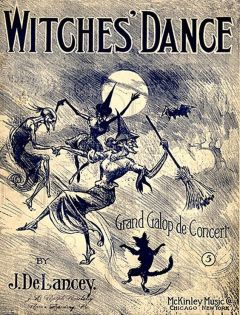
Have a great Halloween, Sky Dancers!!
Did you like this post? Please share it with your friends:
It’s really a gorgeous morning here and last night was great but it’s the proverbial calm before the storm is here. Temple and I had a great walk at 7:30 to beat the first of the rain bands. It was in the 70s with a cool breeze. But, like everything 2020, here comes the turbocharged change!
Fortunately for those of us in the central and western Gulf Coast, Little Hurricane Marco just never quite got going. He is going to swipe us before puttering along towards Texas. As long as he doesn’t slow down, he’ll have some water but only enough to dampen the day.
Hurricane Bahamas, Homer Winslow 1937
Hurricane Laura, however, is going to pack a punch! She is strengthening and likely to cause some problems. My only solace is that this is a big news event which is likely to somewhat drown out the four nights of Klanfest. The RNC is evidently in disarray because of all Trump’s interference including 4 nights of him giving speeches which is irregular to say the least. From Vox’s Aaron Rupar: “The RNC disarray is a microcosm of everything Trump did wrong with the coronavirus. He had no plan. The result is chaos.”
The day it’s set to begin, there is still much we don’t know about what will be happening at the 2020 Republican National Convention. But what we do indicates it’ll have a circus-like quality.
Confirmed speakers include Patricia and Mark McCloskey, the St. Louis couple best known for brandishing firearms at protesters earlier this year, and former Covington Catholic student Nick Sandmann, who became a symbol of white grievance last year after he was filmed in a viral video of a confrontation with Native American demonstrators. President Trump will likely deliver his convention-closing speech from the White House, flouting ethical concerns and laws prohibiting the use of government property for political gain, with other events set to take place on government property located conveniently near the downtown DC hotel he still owns and profits from. On Sunday, the RNC released a speaker list — with Trump scheduled to appear every day.
Half of the convention’s key speakers are the president and his family members? pic.twitter.com/293IJbsk80
My TV will be firmly tuned to the Weather Channel if we have power through the week. It’s generally on mute but on constantly during hurricane times here.
The disaster of a Post Office General is also on full display today.
Rep. Carolyn Maloney on Postmaster General DeJoy: "We now have facts that show that all major areas of the Post Office were slowed down in the first 2 months of his tenure … any CEO who had such a performance would already be out the door."https://t.co/ypnEOzcViY
President Donald Trump’s selection for a key Postal Service position, Robert M. Duncan, once had a very different job: steering the Republican Party while it undertook some of its most brazen voter suppression schemes.
Duncan is now the chair of the Postal Service board of governors, but he previously served as general counsel and then chair of the Republican National Committee from 2002 to 2009, a time when the committee and its state counterparts oversaw an unprecedented escalation of voter disenfranchisement efforts in swing states.
From 2004 to 2006, when Duncan was the committee’s general counsel, party officials challenged the eligibility of at least 77,000 voters, a 2007 report by the nonpartisan group Project Vote found.
As it happens, one of the party’s favored tactics relied on the U.S. mail. In 2004, Republicans in Ohio, Florida and Pennsylvania sent thousands of nonforwardable letters and postcards to select voters — particularly minority voters — and used the mail returned as undeliverable to come up with voter registration challenge lists.
We’ve had yet another senseless shooting of an unarmed black man by the police. This time it is in Kenosha, Wisconsin. The man is in serious condition.
WARNING: this video is extremely graphic.
Police in Kenosha, Wisconsin appear to shoot a man seven times in the back at point blank range after he ignores commands. We’re no other non-lethal methods considered, @KenoshaPolice? https://t.co/dO4VimGCky
Dozens of squad cars from the Kenosha Police and Kenosha County Sheriff’s department and Wisconsin State Patrol converged in the Wilson Heights neighborhood, lining the streets approaching the scene.
The incident was being turned over to the Wisconsin Department of Justice, Division of Criminal Investigation, which will be investigating the officer involved shooting.
At least a half dozen witnesses said that the man had tried to break up a fight between the two women outside a home at 2805 40th St. and that police had attempted to use a Taser on the man prior to the shooting. Then, they heard at least seven gunshots ring out.
Witnesses said he was unarmed and shot in the back.
A video that has since gone viral on social media shows the man walking away from officers and going around the vehicle to get inside. While the man is entering the vehicle the video shows an officer firing a gun at the man inside the vehicle. A woman in the video is screaming as he is being shot.
It was not immediately known whether the man had a weapon.
Residents who live across the street from the residence said while they have heard gunfire in the neighborhood before, never that close until Sunday.
“We’ve never had anything like this happen before,” said Juventino Camputano who has lived in the neighborhood for 40 years.
Annie Louise Hurst, a 50-year resident of the neighborhood, just shook her head.
Jacob Blake is in the ICU fighting for his life. He should be home with his babies. Police shot him in the back 7 times in front of his children.
Mark my words we’re going to fight for accountability just as hard as you’re fighting to survive & make it home to your family Jacob. pic.twitter.com/8dcooPWSJn
On a late afternoon in March, a large military aircraft bearing the Russian Federation insignia descended into John F. Kennedy International Airport in New York City. Its mission: to deliver personal protective equipment and ventilators to nearby hospitals scrambling to treat patients during the peak of the coronavirus pandemic.
Gov. Andrew Cuomo had pleaded for weeks with the federal government for additional resources, particularly ventilators, to treat the thousands of COVID-19 patients across the state. Yet news of the Russian delivery surprised those in the governor’s office working to obtain additional medical equipment. They’d thought the ventilator support would come from the U.S. stockpile or from an American company.
Officials in the U.S. State Department were surprised, too. Despite a department press release announcing the delivery, several senior officials working on the Russia portfolio in the department and elsewhere in the national security apparatus were unaware exactly how the 45 ventilators had ended up on American soil. Half of the shipment was paid for by the Russian Direct Investment Fund (RDIF), one of the country’s sovereign wealth funds, which is under U.S. sanctions. (The sanctions do not prohibit all transactions between U.S. entities and the firm, but they have limited the fund’s interactions with American businesses.) And the fund’s CEO, Kirill Dmitriev, had been scrutinized by Congress and former special counsel Robert Mueller for his communications with Trump transition officials shortly after Moscow had meddled in the 2016 election.
For years, the Trump administration had attempted to find ways to cooperate with Russia on the world stage but largely failed in those efforts because Moscow has continued to engage in activity that threatens U.S. national security, from hacking operations to reportedly offering bounties on American soldiers in Afghanistan. A public display of Russian supplies being offloaded caught some officials in the Trump administration off guard.
But there was a simple answer to the whodunit. The Federal Emergency Management Administration (FEMA) told The Daily Beast it had assigned the State Department “to represent the U.S. in the transaction with the Government of Russia.” But it was President Donald Trump’s son-in-law, Jared Kushner, who helped facilitate the ventilator delivery, according to two senior administration officials. During the early days of the coronavirus pandemic, Kushner headed “Project Airbridge”—the medical supply delivery program that worked to fast-track the delivery of personal protective equipment and other medical supplies by using federal funding to underwrite the cost of shipping. In an effort to supply New York City hospitals with the medical equipment they needed, Kushner looked in multiple places for the equipment and found a safe bet in Moscow, those officials said. While the State Department had been involved in the logistics of the onboarding and offloading, it was Kushner who helped strike the deal.
The ventilators turned out to be faulty and were cast aside by officials in New York and New Jersey, according to local officials who spoke with The Daily Beast. During that same time period, the city of Los Angeles was told by representatives of the federal government that it had lost a bid for N95 masks to a Russian entity, according to two people familiar with the matter. The L.A. officials were never told the Russian outfit’s name.
Kushner held the details of the New York shipment closely and accelerated the order by leaning on his personal relationship with Dmitriev, a confidant of President Vladimir Putin who’d been dispatched to make inroads with the inexperienced 2016 Trump transition team.
Collusion continues.
So, I’m off to try to get some more things cooked just in case the heat goes off. Don’t want any perishables lying around in a powerless refrigerator and at least the cooked stuff lasts a bit longer.
Take care! Be safe! Be kind and gentle with yourself!
What’s on your reading and blogging list today?
Did you like this post? Please share it with your friends:
On Thursday and Friday, Dakinikat and I wrote about Trump’s assault on the U.S. Postal Service, in hopes of suppressing Democratic votes in November. Last night the story began building into a five alarm fire of public outrage. Rachel Maddow focused on the story on her show last night.
The U.S. Postal Service postpones the removal of drop boxes until after the election, following backlash over their abrupt disappearance in Montana, @Maddow reports.
"They were working on doing this nationally, but now with the pushback they're going to put that on hold." pic.twitter.com/k19lSBJXZD
Listen to President Trump long enough, and, despite his penchant for falsehood, you’ll eventually hear some unvarnished truth.
That happened Thursday when he stated his intentions clearly in an interview with Fox Business Network. He doesn’t want to approve billions in emergency funding for the cash-strapped and struggling U.S. Postal Service for a simple reason: Democrats want to expand mail-in voting during the pandemic.
His words were stark: “Now, they need that money in order to have the Post Office work, so it can take all of these millions and millions of ballots.” He added that holding back funding means “they can’t have universal mail-in voting, they just can’t have it.”
In other words, he doesn’t want American citizens, fearful of exposure to the coronavirus, to have every opportunity to vote in November.
It’s not his first effort to cripple the Postal Service, one of the most essential — and popular — institutions in America. His statements Thursday came after he installed a Republican megadonor, Louis DeJoy, as the new postmaster general. In turn, DeJoy has unseated dozens of veteran postal officials. He and his minions have banned overtime and told carriers to leave mail behind at distribution centers, letting it pile up for days. Sorting machines that speed mail processing have been removed.
“Things are already going wrong,” Philip F. Rubio, an expert on the Postal Service and history professor at North Carolina A&T State University (and a former letter carrier himself), told Politico. There are “widespread mail slowdowns of all kinds of mail — first-class, marketing mail, parcels. Even the Veterans’ Administration has complained that veterans are not getting their medications on time.”
Read Sullivan’s commentary on the media coverage and why they need to “turn up the heat” at the WaPo link.
Today the news is full of stories about Trump’s attempted sabotage of a beloved American institution that is enshrined in the U.S. Constitution. As Maddow said last night, “pressure works.
In a statement Friday night, Rod Spurgeon — a USPS spokesperson for the service’s the Western region — told CNN that the service will stop the removal of letter collection boxes in 16 states and parts of two others until after the election.
That means, according to Spurgeon, the USPS will stop collecting the letter collection boxes only in: Washington, Oregon, Nevada, Arizona, New Mexico, Utah, Idaho, Montana, South Dakota, North Dakota, Wyoming, Colorado, Kansas, Iowa, Alaska, Nebraska and small parts of Wisconsin and Missouri.
It’s not clear if the removal freeze would go into effect across the nation. Kim Frum — a spokeswoman for USPS based at headquarters — could not say if the freeze would go into effect across the country and would not comment on the freeze in the Western region.
Officials say that in the last week the USPS has removed letter collection boxes in at least four states: New York, Oregon, Montana and Indiana. The USPS has also begun notifying postal workers in at least three states — West Virginia, Florida and Missouri — that they will start to reduce their retail operating hours, according to union officials.
BIG SANDY, Mont. – U.S. Sen. Jon Tester, Sen. Steve Daines, Rep. Greg Gianforte and Gov. Steve Bullock asked for answers from the U.S. Postal Service Postmaster General, Louis DeJoy, after the USPS removed blue mail drop-off boxes in some Montana towns.
Sen. Tester confirmed the reports of the U.S. Postal Service’s removing of the blue mail drop-off boxes throughout Montana on Friday, releasing the following statement:
“Since ringing the alarm on the removal of collection boxes from communities across Montana, it has become clear that these reports are accurate. These actions set my hair on fire and they have real life implications for folks in rural America and their ability to access critical postal services like paying their bills and voting in upcoming elections. Postmaster General DeJoy must immediately provide Montanans with an explanation for the actions of the USPS, or he can do it under oath before a Senate Committee.”
Sen. Tester and Sen. Daines also sent out statements saying the USPS has paused its removal of mail collection boxes in towns across Montana.
New Jersey Representative Bill Pascrell, Jr. made a criminal referral to the New Jersey Attorney General last night. Pascrell appeared last night on MSNBC’s The Eleventh Hour with substitute host Ali Velshi.
Rep. Bill Pascrell, Jr. (D-NJ) made a criminal referral to the New Jersey Attorney General on Friday night, asking him to impanel a grand jury to look at possible breach of state election laws by President Trump, Postmaster General Louis DeJoy and others for “their accelerating arson of the post office,” he said. Alarming headlines have emerged in recent days as many states prepare to facilitate widespread mail balloting due to the coronavirus pandemic. President Trump openly admitted he was withholding federal aid from the postal service to prevent mail-in voting, and USPS has notified 46 states and D.C. that it will struggle to deliver some mail ballots on time.
Pascrell’s announcement came after USPS’s internal watchdog said it would review policy changes and potential ethical conflicts under DeJoy, a Trump donor who owns a $30 million stake in a competitor to USPS. Sen. Elizabeth Warren (D-MA) and other Democratic lawmakers requested a review into DeJoy’s actions, like eliminating overtime and slowing certain types of mail delivery, and whether he “met all ethics requirements.”
The internal watchdog at the United States Postal Service is reviewing controversial policy changes recently imposed under Postmaster General Louis DeJoy, and is also examining DeJoy’s compliance with federal ethics rules, according to a spokeswoman for the USPS inspector general and an aide to Sen. Elizabeth Warren, who requested the review.
Lawmakers from both parties and postal union leaders have sounded alarms over disruptive changes instituted by DeJoy this summer, including eliminating overtime and slowing some mail delivery. Democrats claim he is intentionally undermining postal service operations to sabotage mail-in voting in the November election — a charge he denies.
Agapi Doulaveris, a spokeswoman for the USPS watchdog, told CNN in an email, “We have initiated a body of work to address the concerns raised, but cannot comment on the details.”
Last week, Warren, a Massachusetts Democrat, and eight other Democratic lawmakers asked the inspector general to launch an inquiry into DeJoy on a number of fronts, including the nationwide policy changes he’s made since taking over in June, as well as whether DeJoy has “met all ethics requirements.” [….]
It’s unclear if the inspector general has launched a full-scale investigation into possible politicization at USPS by DeJoy, a Trump ally and Republican donor, or if it’s just reviewing the matter for Congress.
CNN first reported earlier this week that DeJoy still owns at least a $30 million equity stake in his former company — a USPS contractor — and that he recently bought stock options for Amazon, a USPS competitor. These holdings likely create a major conflict of interest, ethics experts told CNN, though DeJoy and USPS maintain that he has complied with all federal requirements.
At The Week, Ryan Cooper writes: Trump’s Post Office meddling is plainly illegal.
Trump now openly admits he is sandbagging the Post Office to prevent Americans from voting by mail. Obstructing the ability to vote of the American people is a crime at the federal level and in every state. Not for the first time, the president has confessed to criminal acts on television.
First, the president does not get to prevent certain kinds of voting just because he alleges there is fraud happening. Election administration is largely governed at the state level, and several states — like Washington, Oregon, Colorado, and Utah — have had universal mail-in voting as the foundation of their systems for years (where it has worked just fine). Trump’s throwing a monkey wrench into the gears of the Post Office is a likely unconstitutional infringement of state authority to run their own elections, in addition to being directly criminal (see below).
Second, Trump is lying. We know he’s lying because countless studies have found mail-in voter fraud to be virtually nonexistent compared to the number of ballots cast, because it doesn’t even make sense as a way to commit election theft, and most of all because Trump himself has voted through the mail repeatedly — in 2017 and 2018 in New York, and just this week for the primary election in Florida. His argument is a scam and obviously so.
Third, we can also see what the game is by how new postmaster general Louis DeJoy, who met with Trump last week and is undeniably a partisan lackey, is slashing the Post Office’s baseline capacity. As David Dayen argues at The American Prospect, even 100 percent mail-in voting would barely burden the agency at all, given that it delivers 182 million pieces of mail every day (or used to, anyway), and most ballots have a very short transit route — from county election offices to homes and back again. That is why DeJoy is ending postal carrier overtime, destroying automated letter-sorting machines that cost millions of dollars, and pulling up hundreds of outdoor mailboxes. Voting by mail is so trivial for the USPS that it is necessary to seriously damage the agency to render it incapable of carrying it out. Sure enough, the agency has already warned that mail-in ballots could fail to be delivered in time in nearly every state….
The point of hamstringing the Post Office is to prevent as many people from voting by mail as possible, because 72 percent of Democrats say they are likely to vote by mail, as compared to 22 percent of Republicans. Trump and his stooge are using their federal power to forcibly disenfranchise American citizens. We have it straight from the horse’s mouth.
Let’s compare that behavior to 18 U.S. Code § 594, which states: “Whoever intimidates, threatens, coerces, or attempts to intimidate, threaten, or coerce, any other person for the purpose of interfering with the right of such other person to vote or to vote as he may choose” in a federal election faces fines and up to a year in prison. (By the way, someone who “knowingly and willfully obstructs or retards the passage of the mail” also faces fines and up to six months in prison.)
Cooper writes that there are also state laws against “stealing elections.” Read the whole thing at the link.
Let’s all not sprain something pretending that this is simply some “sweeping organizational and policy overhaul” wha-dee-doo-dah. It’s ratfcking under color of law, pure and simple—a more complicated version of the “accidental” Election Day water-main break in front of the mayoral challenger’s headquarters. (Hi, Jim Curley!) Except, of course, this little monkey-wrenching keeps veterans from getting their prescription medicines, and rural customers from sending or receiving their packages. It also is a clear violation of the president*’s oath of office. He promised to take care that even the postal laws are faithfully executed. That doesn’t mean having your fat-cat apparatchik slow-walk the U.S. Mail to get you re-elected. Impeachable offenses are exhausting to carry around.
A group of protesters staged a “noise demonstration” Saturday morning outside of United States Postal Service Postmaster General Louis DeJoy’s home in Northwest D.C. amid allegations of limiting mail-in voting for the 2020 Presidential election.
The demonstration was organized by the direct action group Shut Down D.C. They gathered in Kalorama Park in Adams Morgan on the corner of Kalorama Road and 19th Street and marched towards DeJoy’s home.
Members of the group came together to protest against DeJoy’s leadership ahead of mail-in voting for the 2020 Presidential election.
The organization believes DeJoy is “dismantling” the U.S. Postal Service in favor of President Donald Trump’s re-election. They said his actions contribute to voter suppression.
“DeJoy has fired or reassigned much of the existing USPS leadership and ordered the removal of mail sorting machines that are fundamental to the functioning of the postal service. Meanwhile, mail delivery is slowing down under other decisions made by DeJoy, such as eliminating overtime for postal workers,” the group said in a statement.
Let’s hope all this outrage will continue until Trump and DeJoy are forced to back down and/or are prosecuted. Of course that won’t stop Trump from trying to steal the election. Democrats are going to have to fight back like never before.
Have a great weekend, Sky Dancers!! Take care and be kind to yourselves, other people, and animals.
Did you like this post? Please share it with your friends:
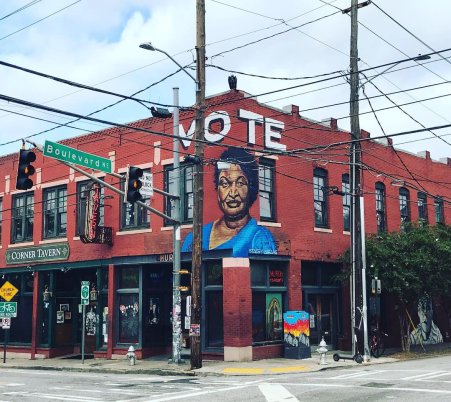
The mural to the left is of Georgia gubernatorial Candidate Stacey Abrams located on a building in the Edgewood neighborhood of Atlanta. This building is just blocks from MLK Jr.’s childhood home. White Republicans in Georgia are actively trying to beat her any way they can.
You can tell there is a lot at stake in this election due to the SCOTUS gutting of the Voting Rights Act because there is increasing opportunity and effort to suppress the votes of indigenous peoples in North Dakota and Black people in every southern state and else where. Republicans are trying to hold power in the Senate to continue the reign of terror and murder of US democracy.
As early voting began Monday in Georgia,a group of black senior citizens gathered for a voter outreach event at Jefferson County’s Leisure Center. Members of Black Voters Matter, one of the groups behind the event, offered to drive the group of about 40 seniors to the polls.
But shortly after the seniors boarded the organization’s bus, county officials stopped the trip, prompting new accusations of voter suppression in a state already dealing with several such controversies.
The event, according to ThinkProgress’s Kira Lerner, was a part of Black Voters Matter’s “The South is Rising” bus tour across seven states to host voter outreach and engagement events. Black Voters Matter is nonpartisan, and the group’s leadership did not encourage the senior citizens to vote for a particular candidate or political party, according to LaTosha Brown, the organization’s co-founder.
Jefferson County Administrator Adam Brett countered that the Monday event constituted “political activity,” noting that a local Democratic Party chair helped sponsor it.
I’ll be traveling across Georgia for the next few days with the Black Voters Matter bus tour. They’re doing voter registration and outreach, trying to influence elections across the South. Follow here for updates! pic.twitter.com/07Nb4DEsZB
“This is voter suppression, Southern style,” Brown told Think Progress. According to recent Census figures, Jefferson County is 53 percent black, and voting rights advocates citea lack of transportation as a particularly high barrier to voting for black Georgians. Civil rights groups most recently raised this point in August when a majority-black Georgia county proposed closing all but two of its polling places.
Say you live in Georgia. You’re eager to vote in this year’s election—a tight race between Democrat Stacey Abrams and Republican Trump acolyte Brian Kemp—so you fill out an absentee ballot and mail it in. Then, days or weeks after the election, you receive a notice in the mail. The signature on your absentee ballot, it explains, looked different from the signature on your voter-registration card. So an election official threw out your ballot. There is nothing you can do. Your vote has been voided.
If Georgia’s signature-mismatch law remains in effect through the November election, this fate will befall thousands of would-be voters. The statute directs elections officials to apply amateur handwriting analysis to voters’ signatures and reject any potential “mismatch.” Nearly 500 ballots in Gwinnett County alone have already been rejected for mismatch, a disproportionate number of them cast by minority voters. Now the American Civil Liberties Union of Georgia is suing, demanding that the state give all citizens an opportunity to cure ballots rejected for mismatch. Its suit will help determine how successfully Georgia will suppress minority votes in the upcoming race.
Signature-mismatch laws are a scourge of American elections. The very premise makes no sense: In a similar lawsuit filed in New Hampshire, a forensic document examiner testifiedthat effective signature comparison requires 10 signature samples “at a minimum” to account for variability. Even then, experts may struggle to verify a signature, because our signatures often change over time. Voters who are disabled or elderly, or are nonnative English speakers, are especially likely to have variation between signatures. That’s one reason why New Hampshire’s mismatch law disproportionately impacted seniors, California’s disproportionately impacts first-generation Asian Americans, and Florida’s disproportionately impacts Hispanics.
But there’s likely something more insidious going on here too. The extreme racial disparitiesamong those affected by mismatch laws may also reflect the broad discretion that election officials have to toss ballots. In states with stringent mismatch rules, a handful of election officials are frequently responsible for the vast majority of ballots voided for mismatch. And those officials routinely work in counties with large minority communities.
The number of voters in Virginia who have cast early ballots ahead of the November elections is dramatically up compared with last year, suggesting an electorate that is energized by several hotly contested races for Congress that are spread across the state.
Virginia allows voters to cast “absentee” ballots in person if they have valid excuses for not being able to vote on Election Day.
Nearly 78,000 people have completed ballots since absentee voting began Sept. 15 — more than double the number who voted early by this point last year, according to an analysis of voting data by the nonprofit Virginia Public Access Project.
That number is still shy of the 123,221 absentee ballots cast during the 2014 midterm elections, state data shows.
But with a little less than three weeks before the Nov. 6 elections, local election officials say this year’s absentee totals are on pace to eclipse 2014 and may even approach the turnout for the presidential election of 2016, when a near-record 496,452 Virginians cast their ballots early.
“It’s actually quite shocking,” said Richard Keech, deputy director of the elections office in Loudoun County, which has seen a 239 percent jump in absentee voting this year, with 11,106 ballots either already cast or mailed to voters so far.
“This would be the first time without a president on the ballot that we’ve seen this kind of increase,” Keech said
Fairfax County, the state’s largest jurisdiction, has seen a roughly 100 percent increase since last year, with 21,582 absentee votes cast so far, officials said. Nearby, Prince William County, the second-largest jurisdiction, has climbed by about 114 percent to 4,693 absentee ballots cast.
This week, a friend texted me, “I feel a panic that won’t stop.” I didn’t have to ask what she meant; we are, after all, less than three weeks from the midterms. “#MeToo,” I replied.
Many women I know — though, of course, not only women — are walking around with a churning knot of terror in their stomachs. The confirmation of the cruel former frat boy Brett Kavanaugh to the Supreme Court brought back the anguish and degradation so many of us felt after the 2016 election. Donald Trump grows more thuggish and mendacious by the day; “gaslighting,” a term taken from a play about an abusive husband trying to drive his wife insane, has become a byword of our national life.
Republicans are increasingly explicit about campaigning to preserve male power. Criticizing the #MeToo movementearly this month, Trump said it’s “a very scary time for young men in America.” Republican congressman Andy Barr of Kentucky ran a commercial attacking his opponent, former Marine fighter pilot Amy McGrath, for describing herself as a feminist. The Washington Post wrote about how an “outbreak of male resentment” is poised to play a “defining role” in the midterms.
I too have this underlying, nagging anxiety all the time. No matter how many times I say the mani and take deep breaths. I cannot shake the feeling that the bad guys are pulling out all the stops to stop the rest of us from rising.
A handful of states, most of them led by Republicans, are using someone’s decision not to vote as the trigger for removing them from the rolls. No state has been more aggressive with this approach than Georgia, where Brian Kemp, the secretary of state, oversaw the purging of a growing number of voters ahead of his own run for governor, according to an APM Reports investigation. Voting rights advocates call it a new form of voter suppression, and they fear it will soon spread to other states.
Even by Georgia standards, the voter purge of late July 2017 was remarkable. In a single day, more than half a million people — 8 percent of Georgia’s registered voters — were cut from the voter rolls. Republican Secretary of State Brian Kemp, an avid supporter of President Donald Trump who has described himself as a “politically incorrect conservative,” oversaw the removals eight months after he’d declared himself a candidate for governor.
The purge was noteworthy for another reason: For an estimated 107,000 of those people, their removal from the voter rolls was triggered not because they moved or died or went to prison, but rather because they had decided not to vote in prior elections, according to an APM Reports analysis. Many of those previously registered voters may not even realize they’ve been dropped from the rolls. If they show up at the polls on Nov. 6 to vote in the heated Georgia governor’s race, they won’t be allowed to cast a ballot.
Kemp’s opponent, Democrat Stacey Abrams, is vying to become the first African-American woman in U.S. history to serve as a governor. The state has undergone a dramatic influx of African Americans and Latinos whose votes could challenge Republican dominance, and her campaign is trying to turn out people of color, who are more likely to be infrequent voters. If the race is close, the July 2017 purge could affect the outcome.
The APM Reports analysis is the first estimate of the so-called “use it or lose it” policy’s possible impact in Georgia. While 107,000 people may seem like a small number in a state with a population of 10.4 million, elections have been decided by far smaller margins. For instance, the 2016 presidential election was decided in favor of Donald Trump by a total of 77,744 votes in Wisconsin, Michigan and Pennsylvania.
Using someone’s decision not to vote as the trigger to remove that person from the rolls is a highly controversial — yet legal — tactic that voting rights advocates say is a potential tool for voter suppression. And its use is on the rise.
APM Reports found that at least nine states — most of them with Republican leadership, including the key battlegrounds of Georgia and Ohio — have purged an estimated hundreds of thousands of people from the rolls for infrequent voting since the 2014 general election. States with these policies are removing voters at some of the highest rates in the nation, no matter the reason.
.@CampaignLegal filed an emergency motion to make sure people inaccurately flagged as non-citizens under Brian Kemp’s “exact match’ system can vote. Of the roughly 53,000 pending applications, over 3,000 were flagged as potential non-citizens based on old data. pic.twitter.com/WJEdIJd1gH
People are fighting for our right to vote. They have fought over the years and decades to expand the right to vote for all of us. We have the duty and obligation to honor their hard work. I live in a state that seems hopeless and a city that is well represented by Americans of all backgrounds. This election will send my Congressman Cedric Richmond back to the leader of the Congressional Black Caucus. But, I have to admit that I am paying a lot more attention to the judicial races than I used to. Every race counts these days.
Amendment 2 would require the unanimous agreement of jurors to convict people charged with felonies. As of 2018, Louisiana requires the agreement of 10 of 12, or 83 percent, jurors to convict people charged with felonies. Amendment 2 would not affect juries for offenses that were committed before January 1, 2019.[1]
As of 2018, Louisiana is one of two states—the other being Oregon—that does not require the unanimous agreement of jurors to convict people charged with felonies. Oregon does, however, require unanimous convictions in murder trials.[2][3]
A conservative organization funded by the Koch network launched a digital ad Monday aimed at ending Louisiana’s law that allows split juries to convict people of serious felony crimes, an outreach effort that puts the group at odds with some of its usual allies.
Americans for Prosperity-Louisiana announced the online advertising campaign will be combined with direct-mail pieces and other outreach in support of the constitutional change on the Nov. 6 ballot that would do away with the Jim Crow-era law.
Currently, some serious felony trials in Louisiana, including some murder cases, can be resolved when 10 out of 12 jurors agree on a person’s guilt. Louisiana and Oregon are the only two states that allow non-unanimous verdicts in felony cases. But even Oregon requires a unanimous verdict in murder trials.
Amendment 2 would require jury verdicts in Louisiana to be unanimous to convict someone in all felony cases.
Americans for Prosperity’s 30-second online ad — set to music and without narration — targets libertarian-leaning and conservative voters with a focus on constitutional rights, saying Amendment 2 will “protect American freedom and liberty.” It says Louisiana’s current law makes it “easier to send innocent people to prison.”
“Louisianans deserve a justice system that values, above all else, the rights of the accused in a jury trial. A system that places a higher value on conviction rates than the pursuit of the truth is a system that has no place in our society,” John Kay, Louisiana state director of Americans for Prosperity, said in a statement.
The organization is the main political advocacy group for billionaire Charles Koch, who has supported criminal justice overhauls in several states, including Louisiana. With support of the unanimous jury amendment, along with the criminal-sentencing-law changes, the Koch network has diverged from some other high-profile conservatives in Louisiana, including Republican Attorney General Jeff Landry and several tough-on-crime district attorneys.
But Amendment 2 has drawn an unlikely, bipartisan coalition of support across the political spectrum, from conservative and religious groups to liberal activists.
The constitutional amendment required two-thirds support of lawmakers to reach the November ballot. When Sen. J.P. Morrell, a New Orleans Democrat, first proposed the idea, passage during the regular legislative session was seen as a longshot.
The legislation became the surprise measure of the session, reaching a public vote with widespread support from Democrats and Republicans, picking up steam each step of the process.
I would like to say the only stand out thing about the Louisiana Election this year is that we are working to remove this Jim Crow Era law . Our Republican Secretary of State has also purged voter rolls. I made sure I checked my registration earlier this week. Our State AG is a doozy. We pretty much hate him here in New Orleans. “AG Landry: Free election day bus rides illegal”.
Lafayette City-Parish Councilman Bruce Conque withdrew a resolution from Tuesday’s agenda that would have provided free bus rides in the city of Lafayette on election days.
Conque said he spoke with Louisiana Attorney General Jeff Landry who concurred with city-parish attorneys’ advice that free bus service is not legal.
“Jeff (Landry) … said he considers it a violation of the Louisiana constitution and he would legally challenge it if we moved forward,” Conque said.
Landry told The Daily Advertiser the Louisiana Secretary of State asked for advice on the matter, so Landry sent him a 1996 Attorney General opinion. That opinion said a school board could not use school buses to bring voters to election polls.
Even though the Lafayette buses would not directly bring riders to the polls, Landry said it is not allowed. The facts of the opinion may differ from the Lafayette case, he said, but the principle behind the conclusion is the same.
In July 2018, the Brennan Center for Justice released a report analyzing voter purging across the country showing that between 2014 and 2016 officials removed more than 16 million people from voting rolls nationwide. That’s four million more names than states removed between 2006 and 2008 (the last time frame analyzed).
The center attributes this increase in purging to an increase in the use of sometimes flawed data matching software across states to remove names, as well as conservative activist groups lobbying for, and sometimes suing to get, more purges and tougher legislation to protect against potential non-citizen voters.
Louisiana’s last voter purge was in 2017, a routine post-election clean up that resulted in 55,000 names removed from an inactive voter list of more than 100,000. (There are some three million registered voters in total in the state).
Voters become inactive after they don’t vote in a federal election and, “we don’t have a way to reach them by mail or phone,” says Louisiana secretary of state’s spokeswoman Meg Casper Sunstrom. “In other words, we can’t verify they are living where they are registered to vote. As soon as they participate and vote, they can be removed from the inactive list.”
Some voting rights advocates have criticized past purges in Louisiana, particularly a post-Katrina purge that resulted in a federal lawsuit against the state in 2007. Many displaced people registered for driver’s licenses and acquired temporary residences in other states, and data matching systems subsequently flagged their names as potential “double voters” – people registered to vote in multiple states. Millions of people are registered in two places, and research shows that since 2000, around 30 cases of voter fraud have been validated in the United States.
Despite little to no evidence of illegal voting across the country, the Trump Administration has aggressively pursued efforts to curtail even the possibility of fraud – creating a now defunct national voter fraud task force and asking states to turn over detailed information on individual voters. Then, Louisiana secretary of state Tom Schedler declined the task force’s request, offering only the same (less extensive) data available for purchase to political candidates online.
We must stop this dreadful disenfranchisement and removal of rights from citizens. If we don’t attack it by voting and by bringing attention to voter suppression efforts it will only get worse. It can only benefit Trump and the white patriarchy who oppresses the majority of people in the country and can only contain them with gerrymandering and voter suppression. Increased voter participation by the rest of this lessens the chance they are successful.
Don’t forget to vote!
What’s on your reading and blogging list today?
Did you like this post? Please share it with your friends:
The Sky Dancing banner headline uses a snippet from a work by artist Tashi Mannox called 'Rainbow Study'. The work is described as a" study of typical Tibetan rainbow clouds, that feature in Thanka painting, temple decoration and silk brocades". dakinikat was immediately drawn to the image when trying to find stylized Tibetan Clouds to represent Sky Dancing. It is probably because Tashi's practice is similar to her own. His updated take on the clouds that fill the collection of traditional thankas is quite special.
You can find his work at his website by clicking on his logo below. He is also a calligraphy artist that uses important vajrayana syllables. We encourage you to visit his on line studio.




 Only three days until the election, and I wish I could go to sleep and wake up in the late afternoon on November 3. Unfortunately, I can’t get to sleep at night. I usually end up getting about 4-5 hours and then I make up for it some days with afternoon naps. I can’t wait until Trump is gone; then maybe I’ll be able to sleep normally again. I only we can get rid of him!
 The Washington Post:
  Mark Joseph Stern at Slate:

 Known as the “red mirage”, the scenario could develop if Trump appears to be leading in the presidential race late on election night and declares victory before all the votes are counted.
 Ron Suskind at The New York Times: The Day After Election Day. Current and former Trump administration officials are worried about what might happen on Nov. 4.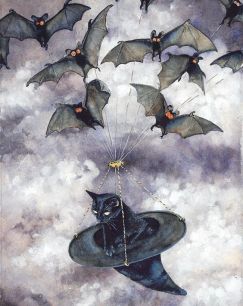
 Good Day Sky Dancers!








 Good Morning Sky Dancers!
 There seems to be nothing White Republican men will do these days to hold on to power. It’s astonishing but not surprising. It’s not even subtle any more. One of the more strange things coming out of Georgia is forcing voter registration clerks to “match signatures” as if they’re experts on handing writing analysis. From Slate:
  One of the most important ways to circumvent being stopped at the polls or slowed down at the polls on election day is to vote early. Early votes are pouring into Virginia.
  Here’s a suggestion from MIchelle Goldberg to prevent “political despair”. S
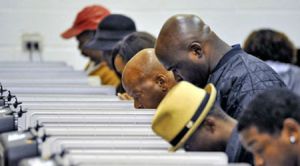 There is one ballot amendment here that will be a statewide vote that would bring significant justice to those incarcerated for major crimes with juries that are not unanimous.
 Oddly enough, t
 I would like to say the only stand out thing about the Louisiana Election this year is that we are working to remove this Jim Crow Era law . Our Republican Secretary of State has also purged voter rolls. I made sure I checked my registration earlier this week. Our State AG is a doozy. We pretty much hate him here in New Orleans.
  We must stop this dreadful disenfranchisement and removal of rights from citizens. If we don’t attack it by voting and by bringing attention to voter suppression efforts it will only get worse. It can only benefit Trump and the white patriarchy who oppresses the majority of people in the country and can only contain them with gerrymandering and voter suppression. Increased voter participation by the rest of this lessens the chance they are successful.
 peej
peej Carissa
 bostonboomer
 dakinikat
 ecocatwoman
 mablue2
 Mama Lopez
 peggysue22
 quixote
 skydancingguestblogger
 Mona (aka Wonk the Vote)



 Sky Dancing
Recent Comments