

By Tuesday afternoon Trump called one person close to him with the message, “He’s done. It’s over. I killed him.”
Wednesday Reads: Allies Turning on Trump, and A MAGA Speaker Candidate
Posted: October 25, 2023 Filed under: Donald Trump, 2020 Elections, 2024 Elections | Tags: 5th Amendment, Fani Willis, Georgia election interference case, grand jury, Jenna Ellis, Mark Meadows, Mike Johnson, Republicans, Speaker of the House search, Tom Emmer, use immunity, witness tampering 4 CommentsGood Afternoon!!

Vase of Flowers, by Paul Gauguin
Yesterday, another shoe dropped in the Georgia election interference case when former Trump attorney Jenna Ellis accepted a plea deal.
CNN: Former Trump campaign lawyer Jenna Ellis pleads guilty in Georgia case.
Former Trump campaign lawyer Jenna Ellis pleaded guilty Tuesday in the Georgia election subversion case and will cooperate with Fulton County prosecutors – the third guilty plea in the past week.
At an unscheduled hearing in Atlanta, Ellis pleaded guilty to one count of aiding and abetting false statements, a felony stemming from the election lies that Ellis and other Donald Trump lawyers peddled to Georgia lawmakers in December 2020.
She was sentenced to five years of probation and ordered to pay $5,000 in restitution.
Ellis delivered a tearful statement to the judge Tuesday while pleading guilty, disavowing her participation in Trump’s unprecedented attempts to overturn the 2020 election.
“If I knew then what I knew now, I would have declined to represent Donald Trump in these post-election challenges. I look back on this experience with deep remorse,” Ellis said, her voice breaking at times.
The development comes after back-to-back guilty pleas last week in the sprawling case from former Trump campaign lawyer Sidney Powell and Kenneth Chesebro, who helped devise the fake electors plot.
These three plea deals are a monumental step forward for Fulton County District Attorney Fani Willis, who charged the case in August and is preparing for trials against Trump, his former attorney Rudy Giuliani, his chief of staff Mark Meadows and other top figures. (They have all pleaded not guilty.)
Ellis, Chesebro and Powell all agreed to testify on behalf of the prosecution at future trials. By flipping, these onetime Trump insiders are now on track to become major Trump nemeses. They are all lawyers and can shed light on what was happening behind the scenes in 2020.
The New York Times: With Plea Deals in Georgia Trump Case, Fani Willis Is Building Momentum.
Fani T. Willis, the district attorney of Fulton County, Ga., had no shortage of doubters when she brought an ambitious racketeering case in August against former president Donald J. Trump and 18 of his allies. It was too broad, they said, and too complicated, with so many defendants and multiple, crisscrossing plot lines for jurors to follow.
But the power of Georgia’s racketeering statute in Ms. Willis’s hands has become apparent over the last six days. Her office is riding a wave of momentum that started with a guilty plea last Thursday from Sidney K. Powell, the pro-Trump lawyer who had promised in November 2020 to “release the kraken” by exposing election fraud, but never did.
Maple Tree Listening, by Kazuko Shiihashi
Then, in rapid succession, came two more guilty pleas — and promises to cooperate with the prosecution and testify — from other Trump-aligned lawyers, Kenneth Chesebro and Jenna Ellis. While Ms. Powell pleaded guilty only to misdemeanor charges, both Mr. Chesebro and Ms. Ellis accepted a felony charge as part of their plea agreements.
A fourth defendant, a Georgia bail bondsman named Scott Hall, pleaded guilty last month to five misdemeanor charges.
With Mr. Trump and 14 of his co-defendants still facing trial in the case, the question of the moment is who else will flip, and how soon. But the victories notched thus far by Ms. Willis and her team demonstrate the extraordinary legal danger that the Georgia case poses for the former president.
And the plea deals illustrate Ms. Willis’s methodology, wielding her state’s racketeering law to pressure smaller-fry defendants to roll over, take plea deals, and apply pressure to defendants higher up the pyramids of power.
The strategy is by no means unique to Ms. Willis. “This is how it works,” said Kay L. Levine, a law professor at Emory University in Atlanta, referring to large-scale racketeering and conspiracy prosecutions. “People at the lower rungs are typically offered a good deal in order to help get the big fish at the top.”
Later yesterday, ABC News published a scoop about former chief of staff Mark Meadows: Ex-Chief of Staff Mark Meadows granted immunity, tells special counsel he warned Trump about 2020 claims: Sources.
Former President Donald Trump’s final chief of staff in the White House, Mark Meadows, has spoken with special counsel Jack Smith’s team at least three times this year, including once before a federal grand jury, which came only after Smith granted Meadows immunity to testify under oath, according to sources familiar with the matter.
According to the sources, Meadows also told the federal investigators Trump was being “dishonest” with the public when he first claimed to have won the election only hours after polls closed on Nov. 3, 2020, before final results were in.
“Obviously we didn’t win,” a source quoted Meadows as telling Smith’s team in hindsight.
Trump has called Meadows, one of the former president’s closest and highest-ranking aides in the White House, a “special friend” and “a great chief of staff — as good as it gets.”
The descriptions of what Meadows allegedly told investigators shed further light on the evidence Smith’s team has amassed as it prosecutes Trump for allegedly trying to unlawfully retain power and “spread lies” about the 2020 election. The descriptions also expose how far Trump loyalists like Meadows have gone to support and defend Trump.
Sources told ABC News that Smith’s investigators were keenly interested in questioning Meadows about election-related conversations he had with Trump during his final months in office, and whether Meadows actually believed some of the claims he included in a book he published after Trump left office — a book that promised to “correct the record” on Trump.

Peonies and Irises, by Emil Nolde
ABC news found several passages in the book that differ from Meadows’ reported testimony. See examples at the link. People are claiming that Meadows “flipped” on Trump, but that’s not what this sounds like:
Under the immunity order from Smith’s team, the information Meadows provided to the grand jury earlier this year can’t be used against him in a federal prosecution.
That immunity came after a lawyer for Meadows requested that his client be immunized to testify before the grand jury, sources familiar with the matter said. A senior Justice Department official signed off on the request and an immunity order was then issued by U.S. District Court Judge James Boasberg, the chief judge at the federal court in Washington, D.C., days before Meadows appeared before the grand jury in March, sources said.
Had Meadows not been granted immunity, prosecutors expected him to invoke his Fifth Amendment rights against self-incrimination, sources said.
It sounds like Meadows was given “use immunity” in order to force him to testify without taking the Fifth. That’s not “flipping.” It just means that he cannot be prosecuted for truthful testimony he gave to the grand jury. He may end up cooperating with the government, but he hasn’t done it yet.
The Guardian’s Hugo Lowell agrees: Trump chief Mark Meadows testified in 2020 election case after immunity order.
Donald Trump’s former White House chief of staff Mark Meadows testified to a federal grand jury earlier this year about efforts by the former president to overturn the 2020 election results pursuant to a court order that granted him limited immunity, according to two people familiar with the matter.
The immunity – which forces witnesses to testify on the promise that they will not be charged on their statements or information derived from their statements – came after a legal battle in March with special counsel prosecutors, who had subpoenaed Meadows.
Trump’s lawyers attempted to block Meadows’ testimony partially on executive privilege grounds. However, the outgoing chief US district judge Beryl Howell ruled that executive privilege was inapplicable and compelled Meadows to appear before the grand jury in Washington, the people said.
The precise details of what happened next are unclear, but prosecutors sought and received an order from the incoming chief judge James Boasberg granting limited-use immunity to Meadows to overcome his concerns about self-incrimination, the people familiar with the matter said.
That Meadows testified pursuant to a court order suggests prosecutors in the office of special counsel Jack Smith were determined to learn what information he was afraid to share because of self-incrimination concerns – but it does not mean he became a cooperator.
Typically, under limited-use immunity orders, witnesses provide limited statements. With the payoff potentially small and with the increased difficulty that comes from charging immunity recipients in the future, the justice department is broadly averse to seeking such orders.
The approval must also come from the top echelons of the justice department, according to guidelines, and the preferred method for federal prosecutors to obtain testimony is to have defendants plead guilty, and then have them offer cooperation for a reduced sentence.
Nevertheless, I think it’s unlikely that Meadows will be willing to go to prison for Trump; so he may end up cooperating. He just hasn’t done it yet.

Anemones, Edvard Munch
Last night in a Truth Social post, Trump blatantly attempted to witness tamper Mark Meadows.
From an analysis post by Stephen Collinson at CNN: Trump rages as former acolytes turn against him under legal heat.
In a rage-filled stream of consciousness on his Truth Social network on Tuesday night, Trump lashed out at the ABC report about Meadows.
“I don’t think Mark Meadows would lie about the Rigged and Stollen 2020 Presidential Election merely for getting IMMUNITY against Prosecution (PERSECUTION!),” the former president wrote.
“Some people would make that deal, but they are weaklings and cowards, and so bad for the future our Failing Nation. I don’t think that Mark Meadows is one of them, but who really knows? MAKE AMERICA GREAT AGAIN!!!”
The other big story today is House Republicans’ endless search for a Speaker candidate they can agree on. The latest candidate is Rep. Mike Johnson, an ultra-MAGA guy, after Trump put the kibosh on previous candidate Tom Emmer, who supported the transition of power in 2020.
Politico: ‘I killed him’: How Trump torpedoed Tom Emmer’s speaker bid.
Just hours after Rep. Tom Emmer (R-Minn.) won the Republican Conference’s nomination to be House speaker on Tuesday, former President Donald Trump took to Truth Social to deride the congressman as “totally out-of-touch with Republican Voters” and a “Globalist RINO.”
He then got on the phone with members to express his aversion for Emmer and his bid for speaker.
Just minutes later, Emmer officially dropped out of the race.
His withdrawal made Emmer the third nominee for speaker to have his hopes dashed for the most cursed job in politics. And it showed that while Trump may not be able to elevate someone to the post — his earlier choice for the job, Rep. Jim Jordan (R-Ohio), also flopped — he can very well ensure that a person doesn’t get it….
Trump had signaled to aides last week that he did not support Emmer’s bid for the speakership. The former president complained that Emmer had criticized him following the Trump-inspired Jan. 6 Capitol riot and, among other things, had not forcefully enough defended him against his multiple indictments.
The House will supposedly vote on Johnson for Speaker today. So who is Mike Johnson?
The Washington Post: 5 things to know about Mike Johnson, the GOP’s latest House speaker nominee.
It remains unclear whether Johnson has enough support to win the gavel. But after he was nominated in a Republican closed-door vote on Tuesday, Johnson, flanked by his colleagues, projected confidence, promising to restore voters’ trust in government and to govern effectively if he is elected speaker.
Red Roses with Blue, by Alex Katz
Here are five things to know about Mike Johnson and his political views.
He opposed certifying the 2020 election.
Johnson, 51, contested the results of the 2020 election — urging President Donald Trump to “stay strong and keep fighting” as he tried to overturn his loss to Joe Biden in the presidential race.
Johnson also objected to certifying Biden’s electoral win and was one of the architects of a legal attack on the election that consisted of arguing that states’ voting accommodations during the pandemic were unconstitutional. He led a group of 126 Republican lawmakers in filing an amicus brief to the Supreme Court alleging that authorities in Georgia, Pennsylvania, Wisconsin and Michigan “usurped” the constitutional authority of state legislatures when they loosened voting restrictions because of the pandemic. The court rejected the underlying complaint — filed by the state of Texas — due to lack of standing, and dismissed all other related motions, including the amicus brief.
He voted against further Ukraine aid.
Johnson, who serves on the House Armed Services Committee, was one of 57 lawmakers — all of them Republicans — who voted against a $39.8 billion aid package for Ukraine in May.
According to the Shreveport Times, Johnson explained his opposition to the bill by saying that the United States “should not be sending another $40 billion abroad when our own border is in chaos, American mothers are struggling to find baby formula, gas prices are at record highs, and American families are struggling to make ends meet, without sufficient oversight over where the money will go.”
Johnson has also called for more oversight of the aid sent to Ukraine — totaling more than $60 billion to date. In February, following a House Armed Services Committee hearing on the topic, he tweeted that American taxpayers “deserve to know if the Ukrainian government is being entirely forthcoming and transparent about the use of this massive sum of taxpayer resources.” [….]
He is anti-abortion.
Johnson, a constitutional lawyer who identifies as a Christian, opposes abortion and has celebrated the Supreme Court’s decision to overturn Roe v. Wade, the landmark 1973 ruling that established constitutional protections for abortions nationwide.
“There is no right to abortion in the Constitution; there never was,” Johnson told Fox News on the day the decision was announced, calling it “a great, joyous occasion.”
The antiabortion nonprofit Susan B. Anthony Pro-Life America gives Johnson an A+ ranking on this issue, stating that he “has voted consistently to defend the lives of the unborn and infants,” including by “stopping hard-earned tax dollars from paying for abortion, whether domestically or internationally.”
He is a close ally of Donald Trump
Johnson is a close ally of Trump, having served on the former president’s legal defense team during his two impeachment trials in the Senate.
He has called charges against Trump — which include a federal case relating to his attempts to overturn the 2020 election — “bogus,” and has said the legal and political systems have treated Trump unfairly.
He supports LGBTQ restrictions.
Johnson has positioned himself on the far right of the political spectrum on several social issues, even within the current conservative Republican conference. Notably, he introduced legislation last year — modeled after Florida’s “don’t say gay” bill — that would have prohibited discussion of sexual orientation and gender identity, as well as related subjects, at any institution that received federal funds. The Human Rights Campaign, a pro-LGBTQ civil rights organization, gave Johnson a score of 0 in its latest congressional scorecard.
Johnson also opposes gender-affirming care for minors and led a hearing on the subject in July. In a statement, he described gender-affirming care — meaning medical care that affirms or recognizes the gender identity of the person receiving the care, and which can include giving puberty or hormone blockers to minors under close monitoring from a doctor — as “adults inflicting harm on helpless children to affirm their world view.”


Roses, by Vincent Van Gogh
NBC News: GOP speaker nominee Mike Johnson played a key role in efforts to overturn the 2020 election.
Well before he secured the GOP nomination for House speaker, Rep. Mike Johnson, R-La., played a key role in efforts by then-President Donald Trump and his allies to overturn Joe Biden’s electoral victory in the 2020 election.
Johnson, who currently serves as the GOP caucus vice chair and is an ally of Trump, led the amicus brief signed by more than 100 House Republicans in support of a Texas lawsuit seeking to invalidate the 2020 election results in four swing states won by Biden: Georgia, Michigan, Pennsylvania and Wisconsin.
The lawsuit, filed by Texas Attorney General Ken Paxton, a Republican, called on the Supreme Court to delay the electoral vote in the four states in order for investigations on voting issues to continue amid Trump’s refusal to concede his loss. It alleged that the four states changed voting rules without their legislatures’ express approval before the 2020 election.
Johnson at the time sought support from his GOP colleagues for the lawsuit, sending them an email with the subject line “Time-sensitive request from President Trump.”
“President Trump called me this morning to express his great appreciation for our effort to file an amicus brief in the Texas case on behalf of concerned Members of Congress,” Johnson wrote in the December 2020 email, which was obtained by NBC News….
The lawsuit swiftly drew backlash from battleground state attorneys general, who decried it as a “publicity stunt” full of “false and irresponsible” allegations. Legal experts also pointed to a series of hurdles the lawsuit had faced, saying that Texas lacked the authority to claim that officials in other states failed to follow the rules set by their legislatures….
Johnson’s role in pursuing efforts to overturn the 2020 election results has regained attention recently amid his speakership bid. On Tuesday, the political team of former Republican Rep. Liz Cheney of Wyoming — who broke with Trump over his baseless claims of a stolen election — circulated a New York Times article that called him “the most important architect of the Electoral College objections” on Jan. 6, 2021, aimed at keeping then-President Trump in office even after he lost.
The Times reported last year that many Republicans who voted to discount pro-Biden electors cited an argument crafted by Johnson, which was to ignore the false claims about mass fraud in the election and instead hang the objection on the claim that certain states’ voting changes during the Covid-19 pandemic were unconstitutional.
The Supreme Court ultimately rejected Texas’ effort to overturn the election results.
This guy is MAGA all the way. As speaker, he would likely try to find a way for the House to decide the 2025 election. We’ll find out later today if House Republicans can get together enough votes to elect him.
That’s all I have for you today. No war news. I’m really burned out on that. Feel free to post on anything in the comment thread.
Thursday Reads: A Reckoning is Coming for Trump
Posted: November 3, 2022 Filed under: 2021 Insurrection, Afternoon Reads, Donald Trump | Tags: Clarence Thomas, Department of Justice, executive privilege, January 6 investigation, John Eastman, Kash Patel, Kenneth Chesebro, Mar-a-Lago documents investigation, Merrick Garland, use immunity, Walt Nauta 16 CommentsGood Afternoon!!
It’s really happening, folks. Last night we got another sign that Merrick Garland’s DOJ is likely to indict Donald Trump. The news broke around 9PM Wednesday in The Wall Street Journal that Trump insider Kash Patel has been given limited use immunity and will now have to testify to the grand jury in the stolen documents case. This means he won’t be prosecuted for anything he testifies to truthfully, but he can be prosecuted if he lies.
Lawrence Tribe predicted this last month when The New York Times published a story about the DOJ trying to get testimony from Patel and another Trump aide Walt Nauta, who was involved in moving boxes of documents out of the storage area at Mar-a-Lago.
Here’s the Wall Street Journal article from last night: Trump Aide, Granted Immunity, Set to Testify at Grand Jury Probing Mar-a-Lago Documents.
Kash Patel, a close associate of former President Donald Trump, is set to soon testify before a federal grand jury probing the handling of classified documents at Mar-a-Lago after receiving immunity for his information, people familiar with the matter said.
A federal judge recently decided the Justice Department couldn’t force Mr. Patel to testify without such protection against his statements being used against him in some future prosecution. That ruling, the people said, opens the door for Mr. Patel, who says Mr. Trump broadly declassified White House documents while still president, to answer questions.
Mr. Patel appeared before the grand jury last month and refused to provide information by repeatedly invoking his Fifth Amendment right against self-incrimination, The Wall Street Journal reported.
Kash Patel
In response, the Justice Department asked a federal judge to compel him to testify. Prosecutors argued Mr. Patel had no reasonable expectation that he would be prosecuted based on the kinds of questions they were asking, one of the people said, an argument the judge didn’t accept.
The immunity grant leaves the government only able to charge Mr. Patel, if at all, using information obtained independently of his immunized testimony.
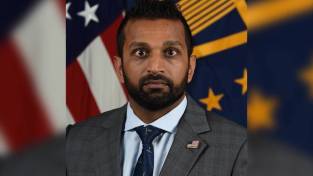
That’s because Patel is just a small fish, and the DOJ is going after a much bigger fish–Trump himself.
Other Trump associates involved in the Mar-a-Lago documents matter also have been offered some form of immunity, people familiar with the matter said, including one of Mr. Trump’s lawyers, Christina Bobb, who declined, saying she didn’t need it.
Mr. Patel, a former White House and Pentagon aide whom Mr. Trump late in his term considered naming to top positions at the Central Intelligence Agency and the FBI, has asserted publicly since May that Mr. Trump broadly declassified documents when he left the White House in January 2021. His comments first came as the Justice Department’s efforts to retrieve the documents from Mar-a-Lago were intensifying and the same month prosecutors issued a grand jury subpoena for their return.
Prosecutors asked Mr. Patel about that claim and an array of other topics, including some that had nothing to do with Mr. Trump or the material discovered at Mar-a-Lago, one of the people said.
Investigators have spoken to a number of other people, including close aides to the former president, since the probe began.
I didn’t encounter a paywall when I opened this WSJ story from a link on Memeorandum.
This is from a New York Times article on this new development:
The disclosure that Mr. Patel has received immunity for his testimony comes as prosecutors have increased their pressure on recalcitrant witnesses who have declined to answer investigators’ questions or have provided them with potentially misleading accounts about Mr. Trump’s handling of documents.
Prosecutors have indicated they are skeptical of the level of cooperation they have gotten from a little-known Trump aide named Walt Nauta, who has provided the authorities with different accounts about whether he moved documents stored at Mr. Trump’s Mar-a-Lago estate. The authorities are using the specter of charges against him for misleading investigators to persuade him to sit again for questioning.
The prosecutors want to question Mr. Patel about an array of matters related to the documents. Among them is an unsubstantiated claim Mr. Patel has publicly made in recent months that Mr. Trump had declassified national security documents he took when he left the White House….
Mr. Patel has long been a part of efforts to fight off the Justice Department investigations into Mr. Trump and his allies. Earlier this year, as officials were pushing Mr. Trump to return records he had taken to Mar-a-Lago when he left office, Mr. Trump made him one of his representatives to the National Archives and Records Administration to deal with his records.
Legal experts say prosecutors try to avoid giving witnesses immunity, especially in high-profile cases, because it makes it much more difficult to prosecute the individual who received it. But prosecutors often ask a judge to grant it when they are confronted with a witness who has information that they believe is essential to completing the investigation….
Mr. Patel has increased his influence with Mr. Trump since the end of the presidency, maintaining his criticisms of the investigation into whether the Trump campaign conspired with Russia in the 2016 campaign.
Earlier this year, Mr. Patel told associates that he was expected to take on an even more central role in Mr. Trump’s legal defenses, currently coordinated by another Trump adviser, Boris Epshteyn, according to a person familiar with his comments.
There’s also big news on the investigation of Trump’s involvement in the investigation of efforts to overturn the 2020 election. Yesterday Politico obtained the 8 emails that Trump attorney John Eastman has been fighting to keep from the January 6 Committee and they are damning.
From the Politico article: Trump lawyers saw Justice Thomas as ‘only chance’ to stop 2020 election certification.
Donald Trump’s attorneys saw a direct appeal to Supreme Court Justice Clarence Thomas as their best hope of derailing Joe Biden’s win in the 2020 presidential election, according to emails newly disclosed to congressional investigators.
“We want to frame things so that Thomas could be the one to issue some sort of stay or other circuit justice opinion saying Georgia is in legitimate doubt,” Trump attorney Kenneth Chesebro wrote in a Dec. 31, 2020, email to Trump’s legal team. Chesebro contended that Thomas would be “our only chance to get a favorable judicial opinion by Jan. 6, which might hold up the Georgia count in Congress.”
“I think I agree with this,” attorney John Eastman replied later that morning, suggesting that a favorable move by Thomas or other justices would “kick the Georgia legislature into gear” to help overturn the election results.
Trump lawyer Kenneth Chesebro
The messages were part of a batch of eight emails — obtained by POLITICO — that Eastman had sought to withhold from the Jan. 6 select committee but that a judge ordered turned over anyway, describing them as evidence of likely crimes committed by Eastman and Trump. They were transmitted to the select committee by Eastman’s attorneys last week, but remained largely under wraps until early Wednesday morning….
Thomas is the justice assigned to handle emergency matters arising out of Georgia and would have been the one to receive any urgent appeal of Trump’s lawsuit to the Supreme Court — a fact that seemed to be part of the Trump legal team’s calculus.
Rulings from so-called circuit justices are typically stopgap measures aimed at preserving the status quo until the full Supreme Court weighs in, but the Trump lawyers hoped a favorable order from Thomas would embolden state GOP-controlled legislatures, Congress — or then-Vice President Mike Pence — to block final certification of Joe Biden’s victory.
“[I]f we can just get this case pending before the Supreme Court by Jan. 5, ideally with something positive written by a judge or justice, hopefully Thomas, I think it’s our best shot at holding up the count of a state in Congress,” Chesebro said.
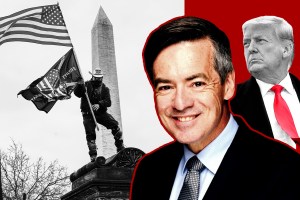
There’s even more crazy stuff from Chesebro:
In one scenario, Chesebro proposed encouraging Senate Republicans to filibuster long enough to delay the joint session of Congress on Jan. 6, ignoring limitations on the length of debate. He also described how Trump allies could use inaction by the courts to build political pressure against Biden’s inauguration.
“Hard to have enormous optimism about what will happen on Jan. 6, but a lot can happen in the 13 days left until then, and I think having as many states still under review (both judicially and in state legislatures) as possible is ideal,” Chesebro wrote Trump campaign attorney Justin Clark on Dec. 24, 2020. It’s unclear how or whether Clark responded to Chesebro’s message.
The New York-based lawyer has been scrutinized by the Jan. 6 select committee, as well as prosecutors in Fulton County, Ga., who are investigating Trump’s efforts to subvert the election there.
Read more and see the emails at Politico.
There’s a very interesting piece at New York Magazine today by Ankush Khardori: The Secret Court Battle That Threatens Trump After Election Day. Prosecutors are obtaining potentially crucial testimony about January 6.
https://twitter.com/NYMag/status/1588143351253159936?s=20&t=0jL5j6PFFd0McENHeAYidw
As the midterm campaigns draw to a close, so too may an informal détente between Donald Trump and federal prosecutors since the search of Mar-a-Lago in August. While both sides fight in court, the Justice Department has probably refrained from taking major steps in the key investigations into his possession of classified documents and the attack on the U.S. Capitol in order to avoid influencing the elections.
During this relative down period, however, the department has reportedly been fighting an opaque and largely secret legal battle in the January 6 investigation that could constitute its most significant development to date. It could open a floodgate of damaging information about Trump or provide the department with crucial clarity about his conduct with respect to the riot and the effort to overturn the election results beyond what the public has learned so far. Like the search at Mar-a-Lago, this reflects an apparent change in posture at the Justice Department in recent months under Attorney General Merrick Garland, who chose not to focus on Trump’s potential criminal misconduct when he took office last year despite ample reason to do so.
And thus far, the Justice Department appears to be winning.
In recent weeks, according to a variety of news reports, prosecutors successfully compelled grand-jury testimony in Washington, D.C., from two key witnesses over the objections of Trump — Greg Jacob, a onetime lawyer for former vice-president Mike Pence who blamed the shoddy legal arguments advanced by Trump lawyer John Eastman for the outrageous violence at the Capitol, and Marc Short, Pence’s former chief of staff. The proceedings are under seal for the moment, but they are being handled at the district-court level by Chief Judge Beryl Howell, who has so far rejected Trump’s legal challenges. In at least Short’s case, Trump’s lawyers reportedly sought an expedited appeal to the D.C. Circuit Court of Appeals, which rebuffed them. The Justice Department is now reportedly seeking a similar ruling from Howell that would force testimony — again over Trump’s objections — from former White House counsel Pat Cipollone and his deputy Patrick Philbin.
All of the court disputes appear to center on Trump’s effort to invoke executive privilege to block top officials in his White House from providing testimony that might incriminate him. As CNN noted, the recent testimony from Jacob was “the first identifiable time when the confidentiality Trump had tried to maintain around the West Wing after the 2020 election has been pierced in the criminal probe following a court battle.” The fight is not over: There is apparently still a pending appeal at the D.C. Circuit and likely more litigation before Howell as things continue to play out and additional witnesses are called in, and at some point, Trump could seek the involvement of the Supreme Court to try to bail him out.
At first blush, this may seem like a fight among lawyers with esoteric stakes concerning the scope of executive privilege, but there are significant consequences if the Justice Department successfully continues down this path. Prosecutors could obtain fulsome information about what Trump himself (as opposed to the people around him) was actually saying and doing in the run-up to and during the January 6 siege.
Read the rest at the link. The gist is that prosecutors are moving closer to actually holding Trump accountable.
More interesting stories to check out, links only:
The Washington Post: Biden warns GOP could set nation on ‘path to chaos’ as democratic system faces strain.
The Washington Post: Oath Keeper Rhodes had violent message for Trump after Jan. 6, witness says.
Reuters: U.S. Capitol Police to conduct internal review over missed camera images of Pelosi attack.
Will Oremus at The Washington Post: Musk’s Trump-style management rattles Twitter workers awaiting layoffs.
The Guardian: Twitter exodus: company faces murky future as top managers flee the nest.
Please share your thoughts on these stories and anything else you’re interested in and have a great Thursday!
Lazy Saturday Reads: What Does the Allen Weisselberg Immunity Deal Mean?
Posted: August 25, 2018 Filed under: Afternoon Reads, U.S. Politics | Tags: Allen Weisselberg, David Pecker, Donald Trump, Fox News, Karen McDougal, Michael Cohen, Rudy Giuliani, use immunity 14 Comments
Summer Afternoon (Tea in the Garden), Théo van Rysselberghe
Good Afternoon!!
This has been a disastrous week for Trump. The Guardian summarizes: Trump’s terrible week: stunning news and whispers of impeachment.
…even by the standards of the Trump universe, this week has been a blur. And at its heart was a single, devastating hour on Tuesday 21 August that effectively turned the president of the United States into an unindicted co-conspirator in a federal crime….
…first, there was Rudy Giuliani. Trump’s lawyer, the former New York mayor, set the tone last Sunday with an Orwellian comment on the NBC network’s Meet the Press. Asked whether the president would give his version of events in testimony to Robert Mueller, the special counsel who is investigating Russian interference in the 2016 presidential election, Giuliani warned of a perjury trap and said: “Truth isn’t truth.”
Monday passed with just an embarrassing White House event to celebrate ICE during which Trump
…said that a border patrol agent, who is Latino, “speaks perfect English” as he beckoned him to the stage. He also misstated the acronym for US Customs and Border Protection at least eight times, referring to it as “CBC”, as in Canadian Broadcasting Corporation.
On Tuesday, the shit really hit the fan.
But then came, to use primary election parlance, Super Tuesday. At around 4.30pm, in courtrooms 200 miles apart, a pair of Trump associates delivered a one-two punch that stunned the White House and revived whispers of impeachment.
In New York, Trump’s longtime lawyer and “fixer” Michael Cohen implicated the president in a crime to influence the 2016 presidential election. Pleading guilty to dodging taxes and campaign finance violations, he alleged that Trump directed him to pay hush money to prevent two women – a Playboy model and pornographic actor – speaking out about extramarital affairs.
In Alexandria, Virginia, Paul Manafort, Trump’s former campaign chairman, was found guilty of eight tax and bank fraud charges and could now spend the rest of his life behind bars – unless Trump chooses to pardon him.
On Wednesday morning, Fox aired Trump’s interview in which he claimed that the campaign finance violations Cohen had pleaded guilty to were not crimes and that it should be illegal for people accused of crimes to turn states evidence in order to reduce their sentences. Then on Wednesday night he watched Tucker Carlson’s show.
There he saw a spurious Tucker Carlson report pushing a white nationalist conspiracy theory that white farmers in South Africa are being persecuted and murdered in Zimbabwe-style land grabs. Trump tweeted his outrage and promised to consult the state department, whose own human rights report on South Africa had made no mention of the issue.
It was one more white grievance dog whistle to add to all the rest. The South African government issued a swift rebuke and summoned US officials. Patrick Gaspard, the former US ambassador to South Africa, described the intervention as “astounding and deeply disturbing”. He said: “I can draw a line from the irresponsible statements he made in the wake of the violence in Charlottesville and him lifting up tropes from white nationalists in South Africa.”
 On Thursday,
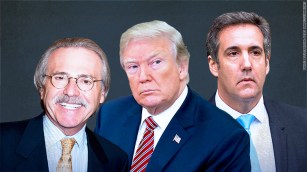
It emerged that David Pecker, chairman of American Media Inc, which owns the pro-Trump National Enquirer, had been granted immunity to provide information about Cohen and Trump’s involvement with payments to the two women who allege sexual affairs. The Associated Press added fuel to the fire by reporting thatthe Enquirer kept such secrets locked in a safe, lending it extraordinary power.
That night, the New York Times reported that the Manhattan district attorney’s office was considering pursuing criminal charges against the Trump Organization and two senior company officials in connection with one of the hush money payments.
The coup de grâce came with the news that Allen Weisselberg, the CFO of the Trump Organization had been given immunity to testify against Trump’s former personal lawyer Michael Cohen.
Clearly the news about Weisselberg is the most damaging to Trump, but it’s not clear exactly kind of immunity the long-time “financial gatekeeper” has. According the The New York Times, it’s limited to the case against Cohen .
The person briefed on the deal said that it was narrow in scope, protecting Mr. Weisselberg from self-incrimination in sharing information with prosecutors about Mr. Cohen, Mr. Trump’s former personal lawyer, who pleaded guilty on Tuesday to tax and campaign finance charges. The latter charges stemmed from payments during the campaign to two women who said they had affairs with Mr. Trump. It was not, the person said, a blanket immunity extending beyond the information he shared, and Mr. Weisselberg remains in his job at the Trump Organization.
Allen Weisselberg
Mr. Weisselberg figured into the charges filed against Mr. Cohen this week, having facilitated the processing of what prosecutors described as “sham invoices” at the Trump Organization, through which Mr. Cohen was reimbursed for the money he had paid to quiet one of the women alleging an affair with Mr. Trump, the pornographic film actress Stephanie Clifford.

It sounds like it’s use immunity, which protects Weisselberg from being prosecuted based on the specific information he provided about the hush money deals. It’s likely that Weisselberg indicated he would take the fifth and prosecutors used immunity to force him to talk. Weisselberg could still be charged with a crime if investigators find independent evidence that he was involved in criminal activities. If he’s eventually charged with a crime, Weisselberg might agree to cooperate fully with prosecutors, but so far that doesn’t seem to be happening.
Nevertheless, the fact that prosecutors have gotten testimony from the man who supposedly “knows where the bodies are buried” in the Trump Organization is huge. And some knowledgeable writers are claiming Weisselberg has agreed to cooperate fully and are speculating about what he could reveal about Trump.
On Twitter, Renato Mariotti says he would be surprised if Weisselberg only got use immunity.
Obviously he knows a hell of a lot more than I do.
Luppe B. Luppen (AKA @NYCsouthpaw) and Hunter Walker at Yahoo News: For Trump, Allen Weisselberg may be the man who knew too much.
Prosecutors investigating Trump’s inner circle reportedly now reportedly have a limited deal with Weisselberg, who has provided testimony against former Trump lawyer Michael Cohen. If his cooperation expanded, it could play a crucial role in multiple ongoing investigations.
According to the Wall Street Journal, federal prosecutors granted immunity to Weisselberg in exchange for information about payments to Cohen, which were made to two women during the 2016 presidential campaign in order to suppress their stories of alleged affairs with Trump….
The Associated Press subsequently reported that the immunity deal was “restricted to Weisselberg’s grand jury testimony last month in the Cohen case.”
What could Weisselberg reveal if he were forced to cooperate fully?
If Weisselberg decided to fully open his kimono and reveal all he knows, the federal investigation in the Southern District of New York would be the most obvious potential beneficiary. However, in some ways, the nature of that office’s interest in Trump is the most mysterious. As of Friday afternoon, it is not known what other subjects that federal investigation is pursuing. If Trump Organization executives, or even the president, are in its cross hairs, then Weisselberg could offer key insights.
Special counsel Mueller’s investigation, headquartered in Washington, D.C., is another potential beneficiary. For Mueller’s investigators, Weisselberg could detail the nature and extent of the financing the Trump Organization has received from sources connected to Russia. He could also offer them insight into any investments or potential investments Trump has made either in Russia or with Russian partners. A spokesperson for the special counsel’s office declined to comment for this story.
Weisselberg could also potentially be a valuable material witness in the New York attorney general’s state-level investigation into President Trump’s charitable foundation. In June, New York Attorney General Barbara Underwood filed a lawsuit against the Trump Foundation alleging a “pattern of illegal conduct,” including “willful self-dealing.” Weisselberg has long been the treasurer of the Trump Foundation. In preparation for its lawsuit, the attorney general’s office conducted a lengthy interview with Weisselberg and obtained his emails. The investigators allege that Weisselberg collaborated with Trump and campaign officials in advance of the 2016 Iowa primary to use the charity’s funds to benefit the campaign.
At The New Yorker, the very knowledgeable Adam Davidson has more:
As the C.F.O., Weisselberg tracked the money that came into the Trump Organization and the money that went out of it, former employees told me. I often found myself wondering what the Weisselberg part of the operation looked like. (I called and e-mailed him a few times, but, not surprisingly, never heard back.) Some told me he had a couple of bookkeepers, but that he personally handled most of the paperwork. Weisselberg knew who was paying or lending money to Trump, and he knew to whom Trump was giving money. When Trump became President, he placed his business interests in a revocable trust overseen by his son Donald Trump, Jr., and Weisselberg….
Trump with his wife, daughter, Karen Mcdougal (far right) and other playboy models.
This summer…Weisselberg’s role in the organization came into sharper focus. In a recording that Michael Cohen made of a conversation he had with Donald Trump about a payment to keep secret an affair, Cohen described setting up a shell company to pay hush money during the 2016 campaign to Karen McDougal, a woman who claimed to have had an affair with Trump. This week, Cohen pleaded guilty to violating campaign-finance laws, in part by setting up this secretive payment. He said that he knew at the time that it was illegal to secretly make a payment for campaign-related activity, but he did so anyway at Trump’s direction. Strikingly, Cohen makes it clear on the tape that Weisselberg also knew about the shell company and payment. “I’ve spoken to Allen Weisselberg about how to set the whole thing up,” Cohen explains to Trump.
It is difficult to hear the tape and not wonder how Weisselberg developed this particular expertise and whether he had deployed it before.

Here’s what Davidson has to say about Weisselberg’s immunity deal:
The Journal story and other news coverage suggest that Weisselberg has narrow immunity, related, solely, to the payments that Michael Cohen made to silence two women with whom Trump had affairs. With evidence of that crime in hand, prosecutors can subpoena other records from the company. If they have a reasonable basis to believe another crime has been committed, they can ask Weisselberg about it. Weisselberg, fearing jail time himself, could broaden his coöperation. The fact that Weisselberg has “flipped”— and may flip further—could shift the calculus of other figures in the Trump orbit as well. Weisselberg is a big fish—perhaps the biggest fish of all. Fearing that Weisselberg might implicate them in a crime, any cronies, dealmakers, attorneys, and others who might want to exchange information for leniency from prosecutors, will now do so.
If you’re interested in what kinds of crimes Weisselberg might know about, I’d suggest reading the entire article as well as Davidson’s other New Yorker pieces about Trump’s business dealings.
What else is happening? What stories have you been following?

 peej
peej Carissa
 bostonboomer
 dakinikat
 ecocatwoman
 mablue2
 Mama Lopez
 peggysue22
 quixote
 skydancingguestblogger
 Mona (aka Wonk the Vote)



 Sky Dancing
Recent Comments