I’ve been having computer problems, so I’m even later than usual in getting started today. It might be nighttime before a finish this post.
I’m so stressed out about the election! I just hope I make it until next Tuesday.
I keep telling myself that Kamala Harris will win, and I do think she will; but then we’ll have to deal with the Trumpers who won’t accept the results. Even if we get by that crisis, the Supreme Could could step in. She has to win by 4 or 5 points so they can’t justify handing the presidency to Trump.
Fortunately, Trump hasn’t exactly helped his case over the past week.
Two full days have passed since Donald Trump presided over a Madison Square Garden rally meant to illuminate the high notes of his presidential campaign. In that regard, it was extraordinarily successful.
After all, the torrent of bigotry, hostility, upheaval, misogyny, lunacy, fratboy antics, propaganda, dread and racism that flowed out of the gathering have been Trump’s animating themes ever since he vaulted onto the political stage more than nine years ago.
Anyone watching the bonfire in the Garden got a visceral understanding of Trump’s worldview. So, mission accomplished. Educating and recruiting new voters, and reminding those already committed why they’ve climbed aboard, is a primary goal of any campaign. Sunday’s rally was a handy primer about what Trump is fighting for — and the former president and his fellow speakers were transparent about what they’re up to. Three cheers for honesty.
Bedlam, fascism and racism aren’t attractive calling cards for every voter, however, and Republican strategists who have tried putting Trump on a less frightening path certainly didn’t want the Garden’s narrative to define their candidate with Election Day fast approaching. Limited government, America first, tax cuts, deregulation, patriotism, prosperity and other varieties of spinach were on their preferred menu.
I like to think that most people would be horrified by the prospect of being publicly savaged for fomenting racism and chaos — and for hosting a Garden lineup that included shock-jock Tucker Carlson wrapping Kamala Harris in a shroud of plantation bigotry and a C-list “comedian” quipping that Puerto Rico is a “floating island of garbage.” Trump rolls without regret, however. He has had multiple opportunities to change course, disavow or apologize for the bile on display at the Garden, but he hasn’t done so — including on Tuesday during a nationally broadcast press conference in Palm Beach, Florida, and at a rally later in Allentown, Pennsylvania.
Read the rest at Bloomberg. I didn’t encounter a paywall on this one.
PALM BEACH, Florida — Donald Trump during remarks on Tuesday didn’t acknowledge that there was any backlash over a comedian who made disparaging comments about Puerto Rico at a recent rally in New York City.
“The love in that room, it was breathtaking — and you could have filled it many many times with the people that were unable to get in,” he said of his Sunday rally at Madison Square Garden.
Trump told ABC News’ Rachel Scott before the press conference that he wasn’t familiar with the comedian Tony Hinchcliffe, who referred to Puerto Rico as a “floating island of garbage.”
“I don’t know him, someone put him up there. I don’t know who he is,” he told ABC News.
His speech on Tuesday before an audience of hundreds of supporters in South Florida largely appeared to be geared toward counter-messaging the campaign rally Vice President Kamala Harris had set for Tuesday evening. The vice president is expected to deliver the closing message of her campaign on the Ellipse just off the National Mall in D.C.
Since Trump’s rally Sunday — when Hinchcliffe and other speakers at the event made racist and vulgar comments — Puerto Ricans, Democrats and Republicans have condemned the speakers and defended the island. Trump has not publicly condemned the comments, while Puerto Ricans, including the archbishop of San Juan and the Republican chair of the island, have called on the former president to apologize though he has not done so.
People of Puerto Rican descent in the key swing state of Pennsylvania, who number more than 450,000, have also denounced the comedian’s comments and some are planning to protest Trump’s rally Tuesday night in Allentown, which has one of the largest populations of Puerto Ricans in the state.
Trump called Harris’ political operation a “campaign of hate” and said President Joe Biden had been “out of it for a long time.” He did not take any questions from the media after speaking for about an hour and tore into some Democrats who’d compared his rally to Nazi Germany.
Urged by some allies to apologize for racist comments made by speakers at his weekend rally, Donald Trump took the opposite approach on Tuesday, saying it was an “honor to be involved” in such an event and calling the scene a “lovefest” — the same term he has used to describe the Jan. 6 insurrection at the U.S. Capitol.
Trump gathered supporters and reporters to his Mar-a-Lago resort two days after a massive rally at Madison Square Garden featured a number of crude remarks by various speakers, including a set by comedian Tony Hinchcliffe in which he joked that Puerto Rico was a “floating island of garbage.” Some of Trump’s top Republican allies have condemned the remarks, and his campaign took the rare step of publicly distancing itself from Hinchcliffe’s joke, though not the other comments.
But given the opportunity to apologize at multiple events and in interviews Tuesday, Trump instead leaned in. Speaking at his Florida resort, he said that “there’s never been an event so beautiful” as his Sunday rally in his hometown of New York.
“The love in that room. It was breathtaking,” he said. “It was like a lovefest, an absolute lovefest. And it was my honor to be involved.”
On Tuesday night, he told Fox News’ Sean Hannity that he knows nothing about Hinchcliffe but said, “I can’t imagine it’s a big deal.” He later agreed, though, that “probably he shouldn’t have been there.”
“America, we know what Donald Trump has in mind. More chaos. More division. And policies that help those at the very top and hurt everyone else. I offer a different path. And I ask for your vote,” Harris told the crowd.
“And here is my pledge to you: I pledge to seek common ground and common sense solutions to make your lives better,” she added. “I am not looking to score political points. I am looking to make progress.”
The message could not be more different than Trump’s speech at the site, where he made false claims about the election and railed against Republicans who would not go along with his plan to halt the congressional certification of Joe Biden’s 2020 win.
Though Trump told supporters to “peacefully and patriotically” make their voices heard, the Republican also used the speech to pressure his vice president, Mike Pence, to suspend the certification and called on MAGA fans to “fight like hell” to preserve their country.
Vice President Harris delivered a speech Tuesday on the White House Ellipse in Washington, D.C. — the very site at which former President Trump gave remarks to a crowd that later incited a riot at the Capitol.
Harris spoke to a fired-up audience that numbered in the tens of thousands, invoking many of the same warnings she’s made on the campaign trail about Trump in her speech —that he is a threat to democracy and is consumed by his grievances and desire for retribution.
She encouraged the crowd and voters to move on from the Trump political era — and rounded out her speech by calling him a “petty tyrant.”
“We have to stop pointing fingers and start locking arms. It is time to turn the page on the drama and the conflict, the fear and division. It is time for a new generation in America, and I am ready to offer that leadership as the next president of the United States of America,” Harris said.
Harris was flanked for her speech by large blue USA signs on either side of her with the White House lit up in the background. The Harris campaign estimated 75,000 people were on the National Mall just before she arrived.
Harris later in her speech said that patriots throughout history “did not struggle, sacrifice, and lay down their lives, only to see us cede our fundamental freedoms, only to see us submit to the will of another petty tyrant.”
“The United States of America is not a vessel for the schemes of wannabe dictators. The United States of America is the greatest idea humanity ever devised,” the vice president said.
In the days since Donald Trump‘s hate-filled rally at Madison Square Garden on Sunday, what’s striking is the pettiness of the stakes MAGA defenders have laid out. In the final days of a dead-heat contest for the most powerful office in the world, Republicans argued we must elect a textbook fascist to protect the sacrosanct right of a white man to be rude without being criticized for it.
Trump, however, dispensed with the fiction that we are debating the subjective quality of humor. At a Tuesday press conference, he simply reified the true MAGA belief at stake: that Trump and his allies get to say what they want, and everyone else must shut up about it. This mostly came in the form of griping that Michelle Obama was allowed to criticize him: “Obama, his wife was very nasty to me. That was not nice.” [….]
Vance did not ask Trump to “stop getting so offended.” [….]
One would hope that it’s self-evident that “revenge on liberals for not liking me” is both a pathetic and short-sighted justification for voting for a wannabe dictator with a criminal rap sheet the size of a Russian novel. But with the polls so tight, that’s apparently not the case. So Harris made her closing argument Tuesday night from an evocative location that underscored the actual stakes of the election: The Ellipse in Washington D.C. where Trump incited the January 6 insurrection.
MAGA spite might right now manifest mainly as racist trolling or bottomless bellyaching, she warned, but there’s real danger in putting a man “consumed with grievance” into the White House. “He is the person who stood at this very spot nearly four years ago and sent an armed mob to the United States Capitol to overturn the will of the people in a free and fair election,” she began. She noted that Trump has threatened “to use the United States military against American citizens who simply disagree with him” and “put them in jail.” For those who might scoff that Trump actually means these things, the location spoke for itself. It was less than four years ago that Trump stood at that same spot and sent a murderous mob after members of Congress and his vice president as punishment for not stealing an election for him.
Read the rest at Salon.
Unfortunately, Joe Biden made one of his trademarked gaffes yesterday, and the media are breathlessly reporting that he called Trump’s supporters “garbage.” The clip that Trumpers are circulating was edited though. The Guardian reports: Biden says ‘garbage’ remark was aimed at comedian, not Trump supporters.
Joe Biden put out a statement that he had “meant to say” earlier on Tuesday that a pro-Trump comedian’s “hateful rhetoric” about Puerto Rico was “garbage”. But in a video clip edited to a shorter version and already widely circulating on social media Tuesday evening, a phrase that came out of Biden’s mouth was “the only garbage I see floating out there is his supporters”.
Republican politicians and rightwing media outlets quickly picked up the clip to argue that Biden had called Trump’s supporters garbage, comparing his remarks to Hillary Clinton’s labeling of half of Trump supporters as belonging in “a basket of deplorables” in 2016, a comment that is widely seen as undermining her campaign.
Earlier today I referred to the hateful rhetoric about Puerto Rico spewed by Trump’s supporter at his Madison Square Garden rally as garbage—which is the only word I can think of to describe it. His demonization of Latinos is unconscionable. That’s all I meant to say. The…
Biden’s full comments on Tuesday are somewhat garbled, and some journalists transcribing the remarks argued that Biden really did seem to be trying to refer to comedian Tony Hinchcliffe’s remarks, not all of Trump’s supporters, while others reported that the president had indeed suggested that Trump supporters themselves were garbage.
Biden’s comment came during a Zoom call with Voto Latino, in which Biden referred to Hinchcliffe’s comments and said the Puerto Ricans he knows are “good, decent, honorable, people. The only garbage I see floating out there is his supporter’s – his – his demonization of things is unconscionable, and it’s un-American, and it’s totally contrary to everything we’ve done.” But it wasn’t entirely clear whether he had said the singular “supporter’s” or the plural “supporters”, describing Trump’s base more broadly.
In the official transcript of Biden’s remarks released on Tuesday night by the White House press office, the comment has an apostrophe: “The only garbage I see floating out there is his supporter’s – his – his demonization of Latinos is unconscionable, and it’s un-American.”Nevertheless, Harris addressed the firestorm.
Vice President Kamala Harris says she “strongly” disagrees with “any criticism of people based on who they vote for,” after President Biden on Tuesday made remarks in which he appeared to call Trump supporters “garbage” on a video call with Latino activists. Republicans seized on the comment, while the White House offered a different explanation of what Mr. Biden had said, and the president tweeted a clarification of his comment.
“Let me be clear, I strongly disagree with any criticism of people based on who they vote for,” Harris told reporters Wednesday morning, when she was asked about Mr. Biden’s “garbage” comment. “You heard my speech last night and continuously throughout my career: I believe that the work that I do is about representing all the people, whether they support me or not. And as president of the United States, I will be a president for all Americans, whether you vote for me or not.”
I’ll close by recommending two other important articles, one on the abortion issue, and the other on what could happen if Trump wins.
Josseli Barnica grieved the news as she lay in a Houston hospital bed on Sept. 3, 2021: The sibling she’d dreamt of giving her daughter would not survive this pregnancy.
The fetus was on the verge of coming out, its head pressed against her dilated cervix; she was 17 weeks pregnant and a miscarriage was “in progress,” doctors noted in hospital records. At that point, they should have offered to speed up the delivery or empty her uterus to stave off a deadly infection, more than a dozen medical experts told ProPublica.
But when Barnica’s husband rushed to her side from his job on a construction site, she relayed what she said the medical team had told her: “They had to wait until there was no heartbeat,” he told ProPublica in Spanish. “It would be a crime to give her an abortion.”
For 40 hours, the anguished 28-year-old mother prayed for doctors to help her get home to her daughter; all the while, her uterus remained exposed to bacteria.
Three days after she delivered, Barnica died of an infection.
Barnica is one of at least two Texas women who ProPublica found lost their lives after doctors delayed treating miscarriages, which fall into a gray area under the state’s strict abortion laws that prohibit doctors from ending the heartbeat of a fetus.
Neither had wanted an abortion, but that didn’t matter. Though proponents insist that the laws protect both the life of the fetus and the person carrying it, in practice, doctors have hesitated to provide care under threat of prosecution, prison time and professional ruin.
ProPublica is telling these women’s stories this week, starting with Barnica’s. Her death was “preventable,” according to more than a dozen medical experts who reviewed a summary of her hospital and autopsy records at ProPublica’s request; they called her case “horrific,” “astounding” and “egregious.”
What will you do if men in uniforms arrive in your neighborhood, and an immigrant neighbor gets a knock on the door and is led away in handcuffs?
Or if the uniforms are not police uniforms, and there is not even a knock?
What if the knock is for your daughter, and they’re coming for her because of a pill that she took? Will you open the door?
Or if your teenage granddaughter, alone and afraid, calls you and begs you to drive her to a state where abortion is legal? Your governor has signed a bill making such “abortion trafficking” illegal, stipulating a penalty of 15 years.
What will you do if you’re called to serve on the jury hearing the grandmother’s case? She is guilty beyond a hint of a reasonable doubt; no way around that. Do you vote to convict her, or do you hold out against 11 of your peers?
LET’S SAY YOU ARE AN ATTORNEY in North Carolina, working out of your home. You sometimes serve as a court-appointed lawyer. Mysterious figures from something called “Gov Ops” appear at your door and claim power to rifle through your files without a warrant or any deference to attorney-client privilege.
They do not say what they are looking for. It could be public records proving government malfeasance, or private medical records of a client seeking an abortion, or communications involving legislative redistricting, or anything else they want to take. This is all because of a provision snuck into the state budget by the Republican legislative leadership that authorizes this new secret police force to seize “any document or system of record” from anyone who does work for the state. You are also advised that if you say anything about this raid to anyone, you will be breaking the law.
What if you work in the North Carolina legislature, and your boss hands you a document to shred? It shows him to have broken the law. Given that the same budget provision lets any legislator unilaterally decide whether to “retain, destroy, sell, loan, or otherwise dispose of” any public record, what is your choice? [….]
What if you are a law enforcement officer ordered to arrest more Black people by a city administration that fears federal intervention should the police fall below a certain quota of minority arrests? After all, Project 2025 recommends that local officials face “legal action” if they “deny American citizens the ‘equal protection of the laws’ by refusing to prosecute criminal offenses in their jurisdictions,” and refuse to arrest “those who … actually commit crimes.”
What will you do if you are a federal prison guard shipped from Texas to police a protest in some faraway city, and are ordered not to identify yourself, nor wear any identifying badge? [….]
DONALD TRUMP SAID, BEFORE A JEWISH AUDIENCE this past September 19, that “the Jewish people would have a lot to do” with his loss, if he loses. Let’s say Donald Trump loses. You are a rabbi leading a congregation with prominent Trump supporters among its members. Now, for the Sabbath after the election, you have a sermon to write, which some of those members will be present to hear. Meanwhile, strange, scary men have been seen lurking about the grounds.
What do you say?
There’s much more, and it’s terrifying; but I think it’s important to read the whole thing.
That’s all I have for you today. Take care everyone and vote!
Did you like this post? Please share it with your friends:
Yesterday, Dakinikat wrote about Trump cancelling a bunch of interviews and appearances as well as his bizarre behavior when he has kept to his schedule.
This story is getting even more attention today. It’s interesting, because Trump and his goons claimed for months that Joe Biden was getting senile, and the media and Democrats finally got Biden to step down in favor of Kamala Harris.
Right now, I’m sure the Trump campaign is wishing they were running against Biden instead of the very energetic and enthusiastic Harris. Trump is 78–the oldest man ever to run for president, and he is pooped. You have to wonder if he’ll make it to the finish line.
Could Donald Trump — the man who memorably branded Jeb Bush “low energy,” claimed Hillary Clinton lacked the “stamina” to be president, and spent much of the current race hounding “Sleepy Joe” — finally have tuckered himself out?
Trump has canceled several recent interviews, and Politico Playbook reported on Friday that a campaign adviser explained to one spurned outlet that the 78-year-old candidate was simply too tired to chat at the moment:
In a conversation earlier this week, when describing why an interview hadn’t come together just yet, a Trump adviser told The Shade Room producers that Trump was “exhausted and refusing [some] interviews but that could change” at any time, according to two people familiar with the conversations.
The Trump campaign has already denied this. Spokesperson Karoline Leavitt called the story “unequivocally false,” then the official Trump War Room campaign account tried to discredit Playbook co-author Eugene Daniels, suggesting that displaying his Beyoncé fandom at a Pride event proves he’s a bad journalist….
It’s easy to see why the campaign would deny this. There are two possible explanations for an adviser offering up the “exhaustion” excuse, and neither is flattering for Trump.
First, he may actually be incredibly tired. Trump is old and seems to have poor sleep habits, as evidenced by him regularly posting to Truth Social after midnight and falling asleep repeatedly in his criminal trial this past spring. A presidential campaign is a grueling ordeal for anyone, and Trump has seemed especially “low energy” at some recent events, from last weekend’s town hall turned listening party to Tuesday night’s rally in Atlanta, where the “strangely muted” former president remarked, “I’ve been doing this for 42 days straight without a rest” [….]
But it’s also possible that “exhausted” was just an excuse the adviser came up with on the fly for why the campaign is calling off interviews where they think Trump is more likely to go off the rails. As Playbook noted, the canceled interviews were all with “neutral media outlets”; in recent weeks he’s backed out of sit-downs with 60 Minutes, CNBC’s Squawk Box, and NBC in Philadelphia. Trump has been doing lots of interviews recently, appearing on various “bro podcasts” and Fox News programs. The one challenging interview he did this week, with Bloomberg editor-in-chief John Micklethwait, turned into a bit of a fiasco, and Trump later claimed he “got hoodwinked to go on that.”
The campaign has good reason to limit Trump to lower-stakes and more sycophantic interviews. The New York Timesreported on Friday that the Trump team is worried that rambling and erratic behavior is hurting him:
[Some Trump advisers] worry that Mr. Trump’s impetuousness and scattershot style on the campaign trail needlessly risk victory in battleground states where the margin for error is increasingly narrow.
Maybe. I think he’s really exhausted. He’s an old man, and his campaign isn’t going well. His audiences are smaller and they aren’t as enthusiastic as they used to be–maybe because when he speaks, he makes no sense.
Caputo writes that Trump doesn’t sleep when he’s in his private plane, and he doesn’t like anyone else to sleep either–so they are all exhausted.
In the 18 days since the beginning of October, Trump has held at least 28 in-person public events in 25 cities spread across 12 states on both coasts, according to a review of his public schedule and press accounts. And because Trump also likes to sleep in his own bed (usually in Mar-a-Lago), the campaign often flies in and out in a day and seldom spends 48 hours away from Florida. That adds extra sleepless hours on the campaign trail. So too does Trump’s penchant for calling confidants or posting on Truth Social well after midnight.
Les Cinq Chats, Orovida Camille Pissaro
But the high-octane, no-sleep-till-Election-Day pace has come at a cost for the 78-year-old Trump.
In the past week, he’s sounded and looked more tired on the campaign trail. In a bizarre scene Monday, he cut a town hall short after two attendees had medical emergencies that interrupted the event, ordering up music and dancing on stage for 39 minutes. On Friday night, after his microphone stopped working at a rally in Detroit, Trump paced the stage, grimacing and shaking his head for nearly 19 minutes in obvious irritation. Meanwhile, on Friday morning, Politico reported he canceled an interview with the podcast The Shade Room because he was “exhausted,” which his campaign denied.
The truth, according to those who have spoken with and know Trump, is that the exhaustion is real. But it’s also explainable, given the long hours that would wear down anyone—and have worn down many on staff. One’s just not allowed to acknowledge it, let alone complain about it, during a frantic finish to a high-stakes campaign….
Inside Trump world, acknowledging that the campaign’s most punishing leg may, indeed, be taking a toll on the elderly ex-president is verboten. It’s not just that Trump personally recoils at the perception that he’s anything but a horse, it’s that the workaholic, high-energy brand is central to his political appeal.
It’s why aides responded so caustically this past week, as Vice President Kamala Harris’s campaign drilled down on the he’s-exhausted attack line in an effort to frame him as weak and unstable. The vice president has launched a new phase of her campaign questioning Trump’s fitness for the campaign trail and accusing him of “hiding.”
“I’ve been hearing reports that his team . . . says he’s suffering from ‘exhaustion,’ and that’s apparently the excuse for why he isn’t doing interviews,” Harris told reporters in Grand Rapids, Michigan on Friday as she chided him for not debating her or participating in a CNN town hall. “We really do need to ask: If he’s exhausted being on the campaign trail, is he fit to do the job
Former President Donald Trump has pulled out of a string of campaign events and interviews over the last two months, often leaving his hosts frustrated after being promised a visit by the GOP presidential candidate.
The staff of The Shade Room, an entertainment site with wide reach among young and Black audiences, shortly after wrapping an interview with Vice President Kamala Harris last week were left feeling that their “feet were being dragged in the Trump campaign,” according to two sources who spoke to Politico Playbook. When they called to reschedule, a campaign official reportedly gave them a concise explanation: the former president was “exhausted.”
By Kaoru Yamada
Because of this, the official continued, Trump was “refusing [some] interviews but that could change” at any time, according to the two people familiar with the conversations. Trump campaign national press secretary Karoline Leavitt pushed back against the report, telling Playbook that Trump’s alleged exhaustion is “unequivocally false” and that he “has never backed down from an interview.”
She did not provide an explanation, however, for why Trump has been flaking despite his constant criticism of Harris for not making enough media appearances. While Trump did show up to some interviews, most of them have been with friendly hosts like right-wing radio host Laura Ingraham and networks such as Fox News.
Former president and current presidential candidate Donald Trump’s microphone cut out during a campaign stop in Michigan on Friday night, leaving him fuming on stage in silence for a lengthy 17 minutes.
“To me, the most beautiful word in the dictionary—it‘s not ‘love,’ it‘s not ‘respect,’“ Trump said shortly into his speech, at which point his microphone died. Trump’s most beautiful word is unlikely to be “audio,” or “technician”.
If his comments earlier in the day are any indication, however, he was likely primed to say that the “most beautiful word” is actually “tariff.”
In any event, Trump took the tech fail in his stride—literally, as he meandered around the stage in silence while the crowd gave periodic chants of approval.
After obtaining a working mic, Trump said he would refuse to pay whoever was responsible for either providing or setting up the equipment.
I wonder if Trump is hiring incompetent people because he doesn’t pay his bills and no one wants to work for him.
The Alfred E. Smith Memorial Foundation Dinner, an annual Catholic charity event in New York City, has traditionally been a place for the two major party presidential nominees to throw lighthearted barbs at each other, with other public figures also catching strays. This year, Vice President Kamala Harris left a recorded greeting so that she could attend a campaign event in Wisconsin, leaving former President Donald Trump to deliver a profanity-laden speech on his own to the white-tie audience Thursday evening.
Trump, complaining about his legal troubles and tossing around transphobic cracks, lashed out at Harris (“I can’t stand her”), President Joe Biden (“President Biden couldn’t be here tonight. The DNC made sure of that”), former House Speaker Nancy Pelosi (“Crazy Nancy”) and others in remarks that appeared to resemble grievance more than jest. Senate Majority Leader Chuck Schumer, who was seated next to the podium, also received fire, though Trump punctuated this part of the routine with seemingly half-hearted assurances that the New York senator was “a good man.”
Trump might have encapsulated his performance in one sentence during his speech. “I don’t give a s**t if this is comedy or not,” he declared, before calling former New York City mayor Bill de Blasio a “terrible mayor” who did a “horrible job — that’s not comedy, by the way, that’s a fact.” He did warn the attendees of what was to come at the beginning of the speech, too. “I’m supposed to tell a few self-deprecating jokes,” he told them. “So here it goes… nope. I’ve got nothing. I’ve got nothing!”
“I guess I just do not see the point in taking shots at myself when other people have been shooting at me for a long time,” he added.
Many of Trump’s jokes relied on the old lines of attack he has used on the campaign trail, including Harris’ laugh.
“But I must say, I was shocked when I heard that Kamala was skipping the Al Smith dinner,” he said. “I’d really hoped that she would come, because we can’t get enough of hearing her beautiful laugh. She laughs like crazy. We would recognize it anyplace in this room.”
At times, Trump sought to take on two rivals at once. “We have someone in the White House who can barely talk, barely put together two coherent sentences, who seems to have mental faculties of a child, is a person that has no intelligence whatsoever — but enough about Kamala Harris,” he said, clearly insinuating that those same qualities applied to Biden as well.
Trump also took shots at the transgender community, suggesting that if Harris lost, Schumer could still become the first woman president given “how woke” the Democratic Party has become. Schumer forced an uncomfortable smile as Trump mocked him for looking so “glum,” the second time in a fake-baby voice and accompanied by a back-rub.
For the apotheosis of his entire “poisoning of the blood” campaign, Donald Trump has planned a spectacular extravaganza in Madison Square Garden on 27 October, a week before the election. When JD Vance sings Trump’s fulsome praises to introduce him, his ominous tribute will not inspire comparison to the night in the Garden of 19 May 1962, when Marilyn Monroe sang Happy Birthday, Mr President to John F Kennedy.
By Mary Fedden
Trump’s climactic rally will not be in the spirit of any past presidential event ever held there. His gathering for the great racist replacement theory will be the culmination of his spiraling descent since the Charlottesville rally in 2017 when neo-Nazis chanted, “Jews will not replace us.” “Fine people on both sides,” Trump said then. Now, at his night at the Garden, Trump will revive the memory of the infamous American Nazi mass rally held there on 20 February 1939 through his reflected Hitlerian rhetoric.
In the last week, Trump has pledged to deploy the military against “the enemy within”, domestic opponents he claims are worse than foreign adversaries – those Hitler called “Feind des Volkes”, or “enemy of the people”. Trump has threatened to destroy CBS, ABC and the New York Times. About ABC, after it conducted the debate in which he performed disastrously, he called to “take away their license”. After Kamala Harris’s 60 Minutes interview, having refused his own, he tweeted on 10 October: “TAKE AWAY THE CBS LICENSE.” About the Times, he said on 9 October: “Wait until you see what I’m going to do with them.” He has singled out by name journalists for the Times and the New Yorker as “FAKE OBAMA LOVING ‘JOURNALISTS”. At every rally he denounces the “fake news”, a drumbeat for years, echoing Hitler’s pejorative slur, “die Lügenpresse” – “the lying press”.
Trump traveled on 11 October to Aurora, Colorado, where he claimed a Venezuelan gang had seized control, “scum” and “animals” who have “invaded and conquered” and “infected” the town, a description dismissed as false by its Republican mayor. “We have to clean out our country,” said Trump. His language represented the Nazi idea of “Rassenhygiene” – “race cleansing” that required purification, not an academic interest in genetics but a program of eugenics for designating inferior races to be isolated or eliminated.
As Hitler wrote in Mein Kampf, “A people that fails to preserve the purity of its racial blood thereby destroys the unity of the soul of the nation in all its manifestations. A disintegrated national character is the inevitable consequence of a process of disintegration in the blood.”
The former chairman of the joint chiefs of staff, retired general Mark Milley, according to Bob Woodward in his new book War, told the veteran journalist: “No one has ever been as dangerous to this country as Donald Trump. Now I realize he’s a total fascist. He is the most dangerous person to this country.” Trump had stated that for Milley’s communication with his counterparts in China on January 6 to reassure them that the US military was stable, he deserved “DEATH” – to be executed.
At least one person in the media is taking Trump’s fascism seriously. But what about the voters? There have been so many reports of voters complaining about the economy and demanding specific policy information from Harris, but not from Trump. Do these low information voters have a clue about what Trump is threatening to do to our country? I don’t think so.
My insomnia is worse than ever these days. I don’t know how I’m going to survive until November 5. I was up last night until around 5AM and then I slept until 9 or so. I’m hoping I can stop worrying for awhile today and take a nap. Sending my love to anyone who reads this post and to all the wonderful people who have visited this blog over the years.
Did you like this post? Please share it with your friends:
There are only 19 days to go until November 5. I believe that Kamala Harris will win, but I was also sure Hillary Clinton would win in 2016.
Both Harris and Trump have been holding rallies and giving interviews. She speaks in complete sentences and discusses her policies in a coherent fashion. He can’t complete a sentence, mispronounces words, rambles nonsensically, and has no understanding of his own policies. And, of course, he is a pathological liar.
Harris is a former prosecutor who is committed to the rule of law. Trump is a convicted felon out on bail, with multiple indictments hanging over his head. How can the race be close?
One positive development is that Trump’s dementia and his violent rhetoric and threats are getting more attention in the media. He and his advisers may well live to regret driving Joe Biden out of the race.
I feel as if my life is on hold until I know who will win this election. If Harris wins, my life will continue on its current track. If Trump wins, everything will change–and not in a good way. In addition, the chaos we have all lived through in the past 9 years will continue and most likely get much worse. That’s where things stand right now, as I see it.
State of the Race
In the latest national polls, Harris leads by a few points.
In the presidential contest, Vice President Kamala Harris leads former President Donald Trump by five points among likely voters, including those who are undecided yet leaning toward a candidate. The race gets closer, however, among registered voters nationally. Here, three points separate the two candidates.
Harris (52%) leads Trump (47%) among likely voters nationally, including those who are undecided yet leaning toward a candidate. Earlier this month, two points separated Harris (50%) and Trump (48%) among likely voters.
The contest is tighter among registered voters. Among the general electorate, Harris receives 51% to 48% for Trump. In early October, the same margin separated Harris (50%) and Trump (47%) among the broader electorate.
Trump (54%) leads Harris (44%) among independents who are likely to vote, widening the 4-point edge Trump (50%) had against Harris (46%) previously.
Trump (53%) leads Harris (47%) among men who are likely to vote while Harris (57%) has the advantage over Trump (42%) among women.
While members of Gen X divide (51% for Harris to 48% for Trump), Harris has majority support among GenZ/Millennials (53%) and among Baby Boomers/the Silent-Greatest Generations (55%).
While the gap between the two remained steady compared with a Reuters/Ipsos poll conducted a week earlier, the new poll, which closed on Sunday, gave signs that voters – particularly Democrats – might be more enthused about this year’s election than they were ahead of the November 2020 presidential election when Democrat Joe Biden defeated Trump.
Some 78% of registered voters in the three-day poll – including 86% of Democrats and 81% of Republicans – said they were “completely certain” they would cast a ballot in the presidential election. The share of sure-to-vote poll respondents was up from 74% in a Reuters/Ipsos survey conducted Oct. 23-27, 2020, when 74% of Democrats and 79% of Republicans said they were certain to cast ballots.
The poll had a margin of error of around 4 percentage points.
A record number of early votes have been cast in Georgia on Tuesday as residents headed to the polls in a critical battleground state that is grappling with the fallout from Hurricane Helene and controversial election administration changes that have spurred a flurry of lawsuits.
More than 328,000 ballots were cast Tuesday, Gabe Sterling of the Georgia secretary of state’s office said on X. “So with the record breaking 1st day of early voting and accepted absentees we have had over 328,000 total votes cast so far,” he said.
The previous first day record was 136,000 in 2020, Sterling said.
The swing state is one of the most closely watched this election, with former President Donald Trump trying to reclaim it after losing there to President Joe Biden by a small margin four years ago, leading Trump and his allies to unsuccessfully push to overturn his defeat.
Those efforts have loomed large this year as new changes to how the state conducts elections have been approved by Republican members of the State Election Board, leading Democrats and others to mount legal challenges, many of which have yet to be resolved even as Election Day nears.
Despite the massive turnout on Tuesday, the process appeared to go smoother this year for some Atlanta-area voters who spoke with CNN.
“Last time I voted, I voted in the city and the lines were out the door. They only had like, maybe like three people working,” said Corine Canada. “So people honestly just started leaving because it was like that. Yeah, like, ‘This is too long. I can’t sit here (and) wait, I have to go back to work.’ But here, no, it was easy.”
Dementia Don
Yesterday Trump appeared at the Economic Club of Chicago and gave a disastrous interview. He mostly talked about his plan to put high tariffs on imports, and continued to claim that these tariffs would be paid by foreign countries and not by Americans paying higher prices. Other news from the interview: he would not commit to allowing a peaceful transfer of power if he loses the election.
Donald Trump continued his pre-election economic event tour on Tuesday with a lengthy interview with Bloomberg at the Economic Club of Chicago. It was a total mess.
Bloomberg Editor-In-Chief John Micklethwait did not take it easy on Trump, and it quickly became clear that the former president has no conception of the mechanics of or the potential ramifications of the economic platform he’s running on. Bluntly, the former president was incoherent when pressed with real questions about his policies.
Micklethwait spent most of the interview attempting to break Trump out of what the former president repeatedly referred to as “the weave,” his term for his rambling digressions — with ever-decreasing intelligibility — and general inability to focus on a given topic for more than a few seconds during his rallies and interviews.
Micklethwait didn’t weave along with Trump, however, repeatedly working to bring him back on topic and answer the actual questions. The grilling exposed Trump’s total cluelessness with regard to his own economic policy, and led Trump to attack Micklethwait as biased….
The central pillar of Trump’s economic plan is widespread tariffs on all imported goods, with penalties appearing to increase depending on how much he dislikes the country. Economists have warned that such a policy could have devastating effects on American consumers, who would be saddled with increased costs for all imported goods.
When questioned about the specifics of his plan, and if he was aware of its pitfalls, Trump seemed ignorant of basic economic principles, insisting that other countries, not American consumers, would pay for the tariffs.
A bit more:
Micklethwait tried to explain the actual impact. “Three-trillion worth of imports and you will add tariffs to every single one of them, and push up the cost for all of these people to buy foreign goods,” he said. “That is just simple mathematics.”
Trump countered that he was “always good at mathematics,” and that high tariffs — and thus costs — would force companies to move production into the United States.
Anxiety, by Edvard Munch
“That will take many, many, many years,” Micklethwait said, to which Trump replied that high enough penalties would make the move immediate as if companies could simply wand wave production plants, orchards, wineries, factories, and the like into existence.
The former president also insisted that his tariff proposal would not result in the loss of jobs that are dependent on trade, because companies that moved to the U.S. would not be subject to the tax. “All you have to do is build your plant in the United States and you don’t have any tariffs,” he said…..
Micklethwait’s attempts to keep Trump on topic earned him no grace from the former president, who hates few things more than being contradicted.
When Micklethwait asked Trump to address a report by The Wall Street Journal estimating that his economic proposals would raise the national debt by upwards of $7 trillion, the former president fell back on his standard playbook: bashing the interviewer.
“What does The Wall Street Journal know? They’ve been wrong about everything, and so have you by the way, you’ve been wrong,” Trump replied, crossing his arms and curling into his seat.
“You’ve been wrong all your life on this stuff,” he added.
There’s more at the link. I didn’t encounter a paywall when I clicked on the link at Memeorandum.
Former president Donald Trump is campaigning on the most significant increase in tariffs in close to a century, preparing an attack on the international trade order that would likely raise prices, hurt the stock market and spark economic feuds with much of the world.
Trump’s trade plans, a staple of his stump speeches, have fluctuated, but he consistently calls for steep duties to discourage imports and promote domestic production. The former president has floated “automatic” tariffs of 10 percent to 20 percent on every U.S. trading partner, 60 percent levies on goods from China, and rates as high as 100, 200 or even 1,000 percent in other circumstances.
These proposals would go far beyond the disruptive trade wars of his first term even if they are only partially implemented. They would wrench the nation out of the system of global interdependence that arose in recent decades, making the U.S. economy much more isolated and autonomous, like it was in the late 19th century. (Trump last week falsely claimed that the United States was never richer than in the 1890s, when it had high trade barriers.)
“To me, the most beautiful word in the dictionary is tariff. And it’s my favorite,” Trump said in Chicago on Tuesday. “I’m a believer in tariffs.”
The consequences would be far-reaching: Americans would be hit by higher prices for grocery staples from abroad, such as fruit, vegetables and coffee. Domestic firms dependent on imports would need to either figure out new supply chains or raise costs for consumers. U.S. manufacturers would almost certainly see sharp declines in orders from abroad as foreign nations impose retaliatory tariffs.
“We are talking about a plan of historic significance: It would be enormous, and the blowback would be even more enormous,” said Douglas A. Irwin, an economist at Dartmouth College who authored a 2017 book on the history of U.S. trade policy. “This would stand way off the charts.”
Companies and governments around the world have begun preparing contingency plans for the potential Trump tariffs. Diplomats and business leaders from Latin America, Europe, Asia and even Canada have in recent weeks asked their U.S. counterparts about Trump’s intentions and authorities, according to interviews with several domestic and international economic advisers, some of whom spoke on the condition of anonymity to reflect private planning.
While some business leaders and congressional Republicans remain optimistic that the former president is engaged in election-year posturing, Trump has repeatedly insisted that tariffs represent an unmitigated positive for the U.S. economy, recently calling them “the greatest thing ever invented.” Tariffs have been a constant bedrock of his economic agenda since he first ran in 2016, along with lower taxes, increased energy production and deregulation.
You should watch the interview Trump did yesterday at the Economic Club of Chicago. You might think you’ve got a pretty good idea of the big guy’s solipsism, his buffoonish overconfidence, his utter inability to engage on matters of policy. Watch a few answers, and you’ll be forced to conclude: It’s way worse than you thought.
Victor Wang, Emotional tension and psychological drama
Bloomberg News editor-in-chief John Micklethwait began by asking Trump simple questions, like how he plans to pay for the $7 trillion hole his proposals would blow in the federal deficit. Trump responded with his ordinary magical thinking about making that sum back through a combination of growth and tariffs. “To me, the most beautiful word in the dictionary is ‘tariff,’” he said. “It’s my favorite word . . . the most beautiful word.”
Micklethwait asked how Trump planned to follow through on his promises of trimming the fat of wasteful spending. Trump responded with a lengthy story about him personally spending months negotiating with Boeing over a contract for new planes to serve as Air Force One, which ultimately saved the government more than a billion dollars. A cool story—until you remember the federal government spends an average of nearly $17 billion a day.
It takes a certain amount of ego and delusion to run for president. Trump has those characteristics in excess. But what stood out at the talk yesterday was the degree to which these are now the only elements undergirding his vision. Gone is the talk about surrounding himself with the best people. Dropped is the pretense that his answers are coherent. (Trump has started referring to his meandering logorrhea as “the weave.”) The pitch instead is that some sort of mad genius remains within him: Trust me, I’m the deals guy! I’ll get the best deals!
But there’s a lot more to guiding the economy than dealmaking, and even the most capable, hard-nosed, mano-a-mano negotiating with individual vendors can only take you so far.
There’s more about the interview at the link. There’s no paywall.
Donald Trump on Tuesday dodged the question of whether he will allow for a peaceful certification of election results if Kamala Harris defeats him in three weeks.
During an interview at the Economic Club of Chicago, Bloomberg Editor-in-Chief John Micklethwait asked Trump if he would commit “to respecting and encouraging a peaceful transfer of power,” especially in light of Jan. 6, 2021, which the journalist called “unruly and violent.”
Trump didn’t answer the question. Instead, he rejected the premise and blamed Micklethwait as “a man that has not been a big Trump fan over the years.” He also falsely claimed that he allowed for a peaceful transfer of power in 2020, when Joe Biden defeated him.
“Come on, President Trump, you had a peaceful transfer of power compared to Venezuela, but it was by far the worst transfer of power for a long time,” Micklethwait insisted.
The audience booed and Trump thanked them. The former president then admitted that people were angry when they arrived in Washington to protest the results that January—but according to him, they were perfectly behaved.
“It was love and peace, and some people went to the Capitol,” Trump said. “And a lot of strange things happened there, a lot of strange things, with people being waved into the Capitol by police.”
For perhaps the first time, Trump downplayed his crowd size.
He added that he left the White House the morning he was supposed to and that only a fraction of the protestors were among those who breached and defaced the Capitol.
“Not one of those people had a gun, nobody was killed, except for Ashli Babbitt,” he said.
MAGA-friendly CNBC host Joe Kernen dropped an interesting nugget right as Squawk Box went to commercial break on Tuesday.
“Well, Trump canceled, and he was going to come on,” Kernen said.
Not only did Trump once love going on CNBC, but Kernen’s revelation comes on the heels of Trump declining or canceling a number of other high-profile opportunities to make a pitch to voters on mainstream TV. Trump refused to debate Kamala Harris a second time, which would’ve aired on CNN. Trump then refused CNN’s offer to host a town hall. And Trump of course also recently backed out of a 60 Minutes interview.
Still Tension, Wassily Kandinsky
The explanation for all this is not that Trump has suddenly become camera shy. It’s that his campaign undoubtedly realizes his rapidly degrading condition doesn’t play well with audiences beyond the MAGA cult. As a result, they’re retreating to the safer terrain of nonstop rallies and fawning Fox hits….
The reason Trump’s campaign isn’t keen to get him in front of swing voters on mainstream platforms was on stark display Tuesday when Trump did a rare event that wasn’t a festival of sycophancy.
By any objective standard, Trump’s Economic Club of Chicago interview was a disaster. He came out of the gates with an asinine proposal for 2,000 percent tariffs on imported cars, then was quickly reduced to insulting the moderator, Bloomberg’s John Micklethwait, when Micklethwait rightly pointed out that his his economic proposals are an inflationary disaster. (Watch below.)
By the end of the event, Trump had veered into making an impassioned defense of the big lie and his coup attempt, bragging about his crowd size on January 6 and absurdly claiming the events of that day were just “love and peace.” (Watch below.)
OAKS, Pa. — The town hall, moderated by South Dakota Gov. Kristi L. Noem (R), began with questions from preselected attendees for the former president. Donald Trump offered meandering answers on how he would address housing affordability and help small businesses. But it took a sudden turn after two attendees required medical attention.
And so Trump, after jokingly asking the crowd whether “anybody else would like to faint,” took a different approach.
“Let’s not do any more questions. Let’s just listen to music. Let’s make it into a music. Who the hell wants to hear questions, right?” he said.
For 39 minutes, Trump swayed, bopped — sometimes stopping to speak — as he turned the event into almost a living-room listening session of his favorite songs from his self-curated rally playlist.
He played nine tracks. He danced. He shook hands with people onstage. He pointed to the crowd. Noem stood beside him, nodding with her hands clasped. Trump stayed in place onstage, slowly moving back and forth. He was done answering questions for the night….
As Trump stood onstage in his oversize suit and bright red tie, swaying back and forth, it was almost as if he were taking a trip back to decades past. Trump’s decision to cut short the question-and-answer portion of the town hall and instead have the crowd stay to listen to his favorite songs was a somewhat bizarre move, given that the election was only 22 days away. Vice President Kamala Harris has called Trump, 78, unstable and questioned his mental acuity.
Some in the crowd began to leave. Some looked around, wondering whether he was done speaking for the night and how much longer the dance — or sway — session would last. Many stayed holding their cameras and watched as Trump took in the music, at times looking over at a screen beside him that showed videos of James Brown singing “It’s a Man’s Man’s Man’sWorld” and Sinéad O’Connor performing “Nothing Compares 2 U.”
For 38 minutes or so, former President Donald Trump was in a happy place. After some people collapsed at his town hall, Trump got frustrated, decided he’d had enough softball questions from Gov. Kristi Noem (R-SD) and asked to play music. For nearly 40 minutes, Trump kept asking for more music, swaying oddly in front of the crowd, occasionally closing his eyes, and retreating to a comforting place in his mind, like being wrapped in a warm blanket.
The Anxiety Monster, by Jeremy Campbell
For those of us who’ve had family members slip into dementia, it was a familiar sight. Both of my grandmothers suffered it near the ends of their lives. Even before they were sent to nursing homes, they started to exhibit increased frustration and even anger. My maternal grandmother accused her caretaker of purposely turning the shower knob too tight so she would have to come in and see my grandmother naked. But she also liked to sing old-time songs she remembered. She had her happy place—an oasis in a time of increasing confusion. Then, there were other times she was completely lucid. She would talk about the situation in the Middle East (which was still a thing back then, too) with total clarity. There were good days and there were bad days.
It isn’t like we haven’t seen Trump’s behavior with our own eyes. It isn’t like media hasn’t noticed it, either. And yet, no one seems to want to talk about the distinct possibility that Trump is well on the way to the same state my grandmothers found themselves in and that millions of Americans find friends and family in – severe cognitive decline, if not outright dementia.
For 38 minutes or so, former President Donald Trump was in a happy place. After some people collapsed at his town hall, Trump got frustrated, decided he’d had enough softball questions from Gov. Kristi Noem (R-SD) and asked to play music. For nearly 40 minutes, Trump kept asking for more music, swaying oddly in front of the crowd, occasionally closing his eyes, and retreating to a comforting place in his mind, like being wrapped in a warm blanket.
For those of us who’ve had family members slip into dementia, it was a familiar sight. Both of my grandmothers suffered it near the ends of their lives. Even before they were sent to nursing homes, they started to exhibit increased frustration and even anger. My maternal grandmother accused her caretaker of purposely turning the shower knob too tight so she would have to come in and see my grandmother naked. But she also liked to sing old-time songs she remembered. She had her happy place—an oasis in a time of increasing confusion. Then, there were other times she was completely lucid. She would talk about the situation in the Middle East (which was still a thing back then, too) with total clarity. There were good days and there were bad days.
It isn’t like we haven’t seen Trump’s behavior with our own eyes. It isn’t like media hasn’t noticed it, either. And yet, no one seems to want to talk about the distinct possibility that Trump is well on the way to the same state my grandmothers found themselves in and that millions of Americans find friends and family in – severe cognitive decline, if not outright dementia.
Angry, frustrated, confused, unable to focus. And now, he retreats to his happy place in a time of stress. Put it all together and ask yourself if that’s someone you’d trust to take care of your kids in a house with a working stove.
With three weeks left before Election Day, former President Donald J. Trump is pushing to the forefront of his campaign a menacing political threat: that he would use the power of the presidency to crush those who disagree with him.
In a Fox News interview on Sunday, Mr. Trump framed Democrats as a pernicious “enemy from within” that would cause chaos on Election Day that he speculated the National Guard might need to handle.
A day later, he closed his remarks to a crowd at what was billed as a town hall in Pennsylvania with a stark message about his political opponents.
“They are so bad and frankly, they’re evil,” Mr. Trump said. “They’re evil. What they’ve done, they’ve weaponized, they’ve weaponized our elections. They’ve done things that nobody thought was even possible.”
And on Tuesday, he once again refused to commit to a peaceful transfer of power when pressed by an interviewer at an economic forum in Chicago.
With early voting underway in key battlegrounds, the race for the White House is moving toward Election Day in an extraordinary and sobering fashion. Mr. Trump has long flirted with, if not openly endorsed, anti-democratic tendencies with his continued refusal to accept the results of the 2020 election, embrace of conspiracy theories of large-scale voter fraud and accusations that the justice system is being weaponized against him. He has praised leaders including President Vladimir V. Putin of Russia and Prime Minister Viktor Orban of Hungary for being authoritarian strongmen.
But never before has a presidential nominee — let alone a former president — openly suggested turning the military on American citizens simply because they oppose his candidacy. As he escalates his threats of political retribution, Mr. Trump is offering voters the choice of a very different, and far less democratic, form of American government.
“There is not a case in American history where a presidential candidate has run for office on a promise that they would exact retribution against anyone they perceive as not supporting them in the campaign,” said Ian Bassin, a former associate White House counsel under Barack Obama who leads the advocacy group Protect Democracy. “It’s so fundamentally, outrageously beyond the pale of how this country has worked that it’s hard to articulate how insane it is.”
Harris and Waltz are also calling attention to Trump’s cognitive issues and threats. They have three weeks left to educate the public an get legacy media to focus on Trump’s age and obvious dementia.
Take care everyone and keep hope alive, as Jesse Jackson used to say.
Did you like this post? Please share it with your friends:
There’s a line in an old song that goes, “Lawyers dwell on small details.” It’s true. The law is all about details. From one perspective, two cases may appear similar, but depending on the details, they can be very different.”
So far, the stories look similar. Neither Biden nor Trump should have been in possession of classified documents after they left office. These are the people’s documents, not theirs.
But because the law concerns itself with details, not headlines, the similarities mostly stop there.
As a former president, Trump might be indicted, but perhaps the most important reason Biden is unlikely to face indictment or criminal prosecution is he’s currently president. As we know all too well from the four years of the Trump administration, the Justice Department has a policy against indicting sitting presidents. An opinion issued by the Office of Legal Counsel, a division of the Justice Department, provides that charging the president with a crime would “unconstitutionally undermine the capacity of the executive branch to perform its constitutionally assigned functions.”
…
The GOP now controls the House of Representatives, and we know members of that party have been raring to go to investigate and possibly impeach Biden. But impeaching Biden for possessing classified documents would be improper for two reasons. First, there is a good argument to be made that people can only be impeached for misconduct committed while in office. Biden’s retention of classified documents occurred after he left the vice presidency and before he assumed the presidency. Second, impeachment is only available when the subject of the impeachment has engaged in “treason, bribery, or other high crimes and misdemeanors.”
After a Trump attorney’s false assertion to the Justice Department that all the requested documents at Trump’s Mar-a-Lago residence had been returned, the Justice Department was ultimately forced to obtain and execute a search warrant.
For reasons discussed below, Biden’s conduct is unlikely to be characterized as criminal, even if he weren’t the sitting president. There is also plenty of reason to believe that Trump will or at least ought to be. Consider what each did after being alerted that he might be in possession of classified documents.
Trump reportedly ignored multiple requests from the National Archives for those documents, and after a Trump attorney’s false assertion to the Justice Department that all the requested documents at Trump’s Mar-a-Lago residence had been returned, the Justice Department was ultimately forced to obtain and execute a search warrant. Prosecutors have also argued that Trump’s team tried to hide the documents found at Mar-a-Lago before and after the subpoena was issued.
Reportedly, in Biden’s case, the White House counsel alerted the National Archives as soon as classified documents were found at Biden’s former office in November. The National Archives didn’t ask; Biden’s team offered.
Then that team searched for any additional documents that belonged to the government. It found additional files at Biden’s residence in December and more last week, before the White House announced Saturday that additional documents had been found Thursday. The Biden story is one of cooperation, not obstruction.
The contrast was muddied this weekend in the Sunday Shows. There’s an outline of what various Congressional Representatives said at Politico written by Eugene Daniels. “POLITICO Playbook: Three storylines to watch in Biden’s document drama.” Evidently, some Republicans still believe that someone that obviously obstructed the return of stolen documents deserves the same treatment as one that immediately notified the Archives of their existence and fully cooperated.
GOP investigations are inevitable, and they will be ferocious. Rep. JAMES COMER (R-Ky.), the newly minted chair of the House Oversight Committee, released a statement yesterday hammering Biden and promising an investigation.
“Many questions need to be answered but one thing is certain: oversight is coming,” Comer said. “The Biden White House’s secrecy in this matter is alarming. Equally alarming is the fact that Biden aides were combing through documents knowing there would be a Special Counsel appointed.”
Comer is now requesting additional documents and communications “related to the searches of President Joe Biden’s homes and other locations by Biden aides for classified documents, as well as the visitor log of the president’s Wilmington, Delaware, home from January 20, 2021 to present,” per CNN’s Daniella Diaz.
The exchange of the morning came as Comer appeared on CNN’s “State of the Union” with Jake Tapper, which offered a preview of how Republicans will approach the issue, especially vis-a-vis Trump.
Tapper: “Do you only care about classified documents being mishandled when Democrats do the mishandling?”
Comer: “Absolutely not. … At the end of the day, my biggest concern isn’t the classified documents, to be honest with you. My concern is there’s such a discrepancy between how President Trump was treated … versus Joe Biden.” Watch the video
George Santos, the freshman Republican congressman from New York who lied about his biography, has deeper ties than previously known to a businessman who cultivated close links with a onetime Trump confidant and who is the cousin of a sanctioned Russian oligarch, according to video footage and court documents.
Andrew Intrater and his wife each gave the maximum $5,800 to Santos’ main campaign committee and tens of thousands more since 2020 to committees linked to him, according to filings with the Federal Election Commission. Intrater’s cousin is Russian billionaire Viktor Vekselberg, who has been sanctioned by the U.S. government for his role in the Russian energy industry.
The relationship between Santos and Intrater goes beyond campaign contributions, according to a statement made privately by Santos in 2020 and a court filing the following year in a lawsuit brought by the Securities and Exchange Commission against a Florida-based investment firm, Harbor City Capital, where Santos worked for more than a year.
Taken together, the evidence suggests Santos may have had a business relationship with Intrater as Santos was first entering politics in 2020. It also shows, according to the SEC filing, that Intrater put hundreds of thousands of dollars into Santos’ onetime employer, Harbor City, which was accused by regulators of running a Ponzi scheme. Neither Santos nor Intrater responded to requests for comment. Attorneys who have represented Intrater also did not respond.
And speaking of “business dealings,” this is from DAWN. “U.S.: Investigate New Evidence of President Trump’s Business Dealings with MBS . Multimillion-dollar payments from LIV Golf, Reportedly 93% owned by MBS-Controlled Fund, to Trump Golf Resorts Raise Serious Questions about Conflict of Interest, Threats to National Security.”
The U.S. Department of Justice and Congress should investigate the disturbing facts and circumstances surrounding payments by Saudi Arabia’s sovereign Public Investment Fund (PIF), via its wholly-owned LIV Golf company, to businesses owned by former President Donald Trump, said Democracy for the Arab World Now (DAWN).
On January 13, 2023, Elliot Peters, a name partner at Keker, a prominent San Francisco law firm, who is lead counsel to the PGA in the players’ lawsuit, inadvertently revealed in a court proceeding that PIF owns 93% of LIV Golf, pays for all of its events, and holds all of the entity’s financial risk. PIF’s chairman is Saudi Crown Prince Mohamed bin Salman (MBS), who has absolute and final decision-making control over the fund. LIV Golf is a newly established golf tournament franchise that has emerged as a rival to PGA Golf. It has paid Trump-owned golf resorts unknown millions of dollars to hold its events there, and former President Trump has publicly championed the new league, made prominent appearances at its events, and urged PGA players to sign on with LIV Golf.
“The revelation that a fund controlled by Crown Prince MBS actually owns almost all of LIV Golf means that MBS has been paying Donald Trump unknown millions for the past two years, via their mutual corporate covers,” said Sarah Leah Whitson, Executive Director of DAWN. “The national security implications of payments from a grotesquely abusive foreign dictator to a president of the United States who provided extraordinary favors to him are as dangerous as they are shocking.”
The information about LIV Golf was otherwise kept sealed in the secret shareholder agreement between PIF and LIV Golf, although LIV Golf had previously disclosed that the PIF was its majority shareholder. There has been no independent verification of the ownership percentages reportedly revealed in court. It is not known who owns the other seven percent of LIV Golf. LIV Golf Players and LIV Golf have sued PGA for suspending PGA players who have signed contracts with LIV Golf, and PGA has sued LIV Golf and the PIF for interfering with its players’ contracts. MBS is the chairman of PIF and has absolute decision-making power over its investments.
There is little doubt that MBS controls the PIF with as much absolute power as he controls the rest of the country, with final decision-making on all of PIF’s investments. When PIF’s advisory panel objected to PIF’s $2 billion investment in Trump’s son-in-law’s newly established fund, Affinity Partners, MBS reportedly vetoed the objections to proceed with the controversial investment as the only investor in a start-up fund that had no track record. Following DAWN’s demand for Congress to investigate this investment, as well as the $1 billion PIF investment in Trump’s former Treasury Secretary Stephen Mnuchin’s newly established fund, Senator Warren announced she would commence an investigation into conflict of interest breaches and ethics law violations that bar solicitation of foreign government officials while in office.
“Former President Trump made no secret of the endless favors he granted MBS and Saudi Arabia during his term in office, from his first state visit to the country, to vetoing legislation that would have banned arms sales to the country, to protecting MBS by hiding the CIA’s report concluding MBS ordered Jamal Khashoggi’s murder,” said Whitson. “It now appears that like his son-in-law and treasury secretary, Trump is cashing in his chits with MBS for all these favors.”
DAWN stands for Democracy for the Arab World Now. It’s an advocacy group founded by Jamal Khashoggi, an American Journalist brutally murdered at the request of MBS in the Saudi Consulate in Istanbul on October 2, 2018.
Florida Judge John C. Cooper has upheld a lawsuit filed in his personal capacity by a Democratic state Senator from the south of the state challenging the legal framework GOP Governor Ron DeSantis used for transports last year of migrants from Texas to a community in Massachusetts.
The trip, which was evidently facilitated without any prior notice to local leaders or members of the community where the migrants arrived, although residents quickly mobilized to help those involved, mirrored high-profile efforts by other Republican governors. That list includes Greg Abbott of Texas, whose administration was responsible for a trip that saw migrants arrive in temperatures below freezing outside the D.C. residence of the vice president on Christmas Eve. With the trip for which DeSantis was responsible and other ventures, concerns have also circulated about potential deception targeting those the organizers were trying to cajole into joining the voluntary trips, including about basic facts like the eventual destination.
In Florida, the case from Democrat Jason Pizzo challenges the process by which the state set aside $12 million for the transport of migrants. Also at issue in general has been that the transports designated for support by those funds originate in Florida, but the migrants the DeSantis team ferried to Massachusetts started their trek in Texas, although the venture made a brief stop of under an hour in Florida itself. Pizzo argues a new initiative of the substance seen in something like the funds for transports for migrants requires a separate legislative effort rather than mere inclusion in routine budgeting.
The Miami Herald noted the state team argued the budgetary provisions were actually just expanding on a law imposing restrictions on state partnerships with individuals transporting certain migrants into Florida unless detaining or removing those individuals from Florida or the United States. The thing is — that other law was signed after the budget, so no argument about the two building off each other would inherently solve the fact that such isn’t how time works.
Cooper scheduled the trial in Pizzo’s case to start at the end of this month, on January 30. The DeSantis team specifically — and unsuccessfully — sought the case’s dismissal. Separately, the Florida governor has already faced a raft of other scrutiny over the endeavor, including confirmation from the oversight official known as an inspector general at the federal Treasury Department that they would be looking at DeSantis’s usage of interest derived from federal relief funds connected to COVID-19 for the flights. That official spoke to the situation after an inquiry from members of the Congressional delegation from Massachusetts.
Nothing like a bit of sunshine on a cloudy day.
What’s on your reading and blogging list today?
Did you like this post? Please share it with your friends:
The United States Policy in South and Central American countries haunts us again. Two distinct events point to the actions of the past. We’ve never really been held to account for “the Banana Wars” of the early 20th Century, US Imperialism in the 1890s to the 1930s, and the resulting territories we took after the Spanish-American War.
Don’t even get me started on states like Texas, California, etc., that were clearly not US entities until they were taken by war. Our failed drug policies and the egregious, illegal actions of the Reagan administration poisoned the well.
We were active in ‘regime’ change by continuing to back right-wing juntas against leftist regimes like those of the Bay of Pigs in Cuba and Niagara. The JFK and LBJ administrations backed actions that led to the 1964 Brazilian Coup. This weekend’s news resembles a lot of our activity in Brazil then. Vincent Bevins is a scholar on the US policy of toppling regimes. He considers the topping of João Goulart In Brazil to be a significant victory for the U.S. during the Cold War. It established a military dictatorship in Brazil. Brazil is the fifth most populous nation in the world. Bevins writes in his 2020 book TheJakarta Method that this action “played a crucial role in pushing the rest of South America into the pro-Washington, anticommunist group of nations.”
If you read the commentary coming out of New York and Washington, or speak with elites in Western Europe, it’s easy to find people panicking about the loss of “American leadership.” From Joe Biden’s campaign pledges to trans-Atlantic think tanks, exhortations to revive American supremacy and contain China are everywhere.
They have reason to be worried: This moment is shaking the foundations of America’s hegemony. It is painfully clear that the United States is ill-equipped to deal with the coronavirus pandemic, which does not play to American strengths (we can’t shoot it, after all). President Trump has for years been dismissing allies and antagonizing international institutions. And China is seemingly laying the groundwork for its arrival as a great power. American officials are now talking openly about a “new Cold War” to confront Beijing, and China now seems such a threat that Hal Brands of the American Enterprise Institute wonders whether the United States should get back in the business of covertly toppling unfriendly governments.
It’s unsurprising that establishment pundits, American policymakers and their allies would be alarmed about American decline. The United States and Western Europe have been the winners of the process that created this globalized world, the main beneficiaries of Washington’s triumph at the end of the Cold War. But a lot of people feel very differently.
Morro da favela, Tarsila do Amaral, 1924
I remember the Reagan years as a continuation of regime change policies, which meant installing right-wing and military dictatorships in places like Nicaragua as long as they weren’t communist and accepted American Economic expansion. The Reagan administration’s actions were against the law established to stop the Banana Wars. Once again, we have U.S. interests stoking a junta in Brazil. From the BBC: “How Trump’s allies stoked Brazil Congress attack.”
The scenes in Brasilia looked eerily similar to events at the US Capitol on 6 January two years ago – and there are deeper connections as well.
“The whole thing smells,” said a guest on Steve Bannon’s podcast, one day after the first round of voting in the Brazilian election in October last year.
The race was heading towards a run-off and the final result was not even close to being known. Yet Mr Bannon, as he had been doing for weeks, spread baseless rumours about election fraud.
Across several episodes of his podcast and in social media posts, he and his guests stoked up allegations of a “stolen election” and shadowy forces. He promoted the hashtag #BrazilianSpring, and continued to encourage opposition even after Mr Bolsonaro himself appeared to accept the results.
Mr Bannon, the former White House chief strategist, was just one of several key allies of Donald Trump who followed the same strategy used to cast doubt on the results of the 2020 US presidential election.
And like what happened in Washington on 6 January 2021, those false reports and unproven rumours helped fuel a mob that smashed windows and stormed government buildings in an attempt to further their cause.
The day before the Capitol riot, Mr Bannon told his podcast listeners: “All hell is going to break loose tomorrow.” He has been sentenced to four months in prison for refusing to comply with an order to testify in front of a Congressional committee that investigated the attack but is free pending an appeal.
Along with other prominent Trump advisers who spread fraud rumours, Mr Bannon was unrepentant on Sunday, even as footage emerged of widespread destruction in Brazil.
“Lula stole the Election… Brazilians know this,” he wrote repeatedly on the social media site Gettr. He called the people who stormed the buildings “Freedom Fighters”.
Ali Alexander, a fringe activist who emerged after the 2020 election as one of the leaders of the pro-Trump “Stop the Steal” movement, encouraged the crowds, writing “Do whatever is necessary!” and claiming to have contacts inside the country.
For more than four years, the most fundamental of questions has loomed over Brazil: Would its young democracy survive the presidency of Jair Bolsonaro?
Latin America’s largest country embarked on what amounted to a test of its democratic strength in 2018 when it elected the former army captain who openly lamented the collapse of the country’s military dictatorship, once threatened to reinstall its rule on the first day of his presidency and sought at every turn to sow doubt in elections.
During his time in office, he did little to soften his bellicosity. He warned of a government “rupture” like the military coup of 1964. If he were to lose his reelection bid, he said, it could only be through fraud, and Brazil would “have worse problems” than the United States did on Jan. 6, 2021, when a mob of Trump supporters assaulted the U.S. Capitol.
His son Eduardo, a federal congressman, once warned that “there will arrive a moment when the situation will be the same as it was in the 1960s.”
For many Brazilians, Sunday afternoon was the arrival of such a moment, when Bolsonaro supporters laid siege to the three pillars of the federal government — the presidential palace, the supreme court and the congress — bringing democracy here to a sudden standstill. The scenes of smoke and violence were at once both shocking and predictable, the tragic realization of a prophecy Bolsonaro has repeatedly uttered to mobilize his base and terrify his adversaries.
If I’m removed from power, he often hinted, violence will follow.
Bolsanaro remains out of the country having broken precedent by refusing to attend his successor’s inauguration. Some reports claimed that he had fled to escape possible criminal charges over a range of alleged offences while in power. The former president turned up in Florida where, according to reports, he is due to meet Donald Trump at his home, Mar-a-Lago.
There have been immediate and predictable comparisons between what happened in Brasilia and the attack on the Capitol by Trump supporters two years ago. The images from both assaults were similar: flag-draped intruders lounging on office chairs, ransacking and stealing property, assaulting guards.
Both sets of protesters were following authoritarian populist leaders who claimed they had been victims of electoral fraud. In Brazil, as in the US, the discontent has been fuelled by conspiracy theories in the social media.
As the Brasilia attack unfolded, well-known Trump supporters egged on the rioters, with Steve Bannon lauding them as “freedom fighters” who knew “criminal, atheistic, Marxist Lula stole the election”. Ali Alexander, a fringe activist who became prominent in Trump’s “ stop the steal” movement, exhorted: “Do whatever is necessary.”
The links between the camps of Trump and Bolsanaro, who revelled in his “Trump of the Tropics” moniker, began long before the Brazilian election and its aftermath, with Bannon one of the main conduits.
During the Brazilian election campaign, Trump wrote on his social platform: “President Jair Bolsonaro and I have become great friends over the past few years for the people of the United States… He is a wonderful man and has my complete and total endorsement
Biden is making his first border visit of his life—a photo op—while pushing for amnesty for millions of immigrants who have crossed into the US illegally.
House Republicans will hold him and Mayorkas accountable for creating the most dangerous border crisis in American history.
President Biden is headed to the border to signal his intention to ensure his immigration and asylum initiatives are fully implemented. Once again, Republicans are trying to equate the Asylum process with crossing the border illegally. Notice Caveman Kevin’s latest crusade. This is from Politico. “Migration issues cast long shadow over Biden’s visit to ‘3 Amigos’ summit. U.S.-Mexico border tension looms over trade, environment and other issues on the table for Biden, AMLO and Trudeau.”
Joe Biden has no shortage of topics to tackle in his first presidential trip to Mexico.
There’s the major shift in border policy that came just days before the trip. There’s the arrest of an alleged drug trafficker in Mexico long sought by U.S. authorities. And there’s the border itself, which Biden visited for the first time as president when he made a stop in El Paso, Texas, on Sunday evening.
All that casts a shadow over the president, who arrived in Mexico City hours after the El Paso swing. Biden’s Monday and Tuesday schedule at the North American Leaders’ Summit is packed: One-on-one discussions, trilateral meetings, working lunches, dinners and, of course, photo opportunities.
“We have a big agenda that ranges from the climate crisis to economic development and other issues. But one important part of that agenda is strengthening our border between our nations,” Biden said during a speech Thursday on border security at the White House.
Biden will be the first U.S. president to visit Mexico since Barack Obama in 2014. For decades, presidents traditionally made their first overseas trip to either Mexico or Canada as a sign of solidarity among the trio of leaders. Often, the “Three Amigos” would pledge to be a (mostly) unified North American front. But that informal tradition ended in 2017 when President Donald Trump opted to make Saudi Arabia his first international destination. And then, with the globe in the grasp of the Covid-19 pandemic, Biden delayed his first foreign trip for nearly five months before traveling to the United Kingdom to meet with G-7 leaders in June 2021.
Since then, Biden has crisscrossed the globe to several world summits. But he had yet to make the trip south of the border. And while Biden has met with Canadian Prime Minister Justin Trudeau repeatedly, he’s spent far less time with Mexican President Andrés Manuel López Obrador, which has only added to the feeling in Latin America of being snubbed by the United States.
That has added another layer of pressure to this week’s long-awaited gathering, as the three leaders prepare to discuss key issues including border security, trade and economic development, and climate and energy.
The Biden administration rolled out several new policies to curb illegal migration last week, some of which rely on Mexico’s cooperation. Immigration will be atop the president’s agenda, but stopping the flow of fentanyl from Mexico will also be a priority as the drug and other lab-produced synthetic opioids now drive an overdose crisis deadlier than any the U.S. has ever seen. It’s a pressure point that Biden may be forced to address even as drug control advocates and experts say an anti-drug policy that relies on tighter border security is far from certain to work.
This week Republicans must try to coalesce around the concessions McCarthy made and pass a package of rules to govern the House for the next two years. It’s an open question whether the party’s moderates, such as they are, will all buy in to the cut, cut, cut mentality McCarthy has agreed to.
Unlike the Senate, which has standing rules that carry over from year to year, the House adopts a new rules package for each Congress. This year, in particular, as they take over from Democratic control, Republicans want to make their mark in the rules package. The Rules Committee has posted a text and summary of the proposed rule changes.
Some of the new elements include things that amount to framing – replacing “pay as you go” language for budget matters with “cut as you go.”
Other elements could have more concrete consequences, like forcing specific votes to raise the debt ceiling and enacting spending cuts before the debt ceiling is raised. That debate will come to a head in the coming months as the government runs out of authority to add to the $31 trillion national debt.
On Sunday, Republicans all said they would try to avoid cutting defense and Medicare spending, which leaves a relatively small portion of the federal budget – think the Environmental Protection Agency and other regulatory arms of the government – from which to carve out spending.
The other way, besides spending cuts, for the government to cut down on deficit spending, is to raise taxes. The proposed rules reinstate a requirement that a House supermajority of 3/5, rather than a simple majority, sign off on any tax increases.
An Atlanta-area grand jury investigating efforts by former president Donald Trump and his allies to overturn Trump’s 2020 election loss in Georgia has concluded its investigation, according to the judge overseeing the panel.
Fulton County Superior Court Judge Robert McBurney issued a court order Monday morning saying the special grand jury had completed a final report on its investigation. He said the report was accepted by a majority of the county’s judicial bench and that the 26-member panel was being officially dissolved.
The grand jury’s recommendations were not made public, including whether criminal charges should be filed. McBurney scheduled a Jan. 24 hearing to determine whether to release the report. His order noted the grand jury had “voted to recommend that its report be published” and appeared to make its release “mandatory” — though the judge said he would hear “argument” on the issue.
Fingers Crossed.
What’s on your reading and blogging list today?
Did you like this post? Please share it with your friends:
The Sky Dancing banner headline uses a snippet from a work by artist Tashi Mannox called 'Rainbow Study'. The work is described as a" study of typical Tibetan rainbow clouds, that feature in Thanka painting, temple decoration and silk brocades". dakinikat was immediately drawn to the image when trying to find stylized Tibetan Clouds to represent Sky Dancing. It is probably because Tashi's practice is similar to her own. His updated take on the clouds that fill the collection of traditional thankas is quite special.
You can find his work at his website by clicking on his logo below. He is also a calligraphy artist that uses important vajrayana syllables. We encourage you to visit his on line studio.

 Trump told ABC News’ Rachel Scott before the press conference that he wasn’t familiar with the comedian Tony Hinchcliffe, who referred to Puerto Rico as a “floating island of garbage.”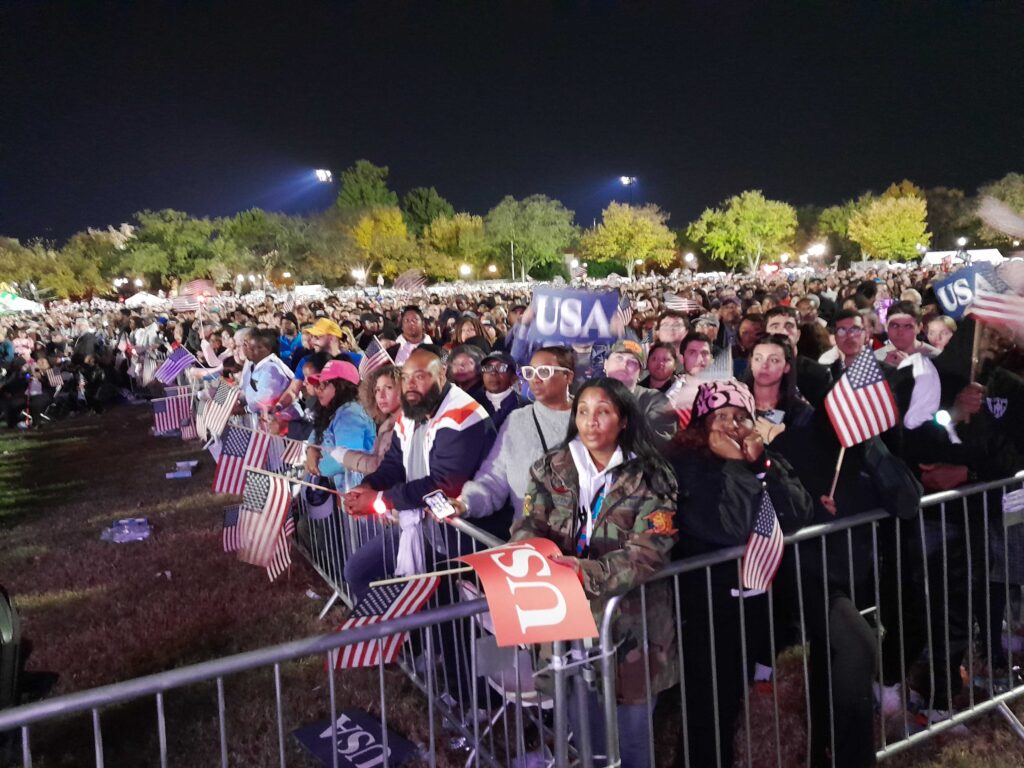
 Most of the racist diatribes at Trump’s New York City rally were not jokes. But the comments getting the most media attention —
  Nevertheless, Harris addressed the tempest in a teapot. CBS News:










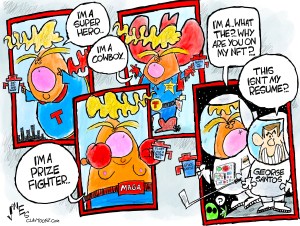 Good Day, Sky Dancers!
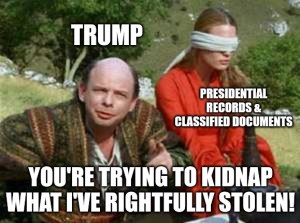 The contrast was muddied this weekend in the Sunday Shows. There’s an outline of what various Congressional Representatives said at Politico written by Eugene Daniels.
 The Washington Post has an exclusive today.
 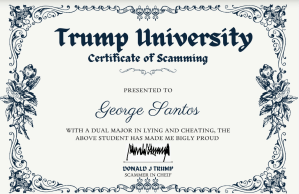 And speaking of “business dealings,” this is from DAWN. “
 Further down the Republican food chain, we have this headline by Caleb Newton writing for





 peej
peej Carissa
 bostonboomer
 dakinikat
 ecocatwoman
 mablue2
 Mama Lopez
 peggysue22
 quixote
 skydancingguestblogger
 Mona (aka Wonk the Vote)



 Sky Dancing
Recent Comments