
Mostly Monday Reads: The Word of the Day is Nescience
Posted: June 17, 2024 Filed under: Republican politics, U.S. Politics, Women's Rights | Tags: @repeat1968, gender stereotypes, John Buss, Trump rallies, Trump Voters, Undecideds, US Politics 4 Comments
“Martha-Ann Alito is single-handedly making flags great again.” John Buss, @repeat1968
Good Day, Sky Dancers!
The best thing about reading is learning new things and possibly finding a new word. I’ve always aced the university exams’ sections on vocabulary, and the Grammarly app hoisted upon me by Purdue weekly reminds me I still hang in the top users for nerdy words and tone. Don’t ask me about punctuation, though. Grammarly reminds me daily that I don’t use enough commas. So today, The Atlantic‘s Peter Wehner gave me the present of a new world. According to Meriam Webster, nescience is a noun that means a lack of knowledge or awareness. Its closest synonym is the word ignorance. I wish I had known there was a great synonym out there for the word ignorance when I was writing on all the crap coming out of the Supreme Court last week, along with the Alito lies around his wife’s red-flaggery (with apologist to A. de Blácam.)
Now for today’s example use. “The Motivated Ignorance of Trump Supporters. They can’t claim they didn’t know.”
Motivated ignorance refers to willfully blinding oneself to facts. It’s choosing not to know. In many cases, for many people, knowing the truth is simply too costly, too psychologically painful, too threatening to their core identity. Nescience is therefore incentivized; people actively decide to remain in a state of ignorance. If they are presented with strong arguments against a position they hold, or compelling evidence that disproves the narrative they embrace, they will reject them. Doing so fends off the psychological distress of the realization that they’ve been lying to themselves and to others.
Motivated ignorance is a widespread phenomenon; most people, to one degree or another, employ it. What matters is the degree to which one embraces it, and the consequences of doing so. In the case of MAGA world, the lies that Trump supporters believe, or say they believe, are obviously untrue and obviously destructive. Since 2016 there’s been a ratchet effect, each conspiracy theory getting more preposterous and more malicious. Things that Trump supporters wouldn’t believe or accept in the past have since become loyalty tests. Election denialism is one example. The claim that Trump is the target of “lawfare,” victim to the weaponization of the justice system, is another.
I have struggled to understand how to view individuals who have not just voted for Trump but who celebrate him, who don’t merely tolerate him but who constantly defend his lawlessness and undisguised cruelty. How should I think about people who, in other domains of their lives, are admirable human beings and yet provide oxygen to his malicious movement? How complicit are people who live in an epistemic hall of mirrors and have sincerely—or half-sincerely—convinced themselves they are on the side of the angels?
Throughout my career I’ve tried to resist the temptation to make unwarranted judgments about the character of people based on their political views. For one thing, it’s quite possible my views on politics are misguided or distorted, so I exercise a degree of humility in assessing the views of others. For another, I know full well that politics forms only a part of our lives, and not the most important part. People can be personally upstanding and still be wrong on politics.
But something has changed for me in the Trump era. I struggle more than I once did to wall off a person’s character from their politics when their politics is binding them to an unusually—and I would say undeniably—destructive person. The lies that MAGA world parrots are so manifestly untrue, and the Trump ethic is so manifestly cruel, that they are difficult to set aside.
If a person insists, despite the overwhelming evidence, that Trump was the target of an assassination plot hatched by Biden and carried out by the FBI, this is more than an intellectual failure; it is a moral failure, and a serious one at that. It’s only reasonable to conclude that such Trump supporters have not made a good-faith effort to understand what is really and truly happening. They are choosing to live within the lie, to invoke the words of the former Czech dissident and playwright Vaclav Havel.
One of the criteria that need to be taken into account in assessing the moral culpability of people is how absurd the lies are that they are espousing; a second is how intentionally they are avoiding evidence that exposes the lies because they are deeply invested in the lie; and a third is is how consequential the lie is.
It’s one thing to embrace a conspiracy theory that is relevant only to you and your tiny corner of the world. It’s an entirely different matter if the falsehood you’re embracing and promoting is venomous, harming others, and eroding cherished principles, promoting violence and subverting American democracy.
 This is the rant part of this long read, with plenty of examples and sources to back this up. It’s brilliant, so forgive me if it is considered an excessively long quote for ‘fair use.’ I’m also feeling better because Grammarly flagged a lot of comma mishaps in the article, which made me feel even more comfortable with its author. I’ve got the Oxford comma down and am happy about that accomplishment. Go read the backup to the rant. It’s important.
In this monolithic divided between those choosing nescience over knowledge, there’s still a group of undecideds. It’s difficult to believe. I’m using a Washington Post article today, and we’re about to see if Katherine Graham’s legacy will end shortly as some of the worst of Fleet Street do a hostile takeover. “The 2024 ‘Deciders’: Who are they and what makes them tick? Six in 10 key state voters turn out sporadically or are not firmly committed, Post-Schar poll finds.” Politics has been my blood sport of choice since Junior High School. I confess total nescience and disinterest in anything remotely sportISH. My role model was Shirley Chisholm, and I couldn’t wait to get my chance to vote.
In a nation where many voters have made up their minds, Denning and Etter are among the voters whose decisions about the presidential race are neither firmly fixed nor whose participation is wholly predictable. As a group, these voters do not exactly fit the description of being undecided. Some lean toward a specific candidate. Some even say they will definitely vote for that candidate. But age or voting history or both leave open the question of how they will vote in November — if they vote at all.
The Washington Post and the Schar School of Policy and Government at George Mason University surveyed 3,513 registered voters in the six key battleground states. The survey was completed in April and May,before a New York jury found Trump guilty on 34 counts in the hush money trial involving an adult-film actress. Of the 3,513 surveyed, 2,255 were classified as “Deciders” — those who fit into one or more categories: They voted in only one of the last two presidential elections; are between ages 18 and 25; registered to vote since 2022; did not definitely plan to vote for either Biden or Trump this year; or switched their support between 2016 and 2020.
They are also classified as Deciders because they will have enormous influence in determining the winner of what are expected to be another round of close contests in the battleground states.
In 2020, a shift of about 43,000 votes from Biden to Trump in Arizona, Georgia and Wisconsin would have changed the outcome. As a result, it is common to see suggestions that the 2024 presidential election will not only be decided by just six states but by a relatively few voters in those states. While it is broadly true that a fraction of the total electorate will decide the election, the universe of voters whose behavior is not truly predictable is fairly large. By the definitions used in this survey, 61 percent of voters in those six states can be called Deciders. That includes 33 percent who are sporadic voters and 44 percent who are uncommitted to Biden or Trump, with 17 percent fitting both of these categories.
 This article in the Independent shows how amazing science can be. It also gives us a window into the concept of gender. “Woman who is ’95 per cent genetically male’ gives birth to twins. Woman had no ovaries and 95% male genes, but was fertilised using IVF.”
A woman who is “genetically male” has had twins, after three years of pioneering treatment.
The new mother looks like a woman, but has 95% male chromosomes.
Though she has no ovaries and has never menstruated, doctors in India were able to help the woman conceive and give birth to the children through treatment that helped develop her uterus, which was described as infantile.
“This is something similar to a male delivering twins,” Sunil Jindal, the infertility specialist who administered the treatment, told the Times of India.
The woman herself did not know she had the condition, according to Sky News. She was “flabbergasted” when she was told but her husband was supportive.
The mother’s condition is known as XY gonadal dysgenesis. That means that the woman has external female characteristics, but doesn’t have functional gonads or ovaries. Those organs are usually necessary for reproduction, helping to create the eggs from which babies will grow.
Instead, doctors developed embryos using a donor egg and then placed that in the uterus, after it had been treated. That allowed the woman to become pregnant.
Doctors then had to help the woman carry the pregnancy “in a body not designed for it”, as Anshu Jindal, medical director at the hospital that delivered the babies, described it to the Times of India.
The two babies, one boy and one girl, were delivered through caesarean section.
There have only been four or five cases where women with this condition have been able to give birth, according to experts. Even in women without the condition, assisted reproduction has a success rate of about 35%-40%.
 I can only imagine what Alito and Thomas would make of a court case brought up by some fetus fetishist judge in nowhere Texas. So, there appears to be a bit of a rebellion in the news department of The Washington Post over its new overlords from across the pond. “Incoming Post editor tied to self-described ‘thief’ who claimed role in his reporting. Unpublished book drafts and other documents raise questions about Robert Winnett’s journalistic record just months before he is to assume a top newsroom role.”
The alleged offense was trying to steal a soon-to-be-released copy of former prime minister Tony Blair’s memoir.
The suspect arrested by London police in 2010 was John Ford, a once-aspiring actor who has since admitted to an extensive career using deception and illegal means to obtain confidential information for Britain’s Sunday Times newspaper. Facing potential prosecution, Ford called a journalist he said he had collaborated with repeatedly — and trusted to come to his rescue.
Winnett moved quickly to connect Ford with a lawyer, discussed obtaining an untraceable phone for future communications and reassured Ford that the “remarkable omerta” of British journalism would ensure his clandestine efforts would never come to light, according to draft chapters Ford wrote in 2017 and 2018 that were shared with The Post
That journalist, according to draft book chapters Ford later wrote recounting his ordeal, was Robert Winnett, a Sunday Times veteran who is set to become editor of The Washington Post later this year.
Winnett, currently a deputy editor of the Telegraph, did not respond to a detailed list of questions. Ford, who previously declined to be interviewed, did not respond to questions about the draft book chapters.
Winnett is now poised to take over the top editorial position in The Post’s core newsroom, scheduled to start after the November U.S. presidential election. He was appointed by Post CEO and Publisher William Lewis, who has mentored Winnett and worked with him at two British papers. Lewis is also mentioned in Ford’s draft chapters.
 NPR’s David Folkenflik had an interesting take on this information, linking it to Rupert Murdoch. “New ‘Washington Post’ chiefs can’t shake their past in London.” BB pointed me to this story last night.
A vast chasm divides common practices in the fiercely competitive confines of British journalism, where Lewis and Winnett made their mark, and what passes muster in the American news media. In several instances, their alleged conduct would raise red flags at major U.S. outlets, including The Washington Post.
Among the episodes: a six-figure payment for a major scoop; planting a junior reporter in a government job to secure secret documents; and relying on a private investigator who used subterfuge to secure private documents from their computers and phones. The investigator was later arrested.
On Saturday evening, The New York Times disclosed a specific instance in which a former reporter implicated both Lewis and Winnett in reporting that he believed relied on documents that were fraudulently obtained by a private investigator.
Lewis did not respond to detailed and repeated requests for comment from NPR for this article. Winnett also did not reply to specific queries sent directly to him and through the Telegraph Media Group.
The stakes are high. Post journalists ask what values Lewis and Winnett will import to the paper, renowned for its coverage of the Nixon-era Watergate scandals and for holding the most powerful figures in American life to account in the generations since.
“U.K. journalism often operates at a faster pace and it plays more fast and loose around the edges,” says Emily Bell, former media reporter and director of digital content for the British daily The Guardian.
Allegations in court that Lewis sought to cover up a wide-ranging phone hacking scandal more than a dozen years ago at Rupert Murdoch’s British newspapers are proving to be a flashpoint for the new Post publisher.
On at least four occasions since being named to lead the Post last fall, Lewis tried to head off unwelcome scrutiny from Post journalists — and from NPR.
In December, before he started the job, Lewis intensely pressured me not to report on the accusations, which arose in British suits against Murdoch’s newspapers in the U.K. He also repeatedly offered me an exclusive interview on his business plans for the Post if I dropped the story. I did not. The ensuing NPR piece offered the first detailed reports on new material underlying allegations from Prince Harry and others.
Immediately after that article ran, Lewis told then-Executive Editor Sally Buzbee it was not newsworthy and that her teams should not follow it, according to a person with contemporaneous knowledge. That intervention is being reported here for the first time. The Post did not run a story.
Lewis has denied the hacking coverup claims and is not a defendant in the lawsuits. Nor is he being criminally prosecuted. Lewis has said he acted to ensure people who were hacked by Murdoch’s papers were compensated.
As previously reported, on separate occasions in March and May, Lewis angrily pressured Buzbee to ignore the story as further developments unfolded in court.
 You may read more salacious details at the link. One more article about nescience. This one is from Amanda Marcotte, who writes at Salon. “A tradwife drops a racist slur: Why the right’s trolling economy made Lilly Gaddis’ rise inevitable. Cashing in as a “cancel culture” martyr is getting harder, so attention addicts have to get more extreme.”
Let’s stipulate up front that it is theoretically possible that Lilly Gaddis, wannabe “tradwife” influencer, did not realize what she was doing when she used the n-word in a recent cooking TikTok. Her defenders, far more numerous now than in her more anonymous past, offer an “innocence by ignorance” excuse. But even not knowing the story, you’d be right to be skeptical. After all, she didn’t just let the word slip — she filmed, edited, and posted the content online. If you actually watch the clip that has gone viral, it becomes even harder to ignore the likelihood that it was a deliberate word choice
In the video, Gaddis is decked out in the standard tradwife gear of a cleavage-baring sundress and a cross necklace to justify the sexualized marketing. She is vaguely arranging food while providing a rant tailor-made to tickle the reactionary male brain. She accuses immigrants and Black women of being “gold-diggers,” while insisting Christian white girls like herself will love you, pathetic male viewer, solely for your masculine might, even if you are “broke.” She is going for maximum shock value, dropping not just the n-word, but other five-dollar curses that are clearly meant to to offer a transgressive thrill, coming from a young woman playing at being a more scantily clad June Cleaver.
But just in case there was any lingering doubt that this was a deliberate play for attention, Gaddis soon confirmed it in a tweet responding to the outrage: “Thanks black community for helping to launch my new career in conservative media! You all played your role well like the puppets you are.”
This wannabe Christian influencer is so obviously out for attention, so it’s tempting to ignore this story in hopes of not letting her have it. Still, Gaddis is an important illustration of the vicious cycle of greed and far-right radicalism driven by the social media ecosystem. The field of strivers wishing to be America’s next top troll is growing faster than can be maintained by the existing audience of incels, white supremacists and other miscreants radicalized online. Becoming the next big thing means attracting the coin of the authoritarian realm: liberal outrage. Yet as liberals get numb to the constant barrage of fascist provocation, the trolls have no choice but to up the ante. So this is how we get a woman in an apron pretending to cook on TikTok while dropping the most notorious of racial slurs.
I think I have done enough damage today. Fortunately, we’ve had a few days of rain and clouds, so the heat is off its highs from the 90s. Unfortunately, the humidity is oppressive. Thank goodness for long, billowy, cotton sun dresses. I hope you have a good week. BTW, “Trump challenges Biden to cognitive test, but confuses name of doctor who tested him.” This happened last night. Donnie Demento is just getting worse and worse with every rally.
What’s on your reading and blogging list today?
Friday Reads: Madly Truly Deeply Deplorable
Posted: October 7, 2016 Filed under: 2016 elections, morning reads, U.S. Economy, Voter Ignorance | Tags: basket of deplorables, illiteracy, Trump Voters, undereducated, White Working Class men and women 41 Comments Good Morning Sky Dancers!
I found a series of reads this week on what makes Donald Trump supporters tick. It’s an interesting combination of things that dives into the deplorables. The primary focus of these studies are white, uneducated working class men along with a few women because the main demographics of Trump Voters are old, white, and not well-educated. There’s even one article with some tie in with similar right wing white angst movements in place like the UK and Scandinavia where white right wingers are getting increasingly xenophobic and sounding a lot more like their authoritarian counterparts from the 1930s. I thought I’d highlight a few of these pieces today.
Don’t think these articles and writers heap wicked judgement. Many of these reads are conciliatory and sympathetic. Like us, they are just trying to get it figured out. The pictures today are of damage done by the still threatening Hurricane Matthew when it caused death and destruction in Haiti. Tumult rules our current time line.
Project Syndicate has two interesting pieces up. The first is by Dr. Ian Buruma and is called “Trump’s Deplorables.”
The Trump supporters are showing a similar animus against symbols of the elite, such as Wall Street bankers, “mainstream” media, and Washington insiders. But their xenophobia is directed against poor Mexican immigrants, blacks, or Middle Eastern refugees, who are perceived as freeloaders depriving honest (read white) Americans of their rightful place in the social pecking order. It is a question of relatively underprivileged people in a globalizing, increasingly multi-cultural world, resenting those who are even less privileged.
In the US today, as in the Weimar Republic, the resentful and the fearful have so little trust in prevailing political and economic institutions that they follow a leader who promises maximum disruption. By cleaning out the stables, it is hoped, greatness will return. In Hitler’s Germany, this hope existed among all classes, whether elite or plebeian. In Trump’s America, it thrives mostly among the latter.
In the US and Europe, today’s world looks less scary to more affluent and better educated voters, who benefit from open borders, cheap migrant labor, information technology, and a rich mixture of cultural influences. Likewise, immigrants and ethnic minorities who seek to improve their lot have no interest in joining a populist rebellion directed mainly against them, which is why they will vote for Clinton.
Trump must thus rely on disaffected white Americans who feel that they are being left behind. The fact that enough people feel that way to sustain such an unsuitable presidential candidate is an indictment of US society. This does have something to do with education – not because well-educated people are immune to demagogy, but because a broken education system leaves too many people at a disadvantage.
 The second must-read is by Professor Joseph Nye who puts the populist revolt into perspective and into its “place”.
In the US, polls show that Trump’s supporters are skewed toward older, less-educated white males. Young people, women, and minorities are under-represented in his coalition. More than 40% of the electorate backs Trump, but with low unemployment nationally, only a small part of that can be explained primarily by his support in economically depressed areas.
On the contrary, in America, too, there is more to the resurgence of populism than just economics. AYouGov poll commissioned by The Economist found strong racial resentment among supporters of Trump, whose use of the “birther” issue (questioning the validity of the birth certificate of Barack Obama, America’s first black president) helped put him on the path to his current campaign. And opposition to immigration, including the idea of building a wall and making Mexico pay for it, was an early plank in his nativist platform.
And yet a recent Pew survey shows growing pro-immigrant sentiment in the US, with 51% of adults saying that newcomers strengthen the country, while 41% believe they are a burden, down from 50% in mid-2010, when the effects of the Great Recession were still acutely felt. In Europe, by contrast, sudden large influxes of political and economic refugees from the Middle East and Africa have had stronger political effects, with many experts speculating that Brexit was more about migration to Britain than about bureaucracy in Brussels.
Antipathy toward elites can be caused by both economic and cultural resentments. The New York Times identified a major indicator of Trump-leaning districts: a white-majority working-class population whose livelihoods had been negatively affected throughout the decades in which the US economy shed manufacturing capacity. But even if there had been no economic globalization, cultural and demographic change would have created some degree of populism.
But it is an overstatement to say that the 2016 election highlights an isolationist trend that will end the era of globalization. Instead, policy elites who support globalization and an open economy will have to be seen to be addressing economic inequality and adjustment assistance for those disrupted by change. Policies that stimulate growth, such as infrastructure investment, will also be important.
Writers for the Canadian Newspaper The Globe and Mail believe that Trump will lose but that his coalition of voter will continue to vex U.S. “elites”.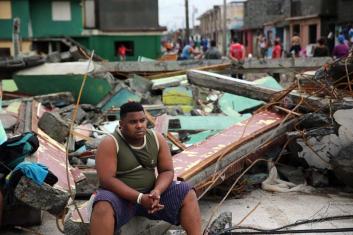
The accommodation between left and right started unravelling in the 1980s. The Bork confirmation. The Thomas confirmation. Contract with America. Impeaching Bill Clinton. Iraq. Obama. The Tea Party. Gay marriage. And now the Democrats want to replace a black president with a woman? A CLINTON?
Meanwhile, Peoria is hurting. The city is home to Caterpillar. But the heavy-equipment giant has outsourced most of its work force overseas or to so-called right-to-work states.
But what does Washington care? The left worries more about combatting global warming than about blue-collar workers with bad backs and no jobs. The right promises to retrain them, but somehow never gets around to it.
The laid-off boys in the bars of Peoria blame the illegals, the only ones even more voiceless than themselves. They seethe at the Wall Street suits who destroyed the economy and got off scot-free. And what the hell is transgender, anyway? They look at their daughter’s report card. She’s only getting Cs. What future is there for anyone who’s only getting Cs?
I will be your voice, Donald Trump promises. I will get your job back, or at least wreak revenge on the company that gave it away to a guy in Bangladesh. I will send the Mexicans back and keep the Muslims out and build a wall around our country. And you’ll have a man, a real man, a white man, your kind of guy, in the White House. We’ll be back in charge, folks, you and me. It’ll be great again. And they’ll never take it away from us.
There are probably enough people left who understand that this is a lie to keep Donald Trump from becoming president. But this is last-chance time. And not just for America, for all of us.
The rage that created Donald Trump voted for Brexit and is wreaking havoc on the continent. It’s Marine Le Pen in France and Norbert Hofer in Austria. It’s the Law and Justice party in Poland and Jobbik in Hungary and Alternative for Germany.
Don’t be smug. In politics, Canada is often the United States, only five years behind. We must heal this breach. It’s getting serious, now. The next Congress and the next U.S. administration must reach out to each other. They don’t have to get all kumbaya about it, but Americans of all persuasions can surely find ways to bring hope to Middle America, to working white America, to the old America that must never be dismissed, even if it is on the wane.
There were several articles that actually focused on individual Trump voters and the kinds of lives they lead. We’ve posted some of them down thread but I thought I’d excerpt and repost them  here since we really need to read about these folk and understand that they hate us. Sociologist ARLIE RUSSELL HOCHSCHILD wrote an incredible long form peace for Mother Jones. What struck me about the woman Sharon she followed as she lived life in Lake Charles, Lousiana is that Sharon doesn’t seem to realize she’s a parasite. She makes living basically selling scammy insurance products to poor working class men that really can’t afford them and in a different state with better worker protections, wouldn’t even be necessary. Yet, these folks do not seem to think about blaming the real causes of their life’s distress
“Hey Miss Sharon, how ya’ doin’?” A fiftysomething man I’ll call Albert led us through the warehouse, where sheet metal had been laid out on large tables. “Want to come over Saturday, help us make sausage?” he called over the eeeeech of an unseen electrical saw. “I’m seasoning it different this year.” The year before, Sharon had taken her 11-year-old daughter along to help stuff the spicy smoked-pork-and-rice sausage, to which Albert added ground deer meat. “I’ll bring Alyson,” Sharon said, referring to her daughter. Some days they’d have 400 pounds of deer meat and offer her some. “They’re really good to me. And I’m there for them too when they need something.”
These men had little shelter from bad news. “If you die, who’s going to bury you?” Sharon would ask on such calls. “Do you have $10,000 sitting around? Will your parents have to borrow money to bury you or your wife or girlfriend? For $1.44 a week, you get $20,000 of life insurance.”
Louisiana is the country’s third-poorest state; 1 in 5 residents live in poverty. It ranks third in the proportion of residents who go hungry each year, and dead last in overall health. A quarter of the state’s students drop out from high school or don’t graduate on time. Partly as a result, Louisiana leads the nation in its proportion of “disconnected youth“—20 percent of 16- to 24-year-olds in 2013 were neither in school nor at work. (Nationally, the figure is 14 percent.) Only 6 percent of Louisiana workers are members of labor unions, about half the rate nationwide.
Louisiana is also home to vast pollution, especially along Cancer Alley, the 85-mile strip along the lower Mississippi between Baton Rouge and New Orleans, with some 150 industrial plants where once there were sugar and cotton plantations. According to the American Cancer Society, Louisiana had the nation’s second-highest incidence of cancer for men and the fifth-highest rate of male deaths from cancer. “When I make a presentation, if I say, ‘How many of you know someone that has had cancer?’ every hand is going to go up. Just the other day I was in Lafayette doing my enrollments for the insurance, and I was talking to this one guy. And he said, ‘My brother-in-law just died. He was 29 or 30.’ He’s the third person working for his company that’s been in their early 30s that’s died of cancer in the last three years. I file tons and tons of cancer claims.”
Sharon also faced economic uncertainty. A divorced mother of two, she supported herself and two children on an ample but erratic income, all from commission on her Aflac sales. “If you’re starting out, you might get 99 ‘noes’ for every one ‘yes.’ After 16 years on the job, I get 50 percent ‘yeses.'” This put her at the top among Aflac salespeople; still, she added, “If it’s a slow month, we eat peanut butter.”
 There’s an interview with the author up at Democracy Now! that looks into what drive Trump supporters. Hers is just one book trying to figure out what’s going on with this segment of America.
JUAN GONZÁLEZ: Well, after all of those interviews in that time span, you decided on the title Strangers in Their Own Land. Why?
ARLIE RUSSELL HOCHSCHILD: Yes. Well, here’s the thing. I decided on that title because, in the end, it described how a lot of them felt. I talk about a deep story, because, at the end of the day, I keep asking, “Why do you hate the government, you know, all the things the government does?” And they would say—there were many answers to that, but one was this. It was the deep story. What is a deep story? It’s a story that feels true to you. You take the facts out, you take judgment out. It’s as felt.
You’re on a—waiting in line for something you really want at the end: the American dream. You feel a sense of great deserving. You’ve worked very hard. A lot of these guys were plant workers, pipefitters in the petrochemical—you know, it’s tough work. So you’ve worked really hard. And the line isn’t moving. It’s like a pilgrimage up, up to the top. It’s not moving.
Then you see some people cut in line. Well, who were they? They are affirmative action women who would go for formerly all-men’s jobs, or affirmative action blacks who have been sponsored and now have access to formerly all-white jobs. It’s immigrants. It’s refugees. And from—as felt, the line’s moving back.
Then they see Barack Hussein Obama, who should impartially be monitoring the line, wave to the line cutters. And then you think, “Oh, he’s their president and not mine. And, in fact, he’s a line cutter. How did he get to Harvard? How did he get to Columbia? Where did he get the money? His mom was a single mom. Wait a minute.”
And then they begin to feel like strangers in their own land. They feel like the government has become a giant marginalization machine. It’s not theirs. In fact, it’s putting them back. And then someone in front of the line turns around and says, “Oh, you redneck,” you know. And that feels insult to injury. It’s just the tipping point at which they feel not only estranged—I mean, demographically they’re getting smaller. They feel like they’re religious in an increasingly secular culture. Their attitudes are denigrated, and so they’re culturally denigrated. And then the economy begins to shake. And then they feel, “I need another leader.”

TOPSHOT – A woman walks on October 5, 2016 along a coastal road between Guantanamo and Baracoa which was left covered in rocks and severely damaged after the passage of Hurricane Matthew through the eastern tip of Cuba on Tuesday afternoon.
Hurricane Matthew, the Caribbean’s worst storm in nearly a decade, barreled towards the Bahamas Wednesday morning after killing nine people and pummeling Haiti and Cuba. / AFP / Yamil LAGE (Photo credit should read YAMIL LAGE/AFP/Getty Images)
Two other articles that are worth reading, if you haven’t done so yet, are one from The Guardian which takes a more global perspective and one that’s very specific from WAPO. The WAPO features a woman who finds that Trump thinks like her. We’ve discussed it a little here this week. It seems like a very close look at some one grappling with mental illness which made me uncomfortable. I’m excerpting here from The Guardian piece which focuses on the link between education and Trump/Right Alt voting.
But it is not simply a question of demographics. The gap has been amplified by certain forms of social mobility, which have reinforced the education divide by enabling the better-educated to start congregating together: socially, geographically, romantically. In a previous generation, graduates often married non-graduates, because their choices tended to be driven by where they happened to live or work. As the cliché has it: bosses used to marry their secretaries. Not any more, and not just because there are fewer secretaries. If you went to university, ask yourself: how many of your friends didn’t go to university? And among your friends, how many of those who did are married to people who didn’t? Greater freedom of movement produces greater freedom of choice. But that does not produce more social diversity, it produces more social stratification.
Social media now enhances these patterns. Friendship groups of like-minded individuals reinforce each other’s worldviews. Facebook’s news feed is designed to deliver information that users are more inclined to “like”. Much of the shock that followed the Brexit result in educated circles came from the fact that few people had been exposed to arguments that did not match their preferences. Education does not provide any protection against these social media effects. It reinforces them.
The growing political divide between the educated and the less educated can be seen across Europe. It is most pronounced in Scandinavian countries, where university attendance is high and levels of education are an increasing driver of voting habits. It is less visible in southern and eastern Europe – in places such as Portugal and Poland – where participation in higher education is lower, and other social factors, including family and religion, still exert a strong grip.
I’m closing today with a great article written by Joy-Ann Reid who dissects Donald’s focused hatred towards women. She argues that Trump hates women more than any other group he debases.
Even without the euphoria of “yes we can,” Hillary Clinton is to white women what Barack Obama was to African-Americans. She represents the opportunity to see a like image in the Oval Office for the first time. That has to be tempting even for Republican women who would never support a Democrat, let alone a Clinton, and Trump’s demeanor and debate performance is making it easier for white independent and even Republican women to cross over.
And Trump is uniquely vulnerable because his record of insulting and demeaning women is as long as his love of Putin’s Russia is deep. According to the documentary Trump: What’s the Deal, he verbally harassed first wife Ivana, before dumping her for Marla Maples, whom he resisted marrying in a most public and embarrassing way, only to dump her and marry Melania before reportedly berating her for not losing her baby weight fast enough after giving birth to their now-10-year-old son Baron. The most effective Clinton ads this season have been the ones showing women and girls listening to Trump’s cruel words in his own voice.
Trump is at further risk due to his almost limbic inability to control himself when attacked, particularly by a woman. Consider that there’s no one who gets under his thin skin the way Elizabeth Warren does. She and New York Times columnist Maureen Dowd have shared the sobriquet “goofy” as stars of Trump’s infamous Twitter tirades—though Warren has the smear “Pocahontas” all to herself.
During the campaign, Trump has gone after white women, Latinas (Machado and Susana Martinez, the governor of Mexico), Asian-American and Muslim women (Gold Star Mother Ghazala Khan). His Fox News chest thumping at a black Flint, Michigan pastor, Faith Green Timmons, came a day after he sheepishly backed down when she stopped him from politicking in her pulpit. Interestingly, he has yet to have a go at Michelle Obama, who just cut a national ad for Hillary Clinton. One can only imagine how that might go.
We frequently discuss how being around the TV when Pence or Trump or any one of his supporters is speaking out is a lot like reliving the trauma of an abusive relationship. They give me PTSD flashbacks from every emotionally abusive person I’ve ever met. They are angry, hostile, and use the language of attack. We are their enemy. They label us hateful names. We women. We African Americans. We of Mexican and Latin descent. We who practice something other than the right brand of Christianity. Yet, it is they who feel under attack and not given their due. As the Canadian writers said, these folk have such palpable emotional turmoil that they are not likely going away with the Trump candidacy. They are also firmly seated in the Republican Party Grassroots.
I like that we’re beginning to understand and see more of these folks even though I frankly approach each article with wide open eyes and a dropping mouth. We don’t exist in the same narrow space. We exist at odds and at an arm’s length. We talk past and at each other. We don’t get each other’s lives or choices at all.
Something here has to change.
What’s on your reading and blogging list today?

 peej
peej Carissa
 bostonboomer
 dakinikat
 ecocatwoman
 mablue2
 Mama Lopez
 peggysue22
 quixote
 skydancingguestblogger
 Mona (aka Wonk the Vote)



 Sky Dancing
Recent Comments