Yesterday, Dakinikat wrote about Trump’s crypto dinner, where he briefly spoke to the people who had spent the most on his personal memecoin. The “gala dinner” was held at Trump’s Virginia golf club. The attendees–mostly from foreign countries–had spent their money hoping to gain “access” to Trump, but that didn’t happen, at least at this event. Trump showed up on a “military helicopter,” spoke for less than half and hour and then did his YMCA dance. Then he left again without speaking to anyone personally. And the food was terrible.
Donald Trump left the stage at his golf club near Washington, DC, on Thursday night, he pointed to the crowd, brought his index finger to his temple—as if to say: You know what’s coming—then began to dance. To the beat of “Y.M.C.A” by The Village People, Trump shimmied, gyrated, and pumped his arms above his head.
Looking on were more than 200 people who had been invited to the Trump National Golf Club for a private gala dinner. They had won their seats by purchasing large quantities of Trump’s own crypto coin—TRUMP—some holding millions of dollars’ worth….
By late afternoon, the dinner guests had started to filter through the gates of the golf club. By comparison to Trump’s previous banquets, thronging with DC insiders and members of the Silicon Valley elite, the crypto dinner attracted a mismatched collection of oddballs: independent traders rubbed shoulders with crypto executives, die-hard Trump fans, and even professional sports stars—former NBA player Lamar Odom towered overhead. A handful wore bowties in Bitcoin orange; others sported gold Trump sneakers.
Just after 7 pm, the dinner guests gathered at the window to watch Trump descend in Marine One, his presidential helicopter. A short while later, he appeared from behind a blue velvet curtain to whoops and applause from the crowd. Had they seen the helicopter, Trump asked. “Yeah, super cool!” somebody yelled….
From behind a lectern at one end of the dining room, backdropped by four US flags, Trump delivered a characteristically winding and digressive speech that sources say lasted around 25 minutes. At some point, he got round to crypto.
“We’ve got some of the smartest minds anywhere in the world right here in this room,” said Trump. “You believe in the whole crypto thing. A lot of people are starting to believe in it … This is really something that may be special—who knows, right? Who knows—but it may be special.”
“You don’t get to meet the president easily,” Vincent Liu, chief investment officer at trading firm Kronos Research, told WIRED a few days before the dinner. “To be able to hear his message on crypto directly—I’m definitely looking forward to that.”
Woodblock print from Tsukioka Yoshitoshi’s series One Hundred Aspects of the Moon (1885-1892)
No one got to meet the president, but I Wired says they also wanted to network with each other. On the general presentation and the food, served at circular tables
…each seating 10 people arrayed beneath a set of crystal chandeliers. Waiting on the chairs were gift bags containing Fight Fight Fight-themed hats and posters, and a collectible plastic card (some allege that they didn’t receive merch at their seats.) The four largest coin holders—along with two other attendees selected by raffle, sources say—received a gem-encrusted Trump gold watch.
Between mouthfuls, the attendees discussed trading and investment strategies—and Trump’s speech. “To feel his personal charisma to me was very inspiring,” says Liu. But others complained about the brevity of Trump’s appearance: After his speech, Trump had departed immediately in a golf cart bound for his helicopter. “Trump could have at least given the top people their watches himself,” says Pinto. “He didn’t.”
The food itself had left a bitter taste in the mouth, too. “It was the worst food I’ve ever had at a Trump golf course,” says Pinto, who added he left hungry. “The only good thing was bread and butter.” Another attendee described the meal as “OK, but not top-class.”
Donald Trump’s controversial memecoin dinner Thursday night was shrouded in secrecy, and while it still isn’t clear who all attended — the White House did not make the list public — we do have a report of how good the food was….
According to Fortune, 25-year-old Nicholas Pinto was one of those who attended. The site said he invested “more than $360,000 in Trump’s memecoin.
And for that, he told the site, the dinner that was served was “trash.”
“Walmart steak, man,” he texted Fortune.
The site said the menu for the included a “Trump organic field green salad” and an “entrée duet” of filet mignon and pan-seared halibut.
“Everybody at my table was saying the food was so of the worst they ever had,” Pinto said.
“I was hoping for Big Macs or pizza,” Pinto told Fortune. “That would have been better than the food that we were served.”
Trump is just raking in the dough as quickly as he can with the minimum effort.
The invitees for President Trump’s private dinner for customers of his cryptocurrency business on Thursday included a Chinese billionaire fighting a lawsuit from U.S. regulators, a lawyer for Justice Clarence Thomas and a former basketball star, according to a guest list obtained by The New York Times and social media posts.
The dinner, at which Mr. Trump gave remarks, was an extraordinary moment in which the president leveraged his position to make money — for his crypto business and for his Virginia golf club, which hosted the event.
The event’s invited guests were not known publicly beforehand, even to each other. They were identified only by the pseudonyms they used on the electronic wallets where they kept their $TRUMP memecoins. Most had gained an invitation by becoming one of the top 220 holders of that memecoin over a certain period of time. The top 25 of those were given V.I.P. status and afforded a more intimate gathering before the dinner and an unofficial tour of the White House on Friday.
When they arrived at Mr. Trump’s club outside Washington Thursday evening, the digital world had become physical. The invitees’ names and contact information were delineated on paper lists, checked by staffers at the door. A Times reporter reviewed one of those lists, and used it to identify people who were present. Some other invitees self-identified on social media. A reporter and photographer from The Times also saw some $TRUMP crypto buyers enter and exit the White House on Friday.
Merchant’s Daughter by Mizuno Toshikata
Some top invitees:
Justin Sun, a Chinese crypto billionaire who was sued by the Securities and Exchange Commission under President Joseph R. Biden Jr. for allegedly inflating the value of a cryptocurrency. Mr. Sun is a major investor in a separate crypto venture largely owned by a company tied to Mr. Trump, World Liberty Financial. After Mr. Trump took office, the S.E.C. asked a judge to put Mr. Sun’s case on hold….
Elliot Berke, a Washington attorney who has worked for congressional Republicans and Justice Clarence Thomas of the Supreme Court. The Times identified him because the invitee list included his email address at his law firm, Berke Farah. He was honored as “Republican Lawyer of the Year” in 2021 by the Republican National Lawyers Association….
Evgeny Gaevoy, the founder and chief executive of a digital-asset firm, Wintermute. The Times identified him because the list of invitees included his Wintermute email….
Anil Lulla and Yan Liberman, two co-founders of Delphi Digital, a Miami Beach firm that offers market intelligence for crypto investors. Their corporate emails were included in the list of invitees….
Cheng Lu, 32, a crypto investor from Shanghai, was observed by a Times reporter entering the White House on Friday. He said he did not have a chance to speak with Mr. Trump during the dinner on Thursday or at the Friday tour. “I just want to see President Trump,” he said.
Several more are listed at the NYT link.
Another big story today is Trump’s terrifying persecution of Harvard University. Here’s the latest:
The Trump Administration has frozen billions in federal grants to Harvard University, threatened its tax-exempt status, and sought to dictate its curriculum and hiring. Now the government seems bent on destroying the school for the offense of fighting back. And for what purpose?
That’s how we read the Department of Homeland Security’s move Thursday to bar foreign students from attending the world-renowned institution. That’s 6,800 students, or a quarter of Harvard’s student body, whose futures are suddenly in disarray. It’s also a short-sighted attack on one of America’s great competitive strengths: Its ability to attract the world’s best and brightest.
The latest assault began when DHS demanded that Harvard turn over sundry records on its foreign students, including whether any had participated in illegal activity or left the university owing to “dangerous or violent activity or deprivation of rights.”
Some of its record requests are reasonable, but some overreached by requiring private student information. DHS also gave Harvard all of two weeks to respond. If it failed to do so, DHS Secretary Kristi Noem said she would “automatically withdraw” the school’s certification in the Student and Exchange Visitor Program. “The withdrawal will not be subject to appeal.”
The SEVP program lets non-citizens enroll at universities on student visas. DHS can bar universities from the program if they fail to comply with “recordkeeping, retention, reporting and other requirements” on foreign students. Harvard says it responded with “information required by law” within two weeks and handed over more records on May 14.
Twin Guardians, by Hawse Sumi
That didn’t satisfy Noem and she banned Harvard from enrolling international students. Harvard soon got a restraining order from a federal court.
Most of Harvard’s foreign students are enrolled in graduate programs. Many assist with scientific research and teaching undergraduate courses. Driving them out of Harvard will disrupt research projects and might cause some professors in the sciences to leave for other universities. This seems to be a goal of freezing Harvard’s research grants.
Harvard sued on Friday, and a federal judge issued a temporary restraining order against the student ban. The university rightly says the Administration’s actions are “clear retaliation for Harvard exercising its First Amendment rights to reject the government’s demands to control Harvard’s governance, curriculum, and the ‘ideology’ of its faculty and students.”
The university seems likely to prevail on the law, but until courts settle the merits, thousands of students who have done nothing wrong will be in legal limbo. Some of them no doubt opposed the anti-Israel protests and may even hail from Israel. Why punish them? [….]
This will be terribly damaging to America’s ability to attract talented young people who bring their enterprise and intellectual capital to the U.S. Non-citizens accounted for more than half of doctoral degrees in AI-related fields in 2022. Many have gone to work at U.S. companies like Nvidia or started their own.
Clearly Trump hates Harvard, higher education, and education generally. But I’m coming to the conclusion that Trump’s goal is to destroy the U.S. in every possible way and at the same time enrich himself and his wealthy friends. He doesn’t even appear to care about the economy anymore. He wants Americans to be poor, ignorant, and isolated from the rest of the world.
The Trump administration’s surprising bid to end Harvard’s international enrollment put the higher education world on edge this week, looming as a larger threat against academic autonomy.
Well beyond the halls of Harvard this week, college leaders were shocked that one swift move by the federal government could eliminate their ability to serve students from abroad, a growing population that has infused their campuses with cachet and wealth.
“This is a grave moment,” Sally Kornbluth, the president of the Massachusetts Institute of Technology, wrote in a message to her campus.
More than 5,000 miles away, Wendy Hensel, the president of the University of Hawaii, said that it was “reverberating across higher education.”
President Trump has already unnerved universities this year by launching investigations, freezing grants, demanding changes in campus practices and attempting to deport international students. He has justified his punitive approach as a means to combat what he considers antisemitism. But he and his allies also have long resented a perceived liberal bias and racial diversity efforts at prestigious colleges.
The Trump administration said Thursday that it revoked Harvard’s international student certification because the university had failed to meet its demands, including a request for records of student protest activity dating back five years.
To many academics, that was a clear signal that Mr. Trump was prepared to use any federal mechanism as leverage if he did not get what he wants.
“While Harvard is the victim of the moment, it’s a warning and unprecedented attempt of a hostile federal government to erode the autonomy of all major universities in the U.S.,” said John Aubrey Douglass, a senior research fellow at the Center for Studies in Higher Education at the University of California, Berkeley.
Yesterday, Trump and Marco Rubio began dismantling the National Security Council.
The Trump administration has put more than 100 officials at the National Security Council at the White House on administrative leave on Friday as part of a restructuring under interim national security adviser and Secretary of State Marco Rubio, according to two US officials and another source familiar with the matter.
Woman and cat, by Toyohara Kunichika
CNN previously reported that a significant overhaul of the body in charge of coordinating the president’s foreign policy agenda was expected in the coming days, including a staff reduction and a reinforced top-down approach with decision-making concentrated at the highest levels.
An email from NSC chief of staff Brian McCormack went out around 4:20 p.m. informing those being dismissed they’d have 30 minutes to clean out their desks, according to an administration official. If they weren’t on campus, the email read, they could email an address and arrange a time to retrieve their stuff later and turn in devices.
The email subject line read: “Your return to home agency,” indicating that most of those affected were detailed to the NSC from other departments and agencies….
With this happening on a Friday afternoon before a long holiday weekend, the official called it “as unprofessional and reckless as could possibly be.”
Those put on leave include career officials, as well as political hires made during the Trump administration….
Staffed by foreign policy experts from across the US government, the NSC typically serves as a critical body for coordinating the president’s foreign policy agenda.
But under President Donald Trump, the NSC’s role has been diminished, with the overhaul expected to further reduce its importance in the White House.
President Trump and Secretary of State Marco Rubio have orchestrated a vast restructuring of the National Security Council, reducing its size and transferring many of its powers to the State and Defense departments.
Why it matters: Trump’s White House sees the NSC as notoriously bureaucratic and filled with longtime officials who don’t share the president’s vision.
A White House official involved in the planning characterized the reorganization as Trump and Rubio’s latest move against what they see as Washington’s “Deep State.”
“The NSC is the ultimate Deep State. It’s Marco vs. the Deep State. We’re gutting the Deep State,” the official said of the move, which will cut the NSC staff to about half of its current 350 members. Those cut from the NSC will be moved to other positions in government, officials said.
“The right-sizing of the NSC is in line with its original purpose and the president’s vision,” Rubio told Axios in a statement. “The NSC will now be better positioned to collaborate with agencies.”
Zoom in: White House officials point to an NSC structure that’s filled with committees and meetings that they say slow down decision-making and produce lots of jargon and acronyms.
There’s a lot more a the link, but I think Trump is just trying to bring every part of the government under his personal control.
Finally, I want to look at what Trump and RFK Jr. are doing with Covid-19 and Covid vaccines.
While high, the number of deaths is decreasing and is lower than the peak of 25,974 deaths recorded the week ending Jan. 9, 2021, as well as weekly deaths seen in previous spring months, CDC data shows.
Public health experts told ABC News that although the U.S. is in a much better place than it was a few years ago, COVID is still a threat to high-risk groups.
“The fact that we’re still seeing deaths just means it’s still circulating, and people are still catching it,” Dr. Tony Moody, a professor in the department of pediatrics in the division of infectious diseases at Duke University Medical Center, told ABC News.
The experts said there are a few reasons why people might still be dying from the virus, including low vaccination uptake, waning immunity and not enough people accessing treatments.
Read more details at the ABC link.
So why is the government limiting access to Covid Vaccines?
Larry Saltzman has blood cancer. He’s also a retired doctor, so he knows getting covid-19 could be dangerous for him — his underlying illness puts him at high risk of serious complications and death. To avoid getting sick, he stays away from large gatherings, and he’s comforted knowing healthy people who get boosters protect him by reducing his exposure to the virus.
Until now, that is.
Vaccine opponents and skeptics in charge of federal health agencies — starting at the top with Health and Human Services Secretary Robert F. Kennedy Jr. — are restricting access to covid shots that were a signature accomplishment of President Donald Trump’s first term and cost taxpayers about $13 billion to develop, produce, and distribute. The agencies are narrowing vaccination recommendations, pushing drugmakers to perform costly clinical studies, and taking other steps that will result in fewer people getting protection from a virus that still kills hundreds each week in the U.S.
“There are hundreds of thousands of people who rely on these vaccines,” said Saltzman, 71, of Sacramento, California. “For people who are immunocompromised, if there aren’t enough people vaccinated, we lose the ring that’s protecting us. We’re totally vulnerable.”
The Trump administration on May 20 rolled out tougher approval requirements for covid shots, described as a covid-19 “vaccination regulatory framework,” that could leave millions of Americans who want boosters unable to get them.
Vaccine opponents and skeptics in charge of federal health agencies — starting at the top with Health and Human Services Secretary Robert F. Kennedy Jr. — are restricting access to covid shots that were a signature accomplishment of President Donald Trump’s first term and cost taxpayers about $13 billion to develop, produce, and distribute. The agencies are narrowing vaccination recommendations, pushing drugmakers to perform costly clinical studies, and taking other steps that will result in fewer people getting protection from a virus that still kills hundreds each week in the U.S.
“There are hundreds of thousands of people who rely on these vaccines,” said Saltzman, 71, of Sacramento, California. “For people who are immunocompromised, if there aren’t enough people vaccinated, we lose the ring that’s protecting us. We’re totally vulnerable.”
The Trump administration on May 20 rolled out tougher approval requirements for covid shots, described as a covid-19 “vaccination regulatory framework,” that could leave millions of Americans who want boosters unable to get them.
Trump simply doesn’t care if Americans die. That’s obvious based on the way he dealt with Covid during his first term. He seems willing to let RFK Jr. do whatever he wants. So who can Americans turn to for guidance and access to vaccines and treatments?
That’s it for me today. What’s on your mind?
Did you like this post? Please share it with your friends:
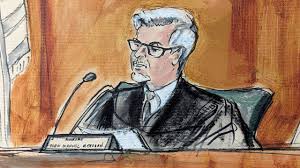
Today Judge Juan Merchan will give instructions to the jury in the Trump hush money case and then they will begin deliberations. Some experts are predicting there will be a verdict today. I kind of doubt that, but what do know? A decision could certainly come this week.
Justice Merchan will describe the legal meaning of the word “intent” and the concept of the presumption of innocence. He will remind the jurors that they pledged to set any biases aside against the former president before they were sworn in, and that Mr. Trump’s decision not to testify cannot be held against him.
Then, according to a person with knowledge of the instructions that Justice Merchan plans to deliver, he will explain the 34 charges of falsifying business records that Mr. Trump faces. It will likely be the most important guidance that the judge offers during the trial. And it is no simple task.
Judge Merchan
In New York, falsifying records is a misdemeanor, unless the documents were faked to hide another crime. The other crime, prosecutors say, was Mr. Trump’s 2016 violation of state election law that prohibited conspiring to aid a political campaign using “unlawful means.”
Those means, prosecutors argue, could include any of a menu of other crimes. And so each individual false-records charge that Mr. Trump faces contains within it multiple possible crimes that jurors must strive to understand.
The moment that the jurors begin to deliberate will mark the first time that the complicated case will be assessed not by judges or a parade of commentators, but by everyday New Yorkers. The group may be aided by the two jurors who are also lawyers — though neither appears to have criminal experience, and one said during jury selection that he knew “virtually nothing about criminal law.”
Marc F. Scholl, who served nearly 40 years in the district attorney’s office, noted that jury instructions are often difficult to follow, particularly given that, in New York, jurors are barred from keeping a copy of the guidance as they deliberate. And he said that defendants are often charged with several different crimes, requiring even more elaborate instructions.
Still, Mr. Scholl said, one point of complexity stood out: “Usually you don’t have this layering of these other crimes,” he said.
Justice Merchan, according to the person with knowledge of his legal instructions, will proceed through each of the 34 charges count by count, explaining to jurors what each requires prosecutors to have proved.
The knotty legal instructions were the product of intense argument between the prosecution and the defense, culminating in a hearing last week in which each side sought to persuade the judge to make minor edits that could have had a major impact.
Read more details about those arguments at the NYT link.
People who have been covering the trial inside the courtroom, eg, Harry Litman, have expressed concerns about one juror who appears to be sympathetic to the defense. This is from Marc Caputo at The Bulwark: Trump Legal Team Pins Hopes on Hung Jury.
AS THE JURORS FILED into the Manhattan courtroom, day after day, almost none of them would look at Donald Trump. It’s one of those unsettling signs for defendants and their lawyers who worry about a guilty verdict.
Those worries have only grown in Trump’s orbit as allies have all but abandoned hope of acquittal. Even Trump, though he railed Monday on social media about the judge and the case, has privately sounded a note of resignation.
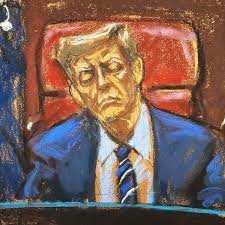
Trump sleeping in court
“Whatever happens happens,” Trump told one person recently. “I have no control.”
But there is one clear hope MAGAville clings to: a hung jury that results in a mistrial.
If that happens, Trump allies suspect that it will be chiefly due to the one juror who has made friendly eye contact with Trump from time to time as the jury enters the room and walks right past the defense table.
“There are eight people on that jury who definitely hate Trump. If there’s one person who doesn’t, it’s [this] juror,” said one court attendee who, like others for this story, relayed their observations on condition of anonymity to The Bulwark, which is also protecting the privacy and safety of the juror in question by not disclosing identifying details.
As the trial has progressed since April 15, these sources relate, this juror has appeared to nod along in seeming accordance with the defense at times. On other occasions, the juror has seemingly reacted favorably to and made eye contact with Trump’s congressional surrogates who began joining him in court in recent weeks.
I hope they’re mistaken. All we need it to have this end in a mistrial.
Donald Trump is not behaving like someone who expects to be found “not guilty.” In a series of posts over the Memorial Day weekend, the former president deviated from the norm of honoring soldiers who fought and died for the United States by instead posting on his website, Truth Social, about how unfair it is that standard courtroom procedures are not being bent in his favor.
Posting in all caps, Trump – facing 34 felony counts of falsifying business records to cover up a hush payment to an adult film star – on Monday raged against the order in which closing arguments will be made in his Manhattan trial. It is a “big advantage,” he said, and “very unfair” that the prosecution gets to go second. “Why can’t the defense go last?”
Whether he knows this and is just riling up gullible followers or if he simply never retained the information his defense counsel could surely provide, Politico’s Kyle Cheney noted that Trump is here complaining about a fact of life “in virtually every criminal court.” Per Cheney, “Prosecutors typically get a rebuttal during closings because [the] burden or proof lies with them, not [the] defense.”
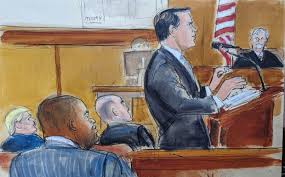
Trump prosecutor Joshua Steinglass gives final arguments
Trump, then, is complaining about an order that exists because of the far higher standard that prosecutors must meet. The defense only needs to sow doubt about the government’s case, and it really only needs one juror to entertain the former president’s argument that the case is a “witch hunt”; the prosecution must show that its case is not just probable, but prove it beyond a reasonable doubt.
“Trump is finally being treated like every other defendant,” said Joyce Vance, a former U.S. attorney who has been following his hush money trial. “[R]eally,” she argued, “that’s what he objects to.”
In another weekend rant about the case, Trump again opined that it was wrong to bring a case against him while he’s running for president. If there was evidence of a crime, he wrote, referring to himself in the third person, “it should have been brought seven years ago, not in the middle of his Campaign for President.” [….]
Since Trump is no longer president, and can no longer pick those charged with enforcing the law, he is now just another man who must stand before and be judged by it. For a man who has long enjoyed impunity, it is intolerable. And while he may be able to evade financial penalties, at least for a time, in this case his actual liberty is at stake: it is not inconceivable that, when closing arguments conclude this week, jurors return a guilty verdict and Judge Juan Merchan decides that this particular defendant deserves some time behind bars.
George Conway, a conservative attorney turned harsh critic of the former president, believes Trump is reacting to his loss of control. “The defendant,” he posted on Threads, “is clearly in full panic mode.”
A couple of articles about the stalled Mar-a-Lago stolen documents case:
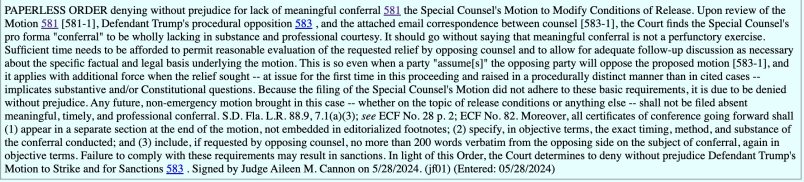
In the up-is-down world of the Mar-a-Lago classified documents case, prosecutors attempted to stanch Donald Trump’s vitriolic attacks on federal law enforcement – the kind of thing criminal defendants would not typically be allowed to engage in while on pre-trial release – and wound up themselves threatened with sanctions by the judge.
As Morning Memo recounted yesterday, the move by prosecutors to modify the terms of Trump’s pre-trial release came late Friday before the Memorial Day weekend and prompted a heated response from Trump.
U.S. District Judge Aileen Cannon weighed in Monday, denying the prosecution motion, chastising them for playing loose with the local court rules, and threatening to impose sanctions on them in the future. On small bright spot, if you can call it that, is that she didn’t accede to Trump’s request to sanction the prosecution team immediately. Cannon’s denial was without prejudice, meaning prosecutors can refile their motion:
Cannon insisted that prosecutors had not sufficiently conferred with the defense team before filing and ordered that all future filings contain a statement of no more than 200 words by the opposing side of its position.
In a normal case, I’d applaud a judge keeping a tight leash on the prosecution team. But we’re in such uncharted territory here that you can’t attribute this to i-dotting or t-crossing by Cannon. Given any chance to chide the prosecution, she takes it. Given deplorable behavior by Trump that would normally never fly, she finds herself mute again and again.
The judge’s routine has become so predictable that even the analysis by legal observers bakes in a certain Cannon quotient: Anything that DOJ does that even arguably deviates from the rules leaves an opening that Cannon will take. So DOJ ends up graded on a weird Cannon curve while the Trump’s dangerous and unprecedented conduct gets set to the side.
One pattern emerging with Cannon is that when prosecutors implore her to assert herself and take more control over the case like so many judges do, she retreats to treating everything as an adversarial contest that she merely referees. But when it’s a matter of importance to Trump, she regularly asserts herself, going so far as to raise issues on her own. It’s another way in her handling of the case is imbalanced to Trump’s advantage.
…[A]t seven public hearings over more than 10 months, Judge Cannon has left an increasingly detailed record of her decision-making skills and judicial temperament.
The portrait that has emerged so far is that of an industrious but inexperienced and often insecure judge whose reluctance to rule decisively even on minor matters has permitted one of the country’s most important criminal cases to become bogged down in a logjam of unresolved issues.
She rarely issues rulings that explain her thinking in a way that might reveal her legal influences or any guiding philosophy. And that has made the hearings, which have taken place in Federal District Court in Fort Pierce, Fla., all the more important in assessing her management of the case.
Aileen Cannon in court in stolen documents case
Regardless of her motives, Judge Cannon has effectively imperiled the future of a criminal prosecution that once seemed the most straightforward of the four Mr. Trump is facing.
She has largely accomplished this by granting a serious hearing to almost every issue — no matter how far-fetched — that Mr. Trump’s lawyers have raised, playing directly into the former president’s strategy of delaying the case from reaching trial.
It appears increasingly likely that the documents case will not go to a jury before Election Day, and that the only trial that Mr. Trump will face this year will be the one now ending in Manhattan, where jurors are expected to begin deliberating on Wednesday over whether he falsified business records in connection with hush money payments to a porn star.
Still, the next few weeks will bring Judge Cannon’s handling of the case in Florida into even sharper focus.
After a hearing in June, Judge Cannon will also have to make a significant decision on whether to give Mr. Trump’s lawyers access to communications between Mr. Smith’s team and top national security officials. The lawyers made that request hoping to bolster their contention that the so-called deep state colluded with the Biden administration to bring the charges.
The police in Fairfax County, Va., received an unusual phone call on Feb. 15, 2021. A young couple claimed they were being harassed by the wife of a Supreme Court justice.
“Somebody in a position of authority needs to talk to her and make her stop,” said the 36-year-old man making the complaint, according to a recording of the call reviewed by The New York Times. The officer on the line responded that there was little the police could do: Yelling was not a crime.
The couple placed the call after a series of encounters with Martha-Ann Alito, wife of Justice Samuel A. Alito Jr., that had gone from uneasy to ugly. That day, Emily Baden, whose boyfriend (now husband) contacted the police, had traded accusations with Mrs. Alito, who lived down the street. In a recent interview, Ms. Baden admitted to calling her a lewd epithet.
The clash between the wife of a conservative Supreme Court justice and the couple, who were in their 30s, liberal and proud of it, played out over months on a bucolic block in Alexandria. It was the kind of shouting match among private citizens, at the height of tensions over the 2020 election, that might have happened in any mixed political community in America. But three years later, that neighborhood spat — which both sides said began over an anti-Trump sign — has taken on far greater proportions.
Interview with Ms. Baden:
Amid the controversy, Ms. Baden said she was surprised to find herself playing a central role in Justice Alito’s account about a war of words, political signsand a flag. “I never saw the upside-down flag, never heard about it,” she said.
The Alitos
To better understand the clash, The Times interviewed Ms. Baden, her mother and her husband, as well as other neighbors, and reviewed the texts that Ms. Baden and her husband sent to friends after the episodes. Justice Alito, who did not respond to questions for this article,has in recent weeks given his own explanation of what happened.
There are some differences: For instance, the justice told Fox News that his wife hoisted the flag in response to Ms. Baden’s vulgar insult. A text message and the police call — corroborated by Fairfax County authorities — indicate, however, that the name-calling took place on Feb. 15, weeks after the inverted flag was taken down….
The justice later elaborated in an interview with Fox News, saying that in January 2021 a neighbor on the block displayed a vulgar anti-Trump sign, near where children wait for the school bus. Mrs. Alito complained to the neighbor. “Things escalated and the neighbor put up a sign personally addressing Mrs. Alito and blaming her for the Jan 6th attacks,” tweeted the Fox News reporter who interviewed the justice.
While the Alitos were on a neighborhood walk, “there were words between Mrs. Alito and a male at the home with the sign,” the network reported. The justice said the man used “vulgar language, ‘including the C-word,’” After that exchange, “Mrs. Alito was distraught and hung the flag upside-down,” the Fox reporter relayed.
But in the Baden family’s version, the justice’s wife initiated the conflict. “Aside from putting up a sign, we did not begin or instigate any of these confrontations,” Ms. Baden said later.
During the Covid crisis, Baden moved in with Baden’s mother Barbara, who lives in the Alito’s neighborhood. Her boyfriend, who grew up in the area also moved back home.
The couple participated in Black Lives Matter protests in Washington, propped up Biden-Harris signs, and on the Saturday in November when the election was called, whooped and danced in the streets of the nation’s capital. When they got home, they displayed a political sign they had made from torn-up Amazon boxes, saying “BYE DON” on one side and “Fuck Trump” on the other….
Shortly after Christmas, as Emily Baden was with her dog in her front yard, an older woman approached and thanked her for taking down the sign, which had merely blown down. Ms. Baden realized that the woman was Martha-Ann Alito. The sign was offensive, Mrs. Alito said, according to both the justice’s account and a text message from Ms. Baden to her boyfriend.
Martha-Ann Alito and Emily Baden
Ms. Baden told her the sign would stay up, she recalled in the interview. The family was taken aback: Though the Badens and the Alitos lived just a short distance apart, Barbara Baden couldn’t recall ever communicating with the justice’s wife beyond a neighborly wave. In the interview, Emily Baden could not remember whether she put the signs up again.
Then came Jan. 6. Rocked by the violence and threat to democracy, the couple soon put up new signs in their yard, saying “Trump Is a Fascist” and “You Are Complicit.” Emily Baden said in interviews that the second sign was not directed at the Alitos, but at Republicans generally, especially those who weren’t condemning the Capitol attack.
Soon afterward, her mother took them down, out of safety concerns. “Look what these people can do,” she said in an interview, recalling her fears at the time about the mob that had stormed the Capitol. “I do not want to mark my house.”
It’s not clear whether Mrs. Alito saw those signs, but the day after the Capitol riot, as the couple parked in front of their home, she pulled up in her car, they said. She lingered there, glaring, for a long moment, recalled the couple, who texted their friends about the encounter.
In another incident, the young couple drove by the Alito’s house.
Mrs. Alito happened to be standing outside. According to interviews with Ms. Baden and her husband, as well as messages they sent to friends at the time, Mrs. Alito ran toward their car and yelled something they did not understand. The couple continued driving, they said, and as they passed the Alito home again to exit the cul-de-sac, Mrs. Alito appeared to spit toward the vehicle.
The couple, still shaken by the Capitol riot, said the encounter left them feeling uneasy and outmatched by the wife of someone so powerful.
When Donald Trump met some of the country’s top donors at a luxurious New York hotel earlier this month, he told the group that a businessman had recently offered $1 million to his presidential effort and wanted to have lunch.
“I’m not having lunch,” Trump said he responded, according to donors who attended. “You’ve got to make it $25 million.”
Another businessman, he said, had traditionally given $2 million to $3 million to Republicans. Instead, he said he told the donor that he wanted a $25 million or $50 million contribution or he would not be “very happy.”
As he closed his pitch at the Pierre Hotel, Trump explained to the group why it was in their interest to cut large checks. If he was not put back in office, taxes would go up for them under President Biden, who vows to let Trump-era tax cuts on the wealthy and corporations expire at the end of 2025.
“The tax cuts all expire for wealthy and poor and middle-income and everything else, but they expire in another seven months and he’s not going to renew them, which means taxes are going to go up by four times,” Trump said, exaggerating the size of the cuts. “You’re going to have the biggest tax increase in history.”
Seconds after promising the tax cuts, Trump made his pitch explicit. “So whatever you guys can do, I appreciate it,” he said.
The remarks are just one example of a series of audacious requests by Trump for big-money contributions in recent months, according to 11 donors, advisers and others close to the former president, who spoke on the condition of anonymity to describe his fundraising. The pleas for millions in donations come as the presumptive Republican nominee seeks to close a cash gap with Biden and to pay for costly legal bills in his four criminal indictments.
Trump is completely corrupt. So what else is new? Read the whole thing at the WaPo.
That’s it for me today. I hope I’ve given you something worth reading while we wait for the verdict.
Did you like this post? Please share it with your friends:
I woke up to the news that a university where where I taught a few years while finishing up my doctorate experienced some shooting near its dorms. Thankfully, I’m on an on line campus of Purdue University where I mostly endure Dinah trying to eat my lunch and Temple trying to snooker me into a walk. I always kid them that they should be glad I get harassment training annually so the work place is safe for them. I think it’s okay to grab the pussies here since it’s a totally different behavior. Cats just adore being in the way and my keyboard is not exempt.
Trump’s own actions—and those of his family and close associates—suggest a president seeking to monetize his office. He spends nearly every weekend at a Trump-branded property such as Mar-a-Lago, which briefly had its own promotional page on the State Department website. Diplomats and industry leaders flock to his Washington hotel in hopes of winning his favor. On the day that Ivanka Trump and her father met with the Chinese president, China approved three of her company’s copyright requests. Kushner’s family firm has touted its ability to grab visas for wealthy Chinese investors. “The stars have all aligned,” Eric Trump recently said. “I think our brand is the hottest it has ever been.”t
To make matters worse, Trump and the Republican Congress have started rolling back the Obama administration’s efforts to combat corruption. In February, Trump signed the repeal of a key provision in the 2010 Dodd-Frank financial reform law that had required US oil and gas companies to disclose their payments to foreign governments. This doesn’t look so good when your secretary of state was the CEO of Exxon Mobil. The Department of the Interior has been backing away from the Extractive Industries Transparency Initiative, which also publicizes payments to governments by energy companies. The Trump administration has yet to say whether it will remain in the Open Government Partnership; if it leaves, the United States will join abstainers such as Russia and Angola.
And there are indications that Trump may try to weaken the Foreign Corrupt Practices Act, the crown jewel of anti-corruption laws. Even before he ran for president, Trump expressed hostility to the FCPA, which prohibits US companies from bribing foreign officials, saying it puts American businesses at a “huge disadvantage” and that it’s a “horrible law and it should be changed.” Part of this animosity may stem from his own experiences trying to take his brand global. A recent New Yorker investigation found that the Trump Organization may have violated the FCPA as part of a failed development deal in Azerbaijan, widely considered one of the world’s most corrupt countries. (A company lawyer dismissed this claim.)
It’s difficult to focus on any one aspect of any of this or the other variety of charges because it’s like juggling hot sticky tarballs while some one throws a few more at you every few minutes. It’s way too much for any one newsroom to keep track of let alone investigate completely. We’re getting some more information from the few of them dedicated to this today. This one is from The Intelligencer and Jonathan Chait at NYMag. Self dealing is a feature in their admnistration. “The Trump Administration Is a Golden Age for Corporate Crooks” pretty much sums it up.
The Republican Party’s main legislative achievement was to facilitate the direct transfer of hundreds of billions of dollars into the hands of business owners. (The proceeds of the Trump tax cuts are mainly going into stock buybacks, a simple windfall for owners of capital.) But a second, less visible channel is the Trump administration’s program of lax regulation. While the tax cuts spray money at business owners as a whole, weak enforcement of regulations confers a windfall targeted specifically at businesses that cheat their customers or break the law.
The Securities and Exchange Commission has brought dramatically fewer cases and lower penalties under Trump. From last February through September, the agency brought 15 cases and collected $127 million in civil penalties, in comparison with 43 cases and $702 million in penalties during a comparable period in 2016. Likewise, the Environmental Protection Agency is collecting far less in penalties from polluters than it did under any of the previous three administrations:
The Consumer Financial Protection Bureau was created to fill in a bare spot in the federal regulatory design: financial products, which are inherently complex and in need of regulation, had been marketed to largely unwitting customers with a minimal amount of oversight, resulting in endemic fraud. Mick Mulvaney, Trump’s director of the CFPB, has called the agency itself a “sick, sad joke.” Just how his vision would translate into practice has already become apparent.
Chris Arnold reports for NPR that Mulvaney forced the agency to drop a lawsuit against alleged loan-shark outfit Golden Valley Lending. Arnold found a Golden Valley victim named Julie Bonenfant, from Detroit, who needed money after a breakup and having her car stolen led to falling behind on rent. Over the course of a year, Bonenfant paid $3,735 to Golden Valley for a $900 loan. “A key backer of Golden Valley was recently convicted of racketeering charges in a case involving another online lender, according to court documents,” reports Arnold.
In the days around Donald Trump’s inauguration, the hotel bearing his namein downtown Washington, D.C., quietly settled two liens totaling more than $3 million for allegedly unpaid construction work. In one case, a contractor reached an agreement after receiving a phone call from someone his attorney identified as “Trump.”
The liens had both been previously reported. But their settlements had not. And the fact that they were handled right around the time when Trump took office—perhaps even at the behest of the then-president-elect himself—underscores just how politically sensitive the management of the Trump International Hotel was and is to the current White House occupant.
The largest payment was made to Joseph J. Magnolia, Inc. The family-owned D.C.-based company had filed a lien for $2.98 million on Dec. 21, 2016, for “the unpaid balance for work done” on the hotel, dating from that day back through Sept. 9, 2014, according to court filings. Joseph J. Magnolia, Inc. had done “plumbing, mechanical, and HVAC work, along with the site sewer, water, storm, and water services” per the notice. It also provided the labor and materials required to complete that work.
The company had been featured in a Washington Post article about various liens against Trump’s hotel in D.C. that continues to garner a ton of social media notice. In a previous Post article, John D. Magnolia, the company’s president, noted that he had voted for Trump and felt the Trumps had been “decent people” to work with. But, he added, “Mr. Trump and Ivanka [Trump, who oversaw the hotel project] and so forth, they are I guess preoccupied by other matters now.”
Shortly after that interview, in which he noted that he had supported Trump, Magnolia’s company was finally paid. And it might have been at the behest of the soon-to-be-president himself.
Is that an odd situation or is it just me? Say nice things and you get paid? Vote for him and you get paid?
“The company and policy and government are completely separated,” Eric Trump assured the Washington Post last year. “We have built an unbelievable wall in between the two.”
But Don Jr.’s trip to India represents a kind of “coming-out party” for the Trumpist kleptocracy: According the the Washington Post, the manager of the president’s “blind trust” will travel to Mumbai this week to promote his family’s real-estate projects, sell access to himself for $38,000 a head, and give a foreign policy speech (ostensibly) on behalf of his father’s administration at a global business summit ..
Beginning Tuesday, Trump Jr. will have a full schedule of meet-and-greets with investors and business leaders throughout India, where the Trump family has real estate projects — Mumbai, the New Delhi suburb of Gurgaon, the western city of Pune and the eastern city of Kolkata.
Indian newspapers have been running full-page, glossy advertisements hyping his arrival and the latest Trump Tower project under the headline: “Trump is here — Are You Invited?” The ads also solicited home buyers to plunk down a booking fee (about $38,000) to “join Mr. Donald Trump Jr. for a conversation and dinner.” Public relations executives working with two local developers arranging the Trump dinner declined to give specifics about the event.
During the visit, the 40-year-old Trump Jr., executive vice president of the Trump Organization, will take a break from his private promotional tour to give an address on “Reshaping Indo-Pacific Ties: The New Era of Cooperation” at a global business summit on Friday evening, co-sponsored by the Economic Times newspaper. [Indian Prime Minister Narendra] Modi will also speak at the summit … Later this week, Trump Jr. will travel to Mumbai to open the demo unit at the golden-facade Trump Tower being built by the family development firm of Mangal Prabhat Lodha, a state legislator in Modi’s Bharatiya Janata Party.
To review: Donald Trump Jr. will be serving as a representative of both his father’s business and government during this week’s trip to India, and will be selling access to himself (and thus, ostensibly, to his father’s government) for roughly $40,000 a pop.
In January, the anti-corruption organization Citizens for Responsibility and Ethics in Washington, or CREW, released a detailed report on the historically unethical presidency of Donald Trump. By February, it was outdated, as Trump’s administration and family charted new frontiers in ethical transgression.
Just this week, Donald Trump Jr. traveled to India to promote his family’s real estate projects and give a foreign policy speech; ads in Indian newspapers offered dinner with the presidential scion in exchange for down payments on Trump-branded apartments. President Trump’s son-in-law, Jared Kushner, is reportedly demanding that he maintain his access to top-secret information despite his inability, after 13 months of serving in the White House, to pass an F.B.I. background check.
It’s impossible, in real time, to keep up with every new Trumpian advance in corruption and self-dealing, and Republicans in Congress aren’t even trying. True, they’ve been moved to act in a few high-profile cases — on Wednesday, Representative Trey Gowdy of South Carolina, chairman of the House Oversight Committee, demanded documents about government-funded luxury travel by Scott Pruitt, head of the Environmental Protection Agency. But overall, the administration enjoys a corrosive degree of impunity.
Of course, there’s no law against Trump liking Putin; unseemly yes, illegal, no. But a veteran Washington former federal prosecutor who served during both the Clinton and Bush administrations believes there is a strategy that Mueller is quietly pursuing and that explains his actions so far.
Seth Waxman, now a partner specializing in white-collar crime in Dickinson Wright’s Washington office, has a theory of Mueller’s case, which requires no novel reading of existing law to find Trump broke it. It employs the main weapon any federal prosecutor uses to police public corruption. It is Title 18 United States Code, section 201 that specifically makes it a crime for a public official to take “anything of value,” a bribe, in exchange for government action, which can be prospective.
Note that above I wrote “public official.” That’s because the law is generally wielded against public officials. Problem: Mueller is investigating conduct before Trump became one. Enter Waxman. He points out that in 1962, Congress extended the bribery law to cover activity prior to the assumption of office. It did so, he says, in order to close a “loophole” afforded those “who assume public office under a corrupt commitment.” The upshot? Trump became covered by 18 USC not when he was sworn in but as of July 21, 2016 when he became his party’s nominee in Cleveland, Ohio.
What we know of Mueller’s strategy so far is consistent with leveling charges under the bribery statute. This is not to say Mueller is going to indict Trump. He would need an exception from a Justice Department rule, which advises against it. But neither is he likely to send a report laying out grounds for impeachment as former independent counsel Ken Starr did against Bill Clinton relying solely on perjury and obstruction of justice without a finding of an underlying crime.
Donald Trump Jr. arrived in India on Tuesday for a week-long visit, and his trip has already revealed a couple of things.
First, it’s clear that the Trump administration is still embroiled in huge conflicts of interest. And second, it’s evident that the Trump brand, though toxic at home, commands surprising power in the world’s second most populous country.
President Trump’s eldest son will be spending his time in India promoting Trump-branded luxury apartments across the country. He’ll be meeting with real estate brokers and potential buyers throughout the week in his family business’s biggest market outside the US.
He’s also offering a special reward to Indians who buy property from him: He’ll join them for an intimate meal.
Indian newspapers have been running advertisements that promise homebuyers willing to pay a roughly $38,000 booking fee an opportunity to “join Mr. Donald Trump Jr. for a conversation and dinner.”
Government ethics experts in the US are appalled by that prospect, and say that the arrangement encourages Indians — especially those with ties to India’s government — to use purchases of Trump-branded property as a way to gain favor with the Trump administration.
“For many people wanting to impact American policy in the region, the cost of a condo is a small price to pay to lobby one of the people closest to the president, far away from watchful eyes,” Jordan Libowitz, the communications director for Citizens for Responsibility and Ethics in Washington, told the Washington Post.
Trump Jr.’s India visit also highlights something else: While Trump’s polarizing presidency has put a dent in his domestic businesses, it doesn’t seem to have damaged his reputation in India. In fact, the Trump brand seems to be chugging along quite nicely there.
Trump’s business elsewhere is not thriving. Read more at that link. Let’s not forget he’s bilking us daily and with every trip to a Trump property. Hey Mister Mueller nab those big fat pussies!
What’s on your reading and blogging list today?
Did you like this post? Please share it with your friends:
The Sky Dancing banner headline uses a snippet from a work by artist Tashi Mannox called 'Rainbow Study'. The work is described as a" study of typical Tibetan rainbow clouds, that feature in Thanka painting, temple decoration and silk brocades". dakinikat was immediately drawn to the image when trying to find stylized Tibetan Clouds to represent Sky Dancing. It is probably because Tashi's practice is similar to her own. His updated take on the clouds that fill the collection of traditional thankas is quite special.
You can find his work at his website by clicking on his logo below. He is also a calligraphy artist that uses important vajrayana syllables. We encourage you to visit his on line studio.










 Good Morning Sky Dancers!



 peej
peej Carissa
 bostonboomer
 dakinikat
 ecocatwoman
 mablue2
 Mama Lopez
 peggysue22
 quixote
 skydancingguestblogger
 Mona (aka Wonk the Vote)



 Sky Dancing
Recent Comments