
A War of a Different Sort
Posted: December 14, 2011 Filed under: Austerity, Banksters, Democratic Politics, Economy, globalization, income inequality, poverty, productivity, U.S. Economy, unemployment | Tags: Federal Reserve, investment, the Great Depression, The Great Slump 25 Comments
In the May edition of Vanity Fair, Joseph Stiglitz [economist and professor at Columbia University and recipient of the Nobel prize in economic sciences, 2001] wrote a prescient essay entitled, “Of the 1%, For the 1% and By the 1%.”
In a strange way, the piece voiced what would months later become the rallying cry of the Occupy Wall Street Movement, a foreshadowing of the public’s growing discontent with high unemployment, rising poverty and income disparity as well as the social damage resulting from Government failure to address the problems: the distortion it creates, how income disparities breed a climate of imbalance and lack of restraint, encouraging:
. . . no limit to the adventures we can undertake; corporations and contractors stand only to gain. The rules of economic globalization are likewise designed to benefit the rich: they encourage competition among countries for business, which drives down taxes on corporations, weakens health and environmental protections, and undermines what used to be viewed as the “core” labor rights, which include the right to collective bargaining.
In addition, Stiglitz underscored how inequality erodes our national identity–the sense of fairness, equal opportunity, our sense of community–the very elements we consider American staples. In fact, while listening to the GOPs’ endless political debates these past months, I’ve felt like a stranger in a strange land. Abandon child labor laws? Let the uninsured die? Begin massive deportations?
Really?
In any case, Stiglitz was the first to sound the warning in clear, concise and effective prose.
Which is why I found Stiglitz’s recent VF piece, ‘The Book of Jobs,’ required reading. Great title, btw. Even better is the comparison made between the Great Depression of the 1930s and the present downturn. Or as Stiglitz refers to our current dilemma: the Great Slump. An interesting aside, Paul Krugman pulled out all the stops over the weekend and called our economic crisis a depression, period. Hardly a surprise for the underwater homeowner, the long-term unemployed or those juggling multiple part-time positions to make ends meet.
 I’d encourage readers to take a few minutes and read Stiglitz’s recent essay. It’s amazingly concise and clear, even for non-economic types [like myself]. But here’s the gist: Ben Bernanke, a self-proclaimed scholar of the Great Depression, turned on the money spigots in response to the 2008-2009 meltdown because traditional wisdom said the Great Depression was the result of excessive money tightening by the Federal Reserve. So, doing the opposite would be the charm, right?
Not quite. As Stiglitz notes, this time we have proof that monetary manipulations were neither the cause nor the answer.
Why?
Because despite the flood of money, we’re still in the crapper. Consider this an Advanced Economics Lab experiment, playing out before your eyes.
So what is the root problem?
The economy itself, Stiglitz contends, a structural dislocation, a weak economy disguised by whopping bubbles in the real estate and financial markets, the easy, even crazy availability of credit, but basically a shift in the jobs we have to the jobs we need.
This is eerily similar to the precursor of the Great Depression. Then, massive unemployment resulted as the country moved from agriculture to industry. The cause? Increased agricultural productivity. What was once done by 20% of the population would be accomplished [with surplus] by 2%. Currently, the economy is moving from industry to service. Again, this shift has been provoked by increased productivity.
What is old is new again. With a twist, of course: the impact of globalization.
Industry to service? you say. Most Americans wince at the prospect of ‘service’ jobs—low skills, lower pay, 8 hours of mindless burger flipping.
Not really.
For instance, addressing our energy needs alone will require an abundance of high tech skills [and commensurate wages] to develop cleaner,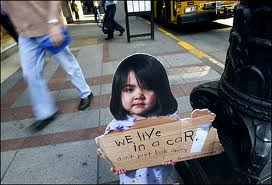 more efficient fuels. Support of basic research work is critical in this and other areas and leads to increased innovation and economic growth. Examples are plentiful—research produced the Internet and biotech industry, spawning huge upticks in economic growth. And this is something Americans excel at—thinking outside the box. Education will be required to retrain the work force and prepare and encourage our children with requisite skills and creative know how. In addition, infrastructure, a growing national concern, offers years of labor for out-of-work construction crews. We certainly don’t need an American version of ‘London Bridge is falling down.’ The Minneapolis bridge collapse in March was one too many.
Yes, Stiglitz says, we will need to rein in the banks, turn them back into the boring businesses they once were [they’re suppose to be serving us, not the other way around]. And we will need to seriously re-evaluate our tax policies, most of which favor the rich. But to solve the most critical problem—structural change—will require investing in our future, our own people. Private enterprise will not and cannot do that on a massive scale [I can hear Republicans wailing in unison].
FDR had World War II, spurring the necessary investment [spending] that launched the US into an unparalleled cycle of growth and prosperity. We are now faced with another war, a battle of ideology and political one-upmanship. Yet the solutions are real and within our grasp, Stiglitz suggests. I, for one, believe him.
Now it’s a matter of mustering the national will. We employed that fierce will during the Second World War; our survival and ultimate victory depended on it.
As it does once again.
Monday Morning Reads
Posted: October 10, 2011 Filed under: Global Financial Crisis, Marriage Equality, morning reads, Surreality, U.S. Military, U.S. Politics, unemployment, Women's Rights | Tags: Anita Hill, Crackerbox Palace, DOMA, George Harrison, Indigenous People's Day, National Coming Out Day, Native American Day, Occupy, Paul Krugman, plutocracy, Subprime mortgage crisis and the CRA, Taxes and poor people, technology, the Great Depression 25 Comments Good Morning!
and Happy Native Americans’ Day!
The second Monday of October annually marks Columbus Day in many parts the United States but not all states or region follow this observance. Instead, they celebrate other events on the day. For example, South Dakota’s official holiday on this date is Native Americans’ Day (also known as Native American Day), while people in Berkeley, California, celebrate Indigenous People’s Day.
 I think it’s a great idea to switch the current federal holiday out to a celebration of indigenous cultures or maybe find a better thing to celebrate!
BTW, National Coming Out Day is Tomorrow. That’s something to remember as you read that Speaker Boehner is threatening to withold funds from the Justice Department if that don’t vigorously enforce DOMA. There he goes again!!! The Republican Jobs Agenda is just always topmost on the priority list.
“We’re going to take the money away from the Justice Department, who’s supposed to enforce it, and we’ll use it to enforce the law,” Boehner told the conservative Value Voters Summit.
Boehner is engaged in an ongoing dispute with Attorney General Eric Holder over his refusal to defend in court the Defense of Marriage Act. President Obama has taken the stance that the law is unconstitutional. While the Justice Department usually defends laws passed by Congress against legal challenges, the Obama administration has stopped defending DOMA while Democrats work to repeal the law.
In March, Boehner announced that if Obama wouldn’t defend DOMA, he would, hiring a private law firm to defend it on behalf of the House.
“As the Speaker of the House, I have a constitutional responsibility. I’ve raised my hand to uphold and defend the Constitution of the United States and the laws of our country,” Boehner said Friday.
You know, he’s all about saving those taxpayer dollars too. True Story.
Here’s a movement I want to join if this California Republican Nutter would only give me the location where they’re taking on volunteers. And yes, it’s a REAL tweet.
@RepJackKimble After Value Voters I am more convinced than ever about the radical atheist agenda to secularize Columbus Day
Okay, I’d like to use the next bit of space to clear up a few right wing memes with actual research. I know, you’re shocked, it’s so unlike me to do so. First, while Fannie and Freddie exacerbated the meltdown and behaved as irresponsibly as any Wall Streeter, there is absolutely no connection between the meltdown and the Community Reinvestment Act. I have never been able to figure out how folks jumped the shark to make this connection, but it happened. I’ll give you the bottom line from the abstract but if you want to chase after the econometrics, feel free to follow the link.
In this paper we examine more directly whether these programs were associated with worse outcomes in the mortgage market, including delinquency rates and measures of loan quality.
We rely on two empirical approaches. In the first approach, which focuses on the CRA, we conjecture that historical legacies create significant variations in the lenders that serve otherwise comparable neighborhoods. Because not all lenders are subject to the CRA, this creates a quasi-natural experiment of the CRA’s effect. We test this conjecture by examining whether neighborhoods that have been disproportionally served by CRA-covered institutions historically experienced worse outcomes. The second approach takes advantage of the fact that both the CRA and GSE goals rely on clearly defined geographic areas to determine which loans are favored by the regulations. Using a regression discontinuity approach, our tests compare the marginal areas just above and below the thresholds that define eligibility, where any effect of the CRA or GSE goals should be clearest.
We find little evidence that either the CRA or the GSE goals played a significant role in the subprime crisis. Our lender tests indicate that areas disproportionately served by lenders covered by the CRA experienced lower delinquency rates and less risky lending. Similarly, the threshold tests show no evidence that either program had a significantly negative effect on outcomes.
Okay, one more meme to shoot down. You know how all those Republican presidential wannabes are trotting around saying about half of Americans don’t pay taxes and the rich are still burdened? I’ve shot down some of that argument before, but here’s some further details. I’m quoting from the executive summary and not the study itself. Again, you can go into the methodology if you want here.
A recent finding by Congress’ Joint Committee on Taxation that 51 percent of households owed no federal income tax in 2009 [1] is being used to advance the argument that low- and moderate-income families do not pay sufficient taxes. Apart from the fact that most of those who make this argument also call for maintaining or increasing all of the tax cuts of recent years for people at the top of the income scale, the 51 percent figure, its significance, and its policy implications are widely misunderstood.
- The 51 percent figure is an anomaly that reflects the unique circumstances of 2009, when the recession greatly swelled the number of Americans with low incomes and when temporary tax cuts created by the 2009 Recovery Act — including the “Making Work Pay” tax credit and an exclusion from tax of the first $2,400 in unemployment benefits — were in effect. Together, these developments removed millions of Americans from the federal income tax rolls. Both of these temporary tax measures have since expired.
In a more typical year, 35 percent to 40 percent of households owe no federal income tax. In 2007, the figure was 37.9 percent. [2]- The 51 percent figure covers only the federal income tax and ignores the substantial amounts of other federal taxes — especially the payroll tax — that many of these households pay . As a result, it greatly overstates the share of households that do not pay any federal taxes. Data from the Urban Institute-Brookings Tax Policy Center show only about 14 percent of households paid neither federal income tax nor payroll tax in 2009, despite the high unemployment and temporary tax cuts that marked that year.[3]
- This percentage would be even lower if federal excise taxes on gasoline and other items were taken into account.
- Most of the people who pay neither federal income tax nor payroll taxes are low-income people who are elderly, unable to work due to a serious disability, or students, most of whom subsequently become taxpayers. (In a year like 2009, this group also includes a significant number of people who have been unemployed the entire year and cannot find work.)
- Moreover, low-income households as a whole do, in fact, pay federal taxes. Congressional Budget Office data show that the poorest fifth of households as a group paid an average of 4 percent of their incomes in federal taxes in 2007 (the latest year for which these data are available), not an insignificant amount given how modest these households’ incomes are — the poorest fifth of households had average income of $18,400 in 2007. [4] The next-to-the bottom fifth — those with incomes between $20,500 and $34,300 in 2007 — paid an average of 10 percent of their incomes in federal taxes.
- Even these figures understate low-income households’ total tax burden, because these households also pay substantial state and local taxes. Data from the Institute on Taxation and Economic Policy show that the poorest fifth of households paid a stunning 12.3 percent of their incomes in state and local taxes in 2010.[5]
- When all federal, state, and local taxes are taken into account,the bottom fifth of households paid 16.3 percent of their incomes in taxes, on average, in 2010. The second-poorest fifth paid 20.7 percent. [6]
I know it’s statistics heavy, but some times that’s the best way to see what is actually going on. Right wing memes seem to thrive on taking things completely out of context and this one about tax dodging poor people is a doozy. See exactly how many taxes that get paid that weren’t counted in that famous figure which is an anomaly as it is.
Here’s an interesting article at NYT by David Leonhardt on how today’s economy makes the Great Depression look like the halcyon days.
Still, the reasons for concern today are serious. Even before the financial crisis began, the American economy was not healthy. Job growth was so weak during the economic expansion from 2001 to 2007 that employment failed to keep pace with the growing population, and the share of working adults declined. For the average person with a job, income growth barely exceeded inflation.
The closest thing to a unified explanation for these problems is a mirror image of what made the 1930s so important. Then, the United States was vastly increasing its productive capacity, as Mr. Field argued in his recent book, “A Great Leap Forward.” Partly because the Depression was eliminating inefficiencies but mostly because of the emergence of new technologies, the economy was adding muscle and shedding fat. Those changes, combined with the vast industrialization for World War II, made possible the postwar boom.
In recent years, on the other hand, the economy has not done an especially good job of building its productive capacity. Yes, innovations like the iPad and Twitter have altered daily life. And, yes, companies have figured out how to produce just as many goods and services with fewer workers. But the country has not developed any major new industries that employ large and growing numbers of workers.
There is no contemporary version of the 1870s railroads, the 1920s auto industry or even the 1990s Internet sector. Total economic output over the last decade, as measured by the gross domestic product, has grown more slowly than in any 10-year period during the 1950s, ’60s, ’70s, ’80s or ’90s.
Perhaps the most important reason, beyond the financial crisis, is the overall skill level of the work force. The United States is the only rich country in the world that has not substantially increased the share of young adults with the equivalent of a bachelor’s degree over the past three decades. Some less technical measures of human capital, like the percentage of children living with two parents, have deteriorated. The country has also chosen not to welcome many scientists and entrepreneurs who would like to move here.
I’m still of the opinion that we should hand out citizenship to any of our highly skill foreign students and do everything we can to keep them here. I have a feeling I’m in the minority on that opinion, however.
If you want to do some time tripping to a really upsetting period of history for women, here’s The Nation on The Legacy of Anita Hill. We’re now stuck with this total jerk on SCOTUS because of people like Joe Biden. I’ll never forget one of those senators that let Clarence Thomas get away with it. They hid the women that could verify her stories and put her squarely in the worst position possible. She handled it with dignity and we all lost.
Anita Hill remains an icon to whom subsequent generations are rightfully indebted. At the same time, she has not remained trapped by her own symbolism or frozen in time. It is sometimes forgotten that she is a respected scholar of contract jurisprudence, commercial law and education policy. She is a prolific author, publishing numerous law review articles, essays, editorials and books. Today, Hill is a professor of social policy, law and women’s studies at Brandeis University. Much of her most recent research has been on the housing market, and her most recent book, published this month, is Reimagining Equality: Stories of Gender, Race, and Finding Home.
It is ironic that the full substance of Hill’s remarkable intellectual presence remains so overshadowed by those fleeting, if powerful, moments of her Senate testimony. If the larger accomplishments of her life aren’t quite as iconic as that confrontation with Clarence Thomas, they nonetheless merit attention by feminists and scholars alike. To begin with, Hill is a remarkably elegant and accessible writer. For those who wish to apprehend the gravitas of her intelligence and dignity, Reimagining Equality would be a good place to start.
Krugman gets the Occupy protestors and has some delightful comments up on the Panic of the Plutocrats. He eloquently lays out the hype coming from the Cantors and the Bloombergs as well as CNBC and Fox that paints every one upset with their behavior as Leninist. The descriptions are a hoot but here’s the meat.
The way to understand all of this is to realize that it’s part of a broader syndrome, in which wealthy Americans who benefit hugely from a system rigged in their favor react with hysteria to anyone who points out just how rigged the system is.
Last year, you may recall, a number of financial-industry barons went wild over very mild criticism from President Obama. They denounced Mr. Obama as being almost a socialist for endorsing the so-called Volcker rule, which would simply prohibit banks backed by federal guarantees from engaging in risky speculation. And as for their reaction to proposals to close a loophole that lets some of them pay remarkably low taxes — well, Stephen Schwarzman, chairman of the Blackstone Group, compared it to Hitler’s invasion of Poland.
And then there’s the campaign of character assassination against Elizabeth Warren, the financial reformer now running for the Senate in Massachusetts. Not long ago a YouTube video of Ms. Warren making an eloquent, down-to-earth case for taxes on the rich went viral. Nothing about what she said was radical — it was no more than a modern riff on Oliver Wendell Holmes’s famous dictum that “Taxes are what we pay for civilized society.”
I have one more offering that is just for pure delight. It’s a short bit from the daughter of George Harrison’s Business Manager on what it was like to run the halls of crackerbox palace as a child.
Harrison’s wife, Olivia, always took good care of us and, like her husband, had a gentle, calming disposition. I loved going up the great gothic staircase in the living room to the recording studio on the first floor. I was fascinated by the recording console and the selection of instruments. Sometimes, Harrison would play new music for us and ask for our feedback.
Adjacent to the recording studio was a room with gold records and awards and an Oscar statuette. I remember the exhilarating sensation I got picking up the Oscar earned for “Let It Be” and feeling it weigh down my hand.
When it got late, and Dad was still in meetings, we would go to bed in one of the guest rooms down the hall from the studio with sounds of Harrison’s sitar lulling us to sleep.
You can see I’m full throttle academic today. What’s on your reading and blogging list today?
Austerity isn’t a political buzzword for Many Americans
Posted: July 16, 2011 Filed under: Economy, financial institutions, hunger, income inequality | Tags: reliance on food stamps, the economy, the Great Depression, unemployment 6 Comments You know if you’ve spent any time reading my thoughts that I am highly concerned by the level of income inequality in this country. Probably the thing that most concerns me is the number of people in Washington DC that continue to call for more of the very same policies that have wrecked the economy since the beginning of the century. Dubya/Cheney brought us deregulation that crippled the financial markets and taxes so low that we know have an unsustainable debt position. No one administration in US history has waged so many wars–literally and figuratively–on so many fronts and basically left most of the population with a huge bill. I am amazed that people like James Pethokoukis can even find outlets to publish their requests for more of the same. It’s pretty appalling but it’s typical of our media that seems more out of touch these days and ignorant of basic economics than our politicians.
Goldman Sachs doesn’t have to tell you things are bad. I don’t have to tell you things are bad. Everybody knows things are bad. Unemployment is at 9.2 percent (11.4 percent if the official labor force hadn’t collapsed since 2008 and 16.2 percent if you include discouraged and underemployed workers.) Moreover, the economy grew at just 1.9 percent in the first quarter of this year and may have grown less than 2 percent in the second. Wages and income are going nowhere fast.
When will the White House signal a change of economic direction? Will cutting tax rates and regulation ever make it on the agenda? That may be the only way Obama can win another term. And time is running short.
This man seriously thinks that change in economic direction would come through more ridiculous cuts in taxes and regulation? A change in economic direction would be towards policies that have worked in the past. How could any one call for more of the same knowing the results that those kinds of policies yielded? Do we really need another recession and financial market melt down? We don’t have rich people using tax cuts to serve as jobs creators. We have rich people and corporations using tax cuts to plop their wealth around the world to preserve that wealth. We have the American middle and working class falling into poverty.
Here’s an example of what ignoring the jobs disaster and enabling wealth hoarders has wrought from The Economist. This article is called ‘The struggle to eat; As Congress wrangles over spending cuts, surging numbers of Americans are relying on the government just to put food on the table’.
Take food stamps, a programme designed to ensure that poor Americans have enough to eat, which is seen by many Republicans as unsustainable and by many Democrats as untouchable. Participation has soared since the recession began (see chart). By April it had reached almost 45m, or one in seven Americans. The cost, naturally, has soared too, from $35 billion in 2008 to $65 billion last year. And the Department of Agriculture, which administers the scheme, reckons only two-thirds of those who are eligible have signed up.
Republican leaders in the House of Representatives want to rein in the programme’s runaway growth. In their budget outline for next year they proposed cutting the amount of money to be spent on food stamps by roughly a fifth from 2015. Moreover, instead of being a federal entitlement, available to all Americans who meet the eligibility criteria irrespective of the cost, the programme would become a “block grant” to the states, which would receive a fixed amount to spend each year, irrespective of demand. The House has also voted to cut a separate health-and-nutrition scheme for poor pregnant women, infants and children, known as WIC, by 11%. (The Senate, controlled by the Democrats, is unlikely to approve either measure.)
Advocates for the poor consider such cuts unconscionable. Food stamps, they argue, are far from lavish. Only those with incomes of 130% of the poverty level or less are eligible for them. The amount each person receives depends on their income, assets and family size, but the average benefit is $133 a month and the maximum, for an individual with no income at all, is $200. Those sums are due to fall soon, when a temporary boost expires. Even the current package is meagre. Melissa Nieves, a recipient in New York, says she compares costs at five different supermarkets, assiduously collects coupons, eats mainly cheap, starchy foods, and still runs out of money a week or ten days before the end of the month.
It is also hard to argue that food-stamp recipients are undeserving. About half of them are children, and another 8% are elderly. Only 14% of food-stamp households have incomes above the poverty line; 41% have incomes of half that level or less, and 18% have no income at all. The average participating family has only $101 in savings or valuables. Less than a tenth of recipients also receive cash payments from the Temporary Assistance for Needy Families programme (TANF), the reformed version of welfare; roughly a third get at least some income from wages.
Spending on food stamps has risen so quickly because, unusually, almost all the needy are automatically and indefinitely eligible for them. Unemployment benefits last for a maximum of 99 weeks at the moment, and that is due to fall to six months from next year. No one knows exactly how many people have exhausted their allotment, as the government does not attempt to count them. But almost half of the 14m unemployed have been out of a job for six months or more, and so would no longer qualify for benefits under the rules that will apply from January 1st.
Krugman states the obvious or “what ordinary economists” would find the policy measures under these situations in his blog today. It is exactly the opposite of what the group think in Washington DC is producing.
So, terrible growth prospects; low inflation; oh, and low interest rates, with no sign of the bond vigilantes. Ordinary macroeconomic analysis tells you very clearly what we should be doing: fiscal expansion and monetary expansion by any means we can manage; in fact, the case for a higher inflation target pops right out of just about any model capable of producing the kind of mess we’re in.
And what are we talking about in policy terms? Spending cuts and an end to monetary expansion.
I know the arguments — fear of invisible bond vigilantes, fear that 70s-style stagflation is just around the corner despite the absence of any evidence to that effect. But why do such arguments have so much traction, while everything economists have spent the last three generations learning is brushed aside?
One answer is that macroeconomics is hard; the idea that if families are tightening their belts, the government should do the same, is as deeply intuitive as it is deeply wrong.
But the susceptibility of politicians — including, alas, the president — and pundits to these wrong ideas demands a deeper explanation.
Mike Konczal ratchets up my rentier argument, arguing that what we’re seeing is
a wide refocusing of the mechanisms of our society towards the crucial obsession of oligarchs: wealth and income defense.
That has to be right. It doesn’t necessarily take the form of pure cynicism; it’s more a matter of the wealthy gravitating toward views of economic policy that make immediate sense in terms of their own interests, and politicians believing that only these views count as Serious because they’re the views of wealthy people.
But the upshot is terrible: more and more, this really does look like the Lesser Depression, a prolonged era of disastrous economic performance. And it’s entirely gratuitous.
It’s just hard for me to even find words about how misguided fiscal policy is these days. We have financial markets clamoring for less regulation not because they want to operate efficiently or because they want healthy competition, these folks are asking for removing basic oversight that prevents price gaming, moral hazard, information asymmetry, and oligopoly style games. We have two protracted wars that have never been fully financed. We have bailouts of failed institutions that have never been financed. We also have tax cuts that were not offset by spending cuts but made worse by giveaways by a Republican administration and a Republican congress and exacerbated by a Democratic administration. Obama’s stimulus was top heavy with useless tax cuts. What sort of craziness does it take to try to put those same policies on steroids then expect them to create different results?
What we currently are experiencing is a complete Aggregate Demand vacuum. We have the rich hoarding wealth or putting it in other economies and the rest of the country struggling to just exist if they have jobs. Then, we have a huge number of people that have neither wealth or jobs. This is WHEN we need the government to boost spending. We didn’t need all that during the last part of the Bush years but what we got was a period of throwing the US Treasury to the wind. We’re in deep trouble here folks and I have no faith that any of our policy makers will ever wake up and do the right thing.
He’s no FDR
Posted: June 19, 2009 Filed under: Bailout Blues, Equity Markets, Global Financial Crisis, Team Obama, U.S. Economy | Tags: DeLong, Financial Reform, fiscal policy, Krugman, Romer, the Great Depression, The Great Recession 1 Comment
DeLong skewers the the Stimulus Plan Claim via the Unemployment rate with stylized facts
With the release of financial regulation reform and healthcare reform that has Wall Street breaking open the bubbly, I just want to join the chorus of highly skeptical economists. The tune of the last few days is hard to miss. Take this piece from the NY Time’s Dealbook as an example: Only a Hint of Roosevelt in Financial Overhaul. There’s also Paul Krugman’s Op-Ed Column today Out of the Shadows which is the typical on-the-one-hand-on-the-other hand economist behavior. (Could I just mention in passing that I like the OLD Paul better? The one that was an out spoken advocate for liberal economists? I’m not sure what happened at that White House Dinner, but I’m beginning to think we now have a Manchurian economist at Princeton. Oh, where is our Shrill One?) Oh, and you can still read my first impressions here. I’m going to start with Financial Reform but don’t leave me yet. Brad deLong takes on Christine Romer’s The Lessons of 1937 at The Economist and since he still hasn’t been invited to dinner at the White House, it’s classic Brad.
So what does Krugman think about the Alphabet Soup Agency reheat slugging its way through that perpetual Hall of Wall Street minions we know as our Congress? He believes that it throws some light on the shadow banking industry in that the Alphabet Soup gang at the FED get to see more balance sheets and books. There is also a stab at standardizing the process, but custom fitted Credit Default Swaps remain. The essential riskiness remains. Let’s examine the Krugman critique.
But what about the broader problem of financial excess?
President Obama’s speech outlining the financial plan described the underlying problem very well. Wall Street developed a “culture of irresponsibility,” the president said. Lenders didn’t hold on to their loans, but instead sold them off to be repackaged into securities, which in turn were sold to investors who didn’t understand what they were buying. “Meanwhile,” he said, “executive compensation — unmoored from long-term performance or even reality — rewarded recklessness rather than responsibility.”
Unfortunately, the plan as released doesn’t live up to the diagnosis.
Well, maybe the White House Pastry chef did not completely overwhelm the shrill one.
Tellingly, the administration’s executive summary of its proposals highlights “compensation practices” as a key cause of the crisis, but then fails to say anything about addressing those practices. The long-form version says more, but what it says — “Federal regulators should issue standards and guidelines to better align executive compensation practices of financial firms with long-term shareholder value” — is a description of what should happen, rather than a plan to make it happen.
Furthermore, the plan says very little of substance about reforming the rating agencies, whose willingness to give a seal of approval to dubious securities played an important role in creating the mess we’re in.
In short, Mr. Obama has a clear vision of what went wrong, but aside from regulating shadow banking — no small thing, to be sure — his plan basically punts on the question of how to keep it from happening all over again, pushing the hard decisions off to future regulators.
An open letter to President Roosevelt
Posted: November 27, 2008 Filed under: U.S. Economy | Tags: JM Keynes, letter to President Roosevelt, the Great Depression 1 Comment John Maynard Keynes is the the father of modern macroeconomics and Roosevelt’s New Deal. His suggestions to President Roosevelt during the depression are still regarded as the map that led us our country out of The Great Depression. The UK Guardian just did a reprint of parts of it and it made me think. So, on celebrating our thanksgiving, I thought I’d reprint this letter he wrote to President Roosevelt that first appeared in the NY Times on New Year’s eve in 1933. I know I’m a wonk, and this is a weird thing to be thankful for, but just think of all the bad things that would be happening right now if Keyne’s hadn’t continued to bug President Roosevelt to try some new and radical things.
Even Milton Friedman, whose later reformulation of the Quantity Theory of Money led to his Nobel Prize said that “We are all Keynesians now.” in recognition of this man. I’m closing out on yet another semester of teaching undergraduates the lessons of Keynes. My father who majored in economics used Keyne’s book as his textbook. This was after his return from the European theatre in a tour of duty on a US bomber as the bombardier. I remind my students that had I taught them Keyne’s in the 1920s, I most likely would’ve wound up on a ship to Russia and branded a Leninist. He was THAT radical. Today, he’s at the root of everything.

 peej
peej Carissa
 bostonboomer
 dakinikat
 ecocatwoman
 mablue2
 Mama Lopez
 peggysue22
 quixote
 skydancingguestblogger
 Mona (aka Wonk the Vote)



 Sky Dancing
Recent Comments