I’ve spent quite a bit of time over the last 9 years worrying myself sick about what Trump has done, is doing, and might do in the future to our country and our lives. I’ve spent many sleepless nights lying awake because of anxiety. But now Trump has decided to reassure us women. He says he’s doing what’s best for us, even though we don’t realize it. I know you’ve probably seen the message he sent to women on Truth Social, but I’m going to post it again here:
Donald J. Trump
@realDonaldTrump
WOMEN ARE POORER THAN THEY WERE FOUR YEARS AGO, ARE LESS HEALTHY THAN THEY WERE FOUR YEARS AGO, ARE LESS SAFE ON THE STREETS THAN THEY WERE FOUR YEARS AGO, ARE MORE DEPRESSED AND UNHAPPY THAN THEY WERE FOUR YEARS AGO, AND ARE LESS OPTIMISTIC AND CONFIDENT IN THE FUTURE THAN THEY WERE FOUR YEARS AGO! I WILL FIX ALL OF THAT, AND FAST, AND AT LONG LAST THIS NATIONAL NIGHTMARE WILL BE OVER. WOMEN WILL BE HAPPY, HEALTHY, CONFIDENT AND FREE! YOU WILL NO LONGER BE THINKING ABOUT ABORTION, BECAUSE IT IS NOW WHERE IT ALWAYS HAD TO BE, WITH THE STATES, AND A VOTE OF THE PEOPLE – AND WITH POWERFUL EXCEPTIONS, LIKE THOSE THAT RONALD REAGAN INSISTED ON, FOR RAPE, INCEST, AND THE LIFE OF THE MOTHER – BUT NOT ALLOWING FOR DEMOCRAT DEMANDED LATE TERM ABORTION IN THE 7TH, 8TH, OR 9TH MONTH, OR EVEN EXECUTION OF A BABY AFTER BIRTH. I WILL PROTECT WOMEN AT A LEVEL NEVER SEEN BEFORE. THEY WILL FINALLY BE HEALTHY, HOPEFUL, SAFE, AND SECURE. THEIR LIVES WILL BE HAPPY, BEAUTIFUL, AND GREAT AGAIN!
When Trump takes charge, everything will be wonderful and we will no longer think about abortion. Because Donald knows what’s best for us and that is that we should accept that we aren’t really people like men are. We can relax and just be vessels for men’s offspring if we are young enough or child care workers if we are too old to have our own babies. Finally this man is giving us the truth. We don’t own our bodies or our minds. We should just relax and follow the dictates of men like Trump.
It is so much nicer being a woman, now that Donald Trump is in charge!
You barely remember the Biden times at all, except in nightmares. In the dreams, regular eggs cost as much as Fabergé eggs. All the food at the grocery store is too expensive — if you made it to the store at all without being killed, sometimes twice. Also you were always thinking about abortion.
But then you wake up all the way and Donald Trump is protecting you and you are not thinking about abortion.
Mostly you feel wonderful all the time, happy and confident and not depressed because all that has been fixed. Every single problem the country had! Poof! And all you had to do was stop thinking about abortion.
Now, Donald Trump is back and you are not thinking about anything. All your anxieties are gone, now that men are handling all the country’s problems. It would have been a mistake to put a woman in charge! Fortunately, that did not happen. Fortunately, Donald Trump is guarding you. You are guarded! You are not worrying your pretty little head. Donald Trump is protecting you, just like the Bible said should happen. It did not mention him by name, but that was implied.
It was so tough in the before times, when you had to act as though you were a person. It was exhausting, like a dog standing on its hind legs all day. Of course, you weren’t a person, not really, and it is so much nicer to get to stop pretending. Much more restful this way. You are not thinking about abortion. Abortion is back in the hands of those who know best. The choice was the exhausting part; now, you get to be a blessed vessel and raise up as many children as they have decided is best. It is much nicer now….
Thank God the national nightmare of forcing you to make choices — as though your thoughts and desires mattered — is at an end. You wake up and smile at the picture of your patron saint, Donald Trump. You go to the market (JD Vance is in charge of eggs now; he has been lecturing the hens about the need to fertilize more of them) and buy one dozen. They cost exactly the right amount. You are not thinking about abortion.
It’s so much easier, now that I understand I’m not actually a person.
Former President Donald Trump is trying a new approach to winning over women voters by telling them that they are depressed, poor, anxious, unsafe and thinking about abortion ― but as their “protector,” he will change all that.
Alice Duer Miller
“I always thought women liked me,” Trump said at a rally in Pennsylvania on Monday. “I never thought I had a problem, but the fake news keeps saying women don’t like me. I don’t believe it.” [….]
Trump read an extended version of an all-caps rant he posted last week on his Truth Social website as he insisted that women are in dire need of his protection.
“Because I am your protector,” Trump said. “I want to be your protector. As president, I have to be your protector, I hope you don’t make too much of it. I hope the fake news doesn’t go, ‘Oh, he wants to be their protector.’ Well I am. As president, I have to be your protector.”
“You will no longer be abandoned, lonely or scared. You will no longer be in danger, you’re not gonna be in danger any longer. You will no longer have anxiety from all of the problems our country has today. You will be protected and I will be your protector,” he added. “Women will be happy, healthy, confident and free. You will no longer be thinking about abortion.”
Read a number of Twitter reactions to this message at the HuffPost link.
Donald Trump has always been wildly sexist. Generally, his sexism takes the form of reducing women to their looks, either praising their sex appeal or denigrating them as ugly. In private, of course, Trump behaves like a sex pest.
But his new campaign riff to women voters is something altogether more disturbing. He sounds like a domestic abuser….
Trump casts himself as a kind of husband to America’s women. “I am your protector,” he declares repeatedly. He presents himself as the solution to all the problems he imagines they are having in their personal lives:
You will no longer be abandoned, lonely, or scared. You will no longer be in danger. You’re not gonna be in danger any longer. You will no longer have anxiety from all of the problems our country has today. You will be protected, and I will be your protector. Women will be happy, healthy, confident, and free. You will no longer be thinking about abortion.
“You will no longer be abandoned, lonely, or scared. You will no longer be in danger. You’re not gonna be in danger any longer. You will no longer have anxiety from all of the problems our country has today. You will be protected, and I will be your protector. Women will be happy, healthy, confident, and free. You will no longer be thinking about abortion.”
Trump’s message to women is notably infantilizing.
What makes it so creepy is that he implicitly acknowledges that women are reluctant to support him and that their disagreement over abortion is the reason. But rather than claim that his abortion stance is more reasonable than they assume or that they should vote on the basis of other issues — that is, the way you would try to win over a voter who has rational concerns — he presumes women are crazy.
Trump addresses what he believes is the underlying distress that is causing women to think they don’t want Trump to serve another term as president. Women “are more stressed, and depressed, and unhappy than they were four years ago,” he says. This is because they are “lonely and abandoned.”
Their “anxiety” is being misdirected into the belief that they want abortion to be legal. But their actual problem, he insists, is loneliness and abandonment, which will be resolved by giving themselves over to Trump….
That is not an argument you’d make to free citizens. It is quasi-authoritarian appeal, Trump as national father figure, with an unmistakable undertone of menace. Women of America, you may think you don’t want to be with Trump. But you are wrong, and you are crazy, and if you return to Trump, you’ll realize he was right, and you will leave the worrying to him.
Honestly, this is worse than anything I heard about women’s place in the world back in the 1950s and 1960s. It’s difficult to believe it is really happening.
One night in March of 2023, Amari Marsh went to the bathroom and suffered a miscarriage. “I screamed because I was scared, because I didn’t know what was going on,” she recently recalled. An at-home pregnancy test in late 2022 had come back positive. But the South Carolina college studentsaid she continued to have her period—at least that’s how she interpreted the bleeding—so didn’t seek out prenatal care, figuring the test result must have been wrong.
Dorothy L. Sayers
Then, a few months later, Marsh told a reporter from KFF Health News, she began to experience severe cramping, “way worse” than regular menstrual pain. Two emergency room visits later, the 22-year-old biology major learnedshe was pregnant after all. Back at home that night, the contractions returned. Marsh woke up, rushed to the toilet, “and when I did, the child came.”
Miscarriages are extremely common in the US; among confirmed pregnancies, 10 to 20 percent will end in a loss. What happened to Marsh next is also becoming horrifically frequent in the post-Roe v. Wade era, according to a new report by the legal advocacy group Pregnancy Justice. Instead of treating her miscarriage as the health crisis and personal tragedy it was, prosecutors eventually charged her with murder/homicide by child abuse—punishable by 20 years to life in prison. Marsh spent three weeks behind bars, followed by another 13 months on house arrest, tracked by an ankle bracelet. She was finally cleared by a grand jury this past August, KFF said.
The Supreme Court’s landmark 2022 ruling in Dobbs v. Jackson Women’s Health Organization “open[ed] the door to government intrusion into pregnancy in unprecedented ways,” Pregnancy Justice says, “throwing suspicion on pregnancy loss, particularly outside medical settings.” In the first year after Dobbs, at least 22 women around the US faced criminal prosecution after suffering miscarriages, stillbirths, or the death of babies born prematurely, the organization reports.
The Dobbs decision didn’t just unleash a raft of laws restricting and banning abortion—it also seems to have made authorities more skeptical of women whose pregnancies end prematurely for reasons that have nothing to do with abortion. “Most of the time, we don’t know why a pregnancy or infant demise happened,” says Wendy Bach, a law professor at the University of Tennessee Knoxville, who co-authored the report. “But in this post-Dobbs era, pregnancy loss is extremely suspicious. It can lead to criminal investigation, criminal charges, incarceration, and family separation.”
Pregnancy-loss cases represented just a fraction of the prosecutions tallied by Pregnancy Justice over 12 months. In total, Bach and her team found at least 210 cases in which authorities initiated charges against pregnant people for crimes related to pregnancy or birth. That’s a record number of pregnancy-related prosecutions in a single year—and, the researchers say, it’s almost certainly an undercount.
George Conway, the ex-husband of former Donald Trump aide Kellyanne Conway, is helping bring attention to the sexual assault claims against the former president as he seeks a second term in the White House.
On Wednesday, Sept. 25, the attorney’s political action committee launched ads featuring two of the Republican presidential nominee’s sexual assault accusers.
“At one point, Melania went upstairs to change her clothes for the next photo shoot, and Trump said to me, ‘I want to show you this beautiful painting, this beautiful room.’ He leads me to this room, pushes me against the wall, and starts kissing me forcefully,” she says. “I tried to push him. He kept coming back at me.”
“I was in shock and smothered, and he had his hands here against my shoulders. I felt sick inside. I felt horrified, and thank goodness the butler charges into the room,” she continues. “Like many women, I blamed myself. So Trump turned to me and said, ‘You know we’re going have an affair, don’t you?’ and Melania was approaching. I was horrified.”
Leeds said she encountered the former president at a charity event just two years after their alleged plane interaction, where he insulted her with a “crude remark.”
While Trump denied the claims in the Times article, Leeds vividly recalled the alleged encounter in the new ad, saying, “The airplane took off, and all of a sudden Donald Trump started groping me. He was trying to kiss me and I’m trying to push him away, he was basically overpowering me.”
“When he started putting his hand up my skirt I got out of the seat, grabbed my purse, and went back to my original seat and I certainly was shook up by the whole thing,” she adds.
Abuse of women isn’t the only negative result to come out of the radical right wing Supreme Court. Last night the Court allowed the state of Missouri to murder an innocent man.
Marcellus Williams was executed on Tuesday night in the US state of Missouri after spending more than two decades on death row.
Williams, who had two previous executions stayed, maintained he was innocent in the 1998 fatal stabbing of Felicia Gayle in a St Louis suburb, and a wide swath of people had opposed his death sentence.
An attorney representing Williams argued there was racial discrimination in selecting jurors and that DNA evidence in the case was mishandled.
Williams was denied a last-minute reprieve from the US Supreme Court, after Missouri’s top court and governor rejected his clemency requests early this week.
In a rare move, the three liberal justices on the US Supreme Court – Sonia Sotomayor, Elena Kagan, and Ketanji Brown Jackson – said on Tuesday they disagreed with the conservative majority and would have granted a stay. They did not give a reason.
There were problems with the case against Williams:
Lawyers for Williams had said there were concerns over the handling of his case, arguing black jurors were wrongly excluded from his trial.
They also said there was no forensic evidence linking Williams to the crime scene and that the murder weapon had been mishandled, raising questions over DNA evidence.
Marcellus Williams
The trial prosecutor has said he followed procedure at the time by touching the murder weapon without gloves after it was tested in a crime lab….
The victim’s family had supported a life sentence instead of the death penalty, while local prosecutors had pressed to have the conviction overturned.
His execution had been stayed twice – once in 2017 and once in 2015 – due to the discovery of male DNA on the murder weapon that did not match Williams.
The state’s then-governor, Eric Greitens, a Republican, formed a panel to examine the case after granting the second stay, but he then left office amid a scandal and the panel never formed a conclusion.
Also concerned about the DNA, the local prosecuting attorney, Wesley Bell, requested a hearing.
But at that point it was discovered that the DNA evidence was spoiled from someone in the prosecutor’s office touching the knife without gloves, and the hearing was cancelled.
“This outcome did not serve the interests of justice,” Mr Bell said in a statement on Tuesday.
Donald Trump was meeting privately in mid-September with one of his oldest friends, Steve Wynn, when the casino mogul and Republican mega-donor delivered the former president a blunt warning: You’re off message, and it isn’t helping.
Trump had been distracted, in Wynn’s view. The former president at the time was promoting a conspiracy theory that Haitian immigrants were eating people’s cats and dogs in Ohio, among other things. To drive home his point, Wynn showed Trump polling and suggested the former president would be better off focusing on policy issues where Republicans see his opponent, Kamala Harris, as vulnerable, according to two people briefed on the meeting and granted anonymity to describe it.
The meeting underscored a key point of tension inside the Trump campaign. While polls show the race is incredibly close, some of Trump’s allies are concerned that his impulses and coarse approach to campaigning are undermining him against Harris, a rival who has proved far stronger than his previous opponent, Joe Biden.
In interviews, more than a dozen Trump allies described the former president as reaching a crossroads — faced with the choice of continuing with the missteps that have overtaken the past several weeks of his campaign or embracing a more calculated approach aimed at appealing to a small subset of undecided voters who are likely to sway the outcome of the election. In recent weeks, he has brought into his fold destabilizing forces like social media provocateur Laura Loomer and his controversial former campaign manager Corey Lewandowski, plugged commemorative Trump coins, and asserted that if he loses, Jews would be partly to blame.
“It’s not that he’s going backwards,” said one Trump ally granted anonymity to speak freely. “But he should be doing better.”
Kamala Harris is planning a network interview, but I doubt if it will shut the media critics up.
Vice President Kamala Harris will be interviewed by Stephanie Ruhle in Pittsburgh Wednesday night, in what will be her first one-on-one network interview since becoming the Democratic nominee.
The interview will air on MSNBC at 7 p.m. ET and coincides with Harris’ fourth visit to the area since launching her campaign, according to a news release from the Harris campaign. Pennsylvania is a key battleground state; no Democrat has won the White House without the Keystone State since 1948.
MSNBC’s announcement follows criticism over the lack of media interviews the vice president has done. Reporting from Axios and The Telegraph earlier in September revealed that the Harris-Walz campaign were giving fewer interviews.
Oh, boo hoo.
That’s all I have for you today. Take care everyone, and if you’re a women, assert your personhood!
Did you like this post? Please share it with your friends:
I don’t know how much I can post today. I’m exhausted and overwhelmed by the events of the past week or so. How much worse can things get in this country? As Democrats, we are dealing with assaults from the corrupt Supreme Court as well as MAGA Republicans, the media pundit class, and cowardly members of our own party. Biden had a bad debate, yes; but so did Trump. He did nothing but spew lies. He didn’t address one policy issue, because he is too stupid and lazy to even understand policy. But all we hear from the DC pundits is that Biden should step down.
Folks, the way we choose presidents since 1972 is through primaries, and Joe Biden won all the primaries. He holds most of the delegates. His campaign has collected millions in donations that can’t be transferred to another candidate. It’s possible the money could go to Kamala Harris, but the DC/NY pundits don’t want her.
Biden is on the ballot in many states; if another candidate runs in his place, voters would have to write in his/her name. With four months left before the election, there just isn’t time for a new candidate to raise money, hire staff, set up campaign offices around the country, and become known to low information voters. That candidate would also have to deal with the anger and resentment of people who voted for Biden/Harris–especially the African American and women voters who are essential to Democrats winning elections.
Finally, an open convention–which some pundits are calling for–would be an insane shit show that would tear the party apart. Push for this if you really want King Trump in the White House–this time with no guardrails from so-called adults in the room.
If you want more details on why replacing our nominee would be a horrible idea, here is a long Twitter thread by Dana Houle that spells out the challenges that would be faced by a candidate who replaced Biden. WordPress won’t let me post the tweets, but I’ll copy some of them here.
1/ Democrats cannot nominate anyone except Joe Biden or Kamala Harris. It’s impossible. If the Biden candidacy ends, so does the Biden campaign. It’s not transferable. Anyone else other than possibly Kamala Harris would have to start from nothing. That’s can’t be done.
2/It’s possible I’m missing something, but I don’t think so. Here’s why the Democrats can nominate Joe Biden, or possibly Kamala Harris, but nobody else. There’s only one candidate with a 2024 presidential campaign committee registered with the Federal Election Commission.
3/Some of the “stuff” of the Biden campaign can probably be transferred to the DNC (and maybe state parties), but most of it can’t. Another candidate can’t just take over Biden’s campaign. So, think about it. A new nominee would not have a campaign. Like, not a tax ID…
4/Not a bank account, not a website or address. There would be nothing. They would start out largely paralyzed for weeks. First and most obviously, there would be no staff. And there would be no HR process for hiring staff, no payroll process. So a new campaign trying to…
5/…rapidly expand would have to focus on staffing. They could probably hire people from the Biden campaign, but not all would want to work for the new candidate. Among the first people needed would be compliance and legal staff, because a new campaign would be immediately…
6/…challenged on ballot access and all kinds of other stuff. Compliance would be needed to deal with the massive influx of immediate cash and to be sure everything meets FEC rules. But to get cash they’d need banking/accounting as well. So that needs to be set up…
7/And since most of the money would come in online, they’d need to immediately set up a web operation robust enough to handle to load, and secure enough to handle the obvious cyberattacks that would happen. So they’d need contracts for servers, support staff, etc…
8/This new campaign would also be immediately inundated with calls and emails from press, potential volunteers and donors, other campaigns/party orgs, orgs inviting the candidate to events, etc.. So they would immediately need staff for press, scheduling, political, etc
9/Some of these people could probably slide over from the DNC or state parties. But that leaves holes at the DNC and state parties. But let’s say they could immediately staff up. Where does everyone work? Office leases prob can’t be automatically transferred to the…
10/…new campaign, so all of those would need to be renegotiated, and some may not be available to the new campaign. They’d also have to deal with utilities. Then, how does everyone communicate? As we know from 2016, security breeches can be fatal. So it’s not something…
11/…that can be tossed together in a day or so. But let’s say all the staff and infrastructure can be conjured from the ether. What about the data? Some could probably be transferred, but some of the lists would probably need to be purchased at fair market value from…
12/…Biden/Harris 2024. The new campaign would be starting out with no email lists, no volunteer lists, no fundraising lists, etc. They’d also be starting with no contracts with vendors. All those contracts would have to be negotiated
There is much more to this thread. I recommend reading it if you’re thinking Biden should step down or you want to inform other people who think that.
The New York Times editorial board and seemingly every columnist at the paper called on Biden to withdraw from the race in pieces with headlines like, “President Biden, I’ve seen enough.” So did the Chicago Tribune editorial board and New Yorker editor David Remnick. MSNBC’s Joe Scarborough, co-host of Biden’s favorite morning show, urged the president to at last consider stepping aside. And Pod Save America’s response to the debate was so apoplectic that it prompted the Biden campaign to take a shot at “self-important Podcasters.”
The Sea, by Frederick Childe Hassam
The feeding frenzy/panic is to some extent understandable and inevitable. Biden wanted the debate early in order to put to rest fears about his age and to end the conversation about whether he would drop off the ticket. Instead, he sounded confused, and his lifelong stutter was more prominent than it ever has been in his decades-long career. Media figures licking their chops about the incendiary conflicts and clicks of a contested convention started to salivate a river. Democrats nervous about Biden’s ability to wage a forceful campaign became outright fearful.
But amidst all the tearing of garments and vultures circling, the fact is that we’re still pretty much where we were pre-debate. There are two questions: Is Biden fit to serve? And, would Democrats benefit by forcing him off the ticket? The answers remain “he is” and “probably not.”
There’s little evidence Biden is actually in mental decline.
The debate about Biden’s debate performance has largely focused on his appearance, suggesting he’s unelectable and finessing the question of whether he’s actually unfit. Some outlets, though, openly asserted that Biden is in cognitive decline, arguing that laypeople watching a debate can instantly assess someone’s mental fitness.
The Chicago Tribune, for example, argued Biden “should announce that he will be a single-term president who now has seen the light when it comes to his own capabilities in the face of the singular demands of being the president of the United States.” They added, “Everyone sees that now.”
But you can’t actually just “see” whether someone is in cognitive decline. Yes, people are often convinced that signs of physical illness or hesitation reflect mental hesitation; that’s why there’s so much prejudice against stutterers. But editorial boards and people with a public platform have a responsibility to inform readers, not just mirror popular prejudices.
What we know about aging, and about Biden, has not changed since the debate. In May, the Washington Post consulted with experts about the aging process and how likely aging is to affect the decision-making abilities of Biden and Republican challenger Donald Trump, who’s no spring chicken himself.
Those experts uniformly “rejected any suggestion that there should be an upper age limit for the presidency.” They also argued that there were many advantages to older candidates, who were likely to have better judgement and more emotional stability. According to Earl Miller, a professor of neuroscience at MIT, “Knowledge and experience count for a lot, and that can more than make up for slight losses of memory as a result of aging.”
Experts also pointed out that articulation problems, mixing up words, or using the wrong word were common problems as people aged, but none of them indicate cognitive decline overall. Stutters can also worsen and improve sporadically over a lifetime, but that doesn’t mean someone is impaired.
Also, again, experts insist that you can’t diagnose cognitive decline by watching TV clips, or even by watching a debate.
Following Biden’s poor debate performance against Donald Trump, we’re releasing the full and unedited 21-minute interview we conducted with President Joe Biden nine days before his interview with Special Counsel Robert K. Hur.
In the wake of President Joe Biden’s poor debate performance, his opponents and most major media organizations have pointed out that he has done few interviews that give the public an opportunity to hear him speak without a script or teleprompters.
ProPublica obtained a rare interview with Biden on Sept. 29, nine days before the Hur interviews began. We released the video, which was assembled from footage shot by five cameras, on Oct. 1. We edited out less than a minute of crosstalk and exchanges with the camera people, as is customary in such interviews.
Today, we are releasing the full, 21-minute interview, unedited as seen from the view of the single camera focused on Biden. We understand that this video captures a moment in time nine months ago and that it will not settle the ongoing arguments about the president’s acuity today. Still, we believe it is worth giving the public another chance to see one of Biden’s infrequent conversations with a reporter.
Conducting the interview was veteran journalist and former CNN White House correspondent John Harwood, who requested it and then worked with ProPublica to film and produce it.
He did not send questions to the White House ahead of time, nor did he get approval for the topics to be discussed during the interview.
Recording began as soon as Biden was miked and sitting in the chair that Friday at 2:50 p.m. Earlier that day, Biden’s press staff had said the president would have only 10 minutes for the interview, instead of the previously agreed upon 20 minutes. We requested that the interview go the full 20 minutes. You can hear during the unedited interview a couple of moments when White House staff interrupted to signal that the interview should come to a close. Biden seemed eager to continue talking.
Read and watch the interview at ProPublica.
What’s truly amazing to me is that the media is focused on getting rid of Biden instead of the recent decision by the corrupt Supreme Court that granted king-like powers to Trump if he is elected. The media is doing to Biden what they did to Hillary Clinton and Al Gore–focusing on minutia and in doing so, supporting a dangerous candidate who will do untold damage to the country. George W. Bush was bad enough; a Trump presidency would mean the end of our democracy. He would pull us out of NATO and ally the U.S. with Russia, China, Hungary, Turkey, and North Korea. He has announced his plan to deport millions of immigrants, who will be put in camps until he can figure out how to get rid of them. Is that what we want? I know I don’t.
Last week, finding himself furious at the court’s per curiamdecision to hold off on deciding a big abortion case about the kinds of miscarriage care states may withhold from pregnant women in emergency rooms, Justice Samuel Alito excoriated his colleagues for punting. In his view, as he put it—in an opinion joined by Justices Clarence Thomas and Neil Gorsuch—the court’s “about-face” on taking, then running away from, the EMTALA abortion case was “baffling” because “nothing legally relevant has occurred” since the court granted an emergency stay in January and plonked itself into a dispute before it went through the appeals process. It was an easy case, he sniffed. Many amicus briefs had been filed, he huffed. Why had the court balked at the last minute? Thinking. Thinking. Then: “Apparently,” he hypothesized, “the Court has simply lost the will to decide the easy but emotional and highly politicized question that the case presents.”
That’s right. The majority of the court (and all of its females) found the issue too “emotional” to do the hard work of denying women in acute medical emergencies abortion care.
Fairfield Porter, On the Porch, 1961
Had he given his word choice 10 seconds’ further thought (or even conferred with his wife, who is by all accounts “fond of flags”), Alito might have taken out that “emotional” crack before attacking Amy Coney Barrett’s defection in this matter, in the time between the accidental release of the draft decision and its final publication the next day. He did not.
It’s gross, but not unexpected, that often when the court fractures along gender lines, as it has frequently this term, you will hear a whole lot of the jovial “Calm down, little missy” talk that you might recall from 1950s sitcoms.
Last week, finding himself furious at the court’s per curiamdecision to hold off on deciding a big abortion case about the kinds of miscarriage care states may withhold from pregnant women in emergency rooms, Justice Samuel Alito excoriated his colleagues for punting. In his view, as he put it—in an opinion joined by Justices Clarence Thomas and Neil Gorsuch—the court’s “about-face” on taking, then running away from, the EMTALA abortion case was “baffling” because “nothing legally relevant has occurred” since the court granted an emergency stay in January and plonked itself into a dispute before it went through the appeals process. It was an easy case, he sniffed. Many amicus briefs had been filed, he huffed. Why had the court balked at the last minute? Thinking. Thinking. Then: “Apparently,” he hypothesized, “the Court has simply lost the will to decide the easy but emotional and highly politicized question that the case presents.”minal law.’ ”
“Our dissenting colleagues exude an impressive infallibility,” writes Roberts, like a girls soccer coach. “While their confidence may be inspiring, the Court adheres to time-tested practices instead—deciding what is required to dispose of this case.” Hate the player, change the game.
In brushing past the district court opinion written by Judge Tanya Chutkan and the thorough, 57-page appellate opinion joined by Judges Karen LeCraft Henderson, Florence Pan, and J. Michelle Childs, the chief justice manages to malign their work product too: “Despite the unprecedented nature of this case, and the very significant constitutional questions that it raises, the lower courts rendered their decisions on a highly expedited basis.” Shorter Roberts? Really hard to find good help these days.
On CNN, Donald Trump’s former White House counsel Ty Cobb coughed up the same critique of Sotomayor. “Her dissent was a little hysterical, and it really offered no analysis,” he said. “A lot of screaming, no analysis. And I think that was unfortunate.”
Screaming. Insubstantial. Hysterical. What men call banshees, women call prophecy. And of course if there are any sitting justices on the Roberts court whose entire jurisprudence can be reduced to a soggy skein of hurt feelings and self-pity, they are not females.
We women thought we had made progress, but it’s not looking that way these days. There’s quite a bit more to read at Slate. Lithwick has reached the end of her patience. Here’s what she wrote on Twitter on Monday evening:
As an official representative of the legal commentariat I want to suggest that tonight’s a good news cycle to talk to the fascism and authoritarianism experts. This is their inning now…
Forget Donald Trump. Forget Joe Biden. Think instead about the Constitution. What does this document, the supreme law of our land, actually say about lawsuits against ex-presidents?
Nothing remotely resembling what Chief Justice John Roberts and five associate justices declared in yesterday’s disappointing Trump v. United States decision. The Court’s curious and convoluted majority opinion turns the Constitution’s text and structure inside out and upside down, saying things that are flatly contradicted by the document’s unambiguous letter and obvious spirit.
Imagine a simple hypothetical designed to highlight the key constitutional clauses that should have been the Court’s starting point: In the year 2050, when Trump and Biden are presumably long gone, David Dealer commits serious drug crimes and then bribes President Jane Jones to pardon him.
Is Jones acting as president, in her official capacity, when she pardons Dealer? Of course. She is pardoning qua president. No one else can issue such a pardon. The Constitution expressly vests this power in the president: “The President … shall have Power to grant Reprieves and Pardons for Offenses against the United States.”
Wind from the Sea, by Andrew Wyeth
But the Constitution also contains express language that a president who takes a bribe can be impeached for bribery and then booted from office: “The President … shall be removed from Office on Impeachment for, and Conviction of, Treason, Bribery, or other High Crimes and Misdemeanors.” And once our hypothetical President Jones has been thus removed and is now ex-President Jones, the Constitution’s plain text says that she is subject to ordinary criminal prosecution, just like anyone else: “In cases of Impeachment … the Party convicted shall … be liable and subject to Indictment, Trial, Judgment and Punishment, according to Law.”
Obviously, in Jones’s impeachment trial in the Senate, all sorts of evidence is admissible to prove not just that she issued the pardon but also why she did this—to prove that she had an unconstitutional motive, to prove that she pardoned Dealer because she was bribed to do so. Just as obviously, in the ensuing criminal case, all of this evidence surely must be allowed to come in.
But the Trump majority opinion, written by Roberts, says otherwise, proclaiming that “courts may not inquire into the President’s motives.” In a later footnote all about bribery, the Roberts opinion says that criminal-trial courts are not allowed to “admit testimony or private records of the President or his advisers probing the official act itself. Allowing that sort of evidence would invite the jury to inspect the President’s motivations for his official actions and to second-guess their propriety.”
But such an inspection is exactly what the Constitution itself plainly calls for. An impeachment court and, later, a criminal court would have to determine whether Jones pardoned Dealer because she thought he was innocent, or because she thought he had already suffered enough, or because he put money in her pocket for the very purpose of procuring the pardon. The smoking gun may well be in Jones’s diary—her “private records”—or in a recorded Oval Office conversation with Jones’s “advisers,” as was the case in the Watergate scandal. Essentially, the Court in Trump v. United States is declaring the Constitution itself unconstitutional. Instead of properly starting with the Constitution’s text and structure, the Court has ended up repealing them.
There’s more at the link, but I’ve given you the gist.
In her dissent to Monday’s Supreme Court ruling, Justice Sonia Sotomayor painted a grim portrait of a commander-in-chief now “immune, immune, immune” from criminal liability and free to exploit official presidential power against political opponents.
“Orders the Navy’s Seal Team 6 to assassinate a political rival?” she wrote. “Immune.”
As extraordinary as that prospect might sound, constitutional law experts say she’s right: The court’s decision in Trump v. United States really does appear to immunize a hypothetical president who directed the military to commit murder, though a president might be hard-pressed to find someone to carry out such an order
Young woman relaxing, by Francesco Masriera
The crux of the issue, legal scholars said, is that the decision granted total immunity for any actions a president takes using the “core powers” that the Constitution bestows on the office. One such power is the authority to command the military.
“The language of the Supreme Court’s decision seems to suggest that because this is a core function of the president, that there is absolute immunity from criminal prosecution,” said Cheryl Bader, a criminal law professor at Fordham Law School and a former federal prosecutor. “If Trump, as commander in chief, ordered his troops to assassinate somebody or stage a coup, that would seem to fall within the absolute immunity provision of the court’s decision.”
The hypothetical about a president deploying the Navy SEALs to assassinate a political opponent has come up before — including during a lower-court hearing on Trump’s immunity litigation and during the Supreme Court’s own oral arguments in the case. It was raised as an absurdity to illustrate that the most sweeping version of Trump’s immunity theory could not possibly be right. In fact, when Justice Samuel Alito broached the scenario during oral arguments, he drew laughter in the courtroom.
So the fact that Chief Justice John Roberts’ majority opinion on Monday did not attempt to directly carve out such extreme examples immediately raised alarm among some experts. Roberts’ opinion appeared to address the matter only obliquely.
Is it possible that Roberts doesn’t understand that Trump wants to use violence? I have no doubt that is if he is elected, he will order the military to fire live rounds at protesters.
KEVIN ROBERTS (HERITAGE FOUNDATION PRESIDENT): In spite of all this nonsense from the left, we are going to win. We’re in the process of taking this country back. No one in the audience should be despairing.
No one should be discouraged. We ought to be really encouraged by what happened yesterday. And in spite of all of the injustice, which, of course, friends and audience of this show, of our friend Steve know, we are going to prevail.
Number two, to the point of the clips and, of course, your preview of the fact that I am an early American historian and love the Constitution. That Supreme Court ruling yesterday on immunity is vital, and it’s vital for a lot of reasons. But I would go to Federalist No. 70.
If people in the audience are looking for something to read over Independence Day weekend, in addition to rereading the Declaration of Independence, read Hamilton’s No. 70 because there, along with some other essays, in some other essays, he talks about the importance of a vigorous executive.
You know, former congressman, the importance of Congress doing its job, but we also know the importance of the executive being able to do his job. And can you imagine, Dave Brat, any president, put politics off to the side, any president having to second guess, triple guess every decision they’re making in their official capacity, you couldn’t have the republic that you just described.
But number three, let me speak about the radical left. You and I have both been parts of faculties and faculty senates and understand that the left has taken over our institutions. The reason that they are apoplectic right now, the reason that so many anchors on MSNBC, for example, are losing their minds daily is because our side is winning.
And so I come full circle on this response and just want to encourage you with some substance that we are in the process of the second American Revolution, which will remain bloodless if the left allows it to be.
That’s all I have for you today. I’ve included some relaxing paintings to counteract the horror.
Did you like this post? Please share it with your friends:
Today, the press and cable TV are mostly focused on tomorrow’s debate and how Biden can deal with Trump’s insanity and incoherence. I don’t find the discussions about this very interesting. I think Biden knows how to bait Trump, and no one really knows what crazy nonsense Trump will unleash. I hope Biden will mock Trump’s fear of sharks and electric boats; his claims that there’s not enough water in shower heads and dishwashers; and his claim that he got his vast knowledge about “nuclear” by osmosis from his uncle the MIT professor. Trump has absolutely no interest or knowledge about policy and Biden can demonstrate that too.
It is concerning that Trump is claiming Biden will be “jacked up” on drugs, because low information voters appear to be incredibly stupid and will likely believe it. Of course, Trump is the one who could be using drugs as a crutch.
Allies of Donald Trump have painted themselves into a cognitive corner. President Biden is unfit for office, they argue, because he is so old, and his mental abilities have deteriorated markedly. But then Biden will, say, deliver a State of the Union address in which he is energetic and pointed for more than an hour.
So they modify their claim: Biden is addled and wandering, except when he is given some sort of medication, perhaps a stimulant, that reverses that effect. And here we are, with Trump and those seeking his reelection to the White House demanding that Biden submit to some sort of drug test before this week’s first presidential debate, purportedly in effort to sniff out this theoretical drug.
Experts who spoke with The Washington Post, though, confirm that no such medicine exists.
At the outset, we should recognize that this claim is generally not offered seriously. It is, instead, an effort to escape the aforementioned contradiction, a way to hold both that Biden is incapable of serving as president and yet, unquestionably at times, not demonstrating any such impairment. What’s more, the demand that Biden undergo a drug test is itself not serious. It is, instead, meant to create a condition that allows Trump and his allies to continue to claim that any strong performance from Biden is a function of medication. The result is win-win for Trump, who can blame any loss on this wonder drug.
The wackos at Fox “News” are busy speculating about what drugs Biden could be using.
Host Maria Bartiromo — no stranger to conspiratorial argumentation — hosted Rep. Eric Burlison (R-Mo.) where she offered an observation made by Rep. Ronny Jackson (R-Tex.).
“Jackson says Biden will have been at Camp David for a full week before the debate,” Bartiromo said, “and that they’re probably experimenting with getting doses right. Giving him medicine ahead of the debate.”
Burlison agreed that this was possible, though he offered that it might be more innocuous than medication. Perhaps, he said, Biden’s team is “jack[ing] him up on Mountain Dew.”
“Nothing like that exists,” Thomas Wisniewski, director of the NYU Langone Alzheimer’s Disease Research Center, told The Washington Post by phone. “There are no medications or stimulants that can reverse a dementing process transiently.”
but quite often that can just exacerbate their confusion, as well,” he added. “They can be more stimulated, but they are not going to be behaving in a more cogent or normal fashion as a result of being stimulated by anything. Very often it’s the reverse.”
Adam Brickman, associate professor of neuropsychology at Columbia University Irving Medical Center, concurred with that assessment.
“I’m not aware of any medications that would reverse or mask cognitive decline,” Brickman said. What’s more, he noted that “the association between energy and cognition is a very weak one. In other words, someone could have low energy but totally intact cognition and vice versa.”
Of course the goal of these drug claims is to prepare the idiots who support Trump for the likelihood that Biden will wipe the floor with Trump during tomorrow’s debate.
Donald Trump has been thinking a lot about cocaine lately, even though drug-running is one of the few felony charges he’s not been indicted or convicted for. He has been routinely accusing President Joe Biden of using drugs, with the usual vivid details Trump injects into all his weird fantasies. “So a little before debate time, he gets a shot in the a—,” Trump told rallygoers in Philadelphia Saturday. “I say he’ll come out all jacked up,” he added, before going off on a diatribe accusing Biden of being the owner of a bag of cocaine found in a White House visitors’ closet last year.
La Lecture, 1877, by Henri Fanton-Latour
Since there’s no flight of Trump’s fancy too bizarre for right-wing media, this obsession of Trump’s is getting echoed by Republican politicians and MAGA talking heads. Fox News hosts, Republican politicians, MAGA media influencers, and every right-wing troll on Twitter have been playing their part as well-trained parrots, repeating the lie. The National Republican Congressional Committee (NRCC) is even putting the lie in paid advertising.
What’s telling about this lie is, as with many MAGA falsehoods, it seems few, if any, of the people repeating it actually believe it. Trump and his allies have accused Biden not just of being a little tired at times, but of having dementia. As Mona Charen pointed out on the “Daily Blast” podcast, if Adderall could restore a demented person’s brain, they’d be mass distributing it to the millions of people who are suffering from this disease. As for the cocaine accusation, even the most naive person in the country knows cocaine makes people less coherent, not sharper. It causes people to ramble on about nonsense, which is closer to describing your average Trump speech, not anything Biden has been up to.
Trump isn’t trying to convince anyone of this lie. He’s convincing them that, by repeating the obvious lie, they can share in what they believe is his mastery over reality itself. The lie is not a thing the MAGA person sincerely believes. It’s a weapon Trump has provided them. When he loses the debate, which they clearly expect he will, the lie gives them a way to participate in the post-debate spin. But it’s also the stupidity of the lie that makes it so fun. Saying something deliberately dumb is a reliable way to drive the liberals mad. Angering liberals is the emotional core of the MAGA base….
As I’ve written about before, this strategy is the oldest technique in the con artist’s book. The best way for a grifter to gain a mark’s trust is to make him feel like he’s in on the con. Cult leaders operate the same way, by creating this sense of intimacy with their victims. Once the mark feels he’s part of the conspiracy, it’s that much easier to victimize him. The mark feels like the predator and not the prey, and so he lets his guard down around the actual villain picking his pocket. Trump does this to his followers over and over again, and they always fall for it. Even the Capitol insurrection is a good example. Trump convinced the rioters that they were his partners in the attempted coup. In reality, they were his patsies, set up to take the fall while he hid away in the White House.
With Trump and Biden now near even in the latest polls, and many Americans unenthused — and still undecided — about voting for either of them, Thursday’s debate offers both candidates an opportunity. But it’s not without risks.
It’s likely to be a memorable night if 2020 is any indication. Here’s a look at what happened last time Trump and Biden took the stage together….
Albert Edelfelt, Portrait of the artist’s sister Bertha Edelfelt, 1881
The first round, in September 2020, was by many accounts a disaster. NPR’s Domenico Montanaro called it “maybe the worst presidential debate in American history.”
Trump arrived on the debate stage trailing in the polls and, apparently, jonesing for drama. He interrupted Biden constantly, peppering him with questions and personal slights despite moderator Chris Wallace’s pleas for order.
At one point, while Biden was talking about his late son Beau’s military service, Trump jumped in to attack his other son, Hunter, for his drug use (which Biden managed to seize as a sympathetic moment).
Biden tried in vain to ignore Trump talking over him throughout — but called the then-president a “clown” more than once. At one point he had clearly had enough.
“Will you shut up, man?” he said exasperatedly, as Trump continued accusing him of wanting to pack the Supreme Court. “This is so unpresidential.”
Trump even bulldozed over Wallace, prompting the then-Fox News anchor to declare, “Mr. President, I am the moderator of this debate and I would like you to let me ask my question and then you can answer.”
A bit more on the first “debate”:
Still, a few substantive moments stood out amidst the chaos and crosstalk.
One was when Wallace asked if Trump was willing to condemn white supremacists and tell them to “stand down.”
Trump blamed the “left-wing” instead, but said he was prepared to do so. At that point, both Wallace and Biden urged him to go ahead. Trump asked for a name, and Biden suggested the Proud Boys.
“Proud Boys, stand back and stand by,” Trump said, in what sounded more like a call to action, and quickly became part of the far-right extremist group’s new social media logo.
Trump also repeatedly made baseless claims about the upcoming election being rigged, saying “This is going to be fraud like you’ve never heard.”
When Wallace asked if he would urge his supporters to stay calm during a potentially prolonged period of counting ballots, Trump demurred. He said instead that he was “urging my supporters to go into the polls and watch very carefully.”
“If it’s a fair election, I am 100% on board,” he said. “But if I see tens of thousands of ballots being manipulated, I can’t go along with that.”
Read the rest at NPR.
The Supreme Court is still releasing decisions. Once again, they have held back the one on Trump’s claim of “presidential immunity.” They announced two decisions today.
The US supreme court has struck down a lower court ruling in the case of Murthy v Missouri, finding that the government’s communications with social media platforms about Covid-19 misinformation did not violate the first amendment. The court’s decision permits the government to call on tech companies to remove falsehoods and establishes boundaries around free speech online.
The court ruled 6-3 that the plaintiffs had no standing to bring the case against the Biden administration, with conservative justices Samuel Alito, Clarence Thomas and Neil Gorsuch dissenting.
The ruling is a blow to a longstanding Republican-backed effort to equate content moderation with censorship. Plaintiffs in the lawsuit, which included the founder of a far-right conspiracy website, argued that the government and federal agencies were coercing tech companies into silencing conservatives through demands to take down misinformation about the pandemic.
The US Supreme Court again pared back a public corruption law, this time saying that state and local officials who accept “gratuities” aren’t covered by a federal bribery statute.
The 6-3 ruling by Justice Brett Kavanaugh on Wednesday was the latest in a string of cases cutting the reach of federal corruption laws and prosecutorial discretion to bring charges against government officials.
Woman reading in garden. Ignacio Díaz Olano
In the latest case, Snyder v. United States, the justices said a law which makes it a crime for certain state or local officials to “corruptly” accept anything of value over $5,000 doesn’t reach gratuities paid in recognition of past actions.
The ruling undoes the conviction of former Portage, Indiana, Mayor James Snyder for receiving $13,000 from a trucking company after it was awarded city contracts.
A contrary ruling had the potential to criminalize “commonplace gratuities” like a Dunkin’ Donuts gift card, Chipotle dinner, or tickets to a Hoosiers game, the court said.
The ruling split the justices along ideological lines. Writing for the liberal justices in dissent, Justice Ketanji Brown Jackson said “Snyder’s absurd and atextual reading of the statute is one only today’s Court could love.”
The justices’ concern over prosecutorial overreach could have implications for a number of criminal cases over the Jan. 6 Capitol riot. The justices in Fischer v. United States are considering whether federal prosecutors went too far in charging some defendants with an Enron-era statute prohibiting obstruction of an official proceeding.
Judge Aileen Cannon held another hearing yesterday in her efforts to waste as much time as possible and prevent the stolen documents case from going to trial. Here’s some of what happened:
Nearly two years after the FBI’s search of Mar-a-Lago, former President Donald Trump’s effort to suppress the evidence that agents found inside his personal residence and social club appeared to fall flat on Tuesday.
Trump’s attorney, Emil Bove, argued that the search warrant was not detailed enough to survive Fourth Amendment scrutiny.
U.S. District Judge Aileen Cannon pointedly disagreed: “It seems like it is, based on the caselaw that’s been submitted,” she said, minutes before court adjourned.
Though Cannon did not immediately issue a ruling, Trump’s challenge hinges on the “particularity” of the warrant, and her remarks throughout the proceedings left little doubt as to her leanings.
“It’s clearly delineated there to search for documents with classification markings,” she remarked toward the start of the hearing.
In the stolen documents case in Florida, Trump called the special counsel’s motion to stop him from spreading vicious lies about the FBI agents who searched Mar-a-Lago a “naked effort to impose totalitarian censorship of core political speech, under threat of incarceration, in a clear attempt to silence President Trump’s arguments to the American people about the outrageous nature of this investigation and prosecution.” [….]
In Florida, Special Counsel Jack Smith moved to bar Trump from accusing the FBI agents who executed the search warrant at Mar-a-Lago of trying to assassinate him.
The backstory is that on May 21, Trump claimed to have been “shown Reports” that President Biden “AUTHORIZED THE FBI TO USE DEADLY (LETHAL) FORCE” back in August 2022 when it raided the private club where he was storing stolen government documents.
Sleeping Woman with a Book, by Ferdinand Max Bredt
In fact, the “Report” was boilerplate language from the FBI’s operations order for the warrant, attached as an exhibit to his own motion to suppress the evidence kicked up on that raid. The FBI took great care to execute the warrant at a time when the club was shuttered for the season and there was no prospect that the former president and his family would be there. Nevertheless, Trump and his MAGA henchmen spent several news cycles claiming that President Biden had sent in agents “locked and loaded” ready to shoot him.
Those agents will necessarily be witnesses at the trial (should it ever happen), and yet Trump is falsely accusing them of attempted murder. Two of them were already publicly outed back in 2022 when someone gave the unredacted warrant to Breitbart and a former Trump aide, both of whom published it with the agents’ signatures visible.
After the agents were doxxed, they and their families were threatened and harassed, which influenced Magistrate Judge Bruce Reinhart’s decision to keep under seal parts of the affidavit in support of the warrant.
“Given the public notoriety and controversy about this search, it is likely that even witnesses who are not expressly named in the Affidavit would be quickly and broadly identified over social media and other communication channels, which could lead to them being harassed and intimidated,” he wrote.
Judge Cannon doesn’t seem to think this is a big deal.
Trump insists that his lies about the FBI are “core political speech” protected by the First Amendment. He also deliberately distorts the “heckler’s veto,” as he has done many times before, claiming that he cannot be silenced to prevent foreseeable, violent acts by his supporters. But as the DC Circuit wrote in its order upholding the gag order in the election interference case, “That doctrine prohibits restraining speech on the grounds that it ‘might offend a hostile mob’ hearing the message.” [….]
The DC Circuit judges noted that the trial judge need not find that the defendant’s statements had led to violent attacks in this case, they could infer the danger from attacks on everyone from Atlanta poll workers, to grand jurors in Fulton County, to the jury foreperson doxxed in the Roger Stone case. Applying the standard set out by the Supreme Court in Gentile v. State Bar of Nevada, the judges blessed the gag order based on a finding that Trump’s attacks on witnesses, jurors, and court staff posed a “substantial likelihood of materially prejudicing” the proceedings.
But that may not matter to Judge Aileen Cannon, who showed marked hostility to this (and every other) prosecutorial motion at a hearing Monday in Fort Pierce, where she waved away the ample record of Trump endangering witnesses and law enforcement, as well as an exhibit showing threats to FBI agents by a man who was killed in an attempted attack on an FBI building in Cincinnati just days after the warrant on Mar-a-Lago was executed.
“There still needs to be a factual connection between A and B,” the judge said, rebuffing Assistant US Attorney David Harbach’s efforts to make the government’s case.
“Mr. Harbach, I don’t appreciate your tone,” she fumed in response to the complaint that she wasn’t letting the government articulate its position, according to Just Security’s Adam Klasfeld, who was in the courtroom. “I expect decorum in this courtroom at all times. If you cannot do that, I’m sure one of your colleagues can take up this motion.” [….]
It seems highly unlikely that Cannon will do anything to curb Trump’s speech, until someone else gets hurt — and, if and when that happens, she will blame the government for failing to properly argue in favor of the gag order.
On Monday night, following Trump’s latest disingenuous contention—that the FBI agents who seized and reviewed the contents of boxes upon boxes of sensitive materials stored at Mar-a-Lago “failed to maintain” the exact order of the documents within, which Trump now claims could somehow exonerate him—government lawyers filed a scathing response letting the air out of Trump’s contentions.
Nikolai Bekker Portrait of Countess Maria Hilarionovna Worontsov-Dachkova (1919).
Far from a neatly ordered system under which Trump, a notorious pack rat, maintained a precise inventory of important documents, Special Prosecutor Jack Smith, along with prosecutors Jay Bratt and David Harbach, noted the “cluttered collection of keepsakes,” which “traveled from one readily accessible location to another” around the Palm Beach, Florida club.
“[T]his is not a case where reams of identically-sized documents were stacked neatly in file folders or redwelds, arrayed perfectly within a box,” the filing states. “To anyone other than Trump, the boxes had no apparent organization whatsoever.”
Trump kept highly guarded secrets in boxes with “personally chosen keepsakes of various sizes and shapes from his presidency—newspapers, thank you notes, Christmas ornaments, magazines, clothing, and photographs of himself and others,” the government’s filing goes on.
“After they landed in stacks in the storage room, several boxes fell and splayed their contents on the floor; and boxes were moved to Trump’s residence on more than one occasion so he could review and pick through them,” the filing continues. “Against this backdrop of the haphazard manner in which Trump chose to maintain his boxes, he now claims that the precise order of the items within the boxes when they left the White House was critical to his defense, and, what’s more, that FBI agents executing the search warrant in August 2022 should have known that.”
Smith, Bratt, and Harbach included a slew of exhibits to back up their position, with numerous previously unseen pictures of Trump’s decidedly chaotic storage methods. One shows assorted wadded-up golf shirts side-by-side with a folder marked “CONFIDENTIAL.” Another shows extremely sensitive defense-related documents carelessly stacked up on the floor beside cases of Diet Coke, a Hermes tie box, and a “Save America” cap, several toppled boxes with papers, binders, and folders spilling out, and a box containing a Christmas pillow and a random length of bubble wrap, beneath which, as national security analyst and writer Marcy Wheeler pointed out, at least one document prosecutors say was related to America’s nuclear weapons program.
In one exhibit, Smith & Co. provide a new photo of a storage closet at Mar-a-Lago where the contents of at least five upturned bankers boxes can be seen spilling out onto the floor. Several suit jackets in plastic dry cleaning bags hang from a rack above them, a Gibson guitar case leans against the wall, and what appears to be a piece of rococo plaster molding teeters atop a cardboard box nearby. According to the indictment, one of the boxes seen here contained a 2019 document marked “SECRET//REL TO USA, FVEY,” which denotes the Five Eyes intelligence alliance that includes Australia, Canada, New Zealand, the United Kingdom, and the U.S.
Read more and see photos at the Daily Beast link.
This post is getting really long, so I’m going going to end there. I’ll add a few more links in the comment thread. Have a great day, everyone!!
Did you like this post? Please share it with your friends:
Not surprisingly, there is quite a bit of Supreme Court news today. The right wing justices seem determined to help Trump prevent his criminal trials from going forward before the November election. We are waiting for SCOTUS to release a decision on Trump’s claim of “presidential immunity” for crimes he committed in office, and it looks like they are going to hold off announcing that decision until the bitter end.
And, of course, District Court Judge Aileen Cannon is working to help Trump avoid being tried for stealing and hoarding top secret government documents in a bathroom, a ballroom stage, an unsecure storage area, and of course, in his bedroom and even his desk.
Here’s the latest on the Supreme Court’s activities:
The Supreme Court released a slew of new rulings on Friday morning, but, once again, none of them included the decision weighing heaviest on Americans’ minds—whether Donald Trump should be granted king-like immunity for his criminal indictments.
Friday marks 114 days since the case was accepted by the high court—an inexcusable amount of time to rule on something so consequential to the country, a top legal expert tells The Daily Beast.
Laurence Tribe, a constitutional law professor at Harvard University, said Friday it’s clear that the Supreme Court, which has operated with a comfortable conservative majority since Trump’s presidency, is doing the ex-president’s bidding.
With each day that passes without a decision, the chances of a Trump trial before the 2024 election grow slimmer.
“They’re obviously delaying to benefit Donald Trump,” he said.
Tribe said, realistically, an appropriate time for the court to reach a decision on Trump would have been sometime in December, and Trump’s trial would’ve been completed by now.
Instead, it’s taken the Supreme Court more than twice the time to rule on Trump’s immunity—a matter an appeals court comprehensively rejected—than it took to rule on the much more complex United States vs. Richard Nixon case, which took 54 days.
Robert Reich agreed, saying that the court is in effect giving Trump immunity by their delay tactics. Another legal expert, Robert J. DeNault, told Fiallo:
While just a theory, he said it’s possible the court is contemplating two things—slating Trump’s case for “re-argument,” which would delay things even longer, or potentially ruling that special prosecutors like Jack Smith, whose team brought the election-subversion charges at the heart of Trump’s case, are unconstitutional
With their slow-walking of this case, the court has deliberately interfered in the 2024 election.
For those looking for the hidden hand of politics in what the Supreme Court does, there’s plenty of reason for suspicion on Donald Trump’s as-yet-undecided immunity case given its urgency. There are, of course, explanations that have nothing to do with politics for why a ruling still hasn’t been issued. But the reasons to think something is rotten at the court are impossible to ignore.
On Feb. 28, the justices agreed to hear Mr. Trump’s claim that he is immune from prosecution on charges that he plotted to subvert the 2020 election. The court scheduled oral arguments in the case for the end of April. That eight-week interval is much quicker than the ordinary Supreme Court briefing process, which usually extends for at least 10 weeks. But it’s considerably more drawn out than the schedule the court established earlier this year on a challenge from Colorado after that state took Mr. Trump off its presidential primary ballot. The court agreed to hear arguments on the case a mere month after accepting it and issued its decision less than a month after the argument. Mr. Trump prevailed, 9-0.
Nearly two months have passed since the justices heard lawyers for the former president and for the special counsel’s office argue the immunity case. The court is dominated by conservatives nominated by Republican presidents. Every passing day further delays a potential trial on charges related to Mr. Trump’s efforts to remain in office after losing the 2020 election and his role in the events that led to the storming of the Capitol; indeed, at this point, even if the court rules that Mr. Trump has limited or no immunity, it is unlikely a verdict will be delivered before the election….
Mr. Trump’s lawyers put together a set of arguments that are so outlandish they shouldn’t take much time to dispatch. Among them is the upside-down claim that, because the Constitution specifies that an officer who is convicted in an impeachment proceeding may subsequently face a criminal trial, the Constitution actually requires an impeachment conviction before there is any criminal punishment.
That gets things backward: The Constitution confirms that impeachment is not a prerequisite to criminal prosecution. And yet Mr. Trump’s lawyers continued to take the untenable position, in response to questioning, that a president who orders the assassination of a political rival could not face criminal charges (absent impeachment by the House and conviction in the Senate).
It does not take weeks to explain why these arguments are wrong.
In a ruling delivered Friday, the Supreme Court decided 6–3 that U.S. citizens have no constitutional interest in their noncitizen spouses being able to enter the United States—despite the fact that a married person has an inherent interest in their spouse being able to live in the same country as they do. Supreme Court Justice Sonia Sotomayor warned the ruling is an obvious sign the court will seek to overturn protections for marriage equality next.
Sotomayor issued a dire warning in her dissent, accusing the conservative supermajority of chipping away at constitutional protections for married couples and saying they’re making “the same fatal error” as they did in Dobbs v. Jackson, the 2022 Supreme Court ruling that overturned federal abortion protections.
By Stephanie Lambourne
“The majority, ignoring these precedents, makes the same fatal error it made in Dobbs: requiring too ‘careful [a] description of the asserted fundamental liberty interest,’” Sotomayor wrote. “The majority’s failure to respect the right to marriage in this country consigns U.S. citizens to rely on the fickle grace of other countries’ immigration laws to vindicate one of the ‘basic civil rights of man’ and live alongside their spouses.”
The case involved Sandra Muñoz, a U.S. citizen whose husband was denied a visa by the U.S. consulate in El Salvador. That denial came from a broad provision in U.S. immigration law that disqualifies a person from obtaining a visa if the consulate knows “or has reasonable ground to believe” that a person is trying to enter the U.S. “to engage solely, principally, or incidentally in” unlawful activity. Her husband was denied because of tattoos he has, which a court-appointed gang tattoo expert later determined were not gang-related.
Muñoz sued the State Department, arguing that her husband’s inexplicable denial of entry into the U.S. infringed on her constitutional liberty interest in her husband’s visa application and their inability to start a life together in the U.S. In upholding the denial, the Supreme Court’s conservative justices decided not just that the State Department doesn’t need to provide reason for denying a visa but that a citizen’s right to be married doesn’t supersede the state’s strict, and often questionable, immigration processes. The conservative supermajority of the Supreme Court’s ruling chips away at the core of Obergefell v. Hodges—the landmark ruling that legalized same-sex marriage in 2015—which decided that citizens have a right to marriage.
In her dissent, Sotomayor cast urgent warnings on the impact of restricting who is allowed to be married in the U.S., noting that the conservative decision will extend to couples “like the Lovings and the Obergefells, [who] depend on American law for their marriages’ validity.”
We knew this was coming. Clarence Thomas told us so after the Dobbs decision.
Yesterday, Judge Aileen Cannon began holding hearings on the question of whether the appointment of Special Counsel Jack Smith was unconstitutional.
The federal judge overseeing Donald Trump’s classified documents case grilled special counsel Jack Smith’s prosecutors Friday on how closely Attorney General Merrick Garland oversees their work.
Under persistent questioning from U.S. District Judge Aileen Cannon, the prosecutors declined to divulge details and seemed caught off-guard by the inquiries. At one point, Smith deputy James Pearce said he was “not authorized” to discuss the level of communication that occurred between the attorney general and the special counsel.
“I don’t want to make it seem like I’m hiding something,” Pearce then said.
The questioning came at the end of a five-hour hearing focused on a long-shot effort by Trump to have the charges against him thrown out. Smith has accused Trump of hoarding national secrets at his Mar-a-Lago estate after his presidency and obstructing the government’s efforts to retrieve them.
Trump contends that Smith’s appointment by Garland as special counsel in November 2022 is unconstitutional and that Smith lacked the legal authority to bring the case against the former president.
Sophie Sperlich’s Solo Cat
Though other courts have uniformly swept aside similar challenges to the validity of special counsel appointments, Cannon — a 2020 Trump appointee to the bench — scheduled lengthy oral arguments on the matter, a sign that she was taking it seriously. During Friday’s proceedings, she gave little indication of how she intends to rule….
In questioning prosecutors about Garland’s supervision, Cannon seemed to be trying to determine how much independent authority Smith has in practice.
Smith’s team, led by Pearce, sharply rebutted arguments that Smith’s appointment was illegal and described Smith’s role as an uncontroversial exercise of Garland’s ability to organize the Justice Department as he sees fit. Pearce emphasized that Smith was “in compliance” with longstanding Justice Department rules and regulations regarding his appointment and his handling of the case.
The exchanges marked the beginning of a three-day stretch of intense hearings called by Cannon that will continue Monday and Tuesday. Monday’s hearing will focus on another aspect of Trump’s effort to invalidate Smith’s appointment — a claim that he is being improperly funded by an indefinite Justice Department budget line item.
The judge’s intense dive into an issue that has been brushed aside by most other courts has caused head-scratching in the legal community and drawn renewed criticism of her handling of the sensitive case. Adding to the unusual dynamic: Cannon permitted three outside experts — two in favor of Trump’s position and one in favor of Smith’s — to address the court for 30 minutes apiece, nearly unheard of in criminal matters.
The good news is that if Cannon does decide that Smith was illegally appointed, he will be able to appeal the decision to the 11th Circuit Court of Appeals–which is why Cannon probably won’t decide that. She’ll just keep wasting time until it’s too late to try the case before the election.
The rest of this post is devoted to insane Trump news, so be forewarned.
“OF COURSE WE aren’t fucking bluffing.” That’s the message one close Trump adviser and former administration official — who requested anonymity to speak candidly — wants to get across to the press and public, when asked about Donald Trump’s 2024 campaign vows of “retribution,” unprecedented force, and militaristic action.
Indeed, this sentiment is shared widely among the upper echelon of Trumpland and the MAGAfied Republican Party, with various officials and conservatives with a direct line to the former president insisting that so-called “moderates” or alleged “establishment” types will be tamed or purged, if Trump retakes power next year.
Rolling Stone spoke with a dozen sources who are playing roles in Trump’s “government-in-waiting” or are in regular contact with the ex-president, including GOP lawmakers, Trump advisers, MAGA policy wonks, conservative attorneys, and former and current Trump aides. They universally stress that the former (and perhaps future) U.S. president and top allies are serious about following through on his extreme campaign pledges. These promises run the gamut from siccing active duty military units on not just American cities but also Mexican territory, all the way to prosecuting and potentially imprisoning Trump foes.
Several of these sources say that a wide range of litmus tests, loyalty screenings, and “guardrails” are already being implemented, or discussed with Trump, to root out so-called “RINOs” (Republicans in Name Only) and MAGA-skeptical conservatives from embedding themselves within a possible second Trump administration. These processes would be largely aimed at drastically curtailing the number of squishy Republican officials who would be able to get in Trump’s ear to, in the words of one GOP lawmaker on Capitol Hill, try to “scare Trump off of what needs to be done or should be.” This lawmaker cited former senior administration officials such as Mark Esper and John Kelly who, at times, urged the then-president to moderate his policy desires.
The long engagement, by Susan Herbert
One idea regularly kicked around Trump’s government-in-waiting is a dramatic increase in the use of “lie detectors” across the federal apparatus, to root out or charge leakers and other subversives. These devices, called polygraphs, are frequently unreliable and inadmissible in courts of law….
Sources close to the former president and several of those counseling him on second-term policy add that one big reason they feel confident a revived Trump White House won’t be, in their minds, tamed in the ways it was during the first term is because Trump presumably won’t be running for reelection….
Further, many of Trump’s political and policy allies feel emboldened by the federal judiciary being (thanks to Trump) significantly more right-wing than it was when he first came into office. This would allow Team Trump, in the words of one conservative attorney close to the ex-president, to “get away with a lot more” than elected Republicans used to, in the face of an expected barrage of constitutional challenges to their executive actions or policies, if Trump wins in November.
There’s more at the link if you can get past the paywall. I got through by just wiping out my search history.
Donald Trump privately hinted at a shift in immigration policy at a Business Roundtable meeting last week. He told the group “we need brilliant people” in this country, according to one of the attendees, who was granted anonymity to describe a private meeting. And when he talked about finding ways to keep American-educated talent at home, some top CEOs, like Apple’s Tim Cook, were seen nodding their heads.
The public move came a week later: On “The All-In Podcast” on Thursday, Trump said foreign nationals who graduate from U.S. colleges and universities should “automatically” be given a green card upon graduation.
It was the latest major policy shift from a candidate who has proven equal parts hardline and chameleon-like over time. Trump’s pivot on immigration followed his reversal on TikTok, embracing an app he once tried to ban, and his shift on cryptocurrency.
To the former president’s allies, the reversals are evidence of a nuanced politician taking thoughtful new positions on rapidly changing issues.
But there is also plainly a pattern of Trump aligning his political stances with the views of wealthy donors and business interests.
An automatic green card on graduation? Wouldn’t that attract even more immigrants to the U.S.? And hasn’t Trump said he was going deport all immigrants, whether they are here legally or not? I wonder how Stephen Miller feels about this latest Trump policy?
Donald J. Trump said he would push for a program that would automatically give green cards to all foreign college students in America after they graduate, a reversal from restrictions he enacted as president on immigration by high-skilled workers and students to the United States.
But hours after Mr. Trump’s remarks aired, his campaign’s press secretary, Karoline Leavitt, walked back the former president’s comments, saying in a statement that there would be an “aggressive vetting process” that would “exclude all communists, radical Islamists, Hamas supporters, America haters and public charges” and that the policy would apply only to the “most skilled graduates who can make significant contributions to America.”
By Dee Nickerson
Appearing with the host David Sacks, a Silicon Valley investor who backs the former president’s 2024 campaign, on a podcast that aired Thursday afternoon, Mr. Trump had repeated his frequent criticism of high levels of immigration as an “invasion of our country.” But he was then pressed by Jason Calacanis, another investor who hosts the podcast, to “promise us you will give us more ability to import the best and brightest around the world to America.”
“I do promise, but I happen to agree,” Mr. Trump said, adding “what I will do is — you graduate from a college, I think you should get automatically, as part of your diploma, a green card to be able to stay in this country, and that includes junior colleges.”
It would have been a sweeping change that would have opened a vast path to American citizenship for foreigners. The State Department estimated that the United States hosted roughly one million international students in the academic year that ended in 2022 — a majority of whom came from China and India. The United States granted lawful permanent residence to roughly one million people during the year that ended in September 2022, so such a policy change would significantly increase the number of green cards issued.
Mr. Trump suggested on the podcast that he had wanted to enact such a policy while in office but “then we had to solve the Covid problem.” The Trump administration invoked the pandemic to enact many of the immigration restrictions that officials had wanted to put in place earlier in Mr. Trump’s term.
Mr. Trump also lamented “stories where people graduated from a top college or from a college, and they desperately wanted to stay here, they had a plan for a company, a concept, and they can’t — they go back to India, they go back to China, they do the same basic company in those places. And they become multibillionaires.”
The history-making felony conviction of former President Donald J. Trump has raised some historic questions for the House’s rules of decorum, which have existed for centuries but can be bent to the will of whichever party controls the majority-driven chamber.
The Republicans who now hold the majority have used those rules to impose what is essentially a gag order against talking about Mr. Trump’s hush-money payments to a porn actress or about the fact that he is a felon at all, notwithstanding that those assertions are no longer merely allegations but the basis of a jury’s guilty verdict. Doing so, they have declared, is a violation of House rules.
Scene from a Train, by Richard Adams
In short, perhaps the only place in the United States where people are barred from talking freely about Mr. Trump’s crimes is the floor of what is often referred to as “the people’s House,” where Republicans have gone so far as to erase one such mention from the official record.
In recent weeks, Republican leaders have cracked down on Democrats who refer to Mr. Trump’s court cases on the floor, citing the centuries-old rules of decorum, which date back to the days of Thomas Jefferson. Merely mentioning that Mr. Trump is a felon prompts an admonishment from whomever is presiding when the offending fact is uttered. (Mr. Trump is also indicted on felony charges in cases related to his handling of classified documents and attempting to overturn the 2020 election.)
“The chair would remind members to refrain from engaging in personalities toward presumptive nominees for the office of the president,” is now a common phrase heard in the chamber after the mention of the words “Trump” and “felon.”
On one occasion, Republicans barred Representative Jim McGovern, Democrat of Massachusetts, from speaking for the rest of the day and deleted his comments from the Congressional Record after he railed against Mr. Trump and his court cases.
“When they censor any mention of Donald Trump’s criminal convictions, they are essentially trying to ban a fact,” Representative Jamie Raskin of Maryland, the top Democrat on the Oversight Committee, said in an interview. “I am not aware of any precedent where factual statements have been banned in our lifetime.”
You can’t say you weren’t warned: At the upcoming presidential debate on June 27, Donald Trump plans to highlight a handful of horrific murders—allegedly by undocumented migrants—and blame them on President Biden. We know this because Trump told us so right on his Truth Social feed.
“We have a new Biden Migrant Killing—it’s only going to get worse, and it’s all Crooked Joe Biden’s fault,” Trump seethed, referring to the horrible death of a 12-year-old Texas girl. “I look forward to seeing him at the Fake debate on Thursday. Let him explain why he has allowed MILLIONS of people to come into our Country illegally!”
Now that Trump has telegraphed this coming assault, the Biden campaign has time to prepare a response. What should it be?
First, let’s be clear on why this line of attack is pure nonsense. Trump and MAGA figures have aggressively highlighted such killings lately, in many forms: Trump sometimes brings up victims at campaign events. MAGA lawmakers put them on T-shirts. Fox News airs visuals of migrant mug shots. And as Aaron Rupar shows, Fox sometimes even puts individual crimes in chyrons.
The argument is always that Biden’s policies are to blame for these horrors. But at the most obvious level, this is absurd, because immigrants do not commit crimes at higher rates than native-born Americans do. That includes undocumented immigrants. There is no link between immigration and violent crime.
Of course, the real Trump-MAGA message is that all undocumented immigrants should be presumed violent and dangerous, regardless of what any pointy-headed statistics say. MAGA figures are highlighting specific killings to smear millions—that is, they’re arguing by anecdote.
But even at the anecdotal level, the claims implode under scrutiny. Take Rachel Morin, a young mother who was horrifically murdered in Maryland, allegedly by a migrant from El Salvador. Trump highlighted her at a recent rally, and MAGA figures regularly cite her to criticize Biden’s new legal protections for the undocumented spouses of U.S. citizens.
We’ll just have to wait and see what happens on Thursday. I’m sure Trump’s behavior will be deranged and nonsensical. I don’t know if I can stand to watch it. At least we know that their mikes will be shut off while the other candidate is speaking.
That’s all the politics news I have for you today. I hope the cat art will make it somewhat bearable.
Did you like this post? Please share it with your friends:
Central Oregon veterinarians are excited about a rare tortoiseshell kitten that was brought into a shelter earlier this spring, and adopted into a new family last Friday.
That’s because the kitten, Cinder, was born intersex, with both male and female genitals.
The Central Oregon Humane Society announced the news about about the kitten on Friday, saying it was like “spotting a unicorn.”
“Even though I’ve only been in the veterinary field for nine years, this very well could be a once-in-a-career moment,” Bailey Shelton, clinic manager at the shelter, said in a news release. “They always talked about how rare male tortoiseshells are back in school, but seeing one in person is something else.”
Due to a stroke of genetics, tortoiseshell colored cats, known for their swirling coats of black and orange, are almost always female. And while Cinder does have some female genitals, including what appears to be a vulva, the shelter said, it does not have a uterus or ovaries, born instead with a pair of testicles (which have since been removed).
Crystal Bloodworth, medical director for the shelter, said now that Cinder has been neutered, it will grow up appearing to be female. However, given its anatomy at birth, the shelter has opted to label the kitten as male.
“To call it a male is tough, but with the binary nature of animals and people’s perception of animals, we chose male,” Bloodworth said.
While rare, incidents of hermaphroditism in cats is not unheard of, the shelter said. Like humans, intersex cats can be born with many variations of both male and female genitalia. This cat likely has three chromosomes, XXY, with two Xs that allow for the tortoiseshell coloring and a Y that allows for the testicles.
Cinder was brought into the central Oregon shelter in April, part of a litter relinquished by a local cat owner. The kitten, presumed to be female, was taken into a foster home and named Cindi. Veterinarians discovered the male genitals during a routine spay surgery, after which the cat was renamed Cinder.
More cute photos at the link.
Here are some of the stories topping the news today.
As I’m sure you know, yesterday the corrupt Supreme Court struck down the Trump era ban on bump stocks, thus making it easier for angry men with guns to murder huge numbers of people quickly. NBC News: Supreme Court rules ban on gun bump stocks is unlawful.
In a 6-3 ruling on ideological lines, with the court’s conservatives in the majority, the court held that an almost 100-year-old law aimed at banning machine guns cannot legitimately be interpreted to include bump stocks.
The Trump administration imposed the prohibition after the Las Vegas mass shooting in 2017, in which Stephen Paddock used bump stock-equipped firearms to open fire on a country music festival, initially killing 58 people. Then-President Donald Trump personally called for the accessory to be banned.
Writing for the majority, Justice Clarence Thomas said that a firearm equipped with the accessory does not meet the definition of “machinegun” under federal law.
The ruling prompted a vigorous dissent from liberal Justice Sonia Sotomayor.
“When I see a bird that walks like a duck, swims like a duck, and quacks like a duck, I call that bird a duck,” she wrote in reference to bump stocks enabling semiautomatic rifles to operate like machine guns. Sotomayor also took the rare step of reading a summary of her dissent in court.
Even with the federal ban out of the picture, bump stocks will still not be readily available nationwide. More than a dozen states have already banned them, according to Everytown for Gun Safety, a nonprofit gun-control group. Congress could also act.
The Supreme Court’s conservative supermajority carved a huge loophole into the federal prohibition against machine guns on Friday, striking down a bump stock ban first enacted in 2018 by the Trump administration. Its 6–3 decision allows civilians to convert AR-15–style rifles into automatic weapons that can fire at a rate of 400–800 rounds per minute. One might hope a ruling that stands to inflict so much carnage would, at least, be indisputably compelled by law. It is not. Far from it: To reach this result, Justice Clarence Thomas’ opinion for the court tortures statutory text beyond all recognition, defying Congress’ clear and (until now) well-established commands. As Justice Sonia Sotomayor explained in dissent, the supermajority flouts the “ordinary meaning” of the law, adopting an “artificially narrow” interpretation that will have “deadly consequences.” This Supreme Court will be squarely at fault for the next mass shooting enabled by a legal bump stock.
A Boy with a Cat, by Pierre Auguste Renoir
Friday’s decision, Garland v. Cargill, is not a Second Amendment case. The plaintiffs do not (yet) argue that the Constitution guarantees a right to own bump stocks. Rather, they claim that the Trump administration stretched existing law too far when it outlawed bump stocks following the 2017 Las Vegas shooting. The gunman committed that massacre with the assistance of a bump stock, allowing him to murder 60 people in 10 minutes from 490 yards away, the deadliest single-gunman mass shooting in U.S. history. To use this device, a gunman attaches it to his AR-15, then holds his finger on the trigger and leans forward to maintain pressure on the bump stock. A semiautomatic requires the shooter to pull the trigger to fire each round. When done correctly, by contrast, “bump firing” can then unleash a spray of bullets without repeated pulls of the trigger, and at the rate of an automatic weapon. This barrage is audible in many videos of the Las Vegas shooting; victims were mowed down in rapid succession because the bump stock enabled nonstop fire.
For years, the Bureau of Alcohol, Tobacco, Firearms, and Explosives had been monitoring these devices; the agency found some unlawful, depending on their precise mechanisms, but did not take a formal position overall. The Las Vegas shooting prompted ATF to conclude that bump stocks transform semiautomatic rifles into machine guns, rendering them illegal under a long-standing federal statute. That’s because this law bans “any part designed and intended solely and exclusively” for “converting a weapon into a machinegun.” And a “machinegun” is defined as any firearm that fires “automatically” by “a single function of the trigger.” After extensive deliberation, ATF found that bump stock–equipped rifles do exactly that.
Now the Supreme Court has decided that it understands firearms better than the ATF. Thomas’ majority opinion reads like the fevered work of a gun fetishist, complete with diagrams and even a GIF. The justice, who worships at the altar of the firearm, plainly relished the opportunity to depict the inner workings of these cherished tools of slaughter. (It’s no surprise that he borrowed the images from the avidly pro-gun Firearms Policy Foundation.) To reach his preferred result, Thomas falsely accused ATF of taking the “position” that bump stocks were legal, then “abruptly” reversing course after the Las Vegas shooting. This account is dead wrong: ATF took a careful, case-by-case view of different bump stock–like devices as gunmakers developed them, deeming some permissible and others unlawful. The gun industry pushed these devices into the mainstream by deceiving ATF about their purpose; in one case, for instance, a manufacturer won approval from the agency by claiming a bump stock was designed to accommodate people with limited hand strength—then turned around and marketed it as the next best thing to a machine gun.
Read the rest at Slate.
The Supreme Court still has a large number of cases to decide before they wrap up this session. One of those decisions will be on Trump’s claim of absolute immunity from anything he did as “president.” Adam Liptak at The New York Times: Supreme Court’s Leisurely Pace Will Produce Pileup of Late June Rulings.
The Supreme Court has been moving at a sluggish pace in issuing decisions this term, entering the second half of June with more than 20 left to go. That is not terribly different from the last two terms, when the pace at which the court issued decisions started to slow….
“Look where we are, where that trust or that belief is gone forever,” he said. “And when you lose that trust, especially in the institution that I’m in, it changes the institution fundamentally. You begin to look over your shoulder.”
In her own remarks last month, Justice Sonia Sotomayor said the court’s direction has reduced her to tears.
“There are days that I’ve come to my office after an announcement of a case and closed my door and cried,” she said. “There have been those days. And there are likely to be more.”
On Friday, Justice Sotomayor announced a dissent in a case on a firearms law from the bench, a rare move that signals profound disagreement.
The court has said that it will not issue more decisions until Thursday. It will doubtless add days for decision announcements the last week of June, the court’s self-imposed deadline for finishing its work before the justices’ summer break. But it will be a challenge to issue all of the remaining decisions by then.
Maybe Thomas and Alito are getting too old to keep up? That’s another important reason why Biden just has to win in November. If Trump is elected, those two will step down and be replaced by even worse people, if that is possible.
Speaking of old people, Donald Trump turned 78 yesterday. Yes, President Biden is a few years older, but he kept up an amazing pace during his two recent trips to Europe. In fact, the Biden-Harris campaign Twitter account noted that in a speech in Palm Beach yesterday, “Trump attack[ed] President Biden for being too energetic: He flies back and forth and back and forth between countries.” Meanwhile, Trump has been playing golf more than campaigning.
Meanwhile, Trump met with a group of CEO’s on Thursday, and it did not go well for him. Christina Wilke and Brian Schwartz at CNBC:
Former President Donald Trump failed to impress everyone in a room full of top CEOs Thursday at the Business Roundtable’s quarterly meeting, multiple attendees told CNBC.
“Trump doesn’t know what he’s talking about,” said one CEO who was in the room, according to a person who heard the executive speaking. The CEO also said Trump did not explain how he planned to accomplish any of his policy proposals, that person said.
A girl with her cat, by Emile Vernon
Several CEOs “said that [Trump] was remarkably meandering, could not keep a straight thought [and] was all over the map,” CNBC’s Andrew Ross Sorkin reported Friday on CNBC’s “Squawk Box.”
Among the topics on which Trump offered scant details were how he would reduce taxes and cut back on business regulations, according to two other people in the room who spoke to CNBC….
The same CEOs who were struck by Trump’s lack of focus “walked into the meeting being Trump supporter-ish or thinking that they might be leaning that direction,” Sorkin reported.
“These were people who I think might have been actually predisposed to [Trump but] actually walked out of the room less predisposed” to him, Sorkin said….
Trump’s energy in the meeting was also noticeably subdued, according to two people who were in the room. At no time during his remarks was there any noticeable applause for Trump, two attendees told CNBC.
It’s difficult to understand why anyone is surprised by Trump’s idiocy at this point. I guess they must only watch Fox News and read the Wall Street Journal.
A member of the White House communications team went after The New York Post on Thursday after it posted on social media a deceptively edited video of President Joe Biden at the G7 economic summit in Italy.
White House Senior Deputy Press Secretary Andrew Bates responded to a post by the publication on X that had the caption, “President Biden appeared to wander off at the G7 summit in Italy, with officials needing to pull him back to focus.”
“The Murdoch outlets are so desperate to distract from @POTUS’s record that they just lie,” Bates wrote….
The fake video showed Biden walking away from the other people to talk to some skydivers who had just landed nearby. The Post cut out the skydivers and show Biden appear to be walking away for no reason.
“Here, they use an artificially narrow frame to hide from viewers that he just saw a skydiving demonstration,” Bates continued. “He’s saying congratulations to one of the divers and giving a thumbs up.”
Bates included a wider version of the same clip which shows Biden walking over toward one of the skydivers, who could not be seen in the Post’s video.
The Post isn’t the only Murdoch-owned paper that the White House’s press team has criticized lately. In taking issue with a report in The Wall Street Journalclaiming that Biden’s mental acuity was “slipping,” Bates called attention to how some Democrats in Congress said their quotes to the contrary were cut from the article.
A girl with a cat, by Pierre Bonnard
Disinformation is very serious problem in the presidential campaign, particularly because of Trump’s stochastic terrorism and his followers’ responses. Check out this story by Joseph Menn at The Washington Post: Stanford’s top disinformation research group collapses under pressure.
The Stanford Internet Observatory, which published some of the most influential analysis of the spread of false information on social media during elections, has shed most of its staff and may shut down amid political and legal attacks that have cast a pall on efforts to study online misinformation.
Just three staffers remain at the Observatory, and they will either leave or find roles at Stanford’s Cyber Policy Center, which is absorbing what remains of the program, according to eight people familiar with the developments, some of whom spoke on the condition of anonymity to discuss internal matters.
The Election Integrity Partnership, a prominent consortium run by the Observatory and a University of Washington team to identify viral falsehoods about election procedures and outcomes in real time, has updated its webpage to say its work has concluded.
Two ongoing lawsuits and two congressional inquiries into the Observatory have cost Stanford millions of dollars in legal fees, one of the people told The Washington Post. Students and scholars affiliated with the program say they have been worn down by online attacks and harassment amid the heated political climate for misinformation research, as legislators threaten to cut federal funding to universities studying propaganda.
Alex Stamos, the former Facebook chief security officer who founded the Observatory five years ago, moved into an advisory role in November. Observatory research manager Renée DiResta’s contract was not renewed in recent weeks.
The collapse of the Observatory is the latest and largest in a series of setbacks for the community of researchers who try to detect propaganda and explain how false narratives are manufactured, gather momentum and become accepted by various groups. It follows Harvard’s dismissal of misinformation expert Joan Donovan, who in a December whistleblower complaint alleged that the university’s close and lucrative ties with Facebook parent Meta led the university to clamp down on her work, which was highly critical of the social media giant’s practices.
“The Stanford Internet Observatory has played a critical role in understanding a range of digital harms,” said Kate Starbird, who led the University of Washington’s work on the Election Integrity Partnership and continues to publish on election misinformation.
Starbird said that while most academic studies of online manipulation look backward from much later, the Observatory’s “rapid analysis” helped people around the world understand what they were seeing on platforms as it happened.
Brown University professor Claire Wardle said the Observatory had created innovative methodology and trained the next generation of experts.
“Closing down a lab like this would always be a huge loss, but doing so now, during a year of global elections, makes absolutely no sense,” said Wardle, who previously led research at the anti-misinformation nonprofit First Draft. “We need universities to use their resources and standing in the community to stand up to criticism and headlines.”
Donald Trump shouted foul-mouthed abuse at Anthony Fauci, then lurched into telling him he loved him—and claimed he would win the 2020 election in a “fucking landslide,” the top medical adviser reveals in his new memoir.
In the eagerly awaited book, Fauci describes conversations with Trump during the COVID-19 pandemic in which the then-president would “announce that he loved me and then scream at me on the phone.”
By Edouard Vuillard
“Let’s just say, I found this to be out of the ordinary,” Fauci writes, of conversations peppered with f-bombs, including the claim Fauci had cost the U.S. economy “one trillion fucking dollars.”
The book, On Call: A Doctor’s Journey in Public Service, will be published in the U.S. next week—as Trump and President Joe Biden’s rematch gathers pace. The Daily Beast obtained a copy.
On the page, Fauci describes interactions with Trump as the administration wrestled with the president’s opposition to public health measures including masking; Trump’s desire to reopen the country; his indulgence of advisers with dubious qualifications pushing untested treatments; his bizarre suggestion that bleach might kill the virus; and, ultimately, his own hospitalization with COVID….
In 2020, within weeks of the first COVID cases, Fauci became a Republican punching bag. Enemies saw him as an avatar of the medical establishment when he relentlessly urged COVID precautions, starting with social distancing, moving to lockdowns, then masking and vaccines.
He told Congress this month that he, his wife, and his adult daughter were the subjects of death threats. During the pandemic he received a full-scale security detail.
In his book, Fauci reports his last conversation with Trump, in which Trump said he would win re-election “by a fucking landslide” against Biden, whom he deemed “fucking stupid.”
Those are my offerings for today. I hope you find something of interest to you here.
Did you like this post? Please share it with your friends:
The Sky Dancing banner headline uses a snippet from a work by artist Tashi Mannox called 'Rainbow Study'. The work is described as a" study of typical Tibetan rainbow clouds, that feature in Thanka painting, temple decoration and silk brocades". dakinikat was immediately drawn to the image when trying to find stylized Tibetan Clouds to represent Sky Dancing. It is probably because Tashi's practice is similar to her own. His updated take on the clouds that fill the collection of traditional thankas is quite special.
You can find his work at his website by clicking on his logo below. He is also a calligraphy artist that uses important vajrayana syllables. We encourage you to visit his on line studio.

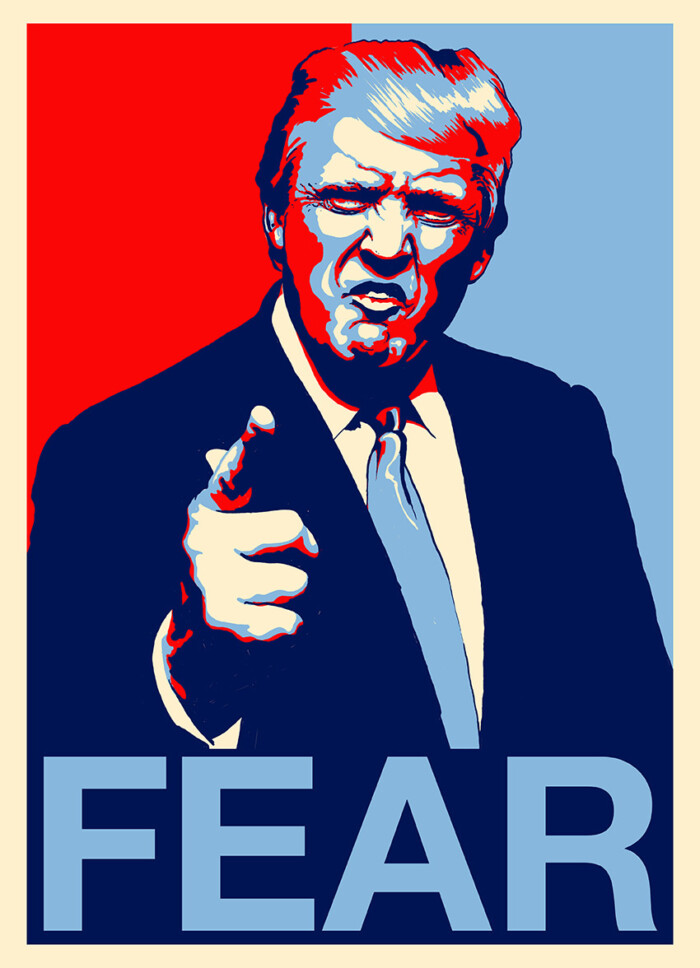 I’ve spent quite a bit of time over the last 9 years worrying myself sick about what Trump has done, is doing, and might do in the future to our country and our lives. I’ve spent many sleepless nights lying awake because of anxiety. But now Trump has decided to reassure us women. He says he’s doing what’s best for us, even though we don’t realize it. I know you’ve probably seen the message he sent to women on Truth Social, but I’m going to






















 Crystal Bloodworth, medical director for the shelter, said now that Cinder has been neutered, it will grow up appearing to be female. However, given its anatomy at birth, the shelter has opted to label the kitten as male.





 peej
peej Carissa
 bostonboomer
 dakinikat
 ecocatwoman
 mablue2
 Mama Lopez
 peggysue22
 quixote
 skydancingguestblogger
 Mona (aka Wonk the Vote)



 Sky Dancing

Recent Comments