
Tuesday Night Updates
Posted: September 24, 2013 Filed under: open thread | Tags: iran, Pakistan earthquake, Senate Whacko Birds, UN Nations, US 11 CommentsJust thought I’d put a few of the day’s significant news stories up. One story is pure theatre. The other one is actually significant because it’s a signal that the  U.S. and Iran may approach their relationship differently from now on out. The Iranian President portrays himself as a moderate and the Obama Administration is encouraging the change!
President Barack Obama’s speech Tuesday to the United Nations was his most significant foreign policy statement since becoming president. It showed he had clearly learned something from the recent “red line” fiasco in Syria. The speech also displayed what has always been the most attractive feature of Obama’s foreign policy, one that clearly sets him off from his predecessor—his willingness to court erstwhile enemies and adversaries, or to put it in negative terms, his not possessing what my former colleague Peter Scoblic called an “us versus them” view of the world.
The speech was a departure in one very obvious way. Two years ago, the Obama administration had announced a “pivot to Asia” in its foreign policy, but Obama’s speech to the U.N. was almost entirely devoted to the greater Middle East with a footnote here or there to Africa. Obama mentioned China only once—as one of the nations engaged in nuclear weapons talks with Iran—and didn’t mention Japan or South Korea at all. That reflects the way the world is: The Middle East is oil—still the lifeblood of the global economy—and the Middle East continues to suffer from tectonic fault lines created by the Age of Empire in Europe.
There were specific departures in the speech from positions that Obama has taken in the past. The one that will get the most attention, and rightly so, is American policy toward Iran, but the speech also included departures in American policy toward Syria, Israel and the Palestinians, and Egypt and the Arab Spring.
Obama declared his willingness to pursue a diplomatic solution with Iran over its nuclear program. Of course, he had done that before, but it was usually punctuated by a threat of military action if Iran did develop a nuclear weapon. That threat lingered in the background in his speech; in the foreground, he acknowledged Iranian fears of the United States, dating from our helping to overthrow Iran’s government in 1953; he welcomed Iranian President Hassan Rouhani’s overtures to the United States; and he said he was instructing Secretary of State John Kerry to meet with Iran’s foreign minister—the first such meeting between the country’s leading diplomats since 2007. The White House has also said it is “keeping the door open” to a meeting between Obama and Rouhani.
The thaw in relations was not subtle but it also wasn’t substantive.
Obama said that if the UN security council failed to pass a strong resolution enforcing the dismantling of the Syrian regime’s chemical weapons arsenal, then the institution would show itself “incapable of enforcing the most basic of international laws”.
However, in his UN speech Obama made clear that the US saw the Iranian nuclear programme as a much more immediate and serious threat to its core interests, and he responded to the overtures of the newly-elected leadership in Tehran by putting Kerry in charge of the coming critical weeks of intense negotiations.
“Given President Rouhani’s stated commitment to reach an agreement, I am directing John Kerry to pursue this effort with the Iranian government, in close coordination with the European Union, the United Kingdom, France, Germany, Russia and China,” the president said.
The move mirrored Rouhani’s decision to put his own foreign minister, Mohammad Javad Zarif, in charge of the talks, breaking from the practice of the past eight years of abortive negotiations of assigning them to senior officials. The foreign ministers of all seven countries are due to meet for the first time at the UN on Thursday.
“Directing Secretary Kerry to lead this signals that the negotiations may be elevated to the foreign minister level, which would be very good news,” said Trita Parsi, the head of the National Iranian American Council, and the author of a book on US-Iranian negotiations, A Single Roll of the Dice.
“This means that far greater political will is being invested into the diplomatic process, which in turn increases the cost of failure. That is exactly what is needed to overcome the political obstacles to a deal.”
Obama acknowledged the difficulties ahead. “The roadblocks may prove to be too great, but I firmly believe a diplomatic path must be tested,” he said.
The theatrical news came from a weird show in the US that was supposed to pass for a filibuster on the funding of the Affordable Health Care Act by Ted Cruz and the other notorious Senate Republican Whacko Birds. There were some seriously comical and crazy moments. Let me just say that none of these idiots are Wendy Davis!
During a floor speech Tuesday aimed at reviving the already-dim prospects for his effort to defund Obamacare, Sen. Ted Cruz (R-TX) likened his doubters to Nazi appeasers.
“If you go to the 1940s, Nazi Germany,” Cruz said. “Look, we saw in Britain, Neville Chamberlain, who told the British people, ‘Accept the Nazis. Yes, they’ll dominate the continent of Europe but that’s not our problem. Let’s appease them. Why? Because it can’t be done. We can’t possibly stand against them.'”
“And in America there were voices that listened to that,” he continued. “I suspect those same pundits who say it can’t be done, if it had been in the 1940s we would have been listening to them. Then they would have made television. They would have gotten beyond carrier pigeons and beyond letters and they would have been on tv and they would have been saying, ‘You cannot defeat the Germans.'”
Cruz said at the outset that he intends to speak until he is “no longer able to stand” in an effort to force Senate Majority Leader Harry Reid (D-NV) to agree to a 60-vote threshold for any motion that removes the defunding language from the House-passed continuing resolution.
But because Senate procedure limits how long he may speak before the initial vote to invoke cloture on Wednesday, Cruz is actually not staging a filibuster.
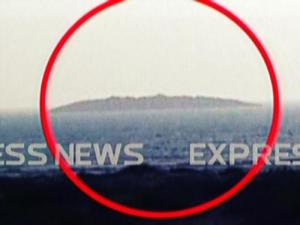 Just one further story that shows the power of Mother Nature. There was a deadly earthquake in Pakistan that has killed many people and produced a new island.
It struck at 16:29 local time (11:29 GMT) at a depth of 20km (13 miles), 66km north-east of Awaran in Balochistan province, the United States Geological Survey said.
It was felt as far away as Karachi, Hyderabad, and India’s capital, Delhi.
Balochistan is Pakistan’s largest but least populated province.
A major earthquake hit a remote part of western Pakistan on Tuesday, killing at least 45 people and prompting a new island to rise from the sea just off the country’s southern coast.
Tremors were felt as far away as the Indian capital of New Delhi, hundreds of miles to the east, where buildings shook, as well as the sprawling port city of Karachi in Pakistan.
The United States Geological Survey said the 7.8 magnitude quake struck 145 miles southeast of Dalbandin in Pakistan’s quake-prone province of Baluchistan, which borders Iran.
The earthquake was so powerful that it caused the seabed to rise and create a small, mountain-like island about 600 meters (yards) off Pakistan’s Gwadar coastline in the Arabian Sea.
Television channels showed images of a stretch of rocky terrain rising above the sea level, with a crowd of bewildered people gathering on the shore to witness the rare phenomenon.
So, the real earth-shattering news was not made by Senator Cruz even though he probably thinks he was the big deal of the day.

 peej
peej Carissa
 bostonboomer
 dakinikat
 ecocatwoman
 mablue2
 Mama Lopez
 peggysue22
 quixote
 skydancingguestblogger
 Mona (aka Wonk the Vote)



 Sky Dancing
Recent Comments