Posted: March 12, 2022 | Author: bostonboomer | Filed under: Afternoon Reads | Tags: cats, caturday, Russia, Russian oligarchs, Stephen Kotkin, Ukraine, Ukrainian artists, Vladimir Putin |
Good Afternoon!!
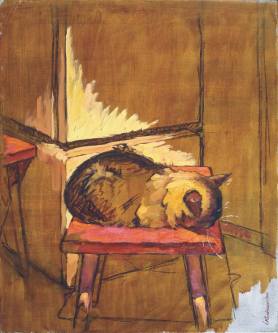
Ivan Kolisnyk, A Drowsy Cat
The war in Ukraine continues, and although the Ukrainian military is fighting valiantly and the Russians are struggling, the bad guys are likely to win in the end. IMHO, the U.S. and NATO need to do more to help Ukraine. I’ll offer some serious reads on the situation, but first a little furry break from the madness.
From March 2 at My Modern Met: Devoted Ukrainian Cat Cafe Is Staying Open to Care For 20 Kitties During the War.
Cat cafes are a purrfect way to enjoy the company of felines while you sip a tasty drink. The beloved Cat Cafe Lviv is no exception. It’s been open for six years and the small team in Lviv, Ukraine, is devoted to its 20 furry residents. So devoted, in fact, that owner Serhii Oliinyk is choosing to stay at the cafe despite the Russian invasion in his country.
“Our cats have been living in [the] cat cafe since the age of 4 months,” Oliinyk explained. “They are like family. We realized that we would never leave our country, that this was the only place where we could see ourselves in the future.”
Cat Cafe Lviv is open (according to its Facebook page) and is dedicated to providing a safe space for people to stop by and see the kitties who reside there. Hopefully, the cats’ presence and purrs offer a momentary reprieve to the stark realities of what’s going on just beyond the walls.
“We currently have fewer regular visitors, but there are people who have come from other cities and need hot food and positive emotions,” Oliinyk said. “There are three large rooms in our cafe, two of which are located in the basement, so in case of an air raid warning, there is a safe shelter for our guests and cats.”
If you would like to support Cat Cafe Lviv during this time, it has detailed how you can donate money, 50% of which goes to the Ukrainian army.
Click the link to view charming photos of the cats.
From March 2 at Slate: Why the Internet Is Obsessed With the Cats and Dogs of Ukraine.
Alongside images of destruction and resistance, the visual story of Russia’s invasion of Ukraine has included a fair bit of cats and dogs. The Albanian Times shared a story of Ukrainian soldiers taking in a puppy left in the cold. Facebook posts tout soldiers cuddling cats and show families refusing to leave their pets behind as they flee. Famed Twitter Maine coon Lorenzo the Cat shared the story of Aleksandra Polischuk, a breeder of sphinx cats who was killed when her home was destroyed. And of course, Twitter couldn’t help but go aww at the photos of Ukrainian President Volodymyr Zelensky and his dogs.

Kateryna Zavadska, Cool cat
It would be easy to position cat and dog content in a warzone as contradictory to conflict. But pet and animal content aren’t the opposite of war—they’re a part of it. Every pet image coming out of Ukraine right now shows a human impacted by the war in some way. In the above-listed examples, every story of a rescued dog or a cuddling cat was bookended by the actions of people.
Animals remind us of our own humanity, and they can be stark reminders of the human face of geopolitical strife. These cat and dog images coming out of Ukraine remind us, paradoxically, that there are real, individual people on the frontlines. There are real, individual people whose lives are forever changed by this aggression. These aren’t just images of animals in conflict, but reminders of the humans who take care of them and fight on the ground.
It is no accident that we flock to cat content online. It is also not a coincidence that these stories of pets and animal in war circulate widely on the internet. The internet is an ideal space for this type of sharing, as pet and animal images help keep digital spaces lighthearted and fun. Pet and animal images are often the opposite to “doomscrolling,” or the endless scrolling through negative, serious, and depressing news online. Right now, as we doomscroll through a war, cute pet and animal content provides relief, but in conjunction with the war photos themselves, reminds us of the human cost of conflict.
There’s also another side to this phenomenon. Read about it at Slate.
Now back to the news of the day.
At the New Yorker, an interview with Russia scholar that is getting a lot of attention: The Weakness of the Despot. An expert on Stalin discusses Putin, Russia, and the West, by David Remnick
Stephen Kotkin is one of our most profound and prodigious scholars of Russian history. His masterwork is a biography of Josef Stalin. So far he has published two volumes––“Paradoxes of Power, 1878-1928,” which was a finalist for the Pulitzer Prize, and “Waiting for Hitler, 1929-1941.” A third volume will take the story through the Second World War; Stalin’s death, in 1953; and the totalitarian legacy that shaped the remainder of the Soviet experience….
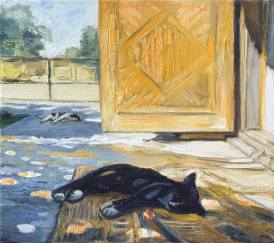
Olena Kamenetska-Ostapchuk, Siesta
Kotkin has a distinguished reputation in academic circles. He is a professor of history at Princeton University and a senior fellow at the Hoover Institution, at Stanford University. He has myriad sources in various realms of contemporary Russia: government, business, culture….
Earlier this week, I spoke with Kotkin about Putin, the invasion of Ukraine, the American and European response, and what comes next, including the possibility of a palace coup in Moscow.
You’ll need to go to The New Yorker to read the whole interview, but here’s an excerpt.
What is Putinism? It’s not the same as Stalinism. It’s certainly not the same as Xi Jinping’s China or the regime in Iran. What are its special characteristics, and why would those special characteristics lead it to want to invade Ukraine, which seems a singularly stupid, let alone brutal, act?
Yes, well, war usually is a miscalculation. It’s based upon assumptions that don’t pan out, things that you believe to be true or want to be true. Of course, this isn’t the same regime as Stalin’s or the tsar’s, either. There’s been tremendous change: urbanization, higher levels of education. The world outside has been transformed. And that’s the shock. The shock is that so much has changed, and yet we’re still seeing this pattern that they can’t escape from.
You have an autocrat in power—or even now a despot—making decisions completely by himself. Does he get input from others? Perhaps. We don’t know what the inside looks like. Does he pay attention? We don’t know. Do they bring him information that he doesn’t want to hear? That seems unlikely. Does he think he knows better than everybody else? That seems highly likely. Does he believe his own propaganda or his own conspiratorial view of the world? That also seems likely. These are surmises. Very few people talk to Putin, either Russians on the inside or foreigners.

Anastasiia Atamanchuk, Fuji Cats
And so we think, but we don’t know, that he is not getting the full gamut of information. He’s getting what he wants to hear. In any case, he believes that he’s superior and smarter. This is the problem of despotism. It’s why despotism, or even just authoritarianism, is all-powerful and brittle at the same time. Despotism creates the circumstances of its own undermining. The information gets worse. The sycophants get greater in number. The corrective mechanisms become fewer. And the mistakes become much more consequential.
Putin believed, it seems, that Ukraine is not a real country, and that the Ukrainian people are not a real people, that they are one people with the Russians. He believed that the Ukrainian government was a pushover. He believed what he was told or wanted to believe about his own military, that it had been modernized to the point where it could organize not a military invasion but a lightning coup, to take Kyiv in a few days and either install a puppet government or force the current government and President to sign some paperwork.
I haven’t read the whole piece yet, but I plan to read the rest–even though some of it is over my head. There’s also a video of the entire interview at the New Yorker link.
Another deep dive on Putin’s Russia from Anatole Lieven at Financial Times: Inside Putin’s circle — the real Russian elite.
In describing Vladimir Putin and his inner circle, I have often thought of a remark by John Maynard Keynes about Georges Clemenceau, French prime minister during the first world war: that he was an utterly disillusioned individual who “had one illusion — France”.
Something similar could be said of Russia’s governing elite, and helps to explain the appallingly risky collective gamble they have taken by invading Ukraine. Ruthless, greedy and cynical they may be — but they are not cynical about the idea of Russian greatness.
The western media employ the term “oligarch” to describe super-wealthy Russians in general, including those now wholly or largely resident in the west. The term gained traction in the 1990s, and has long been seriously misused. In the time of President Boris Yeltsin, a small group of wealthy businessmen did indeed dominate the state, which they plundered in collaboration with senior officials. This group was, however, broken by Putin during his first years in power.
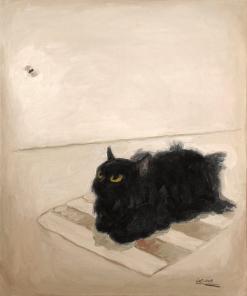
Ivan Kolisnyk, A Fly
Three of the top seven “oligarchs” tried to defy Putin politically. Boris Berezovsky and Vladimir Gusinsky were driven abroad, and Mikhail Khodorkovsky was jailed and then exiled. The others, and their numerous lesser equivalents, were allowed to keep their businesses within Russia in return for unconditional public subservience to Putin. When Putin met (by video link) leading Russian businessmen after launching the invasion of Ukraine, there was no question of who was giving the orders.
The force that broke the oligarchs was the former KGB, reorganised in its various successor services. Putin himself, of course, came from the KGB, and a large majority of the top elite under Putin are from the KGB or associated state backgrounds (though not the armed forces).
This group have remained remarkably stable and homogenous under Putin, and are (or used to be) close to him personally. Under his leadership, they have plundered their country (though unlike the previous oligarchs, they have kept most of their wealth within Russia) and have participated or acquiesced in his crimes, including the greatest of them all, the invasion of Ukraine. They have echoed both Putin’s vicious propaganda against Ukraine and his denunciations of western decadence.
The Washington Post: U.S. explores sending Ukraine more advanced weapons after scuttling Polish jet deal.
The Biden administration, under pressure to expand the arsenal of weapons that Ukraine has in its conflict with Russia, is working with European allies to expedite more sophisticated air-defense systems and other armaments into the war zone, U.S. officials said Friday.
Discussions were ongoing ahead of Defense Secretary Lloyd Austin’s planned trip next week to meet with NATO allies in Brussels and Slovakia, which along with Poland and Romania has indicated a willingness to transfer military aid to its embattled neighbor. Slovakia also possesses the S-300 surface-to-air missile system, which is used to shoot down enemy aircraft and is familiar to the Ukrainians.
Pentagon spokesman John Kirby told reporters that the United States is committed to arming the government in Kyiv with “the kinds of capabilities that we know the Ukrainians need and are using very well.” He declined to specify what types of weapons could be included in the next wave of shipments.
“Some of that material we have and are providing. Some of that material we don’t have but we know others have, and we’re helping coordinate that as well,” Kirby said.
The administration is facing backlash over its decision earlier this week to scuttle Poland’s proposal that would have sent a number of its MiG-29 fighter jets to Ukraine via a transfer “free of charge” to the United States. Washington, citing concerns that Russia would view the move as a provocation, said the offer from Warsaw was not “tenable.”

Wine Tasting, Roman Filippov
The New York Times: U.S. Officials Say Superyacht Could be Putin’s.
American officials are examining the ownership of a $700 million superyacht currently in a dry dock at an Italian seacoast town, and believe it could be associated with President Vladimir V. Putin of Russia, according to multiple people briefed on the information.
United States intelligence agencies have made no final conclusions about the ownership of the superyacht — called the Scheherazade — but American officials said they had found initial indications that it was linked to Mr. Putin. The information from the U.S. officials came after The New York Times reported on Tuesday that Italian authorities were looking into the 459-foot long vessel’s ownership and that a former crew member said it was for the use of Mr. Putin….
American officials said Mr. Putin kept little of his wealth in his own name. Instead he uses homes and boats nominally owned by Russian oligarchs. Still, it is possible that through various shell companies, Mr. Putin could have more direct control of the Scheherazade.
Both the Treasury Department’s Office of Intelligence and Analysis and the Navy’s Office of Naval Intelligence are investigating the ownership of superyachts associated with Russian oligarchs. A spokesman for the Navy and a spokeswoman for the Treasury both declined to comment.
The Justice Department has set up a task force to go after the assets of sanctioned Russian oligarchs. In a discussion with reporters on Friday, a Justice Department official said the task force would be investigating individuals who help sanctioned Russian officials or oligarchs hide their assets. Those individuals could face charges related to sanctions violations or international money laundering charges.
Head over to the NYT to read details about the yacht and how it and other Russian oligarch-owned super yachts could be seized.
There are lots of serious articles on the Ukraine crisis today. Here are a few more to check out:
Holger Roonemaa and Michael Weiss at New Lines Magazine: soldiers: Analysts say the invasion is grinding to a stalemate.
Shannon Vavra at The Daily Beast: Putin’s Desperate Bid for More Troops in Ukraine Is Failing Miserably.
Grid: Is a Russian disinformation campaign a prelude to a Russian bioweapons attack?
I’m getting exhausted emotionally by the war news. I want to read more today, but I guess I need to pace myself. I hope you all are taking good care of yourselves amid all the scary news.
Did you like this post? Please share it with your friends:
Posted: November 26, 2016 | Author: bostonboomer | Filed under: Barack Obama, morning reads, U.S. Politics | Tags: Cuban revolution, Donald Trump, Fidel Castro, Hillary Clinton, Michigan, notable deaths, Russian interference in US election, Russian oligarchs, vote recounts, Wisconsin |
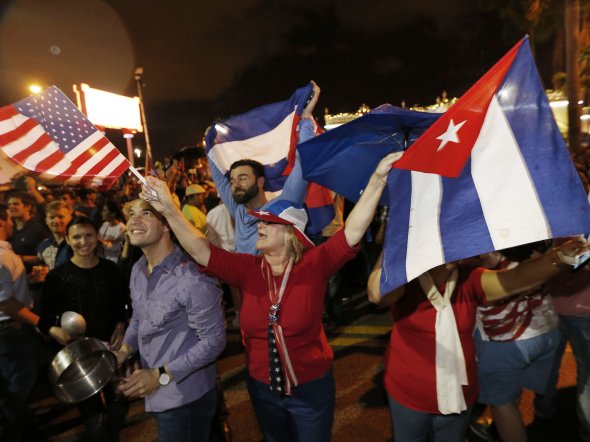
Cuban-Americans celebrate upon hearing about the death of longtime Cuban leader Fidel Castro in the Little Havana neighborhood of Miami, Fla., on Saturday.
AFP/AFP/Getty Images
Good Morning!!
The big news this morning is the death of Fidel Castro. From the AP via the NYT: Cuba’s Fidel Castro, Who Defied US for 50 Years, Dies at 90.
Former President Fidel Castro, who led a rebel army to improbable victory in Cuba, embraced Soviet-style communism and defied the power of 10 U.S. presidents during his half century rule, has died at age 90.
With a shaking voice, President Raul Castro said on state television that his older brother died at 10:29 p.m. Friday. He ended the announcement by shouting the revolutionary slogan: “Toward victory, always!”
Castro’s reign over the island-nation 90 miles (145 kilometers) from Florida was marked by the U.S.-backed Bay of Pigs invasion in 1961 and the Cuban Missile Crisis a year later that brought the world to the brink of nuclear war. The bearded revolutionary, who survived a crippling U.S. trade embargo as well as dozens, possibly hundreds, of assassination plots, died 10 years after ill health forced him to hand power over to Raul.
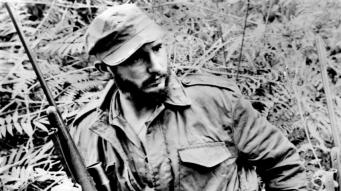
Castro overcame imprisonment at the hands of dictator Fulgencio Batista, exile in Mexico and a disastrous start to his rebellion before triumphantly riding into Havana in January 1959 to become, at age 32, the youngest leader in Latin America. For decades, he served as an inspiration and source of support to revolutionaries from Latin America to Africa.
His commitment to socialism was unwavering, though his power finally began to fade in mid-2006 when a gastrointestinal ailment forced him to hand over the presidency to Raul in 2008, provisionally at first and then permanently. His defiant image lingered long after he gave up his trademark Cohiba cigars for health reasons and his tall frame grew stooped.
“Socialism or death” remained Castro’s rallying cry even as Western-style democracy swept the globe and other communist regimes in China and Vietnam embraced capitalism, leaving this island of 11 million people an economically crippled Marxist curiosity.
The Times also has a lengthy obituary: Fidel Castro, Cuban Revolutionary Who Defied U.S., Dies at 90.
Fidel Castro, the fiery apostle of revolution who brought the Cold War to the Western Hemisphere in 1959 and then defied the United States for nearly half a century as Cuba’s maximum leader, bedeviling 11 American presidents and briefly pushing the world to the brink of nuclear war, died Friday. He was 90….
In declining health for several years, Mr. Castro had orchestrated what he hoped would be the continuation of his Communist revolution, stepping aside in 2006 when he was felled by a serious illness. He provisionally ceded much of his power to his younger brother Raúl, now 85, and two years later formally resigned as president. Raúl Castro, who had fought alongside Fidel Castro from the earliest days of the insurrection and remained minister of defense and his brother’s closest confidant, has ruled Cuba since then, although he has told the Cuban people he intends to resign in 2018.
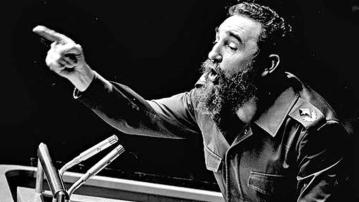
Fidel Castro had held on to power longer than any other living national leader except Queen Elizabeth II. He became a towering international figure whose importance in the 20th century far exceeded what might have been expected from the head of state of a Caribbean island nation of 11 million people.
He dominated his country with strength and symbolism from the day he triumphantly entered Havana on Jan. 8, 1959, and completed his overthrow of Fulgencio Batista by delivering his first major speech in the capital before tens of thousands of admirers at the vanquished dictator’s military headquarters.
A spotlight shone on him as he swaggered and spoke with passion until dawn. Finally, white doves were released to signal Cuba’s new peace. When one landed on Mr. Castro, perching on a shoulder, the crowd erupted, chanting “Fidel! Fidel!” To the war-weary Cubans gathered there and those watching on television, it was an electrifying sign that their young, bearded guerrilla leader was destined to be their savior.
Much more at the link.
Meanwhile, we’re in the midst of a shocking revolution here at home. Our government has been essentially taken over by a hostile foreign state, and it appears that no one in power is doing anything about it. It looks like we are going to be ruled by billionaires–are we really going to allow our country to become a Russian oligarchy?
The Washington Post: Americans keep looking away from the election’s most alarming story, by Eric Chenowith.
In assessing Donald Trump’s presidential victory, Americans continue to look away from this election’s most alarming story: the successful effort by a hostile foreign power to manipulate public opinion before the vote.
U.S. intelligence agencies determined that the Russian government actively interfered in our elections. Russian state propaganda gave little doubt that this was done to support President-elect Trump, who repeatedly praised Vladimir Putin and excused the Russian president’s foreign aggression and domestic repression. Most significantly, U.S. intelligence agencies have affirmed that the Russian government directedthe illegal hacking of private email accounts of the Democratic National Committee and prominent individuals. The emails were then released by WikiLeaks, which has benefited financially from a Russian state propaganda arm, used Russian operatives for security and made clear an intent to harm the candidacy of Hillary Clinton.
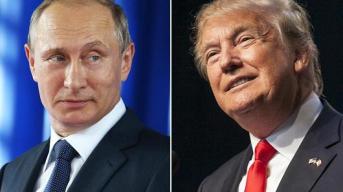
From the Russian perspective, the success of this operation can hardly be overstated. News stories on the DNC emails released in July served to disrupt the Democratic National Convention, instigate political infighting and suggest for some supporters of Sen. Bernie Sanders (I-Vt.) — without any real proof — that the Democratic primary had been “
rigged” against their candidate. On Oct. 7, WikiLeaks began near
dailydumps from Clinton campaign chairman John Podesta’s email account, generating a month of largely negative reporting on Clinton, her campaign staff, her husband and their foundation. With some exceptions, there was little news in the email beyond political gossip and things the media had covered before, now revisited from a seemingly “hidden” viewpoint.
Russian (and former communist) propaganda has traditionally worked exactly this way: The more you “report” something negatively, the more the negative is true. Trump and supportive media outlets adopted the technique and reveled in information gained from the illegal Russian hacking (as well as many “fake news” stories that
evidencesuggestswere generated by Russian intelligence operations) to make exaggerated claims (“Hillary wants to open borders to 600 million people!”) or to accuse Clinton of illegality, corruption and, ironically, treasonous behavior.
Does anyone in the Obama administration have serious concerns about this? And what about possible connections between Russia and factions in FBI? I can only hope that efforts to deal with the situation are going on behind the scenes, but it sure doesn’t seem that way. Instead, it looks like the Obama administration is focused on making things easier for Trump and his Russian oligarch pals.
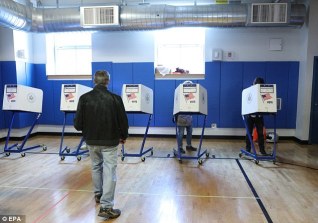
NYT: U.S. Officials Defend Integrity of Vote, Despite Hacking Fears.
WASHINGTON — The Obama administration said on Friday that despite Russian attempts to undermine the presidential election, it has concluded that the results “accurately reflect the will of the American people.”
The statement came as liberal opponents of Donald J. Trump, some citing fears of vote hacking, are seeking recounts in three states — Wisconsin, Michigan and Pennsylvania — where his margin of victory was extremely thin.
A drive by Jill Stein, the Green Party candidate, for recounts in those states had brought in more than $5 million by midday on Friday, her campaign said, and had increased its goal to $7 million. She filed for a recount in Wisconsin on Friday, about an hour before the deadline.
In its statement, the administration said, “The Kremlin probably expected that publicity surrounding the disclosures that followed the Russian government-directed compromises of emails from U.S. persons and institutions, including from U.S. political organizations, would raise questions about the integrity of the election process that could have undermined the legitimacy of the president-elect.”
That was a reference to the breach of the Democratic National Committee’s email system, and the leak of emails from figures like John D. Podesta, Hillary Clinton’s campaign chairman.
“Nevertheless, we stand behind our election results, which accurately reflect the will of the American people,” it added.
I don’t get it. So President Obama really isn’t that interested in fighting for his legacy anymore? And there’s this from The Hill: Obama urged Clinton to concede on election night.
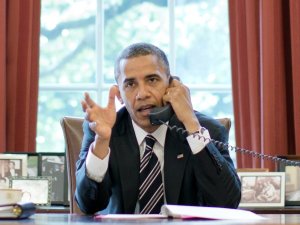
President Barack Obama called Hillary Clinton to persuade her to concede the White House on election night, according to a forthcoming book on Clinton’s defeat.
Authors Amie Parnes, The Hill’s senior White House correspondent, and Jonathan Allen cite three Clintonworld sources familiar with the election-night request in the unreleased book from Crown Publishing.
“You need to concede,” Obama told his former secretary of State as she, her family, and her top aides continued to watch results trickle in from the key Rust Belt states of Michigan, Wisconsin and Pennsylvania. The latter state, called after 1:30 a.m. by The Associated Press, was the clear tipping point for the White House race, ensuring Trump would crest over the 270 electoral-vote threshold needed to win.
Clinton ultimately heeded Obama’s advice and called Trump to acknowledge her defeat in the early morning hours Wednesday….
Obama’s call left a sour taste in the mouths of some Clinton allies who believe she should have waited longer, and there’s now a fight playing out between the Obama and Clinton camps over whether to support an effort to force the Rust Belt states to recount their votes.
Meanwhile, efforts to get recounts in Wisconsin, Michigan, and Pennsylvania are moving forward. The Wisconsin Election Commission: Wisconsin Elections Commission Receives Two Presidential Election Recount Petitions.
MADISON, WI – The Wisconsin Elections Commission today received two recount petitions from the Jill Stein for President Campaign and from Rocky Roque De La Fuente, Administrator Michael Haas announced.
“The Commission is preparing to move forward with a statewide recount of votes for President of the United States, as requested by these candidates,” Haas said.
“We have assembled an internal team to direct the recount, we have been in close consultation with our county clerk partners, and have arranged for legal representation by the Wisconsin Department of Justice,” Haas said. “We plan to hold a teleconference meeting for county clerks next week and anticipate the recount will begin late in the week after the Stein campaign has paid the recount fee, which we are still calculating.”
The last statewide recount was of the Supreme Court election in 2011. At that time, the Associated Press surveyed county clerks and reported that costs to the counties exceeded $520,000, though several counties did not respond to the AP’s survey. That election had 1.5 million votes, and Haas said the Commission expects the costs to be higher for an election with 2.975 million votes. “The Commission is in the process of obtaining cost estimates from county clerks so that we can calculate the fee which the campaigns will need to pay before the recount can start,” Haas said. The Commission will need to determine how the recount costs will be assessed to the campaigns.
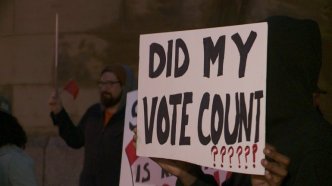
The state is working under a federal deadline of December 13 to complete the recount. As a result, county boards of canvassers may need to work evenings and weekends to meet the deadlines. “The recount process is very detail-oriented, and this deadline will certainly challenge some counties to finish on time,” Haas said.
A recount is different than an audit and is more rigorous, Haas explained. More than 100 reporting units across the state were randomly selected for a separate audit of their voting equipment as required by state law, and that process has already begun. Electronic voting equipment audits determine whether all properly-marked ballots are accurately tabulated by the equipment. In a recount, all ballots (including those that were originally hand counted) are examined to determine voter intent before being retabulated. In addition, the county boards of canvassers will examine other documents, including poll lists, written absentee applications, rejected absentee ballots, and provisional ballots before counting the votes.
Haas noted that the Commission’s role is to order the recount, to provide legal guidance to the counties during the recount, and to certify the results. If the candidates disagree with the results of the recount, the law gives them the right to appeal in circuit court within five business days after the recount is completed. The circuit court is where issues are resolved that may be discovered during the recount but are not resolved to the satisfaction of the candidates.
The Detroit News: Mich. readies for presidential recount as cutoff looms.
Lansing — Elections officials are preparing for a possible presidential election recount in Michigan that could begin as soon as next week, state Director of Elections Chris Thomas said Friday.
Green Party presidential candidate Jill Stein has indicated she plans to jumpstart a recount in the Great Lakes state over fears that Michigan’s election results could have been manipulated by hackers. Republican President-elect Donald won the state by 10,704 votes over Democrat Hillary Clinton, according to unofficial updated resultsposted Wednesday.
By Friday afternoon, Stein had raised more than $5 million of her $7 million goal to cover the cost of a recount in Wisconsin, Pennsylvania and Michigan “to ensure the integrity of our elections” because “there is a significant need to verify machine-counted vote totals,” according to her campaign website. Stein finished nearly 2.3 million votes behind Trump in Michigan and received 1.1 percent of the vote.
Michigan’s deadline for initiating a recount is Wednesday. “We have not heard from anybody,” Thomas said about a Stein recount request. “We’re just trying to be proactive, make sure we have plans.”
Thomas said officials “could probably begin by the end of the week,” although it will be “a huge undertaking in a very short period of time” if it happens.
That’s all I have for you today. I admit that I’ve been sinking into depression and despair over the past few days. I don’t know how to deal with this nightmare. I’m not giving up; I’m just in a state of extreme confusion and not sure how to come out of it yet.
Take care Sky Dancers! I love you all.
Did you like this post? Please share it with your friends:


 peej
peej Carissa
 bostonboomer
 dakinikat
 ecocatwoman
 mablue2
 Mama Lopez
 peggysue22
 quixote
 skydancingguestblogger
 Mona (aka Wonk the Vote)



 Sky Dancing
Recent Comments