
Wednesday Reads: Can We Still Prevent A Trump Dictatorship?
Posted: April 23, 2025 Filed under: Donald Trump, ICE Immigration and Customs Enforcement, immigration, just because | Tags: Abrego Garcia, Autocracy, Chris Van Hollen, Cory Booker, dictatorship, Gary Kasparov, Mahmoud Khalil, Maria Ressa, Philippines, Rodrigo Duterte, Rumeysa Ozturk, Steven Levitsky 11 CommentsGood Morning!!
We are in deep trouble as a country. Trump hasn’t even been in the White House for 100 days, and he has made rapid progress toward turning us into a dictatorship. I think Congressional Democrats are beginning to wake up, but not nearly quickly enough. Too many of these elected Democrats still aren’t taking the danger seriously enough. In my opinion, they should calling press conferences at least every few days to explain how Trump is destroying our government.
There’s an excellent piece in The Atlantic by executive editor Adrienne LaFrance (gift link): A Ticking Clock on American Freedom. It’s later than you think, but it’s not too late.
Look around, take stock of where you are, and know this: Today, right now—and I mean right this second—you have the most power you’ll ever have in the current fight against authoritarianism in America. If this sounds dramatic to you, it should. Over the past five months, in many hours of many conversations with multiple people who have lived under dictators and autocrats, one message came through loud and clear: America, you are running out of time.
Maria Ressa
People sometimes call the descent into authoritarianism a “slide,” but that makes it sound gradual and gentle. Maria Ressa, the journalist who earned the Nobel Peace Prize for her attempts to save freedom of expression in the Philippines, told me that what she experienced during the presidency of Rodrigo Duterte is now, with startling speed and remarkable similarity, playing out in the United States under Donald Trump. Her country’s democratic struggles are highly instructive. And her message to me was this: Authoritarian leaders topple democracy faster than you can imagine. If you wait to speak out against them, you have already lost.
Shortly after Trump was reelected last fall, I called Ressa to ask her how she thought Americans should prepare for his return. She told me then that she worried about a failure of imagination. She knew that the speed of the destruction of institutions—one of the first steps an authoritarian takes to solidify and centralize power—would surprise people here, even those paying the closest attention. Ressa splits her time between Manila and New York, and she repeatedly warned me to be ready for everything to happen quickly. When we spoke again weeks after his inauguration, Ressa was shaken. President Trump was moving faster than even she had anticipated.
I heard something similar recently from Garry Kasparov, the Russian dissident and chess grand master. To him, the situation was obvious. America is running out of time, he told me. As Kasparov wrote recently in this magazine, “If this sounds alarmist, forgive me for not caring. Exactly 20 years ago, I retired from professional chess to help Russia resist Putin’s budding dictatorship. People were slow to grasp what was happening there too.”
The chorus of people who have lived through democratic ruin will all tell you the same thing: Do not make the mistake of assuming you still have time. Put another way: You think you can wait and see, and keep democracy intact? Wanna bet? Those who have seen democracy wrecked in their home country are sometimes derided as overly pessimistic—and it’s understandable that they’d have a sense of inevitability about the dangers of autocracy. But that gloomy worldview does not make their warnings any less credible: Unless Trump’s power is checked, and soon, things will get much worse very quickly. When people lose their freedoms, it can take a generation or more to claw them back—and that’s if you’re lucky.

Trump’s methods clearly mirror those of authoritarian leaders in other countries.
The Trump administration’s breakneck pace is obviously no accident. While citizens are busy processing their shock over any one shattered norm or disregarded law, Trump is already on to the next one. This is the playbook authoritarians have used all over the world: First the leader removes those with expertise and independent thinking from the government and replaces them with leaders who are arrogant, ignorant, and extremely loyal. Next he takes steps to centralize his power and claim unprecedented authority. Along the way, he conducts an all-out assault on the truth so that the truth tellers are distrusted, corruption becomes the norm, and questioning him becomes impossible. The Constitution bends and then finally breaks. This is what tyrants do. Trump is doing it now in the United States.
Philippines, it took about six months under Duterte for democratic institutions to crumble. In the
Rodrigo Duterte
United States, the overreach in executive power and the destruction of federal agencies that Ressa told me she figured would have kept Trump busy through, say, the end of the summer were carried out in the first 30 days of his presidency. Even so, what people don’t always realize is that a dictator doesn’t seize control all at once. “The death of democracy happens by a thousand cuts,” Ressa told me recently. “And you don’t realize how badly you’re bleeding until it’s too late.” Another thing the people who have lived under authoritarian rule will tell you: It’s not just that it can get worse. It will.
Americans who are waiting for Trump to cross some imaginary red line neglect the fact that they have more leverage to defend American democracy today than they will tomorrow, or next week, or next month. While people are still debating whether to call it authoritarianism or fascism, Trump is seizing control of one independent agency after another. (And for what it’s worth, the smartest scholars I know have told me that what Trump is trying to do in America is now textbook fascism—beyond the authoritarian impulses of his first term. Take, for example, his administration’s rigid ideological purity tests, or the extreme overreach of government into freedom of scientific and academic inquiry.)
Between the time I write this sentence and the moment when this story will be published, the federal government will lose hundreds more qualified, ethical civil servants. Soon, even higher numbers of principled people in positions of power will be fired or will resign. More positions will be left vacant or filled by people without standards or scruples. The government’s attacks against other checks on power—the press, the judiciary—will worsen. Enormous pressure will be exerted on people to stay silent. And silence is a form of consent.

This article is essential reading. I hope you’ll use the gift link to read the rest at The Atlantic.
Dave Davies of NPR’s Fresh Air interviewed political science Professor Steven Levitsky, co-author of How Democracies Die: Harvard professor offers a grim assessment of American democracy under Trump.
In the 2024 presidential campaign, Democrats’ warnings that American democracy was in jeopardy if Donald Trump was elected failed to persuade a majority of voters. Our guest, Steven Levitsky, says there’s plenty of reason to worry about our democracy now….
In a new article for the journal Foreign Affairs, Levitsky and co-author Lucan A. Way write, quote, “U.S. democracy will likely break down during the Second Trump administration in the sense that it will cease to meet standard criteria for a liberal democracy – full adult suffrage, free and fair elections, and broad protection of civil liberties,” unquote. We’ve invited Levitsky here to explain the threats he sees to democracy and to talk about dramatic developments in the Trump administration’s confrontation with Harvard University.
DAVIES: You note in this article that Freedom House, which is a nonprofit that’s been around for a long time, which produces an annual global freedom index, has reduced the United States’ rating. It has slipped from 2014 to 2021. How much? Where are we now, and where did we used to be?
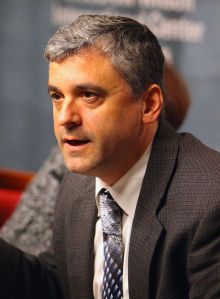
Steven Levitsky
LEVITSKY: Freedom House’s scores range from zero, which is the most authoritarian to a hundred, which is the most democratic. I think a couple of Scandinavian countries get scores of 99 or 100. The U.S. for many years was in the low 90s, which put it broadly on par with other Western democracies like the U.K. and Italy and Canada and Japan. But it slipped in the last decade, from Trump’s first victory to Trump’s second victory, from the low 90s to 83, which placed us below Argentina. And in a tie with Romania and Panama. So we’re still above what scholars would consider a democracy, but now in the very low-quality democracy range, comparable, again, to Panama, Romania and Argentina.
DAVIES: And does Freedom House explain its demotion? Why? Why did this happen?
LEVITSKY: Oh, yeah. Freedom House has annual reports for every country – the rise in political violence, political threats, threats against politicians, refusal to accept the results of a democratic election in 2020, an effort to use violence to block a peaceful transfer of power are all listed among the reasons for why the United States has fallen. I should say that even in the first four months of the Trump administration, it’s quite certain that what’s happening on the ground in the United States is likely to bring the U.S. score down quite a bit.
DAVIES: You say that the danger here is not that the United States will become a classic dictatorship with sham elections, you know, opposition leaders arrested, exiled or killed. What kind of autocracy might we become?
LEVITSKY: I think the most likely outcome is a slide into what Lucan Way and I call competitive authoritarianism. These are regimes that constitutionally continue to be democracies. There is a Constitution. There are regular elections, a legislature and importantly, the opposition is legal, above ground and competes for power. So from a distance, if you squint, it looks like a democracy, but the problem is that systematic coming (ph) abuse of power tilts the playing field against the opposition. This is the kind of regime that we saw in Venezuela under Hugo Chavez. It’s subsequently become a full-on dictatorship. It’s what we see in Turkey under Erdogan. It’s what we see in El Salvador. It’s what we see in Hungary today. Most new autocracies that have emerged in the 21st century have been led by elected leaders and fall into this category of competitive authoritarianism. It’s kind of a hybrid regime.
DAVIES: So free and fair elections lead us to a leader which takes us in a different direction?
LEVITSKY: Right. And because the leader is usually freely and fairly elected, he has a certain legitimacy that allows him to say, hey, how can you say I’m an authoritarian if I was freely and fairly elected? So citizens are often slow to realize that their country is descending into authoritarianism.
You can read the rest of the interview or listen to it at the NPR link.
Jamelle Bouie writes at The New York Times (gift link): Trump Wants You to Think Resistance Is Futile. It Is Not.
The American constitutional system is built on the theory that the self-interest of lawmakers can be as much of a defense against tyranny as any given law or institution.
As James Madison wrote in Federalist 51, “The provision for defense must in this, as in all other cases, be made commensurate to the danger of attack. Ambition must be made to counteract ambition. The interest of the man must be connected with the constitutional rights of the place.” Our Constitution is nothing more than a “parchment barrier” if not backed by the self-interest and ambition of those tasked with leading the nation.
One of the most striking dynamics in these first months of the second Trump administration was the extent to which so many politicians seemed to lack the ambition to directly challenge the president. There was a sense that the smart path was to embrace the apparent “vibe shift” of the 2024 presidential election and accommodate oneself to the new order.
But events have moved the vibe in the other direction. Ambition is making a comeback.
Last week, Senator Chris Van Hollen of Maryland traveled to El Salvador, where he met with Kilmar Armando Abrego Garcia, a victim of the Trump administration’s removal program under the 1798 Alien Enemies Act….
Abrego Garcia is one of the men trapped in this black zone. Despite his protected legal status, he was arrested, detained, accused of gang activity and removed from the United States. At no point did the government prove its case against Abrego Garcia, who has been moved to a lower-security prison, nor did he have a chance to defend himself in a court of law or before an immigration judge. As one of Abrego Garcia’s representatives in the United States Senate, Van Hollen met with him to both confirm his safety and highlight the injustice of his removal.
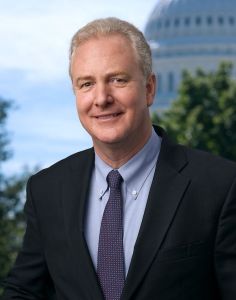
Sen. Chris Van Hollen
“This case is not just about one man,” Van Hollen said at a news conference following his visit. “It’s about protecting the constitutional rights of everybody who resides in the United States of America. If you deny the constitutional rights of one man, you threaten the constitutional rights and due process for everyone else in America.” [….]
The goal of Van Hollen’s journey to El Salvador — during which he was stopped by Salvadoran soldiers and turned away from the prison itself — was to bring attention to Abrego Garcia and invite greater scrutiny of the administration’s removal program and its disregard for due process. It was a success. And that success has inspired other Democrats to make the same trip, in hopes of turning more attention to the administration’s removal program and putting more pressure on the White House to obey the law.
Senator Cory Booker of New Jersey is reportedly organizing a trip to El Salvador, and a group of House Democrats led by Representative Robert Garcia of California arrived on Monday. “While Donald Trump continues to defy the Supreme Court, Kilmar Abrego Garcia is being held illegally in El Salvador after being wrongfully deported,” Representative Garcia said in a statement. “That is why we’re here, to remind the American people that kidnapping immigrants and deporting them without due process is not how we do things in America.”
“We are demanding the Trump administration abide by the Supreme Court decision and give Kilmar and the other migrants mistakenly sent to El Salvador due process in the United States,” Garcia added.
All of this negative attention has had an effect. It’s not just that the president’s overall approval rating has dipped into the low 40s — although it has — but that he’s losing his strong advantage on immigration as well. Fifty percent of Americans disapprove of Trump’s handling of immigration, according to a recent poll from Quinnipiac University, and a new Reuters poll shows Trump slightly underwater on the issue with a 45 percent approval to 46 percent disapproval.
These lawmakers are getting positive attention for standing up to Trump, and their actions are waking up Americans who may not have been paying enough attention to Trump’s illegal and cruel deportations.
A group of Congress people traveled to Louisiana yesterday to meet with university students who have been kidnapped and held without charges. CNN: Congressional delegation visits Mahmoud Khalil and Rumeysa Ozturk in Louisiana detention centers.
A delegation of congressional members traveled to Louisiana Tuesday to demand the release of Mahmoud Khalil and Rümeysa Öztürk and inspect conditions at the two Immigration and Customs Enforcement detention facilities where the two remain in custody.
It’s the first time a congressional delegation has met with Khalil or Ozturk.
Khalil, a Columbia University graduate, and Ozturk, a Tufts University PhD student, have been in ICE custody for more than a month after being arrested near their homes by federal agents.
The Democrat delegation, led by Rep. Troy Carter of Louisiana traveled to Jena, where Khalil is being held, and then two hours south to Basile, where Ozturk is detained. The group included Reps. Bennie Thompson of Mississippi, Ayanna Pressley and Jim McGovern of Massachusetts and Sen. Ed Markey.
Mahmoud Khalil
The facilities were clean but “chilly” according to Carter, who said detainees complained of cold temperatures at night, making it difficult to sleep. Carter said the facilities appeared to have been cleaned prior to their visit and that conditions appeared to be “fine” while they visited.
Following the visit, lawmakers said the detainees they met with also complained about a lack of medical care, food and religious accommodations.
“I really worry that this administration is ushering in a new era of McCarthyism. And unless Congress and unless the American people stand up and push back, they will succeed,” McGovern said during a press conference after the visits.
Markey accused the Trump administration of wanting to “make an example” out of Khalil and Ozturk in an effort to chill free speech. Markey also said ICE had intentionally transferred them to Louisiana for political reasons.
Through the Trump administration, ICE feels “they have a right to take people from across our country, and to put them into facilities like this here in Louisiana,” Markey said. “And why did they do that? They have done that in order to go to the single most conservative Circuit Court of Appeals in the United States of America.”

Again, these Congress people received positive media coverage. As Jamelle Bouie wrote (see above article), perhaps their ambition has led them to publicly oppose Trump’s dictatorial actions.
David Atkins at Washington Monthly: Democrats Need to Make Republicans Fear the Consequences of Attempting a Dictatorship.
Imagine that you were a high-ranking official in Donald Trump’s administration. Imagine that you believed in the Dark Enlightenment dream of dismantling liberal democracy itself—of “killing the woke mind virus,” ending birthright citizenship, and using federal power to suppress dissent. Now imagine you’re openly defying the Supreme Court, declaring that protest aids and abets terrorism, directing the FBI and IRS to target political enemies, and seriously considering invoking the Insurrection Act on flimsy pretexts. What would stop you?
Certainly not impeachment. Not with a compliant Republican Congress. Not with a conservative media ecosystem ready to justify any abuse of power as a patriotic necessity. The only thing that might give you pause is the possibility that Democrats would regain control and then do to you what you’ve done to them.
That fear of reciprocal power and legal accountability was once enough to preserve American political norms. It was the logic of mutually assured destruction: if you break democracy now, they’ll break you later. That’s how informal guardrails were enforced, even through dark chapters like Watergate or Iran-Contra. But those norms no longer hold because no one believes Democrats will retaliate.
This is the context for the quiet battle raging within the Democratic Party leadership. A few anonymous but influential centrists are urging party leaders to soft-pedal Trump’s detention of legal residents in foreign internment camps and pivot to kitchen-table economics instead. Even as constituents demand action and donors grow restless, Senate Majority Leader Chuck Schumer and House Minority Leader Hakeem Jeffries still signal caution, urging patience and restraint…..
Rumeysa Ozturk
There have been some bright spots. Senator Cory Booker broke Strom Thurmond’s filibuster record in a marathon floor speech denouncing Trump’s abuses. Senator Chris Van Hollen forced a meeting with abducted U.S. resident Abrego Garcia in El Salvador, delivering proof of life and drawing global attention. Senator Chris Murphy’s rhetoric has been sharp and effective. House Democrats like Alexandria Ocasio-Cortez (along with her “anti-oligarchy tour” partner Senator Bernie Sanders), Jasmine Crockett, and Robert Garcia have been doing excellent work. Their energy and determination carry the tacit message that those who broke the law and tried to impose an authoritarian regime on the U.S. will face appropriate justice at the end of the day. Representative Jamie Raskin was explicit about warning El Salvador’s leader: “Look, President Bukele—who’s declared himself a dictator—and the other tyrants, dictators, autocrats of the world have to understand that the Trump administration is not going to last forever,” Raskin said. “We’re going to restore strong democracy to America, and we will remember who stood up for democracy in America and who tried to drive us down towards dictatorship and autocracy.”
But these have been exceptions rather than the rule. Most Democrats in leadership and positions of power have stayed quiet—avoiding press conferences, shunning symbolic actions, and allowing business to continue as if the country weren’t barreling toward authoritarianism.
When pressed, party leaders often respond that they can do little substantively. That protests are performative. That voters are tired of drama. But that’s not the point. The point isn’t what Democrats can do today. It’s what they’re signaling they’re willing to do when they return to power.
If Trump and his allies face no meaningful consequences, they have no reason to stop. If Republicans don’t believe that Democrats will act with equal force to protect democracy—legally, aggressively, unapologetically—then there’s no deterrent to further escalation.

Click the link to read the rest.
One more from Toby Buckle at Liberal Currents: Trump ‘Alarmists’ Were Right. We Should Say So.
Throughout the Trump era I’ve been firmly in the camp unaffectionately dismissed as ‘alarmist’ by most commentators. Put simply: It is that bad. Liberal democracy is in danger. Fascism is a reasonable term for what we’re fighting.
For veteran ‘alarmists’ this is a strange moment. People are at a loss. It seems wrong, given all that is at stake, to say “I told you so”. I’ve felt that discomfort. For the longest time I avoided saying that. It felt . . . petty, childish, gauche, it just wasn’t the done thing. One of the big political awakenings I’ve had over the last year, and particularly since Trump’s 2024 victory, is realizing that it’s OK to say “called it”. More than OK. Even if it feels awkward, it’s actually important, perhaps necessary, that we do.
My view has not been, to put it mildly, the mainstream position. You’re allowed, with a certain amount of resentment, to say it today. But that wasn’t always the case. I recall first voicing it as the antecedents of Trump, the tea party and growing white supremacy, started to arise. Obama’s “the fever will break” seemed hopelessly naive to me. The press treated them either as legitimate libertarians or an eccentric curiosity, not a threat. To the activist left, what would become the Bernie movement, they were a joke—the punchline to a Jon Stewart monologue. Nothing more. When Trump first rode the elevator down to announce his candidacy, it was entertainment, not omen.
If you saw in any of this a threat to liberal democracy writ large, much less one that could actually succeed, you were looked at with the kind of caution usually reserved for the guy screaming about aliens on the subway. Trump’s election in 2016 was a shock to people who insisted it could never happen. But those most complacent before quickly found their way back to complacency after. For a certain type—specifically, the type who has a column in legacy media despite never having written an interesting or original paragraph in their lives—smug condescension became the order of the day: yes, Trump is bad, but dear me those liberals are being hysterical. As late as the last election they were writing pieces with titles like “A Trump Dictatorship Won’t Happen” or “No, Trump won’t destroy our democracy.” Even after the election, as the scale of the incoming lawlessness became clear, we were dismissed: “Trump Is Testing Our Constitutional System. It’s Working Fine” respected legal commentator Noah Feldman told us—the legal rationale for his actions was very flimsy. Courts would strike it all down. And certainly the administration would not ignore a court order.
One thing I’ve always wondered about the anti-alarmists during this decade was, to put it bluntly, weren’t they worried about looking stupid? The path we were on seemed clear enough to me, but I didn’t know the future. I always stressed that my predictions were one of any number of possible outcomes. They didn’t. What I was saying was dismissed, not just as unlikely, but impossible. Did they not want to hedge their bets even a bit? And it’s not as if the liberal democratic collapse happened all at once. The last decade has been a steady drum beat of them being wrong, again and again. Yet it never shook them.
Read more at Liberal Currents.
I have been fearful of Trump’s authoritarian tendencies since the 2016 campaign and so have most Sky Dancers. It does feel sometimes that people who didn’t see it are stupid, but I’m willing to welcome people who are beginning to change their minds to the resistance. We need as many resisters as possible. Trump’s polls are dropping now, as more people begin to see what he’s really up to–and it isn’t about bringing down grocery prices. I want to believe there is still hope for our democracy. Lately, it looks like some Democratic leaders are ready to fight back. Some of that fight must have come from seeing the protests all over the country. Now we need a few Republicans to grow spines and stand up to Trump.
That’s all I have for today. What do you think? What’s on your mind?
Lazy Caturday Reads
Posted: March 29, 2025 Filed under: cat art, caturday, Donald Trump, education, Elon Musk, just because | Tags: campus activism, Columbia University, Doge, Hamas, higher education, international students, Marco Rubio, Pete Hegseth, Peter Marks, Phil Hegseth, Robert F. Kennedy Jr., Rumeysa Ozturk, Social Security, Tufts University 7 Comments
Stephanie Lambourne, Blissful Teatime
Good Afternoon!!
As usual, so much is happening that I don’t know where to begin, so I’ll begin with the Trump administration’s war on higher education.
The most detailed story I’ve seen so far is at The Times of India, but they don’t allow copying. I hope you’ll go to the link and read the article. The gist is that the Trump administration is emailing international students who were involved in campus activism to self-deport. The administration spies are searching social media for any comments from foreign students that they interpret as anti-American. In addition, Marco Rubio is using AI to find student that appear to support Hamas or other terrorist groups and revoke their visas. There’s more at the link.
This is from Ken Klippenstein.com: Trump Admin Spies on Social Media of Student Visa Holders. Ideological purge of foreign students revealed in new leaked directive.
The Trump administration is requiring that foreign students studying in, or seeking to study in the United States, pass an ideological test in order to obtain a visa, according to a “sensitive” State Department directive issued by Secretary of State Marco Rubio and which I obtained.
The crackdown, instituted on Tuesday, makes it “mandatory” for consular officers and State Department personnel to conduct a “social media review” — including screenshotting posts — of new and returning student visa applicants for any evidence of terrorist connections. Such connections are defined broadly to include “advocating for, sympathizing with, or persuading others to endorse or espouse terrorist activities or support” a terrorist organization. Though the document doesn’t explicitly define what counts as advocacy, it mentions “conduct that bears a hostile attitude toward U.S. citizens or U.S. culture (including government, institutions, or founding principles).
Specific reference is made to students seeking to participate “in pro-Hamas events,” which is how the Trump administration has characterized student protests against the war in Gaza.
“When you apply to enter the United States and you get a visa, you are a guest,” Secretary of State Marco Rubio said on March 16 in remarks quoted in the directive “If you tell us when you apply for a visa, I’m coming to the U.S. to participate in pro-Hamas events, that runs counter to the foreign policy interest of the United States ….. if you had told us you were going to do that, we never would have given you the visa.”
The order to “comprehensively review and screen every visa applicant” appears directed at Palestinian and other foreign students who are “sympathetic” to Hamas, but typical of every government directive, it also opens the door for broader ideological vetting. It also directs the social media of visa applicants to be assessed for “potential security and non-security related ineligibilities [that] pose a threat to U.S. national security.”
The directive, dated March 25, bears the subject line “Enhanced Screening and Social Media Vetting for Visa Applicants.” It begins with a reference to two of Trump’s executive orders, including one on “measures to combat anti-semitism” and another on combating foreign terrorists and other national security threats to public safety.
There’s more detail at the link.
The LA Times: California international students on alert as Trump ramps up arrests of pro-Palestinian activists.
Ali, a UCLA student who joined pro-Palestinian protests last year, avoided arrest when riot police dismantled the school’s encampment last May. An international student who took part in a surge of campus activism around Israel’s war in Gaza, he was wary of having a record that could affect his visa. But he did not otherwise hide his activism.
Now, as federal authorities act on President Trump’s directive to deport international student activists he accuses of being antisemitic “pro-Hamas” terrorism supporters, Ali has taken new precautions. He’s moved out of his apartment — the address listed with the government — and is staying with a friend. He attends classes but avoids social events. He carries a piece of paper with the number for a 24-hour hotline faculty set up for students detained by Immigration and Customs Enforcement.
Arthur’s Morning, by Vicky Mount
As more arrests unfold, fears among California international students are growing — and frustrations mounting — as they accuse campus administrators of not doing enough to protect them in the state with the largest foreign student population in the nation and universities at the forefront of national activism.
“It’s a matter of time before it gets here,” said Ali, who did not want his full name, nationality, area of study or age published because he is worried about being tracked. “This is free speech. Isn’t this what this country is supposed to be known for?” [….]
At UCLA, faculty members recently circulated advice to international students: “Don’t say anything to ICE. Don’t sign anything. Tell them to speak to your attorney,” it said alongside a hotline number. “… Please have a stamped, pre-addressed envelope to someone you trust with you in the event of an ICE arrest, you can send the mail to alert them you have been detained.”
During “know your rights” training events, some international students have been told to “not go out unless you need to and make sure someone knows where you are going if you do go out,” said Randall Kuhn, a UCLA professor of public health who last year joined protesters.

Apparently, Trump is attempting to cancel the First Amendment for international students, and he is working on ending it for all college students, professors, and administrators as well.
The New York Times (gift link): Columbia President Is Replaced as Trump Threatens University’s Funding.
The interim president of Columbia University abruptly left her post Friday evening as the school confronted the loss of hundreds of millions of dollars in federal funding and the Trump administration’s mounting skepticism about its leadership.
The move came one week after Columbia bowed to a series of demands from the federal government, which had canceled approximately $400 million in essential federal funding, and it made way for Columbia’s third leader since August. Claire Shipman, who had been the co-chair of the university’s board of trustees, was named the acting president and replaced Dr. Katrina Armstrong.
The university, which was deeply shaken by a protest encampment last spring and a volley of accusations that it had become a safe haven for antisemitism, announced the leadership change in an email to the campus Friday night. The letter thanked Dr. Armstrong for her efforts during “a time of great uncertainty for the university” and said that Ms. Shipman has “a clear understanding of the serious challenges facing our community.”
Less than a week ago, the Trump administration had signaled that it was satisfied with Dr. Armstrong and the steps she was taking to restore the funding. But in a statement on Friday, its Joint Task Force to Combat Antisemitism said that Dr. Armstrong’s departure from the presidency was “an important step toward advancing negotiations” between the government and the university.
The statement included a cryptic mention of a “concerning revelation” this week, which appeared to refer to comments from Dr. Armstrong at a faculty meeting last weekend. According to a faculty member who attended, Dr. Armstrong and her provost, Angela Olinto, confused some people when they seemed to downplay the effects of the university’s agreement with the government. A transcript of the meeting had been leaked to the news media, as well as to the Trump administration, according to two people familiar with the situation.
Ms. Shipman, a journalist with two degrees from Columbia, is taking charge of one of the nation’s pre-eminent universities at an extraordinarily charged moment in American higher education.
The federal government is threatening to end the flow of billions of dollars to universities across the country, many of which are facing inquiries from agencies that range from the Justice Department to the Department of Health and Human Services.
Reuters has an update on Rumeysa Ozturk, the Tufts University graduate student who was recently kidnapped by ICE in Somerville, Massachusetts: US judge halts deportation of Turkish student at Tufts.
BOSTON, March 29 (Reuters) – A federal judge in Massachusetts on Friday temporarily barred the deportation of a Turkish doctoral student at Tufts University, who voiced support for Palestinians in Israel’s war in Gaza and was detained by U.S. immigration officials this week.
Rumeysa Ozturk, 30, was taken into custody by U.S. immigration authorities near her Massachusetts home on Tuesday, according to a video showing the arrest by masked federal agents. U.S. officials revoked her visa.
Artist unknown
The U.S. Department of Homeland Security has accused Ozturk, without providing evidence, of “engaging in activities in support of Hamas,” a group which the U.S. government categorizes as a “foreign terrorist organization.”
Oncu Keceli, a spokesperson for Turkey’s foreign ministry, said efforts to secure Ozturk’s release continued, adding consular and legal support was being provided by Turkish diplomatic missions in the U.S.
“Our Houston Consul General visited our citizen in the center where she is being held in Louisiana on March 28. Our citizen’s requests and demands have been forwarded to local authorities and her lawyer,” Keceli said in a post on X….
In Friday’s order, opens new tab, U.S. District Judge Denise Casper in Boston said that to provide time to resolve whether her court retained jurisdiction over the case, she was barring Ozturk’s deportation temporarily.
She ordered the Trump administration to respond to Ozturk’s complaint by Tuesday.
Mahsa Khanbabai, a lawyer for Ozturk, called the decision “a first step in getting Rumeysa released and back home to Boston so she can continue her studies.”

Robert F. Kennedy, Jr. has been very busy undermining our health in his position as head of the Department of Health and Human Services. Here’s the latest.
ProPublica: The CDC Buried a Measles Forecast That Stressed the Need for Vaccinations.
Leaders at the Centers for Disease Control and Prevention ordered staff this week not to release their experts’ assessment that found the risk of catching measles is high in areas near outbreaks where vaccination rates are lagging, according to internal records reviewed by ProPublica.
In an aborted plan to roll out the news, the agency would have emphasized the importance of vaccinating people against the highly contagious and potentially deadly disease that has spread to 19 states, the records show.
A CDC spokesperson told ProPublica in a written statement that the agency decided against releasing the assessment “because it does not say anything that the public doesn’t already know.” She added that the CDC continues to recommend vaccines as “the best way to protect against measles.”
But what the nation’s top public health agency said next shows a shift in its long-standing messaging about vaccines, a sign that it may be falling in line under Health and Human Services Secretary Robert F. Kennedy Jr., a longtime critic of vaccines:
“The decision to vaccinate is a personal one,” the statement said, echoing a line from a column Kennedy wrote for the Fox News website. “People should consult with their healthcare provider to understand their options to get a vaccine and should be informed about the potential risks and benefits associated with vaccines.”
ProPublica shared the new CDC statement about personal choice and risk with Jennifer Nuzzo, director of the Pandemic Center at Brown University School of Public Health. To her, the shift in messaging, and the squelching of this routine announcement, is alarming.
“I’m a bit stunned by that language,” Nuzzo said. “No vaccine is without risk, but that makes it sound like it’s a very active coin toss of a decision. We’ve already had more cases of measles in 2025 than we had in 2024, and it’s spread to multiple states. It is not a coin toss at this point.”
CBS News: RFK Jr. to gut vaccine promotion and HIV prevention office, sources say.
The entire staff of the federal government’s Office of Infectious Disease and HIV/AIDS Policy is expected to be laid off, multiple federal health officials told CBS News Friday. The moves are part of a broader restructuring plan ordered by Health and Human Services Secretary Robert F. Kennedy Jr. that involves cutting 20,000 HHS positions.
Much of the government’s efforts to buoy lagging childhood vaccination rates nationwide have been run through OIDP, including a new campaign called “Let’s Get Real” that had launched in the final months of the Biden administration to provide resources and information to health care providers talking to hesitant parents.
“Spreading the truth saves lives, so use our resources to help parents understand how vaccines work, why they’re safe, and how they help protect kids,” the department had said of the campaign after it was launched.
The Office of Minority Health has also been informed that it should expect to be dissolved, sources said.
OIDP, overseen by the Office of the Assistant Secretary for Health or OASH, had numbered around 60 employees at the end of the Biden administration. The cuts come as the Trump administration is trying to merge the other offices in OASH into a new HHS agency called the Administration for a Health America, or AHA….
The National Vaccine Program has also been run by OIDP, which works with an advisory committee to coordinate the department’s agencies to develop vaccines, oversee their safety and increase their availability and use.
The New York Times: Top F.D.A. Vaccine Official Resigns, Citing Kennedy’s ‘Misinformation and Lies.’
The Food and Drug Administration’s top vaccine official, Dr. Peter Marks, resigned under pressure Friday and said that Health Secretary Robert F. Kennedy Jr.’s aggressive stance on vaccines was irresponsible and posed a danger to the public.
“It has become clear that truth and transparency are not desired by the secretary, but rather he wishes subservient confirmation of his misinformation and lies,” Dr. Marks wrote to Sara Brenner, the agency’s acting commissioner. He reiterated the sentiments in an interview, saying: “This man doesn’t care about the truth. He cares about what is making him followers.”
By Karyn Lyons
Dr. Marks resigned after he was summoned to the Department of Health and Human Services Friday afternoon and told that he could either quit or be fired, according to a person familiar with the matter.
Dr. Marks led the agency’s Center for Biologics Evaluation and Research, which authorized and monitored the safety of vaccines and a wide array of other treatments, including cell and gene therapies. He was viewed as a steady hand by many during the Covid pandemic but had come under criticism for being overly generous to companies that sought approvals for therapies with mixed evidence of a benefit.
His continued oversight of the F.D.A.’s vaccine program clearly put him at odds with the new health secretary. Since Mr. Kennedy was sworn in on Feb. 13, he has issued a series of directives on vaccine policy that have signaled his willingness to unravel decades of vaccine safety policies. He has rattled people who fear he will use his powerful government authority to further his decades-long campaign of claiming that vaccines are singularly harmful, despite vast evidence of their role in saving millions of lives worldwide.
“Undermining confidence in well-established vaccines that have met the high standards for quality, safety and effectiveness that have been in place for decades at F.D.A. is irresponsible, detrimental to public health, and a clear danger to our nation’s health, safety and security,” Dr. Marks wrote.

This is insane:
Mr. Kennedy has, for example, promoted the value of vitamin A as a treatment during the major measles outbreak in Texas while downplaying the value of vaccines. He has installed an analyst with deep ties to the anti-vaccine movement to work on a study examining the long-debunked theory that vaccines are linked to autism.
And on Thursday, Mr. Kennedy said on NewsNation that he planned to create a vaccine injury agency within the Centers for Disease Control and Prevention. He said the effort was a priority for him and would help bring “gold-standard science” to the federal government….
In his letter, Dr. Marks mentioned the deadly toll of measles in light of Mr. Kennedy’s tepid advice on the need for immunization during the outbreak among many unvaccinated people in Texas and other states.
Dr. Marks wrote that measles, “which killed more than 100,000 unvaccinated children last year in Africa and Asia,” because of complications, “had been eliminated from our shores” through the widespread availability of vaccines.
Dr. Marks added that he had been willing to address Mr. Kennedy’s concerns about vaccine safety and transparency with public meetings and by working with the National Academies of Sciences, Engineering and Medicine, but was rebuffed.
Next up, the latest Musk news.
The latest DOGE plan for Social Security is terrifying. Wired: DOGE Plans to Rebuild SSA Code Base in Months, Risking Benefits and System Collapse.
The so-called Department of Government Efficiency (DOGE) is starting to put together a team to migrate the Social Security Administration’s (SSA) computer systems entirely off one of its oldest programming languages in a matter of months, potentially putting the integrity of the system—and the benefits on which tens of millions of Americans rely—at risk.
The project is being organized by Elon Musk lieutenant Steve Davis, multiple sources who were not given permission to talk to the media tell WIRED, and aims to migrate all SSA systems off COBOL, one of the first common business-oriented programming languages, and onto a more modern replacement like Java within a scheduled tight timeframe of a few months.
Under any circumstances, a migration of this size and scale would be a massive undertaking, experts tell WIRED, but the expedited deadline runs the risk of obstructing payments to the more than 65 million people in the US currently receiving Social Security benefits.
“Of course, one of the big risks is not underpayment or overpayment per se; [it’s also] not paying someone at all and not knowing about it. The invisible errors and omissions,” an SSA technologist tells WIRED….
SSA has been under increasing scrutiny from president Donald Trump’s administration. In February, Musk took aim at SSA, falsely claiming that the agency was rife with fraud. Specifically, Musk pointed to data he allegedly pulled from the system that showed 150-year-olds in the US were receiving benefits, something that isn’t actually happening. Over the last few weeks, following significant cuts to the agency by DOGE, SSA has suffered frequent website crashes and long wait times over the phone, The Washington Post reported this week.

By Fernando Botero
Why this is problematic:
This proposed migration isn’t the first time SSA has tried to move away from COBOL: In 2017, SSA announced a plan to receive hundreds of millions in funding to replace its core systems. The agency predicted that it would take around five years to modernize these systems. Because of the coronavirus pandemic in 2020, the agency pivoted away from this work to focus on more public-facing projects.
Like many legacy government IT systems, SSA systems contain code written in COBOL, a programming language created in part in the 1950s by computing pioneer Grace Hopper. The Defense Department essentially pressured private industry to use COBOL soon after its creation, spurring widespread adoption and making it one of the most widely used languages for mainframes, or computer systems that process and store large amounts of data quickly….
As recently as 2016, SSA’s infrastructure contained more than 60 million lines of code written in COBOL, with millions more written in other legacy coding languages….
SSA’s core “logic” is also written largely in COBOL. This is the code that issues social security numbers, manages payments, and even calculates the total amount beneficiaries should receive for different services, a former senior SSA technologist who worked in the office of the chief information officer says. Even minor changes could result in cascading failures across programs.
“If you weren’t worried about a whole bunch of people not getting benefits or getting the wrong benefits, or getting the wrong entitlements, or having to wait ages, then sure go ahead,” says Dan Hon, principal of Very Little Gravitas, a technology strategy consultancy that helps government modernize services, about completing such a migration in a short timeframe.
The New York Times: Elon Musk Says He Has Sold X to His A.I. Start-Up xAI.
Elon Musk said on Friday that he had sold X, his social media company, to xAI, his artificial intelligence start-up, in an unusual arrangement that shows the financial maneuvering inside the business empire of the world’s richest man.
The all-stock deal valued xAI at $80 billion and X at $33 billion, Mr. Musk said on X. X’s price was down from the $44 billion that Mr. Musk paid for the social media company in 2022, but higher than the $12 billion valuation that some of X’s investors have recently assigned it. The last valuation of xAI, at a December fund-raising round, was about $40 billion.
Both companies are privately held and already share significant resources, such as engineers. A chatbot called Grok, made by xAI, is trained on data posted by X users and is available on X. Last month, bankers for X told investors that some of the social media company’s revenue came from xAI.
Mr. Musk wrote in his post that “xAI and X’s futures are intertwined.”
“Today,” he said, “we officially take the step to combine the data, models, compute, distribution and talent.” He added, “The combined company will deliver smarter, more meaningful experiences to billions of people while staying true to our core mission of seeking truth and advancing knowledge.”
The deal shows how Mr. Musk can play with different parts of his business empire. In this case, he folded a company that has been losing value, X, into one that has been gaining value, xAI. Mr. Musk made a similar maneuver in 2016 when he used stock of his electric car company, Tesla, to buy SolarCity, a clean energy company where he was the largest shareholder and his cousin Lyndon Rive was chief executive.
While Tesla is a publicly traded company that must disclose its finances and other information to shareholders, most of Mr. Musk’s companies are privately held and more opaque. Those include the rocket manufacturer SpaceX; the Boring Company, a tunneling start-up; and Neuralink, a brain interface company. Mr. Musk often moves resources and employees among his companies, defying traditional business norms and operating his various companies as one big Musk enterprise.
The latest on Pete Hegseth.
The Wall Street Journal: Hegseth Brought His Wife to Sensitive Meetings With Foreign Military Officials.
Defense Secretary Pete Hegseth, who is facing scrutiny over his handling of details of a military strike, brought his wife, a former Fox News producer, to two meetings with foreign military counterparts where sensitive information was discussed, according to multiple people who were present or had knowledge of the discussions.
Artist unknown
One of the meetings, a high-level discussion at the Pentagon on March 6 between Hegseth and U.K. Secretary of Defense John Healey, took place at a sensitive moment for the trans-Atlantic alliance, one day after the U.S. said it had cut off military intelligence sharing with Ukraine. The group that met at the Pentagon, which included Adm. Tony Radakin, the head of the U.K.’s armed forces, discussed the U.S. rationale behind that decision, as well as future military collaboration between the two allies, according to people familiar with the meeting.
A secretary can invite anyone to meetings with visiting counterparts, but attendee lists are usually carefully limited to those who need to be there and attendees are typically expected to possess security clearances given the delicate nature of the discussions, according to defense officials and people familiar with the meeting. There is often security near the meeting space to keep away uninvited attendees.
Hegseth’s wife, Jennifer Hegseth, isn’t a Defense Department employee, defense officials said. It isn’t uncommon for spouses of senior officials to possess low-level security clearances, but a Pentagon spokesperson declined to say whether Jennifer has one. Jennifer didn’t respond to requests for comment.
Jennifer Hegseth also attended a meeting last month at North Atlantic Treaty Organization headquarters in Brussels where allied defense officials discussed their support for Ukraine, according to two people who attended the meeting. Hegseth’s brother Philip Hegseth has also been traveling with him on official visits, the Pentagon said.
The Brussels meeting, which took place on the sidelines of a February conference of NATO defense ministers, was a gathering of the Ukraine Defense Contact Group, a U.S.-led forum of some 50 nations that periodically meets to coordinate on production and delivery of weapons and other support for Ukraine. At the closed-door discussions, national representatives routinely present confidential information, such as donations to Ukraine that they don’t want to be made public, according to officials.

You can get past the paywall and read the rest if you click the link at http://www.memeorandum.com.
Defense News: Hegseth’s younger brother is serving in a key role inside the Pentagon.
Defense Secretary Pete Hegseth’s younger brother is serving in a key position inside the Pentagon as a Department of Homeland Security liaison and senior adviser, Hegseth’s office confirmed.
The high-profile job has meant meetings with a UFC fighting champion, a trip to Guantanamo Bay and, right now, traveling on the Pentagon’s 747 aircraft as Hegseth makes his first trip as defense secretary to the Indo-Pacific.
Phil Hegseth’s official title is senior adviser to the secretary for the Department of Homeland Security and liaison officer to the Defense Department, spokeswoman Kingsley Wilson said in a statement Thursday.
“Phil Hegseth, one of a number of talented DHS liaisons to DOD, is conducting touch points with U.S. Coast Guard officials on the Secretary’s Indo-Pacific trip,” which includes stops in Hawaii, Guam, the Philippines and Japan, Wilson said in response to a query by The Associated Press….
It’s common for the Defense Department and other federal agencies to have liaisons. Each military branch sends liaisons to Capitol Hill. The Pentagon, State Department and others all use interagency liaisons to more closely coordinate and keep tabs on policy.
But it is not common for those senior-level positions to be filled by family members of the Cabinet heads, said Michael Fallings, a managing partner at Tully Rinckey PLLC, which specializes in federal employment law.
Based on Phil Hegseth’s publicly available resume, his past experience includes founding his own podcast production company, Embassy and Third, and working on social media and podcasts at The Hudson Institute.
He sounds about as qualified as his older brother Pete.
That’s all I have for you today. What’s on your mind?

 peej
peej Carissa
 bostonboomer
 dakinikat
 ecocatwoman
 mablue2
 Mama Lopez
 peggysue22
 quixote
 skydancingguestblogger
 Mona (aka Wonk the Vote)



 Sky Dancing
Recent Comments