
Finally Friday Reads: The Hypocrisy of the Sanctimonious Season
Posted: December 15, 2023 Filed under: Foreign Affairs, Republican politics, U.S. Politics | Tags: #RepublicanCrazyTrain, Abortion is Healthcare, abortion rights, democracy threatened, republican political games, Theocratic Scotus 7 Comments
Still life with a cup on a tray, 1919, Duncan Grant
Good Day, Sky Dancers!
I’m getting ready to be one of the huddled masses who stays at home to avoid the insanity and commercialism of Crassmas season. Check my closets! No ugly sweaters here! Some significant feature articles in the so-called ‘national’ newspapers highlight the decades we’ve endured where a small theocratic cult has managed to capture institutions. Nothing like staying home this time of year with good reads and a good cup of coffee with your favorite music.
I had two doses of the season watching my granddaughters put up a series of ‘squishmallows’ onto one tree branch. These little stuffed plushies are the latest versions of beanie babies or whatever is terrifically overpriced but terribly necessary this year. I frankly had difficulty telling them from the plushies Temple had as a puppy that only cost a few dollars. Puppy toys aren’t generally designer-branded. I also got a photo of the two of them terrified and screaming on a store Santa’s lap, whose smile was fixed in place. I learned there’s such a thing as Santa trauma from BB. I heard my mother’s voice coming from my depths, asking, “What did you do to them?” Music on. Coffee hot. Now, for the reads.
So, let me start with a New York Times article that features the national trauma brought on by Theocratic Inquisitor Samuel Alito and his co-conspirators. “Behind the Scenes at the Dismantling of Roe v. Wade .”
Justice Barrett, selected to clinch the court’s conservative supermajority and deliver the nearly 50-year goal of the religious right, opposed even taking up the case. When the jurists were debating Mississippi’s request to hear it, she first voted in favor — but later switched to a no, according to several court insiders and a written tally. Four male justices, a minority of the court, chose to move ahead anyway, with Justice Kavanaugh providing the final vote.
Those dynamics help explain why the responses stacked up so speedily to the draft opinion in February 2022: Justice Alito appeared to have pregamed it among some of the conservative justices, out of view from other colleagues, to safeguard a coalition more fragile than it looked.
The Supreme Court deliberates in secret, and those who speak can be cast out of the fold. To piece together the hidden narrative of how the court, guided by Justice Alito, engineered a titanic shift in the law, The New York Times drew on internal documents, contemporaneous notes and interviews with more than a dozen people from the court — both conservative and liberal — who had real-time knowledge of the proceedings. Because of the institution’s insistence on confidentiality, they spoke on the condition of anonymity.
At every stage of the Dobbs litigation, Justice Alito faced impediments: a case that initially looked inauspicious, reservations by two conservative justices and efforts by colleagues to pull off a compromise. Chief Justice John G. Roberts Jr., a conservative, along with the liberal Justice Stephen G. Breyer, worked to prevent or at least limit the outcome. Justice Breyer even considered trying to save Roe v. Wade — the 1973 ruling that established the right to abortion — by significantly eroding it.
To dismantle that decision, Justice Alito and others had to push hard, the records and interviews show. Some steps, like his apparent selective preview of the draft opinion, were time-honored ones. But in overturning Roe, the court set aside more than precedent: It tested the boundaries of how cases are decided.
Justice Ginsburg’s death hung over the process. For months, the court delayed announcing its decision to hear the case, creating the appearance of distance from her passing. The justices later allowed Mississippi to perform a bait-and-switch, widening what had been a narrower attempt to restrict abortion while she was alive into a full assault on Roe — the kind of move that has prompted dismissals of other cases.
The most glaring irregularity was the leak to Politico of Justice Alito’s draft. The identity and motive of the person who disclosed it remains unknown, but the effect of the breach is clear: It helped lock in the result, The Times found, undercutting Chief Justice Roberts and Justice Breyer’s quest to find a middle ground.
In the Dobbs case, the court “barreled over each of its normal procedural guardrails,” wrote Richard M. Re, a University of Virginia law professor and former Kavanaugh clerk on a federal appellate court, adding that “the court compromised its own deliberative process.”

Still Life, Duncan Grant
It’s a really tough and long read but one that every person concerned with freedom and privacy and every woman should read. Four men were behind the ultimate push. Four bullies got the say over the women
With their waiting game, the justices had nearly broken a record: Dobbs was the second most re-listed case ever granted review.
But sometime before the announcement, Justice Barrett had switched her vote. Just four members of the court, the bare minimum, chose to grant, with Justice Kavanaugh taking the side of Justices Alito, Gorsuch and Thomas. They overrode five colleagues — including all the female justices — who had an array of concerns. The men appeared to be betting that Justice Barrett would ultimately side with them, pushing herinto a case she had not wanted to take.
Her reasons for the reversal are unclear. But as a professor in 2013, she had written a law review article laying out the kind of dilemma she faced in spring 2021. “If the court’s opinions change with its membership, public confidence in the court as an institution might decline,” she noted. “Its members might be seen as partisan rather than impartial and case law as fueled by power rather than reason.”
That July, with its audience before the court secure, Mississippi made the case more monumental, abruptly changing its strategy. “Roe and Casey are egregiously wrong,” the state’s main brief declared on its first page. It urged the justices to be bold. “The question becomes whether this court should overrule those decisions. It should.”

Still Life with Bookcase, Duncan Grant
The Washington Post article is also about Zealot bullies whose patriarchal, xenophobic, and racist religion let them do, say, and back anyone to enable the codification of their deeply hateful beliefs. ” Let’s just melt into some pleasant painting and escape the overarching desire to control everyone for a while.
“Why Bob Vander Plaats thinks some evangelicals can’t quit Trump.” Might as well face it; they’re addicted to hate. Vander Plaats is an evangelical leader in Iowa who is behind Desantis now. As if, Trump wasn’t a big enough bully and control freak for them. The interview is based on a poll from the Iowa-based paper The Des Moines Register. This was my family newspaper of choice growing up. Yes, I feel strongly about these people. I’m glad I’ve moved away from them. They make awful neighbors!
The Early: The poll also found 51 percent of likely caucus-goers who describe themselves as evangelicals support Trump. Do you see a divide between evangelical leaders like yourself and evangelical voters when it comes to Trump?
Vander Plaats: No, I really don’t know if I do. There’s some evangelicals [who] believe Trump of 2016 is going to be Trump of 2024. And I get that. I understand where they’d be like, “I’d rather have Trump than Joe Biden. I want to bring Trump back because Trump was good.” I’m not discounting that stuff at all. I’m just saying I’m looking at electability and who’s going to move us forward.
There may be a disconnect there. I don’t see a huge disconnect otherwise.
The Early: How do you think the Trump of 2024 would be different from the Trump of 2016?
Vander Plaats: First of all, day one, you’re really a lame duck, because you’re in your second term.
And who’s going to make up his team? I’m very concerned about that. A lot of his team members have been under litigation, and it’s been expensive for them. And if that’s the track record — “I’m going to go serve but then I’m going to get sued” — and there’s been no real propensity to say, “I’ve got [former Trump lawyer Rudy] Giuliani‘s back,” or “I’ve got [former White House chief of staff Mark] Meadows’s back” or “I’ve got [former Trump lawyer] Jenna Ellis’s back. It’s awfully hard now to recruit people to come in.
The Early: DeSantis signed a six-week abortion ban in Florida. He has said he would support a 15-week national ban as president. Trump has not committed to doing so. Why do you think so many evangelical voters are supporting Trump over DeSantis?
Vander Plaats: Trump is well known — 100 percent name ID. And he did things that they remember. And so you’re not going to leave him until you’re sold on somebody. There’s also part of the evangelical community — which I fully understand — they want a disrupter. They just want a disrupter: “This is wrong, and we need a disrupter just to shake it up.” And I think they view Trump being a champion in that.

Still life with Ginger Jar, Sugar Bowl, Oranges, and Bath Towel, Camille Pissarro
Hunker Down! There’s more. This is from Wired‘s David Gilbert. “Moms for Liberty Is Tearing Itself Apart. One of the Republican Party’s most successful grassroots organizations is being torn apart by scandal, including accusations of sexual assault.”
Moms for Liberty, the extremist “parental rights group,” was supposed to help the Republican Party regain the White House. In July, former president Donald Trump called the anti-LGBTQ group with 300 active chapters across the county a “grassroots juggernaut.” They are credited with forcing schools to lift mask mandates, banning books featuring LGBTQ characters, and supporting anti-trans laws and policies across the country. The group was on track to be instrumental to the GOP in the 2024 election.
But, over the course of the past five months, the group has begun to unravel.
Experts have questioned the claims about the size of the group’s membership, and individual members have been exposed as sex offenders and acolytes of the Proud Boys. Then, last month, Moms for Liberty cofounder Bridget Ziegler admitted in a police interview to being in a relationship with her husband and another woman. The interview was conducted after the woman in question alleged that Ziegler’s husband, Florida GOP chair Christian Ziegler, had raped her.
Ziegler’s husband has denied the allegations and refused to resign from his position as GOP chair, despite calls from Florida governor Ron DeSantis and other state Republicans to do so. Ziegler is also a member of the Sarasota County School Board, and has been instrumental in ushering in Florida’s Don’t Say Gay bill, pushing a Christian agenda in public schools, and banning the teaching of critical race theory. On Tuesday night, the board voted 4–1 in favor of a nonbinding resolution calling for her to resign, marking a rapid fall from grace for Ziegler and a potential fatal blow to Moms for Liberty.
“The impact of the Zeigler scandal has been enormous on the Moms for Liberty structure,” Liz Mikitarian, the founder of the activist group STOP Moms for Liberty, which closely tracks the group’s activities, tells WIRED. “We see chapters moving away or taking a break, chapter leadership questioning their roles and scrambling at the national level to save their ‘mom’ brand. The organization is trying to distance itself from the Zieglers, but this is impossible because the Zieglers are interwoven into the very fabric of Moms for Liberty.”

Still Life with Teapot (French: Nature morte avec pot de thé), 1902 and 1906, by Paul Cézanne.
Not quite done yet. This is from Politico. “Republicans struggle as they keep getting forced to talk about abortion. The contrast between GOP candidates’ maneuvering toward the middle and real-world events that remind the public of the party’s most aggressively anti-abortion faction shows how vexing the issue remains for the party.” Yes, abortion again! It’s that fucking important. It should be more than vexing because I watched you let these freaks get away with all kinds of things, including murder, these days. The analysis is by Madison Fernandez.
Republicans keep trying to come up with a coherent message on abortion. And real life keeps intruding.
On the campaign trail this week, Nikki Haley was pressed — yet again — to say whether she’d sign a national abortion ban into law. She dismissed the prospect of such a ban as an effort to “scare people” and jostled with Chris Christie over who had the more reasonable position on abortion.
As the two traded shots, though, they were upstaged by events far away from New Hampshire.
Texas Attorney General Ken Paxton, an ally of former President Donald Trump, drew national attention for blocking Kate Cox, whose fetus had a terminal condition, from having an abortion. And then, on Wednesday, the Supreme Court decided to take up a case that could affect access to mifepristone — a ruling that could get in the way of GOP efforts to sound reasonable on the issue.
The contrast between the GOP candidates’ maneuvering toward the middle and the real-world events that remind the public of the party’s most aggressively anti-abortion faction shows how vexing the issue remains for the party. Eighteen months after the fall of Roe v. Wade, even Republicans who try to moderate — or, like Donald Trump, try not to talk about it — are struggling mightily to get on the right side of popular opinion.
“We have to humanize the situation and deal with it with compassion,” Haley told reporters at Tuesday’s New Hampshire town hall when asked about the Texas case.
The conversation around abortion rights has remained front and center since the Supreme Court overturned Roe last year — from Republicans’ ongoing debate about a national abortion ban to off-year elections reemphasizing the salience of abortion rights for voters.
Republicans continue struggling to find a position they can sell to both their base and the general public, a point that Christie stressed at a New Hampshire town hall on Wednesday: “The voters in this state have a right to know where [Haley] stands, not just her happy talk,” he said. “She wants to be everything to everybody on that issue.”
Haley’s comments on the Cox case in Texas stake out a less aggressive position on abortion than some of her fellow Republicans — and it’s not the first time she has taken such a stance. In November’s GOP presidential debate, Haley urged Republicans to be “honest” about the feasibility of enacting a federal abortion ban.

Still Life with a Pewter Jug and Pink Statuette,
Henri Matisse. 1910
Ah, I’m thankful today for Hazelnut Community Coffee and the music of Claude Debussy. Moving on. This is from Vox. “What Trump has already taken from us. Democracy is a culture — and Trump is destroying it.” This analysis is written by
Democracy has grown and matured by turning into a self-fulfilling prophecy: It persists because everyone in a society believes it should and will exist. If democratic culture dims, democracy’s prospects dim with it.
The United States, the first country to claim the mantle of democracy in the modern era, has long had an exceptionally strong democratic culture. Belief in democratic ideals, liberal rights, and the basics of constitutional government are so fundamental to American identity that they’ve been collectively described as the country’s “civil religion.”
Yet today, America’s vaunted democratic culture is withering before our eyes. American democracy, once seemingly secure, is now in so much trouble that 75 percent of Americans believe that “the future of American democracy is at risk in the 2024 presidential election,” according to a study by the Public Religion Research Institute and the Brookings Institution.
This withering took off during Donald Trump’s rise to power and has continued apace in his post-presidency. The more he attacks the foundations of the democratic system, the less everyone — both his supporters and his opponents — believe American democracy is both healthy and likely to endure.
Moreover, he has birthed an anti-democratic movement inside the Republican Party dedicated to advancing his vision (or something like it). These Republicans vocally and loudly argue American democracy is a sham — and that dire measures are justified in response. This faction is already influential, and will likely become more so given its especial prominence among the ranks of young conservatives.
As worrying as the prospect of a second Trump term is, the damage he and his allied movement have already done to American democratic culture is not hypothetical: It’s already here, it’s getting worse, and it will likely persist — even if Trump loses in 2024.
Put differently, Trump has already robbed us of our sense of security and faith in our democracy. The consequences of that theft are not abstract, but rather ones we’ll all have to deal with for years to come.

Winter Flowers William Henry Hunt, c.1850
The nations of NATO–of which we are still one–are coming to grips with having anti-democratic Hungary in its midsts as it looks to include Ukraine among its members. Hungary is taking active steps along with the Republican Party here that loves itself some Victor Orban to defund Ukraine’s freedom fight. This is a sad statement. This is from the BBC. “Hungary blocks €50bn of EU funding for Ukraine.”
Hungary – which maintains close ties with Russia – has long opposed membership for Ukraine but did not veto that move.
Mr Orban left the negotiating room momentarily in what officials described as a pre-agreed and constructive manner, while the other 26 leaders went ahead with the vote.
He told Hungarian state radio on Friday that he had fought for eight hours to stop his EU partners but could not convince them. Ukraine’s path to EU membership would be a long process anyway, he said, and parliament in Budapest could still stop it happening if it wanted to.
Talks on the financial package ended in the early hours of Friday. EU leaders said negotiations would resume early next year, reassuring Kyiv that support would continue.
Speaking later that day, European Council President Charles Michel said he was “confident and optimistic” the EU would fulfil its promise to support Ukraine.
Belgian Prime Minister Alexander De Croo echoed him: “The message to Ukraine is: we will be there to support you, we just need to figure out a few of the details together.”
Mr Michel had earlier confirmed that all but one EU leader had agreed on the aid package and wider budget proposals for the bloc – although Sweden still needed to consult its parliament. He vowed to achieve the necessary unanimity for the deal.
A long delay in financial aid for the country would cause big problems for Ukraine’s budget, Kyiv-based economist Sergiy Fursa told the BBC.
“It pays for all social responsibilities of the government – wages for teachers, doctors for pensions,” he said.
Ukraine is also desperately seeking the approval of a $61bn US defence aid package – but that decision is also being delayed because of major disagreements between Democrat and Republican lawmakers.
Ukraine’s counter-offensive against Russia’s occupying forces ground to a halt at the start of winter, and there are fears that the Russians could simply outgun Ukraine.
Olena Zelenska, Ukraine’s first lady, warned in a BBC interview last week that Ukrainians were in “mortal danger” of being left to die without further Western support.
On Thursday, President Putin mocked Ukraine and claimed Western “freebies” were running out.

Still Life against the Light, Henri Matisse, 1899
NATO is opening possible membership to Ukraine. President Biden, himself, says Ukraine will join NATO in the future while Trump wants to withdraw the U.S. from the organization. The U.S. Senate is still trying to get aid to the war-torn nation. This is from HuffPost. “Senate Sticks Around To Help Ukraine As House Republicans Skip Town. A bipartisan deal that includes sharper immigration limits and a tougher border policy in exchange for U.S. aid to Ukraine is proving elusive on Capitol Hill.” It seems they’ve forgotten the whole Prince of Peace thing surrounding this season, like so many.
The Senate delayed the start of its holiday break on Thursday to allow for more time to reach a deal on President Joe Biden’s emergency spending bill that lawmakers hope will pair U.S. assistance to Ukraine with major immigration reforms.
The upper chamber is expected to return to work on Monday. Meanwhile, the GOP-controlled House recessed and isn’t scheduled to return until Jan. 9, 2024, ensuring that critical military and financial assistance to Ukraine to defend against ongoing Russian aggression won’t be approved by Congress and delivered to Kyiv for at least another month.
“We have to get this done,” Senate Majority Leader Chuck Schumer (D-N.Y.) insisted in a speech on the Senate floor on Thursday. “Our Republican colleagues who have said action on the border is so urgent should have no problem with continuing to work next week.”
“We know the world is watching,” he added. “We know autocrats like [Russian President Vladimir] Putin and [Chinese President Xi] Jinping are hoping for us to fail. So we need to try with everything we have to get the job done.”
Fa la la la la, la la la la … peace on earth, goodwill to everyone! I’ll be at home if you need me!
What’s on your reading and blogging list today?
Playing Chicken with U.S. Financial Markets
Posted: June 2, 2011 Filed under: Economy, Federal Budget, Federal Budget and Budget deficit, financial institutions, Republican politics, U.S. Economy | Tags: debt ceiling crisis, republican political games, risk free rate 9 CommentsYou would think that being less than three years off from the biggest financial market collapse since the Great Depression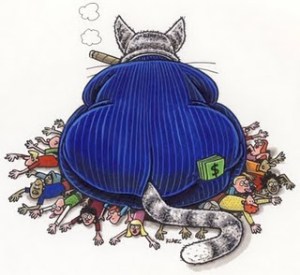 would make beltway lawmakers tread lightly when it comes to upsetting financial markets here and around the world. You would also think that after we’ve used the Fed for the most unusual transactions in its history, bailed out investment banks and insurance companies, and concentrated bank deposits and securities dealers from ‘too big to fail’ to ‘so huge they’d take the developed world down with them’ that District politicos would find a different outlet for their psuedo outrage. It’s not that they’re mad at financial institutions or what they basically did to the world’s major economies, it’s that their mad at what they did to the U.S. Federal deficit and since blaming teachers and park rangers didn’t work, they’re going to attack the U.S. Treasury Market. That’s right, they are attacking the base risk free rate used by every asset pricing model from the CAPM forward. That’s like striking at the heart of what makes modern finance work. Sounds kind’ve stupid doesn’t it?
Well, Tuesday’s Congressional vote on the debt ceiling was a danse macabre aimed directly at turning financial markets upside down whether they want to think so or not. The equity markets have been dancing around a technical high most of spring and are heading downwards as we speak. The economy has not healed. The job market is dismal. Credit markets are still stuck on neutral. Household consumption and Consumer confidence have headed south. What are these people trying to do our economy? Tank it? Finally, there’s a few media voices that are expressing concern instead of admiration for the “brave” insanity of people like Paul Ryan. Is this coming a little too late? Is the Republican party trying to drive the cost of borrowing for every one in the world up to score a few political points with some block of voters?
Just ignore Tuesday’s vote against raising the debt ceiling, House Republican leaders whispered to Wall Street. We didn’t really vote against it, members suggested; we just sent another of our endless symbolic messages, pretending to take the nation’s credit to the brink of collapse in order to extract the maximum concessions from President Obama.
Once he caves, members said, the debt limit will be raised and the credit scare will end. And the business world apparently got the message. It’s just a “joke,” said a leader of the United States Chamber of Commerce, and Wall Street is in on it. Not everyone found it funny.
No matter how they tried to spin it, 318 House members actually voted against paying the country’s bills and keeping the promise made to federal bondholders. That’s an incredibly dangerous message to send in a softening global economy. Among the jokesters were 236 Republicans playing the politics of extortion, and 82 feckless Democrats who fret that Republicans could transform a courageous vote into a foul-smelling advertisement.
If I were the Chinese or Russian government or any other investor with the ability to transfer funds anywhere else, I would be doing so just to make a point. Threatening to default on sovereign debt should not be considered political tool. It’s like threatening to use a weapon of mass destruction to score points.
Steven Benen of Washington Monthly calls it a “hostage strategy”. Frankly, it’s domestic terrorism with hostages.
Indeed, one of the more striking aspects of yesterday’s gathering was the increasingly-explicit nature of the Republican hostage strategy.
…Boehner’s let’s-get-a-deal-done stance masks a deeper belief within the House Republican Conference — that Obama will back down eventually and agree to its demands, forcing Capitol Hill Democrats to follow suit.
“Of course, it’s dangerous,” a House Republican close to Boehner said of the politics of a government default. “But it’s dangerous for everybody, especially the president. At the end of the day, [Obama] will have to give in.”
“Who has egg on their face if there is a sovereign debt crisis, House Republicans or the president?” asked another senior GOP lawmaker.
With a potential debt default by the U.S. government just two months off, and a continued standoff between the White House and GOP congressional leaders on how to move forward in boosting that limit, Republican lawmakers say publicly and privately that they believe Obama will be the one who has to cave.
To be sure, the hostage-strategy dynamic isn’t new, but it’s uncommon for Republican members of Congress to be this candid about their plan out loud. One leading GOP lawmaker acknowledged that the Republican plan is “dangerous,” but the party doesn’t care. Another conceded that the GOP is inviting a “sovereign debt crisis,” but figures Obama would get the blame, so Republicans don’t care about that, either.
Okay, so notice the theme here. Obama is expected to cave and why not? He’s drawn lines in the sand before. Remember his promise to not extend tax cuts to the richest of the rich? He caved. Remember how he was going to offer a robust public option or at least an exchange with some kind of government-sponsored plan for health care reform? He caved. Remember all that posturing over closing Guantanamo or bringing troops home from Iraq and Afghanistan. He caved.
That’s what you get when you negotiate with terrorists and they know you’ll lead with the compromise position. They’ll keep taking more important things hostage and wait you out. They know this one is too big to fail but yet, they can’t resist just seeing how much they can get away with this time. Problem is, this time it’s really having an impact. The economy is looking as though it will double dip and requires a fiscal boost, for one. This is like 1937 redux and I’m afraid that more mistakes will be made. I can’t believe that we have a political party that is so intent on damaging an administration that it’s going to frighten the global economy into a possibly game changing reshuffling of what the base of financial world’s ‘risk free’ rate and global safe haven currency may be in the future. If there was ever any reason or an excuse to dump the dollar as a basis of your economy or start ridding your trade surplus savings of US Treasury holdings, this would be it. Symbolic my fat New Orleans ass!
A testy White House meeting between President Obama and House Republican leaders Wednesday failed to lower the partisan pitch in the capital, much less make progress toward a deal on the federal debt ceiling.
Instead, the two sides traded complaints, accusing each other of partisanship and posturing. Republicans demanded that the administration produce a budget-cutting plan, which the White House said it had already done.
Rep. Paul D. Ryan, architect of a Medicare overhaul aimed at slashing the cost of the popular entitlement program by reducing the government’s open-ended commitment to seniors, accused Obama of “mis-describing” his plan and implored the president to ease up on the “demagoguery.”
In reply, Obama said he was no stranger to cartoonish depictions, reeling off a list of conservatives’ favorite attack points: “I’m the death-panel-supporting, socialist, may-not-have-been-born-here president,” Obama said, according to people familiar with his remarks.
The meeting was meant to resolve pent-up grievances and move toward compromise on the deficit and the cost of healthcare for seniors. But after 75 minutes of talk in the East Room, the two sides parted company with little progress.
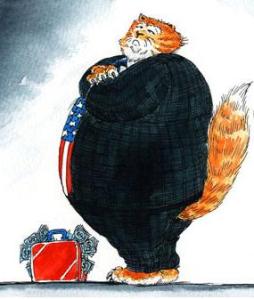 Johnathan Chait of The New Republic rightly accuses ‘economist’ John Taylor of the Hoover Institute of ignoring the “severe economic consequences of risking the full faith and credit of the Treasury”. Just arguing spending cuts are good just doesn’t make sense. This is especially true given the incredible fragile state of the U.S. economy and recovery. Is extracting more concessions out of Obama worth global financial market turmoil?
The hack Republican answer is that spending cuts and the debt ceiling are linked, because the debt ceiling is Obama’s fault. But of course the debt ceiling has to get raised under every president, and it would have to be raised even if Obama signed the Paul Ryan budget. The debt ceiling has nothing to do with any particular policy choices — it’s just a routine vote that used to be an opportunity for the minority party to embarrass the president, which Republicans are turning into a hostage opportunity. People like Taylor are dressing this up in principle, but the only principle they can articulate is that spending cuts are good. But that same logic would allow the minority to use the debt ceiling to jack up the president over any policy disagreement at all.
So far, the markets and the world seem to think that American politicians will stop their posturing and settle down to business before the August drop dead date. They’ve even quoted Churchill who used to say we eventually do the right thing it’s just that we don’t actually do it until the very last minute. The deal is that not only is the brinkmanship a dangerous strategy but the further concessions–in a fragile recovery at best–are dangerous. Obama and his cadre of lawyers have made it clear that they will concede any high ground. Again, we have a history of Obama concessions on political promises. The problem is that each time the concession comes, it comes at a greater cost. Every one knew this drama would play out once Obama gave in on renewing the Bush Tax Cuts. Every thing is negotiable and subject to concession now. You can’t fake credibility once you’ve show yourself as having none.
Wall Street numbers look bad today. They’ve been bad all week. The primary concern is said to be the faltering economy. However, any one that thinks that some of this unease isn’t over the debt ceiling hostage situation kids themselves.

 peej
peej Carissa
 bostonboomer
 dakinikat
 ecocatwoman
 mablue2
 Mama Lopez
 peggysue22
 quixote
 skydancingguestblogger
 Mona (aka Wonk the Vote)



 Sky Dancing
Recent Comments