
Saturday Afternoon Reads: The Feminine Mystique
Posted: February 23, 2013 Filed under: just because, U.S. Politics, Women's Rights | Tags: afternoon reads, Betty Friedan, books, education, feminism, psychology, The Feminine Mystique 40 Comments
Betty Friedan
Good Afternoon!
I decided to focus this post on something other than the debt, deficit, sequester obsession that has taken over American politics, so I’m writing about a book I read in high school that changed my life forever. Feel free to use this as an open thread, and post your links freely in the comments.
This week marked the 50th anniversary of a book that truly changed my life, The Feminine Mystique, by Betty Friedan. It was first published on February 19, 1963. I read it in paperback when I was a junior in high school, probably in early 1964.
I already knew I didn’t want to be a housewife like my mom, but there weren’t many alternatives for girls in those days. Ideally, you were supposed to get married and have children and forget about having a career or focusing on your own unique interests. You were supposed to enjoy cleaning house and supporting your husband’s career and if you didn’t enjoy it, there was something wrong with you–you weren’t a real woman.
The main reason for girls to go to college was to find a husband. Oh sure, you could study and learn about things that interest you, but that would all go by the wayside once you found a man. After that, it was all about him. If you couldn’t find a husband, then you might have to work. You could be a teacher, a nurse, or a secretary–that was about it. Women who insisted on being college professors, doctors, lawyers were few and far between and they had a tough time of it.
Then Betty Friedan’s book came out, and it hit a nerve for millions of American women and girls, including me. Here’s the famous opening paragraph:
“The problem lay buried, unspoken, for many years in the minds of American women. It was a strange stirring, a sense of dissatisfaction, a yearning that women suffered in the middle of the 20th century in the United States. Each suburban wife struggled with it alone. As she made the beds, shopped for groceries, matched slipcover material, ate peanut butter sandwiches with her children, chauffeured Cub Scouts and Brownies, lay beside her husband at night—she was afraid to ask even of herself the silent question—‘Is this all?’”
Friedan called it “the problem with no name.”

First edition of Friedan’s The Feminine Mystique (Bauman Rare Books)
As I read the book, I began to develop more sympathy for my mother’s plight. During World War II, women had been called upon to go to work to support the war effort and replace men who had been drafted or had enlisted in the military. But when the men came back, they needed the jobs and women were expected to go back to their homes and be satisfied with doing housework, child rearing, decorating, and entertaining for no pay. Friedan wrote about how “experts” had produced reams of propaganda in the effort to get women to find joy and fulfillment in being housewives and mothers. The “feminist mystique” for Friedan said “that the highest value and the only commitment for women is the fulfillment of their own femininity.”
I’ve told this story before, but when I was a senior in high school I wrote an essay for my English class called “Women Are People Too.” My male teacher was somewhat taken aback by my arguments, but he still asked me to read my paper aloud in class. I was jeered and mock for it, of course. Later my economics teacher–a true leftist–found out about the essay and read it in my economic class. Today it seems strange, but most of the other students in my school were horrified by the notion of women being equal to men.
My father, an English professor, had a woman colleague Lucille C.–a full professor who had never married. My mother said that most men would be intimidated by her brilliance and success. Anyway, when I told Lucille about how all the other kids were making fun of me for my essay, she told me to tell them I was a member of FOMA, which stood for “Future Old Maids of America.” I loved it!
Much has changed since 1963. Women now assume they have a right to an education and a career as a well as the right to choose (if they can afford it) whether to stay home with children or work outside the home. But as we have seen in the past four plus years, misogyny is alive and well in the good ol’ USA, and we still have a very long way to go to achieve anything like real gender equality.
Carlene Bauer spoke for me when she wrote at The New York Observer:
When Friedan writes that early feminists “had to prove that women were human,” it is hard not to feel a shock of recognition and indict our own moment as well, especially after the election that just passed. But American women still find themselves struggling against a strangely virulent, insidious misogyny. If our culture truly thought women were human, 19 states would not have enacted provisions to restrict abortion last year. There would be no question whether to renew the Violence Against Women Act. Women would not make 77 cents to every man’s dollar, and make less than our male counterparts even in fields where we dominate. We wouldn’t have terms like “legitimate rape” or “personhood.” Women who decided not to have children would not be called “selfish,” as if they were themselves children who had a problem with sharing. If our culture truly allowed them to have strong, complex, contradictory feelings and believed they were sexual creatures for whom pleasure was a biological right, perhaps adult women would not be escaping en masse into badly written fantasy novels about teenage girls being ravished by vampires.
Bauer also noted that some problems with the book, most notably Friedan’s homophobia.
This book…should seem thrillingly, relievedly quaint. It does not. But it is surprisingly boring in spots—there are many moments where you can see the women’s magazine writer in Friedan giving herself over to breathless exhortation—and astoundingly homophobic. At one point Friedan rails against “the homosexuality that is spreading like a murky smog over the American scene.” Friedan has been criticized for not being as careful a researcher, or as honest a storyteller, or as civil-rights-minded as she could have been. But perhaps these criticisms are somewhat beside the point. There are numerous passages that, if you did not know their provenance, could be mistaken for sentences written in judgment of the present day.
In looking over The Feminine Mystique recently, I realized that I had forgotten how much scholarship and psychological analysis and scholarship Friedan included in the book. She was a psychology major at Smith College, graduating summa cum laude in 1942. For example, The Feminine Mystique contained a brilliant analysis of Freudian theory and its consequences for women. Friedan argued that education at women’s colleges had been dumbed down between the 1940s and 1960s, with educators limiting courses to “subjects deemed suitable for women” and their future roles as housewives. She suggested that girls were prevented from experiencing the normative identity crisis that was the focus of Erik Erikson’s developmental theory. And she argued that women had been kept at the lower, subsistence levels of Maslow’s hierarchy of needs.
How many books truly change society in dramatic ways. Betty Friedan’s book did that. A few more links to articles on the 50th anniversary of The Feminine Mystique.
Michelle Bernard: Betty Friedan and black women: Is it time for a second look?
NYT: Criticisms of a Classic Abound
Mona Gable at BlogHer: How Far Have We Come?
ABC News: ‘Feminine Mystique’: 50 Years Later, Dated But Not Irrelevant
Caryl Rivers: ‘Feminine Mystique’ At 50: If Betty Friedan Could See Us Now
Janet Maslin: Looking Back at a Domestic Cri de Coeur
Alexandra Petri: The Feminist Mystique
Peter Dreier: The Feminine Mystique and Women’s Equality — 50 Years Later
Kathi Wolfe at The Washington Blade: Power of the ‘Feminine Mystique’
A discussion at NPR’s On Point: The Feminine Mystique at 50
This isn’t specifically about The Feminine Mystique, but I think it’s relevant. Allie Grasgreen at Inside Higher Ed: ‘The Rise of Women’ — a “new book explains why women outpace men in higher education.”
Please use this as an open thread, and post anything you like in the comments.
Thursday Reads
Posted: May 3, 2012 Filed under: 2012 presidential campaign, Barack Obama, China, Foreign Affairs, Hillary Clinton, just because, Mitt Romney, morning reads, U.S. Economy, U.S. Politics, War on Women | Tags: creativity and mental illness, defense mechanisms, Edvard Munch, gay Republcan men, psychology, reaction formation, roots of homophobia 61 Comments
Good Morning!!
Last night JJ posted about the sale of Edvard Munch’s The Scream for nearly $120 million. Even Mitt Romney probably couldn’t have afforded it! Somehow I don’t see him as much of an art lover though…
I’ve always been fascinated by the connections between creativity and mental illness. When I took Cognitive Psychology as an undergraduate my professor talked about Munch, saying that the artist felt his mental illness was the source of his creativity and so never wanted to be treated for it. The professor said that once Munch was treated, he did lose much of his creative gift. After seeing the Munch painting in the news last night, I decided to find out a little about Munch’s life.
It turns out my professor’s story was a bit of an oversimplification. Munch did link his artistic talent to his emotional problems, but I’m not sure that he ever really overcame his illness. This fascinating 2006 article from Smithsonian Magazine gives a brief account of Munch’s life and sufferings. The source of Munch’s most famous painting, The Scream, was a hallucination he experienced while walking with some friends.
Munch’s The Scream is an icon of modern art, a Mona Lisa for our time. As Leonardo da Vinci evoked a Renaissance ideal of serenity and self-control, Munch defined how we see our own age—wracked with anxiety and uncertainty. His painting of a sexless, twisted, fetal-faced creature, with mouth and eyes open wide in a shriek of horror, re-created a vision that had seized him as he walked one evening in his youth with two friends at sunset. As he later described it, the “air turned to blood” and the “faces of my comrades became a garish yellow-white.” Vibrating in his ears he heard “a huge endless scream course through nature.”
Munch was a
restless innovator whose personal tragedies, sicknesses and failures fed his creative work. “My fear of life is necessary to me, as is my illness,” he once wrote. “Without anxiety and illness, I am a ship without a rudder….My sufferings are part of my self and my art. They are indistinguishable from me, and their destruction would destroy my art.” Munch believed that a painter mustn’t merely transcribe external reality but should record the impact a remembered scene had on his own sensibility.
That much of what my professor said was correct. He did make an explicit connection between creativity and his emotional demons. And Munch did suffer. His mother died of Tuberculosis when he was only 5 years old. He adored his sister Sophie who was a year older than he was, and she too died of TB at age 15. Munch’s father was much older then his wife and sounds very authoritarian and forbidding. He was “a doctor imbued with a religiosity that often darkened into gloomy fanaticism.” Munch also had a sister who spent most of her life in a mental institution and a brother who died suddenly when he was only 30.
Munch once wrote in his journal: “I inherited two of mankind’s most frightful enemies—the heritage of consumption and insanity—illness and madness and death were the black angels that stood at my cradle,” It’s easy to see where that iconic scream painting came from.
As a young man, Munch had a love affair with a dominating older woman, whom he depicted in his painting Vampire

After his father died of a stroke, Munch’s mental illness seems to have grown worse; but in the next few years he produced some of his best work. During this time, he got involved in another difficult romantic relationship with a woman who pursued him relentlessly while he relentlessly resisted.
Munch had been drinking heavily for years and eventually he became an alcoholic. He was most likely trying to self-medicate with alcohol, since he seems to have experienced auditory and visual hallucinations throughout his life. Finally he entered a sanitarium, where he cut back on his drinking and began to feel more mentally stable. This was in 1909. When he was released, he was about 40 years old and would live for 40 more years–he died in 1944.
Munch continued to paint and produced a great deal of work, but critics agree that his best work had been produced prior to his treatment. I’m not sure you could say that his mental illness was cured, though. It seems that he just dealt with it differently. In his later years he isolated himself in his home and avoided going out in public and being part of “the dance of life,” in his words.
And now, moving from the sublime to the ridiculous, let’s look at some current news.
Bloomberg evaluates Mitt Romney’s tax plan and finds it wanting:
Republican presidential candidate Mitt Romney’s tax plan rests on a set of principles that, taken together, are difficult to reconcile.
Romney wants to reduce individual income tax rates by 20 percent, keep preferential rates for capital gains and dividends, broaden the tax base to limit revenue loss, and retain the tax-burden distribution across income groups.
Those goals are in conflict and will require that Romney consider limiting or eliminating the tax breaks for charitable deductions and home mortgage interest, said Martin Sullivan, contributing editor at Tax Analysts in Falls Church, Virginia.
“As soon as he gets in, he’s going to have to start backpedaling big-time on all of his promises,” Sullivan said. “It’s just not doable under any conceivable, realistic scenario.”
Well, Romney has a lot of experience with backpedaling, so that shouldn’t be a problem for him. It’s a lengthy article and you may feel like Munch’s The Scream while reading it. I hope no one experiences visual or auditory hallucinations, but Romney’s ideas may have the potential to trigger them in vulnerable people.
Bloomberg also finds Romney is deficient at evocative storytelling, and says this deficiency could explain why the Romney bot can’t seem to connect that well with normal humans. Here’s a “story” Romney tried to tell in Wisconsin:
“I met a guy who worked for the city and he was working, I think, in the landscape division for the city,” the presumptive Republican presidential nominee said at an April 2 town-hall meeting at an oil company in Milwaukee.
Romney never did get around to giving the name of the man or mention what city he had worked for, or identify the company he said the man founded after leaving his municipal job or say how much gasoline his trucks were burning.
“In today’s politics, it’s all about the narrative,” said Tobe Berkovitz, a communications professor and longtime Romney watcher at Boston University. “This has never been part of Romney’s wheelhouse. It’s just not his style.”
Story-telling is an age-old technique in politics. The two modern presidential candidates best-known for mastering the art tailored it to their political times and defeated incumbents. Ronald Reagan, a onetime movie actor, invoked a sense of patriotism and heroism amid economic distress and the Iranian hostage crisis, while Bill Clinton used personal narrative from his modest Arkansas upbringing to show empathy for Americans recovering from the recession of the early 1990s.
Unlike Edvard Munch, Romney lacks both imagination and creativity, and for those reasons, he probably could never even develop a mental illness.
Yesterday a Missouri legislator suddenly came out to his colleagues and begged them to withdraw the “don’t say gay” bill.
A Republican lawmaker in Missouri on Wednesday announced that he was gay and called on his colleagues to revoke their support for a “horrible” bill that would prevent the discussion of homosexuality in schools.
“I will not lie to myself anymore about my own sexuality,” state Rep. Zachary Wyatt said during a press conference at the State Capitol. “It has probably been the hardest thing to come to terms with. I have always ignored it, didn’t even think about it or want to talk about it. I’ve not been immune to it. I hear the comments — usually snide ones — about me.”
“I’m not the first or last Republican to come out. I’ve just gotten tired of the bigotry being shown from both sides of the aisle on gay issues. Being gay has never been a Republican or Democrat issue.”
Wyatt warned that Missouri’s so-called “Don’t Say Gay” bill would make it impossible for LGBT students to speak with teachers and counselors when they were being bullied.
Someone needs to do a psychological study on why there are so many gay Republicans (like Richard Grenell, who just had to resign from the Romney campaign) and at the same time so many Republicans who hate homosexuals.
Maybe this could shed a little light on the problem: A recent study suggested that people who are homophobic are more likely to be repressing attraction to the same sex and to have grown up in authoritarian homes.
Study subjects — four groups of about 160 college students each, in the USA and Germany — also rated the attractiveness of people in same-sex or opposite-sex photos and answered questions about the type of parenting they experienced growing up, from authoritarian to democratic, as well as homophobia at home.
Researchers also measured homophobia — both overt, as expressed in questionnaires on social policy and beliefs, and unconscious, as revealed in word-completion tasks.
The findings suggest participants with accepting parents were more in touch with their innate sexual orientation. But, Ryan says, “if you come from a controlling home where your parents do have negative attitudes toward gays and lesbians, you’re even more likely to suppress same-sex attraction and more likely to have this discrepancy that leads to having homophobia and feeling threatened.”
Ryan says the study may help explain the personal dynamics behind some bullying and hate crimes directed at gays and sheds light on high-profile cases in which public figures who have expressed anti-gay views have been caught engaging in same-sex sexual acts.
In other words these people may be using the defense mechanism Freud called reaction formation, which I’ve written about previously in a post about Michelle Bachmann.
Freud theorized that the ego unconsciously uses defense mechanisms to protect itself from being overwhelmed by anxiety-producing thoughts, feelings, and situations. This is one of Freud’s ideas that has been supported by extensive empirical research.
Reaction formation is a highly neurotic defense mechanism in which a person appears to others to be “protesting too much”–for example, exaggerating how much she loves or hates something to the point that observers wonder if this behavior is a cover for the opposite feeling.
This isn’t the first study that has found a correlation between homophobia and homosexual attraction. In a previous study, some researchers actually measured arousal in homophobic and non-homophobic men.
The men viewed homosexual and heterosexual soft core porn videos and their level of arousal was measured by means of a device attached to their penises. Interviews and psychological tests were used to identify homophobic and non-homophobic men.
Results showed that men who scored as homophobic on the tests and also admitted to having negative feelings toward homosexuals were more likely to be aroused by homosexual stimuli. Not only that, the men rated their own arousal levels as low when they watched homosexual videos. They were denying their own arousal levels. From the abstract:
These data are consistent with response discordance where verbal judgments are not consistent with physiological reactivity, as in the case of homophobic individuals viewing homosexual stimuli. Lang (1994) has noted that the most dramatic response discordance occurs with reports of feeling and physiologic responses. Another possible explanation is found in various psychoanalytic theories, which have generally explained homophobia as a threat to an individual’s own homosexual impulses causing repression, denial, or reaction formation (or all three; West, 1977 ).
That’s got to be a big part of what’s happening with Republicans. Now someone needs to study their woman-hating. It probably has something to do with how they feel about their mothers as well as the kinds of behaviors they observed between their parents.
I’m rambling today, aren’t I? I’d better wrap this up. Just a few more links.
Bill Clinton reviewed the new Robert Caro book on LBJ for the NYT Book Review.
Vanity Fair has an excerpt from a new biography of Barack Obama by David Maraniss (who also wrote a biography of Bill Clinton).
Finally, here are two stories about Hillary’s ongoing adventures in China. I sure hope she can work things out. Right now it doesn’t look good.
From the WaPo: Chinese activist Chen leaves U.S. Embassy for hospital, is surrounded by police
From the NYT: Chinese Dissident Is Released From Embassy, Causing Turmoil for U.S.
What’s on your reading list today?
The LeRoy High School Outbreak: “Conversion Disorder” or Environmental Contaminants?
Posted: January 30, 2012 Filed under: health, Media, medicine | Tags: conversion disorder, environmental contaminants, environmental toxins, fracking, Health, hydraulic fracturing, LeRoy NY high school, natural gas wells, neurology, PANDAS, psychiatry, psychology, tics, Tourette's-like symptoms, verbal outbursts 29 Comments
Aerial view of LeRoy Junior/Senior High School
I know everyone has already heard about the outbreak of tics and verbal outbursts (described in the media as “Tourette’s-like symptoms”) in the small town of LeRoy, New York. I thought I’d pull together some information on the case anyway. I have been skeptical about the diagnoses that have been publicized (“conversion disorder” and “mass hysteria”) since I first heard about it.
The media descriptions of conversion disorder haven’t been particularly accurate or helpful, and now that school and county officials are trying to limit investigations into environmental causes for the outbreak, I’m even more suspicious that these symptoms may be caused by exposure to toxins in the environment.
The LeRoy students began having symptoms in September of last year, meaning they have continued for about four months. Here’s a description of the symptoms from CBS News:
Last fall, 12 teenage girls from LeRoy Junior-Senior High School – located in a town about an hour outside of Buffalo, N.Y. – began to show symptoms similar to those of Tourette’s syndrome, including painful shaking and jerking their necks….
The condition was so bad for at least one of the girls that she has yet to return to school. School and state officials investigated the outbreak and school building for several months, and concluded no known environmental substances or infectious agents were found that could have caused the symptoms in the teens.
Dr. Laszlo Mechtler of the Dent Neurologic Institute in Amherst, NY, has seen a number of the girls and has diagnosed them with “conversion disorder,” which is really just more politically correct name for what Sigmund Freud called hysteria. The term is drawn from the Greek word for “uterus,” and of course mostly females receive the diagnosis. Mechler is claiming the symptoms are a result of stress and the students who are affected may have are unconsciously acting out their anxieties through physical symptoms. He’s calling it “mass hysteria,” because a number of girls reported similar symptoms.
Mechtler said today that the media hype is just making the symptoms worse and that students who have kept to themselves have improved while those who went to the media got worse; and now that the national media is focused on the situation, those who had improved are now having increased symptoms.
So I guess we should all STFU and leave poor little LeRoy alone, then?
Lots more after the jump. Read the rest of this entry »
Michele Bachmann’s Homophobia: Is it Reaction Formation?
Posted: June 19, 2011 Filed under: 2012 presidential campaign, GLBT Rights, psychology | Tags: defense mechanisms, Gay Marriage, homophobia, Marcus Bachmann, Michele Bachmann, Michelle Goldberg, psychology, reaction formation, Sigmund Freud 22 Comments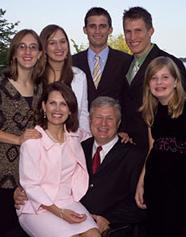
Michele Bachmann and family
A couple of days ago, I read a fascinating piece about Michele Bachmann by The Daily Beast’s Michelle Goldberg. If you haven’t read it yet, please do. It’s a real eye-opener, and the information in it spurred me on a voyage of discovery across the internet as I tried to understand what happened to this woman to cause her to embrace her bizarre religious beliefs and her extreme right-wing political ideology. For the purposes of this post, I want to focus primarily on Bachmann’s homophobia.
Goldberg begins her article with a particularly vivid episode from Bachmann’s tenure in the Minnesota state senate:
In April 2005, Pamela Arnold wanted to talk to her state senator, Michele Bachmann, who was then running for Congress. A 46-year-old who worked at the Minneapolis College of Art and Design, Arnold lived with her partner, the famed Arctic explorer Ann Bancroft, on a farm in Scandia, Minnesota. Bachmann was then leading the fight against gay marriage in the state. She’d recently been in the news for hiding in the bushes to observe a gay rights rally at the Capitol. So when members of the Scandia gay community decided to attend one of Bachmann’s constituent forums, Arnold, wanting to make herself visible to her representative, joined them.
A few dozen people showed up at the town hall for the April 9 event, and Bachmann greeted them warmly. But when, during the question and answer session, the topic turned to gay marriage, Bachmann ended the meeting 20 minutes early and rushed to the bathroom. Hoping to speak to her, Arnold and another middle-aged woman, a former nun, followed her. As Bachmann washed her hands and Arnold looked on, the ex-nun tried to talk to her about theology. Suddenly, after less than a minute, Bachmann let out a shriek. “Help!” she screamed. “Help! I’m being held against my will!”
Arnold, who is just over 5 feet tall, was stunned, and hurried to open the door. Bachmann bolted out and fled, crying, to an SUV outside. Then she called the police, saying, according to the police report, that she was “absolutely terrified and has never been that terrorized before as she had no idea what those two women were going to do to her.” The Washington County attorney, however, declined to press charges, writing in a memo, “It seems clear from the statements given by both women that they simply wanted to discuss certain issues further with Ms. Bachmann.”
Bachmann’s anxiety at being confronted by three lesbians was so extreme that instead of either responding to their questions or politely excusing herself and calmly walking away, she screamed, cried, and called the police!
Now let’s look at the previous episode when Bachmann was photographed hiding behind bushes to covertly watch a gay rights rally. The context was that Bachmann had just left the State Senate after proposing a bill to ban gay marriage in Minnesota.

“The state Senate on Thursday rejected an effort to force a floor vote on a constitutional amendment that would ban gay marriage as thousands of ban opponents rallied outside the Capitol. Sen. Michele Bachmann, the Stillwater Republican who’s led the push for the ban, said Senate Democrats have denied her repeated efforts to get the bill heard. Senate leaders countered that Bachmann, a candidate for the U.S. House, is flouting Senate rules to advance her own political career. At the same time, about 2,500 gays, lesbians and their supporters attended a rally on the Capitol grounds just a few hundred yards away, organized by OutFront Minnesota.” [Star Tribune]
After the move didn’t pan out, Michele took to hiding in the bushes to watch the queers rally
Another story reports that during the hearing 100 of the rally participants
…filed inside the Capitol building and took their place in the Senate gallery overlooking the proceedings. With a crowd on hand, Bachmann issued a motion to bypass the committee and have the floor vote on the bill right then and there–a highly unusual move in state Senate proceedings. Even more bizarre: While making her case, she addressed not the Senate floor as per protocol, but the gallery above.
In my opinion, these out-of-proportion reactions suggest that Bachmann’s extreme homophobia is a cover for deep fears that she has about herself or people close to her. I believe she is unconsciously engaging in the defense mechanism of reaction formation to deal with this anxiety.
Follow me below the fold…. Read the rest of this entry »
Thursday Reads
Posted: January 6, 2011 Filed under: Barack Obama, morning reads, psychology, Team Obama, U.S. Economy, U.S. Politics | Tags: "professional left", 2010 Census, Barack Obama, BP oil spill, child pornography, Daryl Bem, dying birds and animals, Emptywheel, ESP, Howard Dean, John P. Wheeler III, memeorandum, murder, Pentagon, political advertising, Poverty, psychology, Robert Gibbs, senior citizens. social programs, smear campaigns 48 Comments
Out of Town News, Harvard Square
Good Morning!!
Gee, it’s great to be back in Beantown, even though my house looks like it was hit by a tornado. I already had books stacked all over the place because of my book selling project. I brought more books with me from Indiana, and I haven’t completely unpacked and put my stuff away. I’ll be cleaning up for a couple of days. At least I got everything out of the car today and went to the grocery store. Driving 1,000 miles in two days makes me really spacey though, so if I don’t make sense in this post, please try to make allowances.
You’ve probably heard already that Robert Gibbs plans to leave the White House in February to be an “outside political adviser” to Obama’s 2012 campaign. It’s the top story on Memeorandum right now.
“Robert, on the podium, has been extraordinary,” Mr. Obama said, declining to answer questions about who he intends to hire for any position. “Off the podium, he has been one of my closet advisers. He is going to continue to have my ear for as long as I’m in this job.”
Mr. Gibbs will remain part of the president’s inner circle of political advisers, along with David Axelrod, a senior adviser, and Jim Messina, a deputy chief of staff, who also are leaving the White House to focus on the president’s re-election effort. Mr. Gibbs will defend Mr. Obama on television – and will expand his presence on Twitter and other Internet platforms – as well as beginning to define the field of 2012 Republican presidential candidates.
“Stepping back will take some adjusting,” Mr. Gibbs said in an interview Wednesday morning. “But at the same time, I have a feeling that I will keep myself quite busy, not just with speaking, but continuing to help the president.”
He said he has no intention of establishing a political consulting or lobbying business, but he intends to work from the same downtown Washington office where David Plouffe has spent the last two years.
When I first heard this news, my first thought was about the role that Gibbs played in 2004, when he resigned from the Kerry Campaign and joined an “independent” group that produced the infamous attack ad that showed a photo of Osama bin Laden while the announcer described Howard Dean’s supposed deficiencies in foreign policy. It sounds like Gibbs will be more out front in 2012, but I’m betting he’ll still play the attack dog role–smearing opponents and generally saying the things Obama doesn’t dare say himself.
According the NYT story,
The leading potential replacements for press secretary include Jay Carney, a spokesman for Vice President Joseph R. Biden Jr., along with Bill Burton and Josh Earnest, who work as deputies to Mr. Gibbs. Other candidates also could be considered, an administration official said.
Emptywheel says Robert Gibbs will now become part of the group he derided as press secretary: “the professional left.”
Back when Gibbs was attacking the Professional Left, he made a distinction between the Progressives outside of DC and those inside DC squawking on the cable programs.
But if Gibbs is going to stay in DC, hanging out on Twitter, and appearing on the speaking circuit, doesn’t that make him a card-carrying member of the Professional Left?
Except the bit about him being so conservative, of course.
LOL
Out in the land of real Americans, 1 of 6 of us lives in poverty–including many senior citizens.

 peej
peej Carissa
 bostonboomer
 dakinikat
 ecocatwoman
 mablue2
 Mama Lopez
 peggysue22
 quixote
 skydancingguestblogger
 Mona (aka Wonk the Vote)



 Sky Dancing
Recent Comments