
Friday Reads: A Little This n That
Posted: August 17, 2012 Filed under: morning reads | Tags: Chuck Grassley hates Romney, economics idiot, Ecuador, Julian Assange, Medieval cemetary, On the Road with Hillary Clinton, Paul Ryan, Spitalfields, UK 46 Comments Good Morning!
I’m having a challenging week with my senior dog Karma who is really going down hill fast at the moment so I’m going to make this brief. She’s been a bit of an issue this week since she sleeps a lot and frequently doesn’t wake up in time to get outside. So, I’m tired too.
Wikileak’s Julian Assange has been granted asylum in Ecuador.
Ecuador has granted asylum to Wikileaks founder Julian Assange two months after he took refuge in its London embassy while fighting extradition from the UK.
It said his human rights might be violated if he is sent to Sweden to be questioned over sex assault claims.
Foreign Secretary William Hague said the UK would not allow Mr Assange safe passage out of the country and the move was also criticised by Stockholm.
Ecuador said it would seek to negotiate arrangements for Mr Assange to leave.
“We don’t think it is reasonable that, after a sovereign government has made the decision of granting political asylum, a citizen is forced to live in an embassy for a long period,” Foreign Minister Ricardo Patino said.
Mr Assange took refuge at the embassy in June to avoid extradition to Sweden, where he faces questioning over assault and rape claims, which he denies.
Mr Patino had accused the UK of making an “open threat” to enter its embassy to arrest Mr Assange, an Australian national.
Republican Senator Chuck Grassley Calls Romney a “Stupid Back Stabber”.
Responding to Romney’s plan to kill energy production and thousands of jobs in Iowa, long time conservative Senator Chuck Grassley called Romney “stupid” and a “back stabber” at two town hall meetings.
In his unabated campaign to piss off every possible voter, Mitt Romney called for the cancellation of tax credits for wind energy, a move that would kill 37,000 good paying jobs nationwide.
In Iowa alone, 7,000 people are employed in the wind energy sector, producing a quarter of the state’s electric power.
Why would Romney do something so heartless? To pay for tax cuts for the rich, naturally.
At a town hall meeting in rural Iowa, Chuck Grassley, Iowa’s conservative Senator for 32 years, said,
“I’m the author of the wind energy tax credit of 1992, and there were people from outside the state came into Iowa and issued a press release that the Republican candidate for president was opposed to wind energy, and I felt it was just like a knife in my back”.
Calling Romney’s proposal an insult, Grassley continued his attack on the Republican standard-bearer at a different town hall meeting:“when you think at a time of 8.2 percent unemployment there would be any question that you wouldn’t want to lay off 4,000 more people in the state of Iowa and probably 25,000 people nationwide, but that’s kind of what’s at stake here.”
Grassley concluded by saying,“I don’t know who’s behind it and I’m going to find out who’s behind it, and expose them and tell them how stupid their policy is.”
DU cited the Des Moines Register as a source of the quotes.
When Mitt Romney introduced Rep. Paul Ryan of Wisconsin as his running mate, he emphasized that Ryan “has become an intellectual leader of the Republican Party” on economic policy. But a close examination of Ryan’s monetary and fiscal policy proposals makes it hard to understand why he is held in high regard.
Ryan’s views on monetary policy are, by his own admission, heavily influenced by Ayn Rand’s “Atlas Shrugged.” (In a 2005 speech, he said: “The reason I got involved in public service, by and large, if I had to credit one thinker, one person, it would be Ayn Rand.”)
Concerns about inflation — currency debasement — are prominent in Rand’s novel, and those concerns drive Ryan’s monetary policy proposals. For example, Ryan introduced legislation in 2008 to replace the Federal Reserve’s dual mandate to stabilize both inflation and employment with a single mandate to stabilize inflation. Under Ryan’s proposal, the Fed would ignore employment when making policy decisions.
This lack of concern over employment is disconcerting, but it’s at least possible to find economists who support a single inflation mandate for the Fed. It’s much harder to find anyone who will support another inflation prevention policy Ryan has proposed, a policy similar to a gold standard.
Despite decades of stable inflation, and criticism from many experts that the Fed is too worried about inflation and not worried enough about unemployment, Ryan does not trust the Fed to keep inflation under control. Instead, he has proposed tying the value of the dollar to a basket of commodities. The Fed’s only job under this policy would be to keep the value of the dollar in line with the value of the commodities in the basket. The pursuit of stable employment or any other goal would interfere with this mission.
But this is not a recipe for price stability, as Ryan claims. Every time the price of oil, corn or other commodities in the basket changes due to ordinary fluctuations in supply and demand, which is often, the value of the dollar would change as well. This would make the dollar even more unstable and uncertain than it is now — and we’d also lose an important tool in the fight against unemployment.
That’s not even his worst proposal for monetary policy. That distinction goes to his call to raise interest rates to cure the recession — because “there’s a lot of capital parked out there, and we need to coax it out into the markets.”
This shows a serious misunderstanding of what’s holding the economy back. If interest rates are increased, the higher return on financial assets will cause more people to provide funds to financial markets — but the supply of funds isn’t the problem.
Romney is once again playing race baiting games. Romney’s campaign has put together a petition to tell the President to stop being such an angry black man. I’m only going to link to this. You can go see it for yourself. This is getting old.
Jon Stewart poked fun at one of his favorite targets on “The Daily Show” on Wednesday night. Stewart ripped into Sarah Palin for saying that she couldn’t think of any prominent Republicans who talk the way liberals do.
“Does the lake behind you have reflective properties?” Stewart said. “If so, you may find the answer to your riddle.”
He then proceeded to show a video of Palin slinging harsh words: accusing Obama of pallin’ around with terrorists, calling Nancy Pelosi a dingbat and questioning the president’s “balls” (so to speak). Turns out, Stewart had quite a bit of material to work with.
He concluded: “So you don’t know of any prominent Republicans who spew divisive vitriol? There can only be two explanations for that. One: Not even Sarah Palin believes she is a prominent Republican anymore. Or two: Sarah Palin can no longer hear herself speak.”
Here’s a cute item on Madam Secretary from Conde Naste Traveller.  What’s it like to spend nine days on the road with Hillary Clinton?
According to Clinton, the swift resolution of the Chen debacle was the direct result of the intensive relationship-building that the United States and China have been engaged in during her nearly four years as secretary of state. “We were coming as people who had already experienced many hours of dialogue in many different settings and who were invested in a peaceful, cooperative relationship, so we had a personal trust,” she says. “Those conversations are not just about things—they’re about people, and how we listen to one another and interact with one another. Even if we saw things differently, we were not coming as strangers . . . and I think that really helped facilitate how we were able to move forward.”
It also helped that Clinton is so deft with the human touch: Sources familiar with the situation say that China agreed to Chen’s wishes after Clinton had an extended private conversation with Chinese state councilor Dai Bingguo, with whom she has cultivated close ties. “Their relationship is a great example of what she has been doing for the past three and a half years,” says deputy assistant secretary Philippe Reines. “If Chen had been taken into the embassy on January 21, 2009, this would not have had a happy ending. She didn’t yet have the personal relationships that she leaned on in this case.”
It’s precisely this sort of relationship-building that has compelled Clinton to travel more than 800,000 miles (she will have clocked over a million by the time she steps down, early next year) to more than one hundred countries during her time as secretary. She notes the irony that even though we live in an era of easy and instant communication, face-to-face meetings have never been more valued. “I could sit in my office and do videoconferences nearly anywhere in the world, but because that is so easy, people actually expect you to show up more, to make the effort and demonstrate the respect, to sit across the table and look eye to eye. It reflects a commitment to the relationship that you cannot get from sending an e-mail or doing a videoconference.”
Alright, let’s conclude with my continuing to share my fascination with graves and grave goods. This is a story from the UK on what mass burials can tell us about catastrophic disasters throughout history. Many ancient gravesites in the UK and other areas have been removed to make way for shopping centers and the like. This has led to a lot of chances to learn about historic events and peoples. Here’s a story from London’s volcanic winter.
The Medieval cemetery at Spitalfields is probably the largest excavated graveyard in the world. Work by MOLA between 1998 and 2001 unearthed a staggering 10,516 burials, of which just over 5,300 have been studied in detail. Allowing for those portions of the cemetery destroyed during the construction of Spitalfields market, it is probable that around 18,000 people were once interred there. As well as providing an unparalleled corpus of skeletal material for the period, a rigorous programme of Bayesian radiocarbon dating (see CA 259) by Alex Bayliss and Jane Sidell has provided a tight chronology for the Medieval cemetery. Securing detailed phasing for a site type that is notoriously hard to date proved crucial when it came to understanding how the cemetery population met their fate. It also allowed change within that population to be studied over time, providing vivid insights into the evolving nature of London life.
Spitalfields cemetery was closely associated with the priory and hospital of St Mary without Bishopsgate, later known as St Mary Spital. Claimed to be the largest hospital in London when it was closed during the Dissolution in 1539, the institution was originally founded in around 1197. Intended to minister to the poor, sick and infirm, as well as women in childbirth, the new establishment was a reaction to the care needs of London’s growing population.
The first burials in the cemetery, however, seem to have been a response to pressures of a different kind. Radiocarbon dated to about 1120, the earliest bodies pre-date the priory by a good 70 years. Far from occupying ordered rows, the corpses were dumped in open quarry pits. Such opportunistic interment away from any known religious house evokes an emergency situation in which large numbers of bodies needed to be disposed of rapidly. If so, it was not the last time that a catastrophe heralded the suspension of normal burial practices at Spitalfields.
The foundation of St Mary Spital brought the construction of a priory church at the north-west corner of the cemetery, while the other buildings were clustered nearby. Although the majority of those laid to rest in the graveyard were placed in individual grave shafts sunk in neat rows, excavations revealed a group of 140 large pits clustered along the south and east margins of the burial ground.
Dug as far from the priory buildings as the cemetery confines allowed, each pit contained between 8 and 40 bodies. A sure sign that the death rate had once again outstripped existing burial measures, the desire to keep these mass graves away from inhabited areas underscores a very real fear of the dangers the bodies could pose for the living. In London, as elsewhere, the natural reaction to discovering such mass burials is to interpret them as plague pits from the 1348 Black Death.

Just the name Spitalfields was enough to attract me to the article. But hey, mass medieval graves? Whoa … just more lessons in impermanence for a practicing Buddhist. But, it’s also a window in to a different world, isn’t it?
Okay, that’s it from me today. What’s on your reading and blogging list?
Thursday Reads: The Southern Strategy on Steroids
Posted: August 16, 2012 Filed under: 2012 presidential campaign, Barack Obama, Mitt Romney, morning reads, Newt Gingrich, racism, Republican politics, U.S. Politics | Tags: anger, bigotry, dog whistles, hate, Joan Walsh, John Sununu, Paul Ryan, race baiting, Southern Strategy, welfare 64 Comments
Good Morning!!
Over the past few days, Mitt Romney has stepped up his race-baiting with patently false ads focusing on welfare. On Tuesday in a speech in Chillicothe, Ohio, Romney projected his own rage at having his own policies and those of his designated VP criticized onto his critics by lashing out at President Obama with the most vile personal attacks I can ever recall from a candidate for President–normally the attack dog role is reserved for the VP or surrogates. Here are some samples from Romney’s speech:
Republican presidential candidate Mitt Romney on Tuesday delivered a harsh indictment of President Barack Obama’s re-election strategy, accusing the president of running a “campaign of division and anger and hate.”
“His campaign strategy is to smash America apart and then cobble together 51 percent of the pieces. If an American president wins that way, we all lose,” Romney told a crowd of thousands standing outside the Ross County Court House in southern Ohio.
Romney referred to Vice President Joe Biden’s remark to a heavily black audience in Virginia that the Republican ticket wanted to put people “back in chains” by repealing Wall Street regulations. Although he didn’t cite other examples to support his harsh rhetoric, his campaign pointed to the controversial ad that linked Romney to a steelworker’s wife’s death from cancer and an Obama spokeswoman’s suggestion that Romney might have committed a felony if he didn’t tell the truth in federal filings about his activities with his former company.
….
“His campaign and his surrogates have made wild and reckless accusations that disgrace the office of the presidency,” Romney said. “This is what an angry and desperate presidency looks like.”
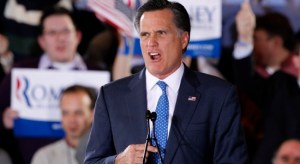
Romney really needs to learn to quit whining and act like an adult. He’s a typical bully–he can dish it out, but he can’t take it. He doesn’t like being reminded that when Bain Capital loaded up companies with debt and drove them into bankruptcy, real people suffered. Well, boo hoo hoo. When you run for President on being a “successful businessman, you shouldn’t be shocked when your opponents examine your business record.
NBC news has more whining from the speech:
“This is an election in which we should be talking about the path ahead, but you don’t hear any answers coming from President Obama’s re-election campaign,” Romney said. “That’s because he’s intellectually exhausted, out of ideas, and out of energy. And so his campaign has resorted to diversions and distractions, to demagoguing and defaming others. It’s an old game in politics; what’s different this year is that the president is taking things to a new low.”
“This is what an angry and desperate presidency looks like,” Romney said. “President Obama knows better, promised better and America deserves better.”
“Over the last four years, this president has pushed Republicans and Democrats about as far apart as they can go,” Romney continued. “And now he and his allies are pushing us all even further apart by dividing us into groups. He demonizes some. He panders to others. His campaign strategy is to smash America apart and then try to cobble together 51 percent of the pieces.”
This from the man who wants to make 95% of Americans pay more in taxes so he can cut the taxes of the top 5%. This from the man who repeatedly called Obama’s ideas “foreign” and whose surrogate John Sununu said Obama needed to “learn to be an American.”
During the primaries when Newt Gingrich complained about the barrage of negative ads run by Romney’s campaign and Romney supporting superpacs, Romney dismissively lecture Gingrich with the old saying “Politics ain’t beanbag.” (h/t Buzzfeed) The relevant quote comes at about the 2:40 mark.
On another occasion, Romney said “there’s no whining in politics.” (h/t Buzzfeed)
Mitt Romney is running on an updated Southern strategy in which the race and culture baiting is directed not just at African Americans, but also at Muslims, Hispanics, Palestinians, and pretty much anyone who isn’t Caucasian.
Let’s face it, Romney’s false claims that Obama has “gutted welfare reform” are deliberate efforts to appeal to racial bigotry–by emphasizing that Obama is {gasp!} black and to play on the false beliefs of many ignorant people about the racial composition of welfare recipients. Greg Mitchell articulated this pretty well at The Nation:
Just on a factual level, the new charges (which seemed to originate with the right-wing Heritage Foundation) —Obama trying to undermine the work ethic by granting waivers to certain states—fell apart quickly. The White House quickly denounced the meme as “dishonest” and pointed out that two of the five governors who requested the very limited waivers were Republicans. Also (surprise): Romney had backed such waivers as governor.
And this morning, PolitiFact delivered the harshest of its judgements on the ad and campaign statements —”pants on fire,” or one-big-lie. But its conclusion also, if a bit coyly, referred to what may be the most significant, and enduring, aspect of the new Romney focus: “The ad’s claim is not accurate, and it inflames old resentments about able-bodied adults sitting around collecting public assistance.”
What they are obliguely referring to, of course, is the old, long-lasting, portrayal of welfare by conservatives, Southern Democrats and many in the media as (1) mainly for lazy folks who won’t work and (2) mainly a program for black Americans (and other minorities). Facts never got in the way but it was a way to flame racial and class resentments. Nixon put his welfare recipients in Cadillacs and Reagan famously denounced “welfare queens.”
You still heard a lot today about “Reagan Democrats” and the battle between Obama and Reagan for their souls, but few point out that the origin of this subgroup can be traced back at least partly to Reagan’s race-tinged welfare bashing.
Anyone who can’t see what is going on here is either utterly ignorant of American history, is simply being deliberately obtuse, or is OK with this kind of ugly bigotry.
OK, I’ve said my piece. Now I’ll refer you to a few pieces on this topic by other people who expressed these points better than I can.
First, a brief but pithy piece from the Auburn Journal: Romney Revives the Southern Strategy. Referring to the Sununu and Romney statements implying that Obama isn’t “American”:
This kind of language acts as a dog whistle for bigots. It is a more subtle version of birtherism, and reflects the kind of exclusionary definition of American national identity embraced by far too many on the right. It is the exact opposite of Barack Obama’s conception of our national identity, one that emphasizes national unity as well as inclusion, and seeks to strengthen ties among Americans across lines of race, culture, and religion.
When John Sununu said that President Obama was not an American – and make no mistake, that’s what he said – he wasn’t saying anything his boss hadn’t said before. Mitt Romney has made the same kind of remark on too many occasions to be able to deny that his campaign has made a clear decision to do what John McCain refused to do, and what any politician with a sense of honor and patriotism would refuse to do.
Mitt Romney is running on hate.
Salon’s Joan Walsh has a new book coming out called What’s the Matter with White People. Here’s a review of the book by Andrew O’Hehir: Joan Walsh: GOP has “doubled down on whiteness”
Joan Walsh’s family, as she writes in her new book “What’s the Matter With White People? Why We Long for a Golden Age That Never Was,” participated in two of the great migrations of 20th-century American history. Joan was born in Brooklyn, N.Y., but mostly grew up in suburbia (first on Long Island and later in Wisconsin). As that happened she watched many of her Irish-American family members morph from bedrock New Deal-JFK Democrats into Nixon-Reagan Republicans. In her book, Joan tries to wrestle with this legacy as honestly and forthrightly as she can, without betraying either her family’s complicated lived experience or her own passionate commitment to social, racial and economic justice.
“What’s the Matter With White People?” is sure to provoke much discussion during the fall campaign, with its personal and historical approach to one of the most toxic issues in American politics: How and why the white working class became the Republican base, in defiance of its own economic interests, and whether the Democrats can ever win it back.
And Joan Walsh herself writes: Joe Biden Was Right.
By now everyone knows that the vice president told a Virginia audience Tuesday that once Mitt Romney “unchains” Wall Street from Dodd-Frank reforms, “They’re going to put you all back in chains.” Since his audience was mainly but not exclusively African-American, the pearl-clutchers in the GOP and media claimed Biden was accusing Romney of wanting to reinstate slavery, denounced him. “The press pounded Palin when she talked about ‘blood libel,’” Ari Fleischer wrote on Twitter. “What will they do about Biden’s ‘chains’ remark?” The Romney campaign likewise tweeted its outrage.
Romney himself attacked the Obama-Biden campaign in multiple interviews. “The president’s campaign is all about division and attack and hatred,” he told CBS, adding, “And the comments yesterday by the vice president I think just diminish the White House that much more.” Even some nominal liberals joined the Biden-bashing. “Of course the GOP has done nasty racial stuff this campaign (esp newt). But Biden’s ‘chains’ statement was still absurd,” Peter Beinart tweeted Wednesday morning. There were widespread demands that the vice president apologize.
But he didn’t. Biden clarified his remarks, noting the frequency with which Republicans use “unchain” and “unshackle” metaphors to describe the way they’d “liberate” Wall Street from Obama-era regulation and reform.
The whole post is well worth reading.
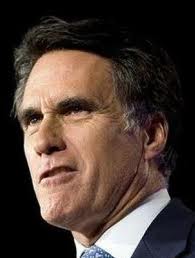
New York Daily News: Who’s playing racial politics in this campaign? It’s Mitt Romney. The article focuses on the first of the Romney welfare ads:
Romney accuses Obama of gutting welfare reform by granting waivers to state governments in how they choose to implement the law. It’s a charge that is completely without merit; spun from whole cloth; an invented attack line. But again, lying on the campaign trail about President Obama’s record is the rule, not the exception, for Mitt Romney.
Among the accusations made by Romney is that under Obama’s non-existent, made-up welfare plan, “you wouldn’t have to work,” “you wouldn’t have to train for a job” because “they just send you a welfare check.”
What’s most striking about the ad are the visuals – workers wiping their brow; working class Americans toiling away at manufacturing jobs. And coincidentally all the people in the ad … are white. This might not mean much, except for the fact that, as anyone who has followed American politics for the past 45 years knows, criticisms of the welfare system from the campaign trail have habitually always been used as racial code in attacks on Democrats for coddling blacks. It is the symbol of wasteful government spending, rewarding poor Americans for not working and creating a culture of dependency.
Since the 1960s, Republican politicians – along with the occasional Democrat – have used assaults on the welfare system to stir up white resentment toward blacks, poor Americans and other minorities for allegedly lazily living off the largesse of hard-working tax-payers, like those visually portrayed in Romney’s ad. That the current President happens to be African-American (and is also visually featured in the ad) is again just another of those odd coincidences.
Indeed, this ad and in fact this whole line of attack is one of the most blatant uses of racial coding in a presidential campaign since the Willie Horton ad of 1988.
It’s nice to see that the corporate media is beginning to call Romney out on his race baiting.
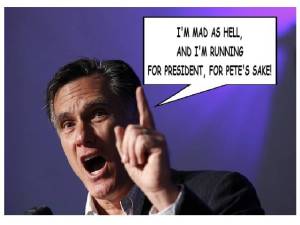
Here’s another example from U.S. News and World Report: Romney’s the angry one, not Obama.
Referring to Romney’s Tuesday speech in Ohio:
Obviously Romney has forgotten who his buddies are, and who are pulling his strings: the Republicans who are bending over for the Tea Party and Grover Norquist and for their rich financial campaign backers.
Has Romney forgotten the “diversions and distractions” of those who were questioning the president’s citizenship and place of birth long after he was elected? Has Romney forgotten the “defaming others” like what was done when House Speaker John Boehner said the president hadn’t worked a day in his life?!
….
I must say I was most shocked, although not surprised, by Romney’s accusation of the president “dividing us all in groups.” Isn’t wanting a baby born here of an undocumented immigrant not receiving citizenship divisive? Isn’t not wanting healthcare for the poor divisive? Isn’t wanting to cut programs that benefit middle- and lower-income women and families divisive? Hmm…sounds like Romney and his camp to me more than Obama. And with the addition of Rep. Paul Ryan as Romney’s vice presidential candidate, the race has become more polarized, more—dare I say—divisive?
I’ve focused on Romney/Ryan’s race-baiting strategy in this post, but I know there are lots of other stories I should I read today. I look forward to your suggestions.
Tuesday Reads: Learning about Paul Ryan
Posted: August 14, 2012 Filed under: 2012 presidential campaign, U.S. Politics | Tags: Ayn Rand, Black Panthers, Catholicism, Charlie Rossner, Eldridge Cleaver, Giles Fraser, Jack Kemp, Mitt Romney, Paul Ryan, Professor Rich Hart, Rude Pundit, VISTA 51 Comments
I spent quite a bit of time yesterday reading about Paul Ryan. There was so much information out there! I guess that’s what happens when you start rolling out a big news story late on Friday night and early Saturday morning.
Late Friday is the time that politicians generally use to release stories that they don’t want too many people to hear about. I have no idea why Romney chose that time, but it seems that it allowed writers to dig up lots of background over the weekend to publish on Monday. So I’m going to share some of the more interesting Ryan pieces I came across yesterday.
First, The New York Times had a lengthy puff piece: Conservative Star’s Small Town Roots. The best thing about this story was Charlie Pierce’s takedown of it: The Ryan Family’s History of Fakery
Still, the NYT article is worth reading to get the adoring media perspective on the mysteriously popular Ryan. The story reveals that Ryan and his wife are each quite wealthy through inheritance. Other than losing his father when he was in high school, which is tragic, Ryan seems never to have experienced a single setback along his education and career tracks.
Ryan studied under a conservative professor at Miami of Ohio–he paid for his college education with Social Security survivors’ benefits–and that professor pulled strings to get Ryan a political job. recommended Ryan for an internship with Wisconsin’s then Republican Senator Bob Kasten. Ryan has been sucking on the government teat ever since.
Mr. Ryan’s trickle-down economic theories were already in place, said Professor Rich Hart, who would help Mr. Ryan hone his political persona.
“I think Paul came to Miami University with these core conservative beliefs from an economic standpoint,” said Professor Hart, an outspoken libertarian who taught an intermediate macroeconomic theory course that Mr. Ryan took in his junior year. “He was reading Locke and Hayek, and I don’t know if he was reading Ayn Rand, but I had certainly read Ayn Rand, and I talked to him about it.”
The two would often meet outside class, not to talk about the course, Mr. Hart said, but to discuss political philosophy. “We had these discussions about the role of government. We both believed in the conservative view that government should be limited, because the most important thing is individual freedom, individual liberty, and along with that freedom goes individual responsibility.”
Professor Hart helped Ryan get a job working for Republican Senator Bob Kasten, and through Kasten Ryan met his “mentor,” Jack Kemp. They became close, and when Ryan ran for the House in 1998, Kemp campaigned for him. I’m sure Ryan worked hard, but he has certainly never had to worry about where his next meal was coming from. And where did the family money come from? Charlie Pierce found out via the Rude Pundit:
Where does the family dough come from? A construction company founded by Great Grandpa Ryan. The Rude Pundit went a’wandering through Googlestan, and what did he find? Among other great nuggets, this thing right here:
“The Ryan workload from 1910 until the rural interstate Highway System was completed 60 years later, was mostly Highway construction.”
IOW, Ryan’s multimillion dollar nest egg was built on taxpayer funds from We the People. So much for all that self-reliance Ryan is always touting.
There was another interesting tidbit in the NYT piece that Sam Stein wrote about at HuffPo. Here’s the relevant quote from the NYT:
Mr. Ryan is a strict supply-side budget expert and social conservative who counts fans across the Republican spectrum. He has been a driving force, if not always a visible one, in the party’s biggest fights with President Obama, including last year’s budget impasse that took the nation to the brink of default.
Mr. Ryan’s enormous influence was apparent last summer when Representative Eric Cantor, the second most powerful House Republican, told Mr. Obama during negotiations over an attempted bipartisan “grand bargain” that Mr. Ryan disliked its policy and was concerned that a deal would pave the way for Mr. Obama’s easy re-election, according to a Democrat and a Republican who were briefed on the conversation.
So did Ryan oppose a bipartisan deal for political reasons–fearing that it would help Obama? It’s an interesting question.
Here are a couple of interesting pieces on the Ryan plan for Medicare that I found helpful–both are relatively brief and informative.
Bloomberg: Ryan Plan To Redo Medicare With Private Choices Stirs Doubts
Forbes: Why Ryan’s Medicare Fantasy Doesn’t Merit Adult Conversation
I loved this piece at the Guardian by Giles Fraser about Ryan’s Ayn Rand obsession.
When I was a teenager, my American girlfriend at the time gave me Ayn Rand’s cult novel Atlas Shrugged to read. It changed her life, she said. It changed mine, too. She was not my girlfriend by the morning. It was the most unpleasant thing I’d ever had the misfortune to read.
As a work of literature, Atlas Shrugged is drivel, and not simply because it is so up itself with its own perceived radicalism; fundamentally, all propaganda is drivel, even if it is propaganda in a good cause. Rand’s cause was to celebrate what she called “the virtue of selfishness”, to denigrate the poor as scroungers and to celebrate the muscular individualism of the creative heroes of capitalism. Altruism, she contends, is “complete evil”. The question she poses: what would happen if all the bankers and captains of industry went on strike? What would happen if these Atlas-like gods, who hold up the world, decided one day to shrug and refuse to support everyone else? Then the world would be buggered, she contends. Atlas Shrugged is cheap pornography for the nastiest side of capitalism.
Fraser discusses the obvious clashes between Rand’s philosophy and Ryan’s Catholic faith.
By your deeds shall you know them. And Ryan’s deeds, and in particular his budget plan for slashing the role of the state, are pure Rand, as a group of Jesuits from Georgetown University have insisted: “Your budget appears to reflect the values of your favourite philosopher, Ayn Rand, rather than the Gospel of Jesus Christ. Her call to selfishness and her antagonism toward religion are antithetical to the Gospel values of compassion and love.” The US Catholic bishops’ conference, not well-known for its progressive politics, has said much the same.
It feels odd to be arguing that there ought to be more religion in US politics. In many ways, I’d prefer there to be a lot less. And certainly a lot less of the hard-right hogwash that borrows the wardrobe of Christianity but has no intention of being subject to its moral values. Jesus said nothing whatsoever about homosexuality or abortion. He said a great deal about poverty and our responsibility for the vulnerable. Which is why Paul Ryan is little more than Ayn Rand in Christian drag.
He also implies that Rand wouldn’t be too impressed with Ryan:
Ironically, he is a “second-hander” – Rand’s terminology for those who take their values, prêt-à-porter, from others. The trouble is that Christianity in the US has become so widely hijacked by the right that not enough people will actually notice.
Ayn Rand in Christian drag…I love it!
Just one more humorous tidbit on Ryan: In his speech on Saturday, Ryan used an aphorism that was very famous in the counterculture in the late 1960s.
Recalling words of advice offered by his late father, Mr. Ryan said, “I still remember a couple of things he would say that have really stuck with me. ‘Son, you are either part of the problem or part of the solution.’ Regrettably, President Obama has become part of the problem, and Mitt Romney is the solution.”
That quote is famous for its use by Eldridge Cleaver in his book Soul On Ice. Cleaver was famous as one of the founders of the Black Panthers. From the NYT Campaign Stops blog:
With Cleaver’s name attached, the phrase appeared on banners, buttons and picket signs at demonstrations well into the 1970s, and was picked up by other radical leftist leaders.
It’s perhaps unlikely that Mr. Ryan’s father, a lawyer in Janesville, Wisc., was present at a political gathering in 1968 when the Black Panthers co-founder Bobby Seale, urging his followers to smash “the American Empire,” proclaimed:
Everyone falls into two categories. You are either part of the problem – or part of the solution. Being part of the solution means you’re willing to grab a shotgun and take to the barricades, killing if necessary. Being part of the problem means you’re on the other side of the shotgun. There is no in-between.
It turns out the turn of phrase may have originated with Charlie Rossner, a graphic designer for the VISTA program in 1967, but Cleaver and the Panthers made it famous.
I’m running out of time and space, and this has been all about Paul Ryan. Oh well…I guess I’ll go with that, and let you post other news in the comments. I’ll end with this short video of Ryan’s first solo appearance–at the Iowa State Fair. It didn’t go that well.
What are you reading and blogging about today?
UPDATE: This post has been updated to correct the assertion that Professor Rich Hart of Miami University (Ohio) “pulled strings” to get Paul Ryan a job with Wisconsin Senator Bob Kasten. Professor Hart explains in a comment that all he did was write a letter of recommendation to support Ryan’s application for an unpaid summer internship with Senator Kasten. I had gotten the impression from The New York Times article that Professor Hart had been an important mentor who had been very instrumental in getting Ryan involved in politics. I apologize for the misunderstanding.
Can Romney Embrace Ryan While Distancing Himself from the Ryan Budget?
Posted: August 11, 2012 Filed under: 2012 presidential campaign, U.S. Economy, U.S. Politics | Tags: Charles Pierce, entitlements, George W. Bush, John Nichols, Medicaid, medicare, Mitt Romney, Paul Ryan, Social Security 21 Comments
No, he can’t.
This morning, shortly after Romney’s announcement of Paul Ryan as his pick for VP, CNN obtained a copy of of a list of media talking points for surrogates, designed by the Romney campaign to distance their candidate from Ryan’s plans for draconian changes to Medicare and cuts to other popular social programs that help the middle class, the elderly, the disabled, and the poor. Here are some examples:
Is Romney “adopting the Paul Ryan plan?”
Gov. Romney applauds Paul Ryan for going in the right direction with his budget, and as president he will be putting together his own plan for cutting the deficit and putting the budget on a path to balance.
So there are differences between Romney and Ryan?
Of course they aren’t going to have the same view on every issue. But they both share the view that this election is a choice about two fundamentally different paths for this country. President Obama has taken America down a path of debt and decline. Romney and Ryan believe in a path for America that leads to more jobs, less debt and smaller government. So, while you might find an issue or two where they might not agree, they are in complete agreement on the direction that they want to lead America.
On Medicare:
Do you worry that Paul Ryan’s controversial Medicare plan will hurt the campaign with independents?
– No. President Obama is the one who should be worried, because he has cut $700 BILLION from Medicare to pay for Obamacare, and put in place a panel of Washington bureaucrats to make decisions about what kind of care seniors will receive under Medicare. Mitt Romney and Paul Ryan have a bipartisan plan to strengthen Medicare by giving future seniors the choice between traditional Medicare and a variety of private plans. They are committed to ensuring that Medicare remains strong, not just for today’s seniors, but for tomorrow’s seniors as well.
Actually, Ryan’s budget plan retains all of the medicare cuts that are included in Obamacare.
Of course the talking points provide no specifics about these supposed differences in the two men’s policies. I think we have to assume that since Romney’s goal so far has been to scrupulously avoid talking about specific policies, he is going to be stuck with defending the Ryan plan. And he should be forced to defend it again and again and again.
Why? Because Romney has explicitly endorsed Ryan’s plan in public on multiple occasions. Think Progress has identified five occasions on which Romney enthusiastically praised the Ryan plan:
1. “Very supportive.”“I’m very supportive of the Ryan budget plan. It’s a bold and exciting effort on his part and on the part of the Republicans and it’s very much consistent with what I put out earlier. I think it’s amazing that we have a president who three and a half years in still hasn’t put a proposal out that deals with entitlements. This president’s dealing with entitlement reform — excuse me — this budget deals with entitlement reform, tax policy, which as you know is very similar to the one that I put out and efforts to reign in excessive spending. I applaud it. It’s an excellent piece of work and very much needed.”
2.”The right tone.” Romney told Talking Points Memo, “He is setting the right tone for finally getting spending and entitlements under control. …Anyone who has read my book knows that we are on the same page.’”
3. “Marvelous.” “I think it’d be marvelous if the Senate were to pick up Paul Ryan’s budget and to adopt it and pass it along to the president,” Romney once professed while in Wisconsin.
4. “An important step.” “I spent a good deal of time with Congressman Ryan. When his plan came out, I applauded it, as an important step. … We’re going to have to make changes like the ones Paul Ryan proposed.”
5. “The same page.” In March, on a local Wisconsin radio show called the Vicki McKenna Show, Romney told the host “Paul Ryan and I have been working together over some months to talk about our mutual plans and we’re on the same page.”
In addition, Romney super-surrogate John Sununu
said on a call with reporters, “Mitt Romney supports what Paul Ryan did. He endorsed what Paul Ryan did. Mitt Romney had his own package of entitlement reform, which Paul Ryan has praised. They both meshed together.”
There is no way Romney can be permitted to etch-a-sketch all that away.
Furthermore, I think we can assume that, if elected, Romney would give Ryan carte blanche in dealings with Congress and fiscal matters. As Governor of Massachusetts, Romney only put in about two years before he got bored with governing and turned over his duties to his staff so he could start running for president.
Romney isn’t interested in policy. He’s a CEO, accustomed to giving orders, delegating tasks, and expecting admiration and obeisance from his underlings. Ryan’s already good at sucking up; he was named “biggest brown-noser” by his high school graduating class, after all. Ryan would be Romney’s Cheney–praising his gaffe-prone boss while doing things his (Ryan’s) own way.
The Nation’s John Nichols, who is from Wisconsin and has followed Ryan’s career closely, agrees.
The hyper-ambitious political careerist—who has spent his entire adult life as a Congressional aide, think-tank hanger-on and House member—is looking for a road up. And he is sly enough to recognize that, like Dick Cheney with George Bush, he could be more than just a vice president in the administration of so bumbling a character as Romney.
Ryan figured Romney out months ago.
The two men bonded during the Wisconsin presidential primary campaign in late March and early April. They got on so well that Ryan was playing April Fool’s Day jokes on the Republican front-runner—giving Romney a rousing introduction before the candidate came from behind a curtain to find the room where he had expected to be greeted by a crowd of supporters was empty.
Romney loves those frat boy stunts. Ryan would be the perfect sidekick for him. But we can’t let it happen. Ryan’s plan is a complete fraud. Now the Obama campaign has the opportunity to expose Ryan for what he is: a fake and a “hypocritical big spender” who, as John Nichols points out, has never yet lifted a finger to actually cut government spending during his decade in Congress.
I’ll let Charlie Pierce summarize Ryan’s fakery:
He’s a garden-variety supply-side faker. His alleged economic “wonkery” consists of a B.A. in economics from Miami of Ohio — which he would not have been able to achieve without my generosity in helping him out with the Social Security survivor’s benefits that got him through high school after his father kicked. (You’re welcome, zombie-eyed granny-starver. Think nothing of it. Really.) Whereupon he went to work in Washington for a variety of conservative congresscritters and think-tanks, thinking unremarkable thoughts for fairly unremarkable people. Once in Congress, however, he has been transformed into an intellectual giant despite the fact that, every time he comes up with another “budget,” actual economists get a look at it and determine, yet again, that between “What We Should Do” and “Great Things That Will Happen When We Do” is a wilderness of dreamy nonsense, wishful thinking, and an asterisk the size of Lake Huron.
This is the man whose plan Willard Mitt Romney has now signed onto. If Romney wants to “distance” himself from Ryan’s plan, then he’s going to have to start getting very specific about what their differences are. In choosing Ryan as his running mate, Romney has made this a campaign about “entitlements.” He can no longer focus on just attacking Obama and making vague promises.
I say bring it on! Look what happened to George W. Bush when he tried to privatize Social Security. Romney can no longer focus on just attacking Obama for failing to get us out of the worse economic crisis since the Great Depression. Romney is going to have to own the Ryan budget and Ryan’s plans to decimate the social safety net–or he’ll have to explain exactly where he disagrees with Ryan and why.
Can Ryan’s Radicalism Shift the Focus off the Hunt for Romney’s Tax Returns?
Posted: August 11, 2012 Filed under: 2012 presidential campaign, Psychopaths in charge, religious extremists, Republican Tax Fetishists, Tea Party activists, The Bonus Class, VAGINA MItt Romney, We are so F'd | Tags: Mitt Romney, Paul Ryan, Punditry, Radical 38 CommentsSo,what better way to take the focus off your own short comings and the way you hide your viewpoints and taxes than to appoint a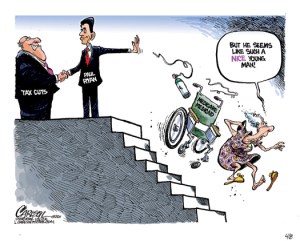 VP candidate that is sure to be a touch stone with the political press? That’s how I see the Ryan appointment. Romney’s positions are all over the place. Ryan’s are very much on record. Romney’s specific agendas and plans have been as translucent as his tenure at Bain and his tax returns. Ryan’s agenda is very much known. Ryan holds extreme views on abortion and all social issues as well as having introduced two extremely controversial and unpopular budget plans. What a way to change the conversation. Here’s a reminder of the extremist positions of Paul Ryan who still manages to be a media darling. This is from The Daily Beast today and was written by Michelle Goldman.
By now, you surely know, if you didn’t already, that Paul Ryan, Mitt Romney’s vice presidential pick, wants to privatize social security and turn Medicare into a voucher system. You might have read that, according to the Center on Budget and Policy Priorities, his economic plan “calls for radical policy changes that would result in a massive transfer of resources from the broad majority of Americans to the nation’s wealthiest individuals.”
Less attention has been paid, though, to Ryan’s hard-right positions on social issues. Indeed, on abortion and women’s health care, there isn’t much daylight between Ryan and, say, Michele Bachmann. Any Republican vice presidential candidate is going to be broadly anti-abortion, but Ryan goes much further. He believes ending a pregnancy should be illegal even when it results from rape or incest, or endangers a woman’s health. He was a cosponsor of the Sanctity of Human Life Act, a federal bill defining fertilized eggs as human beings, which, if passed, would criminalize some forms of birth control and in vitro fertilization. The National Right to Life Committee has scored his voting record 100 percent every year since he entered the House in 1999. “I’m as pro-life as a person gets,” he told the Weekly Standard’s John McCormack in 2010. “You’re not going to have a truce.”
Indeed, Ryan exemplifies a strange sort of ideological hybrid that now dominates the GOP. On economic issues, he’s a hardcore libertarian who once said, “[T]he reason I got involved in public service, by and large, if I had to credit one thinker…it would be Ayn Rand. And the fight we are in here, make no mistake about it, is a fight of individualism versus collectivism.” Yet when it comes to women’s control of their bodies, he quickly turns into a statist. “In the state of nature—the ‘law of the jungle’—the determination of who ‘qualifies’ as a human being is left to private individuals or chosen groups,” he wrote in a 2010 essay titled “The Cause of Life Can’t be Severed from the Cause of Freedom.” “In a justly organized community, however, government exists to secure the right to life and the other human rights that follow from that primary right.”
For anyone who wants to know how Ryan thinks, that essay is worth reading. It’s about 1,500 words long, but the word “woman” doesn’t appear in it once. Nor does the word “mother.” To him, a woman’s claim to bodily autonomy or self-determination doesn’t merit even cursory consideration. Here’s his analogy: “The car which I exercised my freedom of choice to purchase…does not ‘qualify’ for protection of human rights. I can drive it, lend it, kick it, sell it, or junk it, at will. On the other hand, the widow who lives next door does ‘qualify’ as a person, and the government must secure her human rights, which cannot be abandoned to anyone’s arbitrary will.”
Here’s the same source but an article written by Paul Begala who focuses on Ryan’s plutocratic upbringing. Today, it’s all about Ryan’s very public radicalism and his hypocrisy.
In selecting Paul Ryan, Mitt Romney has doubled-down on the one thing he has never flip-flopped on: economic elitism. Romney, born to wealth, has selected Wisconsin Congressman Paul Ryan, who was also born to wealth. As the former University of Oklahoma football coach, Barry Switzer, once said of someone else: both these guys were born on third and thought they hit a triple.
There’s nothing wrong with inherited wealth. Lord knows great presidents from FDR to JFK came into their fortunes through the luck of birth. But there is something wrong with winners of the lineage lottery who want to hammer those who did not have the foresight to select wealthy sperm and egg.
Finally, we have peered into Mitt Romney’s core. It is neither pro-choice nor pro-life; neither pro-NRA nor pro-gun control; neither pro-equality nor antigay. But it is pro-wealth and very anti–middle class. Mitt Romney has decided to go nuclear in the class war.
Paul Ryan, the darling of the New York–Washington media elite, is almost certainly not the most qualified person Romney could have picked. Unlike governors like Chris Christie or Tim Pawlenty, or a former high-ranking White House official like Rob Portman, Ryan has never run anything larger than his congressional office or the Oscar Meyer Weinermobile. The elite love Ryan because he speaks for more cowardly members of their class; his stridently anti–middle class policies are music to their ears.
You will often hear people who ought to know better dress up Ryan’s savage economic priorities with euphemisms. Ryan wants to “fix” Medicare. No, he doesn’t. He wants to kill it. Saying Paul Ryan wants to “fix” Medicare is like saying the vet wanted to “fix” my dog Major; that which used to work very well no longer works at all—and Major is none too happy with the procedure.
Ryan’s budget is the fiscal embodiment of the deeply evil, wholeheartedly selfish so-called philosophy of Ayn Rand. In fact, Ryan has described Rand as “the reason I got involved in public service,” and reportedly makes staffers read her works.
Think about that. As my buddy James Carville has said, what would all the Best People say if Nancy Pelosi made her staffers read, say, Margaret Sanger? Or if Barack Obama made interns study Das Kapital? Sure, a few months ago, facing Catholic protestors at Georgetown University, Ryan said he renounced Rand. But as the national Catholic weekly, America, wrote, he did not change the substance of a single policy. Some renunciation. It seems to me Ryan has renounced Rand’s politically incorrect atheism, not her morally bankrupt philosophy of Screw Thy Neighbor.
So, how long will the focus be on Major’s neutering rather than poor Shamus who was strapped to the top of a car for 12 hours?
How long will the focus be on Paul Ryan whose life is an open book compared to the secretive and snaky Willard?
Was this part of the strategy of picking Paul Ryan. Was this an attempt to get the focus off of the car elevators, the dancing horses who get bigger tax deductions than most people’s children, the you don’t get to see my taxes stand, the insults to Japan and Britain and the highly botched tour abroad? Is this all about appeasing the base and getting the punditry to chase a less important bone?

 peej
peej Carissa
 bostonboomer
 dakinikat
 ecocatwoman
 mablue2
 Mama Lopez
 peggysue22
 quixote
 skydancingguestblogger
 Mona (aka Wonk the Vote)



 Sky Dancing
Recent Comments