There are only 19 days to go until November 5. I believe that Kamala Harris will win, but I was also sure Hillary Clinton would win in 2016.
Both Harris and Trump have been holding rallies and giving interviews. She speaks in complete sentences and discusses her policies in a coherent fashion. He can’t complete a sentence, mispronounces words, rambles nonsensically, and has no understanding of his own policies. And, of course, he is a pathological liar.
Harris is a former prosecutor who is committed to the rule of law. Trump is a convicted felon out on bail, with multiple indictments hanging over his head. How can the race be close?
One positive development is that Trump’s dementia and his violent rhetoric and threats are getting more attention in the media. He and his advisers may well live to regret driving Joe Biden out of the race.
I feel as if my life is on hold until I know who will win this election. If Harris wins, my life will continue on its current track. If Trump wins, everything will change–and not in a good way. In addition, the chaos we have all lived through in the past 9 years will continue and most likely get much worse. That’s where things stand right now, as I see it.
State of the Race
In the latest national polls, Harris leads by a few points.
In the presidential contest, Vice President Kamala Harris leads former President Donald Trump by five points among likely voters, including those who are undecided yet leaning toward a candidate. The race gets closer, however, among registered voters nationally. Here, three points separate the two candidates.
Harris (52%) leads Trump (47%) among likely voters nationally, including those who are undecided yet leaning toward a candidate. Earlier this month, two points separated Harris (50%) and Trump (48%) among likely voters.
The contest is tighter among registered voters. Among the general electorate, Harris receives 51% to 48% for Trump. In early October, the same margin separated Harris (50%) and Trump (47%) among the broader electorate.
Trump (54%) leads Harris (44%) among independents who are likely to vote, widening the 4-point edge Trump (50%) had against Harris (46%) previously.
Trump (53%) leads Harris (47%) among men who are likely to vote while Harris (57%) has the advantage over Trump (42%) among women.
While members of Gen X divide (51% for Harris to 48% for Trump), Harris has majority support among GenZ/Millennials (53%) and among Baby Boomers/the Silent-Greatest Generations (55%).
While the gap between the two remained steady compared with a Reuters/Ipsos poll conducted a week earlier, the new poll, which closed on Sunday, gave signs that voters – particularly Democrats – might be more enthused about this year’s election than they were ahead of the November 2020 presidential election when Democrat Joe Biden defeated Trump.
Some 78% of registered voters in the three-day poll – including 86% of Democrats and 81% of Republicans – said they were “completely certain” they would cast a ballot in the presidential election. The share of sure-to-vote poll respondents was up from 74% in a Reuters/Ipsos survey conducted Oct. 23-27, 2020, when 74% of Democrats and 79% of Republicans said they were certain to cast ballots.
The poll had a margin of error of around 4 percentage points.
A record number of early votes have been cast in Georgia on Tuesday as residents headed to the polls in a critical battleground state that is grappling with the fallout from Hurricane Helene and controversial election administration changes that have spurred a flurry of lawsuits.
More than 328,000 ballots were cast Tuesday, Gabe Sterling of the Georgia secretary of state’s office said on X. “So with the record breaking 1st day of early voting and accepted absentees we have had over 328,000 total votes cast so far,” he said.
The previous first day record was 136,000 in 2020, Sterling said.
The swing state is one of the most closely watched this election, with former President Donald Trump trying to reclaim it after losing there to President Joe Biden by a small margin four years ago, leading Trump and his allies to unsuccessfully push to overturn his defeat.
Those efforts have loomed large this year as new changes to how the state conducts elections have been approved by Republican members of the State Election Board, leading Democrats and others to mount legal challenges, many of which have yet to be resolved even as Election Day nears.
Despite the massive turnout on Tuesday, the process appeared to go smoother this year for some Atlanta-area voters who spoke with CNN.
“Last time I voted, I voted in the city and the lines were out the door. They only had like, maybe like three people working,” said Corine Canada. “So people honestly just started leaving because it was like that. Yeah, like, ‘This is too long. I can’t sit here (and) wait, I have to go back to work.’ But here, no, it was easy.”
Dementia Don
Yesterday Trump appeared at the Economic Club of Chicago and gave a disastrous interview. He mostly talked about his plan to put high tariffs on imports, and continued to claim that these tariffs would be paid by foreign countries and not by Americans paying higher prices. Other news from the interview: he would not commit to allowing a peaceful transfer of power if he loses the election.
Donald Trump continued his pre-election economic event tour on Tuesday with a lengthy interview with Bloomberg at the Economic Club of Chicago. It was a total mess.
Bloomberg Editor-In-Chief John Micklethwait did not take it easy on Trump, and it quickly became clear that the former president has no conception of the mechanics of or the potential ramifications of the economic platform he’s running on. Bluntly, the former president was incoherent when pressed with real questions about his policies.
Micklethwait spent most of the interview attempting to break Trump out of what the former president repeatedly referred to as “the weave,” his term for his rambling digressions — with ever-decreasing intelligibility — and general inability to focus on a given topic for more than a few seconds during his rallies and interviews.
Micklethwait didn’t weave along with Trump, however, repeatedly working to bring him back on topic and answer the actual questions. The grilling exposed Trump’s total cluelessness with regard to his own economic policy, and led Trump to attack Micklethwait as biased….
The central pillar of Trump’s economic plan is widespread tariffs on all imported goods, with penalties appearing to increase depending on how much he dislikes the country. Economists have warned that such a policy could have devastating effects on American consumers, who would be saddled with increased costs for all imported goods.
When questioned about the specifics of his plan, and if he was aware of its pitfalls, Trump seemed ignorant of basic economic principles, insisting that other countries, not American consumers, would pay for the tariffs.
A bit more:
Micklethwait tried to explain the actual impact. “Three-trillion worth of imports and you will add tariffs to every single one of them, and push up the cost for all of these people to buy foreign goods,” he said. “That is just simple mathematics.”
Trump countered that he was “always good at mathematics,” and that high tariffs — and thus costs — would force companies to move production into the United States.
Anxiety, by Edvard Munch
“That will take many, many, many years,” Micklethwait said, to which Trump replied that high enough penalties would make the move immediate as if companies could simply wand wave production plants, orchards, wineries, factories, and the like into existence.
The former president also insisted that his tariff proposal would not result in the loss of jobs that are dependent on trade, because companies that moved to the U.S. would not be subject to the tax. “All you have to do is build your plant in the United States and you don’t have any tariffs,” he said…..
Micklethwait’s attempts to keep Trump on topic earned him no grace from the former president, who hates few things more than being contradicted.
When Micklethwait asked Trump to address a report by The Wall Street Journal estimating that his economic proposals would raise the national debt by upwards of $7 trillion, the former president fell back on his standard playbook: bashing the interviewer.
“What does The Wall Street Journal know? They’ve been wrong about everything, and so have you by the way, you’ve been wrong,” Trump replied, crossing his arms and curling into his seat.
“You’ve been wrong all your life on this stuff,” he added.
There’s more at the link. I didn’t encounter a paywall when I clicked on the link at Memeorandum.
Former president Donald Trump is campaigning on the most significant increase in tariffs in close to a century, preparing an attack on the international trade order that would likely raise prices, hurt the stock market and spark economic feuds with much of the world.
Trump’s trade plans, a staple of his stump speeches, have fluctuated, but he consistently calls for steep duties to discourage imports and promote domestic production. The former president has floated “automatic” tariffs of 10 percent to 20 percent on every U.S. trading partner, 60 percent levies on goods from China, and rates as high as 100, 200 or even 1,000 percent in other circumstances.
These proposals would go far beyond the disruptive trade wars of his first term even if they are only partially implemented. They would wrench the nation out of the system of global interdependence that arose in recent decades, making the U.S. economy much more isolated and autonomous, like it was in the late 19th century. (Trump last week falsely claimed that the United States was never richer than in the 1890s, when it had high trade barriers.)
“To me, the most beautiful word in the dictionary is tariff. And it’s my favorite,” Trump said in Chicago on Tuesday. “I’m a believer in tariffs.”
The consequences would be far-reaching: Americans would be hit by higher prices for grocery staples from abroad, such as fruit, vegetables and coffee. Domestic firms dependent on imports would need to either figure out new supply chains or raise costs for consumers. U.S. manufacturers would almost certainly see sharp declines in orders from abroad as foreign nations impose retaliatory tariffs.
“We are talking about a plan of historic significance: It would be enormous, and the blowback would be even more enormous,” said Douglas A. Irwin, an economist at Dartmouth College who authored a 2017 book on the history of U.S. trade policy. “This would stand way off the charts.”
Companies and governments around the world have begun preparing contingency plans for the potential Trump tariffs. Diplomats and business leaders from Latin America, Europe, Asia and even Canada have in recent weeks asked their U.S. counterparts about Trump’s intentions and authorities, according to interviews with several domestic and international economic advisers, some of whom spoke on the condition of anonymity to reflect private planning.
While some business leaders and congressional Republicans remain optimistic that the former president is engaged in election-year posturing, Trump has repeatedly insisted that tariffs represent an unmitigated positive for the U.S. economy, recently calling them “the greatest thing ever invented.” Tariffs have been a constant bedrock of his economic agenda since he first ran in 2016, along with lower taxes, increased energy production and deregulation.
You should watch the interview Trump did yesterday at the Economic Club of Chicago. You might think you’ve got a pretty good idea of the big guy’s solipsism, his buffoonish overconfidence, his utter inability to engage on matters of policy. Watch a few answers, and you’ll be forced to conclude: It’s way worse than you thought.
Victor Wang, Emotional tension and psychological drama
Bloomberg News editor-in-chief John Micklethwait began by asking Trump simple questions, like how he plans to pay for the $7 trillion hole his proposals would blow in the federal deficit. Trump responded with his ordinary magical thinking about making that sum back through a combination of growth and tariffs. “To me, the most beautiful word in the dictionary is ‘tariff,’” he said. “It’s my favorite word . . . the most beautiful word.”
Micklethwait asked how Trump planned to follow through on his promises of trimming the fat of wasteful spending. Trump responded with a lengthy story about him personally spending months negotiating with Boeing over a contract for new planes to serve as Air Force One, which ultimately saved the government more than a billion dollars. A cool story—until you remember the federal government spends an average of nearly $17 billion a day.
It takes a certain amount of ego and delusion to run for president. Trump has those characteristics in excess. But what stood out at the talk yesterday was the degree to which these are now the only elements undergirding his vision. Gone is the talk about surrounding himself with the best people. Dropped is the pretense that his answers are coherent. (Trump has started referring to his meandering logorrhea as “the weave.”) The pitch instead is that some sort of mad genius remains within him: Trust me, I’m the deals guy! I’ll get the best deals!
But there’s a lot more to guiding the economy than dealmaking, and even the most capable, hard-nosed, mano-a-mano negotiating with individual vendors can only take you so far.
There’s more about the interview at the link. There’s no paywall.
Donald Trump on Tuesday dodged the question of whether he will allow for a peaceful certification of election results if Kamala Harris defeats him in three weeks.
During an interview at the Economic Club of Chicago, Bloomberg Editor-in-Chief John Micklethwait asked Trump if he would commit “to respecting and encouraging a peaceful transfer of power,” especially in light of Jan. 6, 2021, which the journalist called “unruly and violent.”
Trump didn’t answer the question. Instead, he rejected the premise and blamed Micklethwait as “a man that has not been a big Trump fan over the years.” He also falsely claimed that he allowed for a peaceful transfer of power in 2020, when Joe Biden defeated him.
“Come on, President Trump, you had a peaceful transfer of power compared to Venezuela, but it was by far the worst transfer of power for a long time,” Micklethwait insisted.
The audience booed and Trump thanked them. The former president then admitted that people were angry when they arrived in Washington to protest the results that January—but according to him, they were perfectly behaved.
“It was love and peace, and some people went to the Capitol,” Trump said. “And a lot of strange things happened there, a lot of strange things, with people being waved into the Capitol by police.”
For perhaps the first time, Trump downplayed his crowd size.
He added that he left the White House the morning he was supposed to and that only a fraction of the protestors were among those who breached and defaced the Capitol.
“Not one of those people had a gun, nobody was killed, except for Ashli Babbitt,” he said.
MAGA-friendly CNBC host Joe Kernen dropped an interesting nugget right as Squawk Box went to commercial break on Tuesday.
“Well, Trump canceled, and he was going to come on,” Kernen said.
Not only did Trump once love going on CNBC, but Kernen’s revelation comes on the heels of Trump declining or canceling a number of other high-profile opportunities to make a pitch to voters on mainstream TV. Trump refused to debate Kamala Harris a second time, which would’ve aired on CNN. Trump then refused CNN’s offer to host a town hall. And Trump of course also recently backed out of a 60 Minutes interview.
Still Tension, Wassily Kandinsky
The explanation for all this is not that Trump has suddenly become camera shy. It’s that his campaign undoubtedly realizes his rapidly degrading condition doesn’t play well with audiences beyond the MAGA cult. As a result, they’re retreating to the safer terrain of nonstop rallies and fawning Fox hits….
The reason Trump’s campaign isn’t keen to get him in front of swing voters on mainstream platforms was on stark display Tuesday when Trump did a rare event that wasn’t a festival of sycophancy.
By any objective standard, Trump’s Economic Club of Chicago interview was a disaster. He came out of the gates with an asinine proposal for 2,000 percent tariffs on imported cars, then was quickly reduced to insulting the moderator, Bloomberg’s John Micklethwait, when Micklethwait rightly pointed out that his his economic proposals are an inflationary disaster. (Watch below.)
By the end of the event, Trump had veered into making an impassioned defense of the big lie and his coup attempt, bragging about his crowd size on January 6 and absurdly claiming the events of that day were just “love and peace.” (Watch below.)
OAKS, Pa. — The town hall, moderated by South Dakota Gov. Kristi L. Noem (R), began with questions from preselected attendees for the former president. Donald Trump offered meandering answers on how he would address housing affordability and help small businesses. But it took a sudden turn after two attendees required medical attention.
And so Trump, after jokingly asking the crowd whether “anybody else would like to faint,” took a different approach.
“Let’s not do any more questions. Let’s just listen to music. Let’s make it into a music. Who the hell wants to hear questions, right?” he said.
For 39 minutes, Trump swayed, bopped — sometimes stopping to speak — as he turned the event into almost a living-room listening session of his favorite songs from his self-curated rally playlist.
He played nine tracks. He danced. He shook hands with people onstage. He pointed to the crowd. Noem stood beside him, nodding with her hands clasped. Trump stayed in place onstage, slowly moving back and forth. He was done answering questions for the night….
As Trump stood onstage in his oversize suit and bright red tie, swaying back and forth, it was almost as if he were taking a trip back to decades past. Trump’s decision to cut short the question-and-answer portion of the town hall and instead have the crowd stay to listen to his favorite songs was a somewhat bizarre move, given that the election was only 22 days away. Vice President Kamala Harris has called Trump, 78, unstable and questioned his mental acuity.
Some in the crowd began to leave. Some looked around, wondering whether he was done speaking for the night and how much longer the dance — or sway — session would last. Many stayed holding their cameras and watched as Trump took in the music, at times looking over at a screen beside him that showed videos of James Brown singing “It’s a Man’s Man’s Man’sWorld” and Sinéad O’Connor performing “Nothing Compares 2 U.”
For 38 minutes or so, former President Donald Trump was in a happy place. After some people collapsed at his town hall, Trump got frustrated, decided he’d had enough softball questions from Gov. Kristi Noem (R-SD) and asked to play music. For nearly 40 minutes, Trump kept asking for more music, swaying oddly in front of the crowd, occasionally closing his eyes, and retreating to a comforting place in his mind, like being wrapped in a warm blanket.
The Anxiety Monster, by Jeremy Campbell
For those of us who’ve had family members slip into dementia, it was a familiar sight. Both of my grandmothers suffered it near the ends of their lives. Even before they were sent to nursing homes, they started to exhibit increased frustration and even anger. My maternal grandmother accused her caretaker of purposely turning the shower knob too tight so she would have to come in and see my grandmother naked. But she also liked to sing old-time songs she remembered. She had her happy place—an oasis in a time of increasing confusion. Then, there were other times she was completely lucid. She would talk about the situation in the Middle East (which was still a thing back then, too) with total clarity. There were good days and there were bad days.
It isn’t like we haven’t seen Trump’s behavior with our own eyes. It isn’t like media hasn’t noticed it, either. And yet, no one seems to want to talk about the distinct possibility that Trump is well on the way to the same state my grandmothers found themselves in and that millions of Americans find friends and family in – severe cognitive decline, if not outright dementia.
For 38 minutes or so, former President Donald Trump was in a happy place. After some people collapsed at his town hall, Trump got frustrated, decided he’d had enough softball questions from Gov. Kristi Noem (R-SD) and asked to play music. For nearly 40 minutes, Trump kept asking for more music, swaying oddly in front of the crowd, occasionally closing his eyes, and retreating to a comforting place in his mind, like being wrapped in a warm blanket.
For those of us who’ve had family members slip into dementia, it was a familiar sight. Both of my grandmothers suffered it near the ends of their lives. Even before they were sent to nursing homes, they started to exhibit increased frustration and even anger. My maternal grandmother accused her caretaker of purposely turning the shower knob too tight so she would have to come in and see my grandmother naked. But she also liked to sing old-time songs she remembered. She had her happy place—an oasis in a time of increasing confusion. Then, there were other times she was completely lucid. She would talk about the situation in the Middle East (which was still a thing back then, too) with total clarity. There were good days and there were bad days.
It isn’t like we haven’t seen Trump’s behavior with our own eyes. It isn’t like media hasn’t noticed it, either. And yet, no one seems to want to talk about the distinct possibility that Trump is well on the way to the same state my grandmothers found themselves in and that millions of Americans find friends and family in – severe cognitive decline, if not outright dementia.
Angry, frustrated, confused, unable to focus. And now, he retreats to his happy place in a time of stress. Put it all together and ask yourself if that’s someone you’d trust to take care of your kids in a house with a working stove.
With three weeks left before Election Day, former President Donald J. Trump is pushing to the forefront of his campaign a menacing political threat: that he would use the power of the presidency to crush those who disagree with him.
In a Fox News interview on Sunday, Mr. Trump framed Democrats as a pernicious “enemy from within” that would cause chaos on Election Day that he speculated the National Guard might need to handle.
A day later, he closed his remarks to a crowd at what was billed as a town hall in Pennsylvania with a stark message about his political opponents.
“They are so bad and frankly, they’re evil,” Mr. Trump said. “They’re evil. What they’ve done, they’ve weaponized, they’ve weaponized our elections. They’ve done things that nobody thought was even possible.”
And on Tuesday, he once again refused to commit to a peaceful transfer of power when pressed by an interviewer at an economic forum in Chicago.
With early voting underway in key battlegrounds, the race for the White House is moving toward Election Day in an extraordinary and sobering fashion. Mr. Trump has long flirted with, if not openly endorsed, anti-democratic tendencies with his continued refusal to accept the results of the 2020 election, embrace of conspiracy theories of large-scale voter fraud and accusations that the justice system is being weaponized against him. He has praised leaders including President Vladimir V. Putin of Russia and Prime Minister Viktor Orban of Hungary for being authoritarian strongmen.
But never before has a presidential nominee — let alone a former president — openly suggested turning the military on American citizens simply because they oppose his candidacy. As he escalates his threats of political retribution, Mr. Trump is offering voters the choice of a very different, and far less democratic, form of American government.
“There is not a case in American history where a presidential candidate has run for office on a promise that they would exact retribution against anyone they perceive as not supporting them in the campaign,” said Ian Bassin, a former associate White House counsel under Barack Obama who leads the advocacy group Protect Democracy. “It’s so fundamentally, outrageously beyond the pale of how this country has worked that it’s hard to articulate how insane it is.”
Harris and Waltz are also calling attention to Trump’s cognitive issues and threats. They have three weeks left to educate the public an get legacy media to focus on Trump’s age and obvious dementia.
Take care everyone and keep hope alive, as Jesse Jackson used to say.
Did you like this post? Please share it with your friends:
I’ve spent some time this week having to find Keely Cat, who escaped Saturday afternoon and showed up 5 days later. Everyone was relieved she was home. She’s included in that number. Many neighbors helped us, and I got some very good suggestions from online friends, too. Both BB and JJ have been holding me together and giving me some time to worry and search. She hadn’t had her seizure meds since Saturday morning. She’s a bit more animated than the Turtle when she has one. I gave her a dose today and yesterday after a seizure yesterday morning. All of us here are much more relaxed and a bit cooler. We’ve finally escaped the excessive heat, and the house cools down at night. All of this is a relief for me, and now it’s back to fretting about our national problems.
Several well-respected law professors and judges are insisting that Trump is not qualified to hold office again because of the 14th Amendment, and the argument is turning into court cases. This is from ABC News.”State election officials prepare for efforts to disqualify Trump under 14th Amendment. New Hampshire, Michigan and Arizona are bracing for lawsuits.”
Efforts to keep former President Donald Trump off the 2024 ballot under the 14th Amendment are gaining momentum as election officials in key states are preparing for or starting to respond to legal challenges to Trump’s candidacy.
The argument to disqualify Trump from appearing on primary or general election ballots in 2024 boils down to Section 3 of the U.S. Constitution’s 14th Amendment, which states that an elected official is not eligible to assume public office if that person “engaged in insurrection or rebellion against” the United States, or had “given aid or comfort to the enemies thereof,” unless they are granted amnesty by a two-thirds vote of Congress.
Several advocacy groups have said that Trump’s actions on Jan. 6, 2021, fit that criteria — that he directly engaged in an insurrection. The legal theory has been pursued, unsuccessfully, against a few other elected Republicans; arguing their actions around Jan. 6 and support for overturning the 2020 election results amounted to the disqualifying behavior.
Trump has denied any involvement in the attack on the Capitol.
“Joe Biden, Democrats, and Never Trumpers are scared to death because they see polls showing President Trump winning in the general election,” Trump campaign spokesperson Steven Chung told ABC News in a statement. “The people who are pursuing this absurd conspiracy theory and political attack on President Trump are stretching the law beyond recognition much like the political prosecutors in New York, Georgia, and DC. There is no legal basis for this effort … “
The push to disqualify Trump under this constitutional clause gained more traction when two members of the conservative Federalist Society, William Baude and Michael Stokes Paulsen, recently supported the idea in the pages of the Pennsylvania Law Review. Following the Baude and Paulsen article, retired conservative federal appeals judge J. Michael Luttig and Harvard Law Professor Emeritus Laurence Tribe made the same argument in The Atlantic.
Now, threats of filings against Trump under this clause are gaining steam in a number of states, including New Hampshire and Arizona and in Michigan, a lawsuit to disqualify Trump was filed on Monday. Secretaries of state say they have started to take steps to prepare for the possibility of administering elections without the current GOP front-runner.
In an interview with ABC News, Michigan Secretary of State Jocelyn Benson, a Democrat, said that she and other secretaries of state from Pennsylvania, Georgia, Nevada, New Hampshire and Maine started having conversations over a year ago about preparing for the legal challenges to Trump’s candidacy.
“I’m talking every day with colleagues about this, we’re all recognizing that our decisions that we make may in some cases be the first but won’t be the last and there may be multiple decision points throughout the course of the election cycle,” Benson said. “So, I think the public needs to be prepared for this to be an ongoing issue that is it has several resolution points and evolutions points throughout the cycle.”
But as conversations grow around the use of the 14th Amendment provision, some legal scholars and election officials are increasingly concerned about the practicality of the emerging lawsuits.
I just want to get rid of him one way or another. Mitch McConnell is getting a lot of attention after his second freeze-up that was captured in pressers. BB wrote about this and the possible causes yesterday. While McConnell has been “medically cleared” by the physician who attends Congress, many political pundits are now suggesting something “be done” about him. This is from Jack Schafer, writing for Politico. “Why Is Nobody Doing Anything About Mitch McConnell? Washington is paralyzed as the Senate minority leader freezes up.”
If McConnell were a bus driver or broadcaster or teacher engaged in any other occupation that, like serving as a legislative leader, demands real-time responses, he would have been benched pending a medical examination. Instead, Mitch’s verbal stoppage has been met with paralysis by the political order, which seems incapacitated by his condition. The president and others have voiced their “concerns” for McConnell’s episodes, offering verbal placeholders for the stark questions that demand answers. Instead, apart from the barest of acknowledgments that McConnell will consult a physician, and the prospect of an internal Senate GOP discussion, it’s the Washington establishment that is acting lightheaded and professing that things are fine.
These aren’t the 81-year-old senator’s only recent medical misadventures. He suffered a fall and concussion in March that sent him to the hospital for treatment. In a 2019 tumble at his Louisville, Ky., home, he fractured his shoulder. In October 2020, when reporters noticed his bruised and bandaged hands, he fended off their questions with what has become his boilerplate. “I can just tell you that I’m just fine,” he said. At that time, McConnell aides, aware of the senator’s perambulatory instability, were warning journalists not to get underfoot of the GOP leader as he walked the halls of the Senate lest they prompt another spill.
Older people fall. It’s a fact. President Joe Biden, 80, tripped on a sandbag in June. Older people experience mental lapses. That’s a fact, too. Neither a fall nor a lapse in isolation constitutes a crisis. But McConnell is not your standard-issue example of a stumbling elder who can be patched up and returned to service with little inconvenience to his peers. He’s a leader of the U.S. Senate — brokering judicial and Cabinet appointments, stewarding legislation, mobilizing his party to compete in the 2024 elections, not to mention representing Kentucky. Even a layman could assert McConnell needs advanced treatment and rest without being accused of practicing medicine without a license. And yet, only muffled words of interest in McConnell’s health by other senators have been sounded, mostly upbeat. “After he fell, obviously he was a little bit groggy when he first got back. But he’s picked up a lot more energy since then,” said Sen. Tommy Tuberville (R-Ala.) in July.
McConnell isn’t even the leading example of an aged legislator whose diminished capacity is ignored by the Senate so he can maintain his plush seat of power. Sen. Dianne Feinstein (D-Calif.) appears to be in rapid physical and mental decline — and her supporters have, at least initially, concealed the severity of her health battles. In July, the 90-year-old was so out of it she had to be coached by Democratic colleague Sen. Patty Murray to say “aye” in a committee meeting. Feinstein’s condition has received more attention than McConnell’s, with a half-dozen members of the House calling on her to resign. But for senators, the Feinstein story is like a reel from the black comedy The Death of Stalin, as the senators remain as timid as the Politburo members gathered around Joseph Stalin’s deathbed who refused to replace him until he was absolutely cold.
What the Senate needs is not a legal measure like the 25th Amendment, which governs the replacement of a mentally or physically faltering president. Nor would age limits for senators, which would reduce the body’s gerontological problem, automatically remedy the current state. People under 65 can have debilitating strokes or other mentally sapping medical problems. Neither would a medical board empowered to certify the mental and physical health of legislators do the trick. Some of us barely want to heed our doctors’ advice. Who wants to assign them to review who can serve in Congress?
What the Senate needs is some spine. Instead of playing the supportive colleague for other legislators who struggle to do their jobs or otherwise turn their backs on the infirm and doddering, senators need to use their powers of persuasion, their parliamentary skills at replacing leadership and old-fashioned jawboning to persuade the mentally muddled or seriously ill to remove themselves from the pinnacles of power and even, if necessary, to resign.
Haley, who is running in the 2024 Republican presidential primary, called McConnell’s situation “sad” while appearing onFox News’ “The Story” on Thursday, where she described the Senate as the “most privileged nursing home in the country.”
“No one should feel good about seeing that any more than we should feel good about seeing Dianne Feinstein, any more than we should feel good about a lot of what’s happening or seeing Joe Biden’s decline,” Haley said, targeting the senior Democratic senator from California and the Democratic president.
Politicians on both sides of the aisle have questioned 90-year-old Feinstein’s fitness for office following her extended absence from the capital earlier this year after a prolonged bout with shingles.
And conservatives have frequently cited Biden’s age among the reasons they believe he’s not fit to be president. Biden, who turns 81 in November, became the oldest candidate ever elected commander in chief when he won the 2020 presidential election.
“What I will say is, right now, the Senate is the most privileged nursing home in the country,” Haley went on. “I mean, Mitch McConnell has done some great things, and he deserves credit. But you have to know when to leave.”
She then repeated her call for term limits and mental competency tests for elected officials over the age of 75.
“I wouldn’t care if they did them over the age of 50,” added Haley, who is 51. “But these people are making decisions on our national security. They’re making decisions on our economy, on the border.”
“We need to know they’re at the top of their game,” she continued. “You can’t say that right now, looking at Congress.”
Haley suggested it was time for “new faces, new voices [and] younger generations” to work in government before saying, “We need to have everybody else understand when it’s time to go.
Please, please tell me that the new voice for Trumperz isn’t Vivek Ramissmarmy. The last thing we need is another TechBro in a position to wreck society. This is an opinion from the New York Times by David French. French is not one of my favorites, and he’s Republican, but this is the voice of reason here. “The Articulate Ignorance of Vivek Ramaswamy.”
Now let’s fast-forward to the present moment. Instead of offering a plausible explanation for their mistakes — much less apologizing — all too many politicians deny that they’ve made any mistakes at all. They double down. They triple down. They claim that the fact-checking process itself is biased, the press is against them and they are the real truth tellers.
I bring this up not just because of the obvious example of Donald Trump and many of his most devoted followers in Congress but also because of the surprising success of his cunning imitator Vivek Ramaswamy. If you watched the first Republican debate last week or if you’ve listened to more than five minutes of Ramaswamy’s commentary, you’ll immediately note that he is exceptionally articulate but also woefully ignorant, or feigning ignorance, about public affairs. Despite his confident delivery, a great deal of what he says makes no sense whatsoever.
As The Times has documented in detail, Ramaswamy is prone to denying his own words. But his problem is greater than simple dishonesty. Take his response to the question of whether Mike Pence did the right thing when he certified the presidential election on Jan. 6, 2021. Ramaswamy claims that in exchange for certification, he would have pushed for a new federal law to mandate single-day voting, paper ballots and voter identification. Hang on. Who would write the bill? How would it pass a Democratic House and a practically tied Senate? Who would be president during the intervening weeks or months?
It’s a crazy, illegal, unworkable idea on every level. But that kind of fantastical thinking is par for the course for Ramaswamy. This year, for instance, he told Don Lemon on CNN, “Black people secured their freedoms after the Civil War — it is a historical fact, Don, just study it — only after their Second Amendment rights were secured.”
Wait. What?
While there are certainly Black Americans who used weapons to defend themselves in isolated instances, the movement that finally ended Jim Crow rested on a philosophy of nonviolence, not the exercise of Second Amendment rights. The notion is utterly absurd. If anything, armed Black protesters such as the Black Panthers triggered cries for strongergun control laws, not looser ones. Indeed, there is such a long record of racist gun laws that it’s far more accurate to say that Black Americans secured greater freedom in spite of a racist Second Amendment consensus, not because of gun rights.
Ramaswamy’s rhetoric is littered with these moments. He’s a very smart man, blessed with superior communication skills, yet he constantly exposes his ignorance, his cynicism or both. He says he’ll “freeze” the lines of control in the Ukraine war (permitting Russia to keep the ground it’s captured), refuse to admit Ukraine to NATO and persuade Russia to end its alliance with China. He says he’ll agree to defend Taiwan only until 2028, when there is more domestic chip manufacturing capacity here in the States. He says he’ll likely fire at least half the federal work force and will get away with it because he believes civil service protections are unconstitutional.
The questions almost ask themselves. How will he ensure that Russia severs its relationship with China? How will he maintain stability with a weakened Ukraine and a NATO alliance that just watched its most powerful partner capitulate to Russia? How will Taiwan respond during its countdown to inevitable invasion? And putting aside for a moment the constitutional questions, his pledge to terminate half the federal work force carries massive, obvious perils, beginning with the question of what to do with more than a million largely middle- and high-income workers who are now suddenly unemployed. How will they be taken care of? What will this gargantuan job dislocation do to the economy?
Ramaswamy’s bizarre solutions angered his debate opponents in Milwaukee, leading Nikki Haley to dismantle him on live television in an exchange that would have ended previous presidential campaigns. But the modern G.O.P. deemed him one of the night’s winners. A Washington
Post/FiveThirtyEight/Ipsos poll found that 26 percent of respondents believed Ramaswamy won, compared with just 15 percent who believed Haley won.
Miss Keely is home.
Republicans make me want to run away from my own country. Trumper and his cult make our country look like something from a Dystopian Science Fiction novel. But for right now, Keely is back, my children and their children are in safe states, and I live in a community of Social Aid and Pleasure Clubs. Cultural pride and civic responsibility are a thing down here, even though some of our elected politicians seem to forget about it as quickly as others.
Even apparent frontrunner Attorney General Jeff Landry, who’s firmly aligned himself with former President Trump and his far-right followers, is a man of mystery to many. He will bypass all but one televised debate, a key opportunity to get his message to the public. The one event he’s committed to so far will take place in a friendly setting he could attempt to pack with his own supporters.
Landry has said he intends to call a special session once in office on the topic of crime. He hasn’t shared any specifics on what he has in mind, other than vilifying authorities in the state’s largest cities for a “catch and release” approach to criminal justice. His plans for education are equally uncertain, other than his frequent conservative appeal to parental rights and rejection of the “woke mob.”
It’s hard to say whether this lack of detail from Landry’s stances will affect his appeal with moderate voters who have been key in recent governor’s races. Sure, Louisiana has grown more conservative as of late, but it’s in question whether its citizenry has moved as far to the right as other Southern states.
Stephen Waguespack and Treasurer John Schroder are positioning themselves as the anti-Landry candidate, although both are strongly conservative in their own right.
Waguespack’s recurring campaign message attempts to frame him as the outsider in the race, but many view him as the quintessential insider given his business lobby background and position in the Jindal administration. He has laid out policy plans if he becomes governor, but he still has to win over voters who may not be convinced he’s the most qualified for the job.
Schroder has been by far the most aggressive in taking on Landry. The two have a history of clashes going back to their time together on the State Bond Commission, which the treasurer chairs and whose procedural financial decisions Landry has attempted to politicize.
Yet in some ways, Schroder is farther right than anyone in the field. He’s selectively played this card on the campaign trail, but it’s not clear yet whether or how he would manifest these views if elected governor.
Hunter Lundy has attempted to position himself as the Christian conservative alternative in the field. Thanks to his ample self-funded campaign, he’s conveyed that message fairly well based on his showing recent polls. Chances are low he can find enough far-right leaning fellow independents to make a serious bid, but he could possibly take enough votes away from Republicans in the race to make the primary more interesting.
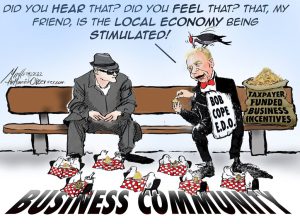
And Colorado Springs has the same problem we do in Louisiana. Business Handouts that do nothing but secure political contributions to their puppets.
There are more Republicans and each of them are pretty out there in right field. We do have a candidate for the Democratic party who is likely to win the run-off. But, the race won’t be easy for Shawn Williams.
Democrat Shawn Wilson could well fall into this same category, even as a favorite to make the runoff as the endorsed candidate of his party. People know him primarily for his role as former secretary of the state transportation department, but that’s not necessarily the positive association Wilson wants it to be.
It’s questionable whether he can follow the path of his old boss, Gov. John Bel Edwards, and appeal to enough moderate voters to give Landry, should he make the runoff, a serious run. Edwards made his anti-abortion stance clear from the start, and Wilson, though personally “pro-life,” espouses the political views of the abortion rights crowd.
What Edwards also had going for him in the 2015 election was running against a hugely unpopular candidate in David Vitter, who didn’t even carry his home Jefferson Parish in the runoff. Edwards also had the support of trial lawyers and his West Point pedigree
For every effort to paint Landry in a negative shade comparable to Vitter, the state Republican Party and political action committees have responded with huge ad buys to boost the attorney general’s profile.
Whether any other candidate can take the momentum away from Landry — or he somehow does so himself — is increasingly in doubt as Election Day nears.
Let us know how things look in your state! It’s important we keep democracy alive in our states. It’s also important we don’t elect people with massive discrimination plots and an eye on decimating the local public school systems.
Anyway, I’m going to try to have a nice relaxing day today and just enjoy the return of my prodigal kitty.
What’s on your reading and blogging list today?
Did you like this post? Please share it with your friends:
The Sky Dancing banner headline uses a snippet from a work by artist Tashi Mannox called 'Rainbow Study'. The work is described as a" study of typical Tibetan rainbow clouds, that feature in Thanka painting, temple decoration and silk brocades". dakinikat was immediately drawn to the image when trying to find stylized Tibetan Clouds to represent Sky Dancing. It is probably because Tashi's practice is similar to her own. His updated take on the clouds that fill the collection of traditional thankas is quite special.
You can find his work at his website by clicking on his logo below. He is also a calligraphy artist that uses important vajrayana syllables. We encourage you to visit his on line studio.







 Good Day, Sky Dancers!
 I just want to get rid of him one way or another. Mitch McConnell is getting a lot of attention after his second freeze-up that was captured in pressers. BB wrote about this and the possible causes yesterday. While McConnell has been
 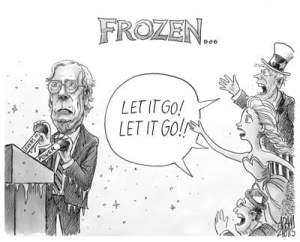 GOP Candidate and former South Carolina Governor and Ambassador to the UN, Nikki Haley, is less than subtle about McConnell’s condition.
 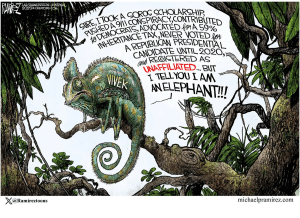 Please, please tell me that the new voice for Trumperz isn’t Vivek Ramissmarmy. The last thing we need is another TechBro in a position to wreck society. This is an opinion from the New York Times by David French. French is not one of my favorites, and he’s Republican, but this is the voice of reason here.

 peej
peej Carissa
 bostonboomer
 dakinikat
 ecocatwoman
 mablue2
 Mama Lopez
 peggysue22
 quixote
 skydancingguestblogger
 Mona (aka Wonk the Vote)



 Sky Dancing
Recent Comments