
Finally Friday Reads: “The thing that’s extra damaging now is the craziness.”
Posted: August 22, 2025 Filed under: #FARTUS, #MAGAnomics, #We are so Fucked | Tags: @repeat1968. John Buss, economics, FARTUS, Nobel Prize economics, Nobel Prize for Peace, tariffs, Trump is a Marxist/Maoist 7 Comments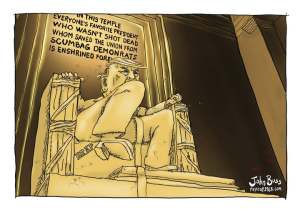
Drew this last Sunday, envisioning a trump renovation of the Lincoln Memorial as he “cleans up” DC. Wake up to find South Park had the same idea. Should have posted it sooner. John Buss, @repeat1968
Good Day, Sky Dancers!
I have to admit that my heroes have always been Nobel Prize Winners in Economics. Between hearing family stories about living through the Great Depression and my own experience of inflation and stagflation, I just totally fell into my economics major. It was practical, scientific, and consensus-seeking. I have an early copy of Keynes’ The General Theory of Employment, Interest and Money that was my father’s economic textbook after the War. I also have my own copy of Milton Friedman and Anna Schwartz’s A Monetary History of the United States, 1867–1960. As a Financial Economist, I have strong roots as a monetarist.
As I reached out to study Trade Theory in search of what all countries needed in place to have a stable, growing economy and financial system, I became drawn to Paul Krugman. The headline up top is straight from him. This year, I’ve watched just about everything we’ve learned since the Great Depression on how to stabilize and grow an economy, from all these wise people, being thrown to the wind. I’m opening with the current Krugman critique of the “craziness.” It will be followed by some excellent analysis of what’s passing as policy these days, which is anything but a market economy. You can make a good case that we are moving in the direction of a Soviet-style command and Control system and heading straight into a Maoist one. This is how our regime rolls these days, and as Krugman says, it’s crazy.
I start with Thor Benson’s interview with Dr. Krugman at the Substack Public Notice.
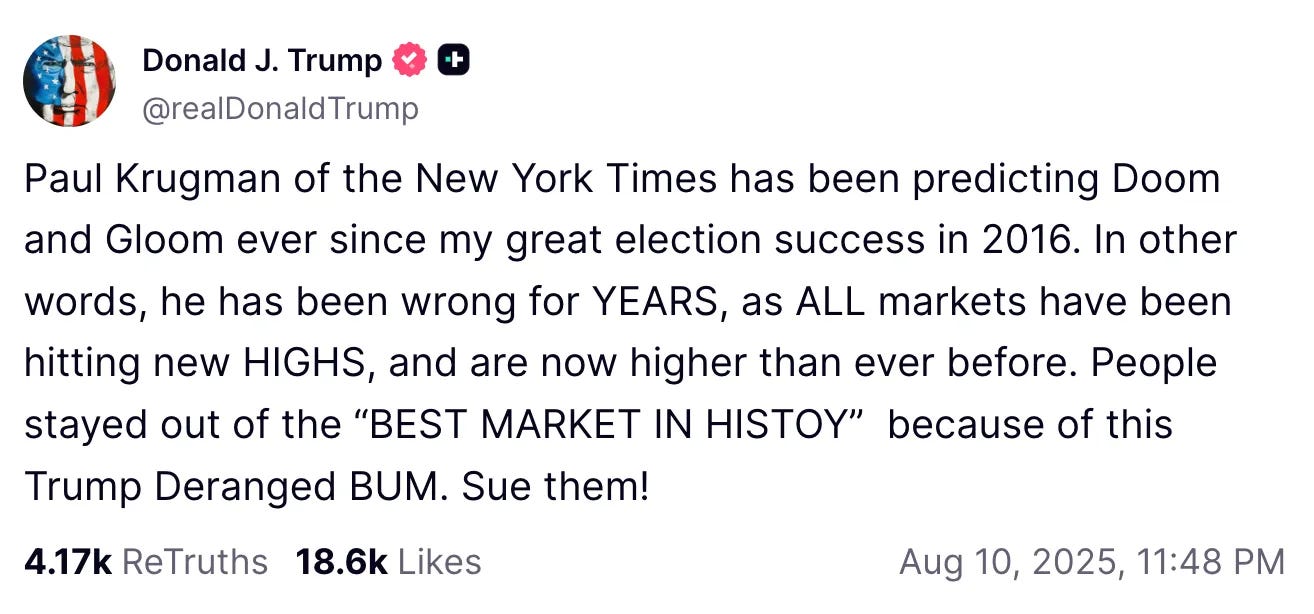
Paul Krugman’s publication here on Substack has quickly become a vital resource for explanatory (and entertaining) coverage of Trump’s self-destructive economic policies. In fact, the Nobel Prize winner recently triggered Trump himself, with the president howling that Krugman is a “Trump Deranged BUM” in an unhinged Truth Social screed.
So with economic indicators weakening and talk of stagflation in the air, we connected with Krugman for a wide-ranging conversation about tariffs, inflation, why the AI bubble is reminiscent of the late 1990s, Trump’s teetering economy, and more.
“I think there’s a high likelihood of what we used to call a ‘growth recession’ or a jobless recovery — a situation where the economy isn’t plunging, but in fact unemployment is going up,” Krugman told us. “The economy is growing too slowly right now to generate enough jobs and there’s real weakness, which we’ve already seen in the data.”
“The thing that’s extra damaging now is the craziness. Nobody knows what the tariff rates will be in six months. Businesses making investment decisions want to know what things are going to be like over the next five years, but nobody has the faintest idea.”
 The key to the crazy car is indeed tariffs. The damage, like the Smoot-Hawley Tariff Act Congress imposed in 1929, made the Great Depression what it turned out to be. The media has pushed the idea that the current tariff regime has been limited because of the TACO craziness. Read Krugman’s thoughts on that.
Thor Benson
Why haven’t tariffs inflicted more damage on the economy already? There were a lot of dire warnings in the lead-up to Trump’s “Liberation Day” announcement nearly five months ago.
Paul Krugman
The scale of Trump’s tariffs is beyond the highest expectations people had. When he was talking about 10 percent tariffs globally, people thought, “Well, he won’t really do that.” In fact, it looks like we’re going to end up with an average tariff rate of around 18 percent, which is huge. We knew the reaction would be delayed, and it’s been even more delayed than expected, but it’s starting to show now.
The first thing to say is that, in general, protectionism is bad, but people tend to overstate the case. I’ve written about that a few times. It sounds important, because it has global effects, but it gets overhyped. Our screwed-up healthcare system does way more damage to the economy than Trump’s tariffs. Reasonable estimates of the long-run impact of these tariffs is a 0.4 or 0.5 percent cut to GDP — not trivial, but not apocalyptic.
In terms of the inflationary impacts of tariffs, there was a lot of front-running. Companies that import stuff rushed to do so earlier this year before the tariffs kicked in. To some extent, we’re still living off inventory that was built up in that period, and you can see it in the data. There was a huge surge in imports early in the year and then a huge drop after the tariffs finally kicked in. We’re still living off inventory that was brought in at much lower tariff rates.
It’s also important to note that the TACO thing is wrong. Trump did not chicken out. We’ve got 15 percent tariffs on the EU and Japan and iron tariffs on a number of countries.
The fact that people kept thinking we were gonna have trade deals and the tariffs were going to come back down meant that companies were reluctant to pass price hikes into stores, because they didn’t want to make customers mad and lose market share. It’s only now really sinking in that this is for real, and so the “let’s eat the tariffs for a while” thing is fading out.
It’s happening a little slower than expected, but for the most part we’re pretty much right in line with what economists were saying earlier this year.
Professionals are fleeing the U.S. Treasury. “Treasury Department’s No. 2 official is leaving. Michael Faulkender oversees the department’s operations and has a broad policy portfolio that spans tax, international finance, sanctions, and financial regulation.” The adults are leaving the room.
 The rest is under a paywall, but you get the general gist of it. So, all of this tariff shit is not coming out of Congress, as it should. That is what led to this very important article in Fortune. You may read all of it. The first author, Jeffrey Sonnenfield, is a Yale University Business Professor. The rest of the authors are equally impressive. There are CEOs of Top Companies as well as other academics, including Distinguished Professor Laura Tyson, a former chair of the White House Council of Economic Advisors, back when we really were doing economic policy. Here’s the headline, folks! “Is MAGA going Marxist and Maoist? Trump’s assault on free-market capitalism.”
As many CEOs understandably grew horrified last month at the prospect that New York City, the capital of capitalism, is on the brink of going socialist with the mayoral momentum of the inexperienced candidate Zohran Mamdani, they were ignoring the greater assault on free market capitalism that has already overtaken the nation in the Republican Party. While we agree that Mamdani’s solutions to affordable housing and grocery prices threaten to undermine free markets by bowing to the appeal of populist anger, President Donald Trump has already begun doing so, but to suit his own grandiose political agenda instead.
Unlike any leader of any free-market economy around the world, President Trump has seized control of private enterprise’s strategic decision-making and investment policies while invading corporate board rooms so that he may dictate leadership staffing, punish corporate critics, and demand public compliance with his political agenda. This is far more dangerous to capitalism than a city-run grocery store.
Many free-market economists and business leaders who have long worshipped the free-market ideals of Adam Smith, Friedrich Hayek, Ayn Rand, and Milton Friedman should be aware that their idols would be rolling in their graves right now, as rather than pursue standard laissez-faire conservative economic policies, MAGA has gone Marxist and even, increasingly, Maoist
That sounds dour, doesn’t it?
As Greg Ip warned this week in The Wall Street Journal, “The US marches toward state capitalism with American characteristics … President Trump is imitating [the] Chinese Communist Party by extending political control ever deeper into the economy.” Ip pointed out that in the past, crisis-driven government bailouts of the banking and automotive sectors, such as TARP, were acute, targeted assistance, with brief and bipartisan rescue aims. Similarly, government incentives to drive investments in chips manufacturing, oil exploration, space exploration, internet development, agricultural vitality, cancer detection, disease treatment, and clean energy were not ownership deals with preferred companies or corporate cronies.
Indeed, Ip’s warnings mirror our own, as we were the first to accurately, presciently warn—over a year ago—that many of Trump’s economic positions more closely resemble communism than capitalism, as part of what we called “the coming MAGA assault on capitalism.” It certainly looks like MAGA is going Marxist if not even Maoist, especially across Trump’s vicious personal targeting of individual business leaders; government crackdown on business freedom of expression; weaponization of government powers; apparent extortion of businesses; and insertion of government into an unprecedented, outsized role in private sector strategic investment, capital flows and business decision-making.
Marxism and Maoism were both, of course, expressions of the communist theory that spilled forth from Karl Marx’s pen in the 19th century, brought to life in the brutal one-party states of the Soviet Union and the People’s Republic of China under its leader Mao Zedong, before it evolved into “capitalism with Chinese characteristics” starting in the 1970s, around the time of President Richard Nixon’s fateful visit to Beijing.
Both Marxism and Maoism claimed to champion “ordinary people” against corrupt or exploitative elites, while both targeted intellectuals, bureaucrats, and traditionalists, and purged institutions to enforce ideological purity, especially during Stalin’s “Great Terror” and Mao’s “Cultural Revolution.” Both centralized leadership to the point of creating a cult of personality, demanding intense loyalty and the glorification of the sole figure who could fix the country’s problems. Both prized loyalty over expertise, sidelining critics and dissenters in favor of a tightly controlled political narrative. Sound familiar?
The essence of market capitalism is that owners—shareholders and the management they appoint share in the profits. These deals give share of profits to government in return for favors. Friedman said that federal government should never own anything—that it should not run a surplus because it would have funds to invest in the private sector. What strategic decision-making rights would the government have in such deals, then?
So, I have studied all of these things in both comparative economic systems and comparative political systems, as well as Russian and Chinese history courses. If you ever did any of this, you would be as scared as I am. You may also watch the latest South Park episode, where all these institutional leaders line up and gift solid gold and silver gee-gaws to Yam Tits. Once again, dark humor mimics a dark regime.
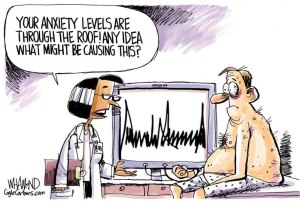 You may read all the listed evidence at the link. This is not normal. This is heavy-handed interference in all our markets. Evidently, regulation is good if it’s the #FARTUS openly demanding he be cut in on all deals. There are so many things going on that are not normal; all alarms should be blaring loudly by now. “Trump’s FBI Raid of John Bolton’s Home Looks Like a ‘Five-Alarm Fire. Thus far, little is known about Friday’s law enforcement action against a top Trump critic. But we’re seeing an escalation of authoritarian power on many fronts that has grown unmistakable.” This is from the New Republic. It’s written by Greg Sargent.
Whatever we end up learning about the rationale for the FBI’s early-morning raid on former national security adviser John Bolton’s Bethesda, Maryland, home on Friday, there’s plainly a major escalation underway in President Donald Trump’s use of law enforcement to persecute his perceived enemies and entrench his authoritarian power. Consider the pattern:
Assaults targeting individual business leaders
Trump has a long history of targeting individual CEOs in highly vicious, personal terms for perceived offenses. This week, Trump called for the firing of Goldman Sachs’ renowned economist Jan Hatzius who accurately called the 2008 financial crisis over the economist’s concern regarding the tariff overhand on the US economy. He also attacked a top-performing financier, David Solomon, the non-partisan CEO of Goldman Sachs, telling him to quit and just be a disc jockey. (Solomon has a famous side hustle as an electronic dance music DJ, known as DJ D-Sol.)
- The targeting of Bolton, a major critic of Trump, appears to have been personally authorized by Kash Patel. An apparently official leak to the New York Post deliberately underscored Patel’s involvement, probably to make sure it’s understood by Trump’s other enemies. Remember: Trump installed Patel as FBI director for this very purpose. Patel had openly declared in 2023 that “the conspirators,” that is enemies of Trump and MAGA, must be prosecuted, and also that more loyalists with the resolve to see this through would be recruited to carry this out. Bolton was on Patel’s enemies list.
- Trump is now targeting Fed governor Lisa Cook, another proclaimed enemy, and he’s escalating the use of law enforcement and the manipulation of the bureaucracy to do so. Trump loyalist William Pulte, head of the Federal Housing Finance Agency, is alleging that Cook committed mortgage fraud, and this has been referred to the Justice Department. Whether or not there’s anything to the fraud claims, they’re minor at best, and it’s already highly suspect that Pulte, an agency head, has taken such an active interest in investigations into individual mortgages that happen to belong to Trump’s highest-profile enemies. Given that Trump personally promoted an article about the referral of the Cook matter to DOJ, Pulte’s move looks even more suspect.
- Tellingly, Trump also heavily promoted the news of another supposedly fraudulent mortgage held by an enemy, Senator Adam Schiff. Schiff flatly denies the charges, yet DOJ is now criminally investigating them. Here again, Trump loyalist Pulte was directly involved in the manufacturing of the pretext for this, and experts say the process employed was dubiously manipulated. The same tactic has been used against New York Attorney General Letitia James, another major Trump foe. The question now is whether the White House is directing Pulte to rummage through the mortgages of Trump enemies for material that can serve as a pretext for potential DOJ prosecutions. It’s hard to imagine something of this magnitude proceeding without the White House’s blessing.
- After protests broke out over Trump’s attempted takeover of the Washington, D.C. police force and his deployment of the National Guard there—which is itself a major escalation—White House deputy chief of staff Stephen Miller expressly declared that protests would be met with a surge of additional law enforcement and/or military resources. Notably, there’s been no serious effort to reassure Americans that Trump’s militarization of the city, or of Los Angeles, is rooted in benign intentions. In fact, this week Trump suggested he would personally ride through the city with the National Guard. Though he scrapped the plan, that was probably for logistical reasons, and he plainly wants all this military activity in urban centers to be seen as affirmative confirmation of his ongoing consolidation of power.
- Longtime Trump ally Steve Bannon explicitly declared the other day that ICE officers will indeed be employed during the 2026 midterm elections in large numbers to monitor voting booths, again floating undocumented voters as the bullshit pretext to justify it. Bannon is not in a position to compel this, of course, but it’s clear the MAGA movement now sees Trump’s militarization of cities as a precursor to the use of law enforcement and/or the military to intimidate voters in large numbers, or foment a crisis atmosphere designed to help the GOP, or both.
- Last but not least, as we reported, a recent internal Department of Homeland Security memo outlines the hopes of senior DHS officials for substantially escalated military involvement in domestic law enforcement going forward. It even declares that military operations like the one in L.A. may be needed “for years to come.”
The raid of Bolton’s home was authorized by a court, and it is seeking to “determine whether he illegally shared or possessed classified information,” according to The New York Times. Trump told reporters Friday that he’d been unaware of the raid, but responded to it ominously.
 WTF is going on? This is not normal. This is not democratic. This is not how our republic is supposed to work. Meanwhile, Donald’s dash for the Nobel Peace Prize is dashed again. Put so played him. This is from Politico. “Trump’s peace bid flops as Kremlin says no plans for Putin-Zelenskyy summit. Moscow obfuscates again in new remarks by Foreign Minister Sergey Lavrov.” Well, inadequate Yam Tits strike again and cost the country more of our hard-earned dollars.
Russia’s top diplomat said Friday the Kremlin is “not ready at all” for a meeting between President Vladimir Putin and Ukrainian President Volodymyr Zelenskyy, pouring cold water on U.S. President Donald Trump’s efforts to set up a summit.
Trump announced Monday on social media that he was arranging a bilateral meeting between Zelenskyy and Putin, following crunch talks with European leaders at the White House — but gave scant details.
But Moscow has since been reluctant to commit to a confab between the two leaders, with Russian Foreign Minister Sergey Lavrov saying Tuesday such a meeting would need to be prepared “step by step, gradually, starting from the expert level and then going through all the necessary stages.”
He sowed further doubt Friday, claiming that Zelenskyy was the one not willing to negotiate by refusing to rule out joining NATO or concede to the Kremlin’s maximalist territorial demands.
“Putin is ready to meet with Zelenskyy when the agenda is ready for a summit, and this agenda is not ready at all,” Lavrov told U.S. channel NBC.
“Zelenskyy said no to everything. … How can we meet with a person who is pretending to be a leader?” he added.
While U.S. Secretary of State Marco Rubio said earlier this week the Russian ruler had agreed to a face-to-face meeting, touting his supposed openness to talks as a breakthrough, European diplomats and leaders have voiced skepticism that Moscow is really interested in ending the war and willing to negotiate in good faith.
“We are forgetting that Russia has not made one single concession, and they are the ones who are the aggressor here,” the EU’s foreign policy chief Kaja Kallas said Friday.
Zelenskyy accused Moscow on Friday of dragging out peace talks in a bid to hold off punishing American sanctions, which Trump has threatened to impose on Russia and its trading partners if the Kremlin does not participate.
 #FARTUS is the most corrupt and inept president we’ve ever had. I have no idea how we’re going to survive much more of this. More things from Memeorandum to check out:
- Ian Millhiser / Vox: The Supreme Court hands down some incomprehensible gobbledygook about canceled federal grants — Late Thursday afternoon, the Supreme Court handed down an incomprehensible order concerning the Trump administration’s decision to cancel numerous public health grants.
- Daniel Dale / CNN: Fact check: Trump and the case of the nonexistent $600 billion EU ‘gift’ — Seventeen days ago, President Donald Trump made a dramatic claim in an interview on the business news channel CNBC. As part of his July trade agreement with the European Union, he said, the EU gave the United States …
- New York Times: Noem’s Spending Rule Causes Delays at Homeland Security Dept.
- New York Times: Trump’s Attacks on Institutions Threaten a Bulwark of Economic Strength
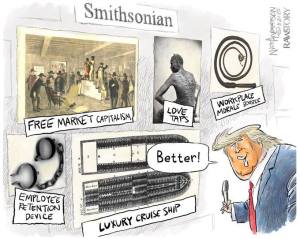
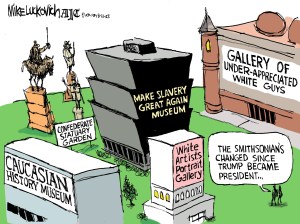
Don’t forget, Trump is destroying the Smithsonian, the entire White House, and just about every check and balance enumerated by the U.S. Constitution. You may gag over the Oval Office Changes at Business Insider. His future architectural destruction is outlined in USA Today. It includes the Lincoln Bedroom, and he’s specifically interested in its bathroom. That’s a lot of gag for your buck.
We’re certainly going to get more proof that everything Trump touches dies.
I can’t watch the news much anymore. I think I’ll go watch the Disney Channel now.
What’s on your Reading, Blogging, and Action list today?
Halloween Reads
Posted: October 31, 2011 Filed under: abortion rights, Economy, morning reads | Tags: Halloween, Herman Cain, history of Halloween, Nobel Prize economics, Planned Parenthood, Pumpkin cookies, Pumpkins, Samhain, Thomas Sargent, trick or treating, We're all Keynesians Now 19 Comments
Happy Halloween!
I suppose I should get right to the news reads, but instead, I thought I’d make some use of the day to bring us up to speed on the Halloween spirit! Halloween’s roots were in Samhain which was an ancient Celtic holiday! Like nearly every other holiday, it was co-opted as the Romans moved to conquer as much as they could and romanize the world with their culture and religions.
Samhain was considered a magical holiday, and there are many stories about what the Celtics practiced and believed during this festival. Some say the spirits that were unleashed were those that had died in that year, and offerings of food and drink were left to aid the spirits, or to ward them away. Other versions say the Celts dressed up in outlandish costumes and roamed the neighborhoods making noise to scare the spirits away. Many thought they could predict the future and communicate with spirits as well during this time. Some think the heavily structured life of the Pagan Celtics was abandoned during Samhain, and people did unusual things, such as moving horses to different fields, moving gates and fences, women dressing as men, and vice versa, and other trickeries now associated with Halloween. Another belief is that the Celtics honoured, celebrated, and feasted the dead during Samhain. A sacred, central bonfire was always lit to honor the Pagan gods, and some accounts say that individual home fires were extinguished during Samhain, either to make their homes unattractive to roving spirits, or for their home fires to be lit following the festival from the sacred bonfire. Fortunes were told, and marked stones thrown into the fire. If a person’s stone was not found after the bonfire went out, it was believed that person would die during the next year. Some Celts wore costumes of animal skulls and skins during Samhain. Faeries were believed to roam the land during Samhain, dressed as beggars asking for food door to door. Those that gave food to the faeries were rewarded, while those that did not were punished by the faeries. This is reported to be the first origin of the modern “trick or treat” practice.
Many of the costumes we think of today actually originated in festivals celebrated during medieval times.
The practice of dressing up in costumes and begging door to door for treats on holidays goes back to the Middle Ages, and includes Christmas wassailing. Trick-or-treating resembles the late medieval practice of “souling,” when poor folk would go door to door on Hallowmas (November 1), receiving food in return for prayers for the dead on All Souls Day (November 2). It originated in Ireland and Britain, although similar practices for the souls of the dead were found as far south as Italy. Shakespeare mentions the practice in his comedy The Two Gentlemen of Verona (1593), when Speed accuses his master of “puling [whimpering, whining], like a beggar at Hallowmas.”
Yet there is no evidence that souling was ever practiced in America, and trick-or-treating may have developed in America independent of any Irish or British antecedent. There is little primary Halloween history documentation of masking or costuming on Halloween — in Ireland, the UK, or America — before 1900. The earliest known reference to ritual begging on Halloween in English speaking North America occurs in 1911, when a newspaper in Kingston, Ontario, near the border of upstate New York, reported that it was normal for the smaller children to go street guising (see below) on Halloween between 6 and 7 p.m., visiting shops and neighbors to be rewarded with nuts and candies for their rhymes and songs. Another isolated reference appears, place unknown, in 1915, with a third reference in Chicago in 1920. The thousands of Halloween postcards produced between the turn of the 20th century and the 1920s commonly show children but do not depict trick-or-treating. Ruth Edna Kelley, in her 1919 history of the holiday, The Book of Hallowe’en, makes no mention of such a custom in the chapter “Hallowe’en in America.” It does not seem to have become a widespread practice until the 1930s, with the earliest known uses in print of the term “trick or treat” appearing in 1934, and the first use in a national publication occurring in 1939. Thus, although a quarter million Scots-Irish immigrated to America between 1717 and 1770, the Irish Potato Famine brought almost a million immigrants in 1845–1849, and British and Irish immigration to America peaked in the 1880s, ritualized begging on Halloween was virtually unknown in America until generations later.
Treats:
Thomas Sargent, Nobel Prize winner in economics is mad at the WSJ for trying to characterize him as a non-Keynesian after he won the award!
Professor Sargent described himself as a scientist, a “numbers guy” who is “just seeking the truth” as any good researcher does.
“If you go to seminars with guys who are actually doing the work and are trying to figure things out, it’s not ideological,” he said. “Half the people in the room may be Democrats and half may be Republicans. It just doesn’t matter.”
The “non-Keynesian” label irks him particularly. “That’s just off base,” he said. “Keynes was a very good economist. He was brilliant. He had wonderful insights. His work has inspired me many times.”
Professor Sargent’s own writings are sprinkled with pithy quotations from Keynes. In January 1986, the professor wrote a Wall Street Journal article, “An Open Letter to the Brazilian Finance Minister,” analyzing that nation’s fiscal crisis. In form and substance, it was explicitly modeled on a very similar letter written by Keynes to the French finance minister 60 years earlier. One point of this exercise, he said, “was to get people to actually read Keynes.”
Still, early in Professor Sargent’s career, he was known as one of the founders of the “rational expectations” school, which has sometimes been thought to be un-Keynesian. He says it actually “tied down an important loose end in the kinds of theories Keynes was building.” Keynes, he said, believed that expectations were all-important in determining economic activity, but didn’t have the mathematical tools needed to nail down all his concepts.
Today, Professor Sargent says that in some ways he actually is a Keynesian, but he qualified that claim, too. “I’m happy to say I am a Harrison-Kreps-Keynesian,” he said, citing work by two scholars at Stanford, J. Michael Harrison and David M. Kreps. They developed a theory of speculative investor behavior and stock-bubble formation that subtly modifies rational expectations “in a beautiful way” and “captures Keynes’s argument, makes it rigorous, and pushes it further,” he said.
Fundamentally, he said, “What I really don’t like is oversimplification.” He tries to think things through, he said, and avoid having “one slogan fighting another.”
Recipe for Best Pumpkin Cookies
1 cup butter, room temperature
1/2 cup sugar
1/2 cup firmly packed brown sugar
1 cup canned pumpkin
1 egg
1 teaspoon vanilla extract
2 cups flour
1 teaspoon baking soda
1 teaspoon baking powder
2 teaspoons cinnamon
1/4 teaspoon saltPenuche Glaze
3 tablespoons butter
1/2 cup firmly packed dark brown sugar
1/4 cup milk
1 1/2-2 cups confectioners’ sugarDirections:
Preheat oven to 350 degrees.
Have ready some ungreased baking sheets.
In a large mixing bowl, cream butter and the sugars together until light and fluffy.
Blend in pumpkin, egg and vanilla extract.
In separate bowl, stir together flour, baking soda, baking powder, cinnamon and salt.
Mix flour mixture into butter-sugar mixture.
Drop tablespoonfuls 3 inches apart on ungreased baking sheets.
Bake the cookies for 10-12 minutes until golden around the edges.
Remove warm cookies and transfer to racks.
Let cool completely for a least one half hour, then frost with glaze.For Glaze:.
In a medium saucepan, heat butter and brown sugar over medium heat until bubbly. Cook, stirring constantly, for one minute or until slightly thickened. Beat in the milk. Blend in confectioner’s sugar until the glaze is smooth and spreadable. Using a silicone basting brush, which I love and use religiously now, or a butter knife to spread glaze on cookies is the best tip. Please note; this glaze will harden fairly quickly. I suggest that you keep the saucepan over the stove on the lowest heat possible to prevent it from hardening.
Tricks:
Herman Cain went on TV Sunday saying that Planned Parenthood should be called “Planned Genocide’ because their goal Is To ‘Kill Black Babies’. He’s now under scrutiny for sexual harassment charges in past. Can we just say the man hates women and get it over with?
Republican presidential candidate Herman Cain is standing by his assertion that reproductive health care provider Planned Parenthood is carrying out the “planned genocide” of African Americans.
In a March speech to the conservative Heritage Foundation, Cain said the organization’s mission was to “help kill black babies before they came into the world.”
On Sunday, CBS host Bob Schieffer asked the candidate if he still believed that statement.
“Yes,” Cain replied. “I still stand by that.”
“Do you have any proof that was the objective of Planned Parenthood?” Schieffer wondered.
“If people go back and look at this history and look at [Planned Parenthood founder] Margaret Sanger’s own words, that’s exactly where that came from,” Cain insisted. “Look at where most of them were built. Seventy-five percent were built in the black community and Margaret Sanger’s own words — she didn’t use the word genocide. She did talk about decreasing the number of poor blacks in this country by preventing black babies from being born.”
Anti-abortion activists often misquote Sanger as saying, “[W]e want to exterminate the Negro population.”
But in full context, the quote has the opposite meaning. In a 1939 letter to pro-birth control advocate Clarence J. Gamble, Sanger argued that black leaders should be involved in the effort to deliver birth control to the black community.
“We do not want word to go out that we want to exterminate the Negro population, and the minister is the man who can straighten out that idea if it ever occurs,” she wrote
Hope you have a fun day! What’s on your reading and blogging list?

 peej
peej Carissa
 bostonboomer
 dakinikat
 ecocatwoman
 mablue2
 Mama Lopez
 peggysue22
 quixote
 skydancingguestblogger
 Mona (aka Wonk the Vote)



 Sky Dancing
Recent Comments