
A First: Fed Chair Presser
Posted: April 27, 2011 Filed under: Economy, Federal Budget, Federal Budget and Budget deficit, financial institutions, Global Financial Crisis, jobs, U.S. Economy, unemployment | Tags: Ben Bernanke, FED, inflation, jobs, monetary policy, presser 10 Comments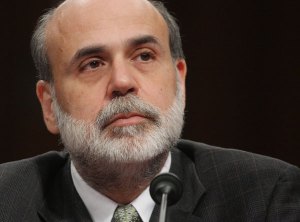 I’m watching Bernanke do a presser. Wow. (It’s a live blog … updates and explanations will be provided.) I can’t believe the press sent political reporters to this. What an amazing number of really rotten questions!!!
Some key points from the morning’s congressional testimony.
On Unemployment: We do see some grounds for optimism, including a decline to the unemployment rate, declines in the new unemployment insurance claims and improvements in firms’ reported hiring plans. But, even so, it could take quite a while for unemployment to come down to desired levels at current expected growth rates and, in particular, the FOMC projects unemployment still to be in the range of seven and-a-half to eight percent by the end of 2012. Until we see a sustained period of stronger job creation, we cannot consider the recovery to be truly established.
On Inflation: “I want to go back over this whole line of interventions, including today quantitative easing. And there have been a series of criticisms that have been made and negative predictions, and my view is that none of them have come true. And I think it is important for us to — to note that. And — and I know you’ve talked about this. I know you mentioned in your statement some of the points. But we were told, for instance, that it was going to be very inflationary. And I know it is your view as of now, and I think supported by the facts, that inflation is not now a problem, and we do not see inflation, certainly not one caused by any of what’s been done going forward. We were told this was going to be extraordinarily expensive, that it was going to cost a lot of money. I believe the answer is that on many of these things the federal government has made a profit by the — by the intervention.”
On Crude Oil: “The relative price of oil, again, is primarily due to global supply and demand. I think it’s important to note that the United States is consuming less oil today, importing less oil and producing more oil than it did before the crisis. That all the increase in demand from outside the United States, particularly in the emerging markets. And so there’s limited amount of what the Fed can do about oil prices alone. Again though, we want to be very sure that it doesn’t feed into overall inflation. We will make sure that doesn’t happen.”
On the Dollar: If the dollar was no longer reserve currency there would – it would on the margin probably mean that we would have to pay highest interest rates to finance the federal debt, and that would be a negative obviously. On other other hand, we might not suffer some of the capital inflows that contributed to the boom and the bust in the recent crisis. But again, I know there was also a countervailing argument in the Journal this morning as well. And I – I just don’t see at this point that there is a major shift away from the dollar.
On the Consumer: We understand the visibility of gas prices and food prices and we want to be sure that people’s expectations aren’t adversely affected. I think it’s important to note that, according for example, to the Michigan survey of consumers, that long term inflation expectations have been basically flat. I mean, they haven’t moved, notwithstanding ups and downs in gas prices, for example.
On the U.S. Fiscal Situation: While I understand these are difficult decisions and we certainly can’t solve it all in the current fiscal year, I do think we need to look forward and I know the House Budget Committee and others will be setting up a 10 year proposal. It’s very important and would be very constructive for Congress to lay out a plan that would be credible that will help bring us to sustainability over the next few years. In particular, one rule of thumb is cutting enough that the ratio of the debt to GDP stops rising. Because currently it’s rising relatively quickly. If we could stabilize that, I think that would do a lot to increase confidence in our government and in our fiscal policies.
Obviously, Bernanke needs to drill baby drill to get rid of inflation … so simple!!!
or this:
ezrakleinEzra Klein
Bottom line: Congress is embracing austerity. The Fed is going to start tapping the brakes. Sucks to be you, unemployed people. #fedpresser
Background information on the Fed Presser from NYT and David Leonhardt.
On Wednesday at 2:15 p.m., Ben Bernanke will do something that previous Federal Reserve chairmen considered a terrible idea. He will hold a news conference.
Mr. Bernanke spent much of his academic career arguing that the Fed should be less opaque, and, as chairman, he has put his ideas into action. Now it’s time for those of us in the media to hold up our end of bargain. In the spirit of democratic accountability, we should ask hard questions — and we shouldn’t let him get away with the evasions and half-answers that members of Congress too often allow Fed chairmen during their appearances on Capitol Hill.
One question more than any than other is crying out for an answer: Why has Mr. Bernanke decided to accept widespread unemployment for years on end, even though he believes he has the power to reduce it?
Here’s Paul Krugman’s take on the presser: Bernanke Wimps Out. He’s got the same questions I do about the inflation v. unemployment . (See my comments in the thread below.)
So Bernanke did get asked why, given low inflation and high unemployment, the Fed isn’t doing more. And his answer was disheartening.
As far as I can tell, his analytical framework isn’t too different from mine. The inflation rate to worry about is some underlying, inertial rate rather than the headline rate; the Fed likes the core personal consumer expenditures deflator; and this rate has actually been running below target, indicating that inflation isn’t a concern …
Monday Reads
Posted: November 22, 2010 Filed under: Diplomacy Nightmares, Hillary Clinton: Her Campaign for All of Us, Human Rights, just because, morning reads | Tags: DADT, GLBT rights, internet freedom of speech, monetary policy, quantitative easing, Web neutrality 88 Comments Good Morning!
First up is something that is one huge step back for civil rights and humankind. I can’t believe this outrageous motion was adopted by the UN. The US and its allies need to object vigorously.
The UN has removed a reference to sexual orientation from a resolution condemning arbitrary and unjustified executions.
The UN General Assembly resolution, which is renewed every two years, contained a reference opposing the execution of LBGT people in its 2008 version. But this year’s version passed without any reference to gay rights after a group of mostly African and Asian countries, led by Mali and Morocco, voted to remove it.
Gay rights groups fear the move — which passed in a narrow 79 to 70 vote — will act as a signal that persecuting people for their sexual orientation is internationally acceptable.
“This vote is a dangerous and disturbing development,” Cary Alan Johnson, executive director of the International Gay and Lesbian Human Rights Commission, said in a statement. “It essentially removes the important recognition of the particular vulnerability faced by lesbian, gay, bisexual and transgender people — a recognition that is crucial at a time when 76 countries around the world criminalize homosexuality, five consider it a capital crime, and countries like Uganda are considering adding the death penalty to their laws criminalizing homosexuality.”
Johnson was referring to a bill introduced in Uganda’s legislature last year that would mandate the death penalty for multiple acts of gay sex or for any gay person carrying HIV. Though the bill appeared to be shelved after an international outcry, its principal supporter said last month the bill would be law “soon.”
Thankfully, we’re moving closer to repealing DADT. The Marines have stated that they stand ready to remove enforcement of the provision. Semper Fi!!!
The head of the U.S. Marine Corps will fully cooperate with a repeal of the “don’t ask, don’t tell” policy barring openly gay and lesbian soldiers from the military, Joint Chiefs of Staff Chairman Adm. Mike Mullen said Sunday.
In an interview on CNN’s “State of the Union,” Mullen said there was “no question” that Marine Commandant Gen. James Amos, an opponent of repealing the “don’t ask, don’t tell” policy at this time, would implement all necessary changes to allow openly gay Marines to serve if Congress passes a repeal measure.
“He basically said that if this law changes, we are going to implement it, and we are going to implement it better than anybody else,” Mullen said of comments Amos recently made at a townhall-style meeting with Marines.
The U.S. Senate is expected to vote on repealing the policy in coming weeks. The House already has passed a repeal measure, and President Barack Obama says he supports repeal under a process worked out with Mullen and Defense Secretary Robert Gates that includes a review of what the change would entail for the military.
Secretary of State Hillary Clinton appeared on Fox News on Sunday . Clinton told Chris Wallace that she believed the  ‘vast majority’ of Gitmo detainees should be tried in civilian courts.
We do believe that what are called Article Three trials, in other words in our civilian courts, are appropriate for the vast majority of detainees,” Clinton told Fox News’ Chris Wallace.
This week, a civilian trial convicted Guantanamo Bay detainee Ahmed Ghailani on one count and acquitted him of more than 280 other counts.
“The question is do you have any choice now except to hold all of the terror detainees at Gitmo or either give them military trials or hold them indefinitely?” Wallace asked Clinton.
“The sentence for what he was convicted of is 20 years to life,” Clinton replied. “That is a significant sentence. Secondly, some of the challenges in the courtroom would be the very same challenges before a military commission about whether or not certain evidence could be used.”
Clinton also appeared on Meet the Press. She expressed reservations about the intrusive pat down procedures adopted by the TSA.
The Secretary of State also branded the procedure as ‘offensive’ and called for officials to make the new airport security measures less intrusive.
Speaking on CBS’ Face the Nation and NBC’s Meet the Press, Mrs Clinton said she recognised the need for tighter security but said there was a need to ‘strike the right balance’ and ‘get it better and less intrusive and more precise.’
When asked if she would submit to a pat-down, she replied ‘Not if I could avoid it. No. I mean, who would?’
Mrs Clinton added she understood ‘how offensive it must be’ for passengers forced to endure the measures.
Another economist–Professor James Hamilton–is incensed about that stupid bunny cartoon with it’s outrageous lies on QE. There’s some more take down of the stupid thing on Econbrowser. Hamilton explains why ‘the Goldman Sachs’ is one of the agents used by the Fed when it does Open Market Operations. Basically, it’s the law and this is true if it’s in the name of QE or just regular monetary policy. He also takes down some of the other ones so that I don’t have to do it. He tackles the inflation fallacy as well as the stupid comment about QE being the equivalent of printing money.
Goldman Sachs is one of 16 different dealers from which the Federal Reserve Bank of New York solicits competitive bids. That’s the way it’s been done for a century, and it would be illegal for the Fed to do as the bunnies propose. From U.S. Monetary Policy and Financial Markets, 1998, Chapter 7:
The Federal Reserve makes all additions to its portfolio through purchases of securities that are already outstanding. The Federal Reserve Act [of 1913] does not give the [Federal Reserve] System the authority to purchase new Treasury issues for cash. Over the years, a variety of provisions had permitted the Treasury to borrow limited amounts directly from the Federal Reserve. Options for such loans existed until 1935. Temporary provisions for direct loans were reintroduced in 1942 and renewed with varying restrictions a number of times thereafter. Authority for any kind of direct loans to the Treasury lapsed in 1981 and has not been renewed.
The reason that the Fed has always been required to buy bonds from private dealers rather than the U.S. Treasury is that the process of money creation needs to be institutionally separated from the process of financing the public debt. In fact, the potential blurring of those boundaries is one of the most important legitimate criticisms of quantitative easing.
Another topic that confuses a lot of people is the Social Security Trust Fund. Does it exist or not? John Holbo at Crooked Timber takes on Matt Yglesias and a Planet Money podcast. He explains it in terms of a parent (the government) borrowing a future allowance from a child (Social Security).
If the US government completely and unrecoverably collapses, as a going economic concern, then the Social Security Trust Fund will be bust – and there will be no United States, too! (The latter is the more consequential concern, I should think.)
If the US government falls on seriously hard times, economically, there may need to be belt-tightening. Maybe the US government will have to break the deal it made, not making good on the IOU’s in the Social Security Trust Fund. Likewise, if our family falls on hard times, I may be driven to spend my daughter’s back allowance money on food for our table, in the sense that I may never pay her that money. (Hope not!) But if that happens I won’t describe the logic of the situation in terms of my daughter’s back allowance having turned out not to have been ‘real’, all along. If I don’t pay her, it won’t be because I don’t owe her – nor because that specific money ‘doesn’t exist’, whereas the money to put food on the table ‘does exist’. Talking that way just takes the minor accounting fiction that starts us out, and inflates it into a major fiction.
If the US government doesn’t fall on seriously hard times, but just finds financial life a bit tight – as it often is – the same point applies, only more so.
Scientific American has an important piece up on the Web with an important call for continued Open Standards and Net Neutrality. They also have taken a strong stand against snooping and protecting free speech on the web. You can see in this article just how far ahead our European cousins are in protecting individual rights over corporate rights on the Web and the internet. They even quote Secretary of State Hillary Clinton’s firm stand on internet freedom.
Free speech should be protected, too. The Web should be like a white sheet of paper: ready to be written on, with no control over what is written. Earlier this year Google accused the Chinese government of hacking into its databases to retrieve the e-mails of dissidents. The alleged break-ins occurred after Google resisted the government’s demand that the company censor certain documents on its Chinese-language search engine.
Totalitarian governments aren’t the only ones violating the network rights of their citizens. In France a law created in 2009, named Hadopi, allowed a new agency by the same name to disconnect a household from the Internet for a year if someone in the household was alleged by a media company to have ripped off music or video. After much opposition, in October the Constitutional Council of France required a judge to review a case before access was revoked, but if approved, the household could be disconnected without due process. In the U.K., the Digital Economy Act, hastily passed in April, allows the government to order an ISP to terminate the Internet connection of anyone who appears on a list of individuals suspected of copyright infringement. In September the U.S. Senate introduced the Combating Online Infringement and Counterfeits Act, which would allow the government to create a blacklist of Web sites—hosted on or off U.S. soil—that are accused of infringement and to pressure or require all ISPs to block access to those sites.
In these cases, no due process of law protects people before they are disconnected or their sites are blocked. Given the many ways the Web is crucial to our lives and our work, disconnection is a form of deprivation of liberty. Looking back to the Magna Carta, we should perhaps now affirm: “No person or organization shall be deprived of the ability to connect to others without due process of law and the presumption of innocence.”
When your network rights are violated, public outcry is crucial. Citizens worldwide objected to China’s demands on Google, so much so that Secretary of State Hillary Clinton said the U.S. government supported Google’s defiance and that Internet freedom—and with it, Web freedom—should become a formal plank in American foreign policy. In October, Finland made broadband access, at 1 Mbps, a legal right for all its citizens.
What’s on your reading and blogging list today?
Monetary Policy at the Zero Bound
Posted: July 21, 2009 Filed under: Global Financial Crisis, The Great Recession, U.S. Economy | Tags: Ben Bernanke, FED, Fed Independency, monetary policy, quantitative easing, Zero Bound, ZIRP Comments Off on Monetary Policy at the Zero Bound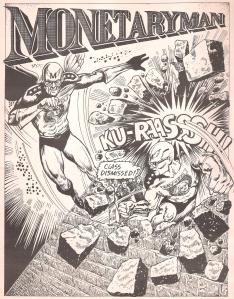 I am a financial economist and I’ve been through most phases of my career one that applies the trade in banking. That’s because my first economics specialty was monetary economics. I still have my original copy of Patinkin’s Money, Interest and Price sitting next to my dad’s original copy of Keyne’s The General Theory of Employment, Interest and Money. My grandfather was one of the first Fed lifer’s having been in charge of the bond area in the Kansas City District for both world wars. My ex-husband’s first job out of college was with that Fed. I worked for the Atlanta District Fed before retreating back to academia. So, in this day and age, with all the unpopularity that entails, I have to confess to being a banker of sorts. I hope you won’t hold that against me.
Today, there is more evidence that this is not my Grandfather’s Fed and it’s not completely the Fed I worked for either during the Greenspan years. When I was there, the emphasis was consolidating functions to various branches and realizing that check clearing and wire transfers, the main source of revenues for the branches, were being taken up by big money center banks and clearing houses. Clinton was President and the economy was good so there wasn’t much dithering about the technical things done up there at the desk in NYC. I just had my staff transmit the bond sells every Tuesday (even on Mardi Gras) dutifully.
Much consolidation has taken place and many traditional Fed services have been privatized. Oh, and then there’s that one other difference, Ben Bernanke and his realization that traditional monetary policy is pretty useless when interest rates are close to zero. Welcome to the world of Monetary Policy at the Zero Bound which is actually something we talked about last fall. I’m going to point you again to Ben Bernanke’s treatise again because it explains a lot of what we’re going to discuss. It’s written for wonks, but if you read the first few pages, you’ll get the basic idea.
The Fed’s upcoming retreat from its current position has been a topic of much discussion and speculation. That’s because every one has some concern that they will be accommodating for way too long and it may lead to another Bubble or to general inflation (instead of price increases in a specific market like housing). That’s pretty much the consensus of what happened post 9/11 when Greenspan left interest rates extremely low and we developed a speculation crazed housing market. For some reason, he popped the bubble of excessive exuberance during the Clinton years and the Tech stock run-ups, but let the mortgage market baste in low interest rates for way too long. My guess is that he was more accommodating to Republicans because he himself was one of them, but that’s a discussion for his biographer and just a source of speculation for me.
So, Ben used his platform as the second most powerful man in the US today to reduce the information asymmetry surrounding the Fed’s exit strategy. Again, if you check the link to his academic paper above, you’ll see that’s one of the things he believes is necessary when monetary policy hits the zero bound. He basically calls this “using communications policies to shape public expectations about the future course of interest rates” and that’s exactly what he’s doing in today’s Op-Ed piece in the WSJ.
I’m not sure how many people wrote and edited this piece, but it is a brilliant discourse that explains in a very succinct and clear way what the FED will do in the coming recovery to ensure that we won’t get inflation. He also reassures that they won’t reverse the course of any improvement either as was done in 1937 to cause a double dip depression. This Op-ed is historic in nature, although I’m sure only those of us steeped in Fed lore, culture and history will realize what’s going on here. Ben is opening up the some what secret world of the Federal Open Market Committee (FOMC) to those with the need to know.
The Big Ease
Posted: March 19, 2009 Filed under: Equity Markets, Global Financial Crisis, U.S. Economy | Tags: Fed Policy, FOMC, Helicopter Ben, monetary policy, quantitative easing 2 Comments I’ve had a couple of request to talk about how the Fed creates money and what happens if it over expands the money supply so that’s the topic of this post. Yesterday, the monetary policy authority of the Fed, the Federal Open Market Committee (FOMC) announced an injection of $1 Trillion. It is doing so by buying back some long term bonds in a move that is called Open Market Operations. Basically, Open Market Operations work like this. If the Fed wants money out in the economy (to increase spending by businesses and consumers), it makes selling bonds back to it very appealing. Investors won’t want to hold bonds because they’re not providing a good return. They’ll look for other places to put their money like in vehicles that might be based more on lending like commercial bonds or mortgage-backed securities. Low interest rates should make it more like that people will want to borrow. Banks won’t invest in bonds because they are low yield compared to what they can get from borrowers. This is the gist expansive monetary policy. This is one of the classical tools of monetary policy and the most used in the Fed Tool box. It generally works through lowered interest rates which is something that can’t really happen now. The interesting thing about this move is that it is huge and announced. This isn’t the usual SOP.
Usually open market operations are done in a hush-hush, behind closed doors, James Bond kind of atmosphere so as not to give information to the market to offset the action. As I said earlier, deliberate policy announcement is one of the market-shaping policies that Chair Bernanke has opted for as a tool of policy since most interest rates are close to zero. They are pulling in long term bonds as a form of quantitative easing (changing the structure of the Fed balance sheet to impact the term structure of interest rates.) They want the long term mortgage rate to come down to encourage house buying from the public. They also want to encourage lenders to renegotiate outstanding home loans. The other portion of the announcement meant to shape investor behavior was the outlook statement which tends to give the markets a forward looking policy hint. Not only is the Fed doing this, they are actively asking the Treasury to print money to help them beef up the size of their balance sheet so it can be used for a variety of purposes.
Printing new money is just a straight forward increase in the Money Supply. The purpose is this. You give people more money and they will have more money to spend. The issue comes down to this, however. How much stuff is out there for us to buy? A lot of stuff? Not so much stuff? Since interest rates are low, we may not save, we may buy lots of stuff. However, if we’re scared, we may not spend anyway, we may just tuck the money away. How this works depends on the response of both businesses and households.
This is from the previously linked NY Times article.
In its announcement, the central bank said that the United States remained in a severe recession and listed its continuing woes, from job losses and lost housing wealth to falling exports as a result of the worldwide economic slowdown.
“In these circumstances, the Federal Reserve will employ all available tools to promote economic recovery and to preserve price stability,” the central bank said.
As expected, policy makers decided to keep the Fed’s benchmark interest rate on overnight loans in a range between zero and 0.25 percent.
But to the surprise of investors and analysts, the committee said it had decided to purchase an additional $750 billion worth of government-guaranteed mortgage-backed securities on top of the $500 billion that the Fed is already in the process of buying.
In addition, the Fed said it would buy up to $300 billion worth of longer-term Treasury securities over the next six months. That would tend to push down longer-term interest rates on all types of loans.
All these measures would come in addition to what has already been an unprecedented expansion of lending by the Fed. The central bank also said it would probably expand the scope of a new program to finance consumer and business lending, which gets under way this week.
In effect, the central bank has been lending money to a wider and wider array of borrowers, and it has financed that lending by using its authority to create new money at will.
Some Economist blogs are openly criticizing the FED’s move. This is because what we know about the causes of deep-rooted, nasty inflation. It is generally caused by too much money chasing too few goods. In other words, if the economy is not producing enough goods and services because of the recession and suddenly there is more money, the money will be used to buy goods and services. If the production does not catch up with the money, it will drive the average price of goods and services up and we will experience systemic inflation.
There are two situations right now that make inflation creation unlikely. The first is that since we are in a deep recession, we are seriously under capacity . This means we have many businesses that are basically ‘idle’. They do not carry enough stock, they are not fully employing labor, and they are operating with a lot of excess overhead. They could start up, un-idle the excess capacity, and increase their use of what they have now without creating much inflation. The only place that inflation might occur would be in the raw materials sector which would have to gear up to supply any increased demand by manufacturing, but right now people, equipment, and facilities are underused.
The other situation that makes it highly unlikely we experience inflation in the short run is the fact that we don’t have

Is the Fed forever blowing bubbles?
much in the way of inflation now. We also have deflation in many major sectors like housing.
However, the question of the day is this. Is Bernanke solving a recession created by one bubble (housing) that was created by trying to cope with another bubble (dot.coms)? This is where we separate the Keynesians from the Monetarists. You can get a feel for what the discussion is if you hit some of the major econ-related blogs. You can tell the monetarists. They’re calling the Chairman Helicopter Ben.
It’s a very weird, somewhat circular transaction, and it was last done in a big way during World War II. At the time the Fed wasn’t so much making monetary policy as doing its patriotic bit to finance the war (it was a de facto division of the Treasury Department at the time), but it worked on both counts: The deflationary tendencies of the 1930s were finally fully expunged from the economy, and we beat the bad guys. Later on, Milton Friedman described this kind of transaction as the functional equivalent of a “helicopter drop” of money, and after Ben Bernanke mentioned this in a speech in 2002 he became known as Helicopter Ben. Now he’s finally living up to the name.*
Will it work? In the sense of fending off deflation, yeah, this should have an impact. But the financial world and America’s position in it are more complicated than in the 1940s. We now owe lots of money to creditors outside the U.S., and when they see the Fed buying long-dated Treasuries they’re bound to start worrying about what that means for the dollar. If they get too worried, they could drive up interest rates here and counter the impact of the Fed’s purchases. So there are limits to the Fed’s magical powers, and they already began showing up in currency markets this afternoon, with the dollar falling sharply against the euro and other foreign currencies. The adventure continues.

 peej
peej Carissa
 bostonboomer
 dakinikat
 ecocatwoman
 mablue2
 Mama Lopez
 peggysue22
 quixote
 skydancingguestblogger
 Mona (aka Wonk the Vote)



 Sky Dancing
Recent Comments