The GOP-controlled Senate early Wednesday morning voted to confirm Tulsi Gabbard to be President Donald Trump’s director of national intelligence, putting the former congresswoman in charge of the sprawling U.S. intelligence community.
The 52-48 vote was largely along party lines, with nearly all Republicans present voting in favor of Gabbard. Sen. Mitch McConnell, R-Ky., the former longtime GOP leader who has clashed with Trump, was the only Republican who joined all Democrats in voting against her.
Tulsi Gabbard
Gabbard’s confirmation is a win for Trump and represents yet another example of his dominance over the GOP, where few have shown a willingness to step out of line.
After Trump announced Gabbard as his DNI pick in November, Democrats — and a handful of Republicans — voiced serious concerns about her 2017 secret meeting with then-President Bashar Assad of Syria; her sympathetic comments about Russia; her past efforts to repeal a powerful government surveillance tool, known as Foreign Intelligence Surveillance Act’s Section 702; and her previous support for Edward Snowden, a former government contractor who leaked classified information to the press about those spying programs.
In the end, McConnell was the sole Republican to buck Trump and vote no on Gabbard. In a scathing, lengthy statement after the vote, McConnell said it was apparent Gabbard was not prepared for the job and demonstrated a “history of alarming lapses in judgment.”
“The Senate’s power of advice and consent is not an option; it is an obligation, and one we cannot pretend to misunderstand. When a nominee’s record proves them unworthy of the highest public trust, and when their command of relevant policy falls short of the requirements of their office, the Senate should withhold its consent,” McConnell said.
“The Office of the Director of National Intelligence (ODNI) is a key participant in the process that informs every major national security decision the President makes. The ODNI wields significant authority over how the intelligence community allocates its resources, conducts its collection and analysis, and manages the classification and declassification of our nation’s most sensitive secrets. In my assessment, Tulsi Gabbard failed to demonstrate that she is prepared to assume this tremendous national trust.
Susan Collins was *concerned,* but not enough to go against Trump. If only Mitch McConnell had acted on his true beliefs and voted to impeach Trump, U.S. national security would not be in so much jeopardy today.
It’s a good thing Trump has something to celebrate today, because yesterday was a humiliating disaster for him. We now know for sure that Elon Musk is the real POTUS. Trump is just letting Musk run the country while poor Donald plays golf and posts rage-filled messages on Truth Social. Does Musk have something on Trump besides money? Is Trump afraid of Musk?
William Kristol at The Bulwark: When President Musk Speaks, Donald Trump Listens. DOGE is in charge now.
It was an unusual scene yesterday in the Oval Office. Elon Musk stood and held forth for a half hour to the assembled press corps, while Donald Trump sat at his desk, occasionally chiming in, but mostly looking up at Elon with what seemed to me to be increasing irritation.
With the president looking on, Musk was asked to justify his minions’ wanton rampage through the ranks of our civil servants. He said:
“We do find it sort of rather odd that there are quite a few people in the bureaucracy who have ostensibly a salary of a few hundred thousand dollars, but somehow manage to accrue tens of millions of dollars in net worth. . . . The reality is they’re getting wealthy at the taxpayer’s expense. That’s the honest truth of it.”
Here’s a tip based on many years of watching politicians and, for that matter, of watching my fellow human beings: When someone says “that’s the honest truth of it,” that person is probably not telling the honest truth. Especially if that person is someone like Musk.
The truth is that Musk has no idea what the net wealth is of various government employees. Unless, that is, he’s had his apparatchiks take a look at those employees’ SF-86 security clearance questionnaires or their IRS records. Which would be illegal—an illegality for which we don’t, so far at least, have any evidence.
So Musk is just making this up. But why should the world’s wealthiest man let the truth stand in the way of a casual slander of government employees if that can help his assault on our government?
More and more, the president appears to be a puppet of the world’s richest man.
During an Oval Office press conference on Monday, Donald Trump remained hunched over the Resolute Desk while Elon Musk took the reins, spending more time answering reporters’ questions than the president himself.
Trump had called journalists into his office to observe the signing of a new executive order, which effectively green-lighted Musk’s work to cull large swaths of the federal workforce through DOGE. But the jarring visual of a multibillionaire hovering over a U.S. president and answering questions for him stayed with and rattled political commentators.
MSNBC’s Lawrence O’Donnell called Trump’s “presidential subservience” to Musk the “most powerless image of a president of the United States ever created by a camera.”
Musk—who was not elected by anyone to systematically dismantle the federal government—did “everything he possibly can to tell the world, without saying a word, that ‘Donald Trump is not the boss of me,’” according to O’Donnell.
The Tesla CEO also violated Oval Office norms by appearing at the press conference in casual garb and with his son. By O’Donnell’s measure, Musk spoke 3,666 words at the executive order signing, whereas Trump spoke 2,487 words.
Compare that to the role that Trump’s vice presidents play in his political realm: Former Vice President Mike Pence never spoke more than Trump did at a Trump-centric event during his first term, and Vice President JD Vance likely never will, either.
Elon Musk humiliated President Donald Trump during Tuesday’s joint press conference in the Oval Office, which left Trump looking like the “most powerless” U.S. president ever caught on camera, MSNBC’s Lawrence O’Donnell said on The Last Word.
During a press conference in the Oval Office in which they claimed—without providing a single piece of evidence—to have uncovered billions of dollars of government waste and fraud, Musk spoke 3,666 words to Trump’s 2,487, O’Donnell said.
Musk brought his 4-year-old son X to the press conference, wore a T-shirt and baseball cap, and even interrupted Trump.
He stood over Trump while the president sat behind the Resolute Desk, “delivering a picture of presidential subservience the likes of which we have never seen—the most powerless image of a president of the United States ever created by a camera,” O’Donnell said….
Trump, he continued, has always craved the attention of the “truly rich, virtually all of whom ignored Donald Trump as phony rich and vulgar rich.”
Now he has the attention of the world’s richest man, who can literally bail him out of the $82.5 million he currently owes writer E. Jean Carroll, who successfully sued Trump for defamation, and the $500 million judgment levied against him in a civil fraud case in New York.
O’Donnell also opined on the way Trump responded to the Musk child–turning away suddenly when the kid approached him and said something. Trump hates kids, but he let this one into his inner sanctum. He actually picked his nose and wiped it on the Resolute Desk.
And why is Musk always dragging that poor kid with him everywhere he goes? Does the boy have any friends his own age? Why isn’t he in Pre-K?
The boy’s mother is not happy.
The Independent: ‘He should not be in public like this’: Grimes reacts after Elon Musk parades their son around Oval Office.
Grimes has spoken out after Elon Musk paraded their four-year-old son, X Æ A-Xii, or Lil X, around the Oval Office as Donald Trump signed an executive order to bolster the Department of Government Efficiency’s powers in government.
The Canadian musician, 36, who shares three children with the Tesla CEO, a father of 12 offspring, took to X (Twitter) in response to her son’s surprise appearance saying: “He should not be in public like this. I did not see this, thank u for alerting me. But I’m glad he was polite. Sigh.”
Her comment came in response to another user who chimed that “Lil X was very polite today! You raised him well. He was so cute when he told DJT ‘please forgive me, I need to pee’.”
During the controversial press event, Lil X was seen picking his nose, mimicking his father, and whispering to Trump as he lingered by the Resolute desk.
Making light of more grave matters, the child looked on as Trump bolstered Musk and the Department of Government Efficiency’s (Doge) power to reshape the federal government by signing an executive order requiring agencies to cooperate with the Musk-led department and the effort to slash costs…..
Grimes, singer of “Genesis”, has remained outspoken on X, responding to fans and spouting her political views, as well as denouncing her ex’s alleged ties to the alt-right and Nazism.
One more comment from me. What was with that outfit Musk was wearing? It looked like an overcoat and a T-shirt and sweatpants–and a baseball cap. WTF? Trump is always so fussy about how the people under him dress–another sign that Musk is in charge.
Two serious posts on this madness:
Robert Reich at his Substack: Fraud and Musk.
The Trump-Musk regime is accusing federal civil servants of fraud, based on no evidence, while at the same time allowing corporations to pay off foreign officials, dropping bribery charges against New York City Mayor Eric Adams, pardoning a former governor of Illinois who tried to sell his Senate seat, and stopping investigations into foreign influence-peddling in the United States.
In other words, Trump-Musk have declared open season on real fraud and bribery.
On Monday evening, Trump signed an executive order halting investigations and prosecutions of corporate corruption in foreign countries under the Foreign Corrupt Practices Act of 1977.
Today, Musk held forth in the Oval Office, claiming that drastic reductions in the federal workforce were justified because it was rife with fraud.
I’ve spent more than a dozen years in the federal government, and I can tell you that the vast majority of civil servants I’ve had the honor of working with are dedicated and hardworking. They are delivering critical services to Americans and protecting them from corporate malfeasance.
For the richest person in the world to be given a bully pulpit in the Oval Office to impugn their integrity is beyond shameful.
Musk has the integrity of a slug. Since Trump was elected president, Musk’s fortune has increased $270 billion. If you think that’s an accident, you haven’t been paying attention.
When Trump was sworn into office, Musk’s six corporations were under more than 32 continuing investigations conducted by at least 11 federal agencies, according to a review by The New York Times.
Most of these cases are now closed or likely to be closed soon, and the agencies that initiated them are being defanged by Musk and Trump.
Reich lists multiple examples of Musk’s fraud against the U.S. Read about it at the link.
Joyce Vance at Civil Discourse: Call it what it is.
A week ago, I wrote a piece here called “Is It Really a Coup?” My answer, based on the evidence in front of us, was yes. Since then, life has gone on and DOGE has mostly gone on (despite what they seem to view as the inconvenience of a few temporary restraining orders), committed to nothing less than the radical transformation of government by a small band of unelected, quasi-official people, who are operating outside of government transparency rules. It has all the characteristics of a non-military transformation of a democratic government into something entirely different.
In a statement that made me proud to be a lawyer yet again, the American Bar Association (ABA) all but called it a coup, but without actually using that word: “No American can be proud of a govt that carries out change in this way. Neither can these actions be rationalized by discussion of past grievances or appeals to efficiency. Everything can be more efficient, but adherence to the rule of law is paramount.”
This morning in the Washington Post, Alan Charles Raul wrote an excellent piece on DOGE. Mr. Raul served as the associate White House Counsel under President Ronald Reagan and went on to serve as general counsel of the Office of Management and Budget under Reagan and President George H.W. Bush. He is a lecturer at Harvard Law School. Not exactly a liberal.
In his piece, titled, Why DOGE is unconstitutional, he writes, “What is not debatable, however, is that Congress has not authorized this radical overhaul, and the protocols of the Constitution do not permit statutorily mandated agencies and programs to be transformed — or reorganized out of existence — without congressional authorization.”
It’s such a polite way of saying it’s a coup without saying it.
Maybe now that the Reagan Republican guys have shown up, we can all agree we are living through the quietest of coups. If we don’t start calling it what it is and putting a stop to it, it stands a fair chance of succeeding. The lawyers are hard at work, but that will not be enough alone. They are holding the ground until the public catches up. It would be nice if Congress and the Supreme Court did their jobs too. But for starters, let’s call the coup a coup—while we still can.
Lest you think that’s hyperbolic, yesterday, the Associated Press reported that they “were informed by the White House that if AP did not align its editorial standards with President Donald Trump’s executive order renaming the Gulf of Mexico as the Gulf of America, AP would be barred from accessing an event in the Oval Office.“ Later in the day, they were refused access. It’s a clear and also an extremely petty, violation of the First Amendment, which prevents the government from imposing prior restraints on anyone’s speech, let alone the press.
Apparently, it’s easy to ignore such a ridiculous moment, and most people seem to have. But this is a form of Newspeak, the Orwellian construct of language that a government insists people use in order to narrow people’s range of thought. Sure, it was only over what we call the Gulf of Mexico, but this was not trivial buffoonery; it was a significant moment, a testing of the waters to see if this new White House could get away with stepping on the First Amendment without causing a furor.
“While we still can.” How much longer do we have to save our democracy? Is it too late?
I know this isn’t much of a post; but I’m not feeling well today so that’s all I have. Take care everyone.
Did you like this post? Please share it with your friends:
Yesterday was a huge news day. The top story was the decision by the DC Circuit Court ruling stating that Trump does not have immunity from prosecution for crimes committed as president. Now Trump must decide by Monday whether to take the case to the Supreme Court.
On Thursday, the Supreme Court will hear arguments regarding the Colorado case arguing that the 14th Amendment makes Trump ineligible to appear on the state’s primary ballot.
Trump is also awaiting a decision from Judge Engoron in the New York fraud case that could potentially bankrupt him.
In addition, Republicans in the House and Speaker Mike Johnson failed miserably as he lost two votes he put on the floor: aid to Israel and impeachment of Homeland Security Secretary Alejandro Mayorkas. On top of that, the head of the RNC announced her resignation.
In the Senate, Mitch McConnell knifed Senator James Lankford in the back after assigning him to negotiated a border bill that included aid to Ukraine and Israel. Democrats gave Republicans everything they wanted, but they backed down on Trump’s orders.
Former President Donald Trump — and indeed any other former president — may be prosecuted for alleged crimes they committed while in office, a federal appeals court panel ruled Tuesday.
The unanimous 57-page decision from a three-judge panel of the D.C. Circuit Court of Appeals is a major win for special counsel Jack Smith, who is seeking to put Trump on trial this year on federal felony charges stemming from his efforts to overturn the 2020 election.
Trump quickly vowed an appeal, which could be at the Supreme Court by Monday.
“For the purpose of this criminal case, former President Trump has become citizen Trump, with all of the defenses of any other criminal defendant,” the D.C. Circuit judges wrote. “But any executive immunity that may have protected him while he served as President no longer protects him against this prosecution.”
The ruling affirms U.S. District Judge Tanya Chutkan’s historic conclusion that former presidents may be prosecuted for crimes they committed in office, even if those alleged crimes arguably related to their official duties. Trump had argued that former presidents could not be prosecuted for such actions without first being impeached and convicted by Congress.
The judges put their decision on hold only until Monday to allow Trump to ask the Supreme Court to take up the immunity fight on an emergency basis. If he does so, the decision won’t take effect until the high court acts on his request, the appeals panel decreed.
Trump could also ask the D.C. Circuit to rehear the case. But the panel said doing that won’t delay the return of the case to Chutkan, the trial judge, unless the full bench of the D.C. Circuit agrees to a rehearing, which requires a majority of the 11 active appellate judges.
The force of Tuesday’s unanimous ruling Tuesday, backed by two liberal judges and one staunch conservative, may have been worth the wait for Smith. Rather than a splintered decision that could be picked apart more easily, the ruling lays out a groundbreaking legal and political framework for bringing a former president to trial.
On July 24, 1974, when the Supreme Court issued its decision in United States v. Nixon, ordering President Richard Nixon to produce the Watergate tapes, the president turned to his chief of staff, Alexander Haig, to understand what had just happened. He later recounted the exchange in his memoirs:
“Unanimous?” I guessed.
“Unanimous. There’s no air in it at all,” he said.
“None at all?” I asked.
“It’s tight as a drum.”
These words echoed through my mind today, nearly 50 years later, as I read the historic opinion of the United States Court of Appeals for the District of Columbia Circuit in United States v. Trump, holding that former President Donald Trump does not enjoy immunity from prosecution for any crimes he committed in attempting to end constitutional democracy in the United States.
The result was no surprise. As I said last month, no one who attended the oral argument could have believed Trump had any chance of prevailing. The question was timing: How long would an appeal delay Trump’s trial, originally scheduled for March 4? Many of us thought that the decision might come sooner, perhaps within days of the argument, given how quickly the court had scheduled briefing and argument. And by the end of last week, some commentators had, by their own reckoning, reached the “freakout stage” as to why the decision was taking so long.
They—and we—needn’t have worried. Issued exactly four weeks after the argument, the court’s decision came plenty fast. It’s not that often that you get a unanimous 57-page decision on novel questions of law in 28 days. And you almost never get an opinion of this quality in such a short period of time. I’ve read thousands of judicial opinions in my four decades as a law student and lawyer. Few have been as good as this one.
Unanimous. No air. Tight as a drum. The court’s per curiam opinion—per curiam meaning “for the court,” in that no individual judge authored it—is all that and more. It’s a masterful example of judicial craftsmanship on many levels. The opinion weaves together the factual context, the constitutional text, the judicial precedent, history, the parties’ concessions, and razor-sharp reasoning, with no modicum of judicial and rhetorical restraint, to produce an overwhelmingly cohesive, and inexorably convincing, whole. The opinion deserves a place in every constitutional-law casebook, and, most important—are you listening, members of the Supreme Court?—requires no further review.
The opinion far exceeds any commentator’s poor power to add or detract, so I’ll mostly let it speak for itself. The bottom line:
For the purpose of this criminal case, former President Trump has become citizen Trump, with all of the defenses of any other criminal defendant. But any executive immunity that may have protected him while he served as President no longer protects him against this prosecution.
I shared this as a gift link (see above), so you should be able to read the whole piece without a subscription.
The Supreme Court on Thursday will confront the critical question of Donald Trump’s eligibility to return to the White House, hearing arguments in an unprecedented case that gives the justices a central role in charting the course of a presidential election for the first time in nearly a quarter-century.
Reading the Newspapers, by Aristarkh Lentulov
The justices will decide whetherColorado’s top court was correctto apply a post-Civil War provisionof the Constitution to order Trump off the ballot after concluding his actions around the Jan. 6, 2021, attack on the Capitol amounted to insurrection.Primary voting is already underway in some states. Colorado’s ballots for the March 5 primary were printed last week and include Trump’s name. But his status as a candidate will depend on what the Supreme Court decides.
The justices — especially their cautious, consensus-building chief, John G. Roberts Jr. — may be reluctant to wade into such a politically fraught dispute, experts say. The court could rule more narrowly, finding, for example, that Colorado was wrong to bar Trump from the ballot because of a technicality.
But election law experts have implored the justices to definitively decide the key question of whether Trump is disqualified under Section 3 of the 14th Amendment, settling the issue nationwide so that other states with similar challenges to Trump’s candidacy follow along.
They warn of political instability not seen since the Civil War if the court was to overturn Colorado’s ruling but leave open the possibility that Congress could try to disqualify Trump later in the process, including after the general election.
“You can see this one coming. There are flashing red lights warning 10 months before the election that chaos this time is not only possible but more than likely given that 2020 broke the norm and dented the guardrails,” said veteran Republican election lawyer Benjamin Ginsberg, who played a central role for Bush in the Florida recount.
Note the other SCOTUS cases coming up:
Trump’s eligibility is not the only question before the court that could affect the former president’s political future. Later this term, the justices are set to review the validity of a law that was used to charge hundreds of people in connection with the Jan. 6 riot and is also a key element of Trump’s four-count federal election obstruction case in Washington. Trump’s claim that he is protected by presidential immunity from being prosecuted for trying to block Joe Biden’s 2020 election victory also appears headed to the high court after the U.S. Court of Appeals for the D.C. Circuit ruled against Trump this week.
In the Colorado case, the justices will have to weigh untested legal issues against the backdrop of broad concerns about democracy. Put simply, should the ramifications of disqualifying the leading Republican candidate in the midst of the primary election outweigh the consequences of allowing a candidate to run again after he tried to subvert the outcome of the last election?
In the civil fraud case in New York, we are awaiting a decision by Judge Arthur Engoron, but there is a problem. The Trump Organization’s former CFO Allan Weisselberg is trying to negotiate a settlement with the Manhattan DA in the election interference case, because he may have committed perjury in that case. Judge Engoron wants to know whether that affects his case.
The judge overseeing Donald J. Trump’s civil fraud case has questioned whether a key witness committed perjury during the former president’s trial, a new court filing shows.
The judge, Arthur F. Engoron, asked Mr. Trump’s lawyers to address the truthfulness of the witness, Allen H. Weisselberg, Mr. Trump’s longtime chief financial officer. Mr. Weisselberg and Mr. Trump are both defendants in the case, which was brought by the New York attorney general, Letitia James.
Man Reading Newspaper, by Cliff Wilson
Justice Engoron, who is expected to issue a decision in the nonjury case this month, cited a recent New York Times article about Mr. Weisselberg’s testimony. The article reported that Mr. Weisselberg, 76, is negotiating a potential agreement with the Manhattan district attorney’s office that would require him to plead guilty to perjury for his testimony.
“I of course want to know whether Mr. Weisselberg is now changing his tune, and whether he is admitting he lied under oath in my courtroom at this trial,” Justice Engoron wrote to the lawyers on both sides of the case in a recent email made public on Tuesday.
The complex situation stems from overlapping criminal and civil cases brought by the two New York law enforcement agencies.
The district attorney, Alvin L. Bragg, has jurisdiction over perjury and other crimes committed in Manhattan. In addition to scrutinizing Mr. Weisselberg’s testimony in the civil fraud case, Mr. Bragg is preparing to put Mr. Trump on trial next month for criminal charges stemming from a hush-money payment to a porn star.
In the civil fraud case, the attorney general, Ms. James, accused Mr. Trump, Mr. Weisselberg and others of fraudulently inflating the former president’s net worth and is asking the judge to impose a roughly $370 million penalty. The monthslong trial took place in the fall.
Mr. Weisselberg was one of more than 40 witnesses. While it is unclear which of his statements might have caught the district attorney’s attention, the attorney general’s office stopped questioning him shortly after Forbes magazine published an article in which it accused Mr. Weisselberg of having lied under oath about his involvement in valuing Mr. Trump’s penthouse apartment.
As to how Trump will manage to pay the huge settlement that is very likely coming from Judge Engoron, Jose Pagliery writes at The Daily Beast: Inside Donald Trump’s Incredible Cash Crunch.
Donald Trump is just days away from getting slammed with a court judgment that could be worth hundreds of millions of dollars as a punishment for his decades of bank fraud with the Trump Organization. And two little-known New York laws could leave Trump scrambling for cash: a requirement that he immediately front the money to appeal the decision, and a sky-high state interest rate.
During a deposition with the New York Attorney General in April 2023, Trump boasted that he had $400 million in cash, bragging about how it’s “a lot for a developer.” But even if that were true, it likely won’t be enough to simultaneously cover last month’s $83 million verdict at his rape defamation trial—which he needs to immediately set aside to appeal that case—and the $370 million demanded by the AG for his incessant lying to banks.
Woman Reading Newspaper, by Arne Kavli
While the judge deciding the bank fraud case hasn’t come up with a final figure that Trump owes, every indication is that it will be into the hundreds of millions. A message from the judge on Tuesday actually suggested it could be even more than what the New York AG is seeking.
Trump’s sudden cash demands are exacerbated by a quirk in New York law. Not only would the judgment get automatically inflated by an unusually high interest rate of 9 percent, but Trump would need to give the court the enlarged total—plus an extra 10 to 20 percent—in order to appeal and have another day in court. And it would all be due by mid-March.
The self-proclaimed billionaire real estate tycoon is about to be caught in a trap of his own making, forced to front a massive amount of cash and possibly liquidate assets—while potentially unable to access the money, because the court order could limit his ability to tap his Monopoly board of properties.
Meanwhile, Trump also faces mounting difficulty in finding surety companies and banks to guide him through the appeal, because his credibility is the very focal point of the case in question. (Trump also has a long history of stiffing banks and creditors.)
One more interesting read (h/t JJ) by Ankush Khardori at New York Magazine: What Happens, Exactly, If Trump Is Sentenced to Prison? New York Mag. usually allows only one free article, so clear your cashe before you head over there.
The House GOP under Speaker Mike Johnson is flopping around like a fish in the bottom of the boat.
In a nearly unprecedented failure, Johnson brought articles of impeachment to the House floor and lost. He lost! He didn’t have the votes! He couldn’t do the math!
It was a spectacular and unexpected failure. The impeachment was bogus to begin with. Homeland Security Secretary Alejandro Mayorkas had not committed any high crimes or misdemeanors and hadn’t even been accused of doing so. This was purely a political impeachment, designed to front the border issue for the House GOP and Donald Trump in an election year. So even on its own terms as a political hatchet job, Johnson was unable to get the job done.
House Republicans insist they can bring the impeachment back to the floor later and win because Rep. Steve Scalise (R-LA) would have been the deciding vote last night but was absent for treatment for cancer. We shall see.
As a fitting coda to the day, Johnson brought up an Israel funding bill right after the impeachment vote, and it failed, too.
Once Mike Johnson’s speakership was merely implausible. Now it looks incompetent.
The rookie Republican leader – already struggling to wield a tiny, extreme and malfunctioning majority – suffered a spectacular embarrassment on Tuesday night in a failed vote to impeach Homeland Security Secretary Alejandro Mayorkas.
The drama undermined what was already a questionable case for impeachment – more over policy disagreements than the constitutional standard of treason, bribery or high crimes and misdemeanors.
And it told a story of a House in utter disarray.
Joe Reading Newspaper, by David Tanner
Setting up a high-stakes, televised tour de force for the impeachment of a Cabinet official for only the second time in history was a daring act. But failing to actually pull it off by a couple of votes broke the cardinal rule of not putting a bill on the floor until the numbers are rock solid.
The result was a debacle that made the House leadership a laughing stock.
The failure played into the hands of a White House that delights in portraying Johnson’s majority as an engine for Donald Trump’s political stunts more than a serious governing force. And it raised serious doubts over the GOP’s capacity to pull off another politized maneuver designed to please the former president – an impeachment of President Joe Biden.
The malpractice of Johnson’s impeachment team was encapsulated by Democrats outmaneuvering them to bring a shoeless Rep. Al Green, who was recovering from surgery, to the chamber in a wheelchair to cast a dramatic vote.
Moments after the Mayorkas impeachment failed, Johnson was also unable to pass a standalone bill containing billions of dollars in aid for Israel. It was another busted gambit to jam the Biden administration. The president had threatened to veto the bill in protest of Johnson’s refusal to hold votes on a broader package that also included aid to Ukraine and Taiwan. The speaker said Biden and Democrats should be “ashamed” of failing to support an ally embroiled in a war. But the double failure on the House floor did more to highlight his own deficiencies than discomfort Biden.
It was late on a Thursday afternoon in the marbled halls of the Senate, and a small group of negotiators — one Republican, one Democrat and one independent — had just about finished a painstakingly put together border security compromise it took them months to forge.
But what should have been a triumphant moment felt more like an ordeal for the lone Republican in the trio.
“I feel like the guy standing in the middle of the field in a thunderstorm, holding up the metal stick,” Senator James Lankford, the Oklahoma Republican who was his party’s lead broker of the deal, told reporters last week.
The plight of Mr. Lankford, a slim, understated Baptist minister with a neatly combed shock of red hair and a baritone voice that regularly delivers deadpan quips, reflects the extraordinary rise and fall of the border and Ukraine deal that is expected to collapse in a test vote in the Senate on Wednesday — and the political forces within the Republican Party that brought it down.
For months, Mr. Lankford, a staunch conservative, labored over the package alongside Senators Christopher S. Murphy, Democrat of Connecticut, and Kyrsten Sinema, an Arizona independent, demanding strict immigration policies his party insisted must be a part of any bill to send a fresh infusion of aid to Ukraine. But when Mr. Lankford managed to extract them, he found his fellow Republicans unwilling to embrace the plan, in a vivid illustration of how the political ground for any compromise on immigration has vanished for a party that has decided the issue is too valuable as a political weapon to resolve….
Just as Mr. Lankford and his fellow negotiators neared a deal, former President Donald J. Trump stepped in, trashing the bill both before and after it was released on Sunday and opening the floodgates of Republican resistance. That left Mr. Lankford fighting to keep the deal alive while being attacked by members of his own party, including in his home state, where the Republican Party tried to censure him late last month for “playing fast and loose with Democrats on our border policy.” (The resolution was later rescinded.)
I have a mix of stories today. Arguably the biggest news is the looming government shutdown caused by far right House Republicans and pathetic “Speaker” Kevin McCarthy. Here’s the latest:
Speaker Kevin McCarthy has only one way out of next week’s impending government shutdown: working with Democrats. It’s an exit he’s still refusing to take.
During the most tumultuous stretch of his speakership so far, McCarthy hasn’t phoned a single member of the opposing party about a way to keep the lights on.
Instead, the speaker and his team will scramble this weekend to slash their own party’s spending bills in an effort to placate a handful of hard-liners who are threatening to eject him. Votes on some of those revised bills are now expected on Tuesday, four days before the Sept. 30 shutdown deadline. But even if they pass, that will move Congress no closer to a solution.
McCarthy’s central strategy remains the same; he wants to deliver a GOP opening bid to the Democratic Senate, while holding back a rebellion by his right flank — enough to hang on to his speakership after Democrats, by necessity, enter the talks. After his first two attempts at a short-term spending patch fell short, McCarthy is now trying to take up doomed full-year bills.
Some of McCarthy’s own allies fear that effort could prove futile as a shutdown fast approaches. These House Republicans worry that the Californian’s third attempt at a workable strategy, bringing spending measures to the floor next week, might also fail to get the votes they need and further humiliate the party.
“This is not checkers. This is chess. You got to understand that this next move by the House is not going to be the final answer,” Rep. Steve Womack (R-Ark.) said. “Eventually, the Senate will weigh in … and it’s not going to be to our liking, and probably going to be pushed into our face and say: ‘Take it or leave it.’ And then the speaker will have a very difficult decision.”
The situation is getting worse still for McCarthy as he starts running out of room from his Senate allies. A group of conservatives across the Capitol, after days of deferring to the speaker, now want to see a vote on legislation that would automatically impose stopgap spending patches to permanently prevent shutdowns.
Senate Majority Leader Chuck Schumer told CNN that his chamber might have to take matters in its own hands and push through a must-pass bill to fund the government amid deep divisions in the House and a looming shutdown by next weekend.
For weeks, Democratic and Republican senators have been watching the House with growing alarm as Speaker Kevin McCarthy has struggled to cobble together the votes to pass a short-term spending bill along party lines – all as he has resisted calls to cut a deal with Democrats to keep the government open until a longer-term deal can be reached. The initial plan: Let McCarthy get the votes to pass a bill first before the Senate changes it and sends it back to the House for a final round of votes and negotiations.
Now with House GOP leaders still struggling to get the votes ahead of the September 30 deadline, Schumer said he would try to cut a deal with Senate Minority Leader Mitch McConnell and send it to the House on the eve of a potential shutdown – all as he signaled he was pushing to include aid to Ukraine as part of the package.
“We may now have to go first … given the House,” Schumer told CNN in an interview in his office, moments before he took procedural steps to allow the Senate to take up a continuing resolution, or CR, as soon as next week. “Leader McConnell and I are talking and we have a great deal of agreement on many parts of this. It’s never easy to get a big bill, a CR bill done, but I am very, very optimistic that McConnell and I can find a way and get a large number of votes both Democratic and Republican in the Senate.”
If Schumer’s assessment is correct, that would leave McCarthy with a choice: Either ignore the Senate’s bill altogether or continue to try to pass his own bill in the narrowly divided House where he can only afford to lose four GOP members on any party-line vote.
More details at the CNN link.
Another big story today is the second indictment of Democratic Senator Bob Menendez. The extent of the corruption by Menendez and his wife is gobsmacking. Menendez managed to wriggle out of the last indictment, but this one many bring him down for good.
Gold bars worth more than $100,000. A new Mercedes-Benz convertible in the garage. Wads of cash stuffed in the pockets of a jacket with “Bob Menendez” embroidered on the breast.
The signature at the bottom of the federal indictment released Friday charging Sen. Bob Menendez, D-N.J., his wife Nadine, and three alleged accomplices with bribery, belongs to Damian Williams, U.S. attorney for the Southern District of New York.
But the details of what federal agents said they found in June 2022 when they raided the Menendez home in New Jersey, and in their subsequent investigation of the couples’ email and phone accounts, could have been stripped from an episode of “The Sopranos.”
Highlights of the indictment:
Nearly half a million dollars in cash was found stuffed inside envelopes and stashed inside the pockets of clothing hanging in the closets of the Menendez’s home in Englewood Cliffs, including a big roll of bills in a jacket from the Congressional Hispanic Caucus with Menendez’s name on it.
Fingerprints belonging to the driver of co-defendant Fred Daibes were found on at least one of the envelopes, as well as his DNA and his return address, prosecutors said. “Thank you,” Nadine Menendez texted Daibes around Jan. 24, 2022, according to the indictment. “Christmas in January.”
Patrice Schiano, a former FBI forensic accountant who is currently a lecturer at the John Jay College of Criminal Justice, said that’s “pretty damning.”
“It doesn’t surprise me that there might be cash hidden in the house because if they took it to the bank that’s going to be reported,” Schiano said. “But that’s going to be hard to defend because any jury is going to be like, ‘That’s a lot of cash in house’.”
New Jersey Gov. Phil Murphy and Democratic leaders on Friday called on Sen. Bob Menendez to resign, hours after federal prosecutors indicted him on bribery charges.
“The allegations in the indictment against Senator Menendez and four other defendants are deeply disturbing. These are serious charges that implicate national security and the integrity of our criminal justice system,” Murphy said in a statement. “The alleged facts are so serious that they compromise the ability of Senator Menendez to effectively represent the people of our state. Therefore, I am calling for his immediate resignation.”
The public statements by Murphy and state political leaders puts intense, possibly undeniable, pressure on New Jersey’s senior senator even after he struck a defiant tone in response to the allegations. Menendez is up for reelection in 2024 and had said before the charges that he would seek another term.
He remained resistant to his fellow Democrats’ calls Friday evening.
“Those who believe in justice believe in innocence until proven guilty. I intend to continue to fight for the people of New Jersey with the same success I’ve had for the past five decades,” Menendez said in a statement. “This is the same record of success these very same leaders have lauded all along. It is not lost on me how quickly some are rushing to judge a Latino and push him out of his seat. I am not going anywhere.”
Like this has anything to do with Menendez’s ethnicity. That’s a pretty outrageous claim. Senate Democrats need to put pressure on Menendez to step down so the governor can appoint a Democrat to succeed him.
President Joe Biden will travel to Michigan to join the picket line of auto workers on strike nationwide, he said on Friday afternoon.
“Tuesday, I’ll go to Michigan to join the picket line and stand in solidarity with the men and women of UAW as they fight for a fair share of the value they helped create,” Biden wrote on X, the platform previously known as Twitter.
His decision to stand alongside the striking workers represents perhaps the most significant display of union solidarity ever by a sitting president. Biden’s announcement comes a week after he expressed solidarity with the UAW and said he “understand[s] the workers’ frustration.”
The announcement of his trip was seen as a seismic moment within certain segments of the labor community. “Pretty hard-core,” said one union adviser, who spoke anonymously because they were not authorized to speak publicly.
Biden had earlier attempted to send acting Labor Secretary Julie Su and senior adviser Gene Sperling, who has been the White House’s point person throughout the negotiations, to Detroit to assist with negotiations. However, the administration subsequently stood down following conversations with the union. Press secretary Karine Jean-Pierre said earlier Friday it was a “mutually agreed upon decision.”
Meanwhile, Trump is also headed for Michigan instead of the Republican primary debate, and he claimed he also might show up at the picket line (LOL)
Former President Donald Trump also has plans to visit Michigan next week. Despite backlash from Fain, the leading candidate in the Republican presidential primary will visit current and former workers next Wednesday — the same day his competitors in the field take the debate stage in California. A person familiar with Trump’s plans said that he is “unlikely to go to the picket line” but that such a stop “has not been ruled in or out.”
Donald Trump on Friday lashed out against a general who said he was forced to keep Trump in check during his presidency.
Trump, who has previously attacked General Milley in connection with other topics, unleashed a rant in which he said Milley’s behavior might warrant death. The ex-president’s attention was probably piqued by a lengthy report that recently detailed how Joint Chiefs Chairman Mark Milley and several other military and intelligence officials had to restrain the former president’s worst impulses throughout his time in office.
On Friday, Trump came out swinging, blaming Milley for lives lost in the Afghanistan withdrawal.
“Mark Milley, who led perhaps the most embarrassing moment in American history with his grossly incompetent implementation of the withdrawal from Afghanistan, costing many lives, leaving behind hundreds of American citizens, and handing over BILLIONS of dollars of the finest military equipment ever made, will be leaving the military next week,” Trump wrote on his Truth Social social media site, created when he was banned from several others. “This will be a time for all citizens of the USA to celebrate!”
Trump continues, calling Milley a “woke train wreck.”
“This guy turned out to be a Woke train wreck who, if the Fake News reporting is correct, was actually dealing with China to give them a heads up on the thinking of the President of the United States,” Trump wrote on Friday. “This is an act so egregious that, in times gone by, the punishment would have been DEATH! A war between China and the United States could have been the result of this treasonous act. To be continued!!!”
Trump should be in a straight jacket in a psychiatric hospital, not running for president.
Texas Sen. Ted Cruz (R) claimed Democrats could “parachute” Michelle Obama in as a presidential nominee if his theory of President Biden dropping out of the race holds true.
Cruz hosts the “Verdict with Ted Cruz” podcast, where he said Monday that he thinks Biden will leave the 2024 race.
“So here’s the scenario that I think is perhaps the most likely and most dangerous. In August of 2024, the Democrat kingmakers jettison Joe Biden and parachute in Michelle Obama,” he said. “I view this as a very serious danger.”
Cruz said choosing the former first lady as the Democratic nominee would be a decision the party could rally behind. Choosing a Black woman is a choice that would not disrupt the party or “infuriate African American women, which is a critical part of the constituency.”
Cruz said Obama would garner more Democratic support than any other potential replacement for Biden, including Vice President Harris, California Gov. Gavin Newsom, Secretary of Transportation Pete Buttigieg, or Elizabeth Warren.
Special counsel Jack Smith has added a veteran war crimes prosecutor — who served as Smith’s deputy during his stint at the Hague — to his team as it prepares to put former President Donald Trump on trial in Washington and Florida.
Alex Whiting worked alongside Smith for three years, helping prosecute crimes against humanity that occurred in Kosovo in the late 1990s. The Yale-educated attorney also worked as a prosecutor with the International Criminal Court from 2010 to 2013. He has taught law classes at Harvard since 2007 as well, hired as an assistant professor by then-Dean Elena Kagan — now a Supreme Court justice — and rising to a visiting professorship in 2013.
Whiting’s precise role on Smith’s team is unclear. A spokesperson for Smith declined to comment, and Whiting did not immediately return requests for comment. The prosecutors’ office in the Hague and Harvard University also did not respond to requests for comment about Whiting’s current employment status.
But a POLITICO reporter observed Whiting at the U.S. district courthouse in Washington, D.C., on Wednesday and Thursday, spending several hours monitoring the trial of a Jan. 6 defendant. The judge in the case is Tanya Chutkan, who is slated to preside over Trump’s trial in March on federal charges stemming from his efforts to subvert the 2020 election.
During a break in the Jan. 6 trial this week, Whiting introduced himself to prosecutors as a new member of Smith’s team, saying he “just joined” the office.
From 2018 to 2022, Smith served as chief prosecutor in the Kosovo Specialist Chamber in the Hague. Whiting temporarily took over that office last year after Attorney General Merrick Garland appointed Smith as special counsel to lead the Trump investigations. Boston attorney Kim West was appointed to permanently succeed Smith in June but did not assume the role immediately.
Whiting has been a frequent commentator on the previous special counsel to investigate Trump: Robert Mueller, who investigated links between Russia and Trump’s 2016 campaign. Whiting wrotenumerousarticles and gave interviewsassessing the strength of Mueller’s case against Trump, often siding with those who saw extreme legal peril for Trump over his efforts to curb the investigation.
Whiting’s addition to the team shows Smith is gearing up for a new phase of his efforts — preparing for trials that could send a former president to prison for the first time in U.S. history.
A decade ago, Kristen Daddow-Rodriguez was a loyal Republican. Raised in Michigan, she voted automatically for the GOP in each election, even though she wasn’t wild about every candidate offered up by her party. She considered herself a fiscal conservative and social liberal who happily backed John McCain and Mitt Romney. Now, she is a dedicated Democratic activist in suburban Atlanta.
Daddow-Rodriguez is not exactly an outlier in American politics, although it may sometimes seem that way in this hyperpolarized era. After the 2016 election, there was a vogue in the media to understand how Donald Trump had possibly managed to win the presidency despite scandal after scandal. He received almost three million fewer votes than Hillary Clinton—an early sign of the limits of his electoral might—but because most pollsters and experts had predicted a Clinton win, there was a desperate scramble across the Rust Belt to find the once Democratic voters who had cast a ballot for the Republican. Blue-collar diners from Allentown to Youngstown were swarmed with reporters determined to discern the secret of Donald Trump’s appeal.
In hindsight, that phenomenon may be eclipsed by another one: Republicans deserting their party precisely because of Trump, forming a demographic now familiarly known as “Never Trump Republicans.” Whether it was his xenophobic remarks about immigrants, his crude personal behavior, or his general disdain for the norms of American politics, many white, college-educated voters—long a bedrock of the GOP—cast their ballot either for Hillary Clinton or for a third-party candidate to avoid supporting Trump. The shock of his election kept this initially from being a broad focus in popular culture, but in special election after special election in the coming year, culminating in the 2018 midterms, it was clear there was a lasting revulsion from these Republicans toward the Trump-era GOP. This was reinforced in 2020, when these voters appear to have turned even more heavily against Trump, helping Joe Biden run the table in the most competitive swing states.
This tranche of voters is not huge, but they may be decisive—in 2020, 16 percent of self-identified moderate or liberal Republicans voted for Biden, according to an analysis by Pew, twice the share that did so in 2016. This even as Biden won a narrow electoral college victory by a combined margin of just under 43,000 votes in Arizona, Georgia, and Wisconsin. Bryon Allen, a longtime Republican pollster and partner at WPA Intelligence, noted that, before Trump, Republicans in many suburban counties would get narrow majorities. “Now, without a [GOP Georgia Governor Brian] Kemp or a [GOP Virginia Governor Glenn] Youngkin or somebody who has particular appeal and the right issues … we might get 47 percent or 48 percent” in the same areas….
“I think Donald Trump was the gateway drug that has drawn a lot of otherwise pretty standard Republicans to the Democratic Party over the last eight or nine years,” Zac McCrary, a veteran Democratic pollster, told The New Republic. “And a Never Trump Republican in 2016, two or three cycles later, turns into a pretty conventional Democrat up and down the ballot.”
Again, its a long read; I’ve just posted the introduction.
Yesterday I noticed the comments were working normally; I hope that will continue today. Please share your thoughts on these stories and any post links to any others that interest you.
Did you like this post? Please share it with your friends:
Lately, I’ve been thinking about how to feel about our chances of saving American democracy. Now that Trump and many of his cronies have been indicted, can we breathe easy? I think things are looking better, but it looks like Trump will get the Republican nomination no matter what happens with all his criminal and civil cases. It’s also highly likely that Trump and many of his allies will appeal court decisions again and again in order to delay convictions.
It seems that the Georgia case is likely to proceed quickly; but Trump is going to try to get his case transferred to federal court, as Meadows has already done, and both of them are going to appeal a negative decision all the way to the Supreme Court.
The January 6 case is also moving fairly quickly; but, again, there will be appeals.
The stolen documents case looked promising, but Judge Cannon is determined to protect Trump. It’s likely that Jack Smith will eventually have to appeal her rulings to the 11th Circuit. Whether she can be removed from the case is an open question.
It is very likely to come down in the end to Joe Biden beating Trump again in the 2024 election. I believe he can do it, but those of us who care are going to have to go through some anxious times. I’d be interested to know how others feel about all this.
Now, here’s what’s happening in political news and opinion.
Yesterday, Mitch McConnell had another public episode of “freezing up” while speaking to reporters. I’m guessing this has probably happened more then once–just not during a public appearance.
BREAKING NEWS: Sen. Mitch McConnell appearing to have another scary episode in the media gaggle in Covington today. Aides had to step in to help him out and repeat questions. He was eventually lead away. We'll have the full video on @WLWTpic.twitter.com/q9ex5MHxLV
These could be mini-strokes or symptoms of Parkinson’s disease, according to CNN’s Dr. Sanjay Gupta. Gupta also suggested that these episodes have likely been more frequent than we know, base on the way McConnell’s aides seemed to immediately know what to do.
Senator Mitch McConnell of Kentucky, the longtime Republican leader who has appeared increasingly diminished and frail after a series of falls and a serious head injury this year, froze up suddenly during a news conference on Wednesday in Covington, Ky., the second such episode he has experienced on camera in recent weeks.
Mr. McConnell, 81, was taking questions from reporters after an event hosted by the Northern Kentucky Chamber of Commerce when he was asked for his thoughts on running for re-election in 2026. Mr. McConnell, who appeared thinner and paler than he has in recent months, began to answer the question with a slight chuckle and abruptly stopped speaking for about 30 seconds, standing motionless as he gripped his lectern with his mouth pursed and his eyes fixed.
When an aide approached to ask if he had heard the question, he mumbled “yes,” but he seemed unable to continue speaking or to move.
It was the second such incident in two months, and the scene intensified questions about Mr. McConnell’s health condition, his ability to serve and his future in the Senate.
Mr. McConnell had a concussion in March when he fell at a Washington hotel during a fund-raising event, and was absent from the Senate for weeks while giving almost no updates on his health status. Since then, he has had at least two more falls, which his office did not disclose.
The Senate GOP leader paused for roughly 30 seconds during a press availability in Kentucky, a little more than a month after a similar episode in the Capitol in late July. His office attributed both episodes to lightheadedness, adding that McConnell would consult on Wednesday with a physician as a precautionary measure.
That explanation may not stem questions when the Senate reconvenes next week. While worries about McConnell’s first freeze had faded somewhat during August recess, with even some critics publicly defending his abilities, the second incident is sure to trigger increased scrutiny of McConnell’s hold on the conference, as well as who might succeed him.
Senators quickly sought more information about McConnell’s health after the incident, according to one person familiar with the dynamics. Shortly after the Wednesday incident, McConnell held calls with his closest allies including Minority Whip John Thune (R-S.D.), Conference Chair John Barrasso (R-Wyo.) and Sen. John Cornyn (R-Texas), according to people familiar with the calls. All of them are potential successors to McConnell.
What’s going on in the Senate GOP behind the scenes?
Internally, McConnell is facing dual dynamics: His potential successors — Cornyn, Thune and Barrasso — are backing his leadership, staying supportive and say he’s sharp. There’s no mechanism to force another leadership race until the end of next year, though a group of five senators can call a special conference meeting to discuss the matter.
There’s no sign of that yet, though some Republican senators privately say his grip on the caucus and his engagement in meetings has waned since March. The dynamics are complicated by McConnell’s 2022 leadership race, in which he both won handily and faced his first opposition ever. He beat Sen. Rick Scott (R-Fla.), a former chair of the National Republican Senatorial Committee, 37-10. That means he has a built-in group of detractors amid the latest health queries.
The GOP leader still has unfinished business. He’s trying to facilitate more aid to Ukraine and offer an alternate vision to former President Donald Trump. Trump and McConnell haven’t spoken since December 2020, and Trump continues to advocate for Republicans to replace McConnell. The Kentucky Republican refuses to speak about Trump even as the presidential candidate cruises toward the GOP nomination.
McConnell is also highly focused on flipping the Senate in 2024, particularly after 2022’s disappointing election losses. And he’s hoping to help Daniel Cameron, a former aide, win the Kentucky governorship this fall, even dispatching his chief of staff to the state to help beat Democratic Gov. Andy Beshear. If there is a Senate vacancy, the governor would select the replacement from a small group of Republicans recommended by the state GOP.
What’s happening with McConnell also puts the spotlight on 90-year-old Diane Feinstein.
SAN FRANCISCO — A beach house in an exclusive neighborhood. A trust fund worth more than most Americans will see in a lifetime. A family so prominent that the increasingly acrimonious legal dispute must be turned over to an out-of-town judge.
Sen. Dianne Feinstein (D-Calif.), flanked by aides, arrives for a Senate Judiciary Committee meeting on Capitol Hill May 11, 2023. (Francis Chung/POLITICO via AP Images)
The feud over the estate left by Sen. Dianne Feinstein’s late husband, Richard Blum, has many of the ingredients of a Netflix thriller — complete with a billion-dollar fortune and the potential for a season-ending cliffhanger over whether she will unleash political chaos by retiring from the Senate. It’s the story that everyone is whispering about given the messy final chapter in the life of a grand dame of California politics.
The family struggle that has emerged in recent weeks raises fresh questions about the 90-year-old senator’s ability to serve. A review of the San Francisco Superior Court file, along with a half-dozen interviews with family friends and associates, suggests Feinstein appears to be almost completely removed from the legal brawl, despite her stature and vast knowledge of government and the law.
“The estate battle is a spectacle that diminishes people’s image and memory of her,” said Jerry Roberts, a journalist who wrote a biography of Feinstein and has closely followed her career for 50 years. “It’s a great sadness.”
The family legal battle mirrors the uncomfortable debate over her future in Washington — with Feinstein herself largely silent about the drama surrounding her.
Feinstein continues to serve in Congress despite questions about her ability to hold office, including memory issues amplified by muddled public comments and concerns about her overall health following a bout of shingles that sidelined her for nearly three months.
The stakes for her party are huge. If she were to step down before her term ends in early 2025, Senate Republicans have said they would prevent another Democrat from taking her place on the Judiciary Committee to block President Joe Biden’s federal court appointments. The Democrats lack the 60 votes needed to change committee assignments.
Former President Donald Trump went absolutely buck wild online Wednesday, posting more than 30 angry videos railing against his 2020 opponent Joe Biden, the Department of Justice, Democrats in general, Fox News, special prosecutor Jack Smith, Rupert Murdoch, and his own attorney general Bill Barr, among others. He bragged that his recent interview with Tucker Carlson has beaten Oprah’s interview with Michael Jackson as the most watched in history, and claimed the first Republican primary debate on Fox News was “one of the lowest rated EVER, if not THE LOWEST.” After hours of posting the rambling video messages, he paused to wish everyone in Florida dealing with Hurricane Idalia well—but immediately returned to his furious ranting. It’s unclear if anything in particular prompted the display, though he did promise on Tuesday to post more videos covering “many subjects in many timeframes.”
You can find some of the crazy videos on Twitter. Here’s one if you’re curious.
I will just point out that so far today Trump has made 102 social media posts including 31 different video clips of himself. And the night is young. But Biden is a stark raving lunatic. Got it, Chief. https://t.co/JQRDPdDMK4
Martin Pengally at The Guardian: Donald Trump vows to lock up political enemies if he returns to White House.
Donald Trump says he will lock up his political enemies if he is president again.
In an interview on Tuesday, the rightwing broadcaster Glenn Beck raised Trump’s famous campaign-trail vow to “lock up” Hillary Clinton, his opponent in 2016, a promise Trump did not fulfill in office.
Beck said: “Do you regret not locking [Clinton] up? And if you’re president again, will you lock people up?”
Trump said: “The answer is you have no choice, because they’re doing it to us.”
Trump has encouraged the “lock her up” chant against other opponents but he remains in considerable danger of being locked up himself.
Under four indictments, he faces 91 criminal charges related to election subversion, retention of classified information and hush-money payments to an adult film star. He denies wrongdoing and claims to be the victim of political persecution. Trials are scheduled next year….
Trump told Beck that Biden was behind the indictments against him. In fact, all were brought by prosecutors independent of the White House: 44 by the justice department special counsel Jack Smith, 34 by the Manhattan district attorney, Alvin Bragg, and 13 by Fani Willis, the district attorney of Fulton county, Georgia.
Trump also claimed “the woman that I never met, that they accused me of rape, that’s being run by a Democrat, a Democrat operative, and paid for by the Democrat [sic] party”.
That was a reference to civil claims brought by E Jean Carroll, a writer who says Trump sexually assaulted her in New York in the 1990s. Earlier this year, Trump was found liable for sexual abuse and defamation and fined about $5m. A second trial is due next year. The judge in the case has said Trump has been adjudicated a rapist.
Also facing investigations of his business affairs, Trump said Democrats and other opponents were “sick people … evil people”.
It’s still so hard for me to understand how anyone can support this maniac, but here we are.
Before Donald J. Trump was indicted four times over, he was sued by New York’s attorney general, who said that for years the former president, his business and members of his family had fraudulently overvalued their assets by billions of dollars.
Before any of those criminal trials will take place, Mr. Trump is scheduled for a civil trial in New York in October. During the trial, the attorney general, Letitia James, will seek to bar him and three of his children from leading their family business, the Trump Organization, and to require him to pay a fine of around $250 million.
On Wednesday, Ms. James fired an opening salvo, arguing that a trial is not necessary to find that Mr. Trump and the other defendants inflated the value of their assets in annual financial statements, fraudulently obtaining favorable loans and insurance arrangements.
The fraud was so pervasive, she said in a court filing, that Mr. Trump had falsely boosted his net worth by between $812 million and $2.2 billion each year over the course of a decade.
“Based on the undisputed evidence, no trial is required for the court to determine that defendants presented grossly and materially inflated asset values,” the filing said.
But Mr. Trump’s lawyers, in their own motion, argued that the entire case should be thrown out, relying in large part on a recent appellate court decision that appeared as if it could significantly narrow the scope of the case because of a legal time limit. Mr. Trump had received most of the loans in question too long ago for the matter to be considered by a court, his lawyers argue.
On Monday, Mark Meadows, a former White House chief of staff, testified in an effort to move the Georgia racketeering case against his former boss Donald Trump and co-defendants to federal court. On the stand, he said that he believed his actions regarding the 2020 election fell within the scope of his job as a federal official.
The courts will sort out his legal fate in this and other matters. If convicted and sentenced to prison, Mr. Meadows would be the second White House chief of staff, after Richard Nixon’s infamous H.R. Haldeman, to serve jail time.
But as a cautionary tale for American democracy and the conduct of its executive branch, Mr. Meadows is in a league of his own. By the standards of previous chiefs of staff, he was a uniquely dangerous failure — and he embodies a warning about the perils of a potential second Trump term.
Historically, a White House chief of staff is many things: the president’s gatekeeper, confidant, honest broker of information, “javelin catcher” and the person who oversees the execution of his agenda.
But the chief’s most important duty is to tell the president hard truths.
President Dwight Eisenhower’s Sherman Adams, a gruff, no-nonsense gatekeeper, was so famous for giving unvarnished advice that he was known as the “Abominable No Man.” In sharp contrast, when it came to Mr. Trump’s myriad schemes, Mr. Meadows was the Abominable Yes Man.
It was Mr. Meadows’s critical failure to tell the president what he didn’t want to hear that helped lead to the country’s greatest political scandal, and his own precipitous fall….
There used to be stiff competition for the title of history’s worst White House chief of staff. Mr. Eisenhower’s chief Adams was driven from the job by a scandal involving a vicuna coat; Mr. Nixon’s Haldeman served 18 months in prison for perjury, conspiracy and obstruction of justice in the Watergate scandal; and George H.W. Bush’s John Sununu resigned under fire after using government transportation on personal trips.
But the crimes Mr. Meadows is accused of are orders of magnitude greater than those of his predecessors. Even Mr. Haldeman’s transgressions pale in comparison. Mr. Nixon’s chief covered up a botched attempt to bug the headquarters of the political opposition. Mr. Meadows is charged with racketeering — for his participation in a shakedown of a state official for nonexistent votes — and soliciting a violation of an oath by a public officer.
Mr. Meadows didn’t just act as a doormat to President Trump; he seemed to let everyone have his or her way. Even as he tried to help Mr. Trump remain in office, Mr. Meadows agreed to give a deputy chief of staff, Chris Liddell, the go-ahead to carry out a stealth transition of power to Joe Biden. This made no sense, but it was just the way Mr. Meadows rolled. Mr. Trump’s chief is a world-class glad-hander and charmer.
Read the rest at the NYT.
That’s it for me today. What stories are you following?
Did you like this post? Please share it with your friends:
The Republicans have been playing Russian Roulette with the U.S. debt ceiling; and yesterday Janet Yellen announced that the situation is becoming dire.
President Joe Biden invited Congress’ top four leaders in both parties to a May 9 meeting after the Treasury Department delivered a stark Monday warning: The nation could hit its existing debt ceiling as soon as June 1.
Biden called Hill leaders following Treasury Secretary Janet Yellen’s warning that the U.S. could default on its $31.4 trillion in debt in as little as 30 days. Yellen’s stunning forecast piles new pressure on Hill leaders and the White House to strike a bipartisan fiscal deal as cross-party talks remain deadlocked.
While the secretary’s letter was sent after markets closed on Wall Street, the prediction landed hard on the Hill, where lawmakers hoped they’d have months to maneuver past the current impasse between Biden and Speaker Kevin McCarthy. Now, they could have only a few weeks before a potential economic catastrophe.\
On Monday night, Senate Majority Leader Chuck Schumer teed up two pieces of legislation: the debt-limit bill House Republicans passed last week that includes significant spending cuts and one that would suspend the debt limit through the 2024 election with no strings attached. While his actions don’t guarantee a floor vote on either, a Schumer spokesperson said “this process will ensure that once a clean debt ceiling is passed, the House bill is available for a bipartisan agreement” on spending and taxes “as part of the regular budget process.”
Biden’s invite included Schumer, McCarthy, House Minority Leader Hakeem Jeffries and Senate Minority Leader Mitch McConnell. The president’s calls were first reported by The Washington Post….
“Given the current projections, it is imperative that Congress act as soon as possible to increase or suspend the debt limit in a way that provides longer-term certainty that the government will continue to make its payments,” Yellen said, noting that it is impossible to predict the exact date the nation could default.
Predictably, the press is reporting this news as if Republicans are being reasonable–as if Biden just needs to give in to their demands for disastrous budget cuts in order to stop them from crashing the global economy. I’m hoping Mitch McConnell will be the adult in the room on the Republican side. As of now, he claims the House crazies are on their own.
McConnell insists he’s sitting out debt talks — to disbelief – The Hill https://t.co/nyBSQuovGu
Senate GOP Leader Mitch McConnell (Ky.) insists he will not come up with a rescue plan this time as Republicans and a Democratic president battle over the debt limit.
McConnell has a long history of negotiating with President Biden on high-profile issues, such as extending the Bush tax cuts at the end of 2010, avoiding a national default in 2011 and avoiding the fiscal cliff at the end of 2012.
But McConnell says Biden and Speaker Kevin McCarthy (R-Calif.) need to work out a deal on the debt limit among themselves, arguing any proposal that originates from the Senate can’t pass the House.
“The president knows how to do this. … Until he and the Speaker of the House reach an agreement, we’ll be at a standoff,” McConnell told reporters. “We have divided government. The president and the Speaker need to come together and solve the problem.”
Republican aides say McConnell’s strategy has the advantage of also keeping Senate Majority Leader Chuck Schumer (D-N.Y.), whom Republicans see as a tougher negotiator than Biden, out of the talks.
A Senate Republican aide says Schumer also has more “leverage” than House Democratic Leader Hakeem Jeffries (N.Y.), who is in the minority and was recently elected to the House Democrat’s top leadership job.
McConnell’s insistence that he won’t step in at the last moment to cut a deal with Democrats to extend the nation’s borrowing authority is being met with widespread skepticism, however, even from fellow Republican senators.
See also this piece at Bloomberg by Matt Yglesias: Only Mitch McConnell Can Save the US From Default. It’s fairly long. Biden has made it clear that he won’t negotiate about raising the debt ceiling. He will insist on a clean bill.
Imagine refusing to give in to ransom demands by nihilists who make the fake kidnappers in the The Big Lebowski look competent. How presumptuous on the part of the allegedly incompetent, but also purportedly devilish, Brandon.https://t.co/V94ZqpFKta
The debt ceiling crisis has arrived on President Joe Biden’s doorstep — and left his administration with far less time than anticipated to solve it.
But don’t expect the White House to change tactics any time soon.
Administration officials on Monday insisted that Biden has no plans to drop his demand for a clean debt ceiling increase, even after Treasury Secretary Janet Yellen’s warning that Congress may only have until June 1 to avert a disastrous default.
The new calculation drastically raised the stakes of the ongoing standoff over the nation’s debt limit, turning what officials expected would be a monthslong political fight into a brutal four-week brawl with the fate of the U.S. economy on the line.
“If you need to hear again that it’s your responsibility to address the debt ceiling without conditions and a ransom,” said a senior administration official who spoke about internal thinking on condition of anonymity, “then he can say that again.”
The stance reflects the West Wing’s belief that they can not set a template for having the debt ceiling serve as a point of political leverage for the opposition. It also reflects continued confidence that Biden still holds the stronger hand in a debt ceiling staredown, and that it was always a matter of when — not if — the two sides reached a crisis point.
Biden has vowed for months not to negotiate over the debt ceiling, deriding Republicans’ demands for concessions as “hostage taking” that risks tanking the country’s global reputation and economic stability.
The only clue to the gambit was in the title of the otherwise obscure hodgepodge of a bill: “The Breaking the Gridlock Act.”
But the 45-page legislation, introduced without fanfare in January by a little-known Democrat, Representative Mark DeSaulnier of California, is part of a confidential, previously unreported, strategy Democrats have been plotting for months to quietly smooth the way for action by Congress to avert a devastating federal default if debt ceiling talks remain deadlocked.
With the possibility of a default now projected as soon as June 1, Democrats on Tuesday began taking steps to deploy the secret weapon they have been holding in reserve. They started the process of trying to force a debt-limit increase bill to the floor through a so-called discharge petition that could bypass Republican leaders who have refused to raise the ceiling unless President Biden agrees to spending cuts and policy changes.
“House Democrats are working to make sure we have all options at our disposal to avoid a default,” Representative Hakeem Jeffries, Democrat of New York and the minority leader, wrote in a letter to colleagues on Tuesday, which was obtained by The New York Times. “The filing of a debt ceiling measure to be brought up on the discharge calendar preserves an important option. It is now time for MAGA Republicans to act in a bipartisan manner to pay America’s bills without extreme conditions.”
An emergency rule Democrats introduced on Tuesday, during a pro forma session held while the House is in recess, would start the clock on a process that would allow them to begin collecting signatures as soon as May 16 on such a petition, which can force action on a bill if a majority of members sign on. The open-ended rule would provide a vehicle to bring Mr. DeSaulnier’s bill to the floor and amend it with a Democratic proposal — which has yet to be written — to resolve the debt limit crisis.
A standoff between House Republicans and President Biden over raising the nation’s borrowing limit has administration officials debating what to do if the government runs out of cash to pay its bills, including one option that previous administrations had deemed unthinkable.
That option is effectively a constitutional challenge to the debt limit. Under the theory, the government would be required by the 14th Amendment to continue issuing new debt to pay bondholders, Social Security recipients, government employees and others, even if Congress fails to lift the limit before the so-called X-date.
That theory rests on the 14th Amendment clause stating that “the validity of the public debt of the United States, authorized by law, including debts incurred for payment of pensions and bounties for services in suppressing insurrection or rebellion, shall not be questioned.”
Some legal scholars contend that language overrides the statutory borrowing limit, which currently caps federal debt at $31.4 trillion and requires congressional approval to raise or lift.
Top economic and legal officials at the White House, the Treasury Department and the Justice Department have made that theory a subject of intense and unresolved debate in recent months, according to several people familiar with the discussions.
It is unclear whether President Biden would support such a move, which would have serious ramifications for the economy and almost undoubtedly elicit legal challenges from Republicans. Continuing to issue debt in that situation would avoid an immediate disruption in consumer demand by maintaining government payments, but borrowing costs are likely to soar, at least temporarily.
The Sky Dancing banner headline uses a snippet from a work by artist Tashi Mannox called 'Rainbow Study'. The work is described as a" study of typical Tibetan rainbow clouds, that feature in Thanka painting, temple decoration and silk brocades". dakinikat was immediately drawn to the image when trying to find stylized Tibetan Clouds to represent Sky Dancing. It is probably because Tashi's practice is similar to her own. His updated take on the clouds that fill the collection of traditional thankas is quite special.
You can find his work at his website by clicking on his logo below. He is also a calligraphy artist that uses important vajrayana syllables. We encourage you to visit his on line studio.

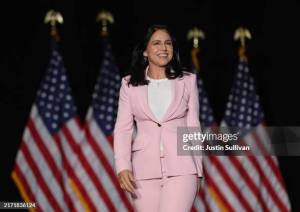







 Happy Caturday!!
 For weeks, Democratic and Republican senators have been watching the House with growing alarm as Speaker Kevin McCarthy has struggled to cobble together the votes to pass a short-term spending bill along party lines – all as he has resisted calls to cut a deal with Democrats to keep the government open until a longer-term deal can be reached. The initial plan: Let McCarthy get the votes to pass a bill first before the Senate changes it and sends it back to the House for a final round of votes and negotiations.
 Fingerprints belonging to the driver of co-defendant Fred Daibes were found on at least one of the envelopes, as well as his DNA and his return address, prosecutors said. “Thank you,” Nadine Menendez texted Daibes around Jan. 24, 2022, according to the indictment. “Christmas in January.”
 “Tuesday, I’ll go to Michigan to join the picket line and stand in solidarity with the men and women of UAW as they fight for a fair share of the value they helped create,” Biden
  “Mark Milley, who led perhaps the most embarrassing moment in American history with his grossly incompetent implementation of the withdrawal from Afghanistan, costing many lives, leaving behind hundreds of American citizens, and handing over BILLIONS of dollars of the finest military equipment ever made, will be leaving the military next week,” Trump wrote on his Truth Social social media site, created when he was banned from several others. “This will be a time for all citizens of the USA to celebrate!”
 Whiting’s precise role on Smith’s team is unclear. A spokesperson for Smith declined to comment, and Whiting did not immediately return requests for comment. The prosecutors’ office in the Hague and Harvard University also did not respond to requests for comment about Whiting’s current employment status.
 In hindsight, that phenomenon may be eclipsed by another one: Republicans deserting their party precisely because of Trump, forming a demographic now familiarly known as “Never Trump Republicans.” Whether it was his xenophobic

 Under four indictments, he faces 91 criminal charges related to election subversion, retention of classified information and hush-money payments to an adult film star. He denies wrongdoing and claims to be the victim of political persecution. Trials are scheduled next year….
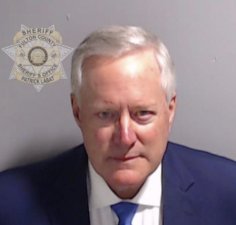 President Dwight Eisenhower’s Sherman Adams, a gruff, no-nonsense gatekeeper, was so famous for giving unvarnished advice that he was known as the “
 peej
peej Carissa
 bostonboomer
 dakinikat
 ecocatwoman
 mablue2
 Mama Lopez
 peggysue22
 quixote
 skydancingguestblogger
 Mona (aka Wonk the Vote)



 Sky Dancing
Recent Comments