





Across from the Lincoln Memorial, barely inside the boundaries of Washington, sits a traffic roundabout known as Memorial Circle — familiar to commuters primarily as a major entryway to the city from Virginia.
Lazy Caturday Reads
Posted: October 11, 2025 Filed under: just because | Tags: America250, cat art, caturday, CDC massive firings, China tariffs, Donald Trump, federal employee layoffs, government shutdown 2025, health care subsidies, Melania Trump, Mike Johnson, No Kings protests, Qatar air base, SCOTUS emergency orders, Trump Arch 8 CommentsGood Day!!

portrait by Gurutze Ramos
It’s finally starting to feel like Autumn here. Leaves are starting to change color and temperatures are dropping into the 50s and 60s. We’re expecting a Nor’easter over the long weekend, with rain, high winds, and coastal flooding.
I’m still having trouble dealing with the news; it has just gotten to be too painful watching Trump and his thugs destroy my country. But the horror continues, whether I’m paying attention or not. Of course, the top story is the effects of the government shutdown.
The promised layoffs and firings of government workers have begun.
This morning’s Boston Globe has a story on the effects here in the Boston area: Local federal workers say they’ve never seen a shutdown like this.
Beth Willwerth, a federal employee at the Andover IRS office, learned she had been furloughed 15 minutes before she spoke to the Globe on Friday.
Willwerth, who is also the chapter president of the National Treasury Employees Union Chapter 68,has been with the IRS since 2009. This is her fourth shutdown.
“This is far different than anything I have ever seen,” she said. “I have never seen anything like this in my 16 years here. I have never hugged so many people coming into my office crying.”
As the government shutdown entered its 11th day, with no sign of a deal in sight, government workers are seeing their paychecks shrink or cut entirely, learning they are newly furloughed, or facing layoffs, as President Trump had promised. They’re dipping into savings and taking side hustles to make ends meet. Federal workers tell the Globe it’s more than just about finances. They’ve never seen a shutdown this chaotic, or this seemingly vindictive.
Many are continuously, unpleasantly surprised by breaking developments, particularly news of an increasing number of federal workers getting fired. By Friday afternoon, federal health, homeland security, education, energy, and Treasury Department employees had been laid off.
Mere hours later, 98 field staff working at the Fair Housing and Equal Opportunity offices at the US Department of Housing and Urban Development across the nation had been notified they’d be laid off effective Dec. 9, a representative from local 3258 of the American Federation of Government Employees told the Globe. The office helps enforce the Fair Housing Act by investigating housing discrimination complaints and mediating cases.
The number of laid-off field staff includes all 11 field staff from the Boston Regional HUD Office.
CNN: Trump administration lays off thousands of federal workers during government shutdown.
More than 4,000 federal employees receivedlayoff notices Friday as part of the Trump administration’s broad effort to reshape the government while it remains shutdown, according to a court filing Friday.
The filing provides greater insight into an announcement from President Donald Trump’s budget chief earlier in the day that the administration had begun government-wide reductions in force that had been anticipated since federal funding lapsed on October 1.
“The RIFs have begun,” Office of Management and Budget Director Russell Vought posted on X, without elaborating on how many federal workers had received RIF – or reduction in force – notices.
As of Friday evening, RIF notices had gone out to employees at the departments of Commerce, Education, Energy, Health and Human Services, Housing and Urban Development, Homeland Security and Treasury, according to department spokespeople, union representatives and sources directly impacted.
Treasury and HHS saw the highest number of reductions, with more than 1,000 workers laid off at each department, according to the filing in a lawsuit brought by two federal employee unions seeking to stop the layoffs.
Also, the US Patent and Trademark Office, which is part of the Commerce Department, issued lapse-related RIF notices to employees last week, according to the filing. And the Environmental Protection Agency sent “intent to RIF” notices to 20 to 30 employees, though it hasn’t made a final decision on whether or when it would lay off those workers.
Other agencies are “actively considering” whether to conduct additional RIFs related to the shutdown, the filing said.
Trump said late Friday afternoon that he plans to fire “a lot” of federal workers in retaliation for the government shutdown, vowing to target those deemed to be aligned with the Democratic Party.
Read more at CNN.
The New York Times: Trump Administration Lays Off Dozens of C.D.C. Officials.
Dozens of employees at the Centers for Disease Control and Prevention — including “disease detectives,” high-ranking scientists and the entire Washington office — were notified late Friday that they were losing their jobs as part of the Trump administration’s latest round of federal layoffs.
It was unclear on Friday how many C.D.C. workers were affected. But it was the latest blow to an agency that has been wracked by mass resignations, a shooting at its Atlanta headquarters in August and the firing of its director under pressure from Health Secretary Robert F. Kennedy Jr.
Portrait by Naomi Jenkin
Layoff notices landed in the email inboxes of C.D.C. employees shortly before 9 p.m. Eastern time on Friday, notifying employees that their duties had been deemed unnecessary or “virtually identical” to those being performed elsewhere in the agency. Scientists, including leaders, in offices addressing respiratory diseases, chronic diseases, injury prevention and global health were among those affected.
The staff of the Morbidity and Mortality Weekly Report, the journal that reports on health trends and emerging infectious threats, was also laid off. The publication’s storied history includes a June 1981 report that five previously healthy gay men were treated for an unusual pneumonia — the first hint of the AIDS epidemic.
Roughly 70 Epidemic Intelligence Service officers — the so-called “disease detectives” who respond to outbreaks around the globe — received layoff notices, according to a person familiar with them. The service was spared during an earlier round of layoffs in February.
An officer at an American Federation of Government Employees local union representing C.D.C. employees said that the agency’s human resources staff, which had been furloughed as part of the government shutdown, had been called back to work to send out layoff notices to their colleagues.
Catie Edmonson at The New York Times (gift link): Trump’s Shutdown Layoffs Deepen Impasse, Angering Democrats.
In almost any other government shutdown, Senators Tim Kaine and Mark Warner, both of Virginia, would probably top the list of Democrats most likely to try to find a quick off ramp.
They represent the state with the second-highest concentration of federal employees in the nation. Both have historically been eager to join the so-called bipartisan gangs of senators who try to negotiate their way through partisan gridlock.
Instead, the two have appeared remarkably dug in, even as President Trump and his top lieutenants have threatened to use the shutdown to drastically accelerate their campaign to reduce the size of the government. They say they are channeling federal workers who are furious at the White House’s ongoing assault on the bureaucracy and are urging their representatives in Congress to keep up the fight.
“I’ve heard that sentiment more loudly than I thought, because in Virginia, we have an awful lot at stake,” Mr. Kaine said in a recent interview. “We suffer more in a shutdown scenario than anybody else. But I think they feel like, ‘You’re threatening to hurt us. You’ve been hurting us since Jan. 20.’ In some ways, it’s kind of not a credible threat, because you’ll do it anyway, whatever happens.”
The dynamic has fueled Democrats’ resolve not to back down as the shutdown impasse drags into its second week. Democrats representing large populations of federal workers have for months heard from livid employees about the Department of Government Efficiency emails they received asking them to provide a list of accomplishments; the chaos and upheaval at their agencies; and the fears of retaliation.
A bit more:
Mr. Trump has stepped up the threats in recent days, saying that he would deny furloughed workers back pay earned during the shutdown, and promising that he would seize the opportunity to slash programs and projects Democrats care about.
So far that has only fueled Democrats’ outrage, strengthening their determination to continue demanding health care concessions as a condition of any deal to fund the government. But that determination will be tested in the days ahead.
Russell T. Vought, the White House budget director, announced on Friday that the administration was beginning another round of federal worker layoffs, fulfilling Mr. Trump’s threats. And many federal employees, including military personnel, are set to miss their first paycheck next week.
“To their credit, the White House has now for 10 days laid off doing anything in hopes that enough Senate Democrats would come to their senses and do the right thing and fund the government,” Senator John Thune, Republican of South Dakota and the majority leader, said at a news conference on Friday, minutes before Mr. Vought’s announcement. “But now where we’re getting to is where people are going to start missing paychecks. This gets real.”
Democrats on Friday gave few indications that they would be swayed.
“This latest round of federal firings is not an unfortunate byproduct of the government shutdown, but a deliberate choice,” Mr. Warner wrote on social media. “Republicans are intentionally holding federal workers hostage to force through their agenda driving up health care costs for millions.”
Good! I hope the Democrats stay angry.
On the shutdown fight:
Republicans are beginning to realize that they are losing the shutdown PR war.
Nathaniel Weixel at The Hill: Republicans, playing defense on health care, uncertain of path forward.
Republicans are on the defensive as Democrats have successfully made the shutdown fight about health care.
Most Republicans said they don’t want to see insurance premiums spike, but neither are they willing to openly support the extension of the enhanced Affordable Care Act (ACA) tax credits Democrats are asking for.
Portrait by Rachel Stibbling
While the GOP has remained united in refusing to even entertain the idea of an extension in the context of ending the shutdown, Republicans don’t appear to have an alternate plan for what happens next….
Democrats are feeling increasingly emboldened about their position and have made it clear they do not intend to back off their health care funding demands. If Congress doesn’t act in the next three weeks, Americans across the country will see major increases in their insurance premiums when open enrollment begins in November.
While Republicans insist that Democrats vote to fund the government before any talks on health care begin, GOP leaders have been forced to engage on an issue that’s long been a political vulnerability for the party.
“They’re trying to make this about health care. It’s not. It’s about keeping Congress operating so we can get to health care. We always were going to. They’re lying to you,” Speaker Mike Johnson (R-La.) told reporters Thursday. “The health care issues were always going to be something discussed and deliberated and contemplated and debated in October and November.”
Congress has extended the enhanced subsidies twice, and Democrats insist they need to do so again, citing estimates that premiums for tens of millions of people will more than double next year.
I remember when pundits were claiming that health care was too boring an issue to get serious traction. It looks like they were wrong.
Mike Johnson is keeping the House shut down for the third week. I’m not sure if it’s because he’s afraid of a vote on releasing the Epstein files or that some of his members may want to work with Democrats to end the government shutdown. And now he’s attacking the upcoming No Kings demonstrations.
Politico: Johnson describes planned No Kings rally as ‘hate America,’ ‘pro-Hamas’ gathering.
Speaker Mike Johnson on Friday slammed the No Kings protest march scheduled to take place at the National Mall next week, describing the planned protest as the “hate America rally” that would draw “the pro-Hamas wing” and “the antifa people.” His characterizations, however, drew condemnation from some Democrats who defended the protest movement, whose first big demonstration was overwhelmingly peaceful.
“They’re all coming out,” Johnson said Friday in an interview on Fox News. “Some of the House Democrats are selling t-shirts for the event. And it’s being told to us that they won’t be able to reopen the government until after that rally because they can’t face their rabid base.”
Rep. Tom Emmer (R-Minn.), another senior House Republican, also criticized the planned demonstration and blamed it for prolonging the shutdown. Telling reporters Democrats had caved to the “terrorist wing of their party,” Emmer alluded to a “hate America rally in D.C. next week.”
The coast-to-coast protests went on almost entirely without incident, with one notable act of violence — when rally “peacekeepers” in Salt Lake City shot and killed a bystander because they believed another man with a gun was about to fire on the crowd.
The organizers of the upcoming rally largely brushed off House GOP leaders’ characterization. In a joint, unsigned statement, which they said they issued “after a few moments of laughter,” they pressured Johnson over the government shutdown.
“Speaker Johnson is running out of excuses for keeping the government shut down,” the No Kings coalition wrote. “Instead of reopening the government, preserving affordable healthcare, or lowering costs for working families, he’s attacking millions of Americans who are peacefully coming together to say that America belongs to its people, not to kings.”
Non-shutdown news and comment:
Trump and his puppet at the Department of Defense are allowing a foreign country to have a military base in the United States. WTF?!
CBS News: Hegseth announces Qatar will build air force facility at U.S. base in Idaho.
Defense Secretary Pete Hegseth on Friday announced a finalized agreement that will allow the Qatari Emiri Air Force to build a facility at the Mountain Home Air Force Base in Idaho.
The agreement, which Hegseth announced alongside Qatari Minister of Defense Sheikh Saoud bin Abdulrahman Al Thani at the Pentagon, will allow Qatari pilots to receive training alongside U.S. soldiers. There are no foreign military bases in the U.S., but some foreign militaries do maintain a presence for training. The Singaporean Air Force also has a presence at the Mountain Home base.
Hegseth said he is “proud that today we’re signing a letter of acceptance to build a Qatari Emiri Air Force Facility at the Mountain Home Air Base in Idaho.”
“The location will host a contingent of Qatari F-15’s and pilots to enhance our combined training, increase lethality, interoperability, it’s just another example of our partnership,” Hegseth said. “And I hope you know, your excellency, that you can count on us.”
Later Friday, Hegseth clarified that Qatar would not have its own base in the U.S., writing on X: “The U.S. military has a long-standing partnership w/ Qatar, including today’s announced cooperation w/ F-15QA aircraft. However, to be clear, Qatar will not have their own base in the United States-nor anything like a base. We control the existing base, like we do with all partners.”
Whatever. It’s creepy, IMO.
The move is another demonstration of the Trump administration’s increasingly close relationship with Qatar.
President Trump signed an executive order last month “assuring the security of the state of Qatar,” following Israel’s decision to carry out a military strike in Qatar’s capital city of Doha, where the vast majority of Qataris live. “The United States shall regard any armed attack on the territory, sovereignty, or critical infrastructure of the State of Qatar as a threat to the peace and security of the United States,” the executive order reads.
I guess that’s what you get when you bribe the “president” with a free luxury plane and help him build a golf course in your country.
Here’s another strange story from The Daily Beast: Melania Has Been Secretly Working With Putin for Months.
First Lady Melania Trump made a rare formal announcement from the White House on Friday where she revealed that she has been engaged in secret talks with Russian President Vladimir Putin.
The first lady said that due to ongoing efforts eight children separated during the war in Ukraine have now been reunited with their families, and she said the work continues.
Cornilis Visscher, The Large Cat, etching-and-engraving-circa-1657-145×188-mm-5_651360851dc7f-thumb-36144200_1695768710Cornelis-Visscher, The
Trump said that her dialogue with Putin has been ongoing since she sent him a letter in August. The president first revealed the letter she had written to the Russian leader on Truth Social, which was hand-delivered to Putin during his summit with Trump in Alaska.
“Since President Putin received my letter last August, he responded in writing, signaling a willingness to engage with me directly, and outlining details regarding the Ukrainian children residing in Russia,” the first lady said Friday.
“Since then, President Putin and I have had an open channel of communications regarding the welfare of these children,” she continued….
The first lady, who spends most of her time in New York, made her roughly five-minute speech from a podium at the White House before turning around and exiting the room without taking any questions.
Melania has been a quiet adviser to her husband on the war in Ukraine since he took office. The president has said on numerous occasions that the first lady has been quick to point out to her husband that Putin had not been negotiating with him in good faith as the war dragged on.
I hope this does some good, but I’ll believe it when I see it.
The New York Times has an interesting story critical of the Supreme Court by Mattathias Schwartz and Zach Montague: Federal Judges, Warning of ‘Judicial Crisis,’ Fault Supreme Court’s Emergency Orders.
More than three dozen federal judges have told The New York Times that the Supreme Court’s flurry of brief, opaque emergency orders in cases related to the Trump administration have left them confused about how to proceed in those matters and are hurting the judiciary’s image with the public.
At issue are the quick-turn orders the Supreme Court has issued dictating whether Trump administration policies should be left in place while they are litigated through the lower courts. That emergency docket, a growing part of the Supreme Court’s work in recent years, has taken on greater importance amid the flood of litigation challenging President Trump’s efforts to expand executive power.
While the orders are technically temporary, they have had broad practical affects, allowing the administration to deport tens of thousands of people, discharge transgender military service members, fire thousands of government workers and slash federal spending.
The striking and highly unusual critique of the nation’s highest court from lower court judges reveals the degree to which litigation over Mr. Trump’s agenda has created strains in the federal judicial system.
White Angora Cat by Jean-Jacques Bachelier, 1761
Sixty-five judges responded to a Times questionnaire sent to hundreds of federal judges across the country. Of those, 47 said the Supreme Court had been mishandling its emergency docket since Mr. Trump returned to office.
The judges responded to the questionnaire and spoke in interviews on the condition of anonymity so they could share their views candidly, as lower court judges are governed by a complex set of rules that include limitations on their public statements.
Of the judges who responded, 28 were nominated by Republican presidents, including 10 by Mr. Trump; 37 were nominated by Democrats. While those nominated by Democrats were more critical of the Supreme Court, judges nominated by presidents of both parties expressed concerns.
In interviews, federal judges called the Supreme Court’s emergency orders “mystical,” “overly blunt,” “incredibly demoralizing and troubling” and “a slap in the face to the district courts.” One judge compared their district’s current relationship with the Supreme Court to “a war zone.” Another said the courts were in the midst of a “judicial crisis.”
Trump is threatening China with insane tariffs again. Politico: Trump wanted a trade deal. Xi opened a new front instead.
Beijing shattered a fragile trade truce with Washington this week, announcing sweeping restrictions on exports that contain even trace amounts of Chinese rare earth.
An irate President Donald Trump is threatening to retaliate with 100 percent tariffs and new restrictions on exports of critical software — and said there’s “no reason” to meet with Chinese leader Xi Jinping later this month.
The rupture marks the sharpest escalation in tensions between Washington and Beijing since the two countries slapped triple-digit tariffs on each other this spring and threatens to derail months of quiet efforts to stabilize the relationship. It also underscores how delicate the two sides’ uneasy economic peace has been and raises fresh doubts about whether Trump, operating with a hollowed-out national security team and a fragmented China strategy, is prepared for Beijing’s latest power play.
It’s also the clearest test yet of Trump’s ability to translate his transactional approach to trade into a coherent China strategy — one that can withstand Beijing’s deliberate and long-term economic warfare. Most of China’s new restrictions will take effect Dec. 1, while the U.S.’s retaliatory measures are set to kick in Nov. 1.
“China’s actions are being viewed by the administration as a major escalation in U.S.-China trade tensions,” said Everett Eissenstat, deputy assistant to the president for international economic affairs and deputy director of the White House’s National Economic Council during Trump’s first term. “China is flexing its power and trying to show the world that it has the ability to act as a major choke point for global trade.”
China’s Ministry of Commerce on Thursday unveiled its most expansive rare earth export controls to date, allowing Beijing not only to restrict shipments of raw materials and magnets — as it has in the past — but also any devices that incorporate those elements. Because Chinese rare earths are embedded in everything from iPhones and electric vehicle motors to fighter-jet sensors, the rules effectively give Beijing potential veto power over vast swaths of global manufacturing.
One more from The Washington Post on Trump’s architectural plans: Trump eyes a triumphal arch to mark America’s 250th anniversary.

A bit more:
Construction of a triumphal arch to mark the nation’s 250th anniversary, which was first publicly suggested by art critic Catesby Leigh in an article last year, would represent the president’s most audacious effort to remake the landscape of D.C.
Trump has installed a stone patio in the White House Rose Garden, begun construction on a vast, new White House ballroom that would significantly change the footprint of the historic mansion, and pledged to clean up parks and streets across the nation’s capital. The president in August also signed an executive order titled “Making Federal Architecture Beautiful Again,” which called for new federal buildings to be constructed in a “classical and traditional” style, in the spirit of the Capitol building or the White House, rather than the brutalist or modern styles that became widely used over the past half century.
“We want to see beautiful buildings,” Trump said in the Oval Office last month, touting his own expertise as a real estate tycoon. Administration officials have highlighted buildings such as the headquarters of the Departments of Energy, Health and Human Services, and Housing and Urban Development as eyesores that they would prefer to replace….
Triumphal arches were widely used by the Romans to commemorate victories. Those Roman arches inspired more recent structures in Europe, most notably the Arc de Triomphe in Paris, which was constructed in the first part of the 19th century. The models displayed in the Oval Office closely resemble those structures, inspiring some online commentators to joke that the new monument would be “the Arc de Trump.”
I guess the Trump arch will “celebrate” his planned victory over American democracy after 250 years?
That’s it for me today. Take care everyone!
Wednesday Reads: Could the Jeffrey Epstein Scandal Disrupt Trump’s Agenda?
Posted: July 16, 2025 Filed under: #We are so Fucked, Donald Trump, just because, U.S. Economy | Tags: Epstein Files, Ghislaine Maxwell, Jeffrey Epstein, Julie K. Brown, Kevin Hassett, Mike Johnson, Pedophilia, rape, sexual abuse of minors, Suicide 16 CommentsGood Afternoon!!
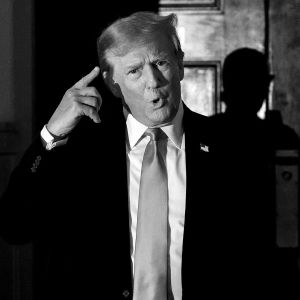
How can such a stupid person do so much damage so quickly?
I’ve finally begun to accept that what is happening to our country will not be reversed in my lifetime. When I think about it, I feel so despairing that I can’t bear to focus on it for long. But I know it’s true. How can such a stupid person do so much damage so quickly?
Trump has already done so much damage and he is likely to do much more before we can get rid of him–if we succeed in doing that. He has destroyed the Department of Justice, the Department of Education, and has likely done irreparable damage to the Department of Defense, the CIA, and the office of DNI (Director of National Intelligence). He has also damaged Social Security, Medicaid, Medicare, and Obamacare.
His insane tariffs are wrecking the economy, and he may soon be able to do even more damage by naming a new Fed chairman who will carry out his orders. Guess who Trump is likely to appoint? According to Bloomberg, it will be Kevin Hassett! The story is behind a paywall. I read the headline on Memeorandum.
He has begun weaponizing the military and with the new funding for ICE in the big ugly bill, he will control a vast private army. He has begun to establish a system of concentration camps.
Have I forgotten anything? Probably.
I can’t cover all of these issues today, but here’s some commentary on Trump’s ongoing destruction of our economy.
This piece by Jonathan V. Last at The Bulwark is truly depressing: LOL Nothing Matters. Inflation is back. The government is nationalizing one private company and blackmailing another. But no one cares because . .
Remember back in 2024 when Americans had to vote for the insurrectionist felon because there had been 14 months of inflation in 2021–22?
Yeah, well inflation is back now.
US inflation climbed to 2.7 per cent in June, surpassing expectations and signalling that Donald Trump’s tariffs are hitting prices. Tuesday’s annual consumer price index figure was up from 2.4 per cent in May and above expectations of 2.6 per cent among analysts surveyed by Bloomberg.
How upset are voters about this? They are a solid “Meh.” Trump remains at only -7 net approval, which is a huge improvement from where he was in late April.
Why am I feeling nihilistic today? It’s not just the voters; it’s the markets. We got a bad inflation report this morning and then the markets reacted by . . . betting that the Fed is going to cut rates in September.
Which is, you know, the opposite of what you’d expect in an environment where tariffs are pushing prices higher. Are the markets betting on TACO? Or preparing for Fed Chairman Kevin Hassett? Or going full-nihilist, too?
Trump embracing socialism?
Here is another thing that doesn’t seem to matter: Democrats are freaked out because their nominee for mayor in New York City wants to run a pilot program with five municipal-owned grocery stores, which is “socialism” or something.
Meanwhile, last week the U.S. government became the largest shareholder in the mining company MP Materials. Which is, you know, kind of like socialism? […]
On May 27, MP began a sudden climb. After months of sitting around $25 a share, it moved consistently upward for a month, to almost $40. On June 20 a selloff started and the share price lost a quarter of its value over three weeks. The government announced its purchase on the morning of July 10 and MP went to the moon.
Any of this look to you like someone knew the score?
But that’s just the first layer of corruption.
This morning, Apple announced that it would also
contributeinvest $500 million in MP stock.That’s right: Apple, which is currently negotiating with Trump on the 25 percent tariffs the president wants to put on iPhones made in China, decided to do the government a solid and throw some cash behind Uncle Sam’s MP position, thus driving the price higher and forming a shareholder bloc that will, along with the government, be enough to control MP.
And since Apple’s business now depends on what the U.S. government allows it to do, I suspect Apple’s share will be a pure proxy for whatever the Trump administration’s wishes are.
There’s more at the link.
Here’s what Paul Krugman has to say about Trump’s economic policies: Hawks, Doves and Lapdogs: The next Fed chair will be an obedient partisan.
Yesterday’s CPI report looked fairly tame on the surface, but if you look at the details it showed clear signs that Trump’s tariffs are starting to drive up prices. And private surveys suggest that there’s a lot more inflation in the pipeline. For example, look at S&P Global’s Purchasing Managers’ Index for manufacturing, which shows the percentage of firms reporting higher prices. A higher number almost always points to higher official inflation ahead, and right now it’s definitely telling us that tariffs are about to hit hard (see figure at the link)….
The next Fed chair?
Why aren’t we seeing the full effects of the tariffs in official statistics? For the record, I don’t believe Trump officials are cooking the books — yet.
That’s not to say that they won’t at some point, and there’s a good chance that they will. But so far what we’re probably seeing is a combination of ordinary lags and the temporary effects of the TACO (Trump always chickens out) narrative. Buyers get pissed off at sellers when prices rise, so sellers who don’t want to lose market share have an incentive to hold prices down despite higher costs if they think the Trump tariffs will come back down in a few weeks.
I, however, am a TACO skeptic. I think Trump really is a Tariff Man who will keep us at Smoot-Hawley-level tariffs indefinitely, and businesses will eventually realize that and raise prices accordingly.
And then what? Clearly, we shouldn’t expect Trump to admit that his tariffs are raising prices, or even to admit that prices are rising. What we can expect is that he will keep putting pressure on the Fed to cut interest rates. I don’t think he’ll manage to push Jerome Powell out before next May, but as I wrote last week, whoever he picks after that will do his bidding.
Bloomberg has an interesting article about Kevin Warsh, one likely choice — although a newer article suggests that Kevin Hassett, whom nobody suspects of having any independent principles, may be in first place. The article expresses puzzlement over Warsh’s support for rate cuts now, despite above-target inflation, when he was a big advocate of higher rates in the aftermath of the global financial crisis. How did such a monetary hawk suddenly become a monetary dove? But one of the people the article quotes hits the nail on the head.

Read the Bloomberg excerpts at the link.
We are so screwed.
Right now the only hopeful signs I see is that Trump’s policies are very unpopular with Americans, and his association with Jeffrey Epstein could possibly damage him before the midterm elections. I’m probably wrong and Trump is clearly trying to fix the midterms. Anyway, I’ve gathered some stories on the Epstein scandal.
Ewan Palmer at The Daily Beast: White House Freaked Out Over a Question About Trump’s Ties to Epstein.
White House officials were left scrambling after a reporter straight-up asked whether Donald Trump knew if his name appeared in files connected to Jeffrey Epstein, according to Axios.
The media inquiry was posed after reports that FBI Deputy Director Dan Bongino had a screaming match with Attorney General Pam Bondi over the Department of Justice’s handling of the files on the pedophile who died in 2019.
Jeffrey Epstein and Donald Trump, best buds
The question helped the administration figure out how badly holding back any release of the Epstein files was playing in MAGA world.
In a memo, the DOJ and FBI denied the existence of any so-called “client list” belonging to Epstein featuring potential high-profile names, and said they will not be releasing any more information regarding Epstein. The agencies also stated that the billionaire financier took his own life in his New York City jail cell, rather than being murdered, a conspiracy theory pushed for years by Trump loyalists, including Bongino.
In the wake of the Bongino-Bondi blow-up, one reporter asked if Bondi had told Trump that his name was in the Epstein files. For the first time, White House and DOJ personnel realized how bad the optics were of refusing to release more information on Epstein after multiple MAGA figures, including Trump himself, vowed to do exactly that. Officials feared it suddenly looked like they might be shielding Trump from potentially damning revelations.
“It put people in a tizzy,” an unnamed source familiar with the matter told Axios. An administration source added, “It didn’t look like a coincidence at that point” that the Trump administration had stopped releasing Epstein files.
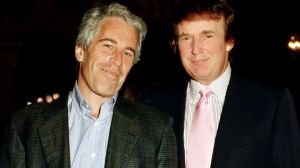
Read more at the link. It’s weird that the White House was taken by surprise by this question, since Trump and Epstein were close friends for years.
I was stunned yesterday when House Speaker Mike Johnson actually disagreed with Trump about covering up the Epstein files. Marianna Sotomayor at The Washington Post: Speaker Mike Johnson and other Republicans break with Trump on Epstein.
One of the leading Republicans on Capitol Hill broke with the Trump administration’s decision not to release the files of deceased sex offender Jeffrey Epstein as the controversy deepened over the handling of an issue that has caused unprecedented division among the GOP base.
House Speaker Mike Johnson (R-Louisiana) told right-wing podcaster Benny Johnson that he supported the release of the Epstein files, days after President Donald Trump’s Justice Department said the matter was effectively closed. Johnson is a close Trump ally and has never broken so publicly with the president on an issue.
“I’m for transparency,” Johnson told Benny Johnson. “It’s a very delicate subject, but we should put everything out there and let the people decide it.”
Even as Johnson publicly called for the files to be released, he opposed a procedural motion advanced Tuesday by Democrats that would have set up a House vote to release them.
On the podcast, Speaker Johnson said that Attorney General Pam Bondi “needs to come forward and explain” the confusion she has brewed after she said in interviews earlier this year that the purported Epstein “client list” was sitting on her desk for review, suggesting it would be released. Bondi and other Justice Department officials now say the client list — which some claim would reveal the names of powerful figures who allegedly participated in Epstein’s crimes — does not exist.
“I like Pam. I think she’s done a good job, but we need the DOJ focusing on the major priorities,” he said. “I’m anxious to put this behind us.”
Trump will have to have a stern talk with Speaker Johnson.
Oliver Holmes at The Guardian: Donald Trump says those interested in Jeffrey Epstein inquiry are ‘bad people.’
Donald Trump has dismissed a secretive inquiry into the sex offender Jeffrey Epstein as “boring” and of interest only to “bad people”, but said he backed the release of any “credible” files, as he sought to stamp out a conspiracy-fuelled uproar among his supporters.
The US president is facing a political crisis within his usually loyal Republican Make America Great Again (Maga) base over suspicion that the administration is hiding details of Epstein’s crimes to protect the rich elite he associated with, which included Trump.
One of the most dramatic theories circulating among supporters is that Epstein – who killed himself in 2019 while in federal custody – was murdered by powerful figures to cover up their roles in his sex crimes against children.
“I don’t understand why the Jeffrey Epstein case would be of interest to anybody,” Trump told reporters on Tuesday night when asked why his supporters are so interested in the case. “It’s pretty boring stuff. It’s sordid, but it’s boring, and I don’t understand why it keeps going.
“I think really only pretty bad people, including fake news, want to keep something like that going,” he added. “But credible information, let them give it. Anything that is credible, I would say, let them have it.”
Sex trafficking, pedophilia, and prison suicide are boring stuff?
Frankly, I have no doubt that Epstein committed suicide. He was looking at years in prison, loss of his status, his fortune, and his fabulous lifestyle. As a narcissistic sociopath, he couldn’t tolerate that. But Wired has found new evidence that the surveillance tape outside Epstein’s cell was manipulated. It may be perfectly innocent, but the MAGA crowd won’t see it that way. The magazine had previously found 1 minute missing from the tape; now it’s 3 minutes. Rich Friedman writes: The FBI’s Jeffrey Epstein Prison Video Had Nearly 3 Minutes Cut Out.
Newly uncovered metadata reveals that nearly three minutes of footage were cut from what the US Department of Justice and Federal Bureau of Investigation described as “full raw” surveillance video from the only functioning camera near Jeffrey Epstein’s prison cell the night before he was found dead. The video was released last week as part of the Trump administration’s commitment to fully investigate Epstein’s 2019 death but instead has raised new questions about how the footage was edited and assembled.
WIRED previously reported that the video had been stitched together in Adobe Premiere Pro from two video files, contradicting the Justice Department’s claim that it was “raw” footage. Now, further analysis shows that one of the source clips was approximately 2 minutes and 53 seconds longer than the segment included in the final video, indicating that footage appears to have been trimmed before release. It’s unclear what, if anything, the minutes cut from the first clip showed.
The nearly three-minute discrepancy may be related to the widely reported one-minute gap—between 11:58:58 pm and 12:00:00 am—that attorney general Pam Bondi has attributed to a nightly system reset. The metadata confirms that the first video file, which showed footage from August 9, 2019, continued for several minutes beyond what appears in the final version of the video and was trimmed to the 11:58:58 pm mark, right before the jump to midnight. The cut to the first clip doesn’t necessarily mean that there is additional time unaccounted for—the second clip picks up at midnight, which suggests the two would overlap—nor does it prove that the missing minute was cut from the video.
The footage was released at a moment of political tension. Trump allies had spent months speculating about the disclosure of explosive new evidence about Epstein’s death. But last week, the DOJ and FBI issued a memo stating that no “incriminating ‘client list’” exists and reaffirmed the government’s long-standing conclusion that Epstein—whom the US government accused of committing conspiracy to sex traffic minors and sex trafficking minors—died by suicide. That announcement triggered immediate backlash from pro-Trump influencers and media figures, who essentially accused the administration of a cover-up.
In response to detailed questions about how the video was assembled, WIRED sent a request for comment to the Department of Justice at 7:40 am on Tuesday morning. Just two minutes later, Natalie Baldassarre, a public affairs officer for the DOJ, replied tersely: “Refer you to the FBI.” The FBI declined WIRED’s request for comment.
Read more at Wired.
It’s possible that Ghislaine Maxwell, who procured young girls for Epstein to rape, could reveal whether Trump was involved in Epstein’s crimes. Unfortunately that’s unlikely, since she hopes to win a pardon or commutation from Trump. at The Daily Beast: Epstein Pimp’s Family Kiss Up to Trump: ‘Ultimate Dealmaker.’
Ghislaine Maxwell’s family is turning to the tried-and-true method of flattering President Donald Trump in a bid to get the convicted sex trafficker sprung from prison.
Trump with Ghislaine Maxwell
Maxwell, 63, is serving a 20-year jail sentence after being convicted in 2021 of luring and grooming young girls for the late financier Jeffrey Epstein’s sex-trafficking ring.
Earlier this year, her lawyers filed a petition with the Supreme Court arguing her conviction was invalid, saying her prosecution in New York was barred by a 2007 non-prosecution agreement the government made with Epstein in Florida that also covered his co-conspirators.
A federal appeals court and the Department of Justice have both smacked down that argument, leading the family to now co-sign a flattering statement about the president.
Her siblings shared a statement from Maxwell’s attorney David Oscar Markus that said, “I’d be surprised if President Trump knew his lawyers were asking the Supreme Court to let the government break a deal. He’s the ultimate dealmaker—and I’m sure he’d agree that when the United States gives its word, it should keep it.”
“These are sentiments with which we profoundly concur,” the family added.
The family members didn’t sign the statement individually—perhaps because the family has long been associated with scandal.

Read more details at the link.
Two more interesting articles about the Epstein controversy and the MAGA faithful:
Will Sommer at The Bulwark: The Five MAGA Factions Waging an Epstein Civil War.
Zack Beauchamp at Vox: Why Trump betrayed his base on Jeffrey Epstein And why he’ll get away with it.
There’s one reporter who really knows the Epstein story and what’s in the files: Julie K. Brown from The Miami Herald. Here is a piece she wrote in March: The Epstein files: What is public, and what is still secret?
Opening up two decades of government files related to sex trafficker Jeffrey Epstein isn’t going to be as simple as inserting them into three-ring binders or putting them on the internet.
After hyping the release of Epstein documents as “breaking news” on Fox News, U.S. Attorney General Pam Bondi on Thursday distributed binders filled with material to a group of conservative social media pundits. But the big reveal, designed to promote President Donald Trump’s new culture of transparency, fell flat.
When the group opened the binders, they discovered 200 pages of dated material, most of which had long ago been made public. To make matters worse, some of the material was overly redacted — the same material had already been available on the internet in unredacted form.
Bondi, a former prosecutor and Florida attorney general, said she had been misled by the FBI into believing she had all the documents. She then accused federal agents of withholding thousands of pages, and ordered the agency to turn over the rest by Friday morning. But the 8 a.m. deadline came and went without any word on the files.
FBI sources told the Miami Herald Friday that they worried releasing the documents without a careful review — one that would likely take weeks or months — would jeopardize the hard-won 2021 conviction of Epstein accomplice Ghislaine Maxwell. Maxwell is appealing her conviction and 20-year sentence for child sex trafficking.
Sources also said that the files are voluminous. There are 22 files containing over 500 pages in the FBI vault, a portal on the FBI’s website accessible to the public. The bulk of those 11,000-plus pages are heavily redacted, and Justice Department prosecutors have fought their release for years. While Bondi pointed fingers at the FBI in New York, many more files exist in other jurisdictions. One critical source of evidence against Epstein was in the discovery for a Florida civil case brought by Epstein’s victims against the FBI in 2008. That case spanned a decade and included tens of thousands of pages of material that sheds light on how federal prosecutors
mishandled that early case. Not all the FBI documents connected to that case — or the federal criminal case — in Florida have been made public.
“Going through those files would be an enormous, enormous effort. They contain the names of victims, witnesses and other personal information,” said Paul Pelletier, a former federal prosecutor now in private practice. “There was tons of discovery in the New York case alone. There’s no prosecutor in their right mind who would be able to corral all the evidence in the Epstein case over 20 years in a week and be able to release it carefully and accurately.”
Read the rest at The Miami Herald. For anyone who’s interested in the truth, Brown is the one to trust.
I don’t know if I’ve enlightened anyone with this collection of reads, but I hope I’ve helped some.
What’s on your mind today?
Wednesday Reads: Trump’s Big, Ugly Bill
Posted: May 21, 2025 Filed under: Donald Trump, House of Representatives, just because, U.S. Economy, U.S. Politics | Tags: food stamps, Lawrence O'Donnell, Medicaid, medicare, Mike Johnson, Rep. Brendan Boyle, Rep. Gerry Connolly, Trump's big beautiful bill, U.S. Treasuries 21 CommentsGood Morning!!

Rep Gerry Connolly
Breaking News: Rep. Gerry Connolly of Virginia has died.
The New York Times: Gerald Connolly, Top Democrat on House Oversight Committee, Dies at 75.
Representative Gerald E. Connolly of Virginia, a nine-term congressman who was the top Democrat on the House oversight committee, died on Wednesday, his family said in a statement. He was 75.
Mr. Connolly died at his home surrounded by his family, the statement said. It did not give a cause of death. Mr. Connolly had announced in 2024 that he was being treated for cancer of the esophagus.
In April, he announced that his cancer had returned and that he would not seek re-election in 2026. He also said he would soon relinquish his spot on the Committee on Oversight and Government Reform.
From PBS: Rep. Gerry Connolly, Democratic fixture of Virginia politics, dies at 75.
U.S. Rep. Gerald “Gerry” Connolly, an outspoken Democrat who sought key reforms in the federal government while bringing transformational development to his populous Virginia district, died Wednesday. He was 75….
The spirited and at times bullheaded Fairfax Democrat became known for his voluble nature and willingness to engage in spirited debates. In one hearing, he accused Republicans of engaging in a witch hunt against the IRS, asking a witness if they ever read Arthur Miller’s “The Crucible.”
“I am heartbroken over the loss of my dear friend,” said Democratic Sen. Mark Warner of Virginia. “To me, he exemplified the very best of public service.” He said Connolly “met every challenge with tenacity and purpose, including his final battle with cancer, which he faced with courage, grace, and quiet dignity.”
A fixture of Virginia politics for three decades, Connolly was first elected to the Fairfax County Board of Supervisors in 1995. On the county board, he steered the transition of northern Virginia’s Tysons Corner from a traffic-heavy mall area to a downtown business hub.
In 2003, Connolly was elected board chairman, and he continued pushing for transportation investment that had been debated among officials for decades. Connolly sought billions in state and federal dollars to develop the regional rail system’s Silver Line connecting the national capital region to Tysons Corner.
Connolly’s dream was realized with the Silver Line’s opening in 2014, and eight years later, the rail line was extended an extra 11 miles (18 kilometers) to reach Dulles International Airport.
What’s happening in politics today:
The news getting the most attention today is the so-called “big beautiful bill” that Trump and House Republicans are trying to pass and send to the Senate. Yesterday, we got some shocking news about this nightmare bill. Not only does it cut nearly a trillion dollars from Medicaid. It also cuts Medicare by more than $500 billion from Medicare. If you watched Lawrence O’Donnell’s show last night, you heard all about it. In case you missed it, here is O’Donnell’s interview with Rep. Brendan Boyle:
You can read the transcript of the interview at ACA Signups.net: Surprise! GOP Medicaid Massacre bill is also a Medicare Massacre bill!
Rep. Boyle: The one thing I would point out, though, is this bill is actually significantly worse [than the GOP’s ACA repeal attempt in 2017], because this piece of legislation will throw 13.5 million, almost 14 million Americans off their healthcare.
First, you’re cutting people off Medicaid. But second, this does include very deep cuts to Obamacare as well. And finally, I have breaking news for you tonight, that literally just came out in the last few minutes as I’ve been sitting here: The nonpartisan Congressional Budget Office, the official authority on these figures, has now confirmed that this bill, in addition to Medicaid cuts, in addition to Obamacare cuts, includes $500 BILLION WORTH OF CUTS TO MEDICARE that is now in this bill as well.
Lawrence O’Donnell: That is breaking news…$500 billion in cuts to Medicare. That’s the biggest cut to Medicare ever contemplated by the Congress. There have been, over the years, trims to Medicare for budget reasons, but nothing on this order has ever been done to Medicare. What happened? Talk more about that, about that breaking news piece that the CBO has projected in here. Is that because of interactions that Medicare has with the Medicaid program?
Rep. Boyle: Yeah, and forgive me this…given your great experience on the Senate Finance Committee, you’ll understand this, but it does get a bit wonky for normal folks. Basically it’s because of those interactions and specifically because of a provision called “Paygo” that will force a certain amount of Medicare sequestration, again, to the tune–and these aren’t my figures, these are the Congressional Budget Office official figures–$500 billion.
So they take the biggest cuts to Medicaid in American history. They take massive cuts to Obamacare. And then, add on top of that, the impact of all their policies mean a result of the biggest cuts to Medicare in American history on top of all of it.
Click the link to read the rest.
More on the Big Ugly Bill:
House Republicans are pushing to slash nearly $1 trillion from two of the nation’s bedrock safety net programs, Medicaid and food stamps, as part of their sweeping package aimed at enacting President Donald Trump’s agenda. If the legislation is approved, millions of Americans could lose access to these benefits as a result of a historic pullback in federal support.
Trump has repeatedly vowed not to touch Medicaid, while GOP lawmakers insist that their proposals would largely affect adults who could – and should, in their view – be employed. But the actual impact would likely hit a far broader range of Americans, including some of the most vulnerable people the GOP has promised repeatedly to protect, experts say. They include children, people with disabilities and senior citizens.
A sizeable share of the US population depends on these programs. More than 71 million people are enrolled in Medicaid, and roughly 42 million Americans receive food stamps, according to the federal agencies that oversee them.
Hospitals would also feel the financial fallout of the Medicaid cutbacks, which could prompt some to raise their rates for those with job-based insurance and others to close their doors.
States would have to shoulder more of the costs of operating these programs, which could force them to make some tough decisions. Among their options could be slashing enrollment, benefits and provider rates in Medicaid or pulling back on residents’ access to food stamps. They might also shift spending from other state-supported programs such as education and infrastructure or hike taxes.
In addition, grocery store owners are warning that cuts to the Supplemental Nutrition Assistance Program, or SNAP, as food stamps are formally known, could harm local economies and cost jobs.
Read the details at the CNN link.
The House Rules Committee met under cover of darkness beginning at 1:oo this morning.
The Washington Post: Divided House GOP tries to push Trump’s tax bill over the finish line.
House Republicans on Wednesday are set to try to push President Donald Trump’s massive tax and immigration package across the finish line, hoping to conquer internal divisions and tee up a vote that would send Trump’s sprawling agenda to the Senate.
The House Rules Committee worked through the night on the legislation, trying to push the bill past a procedural test that would allow for a final vote. Lawmakers were still debating its provisions early Wednesday after a committee session that began at 1 a.m.
But the GOP’s narrow majority is far from unified around the proposal. And although Trump visited the U.S. Capitol for a conservative pep rally Tuesday, warring Republican factions on both sides dug in to oppose what is now officially called the One Big Beautiful Bill Act. The House GOP’s narrow majority means leaders can afford to lose only a handful of votes — and for now, they don’t have the support they need to pass the measure.
The bill would extend tax cuts that Trump signed into law in 2017 that are otherwise due to expire at the end of this year, along with new changes to reflect Trump’s campaign promises — such as no taxes on tips and overtime wages — and spend hundreds of billions of dollars on border security, the White House’s mass deportation campaign and funding for defense priorities and a “Golden Dome” continental missile defense system.
The Congressional Budget Office, lawmakers’ nonpartisan scorekeeper, projects that it will add $2.3 trillion to the deficit over 10 years. The national debt already exceeds $36.2 trillion.
Hard-line conservatives said Tuesday that the legislation did not sufficiently cut spending to pair with trillions of dollars of new tax cuts or extensions of current rates, and they angled for deeper budget reductions to Medicaid and federal benefits programs.
Blue-state Republicans demanded a higher cap on how much people can deduct from their federal taxes to offset what they pay to state and local tax authorities, and they warned that any cuts to the social safety net could cost them their political futures — and hand control of the House to Democrats after the 2026 midterm elections.
Arthur Delaney at HuffPost wrote about the obvious results of this bill: Economic Analysis Shows ‘Big, Beautiful Bill’ Taking From Poor, Giving To Rich.
The big legislation Republicans are trying to pass this week would shrink economic resources for the poorest Americans while boosting the richest, according to a new analysis by Capitol Hill’s official budget scorekeeper.
The Congressional Budget Office said Tuesday the One Big Beautiful Bill Act, as it’s officially known, would shrink household resources for the lowest-income households by 2% in 2027 and 4% in 2033, mainly because of cuts to health and nutrition programs.
Food Stamps are on the chopping block
”By contrast, resources would increase by an amount equal to 4 percent for households in the highest decile in 2027 and 2 percent in 2033, mainly because of reductions in… taxes they owe,” CBO director Phillip Swagel wrote in a letter to Democrats.
Democratic leader Hakeem Jeffries (D-N.Y.) and Rep. Brendan Boyle (D-Pa.), the top Democrat on the House Budget Committee, requested the CBO analysis of the bill’s distributional effects for the top and bottom 10% of households by annual income.
“This is what Republicans are fighting for – lining the pockets of their billionaire donors while children go hungry and families get kicked off their health care,” Boyle said in a statement. “CBO’s nonpartisan analysis makes it crystal clear: Donald Trump and House Republicans are selling out the middle class to make the ultra-rich even richer.”
The legislation uses about $1 trillion in cuts to Medicaid and the Supplemental Nutrition Assistance Program to help pay for $3.8 trillion in tax cuts that benefit all income groups, but especially wealthier Americans. The CBO has previously estimated the legislation would shrink Medicaid enrollment by more than 7 million, including through increased eligibility checks and limits on benefits for people without jobs.

What will happen to the U.S. debt if the bill passes the Senate in it’s current form?
Alicia Parlapiano and Margot Sanger-Katz at The New York Times: U.S. Debt Is on Pace to Set a Record High, Going All the Way Back to 1790.
The United States hit its record debt level at the end of 1945, after a world war and the Great Depression.
That record, in which the debt was briefly larger than the size of the entire economy, is almost certain to be broken in the next several years. Estimates from the Congressional Budget Office published in January showed that the country was on track to overtake it in 2032 — and that was before the Republicans’ large tax and spending bill was taken into account.
Under the G.O.P. megabill being considered in the House, budget experts now say, the U.S. debt would blow past the record even sooner and climb significantly higher in coming decades.
America has had periods of high debt before, but they have tended to occur during wars, recessions or other major shocks. Generally, federal deficits have been lower during periods of low unemployment. Today, there is no war or recession to easily explain the rapidly increasing pace of borrowing.
Because the government has been spending more than it collects in taxes over the past two decades, the debt has been growing. Without any changes to existing law, the Congressional Budget Office predicts the debt will rise to about 117 percent of the economy’s size by 2034, higher than the 1945 record.
The Republicans’ bill would widen the gap further by extending and expanding tax cuts and increasing military spending, partly offset by spending cuts in other areas. The Committee for a Responsible Federal Budget, a nonpartisan group that favors debt reduction, estimates that the nation’s debt could be as high as 129 percent of the economy by 2034 under those plans.
More details at the NYT. I’ve run out of gift links for this month, unfortunately.
The president went to Capitol Hill to urge Republicans to unite behind a budget-busting budget bill, and Axios reported that his strong-arm tactics were putting conservatives into a precarious position.
“Trump’s ‘big, beautiful bill‘ is projected to add trillions to the deficit over the next decade — rattling conservatives who have long warned that the U.S. is barreling toward fiscal catastrophe,” Axios reported. “Some Republicans now find themselves trapped between two of the party’s most animating principles: Deficit reduction vs. absolute loyalty to Trump.”
The White House is hoping the budget bill will receive a vote on the House floor this week, and the president and his aides have brushed off warnings that the tax cuts embedded in the measure would explode the national debt without politically toxic cuts to Social Security and Medicare.
“This tax bill’s enormity is being underplayed … [It] will cost more than the 2017 tax cuts, the pandemic CARES Act, Biden’s stimulus, and the Inflation Reduction Act combined,” Jessica Riedl, a budget specialist at the conservative Manhattan Institute, told Yahoo Finance.
The Trump administration claims Biden created the deficits and Trump policies will lower the debt.
“[Those projections] assume consistent economic growth,” Jim Millstein, a former chief restructuring officer at the Treasury Department, told Bloomberg. “Just imagine the Trump tariffs … cause a recession. They are risking a fiscal disaster.”
More on the debt and deficit from The New York Times: Why Washington’s Huge Tax Bill Is Worrying Bond Investors.
For decades, budget hawks warned that America’s debt load was unsustainable and that runaway spending financed with borrowed money was eventually going to scare investors away from lending to the United States. Those fears are now taking hold more strongly in the bond market, and are at risk of spreading further.
Tax cuts pushed by the Trump administration are amplifying debt and deficit concerns among bond investors, a powerful group of market players who strongly influence how much it costs for the government to finance its budget. The buying and selling of government debt, known as Treasuries, also influences interest rates on a wide variety of debt extended to American households and businesses, including mortgages, credit cards and car loans.
Those investors were already on edge over President Trump’s whipsawing tariff policy. Then this week’s attempt to push through sweeping tax cuts without significantly slashing spending — in what the president has called a “big, beautiful bill” — set off a fresh bout of bond market turmoil. Mr. Trump put more pressure on Republican lawmakers on Tuesday, visiting Capitol Hill and warning that failing to advance the bill would lead to higher taxes.
Since dropping below 4 percent in early April, the 10-year Treasury yield has risen back above 4.5 percent, a large move reflecting deficit worries. The moves for the 30-year yield this year have also been stark: It has jumped above 5 percent, its highest level in about a year and a half.
As you probably know, that’s how much we have to pay the bondholders.
Speaking with reporters on Tuesday, Raphael Bostic, president of the Federal Reserve Bank of Atlanta, warned that volatility in the Treasury market could add to already heightened uncertainty about the economic outlook.
That risks making people “even more cautious about how they engage,” he said. “If that happens, then I’ll have to assess the extent to which that should change my outlook on how the economy is going to perform.”
This story by Andrew Solender at Axios just dropped: Mike Johnson faces 11th-hour blowup on Trump’s big bill.
House Republicans’ internal negotiations on the “One Big, Beautiful Bill” went south Tuesday night and early Wednesday morning, with GOP hardliners publicly digging in their heels against the legislation.
Why it matters: Some of the anger centers on a deal House Speaker Mike Johnson (R-La.) is nearing with blue-state Republicans to raise the State and Local Tax Deduction cap.
- “I think, actually, we’re further away from a deal because that SALT cap increase upset a lot of conservatives,” House Freedom Caucus chair Andy Harris (R-Md.) said in a Newsmax interview.
- Rep. Ralph Norman (R-S.C.), another GOP holdout, told Axios in a text message: “THINGS ARE NOT LOOKING GOOD!!”
State of play: Johnson and a group of House Republicans from New York, California and New Jersey were close to a deal on SALT as of Tuesday night, Axios’ Hans Nichols reported.
- The deal would have raised the SALT cap to $40,000 a year for those making up to $500,000.
- The income phaseout would grow by 1% for 10 years, and then the deduction would become permanent.
Yes, but: Johnson’s right flank has long been skeptical of the SALT cap, which would increase the deficit and disproportionately benefit taxpayers in high-tax Democratic states.
- Some conservative hardliners also feel the bill doesn’t go far enough in cutting Medicaid and nutrition assistance spending.
I don’t buy it. My guess is the right-wingers will vote for it in the end. But if they don’t go with the SALT increase, blue state Republicans are going to lose their seats. In fact, if this bill passes, I think that will guarantee Democrats take the House in 2026.
I’m going to end there. All this talk about tax cuts, cuts to social programs, and the exploding U.S. debt are making me very tired and depressed. Take care, everyone!
Extra Lazy Caturday Reads
Posted: March 23, 2024 Filed under: cat art, caturday, just because | Tags: 2025 Project, Fox News, ISIS, Ken Buck, Leonard Leo, Mike Gallagher, Mike Johnson, Moscow terror attack, MSNBC, NBC, Vladimir Putin 5 CommentsHappy Caturday!!

Ted Gordon, born Louisville, KY 1924
The images in today’s post are from the Smithsonian collection of cat art.
On to today’s news:
Are NBC and MSNBC trying to compete with Fox News? Are they preparing for a Trump victory in November? The networks recently hired Ronna [Romney] McDaniel, recently deposed Chair of the Republican National Committee and proven liar and insurrectionist, as a commentator. To say this is an unpopular move with viewers is an understatement. There are reports that other networks competed to hire McDaniel, and NBC/MSNBC “won.” BTW, there have been no comments on this hire by Rachel Maddow, Chris Hayes or Lawrence O’Donnell. Do they plan to have her on their shows?
John Knefel at Media Matters: NBC News hires Ronna McDaniel, who played a key role in Trump’s efforts to overturn the 2020 election, according to NBC News.
NBC News has hired former Republican National Committee Chair Ronna McDaniel to serve as an on-air commentator, meaning that NBC News just hired a key figure in former President Donald Trump’s attempts to overturn the 2020 election, according to NBC News.
McDaniel left the RNC after losing Trump’s favor, only to be welcomed into the warmer waters of television punditry. NBC News’ Carrie Budoff Brown announced the hiring of the former RNC chair to the network, writing in a memo to staff, “It couldn’t be a more important moment to have a voice like Ronna’s on the team.”
What, exactly, are NBC News and MSNBC getting with “a voice like Ronna’s?” Let’s turn to the network’s own coverage for answers.
On June 21, 2022, NBC News published a story under the headline “Trump team orchestrated ‘fake electors’ to try to overturn election, Jan. 6 committee details.” The piece described the then-latest findings of the House January 6 committee and spelled out McDaniel’s role in the scheme. As NBC News reported, Trump called McDaniel and connected her with John Eastman, one of the architects of the subversion plot.
“Essentially he turned the call over to Mr. Eastman who then proceeded to talk about the importance of the RNC helping the campaign gather these contingent electors in case any of the legal challenges that were ongoing changed the result of any of the states,” McDaniel said, according to NBC News.
CNBC reported on another of McDaniel’s statements to the committee, acknowledging her and the RNC’s direct participation in the fake elector plot. McDaniel said that the RNC’s role was “helping them reach out and helping them assemble them, but my understanding is the campaign did take the lead and we just were helping them in that role.”
Or, in the words of MSNBC’s Steve Benen: “Ronna McDaniel acknowledged that the Republican National Committee helped put the slates of fake electors together.”
Click the link to read the rest.
Oliver Darcy at CNN: NBC hires former RNC chair Ronna McDaniel, who has demonized the press and refused to acknowledge Biden was fairly elected.
NBC News on Friday announced that it had hired Ronna McDaniel, the former Republican National Committee chair who has repeatedly attacked the network and its journalists, assailed the news media as “fake news” and promoted false claims around the 2020 vote, as an on-air commentator ahead of the 2024 presidential election….
Benson B. Moore, born Washington, DC 1882-died Stuart, FL 1974
During her time as chair, McDaniel repeatedly attacked the press, which has become increasingly popular in Republican circles over the last several years as Donald Trump demonizes journalists and news institutions.
McDaniel echoed many such attacks, labeling the press as “fake news” and calling the media “corrupt.” At times, she even targeted NBC News and MSNBC with dishonest attacks.
In 2019, for instance, McDaniel accused Richard Engel, NBC News’ chief foreign correspondent, of “actively cheering for an economic downturn.”
“How can NBC let him keep his job when he’s made his bias so clear?” McDaniel asked.
McDaniel has a lengthier history attacking the progressive cable news channel MSNBC, which she will appear on in her new role. In recent years, she has repeatedly attacked the channel for “spreading lies” and blasted those she described as the network’s “primetime propagandists.”

One more commentary from Tim Murphy at Mother Jones: What a Coup! NBC News Just Hired Ronna McDaniel.
While ex-strategists or party chairs ending up with TV deals is hardly unprecedented, Trump’s attacks on the media don’t have a parallel in modern US politics. He has called the press the “enemy of the people” and accused them of “treason.” A close ally has already signaled that Trump would use the powers of his office to crack down on critical outlets, if he wins a second term. Spending seven years running interference for a fascistic fraudster who holds the First Amendment in roughly the same terminal contempt with which he regards women and low-flow toilets is not the kind of thing that should qualify you for a new career in journalism.
But McDaniel did more than shill for the president. She played an important role in public and behind the scenes in Trump’s efforts to overturn the results of the 2020 election—and with it, two and a half centuries of constitutional governance. That should be a clear red line for employers in the truth-telling business. In November 2020 story in Politico, just a few months before the Capitol insurrection, Tim Alberta offered a glimpse of how McDaniel abetted Trump’s lies about the election and allowed her party organization to amplify them in even more absurd ways:
McDaniel told multiple confidants that she doubted there was any scalable voter fraud in Michigan. Nevertheless, McDaniel told friends and fellow Republicans that she needed to stay the course with Trump and his legal team. This wasn’t about indulging him, she said, but rather about demonstrating a willingness to fight—even when the fight couldn’t be won.
This is why McDaniel has sanctioned her employees, beginning with top spokesperson Liz Harrington, to spread countless demonstrable falsehoods in the weeks since Election Day. It’s why the RNC, on McDaniel’s watch, tweeted out a video clip of disgraced lawyer Sidney Powell claiming Trump “won in a landslide” (when he lost by more than 6 million votes nationally) and alleging a global conspiracy to rig the election against him.
Mom and Dad, by William H. Johnson, born Florence, SC 1901-died Central Islip, NY 1970
McDaniel pushed to delay the certification of the presidential results in Michigan, and helped the Trump campaign assemble fake electors, a key part of its plot to throw the Electoral College certification into chaos. This is not standard-issue party-chair stuff. This was a historically dishonest conspiracy. And it is hardly a secret to anyone: As Media Matters noted on Friday, you can read about a lot of this at NBC News itself.
And that’s sort of the larger point here. NBC News is filled with professional journalists doing good work. Many of them have documented in exhausting (or actually quite lively and entertaining) detail the ways in which Trump and his helpers have corroded American democracy. McDaniel, on the other hand, was a major player in a political project that’s antithetical to that mission. Trump’s GOP was and is built on delegitimizing the people and institutions that might otherwise check it—Congress; the judiciary; the electorates of Georgia, Michigan, Wisconsin, Arizona, and Pennsylvania. Foremost among the institutions Trump wants to blow up is legacy political media, and its critical, fact-checked information stream. The goal is to erode trust in the press. I’m not sure why the suits at NBC News think it’s in anyone’s best interest to hire someone to do that work for Trump.

How important is it to keep MSNBC from becoming Fox News? At The New York Times, Ruth Ingielnik reports: Republicans Who Do Not Regularly Watch Fox Are Less Likely to Back Trump.
Republicans who get their news from nonconservative mainstream media outlets are less likely to support Donald J. Trump than those who follow conservative outlets. And sizable numbers from the first group say they think Mr. Trump acted criminally, according to a recent New York Times/Siena College poll.
This division could affect his standing among Republicans in the general electorate — a decidedly different group from G.O.P. primary voters. That is in line with research that shows that changing the media habits of Fox News consumers may actually change their views.
One hundred percent of the Republicans in our poll who said they got their news from Fox News or other conservative sources said they intended to support Mr. Trump in the general election. This stands in contrast to Republicans whose main media sources are outlets like CNN and major news organizations: Seventy-nine percent of them plan to vote for Mr. Trump, and 13 percent said they planned to vote for President Biden.
And across many measures, mainstream media Republicans are less supportive of Mr. Trump. They are 20 percentage points less likely than conservative media Republicans to say they are enthusiastic about Mr. Trump as the party’s nominee and more than 30 percentage points less likely to say Mr. Trump’s policies have helped them personally.
Despite the perception that most Republicans watch Fox News, the share of Republicans who said they got their news from sources like CNN and major newspapers was similar to the share who said they primarily consumed conservative media — roughly 30 percent in each case.
These Republicans differ from consumers of conservative media primarily in terms of their ideology: They were much more likely to describe themselves as politically moderate. Nikki Haley had about 30 percent support among these Republicans and 4 percent among conservative media consumers (the poll was taken before Ms. Haley dropped out of the race).
If they watch NBC/MSNBC, they will now hear from insurrectionist and propagandist Ronna McDaniel.

by Neil Leifer, born 1942
In other news, there was a massive terrorist attack in Moscow. The U.S. tried to warn Russia it was coming, but Putin ignored it.
The New York Times: Gunmen Kill at Least 60 at Moscow Concert Hall, Russian Officials Say.
Several camouflage-clad gunmen opened fire at a popular concert venue on the outskirts of Moscow on Friday night, killing about 60 people and wounding more than 100, Russian authorities said, making it the deadliest attack in the capital region in more than a decade.
Hours after the mayhem began, the Russian national guard said its officers were still looking for the attackers. State media agencies reported that there had been up to five perpetrators….
For many Russians, the massacre at a concert hall on the outskirts of Moscow on Friday night brought to mind shootings and bombings across the country in recent decades, events that the authorities often described as terrorism.
The authorities linked many of those attacks to Russia’s wars against Chechen separatists in the 1990s and 2000s. Those conflicts helped enable the rise of Vladimir V. Putin, who over his two decades in power has sought to project an image of being tough on terrorism.
New York Times: U.S. Warned About Possible Moscow Attack Before Concert Hall Shooting.
The U.S. Embassy in Moscow issued a security alert on March 7, warning that its personnel were “monitoring reports that extremists have imminent plans to target large gatherings in Moscow, to include concerts.” The statement warned Americans that an attack could take place in the next 48 hours.
The warning was related to the attack on Friday, according to people briefed on the matter. But it was not related to possible Ukrainian sabotage, American officials said, adding that the State Department would not have used the word “extremists” to warn about actions ordered from Kyiv.
Pro-Kremlin voices immediately seized on the U.S. Embassy’s warning to paint America as trying to scare Russians.
America officials are worried that President Vladimir V. Putin of Russia could seek to falsely blame Ukraine for the attack, putting pressure on Western governments to identify who they think may be responsible. Mr. Putin frequently twists events, even tragic ones, to fit his public narrative. And he has been quick to accuse Ukraine of acts of terrorism to justify his invasion of the country.
U.S. officials said Mr. Putin could do that again after Friday’s attack, seeking to use the loss of life to undermine support for Ukraine both domestically and around the world.
On March 19, the Russian leader called the U.S. Embassy statement “obvious blackmail” made with “the intention to intimidate and destabilize our society.” But he had yet to comment directly on the attack Friday.
And that is exactly what Putin did, according to The Guardian: Moscow concert hall attack: Putin tells Russians Ukraine linked to attack which killed 133, claims denied by Kyiv officials – live updates.
But CNN reports that: ISIS claims responsibility for attack at Moscow-area concert venue that left at least 60 dead.
ISIS has claimed responsibility for an attack at a popular concert hall complex near Moscow Friday after assailants stormed the venue with guns and incendiary devices, killing at least 60 people and injuring 145.
Still Life with Cat, by Franklin C. Watkins, born New York City 1894-died Bologna, Italy 1972an from color transparency
The terror group took responsibility for the attack in a short statement published by ISIS-affiliated news agency Amaq on Telegram on Friday. It did not provide evidence to support the claim.
Video footage from the Crocus City Hall shows the vast complex, which is home to both the music hall and a shopping center, on fire with smoke billowing into the air. State-run RIA Novosti reported the armed individuals “opened fire with automatic weapons” and “threw a grenade or an incendiary bomb, which started a fire.” They then “allegedly fled in a white Renault car,” the news agency said.
State media Russia 24 reported the roof of the venue has partially collapsed.
The fire had been brought largely under control more than six hours later. “There are still some pockets of fire, but the fire has been mostly eliminated,” Moscow governor Andrey Vorobyov said on Telegram.
The deadliest terror attack on Moscow in decades, Friday’s assault came less than a week after President Vladimir Putin won a stage-managed election by an overwhelming majority to secure another term in office, tightening his grip on the country he has ruled since the turn of the century.
With attention focused on the country’s war with neighboring Ukraine, Putin had trumpeted a message of national security before Russians went to the polls.

Back in the USA, there are a couple of interesting stories involving Leonard Leo, former head of the Federalist society and staunch supporter of Donald Trump and the 2025 Project.
Huge funding from influential conservative donor networks is flowing into groups affiliated with a conservative venture aimed at creating a Republican “government-in-waiting,” including over $55 million from groups linked to conservative activist Leonard Leo and the Koch network, according to an Accountable.US review shared exclusively with NBC News.
Launched by the Heritage Foundation in April 2022, Project 2025 is a two-pronged initiative to develop staunch conservative policy recommendations and grow a roster of thousands of right-wing personnel ready to fill the next Republican administration. With former President Donald Trump now the GOP’s presumptive 2024 nominee, the effort is essentially laying the groundwork for a potential Trump transition if he wins the election in November.
With contributions from former high-level Trump administration appointees and an advisory board that has grown to over 100 conservative organizations, proponents describe Project 2025 as the most sophisticated transition effort that has existed for conservatives. The initiative includes a manifesto devising a policy agenda for every department, numerous agencies and scores of offices throughout the federal government.
Since 2021, Leo’s network and groups that have gotten funding from it have funneled over $50.7 million to the groups advising the 2025 Presidential Transition Project as part of its “Project 2025 advisory board,” according to tax documents reviewed as part of the analysis by Accountable.US, a progressive advocacy group. That sum includes donations from The 85 Fund, a donor-advised nonprofit group that funnels money from wealthy financiers to other groups, and the Concord Fund, a public-facing organization, which are part of Leo’s network of organizations that seek to influence policy.
According to its 2022 annual return, the 85 Fund gave more than $2.55 million collectively to seven organizations advising Project 2025, including the Heritage Foundation, the Ethics and Public Policy Center, the American Legislative Exchange Council and the Independent Women’s Forum.
In 2021, the 85 Fund gave $2.1 million to the same organizations, less the Heritage Foundation, while the Concord Fund collectively gave $4.32 million to nonprofit groups including Susan B. Anthony List, Independent Women’s Voice and Heritage Action for America.
Read the rest at NBC News.
This is from top notch reporter Heidi Przybyla at Politico: What happens when an AG dares to investigate Leonard Leo’s network.
Allies of Leonard Leo have mounted a monthslong offensive against the man investigating the judicial activist’s network: Washington, D.C., Attorney General Brian Schwalb.
Since news of the probe broke last August, the GOP chairs of powerful congressional committees launched their own investigation of Schwalb’s investigation; conservative media wrote articles criticizing Schwalb on unrelated crime issues — based on a social media post from a top Leo lieutenant; and a group of his Republican law enforcement peers sent letters warning Schwalb to stand down.
Mary Elizabeth Francis, by John F. Francis, born Philadelphia, PA 1808-died Jeffersonville, PA 1886
Leo is the Federalist Society co-chair who has been called former President Donald Trump’s “court whisperer” for helping to choose and advocate for his Supreme Court nominees. His aligned network of tax-exempt nonprofits is also a major contributor to Project 2025, an initiative seeking to create a “government in waiting” for another Trump term.
The white-hot pressure campaign targeting Schwalb attests to the growing range of Leo’s influence. Beyond its work in promoting the conservative legal movement, his billion-dollar network of nonprofits has funded conservative media, Republican attorneys general and the campaign funds of leading congressional figures….
Schwalb has been probing Leo since he received a complaint about whether Leo-aligned groups violated tax laws governing nonprofit organizations, as POLITICO reported last August. Tax-exempt groups in Leo’s network have spent millions of dollars on his for-profit consulting business, CRC Advisors.
But since news of the probe became public, its legal basis has been challenged by 12 GOP attorneys general who are current or former members of the Republican Attorneys General Association. The Concord Fund, one of the Leo network’s primary nonprofits, and its predecessor, the Judicial Crisis Network, have long been RAGA’s biggest funder, directing $20 million to it since 2014, according to annual tax filings.
Meanwhile, GOP Reps. James Jordan, chair of the House Judiciary Committee, and James Comer, who heads the House Oversight Committee, on Oct. 30 announced a probe of Schwalb’s Leo investigation, saying it was politically motivated. According to a federal disclosure form dated Oct. 20, the Concord Fund had hired a Virginia lobbying firm to handle issues related to “oversight” and “law enforcement,” matters over which Jordan and Comer have jurisdiction.

Read the rest at Politico.
Things aren’t going that well for far right members of the House, however. Politico: Johnson’s margin drops to one vote as Gallagher heads for early exit.
Speaker Mike Johnson is about to drop to a one-vote majority, as retiring Rep. Mike Gallagher has decided he will exit the House as soon as next month, according to two people with knowledge of the matter.
In a statement shortly after this story published, Gallagher said he planned to leave April 19.
“I’ve worked closely with House Republican leadership on this timeline and look forward to seeing Speaker Mike Johnson appoint a new chair to carry out the important mission of the Select Committee on the Chinese Communist Party,” he said.
Wisconsin law dictates that Gallagher’s seat — in a solidly red district — will stay empty for the rest of his term. Departing before April 9 would have triggered a special election.
The Wisconsin Republican announced earlier this year that he would not seek reelection, after he received blowback for voting against impeaching Homeland Secretary Alejandro Mayorkas. His allies, however, say he was long jaded by the antics of the House following the ouster of Speaker Kevin McCarthy.
It’s bad timing for Johnson, who is now potentially facing a vote on his ouster in the coming weeks. Rep. Marjorie Taylor Greene (R-Ga.) filed the so-called motion to vacate on Friday, over Johnson working with Democrats to pass a massive spending bill, but it’s unclear when she’ll try to force the vote on the floor. At the moment, no other Republicans have said they support her motion.
Gallagher’s decision to not finish out the term also further fuels conference concerns over its trajectory headed into the November election.
“It’s tough, but it’s tough with a five-seat majority, it’s tough with a two-seat majority, one is going to be the same. We all have to work together. We’re all going to have to unite if we’re going get some things done,” Majority Leader Steve Scalise (R-La.) said shortly after Gallagher announced his early exit.
When Rep. Ken Buck of Colorado announced his early exit, he said he knew of three more House members who were on the verge of quitting. If that happens, control of the House could switch to the Democrats.
That’s all I have for you today. What do you think? What other stories are you following?
Wednesday Reads: MAGA Republicans in Disarray
Posted: February 7, 2024 Filed under: Corrupt and Political SCOTUS, Donald Trump, immigration, SCOTUS | Tags: 14th amendment, Allen Weisselberg, Colorado, DC Circuit Court, James Lankford, Judge Arthur Engoron, Mike Johnson, Mitch McConnell, Supreme Court, Trump's immunity claims 5 CommentsGood Day!!

Hugo Scheiber, Man Reading Newspaper, 1918
Yesterday was a huge news day. The top story was the decision by the DC Circuit Court ruling stating that Trump does not have immunity from prosecution for crimes committed as president. Now Trump must decide by Monday whether to take the case to the Supreme Court.
On Thursday, the Supreme Court will hear arguments regarding the Colorado case arguing that the 14th Amendment makes Trump ineligible to appear on the state’s primary ballot.
Trump is also awaiting a decision from Judge Engoron in the New York fraud case that could potentially bankrupt him.
In addition, Republicans in the House and Speaker Mike Johnson failed miserably as he lost two votes he put on the floor: aid to Israel and impeachment of Homeland Security Secretary Alejandro Mayorkas. On top of that, the head of the RNC announced her resignation.
In the Senate, Mitch McConnell knifed Senator James Lankford in the back after assigning him to negotiated a border bill that included aid to Ukraine and Israel. Democrats gave Republicans everything they wanted, but they backed down on Trump’s orders.
I’ll get to as many of these stories as I can.
Kyle Cheney and Josh Gerstein at Politico: Trump is not immune from prosecution for bid to subvert the 2020 election, appeals court rules.
Former President Donald Trump — and indeed any other former president — may be prosecuted for alleged crimes they committed while in office, a federal appeals court panel ruled Tuesday.
The unanimous 57-page decision from a three-judge panel of the D.C. Circuit Court of Appeals is a major win for special counsel Jack Smith, who is seeking to put Trump on trial this year on federal felony charges stemming from his efforts to overturn the 2020 election.
Trump quickly vowed an appeal, which could be at the Supreme Court by Monday.
“For the purpose of this criminal case, former President Trump has become citizen Trump, with all of the defenses of any other criminal defendant,” the D.C. Circuit judges wrote. “But any executive immunity that may have protected him while he served as President no longer protects him against this prosecution.”
The ruling affirms U.S. District Judge Tanya Chutkan’s historic conclusion that former presidents may be prosecuted for crimes they committed in office, even if those alleged crimes arguably related to their official duties. Trump had argued that former presidents could not be prosecuted for such actions without first being impeached and convicted by Congress.
The judges put their decision on hold only until Monday to allow Trump to ask the Supreme Court to take up the immunity fight on an emergency basis. If he does so, the decision won’t take effect until the high court acts on his request, the appeals panel decreed.
Trump could also ask the D.C. Circuit to rehear the case. But the panel said doing that won’t delay the return of the case to Chutkan, the trial judge, unless the full bench of the D.C. Circuit agrees to a rehearing, which requires a majority of the 11 active appellate judges.
The force of Tuesday’s unanimous ruling Tuesday, backed by two liberal judges and one staunch conservative, may have been worth the wait for Smith. Rather than a splintered decision that could be picked apart more easily, the ruling lays out a groundbreaking legal and political framework for bringing a former president to trial.

The Newspaper, by Aldo Luongo
At The Atlantic, George Conway writes: An Airtight Ruling Against Trump. In a masterful opinion, the D.C. Circuit rejected the former president’s bid for immunity.
On July 24, 1974, when the Supreme Court issued its decision in United States v. Nixon, ordering President Richard Nixon to produce the Watergate tapes, the president turned to his chief of staff, Alexander Haig, to understand what had just happened. He later recounted the exchange in his memoirs:
“Unanimous?” I guessed.
“Unanimous. There’s no air in it at all,” he said.
“None at all?” I asked.
“It’s tight as a drum.”
These words echoed through my mind today, nearly 50 years later, as I read the historic opinion of the United States Court of Appeals for the District of Columbia Circuit in United States v. Trump, holding that former President Donald Trump does not enjoy immunity from prosecution for any crimes he committed in attempting to end constitutional democracy in the United States.
The result was no surprise. As I said last month, no one who attended the oral argument could have believed Trump had any chance of prevailing. The question was timing: How long would an appeal delay Trump’s trial, originally scheduled for March 4? Many of us thought that the decision might come sooner, perhaps within days of the argument, given how quickly the court had scheduled briefing and argument. And by the end of last week, some commentators had, by their own reckoning, reached the “freakout stage” as to why the decision was taking so long.
They—and we—needn’t have worried. Issued exactly four weeks after the argument, the court’s decision came plenty fast. It’s not that often that you get a unanimous 57-page decision on novel questions of law in 28 days. And you almost never get an opinion of this quality in such a short period of time. I’ve read thousands of judicial opinions in my four decades as a law student and lawyer. Few have been as good as this one.
Unanimous. No air. Tight as a drum. The court’s per curiam opinion—per curiam meaning “for the court,” in that no individual judge authored it—is all that and more. It’s a masterful example of judicial craftsmanship on many levels. The opinion weaves together the factual context, the constitutional text, the judicial precedent, history, the parties’ concessions, and razor-sharp reasoning, with no modicum of judicial and rhetorical restraint, to produce an overwhelmingly cohesive, and inexorably convincing, whole. The opinion deserves a place in every constitutional-law casebook, and, most important—are you listening, members of the Supreme Court?—requires no further review.
The opinion far exceeds any commentator’s poor power to add or detract, so I’ll mostly let it speak for itself. The bottom line:
For the purpose of this criminal case, former President Trump has become citizen Trump, with all of the defenses of any other criminal defendant. But any executive immunity that may have protected him while he served as President no longer protects him against this prosecution.
I shared this as a gift link (see above), so you should be able to read the whole piece without a subscription.
You can also check out this article at Just Security: How Long Will Trump’s Immunity Appeal Take? Analyzing the Alternative Timelines.
On the Colorado case, Anne E. Marimow writes at The Washington Post: In Trump’s Colorado case, Supreme Court will make and face history.
The Supreme Court on Thursday will confront the critical question of Donald Trump’s eligibility to return to the White House, hearing arguments in an unprecedented case that gives the justices a central role in charting the course of a presidential election for the first time in nearly a quarter-century.





 peej
peej Carissa
 bostonboomer
 dakinikat
 ecocatwoman
 mablue2
 Mama Lopez
 peggysue22
 quixote
 skydancingguestblogger
 Mona (aka Wonk the Vote)



 Sky Dancing
Recent Comments