I haven’t been feeling well for the past several days, and I’ve only been following the news superficially. There is so much going on, but I’ll do my best. Here’s the latest.
Trump is scheduled to give a speech from the White House tonight at 9PM.
President Donald Trump intends to preview his agenda for next year and beyond in a live speech from the White House on Wednesday night. His remarks are coming at a crucial time as he tries to rebuild his steadily eroding popularity.
The White House offered few details about what the Republican president intends to emphasize in the 9 p.m. EST speech. Public polling shows most U.S. adults are frustrated with his handling of the economy as inflation picked up after his tariffs raised prices and hiring slowed.
In 2026, Trump and his party face a referendum on their leadership as the nation heads into the midterm elections that will decide control of the House and the Senate.
Trump has said that he thinks more Americans would back him if they simply heard him describe his track record. Administration officials say investment commitments for new factories will reverse the recent decline in manufacturing jobs and that consumer activity will improve dramatically as people receive increased tax refunds next year.
“It has been a great year for our Country, and THE BEST IS YET TO COME!” Trump said in a Tuesday social media post announcing the speech.
Sorry, Grandpa. Your economy sucks because of your idiotic tariffs, your cruel mass deportations, and your general incompetence.
Tariffs are unpopular, prices remain stubbornly high and Americans are souring on President Trump’s handling of the economy.
So Mr. Trump has reprised a familiar political strategy: promise people cash.
The president has repeatedly floated the idea of sending one-time $2,000 rebate checks to many families.Credit…Eric Lee for The New York Times
The White House is trying to tamp down Americans’ economic anxieties by dangling the prospect of checks and other paydays next year, hoping that the money might assuage voters who blame the president for their rising cost of living.
Mr. Trump, who is set to address the nation on Wednesday night, has repeatedly teased the idea of sending one-time $2,000 rebate checks to many families, funded using money collected from his sweeping global tariffs. But he has not devised a detailed plan for providing the rebates, an expensive policy that Republicans in Congress must approve and one that they have not yet considered.
The president has also begun hyping up the tax refunds that Americans are slated to receive in 2026. For many people, these cash payments are expected to be larger than they were last year, after Republicans adopted a sprawling set of tax cuts in July.
Both Mr. Trump and members of his administration have periodically drawn an equivalence between the supposed tariff rebates and the enacted tax law. They have claimed the money could bolster the economy and alleviate some of the financial strains on families, even at a time when Mr. Trump maintains that much of the talk about affordability is a “hoax.”
“Next year is projected to be the largest tax refund season ever, and we’re going to be giving back refunds out of the tariffs, because we’ve taken in literally trillions of dollars,” Mr. Trump said at a cabinet meeting last week. “And we’re going to be giving a nice dividend to the people, in addition to reducing debt.”
But economists take a dimmer view. Even if Americans were to delight in a series of new government-issued checks, the payments would hardly address the reasons that prices remain so high — including a shortage in housing that has driven up rents and mortgages and the global tariffs that have made imports more expensive. And the money that may soon be sloshing around the economy could end up worsening inflation, undermining Mr. Trump’s own economic goals.
Alex Durante, a senior economist at the Tax Foundation, said that simply “pumping money” into the economy — without any other underlying changes — threatened to “just generate a cycle where you continue to get higher prices.”
When Politico recently asked Donald Trump to grade the current U.S. economy, he replied “A-plus-plus-plus-plus-plus.” He made this boast at a time when actual economic data were still scarce, a consequence of the government shutdown that stopped or delayed key information about the state of the job market.
Yesterday the report on employment during the month of November finally arrived. And the message of the report on the state of the US economy was clear: A+++++ my A++. While it’s too soon to declare that we’re in a recession, the data are at least pre-recessionary: that is, the numbers are weak enough that we should be seriously worried that a recession is coming. And that’s a state of affairs completely at odds with Trump’s rose-colored — spray-tanned? — picture.
I’ll talk about the reasons the gap between Trump’s big boasts and the glum reality matters in a minute. First, however, let’s talk about what we learned from yesterday’s report.
Most importantly, the data show a weak labor market. Employment isn’t falling off a cliff, but job growth has been weak and hasn’t kept pace with the number of people seeking work. The headline unemployment rate in November was 4.6 percent, up from an average of 4 percent in 2024. That number is close to triggering the Sahm Rule, an economic rule of thumb devised by Claudia Sahm, a former economist at the Board of Governors of the Federal Reserve, that has historically been highly successful at identifying the early stages of a recession.
We can’t do a strict application of the Sahm Rule yet because Sahm’s method is based on the average unemployment rate over the past three months. Unfortunately, the shutdown prevented the Bureau of Labor Statistics from collecting key data in October. But if we do an interpolation of October’s unemployment rate by averaging over September’s rate of 4.4% and November’s rate of 4.6%, we can estimate that October’s unemployment rate was 4.5%. And those 3 months of unemployment numbers bring us within a whisker of the unemployment rise that, according to the Sahm Rule, signals that a recession is on the horizon.
The state of the economy looks even worse if we take a wider view of the labor market. The BLS calculates 6 different measures of unemployment. The most commonly cited number is U-3 — the number of workers who are actively seeking jobs but haven’t found them. But the broadest measure is U-6, which includes underemployed workers stuck in part-time employment and discouraged workers who have temporarily given up job search. And U-6 has risen sharply since January, when Trump took office:
Source: BLS
Further evidence consistent with a poor and deteriorating job market is data showing that the number of job-seekers who are long-term unemployed – that is, have been unemployed for 27 weeks or more – has risen by almost a third (from 1.45 million to 1.91 million) since 2024. This means that the unemployed are finding it harder to find jobs.
Read more details at the Substack link.
Most Americans aren’t stupid. They can see how much prices have gone up on necessities like food and electricity. Trump is losing popularity even with his MAGA base.
Marjorie Taylor Greene: "I think the midterms are gonna be very hard for Republicans. I'm one of the people that's willing to admit the truth and say I don't see Republicans winning the midterms right now, so that doesn't bode well for Mike Johnson."
Rep. Marjorie Taylor Greene (R-Georgia) on Tuesday said President Donald Trump has “real problems” within the Republican Party, adding in an interview with CNN that the president is out of touch with voters on key issues such as affordability.
Greene told Kaitlan Collins on “The Source” that the “dam is breaking” in terms of Trump’s hold onsupport within the party and that she expects Republicans to struggle in next year’s midterm elections.
“I think the midterms are going to be very hard for Republicans,” Greene said. “I’m one of the people that’s willing to admit the truth and say I don’t see Republicans winning the midterms right now.” [….]
Greene had carved out a high-profile role as one of Trump’s most vocal allies, first in the “Make America Great Again” movement and then with her support for the “America First” agenda. But after weeks of speaking out against the president on several issues, Greene and Trump had an acrimonious public split last month after she joined with Democrats on a discharge position to compel a House vote calling on the Justice Department to release files related to convicted sex offender Jeffrey Epstein….
Speaking to The Washington Post this week, Greene described herself as a “bellwether” who is closely attuned to Trump’s base. “I say it, and then within four to six months, everybody’s saying the same thing,” she said….
“He’s got real problems with Republicans within the House and the Senate that will be breaking with him on more things to come,” she added.
Greene also said Trump’s supporters “didn’t appreciate” the president’s reaction to the death of Rob Reiner, who was found stabbed to death alongside his wife, photographer Michele Singer Reiner, in their Los Angeles home Sunday. The couple’s son Nick Reiner faces two counts of first-degree murder, among other charges, in their deaths.
Marjorie Taylor Greene: "What I'd like to see from the president is empathy for Americans. Donald Trump is a billionaire and he's the president. When he looks into a camera and says 'affordability is a hoax,' he's talking to Americans that are suffering and have been for many years now."
Four House Republicans joined Democrats Wednesday to force a House vote on a straight three-year extension of the enhanced Obamacare tax credits that will expire Dec. 31, delivering a sharp rebuke to Speaker Mike Johnson and other GOP leaders.
Reps. Brian Fitzpatrick of Pennsylvania, Mike Lawler of New York, Rob Bresnahan of Pennsylvania and Ryan Mackenzie of Pennsylvania signed the discharge petition filed by House Minority Leader Hakeem Jeffries — hours after House GOP leaders rejected attempts by Fitzpatrick and other Republican moderates to seek a floor vote on extending the subsidies used by more than 20 million Americans.
Fitzpatrick said in a late-night House Rules Committee meeting Tuesday that “the only thing worse than a clean extension … would be expiration, and I would make that decision.” Lawler added that “the only feasible path forward is a discharge petition” if GOP leader reject a floor vote.
Under House rules, a completed discharge petition is subject to a waiting period, meaning no vote could happen until next month — though Johnson could choose to move sooner.
“We have worked for months to craft a two-party solution to address these expiring healthcare credits,” Fitzpatrick said in a statement Wednesday. “Our only request was a Floor vote on this compromise, so that the American People’s voice could be heard on this issue. That request was rejected. … Unfortunately, it is House leadership themselves that have forced this outcome.”
Jeffries told reporters Wednesday his discharge petition is “the most straightforward path to ensuring that tens of millions of Americans don’t have their health care ripped away from them because of the expiration of the Affordable Care Act tax credits.”
"It's idiotic, it's political malpractice," Rep. Mike Lawler (R-N.Y.) told reporters Tuesday of Johnson refusing to give them an ACA extension vote.Lawler, and other moderate Republicans didn't rule out joining Democrats to force a vote on a three-year extension of the subsidies, Axios reported.
Donald Trump is worried that Republicans aren’t as afraid of him as they used to be. Despite his self-billing as a dealmaker, the president has only ever had one tool to control his party: fear. GOP politicians have been afraid of career damage and literal physical harm if they crossed him. Trump is not above reminding elected officials that he has unhinged followers who are known to be violent. But as his approval ratings fall and the 2026 midterm elections inch closer, it seems Republicans are slightly less worried about the president’s wrath.
The first indicator was the House vote on Nov. 18 to release the Epstein files against Trump’s expressed wishes. But the biggest sign that the president’s grip on power is weakening came last week, when a majority of Republicans in the Indiana statehouse struck down a gerrymandering bill Trump had demanded.
As I argued in the latest Standing Room Only newsletter, this context helps explain why Trump responded to the death of beloved director Rob Reiner and his wife Michele with an ugliness that’s shocking — even for this president. Although the Los Angeles Police Department had arrested the couple’s son for the apparent homicide, Trump insinuated on Truth Social that it was one of his own followers who killed the Reiners out of revenge for their anti-Trump activism. He doubled down when asked about it by reporters in the Oval Office on Monday. The message was hard to miss: If you oppose Trump, he wishes you dead.
These are promising signs, but it’s not worth holding your breath waiting for GOP politicians to openly turn on a president who demands absolute loyalty. Instead of public rebellion, most Republicans seem to be engaged in a form of quiet quitting. They won’t go out of their way to resist Trump, but they are losing enthusiasm for defending him. They’re struggling to hide their frustration or their scheming for a post-Trump world. Overall, the posture is one of lying low, waiting for the old man to be gone so they can begin the project of rebuilding the GOP and their own careers in a post-Trump era.
Read the rest at Salon.
Trump is also becoming noticeably less involved in actually running the government (gift link): The White House Is a Lost Cause.
There is a presidency at work in Washington, but it is not clear that there is a president at work in the Oval Office.
Ask Donald Trump about the goings on of his administration, and there is a good chance he’ll defer to a deputy rather than answer the question. “I don’t know her,” he said when asked about his nominee for surgeon general, Casey Means, earlier this year. “I listened to the recommendation of Bobby,” he said, pointing to Robert F. Kennedy Jr., the secretary of health and human services.
Ask Trump for insight into why his administration made a choice or to explain a particular decision, and he’ll be at a loss for words. Ask him to comment on a scandal? He’ll plead ignorance. “I know nothing about it,” Trump said last week, when asked about the latest tranche of photographs released from the estate of Jeffrey Epstein.
None of this on its own means the president isn’t working or paying attention to the duties of his office. But consider the rest of the evidence. He is by most accounts isolated from the outside world. He does not travel the country and rarely meets with ordinary Americans outside the White House. He is shuttled from one Trump resort to another to play golf and hold court with donors, supporters and hangers-on.
Ronald Reagan took regular meetings with congressional leaders to discuss his legislative agenda; George H.W. Bush spearheaded negotiations with the nation’s allies and led the United States to war in Iraq; and George W. Bush was, for better or worse, “the decider” who performed leadership for the cameras as much as he tried to exercise it from the Oval Office. Trump is a ubiquitous cultural presence, but there is no outward sign that he is an active participant in running the national government. He was mostly absent during discussions of his signature legislation — the One Big, Beautiful Bill Act — and practically AWOL during the monthlong government shutdown.
It is difficult for any president to get a clear read on the state of the nation; it takes work and discipline to clear the distance between the office and the people. But Trump, in his second term, does not seem to care about the disconnect. Abraham Lincoln once remarked that it would “never do for a president to have guards with drawn sabers at his door, as if he fancied he were, or were trying to be, or were assuming to be, an emperor.” A president has to be engaged — attentive to both the government and the public he was elected to serve.
Trump is neither. He is uninterested in anyone except his most devoted fans, and would rather collect gifts from foreign businessmen than take the reins of his administration. “The president doesn’t know and never will,” Susie Wiles, the White House chief of staff, said in an interview with Vanity Fair, commenting on the work of Elon Musk in the first months of the year. “He doesn’t know the details of these smallish agencies.”
A bit more:
Russell Vought
Instead, the work of the White House has been delegated to a handful of high-level advisers. Russell Vought, the director of the Office of Management and Budget, is the de facto shadow president for domestic affairs. As one senior government official told ProPublica, “It feels like we work for Russ Vought. He has centralized decision-making power to an extent that he is the commander in chief.” It was Vought who orchestrated the administration’s assault on the federal bureaucracy, including the wholesale destruction of U.S.A.I.D. It was Vought who either froze or canceled hundreds of billions of dollars in funding for anti-poverty programs, H.I.V. reduction initiatives and research into science, medicine and technology. And it is Vought who has been pushing the boundaries of executive power as he attempts to turn the federal government into little more than an extension of the personal will of the president — as channeled through himself, of course.
If Vought is the nation’s shadow president for domestic policy, then Stephen Miller is its shadow president for internal security. Miller, Trump’s top domestic policy adviser, is using the president’s authority to try to transform the ethnic mix of the country — to make America white again, or at least whiter than it is now. He is the primary force behind the expansion of Immigration and Customs Enforcement and Customs and Border Protection into a roving deportation force. He has pushed both agencies to step up their enforcement operations, targeting schools, restaurants, farms and other work sites and detaining anyone agents can get their hands on, regardless of citizenship or legal status. It is Miller who is behind the militarization of ICE, the use of the National Guard to occupy Democrat-led cities and assist deportation efforts, and the plan to blanket the United States with a network of detention camps for unauthorized immigrants and anyone else caught in his dragnet.
In other words, the Nazis are running White House policy. Use the gift link to read more.
The latest White House mess is the Vanity Fair profile of Chief of Staff Susie Wiles.
Susie Wiles generally helps quietly shape headlines. She is rarely the focus of them.
That changed in dramatic fashion Tuesday after Vanity Fair published a deeply reported profile of the 68-year-old White House chief of staff, whose decades-long career in politics has been defined by a measured, steady-the-ship tone, never one that could be construed as undermining her boss.
In the two-part Vanity Fair piece — which included 11 interviews over nearly a year, with the White House’s cooperation — Wiles comes off as far more candid than her public persona. She not only speaks openly about both President Donald Trump and those who make up the core of his administration, but appears to acknowledge that at times she has been at odds with some of the policies that have been central to Trump’s second term. While not unusual for a chief of staff to disagree with the president they serve, those concerns generally remain part of private conversations.
Susie Wiles
Wiles revealed there had been “huge disagreements” over implementing tariffs, acknowledged that the administration must “look harder” at its process for mass deportation and said she had to “get on board” with Trump’s decision to give blanket pardons to Jan. 6 defendants. She said she initially believed only those who did not commit violent acts should be pardoned.
The profile prompted an all-hands-on-deck pushback from the White House and Trump’s political orbit. The central talking point became that the profile lacked context, and supporters blasted the outlet for being unfair rather than offering any direct refutation of the authenticity of quotes or what was reported.
Wiles herself also offered rare public condemnation.
“Significant context was disregarded and much of what I, and others, said about the team and the President was left out of the story,” she posted on social media. “I assume, after reading it, that this was done to paint an overwhelmingly chaotic and negative narrative about the President and our team.”
In an interview with the New York Post, Trump defended his top staffer.
“I think from what I hear, the facts were wrong, and it was a very misguided interviewer, purposely misguided,”he said.
Trump added “she’s fantastic” when asked if he continues to have full confidence in Wiles.
Yesterday was another wild and crazy day in Trump’s U.S.A. I’m sure no one will be surprised to see me say this: the “president” is not well. He may be suffering from dementia and/or may be certifiably insane. He is also stupid, evil, and corrupt. Trump’s one consistent behavior is his willingness to to anything for money. This is the man who runs our foreign policy and controls our nuclear weapons.
Yesterday Trump met in the oval office with New York City mayor elect Zohran Mamdani. I had a feeling that Mamdani would be able to charm Trump, and that’s exactly what happened.
Trump has been screaming for months that Mamdani is a communist, and Republican have centered their plans for the midterms around attacks on Mamdani and his support from Democrats. Now that has been blown out of the water.
Dana Rubinstein and Benjamin Oreskes at The New York Times:
There were smiles and more than a few laughs. Compliments, ranging from genuine to diplomatic, were abundant.
And when reporters tried to interrupt the unexpected buddy movie that emerged in the White House on Friday, President Trump warmly placed his hand on Zohran Mamdani’s arm and gently advised him to keep it simple in response to a question about whether Mr. Mamdani considered him a fascist.
“You can just say yes,” the president said. “It’s easier.”
It was an astonishingly affectionate performance that sent heads spinning, as New Yorkers confronted the once-unthinkable possibility that Mr. Mamdani, the democratic socialist mayor-elect of New York City, and the president actually got along.
“I mean, it did seem like a little bit of a bromance,” said Nicole Malliotakis, the Republican congresswoman from the conservative stronghold of Staten Island. “Based on the election results, we knew Mamdani was charming, but who thought he’d be able to charm the president?”
I thought he would. Mamdani is quite charming and popular and Trump is weak and unpopular. His polls are terrible, and continuing to drop. He has wrecked the economy, sent troops into American cities for no reason, pardoned thousands of convicted criminals, blown up fishing boats in the Caribbean for no reason, torn down part of the White House, and his tariffs have increased the cost of everything.
Back to the NYT story:
For weeks, New York leaders have been bracing for the likelihood of a devastating confrontation between the Trump administration and a City Hall led by Mr. Mamdani. They have gamed out what, precisely, it might look like if Mr. Trump sends federal troops or a surge of immigration enforcement agents into New York City. They have fretted about more funding cuts. They have formed rapid-response groups and enlisted the help of business leaders.
They have had reason to worry. Not only has Mr. Trump threatened New York City, but he also personally tried to prevent Mr. Mamdani from winning the mayoral election, even going so far as to urge Republicans to abandon their party nominee in favor of Andrew M. Cuomo, the Democratic former governor.
But then the cameras went live on Friday from the Oval Office. There was Mr. Mamdani, standing with a quiet smile by Mr. Trump’s side as the president lavished him with praise; commended his decision to keep the current police commissioner; applauded his pro-housing, pro-affordability inclinations; and helped him swat away unfriendly questions from the conservative press.
To hear Mr. Trump tell it, the two men, who occupy starkly opposing positions on Israel and Gaza, even found common ground there.
Casting himself as the consummate peacemaker, Mr. Trump said Mr. Mamdani, too, “feels very strongly” about “peace in the Middle East.”
… Zohran Mamdani visited Trump today at the WH, and it did not go the way most Republicans thought it would. Trump has always recognized and fawned over star power, and that is exactly the way he treated Mamdani. Fox reporter to Mamdani: “You referred to Trump as despot… Trump interrupts: I’ve been called much worse than a despot. So it’s not that insulting.”
… I was laughing hysterically during this entire meeting with Trump praising Mamdani. I was a one-way love fest from Trump to Mamdani, with Zohran playing it cool the entire time.
… Trump: “I tell you, the press has eaten this thing up. I have had a lot of meetings with the heads of major countries, nobody cared. The biggest people come over from other countries and nobody cares but they did care about this meeting, and it was a great meeting.”
… Q to Trump – “Would you feel comfortable living in NYC under a Mamdani admin? Trump: Yeah, I would.”
… Republican campaign consultants built their entire midterm strategy around making Mamdani into the devil incarnate and the face of Democratic Party, then Trump slobbers all over him today in the Oval!
… Trump then proceeded to end Elise Stefanik’s campaign for governor: Q – “Stefanik has campaigned on calling Mamdani a jihadist. Do you think you’re standing next to a jihadist? Trump: No… but she’s out there campaigning. You say things sometimes in a campaign. You’d have to ask her about that. I met with a man who is a rational person.”
… I’m dying!!! I soooo wish I could see her face right now. (First time I’ve ever said that).
… Mamdani: “I told the president that, you know, so much of the focus of our campaign has been on the cost of living crisis and when we asked those New Yorkers who had voted for the president, when we saw an increase in his numbers in NYC, that came back to the same issue: Cost of living, cost of living, cost of living. Trump: We have to get Con Edison to start lowering their rates. Mamdani: Absolutely.”
… I just pissed my pants laughing. I’m crying!
… Trump: “He has a chance to do something great for NY and he does need the help from the fed govt. And we will be helping him. But he’s different than your average candidate. He came out of nowhere.”
… Love is love. There’s no point in fighting it.
By Eduard Zentsik, 1975
I’m really starting to feel more hopeful for the future of our country. Trump is getting weaker by the day and it hasn’t even been a year yet. If the Democrats can manage to take over the House in the midterms, he will be a lame duck in danger of impeachment.
Since Jan. 20, this column and The Contrarian have been clear-eyed that Donald Trump is not merely a rhetorical autocrat; he actually wants to be a dictator. But if all dimensions of our society wake up and assert peaceful, lawful, vigorous pro-democracy power in opposition, his autocratic push can be defeated and democracy reinforced. This week’s events culminating in Trump’s Oval Office U-turn on Mamdani were an inflection point in that opposition. They were a sign that we are headed for a democracy U-turn of the kind that many nations have achieved in ousting authoritarianism.
The most dramatic evidence of democracy’s resilience and Trump’s dictatorial frustration was his getting steamrolled on the bill requiring the release of the government’s Epstein files, including those relating to Trump. He has for months fought the disclosure of these files and the remainder of his administration’s materials about the child rape and sex trafficking ring run by his long-time associate Jeffrey Epstein. Trump went so far as to privately lobby or publicly attack the handful of Republicans who originally joined all Democrats in the House in forcing a vote on a bill to release the files.
He ultimately failed—and abysmally so, with the bill passing both houses of Congress with just one vote against it (the execrable Rep. Clay Higgins). It was a sign of just how potent the Epstein scandal is and how politically shaky the president is at the moment.
Trump’s lack of strongman cred was further revealed when, in the span of 24 hours, we went from wondering whether Trump’s allies would block consideration of the bill in the Senate to unanimous consent to pass the legislation as soon as it arrived from the House. That was an indication of Trump’s weakness, sure, but credit where credit is due: Senate Minority Leader Chuck Schumer read the room and pounced on the opportunity to move the bill….
But the signs of Trump’s weakness did not stop there. We saw an unhinged tantrum from him that can be explained by his own feelings of inadequacy. It came after members of Congress cut a video telling service members that they should not follow illegal orders.
Trump went haywire threatening the six members of the House and Senate who cut the video, all veterans: Sen. Elissa Slotkin of Michigan, Sen. Mark Kelly of Arizona, Rep. Jason Crow of Colorado, Rep. Chris DeLuzio of Pennsylvania, Rep. Maggie Goodlander of New Hampshire, and Rep. Chrissy Houlahan of Pennsylvania. He called the video “SEDITIOUS BEHAVIOR AT THE HIGHEST LEVEL” and called the lawmakers “traitors” who “should be ARRESTED AND PUT ON TRIAL.”
A video by members of Congress urging that the law be followed hardly amounts to sedition. But, given Trump’s other bizarre and baseless criminal investigations, we need to take his threats seriously. This whole controversy shows just how unhinged he has become with his continued losses. And it appears that more defeats are ahead for Trump in his wave of unfounded revenge prosecutions.
Representative Marjorie Taylor Greene, the hard-right Georgia Republican, said on Friday night that she would resign from Congress in January.
Her announcement came days after President Trump branded her a “traitor” for breaking with him and helping compel the Justice Department to release its files related to Jeffrey Epstein, the convicted sex offender.
By Gina Litherland
Ms. Greene, who was elected in 2020 and positioned herself as a die-hard Trump supporter until a series of recent ruptures with the president on a variety of issues, made the abrupt announcement in a video and statement she posted online, filmed from her home in Georgia, her Christmas tree on display behind her.
“Loyalty should be a two-way street, and we should be able to vote our conscience and represent our district’s interest,” Ms. Greene wrote in a long post. She said that if she had been cast aside by “MAGA Inc,” it was indicative that “many common Americans have been cast aside and replaced as well.” [….]
It is extremely unusual for a member of Congress to up and leave in the middle of a term, barring an illness or some extenuating circumstance that makes it impossible to carry on.
But Ms. Greene said she had made the decision to leave because she did not want to endure a “hurtful and hateful primary against me by the president we all fought for, only to fight and win my election while Republicans will likely lose the midterms.”
She added: “I refuse to be a ‘battered wife’ hoping it all goes away and gets better.”
Her impending departure will shrink the already slim Republican House majority, bringing it down to 218 members until her seat in a deep-red district can be filled.
There are rumors that Greene may run for Georgia governor or senator.
KYIV, Nov 21 (Reuters) – The United States has threatened to cut intelligence sharing and weapons supplies for Ukraine to press it into agreeing to the framework of a U.S.-brokered peace deal, two people familiar with the matter said.
The sources, speaking on condition of anonymity, said that Kyiv was under greater pressure from Washington than during any previous peace discussions, and that the U.S. wanted Ukraine to sign a framework of the deal by next Thursday.
“They want to stop the war and want Ukraine to pay the price,” one of the sources said.
Washington has presented Ukraine with a 28-point plan, which endorses some of Russia’s principal demands in the war, including that Kyiv cede additional territory, curb the size of its military and be barred from joining NATO.
A delegation of senior U.S. military officials met with President Volodymyr Zelenskiy in Kyiv on Thursday to discuss a path to peace.
The U.S. ambassador in Ukraine and the army public affairs chief travelling with the delegation described the meeting as a success and said Washington sought an “aggressive timeline” for the signature of a document between the U.S. and Ukraine.
After veering wildly this year over how to bring an end to the war in Ukraine, President Trump appeared in recent weeks to have settled into a strategy of suggesting he was willing to put long-term pressure on Russia’s president, Vladimir V. Putin.
He imposed new sanctions on oil sales, though not as strong as many in Congress would have liked. He agreed to provide arms to Ukraine’s forces as long as they were purchased by the Europeans, bringing billions of dollars to American defense contractors. At one point, he even floated the notion that he would provide Ukraine with Tomahawk missiles, only to back away from offering the long-range weapons after a conversation with Mr. Putin appeared to convince him it could escalate into a direct American conflict with Russia.
Then he blew the whole thing up — yet again.
Many of the 28 points in the proposed Russia-Ukraine peace plan offered by the White House read like they had been drafted in the Kremlin. They reflect almost all Mr. Putin’s maximalist demands: Ukraine would have to cede to Russia all of the lands that Moscow has declared for itself in Donetsk and Luhansk. The United States would recognize that as Russian territory. No NATO forces could be based inside Ukraine that might prevent the Russians from regrouping and taking the whole country. The Ukrainian military would be limited to 600,000 troops, a 25 percent cut from current levels, and it would be barred from possessing long-range weapons that could reach into Russia.
In return, all sanctions on Russia would be lifted, and the country would be “reintegrated into the global economy,” — Mr. Putin’s most critical objective at a time when Russia is reeling from the long-term costs of a war he thought would be over in a week or two.
To add to the pressure, Mr. Trump set a short deadline, Thursday, Thanksgiving Day in the United States, for Ukraine to decide whether to give up not only part of its territory, but also its ability to defend itself with a fully staffed military and an arsenal of long-range weapons.
It is unclear what would happen if President Volodymyr Zelensky of Ukraine were to refuse to surrender both his territory and Ukraine’s freedom to defend itself and form alliances with other nations, especially in Europe. But the implicit threat is a loss of military support — and critical intelligence — from the United States, especially if Mr. Trump decides to wash his hands of the conflict, no matter what the risk to European allies.
The 28-point peace plan that the United States and Russia want to impose on Ukraine and Europe is misnamed. It is not a peace plan. It is a proposal that weakens Ukraine and divides America from Europe, preparing the way for a larger war in the future. In the meantime, it benefits unnamed Russian and American investors, at the expense of everyone else.
By Tokuhiro Kawai
The plan was negotiated by Steve Witkoff, a real-estate developer with no historical, geographical, or cultural knowledge of Russia or Ukraine, and Kirill Dmitriev, who heads Russia’s sovereign-wealth fund and spends most of his time making business deals. The revelation of their plan this week shocked European leaders, who are now paying almost all of the military costs of the war, as well as the Ukrainians, who were not sure whether to take this latest plan seriously until they were told to agree to it by Thanksgiving or lose all further U.S. support. Even if the plan falls apart, this arrogant and confusing ultimatum, coming only days after the State Department authorized the sale of anti-missile technology to Ukraine, will do permanent damage to America’s reputation as a reliable ally, not only in Europe but around the world.
The central points of the plan reflect long-standing Russian demands. The United States would recognize Russian rule over Crimea, Donetsk, and Luhansk—all of which are part of Ukraine. Russia would, in practice, be allowed to keep territory it has conquered in Zaporizhzhia and Kherson. In all of these occupation zones, Russian forces have carried out arrests, torture, and mass repression of Ukrainian citizens, and because Russia would not be held accountable for war crimes, they could continue to do so with impunity. Ukraine would withdraw from the part of Donetsk that it still controls—a heavily reinforced and mined territory whose loss would open up central Ukraine to a future attack.
Not only would this plan cede territory, people, and assets to Russia; it also seems deliberately designed to weaken Ukraine, politically and militarily, so that Russia would find it easier to invade again a year from now, or 10 years from now. According to a version of the text that appeared in the Financial Times yesterday, the plan does state that “Ukraine’s sovereignty would be confirmed.” But it then imposes severe restrictions on Ukrainian sovereignty: Ukraine must “enshrine in its constitution” a promise to never join NATO. Ukraine must shrink the size of its armed forces to 600,000, down from 900,000. Ukraine may not host foreign troops on its soil. Ukraine must hold new elections within 100 days, a demand not made of Russia, a dictatorship that has not held free elections for more than two decades.
In return, the plan states that Ukraine “would receive security guarantees.” But it does not describe what those guarantees would be, and there is no reason to believe that President Donald Trump would ever abide by them.
BRUSSELS — Donald Trump has hurled a wrench into one of the most sensitive negotiations currently under way in Europe, potentially derailing efforts to help fund Ukraine to stay in the fight against Russia.
For months European Union officials have been trying — and failing — to work out a way to use around €140 billion of immobilized Russian state assets held largely in Belgium to support Kyiv’s war effort. The cash is desperately needed as Ukraine is at risk of running out of money early next year.
Talks in Brussels are now at an extremely delicate stage, diplomats said, as top officials try to finesse a legal text that would enable the frozen funds to be used for a loan to the Ukrainian government.
By Tokuhiro Kawai
But the United States’ new 28-point blueprint for a ceasefire includes a rival idea for using those same assets for American-led reconstruction efforts once a truce has been agreed. The U.S. would take “50 percent” of the profit from this activity, the document said.
Ukrainian President Volodymyr Zelenskyy warned that the new Trump plan confronted his country with one of the most difficult moments in its history: a potential choice between losing its “dignity” and losing “a key partner.”
Multiple EU diplomats and officials said they feared the proposals, from Trump’s envoy Steve Witkoff, would wreck their chances of the loan proposal being agreed by the EU’s 27 governments. European leaders had been hoping to finalize the so-called “reparations loan” deal at a crunch summit next month.
A former French official, granted anonymity like others to discuss sensitive matters, said the Witkoff idea “is, of course, scandalous.”
“The Europeans are exhausting themselves trying to find a viable solution to use the assets for the benefit of Ukrainians and Trump wants to profit from them,” the person said. “This proposal is likely to be rejected by everyone.”
I’ve been avoiding the news for the past few days, so I’m kind of catching up on the what’s happening. And what’s going on in this country is just unbelievable. In about 8 months, Trump–with the help of the Supreme Court–has nearly destroyed the country. It’s difficult to believe it has happened so quickly. Can our democracy somehow still be saved? I don’t know.
Here the stories I’m going to cover today: the Comey prosecution; the ongoing government shutdown; and Trump’s war on Chicago.
Trump’s revenge prosecutions are beginning. James Comey was arraigned this morning on *trumped* up charges.
ALEXANDRIA, Va. (AP) — Former FBI Director James Comey pleaded not guilty Wednesday to face a criminal case that has thrown a spotlight on the Justice Department’s efforts to target adversaries of President Donald Trump.
The arraignment is expected to be brief, but the moment is nonetheless loaded with significance given that the case has amplified concerns the Justice Department is being weaponized in pursuit of Trump’s political enemies and is operating at the behest of a White House determined to seek retribution for perceived wrongs against the president.
Comey entered a not guilty plea through his lawyer at the federal courthouse in Alexandria, Virginia, to allegations that he lied to Congress five years go. The plea kick-starts a process of legal wrangling in which defense lawyers will almost certainly move to get the indictment dismissed before trial, possibly by arguing the case amounts to a selective or vindictive prosecution.
The indictment two weeks ago followed an extraordinary chain of events that saw Trump publicly implore Attorney General Pam Bondi to take action against Comey and other perceived adversaries. The Republican president also replaced the veteran attorney who had been overseeing the investigation with Lindsey Halligan, a White House aide who had never previously served as a federal prosecutor. Halligan rushed to file charges before a legal deadline lapsed despite warnings from other lawyers in the office that the evidence was insufficient for an indictment.
The two-count indictment alleges that Comey made a false statement to the Senate Judiciary Committee on Sept. 30, 2020, by denying he had authorized an associate to serve as an anonymous source to the news media and that he obstructed a congressional proceeding. Comey has denied any wrongdoing and has said he was looking forward to a trial. The indictment does not identify the associate or say what information may have been discussed with the media, making it challenging to assess the strength of the evidence or to even fully parse the allegations.
Though an indictment is typically just the start of a protracted court process, the Justice Department has trumpeted the development itself as something of a win, regardless of the outcome. Trump administration officials are likely to point to any conviction as proof the case was well-justified, but an acquittal or even dismissal may also be held up as further support for their long-running contention the criminal justice system is stacked against them.
Former FBI Director James Comey pleaded not guilty Wednesday to federal charges demanded by President Donald Trump as part of his crusade for retribution….
Comey is facing two felony charges stemming from his testimony to the Senate Judiciary Committee in 2020, when he discussed leading the FBI amid an investigation into ties between Trump’s 2016 campaign and Russia. The charges, approved by an Alexandria grand jury, were brought by Lindsey Halligan, Trump’s former personal attorney who was installed — at Trump’s direction — as the U.S. attorney for eastern Virginia last month after veteran Justice Department lawyers resisted bringing the case.
Near the outset of the hearing, Comey’s defense attorney and longtime friend, Patrick Fitzgerald, entered the not guilty plea on behalf of his client.
After the arraignment, Comey was released on his own recognizance….
Fitzgerald said he will argue that Halligan acted improperly before the grand jury and that she should be disqualified due to the circumstances of her appointment. Fitzgerald also said he will seek to have the case thrown out as a vindictive and selective prosecution, as well as on the grounds of outrageous government conduct.
Nachmanoff, a Biden appointee, presided over the 30-minute arraignment. Comey intends to ask the judge to toss the charges on grounds that the former FBI director is being vindictively prosecuted by Trump over a personal grudge stemming from the 2016 probe.
Halligan nodded along with the proceedings — her first ever as a prosecutor in front of a federal judge. Before being named as the U.S. attorney days before Comey was indicted, her legal background was as an insurance lawyer. She tapped two relatively junior prosecutors from North Carolina — rather than her office in the Eastern District of Virginia — to lead the case.
Halligan did not speak during the hearing, except to identify herself. One of the prosecutors from North Carolina, Assistant U.S. Attorney Tyler Lemons, did the talking for the government. When the judge posed questions, he often deferred to Fitzgerald to speak first.
Federal prosecutors investigating former FBI Director James Comey for allegedly making false statements to Congress determined that a central witness in their probe would prove “problematic” and likely prevent them from establishing their case to a jury, sources familiar with their findings told ABC News.
Comey, who pleaded not guilty at his arraignment Wednesday, was indicted last month on charges of making a false statement and obstruction related to 2020 testimony before the Senate Judiciary Committee — but Justice Department officials have privately expressed that the case could quickly unravel under the scrutiny of a federal judge and defense lawyers.
Daniel Richman — a law professor who prosecutors allege Comey authorized to leak information to the press — told investigators that the former FBI director instructed him not to engage with the media on at least two occasions and unequivocally said Comey never authorized him to provide information to a reporter anonymously ahead of the 2016 election, the sources said.
According to prosecutors who investigated the circumstances surrounding Comey’s 2020 testimony for two months, using Richman’s testimony to prove that Comey knowingly provided false statements to Congress would result in “likely insurmountable problems” for the prosecution.
Investigators detailed those conclusions in a lengthy memo last month recommending that the office not move forward in charging Comey, according to sources familiar with the memo’s contents.
Read the rest at ABC News. Of course the point is not necessarily to convict Comey. Trump just wants him to go though the process of dealing with the courts and paying attorney fees.
The government shutdown continues. Here’s the latest:
– Republicans and Democrats remain at an impasse over how to end the government shutdown, now on its eighth day.
– For the sixth time, the Senate is set to consider dueling measures to fund the government around midday Wednesday. The bills fell short of the 60 votes needed for a fifth time on Monday.
– On Tuesday, confusion spread over whether the 750,000 furloughed federal workers would receive back pay, after a memo from the White House’s Office of Management and Budget suggested they might not. Congressional leaders have pushed back, insisting that furloughed workers would be made whole.
– At the Capitol, House Speaker Mike Johnson told reporters he would not call back the House to vote on a separate bill to pay members of the military, saying Senate Democrats should support the GOP bill to reopen the government: “The House is done. The ball is now in the Senate’s court.”
Senate Majority Leader John Thune reiterated to reporters Wednesday morning that Republicans are “happy to sit down with a group and figure out what the path forward might look like” on Democrats’ push to address health care issues, but “we’ve got to open up the government” first.”The conversation will happen when we open up the government,” Thune said. “Nothing’s changed. We all understand what they want to do, and we’re not averse, as I’ve said repeatedly, to having that conversation. At some point, they have to take yes for an answer.”
Democrats have insisted that they need more than assurances on their demands to extend health insurance tax credits.
One week into the government shutdown, top Republican leaders appear to have lost the plot.
President Donald Trump, Speaker Mike Johnson and Senate Majority Leader John Thune are straining to project a united front against Democrats, just barely concealing tensions over strategy that have snowballed behind the scenes since agencies closed last week.
Speaker Mike Johnson
In one stark example, Trump scrambled the congressional leaders’ messaging Monday when he told reporters in the Oval Office he would “like to see a deal made for great health care” and that he was “talking to Democrats about it,”
Within hours, Trump walked it back: “I am happy to work with the Democrats on their Failed Healthcare Policies, or anything else, but first they must allow our Government to re-open,” he wrote on Truth Social hours after his initial comments.
Johnson said Tuesday he “spoke with the president at length yesterday” about the need to reopen agencies first, while Thune told reporters there have been “ongoing conversations” about strategy between the top Republicans.
A White House official granted anonymity to speak about the circumstances behind the president’s statements said the Truth post was “issued to make clear that the [administration] position has not changed” and was not done at the behest of the two leaders.
But tensions surfaced again Tuesday after a White House budget office memo raised questions about a federal law guaranteeing back pay for furloughed federal workers — one that Johnson and Thune both voted for in 2019.
That’s what happens when you have a senile “president.” It does seem as if Democrats are winning the shutdown public relations war.
There would not be enough air traffic controllers in the tower at Chicago’s O’Hare International Airport Tuesday night, the Federal Aviation Administration warned. In Nashville, so many controllers have stayed home, the facility – which guides planes into and out of the airport – is closing.
Now, after more than a week of the government shutdown, same scenarios are unfolding at FAA offices across the country, with ripple effects hitting flights almost everywhere.
The approach and departure facilities for Houston, Newark and Las Vegas did not have enough controllers working for at least part of Tuesday evening, along with the facilities that handle planes in the Boston, Atlanta, Philadelphia and Dallas areas, FAA operations plans noted.
Houston’s two major airports, Hobby and George Bush Intercontinental Airport, were both expected to see ground delays due to staffing shortage.
The aviation problems come as Transportation Secretary Sean Duffy says more controllers are calling out sick. Like Transportation Security Administration officers, air traffic controllers are considered essential employees and must work without pay during the shutdown.
Organized job actions like strikes or sickouts are prohibited by federal law, but since air traffic control staffing is so tight, a small number of employees taking unscheduled time off can be enough to cause problems.
The Trump administration’s strategy to swiftly roll out mass layoffs of federal workers during the government shutdown has shifted in recent days, administration officials familiar with the talks told CNN, as an increasing number of Republican lawmakers and Trump administration officials acknowledge the potential political perils of the move.
With Democrats having shown no signs of budging in their opposition to a stopgap funding measure that doesn’t address their health care demands and a growing number of Republican lawmakers warning about potential blowback, the White House is now planning to hold off at least a little longer on sending out notices of Reductions in Force (RIFs, as the government firings are typically referred to), despite hoping the threat will still motivate Democrats.
“There’s an increasing acknowledgment within the West Wing that the politics of RIFs, at a moment when we know our message on the shutdown is the better one, would be better later,” one of the officials said. It’s “the idea that if we give it more time, it’ll be because the Democrats truly forced our hand and left us no choice.”
“And we do not want to appear gleeful about people losing their jobs, of course,” they added.
Too late. They already appear gleeful. But their threats aren’t working.
Rep. Marjorie Taylor Greene isn’t backing down from her very public break with fellow Republicans on health care that shook up Washington.
In an extensive interview Tuesday, Greene, R-Ga., accused her party of not having a plan on health care and made the case that it should be working to fix the problem now.
Marjorie Taylor Greene
“When it comes to the point where families are spending anywhere from $1,500 to $2,000 a month and looking at hikes coming on their insurance premiums, I think that’s unforgivable,” she said.
GOP leaders in Congress are desperately working to keep their ranks unified amid Republican efforts to reopen the federal government without making any concessions to Democrats.
House Speaker Mike Johnson, R-La., forcefully pushed back against Greene’s argument, saying she isn’t informed on the topic….
Instead of backing down in face of criticism from party leadership, Greene decided to go all in.
“The reality is they never talk about it. And that committee working on, say, health insurance and the industry, that doesn’t happen in a [secure facility]. It’s not a major secret,” Greene said, adding that Johnson hasn’t reached out to discuss her concerns….
“What I am upset over is my party has no solution,” Green said. “It’s not something that we talk about frequently, but it is a reality for Americans, and it’s something that I don’t think we can ignore. I want, I really want to fix it.”
My final topic is Trump’s attack on Chicago. The shit is getting real, folks.
I don’t like sending out “emergency” newsletters, but I’ve had my eye on the situation in Chicago all day and tonight Texas National Guard troops arrived on Illinois soil, in defiance of the wishes of the Illinois governor and the Illinois National Guard’s adjutant general.
This moment has elevated the crisis so that it is no longer just a conflict between the federal government and a state, but between two states. We now have armed soldiers from the state of Texas eagerly volunteered by their governor to impose the president’s will on the citizens of Illinois.
I don’t want to be alarmist, but this is an emergency. It is incumbent on us to name the thing we are seeing and be unflinching as we describe it.
Military personnel in uniforms with the Texas National Guard patch are seen at the US Army Reserve Center in Elwood, Illinois, on Tuesday. Erin HooleyAP
That’s not a lot of power; but it’s the only power we have in this moment.
This newsletter relies on critical reporting being done by local journalists in Chicago. Please click on the links, follow these publications, and support them.
Today President Trump’s military invasion of Chicago crossed another Rubicon. He not only activated and took command of the Illinois National Guard, but just in case the hometown troops are not willing to do his bidding, he has shipped in National Guard troops from a politically reliable territory….
We should be exceedingly clear:
There is no crisis in Chicago that requires the National Guard. To the extent that there is civil instability in Chicago it has been caused by Trump’s surge of federal agents into the city and their lawless assault on the citizens of Chicago.
Examples of Trump’s hostile military activity in Chicago
September 12: ICE agents shoot and kill Chicago resident Silverio Villegas González in Franklin Park. ICE claimed that González was shot after he “seriously injured” an ICE agent. But bodycam footage shows the same agent immediately after the encounter describing his injuries as “nothing major.”
September 30: Some 300 federal agents raid an apartment building in the dead of night. Some rappel from a Black Hawk helicopter positioned over the building. They ransack apartments and detain not only children but several U.S. citizens, including one Rodrick Johnson, who spoke with Block Club Chicago:
Rodrick Johnson, who lives in the building and is a U.S. citizen, said he heard “people dropping on the roof” before FBI agents kicked in his door. He was stuffed inside a van with his neighbors for what felt like several hours until agents told them the building was clear, he said.
“They didn’t tell me why I was being detained,” Johnson said. “They left people’s doors open, firearms, money, whatever, right there in the open.”
October 4: CPB agents shoot an unarmed woman, Marimar Martinez. They claim that she provoked them by ramming their vehicle with her car. Martinez’s lawyer tells the Chicago Sun-Times that there is bodycam footage that shows an agent turning left into Martinez’s vehicle, after which an agent says, “Do something, bitch.” The agent then gets out of the vehicle and shoots Martinez.
October 7: A masked federal agent is caught on camera aiming a weapon at a resident who is reportedly doing nothing more than documenting his activity.
Please read the rest at The Bulwark link. it’s a very important post.
In a scathing critique of President Donald Trump, Gov. JB Pritzker on Tuesday accused the Republican president of deploying National Guard troops to the Democratic cities of Chicago and Portland based on fixations that stem in part from his being mentally impaired.
“This is a man who’s suffering dementia,” Pritzker said in a telephone interview with the Tribune. “This is a man who has something stuck in his head. He can’t get it out of his head. He doesn’t read. He doesn’t know anything that’s up to date. It’s just something in the recesses of his brain that is effectuating to have him call out these cities.
“And then, unfortunately, he has the power of the military, the power of the federal government to do his bidding, and that’s what he’s doing.”
Illinois Gov. JB Pritzker
The governor’s comments came as National Guard troops from Texas were assembling at a U.S. Army Reserve training center in far southwest suburban Elwood and Trump’s administration was moving forward with deploying 300 members of the Illinois National Guard for at least 60 days over the vocal and legal objections of Pritzker and other local elected leaders.
The Trump administration has said the troops are needed to protect federal agents and facilities involved in its ongoing deportation surge and has sought to do much the same in Portland, Oregon, though those efforts have been stymied so far by temporary court rulings. A federal judge in Chicago is expected to hold a hearing this week over the legal effort by Illinois and Chicago to block the deployments, which Pritzker and other local officials say is not only unnecessary but a violation of the Posse Comitatus Act that prohibits the use of U.S. military assets from taking part in law enforcement actions on domestic soil.
During the interview, Pritzker — who has been one of Trump’s harshest critics and is a potential 2028 presidential Democratic candidate — said the courts will play an integral role in challenging Trump’s efforts in Illinois and across the nation.
“We’re not going to go to war between the state of Illinois and the federal government, not taking up arms against the federal government,” Pritzker said. “But we are monitoring everything they’re doing, and using that monitoring to win in court.”
While many families prepared their children for school Monday morning, Sept. 29, I woke up to calls from parents in Chicago too afraid to leave their homes. Rumors of immigration enforcement were spreading, and the simple act of walking a child to school felt like too much of a risk. I am a mother and an Illinois state representative, and these calls hit me in two places at once: as a parent who wants my child to grow up free from fear and as an elected official entrusted to protect the rights and dignity of my community.
Some of our worst fears were realized the next day when, as NBC Chicago reported, ICE agents rappelled from helicopters onto a housing complexduring a 1 a.m. raid and zip-tied people, including U.S. citizens and children, in the South Shore neighborhood. That’s near where my family has lived for decades. By all accounts the federal administration has used this exaggerated staging as a media opportunity without producing a shred of evidence that its use of excessive force was justified.
That is what makes President Donald Trump’s latest threat, that Chicago is one of the cities he wants to use as a “training ground” for the military, even more chilling. Trump is not only scapegoating our city and other cities for political gain; he is openly plotting to experiment on working families, immigrants and communities of color by turning our neighborhoods into staging grounds for authoritarian force. We must not turn away at this moment.
I know what militarization looks like, and it is not safety, it is fear. It looks like children crying when their parents don’t come home. It looks like families going underground, skipping school or work, because they are terrified of who might be waiting outside their doors. Militarization leads to trauma that lingers long after the raids end.
I know how this feels because I grew up with a mother who was undocumented. I grew up not knowing whether my mother would be there when I came home from school. I also know what real safety looks like. It looks like parents walking their kids to school. It’s stable housing, a living wage, health care and classrooms where children can learn without fear.
The running battle between President Donald Trump and Democratic-led cities is nearing a new inflection point, as National Guard troops gather near Chicago while lawyers prepare for critical court hearings 2,000 miles away from each other.
The Trump administration is tying planned deployments in Chicago and Portland, Oregon, to increasingly tense protests outside Immigration and Customs Enforcement facilities, as well as citing the shooting at an ICE facility in Dallas. Two ICE detainees were killed there. Trump has called it an attack on law enforcement.
The president ramped up his criticism Wednesday of Chicago Mayor Brandon Johnson and Democratic Gov. JB Pritzker, who called the Guard call-up “Trump’s invasion” over the weekend.
“Chicago Mayor should be in jail for failing to protect Ice Officers! Governor Pritzker also!” Trump wrote on Truth Social.
To capture a democratic nation, authoritarians must control three sources of power: the intelligence agencies, the justice system, and the military. President Donald Trump and his circle of would-be autocrats have made rapid progress toward seizing these institutions and detaching them from the Constitution and rule of law. The intelligence community has effectively been muzzled, and the nation’s top lawyers and cops are being purged and replaced with loyalist hacks.
Only the military remains outside Trump’s grip. Despite the firing of several top officers—and Trump’s threat to fire more—the U.S. armed forces are still led by generals and admirals whose oath is to the Constitution, not the commander in chief. But for how long?
Trump and his valet at the Defense Department, Secretary of Physical Training Pete Hegseth, are now making a dedicated run at turning the men and women of the armed forces into Trump’s personal and partisan army. In his first term, Trump regularly violated the sacred American tradition of the military’s political neutrality, but people around him—including retired and active-duty generals such as James Mattis, John Kelly, and Mark Milley—restrained some of his worst impulses. Now no one is left to stop him: The president learned from his first-term struggles and this time has surrounded himself with a Cabinet of sycophants and ideologues rather than advisers, especially those at the Pentagon. He has declared war on Chicago; called Portland, Oregon, a “war zone”; and referred to his political opponents as “the enemy from within.” Trump clearly wants to use military power to exert more control over the American people, and soon, top U.S.-military commanders may have to decide whether they will refuse such orders from the commander in chief. The greatest crisis of American civil-military relations in modern history is now under way.
I write these words with great trepidation. When I was a professor at the Naval War College, I gave lectures to American military officers about the sturdiness of civil-military relations in the United States, a remarkable historical achievement that has allowed the most powerful military in the world to serve democracy without being a threat to it. I so revered this system that I went to Moscow just before the fall of the U.S.S.R. and told an audience of Soviet military officers that they should look to the American military as a model for how to disentangle themselves from the Communist Party and Kremlin politics. I regularly reminded both my military students and civilian audiences that they had good reason to have faith in American institutions and the constitutional loyalty of U.S. civilian and military leaders.
This new and dangerous moment has arrived for many reasons, including Trump’s antics in front of young soldiers and sailors, through which he has succeeded in pulling many of them into displays of partisan behavior that are both an insult to American civil-military traditions and a violation of military regulations. Senior military leaders should have stepped in to prevent Trump from turning addresses at Fort Bragg and Naval Station Norfolk into political rallies; the silence of the Army and Navy secretaries, the Joint Chiefs of Staff, and some top generals and admirals is appalling. To their credit, those same officers listened impassively as Trump and Hegseth subjected them to political rants during a meeting at Quantico last week. But young enlisted people and their immediate superiors take their cues from the top, and one day of decorum from the high command cannot reverse Trump’s influence on the rank and file.
Please use the gift link to read the rest. We are in deep deep trouble, folks.
That’s it for me today. Please take care of yourselves, and don’t give up!
Did you like this post? Please share it with your friends:
Just when you thought the Republicans had cornered the market on crazy, weirdly-dressed women in Congress, Senator Kyrsten Sinema says hold my beer. The Arizona Republic features an op-ed written by the Senator this morning. “Sen. Kyrsten Sinema: Why I’m registering as an independent. Opinion: The Arizona senator explains why she has left the Democratic Party.” Every party needs a pooper, and I’m sure Chuck Schumer’s now singing that song about her.
In catering to the fringes, neither party has demonstrated much tolerance for diversity of thought. Bipartisan compromise is seen as a rarely acceptable last resort, rather than the best way to achieve lasting progress. Payback against the opposition party has replaced thoughtful legislating.
Americans are told that we have only two choices – Democrat or Republican – and that we must subscribe wholesale to policy views the parties hold, views that have been pulled further and further toward the extremes.
Most Arizonans believe this is a false choice, and when I ran for the U.S. House and the Senate, I promised Arizonans something different. I pledged to be independent and work with anyone to achieve lasting results. I committed I would not demonize people I disagreed with, engage in name-calling, or get distracted by political drama.
Helene Schjerfbeck’s Self-Portrait, 1912
She’s obviously missed the part where Mitch McConnell caters obsessively to his base and donors and isn’t interested in anything else. The White House announced that their relationship with the Senator won’t change. It’s hard to miss the impact this will have on the next two years. At least Joe Manchin has stayed with the party to give them power while firmly rooted in his donors and self-interest. Given the recent results in the Arizona midterms, I wonder what she thought this move would do for her chances of reelection and finding campaign staff to work for her. I can’t imagine she’s not going to lose staff over this decision.
Three days ago, we wrote about a few reasons the Georgia Senate runoff — and whether Democrats’ majority would grow to 51-49 — mattered, practically speaking. One of those reasons? The possibility of a party switch.
That has already come to pass: Sen. Kyrsten Sinema (D-Ariz.) announced in a series of interviews, a video and an op-ed Friday that she will re-register as an independent. She becomes the first senator to leave her party since Sen. Arlen Specter (D-Pa.) in 2009.
Like Specter, Sinema looked set to face an arduous primary if she sought reelection with her former party, given the maneuvering of Rep. Ruben Gallego (D-Ariz.) to run against her. So the move makes some sense for her personally.
That sounds like she would effectively caucus with Democrats — that is, align with them for purposes of organizing the Senate — but for some reason is avoiding saying so directly. And she has said she’s not sure whether her desk will remain on the Democratic side of the Senate. Asked by CNN’s Jake Tapper whether her move would change the balance of power in the Senate, she responded, “that’s kind of a D.C. thing to worry about.”
This question doesn’t immediately matter when it comes to whether Democrats will retain the Senate majority, but it does matter. They will have at least a 50-49 edge as long as Sinema doesn’t caucus with the GOP. But if her plan is to leave the Democratic caucus, that would make Sen. Raphael G. Warnock’s (D-Ga.) win in Tuesday’s runoff potentially hugely significant.
Of course, we’ll never know what Sinema might have done if Warnock hadn’t won. At that point a party switch without caucusing with Democrats would have meant shifting the Senate majority to Republicans. (That has happened before; Vermont Sen. Jim Jeffords left the GOP to become an independent who caucused with Democrats 21 years ago, flipping the Senate majority.) Her calculus might have shifted in that scenario: However little Democratic support she’d get in a potential 2024 reelection bid, imagine her trying to appeal to any of the Democrats who elected her in 2018 after having handed the Senate majority to the GOP.
The first thing to note is that it remains unclear whether Sinema will continue to caucus with Democrats, as two other independents in the Senate do. When asked about this, Sinema spokesman Pablo Sierra-Carmona said merely that “she intends to maintain her committee assignments from the Democratic majority. She has never and will not attend caucus messaging or organizational meetings.”
Head of a Woman, Albrecht Dürer, circa 1520
So, did she just decide to be more annoying than Kari Lake and Blake Masters? Well, it did steal the Arizona headlines from Brittney Griner. Maybe she just needs to make it all about her today. Moving on to Brittney, who is now home with her family. We’re glad you’re home!
Brittney Griner returned to the United States early Friday, nearly 10 months after the basketball star’s detention in Russia made her the most high-profile American jailed abroad and set off a political firestorm.
Griner’s status as an openly gay Black woman, her prominence in women’s basketball and her imprisonment in a country where authorities have been hostile to the LGBTQ community heightened concerns for her and brought tremendous attention to the case. Russia’s invasion of Ukraine after her arrest complicated matters further.
The deal that saw Griner exchanged for notorious arms dealer Viktor Bout achieved a top goal for President Joe Biden. But the U.S. failed to win freedom for another American, Paul Whelan, who has been jailed for nearly four years.
Asked if more such swaps could happen, Russian President Vladimir Putin said Friday that “everything is possible,” noting that “compromises have been found” to clear the way for Thursday’s exchange.\
Biden’s authorization to release Bout, the Russian felon once nicknamed “the Merchant of Death,” underscored the heightened urgency that his administration faced to get Griner home, particularly after the recent resolution of her criminal case on drug charges and her subsequent transfer to a penal colony.
Representatives from Puget Sound Energy, the Cowlitz County Public Utility District and Bonneville Power Administration confirmed the attacks took place in November, although the FBI declined to confirm the investigations and it’s not clear whether any of the damage resulted in service disruptions, reported the Seattle Times.
“BPA is actively cooperating with the FBI on this incident and has encouraged other utilities throughout the region to increase their vigilance and report any suspicious or similar activity to law enforcement,” said Douglas Johnson, a spokesman for BPA.
Johnson declined to give details about the equipment that was damaged, but he said a “deliberate physical attack” at a Clackamas, Oregon, substation damaged a fence and equipment over the Thanksgiving holiday.
A spokesman said two Puget Sound Energy substations were damaged last month but declined to provide details, and a spokeswoman said two Cowlitz County Public Utility District substations in Woodland, Washington, were damaged by vandals in mid-November but have since been repaired.
Three Young Surrealist Women Holding in Their Arms the Skins of an Orchestra, Salvador Dalí, 1936
As a right-wing faction threatens to tank his speakership ambitions, House GOP leader Kevin McCarthy delivered a promise: “I’ll never leave,” making clear he has no plans to drop out of the race even if the fight goes to many ballots on the floor.
“I’ll get 218,” McCarthy told CNN, referring to the votes he’d need to become House speaker.
But Rep. Andy Biggs of Arizona, a conservative hardliner who is challenging McCarthy to be the most powerful member of Congress, doubled down on his commitment to stop the California Republican’s ascension.
“I’m not bluffing,” Biggs told CNN on Thursday when asked if he would drop out.
With the increasing likelihood that the speaker’s race could go to multiple ballots – something that hasn’t happened since 1923 – McCarthy’s allies and foes alike are starting to quietly game out the next steps if he can’t get the necessary 218 votes on the first round and they move into uncharted territory.
McCarthy’s supporters are vowing to keep voting for him on multiple ballots, and GOP sources said there are early discussions about a floor strategy for that potential scenario, including whether to recess the House or let the votes keep rolling – no matter how long it takes.
To prevent that from happening, McCarthy and his team have been engaged in serious talks with a group of conservatives, including over potentially giving them influential committee assignments and more power to drive the legislative process. GOP sources said those negotiations are still early in the process and could ultimately end up giving the group some aspect of what the hardliners desperately want: additional power to seek a sitting speaker’s ouster with a vote on the floor.
Asked if he would drop out of the race if he doesn’t get 218 votes on the first ballot, Biggs refused to say.
But in the case of a doomsday scenario – where neither McCarthy nor Biggs can get 218 votes on January 3 and neither drops out – some pro-McCarthy Republicans are signaling support for a different approach. Some said they would be willing to work with Democrats to find a moderate Republican who can get the 218 votes to clinch the gavel – a long-shot idea that underscores the uncertainty looming over the speaker’s race.
Prosecutors have urged a federal judge to hold Donald Trump’s office in contempt of court for failing to fully comply with a May subpoena to return all classified documents in his possession, according to people familiar with the matter — a sign of how contentious the private talks have become over whether the former president still holds any secret papers.
In recent days, Justice Department lawyers have asked U.S. District Judge Beryl A. Howell to hold Trump’s office in contempt, according to the people, who spoke on the condition of anonymity to describe sealed court proceedings. The hearing is scheduled for Friday, according to two people with knowledge of the matter.
The request came after months of mounting frustration from the Justice Department with Trump’s team — frustration that spiked in June after the former president’s lawyers provided assurances that a diligent search had been conducted for classified documents at his Mar-a-Lago Club and residence. But the FBI amassed evidence suggesting — and later confirmed through a court-authorized search — that many more remained.
One of the key areas of disagreement centers on the Trump legal team’s repeated refusal to designate a custodian of records to sign a document attesting that all classified materials have been returned to the federal government, according to two of these people. The Justice Department has repeatedly sought an unequivocal sworn written assurance from Trump’s team that all such documents have been returned, and Trump’s team has been unwilling to designate a custodian of records to sign such a statement while also giving assurances that they have handed documents back.
The official campaign for the 2024 Republican Presidential nomination is barely three weeks old, but there is one clear takeaway so far: Donald Trump is running against himself—and losing. From his low-energy announcement speech at Mar-a-Lago to his dinner with the Hitler-praising Kanye West and the white supremacist Nick Fuentes, Trump has courted more controversy than votes since launching his bid in November. He has held no campaign rallies and hired no campaign manager. He has hosted a QAnon conspiracy theorist and helped raise money for the indicted insurrectionists of January 6th. More classified items have been found in his possession, and his Trump Organization was convicted in New York of a major tax-fraud scheme. He has scared away neither prospective opponents nor prosecutors, and, while openly courting extremists, he seems to be running on a campaign platform that is somehow even more nakedly driven by self-interest than his previous two bids. Just last week, he suggested jettisoning the Constitution so he could be reinstated to the office he was thrown out of by the voters in 2020. “A Massive Fraud of this type and magnitude allows for the termination of all rules, regulations, and articles, even those found in the Constitution,” he wrote in a post on his social network, Truth Social.
The fact that he actually put his objections to the Constitution in writing is a classically Trumpian flourish—one that seems more likely to be used against him in a court of law than to win him any support. In Georgia, when Trump’s handpicked candidate, Herschel Walker, lost the Senate race in a post-election runoff on Tuesday, Walker made a point of conceding his defeat and urging supporters to retain their faith in the legal order. “I want you to believe in America and continue to believe in the Constitution,” he said, in an implicit rebuff of his patron. You know things for Trump are bad when Herschel Walker, a man whom Georgia’s Republican lieutenant governor called “one of the worst Republican candidates in our party’s history,” has started rebuking him.
Since Walker’s loss, Republicans who spent the Trump Presidency lavishing him with public if often insincere praise have piled on as well, blaming Trump not only for inflicting Walker on the Party but for the G.O.P.’s generally bad performance in the midterms. No wonder the shifting conventional wisdom in Washington is that there’s no point in any of his potential Republican rivals formally jumping into the race anytime soon. Trump is doing more damage with his self-sabotage than any opponents could hope to inflict on him right now. Has there ever been a more awful start to a campaign?
Congresswoman Marjorie Taylor Greene is still making a nuisance. This is from the Washington Post‘s Phillip Bump “There’s a reason Republicans didn’t want Greene on the trail.” She’s also been out insulting Lindsay Graham. All we need is Boebert News, and we’ve got the trifecta for crazy.
Enter Rep. Marjorie Taylor Greene (R-Ga.). The fringe-right legislator appeared on the podcast of fringe-right commentator Stephen K. Bannon on Wednesday to identify a central cause for Walker’s loss: The GOP didn’t have Greene do enough rallies.
“Let me lay this out real clear for everyone to understand — and this is especially for the campaign consultants with the 30,000-foot view, where they look down on Georgia and arrogantly think they know how to win races in this state,” she said. “This is for [Senate Minority Leader] Mitch McConnell and [Sen.] Lindsey Graham and the rest of the Republican senators: You guys are the reasons we are losing races all over the country.”
“Let me let you know something, Steve,” she continued. “I was never asked, very often, by the Herschel Walker campaign to come speak at any of his campaign events. They only asked me to come to maybe two, I think? Two or three in my own district when he was campaigning all over the state.” She added that she found this “extremely insulting.”
It’s very easy after the fact to claim that your approach to a campaign would have resulted in victory. People do it all the time in politics; it’s like the guy who always knows how his football team could have pulled out a victory.
Appearing on the Steve Bannon War Room podcast, Greene whined about not having a more high-profile role in Walker’s campaign.
“This is for Mitch McConnell and Lindsey Graham and the rest of the Republican senators; you guys are the reasons why we are losing Republican races all over the country.
I am glad we have women in both houses of Congress and in major roles in the Biden/Harris administration. The Trifecta of Crazy, however, is getting far too much attention, and I think that’s what they’re after. I’m not suggesting women have to go back to floppy bow ties and suited skirts to be taken seriously, but a little professionalism and less drama would certainly be appreciated. Also, it’s not all about you ladies!
What’s on your reading and blogging list today?
Did you like this post? Please share it with your friends:
Yesterday we learned of the tragic death of journalist Eric Boelert in a bicycle accident. He was only 57. This is such a terrible loss.
Eric Boehlert, a savvy commentator on the failures of corporate media, and a bold critic of right-wing bias in broadcasting, has died at age 57. A skilled reporter and a fierce analyst, @EricBoehlert shaped our understanding of how dishonest media creates dysfunctional politics. pic.twitter.com/OcQUki29QK
Eric Boehlert, a liberal critic who offered blistering takedowns and analysis of mainstream and conservative media, died Monday in a bicycle collision in his New Jersey hometown. He was 57.
“Through his journalism, social media, books, and appearances on CNN and MSNBC, Eric was a fierce defender of democracy, social justice and truth in media,” Boehlert’s family said in a statement released Wednesday. “He was fearless and brilliant in his investigation of hypocrisies and double standards in the media, and his contribution was priceless.”
Boehlert’s wife, Tracy Breslin, told the Bergen Record her husband was the cyclist that N.J. Transit said was struck by a train on Monday night. The couple have two adult children.
News of Boehlert’s death provoked an outpouring of grief online from friends and fans of his media criticism, which started appearing in liberal publications such as Media Matters for America, Daily Kos and Salon in the mid 2000s, before he later became prominent on social media and cable news….
Boehlert covered the music industry for Rolling Stone and Billboard early in his career, before he turned his attention to media criticism. He contributed to the liberal media watchdog Media Matters for more than a decade starting in the mid-2000s and also worked as a senior writer for Salon and a media critic at Daily Kos. He took aim at both right-wing media and mainstream outlets for what he saw as their failings, and in early 2020 he started his own liberal newsletter called Press Run because, as he wrote, “we can’t fix America if we don’t fix the press.”
“When a radical White House player is eagerly chipping away at our freedoms and the Constitution, we need the press to stand up to the unprecedented challenge at hand — a press corps that doesn’t wallow in ‘Both Sides’ journalism as a way to escape the wrath from Republicans,” he wrote in February 2020.
There’s much more at the WaPo link.
It’s not clear yet how Boelert could have been hit by a train, but someone from NJ posted this on Twitter:
The sensor at the crossing he was killed at in Montclair has been on the fritz for at least 15 YEARS. My fiancee's running club crosses there DAILY and it's an unacceptable hazard that puts the community in danger @NJTRANSIThttps://t.co/tgo4YYk3sP
Federal prosecutors on Wednesday charged two men they say were posing as federal agents, giving free apartments and other gifts to U.S. Secret Service agents, including one who worked on the first lady’s security detail.
The two men — Arian Taherzadeh, 40, and Haider Ali, 36 — were taken into custody as more than a dozen FBI agents charged into a luxury apartment building in Southeast Washington on Wednesday evening.
Prosecutors allege Taherzadeh and Ali had falsely claimed to work for the Department of Homeland Security and work on a special task force investigating gang and violence connected to the Jan. 6 insurrection at the U.S. Capitol. They allege the two posed as law enforcement officers to integrate with actual federal agents.
Taherzadeh is accused of providing Secret Service officers and agents with rent-free apartments — including a penthouse worth over $40,000 a year — along with iPhones, surveillance systems, a drone, flat screen television, a generator, gun case and other policing tools, according to court documents.
He also offered to let them use a black GMC SUV that he identified as an “official government vehicle,” prosecutors say. In one instance, Taherzadeh offered to purchase a $2,000 assault rifle for a Secret Service agent who is assigned to protect the first lady.
Prosecutors said four Secret Service employees were placed on leave earlier this week as part of the investigation.
The First Lady?! Is anyone making sure the Biden’s are really being protected? I hope so.
The charges against Ali and Taherzadeh were made public as FBI personnel were seen in the Navy Yard area Wednesday night and were photographed on social media going into an apartment building. In a statement, the FBI said personnel were conducting “court authorized law enforcement activity” in the 900 block of First Street SE.
The investigation into the pair began March 14 when a U.S. Postal Service inspector went to a D.C. apartment complex to respond to a complaint of an assault on a letter carrier at the building, where many people who work for the FBI, Secret Service, Department of Defense and Navy live. Residents told the inspector that Ali and Taherzadeh identified themselves to residents as Department of Homeland Security investigations special agents who may have witnessed the assault, the affidavit said.
They claimed they were “special police” officers involved in undercover gang-related investigations and probes related to the Jan. 6 attack on the U.S. Capitol, the affidavit states. Other residents told the inspector the men used several apartments in the building, claiming the Department of Homeland Security paid the rent, and used an SUV equipped with emergency lights they identified as “their official DHS vehicle.”
The inspector learned the men were in contact with several members of the Secret Service and had provided gifts to them or their families and use of the SUV, the affidavit states. The document did not explain how the inspector learned about the gifts.
The affidavit included photos of the men in police tactical gear with “POLICE” emblazoned on their clothing. And in one instance, Taherzadeh sent a stock photo from the Internet to one witness and claimed to be in Homeland Security Investigations training, investigators alleged.
And who were these guys working for? Was it a foreign country? I guess we’ll be learning more in the days to come.
The House voted Wednesday to hold two former aides to President Donald Trump in contempt of Congress for refusing to comply with subpoenas related to the investigation into the Jan. 6, 2021, attack on the Capitol by a pro-Trump mob.
The 220-to-203 vote results in criminal referrals to the Justice Department, which will decide whether to charge former trade and manufacturing director Peter Navarro and former White House communications chief Daniel Scavino Jr. with misdemeanors that can result in up to one year in prison and a fine of up to $100,000.
During Wednesday’s floor debate, Rep. Bennie G. Thompson (D-Miss.), chairman of the House select committee investigating the Jan. 6 attack, said Navarro and Scavino “must be held accountable for their defiance of the law.”
“Even if you do it on your own time, trying to overturn an election is still trying to overturn an election,” Thompson said, adding: “This kind of cynical behavior as we investigate a violent insurrection is just despicable. It can’t stand. Dan Scavino and Peter Navarro must be held accountable for their abuses of the public trust.”
Republicans countered by accusing Democrats of targeting their political opponents — despite the bipartisan nature of the Jan. 6 select committee.
Rep. Marjorie Taylor Greene (R-GA) downplayed the violence at the Capitol, voted against awarding congressional medals to Capitol Police officers injured in the insurrection, and ranted that the agency is like the “gazpacho” (presumably a reference to Nazi Germany’s Gestapo). But now she wants to them to devote resources to investigating comedian Jimmy Kimmel’s joke that Will Smith should slap her. “[T]his threat of violence against me by @jimmykimmel has been filed with the @CapitolPolice,” she tweeted Wednesday. Greene has, among other things, harassed a school shooting survivor, posted a mock-up pic of her holding a machine gun near lawmakers’ heads, and liked a Facebook post about executing Democrats.
Ukraine News and Commentary
DER SPIEGEL has learned that the BND intercepted Russian military radio traffic in which the murder of civilians in Bucha was discussed. Some of the intercepted radio traffic can be directly linked to dead bodies that have been photographed in Bucha. https://t.co/ABkJhWpeYY
The Bundesnachrichtendienst (BND), Germany’s foreign intelligence service, has acquired gruesome new insights into the atrocities committed by Russian military forces in the town of Bucha near the Ukrainian capital of Kyiv. DER SPIEGEL has learned that the BND intercepted Russian military radio traffic in which the murder of civilians in Bucha was discussed. Some of the intercepted radio traffic can apparently be directly linked to dead bodies that have been photographed in Bucha.
Following the withdrawal of the Russian military from the town over the weekend, a mass grave was discovered as well as the bodies of several dozen dead civilians left lying on the streets. The hands of some of the victims had been tied, while other bodies showed signs of torture. Numerous women and children are also reportedly among the victims.
The Russian government has vehemently denied that Russian forces are responsible for these war crimes. Several – completely unsubstantiated – claims have been made that the alleged war crimes have been staged by Ukraine. Those claims, however, are contradicted by the statements of numerous witnesses interviewed by reporters from DER SPIEGEL and other news outlets in the town of Bucha.
The intercepted comments now appear to completely refute Russia’s denials. DER SPIEGEL has learned that the BND briefed parliamentarians on Wednesday about its findings. Some of the intercepted traffic apparently matches the locations of bodies found along the main road through town. In one of them, a soldier apparently told another that they had just shot a person on a bicycle. That corresponds to the photo of the dead body lying next to a bicycle that has been shared around the world. In another intercepted conversation, a man apparently said: First you interrogate soldiers, then you shoot them.
BUCHA, Ukraine — The name of this city is already synonymous with the month-long carnage that Russian soldiers perpetrated here.
But the scale of the killings and the depravity with which they were committed is only just becoming apparent as police, local officials and regular citizens start the grim task of clearing Bucha of the hundreds of corpses decomposing on streets and in parks, apartment buildings and other locations.
As a team from the district prosecutor’s office moved slowly through Bucha on Wednesday, investigators uncovered evidence of torture before death, beheading and dismemberment, and the intentional burning of corpses.
Some of the cruelest violence took place at a glass factory on the edge of town.
On the gravel near a loading dock lay the body of Dmytro Chaplyhin, 21, whose abdomen was bruised black and blue, his hands marked with what looked like cigarette burns. He ultimately was killed by a gunshot to the chest, concluded team leader Ruslan Kravchenko. His body then was turned into a weapon, tied to a tripwire connected to a mine.
If you can stand to read more, click the link above.
“An official Russian news service publish(ed) a text advocating the complete elimination of the Ukrainian nation. And so Ukraine must be crushed, & anyone who thinks or speaks of Ukraine must be eliminated.” @TimothyDSnyder joins me 9pET https://t.co/8UcqGBvTdF
In his 1926 poem “Debt to Ukraine,” Vladimir Mayakovsky wrote: “It’s hard to crush people into one. Don’t raise yourself so high.” After all, the poet continued: “Do we know the Ukrainian night? No, we do not know the Ukrainian night.” But Vladimir Putin wants to crush people into one. He says God told him that Ukrainian souls are Russian. History revealed to him that Ukraine strives to be one with Russia; the very language he speaks entitles him to invade any country where Russian is spoken. An official Russian news service removed any ambiguity a few days ago, publishing a text advocating the complete elimination of the Ukrainian nation as such. And so Ukraine must be crushed, and anyone who thinks or speaks of Ukraine must be eliminated.
By way of these deep misunderstandings, Putin has placed the Ukrainian nation at the center of world history, for everyone to see. A Ukrainian actor, Volodymyr Zelensky, is now one of the most recognizable people on Earth. Putin’s invasion made visible not only that courageous, democratically elected president but also functional institutions, an impressive civil society, and journalists, activists and musicians who appear on our television screens and in our newspapers.
Matters are murkier in Putin’s Russia. A war based upon a big lie is also hard on its culture of origin. Everyone is looking at the Russian nation — or perhaps, rather, for it. What does it do to a society to invade a neighbor, which it claims to love, on the basis of bottomless self-deception? Americans have not yet recovered from the lies they told about Iraq two decades ago, and the Russian deception campaign runs far deeper. How are Russian parents altered when they deny to their children in Ukraine that any war is taking place? What sort of nation makes war and then forbids the use of the very word?
This is Putin’s war, but it is far too simple to say that it is only his war. It is made in the name of Russia, and the killing and maiming and abducting and deporting of Ukrainians are being done by tens of thousands of Russian citizens. As north-central Ukraine is liberated by its own citizens, hundreds of corpses of Ukrainian civilians are found in Bucha and other towns, in positions that suggest atrocities including rape, torture and execution. “This is how the Russian state will now be perceived,” Zelensky said. “Your culture and human appearance perished together with the Ukrainian men and women to whom you came.” Massacres seem to be a normal Russian occupation practice. Even as Russians are committing war crimes that violate Ukraine’s right to exist, Russians are told (and often seem to believe) that they are refighting the Second World War and resisting Nazis. That is a very big lie, and big lies do lasting damage.
I’ll end there. I’m grateful to live in a country that isn’t at war right now. Have a peaceful Thursday, Sky Dancers.
J
Did you like this post? Please share it with your friends:
The Sky Dancing banner headline uses a snippet from a work by artist Tashi Mannox called 'Rainbow Study'. The work is described as a" study of typical Tibetan rainbow clouds, that feature in Thanka painting, temple decoration and silk brocades". dakinikat was immediately drawn to the image when trying to find stylized Tibetan Clouds to represent Sky Dancing. It is probably because Tashi's practice is similar to her own. His updated take on the clouds that fill the collection of traditional thankas is quite special.
You can find his work at his website by clicking on his logo below. He is also a calligraphy artist that uses important vajrayana syllables. We encourage you to visit his on line studio.

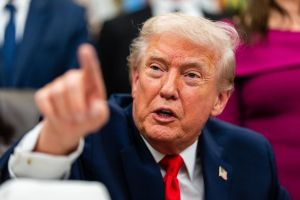















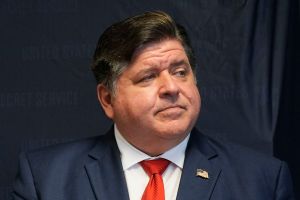










 peej
peej Carissa
 bostonboomer
 dakinikat
 ecocatwoman
 mablue2
 Mama Lopez
 peggysue22
 quixote
 skydancingguestblogger
 Mona (aka Wonk the Vote)



 Sky Dancing
Recent Comments