
Friday Reads
Posted: September 30, 2011 Filed under: 2012 presidential campaign, Catfood Commission, collective bargaining, Congress, financial institutions, Health care reform, Labor unions, morning reads, Republican politics, Republican presidential politics, SCOTUS | Tags: Bachmann running out of campaign funds, budget cuts, Collin Woodard, GOP spending cut priorities, Labor Unions, Mortgage modification mess, occupy Wall Street, SCOTUS and the health care reform law, US regions 18 Comments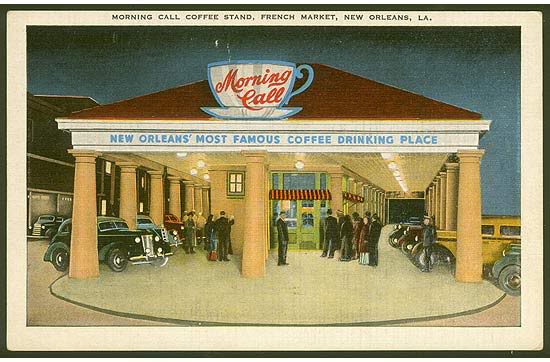 Good Morning!
I can hardly believe we’re headed into the last quarter of 2011. Such a year we’ve had!
So, the GOP is going after some of the things for which I will happily contribute tax dollars. They’ve got some pretty whacked values as far as I’m concerned.
Setting a collision course with Democrats that could drag out for months, House Republicans on Thursday unveiled plans to cut federal money for job training, heating subsidies and grants to better-performing schools.
The draft measure for labor, health and education programs also seeks to block implementation of President Barack Obama’s signature health care law, cut off federal funds for National Public Radio and Planned Parenthood, and reduce eligibility for grants for low-income college students.
Democrats and tea party Republicans opposed the bill, blocking it from advancing through even the easy initial steps of the appropriations process on Capitol Hill. Instead of moving through the Appropriations Committee and the House as a whole, the $153 billion measure is instead expected to be wrapped into a larger omnibus spending bill this fall or winter that would fund the day-to-day operating budgets of Cabinet agencies.
Negotiations between Republicans controlling the House, the Democratic Senate and the White House are sure to be arduous. The measure is laced with conservative policy “riders” opposed by Democrats that would affect worker protections under federal labor laws and block the Education Department from enforcing rules on for-profit colleges that are often criticized for pushing students to take on too much debt.
“It looks like we’re in for a long, difficult process,” said Rep. Rosa DeLauro, D-Conn.
House Appropriations Committee Chairman Harold Rogers, R-Ky., said excessive and wasteful spending over the years had put many programs and agencies on “an irresponsible and unsustainable fiscal path.”
Actually all of those Dubya Tax cuts and wars and letting Wall Street Run amok with speculation instead of investment is what put us on that “irresponsible and unsustainable fiscal path” and most of them voted for all of it. I’m not willing to bail out any more of their donor base with my hard earned dollars by defunding the future of our children. What on earth can we do about these evil people and the feckless dems that won’t fight them?
The court fights over the new health care law have been stepped up and SCOTUS has come into play in a big way. Which of the justices are likely to uphold AEIcare-cum-ChafeeCare-cum-DoleCare-cum-RomneyCare-cum-Obamacare?
The four more liberal justices on the court — Ruth Bader Ginsburg, Stephen Breyer and Obama appointees Sonia Sotomayor and Elena Kagan — should have no trouble reading the Constitution as bestowing broad powers on the federal government to regulate all manner of commerce. Although the court in recent years has pinched back congressional efforts to use the Commerce Clause to promulgate laws prohibiting guns near schools and those targeting violence against women, these were clearly non-commercial activities and quite different from the health-care law and its regulation of the medical insurance marketplace. Stronger and more directly applicable precedents remain, in which the court blessed the government’s regulation of wheat and marijuana production because these activities had an impact on interstate commerce.
The marijuana case (known formally as Gonzales v. Raich) may be particularly important because two of the more conservative justices — Antonin Scalia and Anthony Kennedy — joined with their more liberal colleagues to uphold the law under the government’s Commerce Clause powers.
Chief Justice John G. Roberts Jr. and Samuel A. Alito — both George W. Bush appointees — shouldn’t be counted out either. Roberts and Alito joined an opinion in 2010 that recognized the government’s “broad authority” to enact a civil detention scheme for sexual predators under a different constitutional provision. This provision allows federal lawmakers “to make all laws which shall be necessary and proper” to uphold the powers assigned to Congress — including the power to regulate interstate commerce.
Michelle Bachmann’s campaign is running out of cash. Even the NY Post thinks she may not make it to the Iowa Caucuses.
Will Michele Bachmann make it to Iowa? Insiders are whispering that the Tea Party darling’s financials are grim and she may be out of the race before she makes it to the Iowa caucus in February, even though she has a strong base in the state. Sources tell us say Bachmann’s skeletal staff are holding their collective breath until the deadline to disclose her fundraising report on Oct. 15. Meanwhile, we hear a computer vendor has called her campaign headquarters threatening to shut down the power due to an outstanding bill. Sources say she had about $400,000 at the beginning of September, but also stacks of bills. “She does not like to ask for money. She should have been focusing on big donors about three months ago,” a source said. “She’s only cultivated low dollar donors with direct mailings and that’s hurt her.” But at a rally in Virginia yesterday, Bachmann declared that she does not intend to back out of the race. “We intend to be the comeback kid in this race,” she said. Her rep said, “None of that is true.”
There’s a two part series at Bloomberg written by Collin Woodard on how the U.S. is really a country of regions. Part One is here. Part Two is here. It’s a really interest read and something I have thought about for some time as I’ve tried to find some place in this country where I can live in peace. For one, I’m trying to leave any region that’s described as bible buckle, bible belt, or bible anything!
Forget the state boundaries. Arbitrarily chosen, they often slash through cohesive cultures, creating massive cultural fissures in states like Maryland, Oregon and New York. Equally burdensome are the regional designations with which we try to analyze national politics — the Northeast, West, Midwest and South. They’re illusions masking the real forces driving the affairs of our sprawling continent: the 11 regional cultures of North America.
These 11 nations — Yankeedom, Tidewater, New Netherland, New France, Deep South, Greater Appalachia, the Midlands, First Nation, the Far West, the Left Coast, El Norte — have been hiding in plain sight throughout our history. You see them outlined on linguists’ dialect maps, cultural anthropologists’ maps of material culture regions, cultural geographers’ maps of religious regions, campaign strategists’ maps of political geography and historians’ maps of the patterns of settlement across the continent. I’m not the first person to have recognized the importance of these regional cultures. In 1969, Kevin Phillips, then a Republican campaign strategist, identified the distinct boundaries and values of several of these nations and used them to accurately prophesize the Reagan Revolution in his “Emerging Republican Majority,” a political cult classic.
More and more groups are joining the move to take on and occupy Wall Street. The New York Transportation Workers are the latest to announce they will join the protest today.
Occupy Wall Street has been picking up some decent support from unions in the past few days. Yesterday we reported that the Teamsters Union declared their support for protestors, and we also found out that the United Pilots Union had members at the protest demonstrating in uniform.
Today we learned the Industrial Workers of the World put a message of support on their website as well.
UPDATE: Verizon union workers have joined the protestors in NYC.
McClatchy reports that mortgage modification are still a mess even after four years. Quelle surprise!
Today there are at least 4.2 million homeowners who, like Palomo, are late on their mortgage payments or somewhere in the delinquency and foreclosure process. The first wave of foreclosures came during the 2008 financial crisis as subprime mortgages given to weak borrowers imploded. Now the subsequent economic downturn and high unemployment keep housing depressed.
The administrations of George W. Bush and Barack Obama both offered incentives for lenders to help homeowners modify their mortgages. Those efforts haven’t achieved much.
And four years into the housing crisis, banks and their bill collectors, known as mortgage servicers, are still under fire for their response to troubled borrowers.
“I would say they are somewhat better than they were three years ago, but still woefully inadequate to meet the demand, given the still remarkably high levels of distressed borrowers they are attempting to deal with,” said Paul Leonard, director of the California office of the Center for Responsible Lending, a Durham, N.C.-based advocacy group.
From December 2009 through June, more than 1.6 million government-backed mortgage modifications had been started, but only 791,000 became permanent. These numbers remain well below the goal of 4 million modifications that the Obama administration set for itself.
That should give you a few juicy bits to chew on with some coffee!! What’s on your reading and blogging list today?
Why Did Republicans Shut Down the FAA?
Posted: July 26, 2011 Filed under: Republican politics, U.S. Economy, U.S. Politics, unemployment, worker rights | Tags: FAA, Federal Aviation Administration, Labor Unions, Republicans, shock doctrine, unemployment, worker's rights 27 Comments
Somehow I missed this story on Saturday, what with all the other horrors that have been in the news lately. House Republicans have shut down the Federal Aviation Administration, costing taxpayers millions in uncollected taxes and putting 4,000 people out of work immediately, with 90,000 jobs in jeopardy.
…House Republicans refused to pass a funding authorization bill, money for airport improvements has dried up and construction workers at many airports have been sent home.
Republicans grounded the FAA because they want to take away Democratic union elections for of aviation and rail workers.
Congress could have passed temporary spending authority for the FAA, as it has 20 times in the past without controversy. But like their tactics on debt ceiling negotiations, Republicans are demanding their way at any cost.
Not only is the FAA shutdown costing jobs, but it’s costing the federal government $200 million a week in uncollected airline ticket fees. That lost revenue is added to the national debt Republicans claim they are so concerned about. On top of that, instead of reducing ticket prices, the airlines are pocketing the fees.
The shutdown is putting construction projects on hold all over the country. In the San Francisco bay area, for example,
About 60 employees of Devcon Construction were set to show up at Oakland International Airport on Monday to continue working on the airport’s brand-new air traffic control tower.
That is, until they were told not to, until further notice. “We were informed Friday to stop all construction activity,” said Dan Anello, a project manager at the Milpitas-based company.
That was when, the House, in its infinite wisdom, refused to reauthorize the Federal Aviation Administration’s operating authority, resulting in the partial shutdown of the agency, the halting of funds for dozens of similar projects nationwide, and further additions to the nation’s unemployment rolls.
If you Google, you’ll find lots of similar stories. According to the Washington Post, the shutdown is not going to end anytime soon.
Though planes continued to fly unhindered nationwide, a dispute about service to a handful of tiny airports crippled Federal Aviation Administration operations for the third day Monday, costing the agency an estimated $30 million a day.
With House Republicans and Senate Democrats apparently in locked positions, and compromise an elusive pursuit on Capitol Hill this month, no one was ready to predict when funding might be restored to the federal agency.
“Don’t hold your breath,” advised one Senate staff member, who spoke on the condition of anonymity.
the $30 million per day is from lost tax revenues.
The Christian Science Monitor confirms that the dispute involves Republican efforts to hinder union organizing.
Democrats said the real issue is that Republicans are insisting Democrats accept a host of controversial provisions added to a long-term FAA spending bill approved by the House in April. Among their key differences is a GOP proposal sought by industry that would make it more difficult for airline workers to unionize.
The Senate passed its own long-term funding bill in February without the labor provision. Democrats insist the House must drop the provision. They’ve also accused Republicans of tying the elimination of rural air subsidies to their extension bill as a means to prod Democrats to make concessions on the labor issue.
The transformation of the U.S. into a third world country through the Shock Doctrine is certainly moving rapidly these days. The shocks are coming so quickly you barely have time to catch your breath before the next one hits.
Rick Santorum Steals Campaign Slogan from Langston Hughes Poem
Posted: April 18, 2011 Filed under: 2012 presidential campaign, A My Pet Goat Moment, Anti-War, Civil Liberties, Civil Rights, collective bargaining, GLBT Rights, Surreality, U.S. Politics | Tags: Communist Party, Gay Marriage, Joseph McCarthy, Labor Unions, Langston Hughes, LGBT rights, poetry, Rick Santorium, stupid Republicans, WWII 9 Comments
Former Republican Sen. Rick Santorum announced Wednesday that he was forming an exploratory committee for a possible presidential run. His slogan was, and remains on his website, “Fighting to make America America again.”
On Thursday, the left-wing website ThinkProgress noticed the connection between Santorum’s slogan and Hughes’ poem. They caught up with Santorum at a New Hampshire event Thursday. Reporter Lee Fang asked Santorum about his use of the phrase:
FANG: Today, you unveiled your new campaign slogan, “Fighting to make America America again.” But was it intentional that this line was borrowed from the pro-union poem by the gay poet Langston Hughes?
SANTORUM: No, because I had nothing to do with that so …
FANG: Oh, alright thanks. Wait, did you have a clarification there? Was it just a coincidence?
SANTORUM: I didn’t know that. The folks who worked on that slogan for me didn’t inform me that that’s where it came from, if in fact it came from that.
Santorum he has read some of Langston Hughes poems, and the one he borrowed from is pretty well known. But Santorum claims he had “nothing to do with” choosing his own Campaign slogan! Watch the video (h/t Think Progress)
I knew Santorum was stupid, but this is really amazing. Langston Hughes was sympathetic to the Communist Party, although he never officially became a member. He was also initially opposed to African Americans fighting in WWII because of the way they were treated in the U.S. He was also gay, as Lee Fang told Santorum. Please follow me below the fold.
Friday Reads
Posted: April 15, 2011 Filed under: morning reads | Tags: Bob Dylan, Don't Look Back, Labor marekts, Labor Unions, unemployment 44 Comments Good Morning!
It’s the end of the work week for those of you that still have jobs. Also, it’s the ides of April. Have you filed your taxes yet with the IRS? Better yet, do you actually have a job and can you report income this year? If so, you’re running against the wind these days. It’s not like most of our elected officials any where notice these days. Jobs, unemployment, and collective bargaining rights appear to the farthest things from their little minds. They’re still trying to figure out whose ass or fist is tightest. A few fighters remain. I’m going to start out with a 12 pack salute to those who still care for the working guy and gal.
Is a picture worth a 1000 words or can words make a picture too? NY Congressman Bob Crowley copied Bob Dylan’s famous “Don’t Look Back” short film to make a few points.
Politico reports on the purpose of Crowley’s show of words.
The video prompted MSNBC’s Luke Russert to tweet, “Rep. Joe Crowley channels his own Bob Dylan “Don’t Look Back” on the House floor.”
But Crowley Communications Director Courtney Gidner says that wasn’t the point of the exercise.
“While my boss is certainly a huge fan of Bob Dylan, the inspiration behind his ‘speechless’ speech was the GOP’s failure to produce a jobs-focused bill.”
I posted this in a down thread conversation but wanted to make sure you read this analysis from USA Today just in case you missed it. Huge numbers of Americans are leaving the work force. This is really worrisome.
The share of the population that is working fell to its lowest level last year since women started entering the workforce in large numbers three decades ago, a USA TODAY analysis finds.
Only 45.4% of Americans had jobs in 2010, the lowest rate since 1983 and down from a peak of 49.3% in 2000. Last year, just 66.8% of men had jobs, the lowest on record.
The bad economy, an aging population and a plateau in women working are contributing to changes that pose serious challenges for financing the nation’s social programs.
Over half of the the population is not working. Working-age men are dropping out like flies. This is not good for maintenance of programs like social security that rely on an increase in workers to fund current benefits. It’s also a game change from 30-40 years ago. I’ll be waiting to see what labor economists have to say about this.
Meanwhile, 1000s of workers protested the roll back of worker rights and budget cuts in Michigan. Working men and women in states all over the country have taken to the streets to protect their rights to participate in determining their work environment and compensation.
Thousands of people rallied at the Michigan State Capitol in Lansing on Wednesday to protest Republican proposals to roll back labor rights and cut government services. Organizers put attendance at more than 10,000. Herb Sanders of the American Federation of State, County and Municipal Employees urged the crowd to begin recall campaigns against Gov. Rick Snyder and other top Republicans.
Herb Sanders: “We will recall the scoundrels one by one. If their agenda is keeping money in the pocket of fat-cat corporate CEOs, as opposed to keeping working Americans employed in fair wages with decent healthcare and decent schools in our neighborhoods, they’ve got to go.”
It appears that many voters have remorse over sending Tea Party candidates to elected office. Florida is a stand out case.
Only three months removed from Governor Rick Scott’s (R) inauguration, a majority of Florida voters now say the state is headed in the wrong direction and that, if they could do it all over again, they wouldn’t have elected Scott in the first place, according to a new Suffolk University poll.
In the poll, 54% of voters said the state was headed in the wrong direction, compared to 30% who said it was going the right way. Further, just under half (49%) of all voters said they disapproved of Scott’s job performance, versus only 28% who said they approved.
Scott’s approval rating is so bad that the poll found him losing a hypothetical do-over election to Democrat Alex Sink by a ten-point margin, 41% to 31%.
Previous polls have also found Scott’s job approval deep underwater, including a Quinnipiac poll released earlier this month that pegged his approval to disapproval split at 35% to 48%. A March PPP poll showed Scott with an even worse 32%-55% split, and found him losing a do-over election — by a 20-point margin.
Scott was one of several freshman GOP governors swept into office last year amid the Republican wave nationwide. But since taking office, voters have rapidly soured on Scott as he’s pursued some drastic — and deeply unpopular — policies.
Labor leaders are none too happy with the President or Senate Majority Leader Harry Reid. Neither of the legacy parties have workers’ interests in mind these days.
“Now, not only are we getting screwed by the Republicans but the Democrats are doing it too,” said one union official, characterizing the mood at a summit of labor leaders who are worried that Democrats seem unlikely to go to the mat for them as an election year approaches.
Presidents of several unions and an AFL-CIO spokesman declined to repeat their private criticism to a reporter Tuesday, a sign that labor feels it must still try to maintain a relationship with the Democratic Party, even if it’s deeply troubled . With Republicans increasingly shifting from private antagonism toward open war with organized labor, unreliable Democratic allies are the only allies the movement has, and it remains unclear whether disappointments will dampen enthusiasm among union activists and voters in the 2012 elections.
I’ll tell you that I have no idea where to go any more. I’m torn between ‘throw the bums out’ and ‘none of the above’. I’m beginning to think my dog knows more about economics than any one in the District beltway these days.
A lot of folks are arguing that the retirement age in developed nations should be raised to 70. They want to work us until we drop dead, folks! Here’s some on that from The Economist.
Yet too many people see longer working lives as a worry rather than an opportunity—and not just because they are going to be chained to their desks. Some fret that there will not be enough jobs to go around. This misapprehension, known to economists as the “lump of labour fallacy”, was once used to argue that women should stay at home and leave all the jobs for breadwinning males. Now lump-of-labourites say that keeping the old at work would deprive the young of employment. The idea that society can become more prosperous by paying more of its citizens to be idle is clearly nonsensical. On that reasoning, if the retirement age came down to 25 we would all be as rich as Croesus.
Raising the official retirement age is only part of the solution, for many workers retire before the official age. Martin Baily and Jacob Kirkegaard of the Peterson Institute in Washington, DC, reckon that raising actual EU retirement ages to the official age would offset the impact of an ageing population over the next 20 years.
For that to happen, working practices and attitudes need to change. Western managers worry too much about the quality of older workers (see Schumpeter). In physically demanding occupations, it is true, some may be unable to work into their late 60s. The incapacitated will need disability benefits. Others will need to find a different job. But this should be less of a problem than it used to be now that economies are based on services not manufacturing. In knowledge-based jobs, age is less of a disadvantage. Although older people reason more slowly, they have more experience and, by and large, better personal skills. Even so, most people’s productivity does eventually decline with age; and pay needs to reflect this falling-off. Traditional seniority systems, under which people get promoted and paid more as they age, therefore need to change.
So, they’re going to work us until we drop and PAY us less for being old. What a deal!!! I frequently joke with my students that I will die at the podium and the administration will have to pry my cold, dead fingers off. I have to admit that this is a melodramatic image, however, to die standing at a podium is better than being chained to a desk in the private sector again. There’s only so many bad senior management decisions that one person should be forced to join in on in one life time. I’ve been party to opening too many of their eyes to their short roads to bankruptcy to do the private sector stupidity again. They all get away with those bad decisions too since they get to leave with good severance packages. I’d rather die poor than die inflicting pain and stupidity on people just because some guy went to seminar and got a wild hair.
Not that any of these old dudes ever pay for their bad mistakes or their lies. Here’s a good example via Naked Capitalism and Yves: Senator Levin Claims Goldman Execs Perjured Themselves Before Congress on Mortgage Testimony.
Senator Carl Levin, in releasing the report, took aim at Goldman’s truthiness in its testimony before Congress and called on Federal prosecutors to examine whether Goldman committed perjury. Two issues are at stake. First it the Goldman claim that it lost money on its housing bets and was not net short housing (or at least not for long). Second is the notion that the firm was acting merely as a market marker, which basically means caveat emptor, if clients made bad bets, Goldman was merely acting as a neutral middleman.
While Goldman made the usual pious denials, the evidence in the report supports the Levin charges. It notes:
Overall in 2007, its net short position produced record profits totaling $3.7
billion for Goldman’s Structured Products Group, which when combined with other mortgage
losses, produced record net revenues of $1.2 billion for the Mortgage Department as a whole.2007 was the critical year when the market turned decisively south and all dealers were dumping mortgage-related inventory. Goldman had been further ahead in the process and appears to be the only firm to put on very sizeable short positions. The magnitude of the profits on the short side lend credence to the charge that Goldman was substantially and successfully net short.
This would basically mean that Goldman Sachs was not acting as a ‘market-maker’. This was the claim made by GS executives during the hearing. I was some what appalled by the inability of the congress critters on the committee to fully comprehend what market makers do and ask intelligent questions. Now that we’ve got the details, it’s pretty clear GS was not acting as an intermediary for client orders. They were basically speculating and the report is evidently full of aggressive marketing and sales pushes to move CDOs and other highly risky financial instruments on which they had an offsetting corporate position. This should be investigated by the DOJ. However, given the cozy relationship between shadow banking and Timothy Geithner, I doubt Obama will move on it at all.
Meanwhile, “Food, Gas And Rent Push Consumer Prices Higher” so ordinary working people are feeling the pinch from both lower incomes and higher prices. I’m thinking we’re seeing those bubbles I’ve been warning about frankly. Rich people have a tremendous amount of money right now and they’re taxes are way down so they’re not investing in businesses but looking for quick arbitrage profits by trading paper back and forth. Unfortunately, the real world is under that paper some where.
Excluding the volatile food and gas categories, the so-called core index rose 0.1 percent and it is up only 1.2 percent in the past year.
But steep food and gas prices are hitting consumers hard.
Gasoline jumped 5.6 percent last month and has risen nearly 28 percent in the past year. Consumers paid an average price of $3.81 a gallon nationwide on Friday according to the travel group AAA.
Food prices rose 0.8 percent last month, the largest increase in almost three years. Prices for fruits and vegetables, dairy products, chicken and beef all increased. Coffee costs rose 3.5 percent.
So, anyway, I continue to be amazed at how much labor is getting screwed compared to how many breaks capital gets these days. I seriously think that the elected officials are trying to completely remove taxes from capital owners and load it solidly on to the backs of working men and women. The time to sharpen pitchforks nears. You don’t need a weatherman to know which way the wind blows …
What’s on your reading and blogging list today?
Tuesday Reads
Posted: December 28, 2010 Filed under: Global Financial Crisis, Gulf Oil Spill, investment banking, jobs, New Orleans, the blogosphere, The Bonus Class, The Great Recession, the villagers, U.S. Economy, U.S. Politics, We are so F'd, Wikileaks | Tags: AIG, Bradley Manning, cylical unemployment, Dispersant, Emeril, Gulf oil Gusher, Harry Shearer, Hoppin' John, Labor Unions, Levee failure during Hurricane Katrina, Levees.org, Nancy Pelosi, structural unemployment, The Big Uneasy, The New Orleans Saints, Those Crazy Pauls!!, Wikileaks, Wired won't release documents 29 CommentsGood Morning!
I had a productive day yesterday for a change and I hope you did too! Dare I go shop for plumbing stuff today? I was bemoaning a shortage of headlines on Sunday. I should be a bit more careful about wishing for things because today’s list of reads will be long.
The other good news for me is that we’re going from hard freeze warnings to weather in the 70s this weekend. It sounds like it’s going to be a fun New Year’s Eve here in New Orleans! That should explain the picture! I also wanted to give you a bit of New Orleans News before I moved on to other things.
First, if you haven’t had a chance to read Sandy Rosenthal’s piece at HuffPo on the failure of the Levees during Hurricane Katrina, please do so. There are still folks out there that think our devastation was from Hurricane Katrina and that just isn’t so. I was on the edge of the bowl. I know. My house experienced very little actual damage because my house was on high ground and above the waters. A failure of engineering devastated my city. It was not an act of nature. I signed the petition. Will you?
Last week, I wrote to the New York Times asking them to please resist using fast and easy “Katrina shorthand.” Forty-eight hours passed and we heard no response, so we decided to let our supporters step in. We urged our followers to sign our petition to the NY Times urging the paper to be more specific when referencing the flood disaster.
Over 1,000 people all across the nation signed our petition in under 48 hours. This immediate huge response – during the holiday no less – will hopefully show the New York Times that informed citizens understand that “Katrina” did not flood New Orleans. Civil engineering mistakes did.
Saying Katrina flooded the city protects the human beings responsible for the levee/floodwall failures. It is also dangerous since 55% of the American people lives in counties protected by levees.
If you haven’t yet, please sign our petition. We will keep it live until Jan 4, 2011.
In a similar vein, I would like to shout out HAPPY BIRTHDAY HARRY!!! to fellow New Orleans Blogger, neighbor, actor, musician, and polymath Harry Shearer (12/23/49) who made his film debut in the great epic ‘Abbott and Costello Go To Mars’ in 1953. There’s another New Orleans connection in that movie. The Abbot and Costello characters–Lester and Orville–accidentally launch a rocket that should’ve been Mars bound. They land in New Orleans for Mardi Gras instead. Harry plays an uncredited “Boy”.
I also want to offer up a plug for Shearer’s wonderful documentary on the Levee Failure called ‘The Big Uneasy’ that was released last August on our 5th Katrina Anniversary. It’s going to be re-released in 2011. I’m including an interview with him by local radio show host Kat (not me). You’ll learn that the Golden Globes are a simple piece of business and that Harry’s songstress wife is spoonable. Who knew? Also there seems that there’s a chance his documentary will be shown on PBS so you may get to see it there. I wonder if we can help encourage that situation.
I’d like to take another chance to remind you that we’re still living with the results of the BP Oil Gusher here on the Gulf Coast. There also appears to be covered-up as well as forgotten stories down here. You may want to take a look at this from Open Channel on MSNBC.com: ‘ Is dispersant still being used in the Gulf?” This story reports on pictures and samples take in early August that are being investigated now. I’d written about some of these reports earlier.
Kaltofen is among the scientists retained by New Orleans attorney Stuart Smith to conduct independent environmental testing data from the Gulf on behalf of clients who are seeking damages from BP. (Click here to read about their effort.)
An independent marine chemist who reviewed the data said that their conclusion stands up.
“The analytical techniques are correct and well accepted,” said Ted Van Vleet, a professor at the College of Marine Science at the University of South Florida. “Based on their data, it does appear that dispersant is present.”
Why responders would continue to use chemical dispersants after the government announced a halt is a mystery. If the oil was gone or already dispersed, as the federal government and BP have said, what would be the point? And, because dispersants don’t work very well on oil that has been “weathered” by the elements over long periods of times, there would be little point in spraying it that situation.
I wanted to share a New Orleans and indeed a Southern New Year’s eve tradition. We serve a concoction of black eyed peas, cabbage and sausage/ham called ‘Hoppin’ John’ to bring us luck and wealth in the New Year. I evidently didn’t make enough of it last year, so I’m planning to cook more this year. The pea’s black eyes represent coins, the cabbage represents cash, and the sausage or ham is meat that always symbolizes luxury to hungry, poor people.
Here’s Emeril’s ‘Hoppin’ John’ recipe provided courtesy the Food Network:
Hoppin’ John
Prep Time: 15 min Cook Time:50 min Serves: 10
Ingredients
1 tablespoon olive oil
1 large ham hock
1 cup onion, chopped
1/2 cup celery, chopped
1/2 cup green pepper, chopped
1 tablespoon chopped garlic
1 pound black-eyed peas, soaked overnight and rinsed
1 quart chicken stock
Bay leaf
1 teaspoon dry thyme leaves
Salt, black pepper, and cayenne
3 tablespoons finely chopped green onion
3 cups steamed white rice
Directions
Heat oil in a large soup pot, add the ham hock and sear on all sides for 4 minutes. Add the onion, celery, green pepper, and garlic, cook for 4 minutes. Add the black-eyed peas, stock, bay leaves, thyme, and seasonings. Bring to a boil, reduce the heat and simmer for 40 minutes, or until the peas are creamy and tender, stir occasionally. If the liquid evaporates, add more water or stock. Adjust seasonings, and garnish with green onions. Serve over rice.
Okay, so enough about my home town.
The AFL-CIO wants to talk unions this holiday season because there is so much misinformation about these days. It’s a nice list of myths and facts that you may want to arm yourself with when talking to those right wing nattering nabobs of negativism.
MYTH: Unions only care about their members.
FACT: Unions are fighting to improve the lives of all workers.
- It’s easy to forget that we have unions to thank for a lot of things we take for granted today in today’s workplaces: the minimum wage, the eight-hour work day, child labor laws, health and safety standards, and even the weekend.
- Today, unions across the country are on the frontlines advocating for basic workplace reforms like increases in the minimum wage, and pushing lawmakers to require paid sick leave.
- Studies show that a large union presence in an industry or region can raise wages even for non-union workers. That means more consumer spending, and a stronger economy for us all.
- So it’s no wonder that most Americans (61 percent) believe that “labor unions are necessary to protect the working person,” according to Pew’s most recent values survey.
Here’s a gift that keeps on giving er… taking from FT: “AIG secures $4.3bn in credit lines“.
AIG, took a step closer to independence from government as it said it had secured $4.3bn in credit facilities.
The US insurer bailed out by Washington during the financial crisis is is in the process of repaying the $95bn the US Treasury and the Federal Reserve Bank of New York lent following its disastrous decision to insure billions of dollars worth of securities backed by mortgages.Under the facilities arranged by 36 banks and administered by JPMorgan Chase, AIG can borrow $1.5bn over three years and an additional $1.5bn over 364 days, according to a regulatory filing. Separately, Chartis, an AIG division, obtained a $1.3bn credit line.
Let’s just hope they clean up their act this time. I’m not holding my breath or any stock offers that may come up. Notice one of the usual suspects is ‘facilitating’ the arrangements. Cue ‘The Godfather’ music, please.
There’s an item from Slate that you may want to check out. It’s “A selection of gaffes from the 2010 campaign we should forgive”. Here’s one from Pelosi that gave me a chuckle.
Nancy Pelosi: “We have to pass the bill so that you can find out what is in it.”
On March 9, the Speaker of the House spoke to the National Association of Counties about the health care bill that was days away from final passage. This was the phrase that launched a thousand campaign ads. Nine months later, this is remembered as Pelosi admitting what Tea Partiers had feared: that Democrats were ramming through bad bills without reading them.
BostonBoomer sent me to Glenn Greenwald’s latest which really is a must read: ‘ The worsening journalistic disgrace at Wired’. Greenwald’s work on behalf of massacre leaker Bradley Manning is Nobel Peace Prize worthy. I don’t mean aspirational prizes either.
For more than six months, Wired‘s Senior Editor Kevin Poulsen has possessed — but refuses to publish — the key evidence in one of the year’s most significant political stories: the arrest of U.S. Army PFC Bradley Manning for allegedly acting as WikiLeaks’ source. In late May, Adrian Lamo — at the same time he was working with the FBI as a government informant against Manning — gave Poulsen what he purported to be the full chat logs between Manning and Lamo in which the Army Private allegedly confessed to having been the source for the various cables, documents and video that WikiLeaks released throughout this year. In interviews with me in June, both Poulsen and Lamo confirmed that Lamo placed no substantive restrictions on Poulsen with regard to the chat logs: Wired was and remains free to publish the logs in their entirety.
We’re waiting for a response from Wired since vacation seem to preempt media responsibility these days. Will we find out that there’s been some active media suppression of the truth regard Manning’s accusations today? This morning, Greenwald continued his admonition to fellow journalists in the excellent article “The merger of journalists and government officials”.
From the start of the WikiLeaks controversy, the most striking aspect for me has been that the ones who are leading the crusade against the transparency brought about by WikiLeaks — the ones most enraged about the leaks and the subversion of government secrecy — have been . . . America’s intrepid Watchdog journalists. What illustrates how warped our political and media culture is as potently as that? It just never seems to dawn on them — even when you explain it — that the transparency and undermining of the secrecy regime against which they are angrily railing is supposed to be . . . what they do.
There’s another economics story covered on The New Yorker‘s The Financial Page headlined: ‘The Jobs Crisis’ by James Surowiecki. It’s a good explanation of a debate between economists and politicians right now. Guess which one knows best on this?
Why have new jobs been so hard to come by? One view blames cyclical economic factors: at times when everyone is cautious about spending, companies are slow to expand capacity and take on more workers. But another, more skeptical account has emerged, which argues that a big part of the problem is a mismatch between the jobs that are available and the skills that people have. According to this view, many of the jobs that existed before the recession (in home building, for example) are gone for good, and the people who held those jobs don’t have the skills needed to work in other fields. A big chunk of current unemployment, the argument goes, is therefore structural, not cyclical: resurgent demand won’t make it go away.
Though this may sound like an academic argument, its consequences are all too real. If the problem is a lack of demand, policies that boost demand—fiscal stimulus, aggressive monetary policy—will help. But if unemployment is mainly structural there’s little we can do about it: we just need to wait for the market to sort things out, which is going to take a while.
The structural argument sounds plausible: it fits our sense that there’s a price to be paid for the excesses of the past decade; that the U.S. economy was profoundly out of whack before the recession hit; and that we need major changes in the kind of work people do. But there’s surprisingly little evidence for it. If the problems with the job market really were structural, you’d expect job losses to be heavily concentrated in a few industries, the ones that are disappearing as a result of the bursting of the bubble. And if there were industries that were having trouble finding enough qualified workers, you’d expect them to have lots of job vacancies, and to be paying their existing workers more and working them longer hours.
Here’s a fun read at New York Magazine about living large in a libertarian world.
No one exemplifies that streak more than Ron Paul—unless you count his son Rand. When Rand Paul strolled onstage in May 2010, the newly declared Republican nominee for Kentucky’s U.S. Senate seat, he entered to the strains of Rush, the boomer rock band famous for its allegiance to libertarianism and Ayn Rand. It was a dog whistle—a wink to free-marketers and classic-rock fans savvy enough to get the reference, but likely to sail over the heads of most Republicans. Paul’s campaign was full of such goodies. He name-dropped Austrian economist Friedrich Hayek’s seminal The Road to Serfdom. He cut a YouTube video denying that he was named after Ayn Rand but professing to have read all of her novels. He spoke in the stark black-and-white terms of libertarian purism. “Do we believe in the individual, or do we believe in the state?” he asked the crowd in Bowling Green, Kentucky, on Election Night.
It’s clear why he played coy. For all the talk about casting off government shackles, libertarianism is still considered the crazy uncle of American politics: loud and cocky and occasionally profound but always a bit unhinged. And Rand Paul’s dad is the craziest uncle of all. Ron Paul wants to “end the Fed,” as the title of his book proclaims, and return the country to the gold standard—stances that have made him a tea-party icon. Now, as incoming chairman of the subcommittee that oversees the Fed, he’ll have an even bigger platform. Paul Sr. says there’s not much daylight between him and his son. “I can’t think of anything we grossly disagree on,” he says.
Well, they must have both been impacted by the same disease or environmental catastrophe to share so many views so out of the mainstream and be so far removed from experience, data, and science. I can’t help but believe the more the media shines a bright light on them, the more the warts and the brain damage will become noticeable.
So, one more suggested read comes via Lambert and Corrente. It’s really interesting piece from The Atlantic on ‘The Hazards of Nerd Supremacy: The Case of WikiLeaks’. It talks about Hackers, Assange, and the Hacker code of conduct. Any one who as read Assange’s manifest can see the connect and disconnect that simultaneously occur in the ideas. BB and had discussed that Assange might have a form of Aspergers disease about a month ago and I was also interested to see that Lambert, Valhalla, and some others had similar thoughts. It frequently runs in brilliant people who can decode a lot of things with the exception of other people. Anyway, here’s a taste of Jaron Lanier.
The strategy of Wikileaks, as explained in an essay by Julian Assange, is to make the world transparent, so that closed organizations are disabled, and open ones aren’t hurt. But he’s wrong. Actually, a free flow of digital information enables two diametrically opposed patterns: low-commitment anarchy on the one hand and absolute secrecy married to total ambition on the other.
While many individuals in Wikileaks would probably protest that they don’t personally advocate radical ideas about transparency for everybody but hackers, architecture can force all our hands. This is exactly what happens in current online culture. Either everything is utterly out in the open, like a music file copied a thousand times or a light weight hagiography on Facebook, or it is perfectly protected, like the commercially valuable dossiers on each of us held by Facebook or the files saved for blackmail by Wikileaks.
The Wikileaks method punishes a nation — or any human undertaking — that falls short of absolute, total transparency, which is all human undertakings, but perversely rewards an absolute lack of transparency. Thus an iron-shut government doesn’t have leaks to the site, but a mostly-open government does.
I’m still fascinated by the sideshow that is driving ad hominem attacks on Assange and the women involved with the charges. Still, that does not cloud my appreciation of what’s being released by Wikileaks. We’ll definitely have more coming. I’m personally waiting for the BOA stuff as that’s the stuff that I can personally decode. I’m glad we’re extending the Front Page Team to include more and more people that can tackle some of the other technical stuff from their vantage points. Stay tuned for more on all of this.
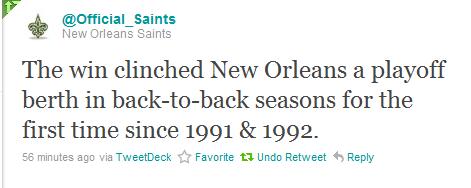
Just ONE MORE NAWLINS THANG: New Orleans Saints 17 – Atlanta Falcons 14. My home town continues to be the Great American Comeback Story.

 peej
peej Carissa
 bostonboomer
 dakinikat
 ecocatwoman
 mablue2
 Mama Lopez
 peggysue22
 quixote
 skydancingguestblogger
 Mona (aka Wonk the Vote)



 Sky Dancing
Recent Comments