
Joblessness
Posted: September 17, 2011 Filed under: 2012 presidential campaign, Surreality, Team Obama, The Bonus Class, The Great Recession, the villagers, unemployment | Tags: American Jobs Act, Confidence men, joblessness, Suskind 9 Comments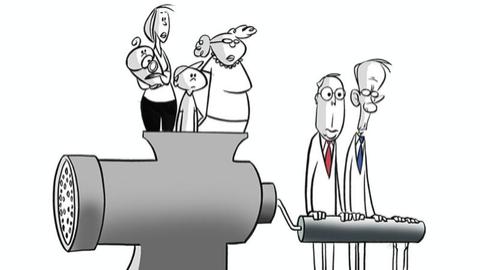 There’s been a lot of right wing attacks on the Obama Jobs Act. I continue my befuddlement. In this looking glass reality of ours, a Democratic President has put forth an unimaginative ‘job creation’ act representing fairly conventional republican thinking. However, there’s so much Obama Derangement Syndrome among the Republicans–especially the rabid right wing teabots–that a plan that would have been perfectly acceptable under either of the Bushes or Reagan to deal with jobless is being held up as an extravaganza of tax and spend. Eric Cantor has released a memo that basically guts this tepid response to the high level of unemployment and unacceptable level of long term unemployment plaguing this country. There is something seriously wrong with that man. He’s listed the areas of agreement and they are all the parts of the bill that really aren’t going to create jobs at all. These are items like passing the free trade agreements negotiated during the Dubya years or patent reform and regulations reform or programs that aren’t going to be very effective like the ‘bridge to work’ program which is likely to create a revolving door of unpaid internships.
David Dayen has an analysis up at FDL so I don’t need to recreate that. He’s basically calculated that the House Republicans have taken the $447 billion Act to about a $11 billion blip. It may have started out a tepid, conventional plan but Cantor’s basically turned it into a give away to a few select groups. The only remaining portion that’s not disagreeable is help for returning veterans. The rest won’t do a damned bit of good.
As you may know, the AJA is comprised of about 57% tax cuts and 43% spending initiatives. So in the main, House Republican leaders tossed out the spending and embraced a few of the tax cuts. They also rejected the tax hikes on corporations and the wealthy to pay for the bill.
Grok that? It’s 57% more worthless tax cuts that haven’t done a damned thing for the last 11 years but undermined the Federal Budget. I’ve heard a lot of Democrats think it’s wonderful just because Obama put it out there. Again, this is a conventional republican republican policy that probably would’ve come from some one like Bob Dole in the past. This is getting old. The republicans will say no to anything Obama puts out there and Obama is putting their kind of policy out there and the democrats won’t say no to it.
Meanwhile, there’s a number of really bad things that result from persistent jobless happening as we speak to millions of Americans. Here’s some examples from Sarah Murray at the WSJ who reviewed an academic paper on long term salaries of folks laid off during recessions. The bottom line is that their incomes will remained depressed for a huge period of time when they finally get jobs. That’s just the monetary impact.
When a worker was laid off, his earnings dropped steeply at the time of the layoff and eventually experienced a kind of recovery. But “The earnings losses do not completely fade even after 20 years,” the paper states. That’s true even when the economy is doing well. When the economy is performing poorly, the initial earnings loss is steeper.
Workers who were laid off in recessions experienced, on average, $112,095 in income losses — three years of pre-layoff earnings. Those laid off in expansionary times experienced a $65,424 loss.
The negative impacts of job losses extended beyond the financial hit, affecting workers’ health, mortality outcomes, child achievement levels and happiness.
“The negative consequences of job displacement, and fears of job displacement, are among the main reasons that recessions and high levels of unemployment create so much concern in the general population and among politicians,” the paper states.
So, I guess in order to play out political games we’re going to embrace all these negative consequences for the large number of people that have been experiencing unemployment over the last few years. It’s just really disgusting. The jobs bridge plan–or as we liked to call it here the federal version of the Georgia Slave Act–brought to mind this program in Hungary where you have to go to a Labor Camp in order to collect unemployment.
Wielding scythes and pitchforks, about 30 men and women hack through brambles on a hillside above the Hungarian village of Gyöngyöspata. With the nearest road more than a half mile away, workers have to hike in with food and water for the day. For bathroom and lunch breaks, they duck into a thicket that offers the only shade in the 98F heat. “It’s degrading to work in these conditions,” says Károly Lakatos, a 38-year-old father of three who was laid off earlier this year from his forklift-operator job in an auto parts factory. When his unemployment benefits ran out, the government assigned him to a brigade clearing land owned by the village.
If Prime Minister Viktor Orbán has his way, hundreds of thousands of Hungarians will soon join similar squads. Under a plan approved by Parliament in July, by 2012 some 300,000 people will be working in community service jobs—doing everything from picking up trash to building stadiums—instead of drawing welfare or unemployment benefits. Hungary will no longer “give benefits to those capable of work, when there is much work to be done,” Orbán said in June. The effort is part of the ruling Fidesz Party’s 2010 election pledge to create 1 million jobs over the next decade.
Is this what the jobs act will become? More tax cuts for the political donor class and labor camps for the folks that don’t work for them at depressed wages?
At the same time we get Obama’s second Republican style whack at our economy–in other words a big speech with a small stick–more news keeps coming out about how really, truly dysfunctional the Obama team of economists has been. Have you noticed how many have gotten out of the White House quickly as if they were really worried about their reputations or sanity? One more sneak peak was granted for the Suskind book “Confidence Men” in New York Magazine prior to its Tuesday release. It has me even less enthused about anything coming out of Obama policy advisers than before. Read some of this back and forth between Andrew Moss and Frank Rich who read the book and conclude that that Obama has stuck himself and the US in an economic quagmire. It just doesn’t give one confidence in the policy process, the advisers or the president. This one is from Frank Rich.
I guess I thought Geithner’s role was more shocking just because I have become inured to tales of Summers’s outrageousness, dating back to his ill-fated presidency of Harvard. Particularly damning in Suskind’s narrative is that when Summers says “there’s no adult in charge” in the White House, he’s actually right — and appoints himself as adult in charge, Alexander Haig–style. Summers was in charge, all right, but he behaved like a child and little got done except derailing the president’s initiatives — he even blocked Obama’s agenda of tough climate-change legislation.
But the buck stops with Obama. There’s a poignant moment of sorts in December 2008 when the North Dakota senator Byron Dorgan implores the president-elect not to go with his economic team. “I don’t understand how you could do this,” he tells him. “You’ve picked the wrong people!” As indeed Obama did, under the tutelage of Robert Rubin, who also tried to finagle a White House guru role for himself, not unlike the perch from which he helped wreak havoc at Citigroup during its subprime orgy. So Suskind’s book often reads like Halberstam’s “Best and the Brightest,” with Summers and Geithner as McNamara and Bundy. But the quagmire isn’t a neo-Vietnam like Afghanistan — it’s the economy, and the casualties are measured in lost jobs. After the stimulus bill passed in February 2009, Suskind writes, “little else happened on the jobs front for a year and a half,” with proposals being “talked to death without resolution.”
Take this response from Andrew Moss:
I kept flipping back and forth between fury at Obama and — I know I’m easy — sympathy. So much of the damage comes from the initial decision to hire these guys, a decision he had to make almost immediately after being elected. He was inexperienced, he needed help, they burned him, he let them — that’s the story in brief. The number of stupefyingly momentous decisions he had to make in those first few months put me in a vicarious panic. There was no obvious path, the way I read it — though in your view, I suspect, the choices were clearer. Though we’ll never know for sure what other solutions might have worked, the book is a litany of missed opportunities, particularly with respect to financial reform (one banker after another wonders incredulously — and anonymously — why Obama didn’t pin them when they were down). Would some other president have had more success?
One thing you’re struck with is how bizarre it is that Obama has this job in the first place. Obama feels that too — and it gives him a deluded sense of his own magical powers. “Look, I feel lucky,” he says. “Just look at me. My name is Barack Hussein Obama and I’m sitting here.” He’s cocky, but also kind of amazed. What an astonishing blend of good and bad luck the man has had — the unusual cocktail of circumstances that brought him to the White House, and the pretty much impossible situation he faced when he got there. Which is not to say it’s not agonizing to watch him, in the book, fail time after time to make the big, bold move — the book is a narrative after all, and passivity (or, to be fair, caution), does not become a protagonist.
Frankly, the ones who should have every one’s sympathy are the vast number of people whose lives will be forever upended by this vast, deep unemployment. They are the ones to whom the pranksters in the Republican party and the dumbstruck Democrats should think about but do not. Again, Republicans are rejecting conventional, mild mannered, ineffective republican policy simply because it’s coming from a Democrat and Democrats are supporting it simply because that’s all the President and his team seem to be able to come up with and he’s a democrat. They all may be democratically elected but they continue to prove that they represent no one but themselves and their corporate owners. We’ve got a great history of what does and does not work to get the economy out of horrible places and they’re ignoring it all to force us to play political musical chairs. It’s just not right.
Oh, and if you want to be flabbergasted at more villagers, Steve Chapman at the Chicago Trib has basically written an op-ed that suggests Obama step down and Hillary Clinton step in and clean the place up. Now, he’s not exactly on my list of enlightened op-ed writers since he writes at Reason and the National Review too, but sheesh, he’s using Democrats words to support the argument so it’s worth a read. I think every one feels we’re drowning in an economic quagmire now and we need the best person out there to guide us out. I’ve skipped the first part but the last part is worthy of mention here.
Besides avoiding this indignity, Obama might do his party a big favor. In hard times, voters have a powerful urge to punish incumbents. He could slake this thirst by stepping aside and taking the blame. Then someone less reviled could replace him at the top of the ticket.
The ideal candidate would be a figure of stature and ability who can’t be blamed for the economy. That person should not be a member of Congress, since it has an even lower approval rating than the president’s.
It would also help to be conspicuously associated with prosperity. Given Obama’s reputation for being too quick to compromise, a reputation for toughness would be an asset.
As it happens, there is someone at hand who fits this description: Hillary Clinton. Her husband presided over a boom, she’s been busy deposing dictators instead of destroying jobs, and she’s never been accused of being a pushover.
Not only that, Clinton is a savvy political veteran who already knows how to run for president. Oh, and a new Bloomberg poll finds her to be merely “the most popular national political figure in America today.”
If he runs for re-election, Obama may find that the only fate worse than losing is winning. But he might arrange things so it will be Clinton who has the unenviable job of reviving the economy, balancing the budget, getting out of Afghanistan and grappling with House Majority Leader Eric Cantor. Obama, meanwhile, will be on a Hawaiian beach, wrestling the cap off a Corona.
Meanwhile, I’m on the job market AND wrestling the cap off of an Abita. Frankly, the only people that deserve to be jobless in this country are all working in the beltway right now.
Nicholas Kristof Suddenly Discovers the Unemployment Crisis
Posted: August 28, 2011 Filed under: Barack Obama, Economy, U.S. Economy, U.S. Politics, unemployment | Tags: Barack Obama, callous disregard for human lives, Depression, joblessness, media elite, Nicholas Kristof, politicians, Suicide, the NEW York Times, Torture, unemployment, war 16 Comments
I probably shouldn’t pick on Nicholas Kristof, because I guess as media elites go, he’s one of the least offensive. But really, his latest column just about sent me out into the street screaming and tearing my hair out. The piece is titled “Did We Drop the Ball on Unemployment?”
WHEN I’m in New York or Washington, people talk passionately about debt and political battles. But in the living rooms or on the front porches here in Yamhill, Ore., where I grew up, a different specter wakes friends up in the middle of the night.
It’s unemployment.
I’ve spent a chunk of summer vacation visiting old friends here, and I can’t help feeling that national politicians and national journalists alike have dropped the ball on jobs. Some 25 million Americans are unemployed or underemployed — that’s more than 16 percent of the work force — but jobs haven’t been nearly high enough on the national agenda.
Duh! I have a question for Captain Obvious Nick Kristof: Is the Pope Catholic? Here’s another one: Does a bear sh*t in the woods? Yes, Nick. You and your pals dropped the ball, missed the boat, and every other metaphorical cliche you can think of. Yes. And it’s way too late for your mealy-mouthed *concern* to make a difference.
What is wrong with these people? Kristof goes on to provide a few examples of people he knows in Oregon who are suffering from joblessness and hopelessness. Frankly, I found his little anecdotes rather patronizing. Maybe I’m being too hard on him, but really, if this man claims to be a “journalist,” why didn’t he recognize years ago that unemployment was a huge problem for the American people and for the economy as a whole? Kristof’s half-hearted prescriptions for solutions aren’t much better than Obama’s:
There are no quick fixes to joblessness, but Washington could temporarily make federal money available to pay for teachers who are otherwise being laid off. We could increase spending on service programs like AmeriCorps that have far more applicants than spots.
We could extend the payroll tax cut, which expires at the end of December. Astonishingly, Republicans in Congress seem to be lined up instinctively against this basic economic stimulus. Could the Tea Party actually favor tax reductions for billionaires but not for working Americans? Could we have found a tax increase the Republican Party favors?
Mr. Obama, with 25 million Americans hurting, will you fight — really fight! — to put jobs at the top of the national agenda?
Give me a break! Obama isn’t going to fight for anything except his own reelection and keeping his wealthy donors happy. And Nick Kristof, after tossing of a facile column in which he pretends to care about struggling Americans, will return to Washington and New York, smile his self-satisfied smile, and continue to ignore the depth of what is really happening to our country.
Why doesn’t The New York Times hire Jeffrey Kaye, who writes about important topics like torture? Joblessness can be a kind of torture too, and a couple of weeks ago, Kaye wrote a fine article about the links between unemployment, depression, and suicide.
When considering the effects of unemployment, and the desultory, really uncaring response of the current Democratic administration, as well as Republicans in Congress, to the human devastation of joblessness, it is important to consider the terrible emotional and psychological effects of such unemployment. Such effects are well-documented, but rarely mentioned in articles or blog postings.
A well-regarded 2010 study by the John J. Heldrich Center for Workforce Development at Rutgers, the State University of New Jersey, “The Anguish of Unemployment,” quantified the tremendous emotional suffering engendered by unemployment. “‘The lack of income and loss of health benefits hurts greatly, but losing the ability to provide for my wife and myself is killing me emotionally,’ wrote one respondent to the survey.” ….
Just last April, the Centers for Disease Control (CDC) released a study that showed that suicide rates rise and fall in tandem with the business cycle.
Kaye, a clinical psychologist actively working with clients, says he has seen the devastating effects of joblessness in his own practice since the financial crisis. He writes:
Unemployment is deadly. The effects of the capitalist boom-and-bust system seriously damage millions of lives. But with an almost daily bombast of propaganda about terrorism, the populace lives in fear, while wondering how they will make their bills, ground down between anxiety over ghostly terrorists and eviction, or how to put gas in their car, or afford a bus pass. Hopelessness stalks the land, not Al Qaeda. And yet the politicians in D.C. care little or nothing about the suffering their policies cause. Indeed, their pockets are lined with campaign donations from corporations that routinely layoff hundreds of thousands, and ship many thousands more jobs overseas.
Callous disregard for human lives is what links the terrible policies of war and torture with the policies of neglect and indifference towards the jobless. Such callousness is the by-product of a get-rich-quick ethos that worships profit over all else, over worship of a capitalist system that has brought about terrible world wars, massive depressions, colonial atrocities, and even genocide. U.S. society awaits its turn through the meat-grinder of history.
That is the kind of writing I’d like to see on the op-ed page of the NYT. Of course I know it will never happen. The elite media, the out-of-touch political class, and their wealthy enablers must not be made to feel even slightly uncomfortable about the effects of their actions–not even for the few minutes it takes to read a newspaper column.
Finally, but is it for real?
Posted: August 25, 2011 Filed under: 2012 presidential campaign, Economy, unemployment, voodoo economics | Tags: bad economy, joblessness, lousy poll numbers, Obama 10 Comments When Obama swept into office, there was an ongoing, left-over Bush program in place to rescue the financial system which focused on getting banks recapitalized through the Fed. Despite worsening unemployment and rising bankruptcies, a stimulus that was top heavy in worthless tax cuts was hurried to congress and a program–that was more of a plea to banks than an actual program–was pasted together to focus on refinancing underwater mortgage holders. The stimulus may have changed the momentum of GDP growth and the FED program definitely stabilized the banking system, but the programs for homeowners and the unemployed were less-than-successful. The President was itching to put something together on health care to prove that he could do something that hadn’t been achieved by the Clintons. It looks now like his primary economic advisers were warning him that just feeding tax breaks to choice businesses and and cheap loans to banks was not going to solve a major financial crisis. Obama’s focus never really appeared to be on things that mattered at the time. As a result, serious improvement in key areas of the economy never materialized.
It’s not a surprise to any of us around here that Obama’s handling of the US economy is souring voters. James Carville’s mantra–it’s the economy stupid–has never been more relevant to the vast majority of Americans who have been made worse off by the policies of the last ten years.
Americans’ views on the economy have dimmed this summer. But so far, the growing pessimism doesn’t seem to be taking a toll on President Barack Obama’s re-election prospects.
More people now believe the country is headed in the wrong direction, a new Associated Press-GfK poll shows, and confidence in Obama’s handling of the economy has slipped from just a few months ago, notably among fellow Democrats.
The survey found that 86 percent of adults see the economy as “poor,” up from 80 percent in June. About half — 49 percent — said it worsened just in the past month. Only 27 percent responded that way in the June survey.
That can’t be good news for a president revving up his re-election campaign.
There’s a good chance that GDP–now growing at a miserably slow rate–may go into negative territories shortly, forcing the NBER to date the  start of yet another recession when the recovery from this one has not really taken hold. There’s indications in the market that another crash could be on the horizon. After all, businesses can only wring so much profit out of restructuring debt to take advantage of cheap interest rates and cutting costs primarily by dumping workers. Here’s some really frightening news on reinsurance on banks which is also causing weird stuff in the CDS market. That’s the same damned market that messed up the economies of Europe and US the last time around which really needs some restructuring, standardization, and reform that has not been done despite Dodd-Frank and similar efforts on the other side of the pond. Bankers have fought new regulation and we’re likely to see the same problems revisit us in a different sector of the same market for the same kinds of vehicles.
Insurance on the debt of several major European banks has now hit historic levels, higher even than those recorded during financial crisis caused by the US financial group’s implosion nearly three years ago.
Credit default swaps on the bonds of Royal Bank of Scotland, BNP Paribas, Deutsche Bank and Intesa Sanpaolo, among others, flashed warning signals on Wednesday. Credit default swaps (CDS) on RBS were trading at 343.54 basis points, meaning the annual cost to insure £10m of the state-backed lender’s bonds against default is now £343,540.
The cost of insuring RBS bonds is now higher than before the taxpayer was forced to step in and rescue the bank in October 2008, and shows the recent dramatic downturn in sentiment among credit investors towards banks.
“The problem is a shortage of liquidity – that is what is causing the problems with the banks. It feels exactly as it felt in 2008,” said one senior London-based bank executive.
“I think we are heading for a market shock in September or October that will match anything we have ever seen before,” said a senior credit banker at a major European bank.
While Obama is on vacation, White House gnomes are pasting together two programs for the poll-beleaguered President to announce when Congress gets back into session. The first is a “jobs” package. The second is a plan for massive mortgage refinancing. This is something that should’ve been on the front burner years ago so now I’m actually wondering if it’s going to work in time to stymy the right wing nut jobs coming up through the Republican primary process or it’s actually going to be serious rather than some lame ass attempt at some neoReaganesque policy that will move farther right when Republicans start saying no to clearly Republican policy.
Here’s the “Contours of Obama jobs package” via Reuters.
The president is widely expected to repeat his calls for an extension of a payroll tax cut, push for patent reform and bilateral free trade deals, and suggest an infrastructure bank to upgrade the country’s roads, airports and other facilities.
Retrofitting schools with energy efficient technology would allow the government to directly hire for labor-intensive work and also give a boost to the clean energy sector that Obama has said could be an important U.S. economic motor.
Other measures being considered, according to economists who have advised the White House, include tax credits for firms hiring more workers, funds for local governments to hire teachers, and retraining help for the long-term unemployed. Steps to boost the ailing housing market are also under review.
“What’s going to be included in this plan are some reasonable ideas that could have a tangible impact on improving our economy and creating jobs … the kinds of things that Republicans should be able to support,” Earnest said. “These are bipartisan ideas that the president is going to offer up.”
Republicans have made it perfectly clear that their only priority is to make Obama a one term president. So, in yet another attempt at trying to look above the fray instead of fighting for what is right, we’re going to see another lukewarm policy that won’t have any immediate effect and will undoubtedly be pushed further to the right and further into the ineffective zone. Plus, it will probably just be offset by other spending cuts in key areas which are likely to have stronger recessionary multiplier effects attached than any positive multiplier effect of the new legislation. I still can’t figure out what the obsession is with tax cuts for new employees. The big cost of new employees is health insurance for one and you can avoid that cost by going any where in the developed and developing world BUT the US. Plus, no business is going to hire any one when the have no customers. I feel like a broke record on the number of repeats on that one. Having spent my life doing strategic planning and budgeting for corporations and having one of my PhD field areas in corporate finance, I can tell you that the US looks like one of those offshore tax havens right now for most major corporations. Also, more ‘free trade’ deals are likely to have just the opposite effect on unemployment anyway as prices tend to equilibriate in the countries involved and we’re the cheap capital market, not the cheap labor market part of that equation. (Hence, in our country, incomes to capital go up and incomes to labor go down as the market goes towards price parity for our country.)
So, the second program is no a way for the US to back mortgage refinancing. This is also something that should’ve been done years ago.
One proposal would allow millions of homeowners with government-backed mortgages to refinance them at today’s lower interest rates, about 4 percent, according to two people briefed on the administration’s discussions who asked not to be identified because they were not allowed to talk about the information.
A wave of refinancing could be a strong stimulus to the economy, because it would lower consumers’ mortgage bills right away and allow them to spend elsewhere. But such a sweeping change could face opposition from the regulator who oversees Fannie Mae and Freddie Mac, and from investors in government-backed mortgage bonds.
Administration officials said on Wednesday that they were weighing a range of proposals, including changes to its previous refinancing programs to increase the number of homeowners taking part. They are also working on a home rental program that would try to shore up housing prices by preventing hundreds of thousands of foreclosed homes from flooding the market. That program is further along — the administration requested ideas for execution from the private sector earlier this month.
But refinancing could have far greater breadth, saving homeowners, by one estimate, $85 billion a year. Despite record low interest rates, many homeowners have been unable to refinance their loans either because they owe more than their houses are now worth or because their credit is tarnished.
I’ve already looked into refinancing my FHA/VA loan from 7% to 4%. I have good credit and my loan balance is about one half of what my house is worth–even with the recent decrease in home prices–because I’ve owned it for 11 years. I didn’t follow through because the points charged by Wells Fargo–who processes my mortgage at the moment–were ridiculous. They’d have to pick up the fees or points to intrigue me, frankly. The people with the worst problems are the ones that are now strategically defaulting because they are underwater. Interesting enough, I’m set to discuss just that topic this fall in the Denver FMA meetings using this Philadelphia FED working paper. Their findings suggest that people have the ability to pay these mortgages but they are defaulting anyway because they are underwater. The weird thing is they are defaulting on first mortgages while keeping their second liens current. This means they are ‘strategically’ defaulting to get rid of the house because it’s a stupid investment for them. Any plan that doesn’t deal directly with underwater mortgage holders specifically will not work. Banks really don’t have any incentive to work with them now because they get more fee income from processing defaults than they do from renegotiating the mortgage. The incentives on both sides of the market are totally warped at this point in time. Again, quoting from the NYT article, this isn’t in the plan.
A broader criticism of a refinancing expansion is that it would not do enough to address the two main drivers of foreclosures: homes worth less than their mortgages, and a sudden loss of income, like unemployment. American homeowners currently owe some $700 billion more than their homes are worth.
I don’t see how the issues in the housing market are going to be solved until you solve this problem. Dumping houses on the market is going to continually depress prices and cause this problem to regenerate.
So, this gets back to sort’ve my main point about both these big ideas. First, they are a little too little and way too late. The inside and outside lags on these kinds of fiscal policy measures are long and getting them through congress and into fruition is likely to lag-filled. We’re also likely to get a lecture and ransom demand from the austerity demons. So, is this a real effort or a symbolic effort? Second, the policy prescriptions are anemic. Neither of them focus on the real problems or the known solutions. So, again, is this a real effort or symbolic effort? Third, these aren’t very aggressive policies nor or they what you would call traditionally Democratic policies so who are they really aimed at? Again, it seems like a symbolic offering to voters. If you’re getting the impression that I’m not impressed at all with this, you’re right. I suppose this is all to make the confidence fairy come home to roost. It still seems to me that she’s on her honey moon with the high priest of voodoo economics. Imaginary beings are symbolic too.
Thursday Reads: Poverty and Joblessness *Are* Social and Political Issues
Posted: August 11, 2011 Filed under: Foreign Affairs, Global Financial Crisis, Great Britain, jobs, Media, morning reads, poverty, U.S. Economy, U.S. Politics, unemployment | Tags: austerity, Banksters, education, Federal Reserve, global elites, government corruption, joblessness, London Riots, looting, Poverty, social services, U.S. Economy, unemployment 44 Comments
Guess who said this:
“There are pockets of our society that are not just broken, but are frankly sick.
“It is a complete lack of responsibility in parts of our society, people allowed to feel the world owes them something, that their rights outweigh their responsibilities and their actions do not have consequences. Well, they do have consequences.”
You’re darn right! The global elites have gone too far! The banksters have stolen trillions from ordinary taxpayers, and then demanded and received massive government bailouts. Politicians have lost any sense of responsibility toward their constituents, only listening to their corporate masters and their lobbyists. Yes there are consequences and these wealthy elites will discover there are consequences for their corrupt and immoral actions.
Oh wait. That was Prime Minister David Cameron talking about the poor and jobless young people who have been rioting in the streets of London and other British cities for the past five days. I’ll bet he has absolutely no clue how ridiculous it is that he is chastising these people for looting after he and other global elites allowed banksters to steal and loot trillions with absolutely no consequences. From Raw Story:
The U.S. Federal Reserve gave out $16.1 trillion in emergency loans to U.S. and foreign financial institutions between Dec. 1, 2007 and July 21, 2010, according to figures produced by the government’s first-ever audit of the central bank.
Last year, the gross domestic product of the entire U.S. economy was $14.5 trillion.
Of the $16.1 trillion loaned out, $3.08 trillion went to financial institutions in the U.K., Germany, Switzerland, France and Belgium, the Government Accountability Office’s (GAO) analysis shows.
Additionally, asset swap arrangements were opened with banks in the U.K., Canada, Brazil, Japan, South Korea, Norway, Mexico, Singapore and Switzerland. Twelve of those arrangements are still ongoing, having been extended through August 2012.
Out of all borrowers, Citigroup received the most financial assistance from the Fed, at $2.5 trillion. Morgan Stanley came in second with $2.04 trillion, followed by Merill Lynch at $1.9 trillion and Bank of America at $1.3 trillion.
Lambert has been highlighting the hypocrisy of the global elites on the riots. Yesterday he linked to this article in the Guardian.
This scepticism toward the potency of democratic politicians – and therefore democratic politics itself – is oddly echoed by the looters themselves. Certainly no one outside the Iranian state media is calling them “protesters”, but even “rioters” seems the wrong word, carrying with it a hint of political purpose. For some, especially at the start in Tottenham, there was clearly a political dimension – with the police the prime focus of their anger. But many of the copycat actions across London and elsewhere have no apparent drive beyond the opportunistic desire to steal and get away with it. It’s striking that the targets have not been town halls or, say, Tory HQ – stormed by students last November – but branches of Dixons, Boots and Carphone Warehouse. If they are making a political statement, it is that politics does not matter.
Lambert notes that at least these looters didn’t steal $16 trillion from the U.S. Treasury.
And while the revulsion at the looting has been widespread and bipartisan – with plenty of liberals admitting to “coming over all Daily Mail” at the ugliness of the vandalism – that sense of the impotence of politics is widespread, too. One aspect of the phone-hacking scandal that went deep was its revelation that those we might think exert authority – police and politicians – were in fact supine before an unelected media corporation. The sheer power of News Corp contrasted with the craven behaviour of those we elect or entrust to look out for us.
But elected officials are supposed to protect all citizens–even the poor, the unemployed, and the elderly–aren’t they? Yet in the U.S. and Europe, the burden of the economic crisis is falling on those with the least ability to pay, while the wealthy continue to receive their government handouts. When people are pushed to the point that they feel they have nothing to lose, this is what happens. Why it is coming as such a surprise to the comfortable elites is the real mystery.
Let’s take a look at what some of the rioters themselves have said about the meaning of their actions. From Yahoo News:
The Conservative-Liberal Democrat coalition government, making deep cuts to public services to tackle a record budget deficit, has been quick to deny that the unrest was linked to austerity measures, calling the disorder “pure criminality.” [….]
Public anger over the widespread looting of shops appears to have strengthened the government’s argument, with stolen goods ranging from the expensive — televisions and jewelry — to the absurd — sweets and bottles of alcohol.
However, community leaders and rioters themselves said the violence was an expression of the frustration felt by the poorest inhabitants of a country that ranks among the most unequal in the developed world.
“They’ve raised rates, cut child benefit. Everyone just used it as a chance to vent,” one man who took part in unrest in the east London district of Hackney told Reuters.
Surprise, surprise. Cutting social services to pay for the bankers’ failures has real life consequences. Austerity measures create more unemployment, and people who don’t have jobs get hungry and scared. When you take everything from people who can least afford it, they get angry. What on earth do these people expect? What planet are they living on anyway? And no, I’m not condoning violence. I’m just saying that it’s going to happen when you push people too far.
Here are some quotes from two young women who participated in the British riots:
Two girls who took part in Monday night’s riots in Croydon have boasted that they were showing police and “the rich” that “we can do what we want”.
From The New York Times: London Riots Put Spotlight on Troubled, Unemployed Youths in Britain
“I came here to get my penny’s worth,” said a man who gave his name as Louis James, 19, a slightly built participant in the widening riots that have shaken London to its core. With a touch of guilt on Tuesday, Mr. James showed off what he described as a $195 designer sweater that he said he took during looting in Camden Town, a gentrified area of north London.
Politicians from both the right and the left, the police and most residents of the areas hit by violence nearly unanimously describe the most recent riots as criminal and anarchic, lacking even a hint of the anti-government, anti-austerity message that has driven many of the violent protests in other European countries.
But the riots also reflect the alienation and resentment of many young people in Britain, where one million people from the ages of 16 to 24 are officially unemployed, the most since the deep recession of the mid-1980s.
Don’t these politicians, police, and other observers understand that poverty and jobless *are* sociopolitical issues? Just because people are acting out of desperation or even opportunism doesn’t mean that their actions are not political. Just because someone is young and poor does not mean he or she isn’t aware that government and corporate corruption have caused much of their distress. Back to the NYT article:
In many ways, Mr. James’s circumstances are typical. He lives in a government-subsidized apartment in northern London and receives $125 in jobless benefits every two weeks, even though he says he has largely given up looking for work. He says he has never had a proper job and learned to read only three years ago. His mother can barely support herself and his stepbrothers and sisters. His father, who was a heroin addict, is dead.
He says he has been in and out of too many schools to count and left the educational system for good when he was 15.
“No one has ever given me a chance; I am just angry at how the whole system works,” Mr. James said. He would like to get a job at a retail store, but admits that he spends most days watching television and just trying to get by. “That is the way they want it,” he said, without specifying exactly who “they” were. “They give me just enough money so that I can eat and watch TV all day. I don’t even pay my bills anymore.”
Jonathan Portes, the director of the National Institute of Economic and Social Research in London, says that Mr. James’s plight reflects a broader trend here. More challenging students, Mr. Portes says, have not been receiving the attention they should as teachers, under pressure to meet educational goals, focus on children from more stable homes and those with greater abilities and social skills. Disillusioned, those who cannot keep up just drop out.
The Los Angeles Times in an opinion piece searches for the reasons for the violence and asks if it could happen here.
The Tottenham riots that blindsided Britain were sparked by the fatal police shooting of Mark Duggan, a 29-year-old black man. Over the past few days, they’ve continued and spread, turning into what has largely become youths’ looting and destroying parts of London. But no one is exactly sure why they’re doing it. Prime Minister David Cameron called it “criminality, pure and simple.”
But why have the riots continued day after day?
The riots are neither politically or racially fueled, wrote Doug Sanders of the Globe and Mail. They’re the result of a “lost generation” of youth under 20 who have little to lose and a bleak future. Here’s an excerpt:
Whether the thousands of rioters actually did express disillusionment — some did say they were angry at police or the world, but many appeared gleeful or greedy — it is clear that most had nothing else to do with themselves, and no reason to fear or feel responsible for the consequences of their actions.
This is a chronic problem in Britain, which has a “lost generation” of young high school dropouts far larger than most other Western countries’.
It’s so simple-minded to expect that youthful rioters are going to calmly explain their behavior in a reasoned, intellectual manner or that they are not going to act euphoric once they let go of restraint and begin acting out as part of a mob. None of that means that the reasons for their behavior are not political.
It seems to me that masses of young people who have “little to lose and bleak future” is in fact a powerful political issue for any society. And when people are powerless, there are few ways for them express their anger. Violence is one way to get attention from the powerful.
Can it happen here? You bet it can. As long as the President and Congress continue enacting austerity measures and ignoring unemployment and general misery among ordinary Americans, it’s guaranteed the U.S. will see riots in the streets–as we have in the past. When it happens here, will our elites be as dumbfounded and out-of-touch with reality as those in Great Britain? Probably.
I posted this in a comment yesterday, but I’m going to put it up again here. It’s an interview of writer and broadcaster Darcus Howe by a clueless BBC “journalist.”
—————————————-
That’s my suggested reading for today. What do you recommend?
UPDATE: I found a piece in the Guardian that reflects my thinking.
Seumas Milne: These riots reflect a society run on greed and looting
It is essential for those in power in Britain that the riots now sweeping the country can have no cause beyond feral wickedness. This is nothing but “criminality, pure and simple”, David Cameron declared after cutting short his holiday in Tuscany. The London mayor and fellow former Bullingdon Club member Boris Johnson, heckled by hostile Londoners in Clapham Junction, warned that rioters must stop hearing “economic and sociological justifications” (though who was offering them he never explained) for what they were doing.
When his predecessor Ken Livingstone linked the riots to the impact of public spending cuts, it was almost as if he’d torched a building himself. The Daily Mail thundered that blaming cuts was “immoral and cynical”, echoed by a string of armchair riot control enthusiasts. There was nothing to explain, they’ve insisted, and the only response should be plastic bullets, water cannon and troops on the streets.
We’ll hear a lot more of that when parliament meets – and it’s not hard to see why. If these riots have no social or political causes, then clearly no one in authority can be held responsible….If this week’s eruption is an expression of pure criminality and has nothing to do with police harassment or youth unemployment or rampant inequality or deepening economic crisis, why is it happening now and not a decade ago? The criminal classes, as the Victorians branded those at the margins of society, are always with us, after all. And if it has no connection with Britain’s savage social divide and ghettoes of deprivation, why did it kick off in Haringey and not Henley?
…To refuse to recognise the causes of the unrest is to make it more likely to recur – and ministers themselves certainly won’t be making that mistake behind closed doors if they care about their own political futures.
Still no answers for the Jobs Crisis
Posted: May 5, 2011 Filed under: Domestic Policy, Economy, Equity Markets, Federal Budget, Federal Budget and Budget deficit, jobs, The Great Recession, U.S. Economy, unemployment | Tags: joblessness, unemployment 27 Comments It’s difficult for me to watch the job market continue to dither knowing full well that nothing is being done about it. Just in case you’ve missed the other headlines today, U.S. jobless claims “unexpectedly” jumped. It wasn’t unexpected on my part.
Applications for jobless benefits jumped by 43,000 to 474,000 in the week ended April 30, the most since August, Labor Department figures showed today. A spring break holiday in New York, a new emergency benefits program in Oregon and auto shutdowns caused by the disaster in Japan were the main reasons for the surge, a Labor Department spokesman said as the data was released to the press.
Even before last week, claims had drifted up, raising concern the improvement in the labor market has stalled. Employers added 185,000 workers to payrolls in April, fewer than in the prior month, and the unemployment rate held at 8.8 percent, economists project a Labor Department report to show tomorrow.
“We’re seeing so many distortions in the claims numbers week to week that it’s hard to say, but I’m willing to be patient and wait and see,” said Stephen Stanley, chief economist at Pierpont Securities LLC in Stamford, Connecticut. “Other reports show an improvement in the labor market. It’s going to take a while to dig out of the hole we have in relation to the jobs the economy lost during the recession.”
Yes, it is a hole, and there’s very little being done to fill it. There are quite a few factors that contribute to the current appalling job market. The Fifth Fed District’s Macroblog looks at the contribution of offshoring. Offshoring basically means that part of a production process is moved to an overseas location. That can mean anything from a call center to manufacturing of a good. You can see that the impacted industries include both service and manufacturing sectors. The nifty table up there in the left hand corner will give you an idea of the impact of offshoring by industry. The numbers are tabulated from data during the years of 1999 – 2008. The changes and content of the ‘other’ category is further elucidated in the macroblog piece. It includes another table that you may review too.
Sixty-nine percent of the foreign employment growth by U.S. multinationals from 1999 to 2008 was in the “other industries” category, and 87 percent of that growth was in three types of industries: retail trade; administration, support, and waste management; and accommodation of food services. Some fraction of these jobs, no doubt, reflect “offshoring” in the usual sense. But it is also true that these are types of industries that are more likely than many others to represent production for local (or domestic) demand as opposed to production for export to the United States.
This is a bit interesting. There are two main types of Foreign Direct Investment that involve ‘offshoring’. One is called vertical and the other is horizontal. Horizontal FDI means that one segment of the process is moved to another country but the final good or service still goes to the consumer in the company’s home country. The last analysis from macroblog implies that a substantial part of that offshoring is actually Vertical FDI. This means that the company is moving itself over to the country to take advantage of end consumers in the other country.
This finding isn’t surprising if you consider the number of countries that are experiencing booms in the number of middle class citizens. There are more middle class Chinese than there are US citizens, as an example. There is also the fact that the middle class in the US has been losing income and purchasing power for nearly 30 years. It only figures that these companies would look for greener pastures elsewhere. Why expand here when your customer base is unlikely to be expanding and unable to afford your products in any meaningful way?
Macroblog points out that this is unlikely to explain all the doldrums in the US job market, but it does provide one factor and and interesting one at that. I would say that this analysis basically says that US businesses are much more bullish on foreign markets than they are on their own. (Capital flows for investment suggest this too.) This should give all of us pause.
Interestingly enough, another FED President also suggested that the economy and the US job markets weren’t as stable as they could be and suggested more stimulus. Three Fed Presidents rotate in and out of the Open Market Committee–that’s the monetary policy decision body–and each district is a world unto itself in many ways. Fed Boston is not in the current rotation.
Federal Reserve Bank of Boston President Eric Rosengren yesterday said record stimulus is necessary to spur the “anemic” economy and that raising interest rates to combat increasing food and fuel prices would impede growth.
“With significant slack in labor markets, stable inflation expectations, and core inflation well below our longer run target, there is currently no reason to slow the economy down with tighter monetary policy,” Rosengren said during a speech in Boston.
Not surprisingly, equity markets seemed to be caught a bit off guard with this news. Right now, I think the market seems to be in one of those periods where it’s not paying much attention to fundamentals. Bloomberg.com notes that Futures Fell on the news. Some times Wall Street thinks as long as their churning out fees and capital gains, all is right with the world. This is definitely not the case. It does explain why their economists tend to get caught off guard though. Hello? Real World anyone?
Stock-index futures dropped after the report. The contract on the Standard & Poor’s 500 Index maturing in June fell 0.6 percent to 1,334.8 at 8:58 a.m. in New York. Treasury securities rose, sending the yield on the benchmark 10-year note down to 3.18 percent from 3.22 percent late yesterday.
Dean Baker from CEPR is pretty pessimistic about the entire thing.
Weekly unemployment claims jumped to 474,000 last week, an increase of 43,000 from the level reported the previous week. This is seriously bad news about the state of the labor market. It seems that the numbers were inflated by unusual factors, most importantly the addition of 25,000 spring break related layoffs in New York to the rolls due to a changing vacation pattern, however even after adjusting for such factors, claims would still be above 400,000 for the fourth consecutive week.
This puts weekly claims well above the 380,000 level that we had been seeing in February and March. This suggests that job growth is slowing from an already weak level. This is news that should be reported prominently.
Unfortunately, the lackadaisical job market is off the front pages. Much of the political focus on the economy remains honed in on the federal debt. Again, this is the silly because one of the best ways of increasing tax revenues and closing the debt is for people to be employed. It’s an uphill battle to expect the deficit to close with this unacceptable level of unemployment. I still can’t figure out where they’ve placed their heads back their in Washington, D.C. Oh, well, look over there … it’s a dead Osama Bin Laden and we’ve not got any pictures yet!

 peej
peej Carissa
 bostonboomer
 dakinikat
 ecocatwoman
 mablue2
 Mama Lopez
 peggysue22
 quixote
 skydancingguestblogger
 Mona (aka Wonk the Vote)



 Sky Dancing
Recent Comments