Posted: November 13, 2021 | Author: bostonboomer | Filed under: morning reads | Tags: coronavirus pandemic, Department of Justice, Donald Trump, Fulton County DA Fani Willis, Georgia, January 6 Committee, Jeffrey Clark, Mark Meadows, Merrick Garland, Steve Bannon, violent threats against public officials |

Reading Sociology, by Kurt Solmssen
Good Morning!!
I know this isn’t breaking news to any Sky Dancers, but it’s still the best news in a long time. Steve Bannon has been indicted for contempt of Congress. More good news: it appears that Merrick Garland actually is taking the insurrection seriously. From the DOJ statement issued yesterday:
Stephen K. Bannon was indicted today by a federal grand jury on two counts of contempt of Congress stemming from his failure to comply with a subpoena issued by the House Select Committee investigating the Jan. 6 breach of the U.S. Capitol.
Bannon, 67, is charged with one contempt count involving his refusal to appear for a deposition and another involving his refusal to produce documents, despite a subpoena from the House Select Committee to Investigate the January 6 Attack on the U.S. Capitol. An arraignment date has not yet been set in the U.S. District Court for the District of Columbia.
“Since my first day in office, I have promised Justice Department employees that together we would show the American people by word and deed that the department adheres to the rule of law, follows the facts and the law and pursues equal justice under the law,” said Attorney General Merrick B. Garland. “Today’s charges reflect the department’s steadfast commitment to these principles.”
Katie Benner and Luke Broadwater at The New York Times: Bannon Indicted on Contempt Charges Over House’s Capitol Riot Inquiry.
A Justice Department spokesman said Mr. Bannon was expected to turn himself in to authorities on Monday, and make his first appearance in Federal District Court in Washington later that day.
A lawyer for Mr. Bannon did not immediately respond to a request for comment.
The politically and legally complex case was widely seen as a litmus test for whether the Justice Department would take an aggressive stance against one of Mr. Trump’s top allies as the House seeks to develop a fuller picture of the actions of the former president and his aides and advisers before and during the attack on the Capitol.
At a time of deep political polarization, the Biden Justice Department now finds itself prosecuting a top adviser to the previous president of another party in relation to an extraordinary attack by Mr. Trump’s supporters on a fundamental element of democracy, the peaceful transfer of power….
After the referral from the House in Mr. Bannon’s case, F.B.I. agents in the Washington field office investigated the matter. Career prosecutors in the public integrity unit of the U.S. attorney’s office in Washington determined that it would be appropriate to charge Mr. Bannon with two counts of contempt, and a person familiar with the deliberations said they received the full support of Attorney General Merrick B. Garland.

White cat at an open window’, 1855 – Jacobus van Looy
The indictment of Bannon serves as a warning to other Trump goons who have refused to testify before the House January 6 committee.
The charges against Mr. Bannon come as the committee is considering criminal contempt referrals against two other allies of Mr. Trump who have refused to comply with its subpoenas: Mr. Meadows and Jeffrey Clark, a Justice Department official who participated in Mr. Trump’s effort to overturn the results of the 2020 election.
“Steve Bannon’s indictment should send a clear message to anyone who thinks they can ignore the select committee or try to stonewall our investigation: No one is above the law,” the leaders of the panel, Representative Bennie Thompson, Democrat of Mississippi, and Representative Liz Cheney, Republican of Wyoming, said in a statement. “We will not hesitate to use the tools at our disposal to get the information we need.”
Earlier they had released another blistering statement after Mr. Meadows failed to appear to answer questions at a scheduled deposition. Mr. Meadows’s lawyer, George J. Terwilliger III, informed the committee that his client felt “duty bound” to follow Mr. Trump’s instructions to defy the committee, citing executive privilege.
“Mr. Meadows’s actions today — choosing to defy the law — will force the select committee to consider pursuing contempt or other proceedings to enforce the subpoena,” Mr. Thompson and Ms. Cheney said.
They said Mr. Meadows refused to answer even basic questions, such as whether he was using a private cellphone to communicate on Jan. 6, and the location of his text messages from that day.
Aaron Blake at The Washington Post: The big warning signal Stephen Bannon’s indictment sends.
For more than two years, the Democratic-controlled House struggled to obtain crucial testimony from Trump White House counsel Donald McGahn in its Russia investigation. When he declined to submit to a subpoena, they fought it out in court. By the time an agreement was reached for McGahn to testify this year, Donald Trump was no longer in the White House, and the Russia issue had faded in both import and memories. McGahn said frequently in his testimony that he no longer fully recalled important episodes….
This time, though, the House and its select committee investigating the Jan. 6 attack on the U.S. Capitol by a pro-Trump mob took a very different tack. And it resulted in both a legally and practically significant result.
Rather than try to get a court to make former White House adviser Stephen K. Bannon testify, the Jan. 6 committee instead moved quickly to recommend he be held in contempt of Congress. That put the decision into the hands of the Justice Department, which would need to decide whether to file criminal charges. But it would at least be quicker.
On Friday, this approach — an extraordinary gambit necessitated by an extraordinary effort to stymie investigators for most of the past five years — led to an extraordinary outcome: Bannon has been indicted by a federal grand jury, making him the first person charged with contempt of Congress since 1983.

Black cat on the front porch, by Bonnie Mason
While an indictment is significant — it’s actually the second time Bannon has been indicted in fewer than 15 months, with the first earning a preemptive Trump pardon — the move is less punitive than it is precedent-setting.
Other witnesses, including former Trump White House chief of staff Mark Meadows, who are also resisting cooperation with the inquiry, now have to contend with the prospect of potential criminal charges….an indictment is a bell that can’t be un-rung. Those like Meadows might defy the subpoenas in the hope of some kind of accommodation — perhaps allowing them to withhold a certain part of their testimony or documents that have been requested. Bannon’s indictment serves notice that the Jan. 6 committee can threaten to play hardball, with plenty to back it up….
Bannon and Meadows are among the first against whom this could even be deployed. Theirs were among the first batch of subpoenas, along with White House communications aide Dan Scavino and national security aide Kashyap Patel. In other words, plenty of others will now have very important decisions to make. Another big one will be Trump DOJ official Jeffrey Clark, who spearheaded the effort to get his department to legitimize Trump’s false stolen-election claims.
Fulton County District Attorney Fani Willis is likely to impanel a special grand jury to support her probe of former President Donald Trump, a move that could aid prosecutors in what’s expected to be a complicated and drawn-out investigative process.
A person with direct knowledge of the discussions confirmed the development to The Atlanta Journal-Constitution, saying the move could be imminent.
Some legal observers viewed the news, first reported by the New York Times, as a sign that the probe is entering a new phase.
“My interpretation is that she’s gotten as far as she can interviewing witnesses and dealing with people who are cooperating by producing documents voluntarily,” former Gwinnett County DA Danny Porter said of Willis. “She needs the muscle. She needs the subpoena power.”

Deborah Dewit, Birdwatching
Special grand juries are rarely used but could be a valuable tool for Willis as she takes the unprecedented step of investigating the conduct of a former president while he was in office.
Her probe, launched in February, is centered on the Jan. 2 phone call Trump placed to Secretary of State Brad Raffensperger, in which he urged the Republican to “find” the votes to reverse Joe Biden’s win in Georgia last November. The veteran prosecutor previously told Gov. Brian Kemp, Raffensperger and other state officials that her office would be probing potential violations of Georgia law prohibiting criminal solicitation to commit election fraud, intentional interference with the performance of election duties, conspiracy and racketeering, among others.
The investigation could also include Trump attorney Rudy Giuliani, who promoted lies about election fraud in a state legislative hearing; and U.S. Sen. Lindsey Graham of South Carolina, who was accused by Raffensperger of urging him to toss mail-in ballots in certain counties. Both men have denied wrongdoing.
In other news, another Congressional committee is investigating efforts by the Trump administration to downplay the coronavirus pandemic. The Washington Post: Messonnier, Birx detail political interference in last year’s coronavirus response.
The Trump administration repeatedly interfered with efforts by the Centers for Disease Control and Prevention last year to issue warnings and guidance about the evolving coronavirus pandemic, six current and former health officials told congressional investigators in recent interviews.
One of those officials, former CDC senior health expert Nancy Messonnier, warned in a Feb. 25, 2020, news briefing that the virus’s spread in the United States was inevitable — a statement that prompted anger from President Donald Trump and led to the agency’s media appearances being curtailed, according to interview excerpts and other documents released Friday by the House select subcommittee on the pandemic.
The new information, including statements from former White House coronavirus coordinator Deborah Birx, confirms prior reporting and offers additional detail on how the pandemic response unfolded at the highest levels of government.
“Our intention was certainly to get the public’s attention about the likelihood … that it was going to spread and that we thought that there was a high risk that it would be disruptive,” Messonnier told the panel in an Oct. 8 interview. But her public warning led to private reprimands, including from then-Health and Human Services Secretary Alex Azar, she said….
Anne Schuchat, who served as the CDC’s No. 2 official before retiring this year, also depicted chaotic efforts to control the government’s messages in those early months, telling the panel that Trump officials scrambled to schedule a briefing several hours after Messonnier’s public warning, even though “there was nothing new to report.”

Cat’s Siesta, Ksenia Yarovaya
Schuchat joined Trump and other officials for a briefing the very next day,where Trump insisted that the pandemic’s spreadto the United States was not “inevitable,” even as Schuchat tried to warn Americans to prepare for “more cases.” [….]
Other officials detailed why the CDC held no news briefings between March 9 and May 29, 2020, in the earliest days of the pandemic, effectively muzzling the scientific agency as the coronavirus spread rapidly across the United States.
Kate Galatas, a senior CDC communications official, told the panel that the White House repeatedly blocked the agency’s media requests, including a planned April 2020 briefing that she said would have addressed the importance of wearing face coverings to contain the virus’s spread.
Read the rest at the WaPo.
I’ll end with this article at The New York Times addresses the alarming number of violent threats against public figures we are seeing in U.S.: Menace Enters the Republican Mainstream.
At a conservative rally in western Idaho last month, a young man stepped up to a microphone to ask when he could start killing Democrats.
“When do we get to use the guns?” he said as the audience applauded. “How many elections are they going to steal before we kill these people?” The local state representative, a Republican, later called it a “fair” question.
In Ohio, the leading candidate in the Republican primary for Senate blasted out a video urging Republicans to resist the “tyranny” of a federal government that pushed them to wear masks and take F.D.A.-authorized vaccines.
“When the Gestapo show up at your front door,” the candidate, Josh Mandel, a grandson of Holocaust survivors, said in the video in September, “you know what to do.”
And in Congress, violent threats against lawmakers are on track to double this year. Republicans who break party ranks and defy former President Donald J. Trump have come to expect insults, invective and death threats — often stoked by their own colleagues and conservative activists, who have denounced them as traitors.
From congressional offices to community meeting rooms, threats of violence are becoming commonplace among a significant segment of the Republican Party. Ten months after rioters attacked the United States Capitol on Jan. 6, and after four years of a president who often spoke in violent terms about his adversaries, right-wing Republicans are talking more openly and frequently about the use of force as justifiable in opposition to those who dislodged him from power.
Click the link to read the rest.
What do you think? What stories are you following today?
Did you like this post? Please share it with your friends:
Posted: October 23, 2021 | Author: bostonboomer | Filed under: morning reads | Tags: Coup attempt, Donald Trump, January 6 Committee, January 6 insurrection, Jeffrey Clark, Steve Bannon |

Mädchen mit Katze, 1956, by Otto-Dix
Good Morning!!
There is a great deal of news today about the January 6 Capitol insurrection and the House committee’s investigation of what happened.
First up: if you didn’t think Trump and his gang were trying to organize a serious coup attempt, you need to read this stunning article at The Washington Post: Ahead of Jan. 6, Willard hotel in downtown D.C. was a Trump team ‘command center’ for effort to deny Biden the presidency.
They called it the “command center,” a set of rooms and suites in the posh Willard hotel a block from the White House where some of President Donald Trump’s most loyal lieutenants were working day and night with one goal in mind: overturning the results of the 2020 election.
The Jan. 6 rally on the Ellipse and the ensuing attack on the Capitol by a pro-Trump mob would draw the world’s attention to the quest to physically block Congress from affirming Joe Biden’s victory. But the activities at the Willard that week add to an emerging picture of a less visible effort, mapped out in memos by a conservative pro-Trump legal scholar and pursued by a team of presidential advisers and lawyers seeking to pull off what they claim was a legal strategy to reinstate Trump for a second term.
They were led by Trump’s personal lawyer Rudolph W. Giuliani. Former chief White House strategist Stephen K. Bannon was an occasional presence as the effort’s senior political adviser. Former New York City police commissioner Bernard Kerik was there as an investigator. Also present was John Eastman, the scholar, who outlined scenarios for denying Biden the presidency in an Oval Office meeting on Jan. 4 with Trump and Vice President Mike Pence.
They sought to make the case to Pence and ramp up pressure on him to take actions on Jan. 6 that Eastman suggested were within his powers, three people familiar with the operation said, speaking on the condition of anonymity to describe private conversations. Their activities included finding and publicizing alleged evidence of fraud, urging members of state legislatures to challenge Biden’s victory and calling on the Trump-supporting public to press Republican officials in key states.
The effort underscores the extent to which Trump and a handful of true believers were working until the last possible moment to subvert the will of the voters, seeking to pressure Pence to delay or even block certification of the election, leveraging any possible constitutional loophole to test the boundaries of American democracy.
Here’s what these coup-organizers were doing:
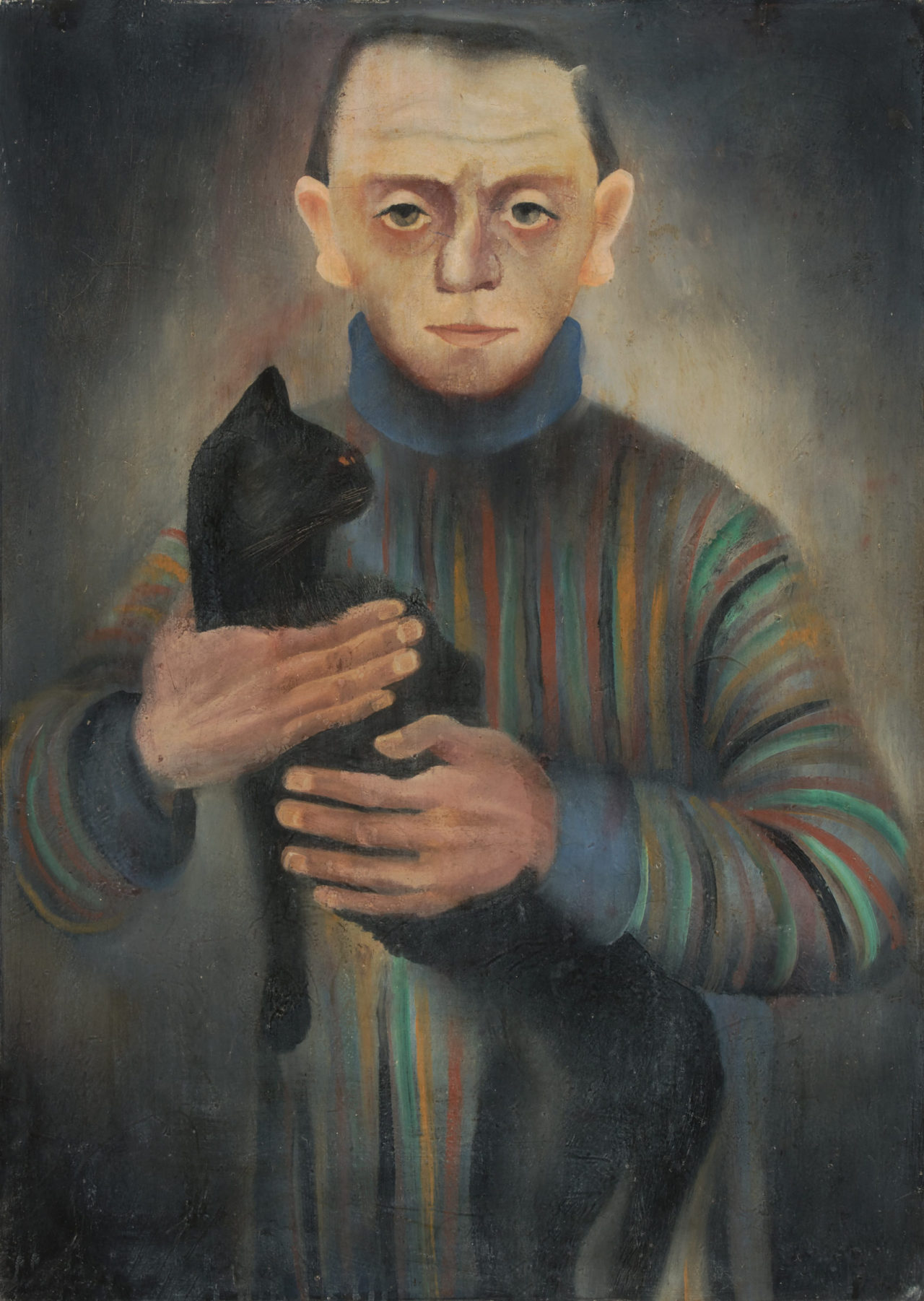
Kaate Diehn-Bitt, Peter Paul Diehn with cat
The three people familiar with the operation described intense work in the days and hours leading up to and even extending beyond 1 p.m. on Jan 6, when Congress convened for the counting of electoral votes.
In those first days in January, from the command center, Trump allies were calling members of Republican-dominated legislatures in swing states that Eastman had spotlighted in his memos, including Pennsylvania, Georgia and Arizona, encouraging them to convene special sessions to investigate fraud and to reassign electoral college votes from Biden to Trump, two of the people familiar with the operation said.
On Jan. 2, Trump, Giuliani and Eastman spoke to 300 state legislators via a conference call meant to arm them with purported evidence of fraud and galvanize them to take action to “decertify” their election results. “You are the real power,” Trump told the state lawmakers, according to a Washington Examiner report. “You’re the ones that are going to make the decision.”
The goal was to convince these state lawmakers to work to decertify the election results in their states and to try to convince Mike Pence to delay certification of the electoral college results to give these insurrectionist legislators time to convince their colleagues to overthrow the election results. And Bannon was involved in these efforts.
Also on Jan. 2, Eastman, Giuliani and Epshteyn appeared on Bannon’s podcast to make the case directly to Bannon’s pro-Trump listeners. They discussed what Bannon called that day’s “all-hands meeting with state . . . legislators that the Trump campaign and also others are putting on.” The comments were first highlighted by Proof.
They argued that state lawmakers were legally bound to reexamine their election results. “It’s the duty of these legislatures to fix this, this egregious conduct, and make sure that we’re not putting in the White House some guy that didn’t get elected,” Eastman said. He contended that Congress could itself decide on Jan. 6 to select Trump electors in contested states, but that “it would certainly be helped immensely if the legislatures in the states looked at what happened in their own states and weigh in.”
I hope you’ll go read the rest. Every sentence in the article is important.
Will Bannon pay a price for his involvement in the coup attempt? That will be up to Attorney General Merrick Garland. Former U.S. Attorney and Deputy Assistant Attorney General Harry Litman writes: Don’t be too sure about the Justice Department’s ‘duty’ to indict Bannon.
Atty. Gen. Merrick Garland has a far more complicated decision coming his way than people realize.
The Department of Justice, in the person of the United States attorney for the District of Columbia, has received a referral from the House of Representatives to bring criminal contempt charges against Stephen K. Bannon, who has refused to comply with a subpoena from the House select committee investigating the events of Jan. 6.
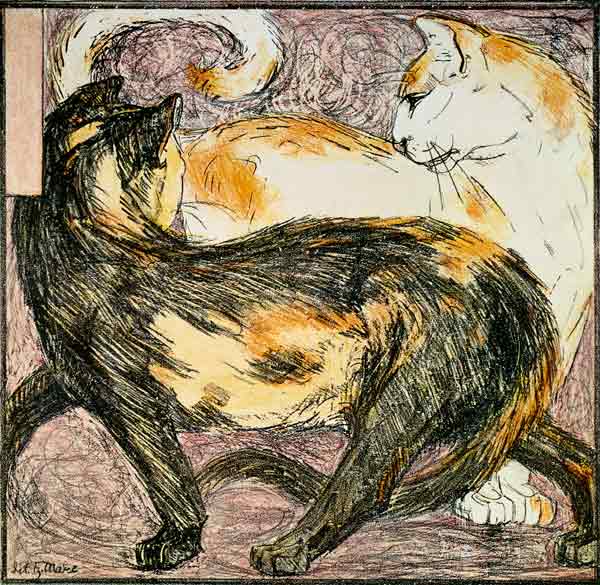
Two Cats, by Franz Marc
The righteousness of the referral is not in doubt. There is every reason to think Bannon has important first-hand information about the planning of the Capitol attack. After all, he crowed the night before on his podcast: “All hell is going to break loose tomorrow…. Strap in.”
In addition, as the committee’s vice chair, Rep. Liz Cheney (R-Wyo.), emphasized Tuesday, there is strong reason to think Bannon knows if and how Trump was “personally involved” in the Jan. 6 attack. No matter is more important for Congress to probe or for the American public to understand.
As for Bannon’s thumbing his nose at a subpoena, it could not be a more flagrant or a more contemptuous violation of the law.
Enforcing the subpoena “should be a slam dunk,” Littman writes, “But it isn’t.” According to Littman, there are several Office of Legal Counsel memos that will impact Garland’s actions. One decision is that the DOJ is not required to enforce subpoenas on members of the executive branch–the AG makes the decision. Other OLC memos address the issue of White House officials and executive privilege. I’m not sure I understand this, because Bannon was not a White House official when all this was happening–even when he was in the White House, he was only a political adviser. Furthermore, Trump is no longer president and how can he invoke executive privilege over planning for a coup? Littman writes:
There is a way for Garland to square the circle. The Office of Legal Counsel’s memo that has precluded pursuit of criminal contempt charges was based on cases in which the department issued legal opinions that the assertions of privilege were proper.
Bannon’s suggestion that the subpoenaed documents and communications are properly covered by executive privilege is spurious at best. First, there’s the fact that Trump hasn’t actually asserted the privilege. On top of that, the select committee’s subpoena involves events that happened years after Bannon left the executive branch; it’s ridiculous to say the relevant testimony and documents must be kept secret to ensure that presidents can freely do the country’s business.
Finally, even if Bannon had a sound claim to executive privilege, Congress’ and the public’s need to know the information covered by the subpoena is paramount, and that factor should prevail. (Likewise, public interest trumped Nixon’s claim to privacy in the 1977 Supreme Court case, which was about the disposition of the disgraced president’s papers.)
More January 6 committee news:
CNN: Former DOJ official Jeffrey Clark, who pushed baseless election fraud claims, expected to testify before January 6 committee.
Did you like this post? Please share it with your friends:
Posted: August 12, 2021 | Author: bostonboomer | Filed under: Afternoon Reads | Tags: Brad Raffenspurger, Byung J. Pak, coronavirus, Delta variant, Department of Justice, Donald Trump, Georgia, Jeffrey Clark, Jeffrey Rosen |

Henri Lebasque, Hammock, 1923
Good Afternoon!!
More news broke yesterday about Trump’s intense efforts to overturn the results of the election so he could stay in office. It’s becoming clear that his inciting of the January 5 insurrection was just a last ditch effort after repeated coup attempts had failed.
Remember when the U.S. Attorney in Atlanta suddenly resigned early this year around the time when Trump’s phone calls pressuring Georgia Secretary of State Brad Raffensperger to find enough votes to change the state’s election results?
Yesterday, at the New York Times, Katie Brenner reported: Former U.S. attorney in Atlanta says Trump wanted to fire him for not backing election fraud claims.
Byung J. Pak, a former U.S. attorney in Atlanta, told congressional investigators on Wednesday that his abrupt resignation in January had been prompted by Justice Department officials’ warning that President Donald J. BTrump intended to fire him for refusing to say that widespread voter fraud had been found in Georgia, according to a person familiar with his testimony.
Mr. Pak, who provided more than three hours of closed-door testimony to the Senate Judiciary Committee, stepped down with no notice on Jan. 4, saying that he had done his best “to be thoughtful and consistent, and to provide justice for my fellow citizens in a fair, effective and efficient manner.”
While he did not discuss Mr. Trump’s role in his decision to resign at the time, he told the Senate panel that the president had been dismayed that Mr. Pak had investigated allegations of voter fraud in Fulton County, Ga., and not found evidence to support them, according to the person familiar with the statements.
Mr. Pak testified that top department officials had made clear that Mr. Trump intended to fire him over his refusal to say that the results in Georgia had been undermined by voter fraud, the person said. Resigning would pre-empt a public dismissal.

Kenneth Rowntree, The Balcony
He also described work done by state officials and the F.B.I. to vet Mr. Trump’s claims of voter fraud, and said they had not found evidence to support those allegations.
The Senate Judiciary Committee is examining Mr. Pak’s departure as part of its broader investigation into the final weeks of the Trump administration and the White House’s efforts to pressure the Justice Department to falsely assert that the election was corrupt. The Justice Department’s inspector general is also looking at Mr. Pak’s resignation.
During a phone call with Secretary of State Brad Raffensperger of Georgia on Jan. 2, two days before Mr. Pak resigned, Mr. Trump asked Mr. Raffensperger to find enough votes to reverse the state’s presidential election results and described fraud allegations that Mr. Raffensperger said were not supported by facts, according to leaked audio of the call.
Mr. Pak had refused to support similar election fraud claims because of the lack of evidence, according to two people familiar with his investigation. “You have your never-Trumper U.S. attorney there,” Mr. Trump told Mr. Raffensperger during their phone call.
This story on then Acting Attorney General Jeffrey Rosen’s Congressional testimony came out this morning at The Washington Post: What Rosen told U.S. senators: Trump applied ‘persistent’ pressure to get Justice to discredit election.
President Donald Trump’s last acting attorney general has told U.S. senators his boss was “persistent” in trying to pressure the Justice Department to discredit the results of the 2020 election.
In closed-door testimony Saturday before the Senate Judiciary Committee, Jeffrey Rosen said he had to “persuade the president not to pursue a different path” at a high-stakes January meeting in which Trump considered ousting Rosen as the nation’s most powerful law enforcement officer.

Late Summer, Hermann Wessel, 1924
According to a person familiar with the testimony, Rosen’s opening statement also characterized as “inexplicable” the actions of his Justice Department colleague, Jeffrey Clark, who was willing to push Trump’s false claims of election fraud and whom Trump considered installing as acting attorney general to replace Rosen….
On Saturday, Rosen appeared before the Senate committee to deliver his account directly. Donoghue testified as well. During a seven-hour interview, Rosen emphasized how he and other senior leaders resisted Trump’s entreaties.
“The president was persistent with his inquiries, and I would have strongly preferred that he had chosen a different focus in the last month of his presidency,” he said in his opening statement, according to a person familiar with the testimony, who spoke on the condition of anonymity to discuss the closed-door session. “But as to the actual issues put to the Justice Department, DOJ consistently acted with integrity, and the rule of law held fast.”
Rosen said he thought Trump’s claims about voting irregularities were “misguided, and I disagreed with things that President Trump suggested the Justice Department do with regard to the election. So we did not do them.”
Click the link to read the rest.
Mary Harris at Slate: A Rogue DOJ Lawyer Almost Kept Trump in Office. This is a report of an interview with Mark Joseph Stern, a Slate writer who has been reporting on Trump’s coup attempts. Stern argues that the DOJ’s Jeffrey Clark was supporting the efforts of Trump’s lawyers to get courts to declare various states’ election results invalid.
Mark Joseph Stern: …[Y]ou’ve got Sidney Powell and Rudy Giuliani claiming there’s mass voter fraud. You’ve got state attorneys general in 18 different states, as well as a lot of conservative intellectuals and Republican politicians, claiming that the election was conducted in an unconstitutional way….

Gari Melchers, The Sun Porch
So these folks talked about voter fraud, but they focused on this idea that only state legislatures get to decide the rules for a presidential election. And here, you had a lot of other players—governors, state courts, election boards—tweaking these rules in part because legislatures can’t foresee every possible election regulation, and sometimes state courts or secretaries of state or governors will have to step in and clarify things. But also, because of the COVID-19 crisis, you had a lot of states trying new things for the first time. And you also had a lot of states that refused to try new things, whose restrictive voting laws were going to force people to potentially wait in line indoors for a very long time and expose themselves to COVID. But all the modifications certain states made were modest.
Mary Harris: The neatness of making this argument that somehow the election was unconstitutional is that it potentially allows state legislatures to step in and override the vote, right?
That’s exactly right. That’s the endgame here. It’s not as if these folks were flailing and screaming and accusing the election results of being illegitimate. They had a purpose, which was to throw the procedure of the election into sufficient legal doubt so state legislatures would have an excuse to reconvene, step in, essentially ignore the results of the actual vote, and appoint their states’ electors in the Electoral College to Donald Trump….
It looks like most Justice Department officials balked at this idea, but Jeffrey Bossert Clark was all for it. And what we’ve seen in the release of documents that the House Oversight Committee has provided, and also from other reporting, is that he eagerly wanted to have the Justice Department step in in several different ways, specifically in Georgia, to push the state legislature to call its own special session, overturn the actual results, and declare Trump the real winner.

Winslow Homer, Sunshine and Shadow
We’ve actually seen the drafts of the letters and lawsuits that Clark was typing up furiously and trying to issue on behalf of the entire Justice Department—and that would have potentially nudged Georgia and its legislature toward overthrowing its own election results….
There are a number of reports from high-level Justice Department officials that are somewhat corroborated by other emails we’ve seen about various meetings that were taking place at this time. They show that at this point, Clark had decided that Rosen didn’t have the backbone to steal the election or to intervene on Trump’s behalf. So Clark apparently held unauthorized conversations behind the backs of his superiors with the president himself, and seems to have floated this idea of using the Justice Department to make these state legislatures reconvene and reassign their electoral votes. Trump seems to have really liked this idea and even said to Rosen, Why am I having to deal with you and these state suits when I could be dealing with Clark, who would do everything I say? All I need to do is fire you and make Clark the new acting attorney general, and then he’ll do whatever I want.
Read the whole thing at Slate.
One more story on this topic from Politico: Emails: Senior DOJ officials wrangled over baseless Trump voter fraud allegations.
During Donald Trump’s final weeks in office, top Justice Department officials wrangled over how the FBI should handle a particularly wacky voter fraud allegation promoted by the then-president and his allies. Unreleased emails obtained by POLITICO show just how tense the episode got.
The dispute pitted a senior career section chief against one of the DOJ’s top officials, with the FBI caught in the crossfire. Trump’s appointees at DOJ ultimately prevailed, and their investigation — a probe into a viral video from Georgia that didn’t actually find any evidence of fraud — ended up playing a role in torpedoing the president’s narrative. While Trump’s opponents fretted that the FBI’s involvementwould undermine public confidence in elections and boost Republican talking points, it had the opposite effect.

Summer Porch at Mr. and Mrs. C.E.S. Woods, 1904, Child Hassam
At the time of the email dispute, Trump and his allies were lobbing a host of allegations about voter fraud, claiming wide-reaching and nefarious forces had conspired to steal the election for Biden. One allegation in particular commanded the president’s attention:a video showing election workers counting ballots at State Farm Arena in Atlanta. Trump’s allies claimed it showed the workers secretly pulling ballots out of “suitcases” and using them to commit election fraud.
Officials in the office of Georgia’s secretary of state quickly debunked those claims. But on Dec. 5, Trump alluded to the video at a rally in Georgia, suggesting it proved poll workers were stuffing ballot boxes to help the Democrats.
This led to this dispute between DOJ officials involving the FBI. It’s a convoluted story that I can’s easily summarize, but the story is worth reading.
Unfortunately, the ravages of the Delta variant of the coronavirus are still the top story of the day. Here’s the latest depressing news, links only:
The Daily Beast: No One I Know Is Vaccinated’: Sturgis Rally Bikers Are Coming for America.
Ed Yong at The Atlantic: How the Pandemic Now Ends. Cases of COVID-19 are rising fast. Vaccine uptake has plateaued. The pandemic will be over one day—but the way there is different now.
Rachel Gutman at The Atlantic: Why Is It Taking So Long to Get Vaccines for Kids? A few things still need to happen before the shots can be authorized for Americans younger than 12.
The New York Times: Texas Hospitals Are Already Overloaded. Doctors Are ‘Frightened by What Is Coming.’
Adam Serwer at The Atlantic: Greg Abbott Surrenders to the Coronavirus. The Texas governor’s warped priorities are allowing an extremist minority to worsen the pandemic.
Mississippi Free Press: Mississippi’s Hospital System Could ‘Fail’ In 10 Days, UMMC Warns As Feds Rush In.
Mississippi Free Press: With Mississippi Hospitals Near Calamity, Gov. Reeves Left State For GOP Political Event.
The Daily Beast: Trump Keeps Rejecting Pleas From Allies for Pro-Vax Campaign.
The Washington Post: Republicans risk becoming face of delta surge as key GOP governors oppose anti-covid measures.
That’s it for me today. What stories are you following?
Did you like this post? Please share it with your friends:



 peej
peej Carissa
 bostonboomer
 dakinikat
 ecocatwoman
 mablue2
 Mama Lopez
 peggysue22
 quixote
 skydancingguestblogger
 Mona (aka Wonk the Vote)



 Sky Dancing
Recent Comments