Posted: August 22, 2023 | Author: bostonboomer | Filed under: Crime, Criminal Justice System, Donald Trump, just because | Tags: Georgia election interference case, Jack Smith, January 6 case, Jeff Clark, John Eastman, Judge Tanya Chutkan, Mark Meadows |
Good Afternoon!!
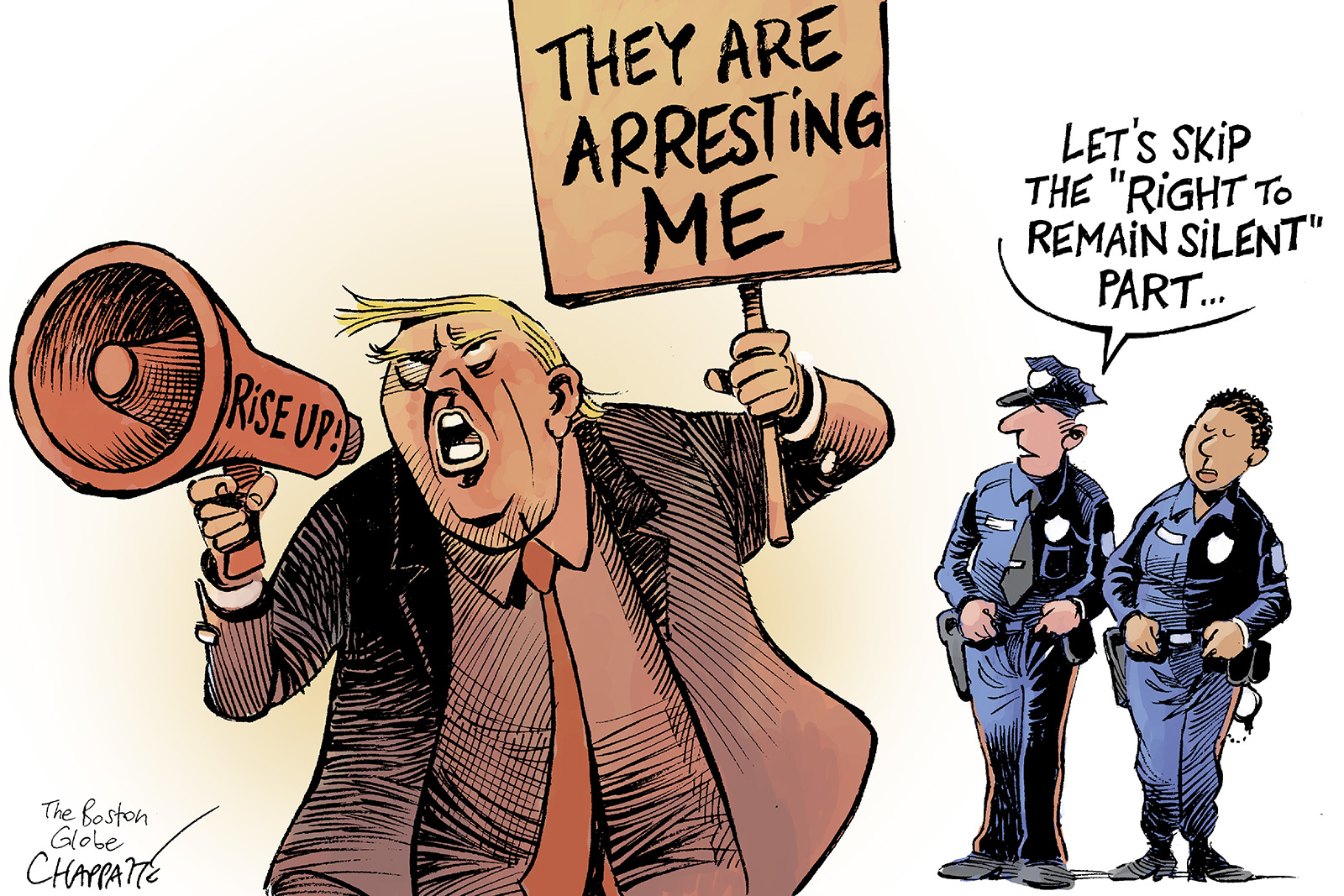 Now that Trump has been indicted and arrested 3 times, the 4th arrest on Thursday seems sort of old hat. Ho hum . . . Trump will surrender at Fulton County Jail in Georgia on Thursday; his bail has been set at $200,000.
Associated Press: Trump says he will surrender Thursday on Georgia charges tied to efforts to overturn 2020 election.
Former President Donald Trump says he will surrender to authorities in Georgia on Thursday to face charges in the case accusing him of illegally scheming to overturn his 2020 election loss in the state.
“Can you believe it? I’ll be going to Atlanta, Georgia, on Thursday to be ARRESTED,” Trump wrote on his social media network Monday night, hours after his bond was set at $200,000.
It will be Trump’s fourth arrest since April, when he became the first former president in U.S. history to face indictment. Since then, Trump, who remains the leading candidate for the Republican presidential nomination, has had what has seemed like an endless procession of bookings and arraignments in jurisdictions across the country. His appearances in New York, Florida and Washington, D.C., have drawn enormous media attention, with news helicopters tracking his every move.
Trump’s announcement came hours after his attorneys met with prosecutors in Atlanta to discuss the details of his release on bond. The former president is barred from intimidating co-defendants, witnesses or victims in the case — including on social media — according to the bond agreement signed by Fulton County District Attorney Fani Willis, Trump’s defense attorneys and the judge. It explicitly includes “posts on social media or reposts of posts” made by others.
This morning, two of Trump’s co-defendants surrendered in the Georgia election interference case.
Atlantic News First, via NBC29 VA:
ATLANTA (Atlanta News First/Gray News): First co-defendants in Trump indictment surrender at Fulton County jail.
The first co-defendants in a sweeping indictment out of Fulton County, Georgia, has surrendered to the jail.
Shortly before 10:30 a.m. Tuesday, former President Donald Trump’s attorney John Eastman turned himself in. A bond agreement for $100,000 was reached Monday in his case.
Eastman, prosecutors say, was deeply involved in some of his efforts to remain in power after the 2020 election. He wrote a memo arguing that Trump could remain in power if then-Vice President Mike Pence overturned the results of the election during a joint session of Congress where electoral votes would be counted. That plan included putting in place a slate of “alternate” electors in seven battleground states, including Georgia, who would falsely certify that Trump had won their states.
In a social media statement, Eastman said he was surrendering “to an indictment that should never have been brought.”
“It represents a crossing of the Rubicon for our country, implicating the fundamental First Amendment right to petition the government for redress of grievances,” Eastman said. “As troubling, it targets attorneys for their zealous advocacy on behalf of their clients, something attorneys are ethically bound to provide and which was attempting here by ‘formally challeng[ing] the results of the election through lawful and appropriate means.’ An opportunity never afforded them in the Fulton County Superior Court.”
A $10,000 bond agreement was reached Monday for Scott Hall, the Atlanta-area bail bondsman who was allegedly involved in commandeering voting information that was the property of Dominion Voting Systems from Coffee County in south Georgia.
On Tuesday, just before 9 a.m., Hall surrendered to authorities, and was booked and processed on charges that include conspiracy to commit a felony, conspiracy to commit election fraud, conspiracy to defraud the state of political subdivision, and violation of the Georgia Racketeer Influenced And Corrupt Organizations Act (RICO).
Jeff Clark, the DOJ official who wanted to send letters to the swing states saying that the DOJ believed there was significant voter fraud in their states, is trying to avoid going to Atlanta to be booked.
https://twitter.com/petestrzok/status/1694008924863602918?s=20
Jeff Clark on the morning his house was searched by the FBI:
This is going to enrage Trump. The New York Times just posted an article on Mark Meadows, another of Trump’s co-defendants in Georgia: How Mark Meadows Pursued a High-Wire Legal Strategy in Trump Inquiries.
This winter, after receiving a subpoena from a grand jury investigating former President Donald J. Trump’s attempts to overturn the 2020 election, Mark Meadows commenced a delicate dance with federal prosecutors.
He had no choice but to show up and, eventually, to testify. Yet Mr. Meadows — Mr. Trump’s final White House chief of staff — initially declined to answer certain questions, sticking to his former boss’s position that they were shielded by executive privilege.
But when prosecutors working for the special counsel, Jack Smith, challenged Mr. Trump’s executive privilege claims before a judge, Mr. Meadows pivoted. Even though he risked enraging Mr. Trump, he decided to trust Mr. Smith’s team, according to a person familiar with the matter. Mr. Meadows quietly arranged to talk with them not only about the steps the former president took to stay in office, but also about his handling of classified documents after he left.
The episode illustrated the wary steps Mr. Meadows took to navigate legal and political peril as prosecutors in Washington and Georgia closed in on Mr. Trump, seeking to avoid being charged himself while also sidestepping the career risks of being seen as cooperating with what his Republican allies had cast as partisan persecution of the former president.
His high-wire legal act hit a new challenge this month. While Mr. Meadows’s strategy of targeted assistance to federal prosecutors and sphinxlike public silence largely kept him out of the 45-page election interference indictment that Mr. Smith filed against Mr. Trump in Washington, it did not help him avoid similar charges in Fulton County, Ga. Mr. Meadows was named last week as one of Mr. Trump’s co-conspirators in a sprawling racketeering indictment filed by the local district attorney in Georgia.
Interviews and a review of the cases show how Mr. Meadows’s tactics reflected to some degree his tendency to avoid conflict and leave different people believing that he agreed with them. They were also dictated by his unique position in Mr. Trump’s world and the legal jeopardy this presented.
Read all the juicy, gossipy details at the NYT link.
There’s also news about the January 6 case against Trump in DC.
The Washington Post: Justice Dept. pushes back against Trump’s bid for a 2026 trial in D.C.
The Justice Department pushed back Monday on former president Donald Trump’s claims that he cannot be ready to go to trial in January on charges that he illegally sought to subvert the results of the 2020 election.
A trial in D.C. federal court in April 2026, which Trump’s attorneys requested, “would deny the public its right to a speedy trial,” attorneys working for special counsel Jack Smith wrote in Monday’s filing. In arguing for its preferred Jan. 2, 2024, date, the office said they do not intend to use classified information against Trump in this case….
In arguing for more time, Trump also made misleading comparisons to trials that were delayed by the coronavirus pandemic, superseding indictments adding defendants, and disputes over incarceration, the government said.
Trump’s legal team argued in a court filing last week that it needs years to prepare for the “unprecedented case” and that the January date proposed by the government would create conflicts with the five other criminal and civil trials Trump faces in the next nine months. They told the court that the 11.5 million pages of material already handed over by the special counsel took over two days to download and if printed out would be eight times taller than the Washington Monument. To read it all before the government’s proposed jury selection date of Dec. 11 would be like reading “Tolstoy’s War and Peace, cover to cover, 78 times a day, every day,” they said.
Smith’s office called those comparisons “neither helpful nor insightful,” because attorneys don’t read evidence cover to cover — they review it online using electronic keyword searches. Much of what was shared with Trump is already in the public domain, the special counsel said, including social media posts, transcripts of interviews with the House committee that investigated the Jan. 6 attack, and court records from legal challenges to the election results. Other documents came from the National Archives, meaning they were already known to Trump. There are also duplicates of documents within the production, the Justice Department said, and likely irrelevant papers handed over “in an abundance of caution and transparency.”
Read the rest at the WaPo.
This is interesting from attorneys Frederick Baron and Dennis Aftergut at The Bulwark: Trump Shoots Himself in the Foot with Demand for Trial Date in 2026.
ON THURSDAY, DONALD TRUMP FIRED his first shot in Judge Tanya Chutkan’s courtroom—straight into his own foot. His lawyers proposed to the district court judge that his federal trial on conspiracy and obstruction charges related to the aftermath of the 2020 election and the events of January 6th should not occur until April 2026.
“I’ll eat my hat if Judge Chutkan agrees with Trump to start this trial in 2026,” tweeted Neal Katyal, the former acting solicitor general of the United States. “He’s just afraid to stand trial. Nothing more.”

Judge Tanya Chutkan
Katyal’s hat is safe. Trump’s proposal on the all-important trial date sends an unintended message: that Trump is pressing his lawyers to take legal positions so extreme that they will be entirely disregarded.
Credibility with judges is the coin of the realm for trial lawyers. Squander it early and it’s hard to retrieve.
Trump’s past pattern is that his lawyers lose credibility by kowtowing to his absurd, uninformed demands. Then he tosses them like bad pennies. Sooner or later, it’s tough attracting the gold standard in the legal profession.
The Trump team’s tissue-thin pretext for their ludicrous trial date request was the volume of discovery materials they need to read.
They wrote that reviewing millions of documents and electronic communications that the government already gave them would be like reading “the entirety of Tolstoy’s War and Peace, cover to cover, 78 times a day” in order to finish by the January trial date proposed by Special Counsel Jack Smith.
The authors explain why that is bullshit:
Sounds daunting. But in the modern litigation world, a high-tech industry has grown up specializing in managing big-document cases. Entire firms exist to tackle discovery jobs like this.
Huge volumes of documents can be scanned rapidly, and put in a single database alongside digital communications and other information. The database is then “deduped” (that is, duplication is reduced) and organized to allow instant retrieval of any important piece of evidence. A lawyer need only search for specified keywords, dates, subjects, titles, witnesses, senders, receivers, contact information, and so on. For example, a search for documents or data related to “January 6/electors/certification” will quickly bring up the relevant items for review, highlighting, organizing, and sharing with team members.
Former U.S. Attorney Joyce Vance, speaking on MSNBC on Friday, mocked the misleading analogy to Tolstoy’s 1,200-page epic. “You don’t need to read War and Peace 78 times a day. You simply search for ‘Natasha,’” Vance said, referring to the novel’s lead female character.
Read more at The Bulwark.
One more interesting story from CNN: Several key cases that could bear on special counsel Jack Smith’s election case against Trump await DC Circuit rulings.
As the US Circuit Court of Appeals in Washington, DC, gets ready to begin its new term next month, the next two weeks could usher in several consequential rulings from the federal appeals court, often called the second most powerful court in the country, that could bear on the federal investigation into and prosecution of former President Donald Trump for his 2020 election reversal schemes.
At least three court cases touching legal issues that could affect special counsel Jack Smith’s approach are ripe for rulings from the DC Circuit. The rulings, once they come, will likely shape how US District Judge Tanya Chutkan may view the law and the charges against the former president in the criminal election subversion proceedings over which she is presiding.
In one case, Trump ally and Republican Rep. Scott Perry is challenging the access federal investigators can have to his phone in the 2020 election subversion probe. Another dispute is over Trump’s sweeping immunity claims in the civil lawsuits that have sought to hold him accountable for his actions and leading up to the January 6, 2021, Capitol assault. The third matter relates to the obstruction statute that has been a central charge in the Capitol riot prosecutions; Smith’s indictment of the former president in the election case includes two charges based on the provision in question.
There’s no guarantee that the rulings will come out in the coming weeks. But the start of the new DC Circuit term in early September puts additional pressure on the circuit judges to clear out their opinions in lingering cases. Regardless, the cases highlight the ongoing uncertainty in the legal terrain the special counsel is navigating as he advances toward a historic trial of the former president while wrapping up the rest of the federal criminal election subversion investigation, which Smith says is ongoing. No matter what the ruling is in each of the cases, the losing party will have the option to appeal it, setting up that the US Supreme Court might ultimately get involved.
Read details of the cases at the CNN link.
That’s it for me today. I guess I’m still mainly obsessed with seeing Trump tried, convicted, and imprisoned. I’ll add more links in the comment thread.
Did you like this post? Please share it with your friends:
Posted: August 11, 2023 | Author: bostonboomer | Filed under: 2024 presidential Campaign, Afternoon Reads, Criminal Justice System, Donald Trump, just because | Tags: David Weiss, Fani Willis, Hunter Biden, Jack Smith, John Lauro, Judge Tanya Chutkan, Merrick Garland, racketeering case, Special Counsel |
Good Afternoon!!
Breaking News: Attorney General Merrick Garland has appointed a special counsel to oversee the Hunter Biden investigation.
Associated Press: Attorney General Garland appoints a special counsel in the Hunter Biden probe.
Attorney General Merrick Garland announced Friday he is appointing a special counsel in the Hunter Biden probe, deepening the investigation of the president’s son ahead of the 2024 election.
Garland said he is naming David Weiss, the U.S. attorney in Delaware who has been probing the financial and business dealings of the president’s son, as the special counsel.
Garland said on Tuesday that Weiss told him that “in his judgment, his investigation has reached a stage at which he should continue his work as a Special Counsel, and he asked to be appointed.”
“Upon considering his request, as well as the extraordinary circumstances relating to this matter, I have concluded it is in the public interest to appoint him as special counsel,” Garland said.
The move is a momentous development from the typically cautious Garland and comes amid a pair of sweeping Justice Department probes into Donald Trump, the former president, and President Joe Biden’s chief rival in next year’s election. It comes as House Republicans are mounting their own investigation into Hunter Biden’s business dealings.
Jim Jordan must be celebrating.
Also Breaking News: The hearing with Judge Tanya Chutkan on the prosecution’s request for a protective order in January 6 case has just wrapped up. Chutkan made it pretty clear that Trump had better not intimidate witnesses or pollute the jury pool, or he will be in big trouble. She alsBo told the defense to stop talking about politics. This is a criminal case, and she will not allow the politics to interfere with her decisions. Trump must follow the conditions he was given at his arraignment. If that causes him to have to keep his big fat mouth shut in some instances, that’s just too bad (my words). If you want a good, detailed thread on the hearing, I recommend this one by Brandi Buchman:
Read it on Twitter. And here is Buchman’s story at Law and Crime: Trump lawyers, special counsel square off in court on limits for pretrial evidence in Jan. 6 indictment.
A report from CNN: Judge Chutkan says Trump’s right to free speech in January 6 case is ‘not absolute.’
US District Judge Tanya Chutkan said that she plans to put serious limits over how sensitive evidence is handled in the Donald Trump 2020 election interference case, in a dramatic hearing Friday in Washington, DC, that could set the tone for the upcoming trial.
The former president has a right to free speech, but that right is “not absolute,” Chutkan said. “Mr. Trump, like every American, has a First Amendment right to free speech, but that right is not absolute. In a criminal case such as this one, the defendant’s free speech is subject to the rules.” [….]
Whether or not Trump’s public statements are covered by the protective order that’s issued, she said, if they result in the intimidation of a witness or the obstruction of justice, “I will be scrutinizing them very carefully.”
Trump’s lawyer John Lauro said: “President Trump will scrupulously abide by his conditions of release.”
Chutkan adopted restrictions proposed by prosecutors that would bar Trump from publicly disclosing information from interview transcripts and recordings from the investigation, including from witness interviews with investigators that took place outside of the grand jury….
Chutkan and Lauro had several pointed exchanges about what the 2024 presidential contender should be allowed to say about the evidence that is turned over to him in the case.
“No one disagrees that any speech that intimidates a witness would be prohibited, what we are talking about is fair use of information,” Lauro said at one point, putting forward a hypothetical that Trump is publicly remarking on something from his personal memory that is also evidence in the case.
“The fact that he is running a political campaign currently has to yield to the administration of justice,” the judge said. “And if that means he can’t say exactly what he wants to say in a political speech, that is just how it’s going to have to be.”
Lauro put forward a hypothetical of Trump making a statement while debating his former Vice President Mike Pence – who is also running for the White House now and is a key witness in the criminal case – that overlapped with what’s in discovery.
The judge wasn’t sold.
“He is a criminal defendant. He is going to have constraints the same as any defendant. This case is going to proceed in a normal order,” Chutkan said.
From The Daily Beast: Jack Smith Wants Trump Convicted by Super Tuesday.
Special Counsel Jack Smith’s office wants to put former President Donald Trump on trial for his attempted coup in January next year—a move that, if approved by a judge, could brand him a felon before the biggest GOP presidential primaries.
In a filing on Thursday, the special counsel’s office proposed a trial date of January 2, 2024, which they say would take “no longer than four to six weeks.”
Should U.S. Magistrate Judge Moxila A. Upadhyaya approve that date, Trump’s trial could be done and dusted before the GOP’s primaries in South Carolina and Michigan, with plenty of time before the delegate-rich slate of Super Tuesday states in March.
Trump already faces two other separate criminal trials in March and May in New York and Florida, respectively. However, those trials have been delayed enough that Trump still managed to snag key elections before risking the embarrassing reality of being convicted of felonies while asking voters to make him the Republican nominee.
Prosecutors working on these different cases all wanted earlier dates, but judges gave into Trump’s demands for more time. While his lawyers cited the sheer amount of overwhelming work required to sort through millions of pages of evidence, the former president has used political rallies and online posts to accuse prosecutors of trying to derail his re-election campaign. In the end, judges gave Trump a little extra time.
Also at The Daily Beast, Jose Pagliery has a story on Judge “loose” Cannon and another big mistake: Inside One ‘Egregious’ Mistake From Trump’s Florida Judge Aileen Cannon.
U.S. District Judge Aileen Cannon, whose pro-Trump bias and head-turning errors have raised questions about whether she should be overseeing former President Donald Trump’s criminal trial in Florida, made what appears to be another surprising mistake last year.
Now, a defense lawyer is seizing on her misstep to try freeing his client from prison—even though he was caught on tape violently throwing a courtroom chair at a prosecutor and threatening to kill him.
The blunder was simple and entirely avoidable. The federal judge told jurors they could find the man, Christopher Wilkins, “guilty or not guilty.” But then she handed jurors a verdict form that didn’t even have those options.
“How far does somebody have to go to school to say that a verdict form is supposed to say guilty and not guilty?” asked defense lawyer Jeffrey Garland. “That would be one of the more egregious versions of jury instruction error… it’s such a rare error.”
Garland formally filed an appeal on Thursday and hopes to overturn a case that’s as black-and-white as they come—on a technicality.
“This is the judge’s deal. This is nobody else’s deal. I’m gonna tell ya, I’ve done a lot of appeals, and I’ve got a pretty good winning record. This is a great issue,” he said. “For a guy who’s on tape throwing a chair in court, it’s pretty ‘not good’ behavior. It would have been simple. You have a trial, properly instruct a jury, give them a form, and the jury’s gonna do what the jury’s gonna do.”
Cannon’s short and controversial history on the bench is under a microscope, given that she is presiding over such an historic criminal trial: that of a former president facing prison time for mishandling classified records at Mar-a-Lago and lying to the feds in a coverup. Trump himself appointed her in his final months in office, yet she has not recused herself from the case.
Read more at The Daily Beast.
The Guardian’s Hugo Lowell on the expected Georgia indictments:
Trump allies face potential charges in Georgia over voting machine breaches.
The Fulton county district attorney investigating Donald Trump’s efforts to overturn the 2020 election results in Georgia has evidence to charge multiple allies of the former president involved in breaching voting machines in the state, according to two people briefed on the matter.
The potential charges at issue are computer trespass felonies, the people said, though the final list of defendants and whether they will be brought as part of a racketeering case when prosecutors are expected to present evidence to the grand jury next week remain unclear.
To bring a racketeering case under Georgia state law, prosecutors need to show the existence of an “enterprise” predicated on at least two “qualifying” crimes, of which computer trespass is one. The Guardian has reported that prosecutors believe they have sufficient evidence for a racketeering case.
The statute itself prohibits the intentional use of a computer or computer network without authorization in order to remove data, either temporarily or permanently. It also prohibits interrupting or interfering with the use of a computer, as well as altering or damaging a computer.
Prosecutors have taken a special interest in the breach of voting machines in Coffee county, Georgia, by Trump allies because of the brazen nature of the operation and the possibility that Trump was aware that his allies intended to covertly gain access to the machines.
In a series of particularly notable incidents, forensics experts hired by Trump allies copied data from virtually every part of the voting system, which is used statewide in Georgia, before uploading them to a password-protected website that could be accessed by 2020 election deniers.
Read the rest at the link above.
I’m going to end there. This post is mostly breaking news. I’ll update in the comments if I hear more about these stories.
Did you like this post? Please share it with your friends:
Posted: July 20, 2023 | Author: bostonboomer | Filed under: Afternoon Reads, Donald Trump, just because | Tags: black voting rights, Civil Right conspiracy, Jack Smith, January 6 grand jury, Trump Indictments, Washington DC juries |

Good Afternoon!!
The grand jury investigating the January 6 case is meeting today. Donald Trump had the option to explain himself to them; but since he won’t be doing that, he could be indicted today. The grand jury usually meets on Fridays also.
This is from The Independent’s live blog: Trump could be indicted for civil rights law violation as soon as today in Jan 6 grand jury probe.
Donald Trump could be indicted by a grand jury investigating his efforts to overturn the 2020 election and the January 6 Capitol riot as early as today.
The Independent learned that a possible indictment could be handed down as soon as Thursday or Friday, charging the former president in his third criminal case.
Mr Trump announced on Tuesday that he had been sent a letter by special prosecutor Jack Smith informing him that he is the “target” of a grand jury investigation.
The target letter cites three statutes under which he could be charged including conspiracy to commit offence or to defraud the United States, deprivation of rights under colour of law and tampering with a witness, victim or informant, multiple outlets reported.
William Russell, a former White House aide who now works for the Trump presidential campaign and spent much of January 6 with the then-president, is scheduled to testify before the grand jury when it meets today.
Analysis from Stephen Collinson at CNN: All eyes on a Washington grand jury amid signs of possible third Trump indictment.
A White House race that figures to be one of the most fraught in history is again in suspended animation as the political world awaits more potential criminal charges the Republican front-runner is expecting from special counsel Jack Smith.
Trump has lost none of his ability to shatter political conventions. Just months ago, the notion that a former president and potential future commander in chief could be indicted was staggering and unprecedented. Now it’s becoming an almost regular occurrence.
Trump has already been charged in Manhattan in a case triggered by a hush money payment to an adult film star, and separately, is facing federal charges related to his alleged mishandling of classified documents he hoarded in Florida. He announced this week that he’d been named as a target of Smith’s investigation into efforts to overturn the 2020 presidential election and events leading up to the attack on the US Capitol. Receiving such a notification is a procedural step that often leads to an indictment. And he’s waiting to find out whether he’ll be charged in a probe in Georgia over efforts to reverse President Joe Biden’s win there. The ex-president has pleaded not guilty to both indictments and denies wrongdoing in every other case against him.
 Trump, his Republican rivals for the 2024 nomination, and much of America will be waiting for any developments out of a grand jury in Washington, DC, that is meeting Thursday. Two sources told CNN that Will Russell, a former special assistant to Trump in the White House who has continued to work for him, is due to testify for at least the third time. Any indictment in the probe, in the days or weeks to come, would likely emerge from this grand jury – a fact that lends its work great historical significance. Trump indicated that the target letter he received on Sunday gave him four days to take up an option to testify. Legal custom suggests that any indictment could come at any time after that.
Former New Jersey Gov. Chris Christie – one of the rare Trump rivals who has openly criticized the ex-president – told CNN’s Wolf Blitzer on Wednesday that he was waiting to examine any charges from Smith before forming a judgment. But, given his experience as an ex-prosecutor, Christie suggested that the target letter from Smith was a grave omen.
“I never sent the target letter if I was not completely sure that I had put enough in front of the grand jury for them to return an indictment,” he said on “The Situation Room.”
“My sense is it’ll be a speaking indictment, as we call it in the business, which provides a lot of detail. So, you can really give folks a sense of what the evidence is that backs up the charges.”
CNN reported Wednesday that the ex-president’s legal team was scrambling to find out whether Smith had evidence about Trump’s conduct they didn’t know about. This raises the possibility that any election-related case Smith might bring against Trump may be far broader than his camp may have expected.
There’s more at the link.
UPDATE: Just now, CNN is is reporting that, according to their sources, the “Trump team [is] expecting new indictment any moment.” I’m watching with the sound off, and will update if that happens.
Both The Guardian and The New York Times have articles explaining the Civil Rights charge mentioned in the target letter Trump received from Jack Smith.
Hugh Lowell at The Guardian: Trump under investigation for civil rights conspiracy in January 6 inquiry.
Federal prosecutors investigating Donald Trump’s efforts to overturn the 2020 election results have evidence to charge the former president with three crimes, including section 241 of the US legal code that makes it unlawful to conspire to violate civil rights, two people familiar with the matter said.
The potential charges detailed in a target letter sent to Trump by prosecutors from the office of special counsel Jack Smith, who also charged Trump with retaining classified documents last month, was the clearest signal of an imminent indictment.
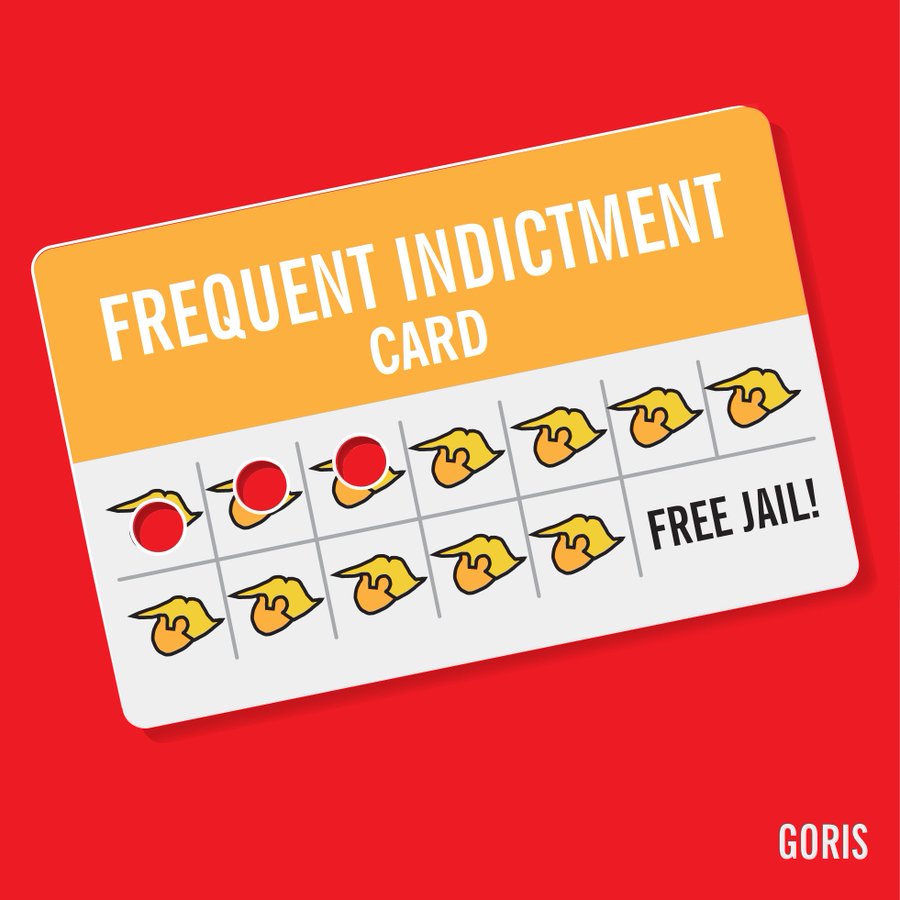 Prosecutors appear to have evidence to charge Trump with obstruction of an official proceeding and conspiracy to defraud the United States based on the target letter, two statutes that the House select committee examining the January 6 Capitol attack issued criminal referrals for last year.
The target letter to Trump identified a previously unconsidered third charge, the sources said. That is section 241 of title 18 of the US code, which makes it unlawful to conspire to threaten or intimidate a person in the “free exercise” of any right or privilege under the “Constitution or laws of the United States”.
The statute, enacted to protect the civil rights of Black voters targeted by white supremacy groups after the US civil war, is unusual because it is typically used by prosecutors in law enforcement misconduct and hate crime prosecutions, though its use has expanded in recent years.
The other two statutes, meanwhile, suggest a core part of the case against Trump is focused on the so-called fake electors scheme and the former president’s efforts to use the fake slates in a conspiracy to stop the congressional certification of Joe Biden’s election win on 6 January 2021.
The New York Times: Potential Trump Charges Include Civil Rights Law Used in Voting Fraud Cases.
Federal prosecutors have introduced a new twist in the Jan. 6 investigation by suggesting in a target letter that they could charge former President Donald J. Trump with violating a civil rights statute that dates back to the post-Civil War Reconstruction era, according to three people familiar with the matter.
The letter to Mr. Trump from the special counsel, Jack Smith, referred to three criminal statutes as part of the grand jury investigation into Mr. Trump’s efforts to reverse his 2020 election loss, according to two people with knowledge of its contents. Two of the statutes were familiar from the criminal referral by the House Jan. 6 committee and months of discussion by legal experts: conspiracy to defraud the government and obstruction of an official proceeding.
But the third criminal law cited in the letter was a surprise: Section 241 of Title 18 of the United States Code, which makes it a crime for people to “conspire to injure, oppress, threaten, or intimidate any person” in the “free exercise or enjoyment of any right or privilege secured to him by the Constitution or laws of the United States.”
Congress enacted that statute after the Civil War to provide a tool for federal agents to go after Southern whites, including Ku Klux Klan members, who engaged in terrorism to prevent formerly enslaved African Americans from voting. But in the modern era, it has been used more broadly, including in cases of voting fraud conspiracies….
A series of 20th-century cases upheld application of the law in cases involving alleged tampering with ballot boxes by casting false votes or falsely tabulating votes after the election was over, even if no specific voter could be considered the victim.
 In a 1950 opinion by the Court of Appeals for the Sixth Circuit, for example, Judge Charles C. Simons wrote of applying Section 241 in a ballot box-stuffing case that the right to an honest count “is a right possessed by each voting elector, and to the extent that the importance of his vote is nullified, wholly or in part, he has been injured in the free exercise of a right or privilege secured to him by the laws and Constitution of the United States.”
In a 1974 Supreme Court opinion upholding the use of Section 241 to charge West Virginians who cast fake votes on a voting machine, Justice Thurgood Marshall cited Judge Simons and added that every voter “has a right under the Constitution to have his vote fairly counted, without its being distorted by fraudulently cast votes.”
The line of 20th-century cases raised the prospect that Mr. Smith and his team could be weighing using that law to cover efforts by Mr. Trump and his associates to flip the outcome of states he lost. Those efforts included the recorded phone conversation in which Mr. Trump tried to bully Georgia’s secretary of state to “find” enough additional votes to overcome Mr. Biden’s win in that state and promoting a plan to use so-called fake electors — self-appointed slates of pro-Trump electors from states won by Mr. Biden — to help block or delay congressional certification of Mr. Trump’s defeat.
Read more at the NYT.
For a detailed discussion of how the press has until now misunderstood what Special Counsel Jack Smith is up to, see this post by Marcy Wheeler at Emptywheel: Trump’s Attack on Black Votes Was There the Whole Time, We Just Didn’t Call It a Crime.
One more read on the January 6 case by Michael Daly at The Daily Beast: Jan. 6 Rioters Have Bad News for Trump About D.C. Juries.
However Donald Trump fares in the Mar-a-Lago documents case in Florida, he will face a much tougher fight if the target letter he received on Sunday is followed by an indictment for attempting to overthrow the 2020 election.
Those charges would almost certainly be brought in Washington, D.C., where juries have convicted one Jan. 6 defendant after another.
“If I was Donald J. Trump, the last place on Earth I’d want to be tried other than Atlanta, Georgia, is Washington, D.C.,” Samuel Shamansky, attorney for convicted Jan. 6 rioter Dustin Thompson, told The Daily Beast.
Shamansky said he based his opinion partly on pre-trial jury selection and the trial itself, but mostly on speaking with the jury after it returned a guilty verdict. The jurors made it clear that they were deeply offended by the storming of the Capitol.
“The overwhelming sense was this was a personal violation, a personal affront,” Shamansky said. “Folks from outside the D.C. area with an anti-D.C. agenda took over their city and trashed the Capitol building and assaulted their officers, all in the name of a fake stolen election.”
From another defendent:
More insight into what Trump would face in Washington, D.C., comes from attorney Norman Pattis, who represented Joseph Biggs, one of five Proud Boys charged with a seditious conspiracy related to Jan. 6. Pattis told The Daily Beast that more than half of the prospective jurors he interviewed sympathized with the Black Lives Matter movement. Nearly everyone had attended a protest at some time, though not one had been to a ‘Stop the Steal’ rally.
“It is a terrifying panel,” he said. “It took us 12 days to pick a jury and we didn’t like what we had.”
All five Proud Boys were convicted, though the jurors did reject some counts and appear to have taken considerable care in weighing the evidence.
“I’m not saying you can’t get a fair trial there,” Pattis said.
But he did suggest that the nation’s capital is hardly an ideal venue for defendants who rant about “the deep state” and pledge to “drain the swamp.”
“D.C. is a company town and its business is government,” he said.
Pattis figures that Trump would seek a change of venue.
“And it will fail,” Pattis added, citing the current guidelines for such a switch.
I can’t wait for that trial!
I’m going to wrap this up, because I’m really burned out today, and besides, I can’t think of anything else but the coming Trump indictment. This man has done so much damage to this country. I want to see him finally pay the price for his crimes.
Have a nice Thursday, and please feel free to post your thoughts and links on any topic that interests you.
Did you like this post? Please share it with your friends:
Posted: June 22, 2023 | Author: bostonboomer | Filed under: Afternoon Reads, Donald Trump, just because, SCOTUS | Tags: Jack Smith, Lordy there are tapes, missing submersible, OceanGate, Paul Singer, Samuel Alito, sinking of migrant boat, stolen documents case, Supreme Court ethics |
Good Afternoon!!
It’s another big news day today. Here’s what’s happening.
Big media is focused on the missing submersible with billionaires on board and there’s breaking news at doesn’t sound good.
UPDATE: I just saw on CNN that the debris appears to be from the submersible.
From the Associated Press article:
The U.S. Coast Guard said Thursday that an underwater vessel has located a debris field near the Titanic in the search for a missing submersible with five people aboard, a potential breakthrough in an increasingly urgent around-the-clock effort.
The Coast Guard’s post on Twitter gave no details, such as whether officials believe the debris is connected to the Titan, which was on an expedition to view the wreckage of the Titanic. The search passed the critical 96-hour mark Thursday when breathable air could have run out.
The Titan was estimated to have about a four-day supply of breathable air when it launched Sunday morning in the North Atlantic — but experts have emphasized that was an imprecise approximation to begin with and could be extended if passengers have taken measures to conserve breathable air. And it’s not known if they survived since the sub’s disappearance.
Rescuers have rushed ships, planes and other equipment to the site of the disappearance. On Thursday, the U.S. Coast Guard said an undersea robot sent by a Canadian ship had reached the sea floor, while a French research institute said a deep-diving robot with cameras, lights and arms also joined the operation.
At the same time, another tragedy has been virtually ignored. Jill Fillipovic at CNN: Opinion: While we hope for the best for the lost Titanic-exploring submersible, let’s not forget these other victims.
It’s interesting to watch the national fascination with this story [the missing submersible], especially compared to, say, the attention paid to the sinking of another boat, this one full of desperate migrants in the Mediterranean last week; dozens were killed, and hundreds of men, women and children are still missing. Many migrants, mostly from Syria, Egypt and Pakistan, may be dead.
And the Greek Coast Guard, despite indications that the boat was in distress, did not intervene, blaming the smuggled migrants who they say didn’t want help. Widespread outrage and anguish for the hundreds of souls taking an extraordinary risk in search of a better life, and those who failed them along the way, seems much more justifiable than the frenzy over a small, lost group of hyper-niche tourists, tragic as both circumstances may turn out to be. And yet, while the migrant story is far from being ignored, it’s not receiving the same breathless moment-by-moment updates accorded the lost Titanic hunters.
But human interest, we know, does not at all run proportional to human suffering, and often has little to do with who or what is deserving of significant attention. And the story of a vessel occupied by wealthy curiosity-seekers, lost in the depths of the ocean in its search to find a vessel occupied by wealthy curiosity-seekers lost in the depths of the ocean, has all the component parts of an addictive story: irony, suspense, potential tragedy, potential glory, lifestyles of the rich, aspiration and hubris.
Read more at at the CNN link.
It’s now coming out that there were many safety issues with the submersible.
From NPR:
Experts from within and outside OceanGate raised concerns about the safety of its Titan submersible as far back as 2018, years before it went missing during a deep-sea dive to the Titanic shipwreck site.
Several of those complaints have resurfaced this week, as the frantic search for the vessel — and its five passengers — continues.
“It hasn’t surprised us,” said Will Kohnen, the chair of the Marine Technology Society’s Submarine Committee (formerly the Manned Underwater Vehicles Committee), about the Titan’s disappearance. “We’ve been aware of this project for some time and have had some concerns.”
In March 2018, after one of the international industry group’s annual conferences, Kohnen drafted a letter to OceanGate CEO Stockton Rush — the pilot of the missing vessel — expressing “unanimous concern” on behalf of its members about the development of the Titan and its planned Titanic expeditions.
“Our apprehension is that the current experimental approach adopted by Oceangate could result in negative outcomes (from minor to catastrophic) that would have serious consequences for everyone in the industry,” he wrote, according to a copy obtained by the New York Times….
Kohnen told Morning Edition‘s A Martínez on Wednesday that the group’s main concern was a lack of oversight and adherence to industry-accepted safety guidelines.
“Most of the companies in this industry that are building submersibles and deep submersibles follow a fairly well-established framework of certification and verification and oversight, through classification societies,” he said. “And that was at the root of OceanGate’s project, is that they were going to go solo, going without that type of official oversight, and that brought a lot of concerns.”
You can also check out this piece at TechCrunch: A whistleblower raised safety concerns about OceanGate’s submersible in 2018. Then he was fired.
The director of marine operations at OceanGate, the company whose submersible went missing Sunday on an expedition to the Titanic in the North Atlantic, was fired after raising concerns about its first-of-a-kind carbon fiber hull and other systems before its maiden voyage, according to a filing in a 2018 lawsuit first reported by Insider and New Republic.
David Lochridge was terminated in January 2018 after presenting a scathing quality control report on the vessel to OceanGate’s senior management, including founder and CEO Stockton Rush, who is on board the missing vessel.
According to a court filing by Lochridge, the preamble to his report read: “Now is the time to properly address items that may pose a safety risk to personnel. Verbal communication of the key items I have addressed in my attached document have been dismissed on several occasions, so I feel now I must make this report so there is an official record in place.”
The report detailed “numerous issues that posed serious safety concerns,” according to the filing. These included Lochridge’s worry that “visible flaws” in the carbon fiber supplied to OceanGate raised the risk of small flaws expanding into larger tears during “pressure cycling.” These are the huge pressure changes that the submersible would experience as it made its way and from the deep ocean floor. He noted that a previously tested scale model of the hull had “prevalent flaws.”
More details at the link.
Samuel Alito has temporarily taken the pressure off Clarence Thomas.
A couple of days ago, ProPublica published a story about a luxury fishing trip to that Samuel Alito took with Leonard Leo. They were accompanied by billionaire Paul Singer, who flew both men on his private plane.
From ProPublica: Justice Samuel Alito Took Luxury Fishing Vacation With GOP Billionaire Who Later Had Cases Before the Court.
In early July 2008, Samuel Alito stood on a riverbank in a remote corner of Alaska. The Supreme Court justice was on vacation at a luxury fishing lodge that charged more than $1,000 a day, and after catching a king salmon nearly the size of his leg, Alito posed for a picture. To his left, a man stood beaming: Paul Singer, a hedge fund billionaire who has repeatedly asked the Supreme Court to rule in his favor in high-stakes business disputes.
Singer was more than a fellow angler. He flew Alito to Alaska on a private jet. If the justice chartered the plane himself, the cost could have exceeded $100,000 one way.
In the years that followed, Singer’s hedge fund came before the court at least 10 times in cases where his role was often covered by the legal press and mainstream media. In 2014, the court agreed to resolve a key issue in a decade-long battle between Singer’s hedge fund and the nation of Argentina. Alito did not recuse himself from the case and voted with the 7-1 majority in Singer’s favor. The hedge fund was ultimately paid $2.4 billion.
Alito did not report the 2008 fishing trip on his annual financial disclosures. By failing to disclose the private jet flight Singer provided, Alito appears to have violated a federal law that requires justices to disclose most gifts, according to ethics law experts.
Experts said they could not identify an instance of a justice ruling on a case after receiving an expensive gift paid for by one of the parties.
“If you were good friends, what were you doing ruling on his case?” said Charles Geyh, an Indiana University law professor and leading expert on recusals. “And if you weren’t good friends, what were you doing accepting this?” referring to the flight on the private jet.
ProPublica sent a series of questions to Alito before publishing the story. Instead of answering them, Alito got his pals at the Wall Street Journal to publish a whiny defense–before the ProPublica article came out.
NYT story by Adam Liptak: Justice Alito Defends Private Jet Travel to Luxury Fishing Trip.
Justice Samuel A. Alito Jr. took the unusual step late Tuesday of responding to questions about his travel with a billionaire who frequently has cases before the Supreme Court hours before an article detailing their ties had even been published.
In an extraordinary salvo in a favored forum, Justice Alito defended himself in a pre-emptive article in the opinion pages of The Wall Street Journal before the news organization ProPublica posted its account of a luxury fishing trip in 2008….
Justice Alito said he had spoken to Mr. [Paul] Singer [who flew Alito to Alaska on his private plane] only a handful of times, including on two occasions when Mr. Singer introduced the justice before speeches. “It was and is my judgment that these facts would not cause a reasonable and unbiased person to doubt my ability to decide the matters in question impartially,” Justice Alito wrote.
He added that he did not know of Mr. Singer’s connection to the cases before the court, including one in which the court issued a 7-to-1 decision in favor of one of Mr. Singer’s businesses, with Justice Alito in the majority.
But Mr. Singer’s connection to the case, Republic of Argentina v. NML Capital, was widely reported. A Forbes article covering the decision bore the headline “Supreme Court Hands Billionaire Paul Singer a Victory Over Argentina.” An article in The New York Times noted that the parties to the case included “NML Capital, an affiliate of Elliott Management, the hedge fund founded by Paul Singer.”
Alito’s justification for taking the free private plane flight was ludicrous and got him mocked all day long on Twitter.
Justice Alito said he was not required to disclose the trip on Mr. Singer’s private jet in “a seat that, as far as I am aware, would have otherwise been vacant.”
A federal law requires disclosures of gifts over a certain value but makes exceptions for “personal hospitality of any individual” at “the personal residence of that individual or his family or on property or facilities owned by that individual or his family.” Justice Alito wrote that a jet is such a facility, quoting from dictionary definitions.
In March, the Judicial Conference of the United States, the policymaking body for the federal courts, issued new guidelines requiring disclosure of travel by private jet and stays in commercial properties like resorts.
This morning, CNN published another embarrassing story for Alito.
CNN: Alito in the hot seat over trips to Alaska and Rome he accepted from groups and individuals who lobby the Supreme Court.
Last July, Alito was feted in Rome by Notre Dame’s Religious Liberty Initiative, which has in recent years joined the growing ranks of conservative legal activists who are finding new favor at the Supreme Court – and forging ties with the justices. The group’s legal clinic has filed a series of “friend-of-the-court” briefs in religious liberty cases before the Supreme Court since its founding in 2020.
After the high court overturned Roe v. Wade last year, the group paid for Alito’s trip to Rome to deliver a keynote address at a gala hosted at a palace in the heart of the city. It was his first known public appearance after the decision.
At the start of his speech, he thanked the group for the “warm hospitality” it provided to him and his wife, which, he later said, included a stay at a hotel that “looks out over the Roman Forum.”
During various parts of the address, he gleefully mocked critics of his ruling overturning the constitutional right to abortion. What really “wounded” him, the conservative justice said, was when Prince Harry, the Duke of Sussex, “addressed the United Nations and seemed to compare ‘the decision whose name may not be spoken’ with the Russian attack on the Ukraine.”
Justices are often known for usually maintaining a low profile, and the court’s public information office in recent years has been less forthcoming about their public appearances. But the court’s ruling last year in the abortion case propelled the nine jurists and their rulings to new heights and fueled new questions about the justices’ behavior both on and off the bench.
Alito joined the majority in ruling in favor of the Religious Liberty Initiative’s position in several of the cases for which it submitted briefs, including the one that reversed Roe, which he authored, and a 2022 decision that said a high school football coach had the right to pray on the 50-yard line after games.
I wonder which right wing justice will be next? I hope some investigative journalist is looking into which billionaire(s) have given gifts to Brett Kavanaugh. It’s also notable that the introductions to the billionaire sugar daddies came from former Federalist Society head Leonard Leo. Check out this piece from Josh Marshall at TPM: Leonard Leo’s SCOTUS-FedSoc Sponsor Family Program.
There’s big news today on the Trump stolen documents case.
Last night, Jack Smith sent the first installment of discovery to Trump’s lawyers.
CNN: Trump receives first batch of evidence against him in classified documents case, including audio tapes.
Special counsel Jack Smith has begun producing evidence in the Mar-a-Lago documents case to Donald Trump, according to a Wednesday court filing that hints that investigators collected for the case multiple recordings of the former president – not just audio of an interview Trump gave at Bedminster for a forthcoming Mark Meadows memoir.
Prosecutors in the filing used the plural “interviews” to describe recordings of Trump – made with his consent – obtained by the special counsel that have now been turned over to his defense team. It is unclear what the additional recordings may be of or how relevant they will be to the Justice Department’s case against the former president, though the recordings include the Bedminster tape where Trump speaks about a secret military document to a writer and others, the prosecutors said in the filing.
he prosecutors’ update to the court on Wednesday night marks another swift move toward trial, which the Justice Department has said should happen quickly, and captures at least some of the extent of the evidence investigators secured to build their historic case against Trump.
The first batch of discovery production – made up of unclassified materials – includes transcripts of witness testimony in front of the grand juries in Washington, DC, and Florida that were probing the mishandling of government documents from Trump’s White House. It also includes materials collected via subpoenas and search warrants; memos detailing other witness interviews given through mid-May in the investigation; and copies of the surveillance footage investigators obtained in the probe.
The first batch of evidence, provided on Wednesday, “includes the grand jury testimony of witnesses who will testify for the government at the trial of this case,” the special counsel’s office wrote.
More from Hugo Lowell at The Guardian:
From The Guardian:
Federal prosecutors investigating Donald Trump’s retention of national security material were examining evidence within weeks of the FBI search of Mar-a-Lago last year that he might have handled classified documents at his Bedminster club in New Jersey, according to two people close to the matter.
The indications of classified documents at Bedminster so alarmed prosecutors that they focused part of the investigation on whether Trump might have transported the materials or disclosed their contents there in addition to refusing to return them to the government, the people said….
The suspicion that Trump travelled with classified documents between Mar-a-Lago, his winter residence, and Bedminster, his summer residence, started early in the criminal investigation that intensified after the FBI search and culminated in Trump being accused of violating the Espionage Act….
Within weeks of the FBI search of Mar-a-Lago, the justice department sought to act on the indications of classified documents at Bedminster when it told the Trump legal team that prosecutors believed the former president still possessed classified materials, the people said.
The message in the letter, which became a formal court motion filed under seal weeks later, was clear: arrange for new searches of all of the Trump properties because, as of that time, the only place that had been combed for classified documents was the Mar-a-Lago resort.
Whether to acquiesce with the request split the Trump legal team. Trump in-house counsel Boris Epshteyn and Trump lawyer Chris Kise were uneasy about being ordered around by the government, while the other Trump lawyers Tim Parlatore and Jim Trusty suggested a cooperative approach.
The legal team ultimately decided on working with the justice department and, in one exchange, asked prosecutors which Trump properties and where at the Trump properties they wanted them to search.
A few more details at the link.
Trump now knows who has testified in the grand jury and what secrets they have revealed. He must be throwing ketchup around at Bedminster. He has posted several insane messages on Truth Social. Here’s a sample:
I wonder how long it will take him to reveal information he gets from the discovery. If he starts attacking Mark Meadows, we’ll have a clue.
Have a great Thursday, Sky Dancers!!
Did you like this post? Please share it with your friends:
Posted: June 13, 2023 | Author: bostonboomer | Filed under: 2024 Elections, Donald Trump | Tags: classified information, DOJ, Jack Smith, Judge Aileen Cannon, top secret clearances, Trump arraignment in Miami, Trump attorneys |
 Happy Arraignment Day!!
There will be lots of cable news talk today and tonight, but there probably won’t be much excitement at Trump’s arraignment. There are pro- and anti- Trump people demonstrating outside, but we’re unlikely to see another January 6.
Odette Yusef at NPR: Trump is calling for support for his court appearance. The far right may stay away.
When former President Donald Trump posted to his Truth Social platform on Friday, “SEE YOU IN MIAMI ON TUESDAY!!!,” the call eerily echoed the tweets with which he summoned his supporters to Washington, D.C., in the lead-up to Jan. 6, 2021. Then, Trump’s tweet helped to draw tens of thousands to the nation’s capital.
For some, it was interpreted as an invitation to plan and engage in collective violence. But extremism researchers say that this time around, they are not seeing signs of similar, large-scale and detailed planning around Trump’s expected courthouse appearance.
“One of the most striking things that stuck out about January 6 that we’re not seeing now are logistical and tactical maps of buildings, facilities, areas, exit routes,” said Benjamin Decker, CEO of Memetica, a threat intelligence group.
Decker said violent rhetoric on fringe platforms such as far-right Telegram channels, 4chan, Gab, Truth Social, Gettr and Patriots.win has spiked since Trump’s indictment last week. He said it has been particularly concerning to see some of this language targeting Attorney General Merrick Garland and special counsel Jack Smith. But he said the appetite to participate in a mass, in-person event is muted.
“There is a lot of paranoia among Trump supporters about getting arrested,” he said. “And the cost of arrest and potential jail time, that’s still going to deter people … who may be on the fence about being there to exercise their First Amendment rights or being there to participate in mob violence.”
On Monday, a rally in Miami organized by former Florida congressional candidate Laura Loomer seemed to attract more reporters than participants.
Jared Holt, senior research manager at the Institute for Strategic Dialogue, said a handful of other groups appeared to be organizing rallies for Tuesday at the courthouse. But he noted they were attracting skepticism from doubters who accuse the organizers of setting up a “false flag” or federal honeypot trap intended to arrest Trump supporters.
So if there is any violence this afternoon, it will probably be from lone wolves, not organized groups. Let’s hope things stay peaceful.
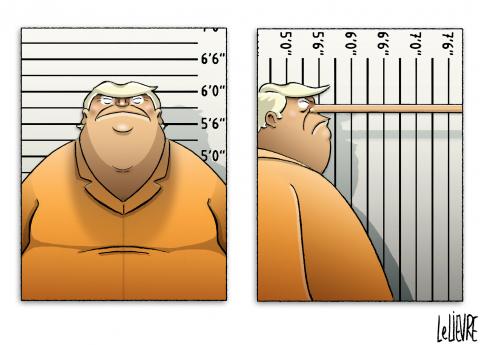 This is from David Kurtz’s Morning Memo at TPM.
I wonder who is televising the speech? I’m going to give that a miss and just look at the clips on Twitter.
Also from the Morning Memo, a discussion of how Trump is reacting to getting his comeuppance: fantasizing about revenge.
The organizing principle of Trump’s re-election campaign first became apparent back in March with his chilling “I am your retribution” speech at CPAC.
I keep coming back to this theme because it animates so much of his rhetoric and has been adopted in both obvious and subtle ways by his closest adherents, and because it poses perhaps the most dire threat to the rule of law if Trump is re-elected.
I bring it back up today because his revenge fantasy is ripening and deepening in alarming ways.
In the immediate aftermath of his indictment in the Mar-a-Lago case, Trump has returned it to the forefront of his own rhetoric, and it’s being picked up again by his boosters. A few of the most egregious examples:
— Trump warned Monday that if re-elected he will name a special prosecutor to “go after” Joe Biden and his family.
“I WILL APPOINT A REAL SPECIAL “PROSECUTOR” TO GO AFTER THE MOST CORRUPT PRESIDENT IN THE HISTORY OF THE USA, JOE BIDEN, THE ENTIRE BIDEN CRIME FAMILY, & ALL OTHERS INVOLVED WITH THE DESTRUCTION OF OUR ELECTIONS, BORDERS, & COUNTRY ITSELF!”
— Trump has targeted Special Counsel Jack Smith’s wife, an echo of what he previously did to deputy FBI Director Andrew McCable’s wife….
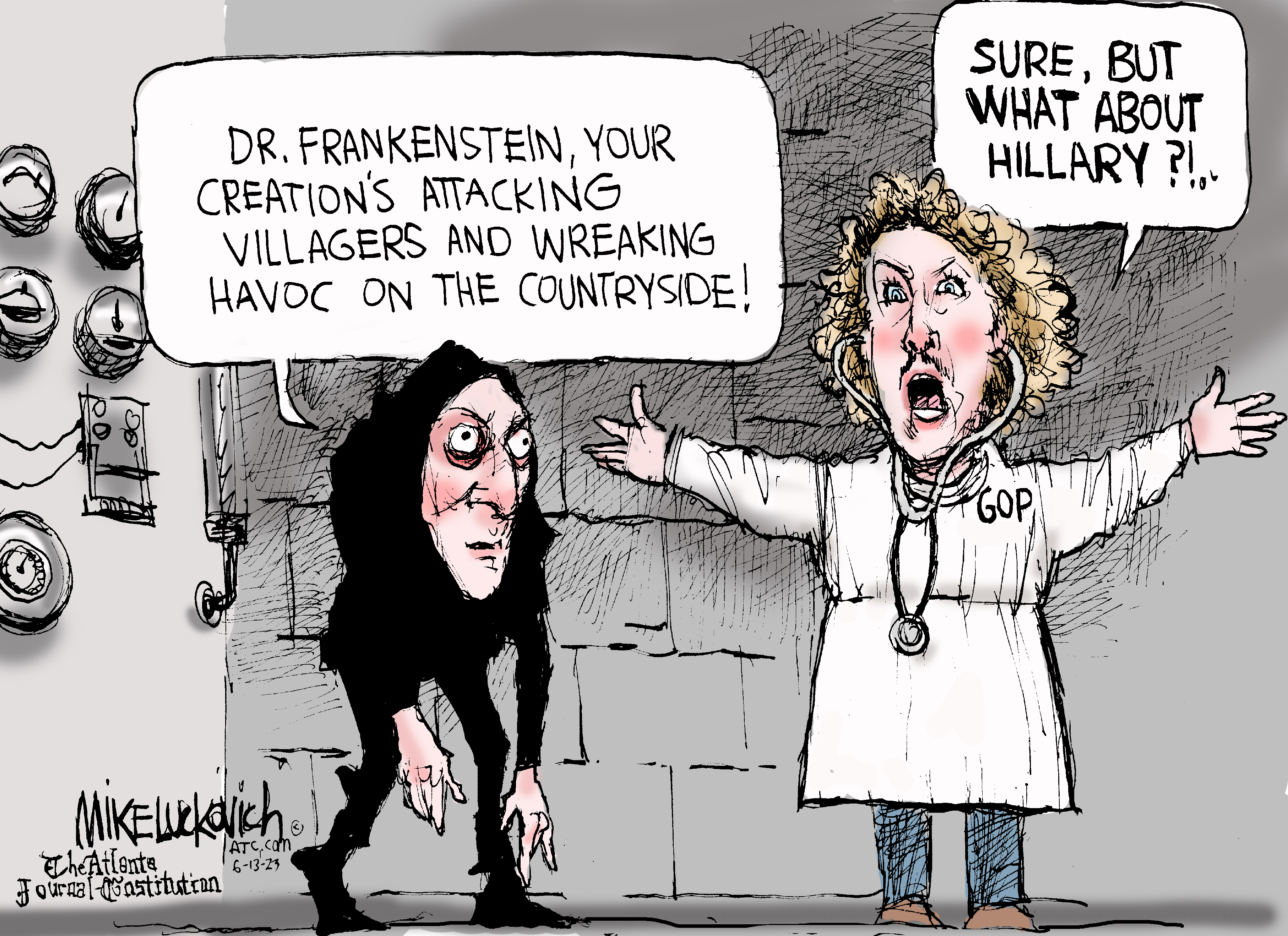 By this point, I feel sure you know the many levels these attacks play at: They effectively cow investigators and prosecutors by raising the price and the pain of enforcing the law against him; they keep everyone involved in holding him accountable looking over their shoulders at what happens if Trump wins in 2024; they unleash the less stable and more deranged among us against Trump’s perceived enemies; they are the rallying cry not just for his supporters at election time but for his appointees and subordinates and acolytes throughout government at the local, state and federal level.
Trump’s revenge fantasy – his stated desire to abuse the powers of the office to inflict pain on those who oppose him – is now more toxic, pervasive, and sinister than at any point in his presidency. It is the rocket fuel to his quickening lurch toward fascism, not only because it appeals to his strongman tendencies, but because now as he faces criminal charges on multiple fronts it is inextricably a part of protecting and preserving his own liberty.
Trump is an increasingly desperate man, and he’s telling us exactly what he will do.
In other words, it’s going to get really ugly.
As Dakinikat posted yesterday, pro-Trump Judge Aileen “Loose” Cannon is still assigned to the trial, even though she’s not handling the arraignment. The New York Times’ Charlie Savage has a piece on how Cannon cold screw things up for the DOJ: How a Trump-Appointed Judge Could Influence His Documents Case.
Jack Smith, the special counsel handling the documents investigation into former President Donald J. Trump, vowed to seek “a speedy trial.” But that will be up to Judge Aileen M. Cannon, who will wield considerable power over its calendar, evidence and jury.
Last year, Judge Cannon, a Trump appointee, briefly disrupted the documents investigation by issuing rulings favorable to him when he challenged the F.B.I.’s search of his Florida club and estate, Mar-a-Lago, before a conservative appeals court ruled that she never had legal authority to intervene.
It remains to be seen how she will handle her second turn in the spotlight. The scope of her role before the trial also is unclear: She is not presiding over Mr. Trump’s initial hearing on Tuesday, and could refer some pretrial motions to a magistrate judge who works under her. But here is a closer look at how her decisions as the judge presiding over the trial — like on what can be included and excluded — could affect the case.
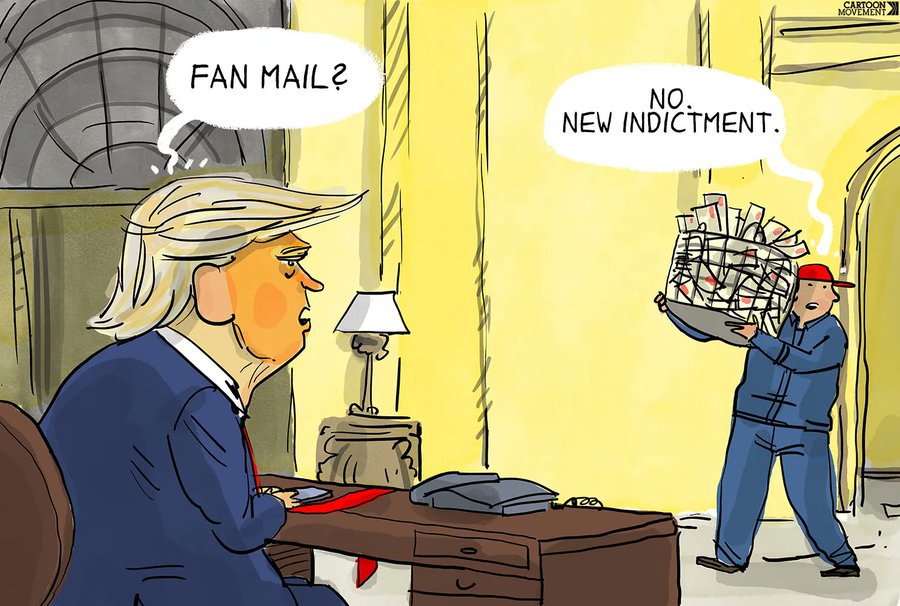 First, she could slow the case down by supporting Trump’s pointless motions. Another problem will be how she handles the classified documents:
Before the trial begins, there is almost certain to be extensive fights behind closed doors over the use of classified evidence, a matter governed by the Classified Information Procedures Act, or CIPA. The law was intended to reduce the opportunities for so-called graymail in criminal cases involving national security, in which defendants threaten to expose sensitive secrets unless prosecutors drop charges against them.
One potential issue: whether the government has to publicly expose all 31 classified documents that are the basis of the 31 counts against Mr. Trump for illegally retaining national-security secrets. Their contents are key evidence for whether they qualify as the type of information protected by the Espionage Act.
CIPA establishes court procedures to sometimes shield sensitive information from the public, including by redacting some documents or substituting summaries. But defense lawyers can argue that they need to discuss their full contents in open court for the trial to be fair.
Read more about this aspect at the link. Another issue could be the attorney-client privilege decisions that have already been decided by a federal judge:
During the investigation, Judge Beryl A. Howell of the Federal District Court for the District of Columbia ruled that the exception applied, forcing Mr. Trump’s lawyers to provide information to the grand jury. But Judge Cannon is not bound by Judge Howell’s decisions when it comes to what information should be presented to a jury.
During pretrial motions, if Mr. Trump’s lawyers ask Judge Cannon to suppress the evidence to protect attorney-client privilege and she does so, prosecutors could appeal — but that would further delay the case.
Other issues discussed in the article: Trump team claims of “prosecutorial misconduct,” jury selection decisions, ‘Rule 29’ Motions to Acquit, and the possibility of a hung jury. Read more details at the NYT link.
Judge Cannon could still recuse herself, but that’s probably unlikely. It will be interesting to see how the DOJ deals with her.
 One serious problem for Trump is that he is having a hard time finding lawyers to defend him. Hugo Lowell at The Guardian: Trump finds no new lawyers for court appearance in Mar-a-Lago case.
Donald Trump is expected to be represented at his first court appearance to face federal criminal charges for retaining national security materials and obstruction of justice by two of his existing lawyers, despite trying to recruit a local Florida lawyer willing to join his legal defense team.
The lawyers making an appearance with Trump on Tuesday will be the top former federal prosecutor Todd Blanche and the former Florida solicitor general Chris Kise, according to people familiar with the matter. Trump’s co-defendant, his valet Walt Nauta, will be represented by Stanley Woodward.
Trump and his legal team spent the afternoon before his arraignment interviewing potential lawyers but the interviews did not result in any joining the team in time for Trump’s initial court appearance scheduled for 3pm ET on Tuesday after several attorneys declined to take him as a client.
Trump has also seemingly been unable to find a specialist national security lawyer, eligible to possess a security clearance, to help him navigate the Espionage Act charges….
After interviewing a slate of potential lawyers at his Trump Doral resort, the former president settled on having Kise appearing as the local counsel admitted to the southern district of Florida as a one-off, with Blanche being sponsored by him to appear pro hac vice, one of the people said.
Here are the attorneys who turned Trump down.
Among the Florida lawyers who turned down Trump was Howard Srebnick, who had expressed an interest in representing the former president at trial as early as last week in part due to the high fees involved, but ultimately was not allowed to after conferring with his law partners, the person said.
The other prominent lawyer who declined to work with Trump was David Markus, who recently defended the Florida Democratic gubernatorial candidate Andrew Gillum against charges that he lied to the FBI and funnelled campaign contributions into his personal accounts, the person said.
Trump and his team have interviewed the corruption attorney Benedict Kuehne, who was indicted in 2008 for money laundering before the charges were dropped, the person said. But he has his own baggage as he faces disbarment for contempt of court in a recent civil suit he lost.
The other interviews are understood to have been with William Barzee, as well as Bruce Zimet, the former chief assistant US attorney in Fort Lauderdale and West Palm Beach.
Hugo Lowell notes that lawyers are concerned about his reputation for being a nightmare client and their concerns that defending Trump could damage their own reputations. They also have to be aware that Trump has lied to and manipulated his attorneys.
Trump is said to still be searching for a lawyer in the mold of Roy Cohn, the ruthless New York fixer who defended and mentored him before he was later disbarred – and the fear of potentially being asked to take similar actions has been a persistent issue.
That fear has loomed large for numerous lawyers Trump’s advisers have contacted, the people said, in particular after Trump might have made Evan Corcoran, another former lawyer who withdrew from his defense in the Mar-a-Lago documents investigation, into a witness against him.
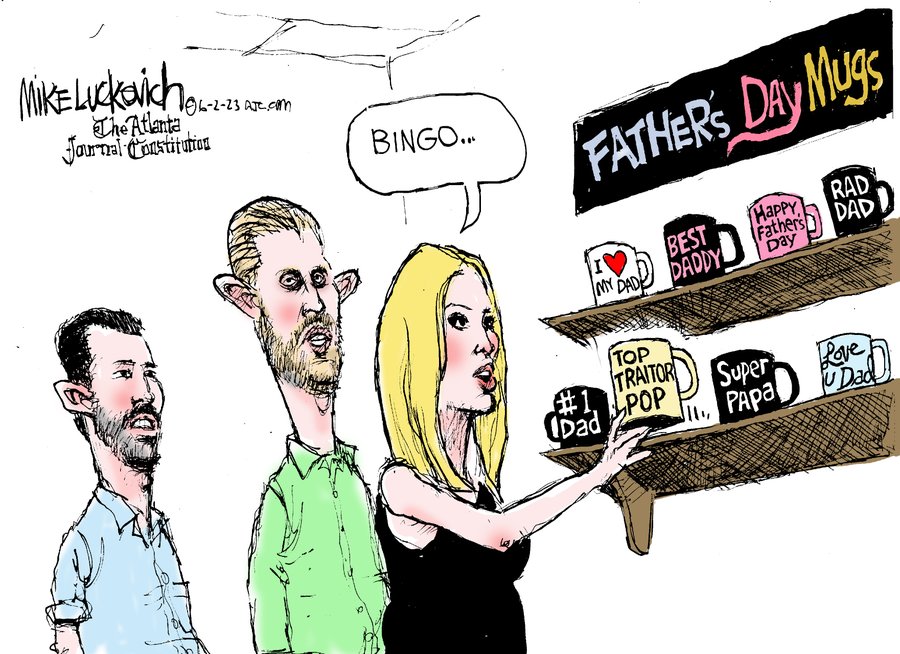 Marcy Wheeler has a post at Emptywheel about Trump’s need for a lawyer who has or would be able to obtain top secret clearance: Trump Needs Cleared Lawyers, Not Just Any Lawyers.
Trump needs cleared attorneys, and he should (finally) have the lawyers with Espionage Act experience that might have minimized some of the risk he currently faces.
When courts deal with classified documents like this one will, the judge does not need clearance. (This is a separation of powers issue; members of Congress similarly don’t need clearance.) But the lawyers do. At least one and preferably three of Trump’s lawyers will need to be cleared at the elevated levels the FBI Agents who did the search of Mar-a-Lago had to be read into to even conduct the search. As it was, Trusty was Trump’s only attorney with clearance, and he just split.
Not all lawyers want to go through the trouble of getting clearance. Some — possibly including Chris Kise, was a registered agent for Venezuela in recent years — may not be able to get cleared at that level.
Donald Trump’s trouble finding legal representation is no longer simply the comedy of self-destructiveness it has been for years. Starting today (or shortly thereafter), there will be new obligations and exposures for lawyers representing him.
Trump’s search for a lawyer is not just about finding people who are members of the bar in SDFL. He also needs to find lawyers who are willing to put their security clearance and their reputations at risk on a case where Trump has already been wildly misleading his attorneys.
In this post, Marcy also addresses in detail the ways in which he has lost lawyers by misleading and lying to them, as well as asking them to do illegal things. Read all about it at the link.
More interesting stories to check out
Sam Brodey at The Daily Beast: Dems Have a Trump Indictment Strategy: Shut Your Damn Mouth.
The New York Times: How Trump Plans to Beat His Indictment, Politically.
Barbara McQuade at MSNBC: New indictment proves Trump is a triple threat to national security.
Eric Levitz at New York Magazine: The DOJ Went Easy on Trump for Political Reasons.
Geraldine DeRuiter at The Washington Post: We need to talk about Trump’s bathroom chandelier.
Did you like this post? Please share it with your friends:


 peej
peej Carissa
 bostonboomer
 dakinikat
 ecocatwoman
 jjlo
jjlo mablue2
 Mama Lopez
 peggysue22
 quixote
 skydancingguestblogger
 Mona (aka Wonk the Vote)



 Sky Dancing
Recent Comments