Posted: May 8, 2024 | Author: bostonboomer | Filed under: Art, Donald Trump, just because | Tags: Access Hollywood tape, classified documents case, date rape, Georgia election interference case, Indiana primary, Joe Kahn, Judge Aileen Cannon, Master of the Blue Jeans artist, misogyny, origin of blue jeans, Robert F. Kennedy Jr., Stormy Daniels, trauma, Trump Hush Money Case |
Good Day!!

A woman sewing blue denim pants, by “Master of the Blue Jeans.”
I’m going to begin today with a story that has nothing to do with politics or current events–just because I think it’s interesting. Did you know that people wore blue jeans way back in the 16th century? I didn’t. An art exhibit will soon open in Paris that will focus on a mysterious artist, known only as “Master of the Blue Jeans.”
Sonja Anderson at Smithsonian Magazine: When Were Blue Jeans Invented? These Paintings Suggest the Fashion Trend Dates Back to the 1600s.
An exhibition centered on the “Master of the Blue Jeans” is opening in Paris this month—and the work on display is not that of Levi Strauss, founder of the eponymous clothing company, but rather a 17th-century Italian painter.
The upcoming show at Galerie Canesso features two paintings by the mysterious artist, who was active in northern Italy in the 1600s and is known only by his “master” moniker. The painter’s oil canvases depict early iterations of the stiff blue fabric beloved today, as worn by Italian peasants. According to a statement, the pieces have proved to be important artifacts in garment history, “pushing back [blue jeans’] provenance by centuries.”
Speaking with Artnet’s Vittoria Benzine, Maurizio Canesso, an art collector and the gallery’s founder, says, “People are still not very familiar with the true history of blue jeans, as they confuse it with the material made by Levi Strauss.”
In truth, Canesso argues, when the American businessman behind Levi’s jeans started selling denim work pants in the late 1800s, he merely added metal rivets and structure to a fabric that already boasted a storied European past.
“Jeans come from Genoa, while denim comes from the French city of Nîmes,” says Canesso. Blue jeans were made with perpendicular stitches in northwest Italy, while denim was woven in chevron patterns in southern France. But the key component of the fabric’s history is its coloration.
“Until the 11th century, no one could wear blue fabric because they didn’t know how to make blue color adhere,” Canesso says. “Only in the year 1000 did this begin to happen using woad leaves, and at a very high cost. The genius of the Genoese was to find the indigo stone in India and make this an industrial and therefore low-cost process.”
The ten denim-themed paintings attributed to the master were previously thought to be the work of several different artists. But in 2004, curator Gerlinde Gruber reattributed the group of artworks to a single unnamed painter then dubbed the Master of the Blue Jeans. By 2010, Canesso had acquired all of the master’s works, and he presented them in an exhibition at his Paris gallery that same year.
“Unfortunately, we have no new theories about who the Master of the Blue Jeans was,” Véronique Damian, an art historian at Galerie Canesso, tells the Observer’s Vanessa Thorpe. Evidence indicates the artist spent the bulk of his career in Italy’s northern region of Lombardy, though he may trained elsewhere.
I’m including some of the artist’s work in this post, just because.
In the more painful world of politics, Trump had a bad day in New York yesterday, and he got some bad news in India; but he got some gifts from judges in Florida and Georgia.
As I’m sure you’re aware, Stormy Daniels testified in Trump’s hush money case yesterday.
The Washington Post: Stormy Daniels testifies, Trump curses in an angry day in court.
Stormy Daniels, the adult-film actress at the center of Donald Trump’s hush money trial, testified Tuesday about a disturbing sexual encounter she says she had with him, leading to angry, profane muttering from the former president that alarmed the judge.
New York Supreme Court Justice Juan Merchan called Trump’s lawyer Todd Blanche to a sidebar during a midday break to say that Trump was “cursing audibly” and possibly intimidating Daniels, who had begun testifying, according to a trial transcript.
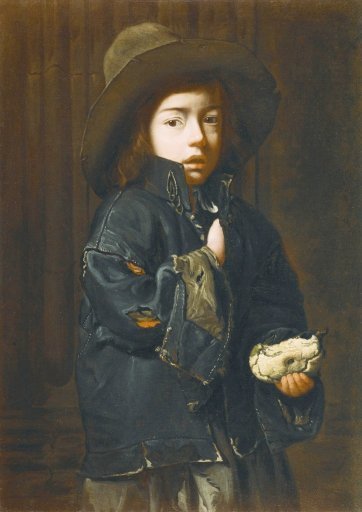
Beggar Boy with a Piece of Pie (wearing a denim jacket)
“I understand that your client is upset at this point,” Merchan said to the defense attorney, according to the transcript, “but he is cursing audibly and he is shaking his head visually and that’s contemptuous. It has the potential to intimidate the witness and the jury can see that.”
Blanche assured the judge he would speak to Trump.
“I am speaking to you here at the bench because I don’t want to embarrass him,” Merchan said. “You need to speak to him. I won’t tolerate that.”
The exchange punctuated a day of rage — sometimes whispered from the defense table, sometimes declared loudly by Daniels from the witness stand.
It was one of several surreal moments on the 13th day of the first criminal trial of a former U.S. president, including descriptions by Daniels of their alleged sexual encounter in 2006 that were so detailed that defense attorneys demanded a mistrial.
While Merchan rejected their request, Daniels at times seemed to be describing nonconsensual sex that could be considered highly prejudicial for the jury, which in turn could give Trump — the presumptive Republican presidential nominee — solid grounds to appeal if he is found guilty.
It sounds like the sex actually was nonconsensual though. Daniels’ description of what happened sounds very much like a date rape situation in which she was taken advantage of by a much older and more powerful man. She was 27. He was 60. He was much taller and stronger. She was invited for dinner, but there was no dinner. When she was ready to leave, she went to the bathroom. When she came back, he was on the bed in boxers. She tried to leave, but he blocked the door. This description is from Harry Litman on Twitter:
thought time to go. when opened the bathroom door, Trump had come in and was on the bed, in boxer shirts and a t-shirt. she was startled. felt like room spun in full motion. blood leaves my hands and feet. “ohmygod — what did I miss to get here?” she laughed nervously
The next thing I knew I was on the bed. opposite side of bed. missionary position. objection – sustained
I blacked out. but I was not drugged in any way, no alcohol. didn’t feel threatened physically “There was an imbalance of power for sure. but I was not threatened verbally or physically”
Had sex with him on the bed. Merchan sustaining objections to details. Staring at ceiling didn’t know how I got there. sustained. stricken touch his skin? objection sustained. he wasn’t wearing a condom. concerning to her but didn’t say anything.
sex was brief. remembers getting dressed. sitting on edge of bed, noticed completely dark outside. hard to get shoes on, hands shaking so hard. DJT: “oh it’s great, let’s get together again honey bunch.” I just wanted to leave. DVD she signed was on nightstand.
DJT: “We have to get together again soon” “we were so fantastic together. talked about the show” I just left as fast as I could. Didn’t express any concern about Melania. or mention her. didn’t have dinner. took cab back to hotel.
I felt ashamed I didn’t stop the sex so I didn’t tell many people about it. Remembered some additional details later. Merchan very stern about level of detail — wants to keep it spare.
It’s pretty clear from Daniels’ description that she was traumatized. I doubt if the judge understands that, but maybe some jurors will. Just because she is a porn actress doesn’t mean she can’t be raped. Her description is also reminiscent of E. Jean Carroll’s experience–Trump lifted her up against the wall and grabbed her genitals before she realized what was happening. It’s also reminisce of his own description in the Access Hollywood tape–how he can grab women “by the pussy. If you’re a star they let you do it.”
Amanda Marcotte at Salon: “He was bigger and blocking the way”: Stormy Daniels takes the stand and reminds people who Trump is.
Daniels matters for reasons outside of the courtroom and the specifics of this hush-money trial. Daniels’ story is yet another reminder of what may prove to be Trump’s electoral downfall: His bottomless misogyny.
On the witness stand, Daniels reportedly spoke quickly and was apparently quite nervous. Initially, her story of meeting Trump sounded funny. She painted him as a pathetic older man trying — and failing — to impress the younger woman. When he first asked her to dinner, she replied “no,” but with an expletive. Her publicist eventually talked her into it, hoping Daniels could leverage the connection into a spot on “The Apprentice.” In his hotel room, she described him wearing “silk or satin” pajamas and asked him to put on real clothes. He allegedly used the “don’t even sleep in the same room” line when she asked about his wife, Melania, who had recently had a baby. Daniels described Trump as “pompous” and “arrogant.” She recounted how she jokingly spanked him with a magazine, hoping to tease him into being less of a jerk.
Then the tone of her story changed, as she described how they came to have sex. Trump waited until she was in the bathroom, Daniels said, and then he stripped down to boxer shorts and a T-shirt. “The room spun in slow motion,” she recalled on the witness stand. When she made for the door, “he was bigger and blocking the way,” she said of Trump. She denied it was sexual assault, however, because “I was not threatened either verbally or physically.” [….]
Whether or not Trump’s sexual encounter with Daniels was consensual in the legal sense, she describes it as unwanted.
“I didn’t say anything at all,” she told the court repeatedly. Claiming that she “blacked out” during the encounter, afterward, Daniels said, “my hands were shaking so hard” and “I felt ashamed that I didn’t stop it and that I didn’t say ‘No.'”

Another painting by Master of the Blue Jeans
A person doesn’t have to be threatened in order for sex to be nonconsensual. Back to Marcotte’s piece:
Following Daniels’ testimony on Tuesday, I was struck by how much it has in common with what E. Jean Carroll described in her two recent civil trials, where both juries found that Trump had sexually assaulted her in the 90s. Carroll, too, told of a random encounter with Trump she initially thought to be flirty but not sexual. Like Daniels, Carroll describes teasing Trump, who famously has no sense of humor about himself. In both cases, the women describe Trump becoming aggressive after the light mockery. In Carroll’s case, the judge described what happened after as what “many people commonly understand the word ‘rape.'” Daniels, to be clear, frames her encounter with Trump differently.
Since the release of the “Access Hollywood” video in 2016, in which Trump can be heard bragging about sexual assault, the Beltway media has repeatedly tried to move on from the story of Trump’s legion of issues with women. Indeed, when Carroll’s accusations first came out in 2019, the press barely paid any mind. But the story of his rampant misogyny has never fully gone away. There was the Women’s March that overshadowed his 2017 inauguration. Then the over two dozen women who stepped forward with stories of being subject to the sexual harassment and assault Trump himself described so vividly. Trump, of course, is more responsible than any other person on the planet for the overturn of Roe v. Wade and the stampede of Republican state legislators banning abortion. He promised to stack the Supreme Court with anti-choice justices, and his three appointees provided the votes necessary in Dobbs v. Jackson Women’s Health, which ended the legal right to abortion. While Trump has tried to make moderate-sounding noises on this issue, he keeps inadvertently revealing his anti-choice radicalism. In a recent Time interview, for instance, he indicated that he’s fine if states “monitor women’s pregnancies so they can know if they’ve gotten an abortion.”
Noah Berlansky at Public Notice: Stormy Daniels details Trump’s sleazy contempt for women.
On the stand, Daniels provided ugly details about how Trump treated her, and about how Trump treats, and views, women. These insights are notable, but they’re not new. In 2016, leaked audio of Trump making grotesque and sexist comments about women to Access Hollywood host Billy Bush almost derailed his presidential campaign. Last year, Trump was held liable for sexual assaulting and then repeatedly defaming advice columnist E. Jean Carroll.
But Daniels’s testimony is a reminder that contempt and mistreatment of women is a core theme of Trump’s life and politics. Both the press and Democratic opponents have struggled to make this issue central to 2024, even though abortion rights and women’s health care are the key issues of the campaign. It’s unclear whether the trial will spark more reporting and discussion of Trump’s treatment of and attitudes about women. But it should….
Daniels’s testimony is intended to establish the background facts of the payment. It also, though, paints Trump as a liar, a bully, and a sexual manipulator. Daniels said while she was in Trump’s hotel room, she went to the bathroom, and when he came out he was in his boxer shorts, a moment Daniels describes as “like a jump scare.” She said, “the room spun in slow motion” and she realized “I’ve put myself in this bad situation.”
Daniels is careful to emphasize that Trump did not physically coerce her. He did, however, according to Daniels, suggest that if she cooperated with him he could help her career through his connections and a possible appearance on the Celebrity Apprentice reality show, where Trump was the star. She eventually agreed to have sex even though Trump did not use a condom — she was adamant about using condoms in her adult film shoots.

By Master of the Blue Jeans.
She testified that during sex she stared at the ceiling and tried to think of something else, and afterwards she had trouble dressing because her hands were shaking. She said, “I felt ashamed that I didn’t stop it and that I didn’t say no.”
Daniels kept in touch with Trump for some time because he was still offering her the chance to appear on Celebrity Apprentice, which would have been a huge mainstream boost to her career. She met with Trump once more in Los Angeles, at which point “he kept trying to make sexual advances, putting his hand on my leg, scooting closer.” She rebuffed him, and in a later phone call he admitted he was not going to put her on his television show. At that point she ceased communicating with him.
Again, Daniels has not accused Trump of sexual harassment or violence, and she says their encounter was consensual. Her testimony makes clear, though, that Trump was pressuring her for sex in return for business opportunities — a variation on the ugly tradition of the Hollywood casting couch. We don’t know if Trump ever had any intention of keeping his promises or of helping Daniels. But whether he did or not, his actions as she describes them were sleazy at best, and she found the experience painful and traumatic enough to leave her literally shaking.
The encounter doesn’t sound consensual to me. As I said above, it sounds like date rape.
More Trump legal news, and it’s not good.
Kyle Cheney at Politico: Judge Cannon indefinitely postpones Trump’s classified docs trial.
The judge presiding over Donald Trump’s criminal case in Florida — on charges that he hoarded classified secrets at his Mar-a-Lago estate after his presidency — has indefinitely postponed the trial, once scheduled for May 20.
The date had been widely expected to move amid a tangle of pretrial conflicts between special counsel Jack Smith and Trump’s attorneys. Smith had urged Judge Aileen Cannon to reschedule the trial to begin on July 8, but an order from the judge on Tuesday afternoon suggested that she is unlikely to even decide on a new trial date before late July.
Cannon, a Trump appointee who took the bench in late 2020, indicated in the order that, before setting a new trial date, she intends to resolve the backlog of other issues in the case that have piled up on her plate. Smith’s defenders have criticized Cannon for what they see as a plodding pace in resolving pretrial matters, and tensions between the special counsel and the judge have flared in recent months over a series of puzzling rulings that threatened to derail the case.
“[F]inalization of a trial date at this juncture — before resolution of the myriad and interconnected pre-trial and [classified evidence] issues … would be imprudent and inconsistent with the Court’s duty to fully and fairly consider the various pending pre-trial motions,” Cannon wrote in the five-page order.
That reshuffling further clouds the picture for Smith, who is also awaiting a Supreme Court ruling on presidential immunity that could determine whether his other case against Trump — charges in Washington D.C. for attempting to subvert the 2020 election — can move forward this year….
Trump has sought to delay all of his criminal cases until after this year’s election. If he wins, he could shut down the two federal cases brought by Smith, and the state cases in New York and Georgia also might have to be frozen.
And from The Atlanta Journal-Constitution: Court of Appeals agrees to consider DA removal in Trump election case.
The Georgia Court of Appeals on Wednesday decided to hear an appeal of a judge’s ruling allowing District Attorney Fani Willis to remain at the helm of Fulton County’s election interference case against former President Donald Trump.
The court’s decision almost certainly means a significant delay of a trial here for Trump and his 14 co-defendants and signals that Willis’ leadership role isn’t guaranteed. It is unclear how long the appeals court will take to decide the issue but they are not known for moving swiftly.
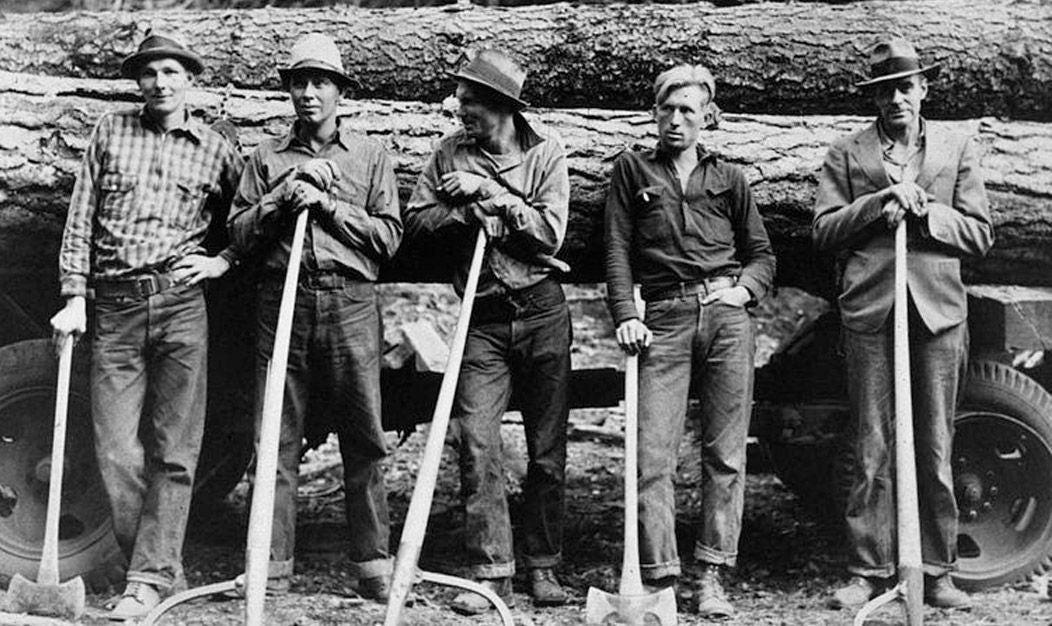
Farmers wearing jeans, 1930s
“There’s no way this case gets to trial this year,” said Atlanta defense attorney Andrew Fleischman, who is closing following the case. “I would expect the appeals court to issue its opinion some time next year.”
On March 29, Superior Court Judge Scott McAfee issued a “certificate of immediate review,” which allowed the defendants to appeal his ruling to the Georgia Court of Appeals before a trial begins.
Under Appeals Court rules, such a pretrial — or interlocutory — appeal is typically assigned to a three-judge screening panel. And all it takes is for one of those judges to decide whether the court accepts the appeal. The court’s order one-page order did not divulge which judge voted to grant the application.
In his order granting the pre-trial review, McAfee said he will continue working on the case, resolving pending motions, while the appeals court takes up the removal issue.
The bad news for Trump is that he is losing a significant percentage of Republican voters in the primaries, which are still going on. Niki Haley is still getting votes. Adam Wren and Madison Fernandez at Politico: Unexpected warning signs for Trump in busy Indiana primary.
In 2016, Indiana put Donald Trump on the doorstep of the GOP presidential nomination. But eight years later, the state he called “Importantville” delivered his campaign some flashing red warning signs as Nikki Haley cleaned up in the suburbs.
By virtue of its late-in-the-nominating-calendar primary, the Hoosier state has always occupied a unique and occasionally powerful perch to make or break candidacies: Sen. Ted Cruz and then-Ohio Gov. John Kasich dropped out immediately after Trump’s victory that year. But the barn-red state also often acts as a pace car for Republicans nationally.
And in a primary that saw a record-breaking $98 million splash across the state, according to AdImpact, Tuesday was no exception.
A zombie Haley candidacy continued to punch above its weight in the Trumpiest of states: The former South Carolina governor is on track to break 20 percent for the first time since she dropped out of the race two months ago.
Read more at the link.
I don’t know if you’ve been following the reporting about New York Times editor Joe Kahn and his pathetic explanations for why his paper seems to be rooting for another Trump presidency.
Dan Froomkin at Press Watch: New York Times editor Joe Kahn says defending democracy is a partisan act and he won’t do it.
Joe Kahn, after two years in charge of the New York Times newsroom, has learned nothing.
He had an extraordinary opportunity, upon taking over from Dean Baquet, to right the ship: to recognize that the Times was not warning sufficiently of the threat to democracy presented by a second Trump presidency.
But to Kahn, democracy is a partisan issue and he’s not taking sides. He made that clear in an interview with obsequious former employee Ben Smith, now the editor of Semafor.
Kahn accused those of us asking the Times to do better of wanting it to be a house organ of the Democratic party:
To say that the threats of democracy are so great that the media is going to abandon its central role as a source of impartial information to help people vote — that’s essentially saying that the news media should become a propaganda arm for a single candidate, because we prefer that candidate’s agenda.
But critics like me aren’t asking the Times to abandon its independence. We’re asking the Times to recognize that it isn’t living up to its own standards of truth-telling and independence when it obfuscates the stakes of the 2024 election, covers up for Trump’s derangement, and goes out of its way to make Biden look weak.

Marlon Brando wearing jeans in The Wild One
Kahn’s position is, not coincidentally, identical to that of his boss, publisher A.G. Sulzberger, who I recently wrote about in my post, “Why is New York Times campaign coverage so bad? Because that’s what the publisher wants.”
And to the extent that Kahn has changed anything in the Times newsroom since Baquet left, it’s to double down on a form of objectivity that favors the comfortable-white-male perspective and considers anything else little more than hysteria.
Throwing Baquet under the bus, Kahn called the summer of the Black Lives Matter protests “an extreme moment” during which the Times lost its way.
“I think we’ve learned from it. I think we found our footing after that,” he said.
I translate that to mean that the old guard has reasserted total control over the rabble.
Read the rest at Press Watch.
I’ll wrap this up with a couple of creepy stories about Robert Kennedy Jr.
The New York Times: R.F.K. Jr. Says Doctors Found a Dead Worm in His Brain.
In 2010, Robert F. Kennedy Jr. was experiencing memory loss and mental fogginess so severe that a friend grew concerned he might have a brain tumor. Mr. Kennedy said he consulted several of the country’s top neurologists, many of whom had either treated or spoken to his uncle, Senator Edward M. Kennedy, before his death the previous year of brain cancer.
Several doctors noticed a dark spot on the younger Mr. Kennedy’s brain scans and concluded that he had a tumor, he said in a 2012 deposition reviewed by The New York Times. Mr. Kennedy was immediately scheduled for a procedure at Duke University Medical Center by the same surgeon who had operated on his uncle, he said.
While packing for the trip, he said, he received a call from a doctor at NewYork-Presbyterian Hospital who had a different opinion: Mr. Kennedy, he believed, had a dead parasite in his head.
The doctor believed that the abnormality seen on his scans “was caused by a worm that got into my brain and ate a portion of it and then died,” Mr. Kennedy said in the deposition.
Gross. Maybe that explains some of his weird ideas?
NBC News: RFK Jr.’s new hire who downplayed Jan. 6 appears to have been at the Capitol during the attack.
A right-wing social media influencer hired by Robert F. Kennedy Jr.’s presidential campaign who previously said Jan. 6 was “Democrat misdirection” appears to have himself been on the restricted grounds of the U.S. Capitol during the attack.

Marilyn Monroe in blue jeans
NBC News first reported that Kennedy’s campaign hired Zach Henry’s firm, Total Virality, for “influencer engagement” in March. Henry had worked as deputy communications director for Republican Vivek Ramaswamy’s presidential campaign, as well as for Blake Masters during his Senate run in Arizona.
Henry, as NBC News reported, had posted that Jan. 6 was “no MAGA insurrection Just more Democrat misdirection” and appears to have embraced conspiracy theories about the Capitol attack, including posting that “antifa” was behind it, which is false.
But photos and videos uncovered by NBC News and online “sedition hunters,” who have aided the FBI in hundreds of cases against Capitol rioters, appear to show Henry among the mob outside the Capitol on Jan. 6, 2021, beyond the previously established police lines, although it is unclear whether any of the barricades and “restricted” signs remained by the time he arrived.
There is no indication that Henry entered the Capitol or that he engaged in assaults on police officers or in destruction of property. Federal prosecutors have almost entirely focused their resources on Jan. 6 participants who either went inside the building or committed violence or destruction outside it, so there is little chance that Henry would be charged; the few nonviolent Jan. 6 defendants who were charged solely for going on restricted Capitol grounds were generally charged with misdemeanors.
But Henry’s presence on Capitol grounds would be significant given his previous social media posts about Jan. 6 and his new position on Kennedy’s campaign as Kennedy runs for president as an independent against former President Donald Trump.
That’s it for me today. What stories have you been following?
Did you like this post? Please share it with your friends:
Posted: October 25, 2023 | Author: bostonboomer | Filed under: Donald Trump, 2020 Elections, 2024 Elections | Tags: 5th Amendment, Fani Willis, Georgia election interference case, grand jury, Jenna Ellis, Mark Meadows, Mike Johnson, Republicans, Speaker of the House search, Tom Emmer, use immunity, witness tampering |
Good Afternoon!!

Vase of Flowers, by Paul Gauguin
Yesterday, another shoe dropped in the Georgia election interference case when former Trump attorney Jenna Ellis accepted a plea deal.
CNN: Former Trump campaign lawyer Jenna Ellis pleads guilty in Georgia case.
Former Trump campaign lawyer Jenna Ellis pleaded guilty Tuesday in the Georgia election subversion case and will cooperate with Fulton County prosecutors – the third guilty plea in the past week.
At an unscheduled hearing in Atlanta, Ellis pleaded guilty to one count of aiding and abetting false statements, a felony stemming from the election lies that Ellis and other Donald Trump lawyers peddled to Georgia lawmakers in December 2020.
She was sentenced to five years of probation and ordered to pay $5,000 in restitution.
Ellis delivered a tearful statement to the judge Tuesday while pleading guilty, disavowing her participation in Trump’s unprecedented attempts to overturn the 2020 election.
“If I knew then what I knew now, I would have declined to represent Donald Trump in these post-election challenges. I look back on this experience with deep remorse,” Ellis said, her voice breaking at times.
The development comes after back-to-back guilty pleas last week in the sprawling case from former Trump campaign lawyer Sidney Powell and Kenneth Chesebro, who helped devise the fake electors plot.
These three plea deals are a monumental step forward for Fulton County District Attorney Fani Willis, who charged the case in August and is preparing for trials against Trump, his former attorney Rudy Giuliani, his chief of staff Mark Meadows and other top figures. (They have all pleaded not guilty.)
Ellis, Chesebro and Powell all agreed to testify on behalf of the prosecution at future trials. By flipping, these onetime Trump insiders are now on track to become major Trump nemeses. They are all lawyers and can shed light on what was happening behind the scenes in 2020.
The New York Times: With Plea Deals in Georgia Trump Case, Fani Willis Is Building Momentum.
Fani T. Willis, the district attorney of Fulton County, Ga., had no shortage of doubters when she brought an ambitious racketeering case in August against former president Donald J. Trump and 18 of his allies. It was too broad, they said, and too complicated, with so many defendants and multiple, crisscrossing plot lines for jurors to follow.
But the power of Georgia’s racketeering statute in Ms. Willis’s hands has become apparent over the last six days. Her office is riding a wave of momentum that started with a guilty plea last Thursday from Sidney K. Powell, the pro-Trump lawyer who had promised in November 2020 to “release the kraken” by exposing election fraud, but never did.

Maple Tree Listening, by Kazuko Shiihashi
Then, in rapid succession, came two more guilty pleas — and promises to cooperate with the prosecution and testify — from other Trump-aligned lawyers, Kenneth Chesebro and Jenna Ellis. While Ms. Powell pleaded guilty only to misdemeanor charges, both Mr. Chesebro and Ms. Ellis accepted a felony charge as part of their plea agreements.
A fourth defendant, a Georgia bail bondsman named Scott Hall, pleaded guilty last month to five misdemeanor charges.
With Mr. Trump and 14 of his co-defendants still facing trial in the case, the question of the moment is who else will flip, and how soon. But the victories notched thus far by Ms. Willis and her team demonstrate the extraordinary legal danger that the Georgia case poses for the former president.
And the plea deals illustrate Ms. Willis’s methodology, wielding her state’s racketeering law to pressure smaller-fry defendants to roll over, take plea deals, and apply pressure to defendants higher up the pyramids of power.
The strategy is by no means unique to Ms. Willis. “This is how it works,” said Kay L. Levine, a law professor at Emory University in Atlanta, referring to large-scale racketeering and conspiracy prosecutions. “People at the lower rungs are typically offered a good deal in order to help get the big fish at the top.”
Later yesterday, ABC News published a scoop about former chief of staff Mark Meadows: Ex-Chief of Staff Mark Meadows granted immunity, tells special counsel he warned Trump about 2020 claims: Sources.
Former President Donald Trump’s final chief of staff in the White House, Mark Meadows, has spoken with special counsel Jack Smith’s team at least three times this year, including once before a federal grand jury, which came only after Smith granted Meadows immunity to testify under oath, according to sources familiar with the matter.
According to the sources, Meadows also told the federal investigators Trump was being “dishonest” with the public when he first claimed to have won the election only hours after polls closed on Nov. 3, 2020, before final results were in.
“Obviously we didn’t win,” a source quoted Meadows as telling Smith’s team in hindsight.
Trump has called Meadows, one of the former president’s closest and highest-ranking aides in the White House, a “special friend” and “a great chief of staff — as good as it gets.”
The descriptions of what Meadows allegedly told investigators shed further light on the evidence Smith’s team has amassed as it prosecutes Trump for allegedly trying to unlawfully retain power and “spread lies” about the 2020 election. The descriptions also expose how far Trump loyalists like Meadows have gone to support and defend Trump.
Sources told ABC News that Smith’s investigators were keenly interested in questioning Meadows about election-related conversations he had with Trump during his final months in office, and whether Meadows actually believed some of the claims he included in a book he published after Trump left office — a book that promised to “correct the record” on Trump.

Peonies and Irises, by Emil Nolde
ABC news found several passages in the book that differ from Meadows’ reported testimony. See examples at the link. People are claiming that Meadows “flipped” on Trump, but that’s not what this sounds like:
Under the immunity order from Smith’s team, the information Meadows provided to the grand jury earlier this year can’t be used against him in a federal prosecution.
That immunity came after a lawyer for Meadows requested that his client be immunized to testify before the grand jury, sources familiar with the matter said. A senior Justice Department official signed off on the request and an immunity order was then issued by U.S. District Court Judge James Boasberg, the chief judge at the federal court in Washington, D.C., days before Meadows appeared before the grand jury in March, sources said.
Had Meadows not been granted immunity, prosecutors expected him to invoke his Fifth Amendment rights against self-incrimination, sources said.
It sounds like Meadows was given “use immunity” in order to force him to testify without taking the Fifth. That’s not “flipping.” It just means that he cannot be prosecuted for truthful testimony he gave to the grand jury. He may end up cooperating with the government, but he hasn’t done it yet.
The Guardian’s Hugo Lowell agrees: Trump chief Mark Meadows testified in 2020 election case after immunity order.
Donald Trump’s former White House chief of staff Mark Meadows testified to a federal grand jury earlier this year about efforts by the former president to overturn the 2020 election results pursuant to a court order that granted him limited immunity, according to two people familiar with the matter.
The immunity – which forces witnesses to testify on the promise that they will not be charged on their statements or information derived from their statements – came after a legal battle in March with special counsel prosecutors, who had subpoenaed Meadows.
Trump’s lawyers attempted to block Meadows’ testimony partially on executive privilege grounds. However, the outgoing chief US district judge Beryl Howell ruled that executive privilege was inapplicable and compelled Meadows to appear before the grand jury in Washington, the people said.
The precise details of what happened next are unclear, but prosecutors sought and received an order from the incoming chief judge James Boasberg granting limited-use immunity to Meadows to overcome his concerns about self-incrimination, the people familiar with the matter said.
That Meadows testified pursuant to a court order suggests prosecutors in the office of special counsel Jack Smith were determined to learn what information he was afraid to share because of self-incrimination concerns – but it does not mean he became a cooperator.
Typically, under limited-use immunity orders, witnesses provide limited statements. With the payoff potentially small and with the increased difficulty that comes from charging immunity recipients in the future, the justice department is broadly averse to seeking such orders.
The approval must also come from the top echelons of the justice department, according to guidelines, and the preferred method for federal prosecutors to obtain testimony is to have defendants plead guilty, and then have them offer cooperation for a reduced sentence.
Nevertheless, I think it’s unlikely that Meadows will be willing to go to prison for Trump; so he may end up cooperating. He just hasn’t done it yet.

Anemones, Edvard Munch
Last night in a Truth Social post, Trump blatantly attempted to witness tamper Mark Meadows.
From an analysis post by Stephen Collinson at CNN: Trump rages as former acolytes turn against him under legal heat.
In a rage-filled stream of consciousness on his Truth Social network on Tuesday night, Trump lashed out at the ABC report about Meadows.
“I don’t think Mark Meadows would lie about the Rigged and Stollen 2020 Presidential Election merely for getting IMMUNITY against Prosecution (PERSECUTION!),” the former president wrote.
“Some people would make that deal, but they are weaklings and cowards, and so bad for the future our Failing Nation. I don’t think that Mark Meadows is one of them, but who really knows? MAKE AMERICA GREAT AGAIN!!!”
The other big story today is House Republicans’ endless search for a Speaker candidate they can agree on. The latest candidate is Rep. Mike Johnson, an ultra-MAGA guy, after Trump put the kibosh on previous candidate Tom Emmer, who supported the transition of power in 2020.
Politico: ‘I killed him’: How Trump torpedoed Tom Emmer’s speaker bid.
Just hours after Rep. Tom Emmer (R-Minn.) won the Republican Conference’s nomination to be House speaker on Tuesday, former President Donald Trump took to Truth Social to deride the congressman as “totally out-of-touch with Republican Voters” and a “Globalist RINO.”
He then got on the phone with members to express his aversion for Emmer and his bid for speaker.
By Tuesday afternoon Trump called one person close to him with the message, “He’s done. It’s over. I killed him.”
Just minutes later, Emmer officially dropped out of the race.
His withdrawal made Emmer the third nominee for speaker to have his hopes dashed for the most cursed job in politics. And it showed that while Trump may not be able to elevate someone to the post — his earlier choice for the job, Rep. Jim Jordan (R-Ohio), also flopped — he can very well ensure that a person doesn’t get it….
Trump had signaled to aides last week that he did not support Emmer’s bid for the speakership. The former president complained that Emmer had criticized him following the Trump-inspired Jan. 6 Capitol riot and, among other things, had not forcefully enough defended him against his multiple indictments.
The House will supposedly vote on Johnson for Speaker today. So who is Mike Johnson?
The Washington Post: 5 things to know about Mike Johnson, the GOP’s latest House speaker nominee.
It remains unclear whether Johnson has enough support to win the gavel. But after he was nominated in a Republican closed-door vote on Tuesday, Johnson, flanked by his colleagues, projected confidence, promising to restore voters’ trust in government and to govern effectively if he is elected speaker.

Red Roses with Blue, by Alex Katz
Here are five things to know about Mike Johnson and his political views.
He opposed certifying the 2020 election.
Johnson, 51, contested the results of the 2020 election — urging President Donald Trump to “stay strong and keep fighting” as he tried to overturn his loss to Joe Biden in the presidential race.
Johnson also objected to certifying Biden’s electoral win and was one of the architects of a legal attack on the election that consisted of arguing that states’ voting accommodations during the pandemic were unconstitutional. He led a group of 126 Republican lawmakers in filing an amicus brief to the Supreme Court alleging that authorities in Georgia, Pennsylvania, Wisconsin and Michigan “usurped” the constitutional authority of state legislatures when they loosened voting restrictions because of the pandemic. The court rejected the underlying complaint — filed by the state of Texas — due to lack of standing, and dismissed all other related motions, including the amicus brief.
He voted against further Ukraine aid.
Johnson, who serves on the House Armed Services Committee, was one of 57 lawmakers — all of them Republicans — who voted against a $39.8 billion aid package for Ukraine in May.
According to the Shreveport Times, Johnson explained his opposition to the bill by saying that the United States “should not be sending another $40 billion abroad when our own border is in chaos, American mothers are struggling to find baby formula, gas prices are at record highs, and American families are struggling to make ends meet, without sufficient oversight over where the money will go.”
Johnson has also called for more oversight of the aid sent to Ukraine — totaling more than $60 billion to date. In February, following a House Armed Services Committee hearing on the topic, he tweeted that American taxpayers “deserve to know if the Ukrainian government is being entirely forthcoming and transparent about the use of this massive sum of taxpayer resources.” [….]
He is anti-abortion.
Johnson, a constitutional lawyer who identifies as a Christian, opposes abortion and has celebrated the Supreme Court’s decision to overturn Roe v. Wade, the landmark 1973 ruling that established constitutional protections for abortions nationwide.
“There is no right to abortion in the Constitution; there never was,” Johnson told Fox News on the day the decision was announced, calling it “a great, joyous occasion.”
The antiabortion nonprofit Susan B. Anthony Pro-Life America gives Johnson an A+ ranking on this issue, stating that he “has voted consistently to defend the lives of the unborn and infants,” including by “stopping hard-earned tax dollars from paying for abortion, whether domestically or internationally.”
He is a close ally of Donald Trump
Johnson is a close ally of Trump, having served on the former president’s legal defense team during his two impeachment trials in the Senate.
He has called charges against Trump — which include a federal case relating to his attempts to overturn the 2020 election — “bogus,” and has said the legal and political systems have treated Trump unfairly.
He supports LGBTQ restrictions.
Johnson has positioned himself on the far right of the political spectrum on several social issues, even within the current conservative Republican conference. Notably, he introduced legislation last year — modeled after Florida’s “don’t say gay” bill — that would have prohibited discussion of sexual orientation and gender identity, as well as related subjects, at any institution that received federal funds. The Human Rights Campaign, a pro-LGBTQ civil rights organization, gave Johnson a score of 0 in its latest congressional scorecard.
Johnson also opposes gender-affirming care for minors and led a hearing on the subject in July. In a statement, he described gender-affirming care — meaning medical care that affirms or recognizes the gender identity of the person receiving the care, and which can include giving puberty or hormone blockers to minors under close monitoring from a doctor — as “adults inflicting harm on helpless children to affirm their world view.”

Roses, by Vincent Van Gogh
NBC News: GOP speaker nominee Mike Johnson played a key role in efforts to overturn the 2020 election.
Well before he secured the GOP nomination for House speaker, Rep. Mike Johnson, R-La., played a key role in efforts by then-President Donald Trump and his allies to overturn Joe Biden’s electoral victory in the 2020 election.
Johnson, who currently serves as the GOP caucus vice chair and is an ally of Trump, led the amicus brief signed by more than 100 House Republicans in support of a Texas lawsuit seeking to invalidate the 2020 election results in four swing states won by Biden: Georgia, Michigan, Pennsylvania and Wisconsin.
The lawsuit, filed by Texas Attorney General Ken Paxton, a Republican, called on the Supreme Court to delay the electoral vote in the four states in order for investigations on voting issues to continue amid Trump’s refusal to concede his loss. It alleged that the four states changed voting rules without their legislatures’ express approval before the 2020 election.
Johnson at the time sought support from his GOP colleagues for the lawsuit, sending them an email with the subject line “Time-sensitive request from President Trump.”
“President Trump called me this morning to express his great appreciation for our effort to file an amicus brief in the Texas case on behalf of concerned Members of Congress,” Johnson wrote in the December 2020 email, which was obtained by NBC News….
The lawsuit swiftly drew backlash from battleground state attorneys general, who decried it as a “publicity stunt” full of “false and irresponsible” allegations. Legal experts also pointed to a series of hurdles the lawsuit had faced, saying that Texas lacked the authority to claim that officials in other states failed to follow the rules set by their legislatures….
Johnson’s role in pursuing efforts to overturn the 2020 election results has regained attention recently amid his speakership bid. On Tuesday, the political team of former Republican Rep. Liz Cheney of Wyoming — who broke with Trump over his baseless claims of a stolen election — circulated a New York Times article that called him “the most important architect of the Electoral College objections” on Jan. 6, 2021, aimed at keeping then-President Trump in office even after he lost.
The Times reported last year that many Republicans who voted to discount pro-Biden electors cited an argument crafted by Johnson, which was to ignore the false claims about mass fraud in the election and instead hang the objection on the claim that certain states’ voting changes during the Covid-19 pandemic were unconstitutional.
The Supreme Court ultimately rejected Texas’ effort to overturn the election results.
This guy is MAGA all the way. As speaker, he would likely try to find a way for the House to decide the 2025 election. We’ll find out later today if House Republicans can get together enough votes to elect him.
That’s all I have for you today. No war news. I’m really burned out on that. Feel free to post on anything in the comment thread.
Did you like this post? Please share it with your friends:
Posted: September 9, 2023 | Author: bostonboomer | Filed under: Afternoon Reads, cat art, caturday, Donald Trump, just because | Tags: disinformation, earthquake, first amendment, G20 summit 2023, Georgia election interference case, India, Joe Biden, Mar-a-Lago, Mark Meadows, Morocco, social media, stolen documents case, Yuscil Taveras |
Happy Caturday!!

Cat and Flowers, by Ruskin Spear, British, 1911-1990
There has been a terrible earthquake in Morocco, with hundreds of people dead. President Biden is attending the Group of 20 summit meeting in India. Back in the U.S., a Georgia federal judge said no to Mark Meadows’ request to transfer his case to federal court; and now Trump’s lawyers are scrambling to figure out a way for him to still do that. It’s not likely to happen. The 5th Circuit court of appeals reversed some of a previous ruling that hamstrung government agencies, but they still found that the Biden administration violated the first amendment in trying to influence social media companies. Finally, The New York Times has an interesting read about the former Mar-a-Lago IT guy who had turned on Trump.
Raw Story: Over 800 dead from devastating earthquake in Morocco.
The strongest earthquake to hit the country of Morocco in more than 120 years has left over 800 people dead and many thousands more trapped, missing, or injured.
The quake registered 6.8 on the Richter scale with the epicenter located in the Atlas Mountains and not far the city of Marrakesh where historic buildings—many built of mortar and stone not designed to withstand such tremors—collapsed and the streets filled with people overnight trying to flee the destruction and danger.
“The problem is that where destructive earthquakes are rare, buildings are simply not constructed robustly enough to cope with strong ground shaking, so many collapse resulting in high casualties,” Bill McGuire, professor emeritus of geophysical and climate hazards at University College London, told the Associated Press. “I would expect the final death toll to climb into the thousands once more is known. As with any big quake, aftershocks are likely, which will lead to further casualties and hinder search and rescue.”
Morocco’s interior ministry put the initial death toll at 822 as of Saturday morning, with 672 injured, but both numbers are certain to rise. Though the stronger impacts were closer to Marakesh, the earthquake was felt across the country, including in Casablance, Essaouira, and the capital city of Rabat.
Large nations, including both the United States and China, sent their well wishes to the people of Morocco.
“I am deeply saddened by the loss of life and devastation caused by the earthquake in Morocco,” said U.S. President Joe Biden in an overnight statement. “Our thoughts and prayers are with all those impacted by this terrible hardship.”
Biden said his administration as in contact with Moroccan officials and willing to send whatever help might be necessary. “We are working expeditiously to ensure American citizens in Morocco are safe,” Biden said, “and stand ready to provide any necessary assistance for the Moroccan people.”

Self-Portrait with Cat, Indira Baldano
Associated Press: Biden, Modi and G20 allies unveil rail and shipping project linking India to Middle East and Europe.
NEW DELHI (AP) — President Joe Biden and his allies on Saturday announced plans to build a rail and shipping corridor linking India with the Middle East and Europe, an ambitious project aimed at fostering economic growth and political cooperation.
“This is a big deal,” said Biden. “This is a really big deal.”
The corridor, outlined at the annual Group of 20 summit of the world’s top economies, would help boost trade, deliver energy resources and improve digital connectivity. It would include India, Saudi Arabia, the United Arab Emirates, Jordan, Israel and the European Union, said Jake Sullivan, Biden’s national security adviser.
Sullivan said the network reflected Biden’s vision for “far reaching investments” that come from “effective American leadership” and a willingness to embrace other nations as partners. He said the enhanced infrastructure would boost economic growth, help bring countries in the Middle East together and establish that region as a hub for economic activity instead of as a “source of challenge, conflict or crisis” as it has been in recent history.
Politico: Judge refuses to move prosecution of Mark Meadows to federal court.
The prosecution of former White House chief of staff Mark Meadows for attempting to overturn the 2020 election will remain in Georgia state court, a federal judge ruled Friday as he turned down Meadows’ bid to move the case to federal court.
The decision is a victory for Fulton County District Attorney Fani Willis’ drive to bring former President Donald Trump, Meadows and 17 other defendants to trial under the state’s broad criminal racketeering statute for their roles in trying to help Trump cling to power.
“The Court concludes that Meadows has not shown that the actions that triggered the State’s prosecution related to his federal office,” U.S. District Judge Steve Jones wrote in his decision, while emphasizing that he was not ruling on the right of any other defendant to have the case against them moved to the federal system.
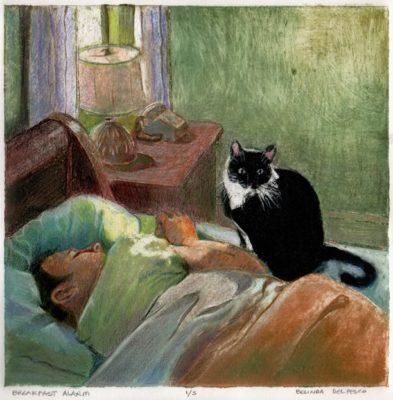
By Belinda Del Pesco
Jones, an appointee of former President Barack Obama, concluded that Meadows was not acting within the scope of his employment at the White House when he organized a Jan. 2, 2021 phone call where Trump pressed Georgia’s secretary of state Brad Raffensperger to “find” enough votes to declare him the victor in that state. Other actions that Meadows took, as described in a grand jury’s indictment last month, similarly fell outside Meadows’ official duties, the judge said.
“Meadows’s participation on the January 2, 2021 call was political in nature and involved the President’s private litigation, neither of which are related to the scope of the Office of White House Chief of Staff,” Jones wrote. “The Court finds that these contributions to the phone call with Secretary Raffensperger went beyond those activities that are within the official role of White House Chief of Staff, such as scheduling the President’s phone calls, observing meetings, and attempting to wrap up meetings in order to keep the President on schedule.”
By finding that Meadows acted outside the scope of his duties, Jones concluded that Meadows is not eligible for so-called “removal” — a procedure under federal law that allows federal officials to transfer a case from state court to federal court if the case is based on their official acts.
It’s now unlikely that any of the other people trying to move their cases to federal court–including Trump–will succeed. Meadows had the strongest case according legal experts.
Raw Story: Lawyers for Trump scrambling to get ‘creative’ after Mark Meadows legal ploy collapses.
Reacting to U.S. District Judge Steve C. Jones late Friday ruling that former White House chief of staff Mark Meadows may not have his election tampering case moved to a federal court, former Re[publican National Committee chair Michael Steele said that was a major blow not only to Meadows but also all of the other 18 Georgia co-conspirators facing RICO charges including Donald Trump.
As Steele put it, any hopes that defense attorneys might have had in the outcome of the Meadows hearing died a quick death.
Meadows’ attorneys had signaled that they hoped to move the case to federal court as a precursor to arguing that the case against him should be thrown out on grounds that as a former federal officer he’s immune from charges relating to his duties. And if a trial went forward in federal court, the jury pool would likely have been broader and slightly friendlier to Trump and his allies than one drawn only from Fulton County.
A federal court trial also would be unlikely to be televised, whereas the state court judge has already vowed to livestream all the proceedings.
Four other defendants in the Georgia case have also asked for the cases against them to be moved to federal court: former Justice Department official Jeff Clark and three pro-Trump activists accused of falsely certifying that they were presidential electors from the state. Those requests remain pending with Jones, and he said he was not pre-judging them as he turned down Meadows.

Nora Heysen (Australian, 1911-2003) – A Boy with his cat
CNN: Appeals court says Biden admin likely violated First Amendment but narrows order blocking officials from communicating with social media companies.
A federal appeals court on Friday said the Biden administration likely violated the First Amendment in some of its communications with social media companies, but also narrowed a lower court judge’s order on the matter.
The US 5th Circuit Court of Appeals ruled that certain administration officials – namely in the White House, the surgeon general, the US Centers for Disease Control and Prevention, and the Federal Bureau of Investigation – likely “coerced or significantly encouraged social media platforms to moderate content” in violation of the First Amendment in its efforts to combat Covid-19 disinformation.
But the three-judge panel said the preliminary injunction issued by US District Judge Terry Doughty in July, which ordered some Biden administration agencies and top officials not to communicate with social media companies about certain content, was “both vague and broader than necessary to remedy the Plaintiffs’ injuries, as shown at this preliminary juncture.”
The Biden administration had previously argued in the lawsuit brought by Republican attorneys general claiming unconstitutional censorship that channels with social media companies must stay open so that the federal government can help protect the public from threats to election security, Covid-19 misinformation and other dangers.
n briefs submitted earlier this summer, the administration wrote, “There is a categorical, well-settled distinction between persuasion and coercion,” adding that Doughty had “equated legitimate efforts at persuasion with illicit efforts to coerce.”
The 5th Circuit left in place part of the injunction that barred certain Biden administration officials from “threatening, pressuring, or coercing social-media companies in any manner to remove, delete, suppress, or reduce posted content of postings containing protected free speech.”
“But,” the appeals court said, “those terms could also capture otherwise legal speech. So, the injunction’s language must be further tailored to exclusively target illegal conduct and provide the officials with additional guidance or instruction on what behavior is prohibited.”
So it’s some good news and some bad news if you care about disinformation on social media.
From a summary of the NYT article on Yuscil Taveras at Raw Story: ‘Alarmed’ Trump security chief intervened to keep crucial Mar-a-Lago tapes from being destroyed.
In a deep dive into the life of the key Donald Trump employee who has flipped on the former president and some of his colleagues who worked with him at Mar-a-Lago, the New York Times is reporting that Trump’s head of security made a fateful decision that helped out special counsel Jack Smith’s investigation.

Composition with Cat on the table with striped tablecloth – Herdis Gelardi , 1951 Danish, 1916-1991
As part of their profile of IT manager Yuscil Taveras, the Times creates a moment-by-moment timeline where Mar-a-Lago property manager Carlos De Oliveira contacted Yuscil Taveras to meet him “somewhere more private” to discuss deleting the surveillance video.
As part of their profile of IT manager Yuscil Taveras, the Times creates a moment-by-moment timeline where Mar-a-Lago property manager Carlos De Oliveira contacted Yuscil Taveras to meet him “somewhere more private” to discuss deleting the surveillance video.
As the Times is reporting, “According to the indictment, which does not name Mr. Taveras but refers to him as ‘Trump Employee 4,’ Mr. De Oliveira led him through a basement tunnel to a small room known as an ‘audio closet,’ where Mr. De Oliveira delivered a message from Mr. Trump: ‘the boss’ wanted the footage deleted. Mr. Taveras rebuffed the request, prosecutors said in the indictment, but Mr. De Oliveira raised it again.”
Noting that Taveras once again denied the request, the report states that Taveras then reportedly confided to fellow employee Renzo Nivar about what had happened and days later alerted “a superior in Trump Tower.”
According to the Times, “One executive in New York, Matthew Calamari Jr., the Trump Organization’s corporate director of security, apparently became alarmed, according to people with knowledge of the matter. He alerted the company’s legal department, prompting a senior lawyer at the company to deliver a stern warning not to delete anything.”
Read the entire profile at The New York Times: He Was Just the I.T. Guy. Then He Got Caught in the Trump Documents Case.
So that’s an overview of the news today. I hope you all have a great weekend!!
Did you like this post? Please share it with your friends:
Posted: August 22, 2023 | Author: bostonboomer | Filed under: Crime, Criminal Justice System, Donald Trump, just because | Tags: Georgia election interference case, Jack Smith, January 6 case, Jeff Clark, John Eastman, Judge Tanya Chutkan, Mark Meadows |
Good Afternoon!!
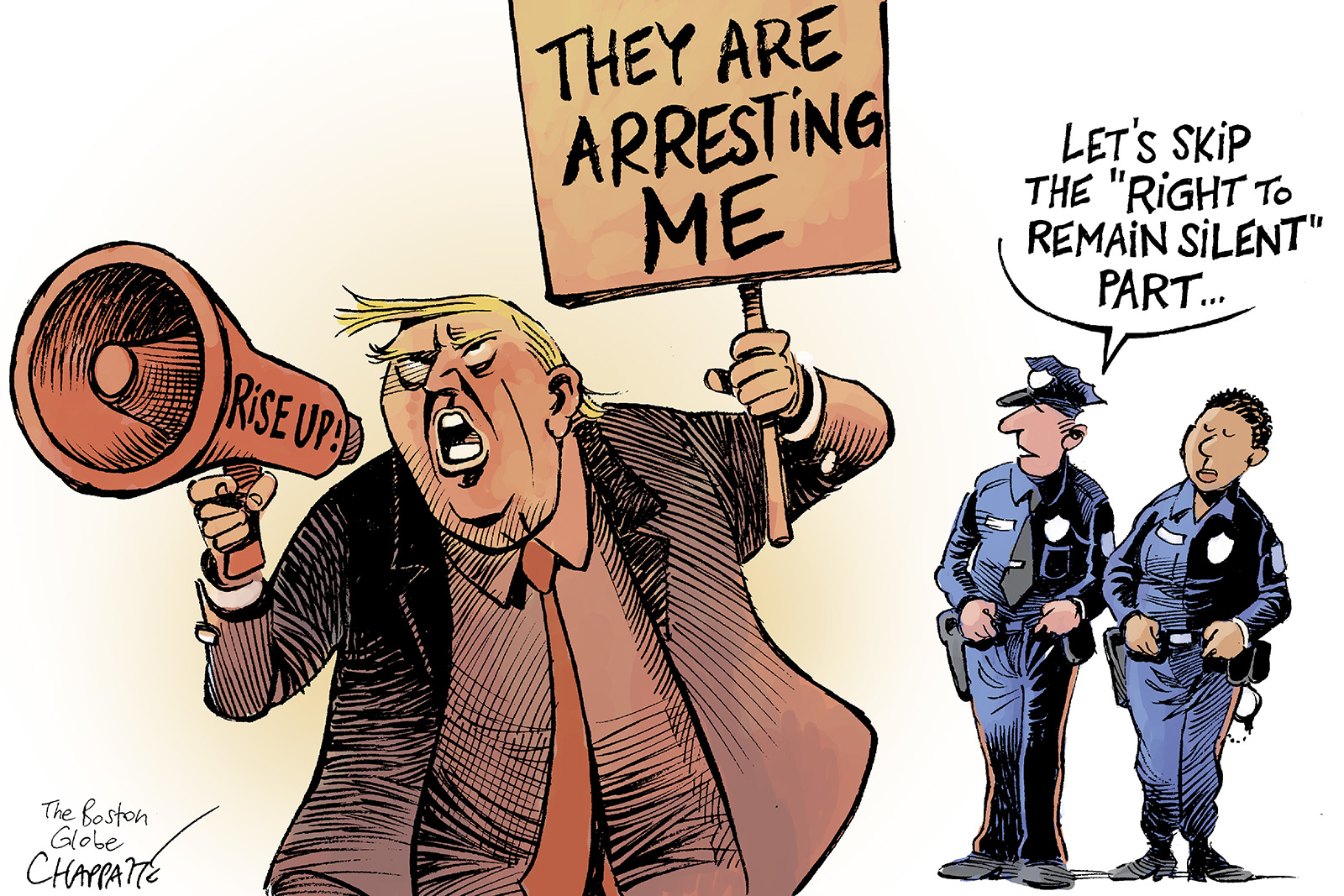 Now that Trump has been indicted and arrested 3 times, the 4th arrest on Thursday seems sort of old hat. Ho hum . . . Trump will surrender at Fulton County Jail in Georgia on Thursday; his bail has been set at $200,000.
Associated Press: Trump says he will surrender Thursday on Georgia charges tied to efforts to overturn 2020 election.
Former President Donald Trump says he will surrender to authorities in Georgia on Thursday to face charges in the case accusing him of illegally scheming to overturn his 2020 election loss in the state.
“Can you believe it? I’ll be going to Atlanta, Georgia, on Thursday to be ARRESTED,” Trump wrote on his social media network Monday night, hours after his bond was set at $200,000.
It will be Trump’s fourth arrest since April, when he became the first former president in U.S. history to face indictment. Since then, Trump, who remains the leading candidate for the Republican presidential nomination, has had what has seemed like an endless procession of bookings and arraignments in jurisdictions across the country. His appearances in New York, Florida and Washington, D.C., have drawn enormous media attention, with news helicopters tracking his every move.
Trump’s announcement came hours after his attorneys met with prosecutors in Atlanta to discuss the details of his release on bond. The former president is barred from intimidating co-defendants, witnesses or victims in the case — including on social media — according to the bond agreement signed by Fulton County District Attorney Fani Willis, Trump’s defense attorneys and the judge. It explicitly includes “posts on social media or reposts of posts” made by others.
This morning, two of Trump’s co-defendants surrendered in the Georgia election interference case.
Atlantic News First, via NBC29 VA:
ATLANTA (Atlanta News First/Gray News): First co-defendants in Trump indictment surrender at Fulton County jail.
The first co-defendants in a sweeping indictment out of Fulton County, Georgia, has surrendered to the jail.
Shortly before 10:30 a.m. Tuesday, former President Donald Trump’s attorney John Eastman turned himself in. A bond agreement for $100,000 was reached Monday in his case.
Eastman, prosecutors say, was deeply involved in some of his efforts to remain in power after the 2020 election. He wrote a memo arguing that Trump could remain in power if then-Vice President Mike Pence overturned the results of the election during a joint session of Congress where electoral votes would be counted. That plan included putting in place a slate of “alternate” electors in seven battleground states, including Georgia, who would falsely certify that Trump had won their states.
In a social media statement, Eastman said he was surrendering “to an indictment that should never have been brought.”
“It represents a crossing of the Rubicon for our country, implicating the fundamental First Amendment right to petition the government for redress of grievances,” Eastman said. “As troubling, it targets attorneys for their zealous advocacy on behalf of their clients, something attorneys are ethically bound to provide and which was attempting here by ‘formally challeng[ing] the results of the election through lawful and appropriate means.’ An opportunity never afforded them in the Fulton County Superior Court.”
A $10,000 bond agreement was reached Monday for Scott Hall, the Atlanta-area bail bondsman who was allegedly involved in commandeering voting information that was the property of Dominion Voting Systems from Coffee County in south Georgia.
On Tuesday, just before 9 a.m., Hall surrendered to authorities, and was booked and processed on charges that include conspiracy to commit a felony, conspiracy to commit election fraud, conspiracy to defraud the state of political subdivision, and violation of the Georgia Racketeer Influenced And Corrupt Organizations Act (RICO).
Jeff Clark, the DOJ official who wanted to send letters to the swing states saying that the DOJ believed there was significant voter fraud in their states, is trying to avoid going to Atlanta to be booked.
https://twitter.com/petestrzok/status/1694008924863602918?s=20
Jeff Clark on the morning his house was searched by the FBI:
This is going to enrage Trump. The New York Times just posted an article on Mark Meadows, another of Trump’s co-defendants in Georgia: How Mark Meadows Pursued a High-Wire Legal Strategy in Trump Inquiries.
This winter, after receiving a subpoena from a grand jury investigating former President Donald J. Trump’s attempts to overturn the 2020 election, Mark Meadows commenced a delicate dance with federal prosecutors.
He had no choice but to show up and, eventually, to testify. Yet Mr. Meadows — Mr. Trump’s final White House chief of staff — initially declined to answer certain questions, sticking to his former boss’s position that they were shielded by executive privilege.
But when prosecutors working for the special counsel, Jack Smith, challenged Mr. Trump’s executive privilege claims before a judge, Mr. Meadows pivoted. Even though he risked enraging Mr. Trump, he decided to trust Mr. Smith’s team, according to a person familiar with the matter. Mr. Meadows quietly arranged to talk with them not only about the steps the former president took to stay in office, but also about his handling of classified documents after he left.
The episode illustrated the wary steps Mr. Meadows took to navigate legal and political peril as prosecutors in Washington and Georgia closed in on Mr. Trump, seeking to avoid being charged himself while also sidestepping the career risks of being seen as cooperating with what his Republican allies had cast as partisan persecution of the former president.
His high-wire legal act hit a new challenge this month. While Mr. Meadows’s strategy of targeted assistance to federal prosecutors and sphinxlike public silence largely kept him out of the 45-page election interference indictment that Mr. Smith filed against Mr. Trump in Washington, it did not help him avoid similar charges in Fulton County, Ga. Mr. Meadows was named last week as one of Mr. Trump’s co-conspirators in a sprawling racketeering indictment filed by the local district attorney in Georgia.
Interviews and a review of the cases show how Mr. Meadows’s tactics reflected to some degree his tendency to avoid conflict and leave different people believing that he agreed with them. They were also dictated by his unique position in Mr. Trump’s world and the legal jeopardy this presented.
Read all the juicy, gossipy details at the NYT link.
There’s also news about the January 6 case against Trump in DC.
The Washington Post: Justice Dept. pushes back against Trump’s bid for a 2026 trial in D.C.
The Justice Department pushed back Monday on former president Donald Trump’s claims that he cannot be ready to go to trial in January on charges that he illegally sought to subvert the results of the 2020 election.
A trial in D.C. federal court in April 2026, which Trump’s attorneys requested, “would deny the public its right to a speedy trial,” attorneys working for special counsel Jack Smith wrote in Monday’s filing. In arguing for its preferred Jan. 2, 2024, date, the office said they do not intend to use classified information against Trump in this case….
In arguing for more time, Trump also made misleading comparisons to trials that were delayed by the coronavirus pandemic, superseding indictments adding defendants, and disputes over incarceration, the government said.
Trump’s legal team argued in a court filing last week that it needs years to prepare for the “unprecedented case” and that the January date proposed by the government would create conflicts with the five other criminal and civil trials Trump faces in the next nine months. They told the court that the 11.5 million pages of material already handed over by the special counsel took over two days to download and if printed out would be eight times taller than the Washington Monument. To read it all before the government’s proposed jury selection date of Dec. 11 would be like reading “Tolstoy’s War and Peace, cover to cover, 78 times a day, every day,” they said.
Smith’s office called those comparisons “neither helpful nor insightful,” because attorneys don’t read evidence cover to cover — they review it online using electronic keyword searches. Much of what was shared with Trump is already in the public domain, the special counsel said, including social media posts, transcripts of interviews with the House committee that investigated the Jan. 6 attack, and court records from legal challenges to the election results. Other documents came from the National Archives, meaning they were already known to Trump. There are also duplicates of documents within the production, the Justice Department said, and likely irrelevant papers handed over “in an abundance of caution and transparency.”
Read the rest at the WaPo.
This is interesting from attorneys Frederick Baron and Dennis Aftergut at The Bulwark: Trump Shoots Himself in the Foot with Demand for Trial Date in 2026.
ON THURSDAY, DONALD TRUMP FIRED his first shot in Judge Tanya Chutkan’s courtroom—straight into his own foot. His lawyers proposed to the district court judge that his federal trial on conspiracy and obstruction charges related to the aftermath of the 2020 election and the events of January 6th should not occur until April 2026.
“I’ll eat my hat if Judge Chutkan agrees with Trump to start this trial in 2026,” tweeted Neal Katyal, the former acting solicitor general of the United States. “He’s just afraid to stand trial. Nothing more.”

Judge Tanya Chutkan
Katyal’s hat is safe. Trump’s proposal on the all-important trial date sends an unintended message: that Trump is pressing his lawyers to take legal positions so extreme that they will be entirely disregarded.
Credibility with judges is the coin of the realm for trial lawyers. Squander it early and it’s hard to retrieve.
Trump’s past pattern is that his lawyers lose credibility by kowtowing to his absurd, uninformed demands. Then he tosses them like bad pennies. Sooner or later, it’s tough attracting the gold standard in the legal profession.
The Trump team’s tissue-thin pretext for their ludicrous trial date request was the volume of discovery materials they need to read.
They wrote that reviewing millions of documents and electronic communications that the government already gave them would be like reading “the entirety of Tolstoy’s War and Peace, cover to cover, 78 times a day” in order to finish by the January trial date proposed by Special Counsel Jack Smith.
The authors explain why that is bullshit:
Sounds daunting. But in the modern litigation world, a high-tech industry has grown up specializing in managing big-document cases. Entire firms exist to tackle discovery jobs like this.
Huge volumes of documents can be scanned rapidly, and put in a single database alongside digital communications and other information. The database is then “deduped” (that is, duplication is reduced) and organized to allow instant retrieval of any important piece of evidence. A lawyer need only search for specified keywords, dates, subjects, titles, witnesses, senders, receivers, contact information, and so on. For example, a search for documents or data related to “January 6/electors/certification” will quickly bring up the relevant items for review, highlighting, organizing, and sharing with team members.
Former U.S. Attorney Joyce Vance, speaking on MSNBC on Friday, mocked the misleading analogy to Tolstoy’s 1,200-page epic. “You don’t need to read War and Peace 78 times a day. You simply search for ‘Natasha,’” Vance said, referring to the novel’s lead female character.
Read more at The Bulwark.
One more interesting story from CNN: Several key cases that could bear on special counsel Jack Smith’s election case against Trump await DC Circuit rulings.
As the US Circuit Court of Appeals in Washington, DC, gets ready to begin its new term next month, the next two weeks could usher in several consequential rulings from the federal appeals court, often called the second most powerful court in the country, that could bear on the federal investigation into and prosecution of former President Donald Trump for his 2020 election reversal schemes.
At least three court cases touching legal issues that could affect special counsel Jack Smith’s approach are ripe for rulings from the DC Circuit. The rulings, once they come, will likely shape how US District Judge Tanya Chutkan may view the law and the charges against the former president in the criminal election subversion proceedings over which she is presiding.
In one case, Trump ally and Republican Rep. Scott Perry is challenging the access federal investigators can have to his phone in the 2020 election subversion probe. Another dispute is over Trump’s sweeping immunity claims in the civil lawsuits that have sought to hold him accountable for his actions and leading up to the January 6, 2021, Capitol assault. The third matter relates to the obstruction statute that has been a central charge in the Capitol riot prosecutions; Smith’s indictment of the former president in the election case includes two charges based on the provision in question.
There’s no guarantee that the rulings will come out in the coming weeks. But the start of the new DC Circuit term in early September puts additional pressure on the circuit judges to clear out their opinions in lingering cases. Regardless, the cases highlight the ongoing uncertainty in the legal terrain the special counsel is navigating as he advances toward a historic trial of the former president while wrapping up the rest of the federal criminal election subversion investigation, which Smith says is ongoing. No matter what the ruling is in each of the cases, the losing party will have the option to appeal it, setting up that the US Supreme Court might ultimately get involved.
Read details of the cases at the CNN link.
That’s it for me today. I guess I’m still mainly obsessed with seeing Trump tried, convicted, and imprisoned. I’ll add more links in the comment thread.
Did you like this post? Please share it with your friends:
Posted: August 19, 2023 | Author: bostonboomer | Filed under: 2020 Elections, 2021 Insurrection, Afternoon Reads, Cats, caturday | Tags: China, Christopher Worrell, Enrique Tarrio, fake electors, FBI, foreign policy, Georgia election interference case, January 6 insurrection, January 6 prosecutions, Japan, Joe Biden, Joe Biggs, Kenneth Chesebro, Proud Boys, South Korea, Vietnam |
 Happy Caturday!!
It’s difficult for me to focus on anything except the legal news about Trump’s crimes; but before I get to the latest on that, I want to call attention to Joe Biden’s latest foreign policy efforts. I admit I really that I originally was not at all enthused about a Biden presidency, but he has turned out to be very good at his job. His age and experience have prepared him for this moment in history.
Reuters: US, South Korea and Japan condemn China, agree to deepen military ties.
CAMP DAVID, Maryland, Aug 18 (Reuters) – U.S. President Joe Biden and the leaders of South Korea and Japan agreed at Camp David on Friday to deepen military and economic cooperation and made their strongest joint condemnation yet of “dangerous and aggressive behavior” by China in the South China Sea.
The Biden administration held the summit with the leaders of the main U.S. allies in Asia, South Korean President Yoon Suk Yeol and Japanese Prime Minister Fumio Kishida, in a bid to project unity in the face of China’s growing power and nuclear threats from North Korea.
In a summit statement the three countries committed to consult promptly with each other during crises and to coordinate responses to regional challenges, provocations and threats affecting common interests.
They also agreed to hold military training exercises annually and to share real-time information on North Korean missile launches by the end of 2023. The countries promised to hold trilateral summits annually.
While the political commitments fall short of a formal three-way alliance, they represent a bold move for Seoul and Tokyo, which have a long history of mutual acrimony stemming from Japan’s harsh 1910-1945 colonial rule of Korea.
The summit at the Maryland presidential retreat was the first standalone meeting between the U.S. and Japan and South Korea and came about thanks to a rapprochement launched by Yoon and driven by shared perceptions of threats posed by China and North Korea, as well as Russia after its invasion of Ukraine.
The leaders’ language on China stood out as stronger than expected, and is likely to provoke a response from Beijing, which is a vital trading partner for both South Korea and Japan.
“Regarding the dangerous and aggressive behavior supporting unlawful maritime claims that we have recently witnessed by the People’s Republic of China (PRC) in the South China Sea, we strongly oppose any unilateral attempts to change the status quo in the waters of the Indo-Pacific,” the statement said.
 Next Biden plans to build closer ties with Vietnam. Politico: Biden to sign strategic partnership deal with Vietnam in latest bid to counter China in the region.
President Joe Biden will chalk up a fresh victory in his campaign to boost U.S. influence in the Indo-Pacific by sealing a deal with Vietnam next month aimed to draw Hanoi closer to Washington at a time of rising tensions with Beijing.
Biden will sign a strategic partnership agreement with Vietnam during a state visit to the Southeast Asian country in mid-September, according to three people with knowledge of the deal’s planning. They were granted anonymity because they weren’t authorized to speak on the record about the agreement.
The agreement will allow for new bilateral collaboration that will boost Vietnam’s efforts to develop its high technology sector in areas including semiconductor production and artificial intelligence….
The deal adds to Biden’s string of successful diplomatic initiatives aimed to reassert U.S. influence in Asia in the face of China’s growing economic, diplomatic and military muscle in the region. They include a historic Camp David summit Friday with Biden, Japanese Prime Minister Fumio Kishida and South Korean President Yoon Suk Yeol — aimed at addressing regional threats from North Korea and China.
The Vietnam agreement coincides with an uptick in tension between Hanoi and Beijing over long-standing territorial disputes in the South China Sea. Vietnam — along with the Philippines, Malaysia and Brunei — has long protested Beijing’s claim of authority over parts of the South China Sea that extend 1,200 miles from China’s coastline. Hanoi banned the Barbie movie last month due to a scene that appeared to reference the nine-dash line Beijing says marks its territorial waters. Satellite imagery released this week indicates China is building an airfield on an island that Hanoi says is Vietnamese territory.
But the agreement doesn’t necessarily signal that Vietnam is moving away from its giant neighbor China in favor of better ties with Washington.
“Vietnam is not aligning with the U.S. against China. … They’re happy to improve relations with the U.S., but it doesn’t mean they’re moving against China — they’re going to continue to calibrate very carefully,” said Scot Marciel, a former principal deputy assistant secretary for East Asia and the Pacific at the State Department who opened the first State Department office in Hanoi in 1993.
 Now some legal news.
In the January 6th prosecutions, the DOJ has asked for 33 years in prison for Proud Boy leaders Enrique Tarrio and Joe Biggs. Kyle Cheney at Politico: Prosecutors seek 30-year sentences for Proud Boys leaders in Jan. 6 case.
Prosecutors are seeking 33-year prison sentences for former Proud Boys chair Enrique Tarrio and his ally Joe Biggs, who they say aimed to foment a revolution on Jan. 6 to keep former President Donald Trump in power.
The proposed jail sentences would nearly double the lengthiest Jan. 6 sentence handed down to date — 18 years for Oath Keepers leader Stewart Rhodes — a decision prosecutors say reflects the pivotal role that Proud Boys leaders played in stoking and exacerbating the violence at the Capitol that day.
“The defendants understood the stakes, and they embraced their role in bringing about a ‘revolution,’” prosecutors wrote in their sentencing memo released Thursday night. “They unleashed a force on the Capitol that was calculated to exert their political will on elected officials by force and to undo the results of a democratic election. The foot soldiers of the right aimed to keep their leader in power. They failed. They are not heroes; they are criminals.”
Both Tarrio and Biggs were convicted of seditious conspiracy in May by a jury who also found allies Philadelphia Proud Boy leader Zachary Rehl and Seattle Proud Boy leader Ethan Nordean guilty of the grave offense. Prosecutors are seeking 30 years for Rehl and 27 years for Nordean.
A fifth Proud Boy tried alongside the others, Dominic Pezzola, was acquitted of seditious conspiracy but convicted on other serious offenses. Pezzola may be the best known of the group, however. He shattered a Senate-wing window with a stolen police riot shield, triggering the breach of the Capitol itself. Prosecutors are seeking a 20-year jail term for him.
 Read more details at the Politico link.
Marcy Wheeler has an interesting story about Proud Boy Joe Biggs, who used to be an informant for the FBI. If you’ve wondered why the FBI failed to warn people about the terrorists who were working to overthrow the government on January 6, here’s one answer. Emptywheel: “They Spoke Often:” It Took the Fash-Friendly FBI Over Two Months to Document the Lies their Informant, Joe Biggs, Told Them.
I always have a hard time excerpting Marcy’s posts, but I hope you’ll go read it at the link. The gist is that the FBI used Biggs to target “Antifa.” They were focused on radical left groups and ignored the violent extremist on the right. Here’s the summary at the end of the post:
The FBI claims it had no notice of the terrorist attack on the nation’s Capitol, not even with an FBI agent “speaking often” with one of its leaders and an DC intelligence cop speaking often with the other one.
So now, DOJ wants to hold Joe Biggs accountable for the lies he told to the FBI agent who thought a key leader of the Proud Boys would make an appropriate informant targeting Antifa. But thus far, his handler has not been held accountable for missing the planning of a terrorist attack in DC when while speaking “often” with one of its key leaders.
Notably, the Daytona FBI office is the same one where, after fake whistleblower Stephen Friend refused to participate in a SWAT arrest of a Three Percenter known to own an assault rifle, his supervisor said “he wished I just ‘called in sick’ for this warrant,” before taking disciplinary action against him (though Friend didn’t start in Daytona Beach until after Biggs had already been arrested).
The second of these interviews (but not the first) interview was mentioned in Biggs’ arrest affidavit. It’s possible that investigating agents didn’t even know about what occurred in the first one.
Indeed, it’s really hard to credit the reliability of a 302 written two days after Biggs described his chummy relationship but not this interview in an attempt to stay out of jail.
This is why the FBI didn’t warn against January 6. Because these terrorists were the FBI’s people.
 Another Proud Boy, Christopher Worrell, was supposed to be sentenced soon, but yesterday, news broke that he has disappeared. Associated Press: Proud Boy on house arrest in Jan. 6 case disappears ahead of sentencing.
Authorities are searching for a member of the Proud Boys extremist group who disappeared days before his sentencing in a U.S. Capitol riot case, where prosecutors are seeking more than a decade in prison, according to a warrant made public Friday.
Christopher Worrell, 52, of Naples, Florida, was supposed to be sentenced Friday after being found guilty of spraying pepper spray gel on police officers, as part of the mob storming the Capitol as Congress was certifying Joe Biden’s presidential victory on Jan. 6, 2021. Prosecutors had asked a judge to sentence him to 14 years.
The sentencing was canceled and a bench warrant for his arrest issued under seal on Tuesday, according to court records. The U.S. attorney’s office for Washington, D.C., encouraged the public to share any information about his whereabouts.
Worrell had been on house arrest in Florida since his release from jail in Washington in November 2021, less than a month after a judge substantiated his civil-rights complaints about his treatment in the jail.
U.S. District Judge Royce Lamberth found Worrell’s medical care for a broken hand had been delayed, and held D.C. jail officials in contempt of court.
 The big topic of conversation in the media and Twitter yesterday was a Trump ally who has previously passed under the radar–Kenneth Chesebro, who appears to be one of the unindicted co-conspirators in the Georgia election interference case. It turns out this guy was integral to what happened on January 6. Chesboro was also the originator of the scheme to use “fake electors” to overthrow the 2020 election.
CNN’s KFile: Kenneth Chesebro, alleged architect of fake electors’ plot, followed Alex Jones around Capitol grounds on January 6th.
When conspiracy theorist Alex Jones marched his way to the US Capitol on January 6, 2021, riling up his legion of supporters, an unassuming middle-aged man in a red “Trump 2020” hat conspicuously tagged along.
Videos and photographs reviewed by CNN show the man dutifully recording Jones with his phone as the bombastic media personality ascended to the restricted area of the Capitol grounds where mobs of then-President Donald Trump’s supporters eventually broke in.
While the man’s actions outside the Capitol that day have drawn little scrutiny, his alleged connections to a plot to overthrow the 2020 election have recently come into sharp focus: He is attorney Kenneth Chesebro, the alleged architect of the scheme to subvert the 2020 Electoral College process by using fake GOP electors in multiple states.
When asked by the House select committee where he was the first week of January 2021 and on January 6, Chesebro invoked his Fifth Amendment rights. But a CNN investigation has placed him outside of the Capitol at the same time as his alleged plot to keep Trump in office unraveled inside it.
There is no indication Chesebro entered the Capitol Building or was violent. Jones did not enter the Capitol on January 6, 2021, or engage in violence, but he had warned of a coming battle the day before and urged his supporters to converge on the Capitol.
Chesebro is the only one of the unindicted co-conspirators in Trump’s recent federal indictment and only member of Trump’s legal efforts who is now known to have been on the Capitol grounds on January 6.
CNN was able to place Chesebro at the protest through publicly available databases with photos and videos from that day. Interviews with his acquaintances also confirmed his identity. Chesebro declined CNN’s requests for comment, citing ongoing litigation.
It was unclear why Chesebro was following Jones on January 6.
“Even if Chesebro is simply a diehard Infowars fan, I think that would further illustrate how thin the line was between the serious, credentialed people who sought to undermine election results and the extremist figures who sought to unleash havoc was in that period, to the extent it meaningfully existed at all,” said Jared Holt, an expert at the Institute for Strategic Dialogue which investigates extremism, hate and disinformation.
Read the rest at CNN.
 More on Cheseboro from The Washington Post: The ‘brains’ behind fake Trump electors was once a liberal Democrat.
VEGA ALTA, Puerto Rico — The blinds were drawn at a handsome villa in an oceanfront gated community on the northern coast of this Caribbean island. Inside, a woman’s voice could be heard calling out “Ken” — but no one answered the door.
Records show this isthe tropical refuge of Kenneth J. Chesebro, a lawyer who allegedly marshaled supporters of President Donald Trump to pose as electors in states won by Joe Biden in 2020, creating a pretext for Vice President Mike Pence to delay counting or disregard valid electoral college votes on Jan. 6, 2021.
Since then, Chesebro, 62, has kept a low profile. He decamped to Puerto Rico from New York last year, and some friends said he’d fallen out of touch. A prominent law firm issued no public announcement last year when it tapped him to run a new department and added no mention of him to its website.
Lawyers handling a case against him in Wisconsin have told a judge they were unable to locate him. Even the House select committee that investigated the pro-Trump attack on the Capitol did not depose him until last fall — after it had interviewed more than a thousand others and conducted public hearings — because it had trouble finding him, according to a person familiar with the situation who was not authorized to speak publicly.
Chesebro was among 19 people charged Monday in Georgia with a raft of crimes related to alleged efforts to overturn the results of the 2020 election. A 98-page indictment secured by Atlanta-area prosecutors portrays Chesebro as central not just to the convening of sham electors but also to the “strategy for disrupting and delaying the joint session of Congress on Jan. 6, 2021.” He faces seven felony charges, including conspiracy to commit forgery and conspiracy to file false documents, as well as violation of an anti-racketeering act originally aimed at dismantling organized crime groups.
Background information on Chesebro:
A Harvard-trained lawyer once keen on liberal causes, and registered as a Democrat as recently as 2016, Chesebro may be the least well known of the small set of figures key to both indictments. His retreat from public life since Jan. 6 has deepened the mystery for former classmates and colleagues puzzling over how he became a central player in plans to reverse the outcome of a democratic election.
“The Ken I knew would not have been involved with that,” said Holly Hostrop, a lawyer who worked with Chesebro about 20 years ago on litigation against the tobacco industry that extracted millions in punitive damages for ailing smokers. “I have great respect for his legal skills and felt we were on the side of angels in that litigation. It makes me wonder how he got sucked into this.”
The successful appellate lawyer studied at Harvard University under Laurence Tribe, the preeminent legal scholar who advised congressional Democrats on both of Trump’s impeachments. Chesebro continued working with Tribe for about 20 years, on wide-ranging litigation involving class-action claims and punitive damages.
But friends said his politics seemed to shift after he reaped sizable returns from his investments in cryptocurrency in the past half-decade. He began to stake out more-libertarian positions in legal briefs, especially in his home state of Wisconsin, where he started donating to Republicans and working with a former judge, Jim Troupis, who Chesebro would later testify under oath had brought him into Trump’s orbit.
“He was not making good-faith legal arguments for his client,” said Tribe, who expressed dismay over his former mentee’s emergence as an architect of Trump’s plans to cling to power. “He was inventing legal fiction that paid no attention to the law and creating a pretext for a conspiracy to steal an election.”
That’s all I have for you today. Have a nice Caturday!
Did you like this post? Please share it with your friends:


 peej
peej Carissa
 bostonboomer
 dakinikat
 ecocatwoman
 mablue2
 Mama Lopez
 peggysue22
 quixote
 skydancingguestblogger
 Mona (aka Wonk the Vote)



 Sky Dancing
Recent Comments