Yesterday was the second day of Trump’s Manhattan trial for a plot to interfere with the 2016 election by covering up payoffs to extramarital sexual partners and planting fake stories in the National Enquirer.
It was also the second day of testimony by David Pecker, former CEO of American Media, which owned the Enquirer and many other publications. Pecker, Trump, and his lawyer/fixer Michael Cohen orchestrated the fake news operation.
Before the trial resumed, Judge Juan Merchan held a hearing about whether Trump had already violated the terms of his gag order.
Donald Trump’s 2016 presidential campaign was repeatedly aided by the National Enquirer, which squelched potentially damaging stories about him and pumped out articles pummeling his rivals, the former boss of the supermarket tabloid testified Tuesday during the ex-president’s trial on charges of falsifying business records.
Trump, the first former U.S. president to face a criminal trial, spent his day in the Manhattan courtroom fighting two pitched battles — one against the testimony of former tabloid executive David Pecker, his longtime friend, and another against the increasingly likely prospect that he will be punished by the trial judge for allegedly violating a gag order.
On both fronts, prosecutors seemed to inflict significant damage. At one point, New York Supreme Court Justice Juan Merchan warned Trump lawyer Todd Blanche that he was “losing all credibility.” At another, Trump grimaced and shook his head as Pecker described how he helped kill an allegation — ultimately found to be false — that Trump had a child with a maid at his building.
The busy court day was punctuated by prosecutors detailing the full factual and legal foundation of their case against Trump, one built around a misdemeanor state charge of trying to illegally influence an election.
Pecker, the former CEO of American Media Inc., the company that once ran the Enquirer and other celebrity gossip publications, said he met with Trump and Trump’s then-lawyer Michael Cohen in 2015 to discuss how the tabloid, which had a long relationship with the real estate mogul and reality TV star, could help Trump’s bid for president.
“I said what I would do is I would run or publish positive stories about Mr. Trump, and I would publish negative stories about his opponents,” Pecker testified.
That wasn’t all he pledged to do.
Pecker said he told Trump: “I would be your eyes and ears. … If I hear anything negative about yourself, or if I hear anything about women selling stories, I would notify Michael Cohen as I did over the last several years.”
The deal Pecker described was a mutual back-scratching arrangement in which Cohen would feed stories to the tabloid about Republican rivals like Ted Cruz, and the paper would publish glowing stories about Trump. Pecker said he had a “great relationship” with Trump dating to the late 1980s, but that didn’t seem to be his primary motivation. Stories about the brash celebrity businessman helped sell copies of the tabloid.
David Pecker, the former publisher of the National Enquirer, testified at Donald Trump’s trial Tuesday that the tabloid completely manufactured a negative story in 2016 about the father of Sen. Ted Cruz, of Texas, who was then Trump’s rival for the GOP presidential nomination.
By Anna Billing
The paper had published a photo allegedly showing Cruz’s father, Rafael Cruz, with Lee Harvey Oswald handing out pro-Fidel Castro pamphlets in New Orleans in 1963, not long before Oswald assassinated President John F. Kennedy.
“I mean, what was he doing — what was he doing with Lee Harvey Oswald shortly before the death? Before the shooting?” Trump said in an interview with Fox News in May 2016. “It’s horrible.”
Manhattan prosecutor Joshua Steinglass asked Pecker about the story’s origins during the trial Tuesday in Manhattan. Pecker said that then-National Enquirer editor-in-chief Dylan Howard and the tabloid’s research department got involved, and Pecker indicated that they faked the photo that was the foundation for the story.
“We mashed the photos and the different picture with Lee Harvey Oswald. And mashed the two together. And that’s how that story was prepared — created I would say,” Pecker said on the witness stand.
Asked by Steinglass whether Cruz had gained popularity in the presidential race at the time, Pecker said, “I believe so.”
The revelation came up as the prosecution focused on negative articles that were published by the tabloid about Trump’s Republican opponents at the time. Pecker explained that it was Michael Cohen, Trump’s personal lawyer, who would orchestrate the planting of these stories.
Pecker said Cohen would call and say they’d like his publication to run an article on a certain candidate, adding that Cohen would then send him a piece about Cruz, for example, and the National Enquirer “would embellish it from there.”
The Enquirer also ran negative stories about other Trump opponents in the 2016 Republican primaries and about Hillary Clinton.
Judge Merchan hasn’t yet made a decision on whether Trump violated his gag order, but his decision could be released today.
Donald Trump’s alleged violations of a gag order restricting him from attacking witnesses, jurors, prosecutors, and court staff during his ongoing criminal hush money trial got their own day in court on Tuesday.
During a tense hearing, Judge Juan Merchan heard arguments from Manhattan prosecutors requesting that Trump be sanctioned for “willful” violations of the gag order — and sparred with Trump’s attorneys over claims of ignorance by the president. No decision was handed down Tuesday, but prosecutors have requested that Trump be fined $1,000 for each violation, and reminded that future violations of the order “can be punished not only with additional fines but also with a term of incarceration of up to 30 days.” [….]
Trump’s attorneys argued that, as a political candidate, the former president needed the freedom to respond to attacks by his critics. Merchan grilled this defense, pressing Trump’s team to back up their argument that witnesses in the case had directly attacked Trump. “I keep asking you over and over again for a specific answer, and I’m not getting an answer,” Merchan said to Trump attorney Todd Blanche.
Merchan also threw out the defense’s argument that Trump’s reposts on Truth Social did not constitute violations of the gag order, as the former president had several people helping run his account. “Your client can wash your hands of it,” Merchan said of reposts, telling Blanche that content doesn’t just “magically” appear on Trump’s account. “It’s not passive […] someone had to do something.”
Blanche at one point insisted to Merchan that Trump was aware of the gag order and trying to comply with it. Merchan wasn’t having it. “You’re losing all credibility,” Merchan responded. “I have to tell you right now, you’re losing all credibility with the court.”
Edvard Munch, Man in the Cabbage Field
It’s highly unlikely that the judge will decide to incarcerate Trump for gag order violations, but the Secret Service prepared, just in case.
The U.S. Secret Service held meetings and started planning for what to do if former President Donald Trump were to be held in contempt in his criminal hush money trial and Judge Juan Merchan opted to send him to short-term confinement, officials familiar with the situation told ABC News.
Merchan on Tuesday reserved decision on the matter after a contentious hearing. Prosecutors said at this point they are seeking a fine.
“We are not yet seeking an incarceratory penalty,” assistant district attorney Chris Conroy said, “But the defendant seems to be angling for that.”
Officials do not necessarily believe Merchan would put Trump in a holding cell in the courthouse but they are planning for contingencies, the officials said.
There have not been discussions yet about what to do if Trump is convicted and sentenced to prison….
“Under federal law, the United States Secret Service must provide protection for current government leaders, former Presidents and First Ladies, visiting heads of state and other individuals designated by the President of the United States,” the agency said in a statement. “For all settings around the world, we study locations and develop comprehensive and layered protective models that incorporate state of the art technology, protective intelligence and advanced security tactics to safeguard our protectees. Beyond that, we do not comment on specific protective operations.”
I doubt if that will ever happen, much as I’d like it to. It’s much more likely Trump would be confined to his home with an ankle bracelet.
Yesterday, Trump claimed that thousands of his supporters who wanted to protest his trial outside the courthouse were turned away by police. That just didn’t happen, and he’s frustrated about it.
Donald Trump can’t decide how he wants his supporters to feel about the scene outside of the Manhattan courtroom where he’s being tried on 34 felony indictments for election interference and business fraud. He repeatedly argues that the city he travels through in a daily motorcade to his trial is a war zone. “Violent criminals that are murdering people, killing people” are free to “do whatever they want,” he’s falsely claimed, blasting District Attorney Alvin Bragg as “lazy on violent crime” because he’s supposedly too focused on prosecuting Trump.
By Gary Kim
It’s all a lie — crime is way down from the pandemic-related spikes — but it’s one Trump repeats ad nauseam. And it’s constantly reinforced by Fox News, which pushes out a series of misleading stories and images meant to scare their elderly suburbanite audiences into believing that going into the nation’s largest city results in instant murder. Nonetheless, Trump keeps pleading with his followers to run through what they’ve been told is a “bloodbath” in order to, you know, persuade Bragg and presiding Judge Juan Merchan to just give up on this whole trial nonsense.
On Monday, Trump begged his followers on Truth Social to “RALLY BEHIND MAGA” at courthouses, unsubtly suggesting that they model themselves after the mostly imaginary leftist rioters who “scream, shout, sit, block traffic, enter buildings, not get permits, and basically do whatever they want.” When the MAGA hats failed to show, Trump tried to inspire them with a post complaining that it’s “SO UNFAIR!!!” that he doesn’t get throngs of people like the kind seen at the antiwar protest a few miles north at Columbia University. Other than a few scattered people with pro-Trump signs, the mob he longed for never showed. So he took his pleas to the cameras outside the courthouse Tuesday morning:
WordPress won’t let me post the video, but you can see it at the Salon link.
What’s especially funny about all this is that Trump can’t quite admit that his people just aren’t showing up, and keeps on blaming the barricades and the cops. His lies got to the level of childish make-believe on Tuesday afternoon, as he falsely claimed on Truth Social that “Thousands of people were turned away from the Courthouse” while denying that he was “disappointed by the crowds.” Of course, by fantasizing about a massive caravan rallied to his defense, he proved he is not satisfied with reality.
As the New York Times reported, “A day after Trump issued a call for more supporters to gather outside the Manhattan Criminal Courthouse, the number reached its nadir. The number of identifiable Trump fans across the street in Collect Pond Park on Tuesday sank to the mid-single digits, after hovering at about a dozen for a week”
How can this childish man actually have a chance to be POTUS again?
About a year ago, when Alvin Bragg, the Manhattan district attorney, indicted former President Donald Trump, I was critical of the case and called it an embarrassment. I thought an array of legal problems would and should lead to long delays in federal courts.
After listening to Monday’s opening statement by prosecutors, I still think the Manhattan D.A. has made a historic mistake. Their vague allegation about “a criminal scheme to corrupt the 2016 presidential election” has me more concerned than ever about their unprecedented use of state law and their persistent avoidance of specifying an election crime or a valid theory of fraud.
To recap: Mr. Trump is accused in the case of falsifying business records. Those are misdemeanor charges. To elevate it to a criminal case, Mr. Bragg and his team have pointed to potential violations of federal election law and state tax fraud. They also cite state election law, but state statutory definitions of “public office” seem to limit those statutes to state and local races.
Both the misdemeanor and felony charges require that the defendant made the false record with “intent to defraud.” A year ago, I wondered how entirely internal business records (the daily ledger, pay stubs and invoices) could be the basis of any fraud if they are not shared with anyone outside the business. I suggested that the real fraud was Mr. Trump’s filing an (allegedly) false report to the Federal Election Commission, and only federal prosecutors had jurisdiction over that filing.
A recent conversation with Jeffrey Cohen, a friend, Boston College law professor and former prosecutor, made me think that the case could turn out to be more legitimate than I had originally thought. The reason has to do with those allegedly falsified business records: Most of them were entered in early 2017, generally before Mr. Trump filed his Federal Election Commission report that summer. Mr. Trump may have foreseen an investigation into his campaign, leading to its financial records. Mr. Trump may have falsely recorded these internal records before the F.E.C. filing as consciously part of the same fraud: to create a consistent paper trail and to hide intent to violate federal election laws, or defraud the F.E.C.
In short: It’s not the crime; it’s the cover-up.
Looking at the case in this way might address concerns about state jurisdiction. In this scenario, Mr. Trump arguably intended to deceive state investigators, too. State investigators could find these inconsistencies and alert federal agencies. Prosecutors could argue that New York State agencies have an interest in detecting conspiracies to defraud federal entities; they might also have a plausible answer to significant questions about whether New York State has jurisdiction or whether this stretch of a state business filing law is pre-empted by federal law.
Shugerman didn’t address the fake news operation with the Enquirer.
Henry Woods, El velo de la primera comunión (1893)
In other news, the Senate passed the bill with aid to Ukraine, and Biden will sign it today.
President Biden was set to sign a $95.3 billion package of aid to Ukraine, Israel and Taiwan on Wednesday, reaffirming U.S. support for Kyiv in the fight against Russia’s military assault after months of congressional gridlock put the centerpiece of the White House’s foreign policy in jeopardy.
The Senate voted overwhelmingly to approve the package on Tuesday night, a sign of bipartisan support after increasingly divisive politics raised questions on Capitol Hill and among U.S. allies over whether the United States would continue to back Kyiv. The 79-to-18 vote provided Mr. Biden another legislative accomplishment to point to, even in the face of an obstructionist House.
“Congress has passed my legislation to strengthen our national security and send a message to the world about the power of American leadership: We stand resolutely for democracy and freedom, and against tyranny and oppression,” Mr. Biden said on Tuesday evening, just minutes after the Senate vote.
He said he would sign the bill into law and address the American people on Wednesday “so we can begin sending weapons and equipment to Ukraine this week.”
The White House first sent a request for the security package in October, and officials have bluntly acknowledged that the six-month delay put Ukraine at a disadvantage in its fight against Russia.
“The Russians have slowly but successfully taken more ground from the Ukrainians and pushed them back against their first, second and, in some places, their third line of defense,” John F. Kirby, a spokesman for Mr. Biden’s National Security Council, said on Tuesday on Air Force One. “The short answer is: Yes, there absolutely has been damage in the last several months.”
The Senate’s vote on Tuesday to approve new aid for Ukraine capped off six months of public pressure and private overtures by the White House to build support, including the not-insignificant task of winning over House Speaker Mike Johnson.
For months, President Joe Biden and his team pressed the case for additional aid both publicly and privately, leaning into courting Johnson – whose young speakership was under pressure from his right flank – behind the scenes through White House meetings, phone calls and detailed briefings on the battlefield impacts, administration officials said.
Grappling with the leadership dynamics in a House GOP conference increasingly resistant to more aid, Biden directed his team to use every opportunity possible to lay out the consequences of inaction directly to Johnson. That included warnings of what it would mean not just for Ukraine, but also Europe and the US, if Russian President Vladimir Putin were to succeed, administration officials said.
The president specifically urged his team to lean into providing a full intelligence picture of Ukraine’s battlefield situation in their conversations with the speaker and his staff as well as discussing the national security implications for the US, officials said. That push played out over the next six months – starting with a Situation Room briefing one day after Johnson became speaker.
National security adviser Jake Sullivan and Office of Management and Budget Director Shalanda Young briefed the speaker and other key lawmakers on how aid for Ukraine was running out, putting the country’s efforts to fight off Russia in jeopardy. Biden stopped by the meeting and met with Johnson on the side to convey a similar message. Sullivan followed up four days later with a call to Johnson to highlight the measures in place to track aid in Ukraine.
But Johnson quickly made clear aid for Ukraine and Israel would need to be separated – an approach the White House opposed and one that would be tested time and time again in the coming months.
The ordeal ended on Tuesday when the Senate passed the $95 billion foreign aid package, with nearly $61 billion for Ukraine, marking a long-sought foreign policy win for Biden, who has spent the past two years rallying Western support for the war-torn country in its fight against Russia. At the same time, the president has been grappling with his own battle back home to get more aid approved amid resistance from some Republicans. The White House has said he will sign that legislation – which also provides over $26 billion for Israel and humanitarian assistance and more than $8 billion for the Indo-Pacific, including Taiwan – as soon as possible.
Read more details at CNN.
While Trump has been dozing off in court in New York, President Biden has been campaigning, most recently in Florida.
President Joe Biden swooped into Florida Tuesday, hoping to parlay the state’s new restrictive abortion law — as well as a ballot initiative that could undo it — into a campaign issue that could give him the state’s trove of electoral votes come November, effectively locking up his reelection.
“There’s one person responsible for this nightmare, and he acknowledges it and he brags about it: Donald Trump,” Biden told a boisterous crowd in a gym at Hillsborough Community College in Tampa.
He attacked Florida’s six-week abortion ban — approved in the wake of the Supreme Court’s 2022 decision overturning Roe v. Wade and ending a national right to abortion — and reminded voters that it was the coup-attempting former president’s three appointees to the high court that paved the way.
“It was Donald Trump who ripped away the rights and freedom of women in America,” he said. “We’ll teach Donald Trump and extreme MAGA Republicans a valuable lesson: Don’t mess with the women of America.”
Political consultants from both parties, while skeptical that Biden will actually win Florida, agree that forcing Trump on the defensive in a state he cannot afford to lose and which he only won by three percentage points in 2020 is a smart move.
“I don’t think he’d be in Tampa today if they didn’t see it as good place to make a contrast,” said Steve Schale, who ran former President Barack Obama’s successful Florida campaign operation in both 2008 and 2012. “There’s nothing more valuable, particularly for an incumbent, than a candidate’s time.”
David Hockney, NIchols Canyon, Hollywood HIlls
Just one more story–an op-ed by Melissa Murray and Andrew Weissmann in The New York Times on the Supreme Court’s upcoming hearing on Trump’s claim of “presidential immunity.”
The Supreme Court’s decision to hear oral arguments in Donald Trump’s immunity-appeal case on Thursday may appear to advance the rule of law. After all, few, if anyone, thinks that a majority of the court will conclude that a former president is completely immune from federal criminal liability.
But the court’s decision to review the immunity case actually undermines core democratic values.
The Supreme Court often has an institutional interest in cases of presidential power. But the court’s insistence on putting its own stamp on this case — despite the widespread assumption that it will not change the application of immunity to this case and the sluggish pace chosen to hear it — means that it will have needlessly delayed legal accountability for no justifiable reason. Even if the Supreme Court eventually does affirm that no person, not even a president, is above the law and immune from criminal liability, its actions will not amount to a victory for the rule of law and may be corrosive to the democratic values for which the United States should be known.
That is because the court’s delay may have stripped citizens of the criminal justice system’s most effective mechanism for determining disputed facts: a trial before a judge and a jury, where the law and the facts can be weighed and resolved.
It is this forum — and the resolution it provides — that Mr. Trump seeks, at all costs, to avoid. It is not surprising that he loudly proclaims his innocence in the court of public opinion. What is surprising is that the nation’s highest court has interjected itself in a way that facilitates his efforts to avoid a legal reckoning.
Looking at the experience of other countries is instructive. In Brazil, the former president Jair Bolsonaro, after baselessly claiming fraud before an election, was successfully prosecuted in a court and barred from running for office for years. In France, the former president Jacques Chirac was successfully prosecuted for illegal diversion of public funds during his time as mayor of Paris. Likewise, Argentina, Italy, Japan and South Korea have relied on the courts to hold corrupt leaders to account for their misconduct….
Consider India, Bolivia, Hungary and Venezuela, where the erosion of judicial independence of the courts has been accompanied by a rise in all-consuming power for an individual leader.
Within our constitutional system, the U.S. Supreme Court can still act effectively and quickly to preserve the judiciary’s role in a constitutional democracy. If the court is truly concerned about the rule of law and ensuring that these disputed facts are resolved in a trial, it could issue a ruling quickly after the oral argument.
It would then fall to the special counsel Jack Smith and Judge Chutkan to ensure that this case gets to a jury. Obviously, fidelity to due process and careful attention to the rights of the accused are critical. To get to a trial and avoid any further potential delay, Mr. Smith may decide to limit the government’s case to its bare essentials — what is often called the “slim to win” strategy. And Judge Chutkan has already warned Mr. Trump that his pretrial unruly statements with respect to witnesses and others may result in her moving up the start of the trial to protect the judicial process.
Read the rest at the NYT.
That’s it for me today. What do you think? Are there other stories that interest you?
Did you like this post? Please share it with your friends:
It’s only Wednesday, and it has already been a crazy week in politics. Here’s what’s happening:
Trump is attending day three of the civil trial against the Trump Organization for tax and bank fraud. As he did on Monday and Tuesday, he stood in front of the courthouse and whined to reporters about how unfairly he is being treated. He called the trial a “witch hunt” and claimed he would eventually testify.
Yesterday Judge Arthur Engoron issued a gag order after Trump posted Judge Engoron’s primary clerk on Truth Social.
The judge overseeing Donald Trump’s civil fraud trial issued a gag order on Tuesday after the former president made comments about the judge’s clerk.
“Consider this statement a gag order forbidding all parties from posting, emailing or speaking publicly about any of my staff,” the judge, Arthur Engoron, said on Tuesday afternoon. “Personal attacks on members of my court staff are unacceptable, inappropriate and I will not tolerate them in any circumstances.
“Failure to abide by this order will result in serious sanctions.”
The second day of Trump’s trial got off to another combative start after Trump branded the case a “fraud” and a “scam” and pledged to take the stand in his own defense.
Asked if he would testify in the case, Trump said: “Yes, I will. At the appropriate time I will be.”
But Trump’s comments about Engoron’s law clerk, the attorney Allison Greenfield, proved a step too far. Over lunch Trump attacked Engoron’s clerk in a social media post, linking to a picture of her with the Democratic Senate majority leader, Chuck Schumer. He called her “Schumer’s girlfriend” and said she “is running this case against me. How disgraceful! This case should be dismissed immediately.”
The post on Trump’s Truth Social platform was deleted on Engoron’s orders.
A turbulent second day at Donald Trump‘s bank fraud trial in New York came to an equally puzzling end, when the judge unceremoniously kicked out all journalists from the courtroom to speak privately with the former president and Attorney General Letitia James.
When one reporter asked whether the courtroom was being sealed, Justice Arthur F. Engoron did not respond. Instead, security personnel yelled at journalists to leave immediately.
Donald Trump glowers at the Judge on day one of the New York civil trial.
Trump, James, and their respective legal teams remained in the courtroom for more than 20 minutes before exiting.
On his way out, Trump surprised everyone by stating that he will return to court Wednesday.
“I’ll be back tomorrow. Good day,” he said with a wave, before ducking into a side exit with his attorneys and Secret Service security detail.
James refused to answer any questions on her way out, preventing the public from knowing what was going on inside.
Earlier in the day, Engoron issued a gag order against Trump after he posted on his social media site, Truth Social, accusing one of Engoron’s law clerks of having a relationship with Sen. Chuck Schumer (D-NY).
A day after receiving a tongue lashing from a judge disturbed by Donald Trump’s insolence outside the New York courtroom, the former president began to make exasperated remarks inside the court, as the third day of his bank fraud trial started Wednesday.
The increasingly furious Trump—whose real estate empire has already received the kiss of death from the judge—remained quiet during the first two days of proceedings, instead choosing to rail against the entire justice system outside the room’s wooden doors. But when Justice Arthur F. Engoron noted that typical formalities could be cast aside because there’s no jury here, Trump began to grumble and angrily folded his arms while staring at the judge.
Trump turned to defense lawyer Alina Habba at his left to complain in loud groans—this reporter could only make out the words “no jury!”—then threw his arms up and shook his head.
The former president then let out an annoyed sigh and slumped forward, stretching his dark blue suit jacket.
Just before the trial got underway on Wednesday, he was even louder online, where he wrote, “I am not even entitled, under any circumstances, to a JURY. This Witch Hunt cannot be allowed to continue. It is Election Interference and the start of Communism right here in America!”
Minutes later, Trump then complained in court that he couldn’t make out what was being said by the witness on the stand: his longtime former accountant Donald Bender, who became a state witness and disavowed much of the work he did for the Trump Organization and its vastly inflated assets. The testimony could be perceived as a betrayal given that Bender made millions at the firm Mazars USA by working for the Trump family, which invited him to golf courses, hotels, and parties.
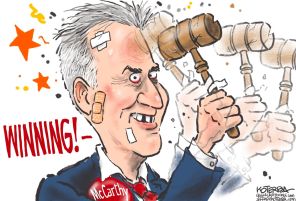
Yesterday afternoon, House Republicans came close to eclipsing Trump news, as Matt Gaetz and a few other MAGA crazies removed House Speaker Kevin McCarthy, leaving the House in utter chaos.
The House of Representatives was in a state of paralysis on Wednesday, ground to a halt by the ouster of Republican Speaker Kevin McCarthy and with no clear sense of who might succeed him — or when.
After a historic vote to remove Mr. McCarthy on Tuesday, lawmakers quickly departed Washington and scattered to their districts around the country, abandoning the Capitol as Republicans remained deeply divided over who could lead their fractious majority.
“What now?” one Republican muttered aloud on the House floor just after the vote on Tuesday afternoon, the first time the chamber had ever removed a speaker from his post involuntarily.
It underscored the chaos now gripping the chamber, which is effectively frozen, without the ability to conduct legislative business, until a successor to Mr. McCarthy is chosen. The California Republican said late Tuesday that he would not seek the post again after being deposed by a hard-right rebellion.
The vacancy promised to tee up another potentially messy speaker election at a time when Congress has just over 40 days to avert another potential government shutdown. But it was not yet clear who might run.
Discussions on the future of the conference were being led by Representative Patrick T. McHenry of North Carolina. Mr. McCarthy had named Mr. McHenry first on a list of potential interim speakers in the event of a calamity or vacancy, but he does not have power to run the chamber — only to preside over the election of a new speaker.
While no Republican has announced a bid for the post, some names reliably come up in conversations with G.O.P. lawmakers, including Mr. McHenry and Representative Tom Cole, the Oklahoma Republican and Rules Committee chairman, as well as the No. 2 and No. 3 House Republicans, Representatives Steve Scalise of Louisiana and Tom Emmer of Minnesota.
Rep. Jim Jordan said he will run to be the next speaker, a move likely to prompt praise from House conservatives.
Jordan, the House Judiciary chair and member of the House Freedom Caucus, has worked closely with Oversight Chair James Comer (R-Ky.) on the impeachment inquiry into Joe Biden. He had also become a close ally of now-ex Speaker Kevin McCarthy in recent years.
But his candidacy will likely run right into Majority Leader Steve Scalise (R-La.), who is also considering a speakership bid and has worked to court conservatives.
“Jim is a friend, and I certainly think he brings a whole lot that this conference would be able to rally around, but we’ve got to all have a conversation and I’m not going to say who I’m supporting at this point,” said Rep. Chip Roy (R-Texas), a member of the conservative House Freedom Caucus.
“We’re going to figure this out behind closed doors as a family,” he added.
The Ohio Republican was elected to Congress in 2007. He is a Trump ally within the GOP conference and one of the many chairs to have called for Congress to defund the Department of Justice over whistleblower claims that DOJ hampered the Hunter Biden investigation.
But wouldn’t Jordan have to wear a suit and get a couple of new ties if he were Speaker?
Patrick McHenry’s first act as Speaker Pro Tempore was to kick Nancy Pelosi out of her Congressional office. Pelosi didn’t vote to remove McCarthy, because she is in California for Diane Feinstein’s funeral.
As one of his first acts as the acting speaker, Rep. Patrick McHenry ordered former Speaker Nancy Pelosi to vacate her Capitol hideaway office by Wednesday, according to an email sent to her office viewed by POLITICO.
Rep. Patrick McHenry, R-N.C.
“Please vacate the space tomorrow, the room will be re-keyed,” wrote a top aide on the Republican-controlled House Administration Committee. The room was being reassigned by the acting speaker “for speaker office use,” the email said….
Only a select few House lawmakers get hideaway offices in the Capitol, compared to their commonplace presence in the Senate.
House Minority Leader Hakeem Jeffries’ staff helped Pelosi’s office make the move, according to a spokesperson for the former speaker.
Here’s Pelosi’s full response to the eviction, from Raw Story:
“With all of the important decisions that the new Republican Leadership must address, which we are all eagerly awaiting, one of the first actions taken by the new Speaker Pro Tempore was to order me to immediately vacate my office in the Capitol,” Pelosi said in a statement, according to Politico’s Nicholas Wu. “Sadly, because I am in California to mourn the loss of and pay tribute to my dear friend Dianne Feinstein, I am unable to retrieve my belongings at this time.”
“This eviction is a sharp departure from tradition. As Speaker, I gave former Speaker Hastert a significantly larger suite of offices for as long as he wished,” She noted.
“Office space doesn’t matter to me, but it seems important to them,” Pelosi added. “Now that the new Republican Leadership has settled this important matter, let’s hope they get to work on what’s truly important to the American people.”
Fulton County prosecutors are floating plea deals to a number of defendants in the election interference case involving former President Donald Trump, according to people with knowledge of the proposals.
At least a handful of the now 18 defendants have received offers from the District Attorney’s office — or prosecutors have touched base with their attorneys to gauge their general interest in striking a deal for a reduced charge in exchange for their cooperation, according to the legal sources, who spoke on condition of anonymity to discuss sensitive ongoing negotiations.
It’s common for prosecutors to float plea deals to lower-level defendants in large racketeering cases as they home in ontheir biggest targets. Trump and his former personal attorney Rudy Giuliani face the most chargesin the 41-count indictment, which centers on efforts to overturn the results of Georgia’s 2020 presidential election.
The Atlanta Journal-Constitution has learned that Fulton prosecutors have also offered a deal to Michael Roman, who worked as director of Election Day operations for the Trump campaign in 2020. A member of Roman’s legal team told The AJC theyrejected the DA’s proposal and that no agreement has been reached….
People who were indicted for their alleged roles in the appointment of a slate of Trump electors, election data breach in Coffee County and harassment of Fulton poll worker Ruby Freeman have also been approached by prosecutors, according to multiple sources. In the case of at least two of those defendants, no concrete offer has been made.
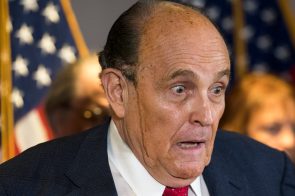
Rudolph W. Giuliani had always been hard to miss at the Grand Havana Room, a magnet for well-wishers and hangers-on at the Midtown cigar club that still treated him like the king of New York.
In recent years, many close to him feared, he was becoming even harder to miss.
For more than a decade, friends conceded grimly, Mr. Giuliani’s drinking had been a problem. And as he surged back to prominence during the presidency of Donald J. Trump, it was getting more difficult to hide it.
On some nights when Mr. Giuliani was overserved, an associate discreetly signaled the rest of the club, tipping back his empty hand in a drinking motion, out of the former mayor’s line of sight, in case others preferred to keep their distance. Some allies, watching Mr. Giuliani down Scotch before leaving for Fox News interviews, would slip away to find a television, clenching through his rickety defenses of Mr. Trump.
Even at less rollicking venues — a book party, a Sept. 11 anniversary dinner, an intimate gathering at Mr. Giuliani’s own apartment — his consistent, conspicuous intoxication often startled his company.
“It’s no secret, nor do I do him any favors if I don’t mention that problem, because he has it,” said Andrew Stein, a former New York City Council president who has known Mr. Giuliani for decades. “It’s actually one of the saddest things I can think about in politics.”
Now prosecutors are looking at Giuliani’s problem.
Now, prosecutors in the federal election case against Mr. Trump have shown an interest in the drinking habits of Mr. Giuliani — and whether the former president ignored what his aides described as the plain inebriation of the former mayor referred to in court documents as “Co-Conspirator 1.”
Their entwined legal peril has turned a matter long whispered about by former City Hall aides, White House advisers and political socialites into an investigative subplot in an unprecedented case.
The office of the special counsel, Jack Smith, has questioned witnesses about Mr. Giuliani’s alcohol consumption as he was advising Mr. Trump, including on election night, according to a person familiar with the matter. Mr. Smith’s investigators have also asked about Mr. Trump’s level of awareness of his lawyer’s drinking as they worked to overturn the election and prevent Joseph R. Biden Jr. from being certified as the 2020 winner at almost any cost. (A spokesman for the special counsel declined to comment.)
The answers to those prompts could complicate any efforts by Mr. Trump’s team to lean on a so-called advice-of-counsel defense, a strategy that could portray him as a client merely taking professional cues from his lawyers. If such guidance came from someone whom Mr. Trump knew to be compromised by alcohol, especially when many others told Mr. Trump definitively that he had lost, his argument could weaken.
That’s it for me today. What do you think? What other stories have caught your interest?
Did you like this post? Please share it with your friends:
Dakinikat turned me on to the world of truck drivers who have cat companions along for the ride. Here’s an article that discusses the phenomenon. CharityPaws.com: Trucker Cats May Be The Coolest Cats!
For what it’s worth, having a pet is hard work.
Love is easy enough to provide while on the road – but food, water, space, and entertainment are all needs too, and sometimes hard to come up with.
In the case of dogs especially, playtime is the hardest need to fill for truckers. After several hour-long walks, a game of tug-of-war, and an afternoon in the sun spent playing fetch, who wouldn’t be tired? But for truckers this can be time consuming and delay important deliveries!
That’s why many truckers have turned to cats as the solution for those lonely road trips. Trucker cats are the coolest cats with their chill laid back personalities and ability to make truckers feel awesome. They also have some great hearing which is why the made it to our list of “what animal has the best hearing” list. Having a companion with good hearing on board can help you find critters that may sneak around while you are sleeping or even alert you to danger!
With most of their time spent on the road in a little truck cab, cats are the perfect companion for truckers– and here’s some of the best reasons why according to one trucker’s resource:
Cats are low-maintenance: they eat less than their canine counterparts, take up less room, and don’t need as much playtime.
They’re loving and affectionate: cats are just as sweet as any other animal, once they have a chance to warm up to you.
They’re obedient, and trainable: cats can do tricks and walk on leashes, with the proper time and training!
They’re protective: though not as scary as a dog, cats are perfectly capable of altering truckers if something looks, sounds, or even smells off.
Other reasons topping truckers’ lists include cleanliness, cuteness, and the fact that having a cat in a truck is a pretty good conversation starters. Some even say that having a feline friend is a constant reminder to drive and act safely during the long haul. They are also incredibly loyal as shown by the Room 8 cat – and having that kind of loyalty on the road will make any trucker feel amazing!
Read more at the link above.
Here’s a video about trucker cats, posted on YouTube by Cheezburger.
Long Read: Are Americans Experiencing Collective Trauma?
I want to call your attention to an excellent, but very long read in The New Republic by Anna Marie Cox: We Are Not Just Polarized. We Are Traumatized. Subhead: “The pandemic. The mass shootings. Insurrection. Trump. We’ve been through so much. What if our entire national character is a trauma response?”
This is a very long piece, so I’m just going to give you some samples to help you decide if you want to tackle reading the whole thing.
As of last year, four in 10 Americans knew at least one person who died from Covid. This year, three in 10 Americans say they know someone who has been affected by an opioid addiction, and one in five knows someone who’s died from a painkiller overdose. In 2022, more than three million adults were displaced by some form of natural disaster—that’s more than three times as many displaced per year between 2008 and 2021. Last year, some cities saw a 50 percent increase in evictions over pre-pandemic levels. One in five knows someone who’s died due to gun violence; one in six has witnessed a shooting; 21 percent have been personally threatened by a gun. Half of Americans know someone personally who has experienced at least one of those events.
After Trump’s “grab her by” tape became public, calls to the national sexual assault hotline jumped up by 35 percent (as Michelle Goldberg observed, Trump was a walking trigger for assault survivors). During the Brett Kavanaugh hearings, calls to the sexual assault hotline spiked 201 percent. Lockdown—the first two months of the pandemic—saw a rise in intimate partner violence of 101 percent, with the rate stabilizing at an increase of about 8 percent from pre-pandemic numbers as of 2022.
Another photo of Trucker cat Percy, by Paul Robertson
And then there are the frontline workers and “essential personnel,” those who risked their lives for our safety and comfort during the spring of 2020. I assume that we agree health professionals faced trauma (and may well still). There are 22 million of them in the United States, and after the pandemic, 55 percent reported experiencing burnout, and three in 10 said they were now considering leaving the profession. The 55 million essential personnel who worked through the worst days of Covid suffered a similar toll: A year into the pandemic, the American Psychiatric Association found that 34 percent of essential workers had been treated by a mental health professional, 80 percent had trouble over- or under-sleeping, and 39 percent said they were drinking more alcohol than they had before….
These are traumas at the individual level in numbers so large that they demand national attention because there are national consequences—think of the nationwide therapist shortage and “the Great Resignation.”
So, what if the reason so many people identify as trauma survivors is that they are? What if the horrors of the last seven years do translate into a nation that is suffering more than mere political dysfunction? What if the polarization, paranoia, conspiracism, and hopelessness that bog us down have a more holistic origin than structural malfunctions or individual malfeasance?
What if our entire national character is a trauma response?
Before you say “bullshit,” remember: Cynicism is a trauma response.
Next Cox explores expert opinions about the concept of “collective trauma.”
The origin of the academic study of “collective trauma” has been credited to Kai Erikson’s 1977 book, Everything in Its Path, an account of the aftermath of the Buffalo Creek flood in Logan County, West Virginia, five years prior, which killed 125 people and destroyed 550 homes in a small mining community. In the book, Erikson writes of grappling with “thousands of pages of transcript material, whole packing boxes full of it,” that confounded him “not because the material is contradictory or difficult to interpret but because it is so bleakly alike.” He found respondents echoing one another to a frustrating degree, so much so that “a researcher is very apt to conclude after rummaging through these data that there is really not very much to say.” Eventually, however, he came to believe that the uniformity itself was meaningful; the damage done at Buffalo Creek was something more than a mere collection of individual harms.
Collective trauma, he wrote, means “a blow to the basic tissues of social life that damages the bonds attaching people together and impairs the prevailing sense of communality.” Collective trauma happens in slow motion, “A form of shock all the same…. ‘I’ continue to exist, though damaged and maybe even permanently changed. ‘You’ continue to exist, though distant and hard to relate to. But ‘we’ no longer exist as a connected pair or as linked cells in a larger communal body.”
Trucker Abdirahman Abdul and Aisha
In other words, the defining characteristic of collective trauma—and what makes it almost impossible to self-diagnose—is that people who have been through it no longer believe in the integrity of their community. How does anyone see themselves as a traumatized collective if no one feels that they belong?
So, pull back to the macro level. For a moment, put aside your or anyone else’s individual experience. Think of the country itself as a patient.
In the past seven years, the country has sustained significant, repeated damage to its institutions. The courts, elections, law enforcement, and so on are its vital organs. Trump has been punching America in the kidneys since he first floated the idea of a “rigged election.” January 6 was a heart attack. The musculature that is the justice system, well, it was always spasmodic. The murders of George Floyd, Breonna Taylor, and Ahmaud Arbery shocked many white people into awareness of our already dysfunctional law enforcement apparatus, and then the Dobbs decision drove home how easily the rights that support us can be yanked away. Were we ever really as strong as we thought?
The country was already weakened by Trumpism when the pandemic attacked our nervous systems more than figuratively. It cut away at the millions of tiny threads that knit up our towns and cities. Think of the loose social ties that grow from just seeing the same people at the grocery store (or the office) every day—think of the mail. Our national proprioception—our awareness of where our parts are in relation to one another—deteriorated. Our creaky supply chain is another symptom of this disconnect. So is “you’re on mute.”
I won’t quote any more, but these excerpts are just from the introductory part of the article. Cox later demonstrates with examples how the notion of trauma can apply to our collective experience as a nation. There is so much in the piece, that I wonder if Cox is planning to turn it into a book.
I’m not sure how the MAGA world fits into this hypothesis, but after my reading about the traumas of Appalachia–from poverty, drugs, unemployment, and breakdown of families (see my Wednesday post), I wonder if an argument could be made that the attraction to Trump as powerful father figure could also have arisen out of trauma. At any rate, I highly recommend this article.
Citing threats against individuals former President Donald Trump has targeted, special counsel Jack Smith has asked a federal judge for a narrowly tailored gag order that restricts the 2024 presidential candidate from making certain extrajudicial statements about the election interference case brought against him.
A redacted copy of a government filing — released Friday, after an order from U.S. District Judge Tanya Chutkan — comes in connection with the election interference case, one of four criminal cases the former president is facing, two of which are federal.
“The defendant has an established practice of issuing inflammatory public statements targeted at individuals or institutions that present an obstacle or challenge to him,” the special counsel’s office wrote.
Whispur and DanDan, photo by Whispurer on Reddit
The government said Trump “made clear his intent to issue public attacks related to this case when, the day after his arraignment, he posted a threatening message on Truth Social.”
Trump’s Aug. 4 post read: “IF YOU GO AFTER ME, I’M COMING AFTER YOU!”
Trump, the office wrote, “has made good on his threat,” spreading “disparaging and inflammatory public posts on Truth Social on a near-daily basis regarding the citizens of the District of Columbia, the Court, prosecutors, and prospective witnesses.
“Like his previous public disinformation campaign regarding the 2020 presidential election, the defendant’s recent extrajudicial statements are intended to undermine public confidence in an institution—the judicial system—and to undermine confidence in and intimidate individuals—the Court, the jury pool, witnesses, and prosecutors,” the prosecutors wrote.
Naturally, Trump responded publicly to the filing:
At an event in Washington, Trump made his first public remarks on the filing by attacking Smith, arguing that the special counsel “wants to take away my rights under the First Amendment, wants to take away my right of speaking freely and openly.”
Steven Cheung, a spokesperson for the Trump campaign, responded earlier Friday by calling the filing “nothing more than blatant election interference because President Trump is by far the leading candidate in this race.”
The federal prosecutors who charged former President Donald J. Trump with a criminal conspiracy over his attempts to overturn the 2020 election obtained 32 private messages from his Twitter account through a search warrant this winter as part of their investigation, court papers unsealed on Friday said.
Questions have lingered about what prosecutors were looking for in Mr. Trump’s Twitter account ever since it was revealed last month that the government had served the warrant on Twitter in January. In an earlier release of documents, prosecutors disclosed that they had obtained some private messages from Mr. Trump’s account but not how many.
The 32 messages, whose content has not been disclosed, were only a small fraction of the larger body of data that Twitter was forced to turn over under the terms of the warrant, the new court papers said. Much of the legal wrangling over the matter focused on the Justice Department’s demand that Twitter, purchased last year by Elon Musk and now known as X, not inform Mr. Trump of the search warrant.
Mr. Trump’s posts on the platform in the chaotic months after the election were mentioned several times in the indictment that the special counsel, Jack Smith, filed against him in Washington last month. What remains unclear is whether Mr. Smith’s team sought the warrant for Mr. Trump’s account merely to confirm that he had posted the messages that appeared in public, or whether they suspected that some private data in the account might also be important.
What were investigators looking for in the private messages?
The newly unsealed documents — an exhaustive record of the legal fight between Twitter and the Justice Department over whether to hide the execution of the warrant from Mr. Trump — added a few new details about what the government may have been seeking.
Waylon the Trucker Cat, photo by owner Nick
For example, the materials showed that prosecutors wanted to learn if there were other accounts that Mr. Trump had been logging into from the same internet address he used for his Twitter account, which during his presidency was a main channel for his public statements. But it was not clear whether looking for other accounts was merely a routine step or whether investigators had a specific reason to be asking.
The new materials — unsealed at the request of a coalition of news media organizations, including The New York Times — opened a broader window into the back and forth between the special counsel’s office and Twitter. The dispute touched on how to balance the government’s need to protect a sensitive investigation with the social media company’s desire to be transparent with its most famous user.
The documents were particularly sharp in describing Mr. Trump’s repeated attempts to obstruct federal inquiries — an argument that prosecutors used in securing permission from a judge in Washington not to tell the former president for months that they had obtained the warrant for his account.
In detailing Mr. Trump’s “pattern of obstructive conduct,” the new papers cited his attempts to interfere with the special counsel’s other inquiry — one in which the former president stands accused of illegally holding on to dozens of classified documents after leaving office.
The attorney for President Joe Biden’s son Hunter Biden, who is facing felony gun charges, said Friday that the statute is “likely unconstitutional” and he expects “the case will be dismissed before trial.”
“On the facts, we think we’ll have a defense,” Abbe Lowell told ABC News’ George Stephanopoulos in an interview on “Good Morning America.”
The younger Biden has been indicted by special counsel David Weiss on three felony gun charges, bringing renewed legal pressure on him after a plea agreement he struck with prosecutors imploded in recent months.
The conduct described in the indictment dates back to October 2018, when Hunter Biden procured a Colt Cobra 38SPL despite later acknowledging that he was addicted to drugs around that time.
While the criminal statutes cited in the indictment are clear — it is a crime to lie on a gun application form or to possess a firearm as a drug user – Hunter Biden’s attorney suggested that the charges could be unconstitutional, citing a recent appeals court ruling that drug use alone should not automatically prevent someone from obtaining a gun.
“The only change that has occurred between when they investigated [this alleged crime] and today is that the law changed,” Lowell said. “But the law didn’t change in favor of the prosecution. The law changed against it.”
With Republicans launching an impeachment inquiry on Capitol Hill, Lowell suggested that political pressure on prosecutors played into their decision, questioning the timing of the charges in light of revelations from whistleblowers about the investigation.
No kidding. The political pressure from right wing Congresspeople has been off the charts. And Special Counsel David Weiss himself was appointed by Bill Barr after political pressure from Donald Trump.
“History is also our best teacher. Yes, our past is filled with too much violence, too much hatred, too much prejudice. But can we really say that we are not confronting those same evils now?” Jackson said at the church in Birmingham, Alabama.
Trucker cat, photo by abbenquesnel on flicker
“We have to own even the darkest parts of our past, understand them and vow never to repeat them. We must not shield our eyes. We must not shrink away lest we lose it all,” she said.
The justice didn’t invoke a particular case, but as a whole her speech nodded to efforts targeting the teaching of critical race theory in schools and books about the struggle for racial equality and other topics.
“If we are going to continue to move forward as a nation, we cannot allow concerns about discomfort to displace knowledge, truth or history. It is certainly the case that parts of this country’s story can be hard to think about,” she said. “I know that atrocities like the one we are memorializing today are difficult to remember and relive. But I also know that it is dangerous to forget them.”
At times, Jackson, the first Black woman to serve on the Supreme Court, drew a personal connection to the tragedy, in which a bomb exploded at the church on September 15, 1963, killing Denise McNair, Cynthia Wesley, Addie Mae Collins and Carole Robertson. Nearly two dozen others were injured.
“As a mother of two young women who will always be my little girls, I can imagine no greater horror than to lose a child this way,” Jackson said.
“And even now, six decades later, the magnitude of that tragic loss weighs heavily on all of us because those girls were just getting started. They could have broken barriers. They could have shattered ceilings. They could have grown up to be doctors or lawyers or judges appointed to serve on the highest court in our land,” she added.
Read more at CNN.
That’s a sampling of today’s news. Feel free to discuss anything and everything in the comment thread.
Did you like this post? Please share it with your friends:
The Sky Dancing banner headline uses a snippet from a work by artist Tashi Mannox called 'Rainbow Study'. The work is described as a" study of typical Tibetan rainbow clouds, that feature in Thanka painting, temple decoration and silk brocades". dakinikat was immediately drawn to the image when trying to find stylized Tibetan Clouds to represent Sky Dancing. It is probably because Tashi's practice is similar to her own. His updated take on the clouds that fill the collection of traditional thankas is quite special.
You can find his work at his website by clicking on his logo below. He is also a calligraphy artist that uses important vajrayana syllables. We encourage you to visit his on line studio.




 It’s only Wednesday, and it has already been a crazy week in politics. Here’s what’s happening: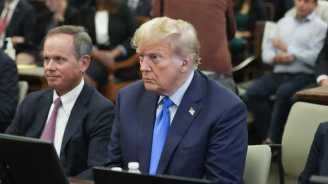
 It underscored the chaos now gripping the chamber, which is effectively frozen, without the ability to conduct legislative business, until a successor to Mr. McCarthy is chosen. The California Republican said late Tuesday that he would not seek the post again after being deposed by a hard-right rebellion.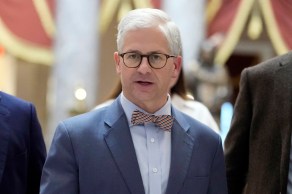
 For more than a decade, friends conceded grimly, Mr. Giuliani’s drinking had been a problem. And as he surged back to prominence during the presidency of Donald J. Trump, it was getting more difficult to hide it.






 peej
peej Carissa
 bostonboomer
 dakinikat
 ecocatwoman
 mablue2
 Mama Lopez
 peggysue22
 quixote
 skydancingguestblogger
 Mona (aka Wonk the Vote)



 Sky Dancing
Recent Comments