
Just Don’t Take Mine
Posted: January 15, 2011 Filed under: Federal Budget, U.S. Economy | Tags: Federal Budget, Federal Debt, Federal Deficit, Federal Spending 13 CommentsI wrote a little on the disturbing level of economic illiteracy I see throughout the country yesterday. A CBS Poll came 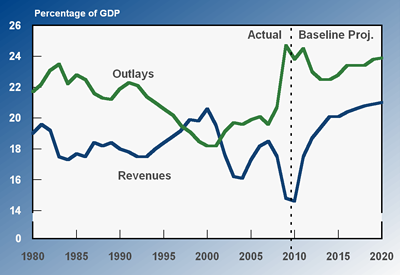 out on what Americans want done with Federal Spending and it just screams stupidity. The overwhelming majority of people want spending cuts in the Federal Budget, but they can’t name many things that they want cut. It seems like there’s this resounding chorus out there of give me my taxes back and do cuts on imaginary spending. Then, it’s just don’t cut anything I use or think is important. I’m going to cite this last paragraph in the article . It’s probably the most relevant. (There’s more discussion links on this at Memeorandum.)
Most Americans do not know exactly how the government spends its money. For example, when asked what percent of the budget goes to earmarks, 41 percent said they make up less than 20 percent of the budget, 13 percent said 20-50 percent, 4 percent said more than 50 percent and 42 percent didn’t know. Earmarks actually make up less than one percent of the budget.
I always hear students say they want to quit giving money away to other countries too. We give less than one half percent of our budget to other countries. The best place to look for budget information is the Congressional Budget Office website. That’s where I got the graph you see in the upper right hand corner. That’s a comparison of Federal Spending (green) and Federal Incomes (blue) since 1980. The gap between the two at any one point in time is the federal deficit for that year.You can distinctly see the period during the Clinton Budget Surpluses because that’s where the blue lines is above the green line. All other periods show more spending than revenues. The Reagan and Bush years were years of explosive spending growth. You can also see the huge gap that started around 2008 when the Great Recession took hold. Nearly each of the down turns recently has been due to huge tax breaks combined with bad economies.
A pie chart shown on a Examiner.com breaks down the expenditures by the funded Department. It also adds Social Security into the mix which is the number one federal outlay. (Ryan Witt’s chart analysis here. Read the comments and embrace the number of people that need to go back to school.) Social Security–however–is sustained at the moment by more revenues than outlays. The Department of Defense comes after that. It gets about 19% of the overall budget. Right now, because of the ‘cyclical’, mandatory spending that occurs due to our bad economy and our high unemployment, you can see that unemployment/welfare payments mandated by law come after that (16%), followed by Medicare which is also offset by payroll taxes at the moment (13%) then Medicaid/SCHIP funding (8%). The Department of Health and Human Services gets about 8%.
The next biggest expenditure is paying the interest on the National Debt. Thankfully, interest rates are low so that amounts to around 5% currently. You can compare this pie chart to the one below and see how lower interest rates combined with higher outlays really helped to push that percentage down.. The next most noticeable part is the Transportation department that gets about 2% of the budget. Most of the remaining major Departments like Homeland Security, Energy, Education, etc. get some where around 1-1 and 1/2%. Veteran’s Affairs gets a fairly noticeable slice too albeit not huge.
 I’ve also put a pie chart of Federal Outlays for 2009 to the left that is some what more general. Notice how huge the Treasury budget was because of TARP (now mostly paid back) and the other bailouts. There are several reasons that the budget deficit has been so bad the last few years. The primary reason is the bad economy because that forces revenues down and outlays up. The second reason is the Bush taxes cuts that were just extended and expanded for the next two years. We’re basically spending at relative levels right now that we’ve not seen since World War 2. We are of course funding two occupations/wars and a ‘war’ on Terror. Some people want to conveniently forget that. When the economy finally improves and we do actually shut down Iraq and Afghanistan, a lot of our budget headaches will go away.
The U.S. Government is NOT a household or a business
Posted: January 14, 2011 Filed under: U.S. Economy, U.S. Politics, Voter Ignorance, We are so F'd | Tags: economic illiteracy, Federal Debt, Federal Deficit, gold buggery, Paul Krugman, Rand Paul, Ron Paul 11 Comments
Gold bug in the garden of eden on a perfectly flat earth.
I’ve noticed the high level of economic illiteracy in the country since the day I started seriously studying economics. I’ve also noticed that faith-based economics rules the thought processes of many politicians. It always reminds me of those folks that believe in a literal garden of eden and a 7 day creation story over the facts that science hands us day-in and day-out. Molecular Biology has pretty much trumped their views but they persist in sticking their fingers in their ears and going la la la la la.
A variety of misguided notions have taken up residence in the brains of the same people, so I suppose it’s not surprising that the same groups that scream war on christmas also think the US will go bankrupt if we don’t up the debt ceiling or some such nonsense. The problem is that anti-intellectual flat earthers control a political party in this country. That problem extends to people who now sit as chairs of congressional committees that deal with the real world and real people. Then, there’s the fact that the other political party doesn’t really fight for the truth. It’s just all very distressing to me.
There are two stories today that I’d like to use as evidence to point to the incredible amount of lunacy floating around today’s Republican Party. The first comes from Paul Krugman. The second from The Economist. Krugman talks about the persistence of gold buggery. (Yes, I’m using a double entendre.) The Economist about the persistence of federal deficit and debt myths. They write on the number of people that don’t seem to understand what it takes for the US to ‘default’. Both myths need airing.
Paul Krugman writes political op-ed as well as information on economics. Economists are trained to separate the two. We even have two names for the circumstances. It’s called discussing positive and normative economics. You teach principles of economics students how to distinguish between the two on the very first day of class. Some times I think Dr. Krugman forgets that most people and politicians are economic illiterates. You see and hear constant confusion on his writings. People don’t seem to distinguish between his op-ed with the liberal bent (normative) and when he’s actually talking economic theory (positive). His op-ed today talks about the fact that there are many issues in politics today that are so polarizing that there is no third way or middle ground. I don’t want to point to that, but his blog post ‘Monetary Morality’ that takes this notion of no compromising with idiots which points to the absurdity of gold buggery or something he called paleomonetarism in an early post.
In those two posts, he points out that there is a narrative out there–mostly preached by the Pauls–that the Fed is evil and we need to be hung on a cross of gold (with apologies to William Jennings Bryan). If you read the two posts you’ll see that this issues isn’t a conversation or liberal issue at all. Economists have a shared understanding of theory that doesn’t include the Paul money narrative. The Paul monetary narrative is not about economics, it’s about some idea that the government and a central bank is some how confiscating something from you. It’s a philosophy of paranoia more than an economic statement.
You see, if you’re the kind of person who views being taxed to pay for social insurance programs as tyranny, you’re also going to be the kind of person who sees the printing of fiat money by a government-sponsored central bank as confiscation. You may try to produce evidence about the terrible things that happen under fiat currencies; you may insist that hyperinflation is just around the corner; but ultimately the facts don’t matter, it’s the immorality of activist monetary policy that you hate.
And this is also why politically conservative economists arguing for something like nominal GDP targeting, and pleading with their perceived political allies to stop talking nonsense, are going to be disappointed. If you’re in the intellectual universe where monetary policy is to be evaluated by results, you’re already out of the true believers’ moral universe. At a fundamental level, Milton Friedman and John Maynard Keynes are on one side; Ron Paul is on the other. And it’s not a debate in which evidence really matters.
The Pauls–and others–dwell in the land (Kentucky, I think) where you can create a theme park and put Neanderthals and all sorts of Dinosaurs that lived millions of years apart with modern animals in the Garden of Eden. All that’s needed in these narratives is the idea that the sun revolves around the earth or the earth is flat. It’s not science, it’s not data based, it’s just you wanting to believe your little view of the world is the correct one for no other reason than it appeals to your outlook on life.
Tuesday Reads
Posted: November 30, 2010 Filed under: morning reads | Tags: Arab States, Budget Deficit, dread bunny Roberts, Federal Deficit, Federal Reserve, fiscal security, iran, Obama federal worker's salary freeze, Social Security, Wikileaks 58 Comments good morning!!!

Well, the top story is still the Wikileak’s data drop of all those diplomatic cables. Here’s an interesting take on all the information that was released about the Arab states and their feelings about Iran by The Atlantic.
Sure, we knew that Middle East governments were concerned about Iran. But we didn’t know to what degree. The cumulative impact of these cables is profound.
King Abdullah of Saudi Arabia, the largest, wealthiest, and among the most conservative Middle East nations, made “frequent exhortations to the US to attack Iran and so put an end to its nuclear weapons program,” the American embassy in Riyadh reported in April 2008. “He told you to cut off the head of the snake,” one of the King’s aides reminded the American ambassador to Iraq Ryan Crocker and Gen. David Petraeus when they were in the kingdom for a two day visit.
From tiny Bahrain, King Hamid, in a meeting with Gen. Petraeus seven months later, said that Iran was the source for much of the trouble in Iraq and Afghanistan. “He argued forcefully for taking action to terminate their nuclear program, by whatever means necessary,” according to a leaked cable from the American embassy there. “That program must be stopped,” the King told Gen. Petraeus. “The danger of letting it go on is greater than the danger of stopping it.”
This the same chilling language, which the American public is accustomed to hearing from hardline Israeli officials. Hearing it expressed by Muslim leaders in the Middle East might now have a profound effect on American public opinion.
Robert Mackey at the Lede Blog of the NYT has a group of things up that you may want to explore including videos and reactions from around the world. This one from Iran and its president takes the cake.
Asked about the leaked American cables — some of which frankly reveal the enmity of Arab leaders for Iran — Iran’s president, Mahmoud Ahmadinejad, told reporters in Tehran, “let me first correct you. The material was not leaked, but rather released in an organized way,” Iran’s state-run Press TV reported.
As my colleagues William Yong and Alan Cowell add:
Mr. Ahmadinejad said at a news conference on Monday that Iran’s relations with its neighbors would not be damaged by the reports.
“Regional countries are all friends with each other. Such mischief will have no impact on the relations of countries,” he said, according to Reuters.
“Some part of the American government produced these documents,” he said. “We don’t think this information was leaked. We think it was organized to be released on a regular basis and they are pursuing political goals.”
According to Press TV, Mr. Ahmadinejad also said the cables, “have no legal value and will not have the political effect they seek. He also called the documents released by WikiLeaks a “game,” adding that they are “not worth commenting upon and that no one would waste their time reviewing them.”
That seems to provide an answer to how Tehran would react to the disclosure of information that the leaders of several Arab countries had encouraged the United States to take action to stop its nuclear program. Speaking of Iran, Saudi Arabia’s King Abdullah, for instance, is quoted in the documents urging Washington to “cut off the head of the snake” while there was still time.
What’s that old joke about de Nile and it not being just a river in Egypt?
Progrowth liberal has a post up about Obama’s proposed two year salary freezes for federal workers. The title sounds oddly familiar. I bet if you do a search of this blog, you’ll find an old post or two with that same title. Hmmm. The title is ‘Barack Hoover?‘
This strikes me as short-term fiscal restraint but not a really serious attempt to getting the long-term fiscal house in order. In other words precisely the opposite of what we should be doing while in a very depressed economy. So why would this President make such a recommendation?
Okay, so my thought was it’s really an 11th dimensional chess move by the President to make sure he gets credit for Republican policies that pass before the Republicans can do it so he can move towards reelection when he’ll REALLY start work on those FDR initiatives Yes? (No, I didn’t write that with a straight face.) Or, we can follow PGL’s suggestion to Lawrence (Larry) Mishell over at Economic Policy Institute and a post called ‘Federal pay cuts: A bad idea for what gain?’ Go check the table out–not nifty but still useful–and then you’ll see why Mishell’s bottom line is what it is.
This is another example of the administration’s tendency to bargain with itself rather than Republicans, and in the process reinforces conservative myths, in this case the myth that federal workers are overpaid. Such a policy also ignores the fact that deficit reduction and loss of pay at a time when the unemployment rate remains above 9% will only weaken a too-weak recovery
So, what I want to know is who is he listening to because it certainly doesn’t seem like it’s any economists that I can find or read. Not even the monetarists and the conservatives are supporting these things.
The House will be voting on a bill to extend tax cuts to the middle class. You may want to check out the process on CSPAN. Here’s the coverage of that from The Hill. Frankly, I don’t need no stinking tax cuts. I need a damned job! I also would like Wall Street to stop looting my retirement savings.
Lawmakers said there was only a limited discussion of the tax cut issue at a caucus meeting Monday night. No final decisions on the timing or procedure for votes are expected until after congressional leaders meet with Obama at the White House on Tuesday, the chairman of the House Ways and Means Committee, Rep. Sander Levin (D-Mich.), said.
Van Hollen told reporters that the House vote would likely be held under a traditional rule, meaning Republicans would have at least one chance to offer an amendment to expand the tax cuts beyond the $250,000 level. If Democratic leaders hold the vote under suspension rules, the GOP would have no such opportunity but a two-thirds majority would be required for approval.
GOP leaders have argued against any tax hikes during a fragile economic recovery, saying that an increase for the top brackets could stifle small businesses.
Okay, so let me get this straight. The GOP calls it “a fragile economic recovery’ for folks making more than $250k a year, but thinks that extending unemployment benefits for the nation’s long term unemployed is just about enabling whining, lazy people so it’s just a bad idea. Right, ideology over economics and people. Check.
Oh, speaking of ideology and bunnies over economics and people, here’s another take on that stupid video about the QE2 and the Ben Bernank. It comes from Richard Alford–a retired economist for the NY FED–who guestposts on Naked Capitalism. (Oh, and any bunnies that talk like that down here get put into gumbo pots, just a warning.)
The video is popular and effective because it is not a detailed-footnoted-rigorous academic exercise. It humorously plays on what a substantial fraction of the audience already perceive to be true. It takes swipes at what many viewers see as an institution that is charged with promoting economic welfare yet they see it both detrimentally affecting their lives as well being arrogant and well insulated from accountability.
The Fed dismissed its critics while the housing bubble grew. It did so to its own detriment as well as to the detriment of the real economy and the financial sector. Those who defend of the Fed against the criticisms in this video may win every definitional battle, but they will lose the war for the hearts, minds and confidence of the American people.
Alford lists some things that the FED can do to counter the perceptions in the video that are at the heart of its effectiveness and viral status. It is more about how people feel rather than what they don’t know.
A liberal response was released to the Cat Food Commission. Matt Yglesias overviews it and links to the entire document. You may want to check it out. It doesn’t recommend devastating Social Security which is nice. If my kids were to support ruining Social Security, my assumption would be that they’re planning a house with a room for me some time soon. You might try that tactic with any mouthy young’n wanting privatization near you. Tell them that their moms will be moving back in with them or ask your kids which sofa is yours and when is it okay to move in? (Actually, I have to h/t Susie Madrak for that one. It’s a good suggestion.) This blueprint balances the budget by 2018.
Liberals didn’t like the Simpson-Bowles deficit plan largely because neither Simpson nor Bowles is a liberal so their proposal doesn’t encapsulate liberal thinking. Today the Our Fiscal Security coalition, comprised of Demos, the Economic Policy Institute, and the Century Foundation have released their fiscal blueprint which shows you would that liberal take would look like.
If you go to the site, you’ll find more details on Our Fiscal Security. It also has a lot of interesting links to facts on the budget, the deficit, taxes, jobs, and the recovery.
Putting our nation on a path of broad prosperity will require generating new jobs, investing in key areas, modernizing and restoring our revenue base, and greatly increasing the cost efficiency of the health care system. Achieving these goals, however, will require an informed and engaged public to help set national priorities.
The following report puts forth a blueprint that invests in America and creates jobs now, while putting the federal budget on a long-term sustainable path. We document the hard choices that need to be made and suggest specific policies that will yield lower deficits and a sustainable debt while preserving essential initiatives and investments.
Not that’s a refreshing change to the statements of glee about gridlocking the federal government and all its services coming from Simpson McScrooge doesn’t it?
Oh, and in keep in line with all of this spending stuff, did you read this at HuffPo?
The Obama administration will spend less than a quarter of the $50 billion it promised to homeowners facing foreclosure, the nonpartisan Congressional Budget Office said in a report Monday.
The CBO projection raises fresh questions about the success of the administration’s foreclosure-prevention efforts and its commitment to helping homeowners, even as unemployment hovers near 10 percent. Corporations and large banks appear to be in full-fledged recovery — last quarter, corporate profits reached an all-time high of $1.66 trillion on an annual basis — but households and small businesses seem to have been left out.
Washington policymakers talk constantly about helping “Main Street” recover from the steepest downturn since the Great Depression. Spending less than a quarter of the money promised to help residents of “Main Street” keep their homes may not seem in line with that goal
Okay, so, that’s about it from me this morning. I’m not sure how much of this FDR-style policy I can handle. I might become a socialist and you’ll have to search under your beds for me daily.
[MABlue’s spooky pick]
Because BostonBoomer did a great job spooking us early this morning, I decided to stick with the program by sharing a story I read a couple of days ago.
CIA successfully inherited KGB’s psychoactive drugs technology
“The most important evidence to prove the use of psychotropic substances in “the land of the free” is the “KUBARK Counterintelligence Interrogation” manual, which was declassified in 1997. The manual was used by CIA counterintelligence from 1963 to 1985. According to the document, US special services used such methods as disrupting human biorhythms, threats, physical violence, hypnosis and narcotics.
“The USA used such methods in all armed conflicts in which the country was involved. Now look at what they do to Guantanamo prisoners. To crown it all, The Washington Times wrote in 2001 that US federal courts could approve the use of the serum of truth in the search for Bin Laden.
“Therefore, it does not seem appropriate for Americans or British to stir hysteria about “brutal Russians using inhuman methods for obtaining confessionary statements”
Oh! While you’re there you can also read this:
C.I.A.: Cocaine Import Agency
The increase of drugs in the U.S. and the EU, and the global drug trade, go hand in hand with imperial military expansion around the world. The “fight against drugs is a farce … ”
The Mercury News of San Jose, California, revealed that CIA agents sold hundreds of tons of cocaine in the U.S. during the years of the conflict in Nicaragua, in order to obtain funds for the Contras (US-created paramilitaries to prevent the Sandinista revolution). The report explains that Contra leaders met with a CIA agent to plan the operation. The drugs were transported in military aircraft to airports in Texas.
The drugs were first distributed in the black ghettos of Los Angeles, California, from there it spread throughout the country. In the early 80’s, crack and cocaine ravaged neighborhoods in the U.S., destroying the brains and the will to fight and protest.
What’s on your reading and blogging list today?
Monday Reads
Posted: November 15, 2010 Filed under: morning reads | Tags: bird species extinction, CIA protected NAZIs, Dean Baker, Federal Deficit, Khalid Sheikh Mohammed, Suu Kyi, voter-share bonds 23 Comments
'Cup and sauce and newspaper'by Anthony Ulinski
Good Morning!
I’ve had to dig around to find some things to read. It seems most of the MSM has had a post-midterm elections let down or something. So, it’s Monday and here we go!
Myanmar’s Suu Kyi has given her first speech since her release from house arrest. She has indicated her willingness to work with whomever she can on bringing democracy and freedom to the region. This is from Bloomberg.
“I am prepared to talk with anyone,” Suu Kyi said in Yangon, Myanmar’s former capital, according to The Irrawaddy, an online magazine run by Myanmar exiles that’s based in Chiang Mai, Thailand. “I have no personal grudge toward anybody.”
The speech sets the tone for Suu Kyi, 65, to re-engage with her supporters after spending 15 of the past 21 years in detention. She plans to listen to the views of her fellow citizens and push for national reconciliation in the country formerly known as Burma, where 2,200 political prisoners are still behind bars, according to the Irrawaddy.
“I think we will have to sort out our differences across the table, talking to each other, agreeing to disagree, or finding out why we disagree and trying to remove the sources of our disagreement,” Suu Kyi told BBC World Service radio in an yesterday. “There are so many things that we have to talk about.”
I’ve been trying to follow Obama’s upcoming decision on letting 9-11 mastermind Khalid Sheikh Mohammed stay in that perpetual state of jail with no trial. There’s several good articles that have come up this week. First, there’s been the Salon piece by Dahlia Lithwick that headlines the idea that the U.S. has gone from decrying torture to celebrating it.
President Barack Obama decided long ago that he would “turn the page” on prisoner abuse and other illegality connected to the Bush administration’s war on terror. What he didn’t seem to understand, what he still seems not to appreciate, is that what was on that page would bleed through onto the next page and the page after that. There’s no getting past torture. There is only getting comfortable with it. The U.S. flirtation with torture is not locked in the past or in the black sites or prisons at which it occurred. Now more than ever, it’s feted on network television and held in reserve for the next president who persuades himself that it’s not illegal after all.
Today, Emptywheel has laid out the U.S. strategy for a never ending war based on never releasing these prisoners-in-limbo. It’s one of those reads that makes you tingle.
Obviously, it’s a further spineless capitulation on Obama’s part. It’s a concession, too, that all you have to do to eliminate the rule of law in this country is squawk in Congress and on Fox News.
It also serves as a guarantee that the 2001 AUMF declaring war against the now-50 al Qaeda members who had something to do with 9/11 will last forever–or at least for the rest of Khalid Sheikh Mohammed’s life.
Mind you, the government has been planning on making this a forever war since 2001, precisely so it could hold people like KSM forever.
Now, with the decision to just let KSM rot, it seems to me, that plan gains a new anchor (and none too soon! given that only a handful of al Qaeda members remain in Afghanistan, that justification was getting rather dicey). After all, the very decision not to try KSM in a military commission is an admission that it would not work for him–it might rule out the death penalty for him in any case, but a military commission judge actually has leeway to adjust any sentence on account of the extreme torture KSM underwent, meaning our torture of KSM might become a central issue in a military commission.
But any further delay in charging KSM in civilian court make it less likely they’ll be able to charge him in the future, because this current delay almost certainly violates any interpretation of speedy trial rights. You can’t just wait to charge someone until such a time as the political winds make it easier to do.
There’s an astounding article up on UK’s The Independent’s website about the future without birds called ‘None flew over the cuckoo’s nest.”
According to Henk Tennekes, a researcher at the Experimental Toxicology Services in Zutphen, the Netherlands, the threat of DDT has been superseded by a relatively new class of insecticide, known as the neonicotinoids. In his book The Systemic Insecticides: A Disaster in the Making, published this month, Tennekes draws all the evidence together, to make the case that neonicotinoids are causing a catastrophe in the insect world, which is having a knock-on effect for many of our birds.
Already, in many areas, the skies are much quieter than they used to be. All over Europe, many species of bird have suffered a population crash. Spotting a house sparrow, common swift or a flock of starlings used to be unremarkable, but today they are a more of an unusual sight. Since 1977, Britain’s house-sparrow population has shrunk by 68 per cent.
The common swift has suffered a 41 per cent fall in numbers since 1994, and the starling 26 per cent. The story is similar for woodland birds (such as the spotted flycatcher, willow tit and wood warbler), and farmland birds (including the northern lapwing, snipe, curlew, redshank and song thrush
Ornithologists have been trying desperately to work out what is behind these rapid declines. Urban development, hermetically sealed houses and barns, designer gardens and changing farming practices have all been blamed, but exactly why these birds have fallen from the skies is still largely unexplained.
However, Tennekes thinks there may be a simple reason. “The evidence shows that the bird species suffering massive decline since the 1990s rely on insects for their diet,” he says. He believes that the insect world is no longer thriving, and that birds that feed on insects are short on food.
Here’s two interesting ways to get involved with the Federal Debt issue. The first is to go to the NYT and use their widget to balance the budget yourself. BTD tired it here and came up with these suggestions to replace the cat food commission.
How I did it – 71% in revenue increases and 29% in spending cuts. What I raised – the estate tax to Clinton era levels (raised $50 billion), added a bank tax (raised $73 billion), added a millionaire’s tax (raised $50 billion), let the Bush tax cuts expire (raised $226 billion), raised the FICA ceiling (raised $50 billion). For spending cuts I adopted these proposals – reduced Social Security benefits for high earners (saved $6 billion), enacted medical malpractice reform (saved $8 billion), reduced the number of troops in Iraq and Afghanistan to 30,000 by 2013 (saved $86 billion), made defense spending cuts (saving $57 billion), eliminated farm subsidies (saved $14 billion) and “earmarks” (saved $14 billion.)
Swiss Economist Hans Gersbach suggests a that governments employ a thing called “vote-share” bonds. That’s kind of like those revenue bond votes that your school board and municipalities have to get you to vote on. These things, however, would be be given seniority status by how much buy in they got from voters. Interesting concept that and it’s explored at VOXEU.
- Each government bond is tied to the share of the votes that its underlying budget deficit adoption has received in parliament.
- A government bond that has a higher vote-share than another is senior. This creates a ladder of relative seniority for which the vote-share is the organising principle. At the top of the ladder are the bonds with the highest vote-share.
- Any government funds available for servicing and repaying government debt will always be turned first to the top of the ladder to satisfy the claims of the bond-holders with the highest seniority. The other bond-holders are served sequentially by moving down the ladder.
U.S. Economist Dean Baker takes the NYT to task for ignorance of unemployment over at FDL. Like other economists–me included–Baker is appalled that so many are obsessed with a deficit at at time when so many people aren’t working, aren’t paying taxes, and are in need of government services. That’s a signal that we’re going to continue running a deficit until that’s solved. Here’s Baker’s call to wake up.
We have more than 25 million people unemployed, underemployed, or who have given up work altogether. This is a real crisis. Furthermore, it is worth noting that these people are largely suffering as a result of the incompetence of the budget balancers. (The budget balancers were the same people who dominated economic debate in the years before the crash and could did not see the $8 trillion housing bubble that wrecked the economy and gave us the huge deficits that now have them so obsessed.)
Obviously it is politically popular in Washington to be obssesed by the deficit, but we are supposed to have an independent press in this country. It is utterly loony to be focused on the projected deficit in 2030, when we have tens of millions of people who are seeing their lives ruined today by the downturn. This is like debating the colors to paint the classrooms when the school is on fire with the students still inside. Given economic reality, it would make far more sense to use the effort devoted to construct an elaborate game like this to designing a route toward restoring full employment.
BostonBoomer pointed me over to this Secret Justice Department Report on the NYT that details how the U.S. State Department help NAZIs after World War 2. It’s been redacted but it’s still got some gripping narrative. Sections about Congresswoman Holtzman and stories from the 1970s on the realization that a lot of NAZIs got into the U.S are just amazing reads.
Raw Story describes the report in an equally gripping way.
A report the Justice Department has been trying to hide for the past four years offers the most detailed account yet of the CIA’s efforts to protect known Nazi war criminals in the United States.
The report, obtained by the New York Times, may be the most concrete account yet of the role that prominent members of Germany’s Nazi party played in the early, formative years of the CIA, following World War II. It alleges the CIA created a “safe haven” for Nazis believed to be of use to the US’s Cold War efforts.
One last thing!!! If you have been the recipient of a cartoon viral video that’s really just gold bug libertarian propaganda, please wait before passing it on! I’ve had so many people link to this factually-impaired thing that I’m going to spend a post this afternoon debunking it. Yes, it’s cute and uses cute language, but it has so much misinformation in it that I can’t just let it go viral without point out all the factual errors. So, that’s on my to do list today.
What’s on your reading and blog list today?
Our National Ponzi Scheme
Posted: August 27, 2009 Filed under: Uncategorized | Tags: Congressional Budget Office, Federal Deficit, Nourilell Roubini, Ponzi scheme Comments Off on Our National Ponzi Scheme Doctor Doom, Nourielle Roubini, an economist and professor at NYU, always manages to turn an interesting phrase when making his trademark pessimistic forecasts. He’s really done it this week in Forbes.
I wrote about the Federal deficit last week and covered the major points of why we are on an unsustainable path for our taxes and spending and when that could be a problem. The Obama administration continues to revise its spending and deficit estimates upward as an act of surprise over how deep the recession has been. I’ve raised a Spock-like eyebrow over that and have been lighting candles on my alter to the wisdom beings that, hopefully, the White House will get more real. Well, nothing makes things more real than a splash of freezing water in the face while sipping the first cup of the day’s coffee. Roubini is his fully alarmed self. He basically accuses our political class of running one big Ponzi Scheme and we are the suckers.
The fiscal implications of the current policy package are particularly serious. For the time being, fiscal policy has been put at the service of survival, but the current price of survival is that net public debt is going to double as a share of GDP between 2008 and 2014. Even using the very optimistic forecasts of the Congressional Budget Office, which anticipate growth of around 4% over the next few years, the net debt burden will rise from 40% of GDP to 80%–that’s an increase in the debt stock of about $9 trillion. The interest charge alone on that increased debt will be in the region of $300 billion to $400 billion a year, which in turn may mean more borrowing to pay the interest if primary deficits are not reduced. When governments reach the point where they are borrowing to pay the interest on their borrowing they are coming dangerously close to running a sovereign Ponzi scheme.
Ponzi schemes have a way of ending unhappily. To get out of the Ponzi trap, governments will have to raise taxes, or cut spending, or monetize the debt–or most likely do some combination of all three.
Wow! If those estimates are right, just about every one with hands on the budget from the last 4 congresses to the last two Presidents should be in the jail cell next to Bernie Madoff. The information coming from the CBO is really what started ringing the death knell for health reform last spring. It should be completely obvious to any one that has followed the last stimulus package, what currently passes for ‘health care reform’, the escalation of ongoing wars, the Bush medicare pharmaceutical giveaway, bail-out bonanzas, and all those Bush tax cuts from the beginning of his term, that our fiscal policy actions need to be renamed nails in our collective coffin. We simply have to re-arrange our priorities or we will be assigned to the rubbish heap of failed empires. I can’t even image the People’s Republic (our banker) even relishes that outcome. I really, at this point, am incapable of optimism that any of this will be turned around in time. We continue to elect leaders that are either completely out of touch with reality or don’t care about it. We have VooDoo Government.
If Dick Cheney’s evil plan was to bankrupt the Federal Government, it’s working.

 peej
peej Carissa
 bostonboomer
 dakinikat
 ecocatwoman
 mablue2
 Mama Lopez
 peggysue22
 quixote
 skydancingguestblogger
 Mona (aka Wonk the Vote)



 Sky Dancing
Recent Comments