
Thursday Reads: Empathic Elephants, Meaningful Lives, Hillary Harassment, and Miranda Decision
Posted: February 20, 2014 Filed under: morning reads, Republican politics, U.S. Politics | Tags: 2016 Democratic nomination, Bill Clinton, David Miranda, Edward Snowden files, elephants, emotional contagion, empathy, Glenn Greenwald, happiness and meaning, Hillary Clinton, Kate Hansen, Kathleen Willey, Lord Justice Laws, Louisiana, Ohio, polls, Roy Baumeister, Sochi Olympics, stress, Vince Foster 88 Comments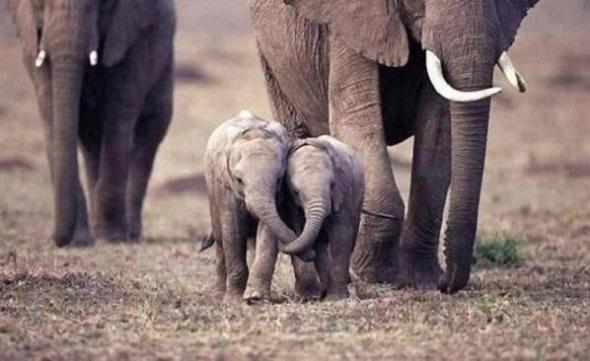
Good Morning!!
A fascinating new study found that Asian elephants comfort each other in times of stress by touching each other with their trunks and making consoling vocalizations. From National Geographic:
Asian elephants, like great apes, dogs, certain corvids (the bird group that includes ravens), and us, have now been shown to recognize when a herd mate is upset and to offer gentle caresses and chirps of sympathy, according to a study published February 18 in the online journal PeerJ.
Joshua Plotnik, a behavioral ecologist at Mahidol University in Kanchanaburi, Thailand, and primatologist Frans de Waal, director ofEmory University’s Living Links Center, have shown through a controlled study what those who work with elephants have always believed: The animals, in this case captive Asian elephants (Elephas maximus), offer something akin to humans’ sympathetic concern when observing distress in another, including their relatives and friends.
The scientists observed a group of 26 elephants in Thailand for a year. It was a naturalistic study–researchers waited until a stressful situation occurred and then noted the animals’ behavior toward each other. From The Christian Science Monitor:
A stress-inducing situation might be a dog walking by or a snake rustling the grass, or the roar or just the presence of a bull elephant. Sometimes the stressor was unknown. Regardless, scientists know elephant distress when they see it: erect tails and flared ears; vocalizations such as trumpeting, rumbling, or roaring; and sudden defecation and urination tell the story….the scientists witnessed bystander elephants—those not directly affected by a stressor—moving to and giving upset elephants physical caresses, mostly inside the mouth (which is kind of like a hug to elephants) and on the genitals.
Bystanders also rumbled and chirped with vocal offerings that suggested reassurance. Sometimes the empathetic animals formed a protective circle around the distressed one.
There was also evidence of “emotional contagion,” when herd mates matched the behavior and emotional state of the upset individual. In other words, seeing a “friend” in distress was distressing to the observers. Those animals also consoled one another.
It makes you wonder if the elephant is really the appropriate symbol for the Republican Party. Read more about elephant empathy at The Christian Science Monitor and Wired.
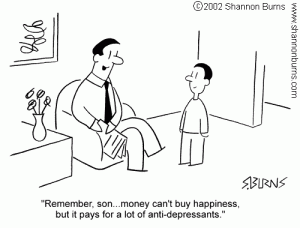
Here’s another interesting study at Scientific American–this time about humans: A Happy Life May not be a Meaningful Life. The results reminded me of all the super rich guys who are constantly complaining about how victimized they are by the rest of us peons.
Psychiatrist and Holocaust survivor Viktor Frankl once wrote, “Life is never made unbearable by circumstances, but only by lack of meaning and purpose.” For most people, feeling happy and finding life meaningful are both important and related goals. But do happiness and meaning always go together? It seems unlikely, given that many of the things that we regularly choose to do – from running marathons to raising children – are unlikely to increase our day-to-day happiness. Recent research suggests that while happiness and a sense of meaning often overlap, they also diverge in important and surprising ways.
Roy Baumeister and his colleagues recently published a study in the Journal of Positive Psychology that helps explain some of the key differences between a happy life and a meaningful one. They asked almost 400 American adults to fill out three surveys over a period of weeks. The surveys asked people to answer a series of questions their happiness levels, the degree to which they saw their lives as meaningful, and their general lifestyle and circumstances.
As one might expect, people’s happiness levels were positively correlated with whether they saw their lives as meaningful. However, the two measures were not identical – suggesting that what makes us happy may not always bring more meaning, and vice versa. To probe for differences between the two, the researchers examined the survey items that asked detailed questions about people’s feelings and moods, their relationships with others, and their day-to-day activities. Feeling happy was strongly correlated with seeing life as easy, pleasant, and free from difficult or troubling events. Happiness was also correlated with being in good health and generally feeling well most of the time. However, none of these things were correlated with a greater sense of meaning. Feeling good most of the time might help us feel happier, but it doesn’t necessarily bring a sense of purpose to our lives.
Interestingly, the researchers found that money can buy happiness, but it can’t guarantee a meaningful life. This is something I’ve come to believe through long and painful experience. I think a sense of meaning comes from working your way through problems and difficult times and coming out the other side stronger and wiser. Rich people are often able to shield themselves from life problems, but at the same time they miss out on opportunities for emotional growth.
Of course relationships are also important for both happiness and a sense of meaning.
In Baumeister’s study, feeling more connected to others improved both happiness and meaning. However, the role we adopt in our relationships makes an important difference. Participants in the study who were more likely to agree with the statement, “I am a giver,” reported less happiness than people who were more likely to agree with, “I am a taker.” However, the “givers” reported higher levels of meaning in their lives compared to the “takers.” In addition, spending more time with friends was related to greater happiness but not more meaning. In contrast, spending more time with people one loves was correlated with greater meaning but not with more happiness. The researchers suspect that spending time with loved ones is often more difficult, but ultimately more satisfying, than spending time with friends.
This is something else I can testify to. I spent about 18 years being a primary caregiver for my ex-mother-in-law. At times this was a thankless, frustrating task that certainly didn’t make me happy all the time–but in the end, I realized that the experience had been meaningful and I had grown a great deal from it.
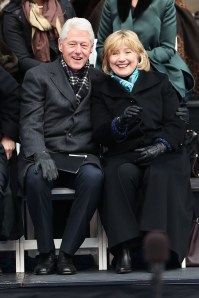
It looks like Hillary is going to be in the news a great deal between now and the 2016 presidential primaries. We’ve seen the Republicans ramping up their campaign against her–so far by focusing on old gossip from the 1990s. Even the Vince Foster conspiracy theories are coming back to haunt us. Bob Cesca at The Daily Banter reported yesterday that Fox News was set to resurface not only Vince Foster myths, but also Kathleen Willey’s claims that Bill Clinton sexually harassed her.
One of the top shelf conspiracy theories about the Clintons had to do with the suicide of White House advisor Vince Foster, which topped a list of other suspected deaths at the hands of Bill and Hillary. Now, 13 years after the end of that administration and at the outset of the would-be presidential candidacy of Hillary Clinton, everything from the ’90s appears to be back on the table.
We’ve already heard from Sen. Rand Paul (R-KY) who was the first to invoke Monica Lewinsky. And now here comes Fox News Channel resurrecting the Vince Foster conspiracy theory.
On tonight’s The Kelly File, Megyn Kelly welcomes Kathleen Willey who famously accused President Clinton of sexual harassment. An independent counsel discredited the groping allegations. Nevertheless, Willey has gone on to accuse the Clintons of not only assassinating Vince Foster, but also of murdering her husband.
Sigh . . . I don’t know if anyone here watched that travesty–I wonder if Megyn explained why Hillary should be held responsible for things her husband did (or was accused of doing) decades ago.
As an antidote to that nonsense, here are a couple of very interesting polls:
Politico: Hillary Clinton sweeps GOP in Ohio
Hillary Clinton buries Gov. Chris Christie and other potential Republican presidential candidates in the crucial swing state of Ohio, according to a new poll on Thursday.
The former secretary of state, who led Christie 42 percent to 41 percent in November, now tops the New Jersey governor 49 percent to 36 percent, according to a Quinnipiac University poll.
Read the rest of the numbers at the link.
Now here’s a poll that will make Dakinikat smile: In a Stunning Turn Poll Shows Hillary Clinton Could Make Louisiana Blue in 2016 (Politicus USA)
A new Public Policy Polling survey of Louisana found that Hillary Clinton would be the strongest Democratic presidential candidate in the state since her husband Bill was on the ballot in the 1990s.
According to PPP, “All the Republican contenders for President lead Hillary Clinton in hypothetical contests, but the margins are closer than they’ve been in the state since her husband was on the ticket. Christie leads her by just a point at 44/43, Jindal’s up 2 at 47/45, Paul leads by 4 points at 47/43, Huckabee has a 5 point advantage at 49/44, and the strongest Republican with a 7 point edge at 50/43 is Jeb Bush.”
Hillary Clinton’s numbers represent the best showing for a Democratic presidential candidate in the state since her husband Bill Clinton won Louisiana by 5 points in 1992 and 12 points in 1996. George W. Bush won the state by 8 points in 2000, and 15 points in 2004. McCain beat Obama by 19 in 2008, and Mitt Romney defeated the president by a margin of 18 points in 2012.
Wow! It’s still very early, but that is exciting news.

You may recall that last August, Glenn Greenwald’s partner David Miranda was detained at Heathrow Airport in London and questioned about documents he was carrying–top secret documents that had been stolen by Edward Snowden from the U.S. and Great Britain. Miranda’s computers, flash drives and other electronic devices were also confiscated. Greenwald and Miranda sued, claiming that Great Britain charging him under their “anti-terrorism laws was unlawful and breached human rights.” Yesterday the court released its decision, saying that judges said it was a “proportionate measure in the circumstances” and in the interests of national security. From BBC News:
Steven Kovats QC, representing the UK home secretary, previously told the High Court that the secret material seized from Mr Miranda could have ended up in the hands of al-Qaeda.
But Mr Miranda’s lawyers argued the detention at Heathrow was illegal because it was carried out under the wrong law: Schedule 7 of the Terrorism Act 2000.
They said that in reality he was detained on the say-so of the security services so they could seize journalistic material.
Mr Miranda was carrying 58,000 highly classified Government Communications Headquarters (GCHQ) files, the judge said.
He added that Oliver Robbins, the UK’s deputy national security adviser at the Cabinet Office, had stated that “release or compromise of such data would be likely to cause very great damage to security interests and possible loss of life”.
But could Miranda be called a “journalist” just because he was carrying material that his partner had written about in a newspaper, The Guardian?
In his ruling, Lord Justice Laws said: “The claimant was not a journalist; the stolen GCHQ intelligence material he was carrying was not ‘journalistic material’, or if it was, only in the weakest sense.
“But he was acting in support of Mr Greenwald’s activities as a journalist. I accept that the Schedule 7 stop constituted an indirect interference with press freedom, though no such interference was asserted by the claimant at the time.
“In my judgement, however, it is shown by compelling evidence to have been justified.”
Here’s the full decision of the court. There is a subtle but emphatic slap-down of Glenn Greenwald’s arguments in points 54-56. The judged noted that Greenwald appeared to be lecturing the court when he discussed “responsible journalism,” and responded that the “evidence” Greenwald offered was “unhelpful,” because he took the position that British law enforcement officers deliberately acted in a way that they (officers) knew to be wrong; he ignored the fact that the material Miranda was carrying was stolen and could end up in the wrong hands; and that
Mr Greenwald’s account (paragraph 33) of the “many ingredients to the sensible reporting of very sensitive information” is insubstantial; or rather, mysterious – the reader is left in the dark as to how it is that “highly experienced journalists and
legal experts” (paragraph 33(1)) or “[e]xperienced editors and reporters” (33(2)) are able to know what may and what may not be published without endangering life or security.
Miranda and Greenwald hope to be granted the right to appeal the decision.
I’m just about out of space, so I’ll conclude with a quickie from Sochi: Olympian Films Wolf Stalking Her Hotel Hallway.
Olympian Kate Hansen tweeted out a video of what appears to be a wolf trotting down her hotel hallway with the message, “I’m pretty sure this is a wolf wandering my hall in Sochi.” via
Now it’s your turn. What stories are you following today? Please post your links in the comment thread, and have a great day!
Animal Matters
Posted: June 10, 2012 Filed under: just because | Tags: animals, dian fossey, elephants, gorillas, nature, Oceans, Polar Bears, science, sea turtles, Sylvia Earle 33 Comments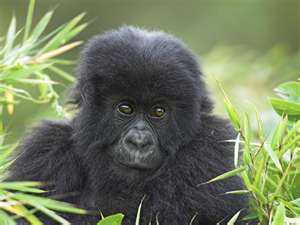
I thought I would share some recent stories about wildlife that crossed my path. The first comes from NPR’s Weekend Edition. I was running my payday weekend errands yesterday and had a “driveway moment” in the parking lot of my grocery store. Rebecca Davis was reporting on her trip to Volcanoes National Park in Rwanda. She was there to see gorillas in the wild. I couldn’t pass up a chance to experience, vicariously of course, a visit to a group of wild gorillas. The icing on this cake, this group had a pair of young twins. You may not know that twins are rare for most large mammals, so this was a chance of a lifetime for the reporter and me! Listening to the quiet whispers of the reporter and guide transported me into the forest along with them.
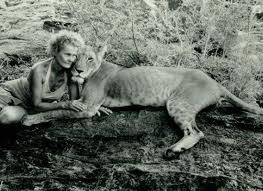
When I decided to change my major from mathematics as an undergraduate, I chose zoology. I had long been awestruck by the incredibly magnificent animals of Africa. Elephants, giraffes, rhinos, lions, cheetahs, what’s not to love? As a child, after seeing the film Born Free, I read all of the books written by Joy Adamson and her husband, George. I dreamed of going to Africa, if for no other reason than to visit the grave of Elsa the lioness. PBS’ Nature had an episode last year entitled Elsa’s Legacy. I have to admit that I cried, nearly uncontrollably watching this episode, mourning once again Elsa’s death. Both Joy and George met tragic ends with Joy being murdered by a former employee and George being killed by poachers.
At the same time I switched to my zoology major, something remarkable was taking place in the scientific world. Dr. Louis B. Leakey, the renowned archaeologist and anthropologist, had sent three young women into the field to study primates; Jane Goodall to study chimpanzees, Dian Fossey to study gorillas and Birute Galdikas to study orangutans. Tragically, Dian Fossey, author of Gorillas in the Mist, was murdered by poachers in 1985.
My major professor and advisor in college was Dr. Llewellyn Ehrhart. Although he was a vertebrate zoologist and mammologist, he chose to focus his field work and research on sea turtles. His mentor was the renowned turtle biologist, Dr. Archie Carr. Check out the links to find out more about Dr. Carr and the group he founded, the Sea Turtle Conservancy and the National Wildlife Refuge named for him I came across a report on leatherback turtles on Treehugger yesterday. Several species of sea turtles nest on Florida’s coasts. Each species is listed as endangered, and leatherbacks are of particular concern. I have closely followed the efforts here in Florida to protect these species, where volunteers patrol the beaches to locate nests, cover and mark them. In addition to human poachers, which are relatively rare along America’s coastlines these days, there are natural predators. Raccoons, in particular, dig into the nests for the eggs. The volunteers put wide spaced wire grates over the nests to keep the raccoons from destroying the incubating eggs. The leatherback story has some wonderful photos that accompany it. You can see how enormous these prehistoric creatures are in comparison to humans in a couple of the photos. Sea turtles evolved during the late Jurassic period, while dinosaurs (oh, my!) were still walking the earth.
Treehugger, once again, has a video of a polar bear in a zoo in the Netherlands who used a stone to fracture the glass in the pool habitat of his enclosure. Possibly the bear was just trying to get the attention of the two zoo visitors who were standing in front of the glass. Who knows? It certainly made me wonder why those guys were even there in the first place, since they obviously weren’t interested in the magnificent animal right in front of them. I couldn’t find any other recorded instances of a polar bear using a “tool” which is what makes this incident so fascinating. I will save my opposition to zoos and marine parks for another post. I will say that many larger, well funded zoos have improved the once bare and small enclosures with larger and enriched habitats. These changes have certainly improved the lives of captive animals during their lifetime imprisonment.
This link is to a sad, but not unusual story, also from Treehugger. The story entitled Half of Republic of Congo’s Forest Elephants Killed in Past Five Years naturally caught my eye. There are other links on the page to other stories about recent assaults on the elephant populations in Sumatra, Cameroon and the Eastern Congo. This information from Scientific American will give you an idea of how much damage has been done to African elephants in the past 80 years.
In 1930, there were between five and 10 million wild African elephants, plying the entire African continent in large bands. Just 60 years later, when they were added to the international list of critically endangered species, only about 600,000 were scattered across a few African countries. Today that number is likely less than 500,000.
This massive decline in African elephant populations is due to a combination of poaching for ivory and habitat loss. With an ivory ban still in place, but might not be for much longer, and stepped up conservation efforts in many areas, some countries are seeing a slight increase in numbers of individuals. Unfortunately not every country or areas within the countries are on board with protecting this magnificent species. Population declines of 50% for already endangered species can spell their imminent extinction. When the size of the gene pool is dramatically reduced, rare traits or mutations are more likely to occur and, thus, weaken the species.
A final dose of science geekiness is an interview with Dr. Sylvia Earle, featured on the American Public Media radio show, On Being. Dr. Earle has been at the forefront of ocean exploration and discovery for about 50 years. She will be 77 later this year, and Krista began the interview this way:
Sylvia Earle: That’s the joy of being a scientist and explorer. You do what little children do: you ask questions. Like who, what, why, when, where, how? (laughs). And you never stop and you never cease being surprised. It’s just impossible to be bored.
Ms. Tippett: And you’re still diving, aren’t you?
Dr. Earle: Well, yeah. I breathe. So I can dive. (laughter)
Dr. Earle is the only person who has walked on the bottom of the ocean,in a specially designed, pressurized suit, similar to the suits worn by astronauts. She is one of the leading voices on protecting the Earth’s oceans. As I listened to the interview, the child like sense of wonder and excitement in her voice was uplifting and helped me recall that same feeling within myself. Despite the fact she has witnessed the decline of species and habitat in oceans around the world, there is no despair in her voice or her message. If you do nothing else today, please listen to this delightful, informative and hopeful discussion with a truly amazing woman. I seriously doubt that the phrase I CAN’T has ever been a part of her vocabulary.
Whether it is development, a need for fuel or simply money, so many species are on the brink of extinction worldwide at the hands of humans. For me, a world without non-human animals is not a place worth living in. Our species’ need to commodify and conquer everything around us must stop. Science is how our eyes will be opened, which is why science education is so critical now more than ever. Will we learn to appreciate the wonders and marvels of the natural world surrounding us before it is too late?
I will leave you with my favorite quote, one which sums up my feelings toward our planet and all the life upon it. It’s from Henry Beston’s book The Outermost House:
We need another and a wiser and perhaps a more mystical concept of animals. Remote from universal nature, and living by complicated artifice, man in civilization surveys the creature through the glass of his knowledge and sees thereby a feather magnified and the whole image in distortion. We patronize them for their incompleteness, for their tragic fate of having taken form so far below ourselves. And therein we err, and greatly err. For the animal shall not be measured by man. In a world older and more complete than ours they move finished and complete, gifted with extensions of the senses we have lost or never attained, living by voices we shall never hear. They are not brethren, they are not underlings; they are other nations caught with ourselves in the net of life and time, fellow prisoners of the splendour and travail of the earth.”

 peej
peej Carissa
 bostonboomer
 dakinikat
 ecocatwoman
 mablue2
 Mama Lopez
 peggysue22
 quixote
 skydancingguestblogger
 Mona (aka Wonk the Vote)



 Sky Dancing
Recent Comments