This morning I woke up and turned on the TV to see our “president,” easily the stupidest president in American history, walking hunched over and tired in Davos to give another long, rambling, nonsensical, insulting “speech” to the assembled political and business leaders. He spoke for 70 minutes and it seemed much longer.
I watched the speech for awhile, but it was the same old garbage he talks about off the cuff to the assembled press in the oval office. He went on and on in his old man voice, attacking allies, demanding that Greenland be handed over to him, ranting about windmills–all to complete silence from the audience. How could they sit there and watch this embarrassing display of abject stupidity?
I don’t expect this post to make much sense, because I’m just soooo angry!
The big headline, according to the legacy media is that Trump announced he won’t “take Greenland by force.”
President Donald Trump ruled out military force to acquire Greenland in his remarks Wednesday to the World Economic Forum in Davos, Switzerland, providing a momentary sense of relief to Europe after weeks of worry that the U.S. would enter a confrontation with NATO.
“We probably won’t get anything unless I decide to use excessive strength and force, where we would be, frankly, unstoppable, but I won’t do that,” Trump said. “That’s probably the biggest statement I made, because people thought I would use force, but I don’t have to use force. I don’t want to use force.”
Trump said Wednesday that he wants to see negotiation to acquire what he called “a piece of ice.”
The president, though, warned Denmark that if it doesn’t give up Greenland to the U.S., “we will remember.”
He argued in his remarks that the U.S. can protect “this giant mass of land” better than Europe can, insisting that taking over Greenland wouldn’t be a threat to NATO but would instead enhance security for the alliance. While the president’s obsession with Greenland has accelerated in recent weeks, his pledge to not use force to acquire the island marks a shift in his rhetoric.
“I don’t want to use force,” he added. “All the United States is asking for is a place called Greenland, where we already had it as a trustee but respectively returned it back to Denmark not long ago after we defeated the Germans, the Japanese, Italians and others in World War II. We gave it back to them.”
He added that it was “stupid” for the U.S. to not keep the island after the war. Still, Trump downplayed the significance of his threats against Greenland, arguing it’s a trade-off for the years of support the U.S. has given to NATO allies.
“What I’m asking for is a piece of ice, cold and poorly located,” he said. It’s a very small ask, compared to what we have given them for many, many decades.”
What does that mess of words really mean? Nothing. Trump is the world’s worst liar and he’s insane. Not to mention stupid. Nothing he says can be believed.
The choice is impeachment and removal or calamity for the United States. I don't see how anybody watching Trump's speech in Davos can draw any other conclusion. He's a senile madman.
“Denmark’s investment in U.S. Treasury bonds, like Denmark itself, is irrelevant,” U.S. Treasury Secretary Scott Bessent told reporters Wednesday at the World Economic Forum in Davos, Switzerland.
It comes as Trump’s threats to impose 10% tariffs on eight European countries as part of his push to take over Greenland spooked markets. The levies would come into force on Feb. 1, Trump said, and later rise to 25%.
Danish pension operator AkademikerPensionsaid Tuesday it was selling $100 million in U.S. Treasurys. The decision was driven by “poor [U.S.] government finances,” said Anders Schelde, AkademikerPension’s investing chief.
When Bessent was asked how concerned he is about European investors pulling out of Treasurys, Bessent said at a news conference at the World Economic Forum: “Denmark’s investment in U.S. Treasury bonds, like Denmark itself, is irrelevant.”
“That is less than $100 million. They’ve been selling Treasurys for years, I’m not concerned at all.”
Really? I’d like to hear what Daknikat has to say about this.
No one can be watching this Davos speech and reach any conclusion but that the President of the United States is mentally disturbed and that something is deeply wrong with him. This is both embarrassing and extremely dangerous.
Prime Minister Mark Carney of Canada delivered a stark speech in Davos, Switzerland, on Tuesday, prompting global political and corporate leaders in the audience to rise from their seats for a rare standing ovation.
He described the end of the era underpinned by United States hegemony, calling the current phase “a rupture.” He never mentioned President Trump by name, but his reference was clear.
The speech came as President Trump doubled down on his threats to take Greenland away from Denmark, saying he would slap fresh tariffs on European powers as punishment for their support of Greenland’s sovereignty.
Global leaders have been scrambling to find a unified response.
“Every day we’re reminded that we live in an era of great-power rivalry,” Mr. Carney said. “That the rules-based order is fading. That the strong can do what they can, and the weak must suffer what they must.”
And he warned, “The middle powers must act together because if we’re not at the table, we’re on the menu.”
He would know.
Mr. Trump started his second presidential term making claims on Canada as the 51st state and threatening Canada’s previous leader, Justin Trudeau, whom Mr. Trump publicly derided, with unilaterally scrapping agreements that have governed the relationship between the neighboring countries for over a century….
Mr. Carney chastised other leaders too, many of whom would have been following his speech in Davos, for not standing up for their interests.
“There is a strong tendency for countries to go along to get along,” he said. “To accommodate. To avoid trouble. To hope that compliance will buy safety. It won’t.”
Mr. Carney made clear he is choosing a different path.
He wrote his own speech, according to a government official, who spoke on condition of anonymity to discuss the inner workings of his team, which is a departure since speeches of this magnitude are usually prepared by high-level staffers with the leader’s input.
Mr. Carney, a former investment executive who has served as the governor of Canada and England’s central banks, has attended the global gathering about 30 times, according to his office….
Mr. Carney spoke not long after Mr. Trump had posted an altered image on social media that featured a map of American flags superimposed over both Canada and the United States, as well as Greenland.
Well worth a listen from Canadian PM Mark Carney at Davos summit.
President Trump said in Davos on Wednesday that Canada should be “grateful” to the U.S. for the “freebies” it receives because of the two nations’ relationship.
Why it matters: Trump’s dig at Canada came a day after Prime Minister Mark Carney delivered his own warning at the World Economic Forum over the “rupture” of the world order.
Driving the news: “Canada lives because of the United States,” Trump said Wednesday before taking a direct jab at Carney. “Remember that, Mark, the next time you make your statements.”
Trump said Carney “wasn’t so grateful” in his address.
Carney avoided naming Trump in his speech — a strategy a Canadian official previously told Axios was deliberate. However, the official indicated that Carney’s remarks were aimed squarely at the president’s recent actions.
Zoom out: As Trump pushes a vision of hemispheric dominance — coupled with threats of the U.S. making its northern neighbor the “51st state” — Ottawa has reportedly started preparing for how to repel a U.S. invasion.
Growing up, I never really understood Aesop’s fable about the goose that laid the golden egg. It’s a cautionary tale about greed and hubris: A farmer with a miraculous goose that lays a solid-gold egg every morning gets fed up with passive wealth generation and figures killing the bird will speed things along. But alas: He finds no store of eggs within and realizes he butchered his meal ticket for nothing. The moral’s straightforward, but it never really worked for me as a story. Like, come on: Nobody’s that stupid.
Well, almost nobody, I guess.
As long as I live, I don’t think I’ll get over this pure, dumb fact: Trump told his fans he had to blow up the liberal order because it was the only way to secure the very benefits the liberal order was already bringing us.
Trump insists America needs Greenland as a strategic positioning ground from which to restrain Russia and China in the Arctic. But thanks to the liberal order, this was something we already enjoyed. Through the magic of multilateral cooperation, we were able to treat someone else’s territory as though it were our own for the purposes of military positioning—not by bribing or intimidating them, but because they agreed their interests and our interests aligned.
Trump insists America needs to blow up America’s preexisting economic relationships to ensure America gets an advantageous position in international trade. But America already had such an advantageous position: an orderly world economic system that had lavished previously unimaginable prosperity on America and to the entire globe, with us at the proverbial (and very profitable) head of the table.
It’s not just that Trump had the hubris to think he could hero-ball the country to a better deal by canceling a century of history and starting over. It’s that his own broken personality—his miserable meanness, his dispositional inability to cooperate with and trust others—has always prevented him from understanding what was good about the deal we had to begin with. The idea that multipolar agreements could be better for America, in some cases, than outright ownership—that, say, we already have everything we need from Greenland—he rejects as ridiculous. Ownership, he told the New York Times, is “what I feel is psychologically needed for success. . . . I think that ownership gives you a thing that you can’t do, whether you’re talking about a lease or a treaty.”
He really is determined to burn everything down if he can’t get his own way on everything.
1/ Jonathan Lemire writes, "Trump's lust for Greenland is about increasing American dominance in the Western Hemisphere 7 redrawing the maps of the world. The island is roughly 836K square miles, which would make it the largest territorial addition in US history." Gift link.
Franklin D. Roosevelt famously illustrated with a simple metaphor the need for a healthy transatlantic alliance. Justifying his decision to lend Great Britain warships and other military supplies in the early days of World War II, Roosevelt likened it to loaning a neighbor a garden hose to put out the fire consuming his house. Sure, Roosevelt charitably wanted to help a neighbor in need. But it was self-interested too; if the neighbor could extinguish the blaze, it wouldn’t spread to FDR’s home. The United States benefited from the friendship—and the buffer—that allies could provide.
Today, Donald Trump will fly to Europe. Ukraine is already ablaze. And now the president is ready to set a bunch of new houses on fire.
The president will speak at the World Economic Forum in Davos, Switzerland, tomorrow, and he appears prepared to shatter the nearly 80-year-old NATO alliance in order to seize Greenland. In his quest to claim a strategically located island of ice and rock, Trump has turned against his nation’s most stalwart friends. He has antagonized and mocked panicked European leaders, threatened punishing tariffs on countries that object to his plans, and pointedly not ruled out using military force. Trump’s thirst for Greenland—even if he stops short of ordering an armed invasion—threatens to unravel the partnership born from the ashes of World War II that has, in the decades since, ensured the spread of peace, prosperity, and democracy on both sides of the Atlantic.
Today marks one year since Trump’s return to office, and in that time, he has fundamentally reshaped the United States’ relationship with the rest of the world. But nothing has upended the global order more than what would happen if he follows through on his threats toward Greenland. The island, of course, belongs to Denmark, which says that it is not available for the taking. Troops from Europe have been dispatched to the territory, and Greenland’s prime minister warned his populace to prepare for an invasion. If Trump were to persist, Denmark could trigger NATO’s Article 5 mutual-defense pact, and then the unthinkable could occur: American soldiers firing on Europeans while Russian President Vladimir Putin’s dream of NATO’s self-immolation is thoroughly realized.
The annual meetings in Davos, normally a clubby gathering of business titans and political leaders, have been consumed by talk of what Trump may or may not do. European leaders have found themselves scrambling on strategy—appeasement? Defiance? Compromise? Early this morning, Trump posted screenshots of text messages that revealed the dilemma facing those leaders. (Lesson to everyone: Be careful what you text the guy unless you want the world to see.)
In one message, Mark Rutte—the secretary general of NATO, who has prized warm relations with Trump—praised the president’s foreign policies, then vowed that he is “committed to finding a way forward on Greenland.” But in another, French President Emmanuel Macron, whose relationship with Trump has been turbulent, admitted: “I do not understand what you are doing on Greenland.” In fact, Trump couldn’t be more clear, as he demonstrated once again by circulating a pair of presumably AI-generated images on social media. In one, he’s planting an American flag in Greenland. In the other, he’s lecturing European leaders in the Oval Office with a map behind him that depicts Greenland as part of the United States. (Canada and Venezuela too.)
Trolling close U.S. allies has seemingly been an unofficial policy of Trump’s second administration since its first days, beginning with Vice President Vance lecturing Europe in Munich on the virtues of free speech. But this time feels different for those nervously waiting in snowy Switzerland. The president’s address to the forum tomorrow is poised to be a defining moment, and Trump plans to make the unequivocal case that the United States should have Greenland, a senior White House official told me.
Pretty good predictions, except for Trump’s claim he won’t use force.
A few non-Davos stories:
Did you watch Lawrence O’Donnell last night? He still insists that Trump’s Greenland obsession is really a way to distract the press from the Epstein files. I think he could be right. If you didn’t see it, I recommend watching it now.
Three hundred and sixty-five days after Donald Trump swore his oath of office and completed an extraordinary return to power, many historians, scholars and experts say his presidency has pushed American democracy to the brink – or beyond it.
The scale and velocity of what he has been able to accomplish in just a year have stunned even longtime observers of authoritarian regimes, pushing the debate among academics and Americans from whether the world’s oldest continuous democracy is backsliding to whether it can still faithfully claim that distinction.
“In 2025, the United States ceased to be a full democracy in the way that Canada, Germany or even Argentina are democracies,” Steven Levitsky and Daniel Ziblatt, the prominent Harvard political scientists and authors of How Democracies Die, and the University of Toronto professor Lucan Way, wrote in Foreign Affairs last month. They argued that the US under Trump had “descended into competitive authoritarianism”, a system in which elections are held but the ruling party abuses power to stifle dissent and tilt the playing field in its favor.
There is no universally accepted definition of democracy. Some argue the US is a “flawed” or “illiberal” democracy, or a democracy facing substantial “autocratization” – a process that began long before Trump came to power a decade ago but which his presidency has rapidly accelerated. Still, others believe the concerns are overblown, or reflect an intense partisan dislike of the current president.
Since Trump’s first term, scholars have warned that it can happen here. But many now say this moment is different – not only because Trump’s approach is more methodical and his desire for vengeance more pronounced, but because he now faces far fewer internal constraints.
Read more at the link.
Hunter Walker at Talking Points Memo: Trump Marks First Year In Office With Unhinged Racist Rant Targeting ‘Very Low IQ’ Somalis.
President Donald Trump spent the first anniversary of his second term on Tuesday pitching himself to the American people from behind the White House briefing room podium. In nearly two hours of remarks, Trump seemingly sought to address his cratering approval by running through a list of his supposed accomplishments. His remarks also included a series of vicious, racist remarks about Somali people and other immigrants.
I think Trump likes this photo.
“They all ought to get the hell out of here, they’re bad for our country,” Trump said of the Somali population at one point during the extraordinary rant.
At multiple points during his remarks, Trump indicated he felt the need to make his case directly because his team was not up to the task. A slew of anniversarypolls show the president’s numbers are currently underwater with notably steep declines in voter approval of the president’s handling of his signature issues: immigration and the economy. Those figures have come amid slow job growth and violent raids staged by Trump’s Immigration and Customs Enforcement agency.
“Maybe I have bad public relations people, but we’re not getting it across,” Trump said as he argued the economy is particularly strong since he returned to office.
Trump came equipped with a couple of binders including one labeled “ACCOMPLISHMENTS.” Yet as he read through the provided list, Trump repeatedly raged against the Somali population, including suggesting that they are of inferior intelligence. Trump first turned to the topic as he alluded to the ongoing ICE raids in Minnesota, which have been met with massive protests. The state is home to the country’s largest Somali population and the federal crackdown has come amid a wave of right-wing influencers making exaggerated claims about alleged daycare fraud in the community.
“Nineteen billion dollars at a minimum is missing in Minnesota, given to a large degree by Somalians. They’ve taken it,” Trump said. ”Somalians, can you imagine? And they don’t do it — a lot of very low IQ people. They don’t do it. Other people work it out and they get them money and they go out and buy Mercedes Benzes.”
The Supreme Court will consider Wednesday whether President Trump can fire Lisa Cook from the Federal Reserve board, in a case that tests the longstanding independence of the central bank, with potentially major consequences for the economy.
The court’s conservative majority has repeatedly allowed Mr. Trump to oust leaders of other independent agencies as he moves to expand presidential power and seize control of the federal bureaucracy. But the justices have signaled that the Fed may be different and uniquely insulated from executive influence because of its structure and history.
Lisa Cook
The case lands as the administration has dramatically escalated its attacks on the Fed, apparently aimed at remaking its board and lowering interest rates. The Justice Department this month opened a criminal investigation into whether Jerome H. Powell, the Fed chair, lied to Congress about cost overruns related to the Fed’s renovation of its headquarters.
Mr. Powell, whose term as chair ends in May, forcefully pushed back on the threat of criminal charges, saying it was a result of the Fed setting borrowing costs “based on our best assessment of what will serve the public, rather than following the preferences of the president.”
The investigation prompted a backlash from Republicans, international policymakers, Wall Street and some Trump allies, who warned that the central bank’s independence and credibility was at risk.
It also threatened to complicate Mr. Trump’s plans to name Mr. Powell’s replacement as chair — and, legal experts said, the Supreme Court case being heard on Wednesday.
The justices agreed to hear Ms. Cook’s case on an expedited basis, and are likely to rule quickly on her status as litigation continues in the lower courts. The outcome of the case could determine how much latitude Mr. Trump and future presidents have to influence the direction of the powerful central bank, which Congress intentionally tried to insulate from political pressures.
Police agencies in the United States kill more than 1,000 people each year. After many of those deaths, the agencies involved put out statements. Those statements often use what’s known as the exonerative voice to minimize officers’ involvement. The first statement from the Minneapolis Police Department after George Floyd’s death, for example, said that the officers at the scene “noted that he appeared to be suffering from medical distress.” Quite the understatement. These communications often cast events in a light most favorable to the officers involved, sometimes to the point of deception. Too often, they’ll try to smear the deceased by citing a criminal record or suggesting a drug addiction or gang affiliation.
Renee Good
I have been covering policing for more than 20 years and have read and parsed a lot of these statements. The Department of Homeland Security’s response after the Immigration and Customs Enforcement agent Jonathan Ross shot and killed Renee Good in Minneapolis this month is something else entirely.
For all their flaws, typical communications from police officials usually include a modicum of solemnity. There are assurances that there will be a fair and impartial investigation, even if those investigations too often turn out to be neither. There’s at least the acknowledgment that to take a human life is a profound and serious thing.
The Trump administration’s response to Ms. Good’s death made no such concessions. There were no promises of an impartial investigation. There was no regret or remorse. There was little empathy for her family — for her parents, her partner or the children she left behind. From the moment the world learned about her death, the administration pronounced the shooting not only justified but an act of heroism worthy of praise and celebration.
It isn’t just the lying; it’s that the lies are wildly exaggerated and easily refutable. All the evidence we’ve seen so far, including a meticulous Times forensic analysis of the available footage, makes clear that at worst, Ms. Good mildly obstructed immigration enforcement, disobeyed ambiguous orders or perhaps attempted to flee an arrest. None of those are capital crimes, nor do law enforcement officers get to dole out punishment in such cases. At one point, President Trump justified her shooting by claiming she’d been “very disrespectful” to immigration officers. That isn’t a crime at all.
The lies this administration is telling about Ms. Good aren’t those you deploy as part of a cover-up. They’re those you use when you want to show you can get away with anything. They’re a projection of power.
For the past decade or so, since the protests in Ferguson, Mo., America has engaged in a high-stakes dialogue about police abuse and accountability, the militarization of law enforcement and the push and pull between public safety and civil liberties. Those discussions, while occasionally heated, have been based on a shared understanding that the primary job of domestic law enforcement is to serve the public. What Mr. Trump is doing with federal immigration forces has rendered those debates obsolete.
Those are my recommended read for today. What do you think?
Did you like this post? Please share it with your friends:
I really struggled to get out of bed this morning. I’m usually an early riser although I don’t really get going until I’ve had some caffeine and psyched myself up a bit, but today my body resisted all my efforts to be dragged out of dreamland.
Like many Americans, I’m traumatized by what’s happening to our country and the cumulative effects of a decade of dealing with the monster from Mar-a-Lago. Everything is awful, and I’m not sure we can make it until the midterm elections.
So here’s a Caturday distraction from The Smithsonian Magazine. (The illustrations are from the article except for one from The Baltimore Sun.)
A cat left pawprints on this 500-year-old manuscript.
More than 500 years ago, after dedicating hours to the meticulous transcription of a crucial manuscript, a Flemish scribe set the parchment out to dry—only to later return and discover the page smeared, filled with inky paw prints.
Perhaps the world’s first known instance of a so-called “keyboard cat,” that manuscript is the inspiration for and centerpiece of an exhibition currently on display at Baltimore’s Walters Art Museum. Running through late February, “Paws on Parchment” explores the roles of cats in the Middle Ages—and the myriad ways humans showed affection for their feline friends hundreds of years ago.
“Objects like [the manuscript] have a way of bridging across time, as it’s just so relatable for anyone who has ever had a cat,” Lynley Anne Herbert, the museum’s curator of rare books and manuscripts, tells Artnet’s Margaret Carrigan. “Many medieval people loved their cats just as much as we do.”
This affection is evidenced by the myriad illustrations of cats across cultures. After finding the Flemish manuscript, Herbert searched the museum archives and found no shortage of other feline mentions or depictions in Islamic, Asian and other European texts and images….
“Because they were so stealthy and they could see in the dark, they were seen as a little bit ethereal as creatures,” Herbert told WYPR’s Ashley Sterner in August. “This sort of translates to the idea that that’s kind of the way the devil works. If you’re sinful, he can stalk you, and eventually he’ll pounce on you.”
Paws on Parchment is the first of three animal-themed exhibitions planned at the Walters Art Museum in Baltimore over the next two years. The Walters Museum
In the margins of manuscripts on display, seemingly silly illustrations of cats playing instruments detail this double-sidedness. “[They] reinforce the importance of an orderly society by showing the chaos possible if the natural order of things got turned on its head,” Herbert tells Artnet.
But at the same time, humans relied on their pets’ killer instincts much more than they do today. Rats, mice and other vermin in the Middle Ages were more likely to carry disease, and housecats were an important defense for families.
“Their ability to catch and kill mice and rats was actually critical to healthy living,” Herbert told WYPR. “Those critters would often get into food stores and contaminate them or eat them. They would also chew on valuable things like cloth and books. … Very early on, people realized that cats were excellent mousers. They were actually defined in encyclopedias of the era by their ability to catch mice.”
You can read more about medieval cats and the Walters Museum exhibit at the link.
In the news today:
Trump beclowned himself and embarrassed most Americans by accepting the Nobel Peace Prize medal that was awarded to Venezuelan opposition leader María Corina Machado. I can’t imagine being so shameless that you would accept a medal won by someone else, but Trump apparently can’t feel shame. In fact, he kind of strong-armed Machado into giving it to him. She probably imagined he might then let her return to her country as president–after all, she did win the election. But Trump isn’t likely to do that. In fact later yesterday, he seemingly forgot her name.
President Donald Trump was handed the Nobel Peace Prize he has been whining about for so many months—only to seemingly forget the name of the woman who passed hers on to him just hours earlier.
In a media huddle outside the White House, the 79-year-old president was asked why he has yet to support María Corina Machado’s bid for Venezuelan leadership.
“I had a great meeting yesterday by a person who I have a lot of respect for and she has respect, obviously, for me and our country and she gave me her Nobel Prize,” Trump said, notably avoiding her name.
“I’ll tell you what, I got to know her, I never met her before, and I was very, very impressed. She’s a really—this is a fine woman.”
On social media, severalcommentatorsnoted that it appeared as though Machado’s name had slipped the president’s mind.
Machado, leader of the opposition to Nicolás Maduro’s government, has been vying for power in the South American nation following the U.S. gunpoint abduction of Maduro at the start of the month.
However, despite claiming Maduro was operating a “cartel,” the Trump administration left his vice president, Delcy Rodriguez, running the country, along with virtually all of his government….
While the coveted Nobel Prize was claimed by Trump, the Norwegian Nobel Committee has since reiterated its ruling that prizes cannot be exchanged and the transfer is ultimately meaningless.
I doubt if this will stop Trump’s incessant whining about how the Nobel committee cheated him out of his own Nobel Peace Prize.
Meanwhile, Trump is supporting Venezuela’s vice president Delcy Rodrigues as acting president.
When President Donald Trump announced the audacious capture of Nicolás Maduro to face drug trafficking charges in the U.S., he portrayed the strongman’s vice president and longtime aide as America’s preferred partner to stabilize Venezuela amid a scourge of drugs, corruption and economic mayhem.
Left unspoken was the cloud of suspicion that long surrounded Delcy Rodríguez before she became acting president of the beleaguered nation earlier this month.
In fact, Rodríguez has been on the radar of the U.S. Drug Enforcement Administration for years and in 2022 was even labeled a “priority target,” a designation DEA reserves for suspects believed to have a “significant impact” on the drug trade, according to records obtained by The Associated Press and more than a half dozen current and former U.S. law enforcement officials.
The DEA has amassed a detailed intelligence file on Rodríguez dating to at least 2018, the records show, cataloging her known associates and allegations ranging from drug trafficking to gold smuggling. One confidential informant told the DEA in early 2021 that Rodríguez was using hotels in the Caribbean resort of Isla Margarita “as a front to launder money,” the records show. As recently as last year she was linked to Maduro’s alleged bag man, Alex Saab, whom U.S. authorities arrested in 2020 on money laundering charges.
The U.S. government has never publicly accused Rodríguez of any criminal wrongdoing. Notably for Maduro’s inner circle, she’s not among the more than a dozen current Venezuelan officials charged with drug trafficking alongside the ousted president.
Three current and former DEA agents who reviewed the records at the request of AP said they indicate an intense interest in Rodríguez throughout much of her tenure as vice president, which began in 2018. They were not authorized to discuss DEA investigations and spoke on the condition of anonymity.
Rodríguez’s name has surfaced in nearly a dozen DEA investigations, several of which remain ongoing, involving agents in field offices from Paraguay and Ecuador to Phoenix and New York, the AP learned. The AP could not determine the specific focus of each investigation.
Obviously, Trump couldn’t careless about drug trafficking.
WEST PALM BEACH, Florida (AP) — President Donald Trump said Saturday that he would charge a 10% import tax starting in February on goods from eight European nations because of their opposition to American control of Greenland, setting up a potentially dangerous test of U.S. partnerships in Europe.
Denmark, Norway, Sweden, France, Germany, the United Kingdom, the Netherlands and Finland would face the tariff, Trump said in a social media post while at his golf club in West Palm Beach, Florida. The rate would climb to 25% on June 1 if no deal was in place for “the Complete and Total purchase of Greenland” by the United States, he said.
The Republican president appeared to indicate that he was using the tariffs as leverage to force talks with Denmark and other European countries over the status of Greenland, a semiautonomous territory of NATO ally Denmark that he regards as critical to U.S. national security.
“The United States of America is immediately open to negotiation with Denmark and/or any of these Countries that have put so much at risk, despite all that we have done for them,” Trump said on Truth Social.
The tariff threat could mark a problematic rupture between Trump and America’s longtime NATO partners, further straining an alliance that dates to 1949 and provides a collective degree of security to Europe and North America. Trump has repeatedly tried to use trade penalties to bend allies and rivals alike to his will, generating investment commitments from some nations and pushback from others, notably China.
Trump is scheduled to travel on Tuesday to the World Economic Forum in Davos, Switzerland, where he likely will run into the European leaders he just threatened with tariffs that would start in little more than two weeks.
Making a symbolic visit to Copenhagen, a bipartisan delegation of U.S. lawmakers — including senior members of the House and Senate — tried to reassure leaders of Denmark and Greenland, and their increasingly anxious citizens, that most Americans do not support President Donald Trump’s plan to annex or buy Greenland, let alone the prospect of military action against a fellow NATO ally.
The Congressional visit comes as tensions are soaring over the Trump’s threats. Thousands gathered Saturday in Denmark for “Hands-off Greenland” protests, with gatherings also planned for later in Greenland’s capital, organizers said.
“It is important to underscore that when you ask the American people whether or not they think it is a good idea for the United States to acquire Greenland, the vast majority — some 75 percent — will say we do not think that that is a good idea,” Sen. Lisa Murkowski (R-Alaska) said Friday at a news conference after the American group met counterparts in the Danish Parliament. “This senator from Alaska does not think it is a good idea.”
“Greenland needs to be viewed as our ally, not as an asset,” Murkowski added.
Asked how Trump might be stopped in his quest to obtain Greenland, Murkowski suggested Congress would assert its authority. “You are hearing from the executive branch,” she said. “The Congress also has a role.”
That’s if Republicans in Congress are willing to stand up to Trump. Meanwhile:
COPENHAGEN – Thousands of people marched from Copenhagen City Hall to the U.S. embassy Saturday afternoon in protest of President Trump’s comments that he wants to acquire Greenland.
The crowd, waving Greenlandic flags, chanted “Greenland is not for sale.” Many demonstrators wore red hats in Trump’s own “Make America great again” fashion that read, “Make America go away.” [….]
A 15th-century prayer book featuring an illustrated gray cat The Walters Museum
Saturday’s protest came on the heels of a bipartisan Congressional delegation that travelled to Copenhagen. House and Senate lawmakers met with Danish and Greenlandic officials, as well as members of the Danish business community. The visit was meant to be a reassurance tour — affirming the longstanding relationship between the U.S. and the Kingdom of Denmark in the face of Trump’s rhetoric.
Peder Dam, who lives in Denmark,attended the demonstration with a sign that featured an image of Darth Vader and Luke Skywalker from Star Wars that read: “Americans: I know there is good in you. Come back to sanity.”
“We know what is going on in the White House is not representative for all Americans,” he told NPR.
But he said he wonders why there isn’t more widespread outrage from the American public.
“I can’t understand. If my government said they would attack Sweden, then Denmark would step up and protest that,” he said. “I like protests in the U.S. But why aren’t there more normal, average Americans stepping up, trying to protest what is going on? It’s crazy.”
Another protester, Thomas, whom NPR is identifying only by his first name because of concerns about retaliation at work, said the march represents “an unseen level of resentment towards the U.S.
“I cannot express how deeply disappointed I am — that we have sent our troops to die with you in Iraq, we were with you in Afghanistan,” he said. “How dare you turn your back on us in this way?”
The Trump administration’s persecution of Minnesota is going from bad to worse.
The Justice Department is planning to issue subpoenas for Minnesota Gov. Tim Walz and Minneapolis Mayor Jacob Frey as part of an investigation alleging that the two Democratic leaders are impeding federal law enforcement officers’ abilities to do their jobs in the state, two people familiar with the matter confirmed Friday.
In partnership with the Baltimore Animal Rescue and Care Shelter, four foster kittens visited the exhibition shortly after it opened. The Walters Museum
The subpoenas, which are without recent precedent, escalate an already bitter political battle between the Trump administration and state officials following the fatal shooting of a woman in Minneapolis by an immigration officer last week. That shooting happened amid a surge of federal immigration officers in the state ordered by President Donald Trump.
One of the people familiar with the case confirmed that the plan was to serve the subpoenas Friday. The people spoke on the condition of anonymity to discuss an open investigation. Neither Walz nor Frey had been served with a subpoena by early Friday evening, spokespeople for the officials said.
Walz and Frey have claimed they have been wrongly excluded from the investigation into the killing of Renée Good, who was fatally shot by an ICE officer through the window of her SUV as she and others were monitoring and protesting the crackdown. The governor and mayor have publicly said they fear that the Justice Department is not conducting a fair and robust probe. In turn, Trump administration officials have said that Minnesota’s Democratic leaders are corrupt and can’t be trusted to handle an investigation.
Minnesota’s attorney general this week sued the federal government over the surge, saying it amounted to an unconstitutional “federal invasion.”
The subpoenas suggest that the Justice Department is examining whether Walz’s and Frey’s public statements disparaging the surge of officers and federal actions have amounted to criminal interference in law enforcement work. The law under which they are investigating the two officials, a federal statute on conspiracy to impede a federal investigation, is similar to the charges filed against protesters who federal officials allege have attempted to block immigration officers as they do their work.
That sounds like a violation of the Walz and Frey’s first amendment rights.
In a statement Friday, Frey called the subpoenas “an obvious attempt to intimidate me for standing up for Minneapolis, our local law enforcement, and our residents against the chaos and danger this Administration has brought to our streets.”
“I will not be intimidated,” he said. “My focus will remain where it’s always been: keeping our city safe.”
“Weaponizing the justice system and threatening political opponents is a dangerous, authoritarian tactic,” Walz said in a separate statement Friday evening. “The only person not being investigated for the shooting of Renee Good is the federal agent who shot her.”
We have late word this evening that the Department of Justice has launched a “criminal investigation” of Minnesota Gov. Tim Walz and Minnesota Mayor Jacob Frey over a purported “criminal conspiracy” to impeded ICE’s work in the state. Let’s start with the obvious and important fact that the bar that has to be cleared to launch such an investigation is essentially nil. All you need is a couple toadyish and corrupt DOJ appointees and they are currently in oversupply. Getting a criminal indictment let alone a conviction is in a different universe of possibility. The main point of this is simply to generate the headlines you’re seeing this evening (“criminal investigation!”) and perhaps load state and local government with subpoenas or perhaps raids.
Medieval cat art from the Walters Museum, source The Baltimore Sun
But none of that should distract from the fact that this is the main conflict being joined or at least pointed to in a very clear and public way. Right now Trump has created a kind of rickety authoritarian presidency with lots of prerogative powers on overdrive — military adventures, pardons, corruption of the DOJ, ICE wilding expeditions in Blue states — and a lot of corruption. But there’s not a lot more. It doesn’t have the kind of power in depth to really subvert the constitutional order in a robust or durable way. To do that you have to bring the states to heel. That’s where most policing power operates. It’s where elections operate. It’s where most of the actual governmental power in depth in the U.S. actually operates.
As recently as Monday I wrote this: “If you look at the trend of Trump rule in blue cities and blue states, the clear trajectory is that not being dominated is getting closer and closer to being a criminal offense, likely through conspiracy laws and such.” That’s precisely what’s being alleged here: that resisting these kinds of federal invasions or ICE wilding expeditions into Blue cities through entirely legal means and by the elected state authorities actually amounts to a criminal offense or, as predicted, a criminal conspiracy. In other words the states’ very existence as a separate albeit subordinate sovereign is a criminal offense against the federal government.
This is really scary, because we just don’t know what the Supreme Court will do with these arguments if they get their hands on the case. Fortunately, it will probably be hard to get a grand jury to indict on these ludicrous grounds.
Federal officers in the Minneapolis area participating in its largest recent U.S. immigration enforcement operation can’t detain or tear gas peaceful protesters who aren’t obstructing authorities, including when these people are observing the agents, a judge in Minnesota ruled Friday.
U.S. District Judge Kate Menendez’s ruling addresses a case filed in December on behalf of six Minnesota activists. The six are among the thousands who have been observing the activities of Immigration and Customs Enforcement and Border Patrol officers enforcing the Trump administration’s immigration crackdown in the Minneapolis-St. Paul area since last month….
The activists in the case are represented by the American Civil Liberties Union of Minnesota, which says government officers are violating the constitutional rights of Twin Cities residents….
Safely following agents “at an appropriate distance does not, by itself, create reasonable suspicion to justify a vehicle stop,” the ruling said.
Menendez said the agents would not be allowed to arrest people without probable cause or reasonable suspicion the person has committed a crime or was obstructing or interfering with the activities of officers.
Menendez is also presiding over a lawsuit filed Monday by the state of Minnesota and the cities of Minneapolis and St. Paul seeking to suspend the enforcement crackdown, and some of the legal issues are similar. She declined at a hearing Wednesday to grant the state’s request for an immediate temporary restraining order in that case.
“What we need most of all right now is a pause. The temperature needs to be lowered,” state Assistant Attorney General Brian Carter told her.
Menendez said the issues raised by the state and cities in that case are “enormously important.” But she said it raises high-level constitutional and other legal issues, and for some of those issues there are few on-point precedents. So she ordered both sides to file more briefs next week.
Those are my recommended reads for today. What do you think? What else is on your mind?
Did you like this post? Please share it with your friends:
Val Kilmer, a homegrown Hollywood actor who tasted leading-man stardom as Jim Morrison and Batman, but whose protean gifts and elusive personality also made him a high-profile supporting player, died on Tuesday in Los Angeles. He was 65.
The cause was pneumonia, said his daughter, Mercedes Kilmer. Mr. Kilmer was diagnosed with throat cancer in 2014 but later recovered, she said.
Youthful Val Kilmer
Tall and handsome in a rock-star sort of way, Mr. Kilmer was in fact cast as a rocker a handful of times early in his career, when he seemed destined for blockbuster success. He made his feature debut in the slapstick Cold War spy-movie spoof “Top Secret!” (1984), in which he starred as a crowd-pleasing, hip-shaking American singer in Berlin unwittingly involved in an East German plot to reunify the country.
He gave a vividly stylized performance as Jim Morrison, the emblem of psychedelic sensuality, in Oliver Stone’s “The Doors” (1991), and he played the cameo role of Mentor — an advice-giving Elvis as imagined by the film’s antiheroic protagonist, played by Christian Slater — in “True Romance” (1993), a violent drug-chase caper written by Quentin Tarantino and directed by Tony Scott.
Mr. Kilmer had top billing (ahead of Sam Shepard) in “Thunderheart” (1992), in which he played an unseasoned F.B.I. agent investigating a murder on a South Dakota Indian reservation, and in “The Saint” (1997), a thriller about a debonair, resourceful thief playing cat-and-mouse with the Russian mob. Most famously, perhaps, between Michael Keaton and George Clooney he inhabited the title role (and the batsuit) in “Batman Forever” (1995), doing battle in Gotham City with Two-Face (Tommy Lee Jones) and the Riddler (Jim Carrey), though neither Mr. Kilmer nor the film were viewed as stellar representatives of the Batman franchise….
But by then another, perhaps more interesting, strain of Mr. Kilmer’s career had developed. In 1986, Mr. Scott cast him in his first big-budget film, “Top Gun” (1986), the testosterone-fueled adventure drama about Navy fighter pilots in training, in which Mr. Kilmer played the cool, cocky rival to the film’s star, Tom Cruise. It was a role that set a precedent for several of Mr. Kilmer’s other prominent appearances as a co-star or a member of a starry ensemble. He reprised it in a brief cameo in the film’s 2022 sequel, “Top Gun: Maverick.”
He played the urbane, profligate gunslinger Doc Holliday in “Tombstone” (1993), a bloody western, alongside Kurt Russell, Sam Elliott and Bill Paxton as Wyatt, Virgil and Morgan Earp. He was part of a robbery gang in “Heat” (1995), a contemporary urban “High Noon”-ish tale that was a vehicle for Robert De Niro as the mastermind of a heist and Al Pacino as the cop who chases him down. He was a co-star, billed beneath Michael Douglas, in “The Ghost and the Darkness” (1996), a period piece about lion hunting set in late 19th century Africa. In “Pollock” (2000), starring Ed Harris as the painter Jackson Pollock, he was a fellow artist, Willem de Kooning. He played Philip of Macedon, the father of Alexander the Great (Colin Farrell), in Oliver Stone’s grandiose epic “Alexander” (2004).
Val Kilmer had such intense magnetism that he could make a flyboy villain charming. He could make a smug young genius endearing. He could make a frontier gunman dying from tuberculosis not just tragically romantic but somehow sexy. In a career spanning four decades, the actor both embraced and shattered the expectations of a Hollywood leading man. Even after years battling throat cancer, which robbed him of his voice and heartthrob physique, Kilmer still managed to deliver one more emotional performance that bookended his adventurous onscreen life.
That was Top Gun: Maverick in 2022, in which Kilmer reprised his role as Tom “Iceman” Kazansky, the fighter pilot who serves as the chief rival to Tom Cruise’s naval aviator in the blockbuster 1986 original. Both men were still just starting out as actors at that point. Kilmer had broken through as a spoof of Elvis Presley in the 1984 spy farce Top Secret! and was the high-IQ slacker in 1985’s Real Genius when he took on the role of the hotshot antagonist. In the sequel, set decades later, Iceman is an admiral in charge of the Navy’s Pacific Fleet, and he and Maverick have long patched over their youthful clashes to become not just friends but brothers in arms. Kilmer was several years into his cancer treatments in real life, and no longer able to act full time, but Cruise went to great lengths to incorporate him in the story, making Kilmer’s declining condition a part of the character. It brought an emotional closure to a pop culture story that had already resonated with millions around the world, and was the last time moviegoers saw Kilmer onscreen. It was not just a goodbye to Iceman, but a goodbye to the actor as well.
Kilmer succumbed to pneumonia and died on Tuesday at the age of 65.
He never tried to hide his health struggles, and in 2021 participated in the documentary Val, which chronicled his day-to-day activities recovering from various treatments that left his voice a raspy whisper and drained his strength. His son, Jack Kilmer, narrated the story by reading his father’s words. “I have behaved poorly, I have behaved bravely, I have behaved bizarrely to some,” read one self-reflective line. The movie included old VHS footage Kilmer recorded of himself and his friends, documenting his life on movie sets and his wild-child approach to creativity. It was that willingness to take risks and challenge himself that made him unpredictable and surprising as a performer. Kilmer was many things in his life, and those watching him never knew what to expect.
Read the rest at Vanity Fair.
Democrats had a good day yesterday. Senator Cory Booker inspired with a record-breaking filibuster, and Democratic candidates overperformed in special elections in Florida and won control of Wisconsin Supreme Court with the election of liberal judge Susan Crawford.
Sen. Cory Booker, D-N.J., wanted to do something extraordinary. He knew Democratic voters were desperate for it.
So he took to the Senate floor with little fanfare and went on to deliver a marathon speech — excoriating the Trump administration for lawlessness and undermining American values and in the process breaking the record for longest Senate speech ever, yielding Tuesday after 25 hours and 5 minutes.
It was a cathartic moment for a vast swath of demoralized voters across the country, who tuned in amid hunger for some action by the opposition party beyond the traditions of business as usual.
And for a Democratic Party that has been lost in the wilderness since its bruising defeat to Donald Trump last fall, it offered a rare moment of hope to pursue what may be its only chance of slowing Trump down: inspiring a mass popular uprising against him.
“There’s a lot of people out there asking Democrats to do more and to take risks and do things differently,” an exhausted Booker told reporters after he walked off the floor. “This seemed like the right thing to do. And from what my staff is telling me, a lot of people watched. And so we’ll see what it is. I just think a lot of us have to do a lot more, including myself.”
Throughout Tuesday afternoon, Booker was trending across social media, including on TikTok, BlueSky and even Elon Musk’s X.
The speech got over 350 million “likes” on Booker’s TikTok livestream of his remarks, according to his office, including more than 300,000 people viewing them across his platform at once. It prompted over 200 stories from New Jerseyans and Americans in response. And it drew over 28,000 voicemails of encouragement on Booker’s office phone line, along with public accolades from Democratic luminaries like former Vice President Kamala Harris and Rep. Nancy Pelosi, D-Calif., the former House speaker.
Heather Cox Richardson at Letters from an American: April 1, 2025.
For more than 25 hours he held the floor of the Senate, not reading from the phone book or children’s literature, as some of his predecessors have done, but delivering a coherent, powerful speech about the meaning of America and the ways in which the Trump regime is destroying our democracy.
Senator Cory Booker
On the same day that John Hudson of the Washington Post reported that members of Donald Trump’s National Security Council, including national security advisor Michael Waltz, have been skirting presidential records laws and exposing national security by using Gmail accounts to conduct government business, and the same day that mass layoffs at the Department of Health and Human Services gutted the Centers for Disease Control and Prevention (CDC), the National Institutes of Health (NIH), and the Food and Drug Administration (FDA), Booker launched a full-throated defense of the United States of America.
Booker began his marathon speech at 7:00 on the evening of March 31 with little fanfare. In a video recorded before he began, he said that he had “been hearing from people from all over my state and indeed all over the nation calling upon folks in Congress to do more, to do things that recognize the urgency—the crisis—of the moment. And so we all have a responsibility, I believe to do something different to cause, as John Lewis said, good trouble, and that includes me.”
On the floor of the Senate, Booker again invoked the late Representative John Lewis of Georgia, who had been one of the original Freedom Riders challenging racial segregation in 1961 and whose skull law enforcement officers fractured on the Edmund Pettus Bridge in Selma, Alabama, in 1965 as Lewis joined the marchers on their way to Montgomery to demand their voting rights be protected.
Booker reminded listeners that Lewis was famous for telling people to “get in good trouble, necessary trouble. Help redeem the soul of America.” Booker said that in the years since Trump took office, he has been asking himself, “[H]ow am I living up to his words?”
“Tonight I rise with the intention of getting in some good trouble. I rise with the intention of disrupting the normal business of the United States Senate for as long as I am physically able. I rise tonight because I believe sincerely that our country is in crisis and I believe that not in a partisan sense,” he said, “because so many of the people that have been reaching out to my office in pain, in fear, having their lives upended—so many of them identify themselves as Republicans.”
A trio of elections on Tuesday provided early warning signs to Republicans and President Donald Trump at the beginning of an ambitious term, as Democrats rallied against his efforts to slash the federal government and the outsize role being played by billionaire Elon Musk.
In the marquee race for a Wisconsin Supreme Court seat, the conservative judge endorsed by Trump and backed by Musk and his groups to the tune of $21 million lost by a significant margin in a state Trump won in November. And while Florida Republicans held two of the most pro-Trump House districts in the country, both candidates also underperformed Trump’s November margins.
The elections — the first major contests since Trump’s return to power — were seen as an early measure of voter sentiment as Trump works with unprecedented speed to dramatically upend the federal government, clashing with the courts and seeking revenge as he tests the bounds of presidential power.
The party that loses the presidency in November typically picks up seats in the next midterm elections, and Tuesday’s results provided hope for Democrats — who have faced a barrage of internal and external criticism about their response to Trump — that they can follow that trend.
On the Wisconsin Supreme Court race:
Trump won Wisconsin in November by 0.8 percentage points, or fewer than 30,000 votes. In the first major test since he took office, the perennial battleground state shifted significantly to the left.
Sauk County, northwest of the state capital of Madison, is a state bellwether. Trump won it in November by 626 votes. Sauk shifted 14 points in the direction of Judge Susan Crawford, the liberal favorite backed by national Democrats and billionaire donors like George Soros.
Besides strong turnout in Democratic-heavy areas, Crawford did measurably better in the suburban Milwaukee counties that Republicans rely on to run up their margins statewide.
Elon Musk in Green Bay, Wisconsin pretending to be a Cheeshead
Crawford won Kenosha and Racine counties, both of which went for Trump over Democratic nominee Kamala Harris. She was on pace to win by 9 percentage points.
In interviews with more than 20 voters in Waunakee, a politically mixed town north of Madison, several Democrats suggested without prompting that their vote was as much if not more of a repudiation of Trump’s first months in office as it was a decision on the direction of the state high court….
Others disliked the richest man in the world playing such a prominent role.
“I don’t like Elon Musk spending money for an election he should have no involvement in,” said Antonio Gray, a 38-year-old Milwaukee security guard. “They should let the voters vote for who they want to vote for instead of inserting themselves like they have.”
Elon Musk went all out trying to win Republican control of the Wisconsin Supreme Court.
Musk and his related groups dropped more than $20 million on boosting the conservative candidate, a former state attorney general, Brad Schimel. (Those $1 million sweepstakes giveaways were especially shameless.) Musk held a town hall/rally in Green Bay on Sunday, where he urged folks to back Schimel, and he pitched the race as “one of those things that may not seem that it’s going to affect the entire destiny of humanity, but I think it will.”
In helping make this probably the most expensive court contest of all time, Musk also turned it into a referendum on himself and his role in the Trump administration. Schimel, bless his heart, could have been the greatest candidate in the history of democracy — he wasn’t — and it wouldn’t have mattered. This became all about Elon, with a dash of Donald Trump thrown in.
Wisconsinites’ response: No, thanks, bruh. Despite Musk’s hysterical warnings and cheesehead preening, Schimel’s opponent, Susan Crawford, won by about 10 points, securing the court’s liberal majority.
Cottle says that anxious Republicans should grasp this opportunity to get rid of the unlikeable multi-billionaire.
Musk has his money-drenched tentacles wrapped tightly around the president. To start disentangling him and moving him toward the door, Republican lawmakers need to make the case that he is hurting Trump’s popularity — and threatening the G.O.P.’s unified control of Washington. Musk’s expensive Wisconsin flop is a big, red warning flag for Republican members to wave. They’d be wise to seize the moment while this failure is raw, missing no opportunity to remind the president what a political loser his buddy is turning out to be.
Waiting will only make the situation worse. DOGE is just getting warmed up. There’s no telling how much more damage Musk will do — to the nation and to the Republican Party — by the time a smattering of elections are decided this November. The mass layoffs of federal workers are already expected to damage Republicans’ fortunes in the Virginia governor’s race, seen as a key political bellwether.
And by next year’s midterms? Let’s just say voters can go to bloodthirsty from adoring in a flash when people start messing with their Social Security and Medicaid.
“I don’t know when it was signed, because I didn’t sign it,” President Trump told reporters on March 22. In the span of a week, the president “forgot” that he invoked the Alien Enemies Act to summarily deport hundreds of people to a Salvadoran gulag.
“Other people handled it, but Marco Rubio has done a great job and he wanted them out and we go along with that,” he mumbled vaguely.
The media framed the debacle as a clever effort to “downplay his involvement” in the ugly episode, rather than evidence that the president is totally checked out and letting other people run the government.
And yet, just five days before his own memory lapse, Trump “declared” his predecessor’s pardons of the January 6 Committee “VOID, VACANT, AND OF NO FURTHER FORCE OR EFFECT” because Biden was too senile to understand them….
The post is part of an ongoing campaign to undo Biden’s presidency by claiming that he was too incompetent by the end to exercise actual power, and some unnamed, shadowy figure was running the White House instead. It’s shockingly inappropriate, of course. But the juxtaposition is even more jarring as we are daily confronted with a president who is disengaged from the details of his job, preferring to outsource most of his authority to an unelected billionaire….
Undoing pardons is not a thing. Not even if Biden used an autopen. As the Supreme Court made clear in Trump v. US, the president’s exercise of his “core” powers, specifically the pardon, is unreviewable. But Trump is captured by internet memes, and so he’s thrilled to amplify the “autopen” conspiracy currently flooding the rightwing media ecosystem.
Old Man Trump
“The person that operated the autopen, I think we ought to find out who that was because I guess that was the real president,” Trump said in the Oval Office on March 20.
Read the whole thing if you have time, but here’s the meat of it:
Trump, who, at 78, is just three years younger than Biden, is clearly decompensating before our eyes. And yet, even as he free associates on live television, back-formulating justifications for orders he’s obviously never read, the right leans ever harder into the story of Biden’s supposed incompetence….
Trump doesn’t know what he’s signed when it comes to pardons, executive orders, or anything else. He’s outsourced the job to an unelected billionaire who is currently slashing through the government, bragging on social media about feeding entire federal agencies “to the woodchipper.” Elon Musk leads cabinet meetings, dispatches his henchcoders to take over agency after agency, and purports to cancel federal contracts at will. He has no statutory authority, but claims only to be acting as an extension of the president….
In short, Musk is the autopen, illegitimately usurping executive power while claiming to be a mere extension of the president, mechanically recording his wishes and codifying his orders. And so, to compensate, Trump leans into the old, familiar foil.
It’s not the Trump kids who are trading on their father’s position to enrich themselves. It’s Hunter Biden. It’s not the Trump administration storing classified information on unsecured devices. It’s Hillary Clinton. And it’s not Donald Trump who signs whatever his aides put in front of him, no matter how corrupt. It’s Joe Biden.
I think she’s right. Trump is spending most of his time posting on Truth Social, playing golf, and fantasizing about annexing Greenland.
The White House is preparing an estimate of what it would cost the federal government to control Greenland as a territory, according to three people with knowledge of the matter, the most concrete effort yet to turn President Donald Trump’s desire to acquire the Danish island into actionable policy.
While Trump’s demands elicited international outrage and a rebuke from Denmark, White House officials have in recent weeks taken steps to determine the financial ramifications of Greenland becoming a U.S. territory, including the cost of providing government services for its 58,000 residents, the people said.
At the White House budget office, staff have sought to understand the potential cost to maintain Greenland if it were acquired, two of the people said. They are also attempting to estimate what revenue to the U.S. Treasury could be gained from Greenland’s natural resources.
One option under analysis is to offer a sweeter deal to the government of Greenland than the Danes, who currently subsidize services on the island at a rate of about $600 million every year.
“This is a lot higher than that,” said one official familiar with the plans, who like others spoke on the condition of anonymity to discuss plans that remain in the works. “The point is, ‘We’ll pay you more than Denmark does.’”
Trump has said repeatedly that the United States will “get” Greenland.
“100 percent,” he told NBC News on Saturday. Asked whether it would involve force, he said that there is a “good possibility that we could do it without military force” but that “I don’t take anything off the table.”
If only the Democrats could take the House and Senate in 2026, they could impeach this insane monster.
I know this is getting long, but I need to include one more outrage: the decimation of public health infrastructure.
The Trump administrationgutted federal health agencies on Tuesday morning, as thousands of employees received layoff notices, following Health and Human Services Secretary Robert F. Kennedy Jr.’s announcement last week he was planning to lay off nearly 10,000 workers.
More than 7,000 workers at the Centers for Disease Control and Prevention, the National Institutes of Health, the Food and Drug Administration, and the Centers for Medicare and Medicaid Services were cut. Staffers with decades of experience received emails at 5 a.m. on Tuesday that they were being placed on administrative leave and would no longer have access to their buildings, effective immediately. In the Washington D.C. area, thousands of federal workers lined up outside office buildings to see if their badges worked, as they hugged each other in tears.
Robert F. Kennedy, Jr.
Kennedy, a vaccine skeptic, is attempting to gut the agencies and remake them in his image. These cuts will allow HHS to consolidate not only authority but messaging, as many of the departments affected involve communications departments. The massive layoffs are part of Donald Trump’s broader purge of the federal workforce, and parallel what Elon Musk is doing with his so-called Department of Government Efficiency (DOGE), which claims to be streamlining the federal government, but is gutting entire agencies. Musk’s DOGE has celebrated the cancellations of NIH grants, something Senator Cory Booker decried during his record-breaking filibuster on Tuesday.
On Tuesday, entire divisions were completely obliterated in a move that shocked HHS staffers. Hundreds of researchers studying diseases like HIV and other sexually transmitted diseases were laid off. “I cannot think of a worse idea than firing the people who help keep us healthy and safe from disease,” Senator Raphael Warnock said on X. This comes at a time when the U.S. is suffering from a nationwide measles outbreak….
“It’s so chaotic,” says a CDC employee who received notice Tuesday morning that she was being placed on administrative leave and would be terminated in June. (She asked to remain anonymous for fear of legal retribution, so she’ll be referred to by the pseudonym Samantha.) “The amount of knowledge that is being purged today at CDC is just tragic.” [….]
Samantha, who worked at the CDC’s Division of Environmental Health and Science Practice (DEHSP), says her entire division was eliminated. That includes the Asthma and Air Quality Branch, the Lead Poisoning Prevention and Surveillance Branch, the Climate and Health Activity branch, and the Water Food and Environmental Health Services, among others. Approximately 2,400 employees have been impacted in the CDC.
“They are firing whole organizational units,” says Samantha. “These are people that have 30 years of service, people with children, veterans, there was no thought put into trying to retain people that have institutional knowledge.”
Several top scientists charged with overseeing research into disease prevention and cures at the National Institutes of Health (NIH) were notified that they were subject to a reduction in force on Tuesday as part of a devastating purge of federal employees carried out by US Health and Human Services secretary Robert Kennedy Jr., WIRED has learned.
Multiple sources at the NIH, granted anonymity because they were not authorized to talk to the media, confirmed Tuesday afternoon that at least 10 principal investigators who were leading and directing medical research at the agency had been fired. Among them is Dr. Richard Youle, a leading researcher in the field of neurodegenerative disorders previously awarded the Breakthrough Prize in Life Sciences for his groundbreaking research identifying mechanisms behind Parkinson’s disease.
The Breakthrough Prize ceremony, often referred to as the “Oscars of Science,” was last year attended by Elon Musk, whose Department of Government Efficiency (DOGE) has served as the tip of the spear in President Donald Trump’s campaign to eliminate large swaths of the federal workforce….
Multiple NIH sources tell WIRED the layoffs include—in addition to labor, IT, and human resources personnel—several accomplished senior investigators at the National Institute of Neurological Disorders and Stroke (NINDS), top scientists at the National Institute on Aging, and several researchers noted for their work in HIV, emerging infectious diseases, and child brain and neural disorders.
At an NINDS town hall meeting on Tuesday, leadership at that institute expressed confusion about the cuts, saying they were blindsided by firings of principal investigators, or PIs, who lead research teams. NIH has approximately 1,200 PIs across its 27 centers and institutes. “To get rid of 11 of our senior PIs … we’re hoping that’s a mistake, because we can’t figure out why they would want to do that,” said Walter Koroshetz, director of the NINDS, according to a source present at the meeting.
The labs affected by the layoffs include those involved in clinical trials as well as preclinical studies. It is unclear, NIH staff said, what the plans are for the data they’ve accumulated or what will happen to patients involved in ongoing trials.
I’ll end there. What do you think? What’s on your mind today?
Did you like this post? Please share it with your friends:
Trump holds forth at his Mar-a-Lago press conference.
Trump isn’t in office yet, but he is already dominating the news. It’s difficult to believe, but I think he is actually getting crazier.
Trump 2.0 is going to be chaos to the nth degree. I have no doubt that it will make his first term look sane by comparison. He is aging noticeably–he’s approaching 80–and his dementia is getting worse.
As we all know, this time there won’t be sane handlers trying to hold back his worst inclinations; he will be surrounded by MAGA loyalists who will do whatever he wants. It’s going to be awful, and getting through what’s coming is going to be tough.
Again, he’s not even waiting until he’s sworn in to begin causing trouble. Yesterday he held a “press conference” during which he came off as truly psychotic. In case you missed it (I couldn’t bear to watch), here are some media write-ups.
David E. Sanger at The New York Times: Dripping Faucets and Seizing Greenland: Trump Is Back and Chaos Ensues.
There was talk of the rising number of beached whales in Massachusetts, the victim, the president-elect said, of those windmills that have been erected off the coast. They “are driving the whales crazy, obviously.”
There was a vow to rename the Gulf of Mexico, by presidential decree, to the “Gulf of America.” And then there was Donald J. Trump’s refusal to rule out using military force to seize the 51-mile Panama Canal on national security grounds, along with the 836,000 square miles of Greenland, the world’s largest island.
Mr. Trump’s family and supporters like to say “We are so back!” and they are, without doubt. Yet as the man who will be president again spun out threats and angry denouncements of the Biden administration and personal grievances for more than an hour on Tuesday in the living room of his Mar-a-Lago club, something else was back: the chaotic stream-of-consciousness presidency.
Mr. Trump has returned to our daily national cognizance, even though one could argue he never really left. Tuesday’s news conference was a reminder of what that was like, and what the next four years may have in store.
He waxed on about a favorite complaint during his first term: Shower heads and sink faucets that don’t deliver water, a symbol of a regulatory state gone mad. “It goes drip, drip, drip,” he said. “People just take longer showers, or run their dishwasher again,” and “they end up using more water.”
Then he moved on to the prospect of a military clash with Denmark. After refusing to rule out the prospect of coercing a NATO ally with the use of force if it remained reluctant to turn over property the president-elect coveted, Mr. Trump suggested that Denmark had a dubious claim on Greenland anyway.
Don Jr. and his buddies in Greenland yesterday
“People really don’t even know if Denmark has any legal right to it, but if they do, they should give it up, because we need it for national security,” he said.
As for Panama, he insisted the United States had to defend against an urgent national security threat from China, though the situation around the canal was little changed from the last time Mr. Trump sat in the Oval Office.
“It might be that you’ll have to do something,” he said with signature vagueness, when asked about his suggestion that the only solution to this problem may be military force.
There was a lot of déjà vu in Tuesday’s news conference, recalling scenes from his first presidency. The conspiracy theories, the made-up facts, the burning grievances — all despite the fact that he has pulled off one of the most remarkable political comebacks in history. The vague references to “people” whom he never names. The flat declaration that American national security was threatened now, without defining how the strategic environment has changed in a way that could prompt him to violate the sovereignty of independent nations.
But there were also several differences in this version of Mr. Trump that are easy to overlook in a man who can move, in an instant, from the failures of American plumbing to the need to revive the territory-grabbing spirit of President William McKinley.
President Trump has created a massive gulf in America.
No, I am not talking about the half baked promise “to be changing the name of the Gulf of Mexico to the Gulf of America” that Trump announced in his news conference on Tuesday. The gulf that our country actually is going to have is the one between our current reality and the one we will be experiencing when Trump takes office on Jan. 20.
This news conference, which was the first since Trump’s re-election was certified by Congress, was a wild one — even by Trumpian standards. In a little over an hour behind a podium at his Mar-a-Lago beach club, the president-elect, along with promising to rename an ocean basin, threatened potential military force against Panama and Denmark. He also suggested he might use “economic force” to make Canada the 51st State.
“They should be a state,” Trump said of one of America’s closest neighbors and allies.
And, if Hamas doesn’t release the remaining hostages taken in the October 7th attack before Trump’s inauguration, Trump vowed that would also result in a massive show of force.
“If they’re not back by the time I get into office, all hell will break out in the Middle East,” Trump said. “It will not be good for Hamas and it will not be good frankly for anyone. All hell will break out.”
Trump’s feverish foreign policy visions were mixed up with his other weird obsessions and blatant lies. He ranted about President Joe Biden’s efforts to promote electric power and suggested heat generated this way will make you “itch.” As he vowed to make “major pardons” for some of his supporters who attacked the Capitol during the January 6 insurrection, Trump reiterated some of his preferred, debunked conspiracy theories about that day including that, the FBI is concealing the identity of the unknown pipe bomber and that, somehow, the Middle Eastern terrorist group Hezbollah might have played a role in the violence.
“We have to find out about Hezbollah. We have to find out about who exactly was in that whole thing because people that did some bad things were not prosecuted,” Trump said….
The whole thing was objectively bizarre and it’s difficult to track how much of Trump’s comments were bluster or how many of these wild ideas are even remotely feasible. Can you even effectively rename an ocean? Does he really intend to try to essentially annex Canada? Would he really consider using military force to take over Greenland or the Panama Canal? Would the military stand for that? Would Congress?
President-elect Donald J. Trump’s attention returned Tuesday to an idea that has fascinated him for years: acquiring Greenland for the United States. In a news conference on Tuesday, he refused to rule out using military or economic force to take the territory from Denmark, a U.S. ally.
“We need Greenland for national security purposes,” he said, arguing that Denmark should give it up to “protect the free world.” He threatened to impose tariffs on Denmark if it did not.
Earlier in the day, Mr. Trump wrote on social media that the potential American acquisition of the Arctic territory “is a deal that must happen” and uploaded photos of his eldest son, Donald Trump Jr., who was visiting Greenland….
Greenland
After the news conference, Denmark sharply rebuked the proposal, saying that the world’s largest island is not for sale, and the prime minister of Greenland, Mute B. Egede, rejected Mr. Trump’s designs on the territory. “Greenland belongs to the people of Greenland,” Mr. Egede said. “Our future and fight for independence is our business.” [….]
Greenland’s vast ice sheets and glaciers are quickly retreating as the Earth warms through accelerating climate change. That melting of ice could allow drilling for oil and mining for minerals such as copper, lithium, nickel and cobalt. Those mineral resources are essential to rapidly growing industries that make wind turbines, transmission lines, batteries and electric vehicles.
Because of higher temperatures, an estimated 11,000 square miles of Greenland’s ice sheets and glaciers have already melted in the past three decades, an area roughly the size of Massachusetts….
The melting ice in the Arctic is also opening up a new strategic asset in geopolitics: shorter and more efficient shipping routes. Navigating through the Arctic Sea from Western Europe to East Asia, for example, is about 40 percent shorter compared to sailing through the Suez Canal. Ship traffic in the Arctic has already surged 37 percent over the past decade, according to a recent Arctic Council report.
Donald Trump on Tuesday said the United States would change the name of the Gulf of Mexico to the Gulf of America, and the president-elect seemed to tie the prospective renaming to his long-standing grievances with Mexico’s handling of immigration, drug trafficking and trade.
“We’re going to be changing the name of the Gulf of Mexico to the Gulf of America,” Trump said at a news conference at his Mar-a-Lago Club in Palm Beach, Florida. “ … What a beautiful name, and it’s appropriate.”
The president-elect subsequently decried the Mexican government for allowing migrants to “pour” into the United States, saying Mexico “can stop them and we’re going to put very serious tariffs on Mexico and Canada because Canada, they come through Canada, too.”
Trump provided no additional details about how he planned to implement the name change, but the comments sparked immediate questions about whether a president has the authority to rename an international body of water and prompted at least one Republican member of Congress to draft legislation.
That member of Congress was Marjorie Taylor Greene.
Here’s what we know about what Trump can and cannot do to rename the gulf….
The Gulf of Mexico is a 218,000-square-mile oceanic basin connected to the Caribbean Sea and the Atlantic Ocean through the Florida Straits and the Yucatán Channel. It spans from the eastern coast of Mexico and the southeastern coast of the United States to the western end of Cuba….
There are existing mechanisms to rename places recognized by the federal government. However, if the federal name change becomes official, that does not mean that other nations will recognize it.
The U.S. Board on Geographic Names is a federal interagency organization that is responsible for maintaining uniform geographic name usage throughout the federal government. The board operates under the interior secretary. The board’s Foreign Names Committee is responsible for standardizing foreign place names. The committee is composed of representatives from federal agencies, including several appointees specializing in geography and cartography. Members are appointed every two years.
While the BGN does not create names for geographical features, it approves or rejects names proposed by others based on its established policies. A recent example of the board’s work includes approval of replacement names for all features that included the word “squaw,” which is used as a derogatory slur toward NativeAmerican women. The name changes were made after an order by Interior Secretary Deb Haaland in 2021. Haaland is the first Native person to serve as a Cabinet secretary.
Trump probably doesn’t know that Mexico and Canada, along with the U.S., are each parts of “America.”–that is, the continent of North America. Of course changing the name is ridiculous and idiotic, but so is Trump.
During the “press conference,” Trump also said that the changes Mark Zuckerberg is making to his social media platforms are in response to his (Trump’s) threats to imprison the the billionaire social media owner.
Meta CEO Mark Zuckerberg announced a series of major changes to the company’s moderation policies and practices Tuesday, citing a shifting political and social landscape and a desire to embrace free speech.
Zuckerberg said Meta will end its fact-checking program with trusted partners and replace it with a community-driven system similar to X’s Community Notes.
The company is also changing its content moderation policies around political topics and undoing changes that reduced the amount of political content in user feeds, Zuckerberg said.
The changes will affect Facebook and Instagram, two of the largest social media platforms in the world, each boasting billions of users, as well as Threads.
“We’re going to get back to our roots and focus on reducing mistakes, simplifying our policies and restoring free expression on our platforms,” Zuckerberg said in a video. “More specifically, here’s what we’re going to do. First, we’re going to get rid of fact-checkers and replace them with community notes similar to X, starting in the U.S.”
Zuckerberg pointed to the election as a major influence on the company’s decision and criticized “governments and legacy media” for, he alleged, pushing “to censor more and more.”
“The recent elections also feel like a cultural tipping point towards, once again, prioritizing speech,” he said. “So we’re going to get back to our roots and focus on reducing mistakes, simplifying our policies and restoring free expression on our platforms.”
These two sections outlining speech (written or visual) are new additions:
We do allow allegations of mental illness or abnormality when based on gender or sexual orientation, given political and religious discourse about transgenderism and homosexuality and common non-serious usage of words like “weird.”
We do allow content arguing for gender-based limitations of military, law enforcement, and teaching jobs. We also allow the same content based on sexual orientation, when the content is based on religious beliefs.
Another section that specifically banned making dehumanizing references to transgender or non-binary people as “it” or referring to women “as household objects or property or objects in general” has been removed entirely.
The opening statement about what the policies are “designed to allow room for” that previously listed only health or positive support groups has changed too (new additions marked in bold):
People sometimes use sex- or gender-exclusive language when discussing access to spaces often limited by sex or gender, such as access to bathrooms, specific schools, specific military, law enforcement, or teaching roles, and health or support groups. Other times, they call for exclusion or use insulting language in the context of discussing political or religious topics, such as when discussing transgender rights, immigration, or homosexuality. Finally, sometimes people curse at a gender in the context of a romantic break-up. Our policies are designed to allow room for these types of speech.
The section that specifically banned targeting people or groups “with claims that they have or spread the novel coronavirus” has also been removed.
Meta on Tuesday announced sweeping changes to how it moderates content that will roll out in the coming months, including doing away with professional fact checking. But the company also quietly updated its hateful conduct policy, adding new types of content users can post on the platform, effective immediately.
Users are now allowed to, for example, refer to “women as household objects or property” or “transgender or non-binary people as ‘it,’” according to a section of the policy prohibiting such speech that was crossed out. A new section of the policy notes Meta will allow “allegations of mental illness or abnormality when based on gender or sexual orientation, given political and religious discourse about transgenderism and homosexuality.”
Previously, such comments would have been subject to removal under the policy. The changes to Meta’s hateful conduct policy were first reported by Wired.
Meta had hinted in its announcement about its content moderation policy changes Tuesday morning that it would get rid of restrictions on certain topics, such as immigration and gender identity, and allow more political discussions. But the updated policy shows just how quickly Meta is moving to enact CEO Mark Zuckerberg’s vision for “free expression.”
Meta on Tuesday also announced it would do away with its network of independent fact checkers in the United States and will instead rely on user-generated “community notes” to add context to posts. It also said it would adjust its automated systems that scan for policy violations, which it says have resulted in “too much content being censored that shouldn’t have been.” The systems will now be focused only on extreme violations such as child sexual exploitation and terrorism.
Basically, it’s open season on women and LBGTQ+ people.
Please take care of yourselves today and every day for the next 4 years.
Did you like this post? Please share it with your friends:
Shepard Fairey, the designer of the iconic Barack Obama “Hope” poster was attacked and beaten up by Danish Leftists last weekend as he emerged from the opening of an exhibit of his work in a Copenhagen art gallery. From the Guardian:
Earlier this month he was involved with a controversial mural that has enraged leftwing anarchists throughout the city.
“I have a black eye and a bruised rib,” Fairey told the Guardian.
According to reports, 41-year-old Fairey and his colleague Romeo Trinidad were punched and kicked by at least two men outside the Kodboderne 18 nightclub in the early hours of last Saturday morning. Fairey claims the men called him “Obama illuminati” and ordered him to “go back to America”.
Fairey had designed a mural to commemorate
the demolition of the legendary “Ungdomshuset” (youth house) at Jagtvej 69. The building, a long-term base for Copenhagen’s leftwing community, was controversially demolished in 2007. In the intervening years it has become a potent symbol of the standoff between the establishment in Copenhagen and its radical fringe.
Fairey’s installation, painted on a building adjacent to the vacant site, depicted a dove in flight above the word “peace” and the figure “69”. But the mural appeared to reopen old wounds, with critics accusing Fairey of peddling government-funded propaganda.
The controversial mural defaced with graffiti
To prove he isn’t a propagandist, Fairey attempted to pacify the leftists by altering his mural. According to Raw Story, he
worked with former members of the youth house to add “images of riot police and explosions,” together with a new slogan — apparently derived from the tagline used by the Anonymous hactivists — reading, “Nothing forgotten, nothing forgiven.”
At The Atlantic, Adam Clark Estes points out that Fairey “struggled to make amends with both sides,” the government and the leftist group. Estes argues that the attack on Fairey “seems to have been borne of Danish leftist radical distaste of both Obama and hipsters.”
In the eyes of the leftwing community, the local city council made Fairey their pawn in order to send an insult to the activists whose base they’d destroyed four years ago. The local Danish press reports that the council paid Fairey nearly $50,000 for the mural, the first of four planned around Copenhagen, but Fairey denies that his commission came from the city. Fairey had full creative freedom for the works, according to Henrik Chulu with the art blog Frikultur who says the murals are “part of a strategy to brand Copenhagen as progressive and ‘cool’.”
As it were, Fairey’s is not the type of cool the Danish like or want. The controversy that turned to violence in Denmark sheds a little light on how far we’ve come since the controversy that helped make Fairey’s iconic Obama poster so famous. After a escaping unscathed from a copyright battle over the photo used for the poster, Fairey has taken a lot of flak for being a sell-out. Lately, Fairey has been the star of the record-breaking Museum of Contemporary Art graffiti show in Los Angeles and making huge commissions in the process. At first glance, it might seem like Fairey’s come back to Earth. (After all, he has now literally inserted himself into fight in a foreign land over issues of social justice.) But Fairey’s as capitalist as ever. He’s even selling prints that feature the Copenhagen mural’s iconography online.
Apparently Fairey resembles Obama in trying to please everyone but ultimately pleasing no one. And they’re both sellouts too!
Did you like this post? Please share it with your friends:
The Sky Dancing banner headline uses a snippet from a work by artist Tashi Mannox called 'Rainbow Study'. The work is described as a" study of typical Tibetan rainbow clouds, that feature in Thanka painting, temple decoration and silk brocades". dakinikat was immediately drawn to the image when trying to find stylized Tibetan Clouds to represent Sky Dancing. It is probably because Tashi's practice is similar to her own. His updated take on the clouds that fill the collection of traditional thankas is quite special.
You can find his work at his website by clicking on his logo below. He is also a calligraphy artist that uses important vajrayana syllables. We encourage you to visit his on line studio.

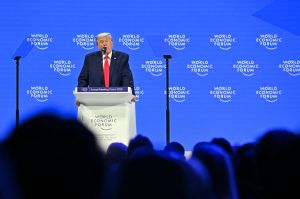
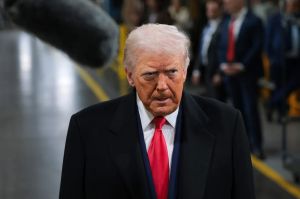
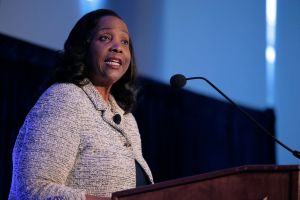








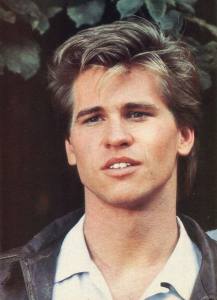
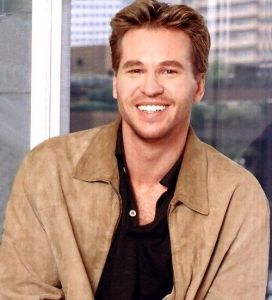
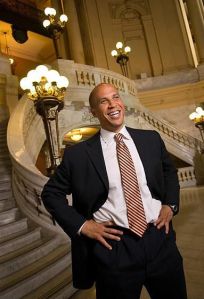
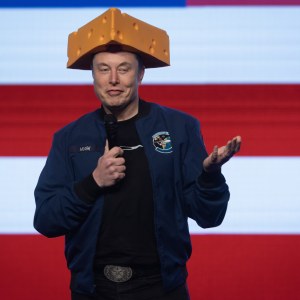
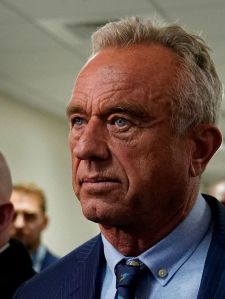
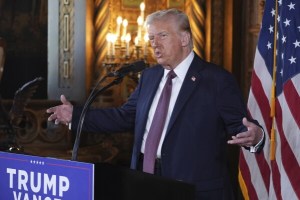
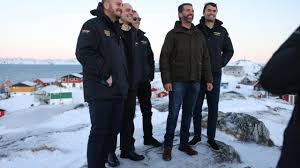
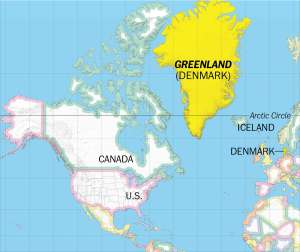
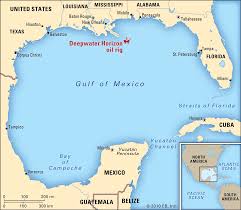



 peej
peej Carissa
 bostonboomer
 dakinikat
 ecocatwoman
 mablue2
 Mama Lopez
 peggysue22
 quixote
 skydancingguestblogger
 Mona (aka Wonk the Vote)



 Sky Dancing
Recent Comments