Just 22 more days until Biden’s inauguration, and one more week until Congress counts the electoral votes on January 6. There’s still plenty of time for Trump to throw tantrums and pardon more war criminals, but his time in the White House is almost over. Unfortunately, it looks like January will be nightmarish.
Simply put, the COVID-19 pandemic is raging across the country, and the record number of new cases since Thanksgiving is about to produce tens of thousands of additional hospitalizations, pushing health systems beyond the limit and likely driving daily death counts well beyond where they are today. Consider just a few data points:
The IHME model now predicts more than 100,000 Americans will die in January alone, taking the total known pandemic death toll over 450,000.
Hospitalizations, now at record highs, will likely explode. Last night the Covid Tracking Project reported a record number of hospitalized Americans, at 118,720, despite a number of states not reporting new figures due to the holiday. If that number seems enormous, consider that California’s model suggests that the state, which just crested 20,000 current hospitalizations, may itself reach 100,000 in January.
The vaccination rollout is not going to plan. While it may improve in the coming days, official promises that 20 million Americans would receive the vaccine by the end of the year have fallen far short of the goal. As of December 26th, the CDC tracks less than 2 million first doses administered.
Imagine- nearly double the American death toll of the Vietnam War- across its nine years- in a single month. A quarter the number of all American losses in the roughly four years it fought in World War II- in a single month. In the face of this mounting disaster, the President is golfing in Florida. The Vice President and Head of the White House Coronavirus Task Force is vacationing in Vail, Colorado. The nation is effectively without leadership as we approach an event horizon of a black hole of death and anguish more acute than anything we’ve seen for generations.
December has been the nation’s deadliest month since the COVID-19 pandemic’s start — with more than 63,000 Americans lost to the virus in the past 26 days.
In comparison, the entire month of November saw about 36,964 deaths, CNN reported.
The grim death toll comes on the heels of several brutal months for the US, with COVID-19 ravaging communities from coast to coast, crippling hospital systems and prompting new widespread restrictions.
The authorization of two COVID-19 vaccines earlier in December offered some hope of a light at the end of the tunnel. But experts continue to warn that while the end is in sight, the pandemic is not over and another surge stemming from the Christmas holiday could be on its way.
“We very well might see a post-seasonal — in the sense of Christmas, New Years — surge,” Dr. Anthony Fauci said on CNN’s “State of the Union” Sunday morning, pointing to holiday travel and private gatherings taking place despite the advice of health experts.
The nation’s top infectious disease expert described the potential rise in cases as a “surge upon a surge,” telling CNN’s Dana Bash, “If you look at the slope, the incline of cases that we’ve experienced as we’ve gone into the late fall and soon to be early winter, it is really quite troubling.”
Despite the rollout of two new vaccines, the pandemic is accelerating and the United States should brace itself for “one of the worst months in this nation’s history in January,” one of President-elect Joe Biden’s top Covid-19 advisers warned Monday.
“There is no doubt about that,” the expert, Dr. Celine Gounder, said on CNBC. “That cake is in the oven already, with the travel that has happened over the holidays.”
That dire warning came as the number of Covid-19 infections rose past 19.2 million after Christmas and the number of deaths from coronavirus neared 334,000, the latest NBC News data showed.
Gounder, a member of the Biden’s Covid-19 advisory board, described a nightmarish scenario in which local health officials are forced to erect field hospitals because hallways and even some parking lots are already packed with sick patients.
And an even bigger crisis, Gounder said, will be finding enough doctors and nurses to treat everybody.
“You can’t stand up new doctors and nurses the way you can field hospitals,” Gounder said. “You can’t just create them out of thin air.”
The House on Monday voted to beef up stimulus checks set to go out to American households in the coming weeks from $600 to $2,000. The chamber acted swiftly after President Trump demanded the larger payments last week, but passage of the measure is uncertain because Senate Republicans have not unified behind the idea.
On Sunday, Trump signed into law a $900 billion emergency relief package that included $600 checks. His advisers had advocated for those payments, but Trump later called the check size “measly” and demanded it be increased. After he signed the law, he pledged to continue pushing for the larger payments, something many Democrats also support.
Forty-four Republicans joined the vast majority of Democrats on Monday in approving the bill on a 275-to-134 vote — narrowly clearing the two-thirds threshold it needed to pass. The measure’s fate is much less certain in the Senate, which is controlled by Republicans.
A couple of days ago,it looked impossible that $2,000 COVID relief checks — up from the $600 checks for individuals in the package President Trump signed Sunday — could pass the Senate. That has changed with Trump’s final-hours advocacy for bigger checks, Republican sources tell Axios.
The state of play: It’s still an uphill battle. But Republican senators are feeling more pressure from constituents — pumped by Trump — to do more.
It could be too politically risky for some Republican senators to vote “no.”
If Senate Majority Leader Mitch McConnell “brings it to the floor, it might get 60. Then Trump can claim victory,” said a Republican source who provided a breakdown of how the vote could go.
Driving the news: “I am concerned about the debt, but working families have been hurt badly by the pandemic,” Sen. Marco Rubio (R-Fla.) tweeted Monday. “This is why I supported $600 direct payments to working families & if given the chance will vote to increase the amount.”
Senators to watch: Rand Paul of Kentucky and Ron Johnson of Wisconsin — with one or two other spending hardliners needed.
I’ll believe it when I see it. Besides, Bernie Sanders is doing his best to keep it from happening. He wants to put a hold on the NDAA bill, which could shift the argument from “Republicans want people to starve” to Democrats want to block pay raises for the troops.”
Sen. Bernie Sanders will filibuster an override of President Donald Trump’s defense bill veto unless the Senate holds a vote on providing $2,000 direct payments to Americans.
“McConnell and the Senate want to expedite the override vote and I understand that. But I’m not going to allow that to happen unless there is a vote, no matter how long that takes, on the $2,000 direct payment,” Sanders said in an interview on Monday night. The Vermont independent can’t ultimately stop the veto override vote, but he can delay it until New Year’s Day and make things more difficult for the GOP.
IMHO, this will make it more difficult for Democrats in the long run.
More information is coming out about the Nashville bomber Anthony Warner.
Tom Lundborg was a teenager in the late 1970s when he worked under accused Nashville bomber Anthony Quinn Warner, who was a technician for an alarm company.
Back then, Lundborg’s father owned A.C.E. Alarms, a firm providing commercial and residential burglar systems, but was incapacitated in a car wreck. That left a young Lundborg and 20-something “Tony” Warner to run the business, and they drove to different sites to do burglar alarm installations and service calls.
The FBI released this photo of Anthony Q. Warner.
“I worked with Tony as his helper. I kind of looked up to him. He was kind of a hippie. Had long hair, a Magnum, P.I. mustache,” Lundborg told The Daily Beast. “He was a smart cocky kind of guy. I rode around with him all day every day—during the summers, at least for a couple years.”
Lundborg said Warner disliked authority, loved smoking weed and claimed he’d just gotten out of the Navy. (It’s unclear whether Warner was ever in the U.S. Armed Forces, but records show he was arrested for marijuana possession in 1978.)
They drove around listening to 103 KDF, previously Nashville’s main rock station, and if Warner spotted a police officer, he’d break his silence to lecture the teenage Lundborg.
“I hate cops. They’re all corrupt,” Warner would say. “Never trust a cop.”
Lundborg said he spoke to the FBI about Warner, as authorities try to piece together a motive for the Christmas Day explosion which injured eight people and destroyed multiple buildings.
NASHVILLE, Tenn. (AP) — It seemed like a friendly chat between neighbors. Only after a bomb exploded in downtown Nashville on Christmas morning could Rick Laude grasp the sinister meaning behind his neighbor’s smiling remark that the city and the rest of the world would never forget him.
Laude told The Associated Press on Monday that he was speechless when he learned that authorities identified his 63-year-old neighbor, Anthony Quinn Warner, as the man suspected of detonating a bomb that killed himself, injured three other people and damaged dozens of buildings.
Laude said he saw Warner standing at his mailbox less than a week before Christmas and pulled over in his car to talk. After asking how Warner’s elderly mother was doing, Laude said he casually asked, “Is Santa going to bring you anything good for Christmas?”
Warner smiled and said, “Oh, yeah, Nashville and the world is never going to forget me,” Laude recalled.
Laude said he didn’t think much of the remark and thought Warner only meant that “something good” was going to happen for him financially.
“First the gloves, then the masks, now the tinfoil hats.”
Nashville bomber Anthony Quinn Warner hoped he would be ‘hailed a hero’ for targeting AT&T because he believed 5G cellular technology was killing people, DailyMail.com can exclusively reveal.
The 63-year-old computer tech – who died in the suspected suicide blast but was identified Sunday from DNA found in his mangled RV – was ‘heavily into conspiracy theories’, according to a source close to the investigation.
Various baseless theories have circulated since the lightning-fast 5G network was introduced, some claiming it’s a tool to spy on Americans, others speculating that it has fueled the spread of COVID-19….
Electronic devices seized from Warner’s former home in Antioch, a suburb of Nashville, have been sent to a digital forensics laboratory to unlock his online activity and find out where he discussed his warped views.
‘We are waiting on the digital footprint that should finally provide us with some answers,’ the source explained.
‘The unofficial motive thus far is the suspect believed 5G was the root of all deaths in the region and he’d be hailed a hero.’
I hope all you Sky Dancers are doing well and staying safe. I hope you’ll stop by here today if you have the time and inclination. We will get through the next 22 days together and then sane people take charge again.
Did you like this post? Please share it with your friends:
As the United States welcomed the news Friday that a second vaccine, by Moderna, had been authorized by the federal government for emergency use, the country confronted another stark reminder of how desperately vaccines are needed: a single-day caseload of over 251,000 new coronavirus cases, a once-unthinkable record.
It’s been only a week since the Food and Drug Administration first approved a Covid-19 vaccine, the one created by Pfizer and BioNTech. As trucks have carried vials across the country and Americans began pulling up their sleeves for inoculations, more ominous numbers have piled up:
Wednesday: 3,611 deaths in a single day, shattering the previous record of 3,157 on Dec. 9.
Thursday: Over 1 million new cases in just five days, pushing the country’s total of confirmed cases past 17 million.
Three months ago, new cases were trending downward and death reports were flat, but those gains have been lost. Now there are nearly six times as many cases being reported each day, and three times as many deaths, according to a New York Times database.
The South is on a particularly worrisome trajectory. Georgia, Arkansas and South Carolina have all set weekly case records. Tennessee is confirming new cases at the highest per capita rate in the country.
As cases continue to spike, officials are warning that hospitals, which now hold a record of nearly 115,000 Covid-19 patients, could soon be overwhelmed. More than a third of Americans live in areas where hospitals are running critically short of intensive care beds, federal data show. A recent New York Times analysis found that 10 percent of Americans — across a large swath of the Midwest, South and Southwest — live in areas where I.C.U.s are either completely full or have less than 5 percent of beds available.
On Wednesday, the US reported a record of 3,448 deaths. In total, more than 312,000 have died in the country since the beginning of the pandemic (though that’s almost certainly an undercount).
This unprecedented and tragic surge in fatalities is, in part, a product of pandemic fatigue, cold weather that has led people indoors, and the patchwork nature state policies on masks and closures — many of which are quite lax. But these recent record-breaking days of death, in particular, are the result of infections contracted around Thanksgiving.
Despite CDC warnings to the contrary, an NPR analysis of mobile phone data found that 13% of Americans ventured more than 31 miles from home on Thanksgiving Day. That’s not a huge drop from last year, when it was 17%.
But it’s common knowledge that the most Thanksgiving travel comes in the days before and after the holiday. The Transportation Security Administration screened 9.5 million airline passengers during the 10-day Thanksgiving travel period. That’s less than half of what the TSA reported in 2019, but it still included some of the busiest days since the pandemic began.
Cases generally take about two weeks to appear in official tallies, since the virus incubates in the body for an average of five days, then people usually wait a few days to get tested after symptoms appear. Then there’s the multiday wait for results, and the subsequent process of reporting them to health agencies.
Deaths, in turn, generally follow one to three weeks after a rise in cases.
Like clockwork, that is what we’re seeing now.
Read much more–with individual stories–at the BI link.
The coronavirus toll in California reached another frightening milestone on Thursday, with health officials announcing a one-day record of 379 deaths and a two-day total of nearly 106,000 newly confirmed cases.
The most populous US state has recorded more than 1,000 deaths in the last five days. Its overall case total now tops 1.7m, a figure nearly equal to Spain’s and only surpassed by eight countries. The state’s overall death toll has reached 21,860.
Many of California’s hospitals are running out of capacity to treat the severest cases, and the situation is complicating care for non-Covid patients. ICU capacity in southern California hit 0% on Thursday.
“It’s pretty much all Covid,” said Arlene Brion, a respiratory therapist at Fountain Valley regional hospital in Orange county, where she is assigned six or seven patients rather than the usual one to three. “There’s probably two areas that are clean but we’re all thinking eventually it’s all going to be Covid.”
The Los Angeles mayor, Eric Garcetti, who is quarantining after his daughter was exposed, gave a stark briefing to city residents, warning that within days LA county may declare a systemwide crisis, with all hospitals out of usual space and staffing. The hospitals are planning by identifying areas such as parking lots and conference rooms that can be used for patient care.
He also reminded residents that the governor earlier announced the state had ordered 5,000 additional body bags and has dozens of refrigerated trucks ready to use as temporary morgues to handle bodies too numerous for existing morgues. “That frightens me, and it should frighten you,” Garcetti said.
APPLE VALLEY, Calif. — The hospital spreads over a block along Happy Trails Highway, which splits this high-desert town in half as it runs low and wide down a gentle hill.
All around St. Mary Medical Center is a new silence.
Fat Jack’s Bar & Grill is shuttered, never to reopen. The Chamber of Commerce, featuring a rearing, life-size model of the mid-century movie-star horse Trigger, is empty.
“Intermission,” reads the marquee of the High Desert Center for the Arts, which sits at the edge of this longtime home of antique Hollywood royalty, the singing cowboy Roy Rogers and his co-star wife, Dale Evans.
United Airlines said on Friday that it was working with health officials to contact passengers who might have been exposed to the coronavirus by a male passenger who died after a medical emergency on a recent flight.
The four flight attendants who responded to the emergency on board the flight, United 591, also went into quarantine for 14 days after the plane landed at its destination in Los Angeles, the flight attendants’ union said.
The flight, which took off from Orlando, Fla., and was diverted to New Orleans, prompted widespread alarm on social media after reports indicated that the man’s wife had told emergency medical workers that he had tested positive for the virus.
United Airlines said on Friday that the man’s wife was overheard telling an emergency medical worker that her husband had symptoms of Covid-19, including loss of taste and smell.
But United officials said medical professionals did not confirm at the time that the man had tested positive for the virus, and they are still not sure if he was infected. When the flight was diverted to New Orleans, the airline said, it was told that the passenger had experienced cardiac arrest.
Nevertheless, United Airlines said it had been contacted by the Centers for Disease Control and Prevention. “We are sharing requested information with the agency so they can work with local health officials to conduct outreach to any customer the C.D.C. believes may be at risk for possible exposure or infection,” the airline said.
But the U.S. Government is coming to the rescue with vaccines, right? Wrong.
As Vice President Mike Pence sat for his COVID-19 vaccine shot on Friday morning, governors’ offices across the country were fuming, confused as to why their states were set to receive significantly fewer Pfizer doses than originally expected.
For months, states worked with the federal government to iron out plans for how many doses they’d receive, where and when they’d be distributed, and who would get the shots first. Senior officials with Operation Warp Speed, a public-private partnership to fast-track a vaccine, touted the administration’s planning as a success, saying that the Centers for Disease and Control and Prevention (CDC) had worked with states to make the distribution go smoothly.
But within days of declaring an unambiguous triumph, things have gone seriously awry.
As vaccines have made their way from warehouses to hospitals across the country, state officials from Iowa, Kansas, Maryland, Michigan, Missouri, Nebraska, Georgia, and Washington State, among others, have been notified that they will receive thousands fewer doses than expected. Officials with two states told The Daily Beast that they would receive 30 percent less vaccine than planned. And when officials approached the federal government for answers, they said they were greeted with more confusion.
The search for answers extended up the ranks of the Trump COVID task force as well, where top members copped to being unaware as to why there were discrepancies between the numbers originally communicated to states and the number of doses shipped. As of Friday, the task force has not convened to discuss the issue, according to people familiar with the matter, even as a second vaccine from Moderna received its own emergency-use authorization.
States were given estimates that turned out to be based on vaccine doses produced, not those that had completed quality control and were releasable.Only on Wednesday and later were states informed of the actual numbers.
“The ripple effect is huge,” said Claire Hannan, executive director of the Association of Immunization Managers. “The planning piece is critical. We cannot roll this vaccine out on the fly.”
After three days of confusion, the source of the problem was finally clarified Friday night by Gov. Jay Inslee of Washington state. He tweeted he’d had a “very productive” conversation with Gen. Gustave Perna, chief operating officer for Operation Warp Speed, the administration’s COVID-19 treatment and vaccine program.
“That discrepancy was the source of the change in allocations,” Inslee tweeted. “It appears this is not indicative of long-term challenges with vaccine production.”
The sudden shift represents a huge headache for states as they scramble to adjust their vaccination programs.
A letter sent to governors Friday night from Heath and Human Services explained the discrepancy as confusion.
“We want to provide further perspective on the planning numbers generated in mid-November that are being compared with official weekly allocations. Official allocation numbers are only made available the week prior to distribution as they are based on the number of vaccine doses that have met FDA certification standards and have been released to the U.S. government,” it said.
“We hoped it was clear that those figures and the underlying projections from the companies were for planning purposes and could be refined, and that if the number of releasable doses from a manufacturer changed, the allocations to jurisdictions would change, too,” the letter went on to say.
That was in fact not clear to states. Governors nationwide have been asking for details and explanations since Wednesday.
Whatever. The truth is we don’t have a president right now, and even when the Trump people were paying attention, they didn’t really know what they were doing. Guess who was allowed to tell the CDC what to do during the pandemic?
In an interview with TheNew York Times about how the administration manipulated the Centers for Disease Control and Prevention, two former Trump political appointees say what they saw during their time at the Atlanta agency shocked them, the newspaper writes: “Washington’s dismissal of science, the White House’s slow suffocation of the agency’s voice, the meddling in its messages and the siphoning of its budget.” According to Kyle McGowan, a former chief of staff at the CDC, and his deputy, Amanda Campbell, the White House insisted on reviewing, and often editing, the agency’s COVID-19 guidance documents, “the most prominent public expression of its latest research and scientific consensus on the spread of the virus.” The guidance was not just vetted by the administration’s coronavirus task force but “an endless loop of political appointees across Washington.” The White House, McGowan says, was obsessed with the economic implications of the public health crisis. For example, the White House’s budget director took issue with the agency’s specific spacing guidelines for restaurants. “It is not the CDC’s role to determine the economic viability of a guidance document,” McGowan told the Times. That battle ultimately led to the agency simply offering a vague recommendation of “social distancing,” which could, really, mean anything, instead of strongly suggesting restaurants ensure six feet between patrons.
And then there were the times the CDC’s scientists were screened by a former purveyor of shoes and purses, Ivanka Trump, in addition to the White House’s undersecretary for lies, Kellyanne Conway:
“Often, Mr. McGowan and Ms. Campbell mediated between [CDC director] Dr. [Robert] Redfield and agency scientists when the White House’s guidance requests and dictates would arrive: edits from [White House budget director Russell] Vought and Kellyanne Conway, the former White House adviser, on choirs and communion in faith communities, or suggestions from Ivanka Trump, the president’s daughter and aide, on schools. “Every time that the science clashed with the messaging, messaging won,” Mr. McGowan said.”
Part of Campbell’s job was to help get approval for the agency’s Morbidity and Mortality Weekly Report—a closely watched and previously apolitical guide on infectious diseases. However, political appointees at the Department of Health and Human Services repeatedly requested that the CDC “revise, delay, and even scuttle drafts” they thought might be viewed as somehow critical of Donald Trump. “It wasn’t until something was in the MMWR that was in contradiction to what message the White House and HHS were trying to put forward that they became scrutinized,” Campbell said.
Wednesday was a bad day in the fight against COVID-19. The government announced a record number of deaths, more than 3,600. Meanwhile, a House committee released internal Trump administration messages, which demonstrated that Americans were unknowing lab rats in the president’s grail-quest for herd immunity.
In a July 4, 2020 email, Paul Alexander, a political appointee at the Department of Health and Human Services, spelled it all out. In his words, infants, young adults, and middle-aged folks with no conditions had “zero risk,” and were there to take the hit as America marched off a cliff. “We want them infected,” declared Alexander.
Unfortunately, the administration never asked their permission to become human guinea pigs. Indeed, as fate would have it, younger Americans are now dying at historic rates, according to a study recently published in the Journal of the American Medical Association. As for herd immunity, it’s a lot like waiting for Godot.
But then again, Alexander is the same fellow who also tried to muzzle Anthony Fauci and criticized the CDC as alarmist. In fact, he even commented that the agency’s COVID warning to pregnant women read as if it were designed to frighten as opposed to inform. As Alexander saw things, the agency was portraying the president and his administration as if they “can’t fix this” and that things are “getting worse.”
For the record, Alexander got it wrong on both counts. Donald J. Trump and his minions failed to fix things, and the situation has gone from bad to horrific. The CDC’s worries were borne out.
Early administration projections of no more than 70,000 dead now read like fantasies or wishful thinking. Come Joe Biden’s inauguration—a month away, as we’re losing around 3,000 Americans every day—the death toll may even surpass 400,000.
I’ve seen projections of 500,000 deaths by spring. And I doubt that will be the end of it, despite the vaccines.
I know this is a long and depressing post, but it’s important to understand how bad things are and how much worse they may get over the upcoming long winter. Take care, Sky Dancers. Please stay home as much as possible and wear your masks when you have to go out.
Did you like this post? Please share it with your friends:
Three headlines have grabbed my attention today. First, is the cyber attack because what person my age doesn’t get the chills from the thought we still have a very hot cold war going on with the Russians. All of this combined with the breaking news that the Pentagon is shutting out the Biden transition briefings is just frightening. Second, it looks like Santa Trump has a shit sack full of pardons coming up. More on these further on down the thread
If everyone lit their hair on fire over the Defense Dept stopping the daily briefs to Biden and his team the way the fuckers did over being rightly called fuckers…what would happen, do you think?
Acting Defense Secretary Chris Miller ordered a Pentagon-wide halt to cooperation with the transition of President-elect Biden, shocking officials across the Defense Department, senior administration officials tell Axios.
Behind the scenes: A top Biden official was unaware of the directive. Administration officials left open the possibility cooperation would resume after a holiday pause. The officials were unsure what prompted Miller’s action, or whether President Trump approved.
Why it matters: Miller’s move, which stunned officials throughout the Pentagon, was the biggest eruption yet of animus and mistrust toward the Biden team from the top level of the Trump administration.
Fury at the Biden team among senior Pentagon officials escalated after the Washington Post published a story on Wednesday night revealing how much money would be saved if Biden halted construction of Trump’s border wall.
Trump officials blame the leak on the Biden transition team (Though, it should be noted, they have no evidence of this, and both reporters on the byline cover the Trump administration and have historically been prolific beneficiaries of leaks.)
What happened: Meetings between President Trump’s team and the Biden team are going on throughout the government, after a delayed start as the administration dragged its feet on officially recognizing Biden as president-elect.
Then on Thursday night, Miller — who was appointed Nov. 9, when Trump fired Defense Secretary Mark Esper right after the election — ordered officials throughout the building to cancel scheduled transition meetings.
President Donald Trump’s most powerful advisor, Jared Kushner, approved the creation of a campaign shell company that secretly paid the president’s family members and spent almost half of the campaign’s $1.26 billion war chest, a person familiar with the operation told Insider.
The operation acted almost like a campaign within a campaign. It paid some of Trump’s top advisors and family members while shielding financial and operational details from public scrutiny.
When Kushner and others created the company in April 2018, they picked Trump’s daughter-in-law Lara Trump, to become its president, Vice President Mike Pence’s nephew John Pence as its vice president, and Trump campaign CFO Sean Dollman as its treasurer and secretary, the person who spoke on the condition of anonymity said.
Insider independently verified details of this person’s account with other sources close to the Trump campaign.
The shell company — incorporated as American Made Media Consultants Corporation and American Made Media Consultants LLC — allowed Trump’s campaign to skirt federally mandated disclosures. The tactic could attract scrutiny from federal election regulators.
Campaign finance records show Trump’s reelection effort and its affiliated committee with the Republican National Committee spent more than $600 million through American Made Consultants since its formation.
For months, some of Trump’s own top advisors and campaign staff have told Insider they had no idea how the shell company functioned, casting an air of mystery about the operation.
Trump’s campaign leaders even launched an internal audit of the shell company and operations under former campaign manager Brad Parscale but never reported the results of that review.
Some of those same advisors said they didn’t learn about John Pence and Lara Trump’s involvement until Insider contacted them for this story.
But throughout, the mystery hid in plain sight: Kushner, Lara Trump, John Pence, and Dollman, were often just feet away in the Trump campaign’s headquarters in Arlington, Virginia, a Washington suburb.
“They like to say they don’t know, but that’s not true,” the person familiar with AMMC said. “What they wanted was excuses so they could blame other people. If they thought that, why did they keep using it?”
From January 2019 through the middle of November 2020, the Trump campaign and an affiliated political committee together spent $617 million through American Made Media Consultants.
It was almost half of everything they spent in the failed effort to reelect Trump, according to an Insider review of Federal Election Commission records and analysis provided by the nonpartisan Center for Responsive Politics.
Some Trump advisors have long accused Parscale of trying to hide money from the now-outgoing president, occasionally citing AMMC as an example of his obfuscation.
But the campaign actually spent the bulk of the money at AMMC — $415 million — after Trump fired Parscale as campaign manager on July 15.
Deflated by a loss he has yet to acknowledge, Mr. Trump has cushioned the blow by coaxing huge sums of money from his loyal supporters — often under dubious pretenses — raising roughly $250 million since Election Day along with the national party.
More than $60 million of that sum has gone to a new political action committee, according to people familiar with the matter, which Mr. Trump will control after he leaves office. Those funds, which far exceed what previous outgoing presidents had at their disposal, provide him with tremendous flexibility for his post-presidential ambitions: He could use the money to quell rebel factions within the party, reward loyalists, fund his travels and rallies, hire staff, pay legal bills and even lay the groundwork for a far-from-certain 2024 run.
The post-election blitz of fund-raising has cemented Mr. Trump’s position as an unrivaled force and the pre-eminent fund-raiser of the Republican Party even in defeat. His largest single day for online donations actually came after Election Day — raising almost $750,000 per hour on Nov. 6. So did his second biggest day. And his third.
The scale of a sophisticated cyberattack on the U.S. government that was unearthed this week is much bigger than first anticipated.
The Cybersecurity and Infrastructure Security Agency said in a summary Thursday that the threat “poses a grave risk to the federal government.”
It added that “state, local, tribal, and territorial governments as well as critical infrastructure entities and other private sector organizations” are also at risk.
CISA believes the attack began at least as early as March. Since then, multiple government agencies have reportedly been targeted by the hackers, with confirmation from the Energy and Commerce departments so far.
“This threat actor has demonstrated sophistication and complex tradecraft in these intrusions,” CISA said. “Removing the threat actor from compromised environments will be highly complex and challenging.”
CISA has not said who it thinks is the “advanced persistent threat actor” behind the “significant and ongoing” campaign, but many experts are pointing to Russia.
“The magnitude of this ongoing attack is hard to overstate,” former Trump Homeland Security Advisor Thomas Bossert said in a piece for The New York Times on Thursday. “The Russians have had access to a considerable number of important and sensitive networks for six to nine months.”
It is also said that Trump’s planning pardons today will be those involved in Russian interference in the 2016 election resulting in the Mueller investigation. It is also likely that the Hunter Biden probe is payback for Trump’s ongoing obsession with the role of that probe as an obstacle to his regime.
It seems he can still wear us out even though he’s basically staying hunkered down on the White House Toilet with his cell phone and big macs. He may be tweeting his election conspiracy theories and egging on the Senate to reject the results. However, he’s radio silence on Russia.
Lawmakers are raising questions about whether the attack on the federal government widely attributed to Russia constitutes an act of war.
The hacking may represent the biggest cyberattack in U.S history, and officials are scrambling to respond.
The response is further complicated by the presidential transition — President Trump has yet to comment publicly on the attack — and the fact that the U.S. has no clear cyber warfare strategy.
“We can’t be buddies with Vladimir Putin and have him at the same time making this kind of cyberattack on America,” Senate Minority Whip Dick Durbin (D-Ill.) said of the attack during an interview Wednesday on CNN. “This is virtually a declaration of war by Russia on the United States and we should take that seriously.”
Sen. Mitt Romney (R-Utah) on Thursday compared the incident to Russian bombers “flying undetected over the entire country,” and harshly criticized Trump for not doing enough to counter the attack.
“Our national security is extraordinarily vulnerable,” Romney said on SiriusXM’s “The Big Picture with Olivier Knox.” “In this setting, not to have the White House aggressively speaking out and protesting and taking punitive action is really, really quite extraordinary.”
Hackers believed to be part of a nation state have had access to federal networks since March after exploiting a vulnerability in updates to IT group SolarWinds’s Orion software. The hack has compromised the Treasury, State and Homeland Security departments and branches of the Pentagon, though it is expected to get worse. SolarWinds counts many more federal agencies as customers, along with the majority of U.S. Fortune 500 companies.
On Thursday, Politico reported that the Energy Department’s National Nuclear Security Administration, which maintains the nation’s nuclear weapons stockpile, was also compromised, further raising the stakes.
The dark mornings and low temperatures in the Northern Hemisphere may lead one to think that winter is well on its way. However, the astronomical start of the chilly season will not be until December 21, 2020. Called the winter solstice, it is the point in time when the Northern Hemisphere is farthest away from the sun, resulting in less sunlight to the region this year. 2020’s longest night will coincide with two exciting celestial events — the peak of the Ursids meteor shower and a “great conjunction” of the solar system’s two largest planets, Jupiter and Saturn.
A conjunction occurs when two planets appear close to each other in the sky because they line up with Earth in their respective orbits around the Sun. While observing the celestial bodies alongside each other is always exciting, Jupiter and Saturn’s alignment is even more so since it occurs once about every 20 years.
Cold Nights! Cold Snow! Cold War! What will 2021 bring? Whatever it is, our community will be here keeping each other informed and surrounded by loving, caring like-minds! Stay warm!!!!
What’s on your reading and blogging list today?
Did you like this post? Please share it with your friends:
With a seven-day average of 2,249 deaths, the country broke the previous mark of 2,232 set on April 17 in the early weeks of the pandemic. Seven-day averages can provide a more accurate picture of the virus’s progression than daily death counts, which can fluctuate and disguise the broader trend line.
The United States is approaching 300,000 total deaths, with nearly 283,000 recorded, according to a New York Times database. The nation is averaging nearly 200,000 cases per day, an increase of 15 percent from the average two weeks earlier, and has recorded over than 15 million total cases.
Much has changed since the previous peak in April. The coronavirus is no longer concentrated in big urban areas like New York City and now envelops much of the country, including rural areas that had avoided it for several months.
Many of the hardest-hit counties on a per person basis are now in the Midwest. North Dakota, where one in every 10 residents has contracted the virus, has the highest total reported cases by population, followed closely by South Dakota, Iowa, Wisconsin and Nebraska.
The latest wave to hit the United States has hospitalized record numbers. Each day since Dec. 2, more than 100,000 Covid-19 patients were in hospitals. That far surpasses the number of people hospitalized during the peaks spring and summer, which at their worst had nearly 60,000 Americans in the hospital daily.
The new peak also comes as the nation prepares for holiday celebrations, and as colder temperatures may push people to congregate indoors. Infectious-disease experts have warned that trends in the United States, which reported a record 2,885 deaths on Wednesday, could continue to worsen over the next several weeks.
Before Pfizer’s coronavirus vaccine was proved highly successful in clinical trials last month, the company offered the Trump administration the chance to lock in supplies beyond the 100 million doses the pharmaceutical maker agreed to sell the government as part of a $1.95 billion deal months ago.
But the administration, according to people familiar with the talks, never made the deal, a choice that now raises questions about whether the United States allowed other countries to take its place in line.
As the administration scrambles to try to purchase more doses of the vaccine, President Trump plans on Tuesday to issue an executive order that proclaims that other nations will not get the U.S. supplies of its vaccine until Americans have been inoculated.
But the order appears to have no real teeth and does not expand the U.S. supply of doses, according to a description of the order on Monday by senior administration officials.
The chief scientist of the Trump administration’s Operation Warp Speed was unable to explain President Donald Trump’s latest executive order Tuesday, which aims to prioritize shipment of the coronavirus vaccine to Americans over other countries.
“Frankly, I don’t know, and frankly, I’m staying out of this. I can’t comment,” Slaoui said. “I literally don’t know.”
“You don’t know?” asked anchor George Stephanopoulos.
“Yes,” Slaoui said.
“But you’re the chief science adviser for Operation Warp Speed,” Stephanopoulos pressed.
“Our work is, you know, rolling,” Slaoui replied. “We have plans. We feel that we can deliver the vaccines as needed. So I don’t know exactly what this order is about.”
Indeed, it remains unclear how Trump’s executive order would be enforced, as drugmakers are already making agreements to deliver supplies for other countries.
Slaoui was similarly dismissive when asked about the executive order in another interview Tuesday, telling Fox News that “what the White House is doing is what the White House is doing.”
The incompetence would be funny if it weren’t going to kill people.
Pfizer has told the Trump administration it cannot provide substantial additional doses of its coronavirus vaccine until late June or July because other countries have rushed to buy up most of its supply, according to multiple individuals familiar with the situation.
That means the U.S. government may not be able to ramp up as rapidly as it had expected from the 100 million doses of the Pfizer vaccine that it purchased earlier this year, raising questions about whether it can keep to its aggressive schedule to vaccinate most Americans by late spring or early summer.\Trump administration officials denied there would be availability issues in the second quarter, citing other vaccines in the pipeline — most immediately, Moderna’s, also expected to be approved in coming weeks. Both vaccines are two-dose regimens, so the 100 million doses purchased of each would cover 50 million people each.
“I’m not concerned about our ability to buy vaccines to offer to all of the American public,” Gen. Paul Ostrowski, who oversees logistics for Operation Warp Speed, the government’s initiative to expedite vaccine development, said in an interview Monday. “It’s clear that Pfizer made plans with other countries. Many have been announced. We understand those pieces.”
But several officials knowledgeable about the contracts said that supplies from other companies may be insufficient to fill the gap.
Let’s hope the Biden administration will be able to deal with the mess that Trump is leaving them.
Trump’s lawyer needs a doctor. If you saw him gallivanting across the country for the past month trying to overturn the election, it should come as no surprise to you that Rudy Giuliani, once revered as “America’s Mayor,” was hospitalized for COVID-19 this week.
Giuliani, a potential one-man superspreader whose recent visit forced the entire Arizona legislature to close up shop, is being treated at Georgetown University Medical Center. For the rich and powerful, there’s always room at the inn. Or hospital. And while we all hope for his speedy recovery, this is the latest sign that a pattern of privilege has emerged. It goes like this: Having tempted fate by refusing to social distance or wear masks, Trump and his team contract the virus. Next, they receive world-class medical treatment. Last, they quickly recover.
It’s not a victimless advantage. Their miraculous recovery reinforces the resentment of every hoohaw who won’t wear a mask and throws a fit at a bar in Staten Island because last call comes early at 10 p.m. The problem with these quick recoveries is that they demonstrate (to people who are the most susceptible to this message) that COVID-19 isn’t really a big deal.
Trump said yesterday that Giuliani is doing well and doesn’t have a fever. Then why is he in the hospital? I’m 73. Would I be hospitalizes with mild symptoms and no fever?
Meanwhile, there’s still no stimulus coming from Congress; and the one they are working on doesn’t include checks to help us regular folks, but it does include liability protections for corporations that force people to work in unsafe conditions. John Nichols at The Nation:
What the United States desperately needs is a multitrillion-dollar stimulus package to provide the resources to fight the current coronavirus surge, to provide for the unemployed and underemployed, to keep small businesses and small farms afloat, to fund state and local governments and schools, and to organize and implement the distribution of the vaccines that are vital to ending the current crisis.
What the United States does not need is a massive corporate bailout that allows the wealthiest and most powerful businesses in this country to avoid liability for actions they take that sicken and kill Americans.
Unfortunately, that is what Senate majority leader Mitch McConnell and his minions have been battling to include in a new Covid-19 “relief” package. And key Democrats could end up going along with the grim reaper’s ghoulish scheme as he again uses federal legislation to insulate irresponsible CEOs from accountability—and, conveniently, to reward the business interests that fund Republican campaigns.
Exploiting the sense of urgency over the peaking pandemic and the prospect of what President-elect Joe Biden refers to as a “long dark winter” for working families, McConnell and his colleagues have for months held relief proposals hostage over the issue of a so-called “liability shield.” Such a shield—even if it is limited, even if it is only temporary—would give corporations immunity from lawsuits related to Covid-19.
Considering the stark evidence of irresponsibility on the part of US corporations since the pandemic hit, the proposal is absurd. Yet the “COVID Emergency Relief Framework” scheme that was initially proposed by corporate-aligned centrists in Congress but has now attracted backing from leading congressional Republicans and Democrats proposes just such a liability shield. The one-page outline of the plan released last week includes among its proposals: “Provide short term federal protection from coronavirus-related lawsuits with the purpose of giving states time to develop their own response.”
Tuesday marks the “safe harbor” deadline — the date when states must certify results if they want protection under federal election law against Congress stepping in to decide which candidate gets their electoral votes. The fact that lawsuits are pending won’t prevent states from getting the benefits of certifying results by that date, according to election law experts. Judges are already wary of injecting legal uncertainty into the election and causing chaos and will be even more reluctant to do so after the deadline passes.
“The doors close significantly after the safe harbor deadline passes,” said Rebecca Green, codirector of the Election Law Program at William & Mary Law School. “It’s going to be a heavy lift to convince a judge to defy federal deadlines. I think it would only happen or be successful if some kind of wild evidence of just unbelievable scale were unearthed that was credible.”
Trump’s campaign has conceded that the Dec. 8 deadline is key to the fate of its legal challenges. It has pushed courts to rush to consider cases by then. In the campaign’s failed constitutional challenge to Biden’s win in Pennsylvania, Trump’s lawyers argued on Nov. 22 that it was “critically important” for a federal appeals court to hear the case before the deadline, which at that point was 16 days away. The court agreed to expedite the case and ruled against Trump in a 3–0 decision just five days later.
Read more at Buzzfeed.
Coming soon: the Trump pardon spree. Once again, this would be hilarious if it weren’t so dangerous. Axios: Trump plots mass pardons, even to people not asking.
President Trump isn’t just accepting pardon requests but blindly discussing them “like Christmas gifts” to people who haven’t even asked, sources with direct knowledge of the conversations told Axios.
Behind the scenes: Trump recently told one adviser he was going to pardon “every person who ever talked to me,” suggesting an even larger pardon blitz to come. As with most Trump conversations, the adviser wasn’t sure how seriously to take the president — although Trump gave no indication he was joking.
The big picture: The president relishes his unilateral authority to issue get-out-of-jail-free cards. Lately, though, he’s been soliciting recipients, asking friends and advisers who they think he should pardon.
Trump has also interrupted conversations to spontaneously suggest that he add the person he’s speaking with to his pardon list, these sources said.
The pardon clause’s language is broad indeed, unambiguously allowing the president to pardon seemingly any other person convicted for any federal criminal offense. But its language does not unambiguously include the president himself. Had the Framers intended to give the president such broad power, we would expect them to have clearly said so. After all, the new nation was in the process of rejecting a monarchical government in favor of a democratic republic.
Instead, the words they chose to confer the pardon power on the president contemplate his granting of reprieves and pardons only to persons other than himself. The word “grant” connotes a gift, bestowal, conferral or transfer by one person to another — not to himself. That would have been the understanding of this word at the time of the Constitution’s drafting, and it is how the term “grant” was understood and is used elsewhere in the Constitution.
At the same time, the “take care” argument against the power to self-pardon merely assumes the very conclusion it reaches: that the pardon clause does not empower the president to pardon himself, and therefore that his self-pardon would be irreconcilable with his responsibility to take care that the laws be faithfully executed. This begs the question just as much as the textual argument made for self-pardons. If the Constitution allows a president to pardon himself, there could be no argument that in pardoning himself the president was not faithfully executing the laws.
Read the full argument at the WaPo.
Hang in there Sky Dancers! We just have to survive 43 more days of this insanity until the Inauguration.
Did you like this post? Please share it with your friends:
Dakinikat survived Hurricane Zeta and got her power back this morning. I heard the storm also hit Georgia pretty hard; its now headed for North Carolina. I hope you’re safe if you’re in Zeta’s path.
In just five days, voting in the long 2020 election will draw to a close. Joe Biden looks likely to win; but we still have to navigate voter suppression (AKA cheating) by the Trump campaign and the GOP, aided by the U.S. Supreme Court, as well as the possibility that Trump will try to use the Court to overturn the election results if he loses. Nothing less than the health and safety of the American people will depend on the outcome.
In the 2020 election, on top of every routine test of character and capability, the candidates must answer the challenge the coronavirus has brought to this country. Trump’s response has been so lax as to effectively cede the country to a virus whose spread is controllable. He has, by his own admission, repeatedly downplayed the threat after he became aware of how dangerous the new coronavirus could be. He caught the virus himself and seems to have learned nothing from the encounter….
As November nears, the coronavirus is surging again, with cases rising to record-breaking heights for the third time. To control the pandemic, changes are necessary, but Trump has proved that he does not learn from his mistakes—perhaps the most costly of his failings. If he is reelected, he will continue on the same path, and so will the coronavirus. More Americans will be sickened, disabled, and killed. Donald Trump is unchanging; the election offers an opportunity for the country to change instead.
The near-term future is already set. Trump has repeated the lie that numbers are spiking because the U.S. tests extensively; in fact, the climbing cases have far outpaced the rise in testing, and are due instead to the rapidly spreading virus. Thanksgiving and Christmas are approaching. Several generations of family members will gather in indoor spaces for prolonged periods of close proximity and spirited conversation—the very conditions in which the coronavirus most readily spreads….
As I wrote last month, there is a real risk that Americans will become habituated to this horror, and that COVID-19 will become another unacceptable thing that the U.S. learns to accept. That is all but inevitable if Trump wins a second term. His administration has given no indication that it will dramatically change its strategy. If anything, it has doubled down. It is allowing the virus to freely spread among younger people in the hopes of reaching herd immunity—an unfeasible strategy that has been widely panned by the scientific community. Such a strategy could leave millions dead, and many others with chronic illness.
It’s quite clear now that Trump has decided to let the virus run rampant, believing falsely that this will lead to “herd immunity.”
Despite publicly downplaying it, President Donald Trump and his team of White House advisers have embraced the controversial belief that herd immunity will help control the COVID-19 outbreak, according to three senior health officials working with the White House coronavirus task force. More worrisome for those officials: they have begun taking steps to turn the concept into policy.
Officials say that White House adviser Scott Atlas first started pushing herd immunity this past summer despite significant pushback from scientists, doctors and infectious disease experts that the concept was dangerous and would result in far more Americans getting sick and dying. Since then, various White House advisers have tried to play down the idea that the administration has implemented a strategy for COVID-19 based on herd immunity, which holds that if enough people contract a disease and become immune from it, then future spread among the broader population will be reduced.
Trump and Atlas publicly claim that they aren’t pushing this disastrous strategy, but it’s pretty clear that’s what’s happening. Experts say the policy could lead to between 2 and 5 million deaths in the U.S. In addition, many people who survive the Covid-19 develop long-term health problems.
Though Atlas insists he has not pushed “herd immunity,” another official said Atlas actually began advocating for the concept—and the president became receptive to it—at the same time as task force officials were being sidelined from conversations about how the administration planned to handle what many predicted would be a difficult fall season. Since then, officials said, the White House has been largely focused on getting a vaccine out to the American people and has left the fight against the community spread to one task force official: Dr. Deborah Birx. Birx, the White House task force coordinator, has been on the road for months trying to convince Americans to wear masks and social distance.In her absence, and with the task force meeting less regularly, Atlas has thrived as a presidential confidant.
“This is all Atlas,” said one of the officials who spoke with The Daily Beast. “I find it disturbing… bordering on ludicrous. Everything that comes out of Atlas’ mouth is geared towards letting it rip and then just worry about protecting the vulnerable. Everything he says points to the fact that he believes herd immunity is a good option. Yet he denies he’s pushing herd immunity as a strategy saying ‘No that’s not what I’m doing.’ But he is.”
As an immense new surge in coronavirus cases sweeps the country, President Trump is closing his re-election campaign by pleading with voters to ignore the evidence of a calamity unfolding before their eyes and trust his word that the disease is already disappearing as a threat to their personal health and economic well being.
The president has continued to declare before large and largely maskless crowds that the virus is vanishing, even as case counts soar, fatalities climb, the stock market dips and a fresh outbreak grips the staff of Vice President Mike Pence. Hopping from one state to the next, he has made a personal mantra out of declaring that the country is “rounding the corner.”
Mr. Trump has attacked Democratic governors and other local officials for keeping public-health restrictions in place, denouncing them as needless restraints on the economy. And venting self-pity, the president has been describing the pandemic as a political hindrance inflicted on him by a familiar adversary.
“With the fake news, everything is Covid, Covid, Covid, Covid,” Mr. Trump complained at a rally in Omaha on Tuesday, chiding the news media and pointing to his own recovery from the illness to downplay its gravity: “I had it. Here I am, right?” [….]
As a political matter, the president’s approach amounts to an Obi Wan-like attempt to wave his hand before the electorate and tell voters that they are not experiencing a pandemic that is tearing through their neighborhoods and filling hospitals. His determination to brush aside the ongoing crisis as a campaign issue has become the defining choice of his bid for a second term and the core of his message throughout the campaign’s endgame.
This kind of insanity only works with Trump’s brainwashed cult followers. It really does look like Biden will win by a lot, although I won’t be able to let myself believe it until the votes are counted.
Former Vice President Joe Biden leads President Donald Trump by more than 10 points in a national poll by researchers at the University of Texas Dallas. Fielded a few weeks prior to Election Day, the poll is among recent ones finding Biden with a steady lead.
The poll — which included 2,500 respondents — is one of several recent surveys showing Biden ahead of Trump at the national level. It was fielded online between October 13 and October 26, with many of the responses coming in by October 17. The survey has a sampling margin of error of plus or minus 2 percentage points, and its results included a broad sample of respondents that have not been weighted for likely voters.
Overall, the survey finds broader support for Biden from some demographic groups than former Democratic nominee Hillary Clinton received in 2016 exit polls. Among both men and white respondents overall, in particular, Biden’s backing in the UT Dallas survey is stronger. Fifty-four percent of men in the poll say they back Biden, compared to 41 percent who said they supported Clinton in a 2016 exit poll. Similarly, 44 percent of white respondents say they back Biden, compared to 37 percent who said they supported Clinton.
Read the rest at Vox.
Toluse Olorunnipa at The Washington Post: As Election Day nears, Trump ponders becoming one thing he so despises: A loser.
Trailing in the polls and with little time left to change the trajectory or closing themes of the presidential race, President Trump has spent the final days of the campaign complaining that the coronavirus crisis is getting too much coverage — and openly musing about losing.
Trump has publicly lamented about what a loss would mean, spoken longingly of riding off into the sunset and made unsubstantiated claims that voter fraud could cost him the election. He has sarcastically threatened to fire state officials if he doesn’t win and excoriated his rival Joe Biden as someone it would be particularly embarrassing to lose to.
“If I lose, I will have lost to the worst candidate, the worst candidate in the history of presidential politics,” Trump said at an Oct. 17 campaign rally in Janesville, Wis. “If I lose, what do I do? I’d rather run against somebody who’s extraordinarily talented, at least, this way I can go and lead my life.”
The president, who said at the same rally that “we’re not going to lose, we’re going to win,” has certainly not abandoned his showman’s approach to the campaign trail. But his unscripted remarks bemoaning a potential loss — and preemptively explaining why he might suffer one — offer a window into his mind-set as he barnstorms the country in an attempt to keep himself from becoming the one thing he so derisively despises: a loser.
Trump has told rallygoers he had the presidential race won until the pandemic hit, and he has accused media outlets of focusing on the ongoing health crisis to hurt him politically.
Read more at the WaPo.
Trump has also suggested at his rallies that he might have to leave the country if he loses. This is pretty wild but, at this point, anything is possible:
Earlier this month, at a campaign rally in Macon, Georgia, President Donald Trump mused aloud to the crowd about what he might do if he loses the election on November 3. “Maybe I’ll have to leave the country, I don’t know,” Trump said.
Was the statement merely a sour-grapes throwaway line by a cantankerous candidate facing potential defeat? Or was it a signal that Trump might actually abandon—some would say flee—our shores and seek refuge elsewhere if he is routed by a Joe Biden victory?
During my long military intelligence career I spent countless hours with my peers working on diverse “What if … ?” contingency scenarios in complex locales such as the Balkans and Afghanistan. In these intensely personal environments, where clan or tribal loyalty is paramount, local and regional leaders, often with links to organized criminal activities and enabling transnational networks, could be dangerously unpredictable. Judging from the array of personality traits gleaned from these and numerous other experiences, and correlating them to his current circumstances, to me Trump appears to be a classic flight risk.
Setting aside for the moment his conduct as president, Trump faces a financial and legal reckoning of immense proportions as soon as he leaves office. If he loses, he will no longer have protection from an avalanche of charges and lawsuits against him, his family and the Trump Organization. His years of alleged tax evasion will be officially scrutinized—and far more publicly than before he held office. He will no longer be able to claim (falsely) that his taxes are still “under audit” and unavailable. Trump properties and investments could be frozen, seized or plummet in value. The true nature of his extraordinary personal financial debt—recently reported as $421 million—will be exposed, and his likely foreign creditors revealed. Surely adding to his worries was the announcement on October 15 by the Internal Revenue Service that it is indicting Robert Brockman, a wealthy Houston software magnate, in its largest tax-fraud case ever. The action against Brockman shows that the IRS is not afraid to go after big fish who attempt to circumvent their tax obligations.
Read the rest. It’s interesting.
I’ll add more links in the comment thread. Hang in there, Sky Dancers; only a few more days until we get some answers about our future as a country.
Did you like this post? Please share it with your friends:
The Sky Dancing banner headline uses a snippet from a work by artist Tashi Mannox called 'Rainbow Study'. The work is described as a" study of typical Tibetan rainbow clouds, that feature in Thanka painting, temple decoration and silk brocades". dakinikat was immediately drawn to the image when trying to find stylized Tibetan Clouds to represent Sky Dancing. It is probably because Tashi's practice is similar to her own. His updated take on the clouds that fill the collection of traditional thankas is quite special.
You can find his work at his website by clicking on his logo below. He is also a calligraphy artist that uses important vajrayana syllables. We encourage you to visit his on line studio.

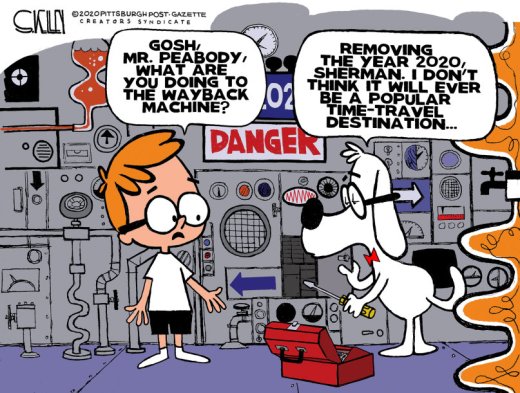
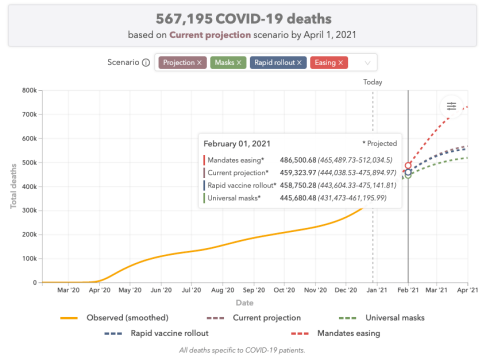
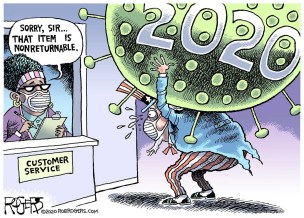 The grim death toll comes on the heels of several brutal months for the US, with COVID-19 ravaging communities from coast to coast, crippling hospital systems and prompting new widespread restrictions.
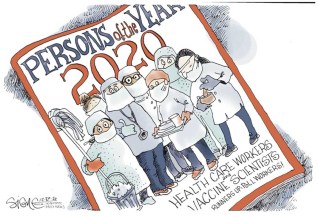 That dire warning came as the number of Covid-19 infections rose past 19.2 million after Christmas and the number of deaths from coronavirus neared 334,000,
 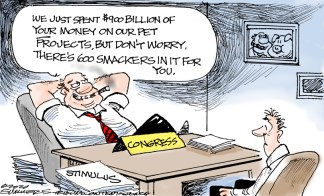 The state of play: It’s still an uphill battle. But Republican senators are feeling more pressure from constituents — pumped by Trump — to do more.


 Business Insider:
  More on the horrific situation in California at The Guardian:
  The Washington Post has a video and photo essay on a struggling California hospital. Is this what other states will face soon?
  United Airlines said on Friday that the man’s wife was overheard telling an emergency medical worker that her husband had symptoms of Covid-19, including loss of taste and smell.
 “The ripple effect is huge,” said Claire Hannan, executive director of the Association of Immunization Managers. “The planning piece is critical. We cannot roll this vaccine out on the fly.”
 Bess Levin at Vanity Fair:
  In a July 4, 2020 email
 Good Day Sky Dancers!
 No wonder Santa Trump is pulling Pardons out of his big old sack of shit. This is from Business Insider: This is an exclusive from Business Insider by journalists Tom LoBianco and Dave Levinthal .
 Trump’s future may actually have some more possibilities for fleecing as long as he can continue to get suckers to contribute to his ‘campaign’ efforts.
  CISA was the agency that
  This hack is on such a scale that many are suggesting it’s an act of war
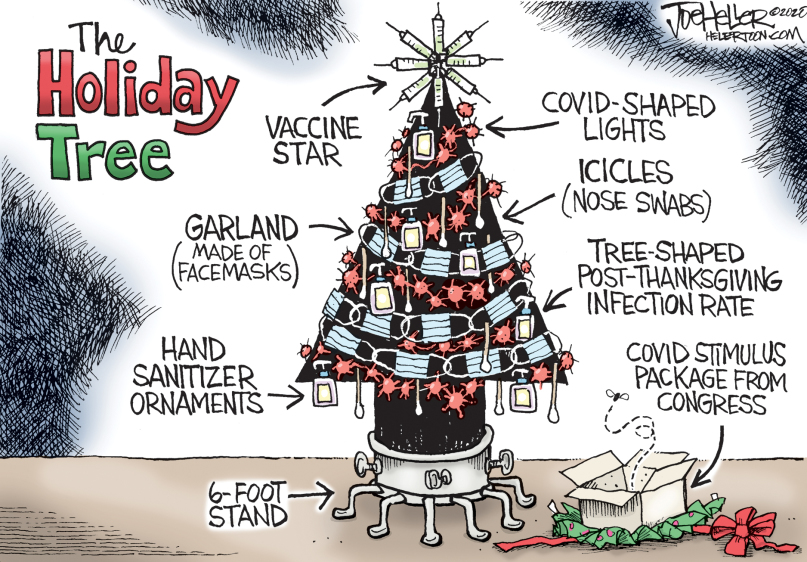 As Trump
 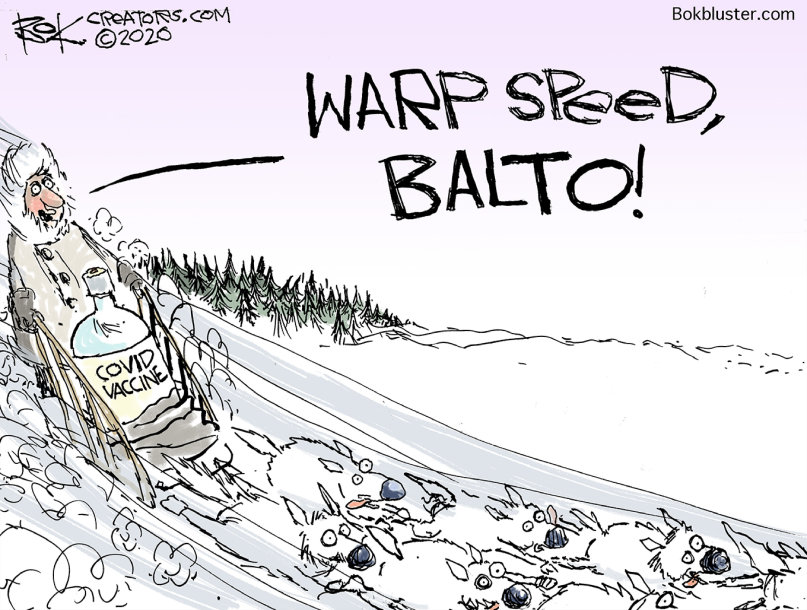 We are getting closer to a vaccine, and the FDA has found that the Pfizer vaccine
 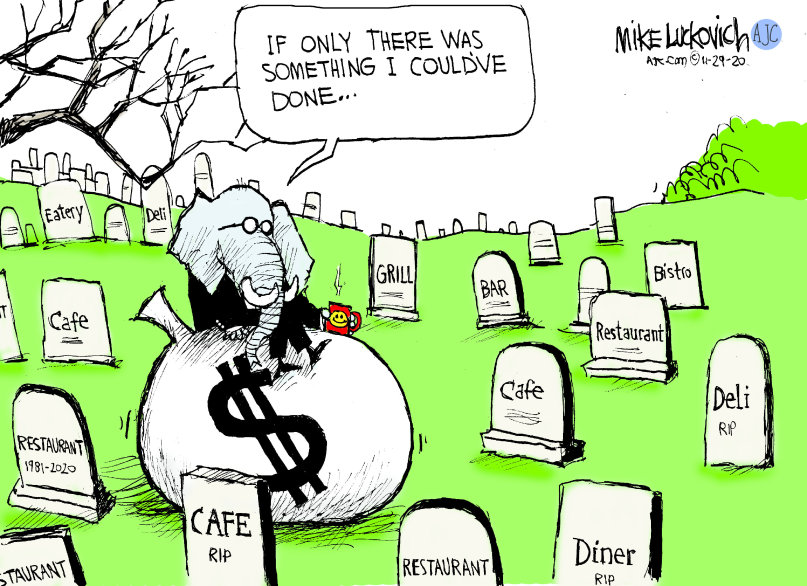 “Frankly, I don’t know, and frankly, I’m staying out of this. I can’t comment,” Slaoui said. “I literally don’t know.”
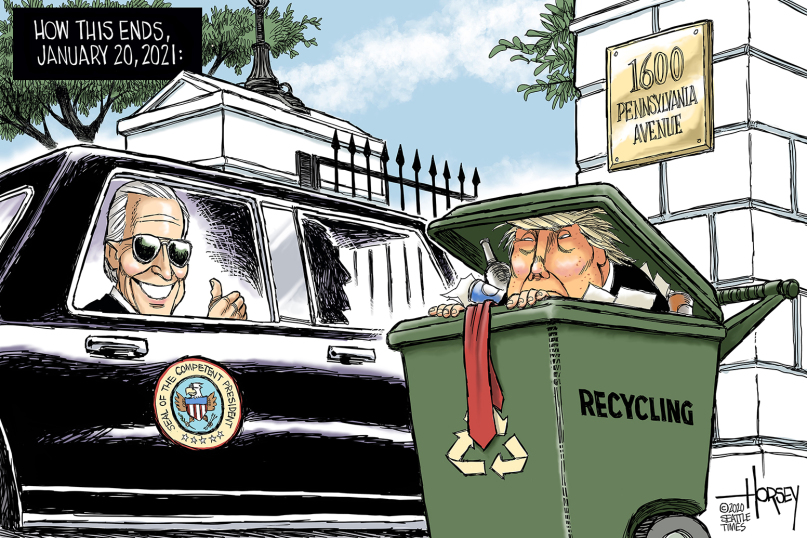 Let’s hope the Biden administration will be able to deal with the mess that Trump is leaving them.
 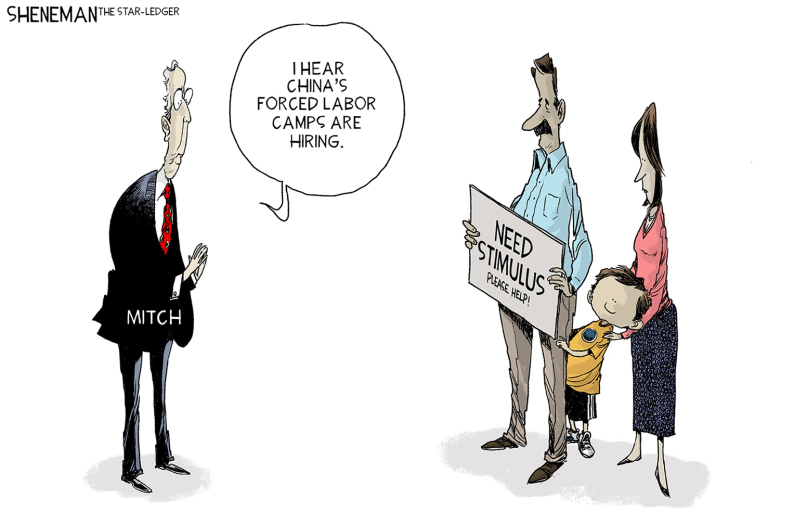 Unfortunately, that is what Senate majority leader Mitch McConnell and his minions have been battling to include in
 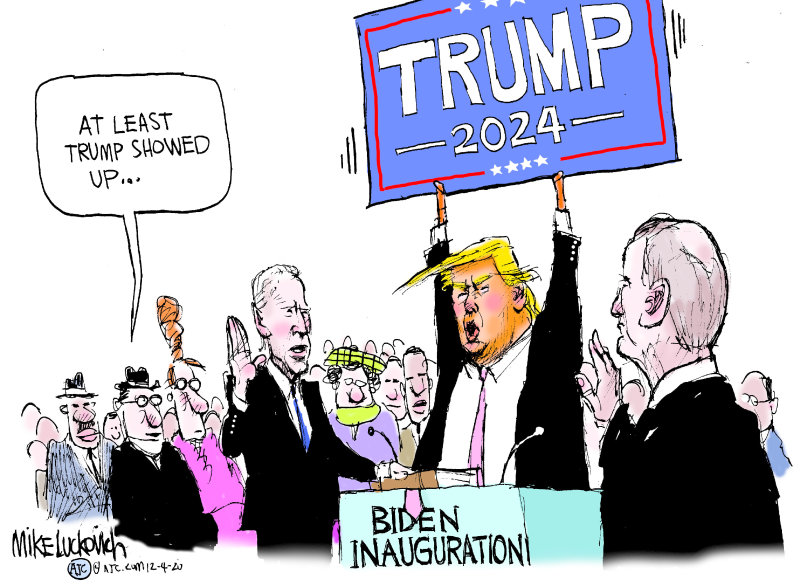 “The doors close significantly after the safe harbor deadline passes,” said Rebecca Green, codirector of the Election Law Program at William & Mary Law School. “It’s going to be a heavy lift to convince a judge to defy federal deadlines. I think it would only happen or be successful if some kind of wild evidence of just unbelievable scale were unearthed that was credible.”
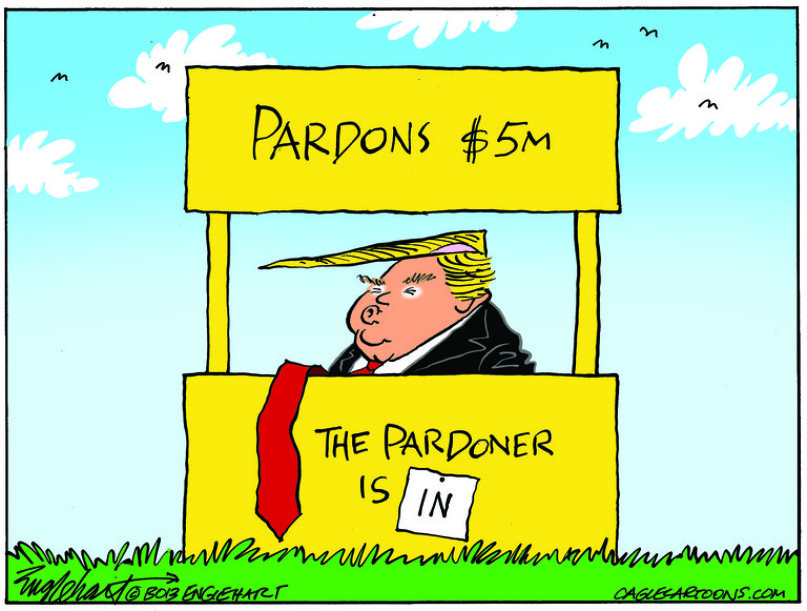 The pardon clause’s language is broad indeed, unambiguously allowing the president to pardon seemingly any other person convicted for any federal criminal offense. But its language does not unambiguously include the president himself. Had the Framers intended to give the president such broad power, we would expect them to have clearly said so. After all, the new nation was in the process of rejecting a monarchical government in favor of a democratic republic.
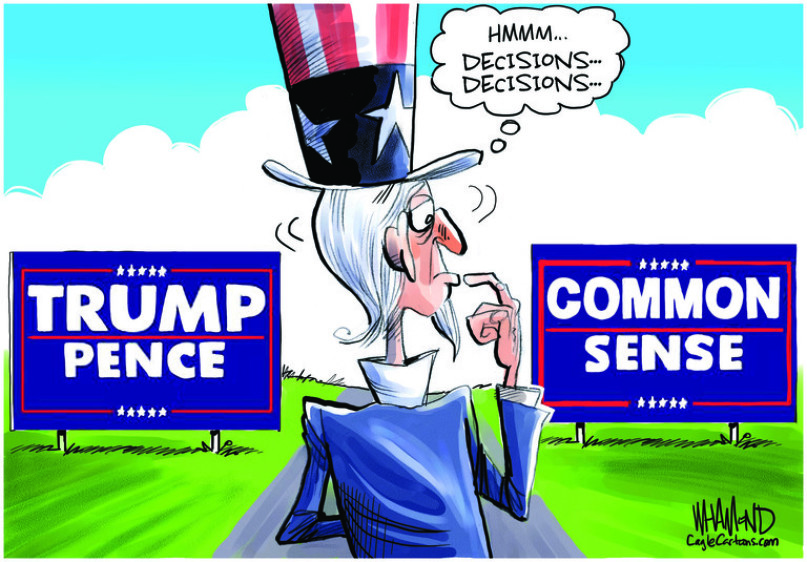 Dakinikat survived Hurricane Zeta and got her power back this morning. I heard the storm also
 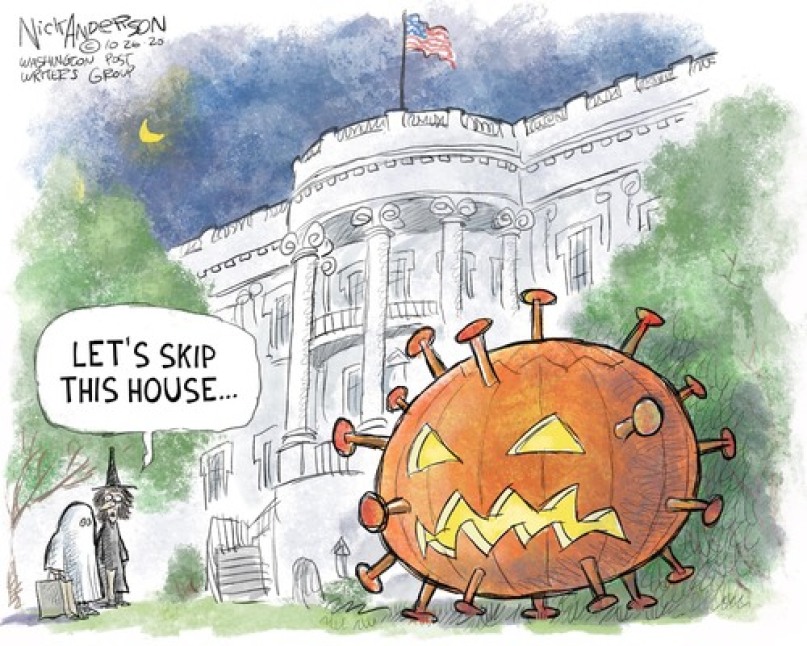 The near-term future is already set. Trump has
 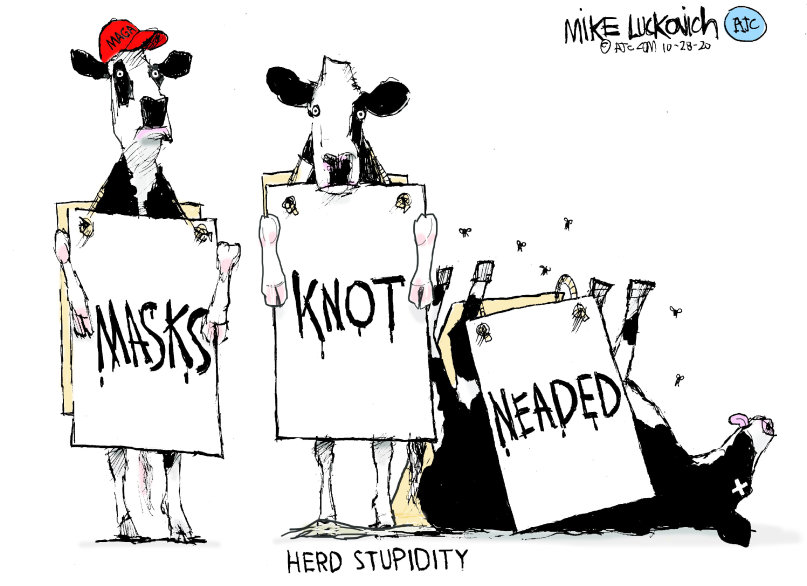 Officials say that White House adviser Scott Atlas first started pushing herd immunity this past summer despite significant pushback from scientists, doctors and infectious disease experts that the concept was dangerous and would result in far more Americans getting sick and dying. Since then, various White House advisers have tried to play down the idea that the administration has implemented a strategy for COVID-19 based on herd immunity, which holds that if enough people contract a disease and become immune from it, then future spread among the broader population will be reduced.
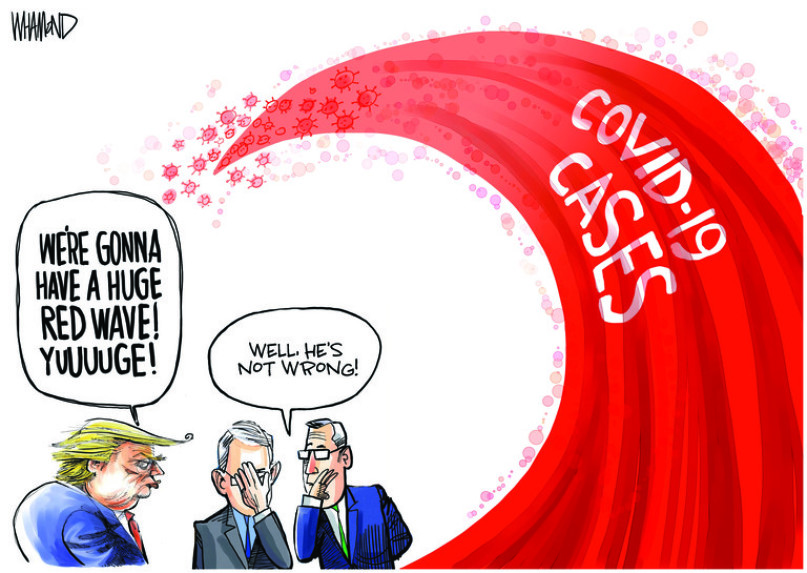 “This is all Atlas,” said one of the officials who spoke with The Daily Beast. “I find it disturbing… bordering on ludicrous. Everything that comes out of Atlas’ mouth is geared towards letting it rip and then just worry about protecting the vulnerable. Everything he says points to the fact that he believes herd immunity is a good option. Yet he denies he’s pushing herd immunity as a strategy saying ‘No that’s not what I’m doing.’ But he is.”
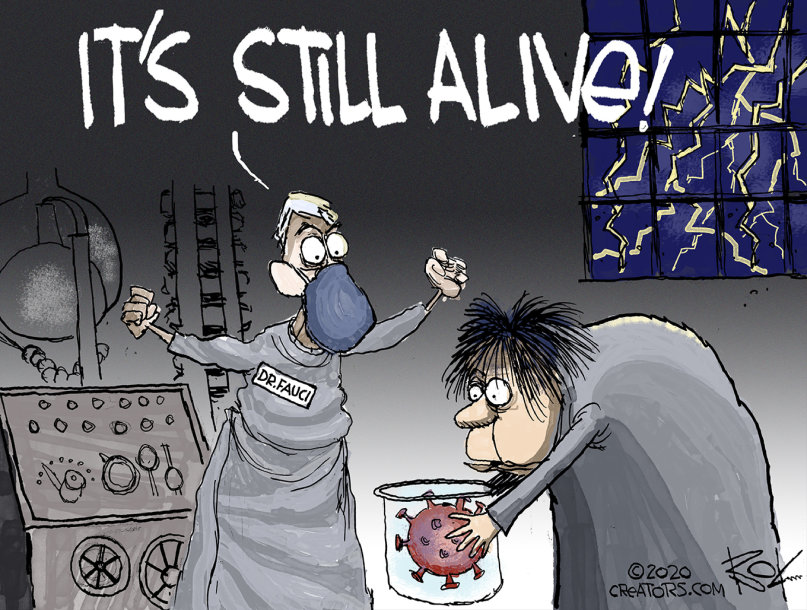 As a political matter, the president’s approach amounts to an Obi Wan-like attempt to wave his hand before the electorate and tell voters that they are not experiencing a pandemic that is tearing through their neighborhoods and filling hospitals. His determination to brush aside the ongoing crisis as a campaign issue has become the defining choice of his bid for a second term and the core of his message throughout the campaign’s endgame.
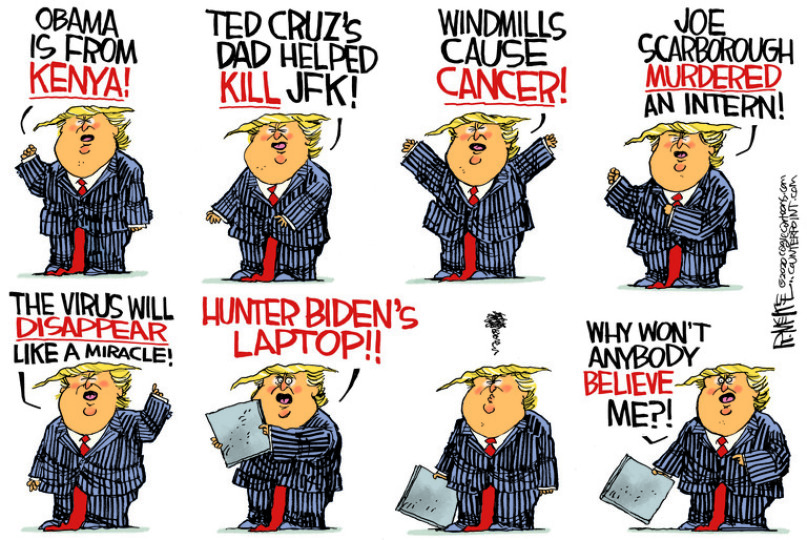 Toluse Olorunnipa at The Washington Post: As Election Day nears, Trump ponders becoming one thing he so despises: A loser.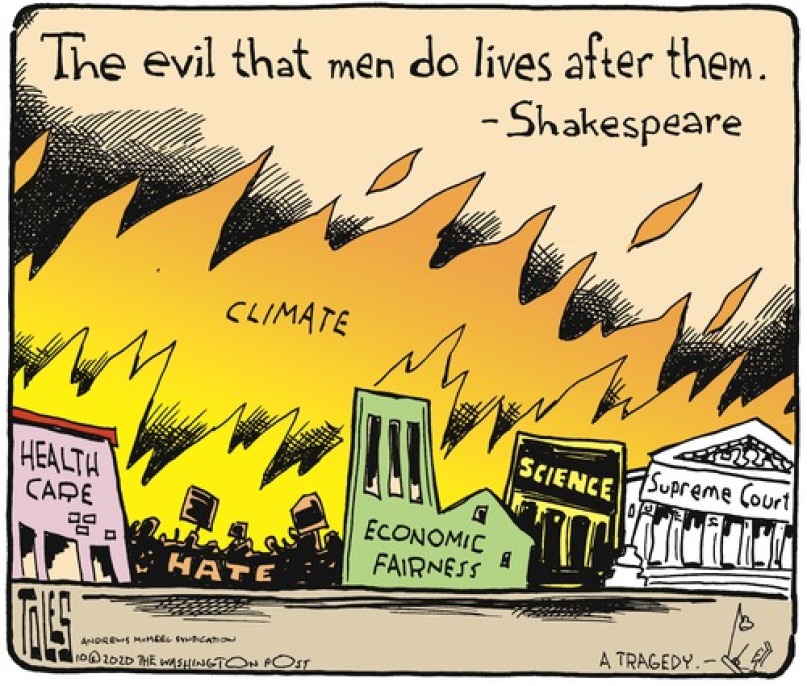

 peej
peej Carissa
 bostonboomer
 dakinikat
 ecocatwoman
 jjlo
jjlo mablue2
 Mama Lopez
 peggysue22
 quixote
 skydancingguestblogger
 Mona (aka Wonk the Vote)



 Sky Dancing
Recent Comments