Tuesday Reads: The Pandemic Isn’t Over

Good Morning!!

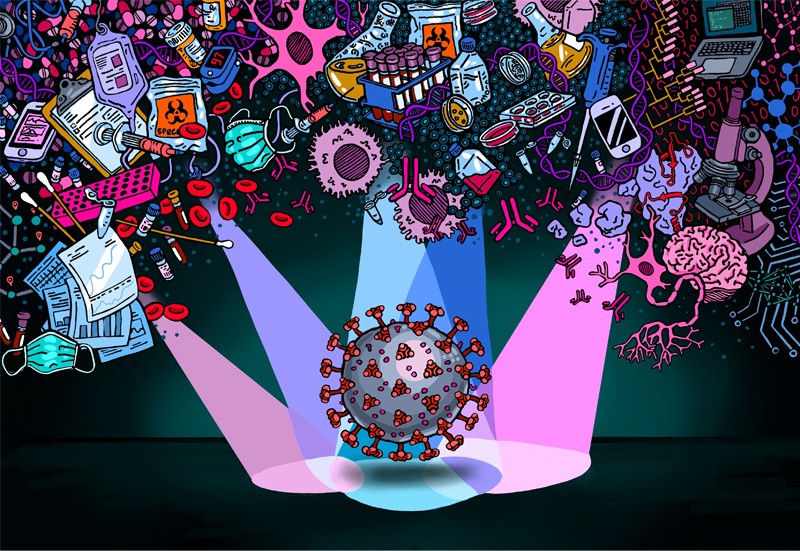
Art in Digital Form by Jessica Johnson

Art in Digital Form by Jessica Johnson

Over the long Fourth of July weekend, many Americans celebrated as if the pandemic is in the rear view mirror. Unfortunately that’s not the case. The Delta variant of Covid-19 is establishing itself around the country, especially in the places where people have resisted getting vaccinated.  And now there’s a new strain of the virus, the Lambda variant, which originated in Peru and is now appearing in Europe.

Cases are rising in the U.S. now, even in states like Massachusetts where 70 percent of the population is vaccinated. Boston 25 News: Delta variant beginning to push MA COVID numbers up.

Actually, though things are pretty good, they are far from back to normal. In fact, COVID is once again going in the wrong direction in Massachusetts, according to the state’s numbers. While infections remain extremely low, they are suddenly on the upswing – very slightly.

From June 23 to June 27, the state confirmed 291 COVID cases. In the following five days, tests confirmed 376 cases. That was an increase of about 29%. And there’s something troubling behind the numbers.

Dr. Richard Ellison, an infectious disease specialist at UMass Memorial Medical Center in Worcester said, across New England, about a quarter of the new cases have been traced to the highly transmissible Delta variant.

“So, Delta is here and there is an opportunity for it to increase,” Dr. Ellison said. “So New England’s the safest part of the country, but we’re going to have to watch it.”

And that’s in a place where most people aren’t denying the existence of Covid-19. Missouri is one of those places. ABC News: Missouri sees rise in severe COVID-19 cases among the young, unvaccinated as delta variant spreads.

Health care workers in southwest Missouri are sounding the alarm over a wave of young, unvaccinated COVID-19 patients who are now filling hospital beds.

Leanne Handle, an assistant nurse manager of a medical surgical COVID-19 unit at CoxHealth in Springfield, Missouri, said she and her staff have seen the patient population over the past year go from elderly people who are immunocompromised or have multiple other conditions to, more recently, younger individuals who “don’t think COVID is real” and haven’t been vaccinated against the disease….

Outsized, Overwhelming Impact of COVID-19

Outsized, Overwhelming Impact of COVID-19

“So, what we’re seeing now are the patients who are coming in who don’t think that they’re going to get sick from it, who aren’t mentally prepared to make life and death decisions of do they want to be intubated, do you want CPR if your heart should stop,” she added. “We have very few patients who have been admitted that have been vaccinated. So it has been proven to keep you at least out of the hospital, and from severe disease.”

Handle also noted a “scary trend” among younger patients with the spread of the so-called delta variant, a highly contagious strain of the virus that was first identified in India and has since been detected in more than 80 countries around the world as well as dozens of U.S. states, including Missouri.

“With the new variant in our area, these patients are getting sicker quicker,” she said. “They are progressing through this spectrum very, very quickly.”

From Today’s Washington Post: Their neighbors called covid-19 a hoax. Can these ICU nurses forgive them?

The hospital executives at the lectern called her a hero, and the struggle that had earned Emily Boucher that distinction showed on her face: in the pallor acquired over 12-hour shifts in the intensive care unit, the rings beneath eyes that watched almost every day as covid-19 patients gasped for their final breaths.

The pandemic had hit late but hard in the Appalachian highlands — the mountainous region that includes Southwest Virginia and Northeast Tennessee — and over the winter many of its victims had ended up on ventilators tended by Boucher and her fellow nurses at Johnston Memorial Hospital.\They were enduring the traumas known to ICU workers across the world: days filled with death, nights ruined by dreams in which they found themselves at infected patients’ bedsides without masks. But they were also enduring a trauma that many doctors and nurses elsewhere were not: the suspicion and derision of those they risked their lives to protect.

Conspiracy theories about the pandemic and lies recited on social media — or at White House news conferences — had penetrated deep into their community. When refrigerated trailers were brought in to relieve local hospitals’ overflowing morgues, people said they were stage props. Agitated and unmasked relatives stood outside the ICU insisting that their intubated relatives only had the flu. Many believed the doctors and nurses hailed elsewhere for their sacrifices were conspiring to make money by falsifying covid-19 diagnoses.

Boucher and her colleagues were pained by those attacks — and infuriated by them.Unlike their exhaustion, that anger rarely showed on their faces, but it was often there: as they scrolled Facebook to see local ministers saying God was greater than any virus, or stood in line with unmasked grocery shoppers who joked loudly about the covid hoax.

Hope, by Alexander Allen. Man on beach with U.S. Naval Ship Comfort in the distance

Hope, by Alexander Allen. Man on beach with U.S. Naval Ship Comfort in the distance

All of us are endangered by these delusional people. CNN: These parts of the US could become ‘breeding grounds’ for potentially more Covid-19 variants, expert says.

Out of the Covid-19 pandemic, two Americas are emerging: One protected by vaccines and the other still vulnerable to infection — and experts say progress made across the entire US is being threatened by low-vaccinated regions.

“We’re already starting to see places with low vaccination rates starting to have relatively big spikes from the Delta variant. We’ve seen this in Arkansas, Missouri, Wyoming … those are the places where we’re going to see more hospitalizations and deaths as well, unfortunately,” Dean of the Brown University School of Public Health, Dr. Ashish Jha, told CNN.

“And any time you have large outbreaks, it does become a breeding ground for potentially more variants.”

Parts of the South, Southwest and Midwest are starting to see spikes in cases, and many of those states — like Alabama, Arkansas, Louisiana and Mississippi — are among those with the lowest rates of vaccination, according to the US Centers for Disease Control and Prevention. Recent Covid-19 case rates are an average of three times higher in states that have vaccinated a smaller share of their residents than the United States overall, CDC data shows.

If there is another surge, Dr. Megan Ranney, associate professor of emergency medicine at Brown University, said young unvaccinated adults could be a big part of the problem.

“We’ve already seen that the highest number of infections over the past few months have been in those younger adults,” Ranney said. “These are the people that thought they were invincible.”

David Axe at The Daily Beast: This Is What America’s Next Big COVID Wave Will Look Like.

“The Delta variant will likely become the dominant strain in the U.S. by the end of the summer,” Lawrence Gostin, a Georgetown University global health expert, told The Daily Beast. “It is entirely foreseeable that the U.S. will experience surges, particularly in states with relatively low vaccination coverage.”

Thanks to its sprawling pharmaceutical industry and carefully worded contracts between the vaccine-makers and the federal government, the United States is one of the few countries where supply of vaccine far exceeds willing recipients.

Virtually anyone in the U.S. can get vaccinated, for free, at any time. So far, 54 percent of all Americans have taken advantage of that rare privilege and have gotten at least one dose. But vaccination rates are uneven across U.S. states and, unsurprisingly in this polarized era, map fairly neatly on political alignment.

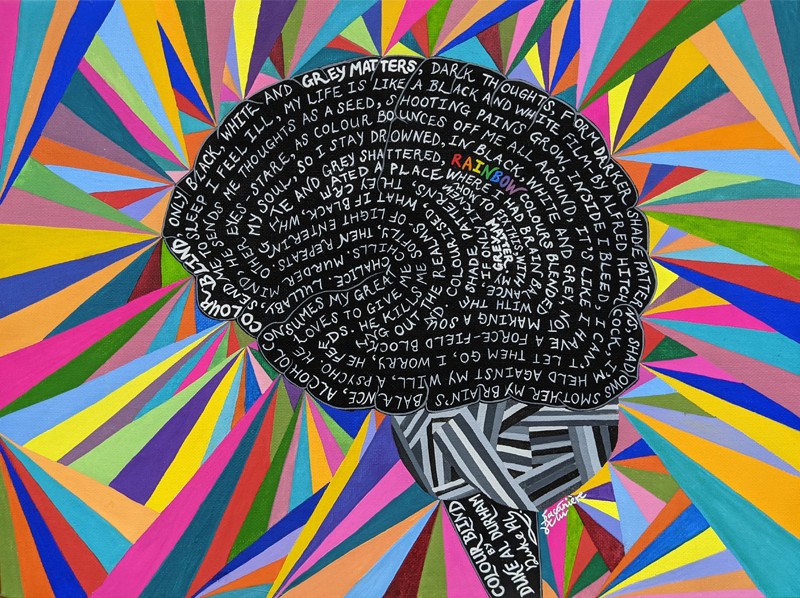
Colour Blind, by Sarah Racaniere, a poem by Duke Al Durham

Colour Blind, by Sarah Racaniere, a poem by Duke Al Durham

Vaccine uptake is high in states governed by Democrats. Consider California, where 61 percent of the population is at least partially vaccinated. In Republican states, uptake is generally low. Just 36 percent of Mississippi residents have gotten their first shot.

There’s a politically charged vaccination disparity in the United States, and the Delta lineage is taking advantage of it.

The new variant now accounts for around a quarter of all new infections in the U.S.. But it’s not evenly distributed. Five states where Delta is prevalent—Arkansas, Missouri, Nevada, Utah and Wyoming—are all seeing significant increases in new COVID cases, even though case rates are probably still flat on the national level.

Not surprisingly, those are the states where vaccination rates are lowest.

“When you have such a low level of vaccination superimposed upon a variant that has a high degree of efficiency of spread, what you are going to see among undervaccinated regions, be that states, cities or counties, you’re going to see these individual types of blips,” Anthony Fauci, head of the U.S. National Institute of Allergy and Infectious Diseases, told CNN.

“It’s almost like it’s going to be two Americas,” Fauci added.

Chris Beyrer, an epidemiologist at the Johns Hopkins Bloomberg School of Public Health, said he’s especially worried about Southern states. “The Deep South is a real concern, where political leadership was much too slow to endorse the science, and scientific literacy is lower than in many parts of the country,” Beyrer told The Daily Beast. “The more infectious variants, like Delta, will exploit these vulnerabilities. That’s what viruses do.”

There’s more at the link. But, as I wrote above, cases are rising even in states with high vaccination rates, and there’s a report from Israel on reduced effectiveness of vaccines against the Delta variant. What will happen as new variants continue to develop? What about the Lambda variant?

EuroNews: Lambda: What do we know about the latest COVID variant flagged by the WHO?

The latest variant to be highlighted by the World Health Organization, named Lambda, has now been found in at least 27 different countries.

It is especially widespread across South America, having first appeared in Peru in August last year, and is accounting for more and more cases in these countries.

Pipetting The Sample by Ali Al-Nasser

Pipetting The Sample by Ali Al-Nasser

Having found its way to Europe, where there is already an ongoing battle against the Delta variant, due to lack of study it is still unclear how major a cause of concern it might be.

The latest variant to be highlighted by the World Health Organization, named Lambda, has now been found in at least 27 different countries.

It is especially widespread across South America, having first appeared in Peru in August last year, and is accounting for more and more cases in these countries.

Having found its way to Europe, where there is already an ongoing battle against the Delta variant, due to lack of study it is still unclear how major a cause of concern it might be.

It is not yet listed as a ‘variant of concern’, rather a ‘variant of interest’ by the WHO, meaning it has been identified as causing transmission or detected in multiple countries.

Read more at the link.

We’ve learned that we will be affected by what is happening with the virus in other countries. Therefore, I want to call your attention to two longer articles–one about Russia and one about India.

Alexey Kovalev at Foreign Policy: The Shocking Enormity of Russia’s Botched Pandemic Response.

MOSCOW—As I write this, Russia is firmly in the grip of the third wave of the COVID-19 pandemic. Every day, there are about 22,000 reported new infections—twice as many as during the peak of the first wave in May 2020—and more than 600 deaths. The new Delta variant of the virus, which Moscow Mayor Sergey Sobyanin says is responsible for 90 per cent of new infections in the Russian capital, has caught Russia almost completely unawares. Despite having access to the brain power and resources of one of the most technologically advanced nations in the world, Russian authorities have repeatedly squandered almost every chance to beat the pandemic. Their massive, bloated propaganda apparatus failed to do the one job it was designed for: Get the message out. Instead, the pandemic has exacerbated the crisis of trust between the Russian government and citizens. Now, the campaign for parliamentary elections in September could make fighting the pandemic even harder, since the ruling United Russia party may be even more reluctant to impose unpopular measures such as lockdowns.

Russian independent observers and journalists—including me and my colleagues at Meduza—already knew something was terribly off with Russia’s handling of the pandemic in late spring of 2020. We had looked at the numbers and recognized that COVID-19 deaths were being underreported in many regions of Russia. According to the official statistics at the time, tens of thousands of Russians were dying in 2020 of a mysterious pneumonia epidemic unrelated to COVID-19. This was hardly plausible. The more likely explanation: Russian regional authorities were writing off the majority of COVID-19 cases as “community-acquired pneumonia.”

There is no evidence of a cover-up ordered from the top. More likely, regional governorates were simply being discreet to avoid being the bearer of bad news to the Kremlin. Underreporting COVID-19 cases in the early stages of the pandemic plausibly made many Russians question the existence of the virus or lulled them into a false sense of security, although there is no poll data to back this up. What’s certain is that by November 2020, according to independent polling institute Levada, the majority of Russians did not trust their government’s COVID-19 figures: 33 percent thought them too low, while 28 percent believed they were exaggerated.

Sounds familiar, doesn’t it? Read the rest at Foreign Policy.

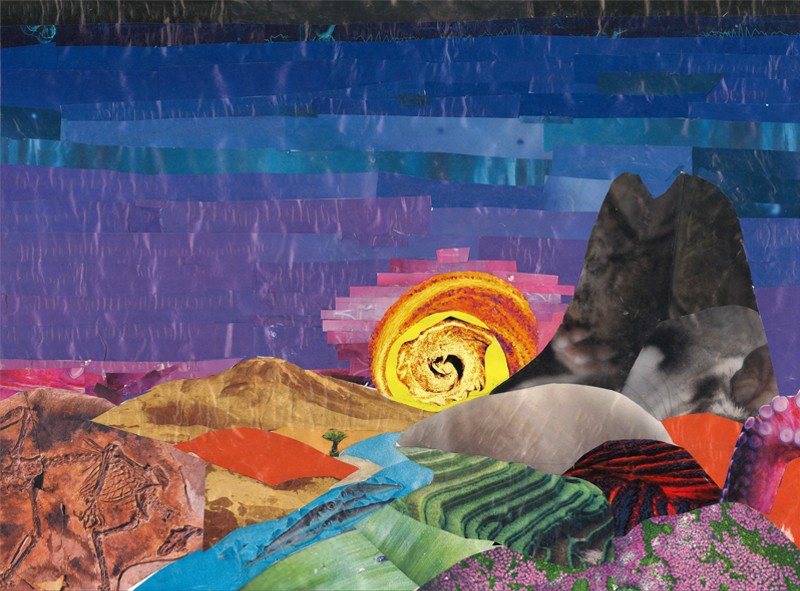
Naturarte by Angela Araujo, Sunsuet collage made from cuts from Nature covers

Naturarte by Angela Araujo, Sunsuet collage made from cuts from Nature covers

MIT Technology Review: What went so wrong with covid in India? Everything.

America may seem to be approaching the end of the pandemic, but covid-19 remains a surging catastrophe in India, with more than 30 million people infected and more than 400,000 deaths—official figures that many believe are far below the real numbers. A more likely scenario, the New York Times reported on May 25, is that 539 million people have been infected and more than 1.6 million are dead. On June 27, the Wall Street Journal published figures from the University of Washington’s Institute for Health Metrics and Evaluation, whose modeling also suggests that India is undercounting. The institute estimates the death toll at over 1.1 million, or three times the official figure. 

But the crisis was not an unavoidable tragedy. Even the new delta variant discovered to be sweeping through the country was not some terrible random error. Instead, the catastrophe that has struck millions of Indians is the direct outcome of the government’s failures: its failure to plan ahead by increasing hospital capacity and acquiring medicines; its failure to figure out contact tracing, collect adequate data, and purchase vaccines. Even after it became clear that a second wave was inevitable, the government went ahead with superspreader events that served its own political purposes—and gave the virus a new opportunity. And at the center of the crisis—paying little attention to science, seemingly refusing to heed good advice, and appearing concerned primarily with holding on to power at any cost—stands India’s Prime Minister Narendra Modi, a Hindu nationalist whose arrogance and underpreparedness have cost the country an incalculable amount. 

Read the rest at the Technology Review link.

NOTE: Read about the pandemic art works in this post in this Nature Medicine article: Art in a Pandemic: A Digital Gallery.

What else is happening? What stories have captured your interest today?


Thursday Reads: Pandemic Good News and Bad News

download

Good Morning!!

There’s good news and bad news on the pandemic front. We may be “turning the corner” in the U.S., but the situation in India is out of control and getting worse.

First the good news.

After weeks of coronavirus patients flooding emergency rooms in Michigan, the worst Covid-19 hot spot in the nation, hospitalizations are finally falling.

On some recent days, entire states, including Wisconsin and West Virginia, have reported zero new coronavirus deaths — a brief but promising respite from the onslaught of the past year.

And in New York and Chicago, officials encouraged by the recent progress have confidently vowed to fully reopen in the coming weeks, conjuring images of a vibrant summer of concerts, sporting events and packed restaurants revving cities back to life.

Americans have entered a new, hopeful phase of the pandemic. Buoyed by a sense that the coronavirus is waning, in part because of vaccinations, more people are shrugging off masks, venturing into restaurants and returning to their prepandemic routines. Mayors, governors and other local officials — once the bearers of grim news about the virus’s toll and strict rules for businesses — have joined in the newfound optimism, rapidly loosening restrictions.

QCA2POEDYNEP5DIQ3CPLGCEHNMPublic health experts remain cautious, but said that while they still expect significant local and regional surges in the coming weeks, they do not think they will be as widespread or reach past peaks.

“We’re clearly turning the corner,” said Michael Osterholm, director of the Center for Infectious Disease Research and Policy at the University of Minnesota.

Across the country, the outlook for the pandemic has indeed improved, putting the United States in its best position against the virus yet. The nation is recording about 49,000 new cases a day, the lowest number since early October, and hospitalizations have plateaued at around 40,000, a similar level as the early fall. Nationwide, deaths are hovering around 700 a day, down from a peak of more than 3,000 in January.

The Washington Post: CDC says coronavirus could be under control this summer in U.S. if people get vaccinated and are careful.

Coronavirus infections could be driven to low levels and the pandemic at least temporarily throttled in the United States by July if the vast majority of people get vaccinated and continue with precautions against viral transmission, according to a strikingly optimistic paper released Wednesday by the Centers for Disease Control and Prevention.

The report comes as administration officials and leaders in many states are sounding more confident that the country can return to a degree of normalcy relatively soon. President Biden on Tuesday announced a new vaccination goal, saying he wants 70 percent of adults to have had at least one dose by July 4.

CDC Director Rochelle Walensky said Wednesday the modeling results give Americans a road map out of the pandemic — so long as they continue to get vaccinated and maintain certain mitigation strategies until a “critical mass of people” get the shots.

“The results remind us that we have the path out of this, and models, once projecting really grim news, now offer reasons to be quite hopeful for what the summer may bring,” she said.

The CDC report is not a prediction or forecast. Rather, it is a set of four scenarios based on modeling of the pandemic, using different assumptions about vaccination rates, vaccine efficacy and precautions against transmission.

Read about the possible scenarios at the WaPo.

Interesting proposal by the Biden administration

Now the bad news. 

The Washington Post: India breaks its own records again with 412,000 new cases and nearly 4,000 deaths in 24 hours

India’s devastating coronavirus crisis deepened on Thursday, as the country reported 412,000 infections and nearly 4,000 deaths in the previous 24 hours.

Epidemiologists believe that India’s surge could hit 500,000 cases a day in the coming weeks before retreating. That would represent a ruinous burden for a health-care system reeling from too many patients and a shortage of crucial supplies such as oxygen.

Last month, the United States advised its citizens to leave India, and the State Department on Thursday authorized the voluntary departure of non-emergency personnel.

Associated Press: India hits another grim virus record as oxygen demand jumps.

Infections in India hit another grim daily record on Thursday as demand for medical oxygen jumped sevenfold and the government denied reports that it was slow in distributing life-saving supplies from abroad.

The number of new confirmed cases breached 400,000 for the second time since the devastating surge began last month. The 412,262 new cases pushed India’s official tally to more than 21 million. The Health Ministry also reported 3,980 deaths in the last 24 hours, bringing the total to 230,168. Experts believe both figures are an undercount.

Eleven COVID-19 patients died when pressure in an oxygen line dropped suddenly in a government medical college hospital in Chengalpet in southern India on Wednesday night, possibly because of a faulty valve, The Times of India newspaper reported.

Hospital authorities said they repaired the pipeline last week, but the consumption of oxygen had doubled since then, the newspaper said.

Read more details at the AP.

Reuters: COVID-19 spreads to rural India, villages ill-equipped to fight it.

Hopes that India’s rampaging second wave of COVID-19 is peaking were set back on Thursday as record daily infections and deaths were reported and as the virus spread from cities to villages that were poorly equipped to cope.

Government modelling had forecast a peak by Wednesday in infections that have overwhelmed the healthcare system, with hospitals running out of beds and medical oxygen….

“This temporarily halts speculations of a peak,” Rijo M John, a professor at the Indian Institute of Management in the southern state of Kerala, said on Twitter.

While the capital New Delhi and several other cities have been hardest hit so far, limited public healthcare, including a dearth of testing facilities, means the threat is grave in rural areas that are home to nearly 70% of the 1.3 billion population.

In the town of Susner in Madhya Pradesh state, patients were being treated outdoors under trees, on blankets on the ground.

CBS News: India’s packed hospitals forced to turn COVID patients away.

Delhi — People are dying in record numbers amid the surge in coronavirus infections in India. CBS News correspondent Chris Livesay found that even the capital city’s hospitals are desperately short on beds, forcing them to turn away people battling symptoms of COVID-19. 

The constellation of forces that led to India’s coronavirus crisis is not unique; it’s the default in most of the world.Photograph by Rebecca Conway Getty

The constellation of forces that led to India’s coronavirus crisis is not unique; it’s the default in most of the world. Photograph by Rebecca Conway, Getty

CBS News watched as one woman showed up breathless at the Moolchand Hospital in Delhi, desperate for oxygen and a bed. The facility has some of the best resources in New Delhi, but there was no space left, so they sent her away. 

Dr. Nabeel Rahman runs the emergency room at Moolchand, which has been converted into extra space for an ICU that, still, is absolutely crushed with patients. He told CBS News that his team had resorted to purchasing its own oxygen supplies privately, at massively inflated prices, amid a desperate national shortage. 

The patients in the expanded ICU are extremely sick, but they’re also extremely lucky: In a country that’s losing the battle against COVID-19, they’re lucky to have oxygen, lucky to have access to doctors and lucky to have beds in a hospital that’s well over capacity. 

Someone tell the Supreme Court about this:

Many of India’s coronavirus victims caught the disease during huge religious gatherings, which were promoted by the Hindu nationalist party of Prime Minister Narendra Modi as it campaigned for recent state elections.  

There’s much more at the link.

Ankita Rao at The Guardian: India is hiding its Covid crisis – and the whole world will suffer for it.

A few years ago, as Narendra Modi came into power, I worked on an investigative report about India hiding its malaria deaths. In traveling from tribal Odisha to the Indian national health ministry in New Delhi, my colleague and I watched thousands of cases disappear: some malaria deaths, first noted in handwritten local health ledgers, never appeared in central government reports; other malaria deaths were magically transformed into deaths of heart attack or fever. The discrepancy was massive: India reported 561 malaria deaths that year. Experts predicted the actual number was as high as 200,000.

Now, with Covid ravaging the country, desperate Indians have taken to Twitter to ask for oxygen cylinders or beg hospitals for an open bed. The crisis has been exacerbated by the government’s concealment of critical information. Between India’s long history of hiding and undercounting illness deaths and its much more recent history of restraining and suppressing the press, Modi’s administration has made it impossible to find accurate information about the virus’s hold in the country. Blocking that information will only hurt millions within the country. It will also stymie global efforts to stop the Covid-19 pandemic, and new variants of the virus, at India’s border.

Narenda Modi and Trump hugging

Narenda Modi and Trump hugging

Epidemiologists in India and abroad currently estimate that the country’s official reported Covid-19 death toll – around 222,000 at time of publication – only accounts for a fraction of the real number. The director of the US-based Institute of Health Metrics and Evaluation has estimated that India is only detecting three to four percent of actual cases. Other experts point to total excess deaths in cities such as Mumbai as proof that there could be 60% to 70% more deaths from Covid-19 than the government is admitting to.

There are various reasons India could be cooking the books on Covid deaths. For one, the utter failure of the public health system makes it difficult to account for the millions of bodies passing through hospitals, clinics and those dying in their own home. Despite having become one of the largest economies in the world, India has always spent a dismal portion of its GDP on healthcare, with an investment somewhere around 3%, compared to Brazil (9%) or the US (17%).

But systemic failure is only one part of the puzzle. The reigning party of the Indian government touted its success in curbing the virus very early in the pandemic, and has never let go of that narrative. As bodies burned in funeral pyres across Uttar Pradesh in April, Yogi Adityanath – the state’s chief minister and a key Modi lackey – claimed that everything was under control and repeatedly refused to announce new lockdown measures, even as he himself contracted Covid-19.

That sounds a lot like Trump, doesn’t it?

More stories to check out today:

The Washington Post: Opinion: Liz Cheney: The GOP is at a turning point. History is watching us.

The Washington Post: D.C. police officer who fought Capitol rioters pens letter to officials: ‘The time to fully recognize these Officers actions is NOW!’

The New York Times: Daylight Attack on 2 Asian Women in San Francisco Increases Fears.

AZ Central: Department of Justice asks Arizona Senate to respond to concerns about election audit.

The Washington Post: Observers report ballots and laptop computers have been left unattended in Arizona recount, according to secretary of state.

Jennifer Taub at Washington Monthly: Starting with Trump, It’s Time for a White Collar Crime Crackdown.

Zachary B. Wolf at CNN: The big lie. The Covid misinformation. It all comes back to Russia.

The Daily Beast: Inside the Hunt for the Washington Post’s Next Top Editor.

What else is happening? As always, this is an open thread.


Tuesday Reads: What’s Behind Vaccine Hesitancy?

Good Morning!!

Richard Diebenkorn, Coffee, 1959

Richard Diebenkorn, Coffee, 1959

Trump is gone from the national stage, but the misinformation he promoted is still with us. Thanks to the Trumpists, we may never achieve herd immunity in the U.S. 

Dr. Rob Davidson, emergency room physician and Dr. Bernard Ashby, vascular cardiologist at NBC News: White Covid vaccine rejectors threaten herd immunity. Can we change their minds in time?

Even as we accelerate vaccinations, an immovable force stands in the way of achieving community immunity: Millions of Americans who are simply saying “No way.”

As of mid-April, both Florida and Michigan were hot spots for the more severe B.1.1.7 Covid-19 variant that originated in the U.K. and that is now the dominant strain nationwide. This variant is also sending younger, previously healthy people into our hospitals. With the coronavirus mutating to become more contagious and possibly more lethal, vaccination is more important than ever.

Yet, vaccine refusal — not reluctance, not “maybe later,” but flat-out rejection — could prevent us from reaching the threshold when epidemiologists say we can safely and responsibly fully reopen all aspects of society. Recent surveys like this one from CNN put that number at around one in four people. In rural, overwhelmingly white places like rural western Michigan, these are the folks who stagger into the Emergency Room, sick and struggling to breathe, yet still tell nurses and doctors that neither Covid-19, masks and vaccines are real.

Davidson and Ashby write that Black and Hispanic Americans have responded to efforts to educate people about vaccine safety and efficacy.

But though Black and Hispanic Americans are now increasingly rolling up their sleeves, one group continues to refuse vaccinationsWhite, evangelical and rural Americans.

We heard one rural Michigan patient call vaccines a form of government control. Another repeated the unfounded claim that Covid-19 was a Chinese bioweapons plot. One patient refused to get vaccinated despite getting Covid-19 twice, a rare reinfection. Rural white people scoffed at vaccines, citing microchips and infertility, or Fox News disinformation slandering health experts for lying about vaccine efficacy data and calling vaccines a tool for social control. We heard patients accuse hospital workers of being highly paid actors maintaining the pandemic charade.

Vaccines have struck conservative Republican leaders with a kind of stubborn anosognosia, an inability to line themselves up with reality.

Paul Wonner, Model Drinking Coffee, 1964

Paul Wonner, Model Drinking Coffee, 1964


The answer, say the authors must come from community leaders.

In Michigan, GOP legislative leaders are undermining vaccinations in word and in deed, including holding millions of dollars in federal vaccination funds hostage. The conservative base, however, says it would rather listen to doctors than politicians anyway. If the only information — or misinformation — about the pandemic is from Fox News and OANN, then the antidote is information from a source who understands the science, the medicine and most importantly, the community.

In the case of rural conservative communities, that source would be rural conservative family physicians who go to the same churches, fish the same stretch of river and volunteer every Friday night at local high school football games. These are the doctors who care for every stage of a family’s life. Births, broken arms, deliveries, disease management and deaths. They aren’t just trusted, they’re family —minus the birthright of blood. Most importantly, they know how vaccines and medicine work.

I hope this happens, but I’m not hopeful.

Sabrina Tabernise at The New York Times: Vaccine Skepticism Was Viewed as a Knowledge Problem. It’s Actually About Gut Beliefs.

For years, scientists and doctors have treated vaccine skepticism as a knowledge problem. If patients were hesitant to get vaccinated, the thinking went, they simply needed more information.

But as public health officials now work to convince Americans to get Covid-19 vaccines as quickly as possible, new social science research suggests that a set of deeply held beliefs is at the heart of many people’s resistance, complicating efforts to bring the coronavirus pandemic under control….

About a third of American adults are still resisting vaccines. Polling shows that Republicans make up a substantial part of that group. Given how deeply the country is divided by politics, it is perhaps not surprising that they have dug in, particularly with a Democrat in the White House. But political polarization is only part of the story.

In recent years, epidemiologists have teamed up with social psychologists to look more deeply into the “why” behind vaccine hesitancy. They wanted to find out whether there was anything that vaccine skeptics had in common, in order to better understand how to persuade them.

They borrowed a concept from social psychology — the idea that a small set of moral intuitions forms the foundations upon which complex moral worldviews are constructed — and applied it to their study of vaccine skepticism.

Edvard Munch, At The Coffee Table, 1883, Munch Museum, Oslo

Edvard Munch, At The Coffee Table, 1883, Munch Museum, Oslo

What they discovered was a clear set of psychological traits offering a new lens through which to understand skepticism — and potentially new tools for public health officials scrambling to try to persuade people to get vaccinated.

Dr. Omer and a team of scientists found that skeptics were much more likely than nonskeptics to have a highly developed sensitivity for liberty — the rights of individuals — and to have less deference to those in positions of power.

Skeptics were also twice as likely to care a lot about the “purity” of their bodies and their minds. They disapprove of things they consider disgusting, and the mind-set defies neat categorization: It could be religious — halal or kosher — or entirely secular, like people who care deeply about toxins in foods or in the environment….

“At the root are these moral intuitions — these gut feelings — and they are very strong,” said Jeff Huntsinger, a social psychologist at Loyola University Chicago who studies emotion and decision-making and collaborated with Dr. Omer’s team. “It’s very hard to override them with facts and information. You can’t reason with them in that way.”

These qualities tend to predominate among conservatives but they are present among liberals too. They are also present among people with no politics at all.

Dakinikat quoted from this one yesterday, but it fits in with my theme so I’m posting again. Derek Thompson at The Atlantic: Millions Are Saying No to the Vaccines. What Are They Thinking?

What are they thinking, these vaccine-hesitant, vaccine-resistant, and COVID-apathetic? I wanted to know. So I posted an invitation on Twitter for anybody who wasn’t planning to get vaccinated to email me and explain why. In the past few days, I spoke or corresponded with more than a dozen such people. I told them that I was staunchly pro-vaccine, but this wouldn’t be a takedown piece. I wanted to produce an ethnography of a position I didn’t really understand.

The people I spoke with were all under 50. A few of them self-identified as Republican, and none of them claimed the modern Democratic Party as their political home. Most said they weren’t against all vaccines; they were just a “no” on this vaccine. They were COVID-19 no-vaxxers, not overall anti-vaxxers.

Pierre Bonnard, Coffee, 1907

Pierre Bonnard, Coffee, 1907

Many people I spoke with said they trusted their immune system to protect them. “Nobody ever looks at it from the perspective of a guy who’s like me,” Bradley Baca, a 39-year-old truck driver in Colorado, told me. “As an essential worker, my life was never going to change in the pandemic, and I knew I was going to get COVID no matter what. Now I think I’ve got the antibodies, so why would I take a risk on the vaccine?”

Some had already recovered from COVID-19 and considered the vaccine unnecessary. “In December 2020 I tested positive and experienced many symptoms,” said Derek Perrin, a 31-year-old service technician in Connecticut. “Since I have already survived one recorded bout with this virus, I see no reason to take a vaccine that has only been approved for emergency use. I trust my immune system more than this current experiment.”

Others were worried that the vaccines might have long-term side effects. “As a Black American descendant of slavery, I am bottom caste, in terms of finances,” Georgette Russell, a 40-year-old resident of New Jersey, told me. “The fact that there is no way to sue the government or the pharmaceutical company if I have any adverse reactions is highly problematic to me.”

Many people said they had read up on the risk of COVID-19 to people under 50 and felt that the pandemic didn’t pose a particularly grave threat. “The chances of me dying from a car accident are higher than my dying of COVID,” said Michael Searle, a 36-year-old who owns a consulting firm in Austin, Texas. “But it’s not like I don’t get in my car.”

And many others said that perceived liberal overreach had pushed them to the right. “Before March 2020, I was a solid progressive Democrat,” Jenin Younes, a 37-year-old attorney, said. “I am so disturbed by the Democrats’ failure to recognize the importance of civil liberties. I’ll vote for anyone who takes a strong stand for civil liberties and doesn’t permit the erosion of our fundamental rights that we are seeing now.” Baca, the Colorado truck driver, also told me he didn’t vote much before the pandemic, but the perception of liberal overreach had a strong politicizing effect. “When COVID hit, I saw rights being taken away. So in 2020, I voted for the first time in my life, and I voted all the way Republican down the ballot.”

Thompson’s interpretation of his findings:

My view of the vaccines begins with my view of the pandemic. I really don’t want to get COVID-19. Not only do I want to avoid an illness with uncertain long-term implications, but I also don’t want to pass it along to somebody in a high-risk category, such as my grandmother or an immunocompromised stranger. For more than a year, I radically changed my life to avoid infection. So I was thrilled to hear that the vaccines were effective at blocking severe illness and transmission. I eagerly signed up to take both my shots, even after reading all about the side effects.

Henri Matisse, Coffee, 1916, Detroit Institute of Arts

Henri Matisse, Coffee, 1916, Detroit Institute of Arts

The under-50 no-vaxxers’ deep story has a very different starting place. It begins like this:

“The coronavirus is a wildly overrated threat. Yes, it’s appropriate and good to protect old and vulnerable people. But I’m not old or vulnerable. If I get it, I’ll be fine. In fact, maybe I have gotten it, and I am fine. I don’t know why I should consider this disease more dangerous than driving a car, a risky thing I do every day without a moment’s worry. Liberals, Democrats, and public-health elites have been so wrong so often, we’d be better off doing the opposite of almost everything they say.”

Just as my COVID-19 story shapes my vaccine eagerness, this group’s COVID-19 story shapes their vaccine skepticism. Again and again, I heard variations on this theme:

“I don’t need some novel pharmaceutical product to give me permission to do the things I’m already doing. This isn’t even an FDA-approved vaccine; it’s authorized for an emergency. Well, I don’t consider COVID-19 a personal emergency. So why would I sign up to be an early guinea pig for a therapy that I don’t need, whose long-term effects we don’t understand? I’d rather bet on my immune system than on Big Pharma.”

For both yes-vaxxers like me and the no-vaxxers I spoke with, feelings about the vaccine are intertwined with feelings about the pandemic.

There’s much more at The Atlantic link.

So maybe my notion that vaccine refusal/hesitancy comes from Trump propaganda is wrong? I still think that’s a significant element of the problem. But clearly there are other psychological and sociological explanations. Is there a solution?

A few more vaccine reads:

The New York Times: The F.D.A. is set to authorize the Pfizer-BioNTech vaccine for those 12-15 years old by early next week.

Science News: The surge in U.S. coronavirus cases shows a shift in who’s getting sick. Younger, unvaccinated people aren’t just getting mild infections; they’re landing in the ER too.

CNN: Vaccines are helping bring down US Covid-19 numbers. But the virus is now hitting one group of Americans harder.

USA Today: US nearing vaccine tipping point, dramatic decrease in COVID cases could come without herd immunity, some experts say.

Have a great Tuesday, Sky Dancers! As always, this is an open thread.


Lazy Caturday Reads: The Latest Covid-19 News

Suzanne Valadon

By Suzanne Valadon

Good Afternoon!!

Things have been looking up for the U.S. now than we have a responsible, knowledgeable president with competent advisers. But we we’re still in danger as long as the worldwide pandemic rages in other countries. Right now India isin the spotlight. We also need to deal with the anti-vaxxers and the Trumpists who refuse to accept vaccines. We’re also still learning about the long-term effects of Covid-19 as well as how the disease is transmitted. 

How bad is this pandemic? Maybe worse than the 2018 flu, reports The New York Times: How Covid Upended a Century of Patterns in U.S. Deaths.

A surge in deaths from the Covid-19 pandemic created the largest gap between the actual and expected death rate in 2020 — what epidemiologists call “excess deaths,” or deaths above normal.

Aside from fatalities directly attributed to Covid-19, some excess deaths last year were most likely undercounts of the virus or misdiagnoses, or indirectly related to the pandemic otherwise. Preliminary federal data show that overdose deaths have also surged during the pandemic.

A New York Times analysis of U.S. death patterns for the past century shows how much 2020 deviated from the norm….

Since the 1918 pandemic, the country’s death rate has fallen steadily. But last year, the Covid-19 pandemic interrupted that trend, in spite of a century of improvements in medicine and public health.

Marcel Dyf Jeune Fille Avec Chaton The Kitten

Marcel Dyf Jeune Fille Avec Chaton The Kitten

In the first half of the 20th century, deaths were mainly dominated by infectious diseases. As medical advancements increased life expectancy, death rates also started to smooth out in the 1950s, and the mortality rate in recent decades — driven largely by chronic diseases — had continued to decline.

In 2020, however, the United States saw the largest single-year surge in the death rate since federal statistics became available. The rate increased 16 percent from 2019, even more than the 12 percent jump during the 1918 flu pandemic….

Combined with deaths in the first few months of this year, Covid-19 has now claimed more than half a million lives in the United States. The total number of Covid-19 deaths so far is on track to surpass the toll of the 1918 pandemic, which killed an estimated 675,000 nationwide.

According to the Centers for Disease Control and Prevention, about 10 percent of the deaths last year can be directly attributed to Covid-19, which overtook other leading causes of death — like chronic lower respiratory diseases and unintentional injuries, such as car accidents and overdose deaths — to become the third biggest killer, after heart disease and cancer.

Read the rest at the NYT.

What about the today’s flu viruses? The New York Times: The Flu Vanished During Covid. What Will Its Return Look Like?

There have been fewer influenza cases in the United States this flu season than in any on record. About 2,000 cases have been recorded since late September, according to data from the Centers for Disease Control and Prevention. In recent years, the average number of cases over the same period was about 206,000.

As measures to stop the spread of the coronavirus were implemented around the country in March 2020, influenza quickly disappeared, and it still has not returned. The latest flu season, which normally would have run until next month, essentially never happened.

After fears that a “twindemic” could batter the country, the absence of the flu was a much needed reprieve that eased the burden on an overwhelmed health care system. But the lack of exposure to the flu could also make the population more susceptible to the virus when it returns — and experts say its return is certain….

Experts are less certain about what will happen when the flu does return. In the coming months — as millions of people return to public transit, restaurants, schools and offices — influenza outbreaks could be more widespread than normal, they say, or could occur at unusual times of the year. But it’s also possible that the virus that returns is less dangerous, having not had the opportunity to evolve while it was on hiatus.

“We don’t really have a clue,” said Richard Webby, a virologist at the St. Jude Children’s Research Hospital in Memphis. “We’re in uncharted territory. We haven’t had an influenza season this low, I think as long as we’ve been measuring it. So what the potential implications are is a bit unclear.”

motoko kamada; Japan - Warm Lifting

Motoko Kamada; Japan – Warm Lifting

One more from The New York Times: Patients With Long Covid Face Lingering Worrisome Health Risks, Study Finds.

The health effects of Covid-19 not only can stretch for months but appear to increase the risk of death and chronic medical conditions, even in people who were never sick enough to be hospitalized, a large new study finds.

In the study, published Thursday in the journal Nature, researchers looked at medical records of more than 73,000 people across the United States whose coronavirus infections did not require hospitalization. Between one and six months after becoming infected, those patients had a significantly greater risk of death — 60 percent higher — than people who had not been infected with the virus.

The research, based on records of patients in the Department of Veterans Affairs health system, also found that nonhospitalized Covid survivors had a 20 percent greater chance of needing outpatient medical care over those six months than people who had not contracted the coronavirus.

The Covid survivors experienced a vast array of long-term medical problems that they had never had before — not just lung issues from the respiratory effects of the virus, but symptoms that could affect virtually any organ system or part of the body, from neurological to cardiovascular to gastrointestinal. They were also at greater risk of mental health problems, including anxiety and sleep disorders.

Click the link to read more about the study results.

We’re still learning about how the coronavirus is transmitted from person to person. CNBC: MIT researchers say you’re no safer from Covid indoors at 6 feet or 60 feet in new study challenging social distancing policies.

The risk of being exposed to Covid-19 indoors is as great at 60 feet as it is at 6 feet — even when wearing a mask, according to a new study by Massachusetts Institute of Technology researchers who challenge social distancing guidelines adopted across the world.

MIT professors Martin Z. Bazant, who teaches chemical engineering and applied mathematics, and John W.M. Bush, who teaches applied mathematics, developed a method of calculating exposure risk to Covid-19 in an indoor setting that factors in a variety of issues that could affect transmission, including the amount of time spent inside, air filtration and circulation, immunization, variant strains, mask use, and even respiratory activity such as breathing, eating, speaking or singing.

Bazant and Bush question long-held Covid-19 guidelines from the Centers for Disease Control and Prevention and the World Health Organization in a peer-reviewed study published earlier this week in Proceedings of the National Academy of Science of the United States of America.

“We argue there really isn’t much of a benefit to the 6-foot rule, especially when people are wearing masks,” Bazant said in an interview. “It really has no physical basis because the air a person is breathing while wearing a mask tends to rise and comes down elsewhere in the room so you’re more exposed to the average background than you are to a person at a distance.”

Early Portrait of the Artist's Daughter, 1893-4, by Thomas Wilmer Dewing (1851-1938)

Early Portrait of the Artist’s Daughter, 1893-4, by Thomas Wilmer Dewing (1851-1938)

The important variable the CDC and the WHO have overlooked is the amount of time spent indoors, Bazant said. The longer someone is inside with an infected person, the greater the chance of transmission, he said.

Opening windows or installing new fans to keep the air moving could also be just as effective or more effective than spending large amounts of money on a new filtration system, he said.

Bazant also says that guidelines enforcing indoor occupancy caps are flawed. He said 20 people gathered inside for 1 minute is probably fine, but not over the course of several hours, he said.

“What our analysis continues to show is that many spaces that have been shut down in fact don’t need to be. Often times the space is large enough, the ventilation is good enough, the amount of time people spend together is such that those spaces can be safely operated even at full capacity and the scientific support for reduced capacity in those spaces is really not very good,” Bazant said. “I think if you run the numbers, even right now for many types of spaces you’d find that there is not a need for occupancy restrictions.”

Clearly, we have a lot to learn about how the virus is spread.

I mentioned the disastrous situation in India. The Guardian: India’s daily Covid death toll hits new record amid oxygen shortages.

India’s daily coronavirus death toll passed a new record Saturday as the government battled to get oxygen supplies to hospitals overwhelmed by the hundreds of thousands of new daily cases.

Queues of Covid-19 patients and their fearful relatives are building up outside hospitals in major cities across India, the new world pandemic hotspot, which has reported nearly a million new cases in three days.

Another 2,624 deaths, a new daily record, were reported in 24 hours, taking the official toll to nearly 190,000 since the pandemic started.

More than 340,000 new cases were also reported, taking India’s total to 16.5 million, second only to the United States.

But many experts are predicting the current wave will not peak for at least three weeks and that the real death and case numbers are much higher.

More from CNN: No respite in India as country sets Covid-19 infection record for third straight day.

India reported 346,786 new cases of Covid-19 on Saturday — the third day in a row the country has set a world record for infections during the coronavirus pandemic, according to government and scientific tallies.

The related death toll for the previous 24 hours hit 2,624 — also a daily record for India — for 189,544 total fatalities.

The sky-rocketing Covid-19 infections are devastating India’s communities and hospitals. Everything is in short supply — intensive care unit beds, medicine, oxygen and ventilators. Bodies are piling up in morgues and crematoriums.

INDIRA BALDANO artist painter naive art Индира Балдано живопись

Indira Baldano, naive art Индира Балдано живопись

Twenty critically ill patients died at a Delhi hospital Friday night after its supply of oxygen was delayed by seven hours, according to Dr. DK Baluja, medical director at the Jaipur Golden Hospital.

“That happened last night. Everything we had was exhausted. The oxygen was not supplied on time. It was supposed to come in at 5 p.m. but it came around midnight. People who were critically ill needed oxygen,” said Baluja.

The hospital is currently scrambling to arrange more oxygen but has not received a fresh supply all Saturday morning. “We have only 15-20 minutes of oxygen left now. It may take hours to get another tanker,” Baluja told CNN.

Delhi hospitals have been facing a severe oxygen shortage as the number of Covid-19 cases have soared in the national capital in the past two weeks….

Delhi recorded 24,331 new cases Friday, including 348 deaths, according to the Covid-19 health bulletin issued by the Delhi government.

Countrywide, India has now recorded more than 16.6 million cases since the start of the pandemic, a CNN tally of figures from the Indian Ministry of Health reveals.

In contrast, Vietnam successfully limited the spread of the virus. The Verge: Vietnam defied the experts and sealed its border to keep Covid-19 out. It worked.

As the pandemic took hold last year, travel restrictions quickly proliferated — they were the second-most-common policy governments adopted to combat Covid-19. According to one review, never in recorded history has global travel been curbed in “such an extreme manner”: a reduction of approximately 65 percent in the first half of 2020. More than a year later, as countries experiment with vaccine passportstravel bubbles, and a new round of measures to keep virus variants at bay, a maze of confusing, ever-changing restrictions remains firmly in place.

But few countries have gone as far as Vietnam, a one-party communist state with a GDP per capita of $2,700. The Haiphong checkpoints timed for Tet were the equivalent of closing off Los Angeles to Americans ahead of Thanksgiving — within a country that was already nearly hermetically sealed. Last March, the government canceled all inbound commercial flights for months on end, making it almost impossible to fly in, even for Vietnamese residents.

Today, flights are limited to select groups, like businesspeople or experts, from a few low-risk countries. Everybody who enters needs special government permission and must complete up to 21 days of state-monitored quarantine with PCR tests. (Positive cases are immediately isolated in hospitals, regardless of disease severity.)

This strict approach to travel, global health experts say, is directly connected to Vietnam’s seeming defeat of Covid-19. Thirty-five people have reportedly died in total, and a little more than 2,700 have been infected with the virus during three small waves that have all been quickly quashed. Even on the worst days of the pandemic, the country of 97 million has never recorded more than 110 new cases — a tiny fraction of the 68,000 daily case high in the United Kingdom, which has a population one-third smaller than Vietnam, or the record 300,000-plus cases per day only the US and India managed to tally.

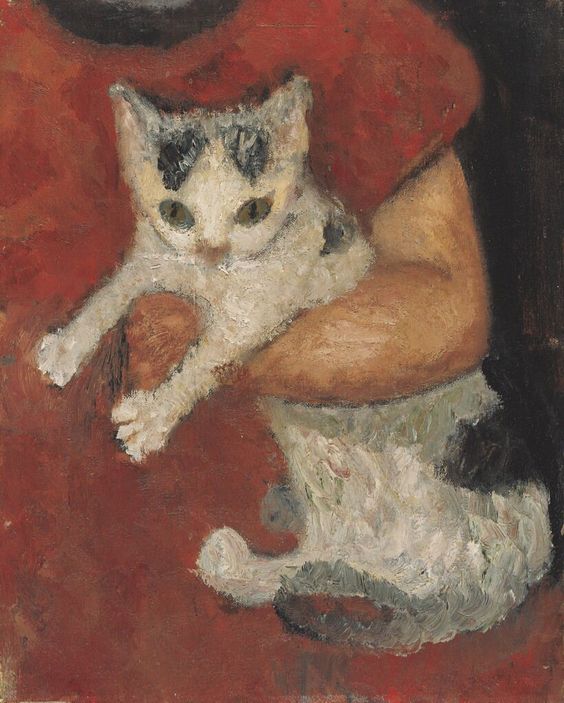
Paula Modersohn-Becker (German, 1876 – 1907) Cat held by a child

Paula Modersohn-Becker (German, 1876 – 1907) Cat held by a child

Finally, The Daily Beast addresses the crazy anti-vaxxer situation: The Anti-Vaxxer Hunt for Dead People Is Getting Even Weirder.

Starting in mid-January, several social media channels and websites emerged as hubs for stories, generated by admins and users pulling together snippets from across the internet and crafting them into cohesive narratives and brief posts, linking reported deaths to COVID vaccinations. Several of these platforms have grown notably, and become more formalized, in recent weeks. Unsurprisingly, given the robust safety profile of the vaccines in use in the United States, they rarely detail how a vaccination supposedly caused a given death.

Read much more about these wackos at The Daily Beast.

So . . . What do you think? What else is on your mind? As always, this is an open thread.


Lazy Caturday Reads

Jean-Metzinger-French-1883-1956-The-cat-c.-1915

Jean Metzinger, French, 1883-1956

Good Morning!!

Before I get to today’s news, here’s a little comic relief. This was in yesterday’s Boston Globe, but I can’t get past their rigid paywall. But I found the story at The Pest Control Daily: Boston Public Backyard used to have child alligators — sure, alligators — and other people fed them rodents. The “public backyard” is the Boston Public Garden, adjacent to the Boston Common. I had heard about cows grazing on the Common, but not about alligators in the Public Garden.

MRAETO7ECVDRVKXQDAMYDLTKXY

There are several newspaper articles from this period referring to the alligators who lived in a basin – or pond – near the entrance to Arlington Street amid a “magnificent” row of lilies. Reports vary, but for some time there were between three and four alligators on the site, strikingly complementing the many other exotic features of the public garden at the time.

A story in the September 19, 1901 issue of the Boston Post said three of the city’s alligators were given by “a Charlestown woman” who “became afraid of them and introduced them to the city of Boston.” The fourth alligator was given to the city by a man from Chelsea, though it’s just unclear why.

An article that appeared in an August 9, 1901 issue of the Boston Globe said the alligators – known as babies – belonged to William Doogue, the city’s superintendent for common and public reasons.

orordatpb5s61Doogue oversaw the public garden from 1878 to 1906, according to Friends of the Public Garden, a nonprofit advocating Boston Common, the public garden, and the nearby Commonwealth Avenue Mall and known for its exceptional green thumb….


The alligators have certainly rubbed some city dwellers the wrong way. But it wasn’t so much their presence that was annoying – people often huddled around the pool looking for them – it was how they were sometimes fed.

“Some objections to feeding live rats and mice to those in the public garden pond,” read the headline of the August Globe article.

The newspaper reported that in “warm weather” the alligators were put in the public garden and fed by park officials once a week….

“Live rats exposed to hungry alligators,” read a headline in the Boston Post on August 9, 1901. “The public garden exhibit attracts morbid interest from women and children.”

The article says, “The city doesn’t feed them in the summer … the city doesn’t have to” because “the alligators make their own living by entertaining the public”.

The story included an illustration of primitively dressed people gathered around a small pond-like structure and watched a man kneel to feed the alligators with the animals’ mouths wide open.

Apparently this was seen as a low-life activity. There is much more detail at the link about the feeding of the alligators. Apparently they were moved to the Franklin Park Zoo during the colder months, and their presence in the Boston Garden lasted for about 6 years.

White Supremacist News

Remember those neo-Nazi marchers in Charlottesville chanting “Jews will not replace us?” Fox News’ Tucker Carlson was trending on Twitter all day yesterday after he parroted a white supremacist conspiracy theory that liberals are trying to replace white people with immigrants.

Fortunato Depero, Elasticità di gatti (1936–1939)

Fortunato Depero, Elasticità di gatti (1936–1939)

Media Matters: Tucker Carlson, the face of Fox News, just gave his full endorsement to the white nationalist conspiracy theory that has motivated mass shootings.

For decades, white nationalists have invoked the specter of nonwhite immigration, multiculturalism, and declining birthrates to argue for the existence of a vast conspiracy aimed at eliminating white populations as a dominant demographic. On Fox News, Tucker Carlson is distributing the language, grievances, goals, and inherent call to action of the conspiracy theory to massive audiences.

On the April 8 broadcast of Fox News Primetime, Carlson offered perhaps his most explicit justification yet for the core belief of the “great replacement” conspiracy theory: that a wave of “Third World” invaders is coming to replace you and reshape your environment, and that you, the audience, should do something about it.

The Fox News host claimed that “what’s true” is that “the Democratic Party is trying to replace the current electorate, the voters now casting ballots, with new people, more obedient voters from the Third World,” and no one should “sit back and take that.”

More from Media Matters: White nationalists praise Tucker Carlson’s full embrace of their “replacement” conspiracy theory.

After the Anti-Defamation League called on Fox News to fire Carlson for his remarks, white supremacist and far-right personalities were quick to make their approval known.

White supremacist and Holocaust denier Nick Fuentes explained what Carlson actually meant in his statements, lamenting that Carlson wasn’t more direct and theorizing that he probably had to dial it back in order to avoid consequences at Fox….

Other racist and extreme far-right media personalities and social media accounts also backed Carlson, celebrating him for broadcasting “what nationalists have been talking about for decades” and defending him against criticism.

Matt Gaetz Updates

The Washington Post: House opens ethics investigation into Florida Republican Matt Gaetz.

The House Ethics Committee announced Friday it would investigate claims that Rep. Matt Gaetz engaged in sexual misconduct and illicit drug use and showed images of naked women on the House floor, opening a new front in the growing scandal enveloping the Florida Republican.

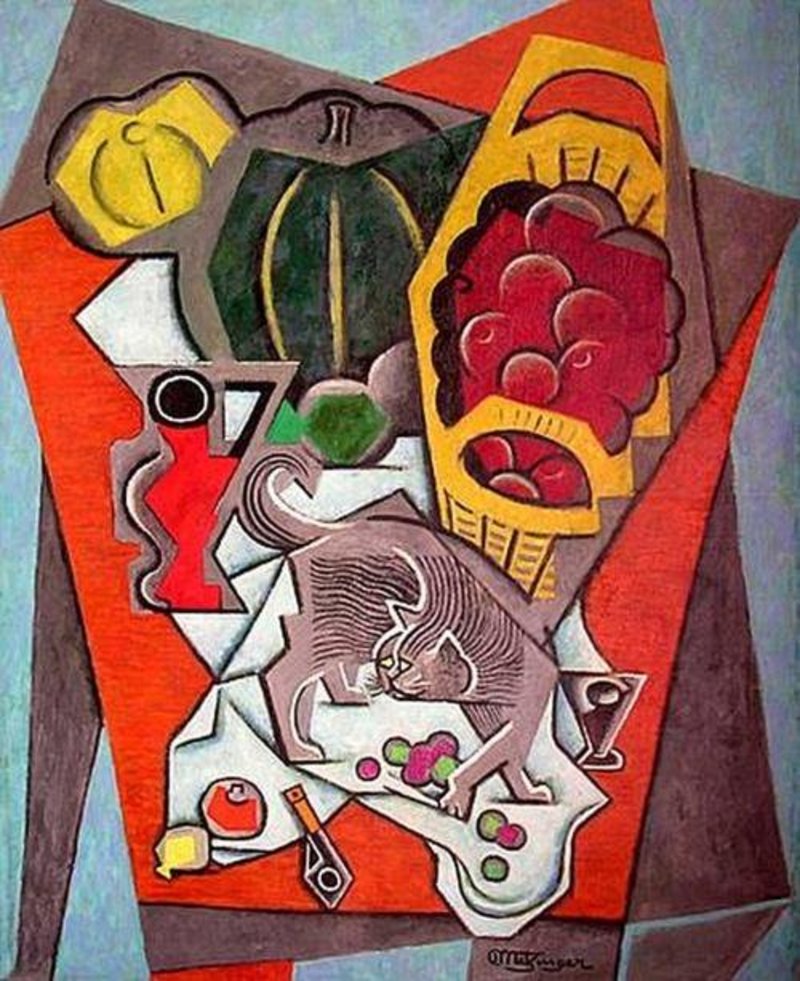
Jean-Metzinger-Still-life-with-cat-and-fish-1950.

Jean Metzinger, Still Life with Cat and Fish, 1950

Gaetz responded hours later with a defiant speech before a welcoming crowd at former president Donald Trump’s Miami-area hotel and golf club, dismissing the claims against him as an attempt by the political establishment to silence his political views.

“Let me assure you, I have not yet begun to fight for the country I love, and for the nation that I know benefits from America First principles,” he said to cheers at an event sponsored by Women for America First, a group that sponsored the rally at the White House Ellipse before the Jan. 6 riot at the Capitol. “I’m built for the battle, and I’m not going anywhere. The smears against me range from distortions of my personal life to wild — and I mean wild — conspiracy theories.”

The news of the investigation came a day after Gaetz’s friend, Joel Greenberg, who has been charged with sex trafficking of a minor among other offenses, signaled to a federal judge through his lawyer that he was negotiating a plea deal with prosecutors that could help them in an ongoing probe into whether Gaetz paid for sex or trafficked a woman across state lines for sex.

Click the link for more details.

Fred Grimm at the South Florida Sun-Sentinel: Scandal leaves Florida’s congressional provocateur with few friends.

His fellow congressional Republicans have risen as one to defend Matt Gaetz.

Oh, sorry. My bad. Make that two.

Jim Jordan of Ohio — Abbott to Gaetz’s Costello in their Capitol Hill clown act — came through for Matt. Sort of. After Gaetz denied allegations that he had been galivanting with escorts and even a 17-year-old girl, with allusions to orgies and illicit drug use, Jordan managed a four-word tweet: “I believe Matt Gaetz.” Which seemed an understated reaction from the likes of Jordan, whose usual outbursts have been unfettered by propriety, truth or the national interest.

You’d think the pugnacious Jim Jordan, of all people, would have come up with a more defiant defense of his fellow provocateur. But no.

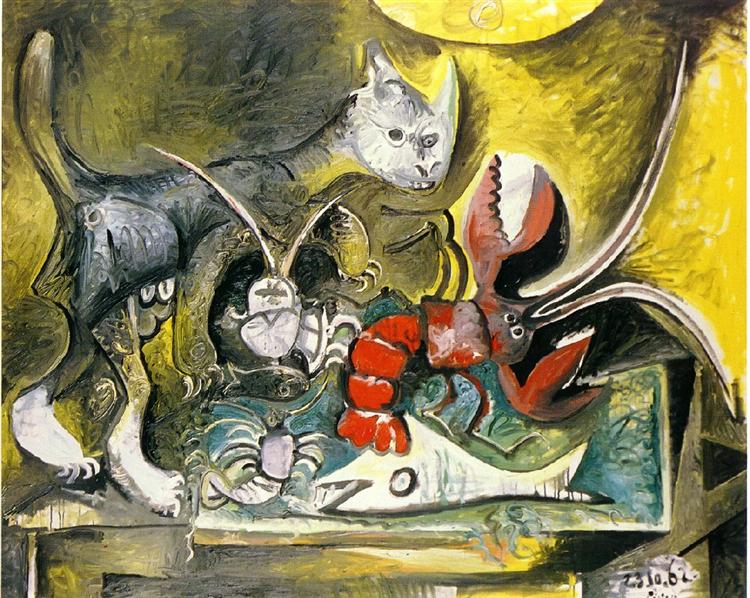
Still life with cat and lobster, Pablo Picasso

Still life with cat and lobster, Pablo Picasso

Which left Marjorie Taylor Greene from Planet QAnon as his defender-in-chief. “Take it from me rumors and headlines don’t equal truth. I stand with @mattgaetz,” tweeted the Georgia congresswoman, a propagator of astounding untruths, slanders and conspiracy theories. Not sure that character references from the woman who suggested California wildfires had been ignited by Jewish space lasers can rehabilitate Gaetz’s mucky reputation.

Support was also slow coming from Mar-a-Lago, although Gaetz had been Donald Trump’s most outlandish congressional defender through two impeachments and an insurrection. Yet, the ex-president kept quiet in the week after The New York Times reported that the FBI has widened an investigation of former Seminole County Tax Collector Joel Greenberg — who faces a slew of federal charges — to include his former best buddy and fellow philanderer. The Times said the FBI is looking into allegations that Greenberg and Gaetz arranged sexual trysts with paid escorts, including a 17-year girl. (Which Gaetz denies.)

It wasn’t until reports surfaced that, during Trump’s final days in office, Gaetz had sought a preemptive pardon for any federal charges that might come his way, that the ex-president finally said something. Not much, but something. His office issued a carefully worded, unTrumpian statement: “Congressman Matt Gaetz has never asked me for a pardon,” adding, like an afterthought, “It must also be remembered that he has totally denied the accusations against him.”

I just can’t get enough of Gaetzgate.

Coronavirus News

The Washington Post: Trump officials celebrated efforts to change CDC reports on coronavirus, emails show.

Trump appointees in the Department of Health and Human Services last year privately touted their efforts to block or alter scientists’ reports on the coronavirus to more closely align with President Donald Trump’s more optimistic messages about the outbreak, according to newly released documents from congressional investigators.

Still life with grey cat, Jean Metzinger

Still life with grey cat, Jean Metzinger

The documents provide further insight into how senior Trump officials approached last year’s explosion of coronavirus cases in the United States. Even as career government scientists worked to combat the virus, a cadre of Trump appointees was attempting to blunt the scientists’ messages, edit their findings and equip the president with an alternate set of talking points.

Science adviser Paul Alexander wrote to HHS public affairs chief Michael Caputo on Sept. 9, touting two examples of where he said officials at the Centers for Disease Control and Prevention had bowed to his pressure and changed language in their reports, according to an email obtained by the House’s select subcommittee on the coronavirus outbreak.

Pointing to one change — in which CDC leaders allegedly changed the opening sentence of a report about the spread of the virus among younger people after Alexander pressured them — Alexander wrote to Caputo, calling it a “small victory but a victory nonetheless and yippee!!!”

In the same email, Alexander touted another example of a change to a weekly report from the CDC that he said the agency made in response to his demands. The Morbidity and Mortality Weekly Reports, or MMWRs, which offer public updates on scientists’ findings, had been considered sacrosanct for decades and untouchable by political appointees in the past.

Two days later, Alexander appealed to White House adviser Scott Atlas to help him dispute an upcoming CDC report on coronavirus-related deaths among young Americans.

“Can you help me craft an op-ed,” Alexander wrote to Atlas on Sept. 11, alleging the CDC report was “timed for the election” and an attempt to keep schools closed even as Trump pushed to reopen them.

Thank goodness these horrible people are gone now. But Fox News is continuing the anti-vax brainwashing.

CNN: Nearly 40% of Marines have declined Covid-19 vaccine.

Nearly 40% of US Marines are declining Covid-19 vaccinations, according to data provided to CNN on Friday by the service, the first branch to disclose service-wide numbers on acceptance and declination.

1940-Le-chat-au-papillon

Le Chat au Papillon, Jean Metzinger, 1940

As of Thursday, approximately 75,500 Marines have received vaccines, including fully vaccinated and partially vaccinated service men and women. About 48,000 Marines have chosen not to receive vaccines, for a declination rate of 38.9%.

CNN has reached out to the other services for acceptance and declination rates.

The corresponding acceptance rate for vaccinations among Marines — 61.1% — is not far off the military estimate of two-thirds, or about 66%.

Another 102,000 Marines have not yet been offered the vaccines. The total number of Marines includes active-duty, reserves and Individual Mobilization Augmentee Marines.

The declination rate at Camp Lejeune in North Carolina, one of the prominent Marine Corps bases, was far higher, at 57%, according to another set of data provided to CNN. Of 26,400 Marines who have been offered vaccinations, 15,100 have chosen not to receive them, a number that includes both II Marine Expeditionary Force and Marine Corps Installation East — Camp Lejeune. Another 11,500 active-duty Marines are scheduled to be offered the vaccines.

I’ll end there. I tried to keep it somewhat light today. What stories are you following?